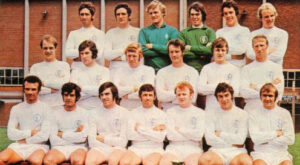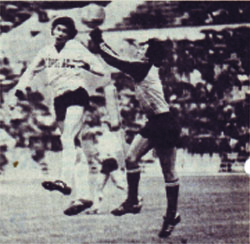
Copa Libertadores. First Round
Nacional (Montevideo) bye to the second round as holders.
Group 1 [Argentina, Colombia]
1.Independiente (Avellaneda) 6 4 2 0 13- 5 10
2.Rosario Central 6 3 2 1 8- 5 8
3.Independiente Santa Fe (Bogotá) 6 1 2 3 4- 9 4
4.Atlético Nacional (Medellín) 6 0 2 4 3- 9 2
Group 2 [Bolivia, Ecuador]
1.Barcelona (Guayaquil) 6 3 3 0 8- 3 9
2.América (Quito) 6 3 1 2 9- 7 7
3.Oriente Petrolero (Santa Cruz) 6 2 2 2 10- 7 6
4.Chaco Petrolero (La Paz) 6 1 0 5 3-13 2
Group 3 [Brazil, Paraguay]
1.São Paulo 6 3 2 1 12- 6 8
2.Olimpia (Asunción) 6 2 2 2 7- 8 6
3.Cerro Porteño (Asunción) 6 2 2 2 7-11 6
4.Atlético Mineiro (Belo Horiz.) 6 0 4 2 5- 6 4
Group 4 [Chile, Peru]
1.Universitario (Lima) 6 3 2 1 9- 6 8
2.Universidad de Chile (Santiago) 6 3 0 3 12-12 6
3.Alianza (Lima) 6 2 2 2 10-10 6
4.Unión San Felipe 6 1 2 3 5- 8 4
Group 5 [Uruguay, Venezuela]
1.Peñarol (Montevideo) 4 4 0 0 12- 3 8
2.Deportivo Italia (Caracas) 4 1 1 2 4- 7 3
3.Valencia (Acarigua) 4 0 1 3 3- 9 1
Semi-Finals
Group 1
1.Universitario (Lima) 4 1 2 1 9- 7 4
2.Nacional (Montevideo) 4 1 2 1 7- 7 4
3.Peñarol (Montevideo) 4 1 2 1 5- 7 4
Group 2
1.Independiente (Avellaneda) 4 2 1 1 4- 2 5
2.São Paulo 4 1 2 1 2- 3 4
3.Barcelona (Guayaquil) 4 0 3 1 2- 3 3
Final (May 17 & 24)
Universitario Per Independiente Arg 0-0 1-2 1-2
1st leg. Estadio Nacional, Lima, 17- 5-1972
Universitario – Independiente 0-0
Universitario: Ballesteros, Soría, Cuellar, Chumpítaz, Luna, Techera,
Carbonell (Uribe), Castañeda, Ramírez, Rojas, Bailetti.
Independiente: Santoro, Commisso, Sá, Garisto, Pavoni, Pastoriza, Raimondo,
Semenewicz, Balbuena, Mircoli, Saggioratto (Bulla).
Referee: Marques (Brazil)
Attendance: 45,000
2nd leg. Cordero, Avellaneda, 24- 5-1972
Independiente – Universitario 2-1
6′ Maglioni 1-0
61′ Maglioni 2-0
79′ Rojas 2-1


 Independiente: Santoro, Commisso, Sá, Garisto, Pavoni, Pastoriza, Raimondo,
Semenewicz, Balbuena, Maglioni (Magán), Saggioratto (Mircoli).
Universitario: Ballesteros, Soría, Cuellar, Chumpítaz, Luna, Techera
(Alva), Cruzado, Castañeda, Munante, Rojas, Ramírez (Bailetti).
Referee: Favilli Neto (Brazil)
Attendance: 55,000
 Independiente got the trophy!
 Universitario (Lima) lost the final by one goal. May be unlucky after an excellent campaign – especially because they played part of it without 5 national team players! They were the first Peruvian team to reach the final.
 South American champions for a third time! Although the picture is from the semi-final, this was squad winning the final.
 The team was getting old – there were some players (Santoro, for instance) who appeared in the first won final in 1964, but they had not only experience and smooth understanding – they had younger and eager reserves. For the moment, they equalized the record of Estudiantes (La Plata) and Penarol (Montevideo), leading with them the South American clubs with 3 Libertadores Cups each.
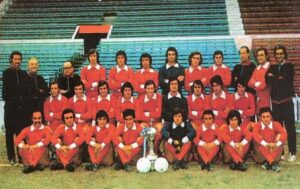 Sweet success, but it was only the beginning of the greatest period of the club.

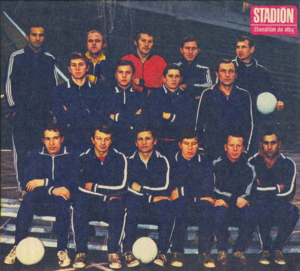
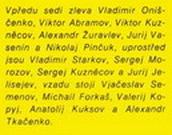 In his 2007 interview the coach German Zonin vigorously negated the bribery story – according to him, Zarya won the title fair and square. Zonin’s denial is understandable – there is no coach to admit bribery. Besides, this is the only title Zonin won in his long career. So, what is true? Small clubs, with good, even not outstanding squads, occasionally win titles. As a rule, such surprising winners never repeat their success, quickly sinking to familiar mediocrity. It is well traveled path: big clubs immediately snatch whatever talent emerged in the small club, and the winning team is shattered. From this standpoint, Zonin appears truthful… unless one reads between the lines. Zonin praised the Communist satrap of Voroshilovgrad at the time: the City’s Party Secretary ‘cared a lot for the sports’ and ‘supported the club with everything’. It is more than likely the Party boss went much wider in his support – making deals with other Party secretaries, who in turn ‘influenced’ the clubs in their domains to give a point or two. Money – or other things – went along. A coach did not have to be involved. He even did not have to know – such things were arranged on Party level, and were typical in Communist Eastern Europe. But there is another interesting detail: Zonin blamed Dynamo (Kiev) for the immediate decline of Zarya – they took two key players, Onishchenko and Vyacheslav Semenov. No real fuss over Onishchenko, for he was originally Dynamo player and going back was understandable. Semenov, according to Zonin, was another story – vastly talented, the coach claims, he was very important to Zarya. Dynamo not only did not need him, but actually ruined him during his short stay in Kiev. So far – the typical small club story… except: Kiev, as republican centre, ‘naturally’ takes the cream of the whole of Ukraine. No way for small club saving their good players – bigger and more powerful Communist bosses order the smaller fry and that’s was that. Dynamo took only two players from Zarya, one of them originally a Dynamo player anyway. The second – not needed and benched. This largely means Zarya did not really have interesting players – rather, run of the mill squad. Confirmed by other evidence: some players, Semenov included, briefly played for the national/Olympic Soviet squad. Very briefly and only at the time when Zonin himself was assistant coach of the Olympic team. Only Onishchenko became a real star and constant national player – but playing for Dynamo (Kiev). Nobody else impressed and lasted. Zarya players were not interesting for other clubs – no Moscow club wanted them, not Dynamo (Kiev), not even the second big Ukrainian club – Shakter (Donetzk). Apart from Onishchenko, only the goalkeeper Alexander Tkachenko built good reputation – eventually not only playing for many years, but moving to Zenith (Leningrad). Yet, even this transfer is suspect: it happened when Zonin coached Zenith, which was not at all big club at that time. Zarya were obviously good by the standards of small clubs; the squad had good chemistry, reaching their peak in 1972, but hardly superior team even then. Muddy the bribery story may be, as such stories ever go, but very likely. More than likely. Nevertheless, nothing was said at the time, the title stands. Which at the end makes briberies irrelevant – at least in terms of historic record and largely by the history of the club. Champions. Once. Once upon a time.
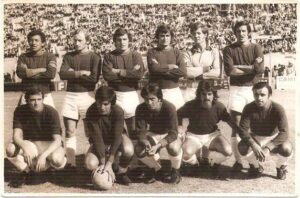
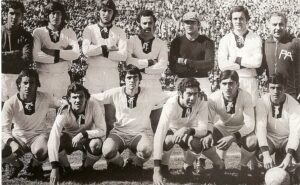 Standing from left: Otarola, Escalada, O. Gutiérrez, Rubén Díaz, Montilla, Panizzo. Front: Belvedere, Cavallo, Mamberto, Valentín Sánchez, José S. Romero, Fraile.
 2. Almirante Brown 32 19 7 6 10 3 3 9 4 3 52 29 45
 3. Nueva Chicago 32 15 12 5 10 3 3 5 9 2 51 29 42
 4. Temperley 32 15 10 7 9 6 1 6 4 6 50 38 40
 5. Deportivo Morón 32 14 9 9 6 2 8 8 7 1 44 34 37
 6. San Telmo 32 11 11 10 7 5 4 4 6 6 32 36 33
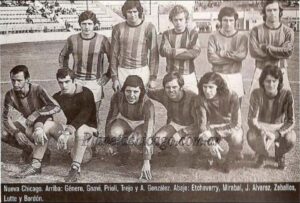
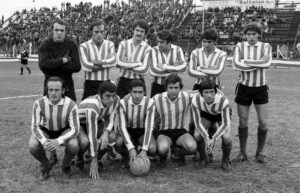
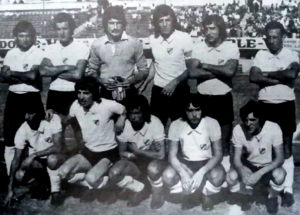 Back row from left: José M. Gatti, J. M. Collodel, José Caffaro, Ricardo Troncone, Rímolo, Ramiro Pérez.
 8. Almagro 32 9 12 11 5 7 4 4 5 7 43 46 30
 10. Talleres (RE) 32 9 11 12 8 6 2 1 5 10 41 44 29
 12. Quilmes 32 10 8 14 9 2 5 1 6 9 48 60 28
 14. Tigre 32 7 13 12 4 7 5 3 6 7 38 46 27
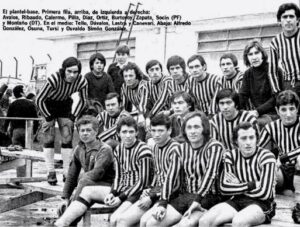
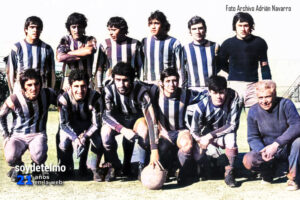
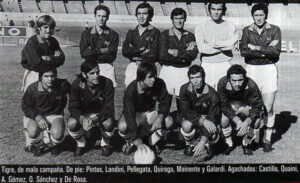
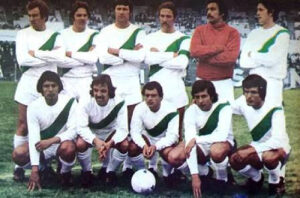
 Standing from left: Jorge Sigman, Omar Masciotra, Lanata, Anaud, Hugo Mazzini, O. Martínez.
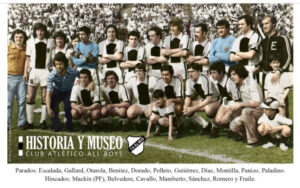 All Boys won the Primera B and was promoted to Metropolitano Primera A. Great achievement.

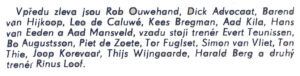 The club from the capital, ADO Den Haag, were… well, just a small club. Aad Mansveld occasionally played for the national team. Ton Thie was relatively respected player in Holland. The two Swedish players – Augustsson and Berg – were fairly obscure. Dick Advocaat? The famous coach and player have nothing in common – same person, but the player nobody ever heard of. ADO Den Haag were far away from Ajax and total football. True, they put a fight at the Cup final, but lost nevertheless. As finalists, they played in the Cup Winners Cup in 1972-73 edition of the tournament – and expired early, without notice. Total football was exceptional and Holland was not going to become superpower on club level.
 1. San Lorenzo de Almagro 13 10 3 0 29 6 23 Finalist
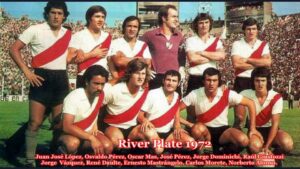 2. River Plate 13 10 2 1 50 23 22 Semifinalist
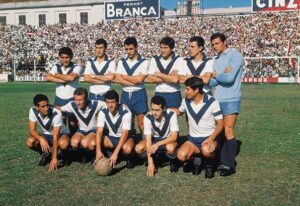 3. Vélez Sarsfield 13 8 2 3 31 19 18
 From left: Tébez, Zuvialde, Eusebio Ibáñez, Neumann, Monárdez, Gusmán, Vergara, Gramari, Barroso, Maryllack, Reggi.
 7. Independiente (A) 13 4 5 4 24 20 13
 8. San Lorenzo (Mar del Plata) 13 5 2 6 24 28 12
 Standing from left: Villalón, Héctor Corvalán, Jerez, Blasco, Torga.
  12. Bartolomé Mitre 13 1 2 10 11 36 4
 13. Independiente (T) 13 0 3 10 10 46 3
 1. Boca Juniors 13 10 2 1 31 15 22 Semifinalist
 2. Colón 13 8 2 3 21 16 18
 3. Argentinos Juniors 13 7 3 3 26 16 17
 Back row from left:
  5. Racing Club 13 6 1 6 20 18 13
 Back row from left: De Sá, Syeyyguil, Reinaldi, Laciar, Guerini, Tocalli.
 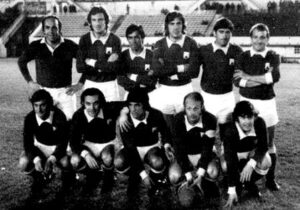 Second row from left:
 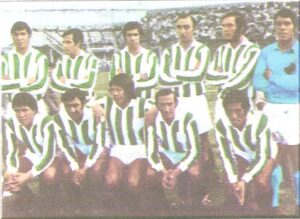 Back row from left: González, Cortez, Quatropani, Signorelli, Lizzi, Palacio. First row: Del Valle, Paz, Spadaro, Rodríguez, Vega.
 Standing from left: Camargo, Fornari, Legrotaglie, Patire, Aceituno, Grudzien. Front: Algocino, Guayama, Castellanos, Pereyra, Ibáñez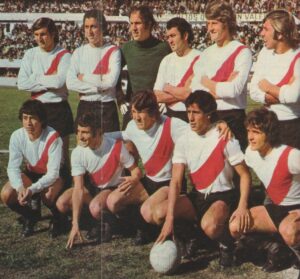
 Back row from left: Rogel, Peracca, Rubén Sánchez, Nicolau, Marzolini.
 1. San Lorenzo de Almagro 1 1 0 0 1 0 2 Champion
 2. River Plate 1 0 0 1 0 1 0
 After winning Metropolitano, San Lorenzo won the Nacional – excellent double!
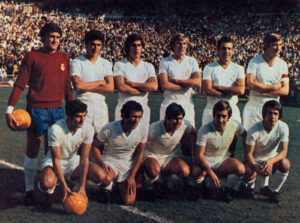
 Some established stars, like Grosso and Zoco; some younger strong talent, like Amancio and Santillana. Strong team, but no more than that. Mostly for Spanish consumption and perhaps the team at the lowest point by Real standards. The 1970s were dark years for the club.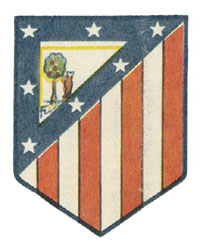
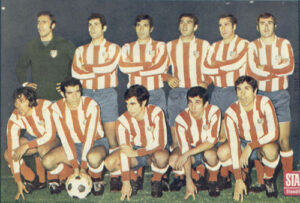
 Any recognizable name? Perhaps Irureta… perhaps Adelardo… perhaps Ufarte… chances are only Atletico fan can faintly recognize some players. Club legends, surely… and nothing more.
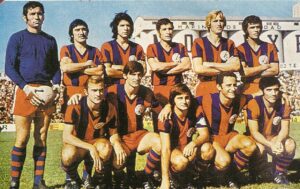 Standing from left: Irusta, Glaría, Cocco, Rosl, Rezza, Olguín.
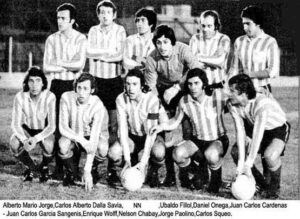
 Standing from left: Kaliszuk, Della Savia, Mario Alberto Jorge, Pato Fillol, Daniel Onega, Cardenas
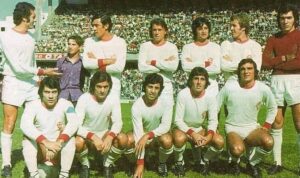 Back row from left: Juan Siciliano, Roque Avallay, Omar Larrosa, Roberto Cabral, Carlos Babington, Miguel A. Leyes.
 4. River Plate 34 15 10 9 64 52 40
 5. Vélez Sarsfield 34 14 11 9 59 50 39
 6. Rosario Central 34 14 10 10 51 39 38
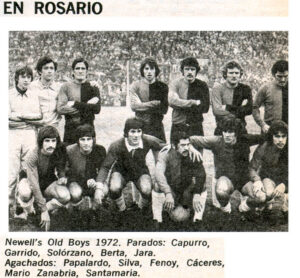 7. Newell’s Old Boys 34 13 12 9 49 49 38
 8. Chacarita Juniors 34 13 11 10 46 41 37
 9. Boca Juniors 34 12 12 10 56 44 36
 10. Colón 34 14 8 12 51 52 36
 11. Independiente (A) 34 12 11 11 47 48 35
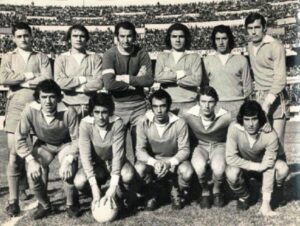 Standing from left: Pena, Urchevik, Spilinga, Marenda, Juan Carlos Sosa, Tardivo.
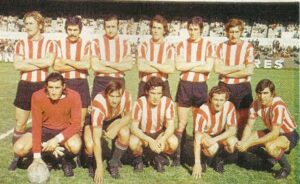 Back row from left: Pagnanini, Horacio Rodríguez, Del Curto, Pernía, De Marta, Togneri.
 14. Atlanta 34 12 7 15 43 54 31 Qualification
 15. Gimnasia y Esgrima LP 34 8 10 16 40 55 26 Qualification
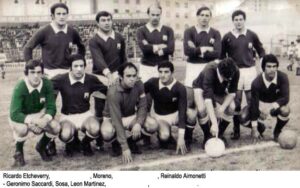 16. Ferro Carril Oeste (BA) 34 6 12 16 39 55 24 Qualification
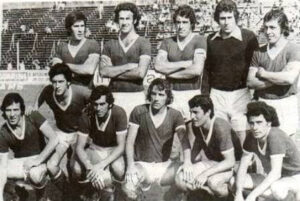 Standing from left: Norberto D´Ángelo, Vicente A. Zic, Ernesto Suárez, Jorge U. Traverso, Ricardo Ferlich.
 Second row from left: Oscar E. Haak, Eduardo Pipastrelli, Jorge Amado, Daniel Tagliani, Hugo Pini, Juan C. Guzmán.
 San Lorenzo – champion of Metropolitano.

 Since Juventus did represent a change, it was not noticed that the club was actually ahead of the other Italian clubs – and on its road to domineer late 1970s and the 1980s. The team consisted of stars, of course, but somewhat secondary stars by Italian measures, where Mazzola and Rivera were the highest mark. Juve players were younger too – the team itself came to ripeness a few years later, but there was already good foundation for the future. Naturally, Capelo is the most famous name from 2009 standpoint – the famous coach. He was not the most impressive feature of the 1972 team, though: to my mind the most interesting part was the attack. The (West) German star Helmut Haller, the already impressive Anastasi, and the young Roberto Bettega. For Italian team, too many attackers. All of them centre forwards, but easily adapting their skills to the wings too. Heavy competition between three generations. Add the World champion with Brazil (1958) Jose Altafini and there was formidable attack line, well balanced in age and experience, and competing for titular place in the fielded squad. No other Italian club had so strong attacking choices. No other club had selection providing for gradual painless replacement of aging stars – Haller was to step down in a year, but Bettega really matured by 1978. Anastasi was rapidly becoming the leader of the attack and Altafini – dangerous reserve, coming in the second half to torture opposite defense. Juventus had variety, flexibility, and choice. They had money too – new players were added effortlessly, making the team stronger and stronger. More or less, Juventus made easy transition from one generation to the next – something Milan and Inter were unable to do. This was new, but it was realized few years later. Juventus were still heavily defensive team, but with younger players, they were able to adopt some elements of total football. 1972 was only the beginning.

 The team was aging – Trapattoni (yes, the same one), the Argentine with French citizenship Nestor Combin, Cudicini, Rosato were at their end. Not to mention Rivera. Hardly worthy replacement in sight to any of them. The red flag was really flashing in the heart of defense – Schnellinger was not invited to the West German national team after 1970. He was key player for Milan, but useless for the European Champions – and the difference between Beckenbauer’s manner of playing and Schnellinger’s was as big as between day in night in 1972. Milan’s Cup was more or less a last gasp of old 60’s football.
 Alagoinhas Atlético C (BA)
 Alecrim FC (Natal-RN)
 América FC (Natal-RN)
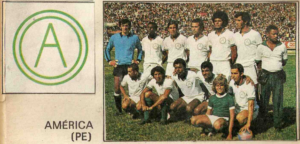 América FC (Recife-PE)
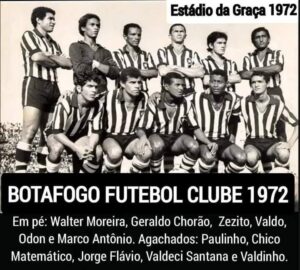 Botafogo FC (João Pessoa-PB)
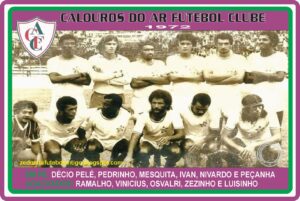 Calouros do Ar FC (Fortaleza-CE)
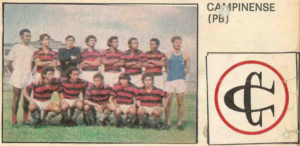 Campinense Clube (Campina Grande-PB)
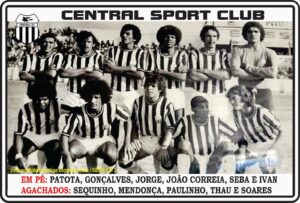 Central SC (Caruaru-PE)
 CSA (Maceió-AL)
 Ferroviário EC (São Luís-MA)
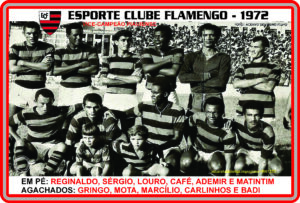 EC Flamengo (Teresina-PI)
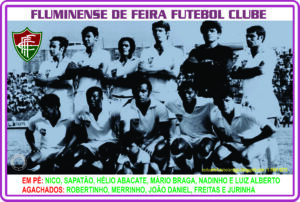 Fluminense FC (Feira de Santana-BA)
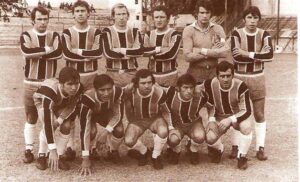
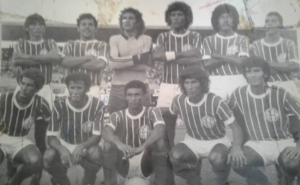
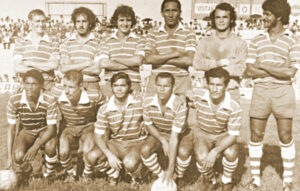 Second row from left: Louro, Sérgio Redes, Dimas Filgueiras, Renato, Lulinha, Pedro Basílio.
 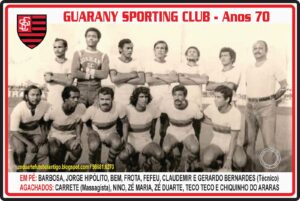 Guarany SC (Sobral-CE)
 AO Itabaiana (SE)
 Maguari EC (Fortaleza-CE)
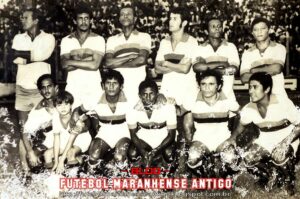 Moto Club (São Luís-MA)
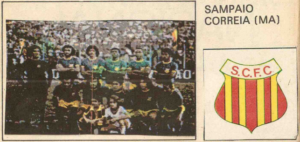 Sampaio Corrêa FC (São Luís-MA)
 UP São Domingos (Maceió-AL)
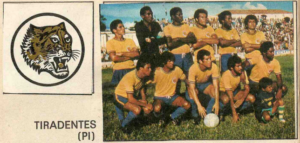 SE Tiradentes (Teresina-PI)
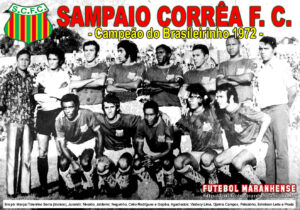 Sampaio Corrêa-MA (4-2-4): Jurandir; Célio Rodrigues, Neguinho, Nivaldo, Valdecy Lima; Gojoba, Edmílson Leite (Airton); Lima, Djalma, Pelezinho, Jaldemir (Prado). Coach: Marçal Tolentino Serra.
 Campinense-PB (4-2-4): Olinto; Miro, Ivan Lopes, Deca, Zé Preto; Vavá, Dão; Dinga, Erasmo (Edgar), Pedrinho, Volmir. Coach: Zé Preto
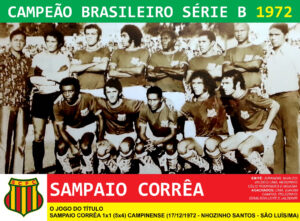 Sampaio Correa – champion.