Switzerland. Domestic concerns, primeraly: it was difficult to adjust to harsh reality. The country would not support demands of modern football. It was plain to see in the championship: perhaps only 11 clubs in the top league were relatively fine, the rest were clearly weaker. And among the better ones there was rather weakening of the usual top clubs. Since there was no limitless cash and the national pool of players was small, no club was actually able to build truly great squad. Experiments with the championship structure were already tried and did not work. Return to traditional leagues was not working either… impasse. In the past the limited domestic pool was helped by imports – never great, but at least Swiss clubs were able to get good players in good numbers. Now even this sourse was cut short – other countries offered better prospects to foreign players, so options shrunk and what was left was mostly veterans – Xamax went up partly thanks to his foreign imports, but Stielike was here only to play his last games in peace and Don Givens was practically forgotten now, having his best time a good 10 years earlier. It was a sad comment on the state of Swiss football that Xamax went to the top with such help.
It was worse in the second level: only 4 teams were quite decent and the rest… just made the numbers.
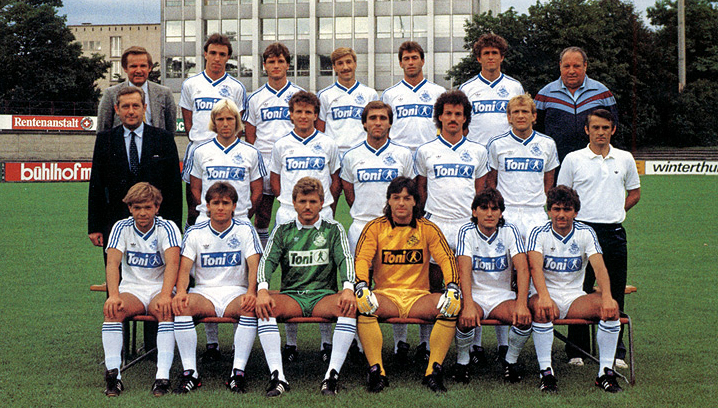 Winterthur was one of those making the numbers – once upon a time a solid top-league member, now – 6th with 31 points in Second Division. Top row from left: Viktor Frank (President), Thomas Unseld, Reto Arrigoni, M. Haller, Mauro Bunkofer, Ulrich Tschanz, Ernst Rief (Masseur).
Middle row: Dr. Bruno Peter (doctor), Thomas Staub, Urs Egli, Hans Franz, Daniel Haefeli, Christian Schleiffer, Hans Kodric (coach).
Sitting: Vladimir Jakovljev, Kevin Streule, Walter Christinger, Stephan Lehmann, Rafael Chèlos, Rolf Müller.
Chiaso was above them – 5th with 35 points – but they were not match to the leaders either. Only 4 teams were really stronger and possibly near the first division teams. Chenois ended 4th with 41 points.
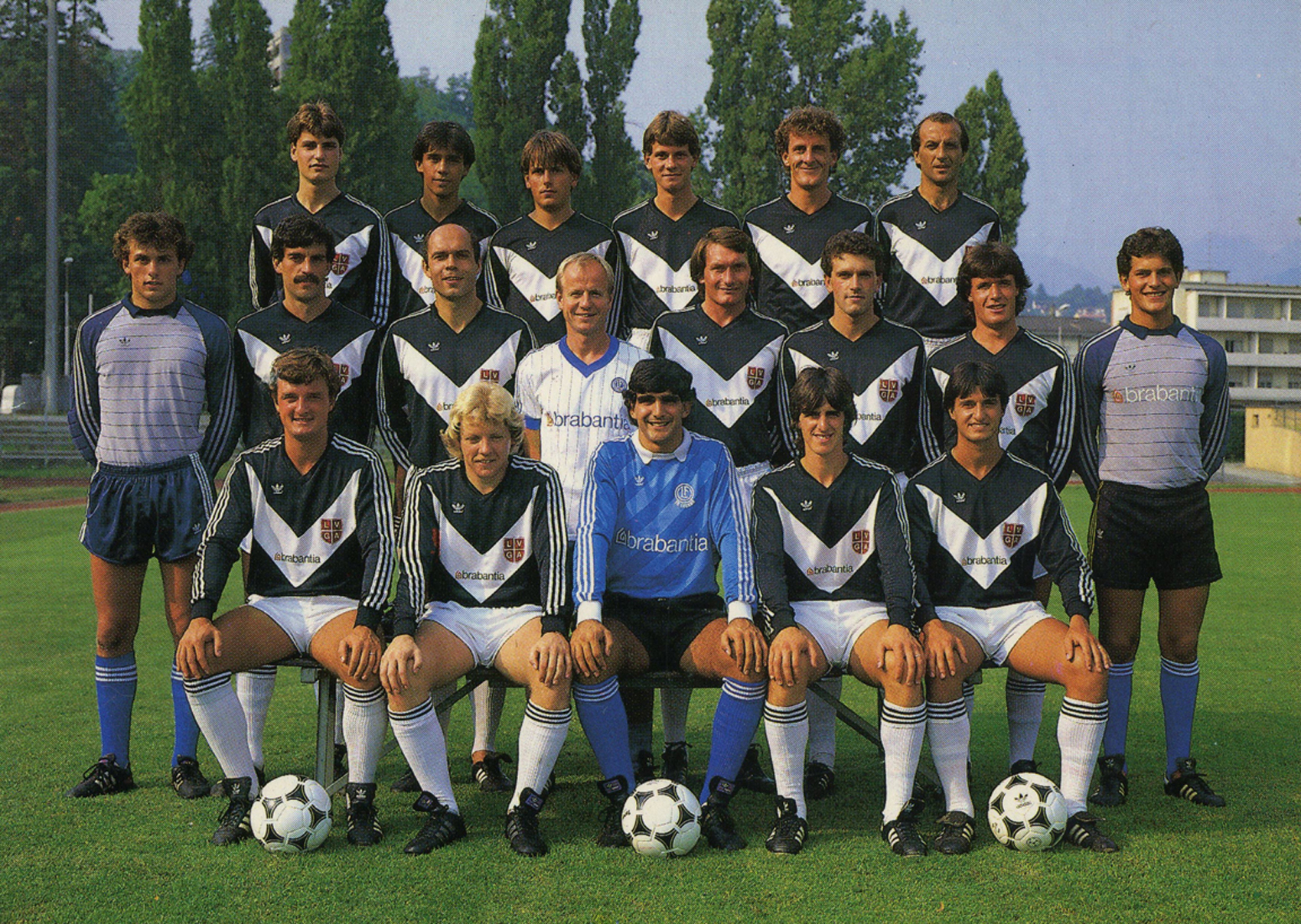
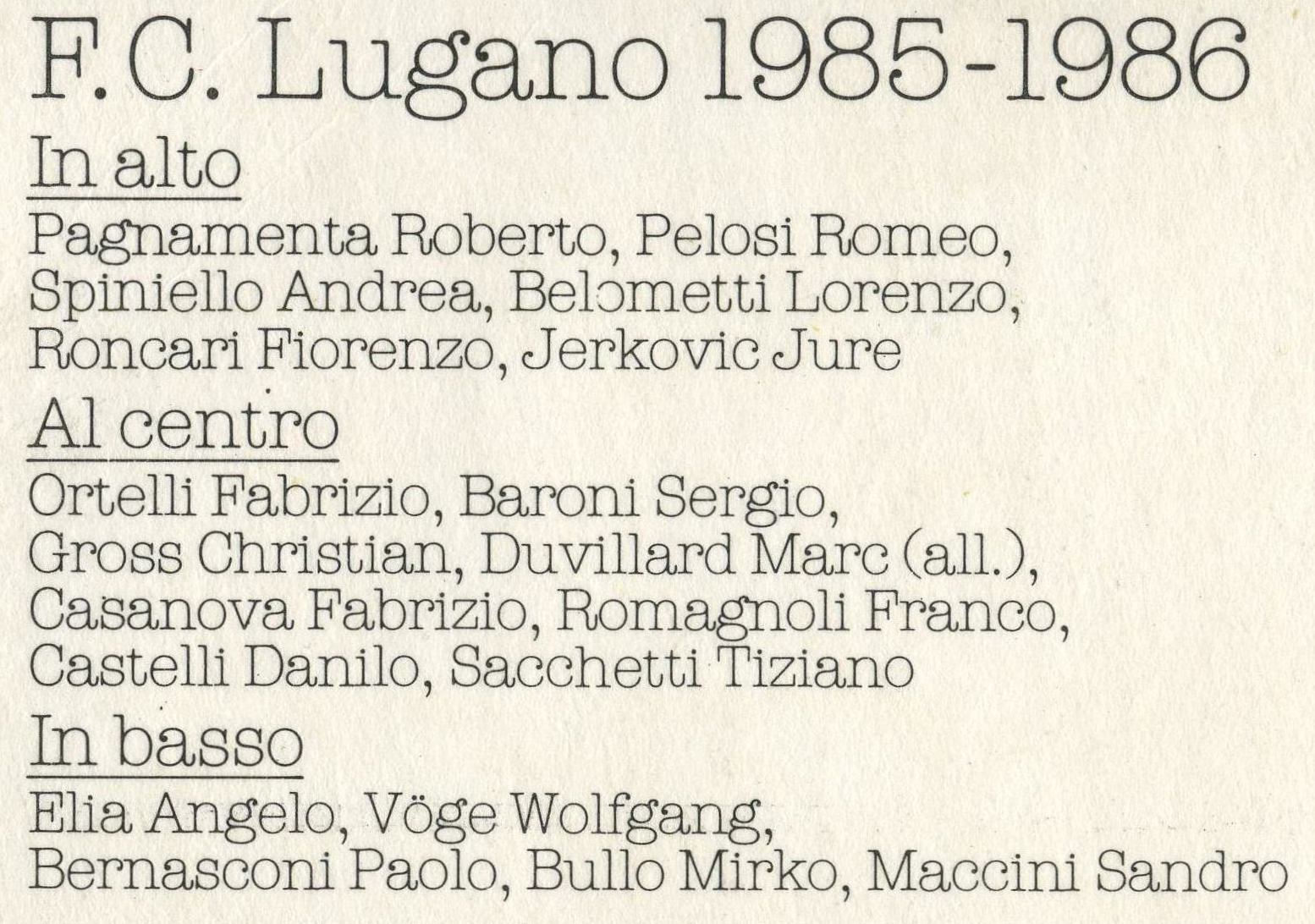 FC Lugano ended 3rd with 43 points. Jure Jerkovic was playing his last days in it – arguably, the only well known name in the league this season.
 AC Bellinzona lost the battle for first place on worse goal-difference, finishing with 45 points.
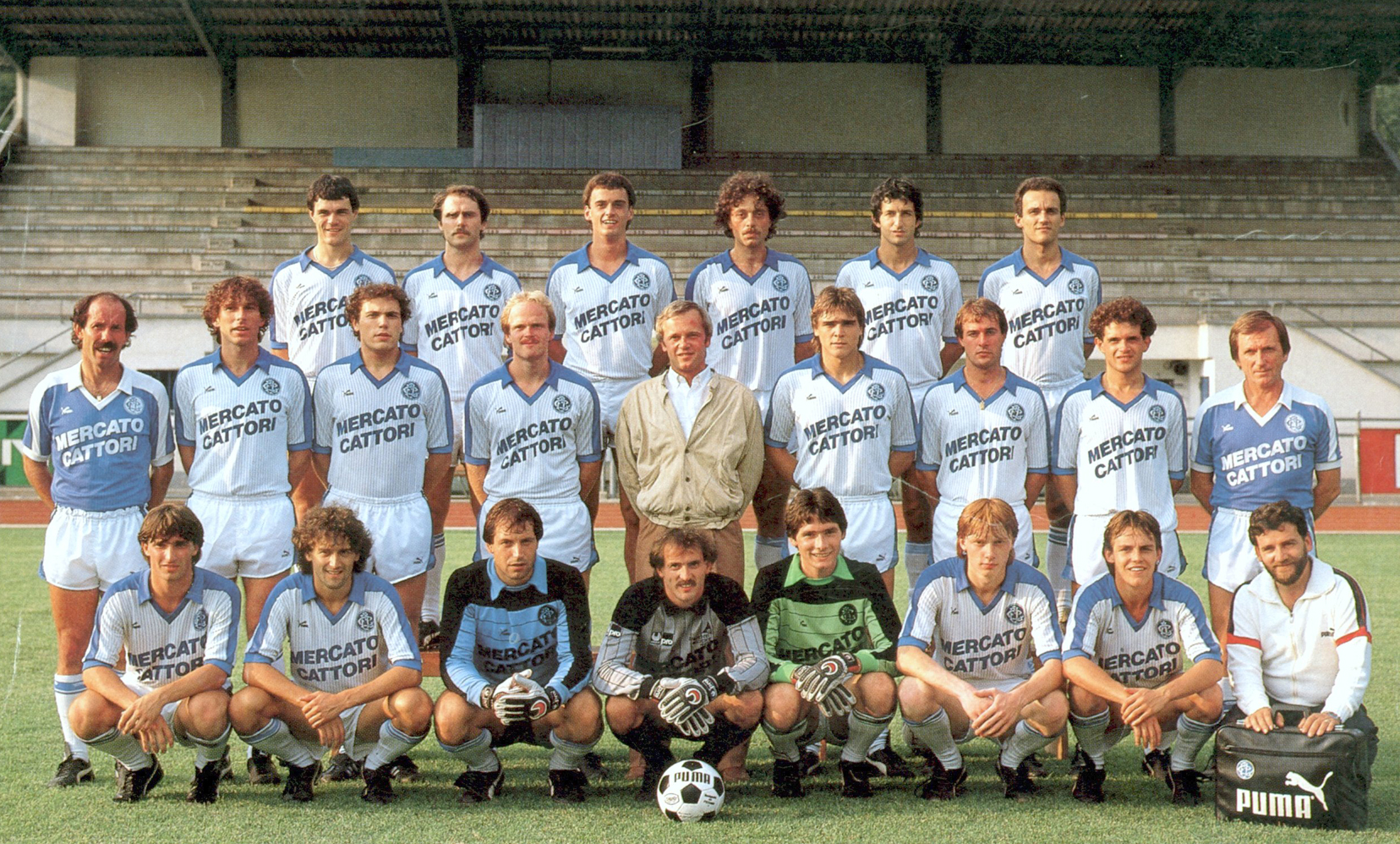 FC Locarno clinched the Second Division title thanks to better goal-difference: they had 45 points like Bellinzona – 20 wins, 5 ties, 5 losses, 96-33. Great scorers, no doubt about it, and they provided the club with +63, twice better than Bellinzona’s +34. Crouching from left: Michele Volentik, Enrico Giani, Mauro Benzoni, Armando Rossi, Michele Nicora, William Fornera, Thomas Bachofner, Carlo Bianchi – masseur.
Middle row: Antonio Chiandussi – coach, Claudio Gilardi, Jean-Jacques Frutiger, Winfried Kurz, Michele Pedrazzini – president, Caryl Facchinetti, Nazzareno Zanoli, Augusto Favero, Sandro Molnar – assistant coach.
Top row: Pierluigi Tami, Fabio Chiappa, Bertrand de Coulon, Mauro Alini, Michel Guillaume, Bruno Abaecherli.
In general terms, the final standing was a trimph of attacking football over defensive one – Bellinzona excelled in cautious, defensive-minded game and lost only 3 games, but they scored rarely as a consequence – but it hardly mattered. The important thing was promotion and both Bellinzona and Locarno went up.
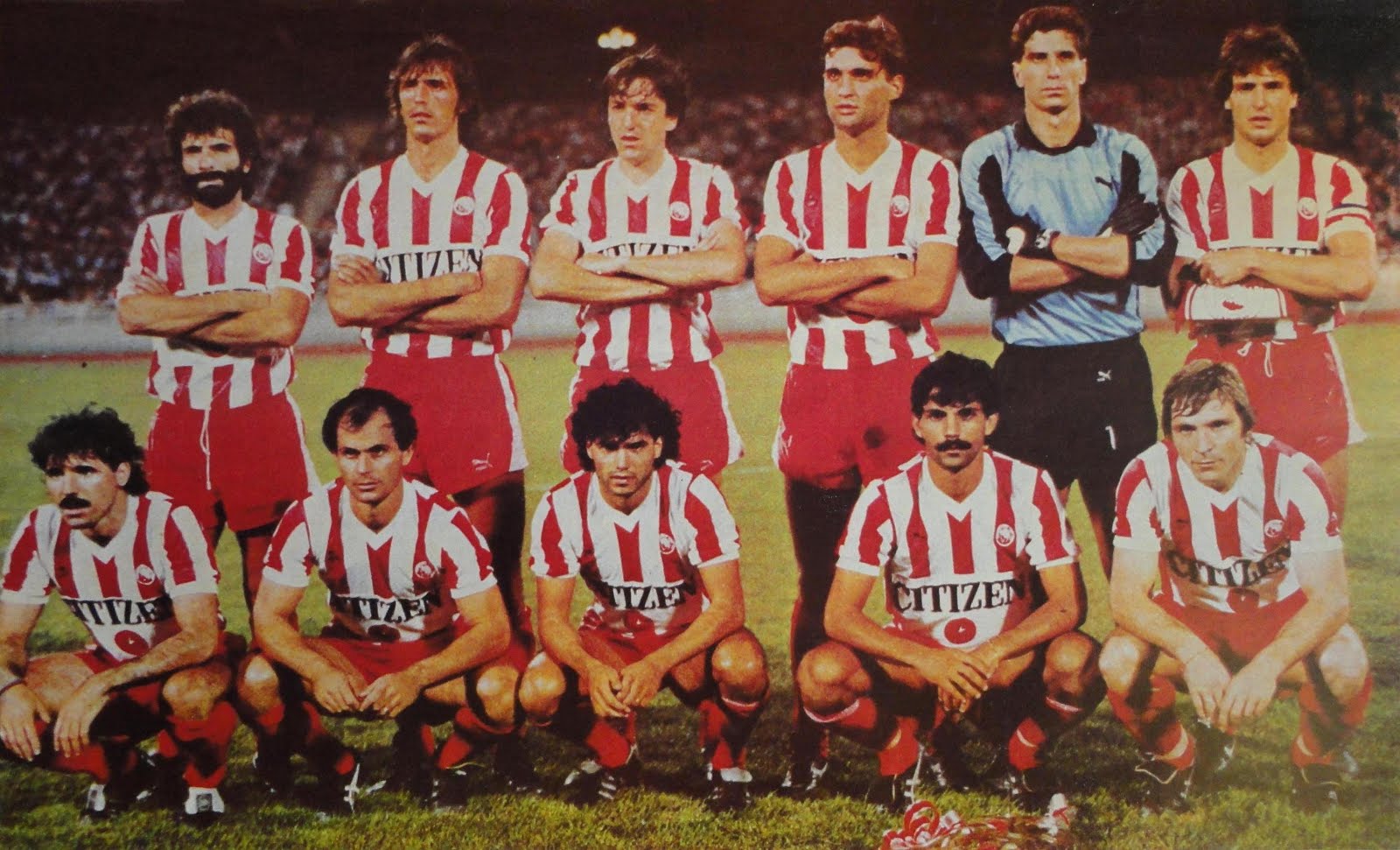
 Disappointing season for Olympiakos, but they had only themselves to blame for the failure to win anything. For some reason, the squad was not very good and really needed urgent reinforcement. And they were going to be done, for Olympiakos without trophies… it was a hard slap on the face.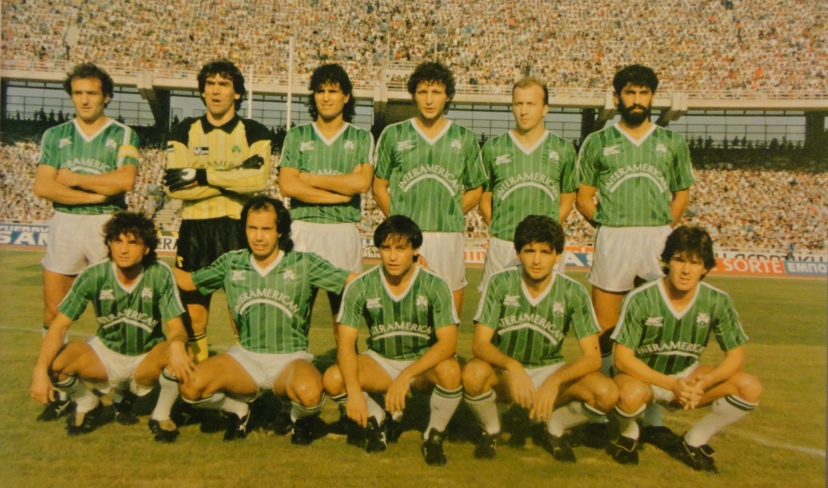
 Excellent season, finished with a double, but there was much to be desired – this team had only 2 great stars: Saravakos and the Yugoslav former national team star Zajec. Not enough for a club with Panathinaikos’ pretencions. Especially on the international level. But this was concern for the summer transger period. Presently, 14th title and 9th Cup were collected.
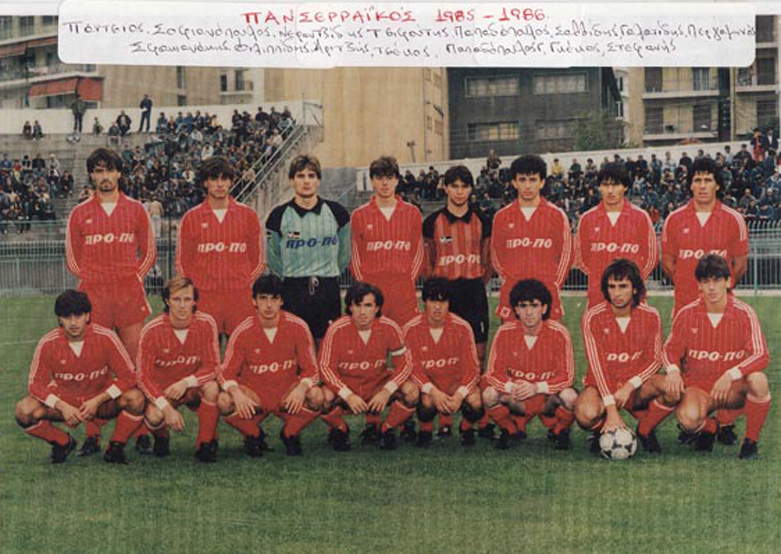 Panserraikos (Serres) – 15th with 24 points. Lost a battle between 5 teams on worst head-to-head record and relegated.
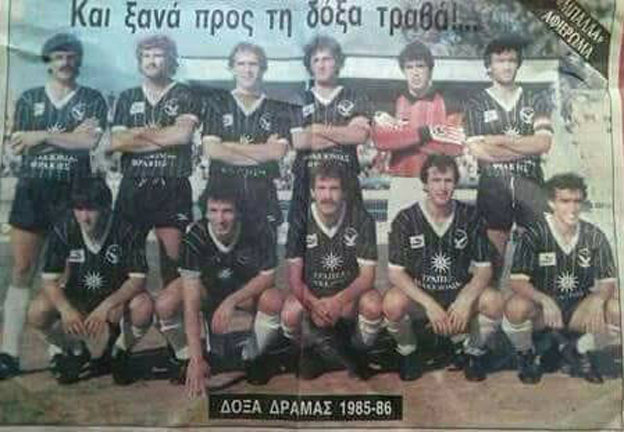 Doxa (Drama) – barely escaped relegation: 14th with 24 points.
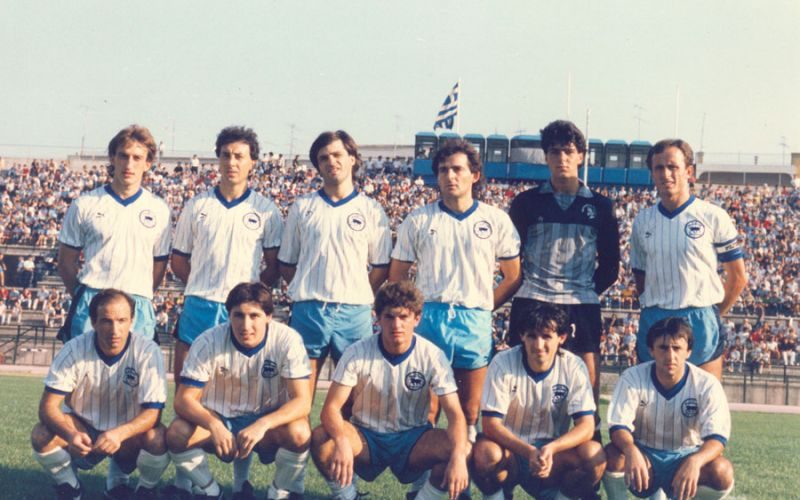 PAS Ioannina (or Giannina, depending on sourse) – 11th with 24 points.
 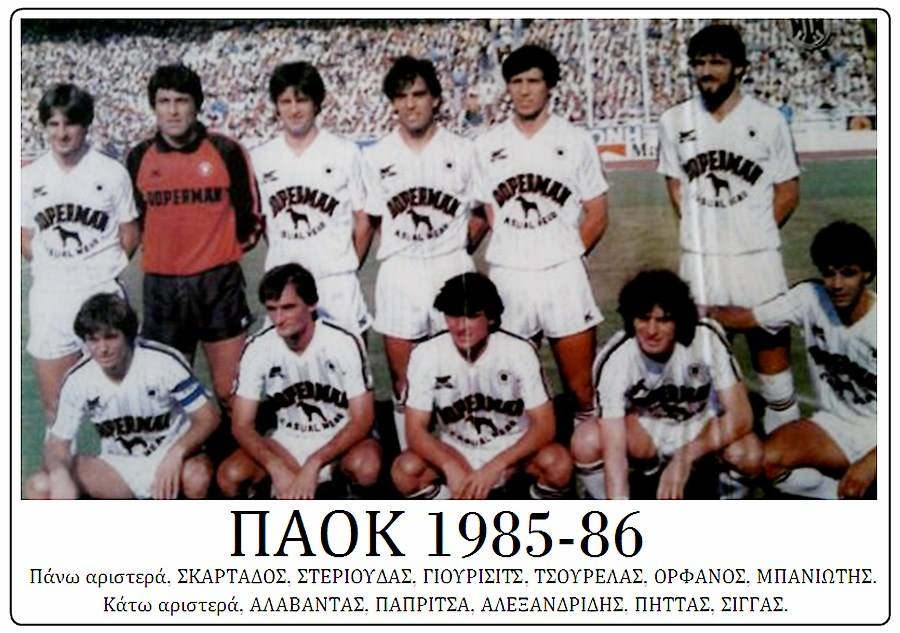 PAOK (Thesaloniki) – waht a plunge. The champions of the previous year were not 10th with 27 points.
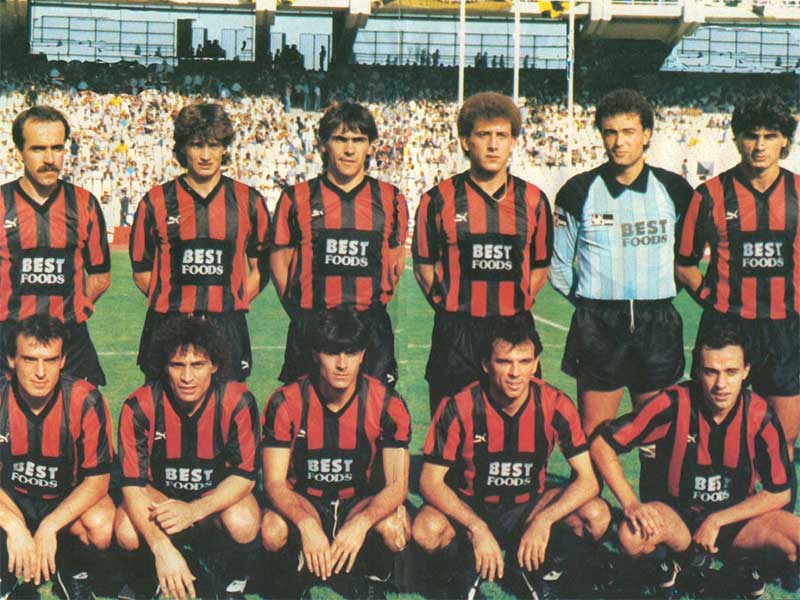 Apollon Kalamarias (Thesaloniki) – 9th with 28 points.
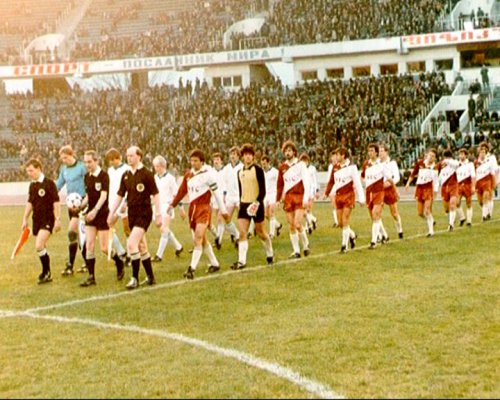 AE Larissa – in moave kit – 8th with 30 points.
 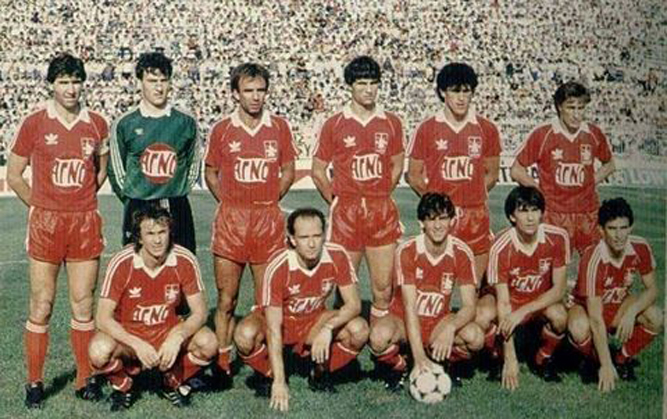 Aris (Thesaloniki) – in their reserve colours – 7th with 33 points.
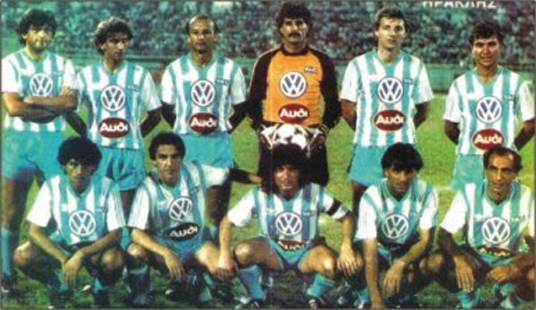 Iraklis (Thesaloniki) – one of their strongest seasons, but only 4th with 36 points at the end.
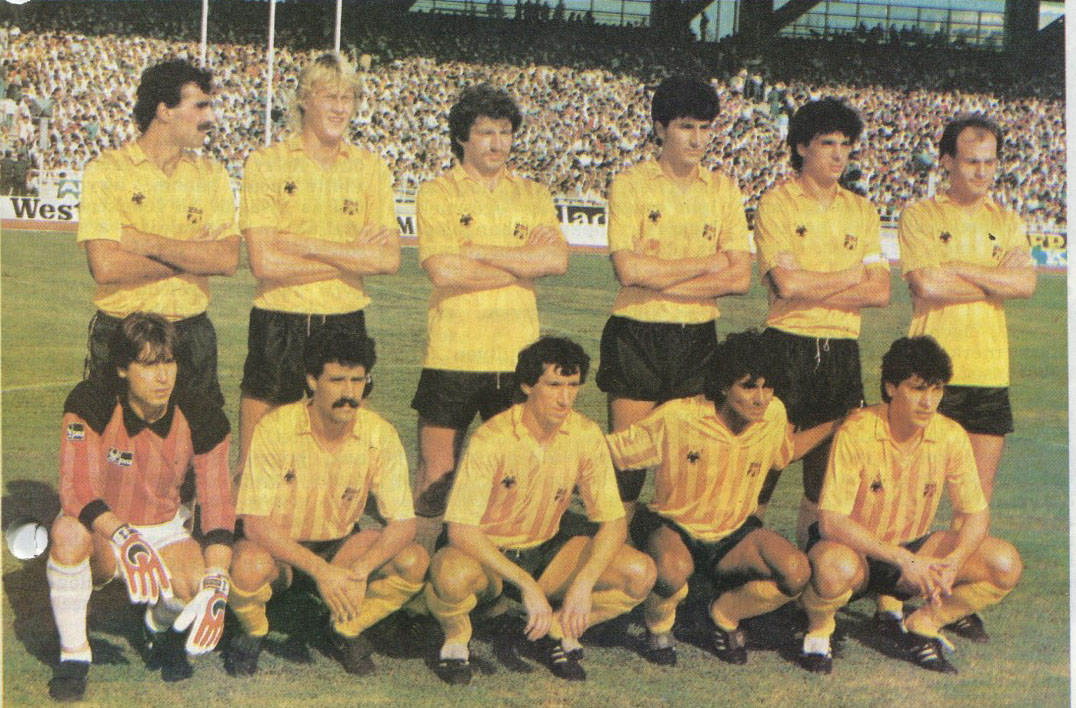 AEK (Athens) – clinched 3rd place with 36 points and thus secured UEFA Cup spot.
 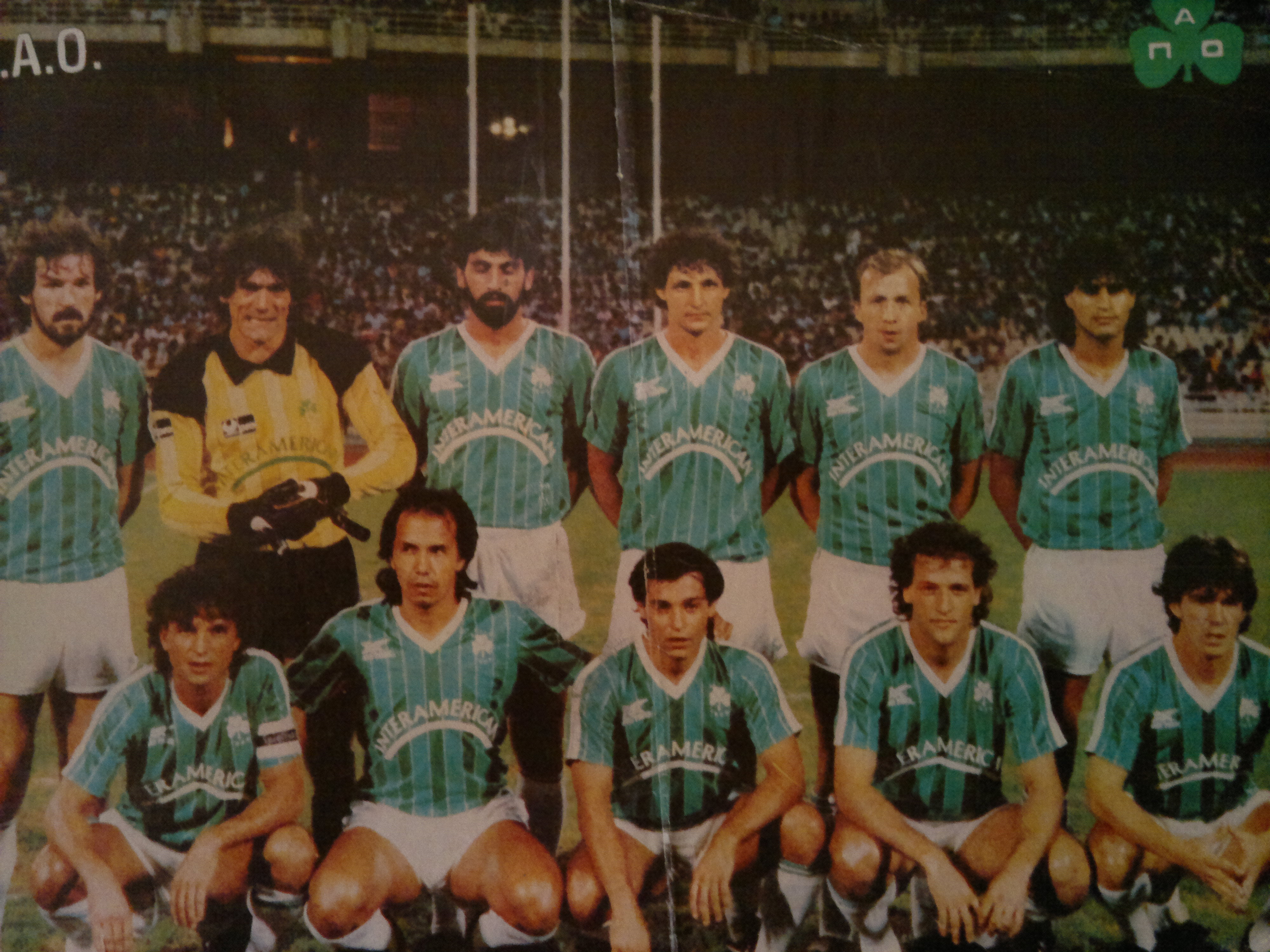 anathinaikos (Athens) was unriveled and easily won the title with 43 points from 18 wins, 7 ties, 5 losses, and 58-26 goal-difference. Perhaps not the best squad in the history of the club, but still having stars in top form and collecting one more title.
 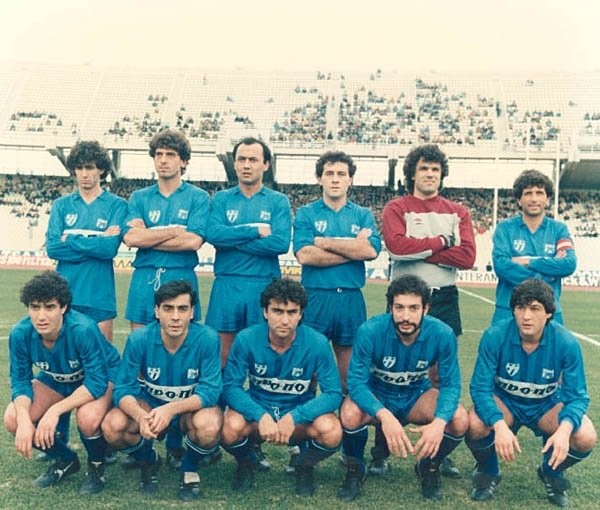 Eolikos Militinos (Lesbos) – 19th, A.S. Naoussa – 18th, and Edessaikos A. O. (Edessa) – 17th. Edessaikos was most unfortunate among the relegated – their fate was decided on the head-to-head record against Acharnaikos Menidi (Athens). Acharnaikos survived, for they won both games.
 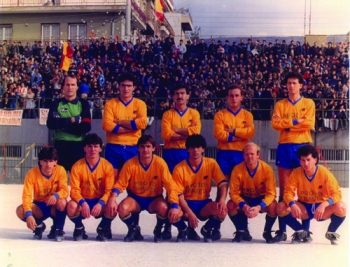 Panetolikos (Egrinio) – 13th with 37 points.
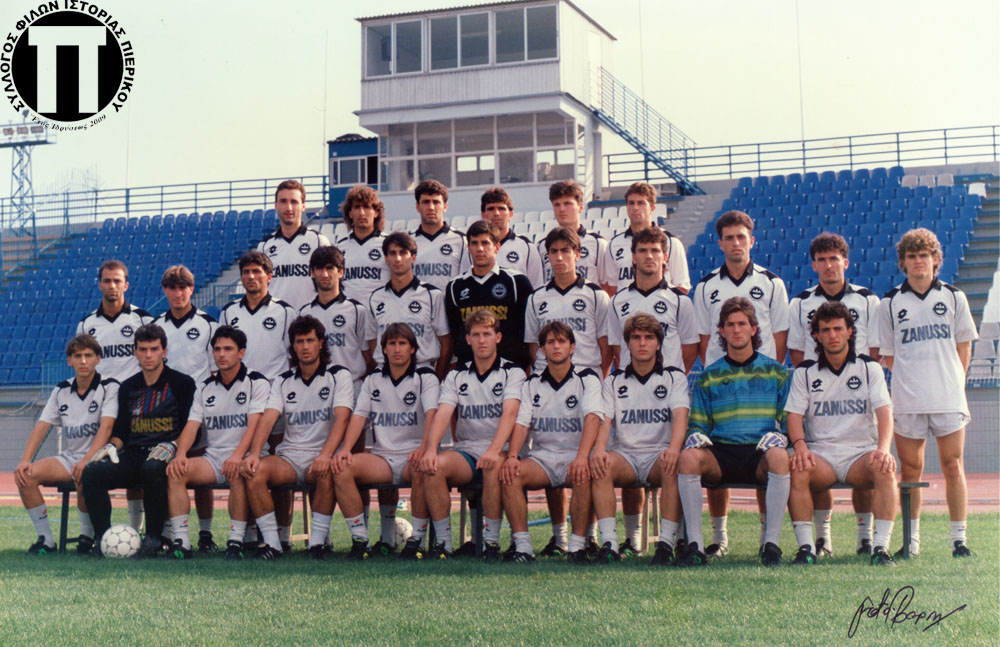 Pierikos (Katerini) was 10th with 37 points.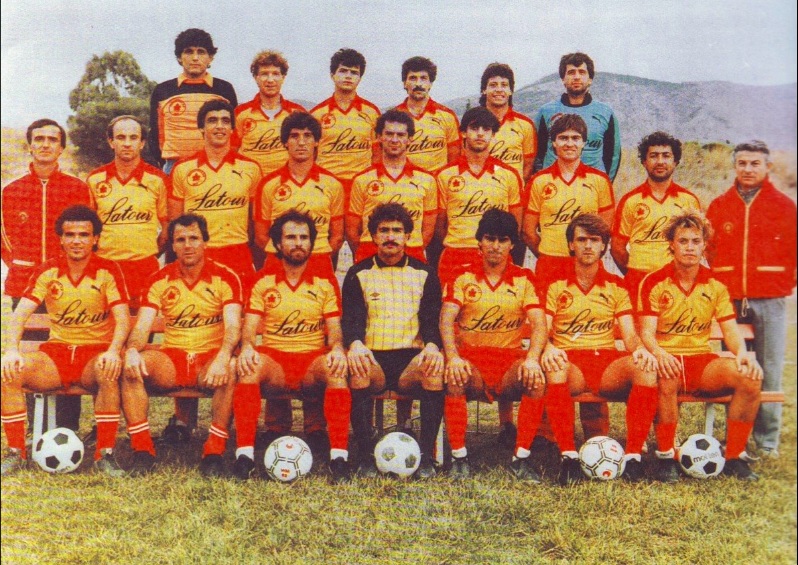
 Athinaikos (Athens) – 6th with 39 points. Perhaps the only team quite steadily going up, but nothing special yet. And it was not easy to be special in Athens – too many clubs, too much competition. There were three more in the Second Division – Atromitos Peristeri, Egaleo F.C., and Acharnaikos Menidi. And then – the first division clubs, every next stronger and bigger: Apollon, Panionios, AEK, Panathinaikos. Athinaikos was doing quite well under the circumstances.
 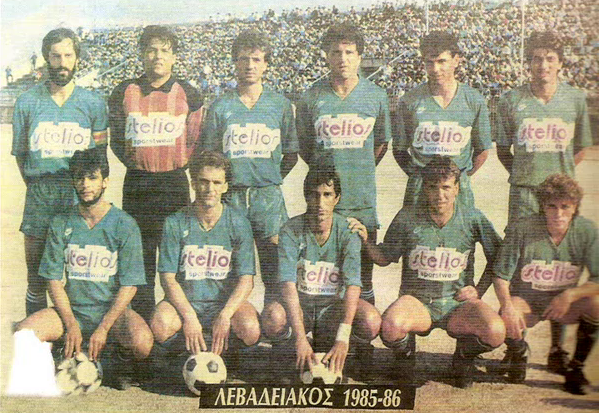 A. E. Levadiakos (Livadia) was 4th with 41 points. One of the best, but… only relatively stronger than relegated Edessaikos – 5 points difference – and not at all in the race for top positions and promotion.
  A.S. Veria – or was it P.A.E. Veria? Greek clubs present quite a difficulty with their names – eventually lost the battle for the title by a point, but it was fine: they were promoted.
 Diagoras (Rodos) clinched top position with 48 points. 20 wins, 8 ties, 10 losses, 68-38 goal-difference. Splendid – Diagoras hardly ever won anything, so champions of Second Division was real success. And they were promoted, of course. However, not much hope could be placed on neither them, nor Veria for surviving in First Division, let alone making an impact.
 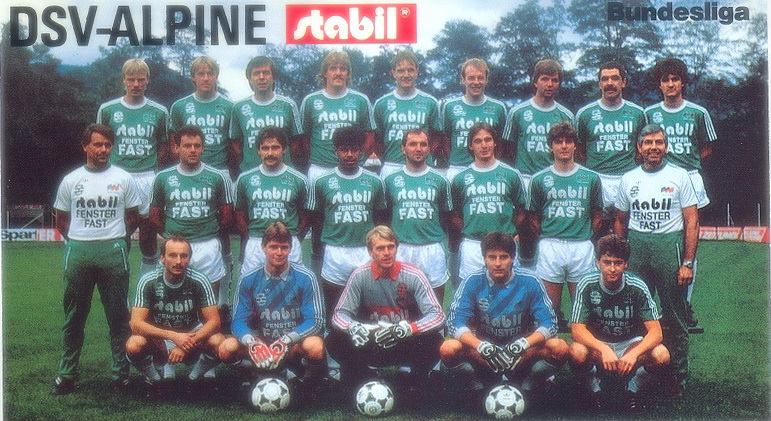 Donawitzer SV Alpine was the second First division team to go down this season – they finished 5th with 14 points. Front row from left: Schicker, Hobelleitner, Angerer, Paal, Erlsbacher.
 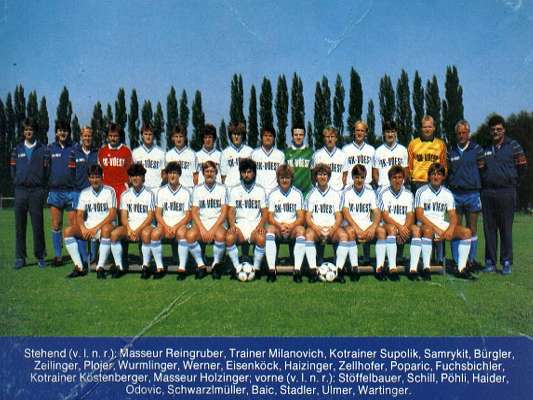 SC VOEST Linz also avoided relegation – they finished 2nd with 17 points.
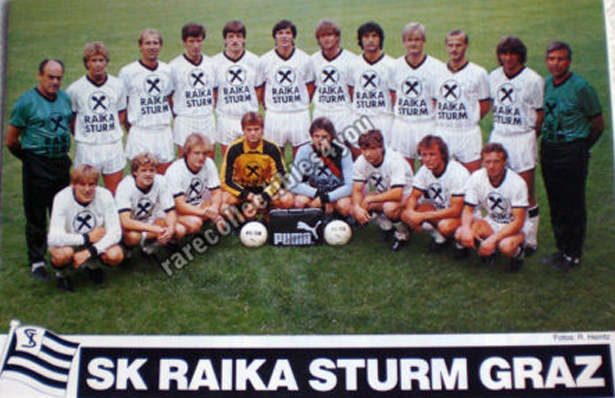 SK Sturm Graz bested Grazer AK on goal-difference and ended 5th with 35 points.
 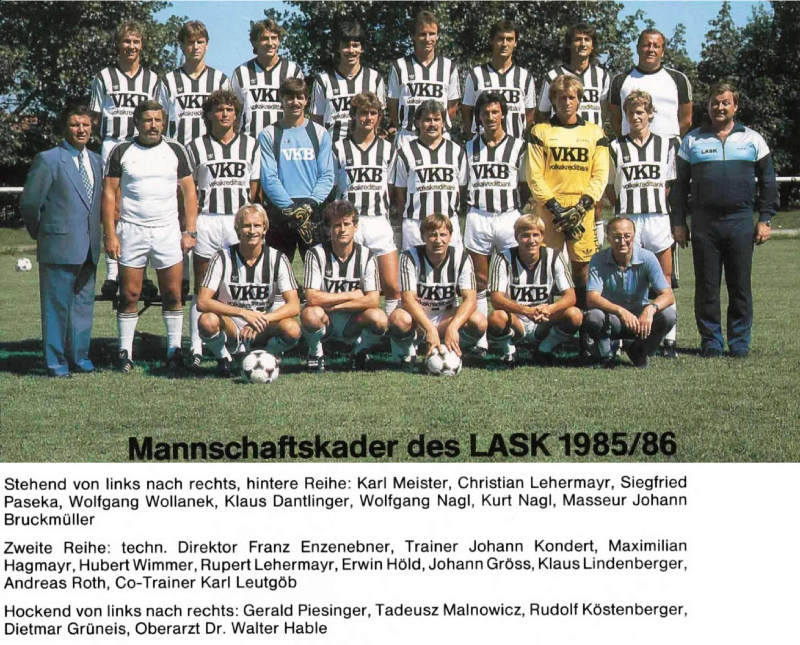 Linzer ASK was nothing special, but at least steady – 5th in the fall, not 4th with total of 38 points.
 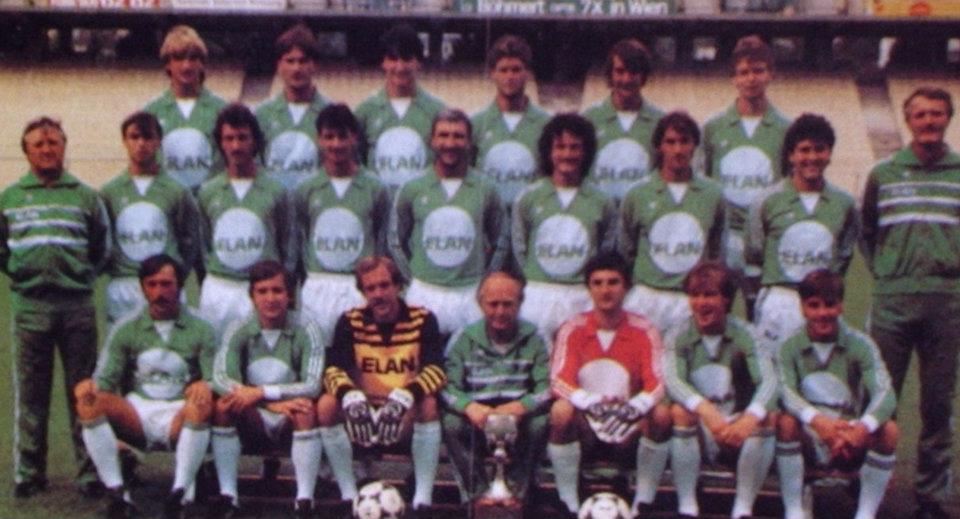 Twice unlucky, Rapid. May be next year will be better.
 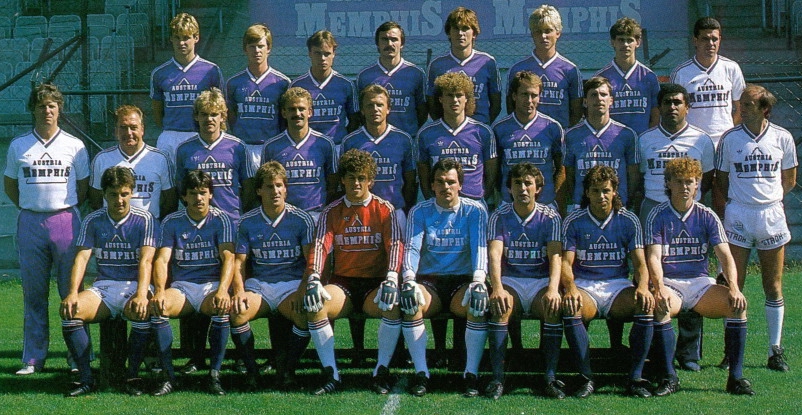 Austria Vienna finished with a double. Strong season, no doubt. To a point, it was also an individual battle between the greatest Austrian players at that time – Prohaska prevaile over Krankl. A sign of the times, to a point… the constructive midfielder won over the great goalscorer: midfield commanded in the 1980s and scorers… well, they needed somebody to feed them with sharp balls. Krankl needed Prohaska to shine, but Prohaska did not need a Krankl. Yet, something else was more important and alarming: both great stars were getting quite old. And so were some of the best players around them – the Hungarian Nyilasi, in Austria’s case. There were no younger players at similar level…
 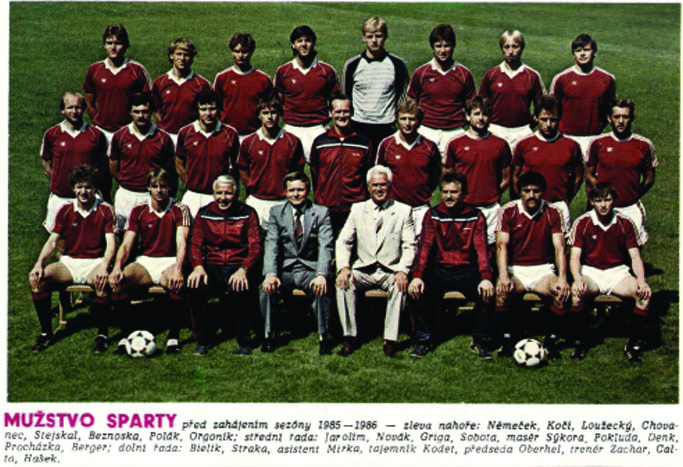 Sparta (Prague) was about to win a double this year, but won nothing. They were the best Czechoslovakian team by far, full of national team players, the top current stars of the game: Chovanec, Stejskal, Nemecek, Griga, Prochazka, Berger, Straka, Hasek. There was no other team with even half-the talent Sparta had. And very likely that was the reason for failure: taking for granted their superiority and underperforming as a result. It was bitter season, teaching bitter lesson.
 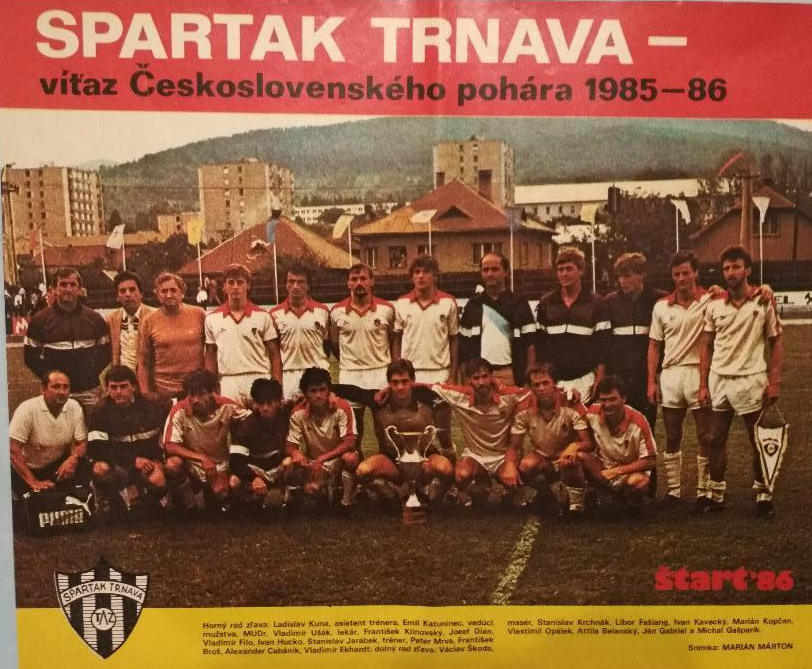 May be incidental victory, but enjoyable nevertheless. Spartak (Trnava) failed from grace many years ago and there was no chance for restoring its leading position now. But they took their chance to win a trophy and if their opponents in Slovakia were particularly out of shape this season and Sparta did not took them seriously enough, it was not their fault. Prevailing over Sparta was particularly wonderful, for the difference was enormous: Sparta had the best of Czechoslovakian players and Spartak did not have even one half-measuring to Sparta’s stars. It was their 4