No such excitement in the top league – among the best it was business as usual, somewhat supporting the sceptics view that enlargement of professional or semi-professional football was hardly the way for elevating the quality of the game in a relatively poor country where the best players played in England by definition. Changes or no changes, things were staying as they were…
University College Dublin was the weakest team and ended last and relegated with 8 points. Shelbourne was unlucky to a point, but certainly weak – they were 10th with 13 points, but relegated on worse goal-difference. Cork City survived on better goal-difference, but the future did not look bright for them.
 Limerick City had a so-so season – 6th with 24 points – but they also marked a new divide: they finished 5 points ahead of Athlone Town, 7th, which suggested that the enlargement of professional football was perhaps further weakening of most teams – the newly reduced top league was sharply divided into two groups of teams and perhaps the limited resources of the country could not support more than half-a-dozen decent teams. Say what you like, but even among the better teams there was no strong competition – Dundalk finished 3rd with 30 points and Galway United came closest to rivaling the best known Irish club with 31 points. But were they really close?
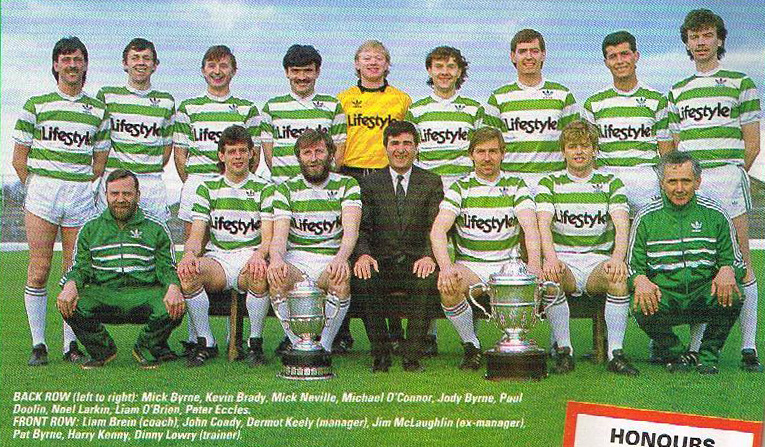 Shamrock Rovers won the championship like many times before. On the surface, it was not an easy season – they were only 2 points ahead of Galway. No doubt, Irish spirit kept every team fighting against Shamrock Rovers, but ability was limited and really the leaders had it easier than their rivals, especially against the weaker half of the league. At the end, they won 15 out of total 22 games, tied 3 and lost 4. Galway lost fewer games – 3 and Dundalk 4, but both challengers won only 12 matches each and that was the big difference making Shamrock Rovers winners. They scored most goals – 44 – and had second-best defense – 17 (Dundalk allowed only 16 goals in their net). At the end, the attack prevailed and attack was most important against the weaker teams in the league.
If anybody doubted the class of Shamrock Rovers, the team was quick to kill the argument: they reached the Cup final and there disposed of Waterford United 2-0.
 Waterford United was weaker, no doubt, and winning was not their forte – ties were their specialty this season – but at the end their disappointment was compensated with a chance for playing a bit of international football by representing Eire in the Cup Winners Cup. Thanks to Shamrock Rovers, as it was…
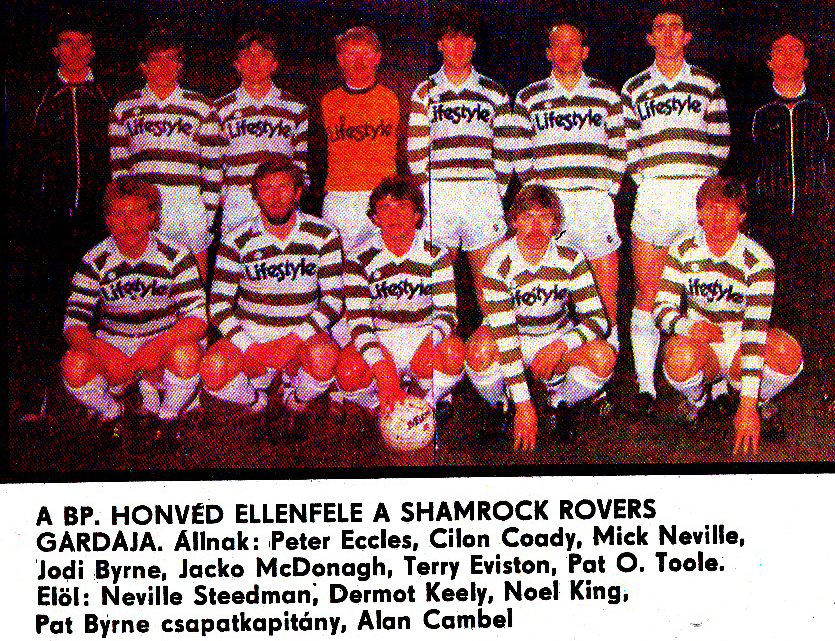 Rovers collected one more cup and repeated their Cup success of the previous year. A double was the final result of the season, clearly proving that they were the strongest Irish club even in the new environment. Some things never change.
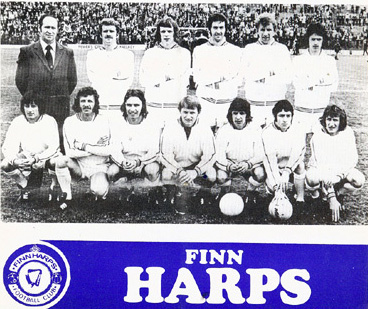 Finn Harps – 7th with 13 points. Cobh Ramblers – 6th with 15 points and the lowest scoring team in the league with only 14 goals. Drogheda United – 5th with 18 points.
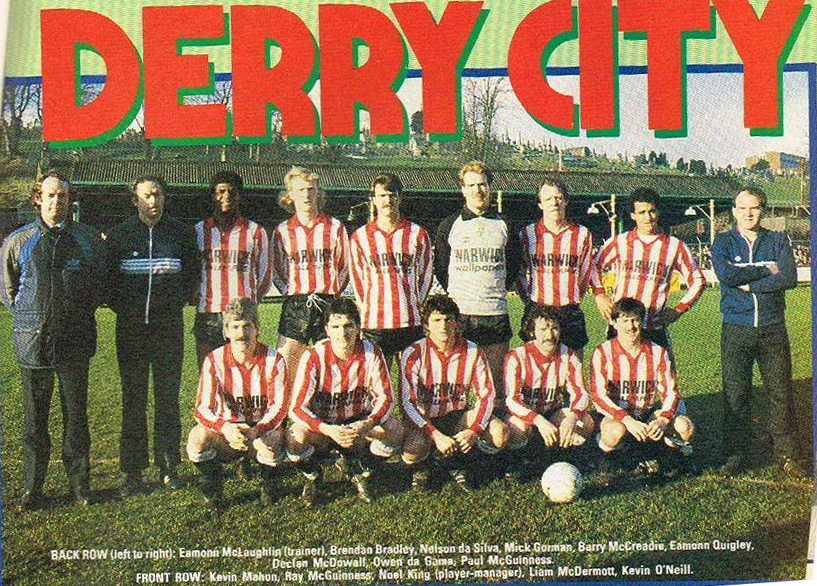 Derry City was 4th with 22 points, Longford Town – 3rd with 25 points.
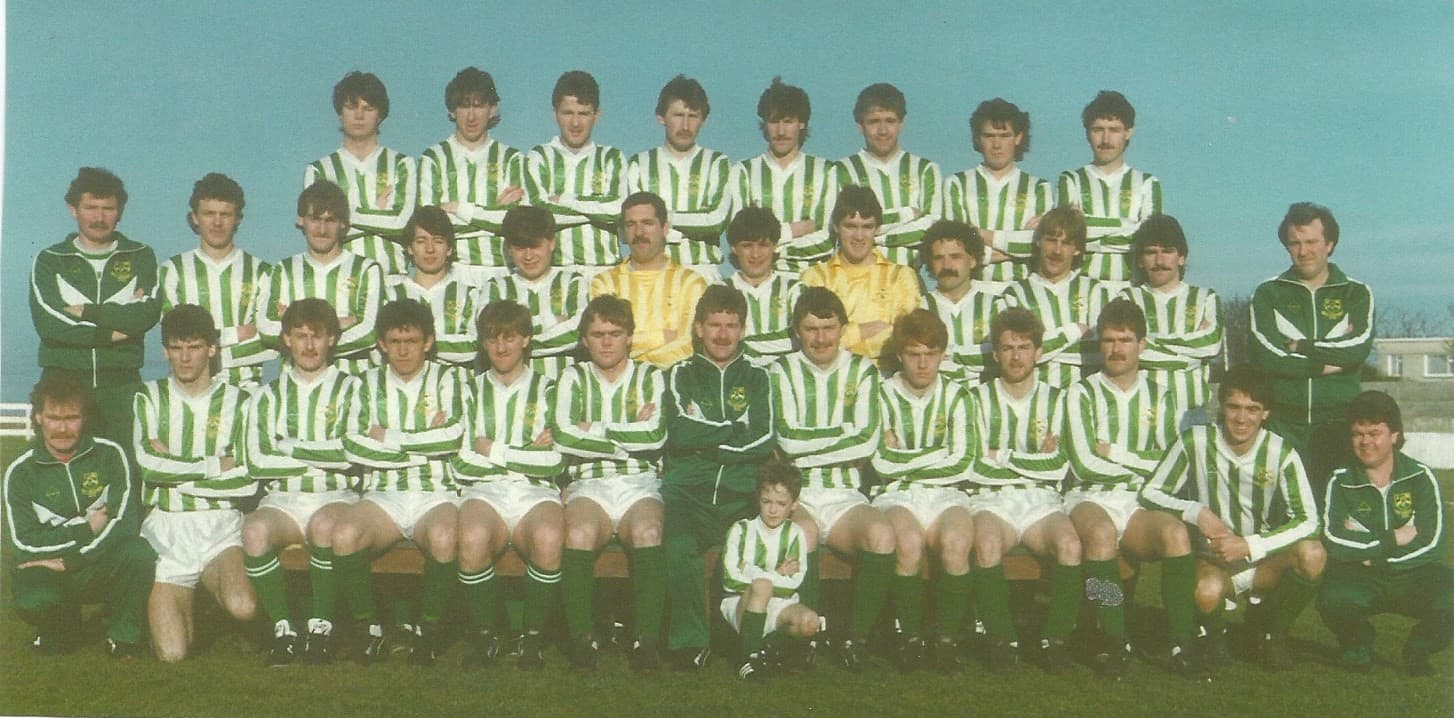 Bray Wanderers got the laurels – the newcomers were pleased to win the very first Second Division championship. They had splendid season, losing just once – the rest was 11 victories and 6 ties. They scored 30 goals – 2 teams scored more goals than them, but none equal them defensively – the first champions allowed only 10 goals in their net. It was not easy sailing at all – Sligo Rovers was equally ambitious and Longford Town not far away either, but at the end Bray Wanderers was one point ahead of the old top division member Sligo. It was just great. Promotion was even better – the club immediately proved its worth and may be justified the creation of the new division to the sceptics.
 Lucky, unlucky, Ikast fS lost and the margin was perhaps objective – minimally, they also finished behind B 1903 in the championship – 1 point difference in the championship, 1 goal difference in the final: small, but still a difference.
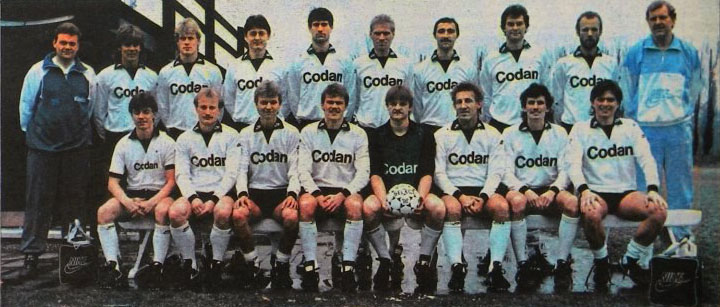 B 1903 (Copenhagen) triumphed and that was great for the old club, for they hardly ever won: this was their 2nd trophy, both times Cup winners. Sitting from left: Jorgensen, Norager, Rasmussen, Max Petersen, Palle Petersen, Nygaard-Andersen, Ibenfeldt, Valentin (?).
 Hvidovre IF and
 AaB (Aalborg) topped the Second Division and were returning to top flight once again.
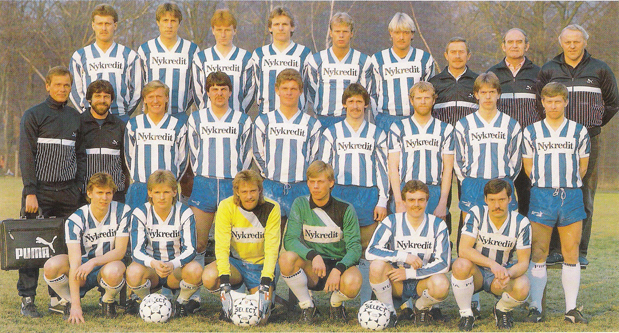 OB (Odense) was one of the typical teams of the season – 8th with 26 points. Top row from left: Carsten Margaard, Christian Holst, Johnny Hansen, Leon Hansen, Tommy Møller Nielsen, Ulrik Moseby, Leif Andersen, Erik Birkholm, Per Bartram.
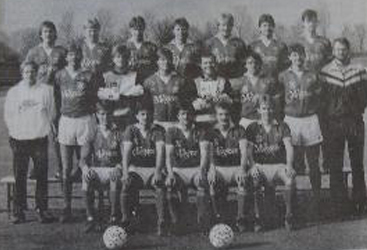 Lyngby BK looked like losing steem – 4th, but rather distant 4th with 32 points.
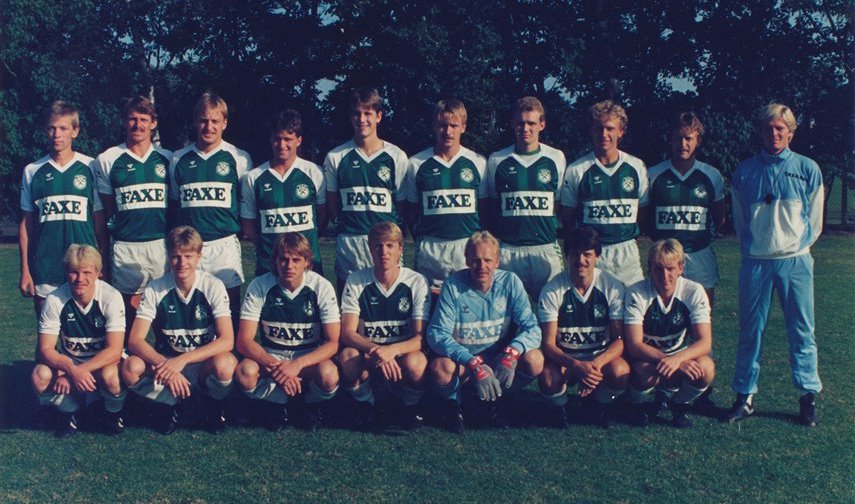 Næstved IF had great season, ending 3rd with 35 points.
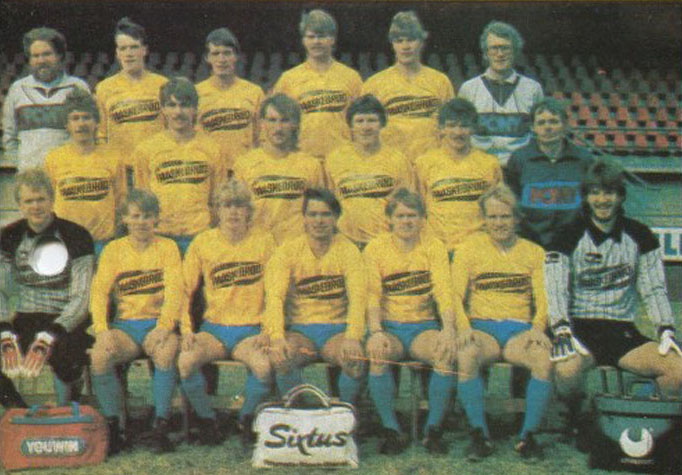 Brøndby IF finished 2nd with 37 points, continuing their solid performance, but unable to challenge this season’s leader.
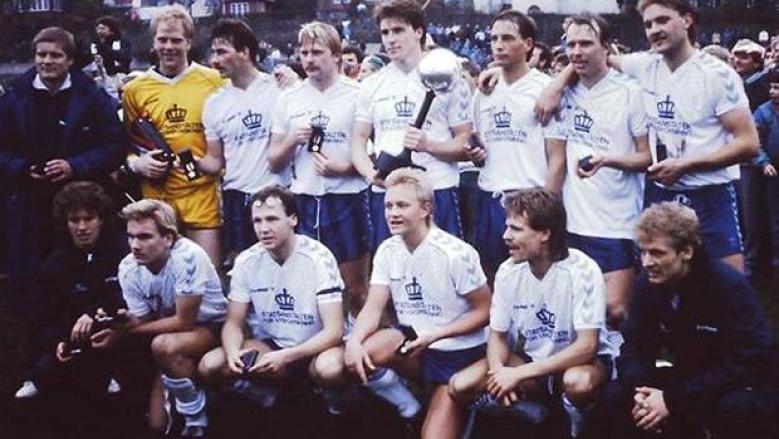 AGF (Aarhus) dominated the championship and comfortably won it with 41 points. 17 wins, 7 ties, and only 2 lost games. Scored 49 goals, received 22. Wonderful victory and their 5th altogether. They had to wait some time for this one, but it was also their last championship success for a very long time. Who would know – the title promised bright immediate future. But never mind – it was a season of triumph.
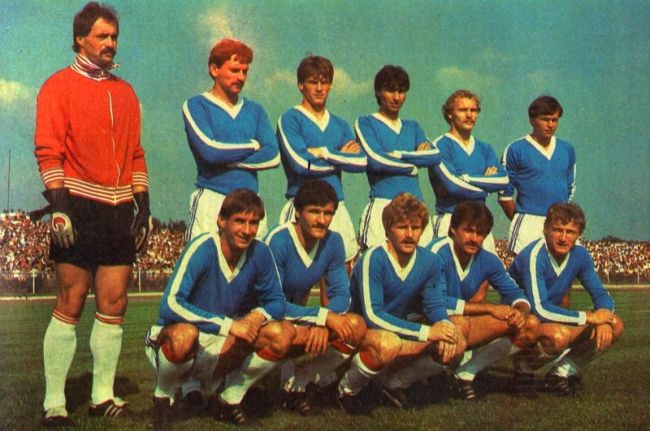 Gornik lost the Cup and no double for them. Second row from left: Cebrat, Dankowski, Urban, Komornicki, Ossowski, Majka
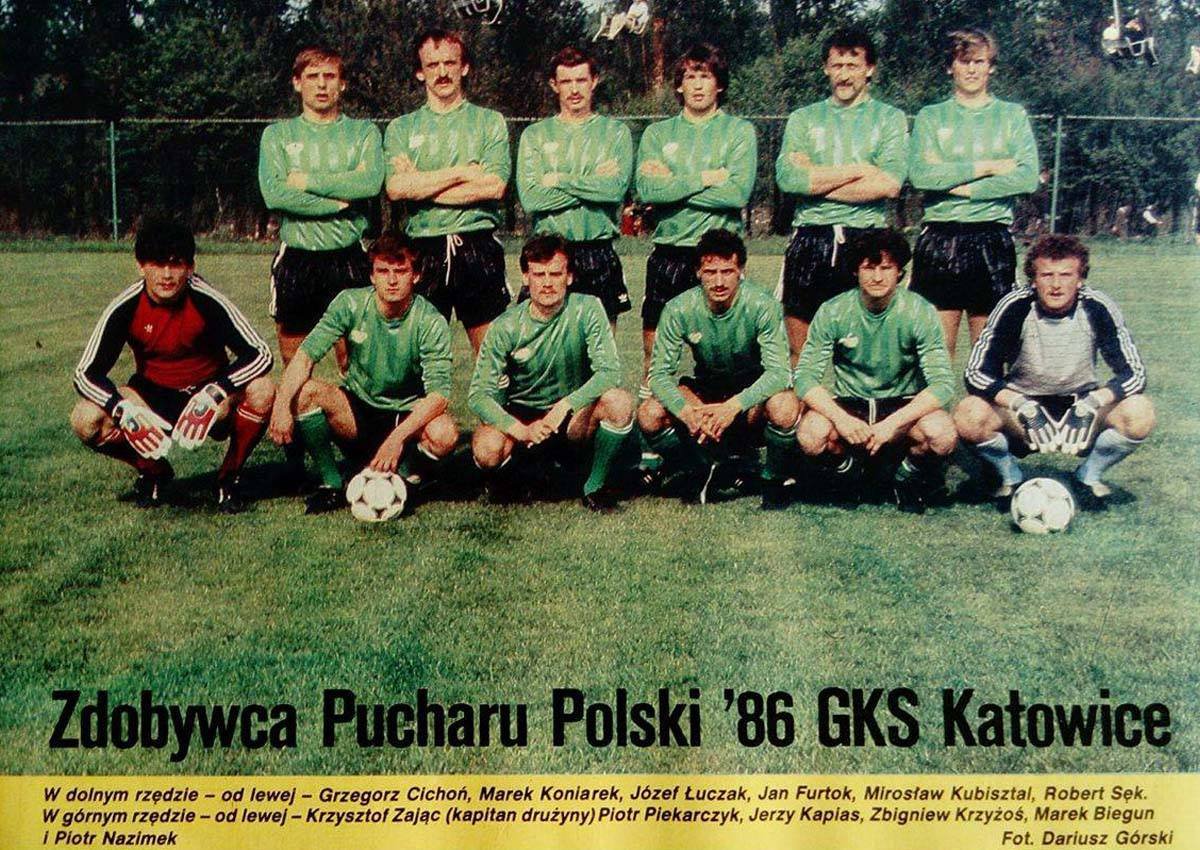 GKS Katowice really made history – they did not play top league football all that often nd never won anything before. This was their best season in history so far and eventually a beginning of their golden period. One is tempted to say that the big difference between GKS and Gornik was Jan Furtok – Iwan was somewhat stuck and not getting better, but Furtok was up and coming. Of course, a single player rarely is the sole reason for success – GKS had good and ambitious squad. Well deserved first trophy, whetting their appetites for more. The fans were jubilant, naturally – success at last!
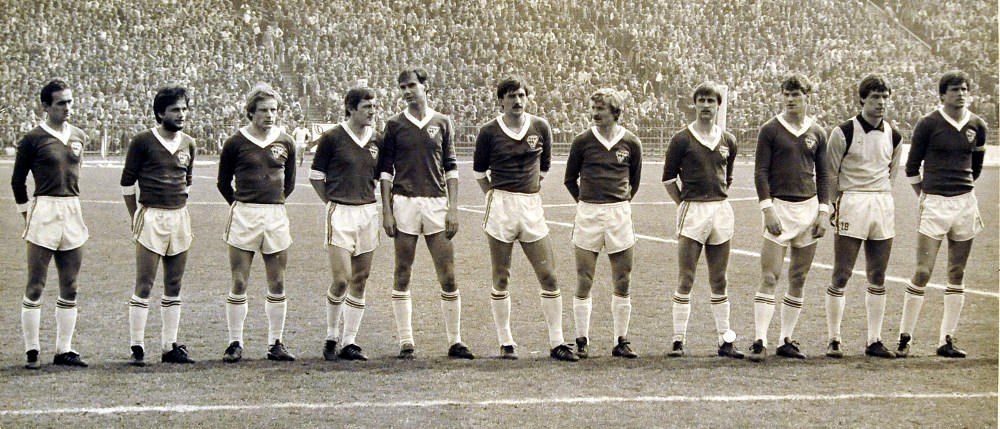 Zagłębie (Sosnowiec) was the weakest – last and relegated with 20 points.
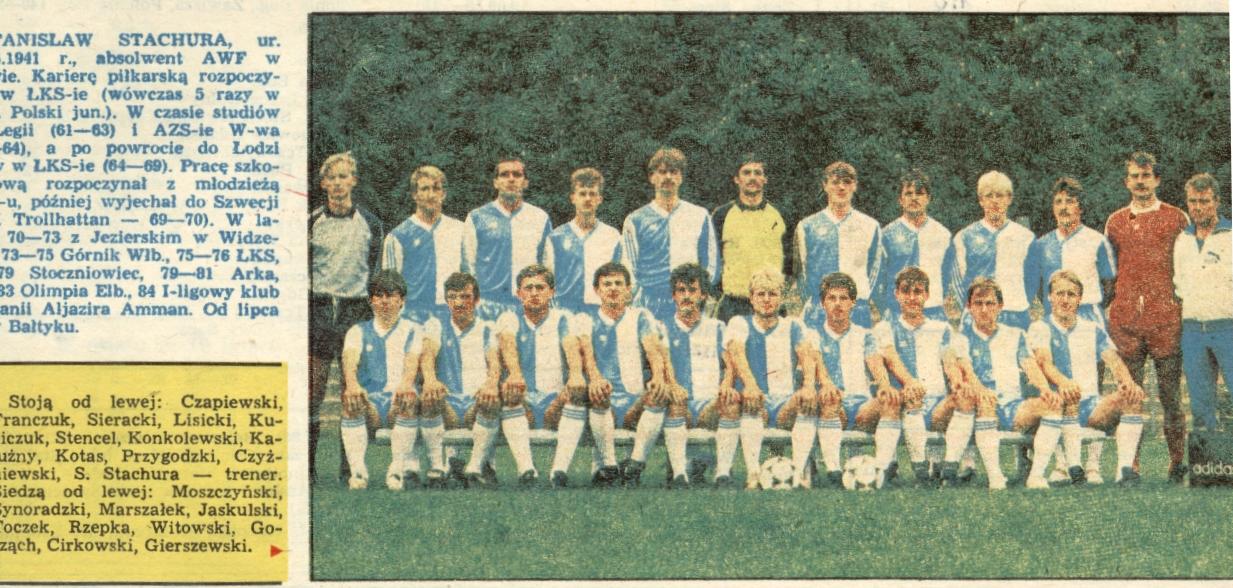 Bałtyk (Gdynia) was the other unfortunate – 15th with 23 points. Down they went.
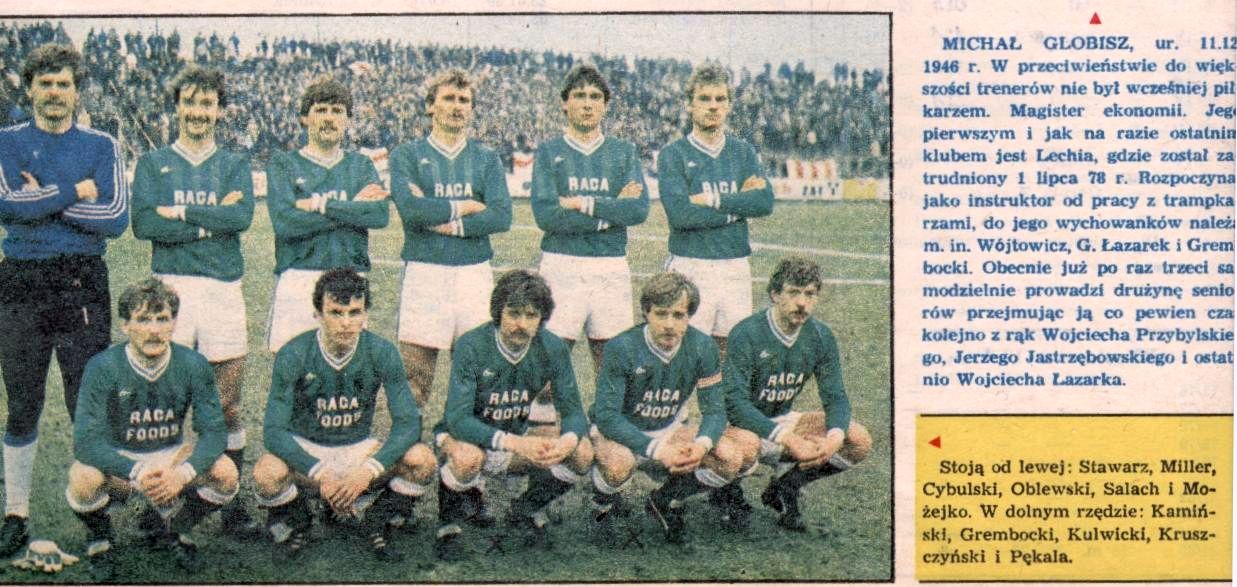 Lechia (Gdańsk) was lucky – 14th with 24 points.
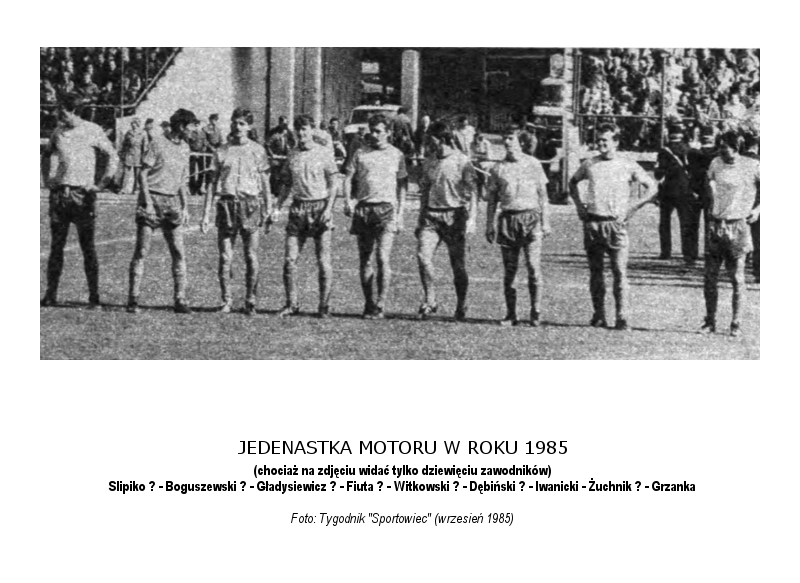 Motor (Lublin) – 13th with 25 points. They were the team with most ties this season – 13.
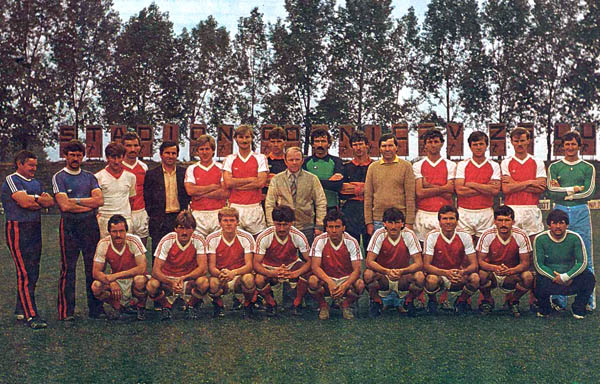 Zaglebie (Lubin) – 12th with 25 points. The lowest scoring team in the championship: only 22 goals.
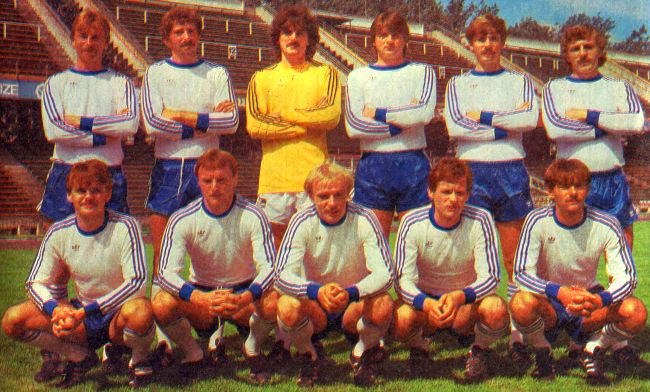 Stal (Mielec) – their glorious years were long gone. 11th with 25 points. Standing from left: Duchnowski, Lizończyk, Pazdan, W.Łukasik, Gruszecki, Wnuk
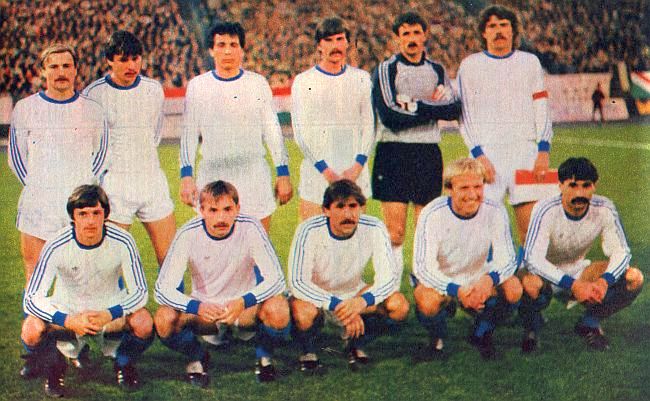 Pogoń (Szczecin) – 9th with 27 points. Standing from left: Hawrylewicz, K.Sokołowski, Urbanowicz, J.Sokołowski, Szczech, Makowski
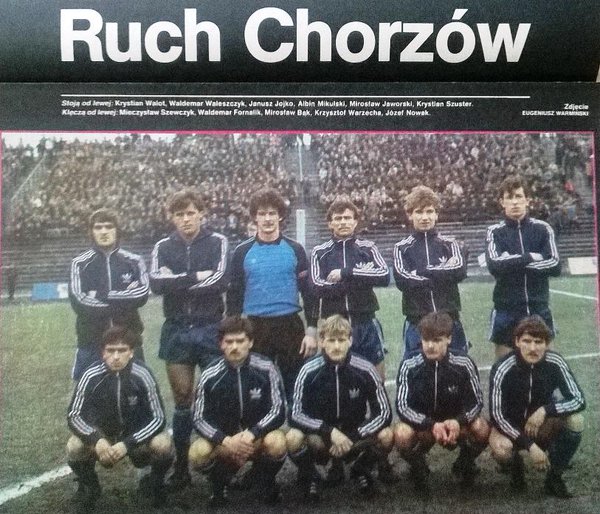 Ruch (Chorzow) – 9th with 28 points.
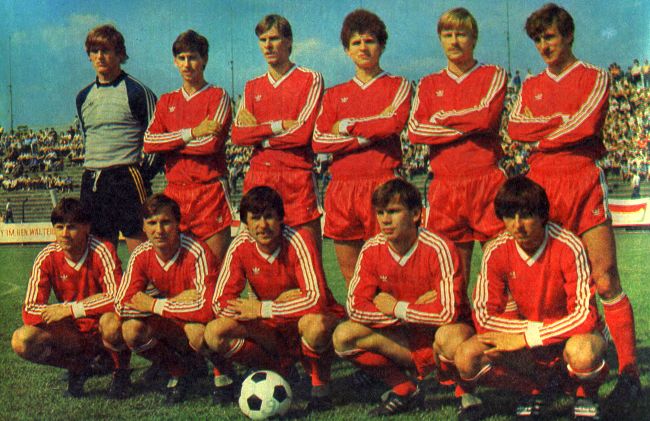 LKS (Lodz) – 8th with 28 points. Standing from left: Bako, Wenclewski, Kruszankin, J.Robakiewicz, K.Baran, Gajda
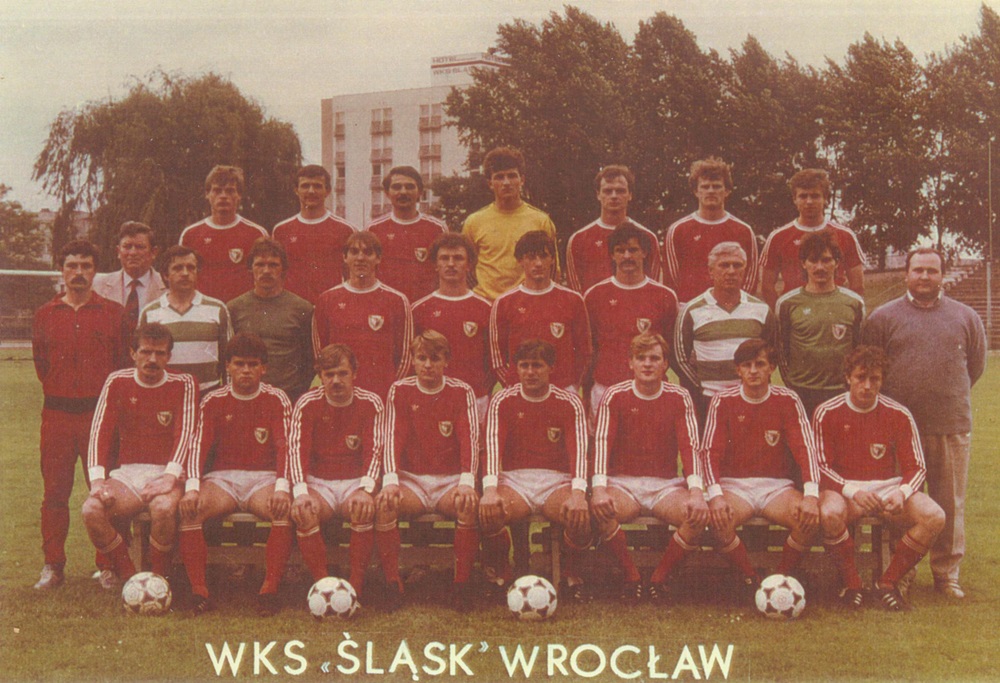 Slask (Wroclaw) – 7th with 29 points.
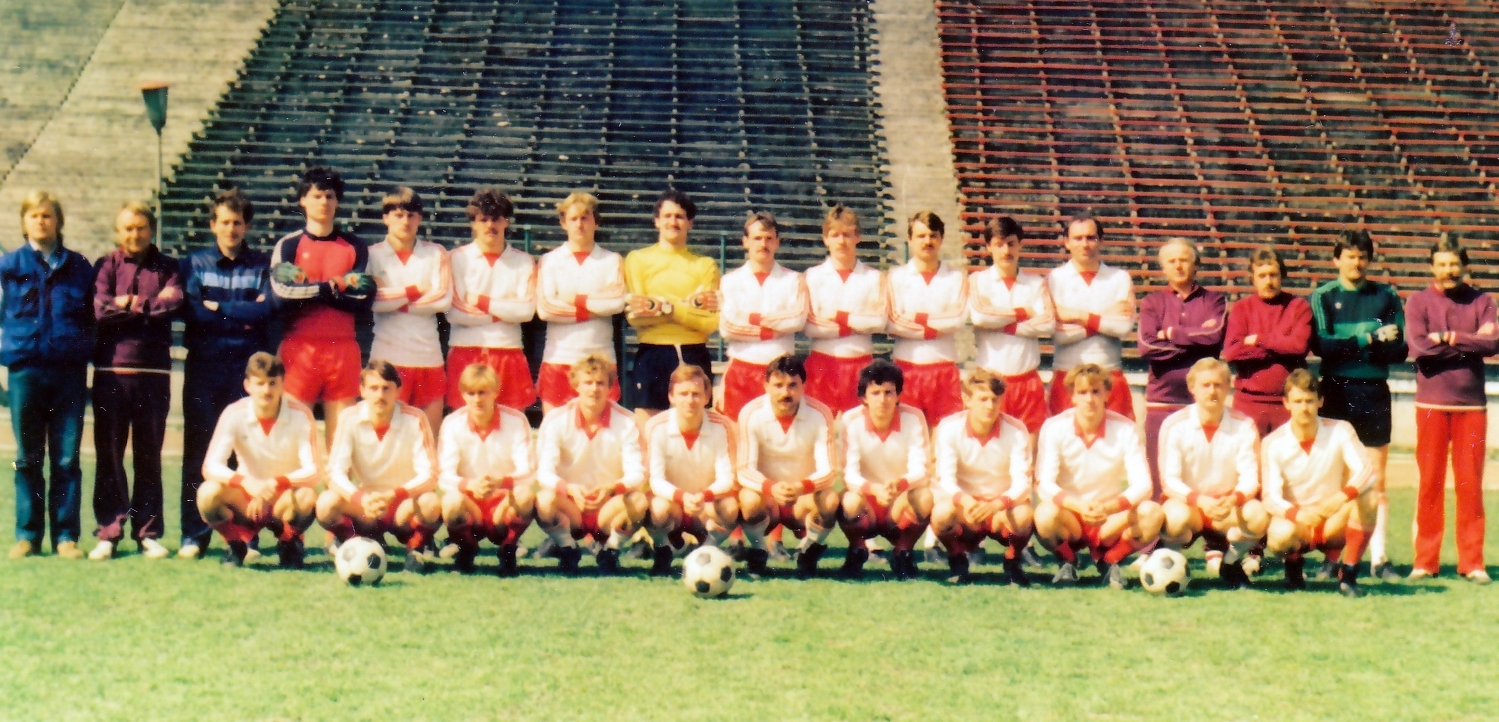 Górnik (Wałbrzych) – 6th with 30 points.
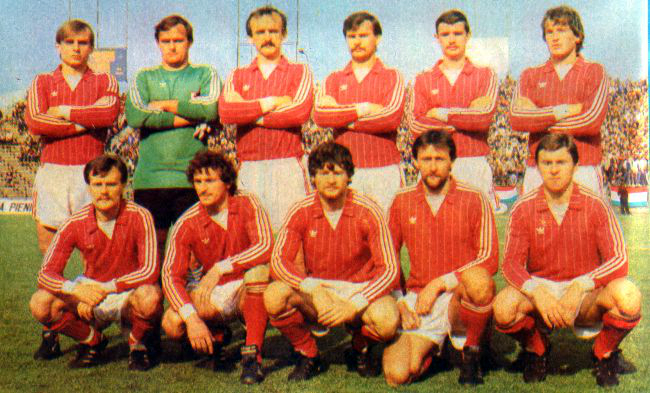 GKS Katowice – 5th with 31 points. Standing from left: Krzysztof Zając, Franciszek Sput, Piotr Piekarczyk, Marek Matys, Jerzy Kapias, Zbigniew Krzyżoś
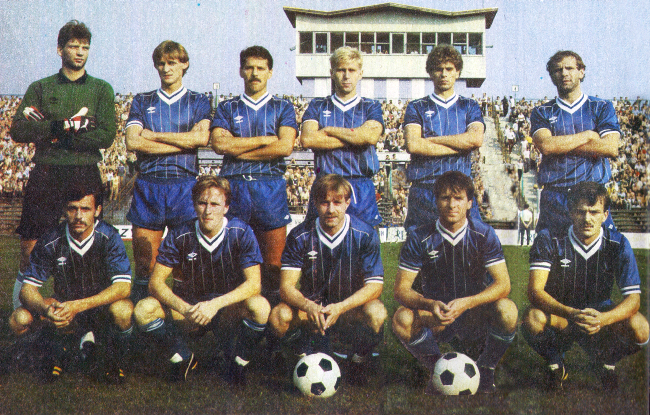 Lech (Poznan) – 4th with 36 points. Standing from left: Ryszard Jankowski, Czesław Jakołcewicz, Mariusz Niewiadomski, Piotr Skrobowski, Dariusz Szwagiel, Krzysztof Pawlak
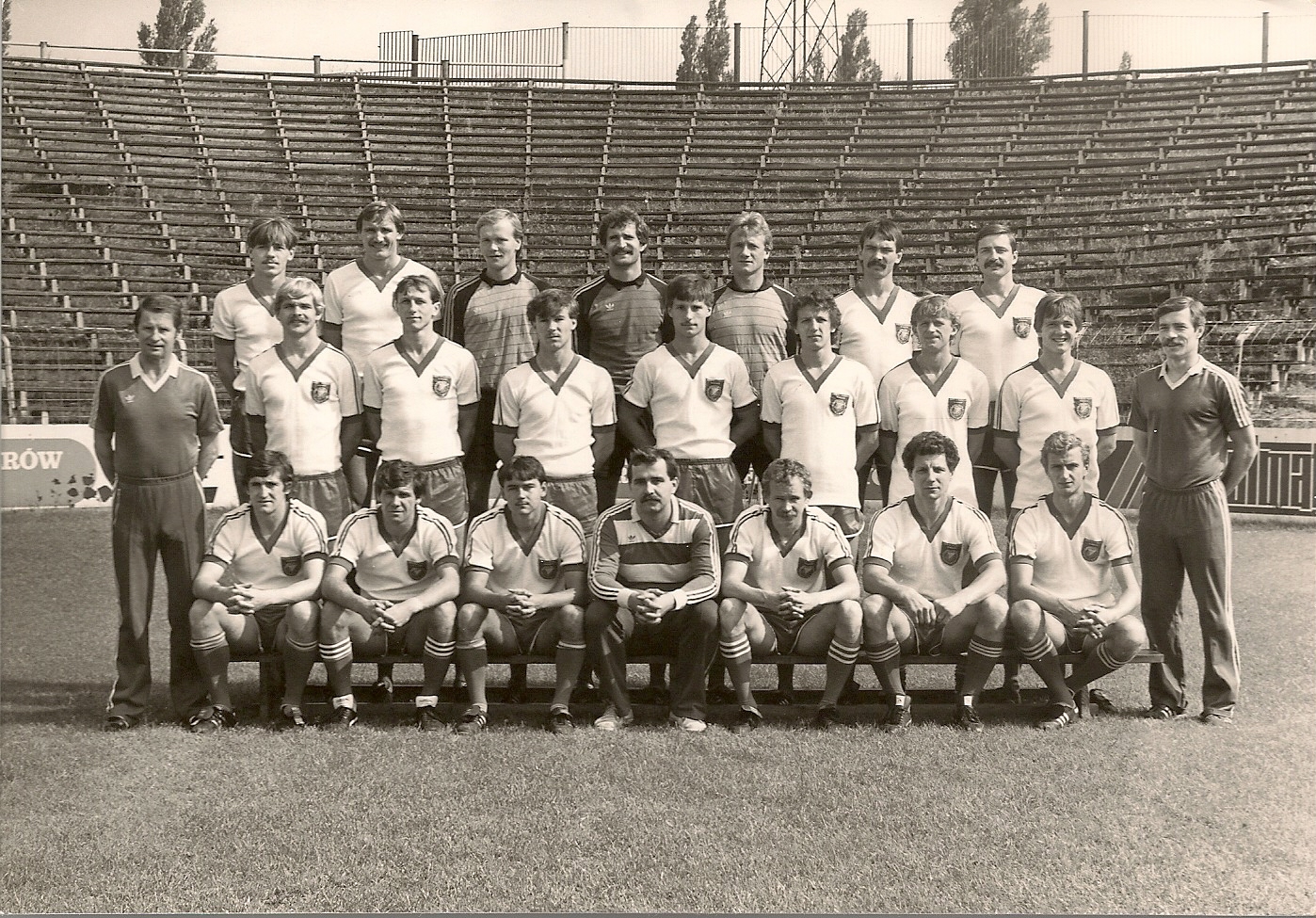 Widzew (Lodz) – 3rd with 41 points.
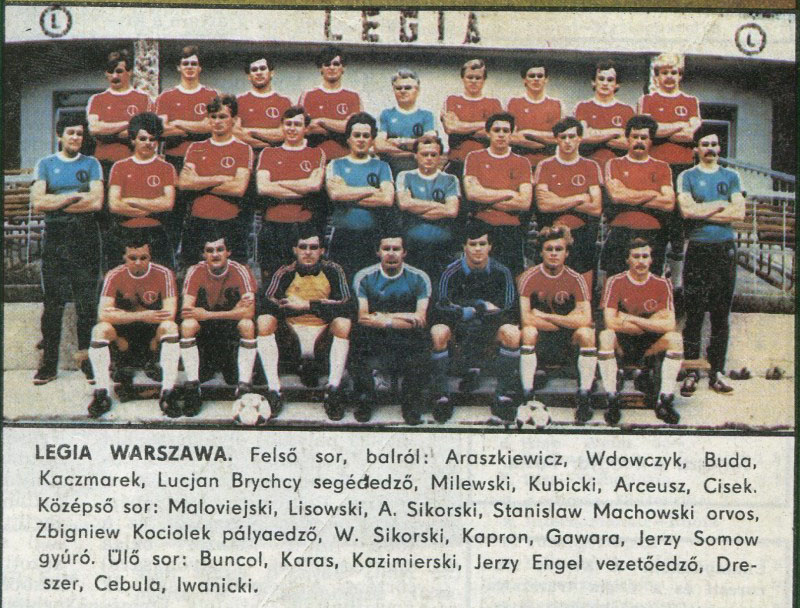 Legia (Warszawa) – 2nd with 42 points.
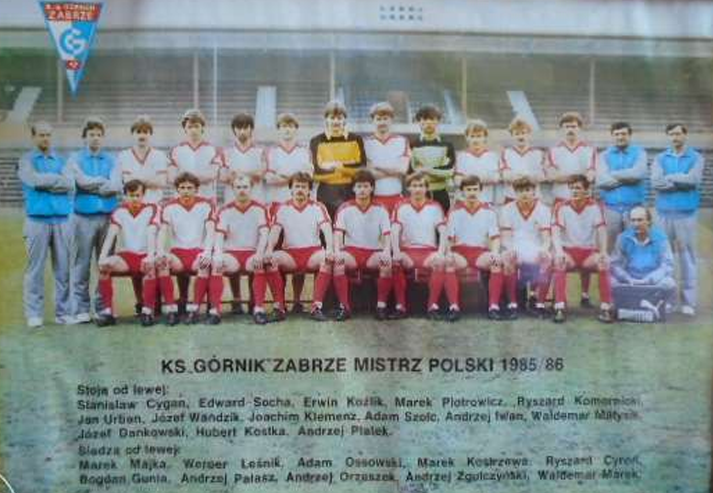 Gornik (Zabrze) – comfortable champions with 46 points from 21 wins, 4 ties, and 5 losses. They scored the most goals this season – 70 – and allowed the least: 17. Perhaps not as great a team as the one of the late 1960s, but stronger than any other presently. Hubert Kostka did wonderful job coaching the squad to a second consecutive title. It was also their 12th title.
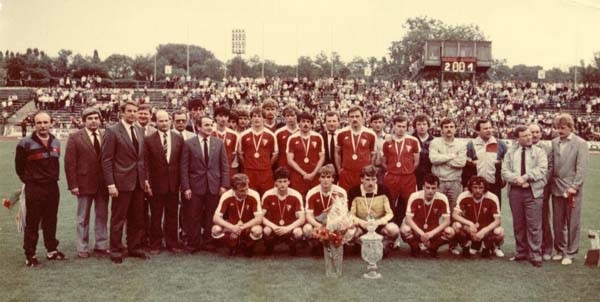 Proud new-old champions.
 Olimpia (Poznan) finished 6 points ahead of 2nd-placed Zawisza (Bydgoszcz). 16 wins, 8 ties, 6 losses, 33-20 goal-difference and 40 points. Champions and promoted – wonderful season.
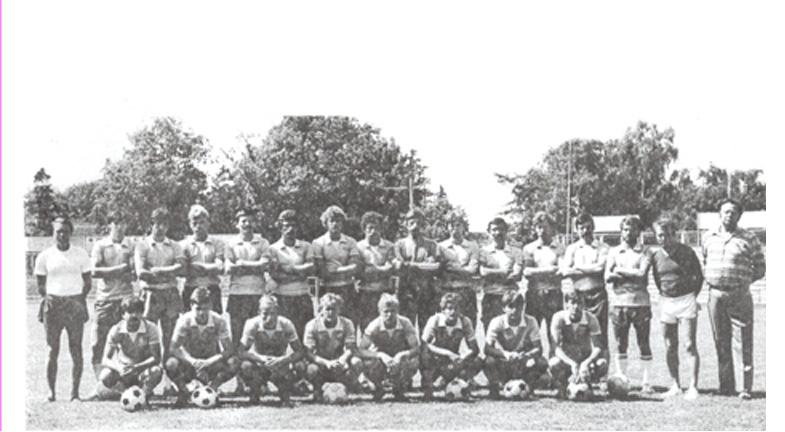 Olimpia (Elblag) barely escaped relegation – 12th with 29 points.
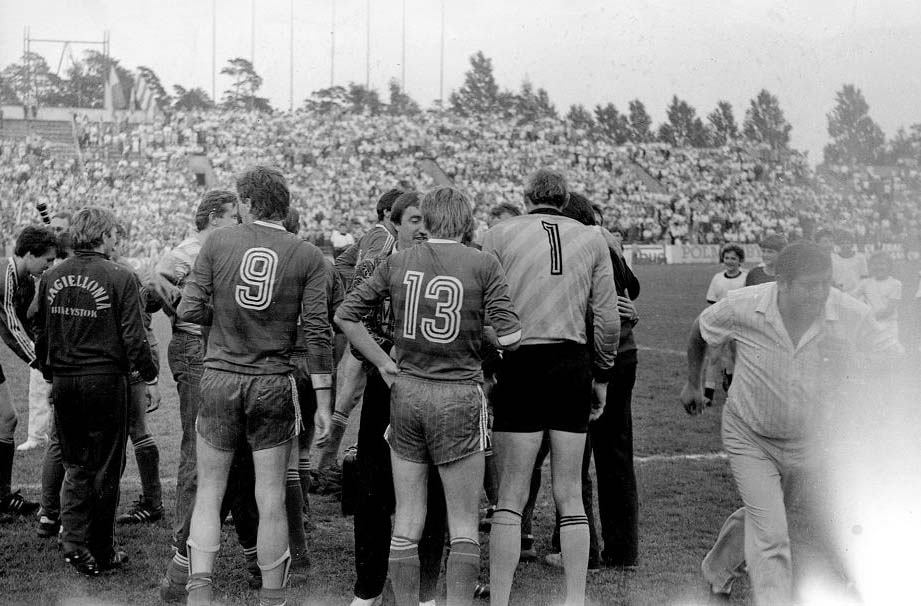 Jagiellonia (Białystok) ended 3rd with 35 points.
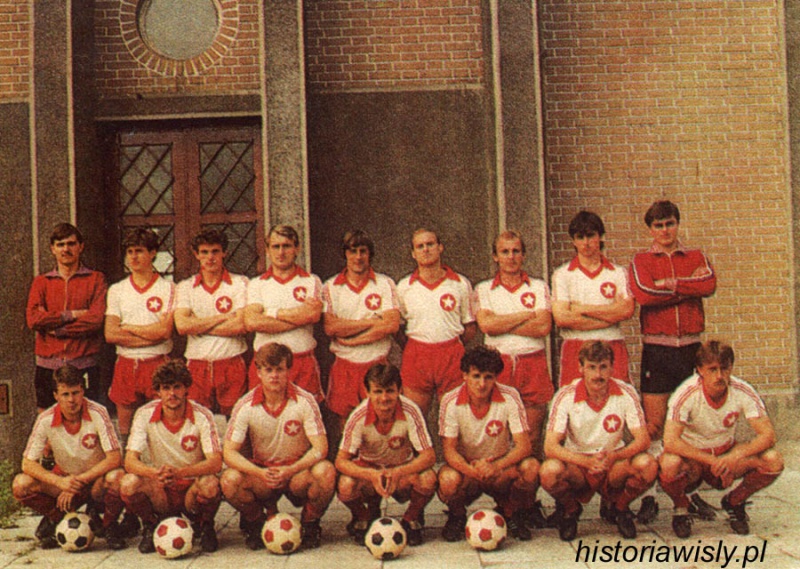 Wisla (Krakow) lost the battle for return to top flight – 2nd with 39 points. Standing from left:
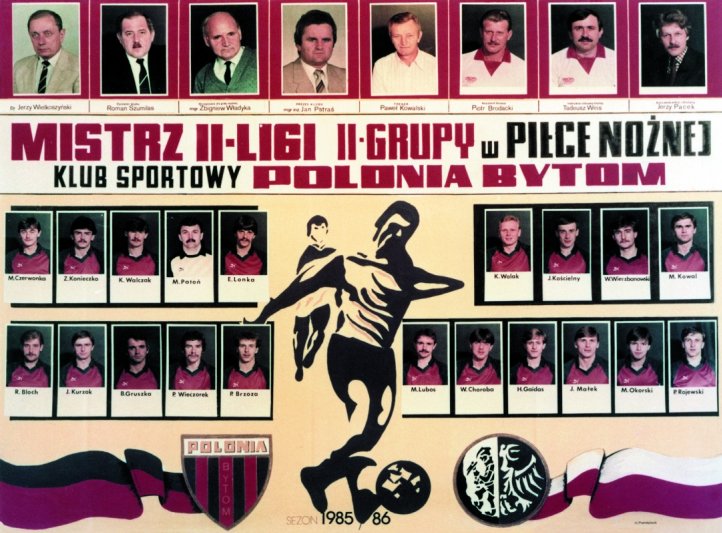 Polonia (Bytom) won the championship with 41 points. 17 wins, 7 ties, 6 losses, 46-26 goal-difference. Sweet return to first division football.
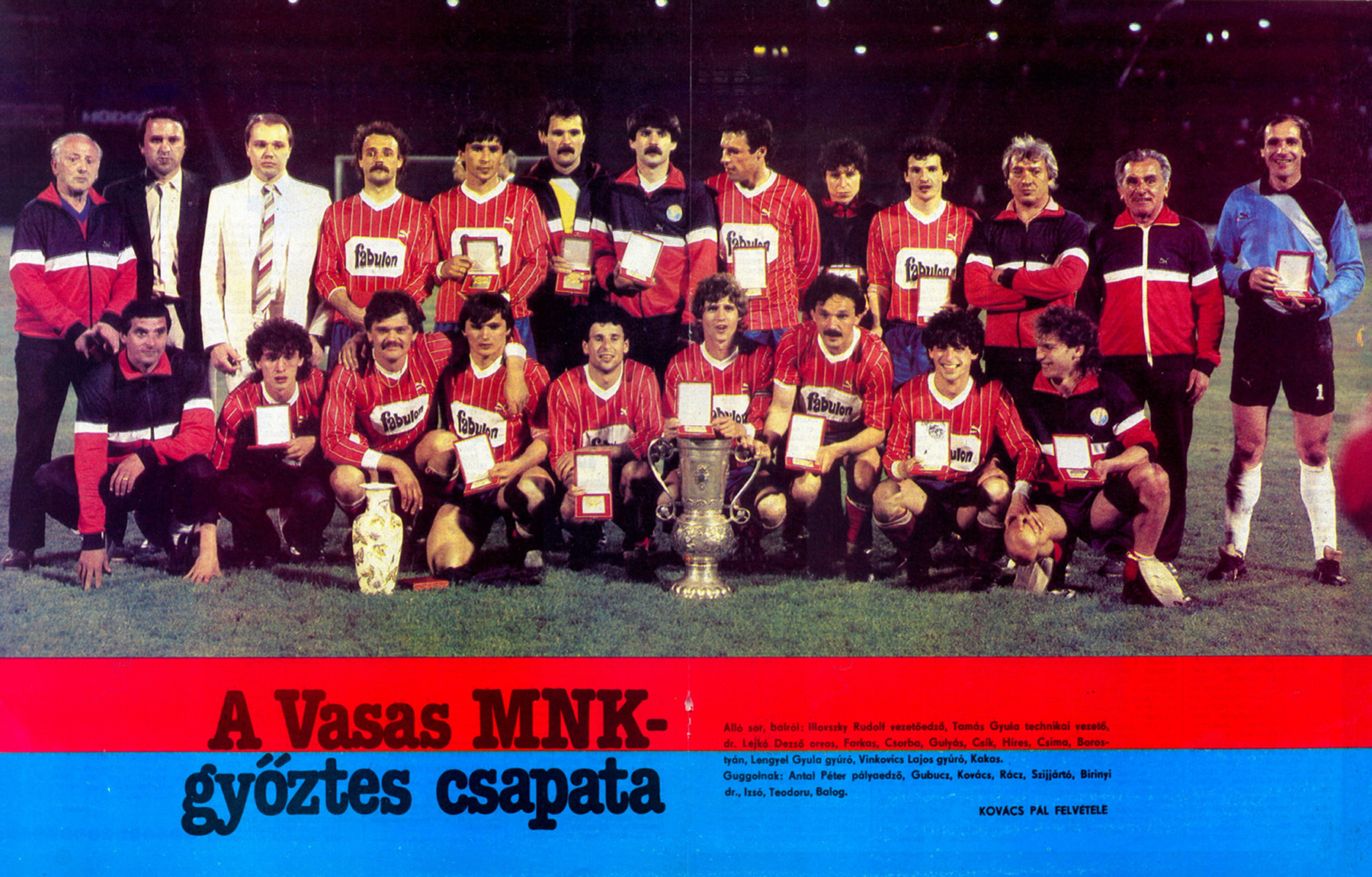 This was no longer the strong team the club had in the 1970s and the season was rather lean, but they won the Cup and it was great. Perhaps the venerated coach Rudolf Illovszky was the prime factor for their success – like the club, he was already over the hill, but experience could help in single combats. Times changed, by now it was more or less clear that Vasas lost its edge and would not be able to come back, so winning the Cup was something to cherish – winning trophies was becoming accidental event.
 Eger SE – 2nd and promoted with 53 points.
 Dunaujvarosi Kohasz SE clinched 1sr place with 54 points and also returned to top flight.
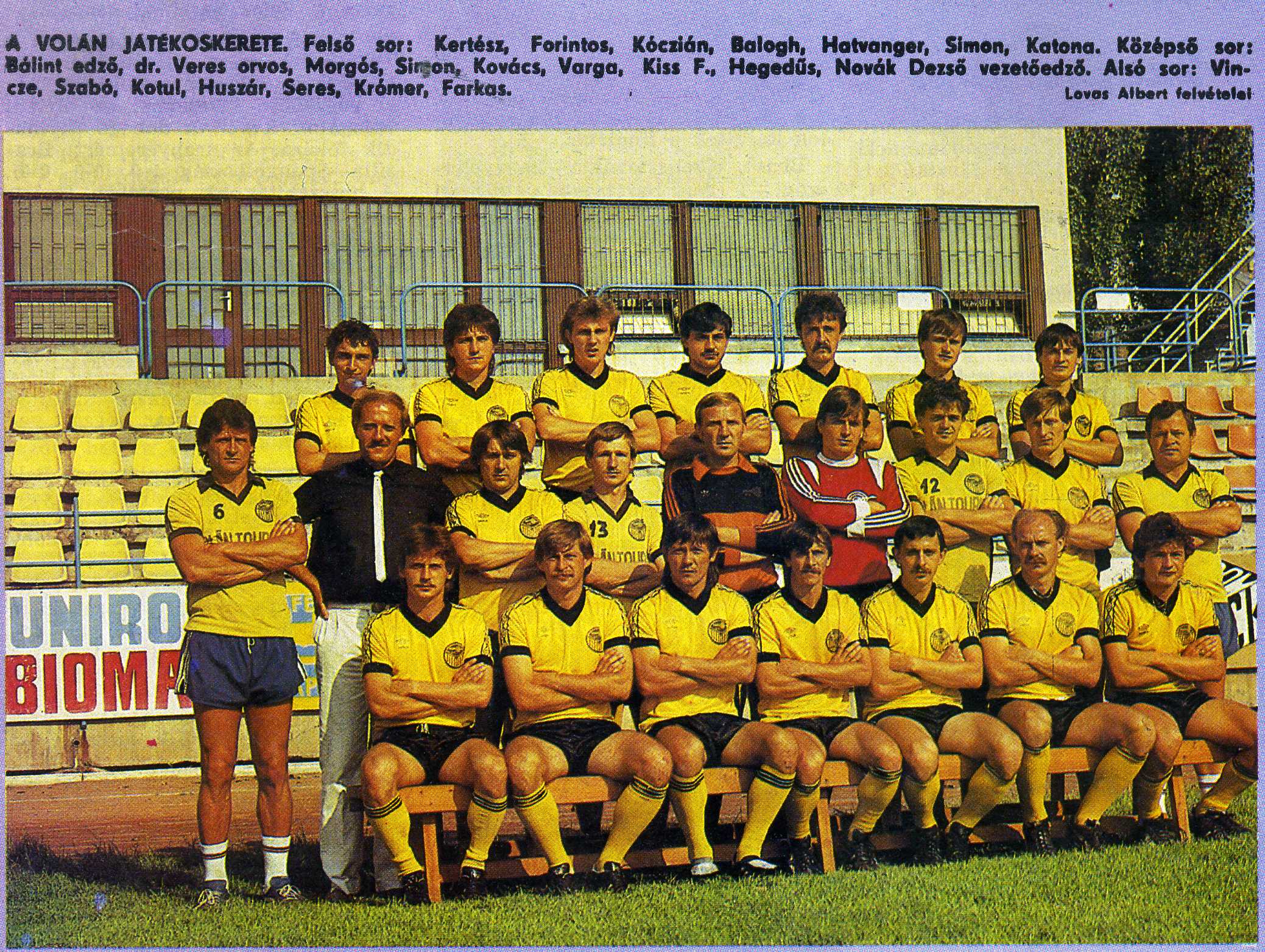 Volan (Budapest) finished last and relegated with 22 points.
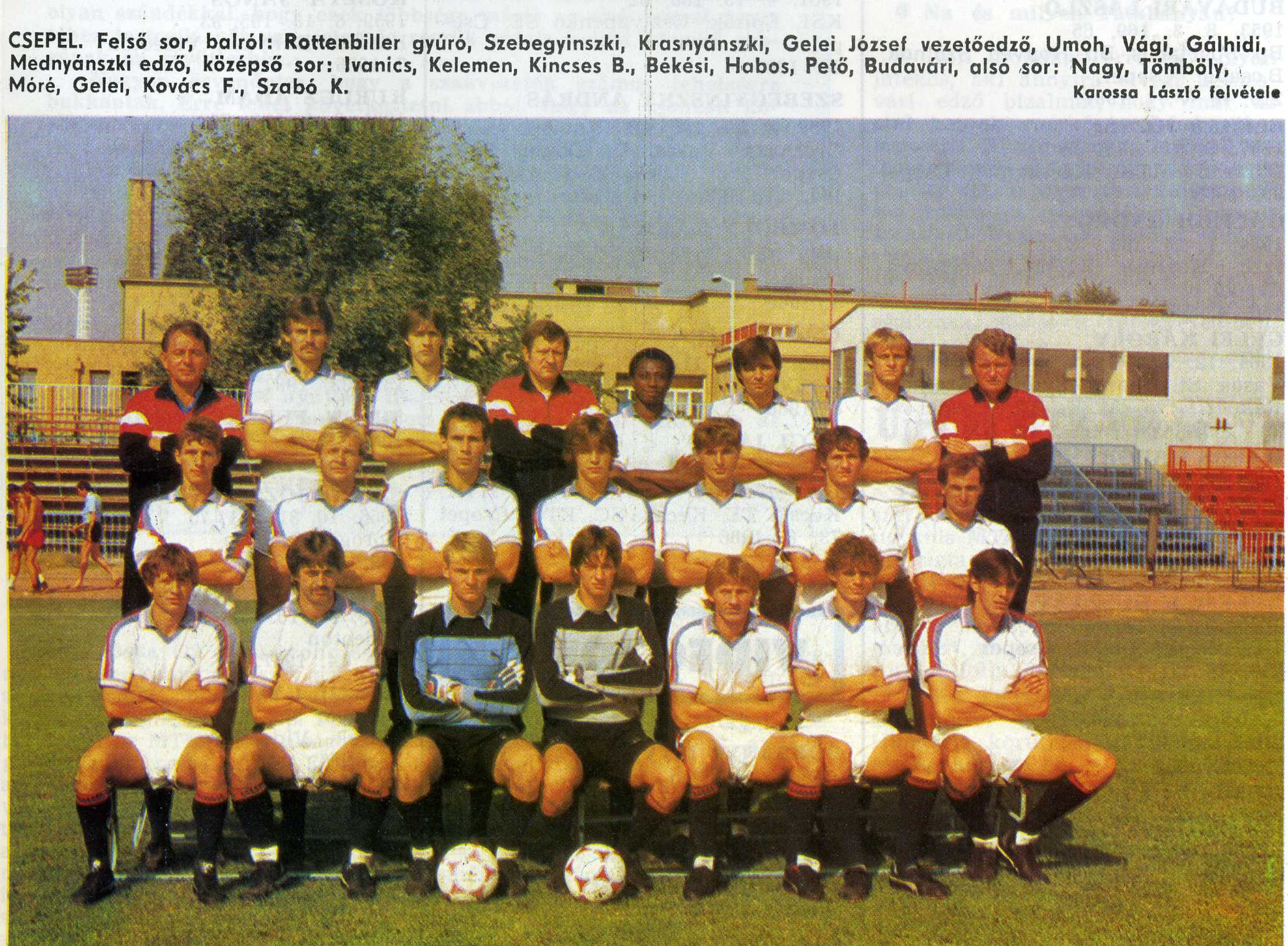 Csepel (Budapest) with its African import was still very weak – 15th with 22 points and relegated.
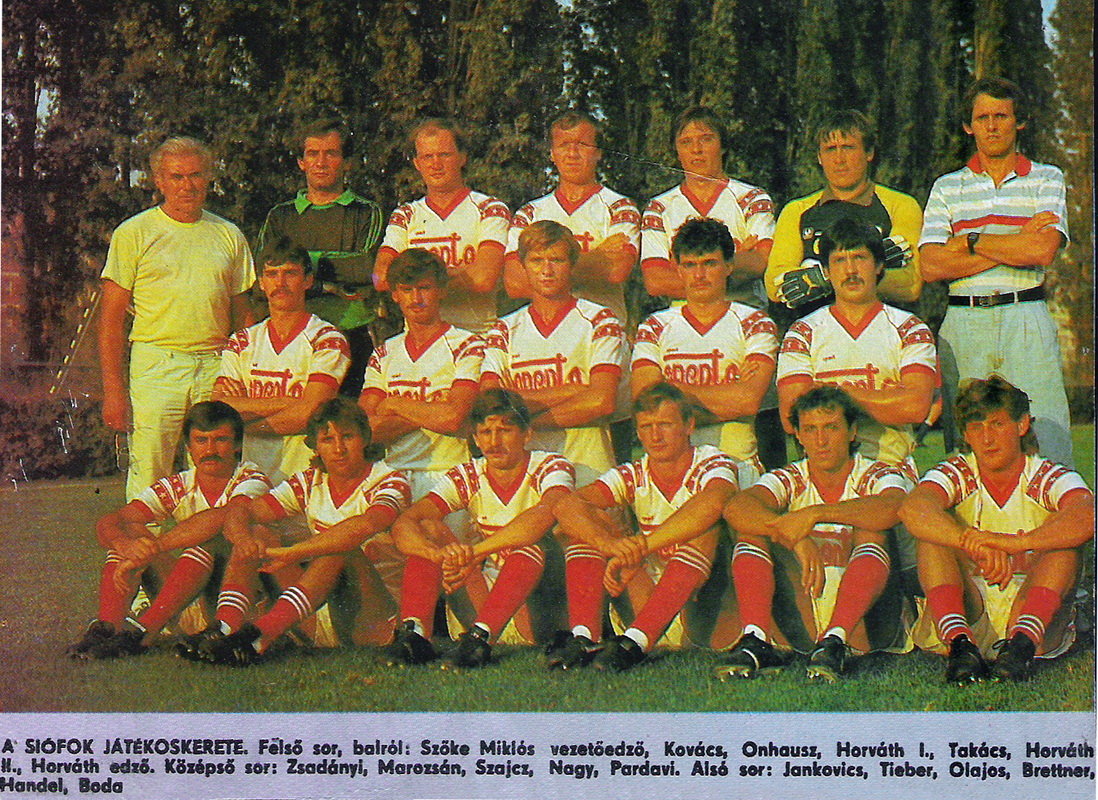 Siofok – managed to avoid relegation. 14th with 24 points.
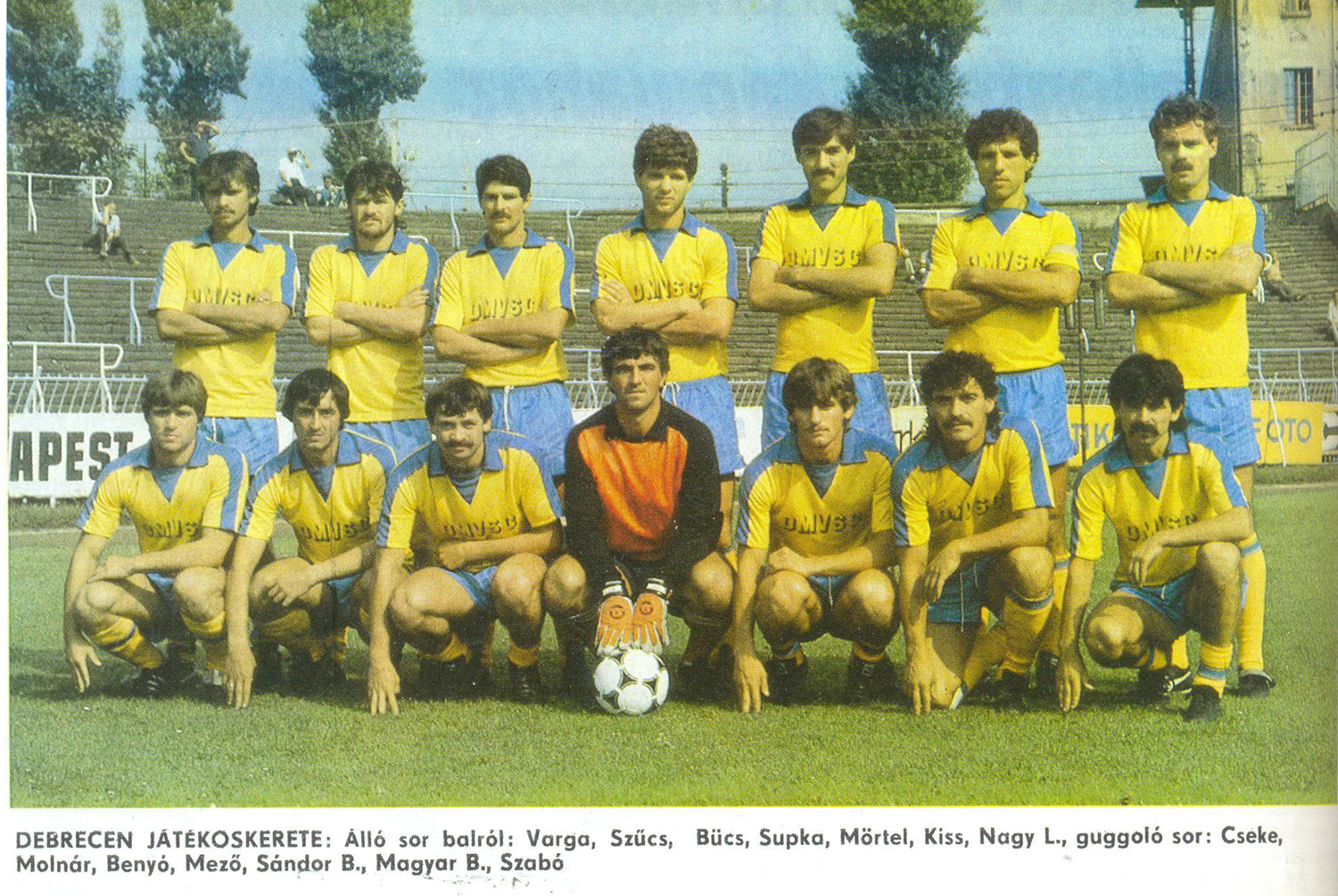 Debreceni MVSC – 13th with 25 points.
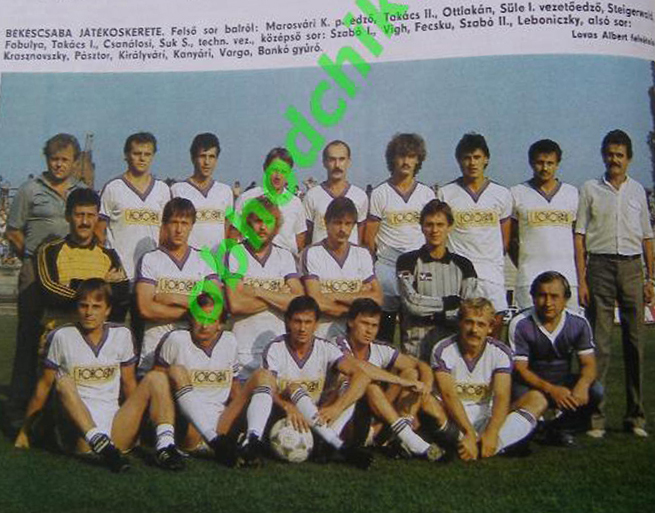 Bekescsaba – 12th with 25 points.
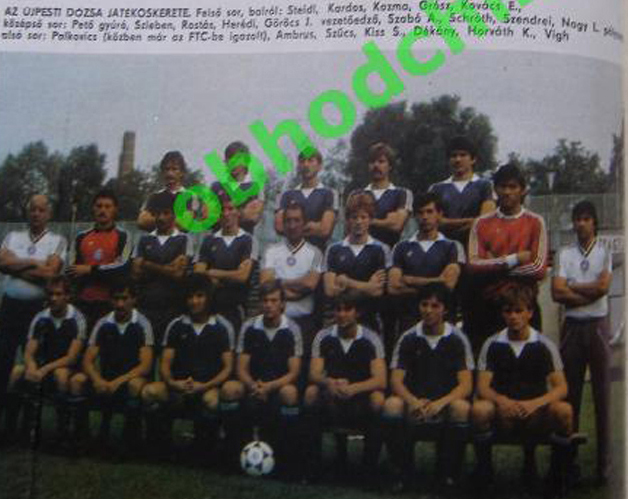 Ujpesti Dosza – arguably, their weakest season. Shamefully weak – barely escaped relegation, judging from the final table. 11th with 25 points.
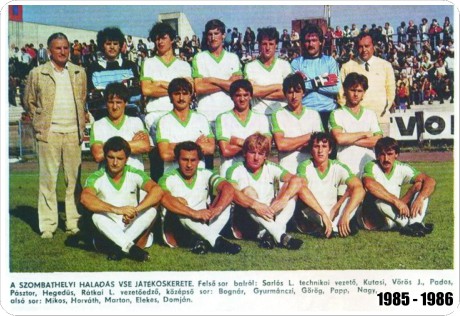 Haladas – 10th with 27 points.
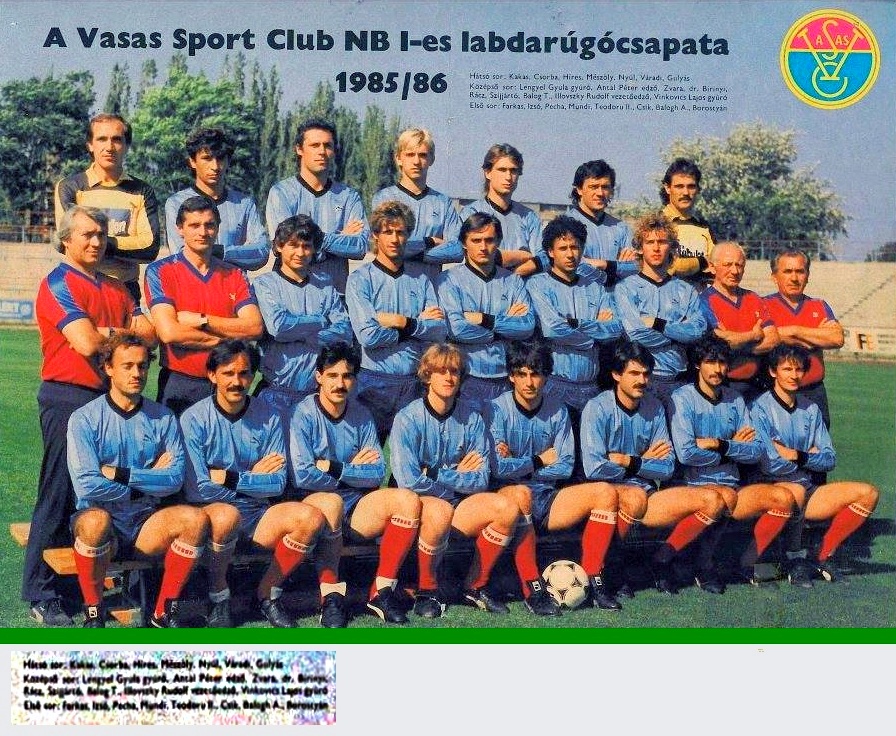 Vasas – 9th with 29 points.
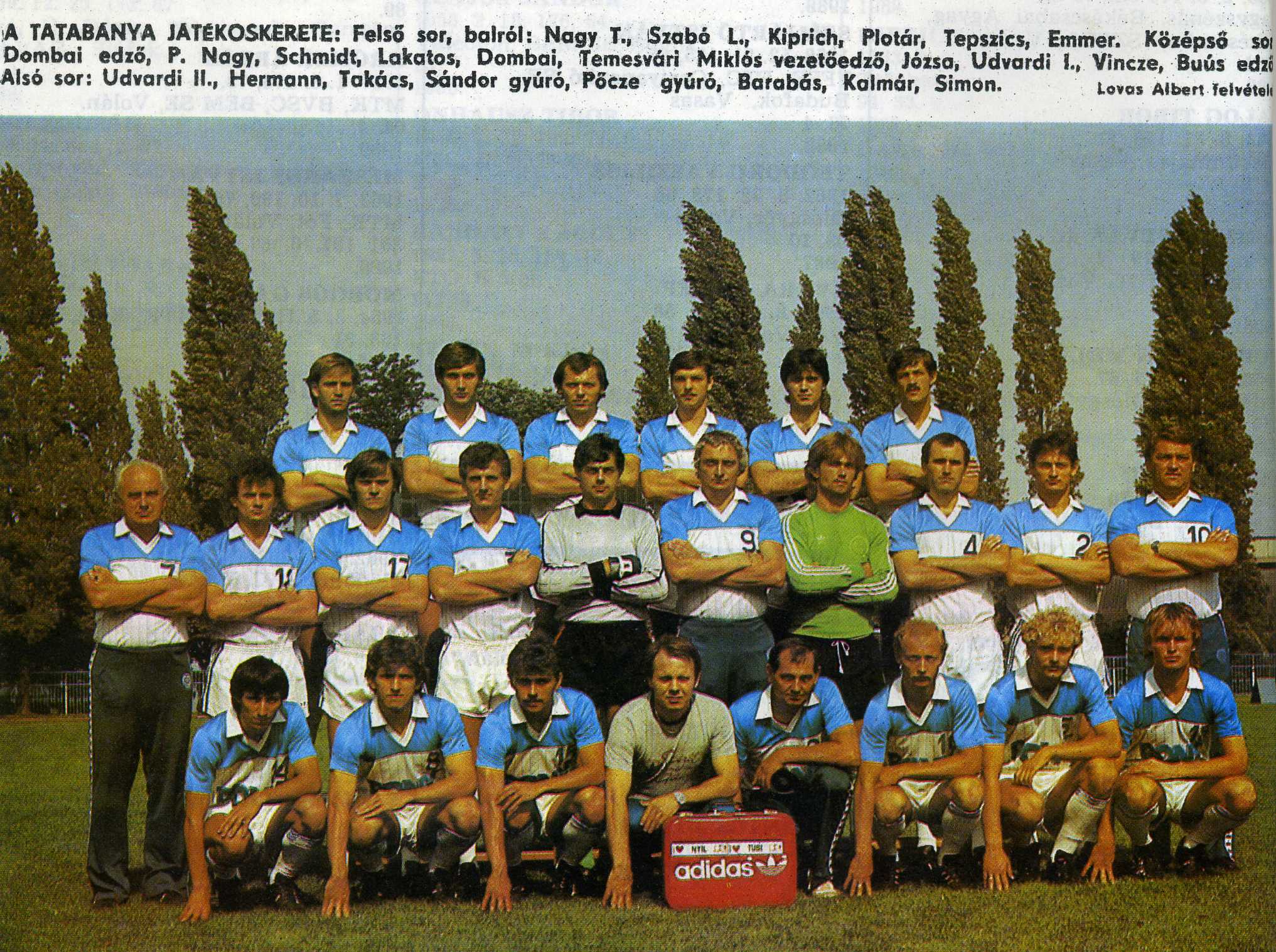 Tatabanya – 8th with 29 points.
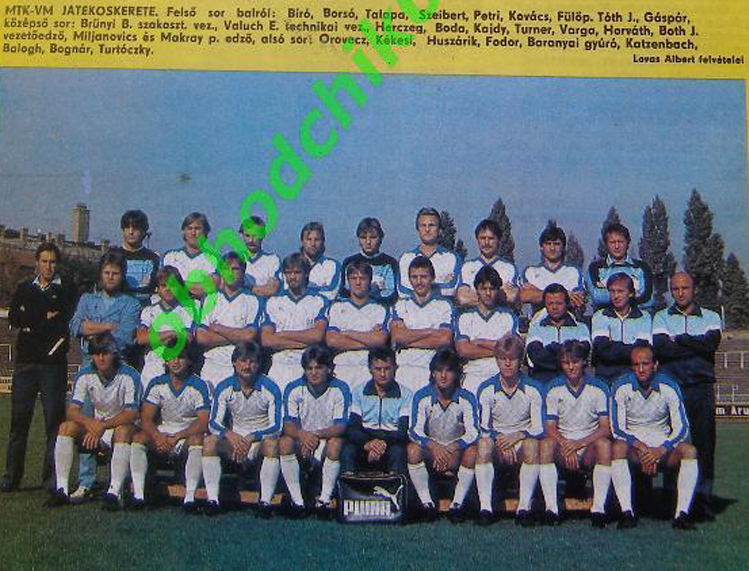 MTK-VM – 7th with 29 points.
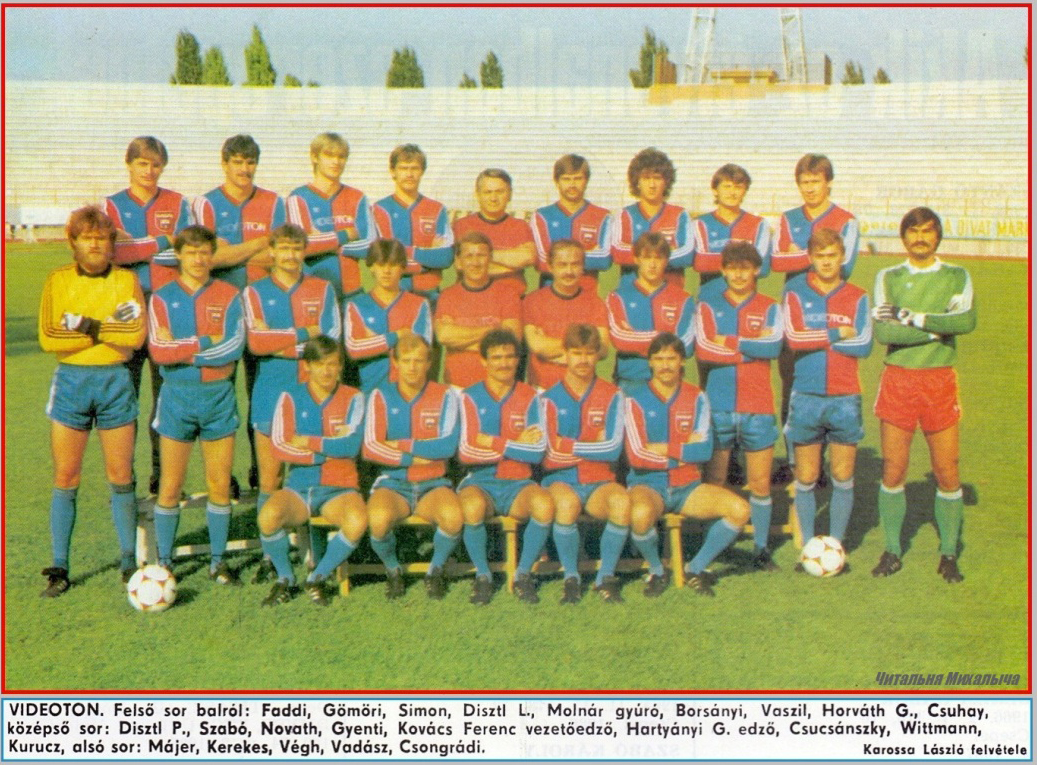 Videoton – 6th with 32 points. Curiously, for a leading team, they were terribly low scorers this season: 25 goals in 30 games. Only one team scored less.
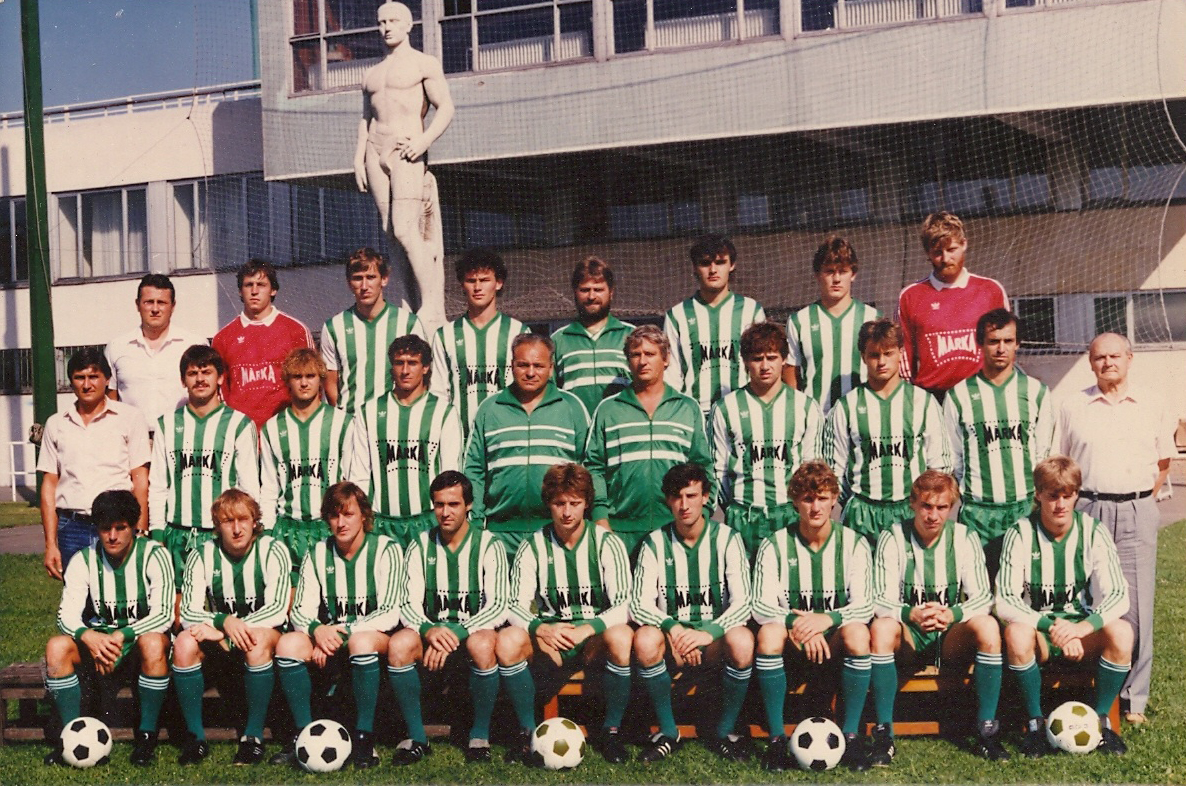 Ferencvaros – 5th with 34 points. Top row from left: Mihaly Havasi – technical director, Erdélyi, Pölöskei, Szabadi, Jozsef Bodnár – masseur, Pintér, Haaz, Zsiborás.
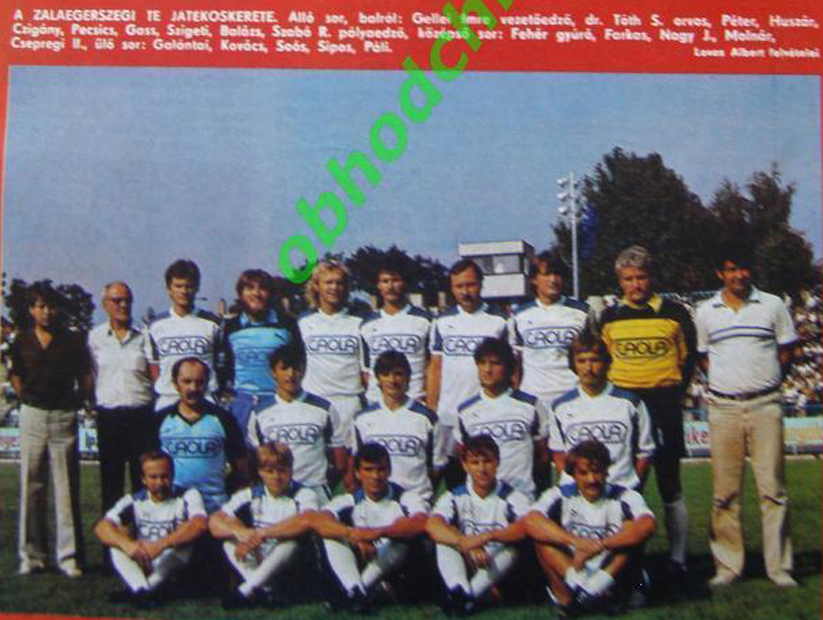 Zalaegerszegi TE – 4th with 36 points. Surprisingly strong season – or, the others were too weak…
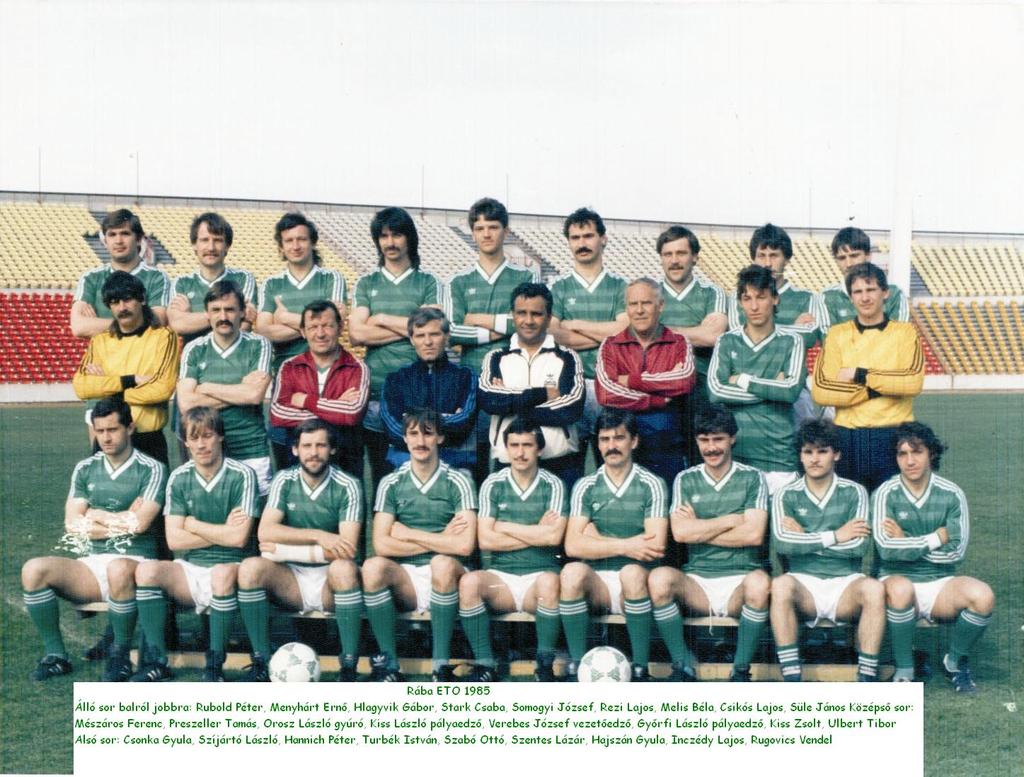 Raba ETO – maintaining consistency: 3rd with 37 points.
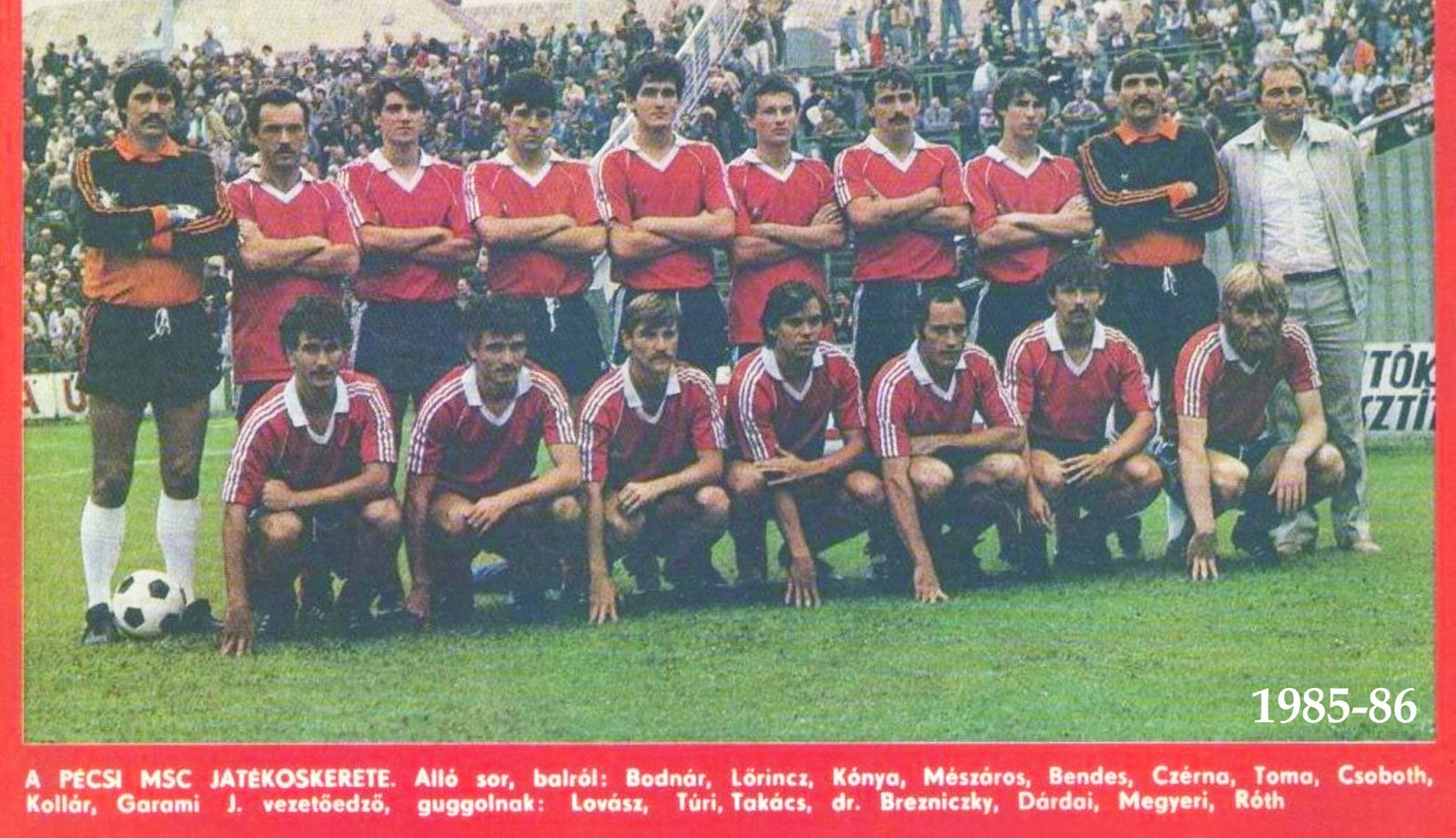 Pecsi MSC – 2nd with 39 points. Surprisingly high position, perhaps one of their best season, but that was also to maximum of their aim – title contender they were not. Even lost rather badly to the champions: 2-4.
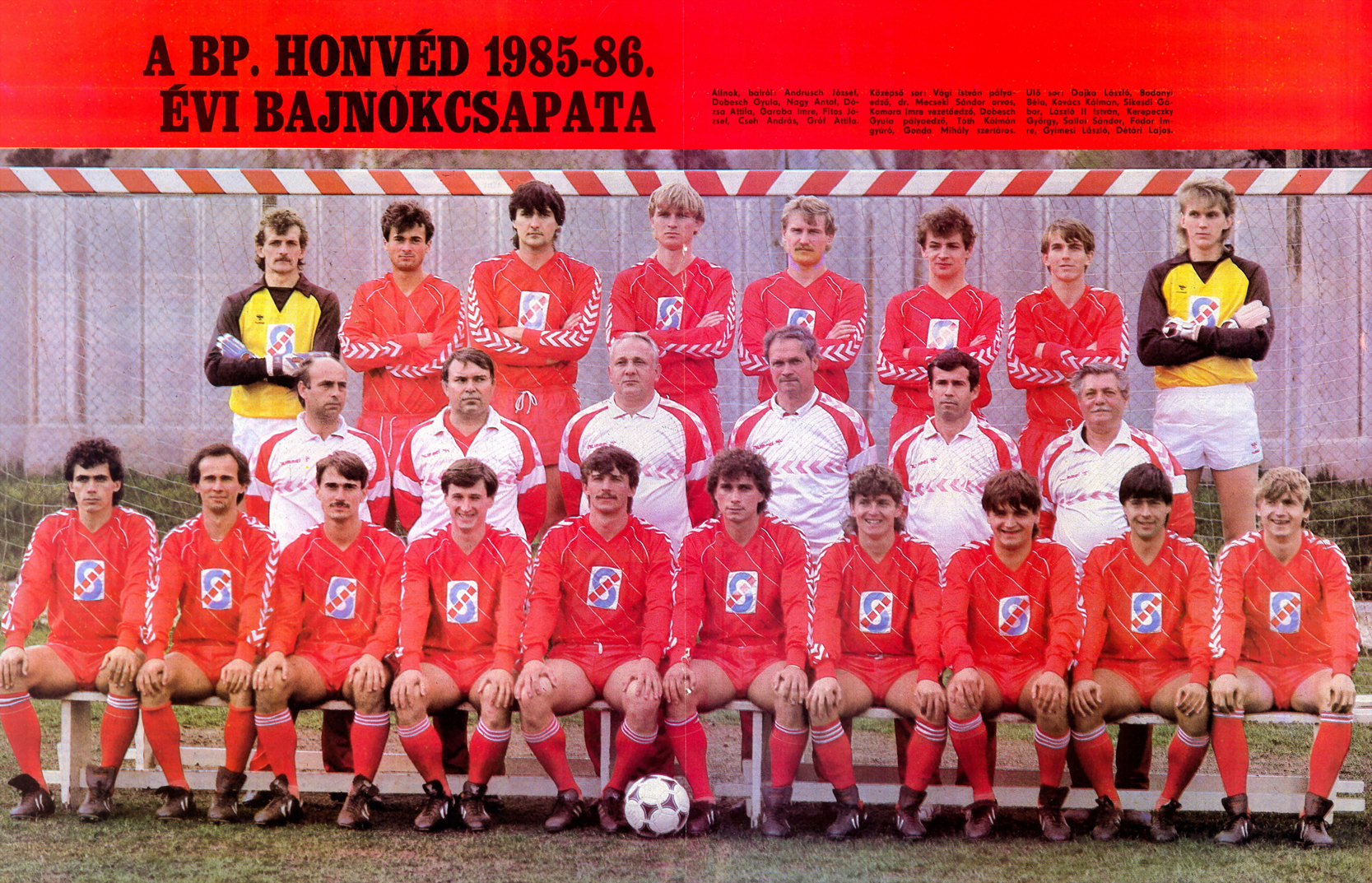 Honved – overwhelmingly stronger than the rest of the league. 17 wins, 11 ties, only 2 lost games, 63-29 goal-difference. They won over the next teams in the table, they topped all Budapest clubs – thrashing Ujpesti Dosza 6-0 was perhaps the sweetest victory. They also had the record victory of the season – 7-0 vs Debrecen, and the most unusual result – 5-5 tie with MTK. They had it all… including the greatest Hungarian player of the 1980s Lajos Detari. And one more title to their collection.
 Kidderminster Harriers tried hard to win a trophy, but even if they did they were not going to play in the Cup Winners Cup. But they still had a good run and were equal to their professional opponents.
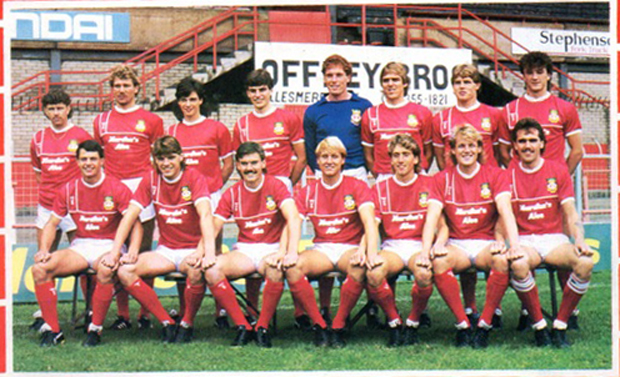 Wrexham prevailed, won the Cup and, with that, their chance to play some European football. Wonderful success for the Robins.