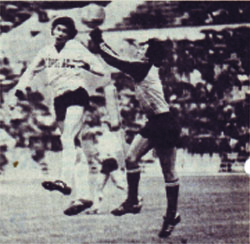
Bulgaria – ranked 21st, although they had worse record than Wales: almost 1.5 points less. Everything was back to ‘normal’ – the big reforms of 1985 were reduced to nothing: the Army abandoned even the pretense in the name: the ‘demilitarized’ club Sredetz was now CFCA Sredetz – Central Football Club of the Army Sredetz. Used to CSKA Septemvriisko zname before and the club remained as such, and to it now belonged CFCA Sredetz. Vitosha belonged to the club of the Police Levski-Spartak. And the old leading clubs were again all-powerful. Meantime new ideas were introduced: 3 points for a win in Third Division, the level which was the experimental ground since 1980. In the upper 2 division, however, a win till gave 2 points. One other thing was that almost the whole team which finished 4th at the 1994 World Cup was already playing: 18 of the 22 players. And not just playing, but making significant impact, so let see their records at the end of 1986-87 season: Borislav Milhailov (Vitosha, 25-years old, 144 games, 0 goals), Nasko Sirakov (Vitosha, 25 years, 131/68), Nikolay Illiev (Vitosha, 23 years, 124/11), Trifon Ivanov (Etar, 22 years, 51/1), Petar Mikhtarksi (Pirin, 21 years, 86/40), Petar Aleksandrov (Slavia, 25 years, 125/72), Yordan Letchkov (Sliven, 20 years, 36/3), Georgi Georgiev (Trakia, 24 years, 81/16), Emil Kostadinov (CFCA Sredetz, 20 years, 41/5), Christo Stoichkov (CFCA Sredetz, 21 years, 36/5), Illian Kiriakov (Etar, 20 years, 1/0), Krassimir Balakov (Etar, 23 years), Plamen Nikolov (Lokomotiv Sofia, 26 years, 21/0), Boncho Genchev (Lokomotiv Gorna Oryakhovitza, 23 years, 0/0 First Division, 52/11 Second Division), Petar Khoubchev (Osam Lovech, 23 years, 0/0 First Division, 176/23 Second Division), Zlatko Yankov (Neftohimik Bourgas, 21 years, 0/0 First Division, 105/13 Second Division), Ivaylo Yordanov (Rilski sportist Samokov, 19 years old, but playing mostly Third Division football since 1982, when he debuted barely 15-years old). Tzanko Tzvetanov (Etar, 18 years, playing for the Youth team of Etar in the special Youth league, which involved reserve players of the top-league clubs). And let add Lyuboslav Penev who missed the 1994 World Cup for medical reasons – CFCA Sredetz, 21 years, 47/21. Not only the future world-class stars were playing, but they already had impressive league records and some played for various national teams (A team: Mikhailov, Sirakov, Illiev, Aleksandrov, Penev; the Olympic team: Georgiev, Penev, Mikhtarski, Aleksandrov; Under-21 team: Mikhtarski, Penev, Stoichkov, Balakov; Under-20 Junior team – Kiriakov). There is some mystery about Krassimir Balakov, who does not appear at all in yearly league record book, but he was playing regularly for Etar in the previous seasons – and the following too. Yet, he played for the Bulgarian Under-21 team. The great generation was already established. At the other side of age – Yordan Fillipov, former national team goalkeeper, was back from Malta and playing again for CFCA Sredetz. He was 40-years old and won his 9th Bulgarian title, plus 1 Maltese. True, he was back-up goalie now, but had no intention to retire (he eventually quit the game in 1989 and although he played very rarely in his last years still became the oldest First Division player – his all-time record has been challenged only recently). Lastly, import of players was increasing and some already managed to play for more than foreign club, even changing countries – Andrey Zheliazkov, Todor Barzov, Tchavdar Tzvetkov, etc. To a point, this helped the establishing of the younger great generation: with older stars going abroad, the youngsters were able to become regulars quicker and were not kept on the bench because ‘too young and fragile’. Talent is talent, though – Nasko Sirakov was the season’s top scorer with 36 goals, Petar Aleksandrov was right behind him with 33 goals, Lyuboslav Penev was 4th with 19, and Petar Mikhtarski – 7th with 15 goals.
The season went as follows:
Third Division – 4 groups now, 18 teams in each. Some former top-league members were playing there and they more or less went up. One thing, though: all winners went through name changes in different times, including the most recent forced changes. 3 points for win was introduced this season, which only amplified the dominance of the leading clubs – there was no battle for first place in any group. Madara (Shumen, formerly P. Volov and FC Shumen) won the East-Northern Group with 80 points. The second-best ended with 66 points. Yantra (Gabrovo, formerly Chardafon-Orlovetz) won the West-Northern Group with 75 points. The second-best had 63 points. Tundzha (Yambol, formerly N. Laskov) won the East-Southern Group with 79 points. The second-best finished with 66 points. Hebar (Pazardzhik, formerly Botev and Benkovski) won the West-Southern Group with 79 points. The second-best had 58 points. As it was, all winners were long-lasting members of Second Division and only Hebar did not play First Division football in the past – the promoted were returning to their usual habitat. Unable to climb up were few former First Division clubs – Akademik (Sofia), Belasitza (Petrich), Maritza (Plovdiv).
Second Division. 2 points for a win. One team dominated the championship, goal-difference decided the second promotion, and two long-lasting Second Division members – practically ‘staples’ of the second tier – were down on their luck and relegated. Two teams were outsiders and about 9 teams fought to escape relegation – of total 20 teams, more than half were concerned only with survival.
Svetkavitza (Targovishte), one of the ‘eternal’ Second Division members, was terribly weak this season – last with 23 points. Chirpan (Chirpan) was the other outsider – 19th with 25 points. Rilski sportist (Samokov) tried hard to survive, but lost the battle – 18th with 32 points. The future World Cup hero Ivaylo Yordanov returned to third level… Septemvriiska slava (Mikhailovgrad, today – Montana), one of the ‘eternal’ members of Second Division was unfortunate at the end – they took 17th place on worse goal-difference, having finished with 33 points like Balkan (Botevgrad). So, these were the 4 relegated teams.
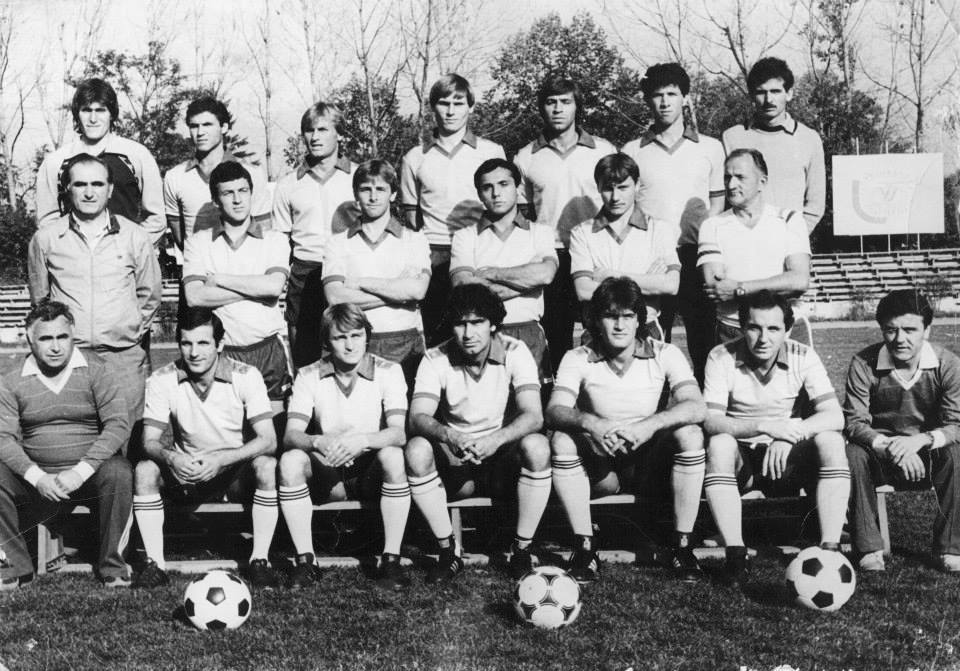 Balkan (Botevgrad) was lucky to survive on better goal-difference placing them 16th. Happy ending, but football is the lesser passion in the small city of Botevgrad – over there basketball is number one sport and the difference between the football and the basketball teams of Balkan is enormous: the basketballers are leading team and often state’s champions. The footballers were quite happy to play second-division football now and then.
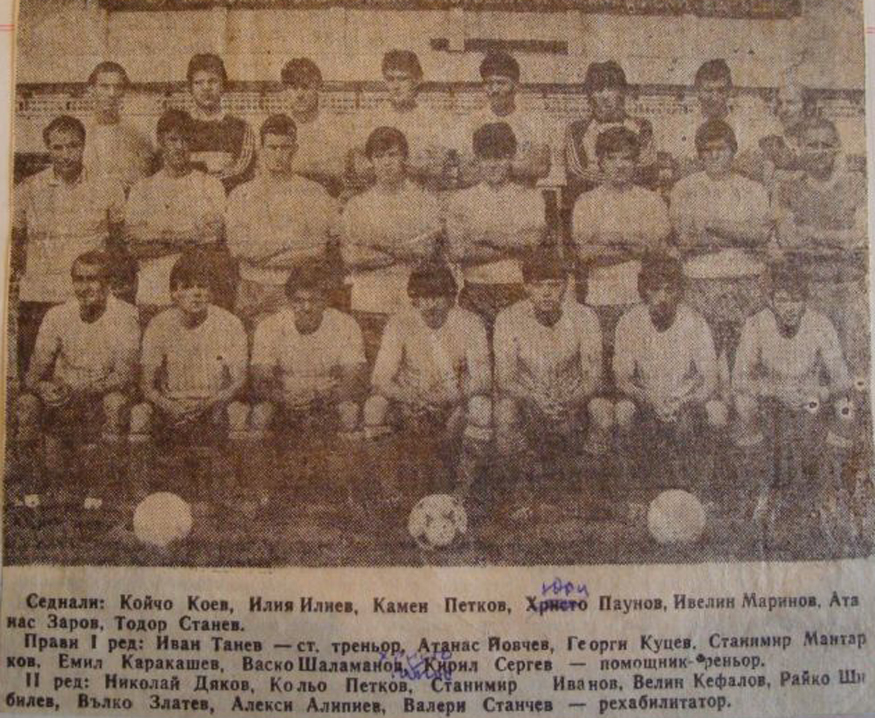 Rozova dolina (Kazanlik) was also happy to survive – 15th with 34 points. Hard to believe most of the squad played top-league football only recently. Hard to believe that Ivan Tanev was coaching them – but he became leading Bulgarian coach in the 1990s. Right now… he was sacked after the season ended.
Dobrudzha (Tolboukhin, today – Dobrich) was 14th with 35 points.
Rila (Stanke Dimitrov, today Dupnitza) – 13th with 35 points. Well, this was the exciting Marek, which dazzled even Europe back in the second half of the 1970s. Now – quite happy to stay in Second Division, a newcomer just promoted from Third Division. The name was changed in 1985, a result of infamous Communist party order. They were briefly Dupnitza, then renamed again to Rila. Still three players of the great 1970s team remained – Dimitar Dimitrov, Roman Karakolev, and Stoyan Stoyanov. What a fate… from playing in European tournaments and for the Bulgarian national team to third level and now only barely surviving in the Second Division.
Vihren (Sandanski) – 12th with 35 points.
Bdin (Vidin) – 11th with 36 points. Like Rila, just returning from exile in third level and quite happy to stay in the second tier.
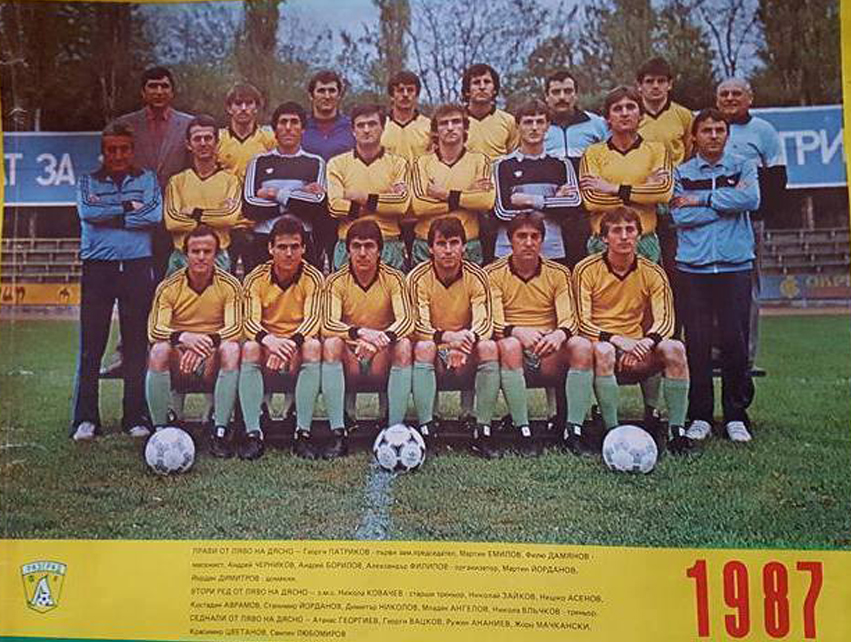 Ludogoretz (Razgrad) – 10th with 36 points. At the time – impossible to imagine this club would be Bulgarian champion 7 years in a row. Champions? It was impossible to imagine them reaching first division – the usual fate of Ludogoretz was to fight for avoiding dropping to Third Division. No wonder why, looking at the squad – quite insignificant even for second level club. Hardly any players had top-league experience and those who played there (Nikolay Zaykov, Zhoro Machkanski) did it briefly and unsuccessfully. Like Rozova dolina and Balkan, Ludogoretz had good and well respected coach – Nikola Kovachev – but there was not much he could do with the available squad.
Osam (Lovech) – 9th with 37 points. Typical mid-table second-division club, just happy to maintain secure position. Better than Ludogoretz, but like Ludogoretz too – nobody would imagine them playing top-league football, becoming one the leading clubs, and winning trophies. Of course, success came after 1990 and under different name. Presently, they were true to their proven formula – get few aging players with good reputation and plenty of experience and mid-table spot was guaranteed.
Cherno more (Varna) – 8th with 37 points. Perhaps the most famous club playing in the Second Division and also having the strongest and most experienced squad – that going by names. Their captain, Todor Marev, had 361 first division games, for example. Perhaps that was the problem: too many experienced players, who lost ambition. Cherno more made typical mistake – instead of building new team, they kept the team which was relegated from top flight. The boys were still young (only Marev and Todor Atanassov were over 30, the rest – mostly under 25) and with so much experience… why change them? And keeeping them, Cherno more sunk to mid-table in Second Division.
Arda (Kardzali) – 7th with 38 points. Good season, but probably just one-time wonder.
Haskovo (Haskovo) – 6th with 38 points. Relegated from top flight, Haskovo needed to regroup, so they were not very competitive this season. Theirs was the top scorer of the season – Iliya Velichkov with 26 goals – but he was also a prime example of the mistakes Haskovo routinely made: recruiting aging big names from Sofia. Velichkov made his name playing for Slavia, now getting old, he was no longer needed by Slavia and journeyed in the Second Division. However, Slavia had troubles rebuilding and his great season for Haskovo made Slavia call him again – and he left Haskovo after the season. Just like other similar players did it before.
Neftohimik (Bourgas) – 5th with 40 points. With time, the second club in Bourgas became solid mid-table Second Division member. Going higher was not in the dreams – yet – but there was certain guarantee for well-being: to a point, they served as farm-club for Chernomoretz (Bourgas) – talented players went from Neftohimik to Chernomoretz and solid aging players moved the other way. For youngsters, it made sense to play well for Neftohimik so to get noticed and recruited to the top-league club. On the other hand, aging players coming from Chernomoretz were still solid and provided enough class for second-level championship.
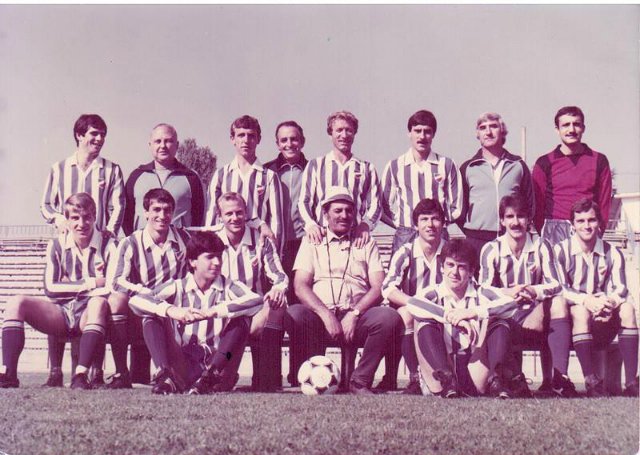 Spartak (Plovdiv) – 4th with 45 points. All and all, very promising season. Spartak was newly restored and rapidly climbed to Second Division. It was not ready yet to return to top flight, but most of the league was left far behind – may be in a year or two they will be back in First Division.
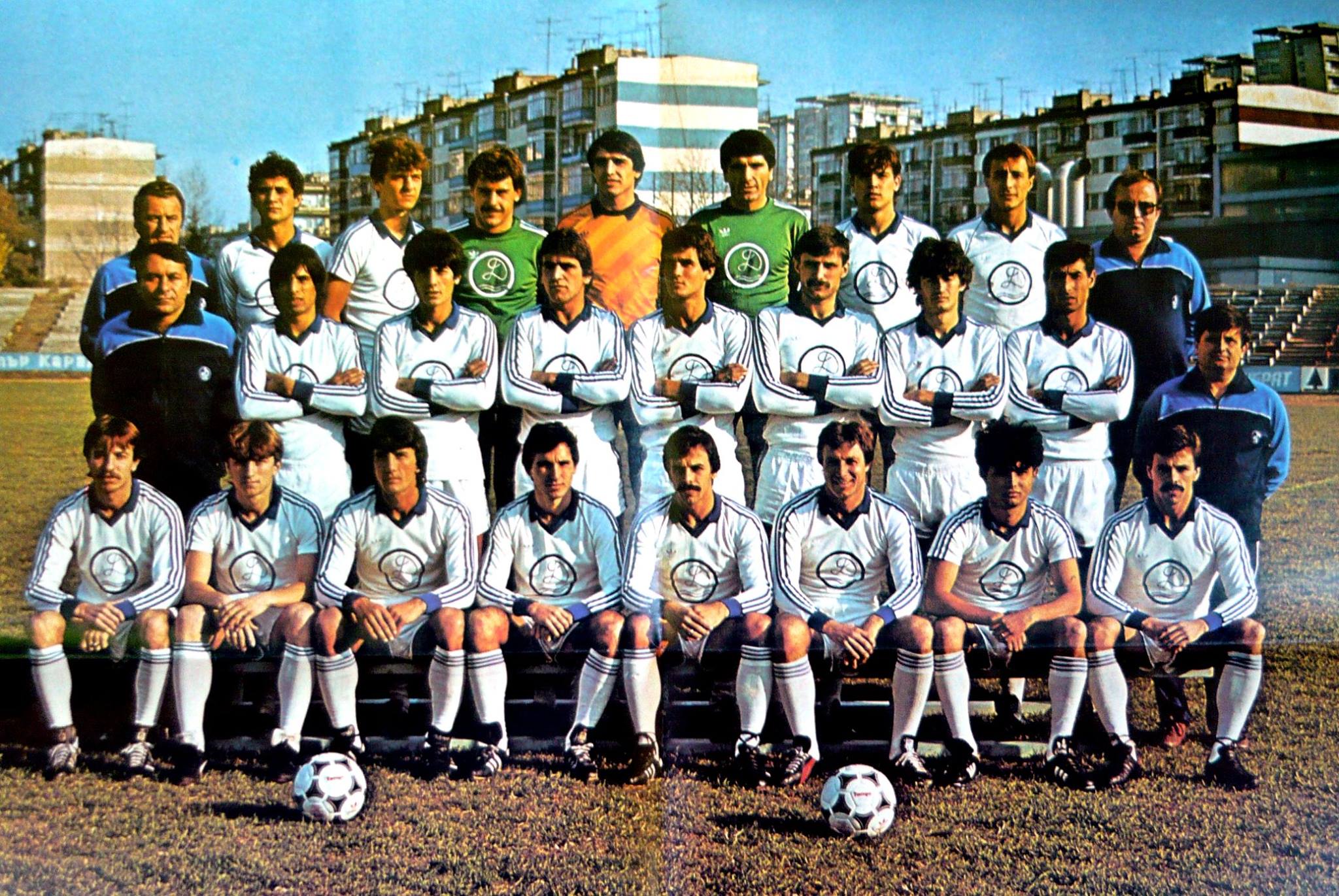 Dunav (Rousse) tried hard, but failed to win promotion in most unlucky manner: on goal-difference. Finished 3rd with 50 points, 58-35 – that is +23. But it was more than bad luck – for years Dunav was unable to build strong team and the current squad was typical sample. Sitting from left: Petko Kirilov, Anatoly Nankov, Eshref Syuleymanov (who at the time had different name, for Turkish names were forcibly changed), Borislav Stoyanov, Christo Prisadnikov, Vasko Simeonov, Kiril Kirilov, Yani Prisadnikov.
Middle row: Lyuben Markov – coach, Valery Kulinov, Stoyan Pumpalov, Nikolay Boyanov, Dragomir Enchev, Borislav Bogomilov, Krassimir Nakov, Iliya Kirchev, Remzi Nuriev – assistant coach (also under renamed at the time).
Top row: Nikola Vetronov – medic, Sasho Todorov, Tchavdar Iliev, Valentin Inkov, Petar Voynov, Lyuben Brankov, Ivelin Penev, Diyan Angelov, Christo Christov – masseur.
Although most players had top league experience, it was accidental – Dunav was quickly relegated again with them. The squad was really of a second-division make. There were apparent problems with recruits from other clubs: the Prisadnikov twins, considered the key stars of the this vintage, and goalkeeper Brankov never made it in First Division. The twins also moved from club to club frequently , so it was an illusion to hope building a team around them (and they started the next season with another club). There was lack of character and class in this squad and mot likely financial troubles were at the center of Dunav’s inability to build decent team. Perhaps the best was that they were not promoted, for certainly there was going to be pain and suffering in the top league.
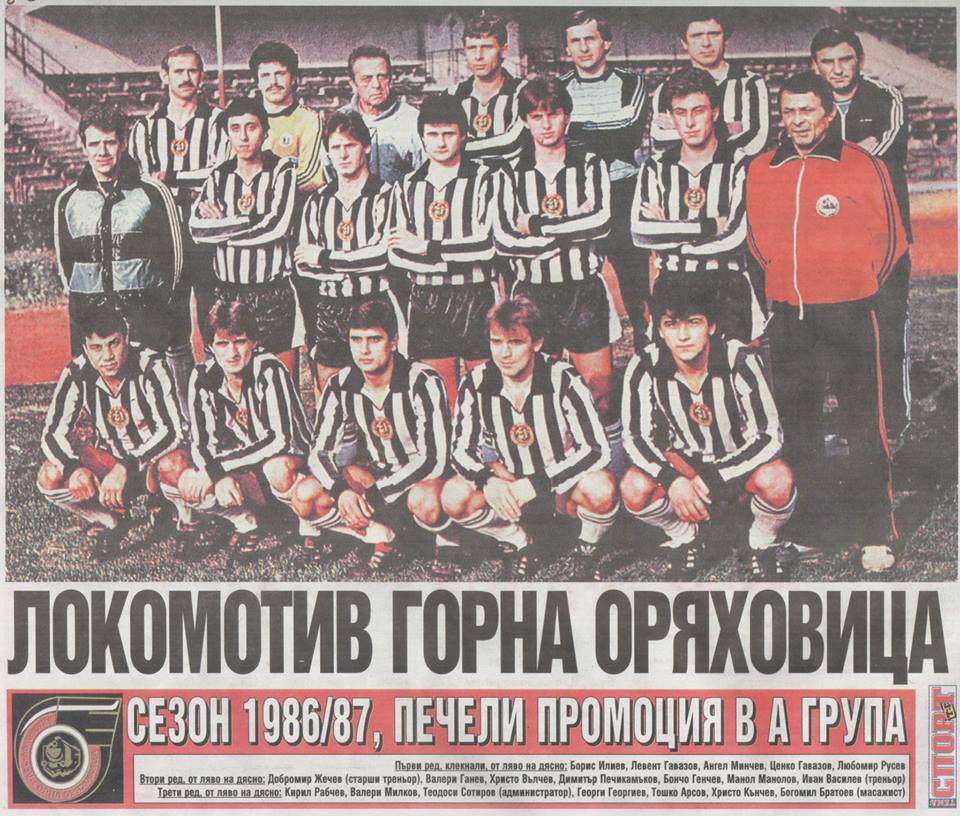 Second place was clinched by Lokomotiv (Gorna Oryahovitza), which was seen as a novelty at the time. Only two years ago they played in Third Division , but after returning to second level they were more than fine – missed promotion by little in their first year back in the league. The squad was rather ordinary for more – at the surface. But the coach – Dobromir Zhechev – was good and recruited few new players which fitted very well in the squad. Suddenly Lokomotiv was among the best teams again, although not exactly able to run for first place. At the end of this season they were 2nd thanks to better goal-difference than Dunav: +24. A matter of just one goal! After quarter of a century Lokomotiv was going to play again in First Division.
Front row from left: Boris Iliev, Levent Gavazov, Angel Minchev, Tzenko Gavazov, Lyubomir Roussev.
Middle row: Dobromir Zhechev – coach, Valery Ganev, Christo Valchev, Dimitar Pechikamakov, Boncho Genchev, Manol Manolov, Ivan Vassilev – assistant coach.
Top row: Kiril Rabchev, Valery Milkov, Teodossy Sotirov – administrator, Georgi Georgiev, Toshko Arssov, Christo Kanchev, Bogomil Bratoev – masseur.
Few players had top-level experience – the veteran Kiril Rabchev, who used to play for Botev (Vratza) and Etar (Veliko Tirnovo) before joining Lokomotiv, the right winger Boris Iliev, formerly of Lokomotiv (Sofia), and goalkeeper Toshko Arssov, who tried various clubs in the past, including CSKA, without establishing himself anywhere. The rest were generally local guys, even the newcomer Boncho Genchev. He arrived from Dobrudzha (Tolboukhin), but his roots were in Gorna Oryahovitza. No stars here – the newcomers were rather aging failures. Perhaps that was the formula of success: unassuming squad of modest players, who, under he right guidance, could be motivated to do wonders. Lokomotiv earned promotion, but it was chancy success and one thing was painfully clear: if wanting to stay in First Division they needed few additional quality players. But this was not a club particularly tempting quality players to join.
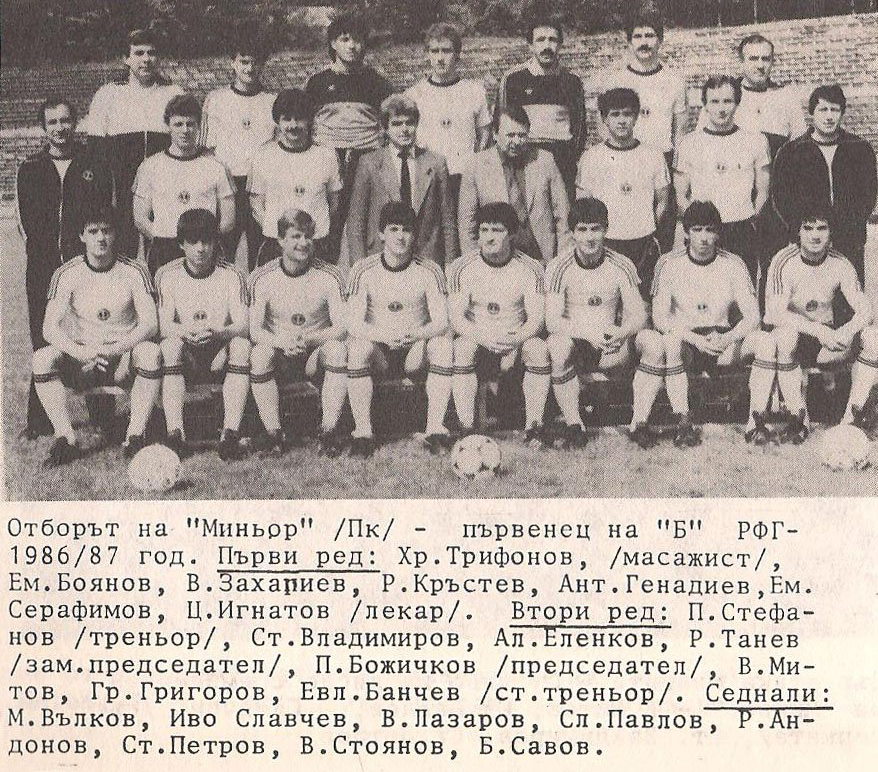 Minyor (Pernik) dominated the championship and easily won it after 26 wins, 6 ties, 6 losses, 80-36 goal-difference and 58 points. They finished 8 points ahead of Lokomotiv and Dunav. Really, they had no rival this season. Which was great, for Minyor – both the club and the fans – felt they belonged to top flight and could not accept playing in the second level. The recent years were particularly painful, for Minyor failed regularly to earn promotion and when promoted, they were just as quickly relegated. But this time the prospects were more optimistic – the squad was seemingly different. Third row from left: Chr. Trifonov – masseur, Em. Boyanov, V. Zakhariev, R. Krastev, Ant. Genadiev, Em. Serafimov, Tz. Ignatov – doctor.
Middle row: P. Stefanov – assistant coach, St. Vladimirov, Al.Elenkov, R. Tanev – vice-chairman of the club, P. Bozhichkov – chairman of the club, V. Mitov, Gr. Grigorov, Evl. Banchev – coach.
Sitting: M. Valkov, I. Slavchev, V. Lazarov, Sl. Pavlov, R. Andonov, St. Petrov, V. Stoyanov, B. Savov.
Perhaps the biggest problem of Minyor was geographical: Pernik is too close to Sofia and the short distance resulted in constants movement of players – the big clubs from the capital quickly snatched whatever talent emerged in Pernik. Trying to fill the gaps, Minyor looked after discarded players by Sofia’s clubs. And usually got them, for they were more willing to play in Pernik – still living in Sofia – than going to some faraway town. It was easy solution, but also solution leading to chronic problems: Minyor was short-changed in the bargain, for in the place of talented guys they were getting demotivated players. Even this winning squad testifies to that: Mario Valkov, Grigor Grigorov, and Emil Serafimov were grabbed by CSKA, Levski, and Slavia at the moment they showed talent. Later, when no longer needed in Sofia, they returned home – not only older, but quite wasted. Aleksander Elenkov represented the other direction: he started with his home club Lokomotiv (Sofia), failed to impress, was released and moved to nearby Pernik. However, the number of such players was small, compared to previous years. And the players were younger – finally Minyor managed to avoid keeping a bunch of veterans. And the coaching stuff was young and local – the legend Evlogy Banchev finally retired and was appointed head coach, assisted by his former teammate Stefanov. Minyor at last had distinct local flavour – coaches and most of the squad were local. Yet, it was still unfinished team, still in early stage of development and that was the weakness: most of the guys were not terribly impressive and that included the well-known names. Grigor Grigorov was no national team material for quite some time and he was unable to really establish himself in Levski. He was only older, but not better. Mario Valkov was hailed as fantastic promise at 16, when he debuted – and CSKA was quick to swallow him. There he burnt out quickly… now 26 years old, he was not a star, but rather a disappointment. And the same was the case of Emil Serafimov – Slavia got rid of him very quickly as a failure. He was 24 now… and no more promising player. Hardly the players to inspire and lead a team to glory. Elenkov, who was 27 already, was even worse – he was mostly a reserve. And the danger of big clubs watching what was going on was ever present – there were two bright youngsters in the team, Ivo Slavchev and Slavcho Pavlov. Well, eventually, they moved to Sofia… such was the predicament of Minyor, but at the moment Banchev managed to motivate the squad and there were no payers the big clubs needed, so there was a chance of developing and may be shaping a decent team. A core of players was at hand and with few well-chosen additions… it all depended on the summer transfers and keeping the current policy for using local talent and looking for recruits in the lower leagues instead of Sofia.
Well, Minyor (Pernik) and Lokomotiv (Gorna Oryahovitza) got promoted and let them enjoy their success, for the next season will be quite taxing for both clubs.
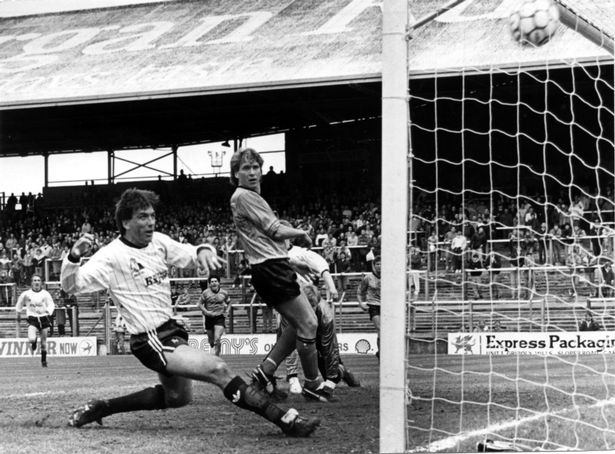 The winning goal.
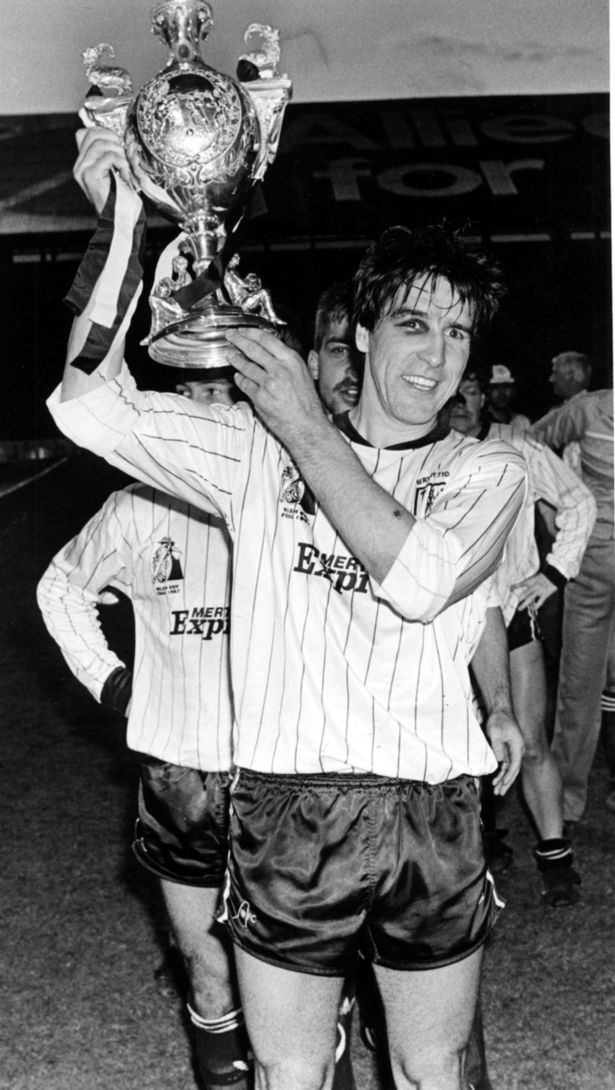 Proud captain of the winners with the Cup.
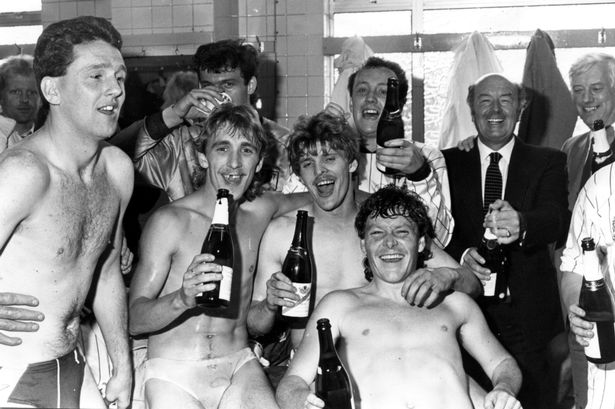 Well deserved champagne in the dressing room.
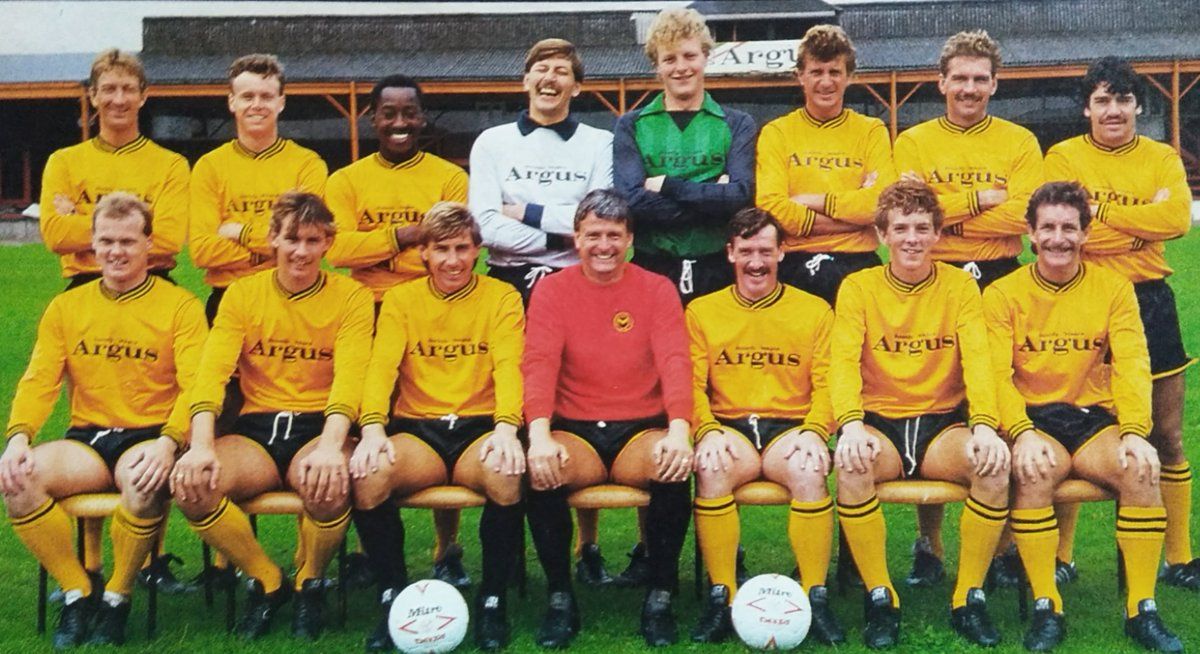 Newport County lost a rare chance to win a trophy.
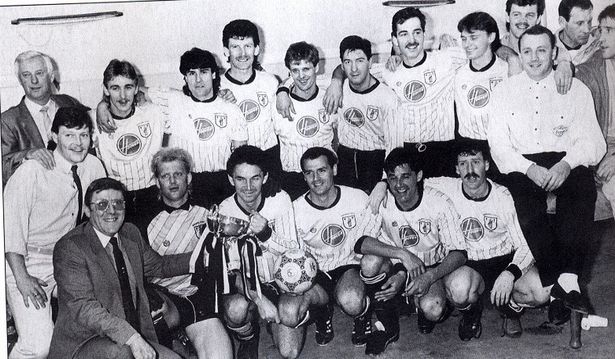 Merthyr Tydfil – practically unheard of team – at their most glorious moment: Cup winners and going to play European football too. They had won the Welsh Cup twice before, but the last time was in 1951. At last they added one more Cup. Wonderful!
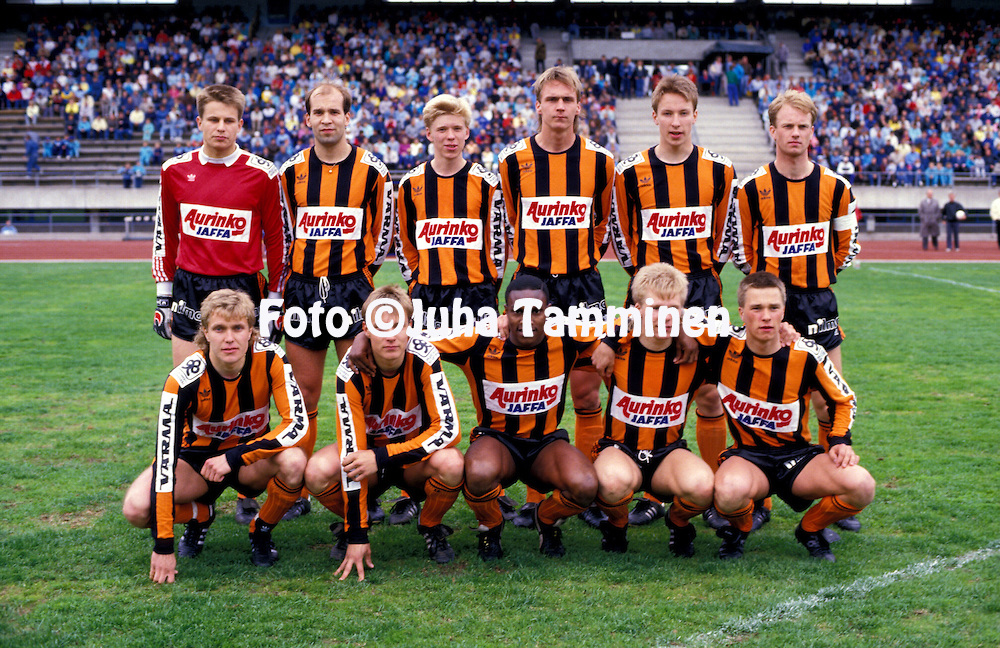
 OTP (Oulu) won the Second Division championship with 30 points from 12 wins, 6 ties, and 4 lost games. Goal-difference: 42-21.
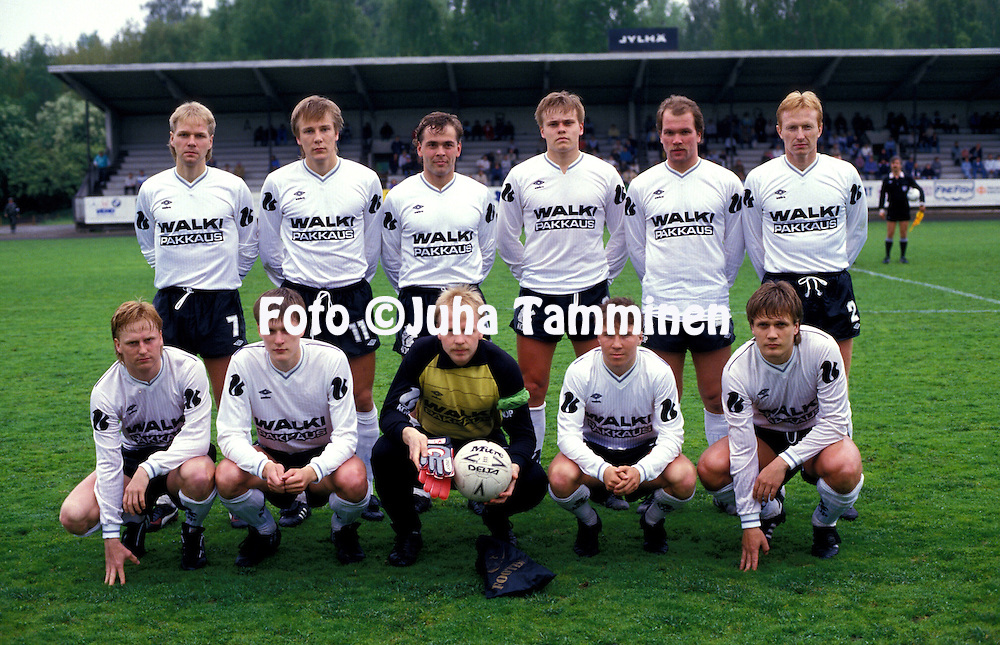
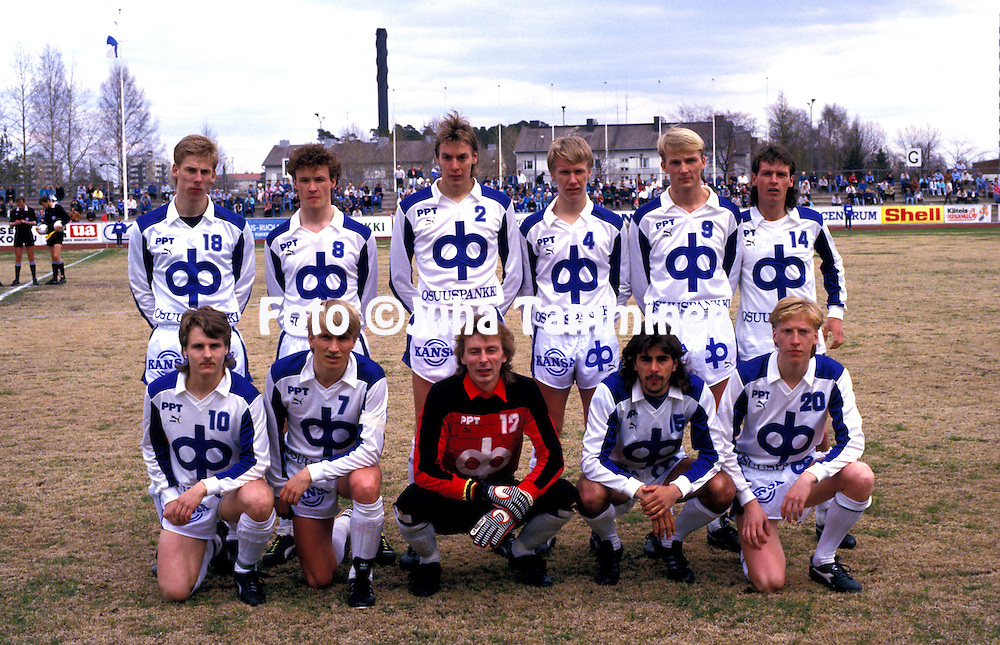
 GrIFK (Kauniainen) was 2nd in Second Division with 29 points and went to the promotion/relegation play-off. There they met KePS (Kemi) and lost both legs 0-2 and 2-5. No promotion for GrIFK…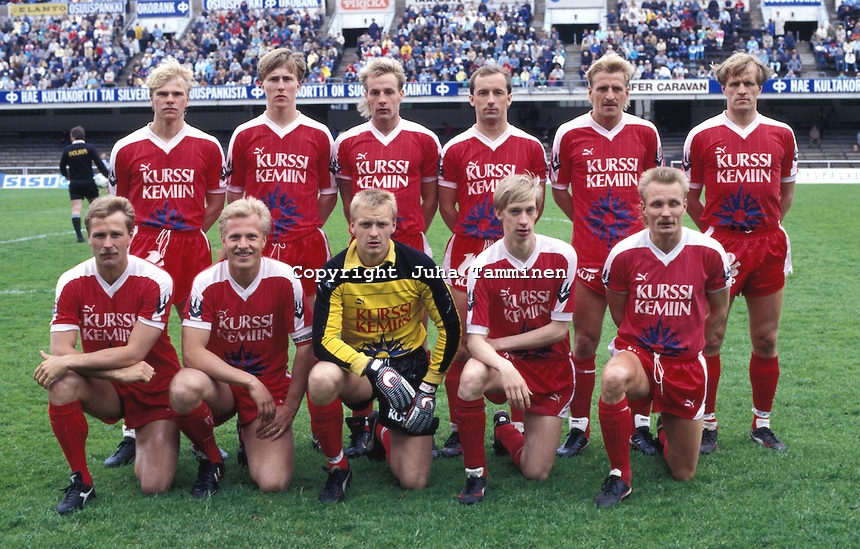
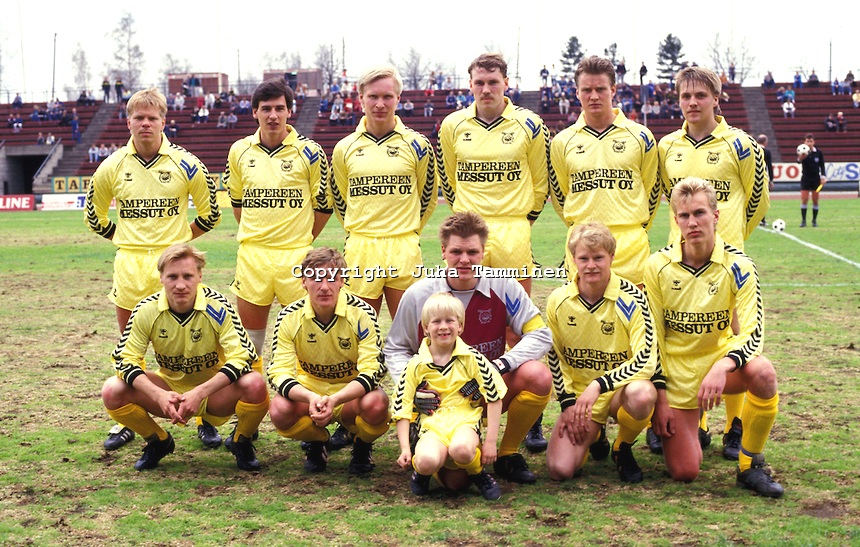
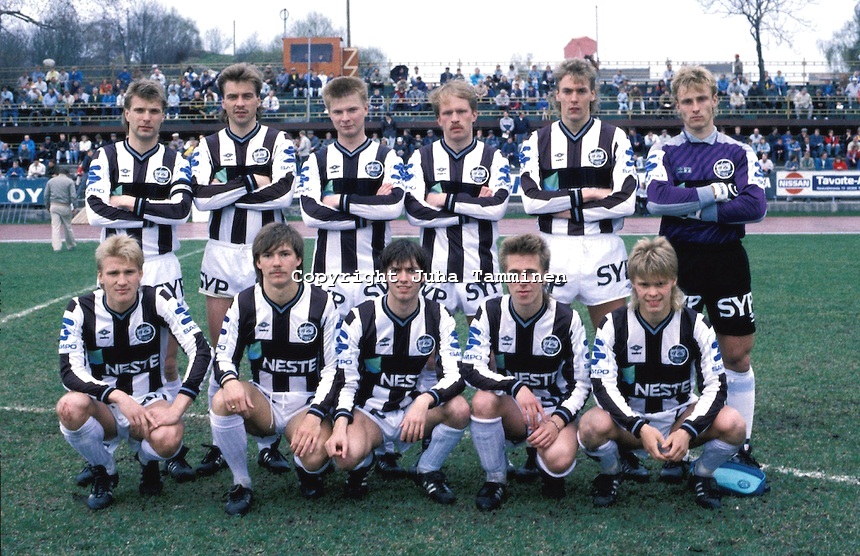
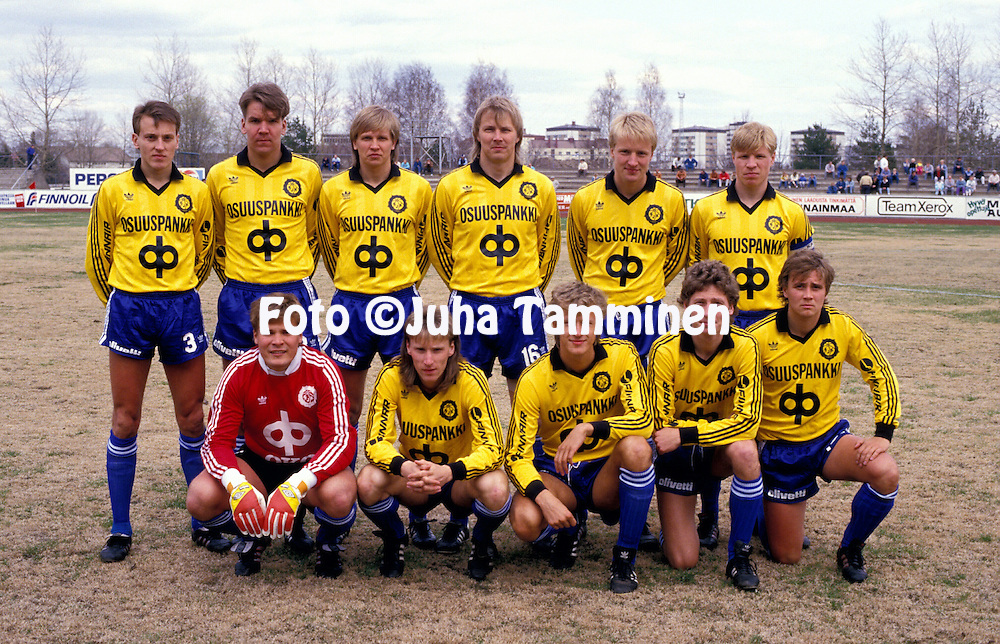
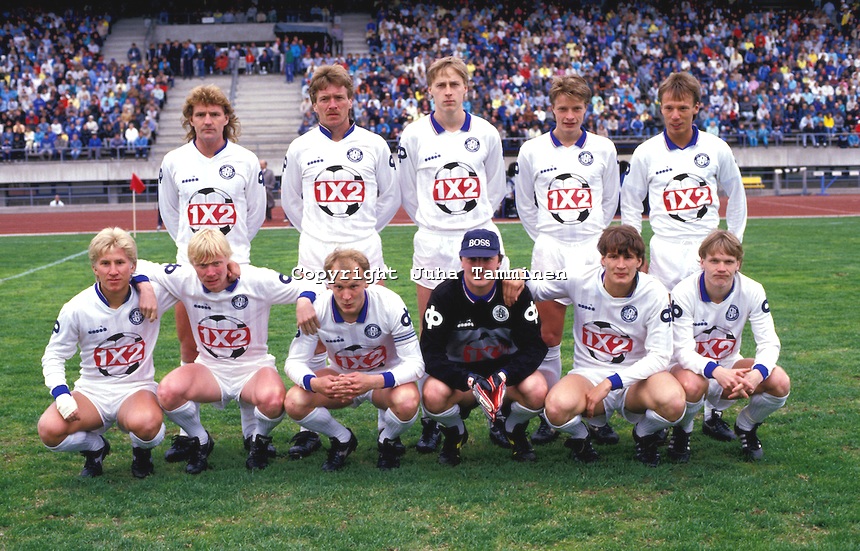
 Silkeborg IF won the Second Division championship and was promoted.
 Randers Freja was 2nd in the Second Division and also promoted.
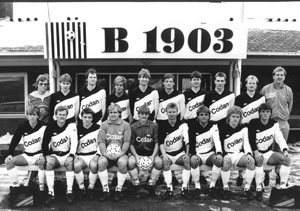 B 1903 (Copenhagen) was 9th with 26 points – they were the last relatively strong team. The one behind them – AaB (Aalborg) was the best of the weak with 20 points.
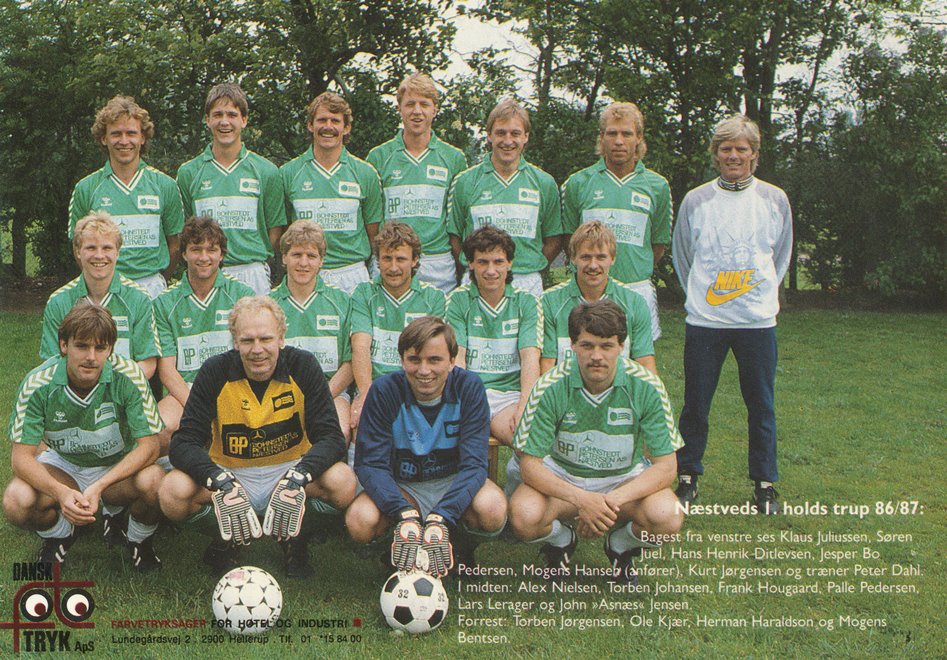 Næstved IF ended 6th with 28 points.
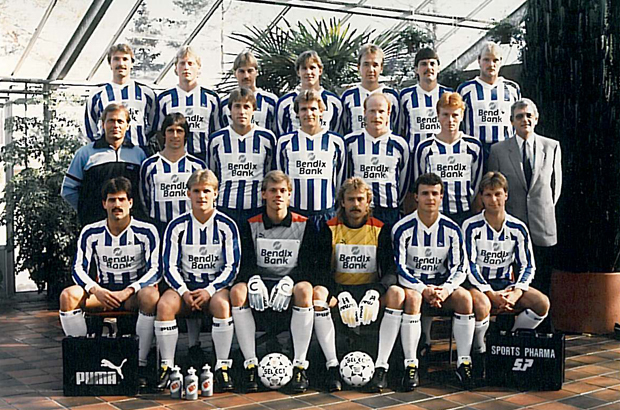 OB Odense was 4th with 31 points. They were 5 points behind 3rd – placed AGF (Aarhus). Ikast fS was 2nd with 38 points. But none challenged the leader.
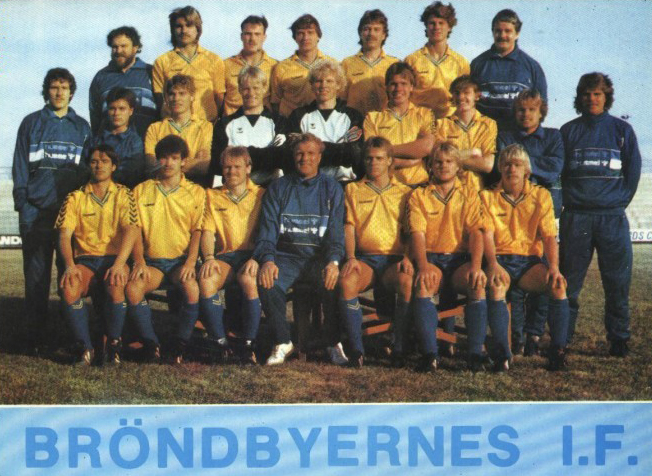 Brøndby IF was exceptionally strong this year – 22 wins, 3 ties, only 1 lost match, 63-17 goal-difference and 47 points. Ikast fS finished 9 points behind. Such dominance was unusual in Denmark, but this was a squad of great quality. Sitting from left: Henrik Jensen, D. Jensen, Claus Nielsen, Ebbe Skovdahl – coach, Christensen, Ole Oestergaard.
 AaB (Aalborg) tried hard to compensate for a weak season, but reaching the final was the most they could do.
 AGF (Aarhus) was not good enough to match Brondby, but they were still strong and winning the Cup proved it. It was their 6th Cup, but more importantly AGF was able to end 20-years long drought : the last time they won the Cup before was in 1965. It was great moment.
 31 Korriku (Burrel) was 2nd at the end – there scoring record was 46-22 and since both leaders had the same goal-difference, 31 Korriku was 2nd only because they scored less goals. No matter – they were promoted and going back to top flight after there relegation in 1983-84.
 Beselidhja (Lezhe) did not have to wait for return to the top league at all – they were relegated the previous season and immediately returned. Like their rivals they finished the season with 16 wins, 8 ties, 6 losses, and 50 points. There scoring record was 50-26, that is +24 goal-difference, just like 31 Korriku, but they scored 50 goals instead of 46 and thus won the championship.
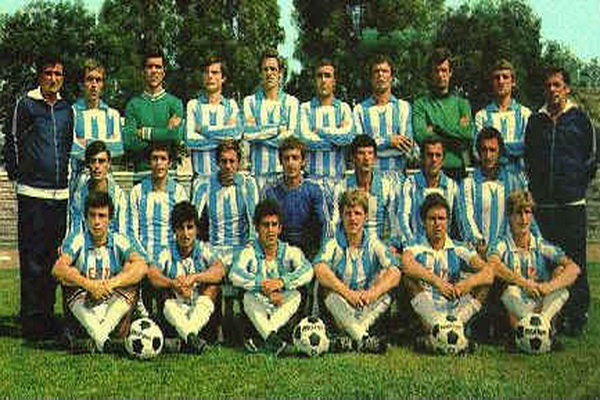 17 Nentori (Tirana) finished 5th with 26 points – 5 points behind the 4th-placed team. True, they were penalized with 3 points deduction, but nevertheless this was one of their weaker seasons.
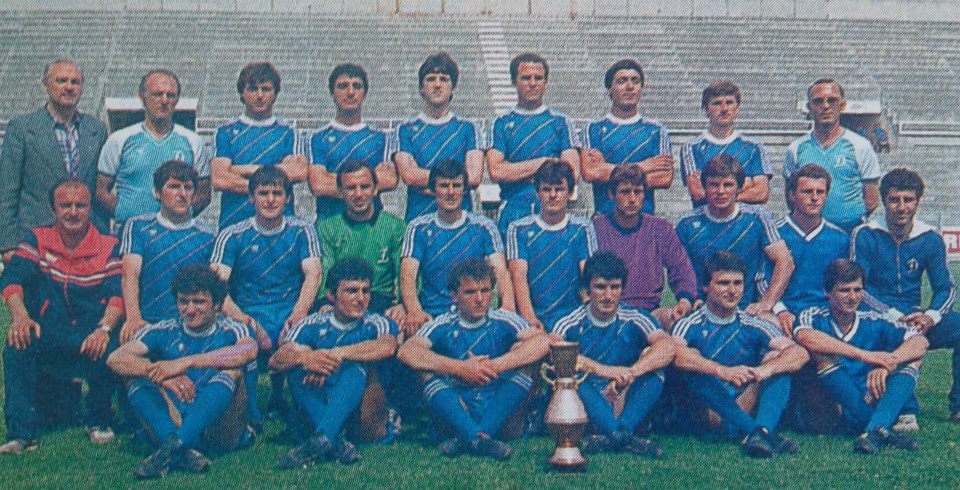 Dinamo (Tirana) took 4th place with 31 points. They were also penalized with 3-point deduction, but even if they had full record 3rd place was the best they could find themselves.
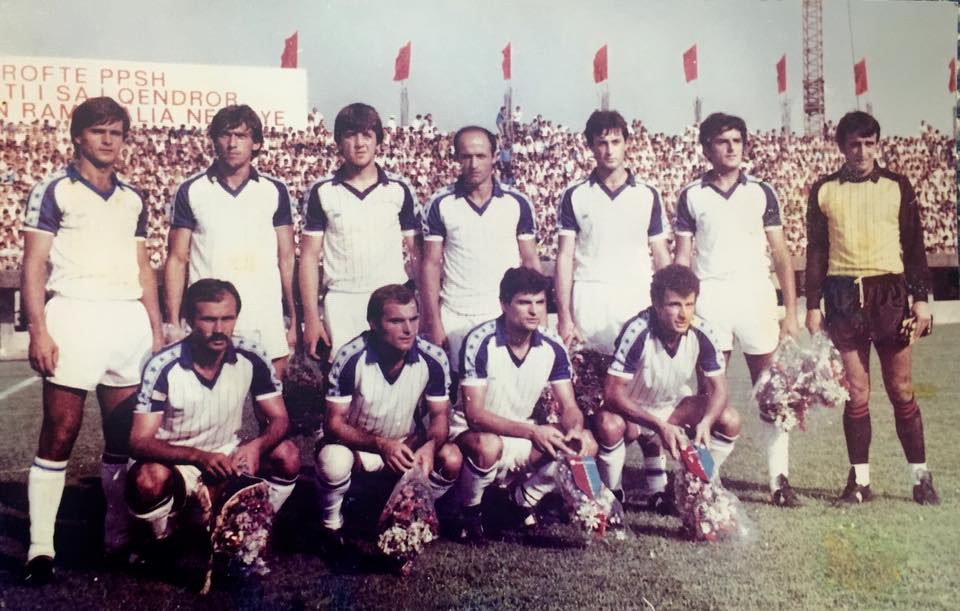 Vllaznia (Shkoder) got bronze medals with 32 points. Not bad at all.
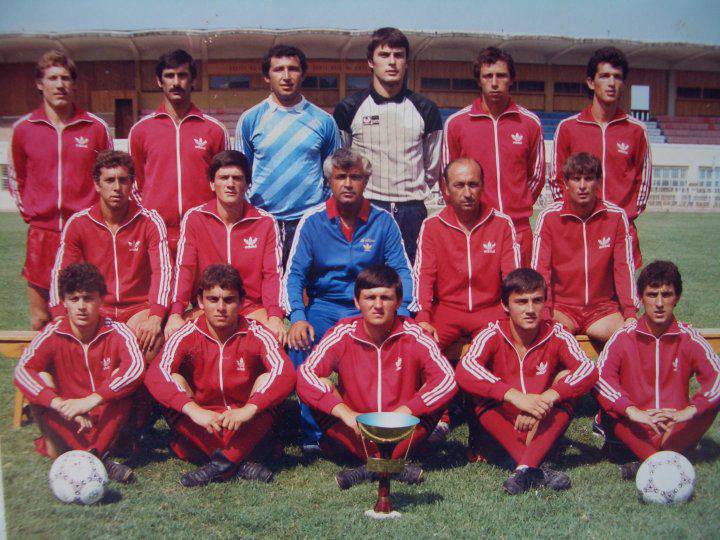 At the end Partizani (Tirana) won one more title after 15 wins, 6 ties, 5 losses, 43-18 goal-difference and 36 points. Top row from left: ILIR LAME , ARJAN HAMETAJ , PERLAT MUSTA,ARBEN MUÇA, ASTRIT RAMADANI, SKËNDER GEGA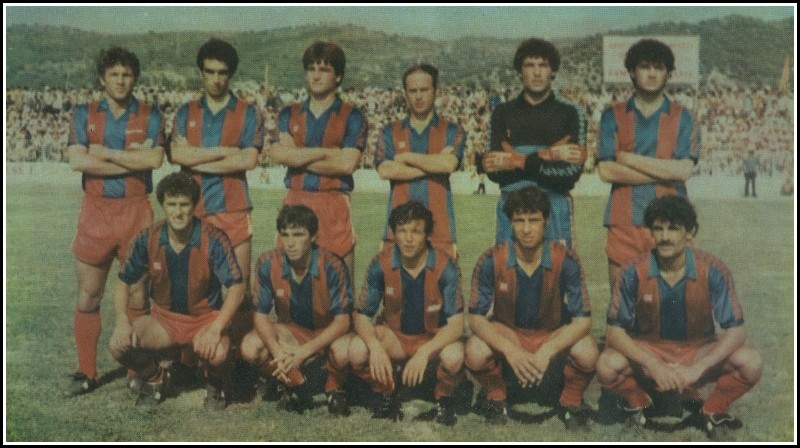
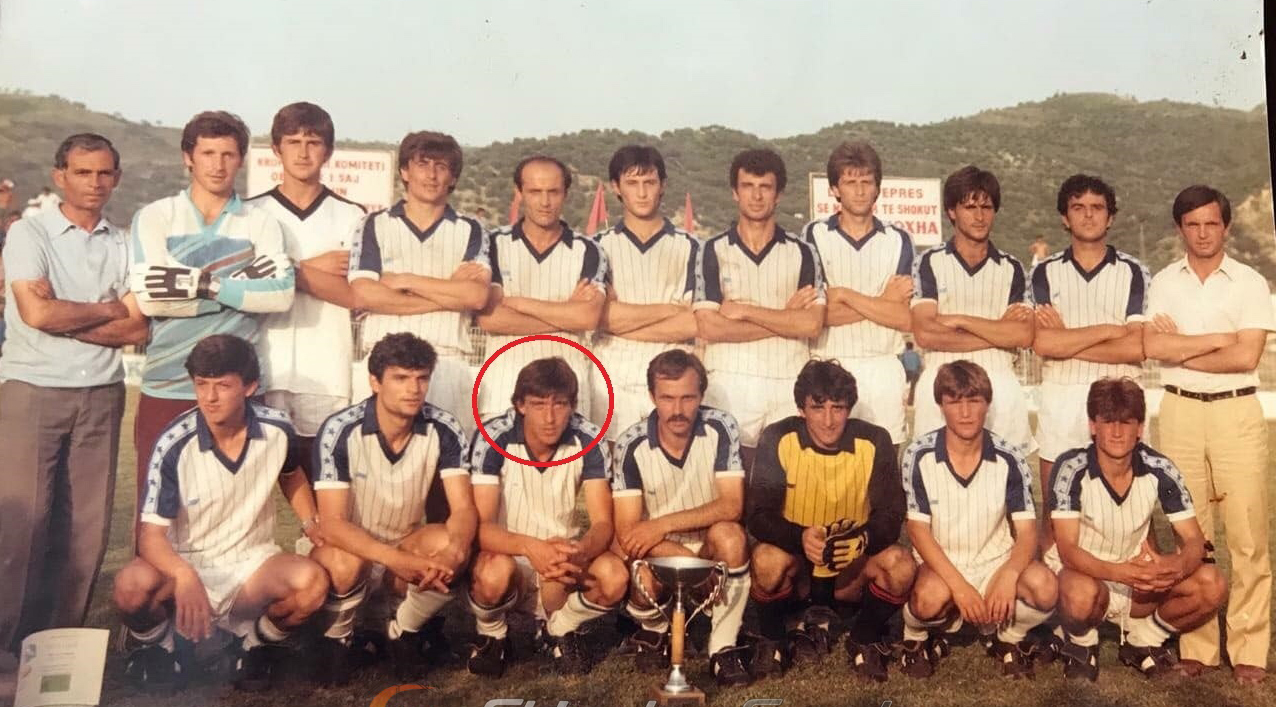 Vllaznia (Shkoder), traditionally the strongest provincial club, won once again. This was their 5th Cup. They had good players like Zmijani and Vata, who were part of the up and coming young generation defining the Albanian ‘boom’ of the late 80s and first half of the 1990s.
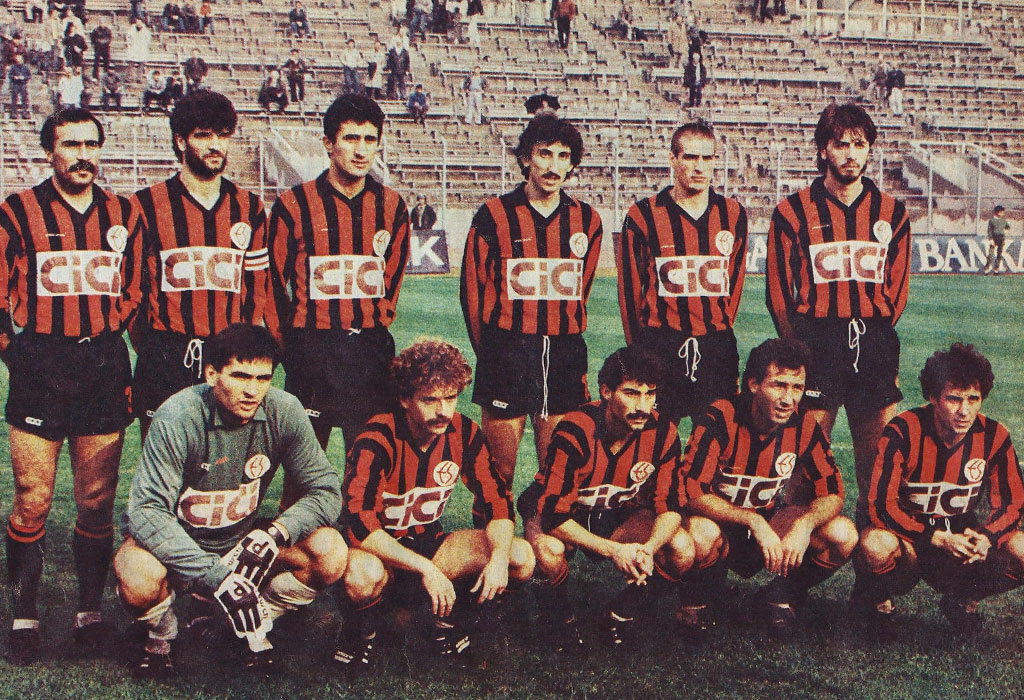 Eskisehirspor would not be able to win the trophy: 2-1. Genclerbirligi won the Cup and took it back to Ankara.
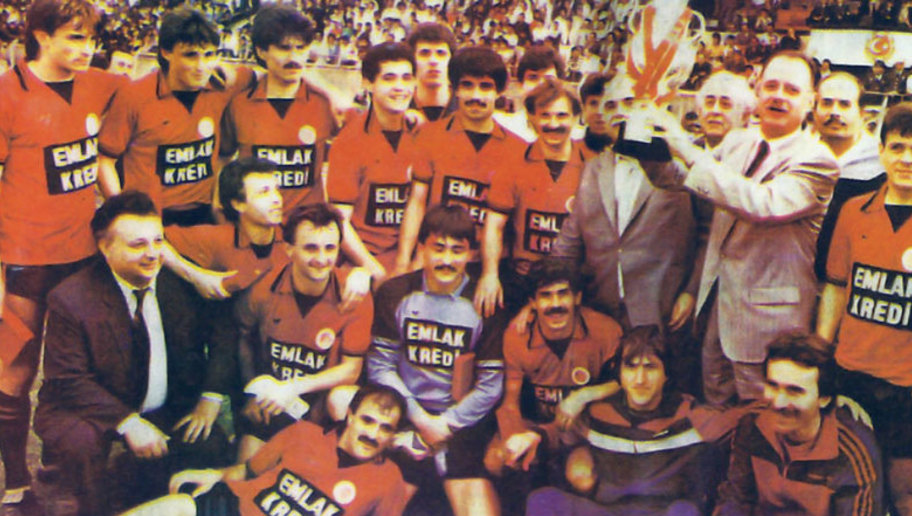 This was the greatest moment in the history of Genclerbirligi so far – they won their first trophy! The first match was truly decisive and also became historic: this was the biggest win in Cup final. So far, the largest result was 3-0. Great success in every aspect: it was the first ever trophy for Genclerbirligi, placing them on almost equal footing with their Ankara rivals MKE Ankaragucu, which had 2 Cups so far. It was just a matter of time and luck to come even, if not besting the enemy. Wonderful moment for the winners.
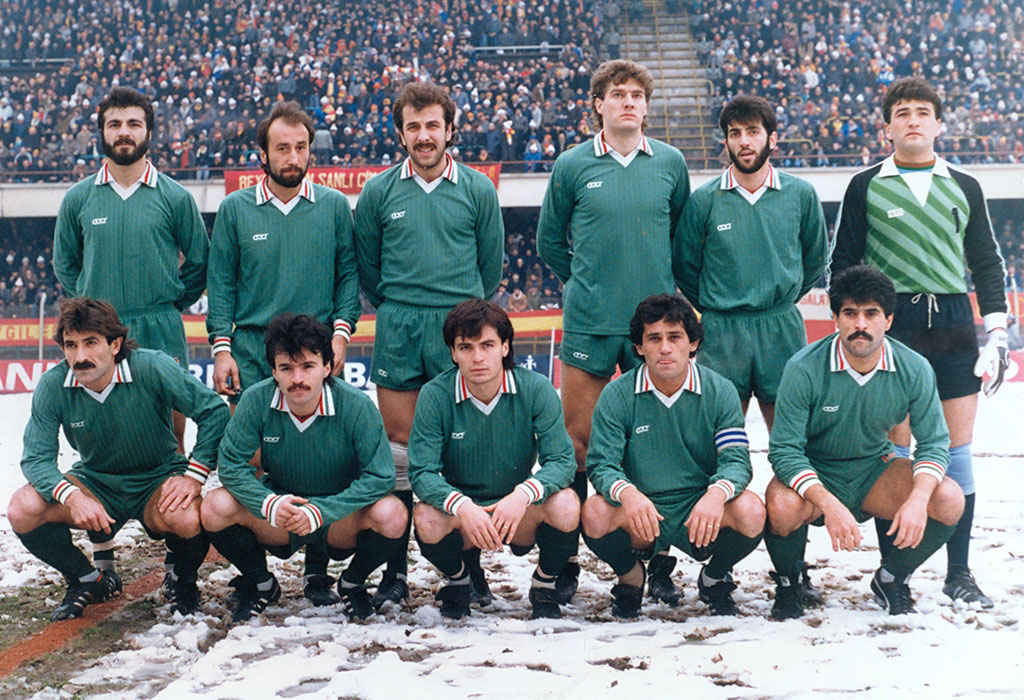 Diyarbakirspor was the weakest this championship – they got only 15 points, ended last and were relegated.
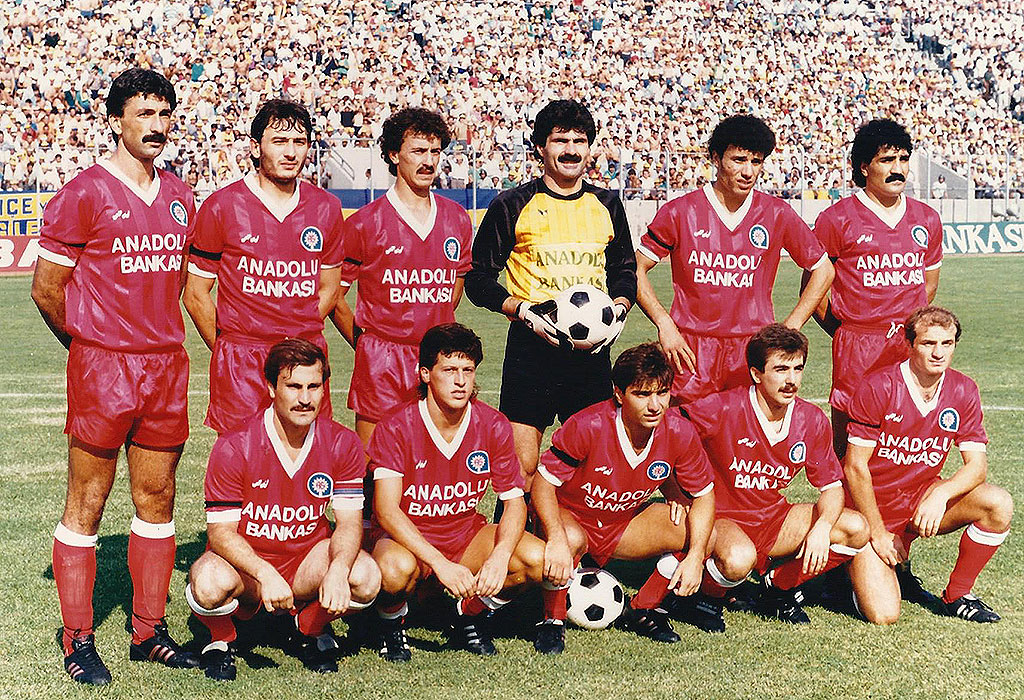 Antalyaspor did what they could, but eventually lost steam, finished 18th with 24 points and went down.
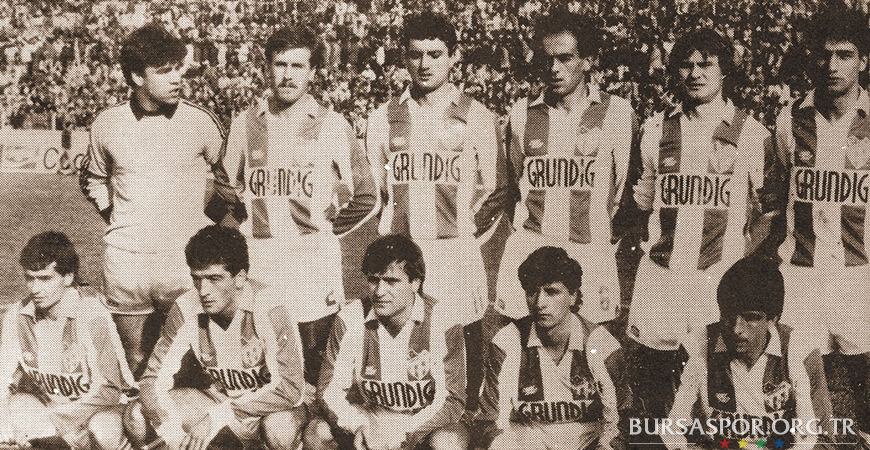 Bursaspor had a weak season – they were becoming something of unpredictable team, but escaped relegation. 17th with 28 points.
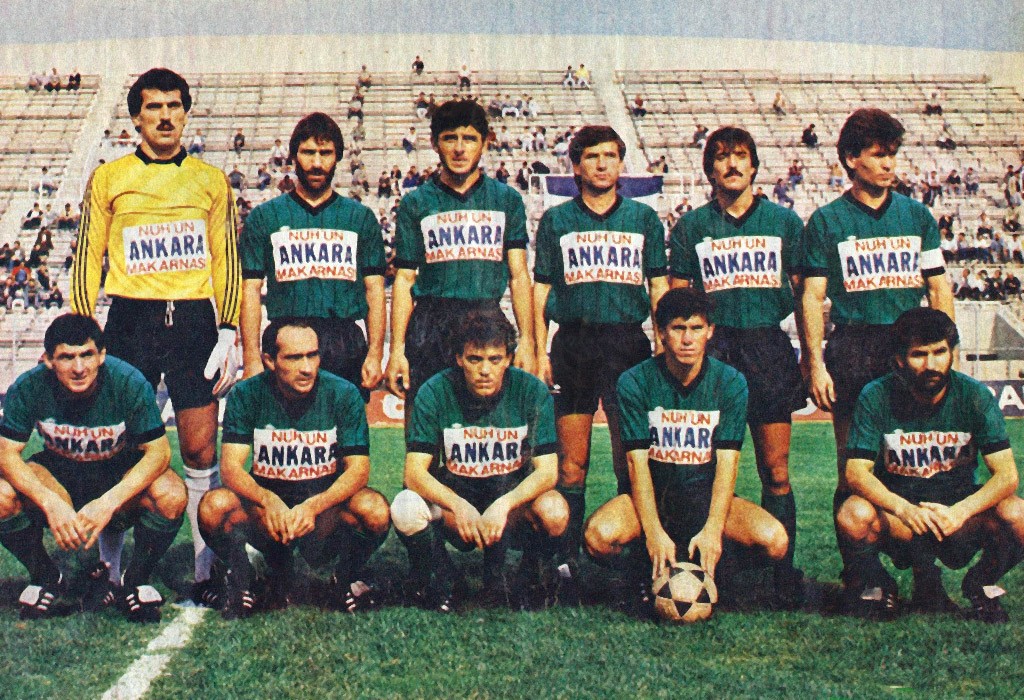 Kocaelispor bested only 3 teams, but in a way – not a bad season: they survived. 16th with 31 points.
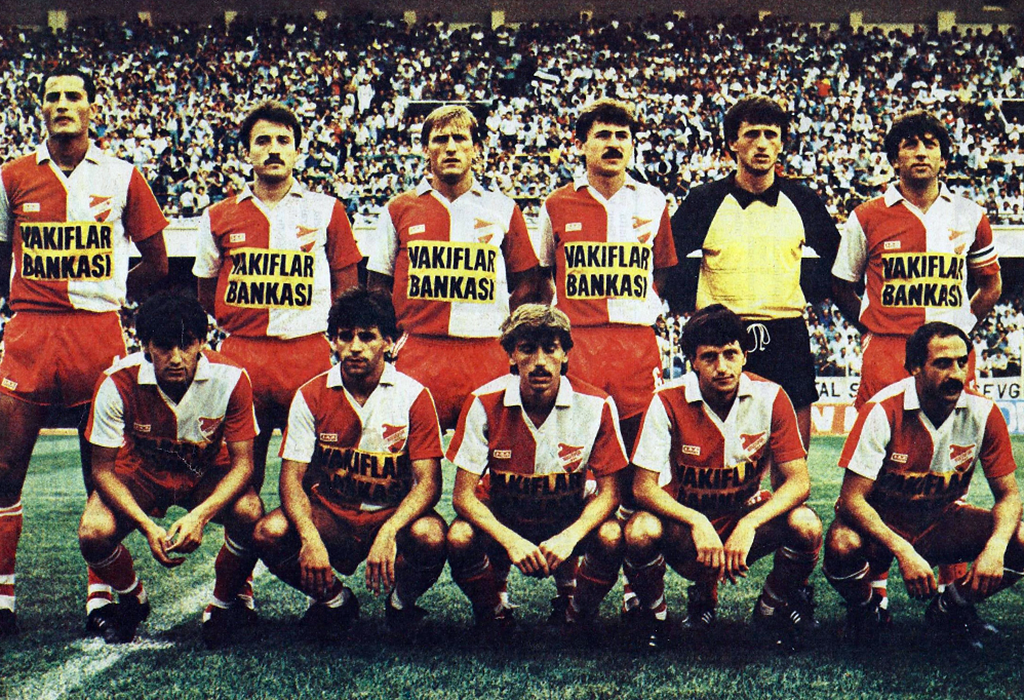 Boluspor – nothing special as usual. 15th with 32 points.
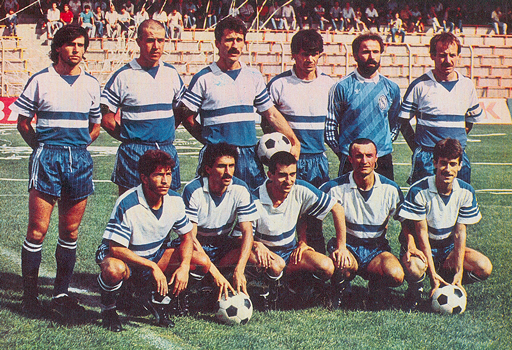 Saryer – also with 32 points, but better goal-difference placed then ahead of Boluspor: 14th. They actually finished with positive goal-difference, something rare for a team near the bottom of a league.
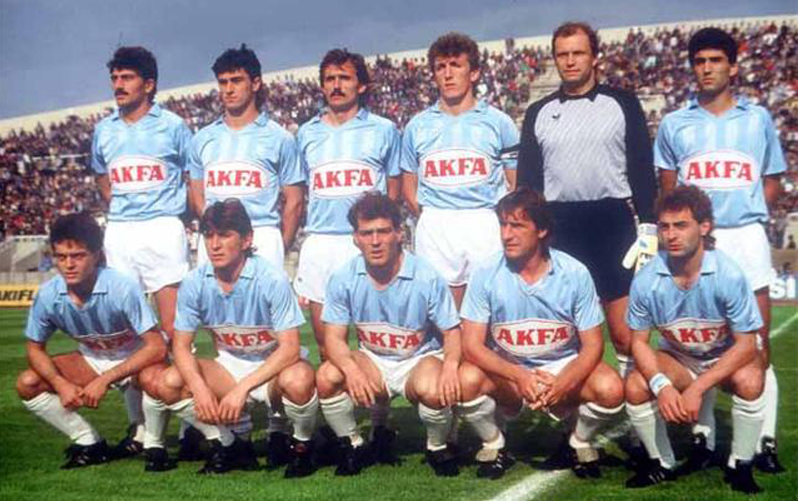 Caykur Rizespor – 13th with 33 points, but having the worst negative goal-difference – if the relegated teams are omitted. Minus 20. Standing from left: Mehmet Ali, Sinan, İsa, Hasan Vezir, Gurgen Phall, K.Turgut
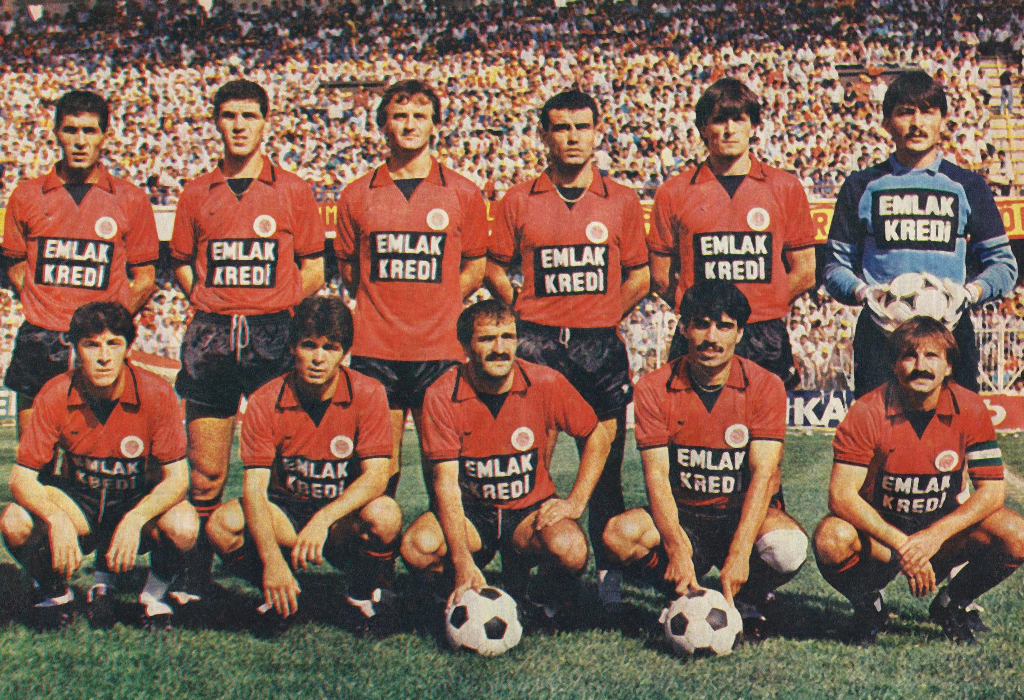 Genclerbirligi – 12th with 33 points, but this was their best year in history.
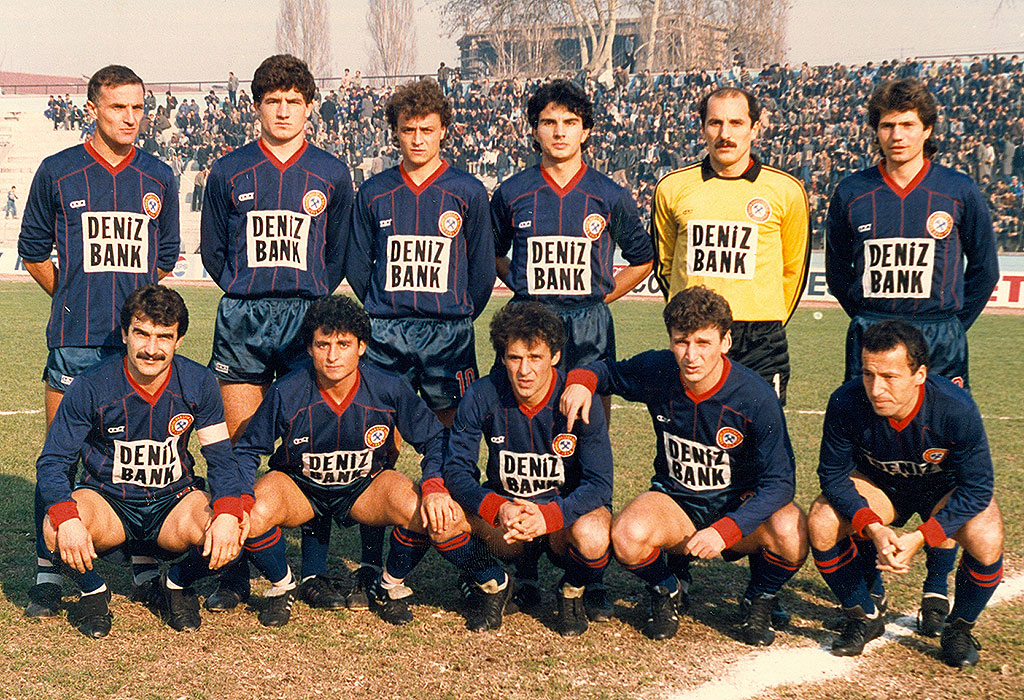 Zonguldakspor – 11th with 33 points. Better goal-difference placed them ahead of Caykur Rizespor and Genclerbirligi.
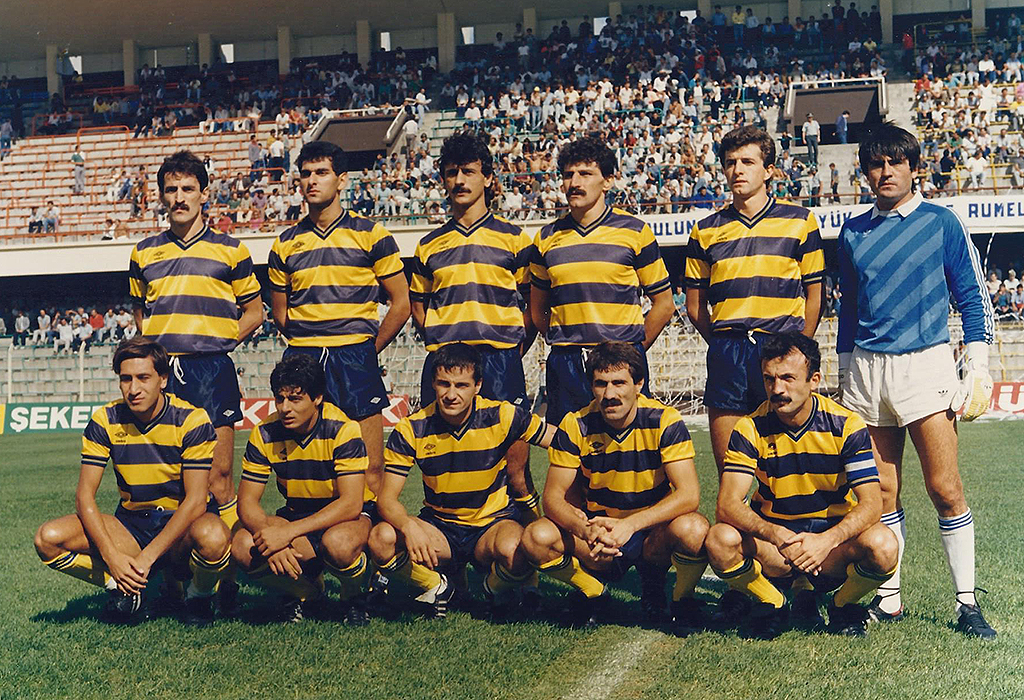 MKE Ankaragucu – 10th with 34 points.
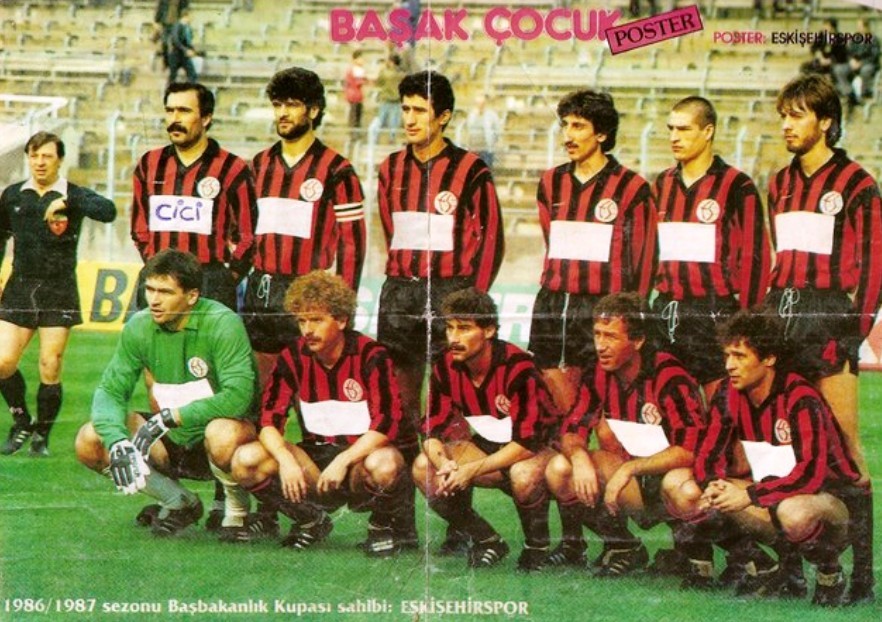 Eskisehirspor -9th with 34 points. Mid-table performance, but got one of 2 Turkish spots in the Balkans Cup as a Cup finalist.
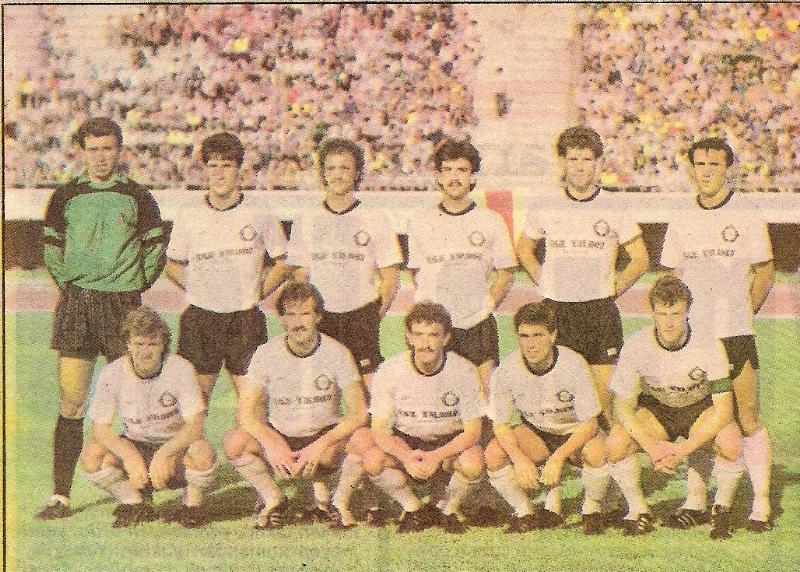 Altay – 8th with 36 points.
 Denizlispor – 7th with 36 points.
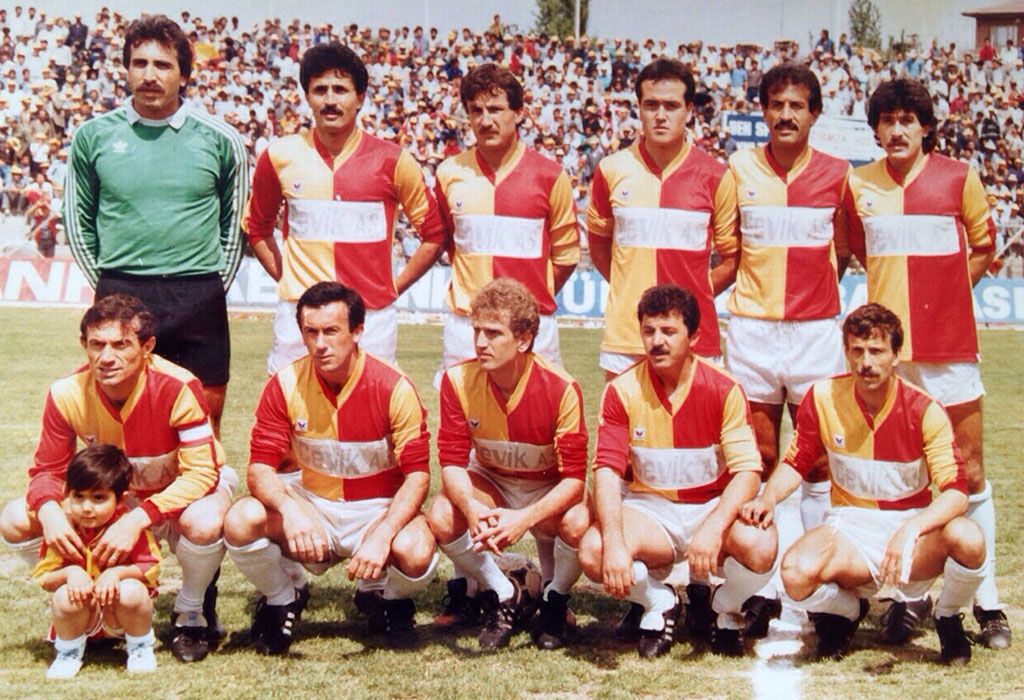 Malatyaspor – 6th with 39 points.
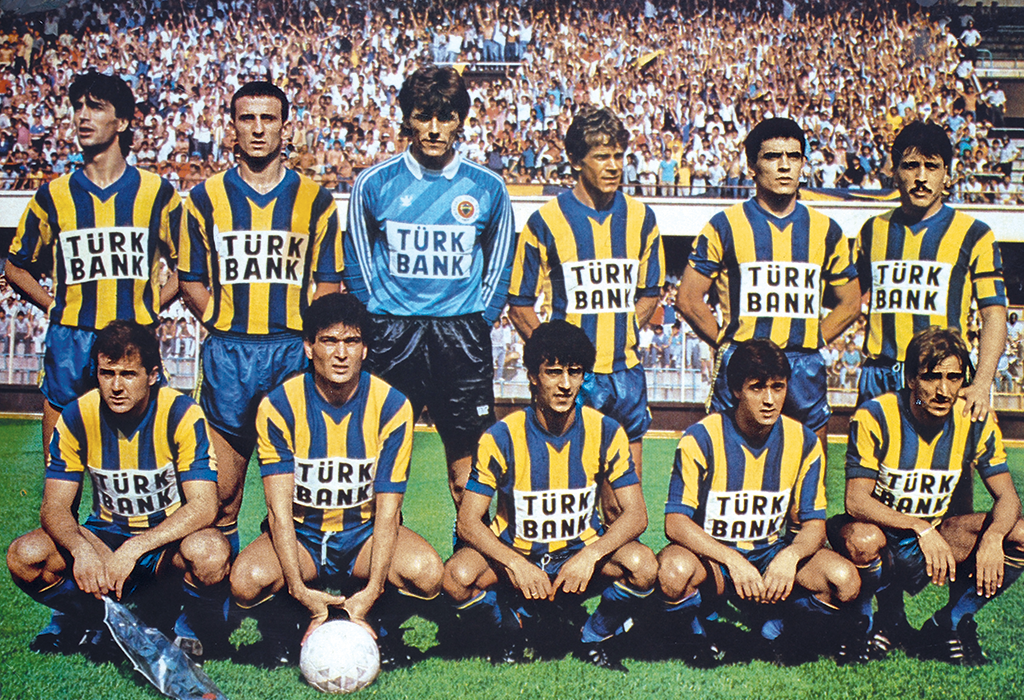 Fenerbahce – 5th with 39 points. Rather weak season – not even with a medal.
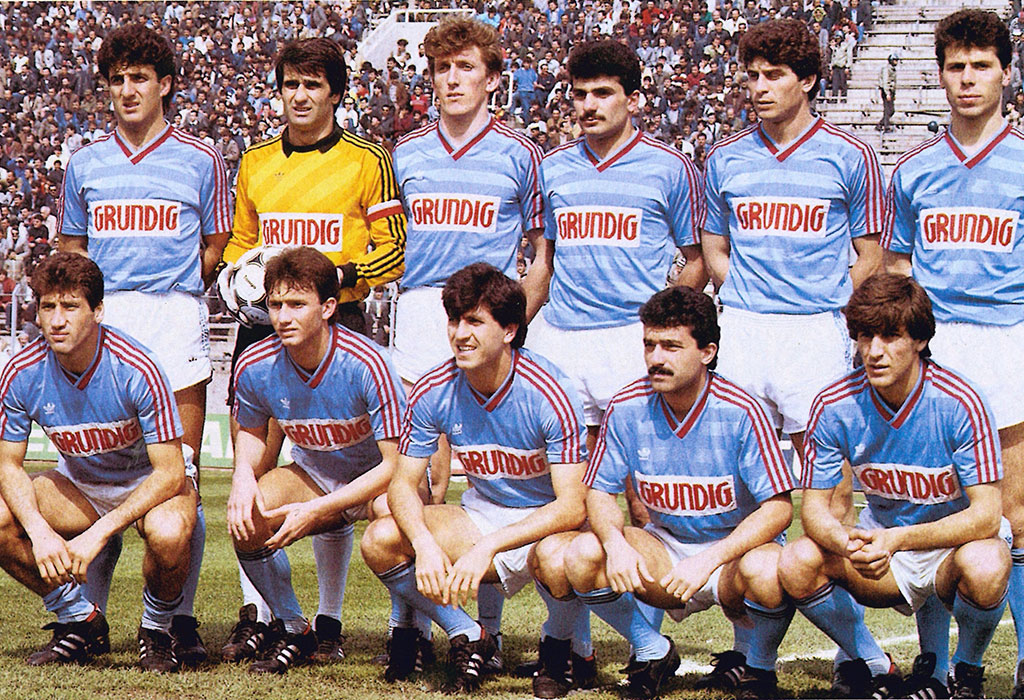 Trabzonspor – steady, not at all declining: 4th with 49 points – 10 points ahead of Fenerbahce! Standing from left: Şenol Ustaömer, Şenol Güneş, Hasan Vezir, İbrahim Yazıcı, Bahaddin Güneş Hamdi Zıvalıoğlu.
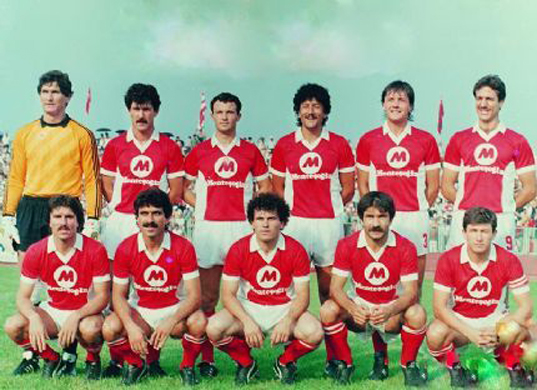 Excellent season for Samsunspor – they clinched bronze medals, beating Trabzonspor on goal-difference. In fact, they had better goal-difference than the champions: +34 was second-best this championship.
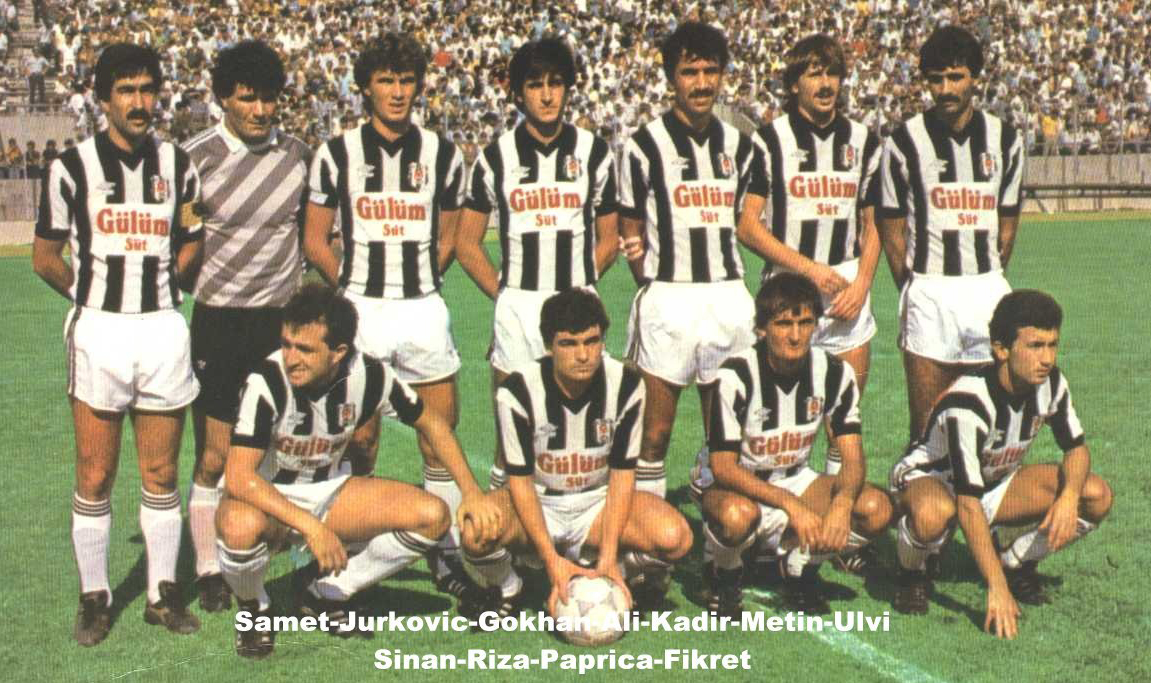 Besiktas fought for the title, but at the end lost it by a single point. 2nd with 53 points, but the best scorers by far with 67 goals and with best goal-difference +41.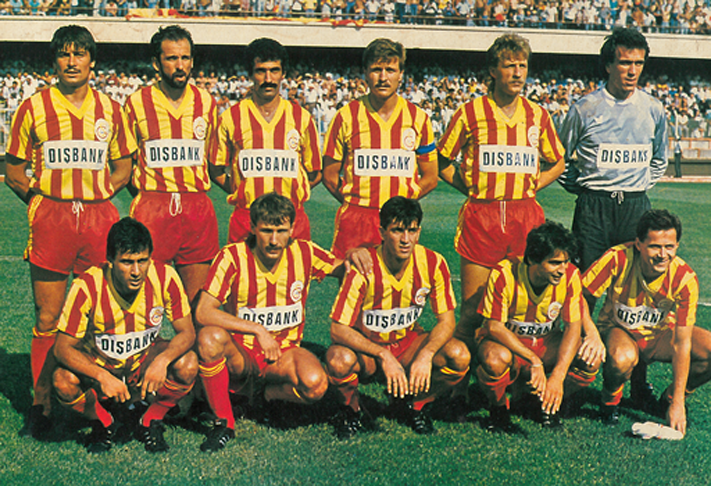
 Galatasaray prevailed and won the title: 23 wins, 8 ties, and 5 losses gave them 54 points – one more than Besiktas’. 55-24 was not the best record at all – Besiktas and Samsunspor had better goal-difference, they also outscored Galatasaray, and Samsunspor and Trabzonspor had better defensive records, but who cares? Who cares when Galatasaray won the title? It was not shining and overwhelming victory and perhaps cherished better for that: Galatasaray did not win a championship since 1972-73! A long and bitter wait ended with dramatic victory over bitter rival Besiktas. And arch-enemy Fenerbahce nowhere to be seen. Thus, Galatasaray finally won its 7th title. May be not a great team – if taken in historic perspective – but one thing was already firmly established: no strong Turkish team was possible without foreign players. Yugoslavs were mainly imported at this time and one can say that Galatasaray had the upper hand precisely because they had better Yugoslavs (Simovic and Prekazi) than their rivals Besiktas (Jurkovic and Kovacevic) and Fenerbahce (Lukovcan and Pesic). Anyhow, finally Galatasaray returned to the top. They still were quite behind dreaded Fenerbahce, which had 11 titles so far, but came ahead of Trabzonspor (6 titles).
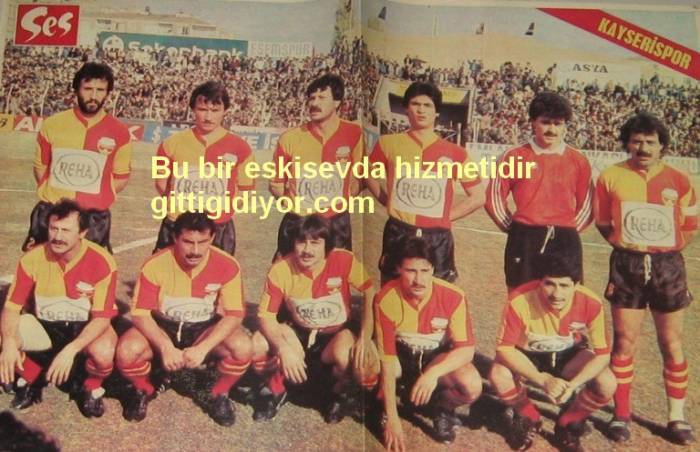 Kayserispor, freshly relegated, finished 3rd with 42 points – 7 points ahead of 4th-placed Gaziantepspor, but 11 points behind the winners.
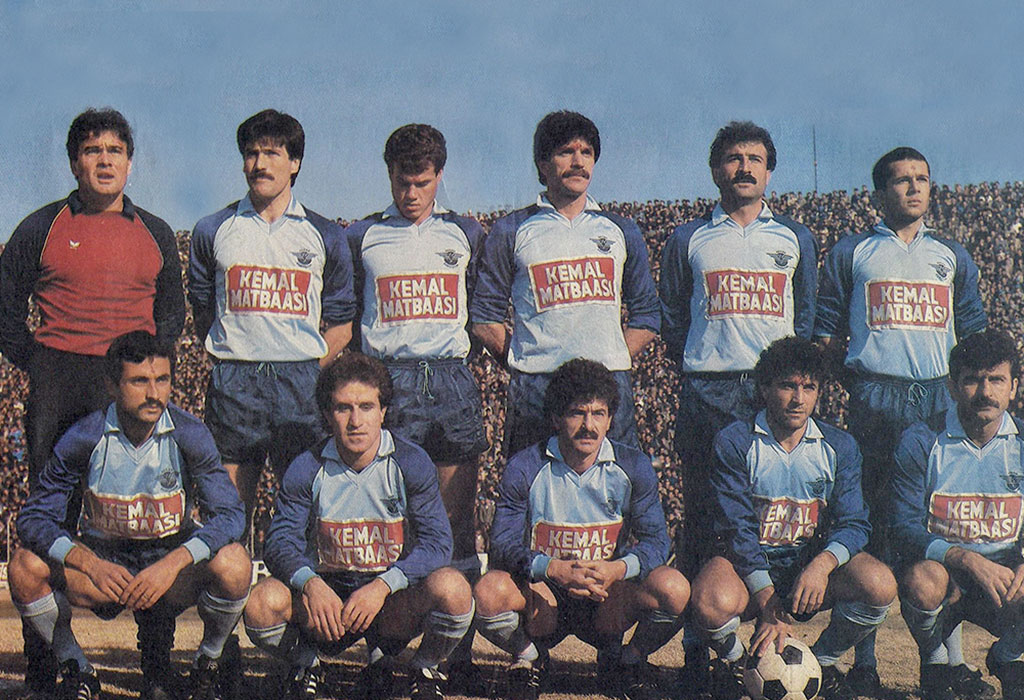 AdanaDemirspor (Adana) dominated the group, winning the championship with 53 points from 23 wins, 7 ties, 2 losses and 77-27 goal-difference. Promoted to First Division.
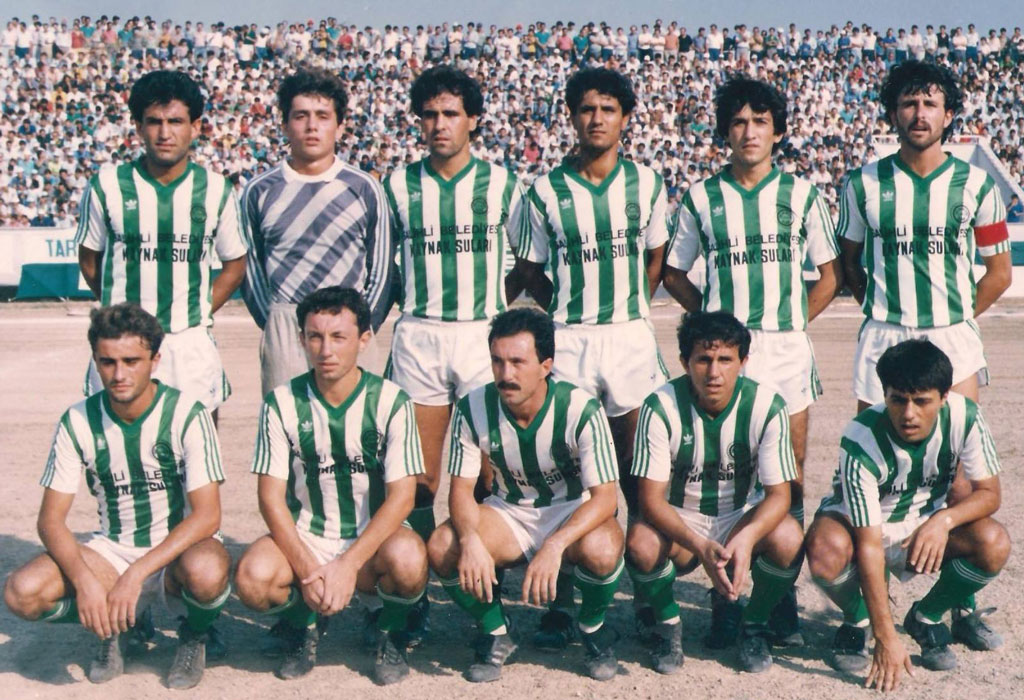 Yeni Salihlispor was one of those stronger teams – they finished 4th with 40 points.
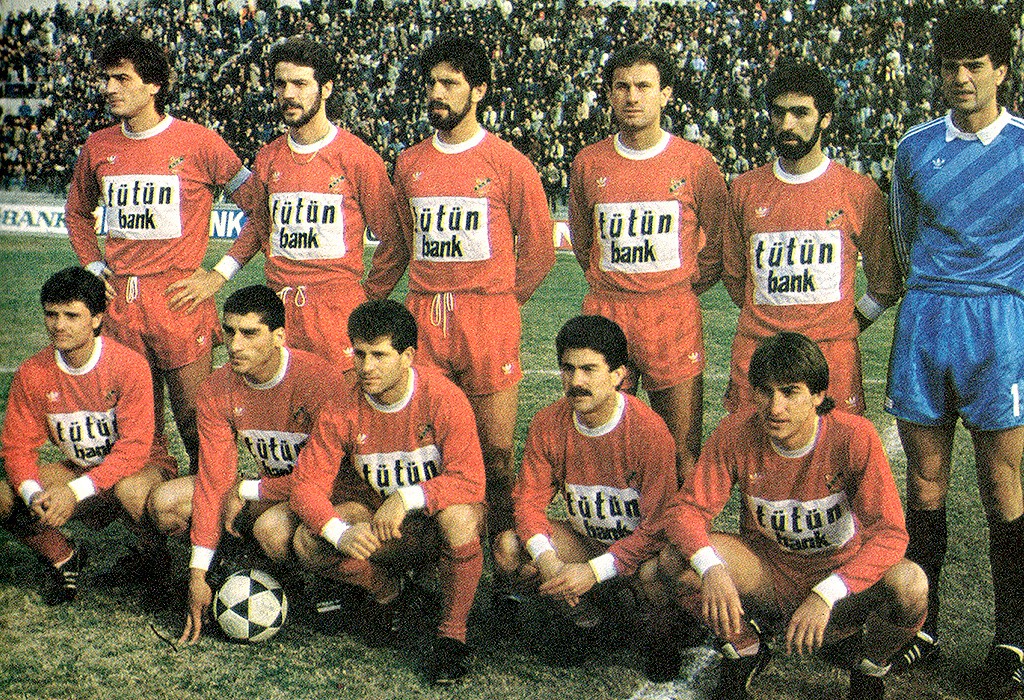 Karsiyaka SK won the group and was promoted – 22 wins,9 ties, 3 losses, 58-19 goal-difference and 53 points. The second finisher – Izmirspor – was 10 points behind.
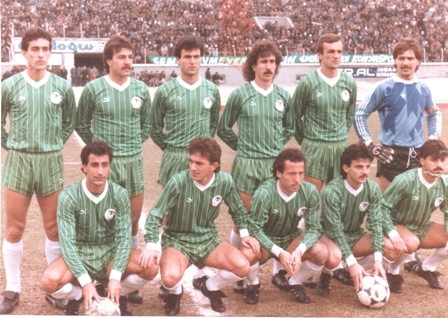 Konyaspor lost only 1 match. The rest: 23 wins and 10 ties. They scored 62 goals and received only 14. Great defensive record, wonderful goal-difference of +48, 56 points.
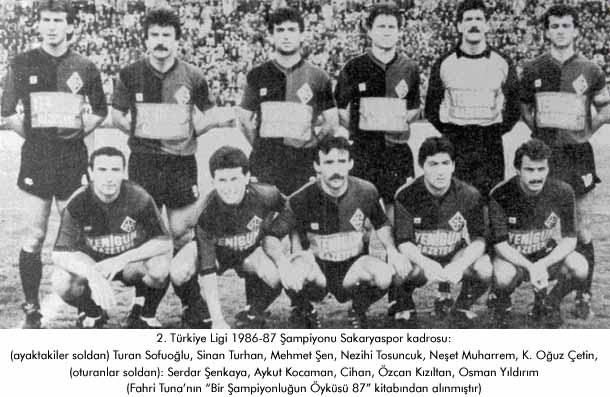 Sakaryaspor played top league football only a year ago and wanted very much to go back to top flight. They won 25 games, tied 6 and lost 3 – that gave them 56 points, the same as their bitter rivals Konyaspor. Goal-difference decided in Sakaryaspor’s favour: they finished 77-26, that is +51, 3 goals better record and first place was their. Most unfortunate for Konyaspor and big joy for Sakaryaspor.
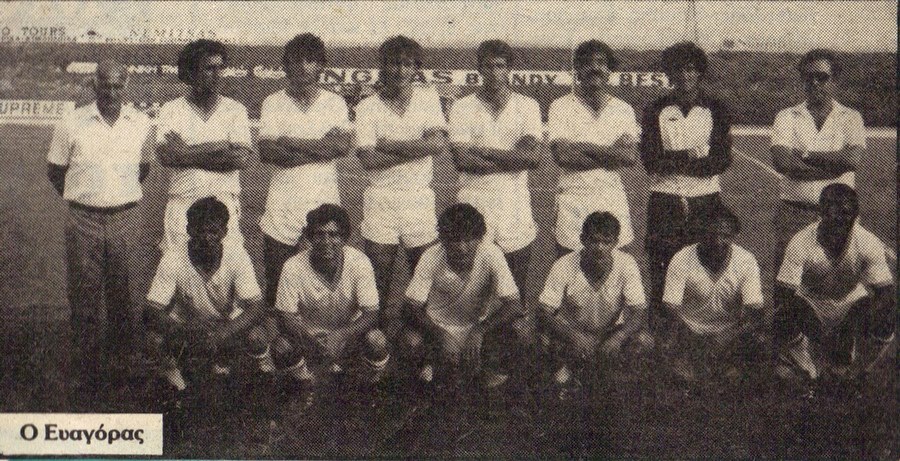 Teams like Evagoras (Paphos) played in Second Division, even less known. Evagoras finished 6th.
 Anagennisi (Deryneia) clinched second place with 41 points and was promoted.
 APEP won the championship with 43 points from 19 wins, 5 ties, 4 losses, and 53-25 goal-difference. One can imagine the joy – they were going to play for the first time in First Division. Quite an achievement too, for the club was formed only in 1979 – true, from a merger of older clubs. However wonderful it was in the home town, APEP was most likely to be relegated right away, but that was not to spoil happiness. Winners are winners.
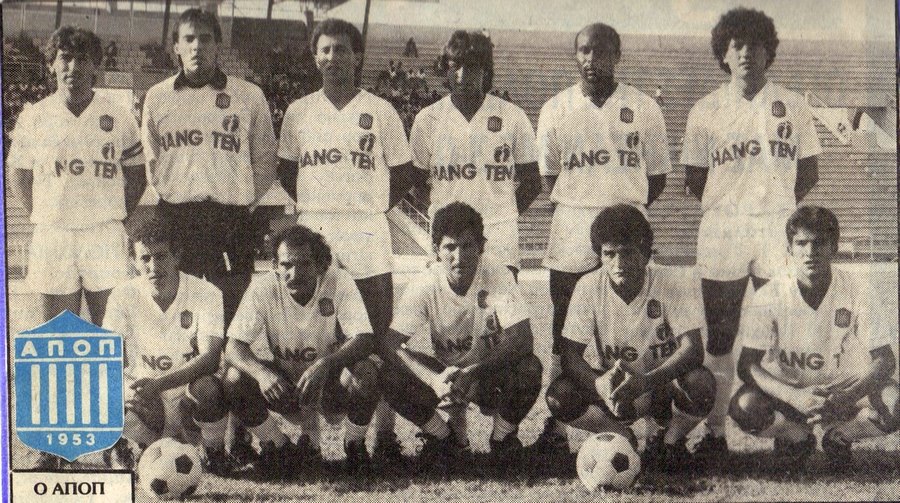 Such was the effect of the enlarged league: teams, which previously meandered between first and second division, never able to dream of more than temporary survival, now were quite relaxed and definitely safe among the best: APOP (Paphos) finished 9th with 27 points.
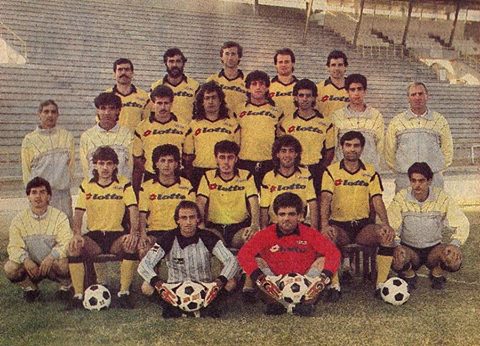 EPA (Larnaca) curely had strong season and they ended with bronze medals, but that was the maximum – even 2nd place was out of their reach, they finished 4 points behind APOEL. But luck was on their side – since APOEL was banished from UEFA, EPA was going to represent Cyprus in the UEFA Cup. Wonderful for them.
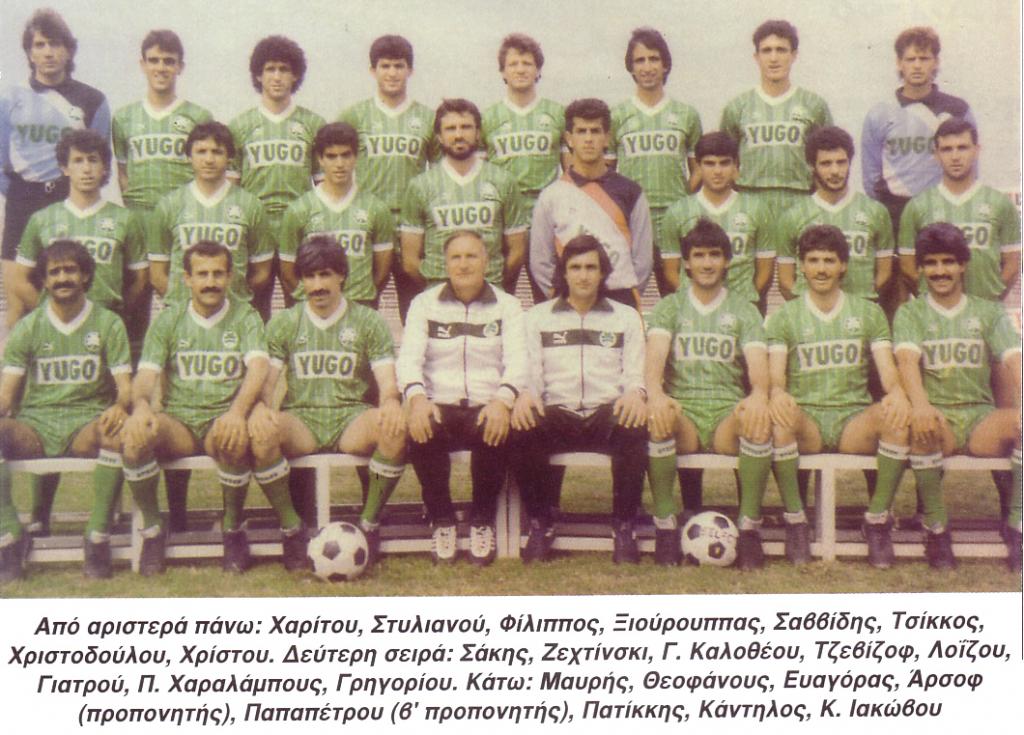 Omonia (Nicosia) easily won the championship with 52 points from 26 wins and 4 losses. Curiously, they did not tie even one match and it was pretty much their traditional approach: attacking football. It showed in their scoring record: 86-28. Constantly attacking and scoring as much as they could. The next best scorers scored 24 goals less! After the brief slip in the previous year, Omonia were back in their usual and long lasting dominant position. It was their 15th title and once again it was their traditional ‘Bulgarian connection’ keeping them superior – three Bulgarians drove them to success, just like almost all previous titles. The coach Yoncho Arssov (sitting 4th from left to right), the center-forward Spas Dzhevizov (4th from left, middle row), and imaginative playmaker Petar Zekhtinsky (2nd from left, middle row). The Bulgarians delivered once again.
 AEL (Limassol) won its 5th Cup, which was great and also the most a team could hope for, since the championship title was seemingly reserved for Omonia (Nicosia). AEL was nothing to brag about in the championship – they finished 4th, but 7 points behind 3rd-placed EPA. So, winning the Cup was truly fantastic.
 Sogndal won the Group A of Second Division with 45 points: 13 wins, 4 shoot-out wins, 2 shoot-out losses, and 3 regular losses, 43-21 goal-difference. They clinched first place by a single point.
 Strømmen won Group B with 46 points: 13 wins, 2 shoot-out wins, 3 shoot-out losses, and 4 regular losses. 44-32 goal-difference.
 Djerv 1919 (Haugesund) beat the competition and achieved the highest point in its history – promotion to First Division. Hamarkameratene was relegated and Lyn stayed where they were.
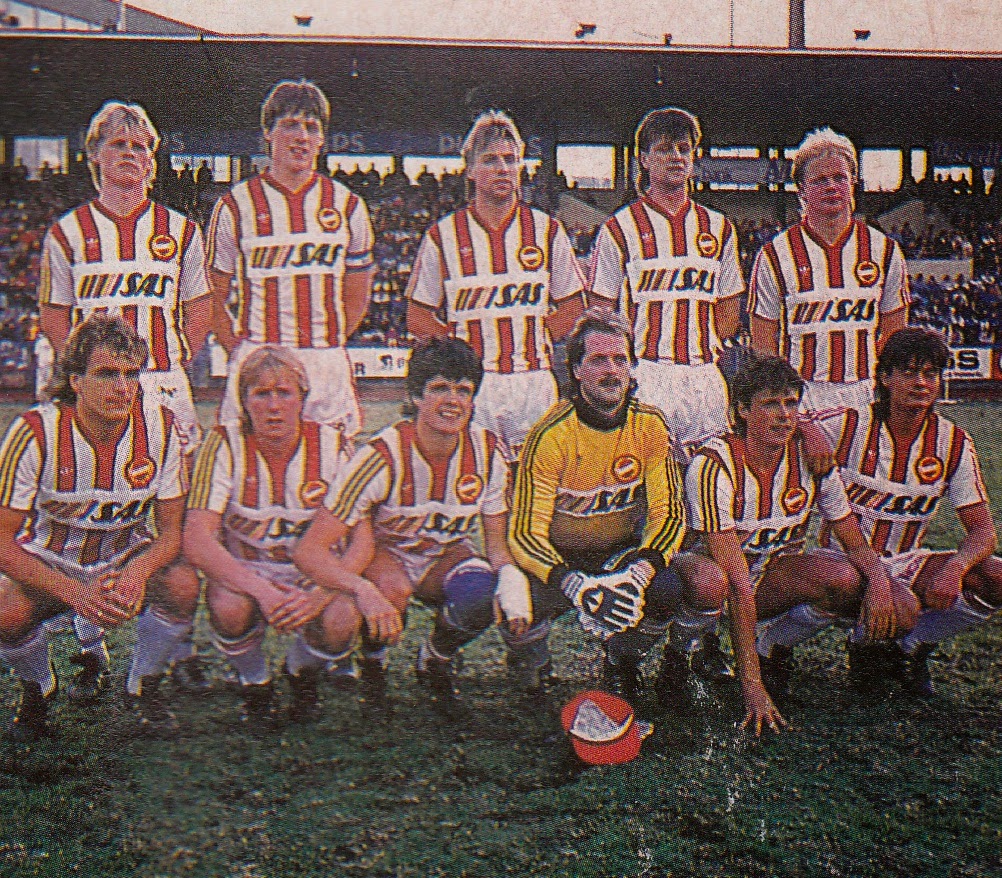 Tromsø was 6th with 31 points.
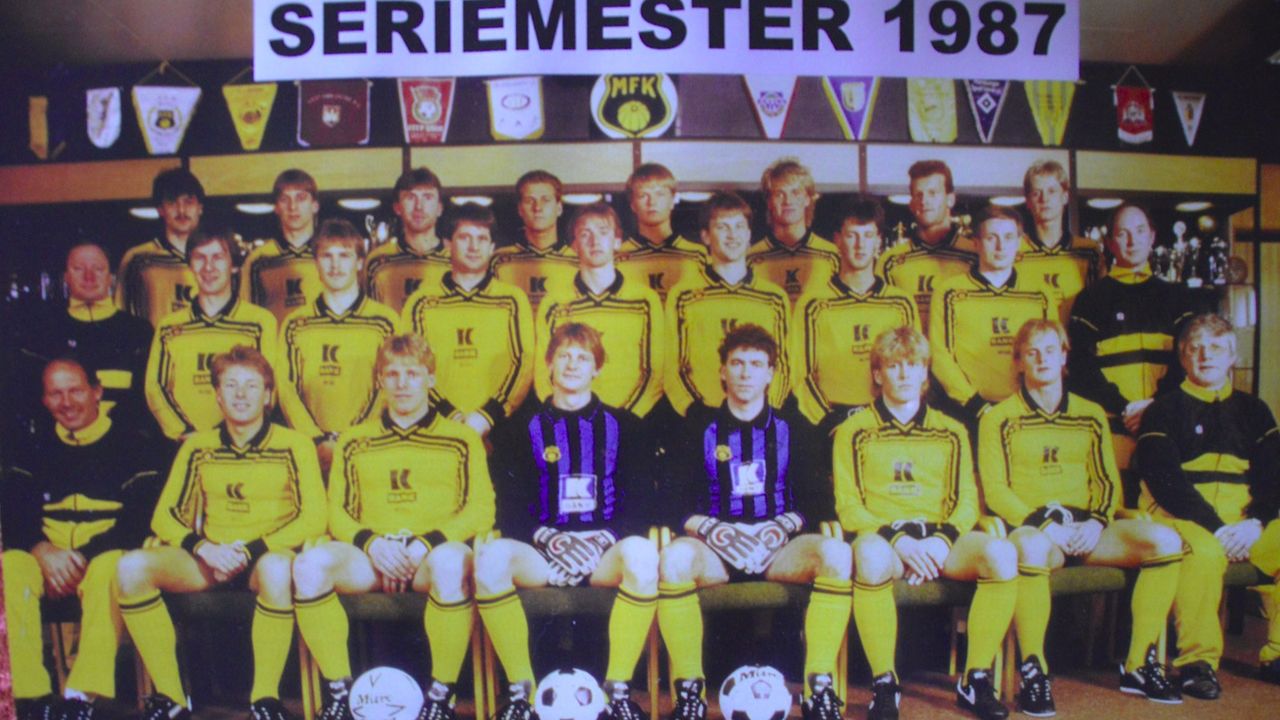 Moss won the championship with 44 points from 13 wins, 2 shoot-out wins, 1 shoot-out loss, and 6 regular losses. 44-30 was their goal-difference – high scorers, but defensively weak. May be not the most convincing champion, but they never won the championship before, so it was a big surprise, great joy, and food for thought. Were they one-time wonder or signified some major shift, triggered by the new rules? No matter at home – first title is always great historic moment.
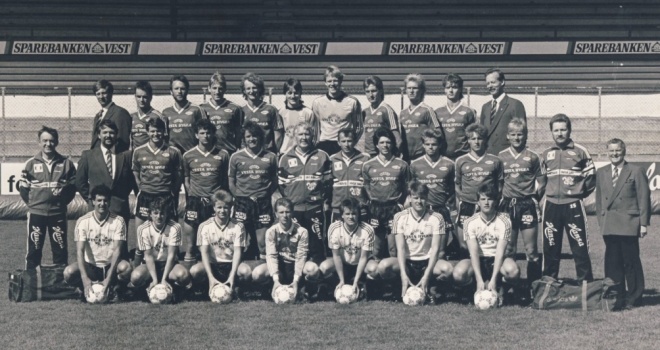 It was not Brann’s year – 8th in the championship and lost Cup final. Top row from left: Erling Mikkelsen (leder), Halvor Storskogen, Ingvar Dalhaug, Arne Møller, Fridtjof Wilborn, Dan Riisnes, Bjarni Sigurdsson, Per Hilmar Nybø, Lars Moldestad, Trond Nordeide, Casper Moldenhauer (leder).
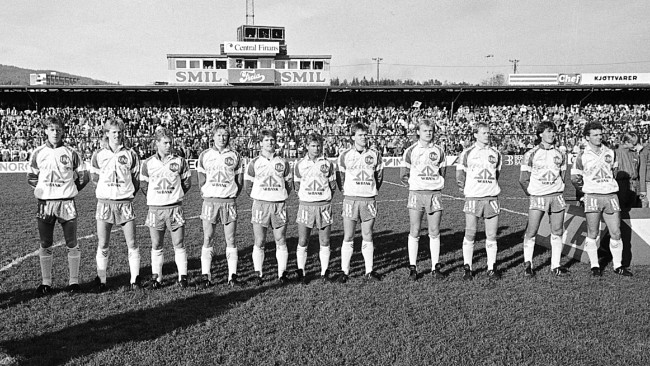 Bryne completed the list of surprise winners – they never won the Cup before and although it was difficult minimal victory, it was theirs. From left to right: Jan Madsen, Børre Meinseth, Paal Fjeldstad, Tor Fosse, Hugo Hansen, Roar Pedersen, Leif Rune Salte, Bjørn Gulden, Kolbjørn Ekker, Lars Gaute Bøe, Arne Larsen Økland.
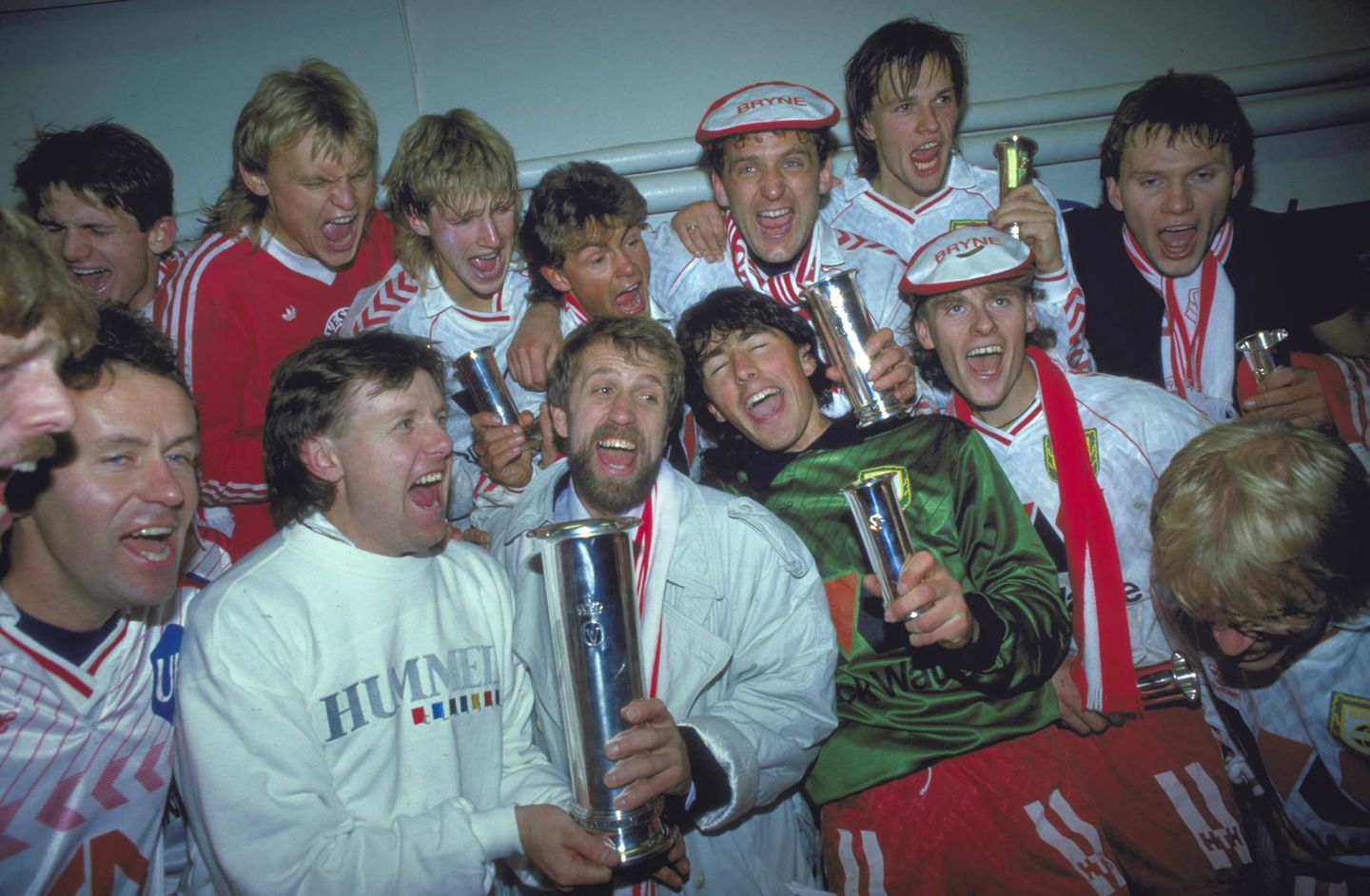 Happy winners in the dressing room and instant heroes.