The end of the tournament was hosted by Belgium, but it was the old format of the European Championship – only four teams, playing a total of four games. The semi-finals, the match for the third place and the final. After England – West Germany, the ½ finals were anticlimactic: the draw paired the Germans with the hosts, Belgium. USSR was to meet Hungary. There was no doubt about the outcomes: it was widely believed that any East European country was to lose to the Soviets, whether by official order, or by ‘silent understanding’. In Brussels the Russians won 1-0. Ordered or not, the Hungarians were not that good anyway. It was not a match to be remembered.
Belgium bravely resisted the Germans in Antwerpen, which was also expected: as hosts, they were supposed to play with high spirit and even over-perform. But it was West Germany at the end, as predicted – Belgium lost honorably 1-2.
 They won the third place in Liege, beating Hungary 2-1. Small results, speaking not that much of tough equal games, but rather of relatively clumsy teams going too far, but unable to dominate an opposition. Parity in this, not in quality. The Belgians were quite happy with their achievement, and the Hungarians had no reason to complain either – this is their last high place in international competitions.
The final was no contest: West Germany clearly dominated the match in Brussels. The Soviets were outplayed and at moments looked hopeless. They were obviously outdated and unable to survive the assault of total football. Which was no that much total either, for German superiority was established early and so effortlessly, for a good part pf the match the Germans did not have to play on high gear to maintain it. 3-0 they won, somewhat economically. European Champions for the first time. USSR must had been happy with silver – there was no way they had a chance to score a consolation goal. Equalizing and winning was beyond the wildest imagination, even Soviet one.
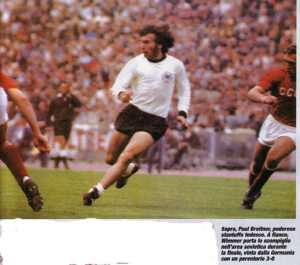
New boy Breitner making himself memorable, including his trademark rolled down socks.

Onishchenko had to wait 3 more years until winning over Gerd Muller. In 1972 winning over Muller was unimaginable.

Total German dominance and total football – Wimmer was unlikely source of attacks from the air, judging by his nominal post – defensive midfielder. But here he is, terrorizing four Soviet players.
 Netzer flying. 1972 was perhaps his finest year.

Perhaps this photo says it best – total football presented by the Germans. Every old line involved: Muller, a striker; Netzer, a midfielder; and Beckenbauer, a defenseman, attacking the Soviet net. Outnumbering, outplaying, confident, surprising… Beckenbauer shoots and the lonely Russian captain Hurtzilava (central defenseman) can’t even watch…
Liège, June 17, Stade Sclessin
Belgium 2-1 Hungary
[Lambert 24, Van Himst 28, Kü 53pen]
[ref: Boström (Sweden); att: 9,000]
Belgium: Piot, Heylens, Van den Daele, Thissen, Dolmans, Dockx, Verheyen,
Polleunis, Semmeling, Van Himst, Lambert
Hungary: Géczi, Fábián, Páncsics, Bálint, P.Juhász, I.Juhász, Kü, Abert,
Kozma, A.Dunai, Zámbö (46 Szücs)
FINAL
Bruxelles, June 18, Stade Heysel
West Germany 3-0 Soviet Union
[G.Müller 27, 58, Wimmer 52]
[ref: Marschall (Austria), att: 50,000]
West Germany: Maier, Höttges, Beckenbauer, Schwarzenbeck, Breitner, U.Hoeneß,
Wimmer, Netzer, Heynckes, G.Müller, E.Kremers
Soviet Union: Rudakov, Dzodzuashvili, Kaplichny, Istomin, Khurtsilava, Kolotov,
Troshkin, Baidachni, Banishevsky (66 Kozinkevich), Konkov (46 Dolmatov),
Onishenko
European Championship 1972 – Final Tournament – Full Details
SEMI FINALS
14/06/1972, Antwerp, Bosuil Stadium, 55.669
BELGIUM 1-2 WEST GERMANY [HT 0-1]
BELGIUM:
1. Christian Piot [Standard Liege]
2. Georges Heylens [RSC Anderlecht]
3. Leon Dolmans [Standard Liege]
4. Jean Thissen [Standard Liege]
5. Erwin Vandendaele [KV Brugge]
6. Jean Dockx [RSC Anderlecht]
7. Leon Semmeling [Standard Liege]
8. Maurice Martens [Racing White]
>65′ 14. Odilon Polleunis [VV Sint-Truidense]
9. Raoul Lambert [KV Brugge]
10. Paul van Himst [c] [RSC Anderlecht]
11. Jan Verheyen [RSC Anderlecht]
[COACH: Raymond Goethals]
Scorer:
Odilon Polleunis 83′ (1-2)
Booking:
Erwin Vandendaele [Y 17′]
WEST GERMANY:
1. Sepp Maier [Bayern Munich]
2. Horst-Dieter Höttges [Werder Bremen]
3. Paul Breitner [Bayern Munich]
4. Hans Georg Schwarzenbeck [Bayern Munich]
5. Franz Beckenbauer [c] [Bayern Munich]
6. Herbert Wimmer [Borussia Monchengladbach]
8. Uli Hoeneß [Bayern Munich]
>58′ 7. Jürgen Grabowski [Eintracht Frankfurt]
9. Josef Heynckes [Borussia Monchengladbach]
10. Günter Netzer [Borussia Monchengladbach]
11. Erwin Kremers [Schalke 04]
13. Gerd Müller [Bayern Munich]
[COACH: Helmut Schön]
Scorers:
Gerd Müller 24′ (0-1)
Gerd Müller 71′ (0-2)
Referee: William Mullan (Scotland)
14/06/1972, Brussels, Stade Emile Verse, 16.590
SOVIET UNION 1-0 HUNGARY [HT 0-0]
SOVIET UNION:
1. Evgeny Rudakov [Dynamo Kiev]
2. Revaz Dzodzuashvili [Dynamo Tblisi]
3. Murtaz Khurtsilava [c] [Dynamo Tblisi]
12. Vladimir Kaplichny [CSKA Moscow]
13. Yury Istomin [CSKA Moscow]
6. Viktor Kolotov [Dynamo Kiev]
7. Vladimir Troshkin [Dynamo Kiev]
8. Anatoly Baidachny [Dynamo Moscow]
9. Anatoly Banishevsky [Neftchi Baku]
>65′ 16. Givi Nodiya [Dynamo Tblisi]
14. Anatoly Konkov [Shakhter Donetsk]
18. Vladimir Onischenko [Zarya Voroshilovgrad]
[COACH: Aleksandr Ponomarev]
Scorer:
Anatoly Konkov 53′ (1-0)
Booking:
Murtaz Khurtsilava [Y]
HUNGARY:
1. István Gáczi [FTC]
2. Tibor Fábián [Vasas]
3. Dr Miklós Páncsics [FTC]
4. Péter Juhász [Újpest Dozsa]
6. László Bálint [FTC]
7. István Szöke [FTC]
8. Lajos Kocsis [Budapest Honvéd]
>60′ 5. Flórián Albert [FTC]
9. Ferenc Bene [Újpest Dozsa]
>60′ 13. Antal Dunai II [Újpest Dozsa]
10. Lajos Kü [FTC]
11. Sándor Zámbó [Újpest Dozsa]
12. Dr István Juhász [FTC]
[COACH: Rudolf Illovszky]
*Sándor Zambo had a penalty saved after 84′
Booking:
László Bálint [Y]
Referee: Rudi Glöckner (East Germany)
3/4 PLACE PLAY OFF
17/06/1972, Liege, Stade Sclessin, 6.184
BELGIUM 2-1 HUNGARY [HT 2-0]
BELGIUM
1. Christian Piot [Standard Liege]
2. Georges Heylens [RSC Anderlecht]
3. Erwin Vandendaele [KV Brugge]
4. Jean Thissen [Standard Liege]
5. Léon Dolmans [Standard Liege]
6. Jean Dockx [RSC Anderlecht]
7. Jan Verheyen [RSC Anderlecht]
8. Odilon Polleunis [VV Sint-Truidense]
9. Léon Semmeling [Standard Liege]
10. Paul van Himst [c] [RSC Anderlecht]
11. Raoul Lambert [KV Brugge]
[COACH: Raymond Goethals]
Scorers:
Raoul Lambert 24′ (1-0)
Paul van Himst 29′ (2-0)
Booking:
Léon Dolmans [Y]
HUNGARY:
1. István Géczi [FTC]
2. Tibor Fábián [Vasas]
3. Dr Miklós Páncsics [FTC]
4. Péter Juhász [Újpest Dozsa]
5. László Bálint [FTC]
6. Lajos Kü [FTC]
7. Mihály Kozma [Budapest Honvéd]
8. Flórián Albert [FTC]
9. Antal Dunai II [Újpest Dozsa]
10. Dr István Juhász [FTC]
11. Sándor Zámbó [Újpest Dozsa]
>46′ 12. Lajos Szücs [Budapest Honvéd]
[COACH: Rudolf Illovszky]
Scorer:
Lajos Kü 53′ (2-1) PEN
Booking:
Péter Juhász [Y]
Referee: Johan Einar Boström (Sweden)
FINAL
18/06/1972, Brussels, Stade Roi Badouin, 43.437
WEST GERMANY 3-0 SOVIET UNION [HT 1-0]
WEST GERMANY:
1. Sepp Maier [Bayern Munich]
2. Horst-Dieter Höttges [Werder Bremen]
3. Paul Breitner [Bayern Munich]
4. Hans Georg Schwarzenbeck [Bayern Munich]
5. Franz Beckenbauer [c] [Bayern Munich]
6. Herbert Wimmer [Borussia Monchengladbach]
7. Josef Heynckes [Borussia Monchengladbach]
8. Uli Hoeneß [Bayern Munich]
9. Gerd Müller [Bayern Munich]
10. Günter Netzer [Borussia Monchengladbach]
11. Erwin Kremers [Schalke 04]
[COACH: Helmut Schön]
Scorers:
Gerd Müller 27′ (1-0)
Herbert Wimmer 52′ (2-0)
Gerd Müller 58′ (3-0)
SOVIET UNION
1. Evgeny Rudakov [Dynamo Kiev]
2. Revaz Dzodzuashvili [Dynamo Tblisi]
3. Murtaz Khurtsilava [c] [Dynamo Tblisi]
4. Vladimir Kaplichny [CSKA Moscow]
5. Yury Istomin [CSKA Moscow]
6. Anatoly Konkov [Shakhter Donetsk]
>46′ 14. Oleg Dolmatov [Dynamo Moscow]
7. Vladimir Troshkin [Dynamo Kiev]
8. Viktor Kolotov [Dynamo Kiev]
9. Anatoly Baidachny [Dynamo Moscow]
10. Anatoly Banishevsky [Neftchi Baku]
>63′ 15. Eduard Kozinkevich [Karpaty Lvov]
11. Vladimir Onischenko [Zarya Voroshilovgrad]
[COACH: Aleksandr Ponomarev]
Bookings:
Murtaz Khurtsilava [Y]
Vladimir Kaplichny [Y]
Referee: Ferdinand Marschall (Austria)
KNOWN SQUADS:
BELGIUM
Christian Piot [Standard Liege]
Georges Heylens [RSC Anderlecht]
Léon Dolmans [Standard Liege]
Jean Thissen [Standard Liege]
Erwin Vandendaele [KV Brugge]
Jean Dockx [RSC Anderlecht]
Léon Semmeling [Standard Liege]
Maurice Martins [Racing White]
Raoul Lambert [KV Brugge]
Paul van Himst [RSC Anderlecht]
Jan Verheyen [RSC Anderlecht]
Luc Sanders [KV Brugge]
Gilbert Van Binst [RSC Anderlecht]
Odilon Polleunis [VV Sint-Truidense]
Jacques Teugels [Racing White]
John Thio [KV Brugge]
Frans Janssens [SK Lierse]
[COACH: Raymond Goethals]
HUNGARY
István Géczi [FTC]
Tibor Fábián [Vasas]
Dr Miklós Páncsics [FTC]
Péter Juhász [Újpest Dozsa]
Lajos Szücs [Budapest Honvéd]
László Bálint [FTC]
István Szöke [FTC]
Lajos Kocsis [Budapest Honvéd]
Ferenc Bene [Újpest Dozsa]
Lajos Kü [FTC]
Sándor Zámbó [Újpest Dosza]
Dr István Juhász [FTC]
Mihály Kozma [Budapest Honvéd]
Antal Dunai II [Újpest Dozsa]
József Kovacs [Videoton]
Imre Rapp [Pecs]
Flórián Albert [FTC]
[COACH: Rudolf Ilovszky]
SOVIET UNION
Evgeny Rudakov [Dynamo Kiev]
Revaz Dzodzuashvili [Dynamo Tblisi]
Murtaz Khurtsilava [Dynamo Tblisi]
Nikolay Abramov [Spartak Moscow]
Viktor Matvienko [Dynamo Kiev]
Viktor Kolotov [Dynamo Kiev]
Vladimir Troshkin [Dynamo Kiev]
Anatoly Baidachny [Dynamo Moscow]
Anatoly Banishevsky [Neftchi Baku]
Vladimir Muntyan [Dynamo Kiev]
Oleg Dolmatov [Dynamo Moscow]
Vladimir Kaplichny [CSKA Moscow]
Yury Istomin [CSKA Moscow]
Anatoly Konkov [Shakhter Donetsk]
Eduard Kozinkevich [Karpaty Lvov]
Givi Nodiya [Dynamo Tblisi]
Vladimir Onischenko [Zarya Voroshilovgrad]
Vladimir Pilguy [Dynamo Moscow]
[COACH: Aleksandr Ponomarev]
WEST GERMANY
Sepp Maier [Bayern Munich]
Horst-Dieter Höttges [Werder Bremen]
Paul Breitner [Bayern Munich]
Hans Georg Schwarzenbeck [Bayern Munich]
Franz Beckenbauer [Bayern Munich]
Herbert Wimmer [Borussia Monchengladbach]
Jürgen Grabowski [Eintracht Frankfurt]
Uli Hoeneß [Bayern Munich]
Josef Heynckes [Borussia Monchengladbach]
Günter Netzer [Borussia Monchengladbach]
Erwin Kremers [Schalke 04]
Michael Bella [MSV Duisburg]
Gerd Müller [Bayern Munich]
Berti Vogts [Borussia Monchengladbach]
Rainer Bonhof [Borussia Monchengladbach]
Horst Koppel [Borussia Monchengladbach]
Johannes Lohr [1FC Cologne]
Wolfgang Kleff [Borussia Monchengladbach]
[COACH: Helmut Schön]
West Germany. Worthy European champions. Any other team paled in comparison. Any other team had a lot of catching up to do – that is, to learn to play total football. The Germans were blessed with highly talented generation of players and great coach. The transition in the national team was smooth: Schnellinger, Haller, Libuda, and Seeler, great stars of the 1960s were replaced, although they were still active players, by exciting youngsters. Wolfgang Overatt was injured and even this was not a problem – the Germans apparently had plenty of classy players. Netzer, usually left behind because of disagreements with Helmut Schon, was fantastic. Beckenbauer was the leader and although he had played at two World Cups already, he was still young. Young guys were pushing older players out too – Breitner and Hoeness were not old enough to sign professional contracts yet. Rainer Bonhof was also very young and already in the squad. There was no fear for the future – rather, it looked like West Germany was to dominate the years to come.

Unlike the typical image of Germany of later years, this team did not only run – superb physical condition and discipline were obvious, but there was much more: technical skills, creative imagination, and improvisation. This team did not outrun the opposition – they outplayed the opposition. Unstoppable.
 (to be played in Tehran) The tournament was to have had seven entrants: Rangers Hkg Perspolis Irn Maccabi Netanya Isr Al-Qadisiya Kuw Racing Beirut Leb Korea University SKo Port Authority Tha These had already been drawn into two groups: Group A Maccabi Netanya Rangers Korea University Group B Perspolis Port Authority Al-Qadisiya Racing Beirut However, after Rangers withdrew for financial reasons and Qadisiya and Racing Beirut refused to play because of Maccabi Netanya’s presence, the tournament was cancelled.
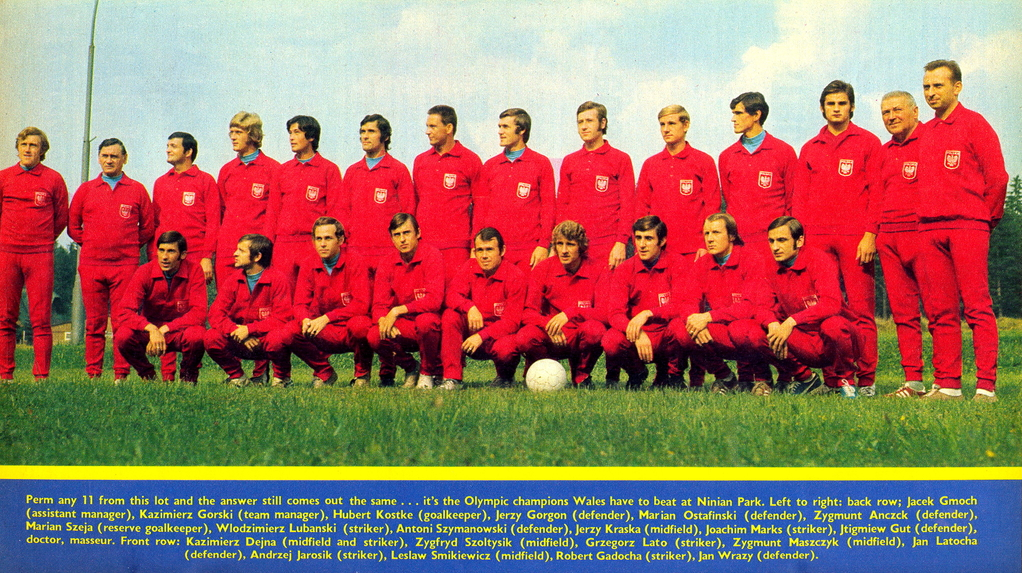
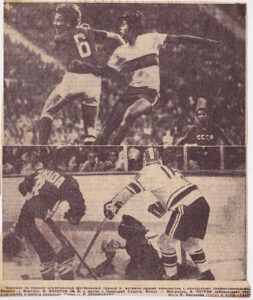 USSR on its way to the Olympics final – against lowly Sudan. Kolotov doesn’t seem suprime… the Olympic team was heavily criticized, yet no attention was paid to the champions – Polnad. Perhaps because the Soviets were involved with the first hockey series against Canada (NHL). Olympic football and ice hockey got the same coverage, but the hockey challenge got bigger attention. Football lost.
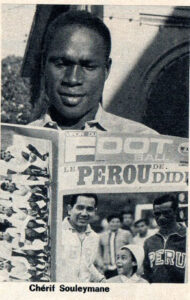 1st
 Cherif Souleymane, born in 1944, started his playing career at 17, when he stadied in DDR to become a plumber. Switched to studying architecture, because it was easier to play football that way – as he revealed years later. So, very unusually for the time, he started playing in Europe and in East Germany at that: first for TSG Neustrelitz (1961-62) and later for SC Neubrandenburg (1962-65) in the Second Division of DDR. In 1965 he returned to Guinea and joined Hafia, than named Conacry II, and stayed with them to the end of his playing days in 1980. He was national team player for Guinea since 1965 and, so far, is the only Guinean voted African Player of the Year. Considering the success of Hafia and his contribution to it – well deserved award.
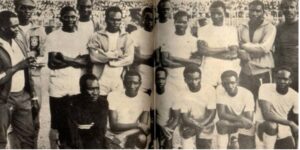 Simba FC, the Army team from Uganda, lost the final.
 Hafia won their first African cup. Unfortunately, no picture of the victors seems to exist.
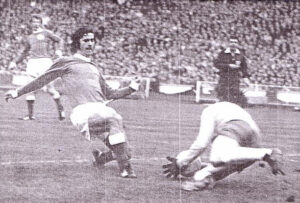
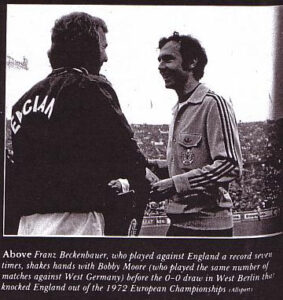 Captains Moore and Beckenbauer are all smiles before the beginning of the second leg in West Berlin. They respected each other, but friends or no friends, the German smile lasted longer.