The Cup – for a second consecutive year entirely provincial final. Eskisehirspor vs Genclerbirligi. The final was again two-legged after going to single match in 1986. All was decided in the opening leg in Ankara, where the home team destroyed the visitors 5-0. In Eskisehir the hosts won, but it was clear 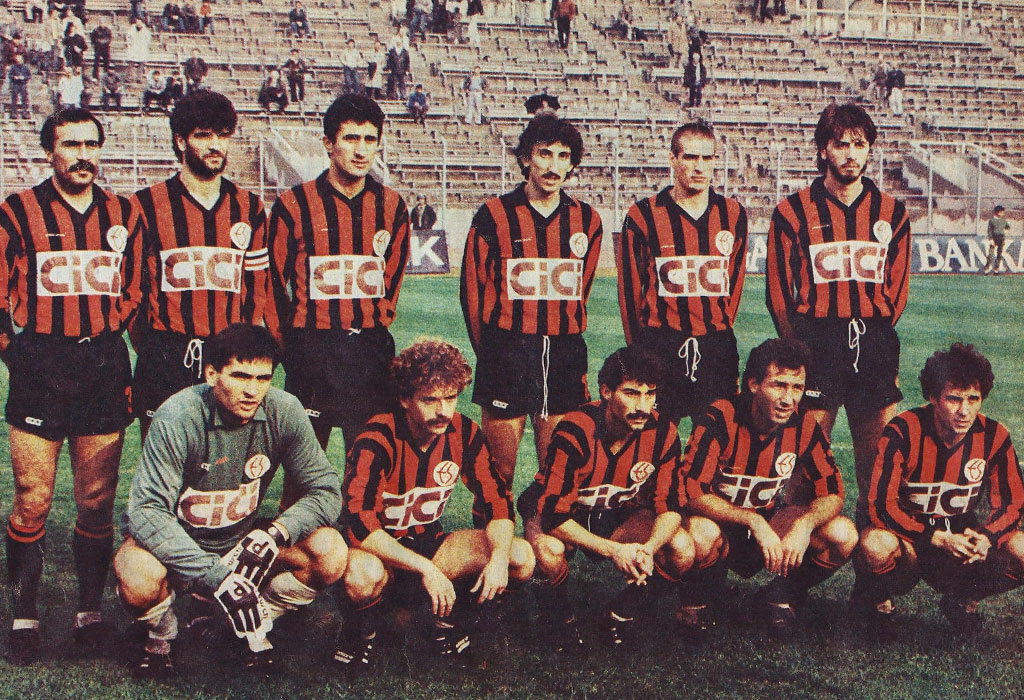 Eskisehirspor would not be able to win the trophy: 2-1. Genclerbirligi won the Cup and took it back to Ankara.
Eskisehir had won the Cup once – in 1971 – but desire for second trophy was not enough. As a compensation, Eskisehirspor was going to represent Turkey (along with Samsunspor) in the Balkans Cup.
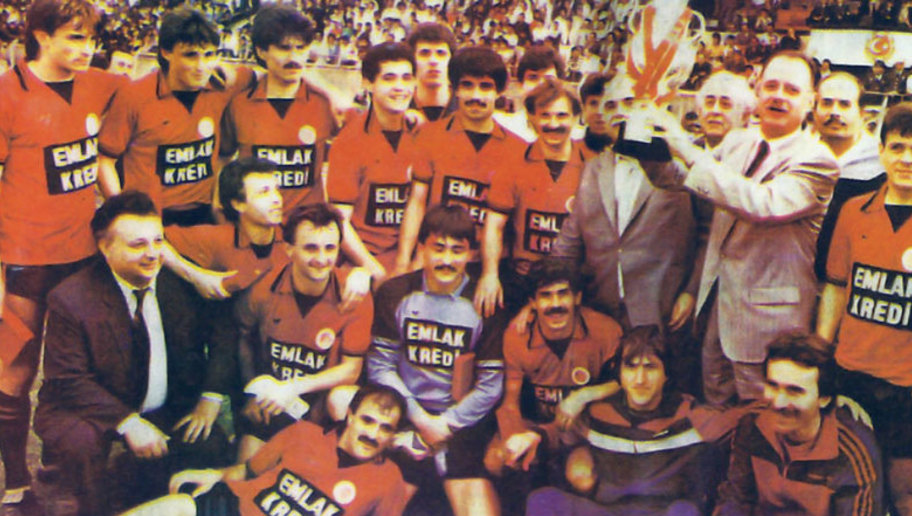 This was the greatest moment in the history of Genclerbirligi so far – they won their first trophy! The first match was truly decisive and also became historic: this was the biggest win in Cup final. So far, the largest result was 3-0. Great success in every aspect: it was the first ever trophy for Genclerbirligi, placing them on almost equal footing with their Ankara rivals MKE Ankaragucu, which had 2 Cups so far. It was just a matter of time and luck to come even, if not besting the enemy. Wonderful moment for the winners.
Turkey I Division
First Division. 19 teams played in it, the last two relegated to make the increase to 20 teams next season (three promoted from Second Division). Only one outsider, so the battle for survival at the bottom end of the table kept many teams on tip-toes. Four teams dominated the championship, but eventually the race for the title was reduced to two teams.
 Diyarbakirspor was the weakest this championship – they got only 15 points, ended last and were relegated.
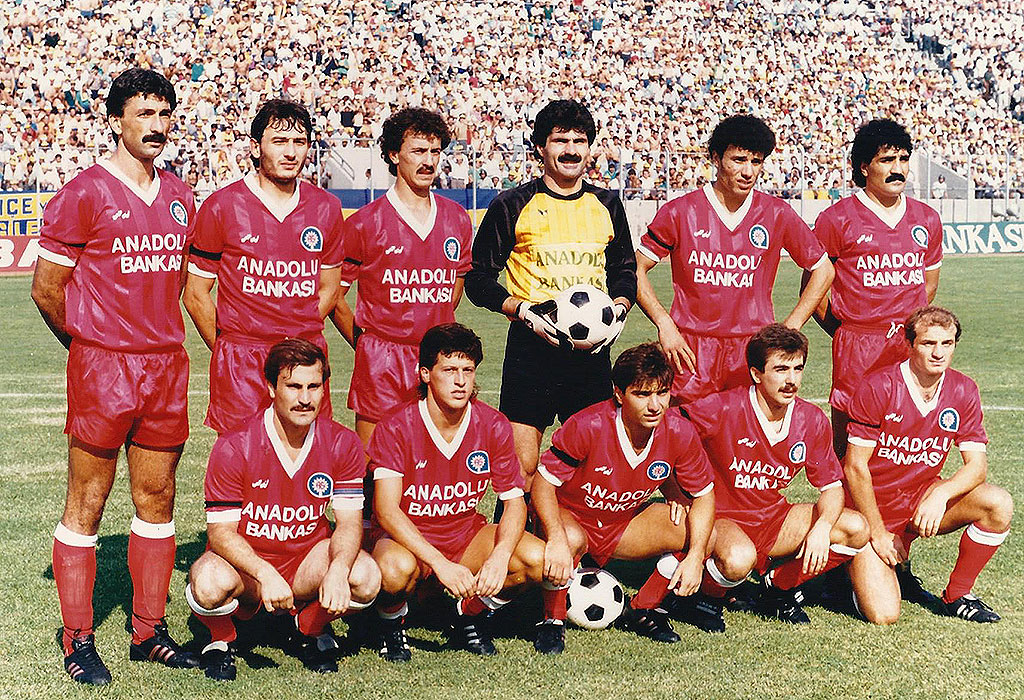 Antalyaspor did what they could, but eventually lost steam, finished 18th with 24 points and went down.
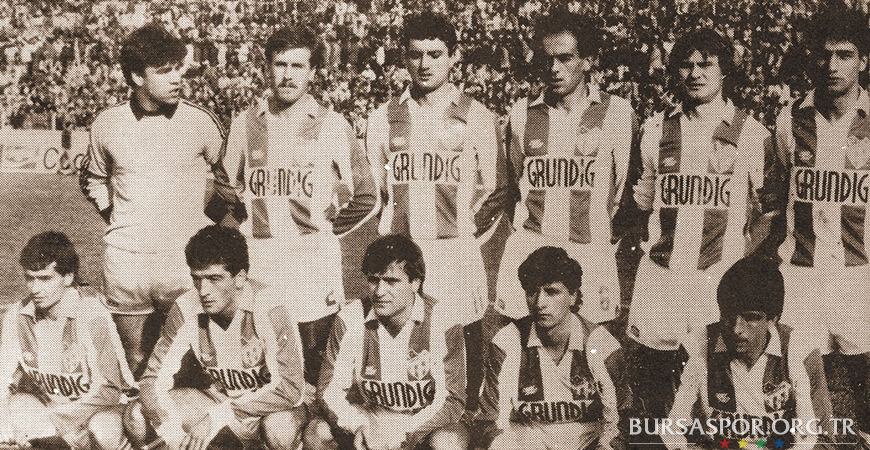 Bursaspor had a weak season – they were becoming something of unpredictable team, but escaped relegation. 17th with 28 points.
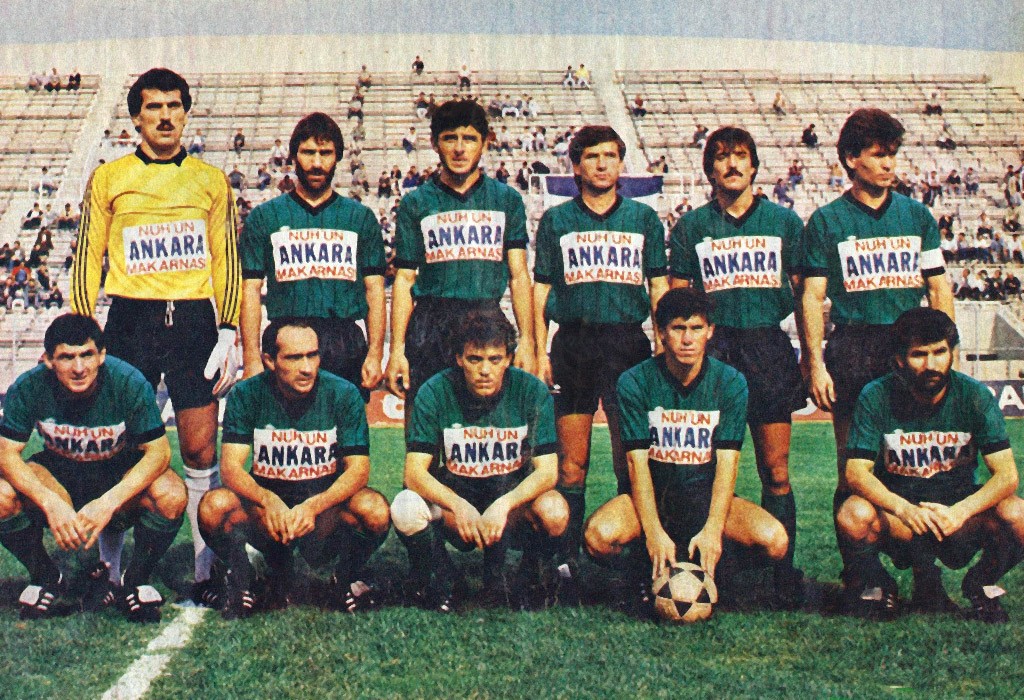 Kocaelispor bested only 3 teams, but in a way – not a bad season: they survived. 16th with 31 points.
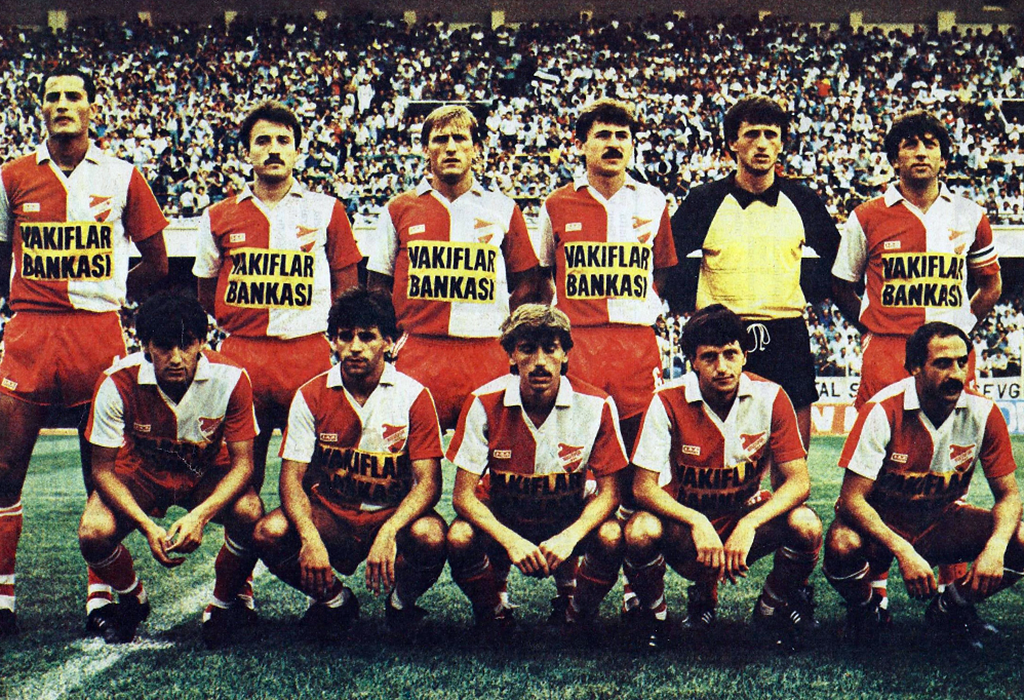 Boluspor – nothing special as usual. 15th with 32 points.
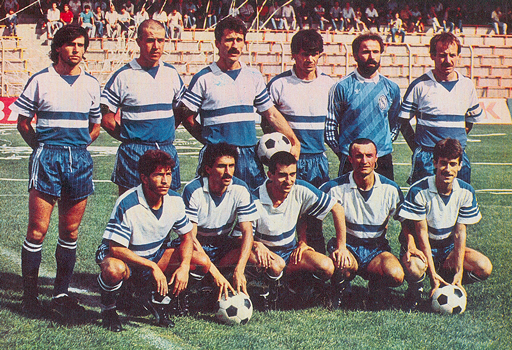 Saryer – also with 32 points, but better goal-difference placed then ahead of Boluspor: 14th. They actually finished with positive goal-difference, something rare for a team near the bottom of a league.
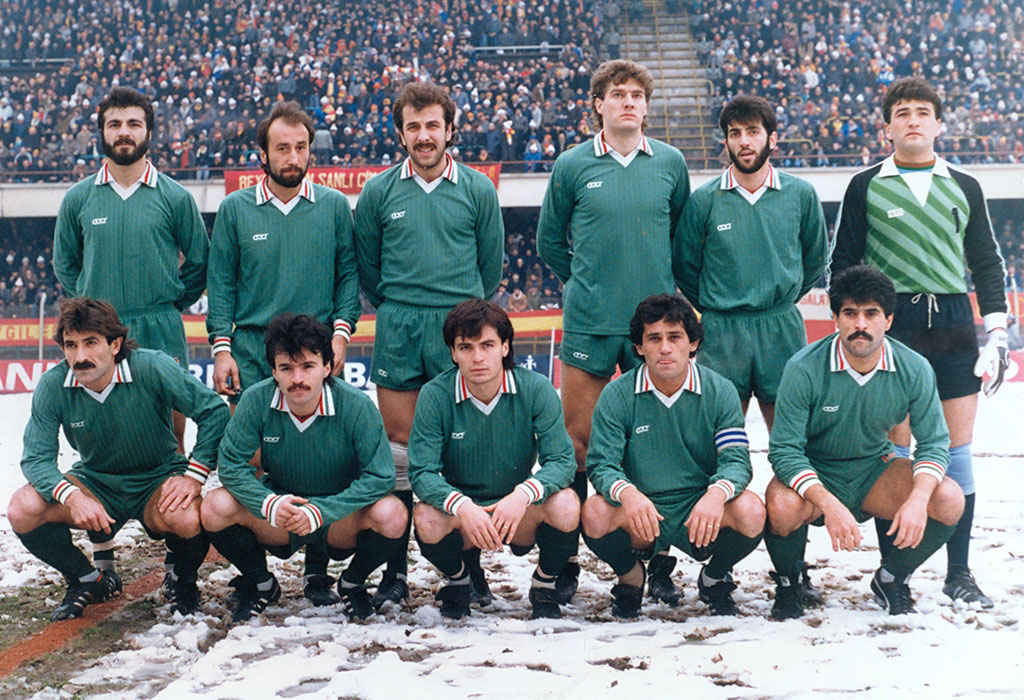
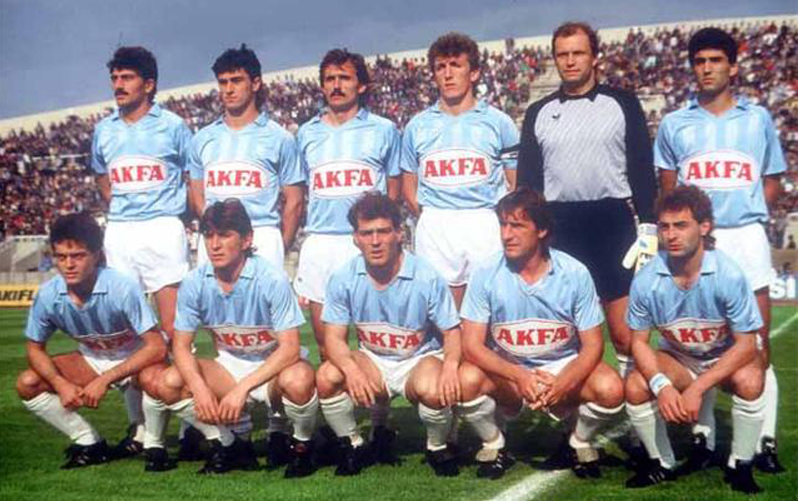 Caykur Rizespor – 13th with 33 points, but having the worst negative goal-difference – if the relegated teams are omitted. Minus 20. Standing from left: Mehmet Ali, Sinan, İsa, Hasan Vezir, Gurgen Phall, K.Turgut
First row : Hakan, Muharrem, Metin, Tupayiç, Harun İlik.
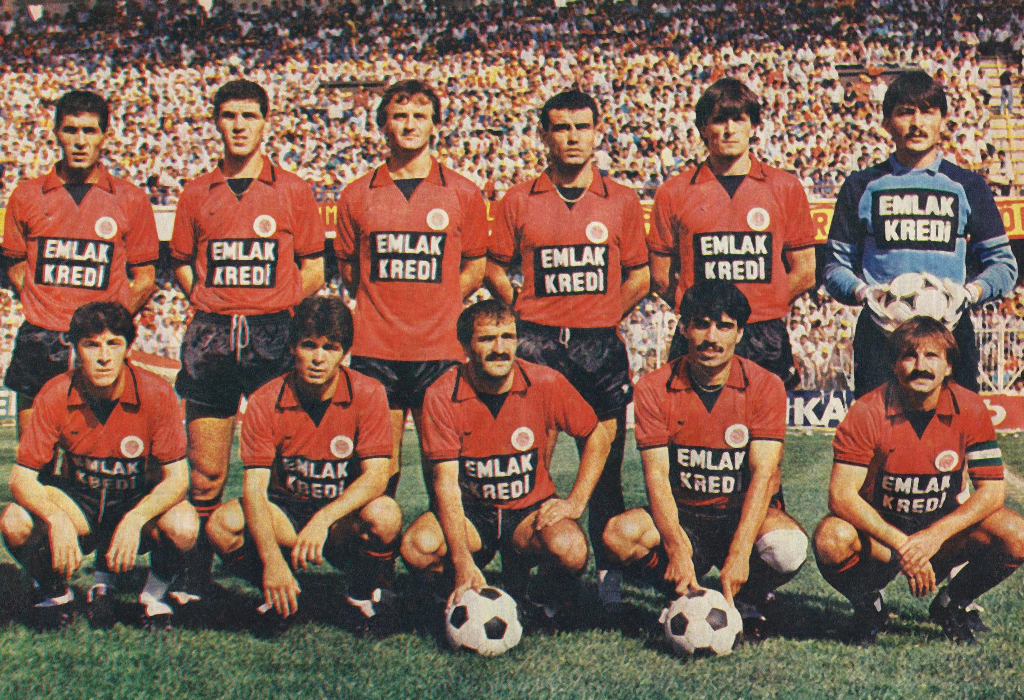 Genclerbirligi – 12th with 33 points, but this was their best year in history.
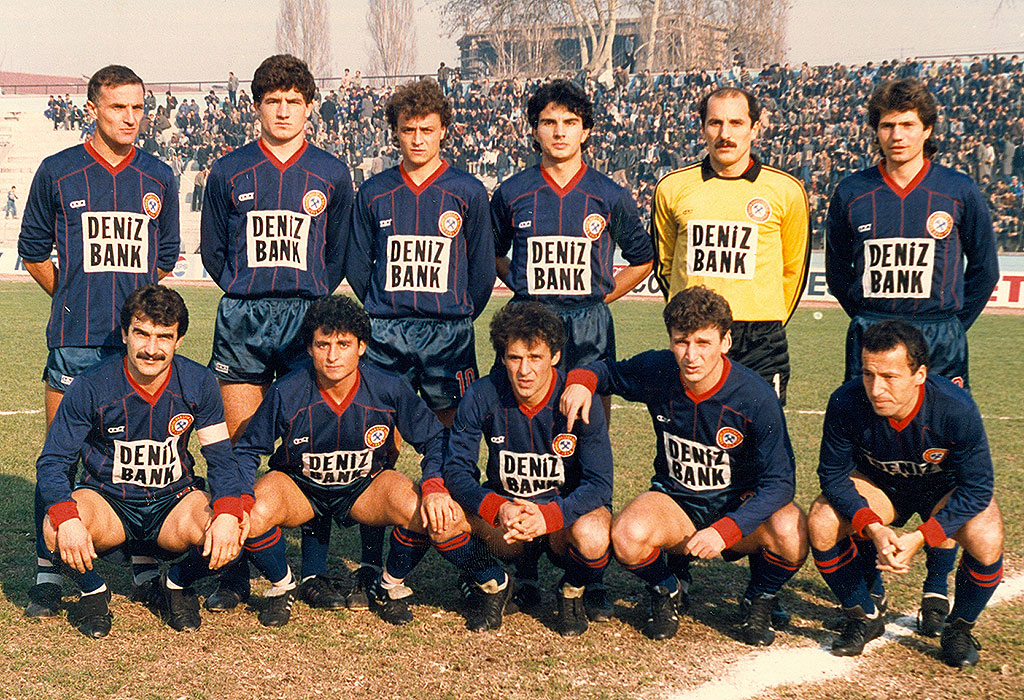 Zonguldakspor – 11th with 33 points. Better goal-difference placed them ahead of Caykur Rizespor and Genclerbirligi.
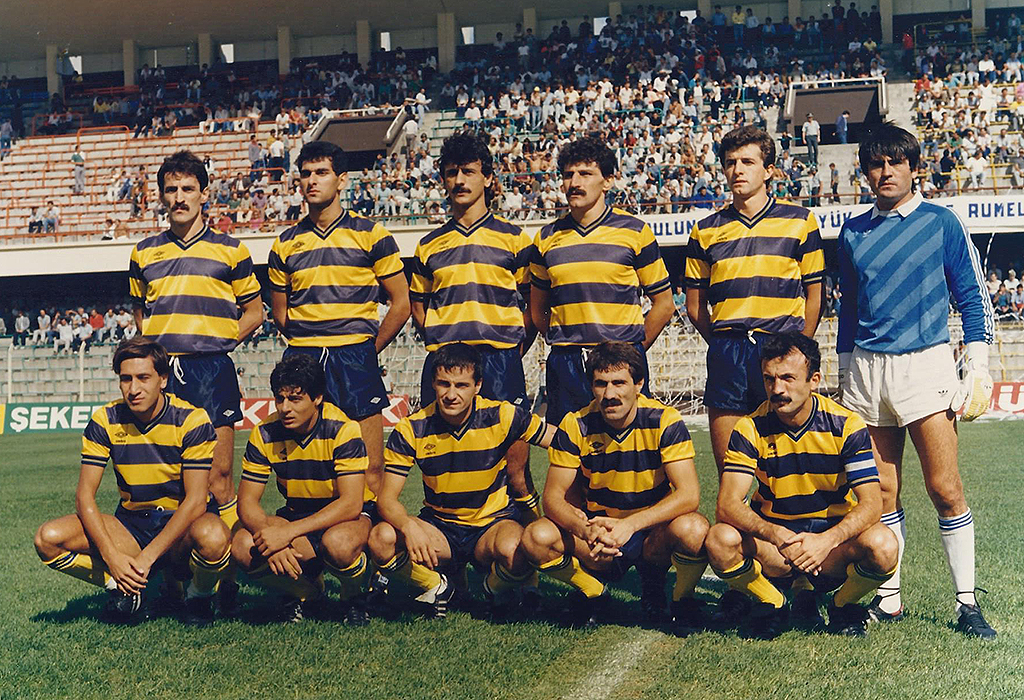 MKE Ankaragucu – 10th with 34 points.
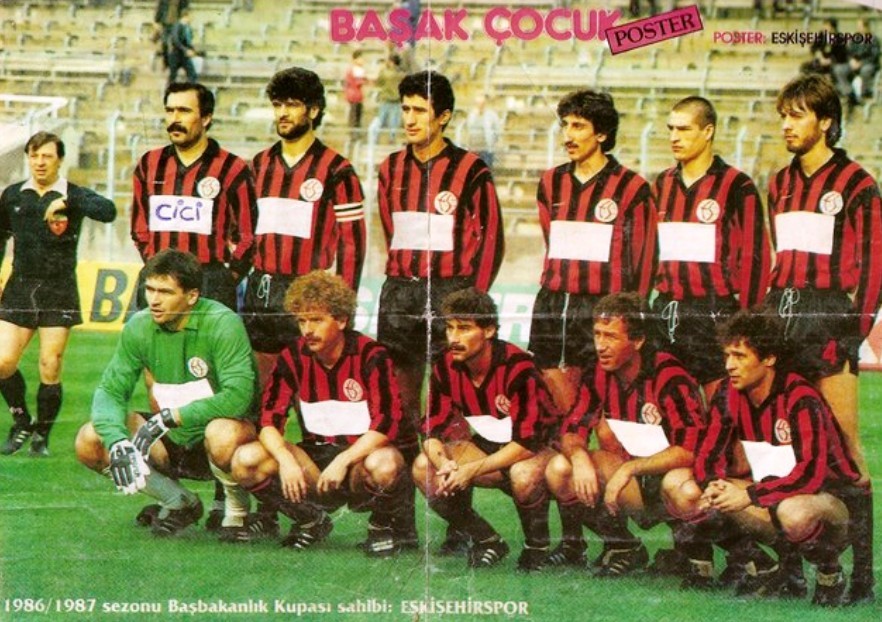 Eskisehirspor -9th with 34 points. Mid-table performance, but got one of 2 Turkish spots in the Balkans Cup as a Cup finalist.
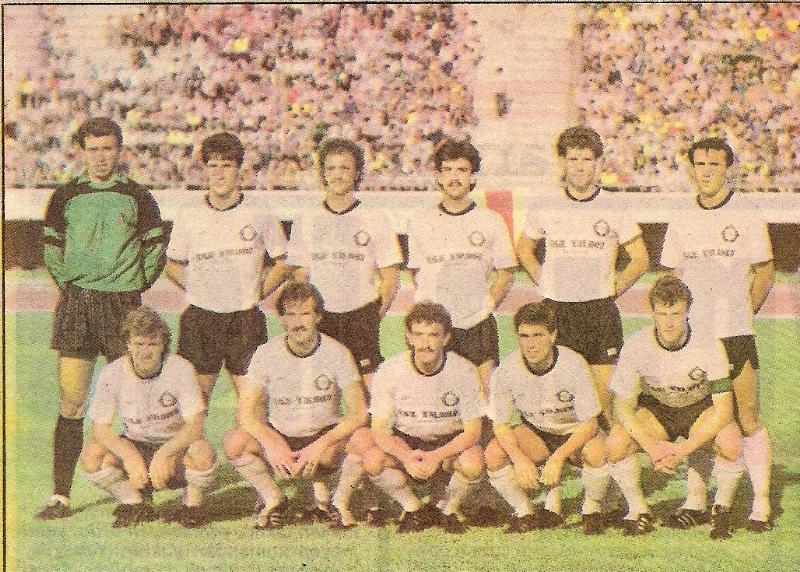 Altay – 8th with 36 points.
 Denizlispor – 7th with 36 points.
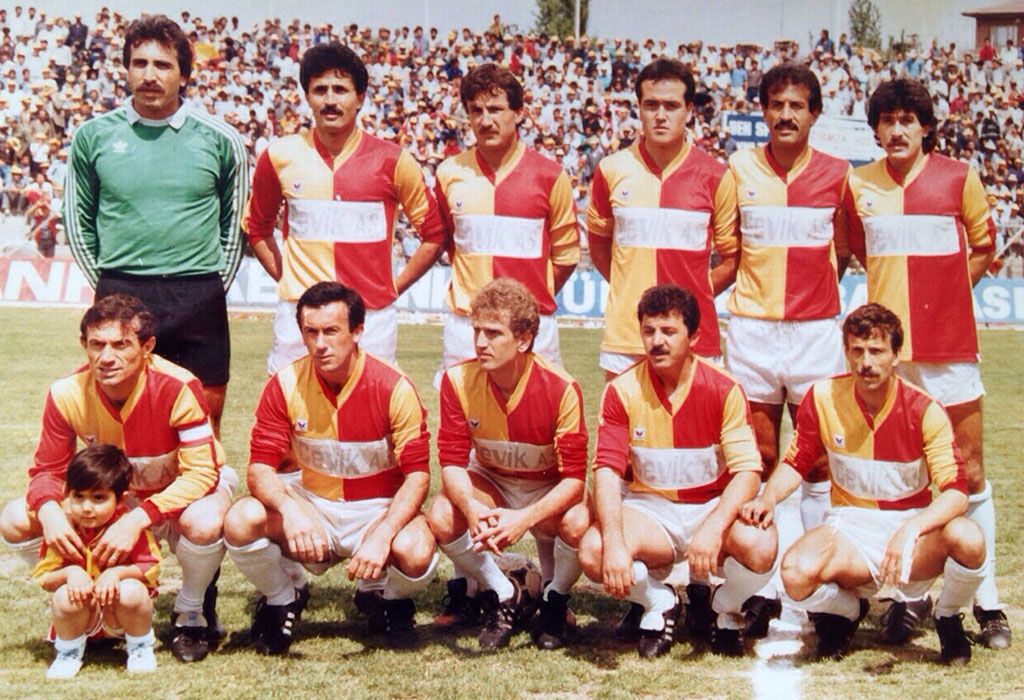 Malatyaspor – 6th with 39 points.
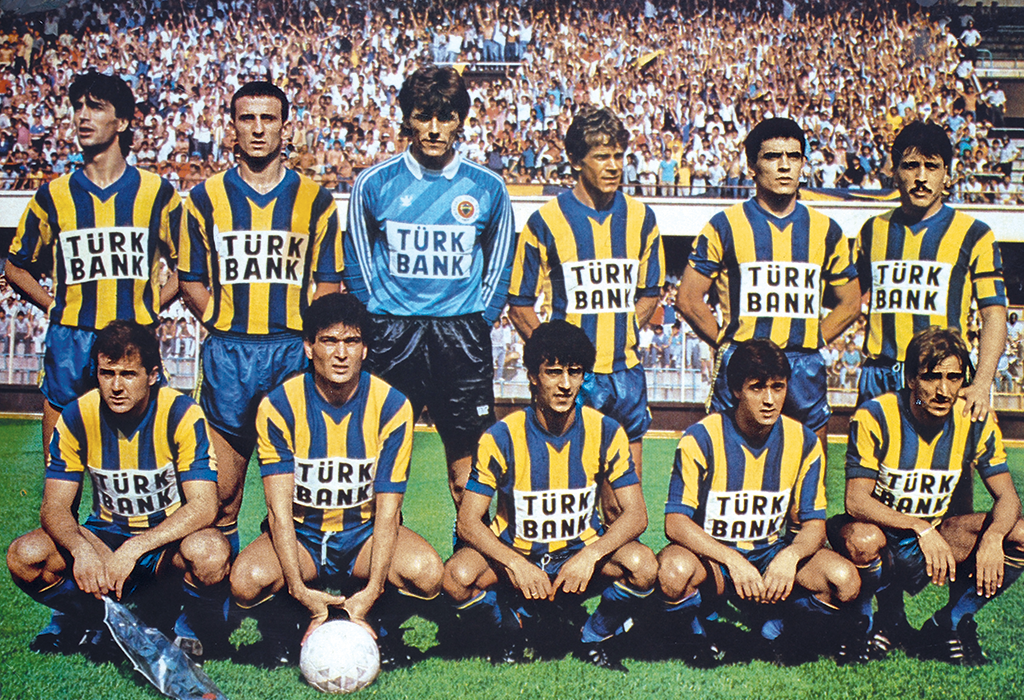 Fenerbahce – 5th with 39 points. Rather weak season – not even with a medal.
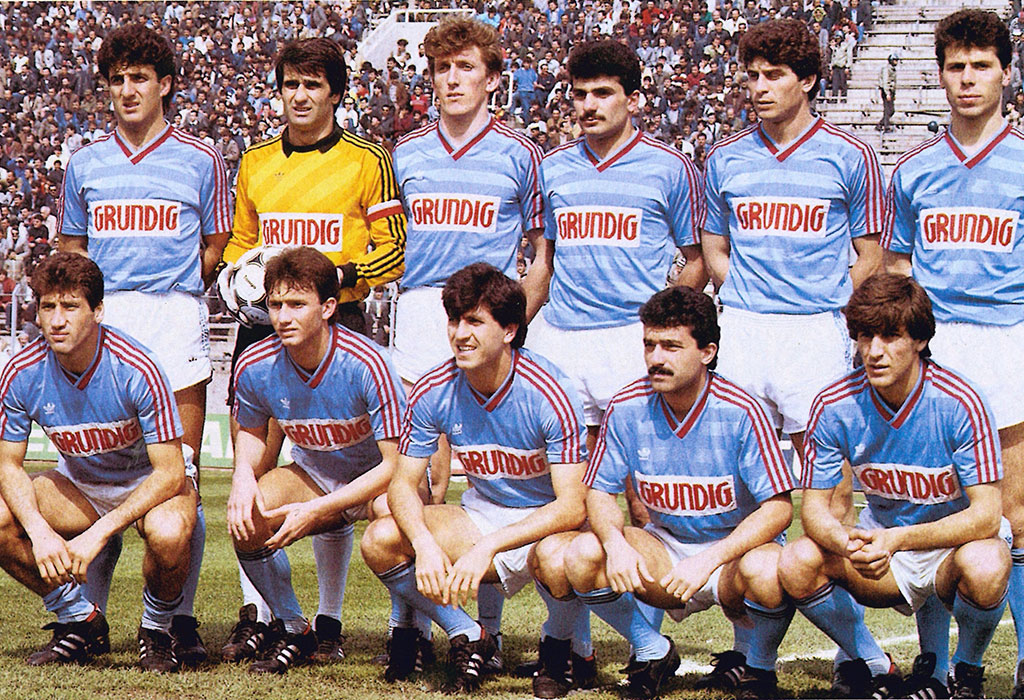 Trabzonspor – steady, not at all declining: 4th with 49 points – 10 points ahead of Fenerbahce! Standing from left: Şenol Ustaömer, Şenol Güneş, Hasan Vezir, İbrahim Yazıcı, Bahaddin Güneş Hamdi Zıvalıoğlu.
Crouching: Lemi Çelik, Hami Mandıralı, İskender Günen, Serdar Bali, Kemal Serdar.
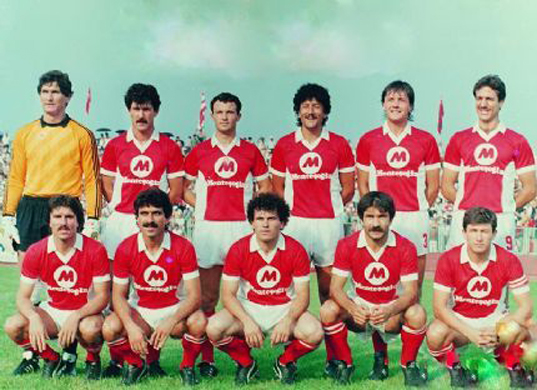 Excellent season for Samsunspor – they clinched bronze medals, beating Trabzonspor on goal-difference. In fact, they had better goal-difference than the champions: +34 was second-best this championship.
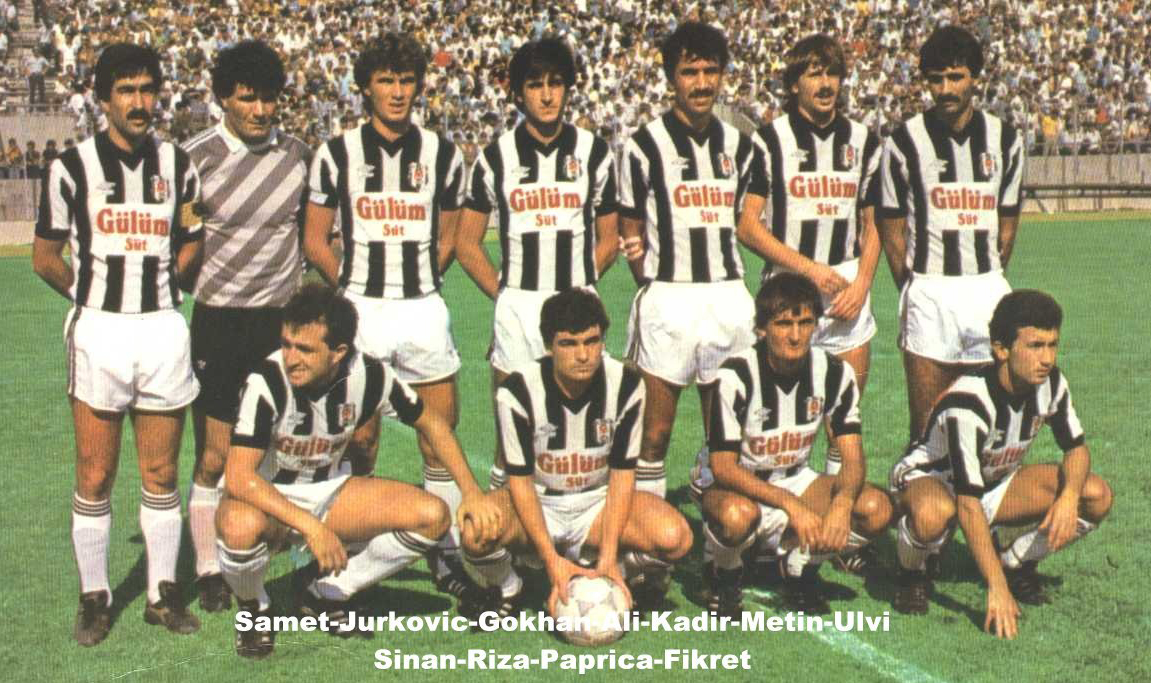 Besiktas fought for the title, but at the end lost it by a single point. 2nd with 53 points, but the best scorers by far with 67 goals and with best goal-difference +41.
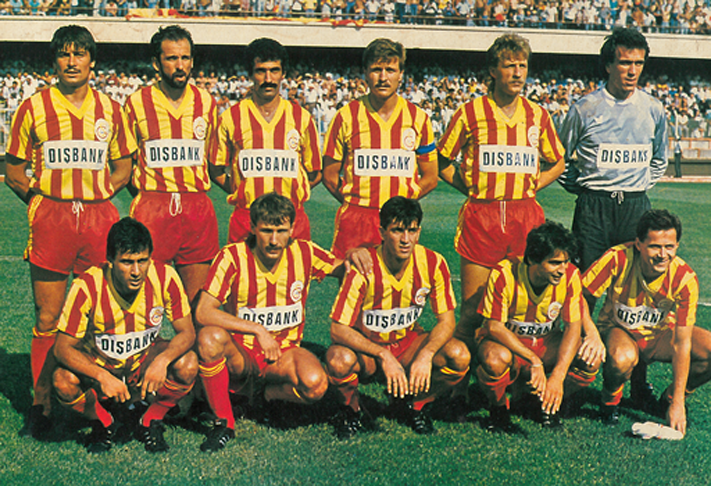
 Galatasaray prevailed and won the title: 23 wins, 8 ties, and 5 losses gave them 54 points – one more than Besiktas’. 55-24 was not the best record at all – Besiktas and Samsunspor had better goal-difference, they also outscored Galatasaray, and Samsunspor and Trabzonspor had better defensive records, but who cares? Who cares when Galatasaray won the title? It was not shining and overwhelming victory and perhaps cherished better for that: Galatasaray did not win a championship since 1972-73! A long and bitter wait ended with dramatic victory over bitter rival Besiktas. And arch-enemy Fenerbahce nowhere to be seen. Thus, Galatasaray finally won its 7th title. May be not a great team – if taken in historic perspective – but one thing was already firmly established: no strong Turkish team was possible without foreign players. Yugoslavs were mainly imported at this time and one can say that Galatasaray had the upper hand precisely because they had better Yugoslavs (Simovic and Prekazi) than their rivals Besiktas (Jurkovic and Kovacevic) and Fenerbahce (Lukovcan and Pesic). Anyhow, finally Galatasaray returned to the top. They still were quite behind dreaded Fenerbahce, which had 11 titles so far, but came ahead of Trabzonspor (6 titles).
Turkey II Division
Turkey – ranked 26. Four teams were way above the rest, but only two of them were entangled in a battle for the title. Fenerbahce was in decline. New Cup winner. The league was going to be increased to 20 teams the next season, so two teams were relegated and three promoted. Still 2 points for a win.
Second Division – 53 teams divided in 3 groups. Group A for some reason had 17 teams, the other two – 18 teams each. Only in Group C dramatic battle for top position occurred. Of the three freshly relegated teams only one managed to return back to top flight.
Group A. One team dominated the championship and two other teams were much stronger than the rest, but far behind the leader.
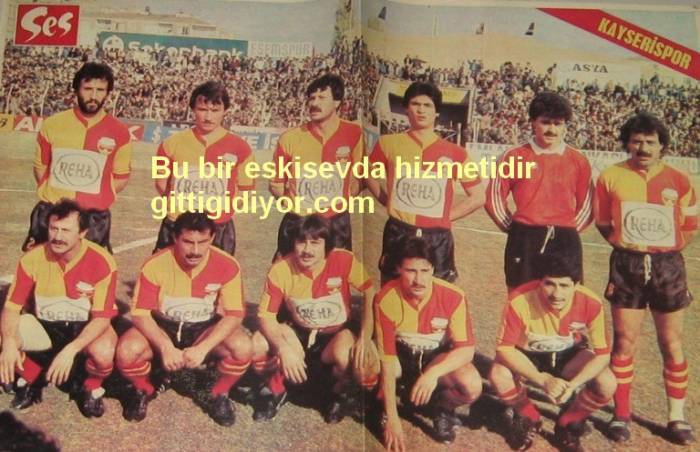 Kayserispor, freshly relegated, finished 3rd with 42 points – 7 points ahead of 4th-placed Gaziantepspor, but 11 points behind the winners.
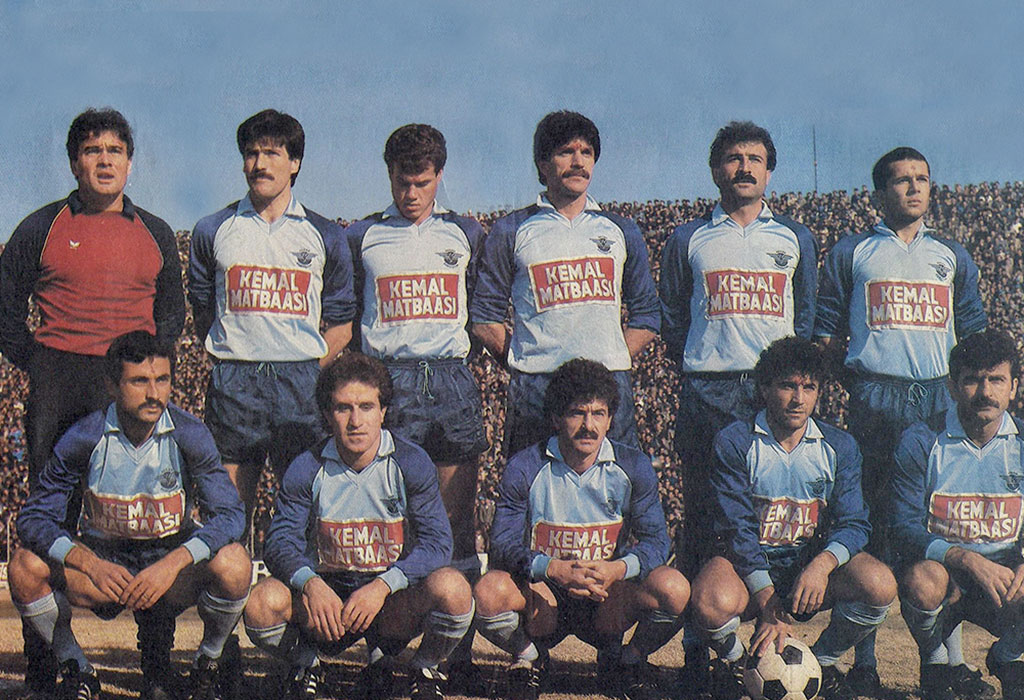 AdanaDemirspor (Adana) dominated the group, winning the championship with 53 points from 23 wins, 7 ties, 2 losses and 77-27 goal-difference. Promoted to First Division.
Group B. Perhaps the group with most former top league members – Adanaspor, Mersin, Goztepe, and freshly relegated Orduspor – but none of them was running for promotion. One team dominated the championship, followed by 6 stronger than the rest, but weaker than the leader teams.
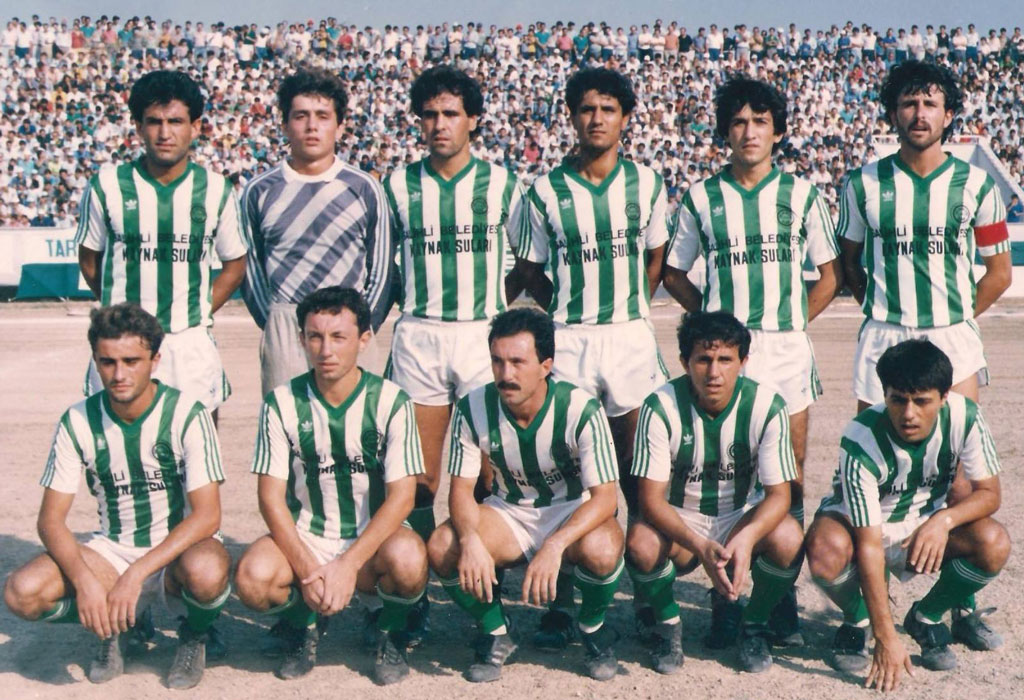 Yeni Salihlispor was one of those stronger teams – they finished 4th with 40 points.
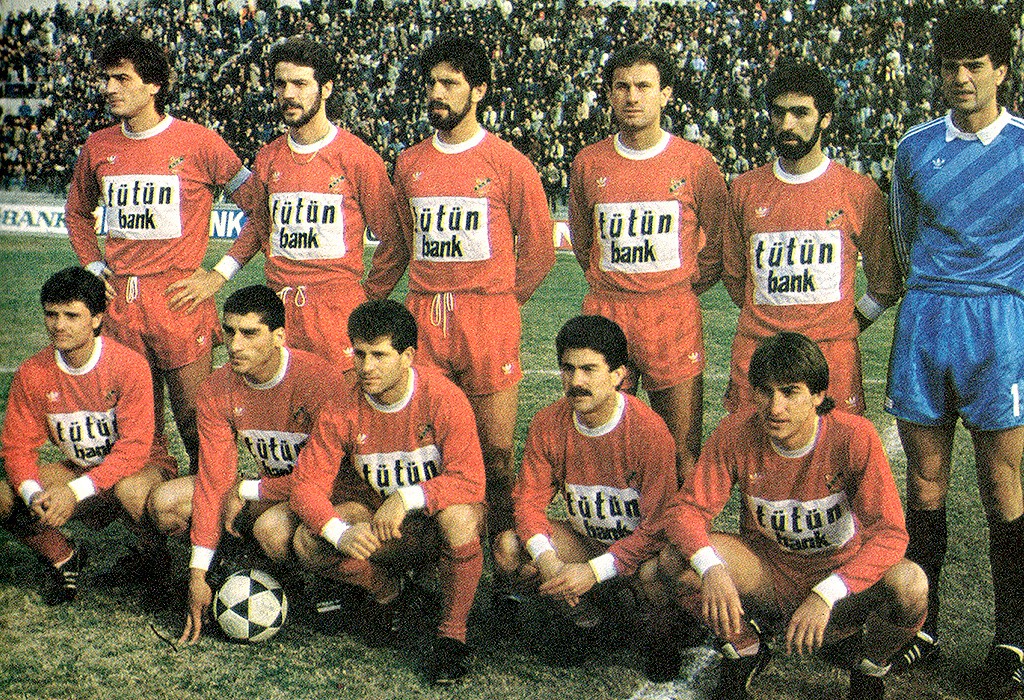 Karsiyaka SK won the group and was promoted – 22 wins,9 ties, 3 losses, 58-19 goal-difference and 53 points. The second finisher – Izmirspor – was 10 points behind.
Group C. The only group with dramatic battle for top position between 2 teams way above the rest. Konyaspor and just relegated Sakaryaspor fought to the end and only goal-difference determined the winner.
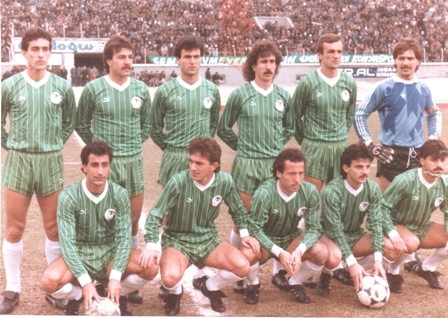 Konyaspor lost only 1 match. The rest: 23 wins and 10 ties. They scored 62 goals and received only 14. Great defensive record, wonderful goal-difference of +48, 56 points.
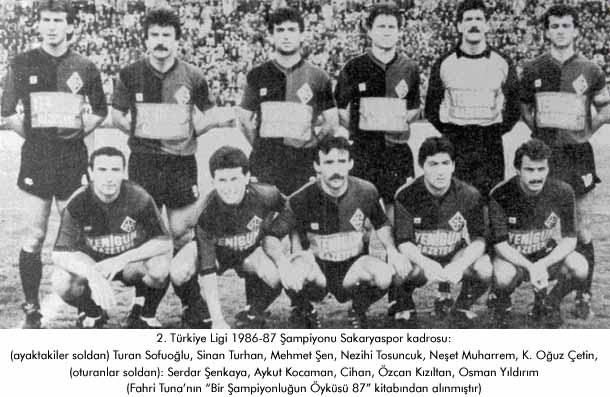 Sakaryaspor played top league football only a year ago and wanted very much to go back to top flight. They won 25 games, tied 6 and lost 3 – that gave them 56 points, the same as their bitter rivals Konyaspor. Goal-difference decided in Sakaryaspor’s favour: they finished 77-26, that is +51, 3 goals better record and first place was their. Most unfortunate for Konyaspor and big joy for Sakaryaspor.
Cyprus
Cyprus – ranked 27th. 2 points for a win and 1 for a draw. The championship was dominated by one team and at the bottom there was no drama either, for there were 2 hopeless outsiders and everybody else was absolutely safe. So, the only news was a novelty of a kind: In the fall of 1986 APOEL was drawn against Besiktas for the second round of the Champions Cup. This was the first occasion a Cypriot and Turkish club were going to face each other. But the political tensions which split Cyprus years ago were very much alive and the Cypriot government prohibited APOEL from playing against Besiktas. For refusing to play, UEFA penalized APOEL with one year disqualification from playing in any European tournament. That would have been a problem if APOEL won the championship, but they did not. Apart from that, there was the enlargement of the top leagues, which meant that practically no old members of the top division were now in the second tier, but various tiny clubs were. Although Cypriot football improved a lot in recent years and continued to grow stronger, the problem of quality remained – second division was clearly very weak and it was not going to provide competitive team to the top league any time soon.
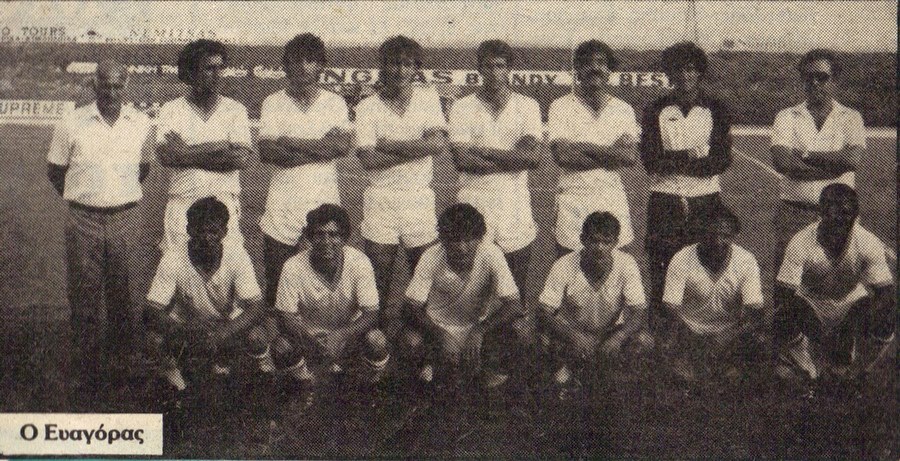 Teams like Evagoras (Paphos) played in Second Division, even less known. Evagoras finished 6th.
Three teams battled for the two top positions giving promotion. Orfeas (Nicosia0 lost the race, finishing 3rd with 40 points.
 Anagennisi (Deryneia) clinched second place with 41 points and was promoted.
 APEP won the championship with 43 points from 19 wins, 5 ties, 4 losses, and 53-25 goal-difference. One can imagine the joy – they were going to play for the first time in First Division. Quite an achievement too, for the club was formed only in 1979 – true, from a merger of older clubs. However wonderful it was in the home town, APEP was most likely to be relegated right away, but that was not to spoil happiness. Winners are winners.
The ugly face of the future of the Second Division winners was presented in the final table of the top league: Ermis, newly promoted, was last and relegated. They managed to earn only 6 points, won just one match, scored 19 goal in 30 games, but received 108! Ahead of them were the other newcomers – Omonia (Aradippou). Slightly better… they won 2 games and earned `3 points, but went down as well. Safe at 14 place were Ethnikos with 22 points.
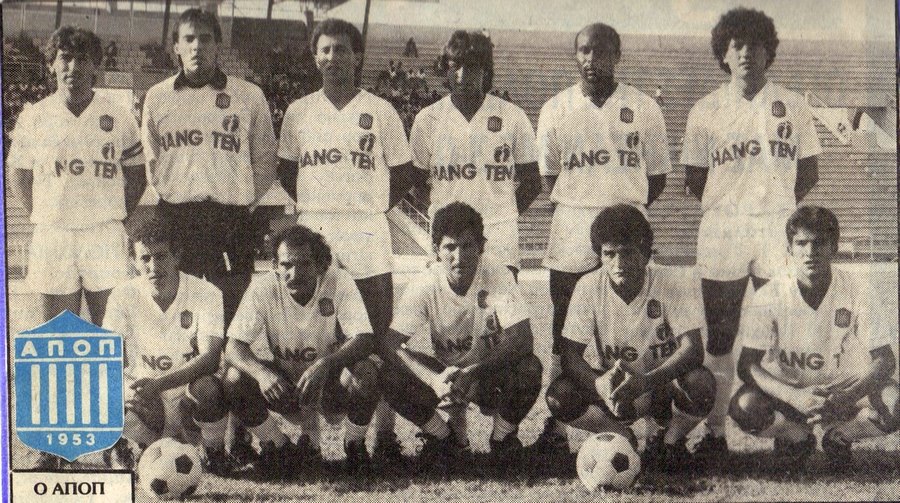 Such was the effect of the enlarged league: teams, which previously meandered between first and second division, never able to dream of more than temporary survival, now were quite relaxed and definitely safe among the best: APOP (Paphos) finished 9th with 27 points.
But that was the life of most clubs – just safe existence far away from a title.
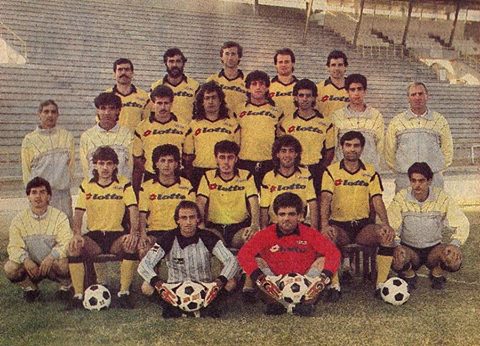 EPA (Larnaca) curely had strong season and they ended with bronze medals, but that was the maximum – even 2nd place was out of their reach, they finished 4 points behind APOEL. But luck was on their side – since APOEL was banished from UEFA, EPA was going to represent Cyprus in the UEFA Cup. Wonderful for them.
APOEL was sure 2nd, but the title was out of their reach: with 47 points, they were no challenge to arch-enemy Omonia. APOEL, however, excelled defensively – they allowed only 11 goals in their net. That is 1 goal every third game played!
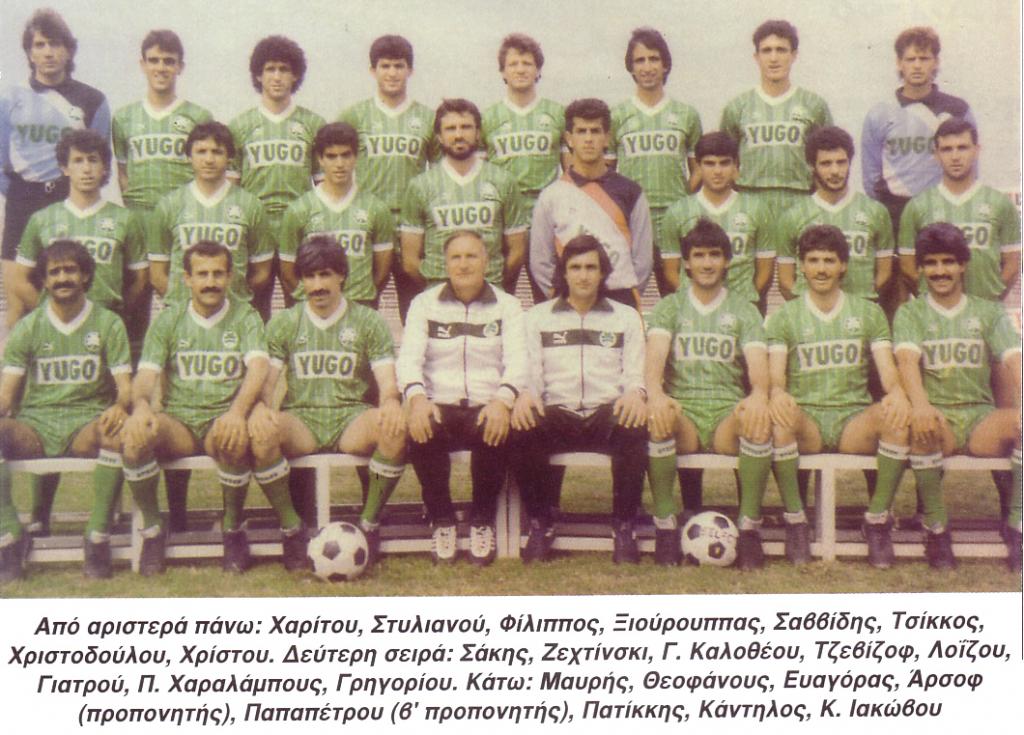 Omonia (Nicosia) easily won the championship with 52 points from 26 wins and 4 losses. Curiously, they did not tie even one match and it was pretty much their traditional approach: attacking football. It showed in their scoring record: 86-28. Constantly attacking and scoring as much as they could. The next best scorers scored 24 goals less! After the brief slip in the previous year, Omonia were back in their usual and long lasting dominant position. It was their 15th title and once again it was their traditional ‘Bulgarian connection’ keeping them superior – three Bulgarians drove them to success, just like almost all previous titles. The coach Yoncho Arssov (sitting 4th from left to right), the center-forward Spas Dzhevizov (4th from left, middle row), and imaginative playmaker Petar Zekhtinsky (2nd from left, middle row). The Bulgarians delivered once again.
The Cup final opposed lower clubs: AEL and Apollon. AEL prevailed 1-0.
 AEL (Limassol) won its 5th Cup, which was great and also the most a team could hope for, since the championship title was seemingly reserved for Omonia (Nicosia). AEL was nothing to brag about in the championship – they finished 4th, but 7 points behind 3rd-placed EPA. So, winning the Cup was truly fantastic.
Norway
Norway – ranked 28th. Significant season – the season of ‘first ever’. New point-system, new champion, new Cup winner, new promoted team – all for the first time. 3 points for a win was introduced – and stayed. There was another change, which did not last: if a match was tied, penalty shoot-out followed and the winner in it got 2 points, the loser – 1. This rule was highly controversial and was removed after this season. The rest was surprising new winners – always interesting and stirring change, but also opening debates and speculations about significance and long lasting effects. Two last two teams in the top league were relegated and the winners of the two Second Division groups were promoted. The 10th in First Division and the two second-placed teams in the Second Division groups went to promotion-relegation play-offs.
 Sogndal won the Group A of Second Division with 45 points: 13 wins, 4 shoot-out wins, 2 shoot-out losses, and 3 regular losses, 43-21 goal-difference. They clinched first place by a single point.
Almost anonymous Djerv 1919 finished 2nd with 44 points.
 Strømmen won Group B with 46 points: 13 wins, 2 shoot-out wins, 3 shoot-out losses, and 4 regular losses. 44-32 goal-difference.
Lyn ended 2nd with 42 points.
The group winners were directly promoted, the vice-champions went to the promotion-relegation play-offs. Hamarkameratene, 10th in First Division joined Lyn and Djerv 1919.
 Djerv 1919 (Haugesund) beat the competition and achieved the highest point in its history – promotion to First Division. Hamarkameratene was relegated and Lyn stayed where they were.
Start was last in First Division with 25 points. Mjøndalen was 11th – also with 25 points, but with better goal-difference. Both teams were directly relegated. Hamarkameratene was 10th with 29 points and after losing the play-offs also went down. Lillestrom survived – they were 9th with 29 points, but ahead – and therefore safe – of Hamarkameratene on better goal-difference. Nothing much up the top two.
 Tromsø was 6th with 31 points.
Kongsvinger clinched bronze medals with 39 points, but better goal-difference than Rosenborg. Molde took the silver medals with 41 points. There was something little missing to be able to really go for the title.
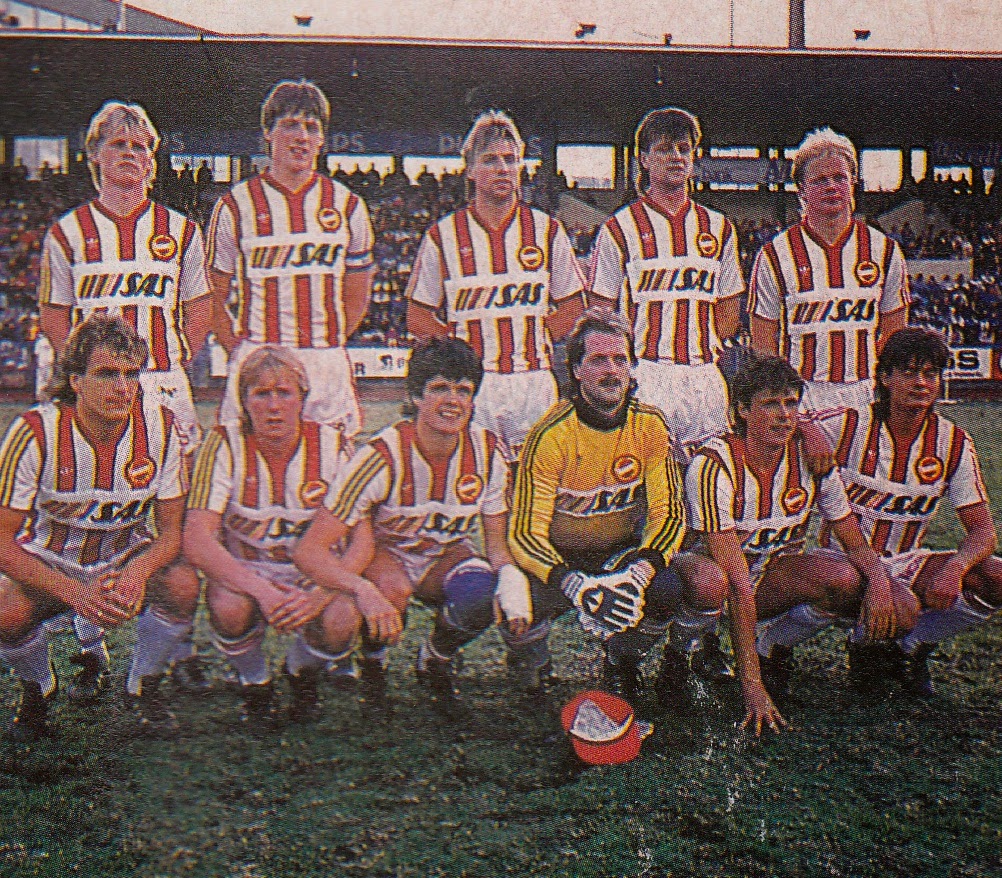
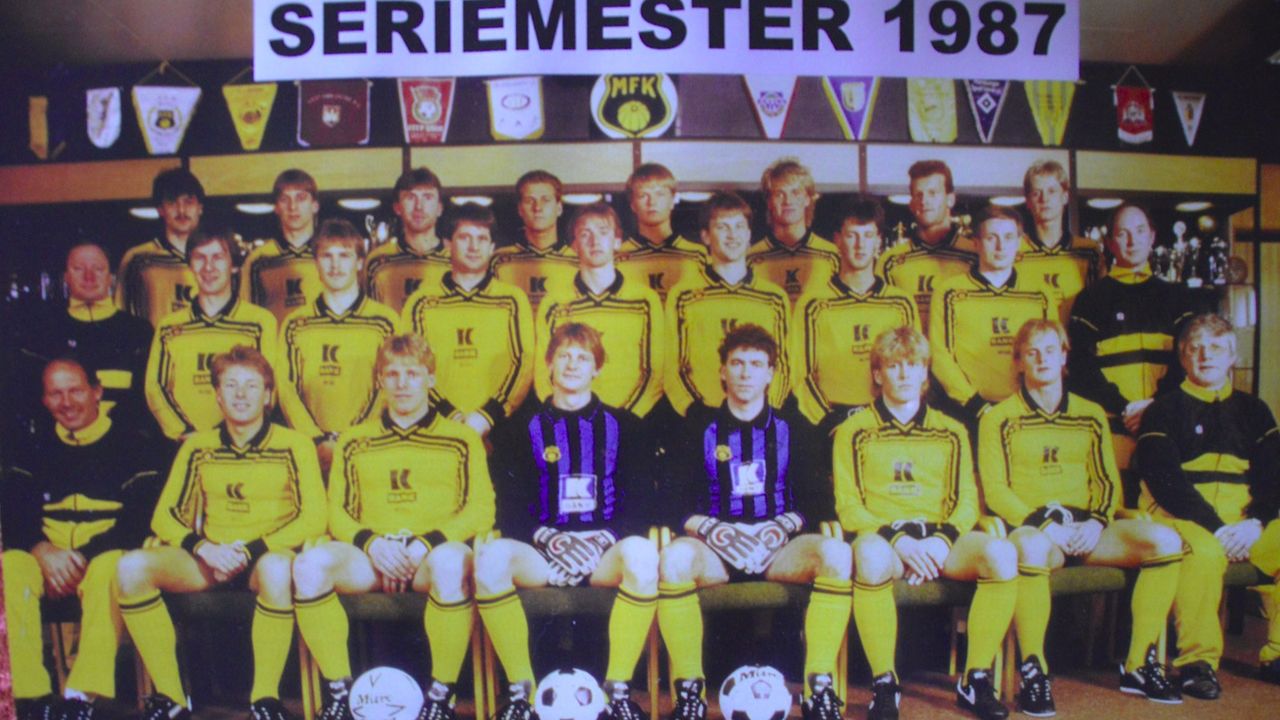 Moss won the championship with 44 points from 13 wins, 2 shoot-out wins, 1 shoot-out loss, and 6 regular losses. 44-30 was their goal-difference – high scorers, but defensively weak. May be not the most convincing champion, but they never won the championship before, so it was a big surprise, great joy, and food for thought. Were they one-time wonder or signified some major shift, triggered by the new rules? No matter at home – first title is always great historic moment.
Bryne and Brann met at the Cup final and Bryne eventually prevailed 1-0.
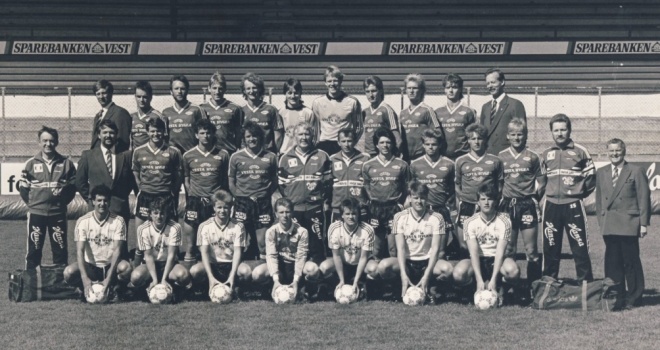 It was not Brann’s year – 8th in the championship and lost Cup final. Top row from left: Erling Mikkelsen (leder), Halvor Storskogen, Ingvar Dalhaug, Arne Møller, Fridtjof Wilborn, Dan Riisnes, Bjarni Sigurdsson, Per Hilmar Nybø, Lars Moldestad, Trond Nordeide, Casper Moldenhauer (leder).
Middle row:Arne Wilhelmsen (materialforvalter), Arve Mokkelbost (sports- og markedssjef), Knut Arild Løberg, Jan Halvor Halvorsen, Per Egil Ahlsen, Tony Knapp (trener), Per Vold, Erik Solèr, Hans Brandtun, Odd Johnsen, Alf Dahl, Rune Enehaug (fysioterapeut), H.J. Berge (leder).
Front row: Redouane Drici, Jan Erlend Kruse, Kjetil Brekke, Steinar Thon, Robert Hauge, Geir Gulbrandsen, Trond Devik.
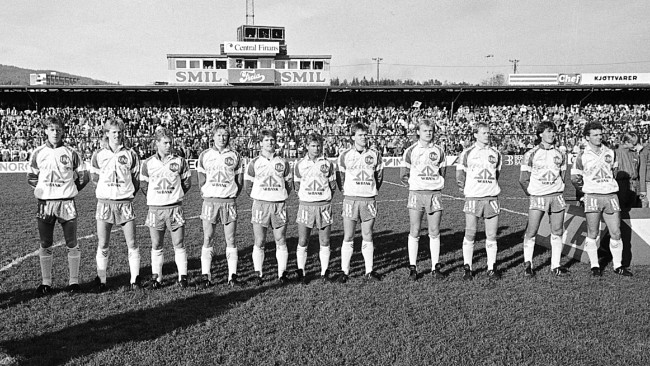 Bryne completed the list of surprise winners – they never won the Cup before and although it was difficult minimal victory, it was theirs. From left to right: Jan Madsen, Børre Meinseth, Paal Fjeldstad, Tor Fosse, Hugo Hansen, Roar Pedersen, Leif Rune Salte, Bjørn Gulden, Kolbjørn Ekker, Lars Gaute Bøe, Arne Larsen Økland.
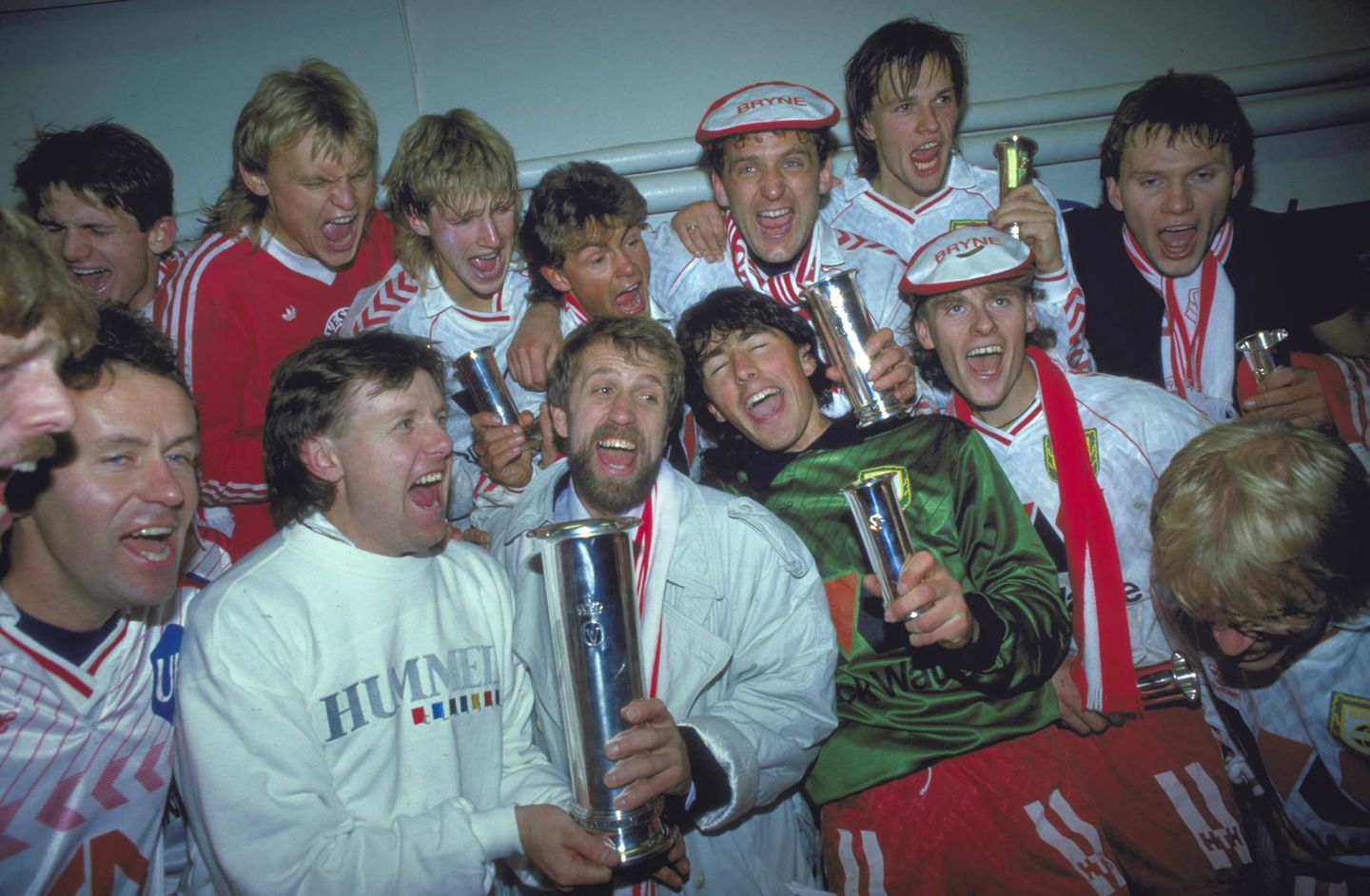 Happy winners in the dressing room and instant heroes.
First-time winners all around, but all of them never repeated their success again.
Ireland
Ireland – ranked 29th. Interesting season, but mostly in the still new Second Division. Over there the former First Division teams were stronger and the added 4 teams -weaker. Newcastle United changed name to Newcastlewest.
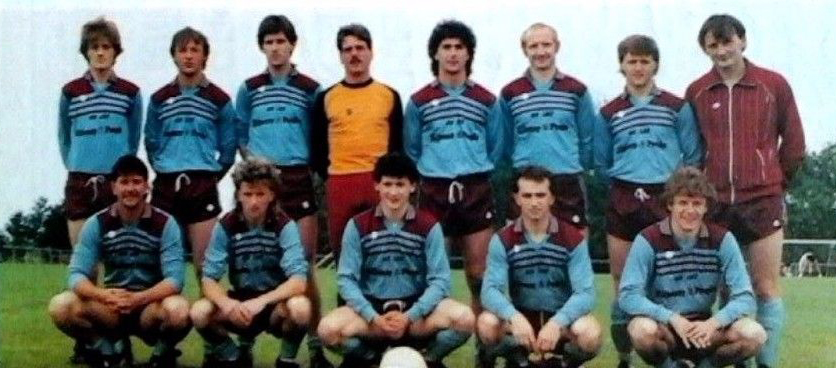 EMFA celebrated its 21st year of existence finishing 9th out of 10 teams – nothing to brag about unless one is Kilkenny native: the club was founded by schoolboys and still had the look. The fact they played in a professional league was more than success.
Up the table momentary strength was decisive – only Drogheda United challenged the leaders and to a point: they finished 3rd with 24 points.
 Shelbourne (Dublin), however, was quite stronger and ended 2nd with 27 points, earning promotion.
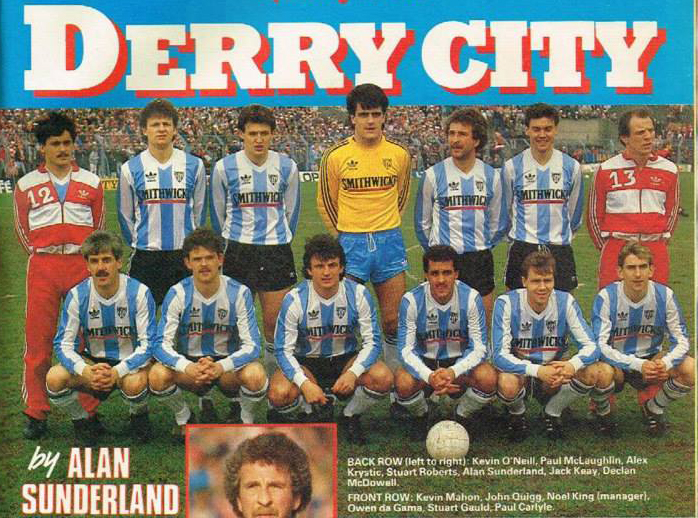 Derry City had no rival and they were the team to talk about: they easily won the championship with 33 points from 16 wins, 1 tie, and single lost match, 45-14 goal-difference. The Second Division champions were expected to go much higher soon and play in the European tournaments. It was unusual team in every aspect: First of all, they were not from the Republic of Ireland, but from Northern Ireland – technically, a foreign club. 15 years ago they were expelled from Northern Irish football because of fan troubles. After staying idle for a long time, they managed to join the Republic of Ireland league two years ago, but then the system was reorganized and they found themselves in the newly introduced Second Division. And suddenly they became ambitious in a very unusual way: they recruited players from abroad. Occasional English or Scottish player was nothing new in Ireland, but bona fide foreigners were practically unheard of. Derry City had 3 Scotsmen, 1 Welshman, 1 English and 2 ‘real’ foreigners – probably there was never before an Irish team with so many foreign players. And they were no joke: Alan Sunderland was the most recognizable name, playing for Arsenal (London) for many years. The South African striker Owen da Gama, who spent years in Belgian first division. And then there was a third striker, a French, who played for Orleans before and caught the interest of Manchester City and Dundee United, but joined Derry City – Alex Krystic was the true jewel of the team: he scored 18 goals in the 18 championship games. According to Sunderland, he was was also fun guy to have in the dressing room. Derry City suddenly had formidable team – by Irish standards – and clearly had big plans for the near future. They introduced new reality, the way of the 1980s, to Irish football – it was no longer possible to depend on local talent or rather to the leftovers of local talent. With local boys… well, no success was possible. With foreigners Derry City was at least was becoming equal to the traditional leading Irish clubs. They broke a big barrier: Irish clubs looked only in their backyards for talent and that was no longer going to be.
First Division was less exciting: one team dominated the championship. The top league was smaller than before reorganization, but still divided: 4 teams much stronger than the rest, 6 more or less equal mid-table teams and 2 weak outsiders. Athlone Town finished last with 11 points and Home Farm – 11th with 13 points. They were relegated. Nothing significant all the way to the top:
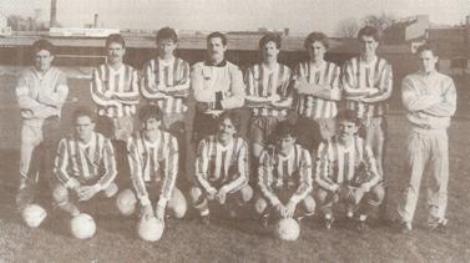
 Bray Wanderers was example of the so-so teams: they ended 8th with 17 points. Better goal-difference placed them ahead of Sligo Rovers and Limerick City.
Three teams fought for 2nd place and Dundalk clinched it with 30 points. Bohemians was 3rd with 29 points and Waterford United 4th with 28 points. And Waterford was 5 points ahead of 5th-placed St. Patrick’s Athletic. Yet, the battle for second position was just that – nothing to do with the title.
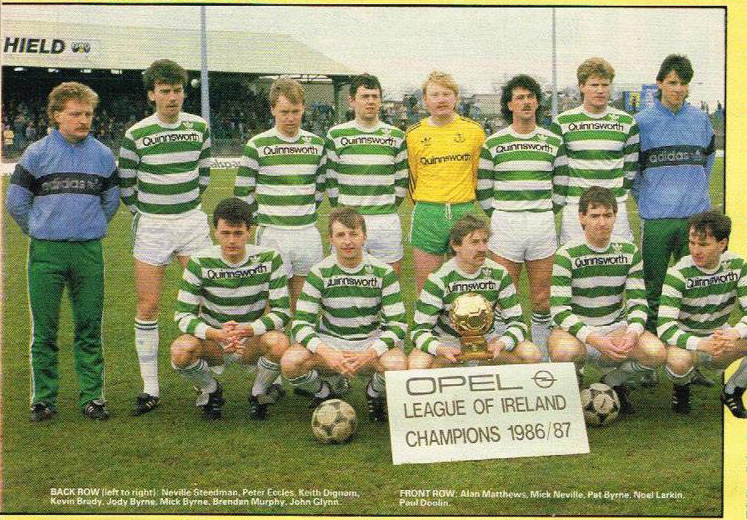 Shamrock Rovers was formidable – they lost only one match. Tied 3 and won the 18 remaining games. 51-16 goal-difference, 39 points. Dundalk finished with 9 points less. It was great supremacy and not only in the championship: in the Cup final they destroyed Dundalk 3-0.
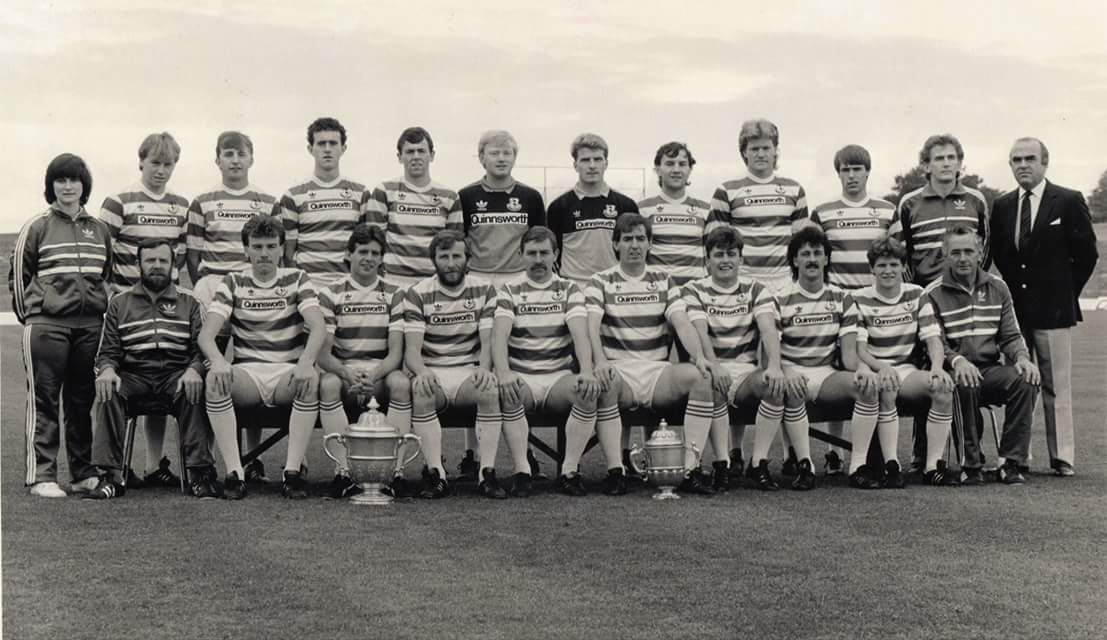 A double, 4th consecutive title – no team achieved such run before, 4th consecutive Cup as well. Altogether – 14th title and 24th Cup. Nobody expected this year’s to be the last Rovers won the Cup, of course, but the mood among the fans was far from festive: the owners of the club announced that they were leaving their old stadium and going to share another one with amateur club Home Park, at the other side of the city. The reason was declining attendance, making it financially impossible to use the bigger stadium. Fans feared the owners were going to sell the old stadium and rebelled, promising never to cross town to watch Rovers. A boycott at the peak of the most successful period of the club! That was the other side of football reality in the 1980s, unfortunately: declining audience and rising expenses. Ticket sales no longer were able to finance a club, even a winning one. Stadiums were getting too old and decrepit and there was no way out: either leave it to completely fall apart, becoming more and more dangerous, or invest in massive repairs. There was no money for such repairs and on top of it – repair for what? Audiences were shrinking anyway. Better sell the venue… and fans never liked selling their ‘home’. The end result: Shamrock Rovers was going to be boycotted by its own fans when they were at the very peak as a team.
Northern Ireland
Northern Ireland – ranked 30th. 3 points for a win, still closed league of 14 teams – no relegations and promotions. No surprises either.
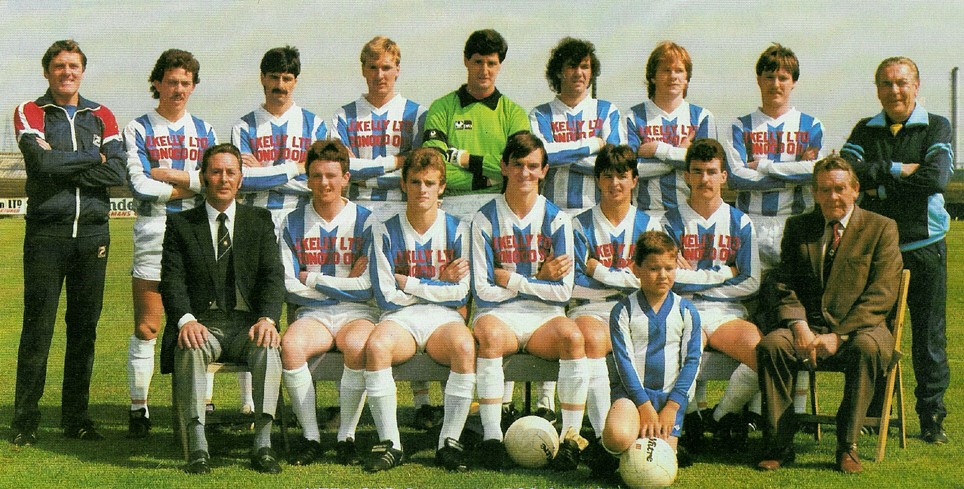 Coleraine was the only relatively close opponent of the seemingly eternal leaders. They excelled in scoring, though: 65 in 26 championship games. But that was all – 2nd with 53 points.
 Linfield comfortably won its 39th title after 18 wins, 3 ties, 5 losses, 50-15 goal-difference and 57 points. Golden period for the most successful club – 6th title in a row already.
The Cup final opposed FC Larne (4th in the championship) to Glentoran (7th). Although FC Larne was slightly stronger this year, tradition and experience won the day – Glentoran prevailed 1-0.
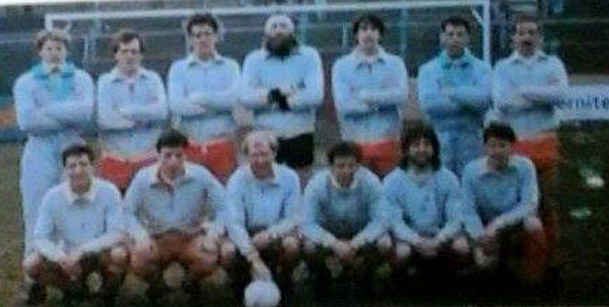 It would have been nice if the underdog won the Cup, but unfortunately FC Larne was unable to do so.
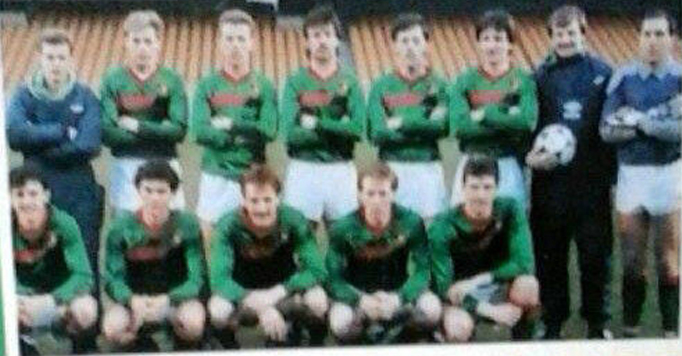 Glentoran (Belfast) won its 13th Cup and it was 4th in a row – a curious record, for very rarely the same club wins national cup year after year in any country.
Iceland
Iceland – ranked 31st. Valur dominated. 3 points for a win and 1 for a tie, still a rarity at the time.
 Leiftur (Olafsfjördur) finished 2nd in the Second Division and earned promotion.
 Víkingur (Reykjavík) won the Second Division with 35 points – 3 points ahead of Leiftur – and went back to top flight.
FH Hafnarfjördur finished last in First Division with 16 points and was relegated. Viðir (Gardur) was most unfortunate – 9th with 17 points and relegated as well, but only on single goal worse goal-difference than Völsungur (Husavík). Up the table – ÍA Akranes finished 3rd with 30 points. Fram (Reykjavík) took 2nd place with 32 points. But one team dominated the championship.
 Valur (Reykjavík) won 10 games, tied 7 and lost just one match. They scored 30 goals – two teams scored more – and received 10, the best defensive record by far. 37 points – Fram ended with 5 less. All and all, it was the 19th title for Valur.
The Cup final opposed Víðir to Fram, but the difference in class was too big: Fram walked over their opponents – 5-0.
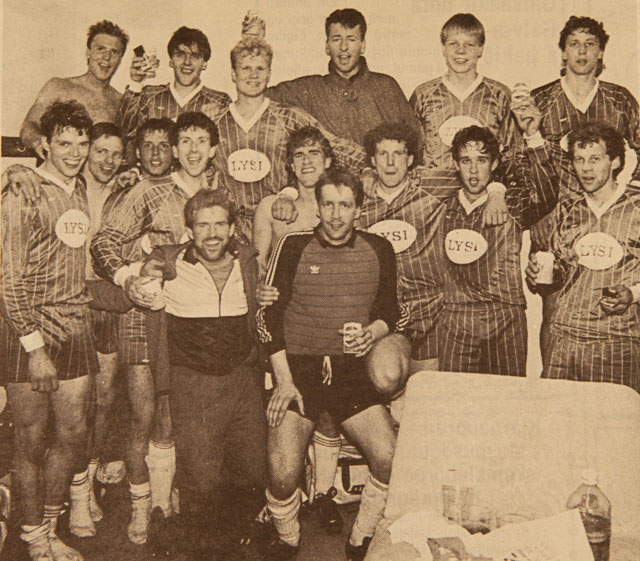 Viðir (Gardur) – one can feel sorry for them: trying hard, coming close, but… lost the Cup final and were relegated from First Division.
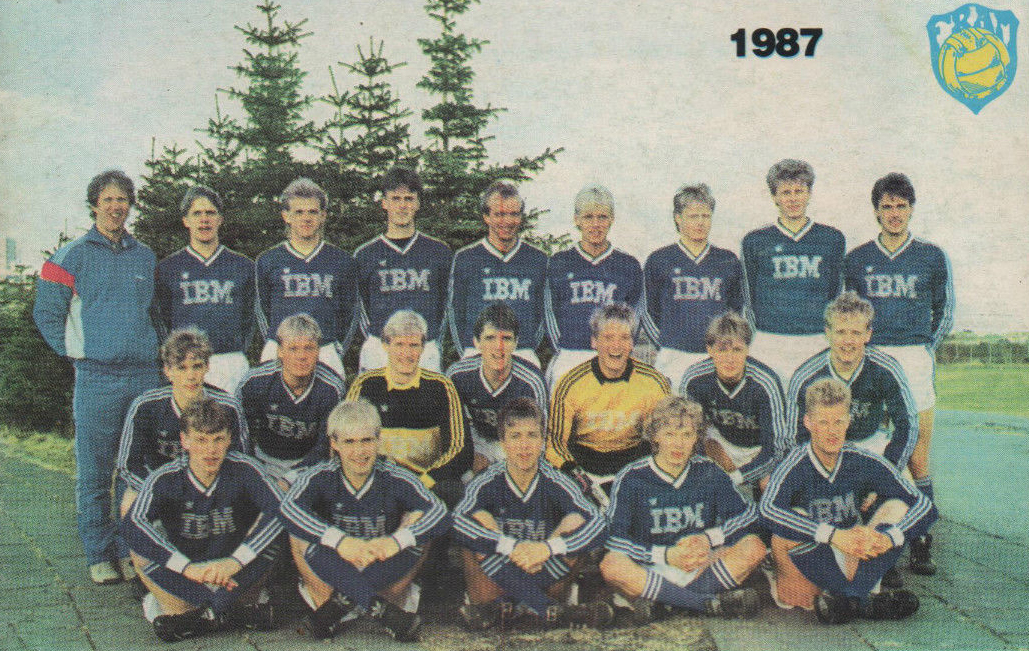 Fram (Reykjavík) had very satisfying season – the title was unreachable, but they were still 2nd and winning the Cup was great. It was their 6th.
Malta
Malta – ranked 32nd. This season was probably the best ever in the history of Hamrun Spartans. It was also the sorry end of the great 4-years spell of Rabat Ajax. Invisible in the lower echelons were clubs like
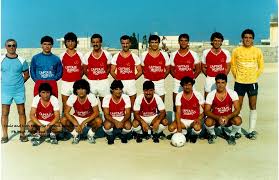 Naxxar Lions and
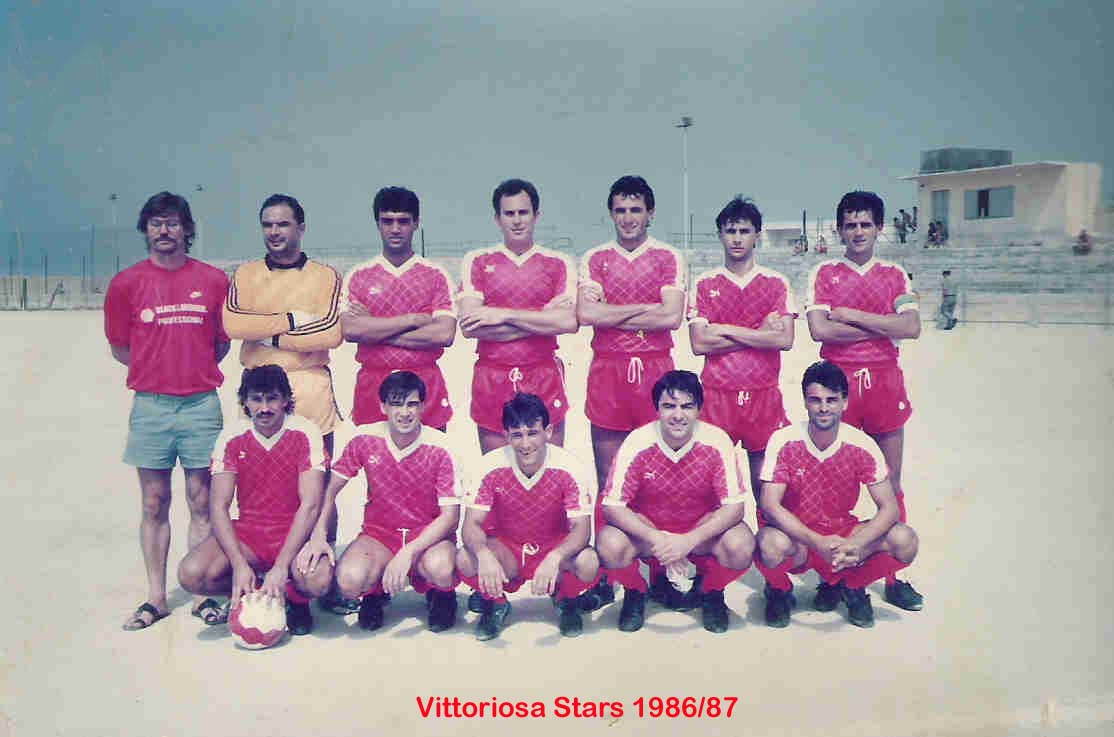 Vittoriosa Stars.
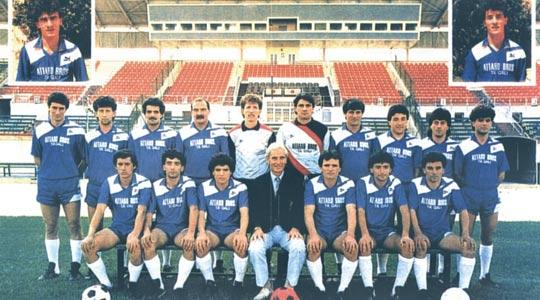 Mosta won the Second Division championship and was happily promoted. Back: S. Muscat, M. Chircop, S. Cuschieri, E. Tabone, J. Degiorgio, M. Ciantar, R. Borg, G. Muscat, P. Vella II, C. Schembri. Seated: L. Deguara, E. Buhagiar, P. Vella I, J. Attard (coach), A. Gatt, J. Busuttil, M. Muscat. Inset: I. Galea, F. Sant.
 Birkirkara ended 2nd in the Second Division and also earned promotion.
First Division was more interesting at the bottom than at the top. But what is ‘bottom’? The Maltese First Division was tiny, the smallest in Europe – just 8 teams. Thus, almost everybody was in danger of going down. Four teams were considered candidates for the title before the start of the season – half the league! Reality was different.
Tarxien Rainbows was last, pretty much expected – they got just 3 points, absolute outsiders. But the other relegated team was considered a title contender before the start of the season – Rabat Ajax, the reigning champions and going through great spell already for 4 years. Internal troubles, however, brought them down – they finished 7th with 12 points and plummeted down to Second Division. Interestingly, they finished with positive goal-difference: 21-13. Only two teams had it better.
Up the table, it was mostly battle for survival and teams took places mostly according to the moment they managed to get themselves together.
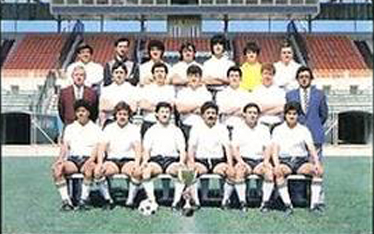 Hibernians escaped by a point – they ended 6th with 13 points.
Slightly better, Zurrieq and Valletta FC, considered both title contenders before the start of the season, managed to climb up, but no more than fighting each other for second place. They finished with 16 points each and Zurrieq had far better goal-difference. But goal-difference did not count and play-off was staged – perhaps experience was the decisive factor here: Valletta FC prevailed 2-1 and got silver medals.
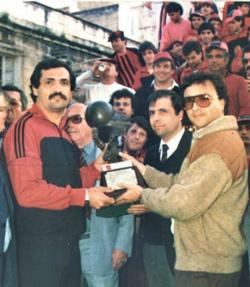 The champion was decided rather early – Hamrun Spartans were strong from start. To a point, it was surprising performance – Hamrun Spartans were not considered among the favourites before the opening of the season. It was fantastic run of the underdog: 11 wins, 3 ties, not a single loss, 25-6 goal-difference, 25 points. Overwhelming superiority and well deserved title, which was their 5th.
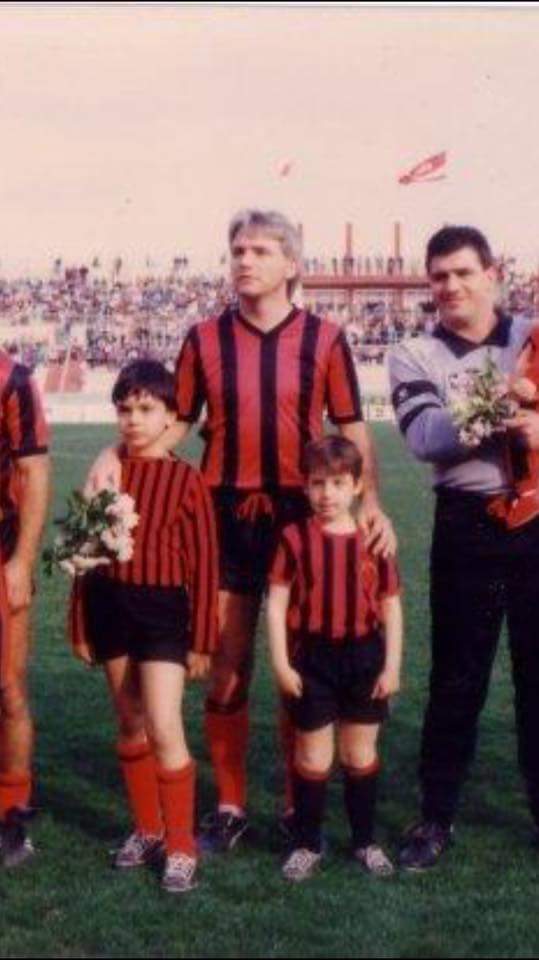 Perhaps it was lucky signing of imported player – the English striker Barry Galagher proved a formidable addition to the squad. He spent years in the lower English leagues, but was great for Maltese club.
Hamrun Spartans, invigorated by Galagher, reached the Cup final as well, where they met Sliema Wanderers. The final almost enraged fans, because it was scheduled on Sunday morning and lacked entertainment. The Spartans quickly got 2-0 lead and after that mostly kept the Wanderers at bay. Yet, their opponents tried to turn the game around and managed to score a goal in the second half. But no more and Hamrun Spartans won 2-1 and got the Cup. It was their 3rd.
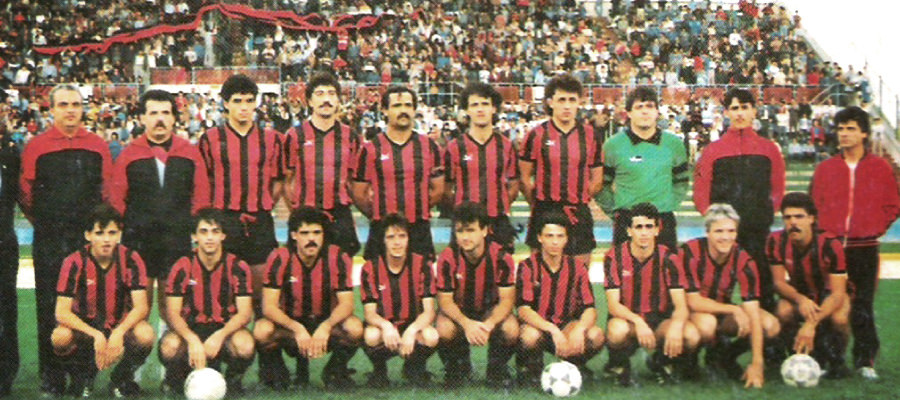 Not sure, but possibly that was the Hamrun Spartans squad which won a double, their first. Fantastic season indeed, in which they did not lose any games and were vastly superior to all opponents.
Luxembourg
Europe, according to UEFA’s club ranking. Luxembourg – last, 33rd. Two teams battled for the title, nothing more.
 US Rumelange finished 2nd in the Second Division and earned promotion. Rather dramatic – clinched the spot on 1 goal better goal-difference.
 Aris Bonnevoie won the Second Division championship with 34 points and returned to top flight.
Two outsiders in the top league – CS Petange was last with 10 points and FC Wiltz 71, also with 10 points, a place above on better goal-difference. Both relegated. CA Spora Luxembourg got bronze medals with 30 points, but that was their maximum – they had nothing to do with the title. Avenir Beggen eventually lost the fight, settling on 2nd place with 35 points.
 Jeunesse d’Esch/Alzette finished first after 17 wins, 4 ties, and single loss. 64-14 goal-difference, 38 points and 20th title! Great achievement.
Avenir Beggen met CA Spora Luxembourg at the Cup final and completely destroyed the number 3 team in the country: 6-0.
 Avenir lost the championship, but won its 3rd Cup.