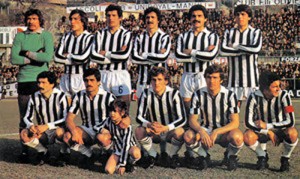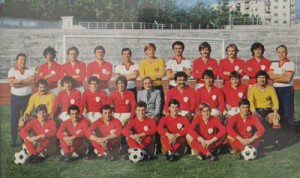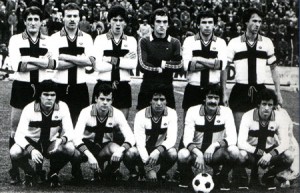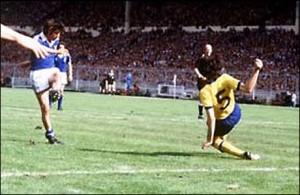
Spain I Division

First division, the real drama, the real excitement, the real winners, if only on Spanish scale. Same old, same old, in other words – Barcelona against Real Madrid. But it was never just that. Difficult league, where scoring was not high – only one club scored 2 goals per game average – but unlike Italy, there was worship of the single point in Spain, and everybody fought for a win, not for a tie. At the end, only three clubs finished with with 10 or more ties – Hercules (Alikante) with 10 and Las Palmas and Burgos, 11 ties each. There was no club with 50% or more of their games tied, like in Italy and USSR. Winning was everything, yet, it was largely winning home games. As for outsiders, there was one – the debutant Cadiz CF.
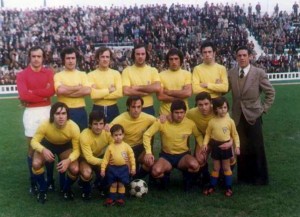
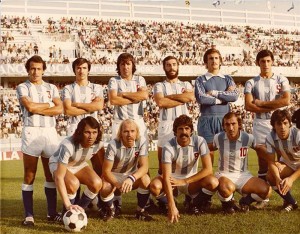
A rather typical story – a modest club, finally reaching top division, but not having enough resources to recruit strong players. Lasting a single year at the bottom of the table practically from the start of the championship and existing more or less as a point donor to the other clubs. Cadiz CF fought the best they could, but were clearly outclassed. They were the only club with less than 10 wins this season. Their strikers were second worst with 30 goals – only Racing Santander scored less goals. Their defense was also the worst – Cadiz received 69 goals. The finished last. May be the only thing needed to be said about them is a reminder of the fashion trends in the decade – the bell-bottoms of their coach above. Even then it was weird to see middle-aged men dressed in youth fashion, but the trend was already accepted by the mainstream culture. Even in conservative Spain. Yet, it looked and look weird. Such were the days, though. Fashion did not help Cadiz a bit.

Not did anybody else. Elche and Real Betis joined Cadiz.
Ten foreigners were unable to save Elche from relegation. They fought to the end, but lost the battle for survival – ended with 27 points, 5 more than Cadiz, but still three points behind the nearest escapee. For Elche a whole period ended this year – their perhaps most successful period, stretching from 1959 to 1978. Elche never won anything, but played constantly in the first division and back in the 1960s were among the strongest clubs, finishing among the best 8. But the club was gradually slipping down in the 1970s, reaching the sad and fearful stage of small clubs concerned only with escaping relegation. The inevitable happened this year.

Above them competition was vicious. All teams from the 10th placed down (if not even from the 5th placed down) spent the season running away from the spectre of Second Division. Six points divided Atletico Madrid at the 5th final place from the relegated 16th, but the bitter struggle was between the clubs spread from 10th to 16th place. Rayo Vallecano and Real Sociedad at the end finished 10th and 11th with 33 points each. Burgos and Racing Santader ended just bellow them with 31 points. Three clubs finished with 30 points each. Two survived – Espanol (Barcelona) and Hercules (Alikante). The third did not. What was the decisive factor? Hard to tell, for there was no particular consistency in the rules deciding the places of clubs with equal points: up the table, goal-difference was seemingly the factor. So it appears, looking at the goal-difference Valencia (4th) and Sporting Gijon (5th). But only between these two clubs appears so – all other clubs with equal points were seemingly positioned not by goal-difference, but on the accumulated results of their head to head matches. Real Betis had rather good goal-difference – certainly better one than not only Hercules’ and Espanol’s, but better than a total of 9 clubs: 51:52. Did not matter.
16th and relegated… Real Betis won the Spanish Cup in 1976-77 and were relegated the next season. Strange, yet not so strange – after all, Real Zaragoza were relegated not very long after winning the cup. Looked like a curse for smaller clubs – winning the cup exhausting them to death. Real Betis did not look all that on paper, but in reality Gerrie Muhren and Atilla Ladinsky were fading rapidly. Both were mostly reserves this season. The club hardly had strong core players and they went down. Sadly, with their relegation the number of local derbies in the league were reduced to two cities – Madrid and Barcelona. May be the fans of Sevilla FC were happy to see their neighbours down and out, but still it was sad to see a local derby gone to the dogs. Real Betis may have been unlucky, but such is football. Others were lucky:
Rayo Vallecano finished 19th, which may be considered a success for the modest club from Madrid. Playing in first division was a success, indeed – with neighbours like Real and Atletico, a chance of another club attracting fans and money was next to impossible. Once upon a time there were few clubs competing more or less on equal footing in Madrid, but by the 1970s the two giants dwarfed whatever other clubs existed. It is even questionable whether Real and Atletico considered the matches against Rayo Vallecano as a derby. Clearly, the smaller club was unable to compete with the big clubs, but still it was great to have them in the league. Madrid was the only Spanish city with three first-division clubs, at least for the moment. Rayo Vallecano could not even dream of winning anything or even building relatively strong squad. Playing in Primera Division was their success.
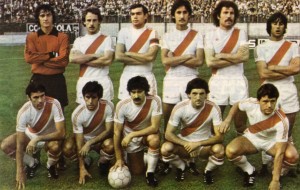
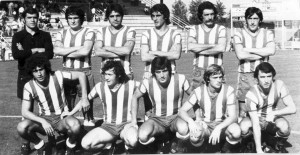
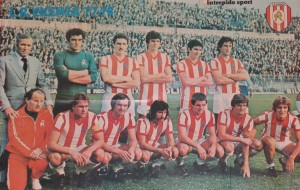
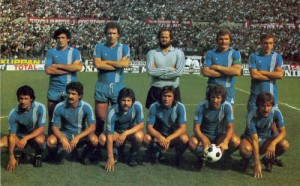
Standing, from left: Alcazar, Anero, Uceda, Nieto, Tanco, Rial

First rwo: Francisco, Landaburu, Salazar, Fermin, Alvanito.

Not a single recognizable player here, if those are the right names. And if the names correspond to players’ positions on the picture… but lovely kit. And something else about their kit – small Spanish clubs used the ‘orthodox’ production of Adidas and Puma. The big clubs – no. These were still early years for the new kits, advertizing more the maker than the club, in Spain. The change was coming with clubs like Rayo Vallecano, the small fry.
Spain Second Division

Segunda Division was terra incognita to the world. Apart from England, France, West Germany, and Italy, no second division attracted attention, but considering the traditional strength and focus on Spanish football, it is a bit strange that it looked like nothing else than Primera Division existed. It did exist of course – tough, big second division of 20 clubs. Occasionally well known names went down there, but largely the league consisted of smaller clubs, moving up for a few years, then down for a few more. A smaller group of clubs never even lusting after promotion among the ‘big guys’ also played there – some old, faded long ago, clubs like Real Jaen; some without grand history, like Terassa. Some names are familiar today, but not back in the 1970s – clubs like Deportivo La Coruna, Getafe, Tenerife. A cursory look at any second division table from the 1970s tells that most of the clubs were no strangers of first division football, but never made big impression. Competition was fierce, though. It was not an easy league. CF Calvo Sotelo was the pariah this season, finishing last – a good 6 points behind the nearest club. Two other teams, much better known by names, also ended a bit distant from the real fight for safety – CD Tenerife, 19th with 31 points, and Cordoba CF, 18th with 32 points. The race for escaping the last relegation place was cruel – 4 clubs ended with 35 points. Goal-difference played no role – it looks like the final standings were decided by the results between the unlucky competitors. Real Oviedo went down, placed 17th, although they had the best goal-difference. It was even very unusual one – 40:42. Minus two goals was the goal-difference often found in solid mid-table – but not in Spain. Two more clubs of the bottom group had similar goal-difference as well: Real Jaen, 15th , was mines 4, and CD Castellon, 14th – minus 2. The 6th and 7th placed teams, Sabadell and Real Valladolid, finished with minus 4 – worse than those fearing relegation. But the group was tough – 5 points divided the relegated Real Oviedo from 5th finisher Real Murcia. Four clubs competed for the three promotional spots at the top. At the end, the unknown outside Spain Barakaldo CF failed – they ended 4th with 44 points. Celta Vigo and Recreativo Huelva finished with 46 points each – goal-difference did not count, and Celta took the 3rd place, although having better one than Recreativo. Did not matter at all, for both teams went up.

Champions – and comfortably at that – were Real Zaragoza. 50 points, best scoring record, most wins in the league – 20, not so great defense, but Zaragoza had no match in Segunda. It was good season for the champions, but for only one reason: they were relegated the previous year, a great disgrace for one of normally strongest Spanish clubs, who not long ago won the Spanish cup. Luckily, Real Zaragoza returned quickly to their normal place. It was a return of a kind for Celta too. The third promoted club was another story.


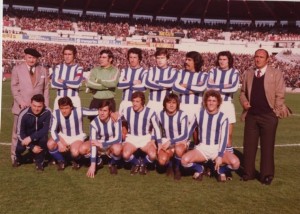
Recreativo is the oldest club in Spain – with them, Spanish football was born in 1889. Naturally, it was done with British help – two Scottish doctors, Alexander Mackay and Robert Russell Ross, working at the Rio Tinto mines (in passing, Rio Tinto is still one the world’s mining giants in the 21st century), found the club in order of providing the miners with physical recreation. The original name was Huelva Recreation Club, eventually becoming Recreativo. Locally, the club was successful, but that was long, long ago. Spanish football centralized into national league championship relatively late and by mid-1930s Recreativo was hardly a big club. Their biggest success was in 1940, when earned promotion to Second division. Where they lasted a single season. Huelva waited for another ascend 17 more years – Recreativo managed to go up again in 1957. This time they stayed in the second league, a constant member, although nothing more. Until 1977-78, when finally they gathered strenght and had their best season – they finished 2nd and got promoted to Primera Division for the first time in their history. Great and strange – it is quite unusual the oldest club of a country to reach top flight after 80 years of existence.

As a second division club, Recreativo had no team worth mentioning. The strength of the team was in the feet of two Uruguayans – the 25-years old defender Eduardo Gerolami, who played for Nacional (Montevideo) before moving to Spain, but without becoming a star. The midfielder Victor Esparrago was much better known, if only for playing for Uruguay at the 1974 World Cup. He was in Spain since the ban on foreigners was lifted, and was already 32-years old. Well past his prime, therefore no longer interesting for bigger and stronger clubs. But suitable for Recreativo and with them – returning to first division football. There was one more Uruguayan in the team – the much younger brother of Victor Esparrago, Ricardo, only 19 years old. Young, but not really talented… Ricardo Esparrago played a single match this season, which proved to be his total contribution to the club during his 2-year spell. Modest squad, perhaps too modest for Primera Division, but that was a concern for the next year. Presently, it was just fantastic – Recreativo finally promoted to the top league. Becoming for the oldest club? Very much so.

Big names were, of course, rare in Secunda Division, but still there were imports. The great, rich Spanish clubs, robing the rest of the world of the best players… the myth and the reality: CD Malag a finished 13th with the help of man playing for the national team of his native country.

Standing from left: Aráez, Vara, Vilanova, Nacho, Palomo, Macías

Crouching: Quevedo, Jantunen, Orozco, Migueli, Adolfo Benítez

Here is Pertti Jantunen, 25-years old centreforward. Snatched from… Finland. Yes, he was part of the strong Reipas Lahti team. Yes, he was a national team player. But… a player from Finland. Not exactly the kind of player able to lift up Malaga. In all fairness to the player, Jantunen was a good professional – after his spell in Spain, he also played in England and Sweden. Not for big clubs, but still he was among the early imports in England, which means quite a lot, given the critical attitude of the English towards ‘continentals’ in the 1980s. As for Spain, Jantunen was more typical than exceptional foreign player. More like Jantunen? Deportivo Alaves had one too, also a guy, who already donned the shirt of the national team of his home country.

Alaves attraced no attention – they finished a bit better than Malaga, 11th. The first crouching on the left is young Argentine, named Jorge Valdano. 22-years old by now, he already debuted for Argentina. Then he left to play for Spain, awarded with second division football. Obviously, not a great prospect… Menotti quickly forgot about him. Alaves was not taking the road up either. One more obscure player in Spain… the greatest thing about Valdano was his rolled down socks and no shin pads. Nothing suggesting stardom. Hard to imagine a future world champion in 1977-78. Even harder to imagine Alaves playing in Primera Division.

Spain in general

Spain was news and no news – some of the fears and expectations faded away already. With them – the hype. Back in 1973, the big fear was rich Spanish clubs quickly buying the greatest world stars and establishing dominance on club level. By 1977 it was no longer the case – no Spanish club won anything. The most they did was playing two European finals, which they lost, but most importantly, the finalists were not Real Madrid and Barcelona. Not a single Spanish club was a trend setter in the 1970s. Nor was the Spanish national team, which continued to struggle. At last, Spain was going to the World Cup finals – for the first time since 1966 – but it was not an exciting team. The big transfers, depleting other countries from the best talent, became rare. By 1977, Spain was hardly the preferred destination for the best players – Germany was more attractive, at least for the Europeans. Spanish clubs made impressive transfers still, but the not many – Real Madrid bought Uli Stielike in 1977, but that was all. It was interesting pattern, somewhat confirming the fears: Real bought once again a high-profile player from Borussia Moenchengladbach, the third already, after Netzer and Henning Jensen. Add Breitner, and the picture was complete – Real chose Germans, products of the most advanced football system in the world (Jensen was Danish, but became a star while playing in the Bundesliga). Barcelona preferred Dutch school, but no new transfer was made since 1974 – Cruyff and Neeskens were in the club and Rinus Michels returned to coach. Big names were playing Spain, but most of them arrived years ago – 1974 was more or less the benchmark. Ayala, Luis Pereira, and Leivinha in Atletico Madrid, Mario Kempes in Valencia… pretty much, that was the whole list of great stars. Old hands by now and, unfortunately, most of them already reached their peak and were no longer the same. Cruyff was hinting retirement. Netzer already retired. Breitner was gone. Only Mario Kempes was still going up. As for Stielike, going to Real Madird playing cruel joke on him – he missed the 1978 World Cup, thanks to funny decision of the West German Federation to include only German-based players in the national team. Funny, because Uli Stielike was the only candidate (Beckenbauer moved to USA, but he did not want to play for the national team anymore – and his decision was known well before his relocation) – it was counter-productive rule, judging by the pitiful German performance in Argentina. Back in Spain Stielike was strong, but… most of the ‘stars’ flocking to Spain were hardly known players, predominantly from Argentina, Paraguay, and Uruguay.

The advantages were obvious: skilful South Americans, Spanish speaking, cheap, and easy to naturalize. Cheap, because the exodus of troubled countries under heavy-handed dictatorships was massive – for both political and economic reasons. The political part benefited Spanish clubs – it was easy to naturalize exiles, especially when the old ‘oriundi’ rule was unchanged. Whoever wanted to look deeply quickly found a cypher: Spanish rules allowed for 2 foreign players on the field. Yet, most clubs had plenty of foreigners and more than 2 were often fielded. Real Madird had 5 in 1977-78 – Stielike (b. 1954), Jensen (b. 1949), Enrique Wolff (Argentina, b. 1949, defender, played at 1974 World Cup), Roberto Martinez (Argentina, b. 1946, forward), and Carlos Guerini (Argentina, b. 1949, forward). Stielike, Jensen, Wolff, and Roberto Martinez were often on the pitch at the same time. Barcelona had one player more than the arch-rivals: Cruyff (b. 1947), Neeskens (b.1951), Heredia (Argentina, b. 1952, midfielder), Rafael Zuviria (Argentina, b. 1951, forward), Alfredo Amarillo (Uruguay, b. 1953, defender), and at the end of the season a Brazilian striker was added – Bio (full name: Williams Silvio Modesto Verisimo, b. 1953). Bio came not from abroad, but for the second-division club Terrasa, where he played for awhile, after playing in Portugal before. And Cruyff, Neeskens, and Heredia were almost always together on the pitch. No problem adding Bio too… why? At least his case was clear – he married Spanish woman and naturalized on the strength of marriage. So he was Spanish citizen. Spanish clubs kept more foreigners than allowed from the very moment the ban on foreigners was lifted – it was ‘wise’ to have reserves in case the prime stars were injured, out of form, or suspended. The extras stayed unhappily on the bench most of the time… the Peruvian star Hugo Sotil was the biggest, and somewhat tragic, example. But oriundi had no problems playing – and just how many, on what criteria, and when they were considered ‘oriundi’, was something never discussed – at least outside Spain. Well, ‘Wolff’ is hardly Spanish name, but enough Spanish blood was ‘found’ in the former Argentinian national team defender to become ‘oriundo’ and play along with Stielike and Jensen, who, together, exhausted the limit of foreigners.

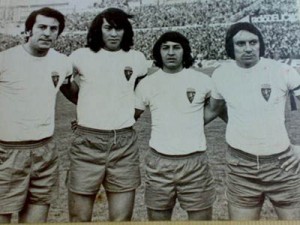
Yet, the big clubs were not the biggest offenders – the small fry excelled. Real Zaragoza proudly pictured their four strikers from South America:

From left, three Paraguayans, Felipe Ocampos, Carlos ‘Loko’ Diarte, Saturnino ‘Nino’ Arrua, and the Argentine Adolfo Soto. Because of them, the team was cunningly nicknamed ‘Los Zaraguyaos’ and thanks to them Real Zaragoza won the Spanish Cup in 1974. The big ‘-guayan’ group confused the issue – Soto is often thought Paraguayan, but the ending is right – along with these four the Uruguayan defender (World Cup 1974) Juan Blanco (b. 1946) also played. By 1977 the group was cut down – Diarte moved to Valencia for the new season and only Blanco and Arrua (b. 1949) remained. From the ‘Zaraguayos’ – yes – but in general two more Paraguayans were at hand in midfield: Celso Mendieta (b. 1949) and Jorge Insfran (b. 1950). And Real Zaragoza was, in a sense, modest consumer of South American feet – Elche had 10 foreigners in 1977-78. Six Argentines, 2 Paraguyans, an Uruguayan, and one ‘exotic’ player from Honduras. Just because Honduras is unlikely producer of classy players – and even more so in the 1970s – his name: Gilberto Yearwood, a defender born in 1956. From the whole group the only known name is the midfielder Marcelo Trobbiani (b. 1955) – he came in 1976 from the successful Boca Juniors vintage winning left and right this year. Almost a whole team of foreigners did not help Elche a bit, but this is so far first division. How many foreigners played in the lower division would be anybody’s guess. Birthdates are given here, because most of the foreigners were not very young – let say, mature players, often working already for years in Spain. This was alarming: Spanish clubs did not buy current foreign stars, but preferred the same players they got in the first rush of open doors – 1973-74. Which was not exactly a formula for improvement of the game – the bulk of oldish and not at all famous Argentines and Paraguayans were no longer trend-setters, if they were ever. Thus, Spanish football remained pretty much what had been about 10 years ago – tough, physical, and hopelessly out of touch with modern football. No wonder the Spanish clubs had zero international success.

Apart from rather inflated hype over summer transfers and unrealized foreign fears that the Spanish will rob yet another nation of her stars, there was another news – the Spanish federation introduced a new league in place of Third Division. Third Division remained , under the same name, but between it and the Second Division now a 2-group league was inserted – Segunda Division B, or Second Division B. It was made of freshly relegated second division clubs plus the highest positioned third division clubs. All together about 40 clubs, previously playing 3rd level football anyway. Hard to tell what was the reason – may be financial, for everywhere in the world there is a problem at some point of the structure – professional clubs mingling with semi-professional and outright amateur. West Germany organized her second division precisely to put together the remaining professional clubs outside the Bundesliga and thus to elevate the general level of the game. Anyway, Spain started their new league. Nothing fancy there… just for curiosity sake, a picture:

Levante was hardly heard of club back in the 1970s and third level was their usual hunting grounds. As for the players down in Segunda Division B… let say that the photo is wrong. This is Levante of 1978-79 – Lorant (full name Julio Cesar Lorant Vazquez), an Uruguyan defender, played for Elche in 1977-78, freshly acquired from Sevilla. He joined Levante in 1978, but since the club finished in mid-table and remained in the new league, the photo is relatively right. If only to illustrate the unsolvable mysteries of the ‘oriundi’ – Lorant is just a little reminder that they were everywhere in Spain.

Italy – the season in pictures

Moments from the 1977-78 Italian season.

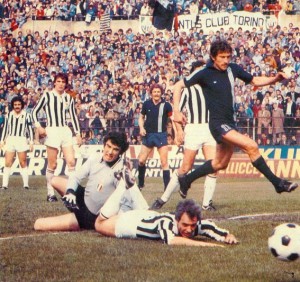
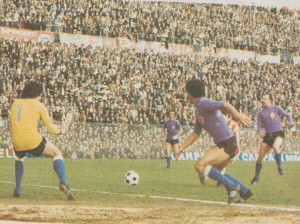
Juventus – Pescara 2-0. Zoff and Co. is down and hopelessly so. But Bertarelli missed.

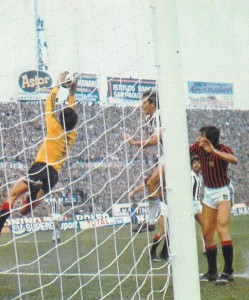
Juventus – Milan 1-1. Bettega is robbed by Albertosi.

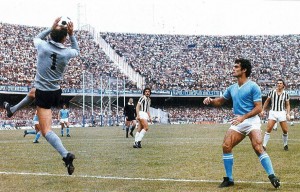
Napoli – Juventus 1-2. This time Mattolini catches the ball.

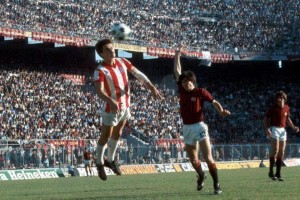
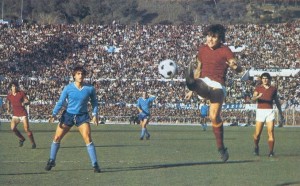
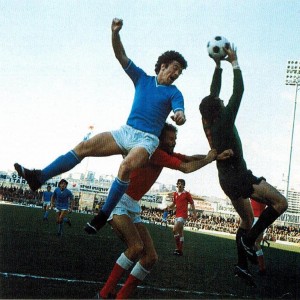
Milan – Lanerossi Vicenza 2-1. Milan claims an off-side.

Lanerossi Vicenza – Fiorentina 1-0. No off-side here – Paolo Rossi, almost entirely hidden behind the defenders, scores. Enough for 2 points.

Roman derby, ending 0-0 of course. Roma’s Manchini blocks a shot, Giordano alert for deflection and second chance – but nothing.

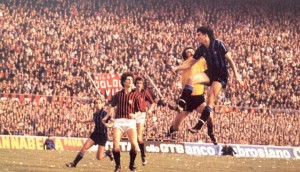
Milano’s derby – Inter – Milan 1-3. Albertosi saves and another attack of Inter is in vain.

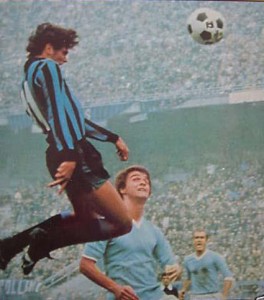
Inter – Lazio 1-1. Altobelli’s header.

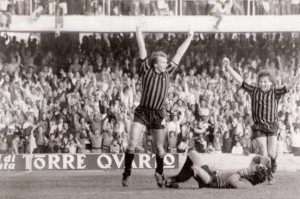
Foggia – Torino 1-0. A rare victory for Foggia. Pirazzini scores, but at the end his club was relegated and Torino got bronze medals.

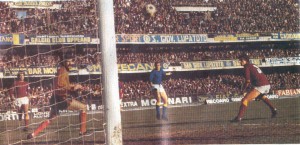
Verona – Roma. A goal? No. The match ended 0-0, the beloved Italian result.

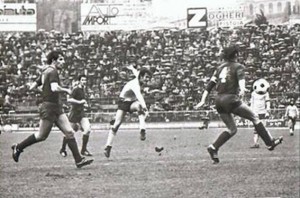
Verona – Bologna 1-1. Experienced Bologna getting a point at away match.

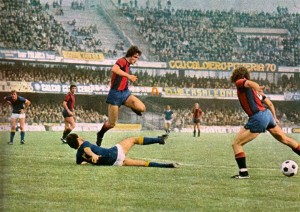
Easier at home? Not at all: Bologna – Verona 0-3. Gori scores.

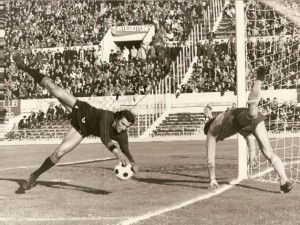
Perugia – Napoli 2-0. Grassi saves, robbing Napoli from a chance.

And that is why we love football:

Because it is beautiful and dramatic. Like ballet sometimes. Lazio – Foggia 1-1.

Italy 1977-78 Cup

The old guard saved face in the Cup tournament – Napoli perhaps outdid itself by reaching the final. Inter did better – they won it. It was not easy, but Inter prevailed at the final in Rome 2-1.

For Inter, it was great… kind of. Great, because they were starting to forget the taste of victory in the 1970s. On the other hand, to be constantly left behind and empty-handed was more than painful – winning the Cup was good, but not quite satisfying. As for why Inter was unfit for anything bigger and perhaps must have been incredibly happy with a trophy, any trophy, in their hands, the team pretty much says it all: it was incomparable to Juventus. Rather disjointed and hardly promising better future. Facchetti was at his last legs – may be one, two at best, seasons. Retirement was his future. Anastasi was also nearing the end… well, certainly past his peak. Bordon, Oriali, Altobelli were the players to shape the future, but they were not leaders yet and even did not look like possible superstar of the caliber of Facchetti and Anastasi. The rest… the rest looked like journeymen. Certainly not a team of mighty winners. Rather, a team on the brink of starting rebuilding – uncertain, making faulty choices, searching for talent. There was no skeleton of new successful team – sadly, it looked like the moment Facchetti retired Inter was going to collapse. At least they won the Cup – which may be was best for Facchetti: stepping out in style, as a winner.

Italy I Division

Finally to the bright side of Italian football. The big surprise of the season was a small club just coming back from Serie B exile.

Lanerossi Vicenza finished second, their best ever achievement. Familiar name back in the 1970s, but just a name. The club was founded in 1902, but success was not really on the table. After the Second World War they played regularly in first division, just making the numbers. Then financial troubles started and in 1953 a woolen firm from Schio bought the club. The firm, called Lanerossi, included its name into the club name and for many years it was Lanerossi Vicenza. With fresh money, the club came back to first division in 1955 and steadily stayed there until 1975. They fought nobly, but were never successful – the best years were 1963-64 and 1964-55, when the club finished 6th. Not much to write about in the history book. In 1975 they found themselves in the relegation zone again. Managed to win Serie B in 1976-77 and returned to top flight. Nothing much was expected of Lanerossi Vicenza – the biggest news about them was in 1976, when they bought young player called Paolo Rossi from Juventus for a record fee of 2.6 billion lire. How much was that in more meaningful currency is not even interesting: it was a big transfer and curious one too – on one hand, Vicenza paid a lot for a second division club. On the other, it was suspect transfer: Rossi was a talent, no doubt about it, but he never played even a single match for Juventus and was already involved in another transfer and technically was not in Juventus. May be he was loaned, for Vicenza paid to Juventus. Big money were spend – but was the spending justified remained to be seen. With Rossi in the squad, Vicenza won the second division title, but nobody thought they would be very strong in first division. But what a surprise! The modest newcomers gradually established themselves at the top and competed strongly to the end. Thank to better goal-difference they finished at second place. Their best ever performance in the league. And there was more – Vicenza finished as the highest scoring team this season with 50 goals. Paolo Rossi was the prime culprit of the crime – he scored half of the goals.

There was no longer any doubt about the billions spent for Paolo Rossi – he delivered! 24 goals – not only the best scoring record this year, but best by far – the next highest scorer, Savoldi (Napoli) managed only 16! Fifth best scorers – Bettega (Juventus) and Graziani (Torino) – had only 11 goals each. During the 1970s 11 – 16 goals were normal… low scoring, defensive Italian football hardly provided opportunities for more. Natural scorers like Savoldi and Bettega were unable to find openings in the tight defenses – but Rossi did. Vicenza was hardly a trend-setter, suddenly introducing attacking style, but still it was more attacking football they played, creating opportunities for the young maverick. Rossi was included in the national team immediately. With his help, Vicenza edged Torino and got silver medals. However, the title was well out of their reach.

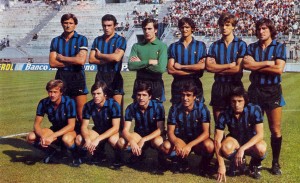
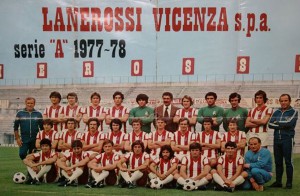
The surprise disturbers of the status quo – modest newcomers finishing with silver medals. A very rare event in Italian football, which may have been possible only because of the general decline. May be so, but Vicenza deserved their medals. Since this is not a club to get mentioning often, another photo is perhaps justifiable:

Apart from Paolo Rossi, nobody else was or became famous, including the coach Fabbri. Just a typical small club with players almost automatically ‘placing’ it somewhere in the lower half of the league table. Other clubs, with well known names and having a few stars in the squads, suffered, so what made Vicenza successful? Perhaps the surprise, surely the scoring talent of Paolo Rossi, but most likely collective play and determination. May be more open than usual football – 50 goals do not come by playing catenaccio. There was a little lesson in all that – Lanerossi Vicenza seemingly tried something different: trusted young talent, based its game on him. No more stiff tactics and dependance on veterans from the 1960s, who even if they wanted, were hardly able to change their crusted habits. The only change was possible with new, young players – that was the lesson of Lanerossi Vicenza. Unfortunately, they were too small of a club to remain at the top for long. And because they were small, no big attention was paid to them. May be they were not innovators, but only had a lucky year, accidentally finishing at the top… may be, but nevertheless it was great to see them above Milan, Inter, and the rest of the league. The greatest ever season of Lanerossi Vicenza!

Great season for Vicenza, but a greater one for Juventus. There was both domestic and international success. By winning the UEFA Cup in 1977, Juventus at last got an even footing with Milan and Inter, and also made their bid for real international recognition. At home ‘the Old Lady’ was quite amazing – they took the first place from Milan in the 13th round and kept it to the end, shrewdly collecting point after point and leaving everybody else in the dust. At the end, Juventus finished 5 points ahead of L.Vicenza. Ironically, their last match was against Vicenza in Torino – a grand finale of the championship. Juventus were already unreachable, but they finished in style, winning dramatically 3-2, after Vicenza equalized twice. Rossi scored his 24th goal, as if to show what a player Juventus thought unfit. Roberto Bettega, perhaps in his finest form, also distinguished himself, scoring the third and winning goal for Juventus. Perfect ending of excellent season.

Juventus’ record is not very impressive on paper – rather typical Italian: the champions tied almost half of their matches – 14. Ten of them were away games. Typically iron defense – Juventus received only 17 goals this year – but goalscoring apparently was not their forte – 46 goals in 30 matches. Third highest record in the league, but compared to English or German football it was nothing at all. Especially because Juventus won exactly ½ of their total games – 15. Looked like Juventus preferred traditional approach in the championship – measly 1-0 wins at home and preferably scoreless ties on the road. Yet, they were the club playing most modern football in Italy, so the final results most likely came from careful balance between traditional Italian football and the total football’s attacking style. Italian defenses were very difficult to play against anyway. Juventus was obviously above the rest and almost unbeatable – they lost a single match in 1977-78. Astonishing achievement in Italy. The only loss happened early – in the 4th round. Lazio won 3-0 in Rome. This was t also the only match Juventus allowed 3 goals in their net. A tragic event happened in the 6th round, when Juventus played away match against Perugia – during the game Perugia’s player Renato Curi collapsed and died of heart attack. Players were dying on the pitch in the past as well; people somehow forgot that in the recent years. All kinds of drama for Juventus, but with excellent result. Death may be affected the match, but Juventus got their point anyway from a scoreless tie. No matter what, Juventus were the best Italian club and continued to dominate the league. One more title and European cup – what could be better?

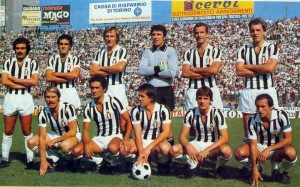
Looking at the team, it is easy to understand why Juventus dominated Italian football: all starters were national team players! Not at the same time, of course, but every single one played for Italy. It was excellent blend of grizzled veterans (Zoff, Boninsegna, Benetti, Spinosi, Morini), stars at their peak (Bettega, Causio, Furino), and young talent (Tardelli, Gentile, Cuccureddu). Cabrini was pushing his way as well. Scirea is not in the picture, but he was regular, not Spinosi. Virdis was also very promising at that time. So was Fanna. And don’t forget who was coaching them – Giovanni Trapattoni, rapidly becoming a star coach. He found the right balance between old and young players and was not afraid to push young talent ahead. Juventus was establishing itself as a great club, there was nothing incidental about it, and there was room for further development too. Unlike any other Italian club, Juventus did not keep veterans for ever and transition of generations was smooth. Every year the team appeared to be stronger – and hungrier. Already there was more than a feeling that so far Juventus was only going up, getting a taste of success, but not reaching its peak – greater things were still to come. Very, very soon.

Italy I Division

Serie A was a copy of Serie B – one clear outsider and one outstanding leader. Was the Italian football improving or deepening its crisis was a question open for interpretations. It was still defensive football, scoring was low as ever. Not a single team came close to 2 goals per game average. Only sic clubs finished with 10 or more wins. One club ended with 50% wins and it is not difficult to guess where this club finished. Just two clubs had fewer than 10 ties and both were relegated. On the other hand the number of ties slightly diminished: only two clubs, Atalanta and Genoa, tied 50% of their total games. Positive changes were very few… Milan and Inter were clearly in crisis, yet finished high. Ten clubs were engaged in the bitter fight for survival, not concerned with medals at all – the difference between 6th and 15th placed was only 5 points. The signs of change came from the very top two clubs and the national team – not much, but somewhat more than the previous few years.

Pescara finished last – they were obviously below everybody else, finishing with 17 points, 8 less than the 15th placed.

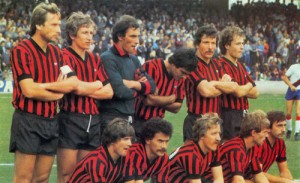
Pescara was one of the lowly clubs, there was nothing surprising in their relegation. Hardly anything to say of them: lovely kit and exotic looking goalkeeper. Who was perhaps the best known player of the team and also sharp example of why Pescara was dead last: Massimo Piloni played 8 years for Juventus . If ‘played’ is the right word… Piloni amassed a total of 12 matches for Juve – for 8 seasons he wormed the bench. Yet, he was three times champion of Italy… just because he was a member of the team. His three years with Pescara were by far the best in his career – as far as actual playing was concerned. With relegation, his career plummeted further – he went to Rimini in the summer of 1978 and eventually finished his playing days with even smaller club in 1981. Since Piloni was the best known player of Pescara, is there any wondering why they finished last?

Above them were the bulk of 10 clubs trying nothing more but escaping relegation. Three clubs ended with 25 points and goal-difference decided their fate. Fiorentina was lucky – strange to see the club of already one of the best European midfielders – Giancarlo Antognoni – at 13th place and lucky to end there, but the squad was really nothing much.

Foggia had the worst goal-difference among those with 25 points and took the 15th place.

Contrary to their logo, Foggia were no devils, but one of the usual candidates for bottom places. Nothing surprising about their relegation – they had no strong team. Franco Bergamaschi was perhaps the best known player in the squad, but he was getting old and declining already for years. The other recognizable name is familiar now, but not at all in the 1970s: Nevio Scala. If anything, one more example of the strange development in football – lousy players tend to become great coaches. Perhaps playing often in second division builds character and teaches how to make a team, but Scala, as a player, was not much of a help. Genoa’s goal-difference was bad – 28:43 – so it was more than bad luck for them.

Bad luck was the fate of Genoa – they were just one goal short of survival. Fiorentina finished with -9; Genoa with -10. One goal difference between life and death… the lesson was to score more, really.


Once upon a time Genoa was strong, winning club. Once upon a time… so many years ago, that it was questionable there were still living witnesses of the glory years. In the 1970s Genoa were firmly… weak. Of course, nothing great about the team, but scoring was mentioned for a reason: Genoa scored a total of 23 goals this season – only two clubs scored less then them. Strange, for Genoa had Roberto Pruzzo and Giuseppe Damiani. True, they were the only noticeable players, but with them more goals should have been scored. Damiani was already declining – his best years were between 1972 and 1975, when Juventus noticed him, wanted him, and got him from Vicenza. Damiani played relatively well for Juventus, but not as great as hoped, and in 1976 he was sold to Genoa. He was 27-years old and perhaps able of more than he did, especially when having a bright, younger, and rapidly rising partner to play along with – Roberto Pruzzo. Only 22-years old and already captain of the team, Pruzzo was even considered for the national team, but evidently he was unable to save Genoa. And his big fame came later and with another club – Roma was quick to get him after the end of the disastrous year. Genoa was painfully close to safety – but went down. Yes, Pruzzo and Damiani did not score enough… but was it possible at all, since scoring depends on opportunities created by midfielders. There was no one to do that in Genoa and as a result the city was left without first division team for the next year – the local derby between Genoa and Sampdoria was to be played again, but in Serie B.

Genoa and Foggia joined Pescara, going down, and half of the league finally breathed easier. Among the bulk of threatened with relegation Napoli finished highest – at 6th place.

A prime example of the ills most Italian clubs were suffering – three aging stars, fading away – Juliano, Savoldi, and Chiarugi – supported by… nobody. It all depended on them and as far they managed relatively well, the club was able to edge the small fry. Napoli finished with almost perfect 50-50 reacord: 30 points, acquired from 8 wins, 14 ties, and 8 losses. 35:31 goal-difference. At home they won 5 matches, lost 3, and tied 7. Away they lost 5, won 3, and tied 7. Only Perugia, a place below them had ‘better rounded’ record: also 30 points, 10 wins, 10 ties, 10 losses, 36:35 goal-difference. At home – 8 wins, 5 ties, 2 losses; the reverse away – 2 wins, 5 ties, 8 losses. Napoli and Perugia were the triumph of the stingy, point-oriented, defensive, scheming Italian football. If everybody was able to achieve their dreams, all teams were to end with exactly the same records and no one would have been relegated. Of course, in a perfect Italian world, there was not be any champion either… In the imperfect world most of league fought for survival… Napoli and Perugia were 6 points behind Inter.
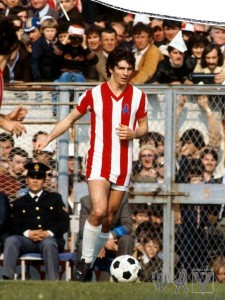
Inter finished 5th, a point below Milan. Both clubs suffered greatly – aging, late to start building new squads, perhaps not even knowing how to start. Facchetti and Rivera were the untouchable leaders, although it was clear for years that they were the past, not the future. Then again, how to replace gods? Fading gods, but gods.. the only way was to wait for their retirement… and no wonder neither Inter, nor Milan were much of a factor. Both clubs were followed a curve going steadily down – relatively strong at the beginning of the season, gradually dropping out of the race for the title and finishing relatively high only because of the good start. Milan led the league until the 13th round – after that it was over for them. Inter did not last even that long… yes, both teams were difficult to beat, but both were not really capable of winning. Defense was their strongest lines. Teeth they had only for the small clubs. And no wonder Torino edged them and finished with bronze medals.


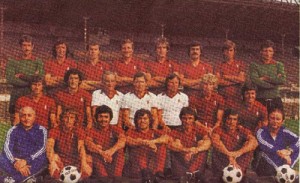
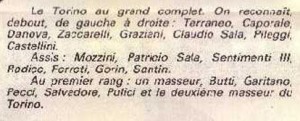
Well balanced squad, full of players in their prime. Torino was in its best years still, perhaps the only thing lacking was really outstanding leader, a mega-star. Won the title few years back and continuing to be among the best. Alas, no more than competing for second place… once again, the defense got the upper hand and no wonder they lost even the second place. Bronze medals were not bad after all, but unfortunately Torino was not becoming really great team.

Italy II Division

Second Division attracted little interest outside Italy perhaps of the nature of the clubs playing there – it was a large league, 20 team strong, most of which played in the First Division often. Of all 1977-78 second division clubs perhaps only Rimini and Sambenedettese never played top flight. The rest moved up and down frequently, most never making any strong impression. Two names were interesting – Cagliari and Sampdoria. Some hard luck, some unwise decisions, may be money problems. Sampdoria was not exactly famous club yet, but still one normally to be found in the first league. As for Cagliari… they were champions of Italy at the down of the decade. The great Riva led them. The national team included quite a large group of his teammates. But… it was already in the past. The club gradually went down, finally to second division. Sampdoria finished 8th this season, but Cagliari was way down – 12th and only 4 points above relegation zone. As for relegation itself, in a league consisting of small clubs, it was equally possible some playing first division football only a few seasons ago to be really weak by now and vice versa. Modena was the absolute outsider this year, finishing last with 20 points – 11 points less than the 19th placed Como. Como lagged three points behind Cremonese, which was the only club trying to escape relegation to the end. The drama of the second division was relative parity – there was no great point difference between neighbours. Practically 8 clubs fretted over relegation and at the end Cremonese got the short stick by a point, but curiously went down with better goal-difference than 5 clubs above them. Cagliari also finished with curious goal-difference: they managed to escape relegation, which itself does not speak for great performance, yet, they finished with positive goal-difference and were the second highest scoring team in the league. Unfortunately, second they were in the other department too – only Modena allowed more goals in their net than Cagliari.

The drama of second division football is specific anywhere, simply because there are not really great teams playing there, but in Italy it is almost impossible to grasp it: the long tradition of defensive football made it both simple and difficult to judge – clearly, the ‘philosophy’ was aim at winning at home and try for a tie on the road. But this was the general approach of the whole Italian football for almost 20 years, so unlike other countries, here it can’t be easily said how good or bad were the clubs. The number of the draws can safely tell one thing only: a team with less than 10 ties would be either at the very top or at the very bottom. Only two clubs ended with fewer than 10 ties this year: Modena, dead last, and Ascoli, first. And both clubs built vast chasm between themselves and the rest – Modena 11 points behind the next weakest club; Ascoli 7 points above the second placed team. Everybody else had plenty of ties – from 10 (Pistoiese, 16th) to 17 (Brescia, 14th) – but there was not a single club with 50% or more of their games ending in a tie. Which may have been a tiny sign of changing the dreadful catenaccio mentality. Fierce competition, however: from the 11th placed at the end, half of the league had a chance for winning promotion – 6 points divided the 11th (Taranto, 38 points, ending there because of worse goal-difference) and second placed Catanzaro with 44 points (also getting their place thanks to goal-difference, but better one). Since the number of ties was pretty much equal, the difference came from numbers of wins and losses – no matter how defensive one’s game was, still wins counted most. Monza and Ternana won 14 matches each and finished just outside promotion zone – 4th and 5th, each with 42 points. The lucky ones also had equal points – 44. Avellino got the third place – they had 15 victories and second-best record of losses – only 9 – but weak goal-difference: 34-29. Avellino scored less than a goal per game on average – only in Italy a team with so weak striking record can be a winner. Let’s face it – out of 20 clubs, only 5 scored a goal per match or more this year.

But they clinched promotion spot, although the only teeth they had were on their logo.

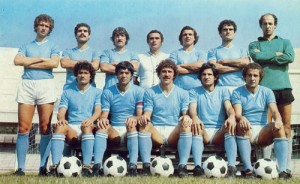
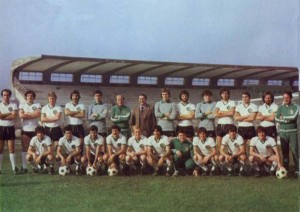
Nobody worth mentioning in the squad, but they went to Serie A and it was great. The fans did not care for criticism – they were happy.

That was the day! Avellino got promotion for Serie B in 1973 for the first time. Five years later they went even higher!

Similar was the mood in Catanzaro, the small town in Calabria.

Second place after grueling season, thanks to 16 wins – the second best number in the league. Third best attack, but rather weak defense – 5th worst! But winning and scoring propelled them up, edging Avellino at the end.

So far, the greatest season ever for Catanzaro was 1965-66, when they reached the Italian Cup final. Their first promotion to First Division came in 1971 after play-off with Bari. Did not last long in Serie A… just a season. Bounced back up in 1976, but were relegated again. This time they came back right away, hoping to stay a little longer among the best at their third attempt.

The best of all were Ascoli.

No luck, no questions, no doubts – Ascoli were clearly supreme. 26 wins was astonishing number – the next best record was 16! Ascoli lost only 3 matches – the next best was Catanzaro with 9. They also tied only 9 games – it was clearly attacking team, well prepared and head and shoulders above the competition. The strikers scored 73 goals – 21 more than the second best attack, Cagliari. The defense was not exceptional, yet not bad at all – they allowed 30 goals in 38 championship games. Five clubs had better record than the champions, but it did not matter at all – the strength of h team was lethal attack. With 61 points, Ascoli left the nearest clubs 7 points behind.

One more small club trying to fit in Serie A. This was their second attempt – they debuted in 1974, but were relegated in 1976. To date, 1977-78 was their most successful year – winning Serie B for the first time ever. Small clubs have little to brag about, so second division champions was great success. A trophy at last.

Happy winners, although it was clear that the promoted clubs were not going to be great addition to the top league. Fighting for survival was their future – but it was future. Presently, it was just bliss.

Italy

Third rank goes to Italy. Perhaps the Italian football was still not all that great – but Spanish was not either at the time. The strength of Italian football was really Juventus, the most interesting club in terms of adapting elements of total football, and the national team, which became one of the best surprises at the 1978 World Cup. Not much… the Italian clubs were still miserable in the European tournaments, Milan and Inter were clearly in decline, goal-scoring was minimal as ever. Nevertheless, there was a great surprise this season – which may be interpreted two ways: as a sign of the general decline of the big clubs, which suddenly made them equal to the small fry or as a sign of improvement, bringing more clubs to the fight on top, if they had young talent at hand. So it may had been at the time, but later it turned out to be just a momentary surprise and nothing more. Certainly not a big reshaping of the football map of the country. Which, from the outside, was one and the same – the First Division. Second level was known largely as a final table and what was beyond was foggy assumption that, of course, other leagues existed. How many and what for perhaps was never wondered about, but there were those playing somewhere in the fog. Clubs which used to be familiar names years ago and barely remembered by the late 1970s.

Triestina, for instance. Third division? Most likely. Never really great, they used to play First Division in earlier decades. There were even formerly old strong clubs like Pro Patria. There were also the entirely unknown, the bulk.
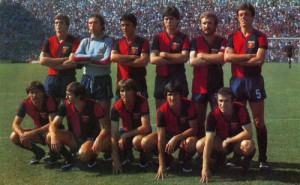
Parma – one of the ‘bulk’. Everybody knows Parma today – thanks to their great exploits in the 1990s – but back in the 1970s it was unheard of club. First division was well beyond the scope of their dreams – the dream was Second Division and as almost all dreams it was just a dream… may be in some distant future… one day, if lucky… third level was the familiar surrounding. Nice kit, though. Otherwise, only a reminder that such club existed back then for those unable to find a trace of it. Admittedly, third division football is almost entirely different sport, but lower levels are the true backbone of the sport – down there new talent emerges and builds character. Could be said that the more clubs play in the lower divisions, the better is the football at the top – Italy had many leagues, going down to seventh level. Speaking of passion for the game. A little tribute to those countless clubs playing down is very much needed now and then.

England FA Cup

Remarkable English season, because of the extraordinary successes of Nottingham Forest, but it was not all. The FA Cup final added more historic significance. Lowly Orient, 14th in the Second Division reached the ½ finals. Amazing that, but they met Arsenal and lost 0-3. The other ½ final opposed rising West Bromwich Albion to suffering Ipswich Town. Championship and cup tournaments do not share the same logic, yet it was more likely WBA to prevail. But the Tractor Boys won confidently – 3-1. Arsenal vs Ipswich Town at the final. Both eager to win – Arsenal were strong, but had no chances for more than bronze in the championship. The League Cup was also out of their reach – they were eliminated at the ½ finals by Liverpool. Now they had a third chance for victory and naturally wanted it bad. So Ipswich, who had disastrous season and tried to avoid relegation. Their weak season tipped the scales in Arsenal favour – Ipswich had wonderful squad, but underperformed so far. Arsenal on the other hand were in very good form. But predictions do not matter much at English cup finals: whoever plays is determined to win. Terry Neill vs Bobby Robson. Excellent Arsenal players – David O’Leary, Liam Brady, and Frank Stapleton almost at their peak, still rising. Pat Jennings between the goalposts. Grizzled fighters with tons of experience – Sammy Nelson, Par Rice, and David Price. Guys still considered to capable of climbing up to true greatness – Alan Sunderland amd Malcolm Macdonald. Young hopefull Graham Rix at the bench. And Alan Hudson, who was still expected to get his mind on football and fully reveal his talent. Ipswich had largely promising players, who needed to blossom yet and, therefore, to win something at last. Paul Mariner, Brian Talbot, Kevin Beattie, George Burley, John Wark, Roger Osborne (sometimes written Osbourne). Add the constant national team defender Mick Mills at his prime. Bad season they had, but Arsenal were not for a breezy walk against these boys. In front of another 100 000 crowd at Wembley, Arsenal had it tough.

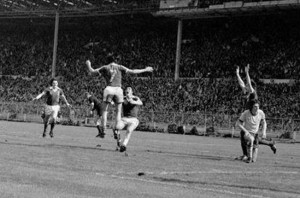
Osborne clears the ball from speedy Brady. However, Ipswich was on the defensive, as the picture may suggest. Same Osborne excelled in attacking too:

Osborne shoots and David O’Leary can’t do anything about it.

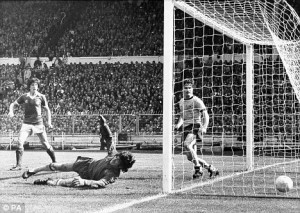
Pat Jennings can’t reach the ball either and it ends in the net.

Triumphal players in blue jerseys: Ipswich -1; Arsenal – 0. No other goal was scored and Arsenal finished on their knees.

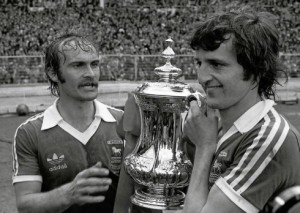
Mick Mills and Roger Osborne enjoy the Cup. Osborne has all the rights of smiling – he was not a big scorer, but this time he scored – perhaps the most important and memorable goal in his career. He did not finish the match – Robson substituted him in the 78th minute – but he was the great hero of the day nevertheless.

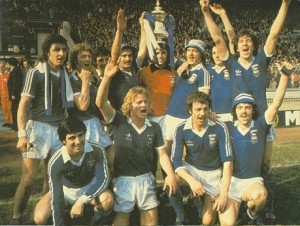
Ipswich won the Cup, completing the extraordinary year with another new name: new champion, new League Cup winner, new FA Cup winner. Ipswich never won the trophy before. They were quite similar to Nottingham – so far, they had a single trophy: the championship title won in 1961-62. First cup and second ever trophy! And what a strange season on top of it – their worst and their best at the same time. Barely escaping relegation, but winning the Cup. Amazing. They saved the season and their victory was well deserved. And to complete the confusion, they left a picture remarkable for its wrongness:

Here are the heroes displaying the Cup. The photo appeared in many publications and somebody made a mistake, which is often repeated to this very day:

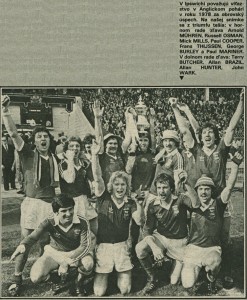
Same team, photographed a moment later. This picture was published in Czecholsovakian sports magazine – either Stadion or Start – with the names of players. When exactly was published cannot be established now, but must be shortly after victory. The names are entirely wrong – Osman, Brazil, Butcher, Muhren, and Thijssen did not play at the final. The Dutch imports – Arnold Muhren and Frans Thijssen – were not in the team yet, but still played in Holland. This is actually a squad of the future… circa 1980. Certainly not Cup winners. May be it was the team of another victory? There is no other victory – the only FA Cup Ipswich ever won was in 1978. If the photo was published shortly after the final, the big mystery is where the names of the Dutch came from? There was no indication yet they will play in England, for no foreigners played in England for many years and actually many people still think England had a ban on imports, lifted in the summer of 1978. Not true, but even if it was, it would be still unknown in May-June. The Dutch were not the only ones prematurely included, but are most representable of the fake which still circulates as truth. A novelty, worth mentioning, but not all that important.

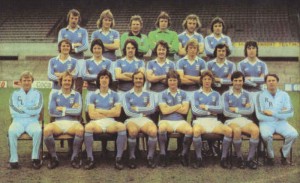
Here is the actual squad for the 1977-78 – no Dutch players, of course, and no Terry Butcher and Alan Brazil either. Happy cup winners, happy to escape relegation and add a trophy to their still very modest collection. To a point, unlikely winners. To a point, the careful team-building of Bobby Robson finally brought fruit. And complete rounding of one of the most unusual English season – all winners were new, all unexpected, all hardly had a history of success.