Spain III Division


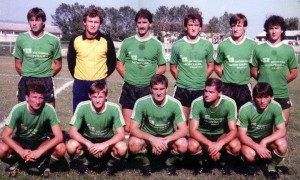
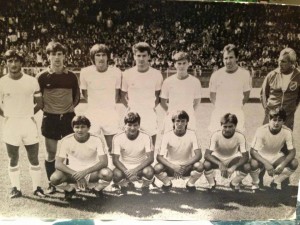
Spain. Looked like the third level was going to be reorganized – the number of relegated clubs at the of the season was enormous: 13 of 20 teams playing in each group of the league were going down. Mostly likely money was the issue: one club dissolved – Palencia, 7th in Group A – and another was relegated because of financial problems – Alaves, 5th in Group A. Perhaps the season was more important in terms of survival than anything else, but really promotion up was the real aim – or should have been, for there was no big battle for the first place in any group.

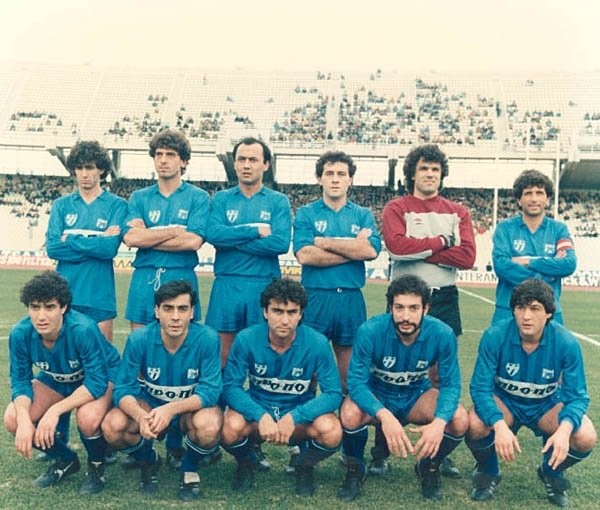
Group A. At a glance, well known Salamanca and Real Burgos should have been the leaders – and they were in a way.
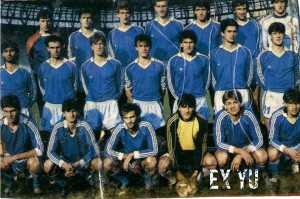
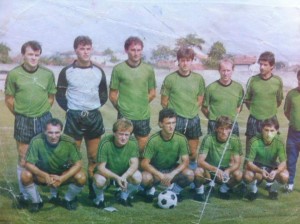
Salamanca finished 3rd and

Real Burgos ended 2nd. Both teams were with 48 points and head-to-head results decided final standings, but these teams did not really challenged the group winner at all.

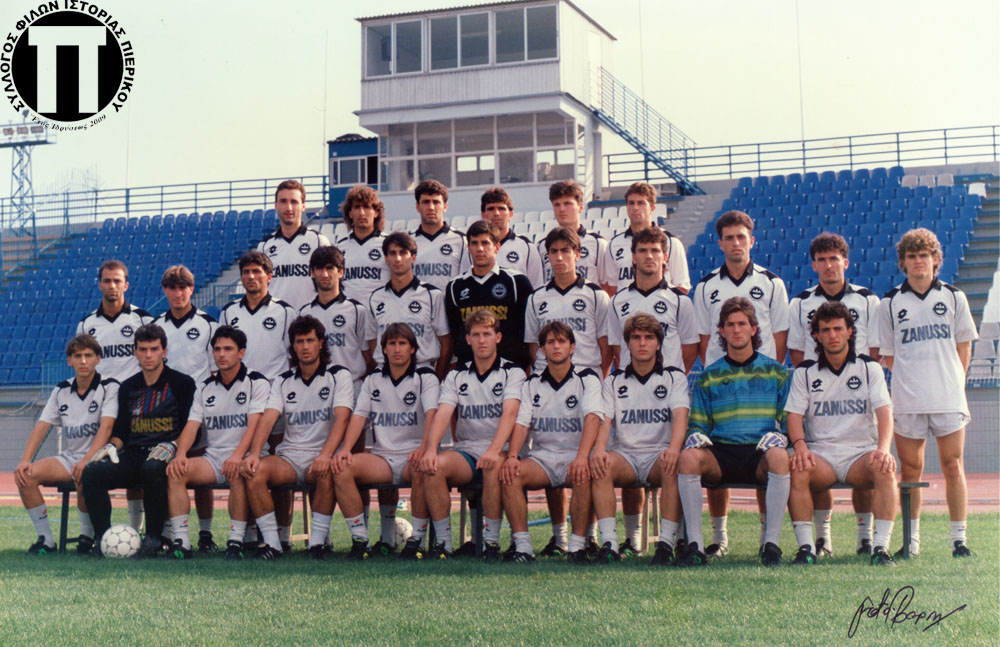
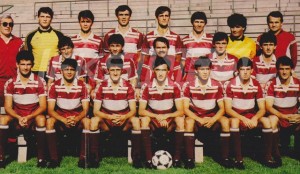
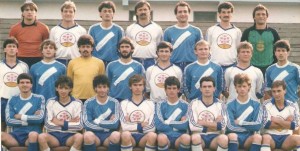
Figueres, hardly heard of club, won the championship with 55 points. Third division, true, but still Figueres had remarkable season: they won 22 games and scored 71 goals – the best in the whole Segunda Division B! Well deserved promotion and one may only hope they were not one-time wonder, but made it in the Second Division next year.

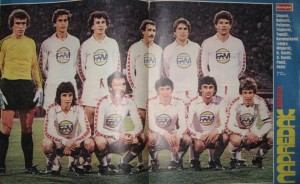
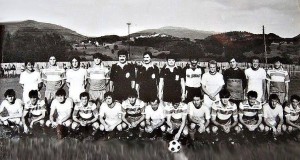
Group B. Like in Group A, former top league members were seemingly the leaders – Xerez and Cordoba. They stayed at the top of the table, but did not appear to be particularly strong, challenged by Linense, Ceuta, and Alcoyano.

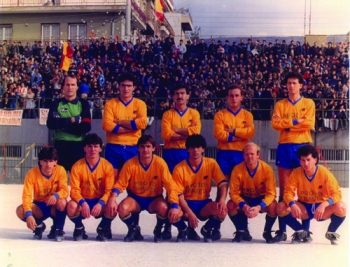
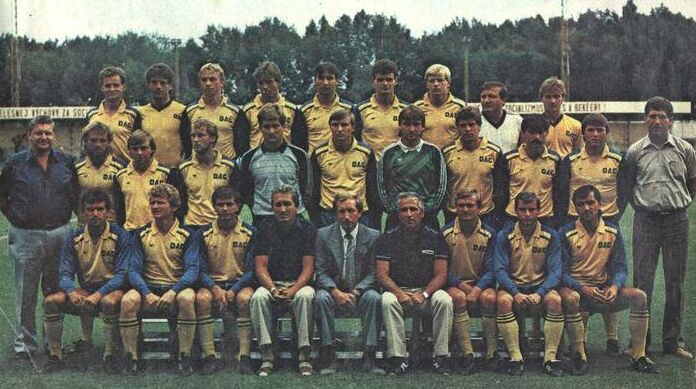
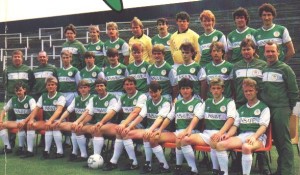
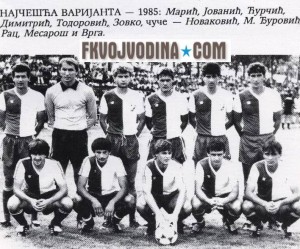
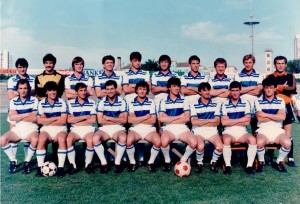
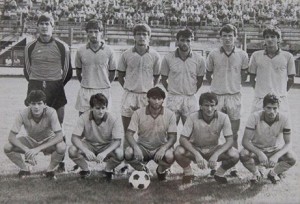
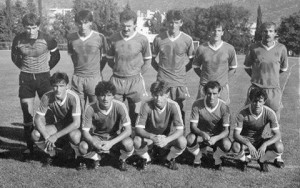
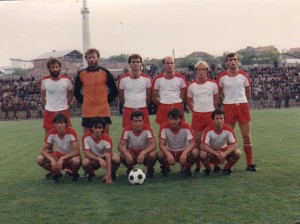
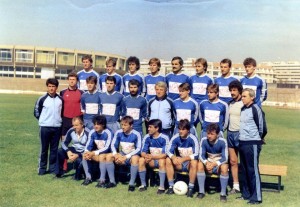
At the end, Alcoyano (pictured here) was 5th with 42 points. Ceuta – 4th with 43 points, Cordoba – 3rd also with 43 points, and Linense – having won most games and ending with best goal-difference in the group – was unfortunate 2nd with 46 points.

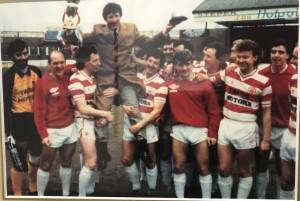
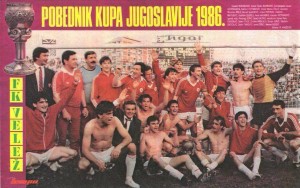
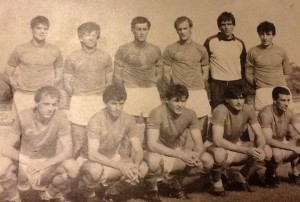
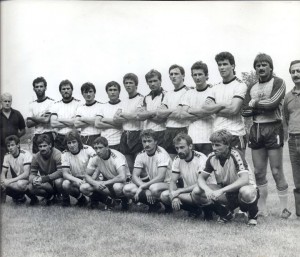
Xerez clinched the first place with 47 points and was promoted – the aim of returning to second level was achieved, but it was not convincing victory. Third division teams hardly have players worth mentioning, yet there is a famous person in the picture – the most famous fan in the world at the time: Manolo with his drum. His support worked so far. As for the future… good luck to both Xerez in the Second Division next season.

Italy the Cup


The Italian Cup final opposed Roma to Sampdoria. Sampdoria won the first leg at home 2-1. Roma prevailed in the second 2-0 and won the trophy.

So close, but no luck. Sampdoria was not ready yet for serious success – a good team, but underachievers… so far.

Roma was running strong – 2nd in the championship and winning the Cup. This is not the cup-winning squad, but close enough. Standing from left: Boniek, Pruzzo, Graziani, Righetti, Ancelotti, Tancredi. Front row: Oddi, Nela, Gerolim, Di Carlo, Desideri.

Roma won its 6th Cup and it was not going to be their last, but the sense of great period coming to end was there – the key players were dangerously aging. From that perspective, it was great they won.

Italy IV Division

Forth Division – Serie C/2. The usual 4 groups of 18 teams each, the top 2 teams of every group promoted to the corresponding Serie C/1 group. The last 3 – relegated to 5th level. A brief look at 4th level:

Girone A.

Derthona – 13th with 31 points.

Torres – 9th with 35 points.

Entella Bacezza – 5th with 40 points.

Alessandria – 4th with 41 points.

Pistoiese – 3rd with 41 points.

Spezia – 2nd with 43 points and promoted to Girone A, Serie C/1.

Lucchese – group champions with 46 points and promoted to Girone A, Serie C/1.

Girone B.

Leffe – 17th with 24 points and relegated to 5th level.

Fanfulla 1874 – 16th with 29 points and relegated to 5th level.

Treviso – 10th with 33 points.

Novara – 7th with 35 points.

Ospitaletto – 3rd with 41 points. Missed promotion on worse goal-difference.

Mantova – 2nd with 41 points, above Ospitaletto on better goal-difference and thus promoted to Girone A, Serie C/1.

Centese – group champions with 42 points and promoted to Girone A, Serie C/1.

Girone C.

Foligno – 16th with 30 points and relegated to 5th level.

Fidelis Andria – 15th with 31 points.

Francavilla – 7th with 34 points.

Matera – 5th with 35 points.

Martina Franca – 2nd with 45 points and promoted to Girone B, Serie C/1.

Teramo – group champions with 46 points and promoted to Girone B, Serie C/1.

Girone D.

Trapani – 12th with 32 points.

Ercolanese – 10th with 33 points.

Siracusa – 9th with 33 points.

Reggina – 2nd with 45 points and promoted to Girone B, Serie C/1.

Nocerina – group champions with 47 points and promoted to Girone B, Serie C/1.

Well, good luck to the promoted teams in the next year.

Italy III Division Group B

Girone B.

Ternana – last with 27 points and out.

Benevento – 17th with 27 points and relegated. Well, relegated at first and then, strangely, reinstated – that because Pescara was not relegated from Serie B. Why Benevento benefited and not the team which finished above them?

Casarano – 16th with 30 points. Relegated for having worse head-to-head record against Livorno.

Livorno barely survived – 15th with 30 points, but the place itself did not mean survival this year. However, a much higher-placed team went down after the end of the season and Livorno was good for another year.

Monopoli – 14th with 31 points.

Cosenza – 13th with 31 points.

Licata – 12th with 31 points.

Brindisi – 11th with 32 points.

Campania – 10th with 32 points.

Sorrento – 9th with 32 points.

Foggia – 8th with 34 points.

Salernitana – 7th with 35 points.

Casertana – 6th with 36 points.

Cavese – 5th with 36 points and… relegated. For some reason they were ranked last by C.A.F., thus, relegated to Serie C/2. The team with best defensive record this season went down – they allowed only 19 goals in 34 games.

Siena – 4th with 38 points.

Barletta – 3rd with 41 points.

Taranto – 2nd with 44 points and promoted to Serie B.

Messina – winners of Girone B with 45 points. Promoted, of course and happy with their 3rd Division title. Apart from that, they outscored everybody in their league by far: Messina scored 53 goals – Licata was second-best with 40.

Italy III Division Group A

Third Division – Serie C/1. Two groups of 18 teams, the top 2 teams in each group – promoted; the last 3 – relegated. Eventually, relegation became more complicated because of various events.

Girone A.

Sanremese – last with 17 points and relegated.

Varese – 17th with 26 points and relegated.

Pavia – 16th with 27 points and relegated.

Rimini – 15th with 30 points, but because of worse head-to-head results against Fano. Relegated originally, but because Perugia was directly relegated from 2nd to 4th Division, Rimini was reinstated. Lucky survival.

Fano – 14th with 30 points, thanks to better head-to-head results against Rimini.

Carrarese – 13th with 31 points.

R. M. Firenze – 12th with 31 points.

Legnano – 11th with 31 points.

Trento – 10th with 31 points.

Prato – 9th with 33 points.

Ancona – 8th with 33 points.

Padova – 7th with 36 points.

SPAL – 6th with 38 points.

Virescit – 5th with 39 points.

Reggiana – 4th with 40 points.

Piacenza – 3rd with 45 points.

Modena – 2nd with 47 points and promoted to Serie B.

Parma – champions of Serie C/1 Girone A with 47 points. Goal-difference placed them above Modena and they won the championship, but it was of little import at that time. Yet, this was the beginning of the climb of Parma to eventual world fame. Hard to imagine at the real time.

Italy II Division

Second Division. Here the aftermath of the match-fixing affair was still felt. Lazio was the prime sufferer, for they went into really dark times, but also L.R. Vicenza – they were denied promotion this year. Meantime Trieastina had 1 point deducted and Empoli benefited from all that. There was some bigger irregularity at the bottom of the table and Perugia was relegated not to Third Division, but to the 4th Division as a result. Well, it was not easy to clean Italian football.

Monza – last with 26 points and relegated.

Catanzaro – 19th with 30 points and relegated.

Perugia – 18th with 32 points. Whatever they did to elevate themselves from the the relegation zone did not work – only instead of going to 3rd Division, they were punished with relegation to 4th Division.

Pescara – 17th with 33 points and relegated.

Palermo survived – barely, but survived. 16th with 34 points. 20 of them came from ties – nobody tied more games in the division: 20 out of 38 total!

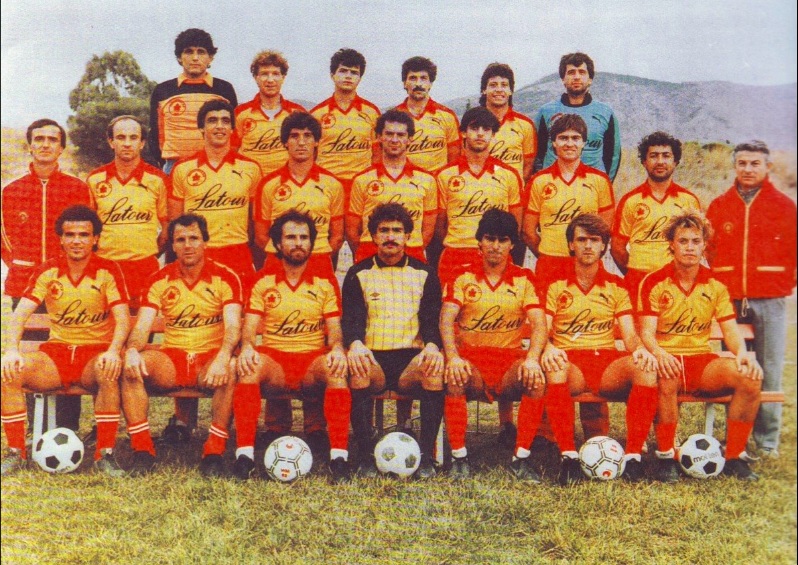
Cagliari – apart from their intriguing kit, nothing to be proud of: 15th with 35 points. This club was Italian champion full of exciting stars once – and now barely escaping relegation from Second Division.

Sambenedettese – 14th with 35 points. Good for another season in the second level – pretty much all they dreamed of.

Catania – 13th with 36 points.

Lazio – 12th with 36 points. Bad times, troubled times.

Arezzo – 11th with 36 points.

Campobasso – 10th with 37 points. Not bad, considering the names bellow them.

Cremonese – 9th with 37 points,

Cesena – 8th with 39 points.

Genoa – 7th with 40. Perhaps around that time they lost their original position as the leading club of the city.

Bologna – another team down on its luck and not doing well at all. 6th with 41 points.

Triestina – 5th with 44 points. Lost promotion because of deducted point – without that point, they dropped from 4th to 5th place.

Empoli – really lucky guys. They were 5th with their 45 points, just behind Triestina on worse goal-difference. Then L.R. Vicenza was not admitted to the top league, Triestina was punished and suddenly Empoli was 4th and promoted instead of Vicenza. Lucky, indeed.

L. R. Vicenza was trying hard to recover its position – the glorious days of the late 1970s were still fresh in memory. But also fresh was their participation in the match-fixing affair. They finished 3rd with 46 points and clinched promotional spot, but they were not permitted to join First Division, still penalized.

Brescia – 2nd with 47 points. Going up again for another try among the best. It was never ending struggle… up and down, up and down, now it was going up, so it was fine.

Ascoli had wonderful season, winning Serie B with 50 points. 17 wins, 16 ties, 5 losses, 56-33 goal-difference. They were the only team not losing home match in the league. Scored most goals by far. A somewhat lesser version of Brescia – a team meandering between first and second division – so, winning Serie B was great success.

Italy I Division

Italy. No miracles this season – Juventus was dominant, as it should have been. At the bottom – pretty much the expected. Verona dropped too low for reigning champion.

Lecce – pretty much the outsider. Last with 16 points and out.

Bari – 15th and out with 22 points. They scored the least goals in the championship – just 18.

Pisa – the third relegated team. 14th with 23 points.

Udinese – lucky 13th with 25 points.

Avellino – 12th with 27 points.

Sampdoria – 11th with 27 points. More was expected from this team, but… that was it.

Verona, as it was commonly known back than – Hellas Verona, actually. 10th with 28 points. Unfortunately, they were not able to build upon their success – the predicament of small clubs in any country. Losing players rather than gaining more talent.

Como – 9th with 29 points. Not bad – for them.

Atalanta – 8th with 29 points.

Milan – 7th with 31 points. Rather painfully coming back, but on the road to recovery.

Inter – 6th with 32 points. Something not quite right with this team. Most likely the age of Rummenigge and Brady.

Torino – 5th with 33 points. One of the three teams not winning away, even once.

Fiorentina – 4th with 33 points. Underachievers, in a way – this squad should have been a title contender.

Napoli – 3rd with 39 points. Slowly building strength. One expect a team with Maradona to be formidable champion, but Napoli really came out of nowhere and Maradona was pretty much alone. But slowly a strong team was gathering around him – all for the future.

Roma – the closest team to the champions, but not a real threat. Second with 41 points. More or less, running on the inertia from their earlier years. Still very strong, but somewhat they missed the moment to transform themselves into truly great team and now inevitably getting older.

Juventus – simply the best. 18 wins, 9 ties, only 3 lost games, 43-17 goal-difference – best defensive record, second-best strikers, 45 points and one more title. Consistency was the key – no matter what, Juventus had strong squads for very long time and there was no stopping to that. Starting with their coach – Trapattoni – they were the best squad in Italy and practically had no real challenger. It was coming to the point of considering occasional second place a huge failure…

UEFA Cup

The UEFA Cup. Say whatever you like, but this was Spanish year – finalists in every European tournament. Winning was another matter…Barcelona failed, Atletico failed… but Real Madrid did not fail. The road to the final was not easy – at least compared to their opponents. Real faced Borussia Moenchengladbach, tough at the moment Xamax Neuchatel, and Inter Milano at the semi-final. 1. FC Koln was luckier – they met Sporting Gijon in the first round, tough, but beatable, and then the next stronger opponent was in the ¼ finals – Sporting Lisbon, a team like Gijon – tough, but beatable. Then in the semi-finals it was one thing to meet Inter and quite another to face KSW Waregem from Belgium. 1. FC Koln was perhaps a bit lucky, but the West German club football was in its twilight years – not superior at all. Werder and Hamburger SV were eliminated in the first round and by insignificant opponents at that (Chernomoretz Odessa and Sparta Rotterdam). Borussia was no longer the great team of the 1970s – true, they managed fantastic home win against Real Madrid – 5-1 – but only to lose 0-4 in Madrid. The Germans were at least shaky, so Real was seemingly the favourite at the final. They had the stronger squad too – 1.FC Koln in its current version was seemingly weaker squad than the one they had 5-6 years ago. Schumacher, Allofs, and Littbarski was all they had… Bein was still in the early years of his career, not yet a star. Against them perhaps only Real’s goalkeeper Agustin was ordinary player. The rest, if not great stars, were at least national team material, but the attack was on another level: Butragueno, Sanchez, and Valdano with Santillana ready to step in as substitute. Frankly, Koln was clearly going to depend on German character against a team without a weak line, outclassing Koln by far. Then again… the Germans never give up and could roll over anybody and Spaniards were too easily given to brutality, destroying their football. That was traditional wisdom. Which seemingly was right until the 30th minute in the opening leg in Madrid – Allofs scored and Koln was leading. Soon everything changed and in the 89th minute Santillana scored his goal to make it 5-1 Real. The final was practically over before the second leg.


Final 1st Leg, Santiago Bernabéu, Madrid, 30 Apr 1986, att 85000


Real Madrid (2) 5 1.FC Köln (1) 1

29′ 0-1 K: Allofs

38′ 1-1 RM: Sánchez

42′ 2-1 RM: Gordillo

51′ 3-1 RM: Valdano

84′ 4-1 RM: Valdano

89′ 5-1 RM: Santillana


Real Madrid: Agustín; Salguero, Solana, Camacho; Martín Vázquez (Santillana 81), Míchel, Juanito, Gordillo; Butragueño, Sánchez, Valdano

1.FC Köln: Schumacher; Geils, Gielchen, Steiner, Prestin; Geilenkirchen, Hönerbach; Bein (Hässler 70), Janssen; Littbarski (Dickel 83), Allofs

Referee: Courtney (England)

For some reason the second leg was played not in Koln, but in (West) Berlin, but the low attendance was guaranteed no matter the venue after the terrible loss in Madrid – 1. FC Koln was written off. Down, but never out… may be Real was not fully motivated by now, but 1. FC Koln went to play. And they won 2-0. They did whatever then could, may be even more than that, for frankly… it seemed impossible Gielchen, Geilenkirchen, Pisanti to overcome Camacho, Michel, Butragueno. Koln had something like 5-6 strong players when Real had no enough spots in the team for all the talent at their hands and great names had to sit at bench. That was the reality and only miracle could give Koln the cup.
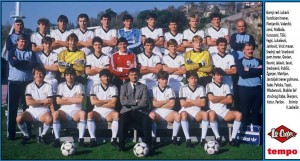
Final 2nd Leg, Olympiastadion, Berlin, 6 May 1986, att 15000


1.FC Köln (1) 2 Real Madrid (0) 0

22′ 1-0 K: Bein

72′ 2-0 K: Geilenkirchen

Real won 5-3 on aggregate


1.FC Köln: Schumacher; Prestin, Gielchen, Geils (Schmitz 83); Geilenkirchen, Steiner, Bein, Hönerbach, Bein; Janssen (Pisanti 58), Littbarski, Allofs

Real Madrid: Agustín; Chendo, Maceda, Solana, Camacho; Míchel, Gallego, Valdano, Gordillo; Butragueño (Juanito 88), Sánchez (Santillana 20)

Referee: Valentine (Scotland)

Good campaign for 1. FC Koln, but they destroyed in the first leg of the final and the brave second leg was not enough. Thus. 1. FC Koln was unable to put its name along the great West German clubs and probably rightly so – as sturdy and determined the team was, it was not a great one. There were very few outstanding players – may be against another opponent the Germans could have extracted victory, but Real Madrid was too mighty at the moment.

The winners. Standing, left to right: San Jose, Agustrin, Gordillo, Camacho, Maceda, Salguero, Gallego, Valdano, Chendo. Crouching: Butragueno, Martin Vazquez, Michel, Hugo Sanchez, Solana, Luis Molovny – coach.

It was not an easy campaign, especially after Borussia Moenchengladbach won 5-1 in the first leg of the 1/8 finals, but Real came back with vengeance on every occasion, at the end eliminating every opponent on the road. This season the ‘Vulture Squadron’ – ‘La Quinta del Buitre’ -was born and even with some strained personal relations, it was formidable team with so much talent, some had to stay on the bench. Real won a second UEFA Cup in 2 years and was it another club, this team would have been instant legend – but it Real and the UEFA Cup was hardly considered great success: the measure was the European Champions Cup – not winning it meant failure… However, it was still very positive sign, for the club was winning in Europe after a very long dry years and not by accident either. It was Real Madrid, though… UEFA Cup was not enough and Molovny was replaced with Leo Beenhakker right after winning the cup. The victory was perhaps most important to aging Camacho and Santillana, whose whole careers were frustrated by lack of international success – at last they won on European stage and twice in a row, a confirmation of quality and also a justice to both great players, even if coming late.

Cup Winners Cup

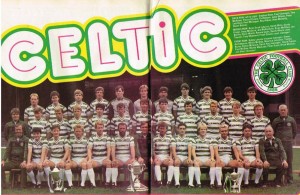
Cup Winners Cup. Apart from Celtic, the draw was nice to all stronger teams from start to finish. Well, there were few of them… fewer every year. Up to the ¼ finals, the only really tough draw was in the first round: Atletico Madrid vs Celtic. Those reaching the quarter-finals were the better teams only in terms of this year tournament – in general, not exactly leading European teams at the moment. And the results were quite predictable, no surprises: Rapid Vienna lost to Dinamo Kiev, Dynamo Dresden lost to Bayer Leverkusen, Crvena zvezda Belgrade – to Atletico Madrid. Dukla Prague eliminated Benfica Lisbon thanks to away goal, but this was battle between equals. In the semi-final stage Dinamo Kiev was a bit lucky, drawing the weakest, Dukla Prague – and beating it accordingly. Meantime Atletico Madrid extracted 2 small victories from Bayer Leverkusen – both times by a goal difference. Thus, Atletico Madrid and Dinamo Kiev reached the final. No question about ambition – both teams craved success. Both were in good shape at this time. Was there a favourite? Dinamo was in excellent form and had at last wonderful squad. Atletico Madrid was no joke either and may be even more ambitious than Dinamo, because they had no real European success so far. As for the squad… it was already weakened a bit by the transfer of Hugo Sanchez to Real, but it was old news by now. The 1978 World champion Ubaldo Fillol replaced Sanchez – well, it is not even remotely similar to exchange a great striker for goalkeeper, but nevertheless Fillol was important acquisition, a great star on his own right. Dinamo had the best of the Soviet football, of course.
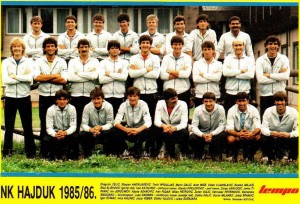
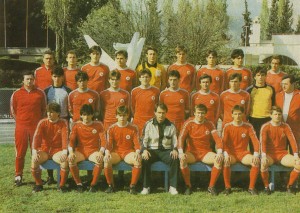
The final proved to be surprisingly entertaining and quickly Dinamo got the upper hand, scoring in the 5th minute.

Zavarov scored the opening goal, but it was the flying winger Belanov, who captured all attention. Atletico never gave up and tried to play attacking football as well, but was outplayed most of the time.

Naturally, Blokhin got most attention, for he was famous, but it was more than that – now a veteran, he played still wonderful football, perhaps even better than 10 years ago, when he was rather simple left—winger. Now he was taking more playmaking functions and operated on wider zone. Near the end of the match he scored his customary goal and a bit later the substitute Yevtushenko completed the destruction of Atletico Madrid. Atletico played well and the result does not give them justice, but Dinamo was not only excellent, but also scored – and Atletico did not. To a point, the final repeated the one for the European Champions Cup: the winners played against hostile crowd of enemy’s supporters, having practically none of their own.

Final, Stade de Gerland, Lyon, 2 May 1986, att 39000

Dinamo Kiev (1) 3 Atlético Madrid (0) 0

5′ 1-0 DK: Zavarov

85′ 2-0 DK: Blokhin

88′ 3-0 DK: Yevtushenko

Dinamo Kiev: Chanov; Baltacha (Bal 38), Bessonov, Kuznetsov, Demianenko; Rats, Yakovenko, Yaremchuk, Zavarov (Yevtushenko 70); Belanov, Blokhin

Atlético Madrid: Fillol; Tomás, Arteche, Ruiz, Clemente; Prieto, E.Quique, Marina, Landáburu (Setién 61); Cabrera, Da Silva Referee: Wöhrer (Austria)

Captain Anatoly Demyanenko received the Cup Winners Cup.

Dinamo Kiev won the trophy for second time, but perhaps Oleg Blokhin was the happiest of all – the only survivor of the first victory, more than 10 years ago, the only Kiev player to win the Cup Winners Cup twice.

Dinamo Kiev made so dazzling performance, it is easy to dismiss Atletico – but they played well really. Unfortunately, they were not at the same level with Dinamo. Yes, this was strong period for the club, but they were still unable to succeed in Europe. Perhaps the making of the team had something to do with it – only the Argentine Ubaldo Fillol was true world star and he was getting old by now and did not play long in Madrid. Against them played a whole national team (including the substitutes) on the rise. A matter of class and Atletico was outclassed. Too bad.

Dinamo Kiev was unquestionable winner and their second victory was more convincing than the first one – 10 years ago they played against weak and somewhat transitional squad of Ferencvaros Budapest. Now they met opponent in top condition. Naturally, both winning squads were compared and it was tough call: at both occasions the whole Dinamo side were national team regulars. And there were national team players among the reserves as well. But this squad was deemed stronger – it was younger team with great talent, not even fully flourishing in the cases of some players. Back then most players, including Blokhin, were already known – no new discoveries. This time was different: the world discovered the great talent of Belanov, Yaremchuk, Yakovenko. And the noticed promising talent of Zavarov was confirmed. Blokhin was formidable – even better than before, a great case of longevity at top form. Was this vintage better than the old one? Unanswerable question, but one thing was sure – Dinamo played fantastic football and many of the team had long lasting impact, for they – unlike the first winners – eventually went to play professionally in Western Europe. Dinamo had its second great team at last – Lobanovsky did it again. As for Blokhin – may be he really convinced everybody that he was a true world-class player: Lobanovksy was merciless coach, never given to any sentimentality – aging Blokhin was not discarded as some of his former teammates, but remained and continued to be the key player. And Lobanovsky was also vindicated – often under criticism for his methods and failures, he proved his worth by making a second great team and winning again at the European stage.

European Champions Cup

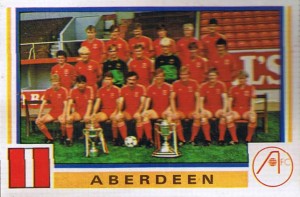
The European Champions Cup. Sensational or unusual 1985-86 season for all European club tournaments. Favorites were eliminated early, that was it at a glance and it is risky to say why – looks like many clubs were out of shape, having transitional teams, getting old or too young yet. One of the most unpredictable European seasons, which at the end made it more exciting – for some. In the Champions Cup French Bordeuax was the first casualty, losing at home to Turkish Fenerbahce 2-3 and then unable to recover in Istanbul. Out in the opening round. The other surprise in the same round was the elimination of the Yugoslav champion FK Sarajevo by FC Kuusysi (Lahti), the champion of Finland. The Fins won both legs 2-1. In the second round FC Kuusysi made another surprise – they eliminated the champion of USSR Zenith (Leningrad). And they were close to make a third surprise in the ¼ finals – they managed 0-0 in Bucharest against Steaua, but lost the home leg 0-1. It was hardly a home leg… Kuusysi played it in Helsinki, most likely because their own stadium was too small. Almost made it to the semi-finals, though. Here Bayern’s run ended as well – they were eliminated by Anderlecht. Aberdeen had no luck either – IFK Goteborg eliminated them thanks to away goals (2-2 and 0-0). The draw was merciless to some strong teams from the beginning and here paired Barcelona with Juventus. Minimal home win was enough for Barcelona to win – 1-0 and 1-1. And then the drama of the semi-finals: Steaua lost the first leg in Brussels 0-1, but was perfect at home, beating Anderlecht 3-0. Meantime IFK Goteborg won their home leg 3-0, but lost in Barcelona with the same result and Barca prevailed in the penalty shoot-out 5-4.

Ups and downs all the way, but the final looked clear – Barcelona had big advantage. Not only the Romanians were almost unknown, but the final was played in Seville, practically at home for the Spanish champions – familiar venue, easy access for their own supporters, some local support as well. Steaua appeared to be an outsider in every way – including the fact that they had much easier opponents on the road to the final than Barcelona. It was practically sure think Barca will win the European Champions Cup at last. To be sure of winning often guarantees losing…

Steaua started with slow tempo and lured Barcelona in the trap. Although more active and looking more dangerous, Barcelona also slowed down, the match became messy and tempers boiled quickly.

Frustration took place – Spanish attacks were inefficient, often blocked by absolutely unknown Romanian goalkeeper.

It became routine and rather hopeless – Spanish crosses taken confidently by Ducadam.

Steaua tried its own attacks, which on occasion were more dangerous than Barcelona’s, but Urruti – or Urruticoechea – was also solid. However, there was less football than battle – both teams played ugly from start, the brutality only escalated with time and reached the point near the end of the first half when the referee called both captains to warn them to cool down their teammates, or… or what? The final to be stopped and abandoned? Since such thing never happens, the opponents continued to kick each other. Five yellow cards were shown and it was too little, frankly. Unlike yellow cards, there no goals.

No goals in the extra time either, so for the second time in the history of the tournament it came to penalty shoot-out. The real fun was there, as it happened – both goalkeepers excelled, but the Romanian unknown became the great hero of the final. True, Urruti took the laurels at first, blocking 2 penatlies in a row. Alesanko missed the net at first and then Ducadam saved the second penalty. Then Lacatus scored and Ducadam saved Pichi Alonso’s kick. Balint scored the next for Steaua and Ducadam saved Marcos’s penalty. It was over – Barcelona did not score a single penalty, Steaua was leading 2-0 and the fifth penalty was meaningless. The sure winners lost – practically to Ducadam.

Final, Sánchez Pizjuán, Sevilla, 7 May 1986, att 70000

Steaua Bucuresti (0) 0 FC Barcelona (0) 0 aet Steaua won 2-0 on penalties

Steaua Bucuresti (trainer Jenei) Ducadam; Iovan, Belodedici, Bumbescu, Barbulescu; Balint, Balan, (Iordanescu 72), Bölöni, Majaru; Lacatus, Piturca (Radu 111)

FC Barcelona (trainer Venables) Urruti; Gerardo, Migueli, Alesanco, Julio Alberto; Víctor, Marcos, Schuster (Moratalla 85), Pedraza; Archibald (Pichi Alonso 106), Carrasco

Referee: Vautrot (France)

Penalty shoot-out Steaua: Majaru (held), Bölöni (held), Lacatus, Balint Barcelona: Alesanco (held), Pedraza (held), Pichi Alonso (held), Marcos (held)

Barcelona worried and cold – the end was near.

A new and surprising winners of the European Champions Cup – the captain of Steaua Iovan proudly lifts the Cup.

And then the joyous run of triumph in front of stunned Spaniards at the stadium. Naturally, Ducadam keeps the cup safely in his hand – he practically won it for his club.

Losers… what was wrong? Well, the way they played. Frankly, not a great squad. Schuster and Archibald were not adding class, something did not tic. Venables was probably not the right coach either.

Considered outsiders before the final and reconsidered during the game, Steaua’s players needed quick learning – among the winning squad Ducadam became the most famous instantly. He played a strong final, but it really the penalty shoot-out earned him recognition. He contributed outside the field as well by saying that hew was the best Romanian goalkeeper. Since Romanians were not well known, his boasting only added fuel to discovery: yes, he played wonderfully, this entirely unknown keeper, and if he was truly the best in the country… well, what other secreted jewels were there? Hagi, surely. However, Ducadam disappeared as quickly as he appeared – a few months later Hagi was already on field, but not a trace of Ducadam – Stingaciu, more familiar name from the Romanian national team, was again the regular keeper and another guy was the back-up. Ducadam became an intriguing myth, fueled by rumors and speculations – even his name remains unclear: Ducadam or Duckadam? Meantime his teammates were climbing up – almost the whole team from the final were national team players, some of long standing and some new talent, but already recognized as good material at least in Romania. Hagi only made team greater, Stingaciu played hardly lower level of goalkeeping than Ducadam, recovering his regular place in the team. There was no stopping really – Jenei, also ‘discovered’ as great coach thanks to the final, moved to the helm of the Romanian national team and was replaced by Iordanescu, who played a bit against Barcelona, retired and was appointed the new coach – and the team did not suffer the change a bit. This Steaua vintage, no matter political favours, was truly amazing. The Champions Cup victory just opened the door for talent, which stayed and defined not only Romanian football almost until the end of the 1990s. Not just great players, but also great fighters – Steaua did shy away from ugly tackles and fights, proving mean character so much needed in the 1980s football. They had it all and feared nobody. Although 1986 was their best year in terms of success, they probably played their best football in the next few years. One of the most pleasant discoveries in the 1980s.

One more look at the new European champions with the trophy.

And the full squad of the great 1985-86 season. Note that Iordanescu appear to be assistant-coach here, perhaps playing assistant-coach, and another testimony to the confusion relatively unknown squad makes: both Bumbescu and Piturca are misspelled by the Hungarian magazine. Majearu will remain with uncertain spelling of his name forever, it seems, but the again, such is the case of Cruijff.