Paraguay

Paraguay. Small – as ever – league, so complicated championship going through 4 stages. One relegated, one promoted.
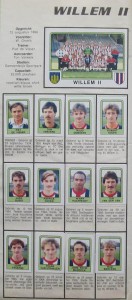


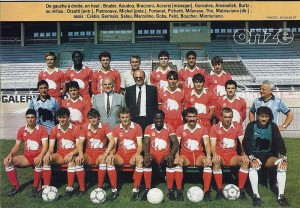
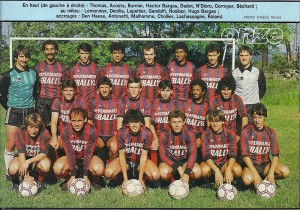
General Caballero (Zeballos Cué)
won Second Division and went up.

The structure of the top league championship was as follows: three similar stages at first – one-leg round-robin tournaments. The top 2 teams at each stage got bonus points to carry over to the final stage. In case two teams finished with equal points, a play-off was played to decide the stage winner. After that an aggregate table was made, combining the records of the initial stages and the top 6 teams in it went to the final stage. As for relegation, it seemed to be some aggregate record of few previous championship, for there was no other visible indication – Sport Colombia (Fernando de la Mora) was relegated, but it was last only in the first stage and 8th in the aggregate table. Down they went, though.

On top, the season progressed this way: Sol de America and Guarani finished with 12 points each in the first stage and Guarani won the play-off on penalty shoot-out.

Libertad won the second stage, followed by Olimpia.

Sol de America won the third stage, followed by Atletico Colegiales.

The top 6 in the aggregate table qualified to the final: Sol de America, Atletico Colegiales, Guarani, Cerro Porteno, Libertad, Olimpia. Last in this table was Sportivo San Lorenzo (San Lorenzo), Nacional (Asuncion) – 9th, Sport Colombia – 8th, and Sportivo Luqueno (Luque) – 7th. The season for those 4 was over.

Bonus points, according to performance in every stage: Sol de America – 3, Guarani and Libertad – 2, Atletico Colegiales and Olimpia -1. Cerro Porteno entered the final tournament without any bomus points and at the end that was the decisive factor. The teams played ones again the rest, as in every previous stage and the final table was the end of the championship. Olimpia and Cerro Porteno were the best at the final, but the strategy did not work…

Atletico Colegiales (4 Mojores) ended last with 4 points (3+1), Guarani (Asuncion) – 5th with 5 (3+2),

Libertad (Asuncion) – 4th with 6 points (4+2)


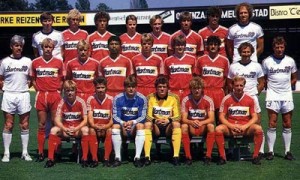
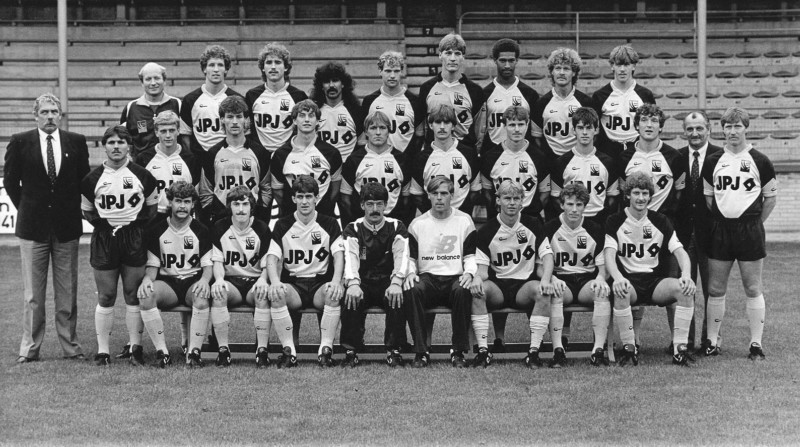
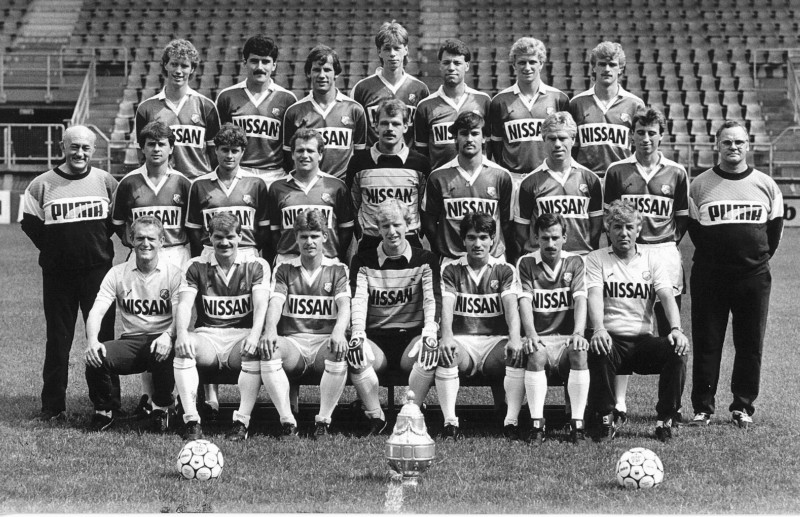
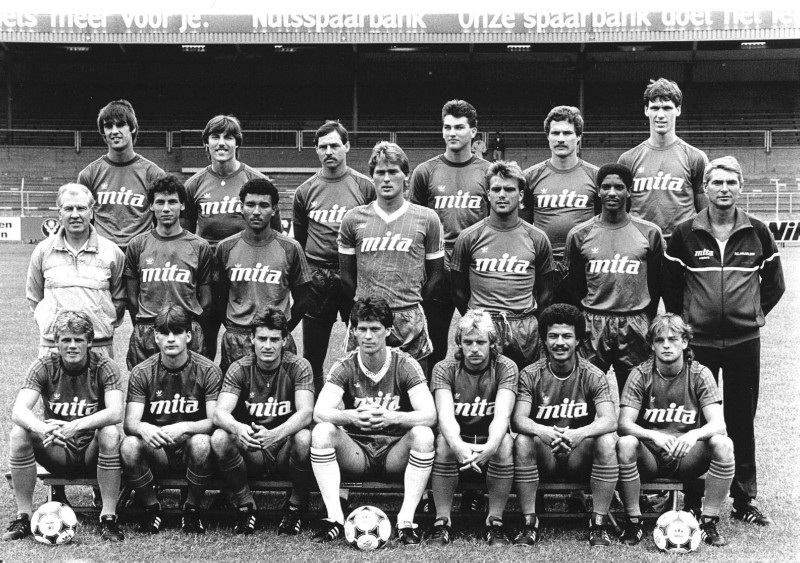
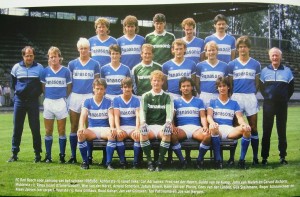
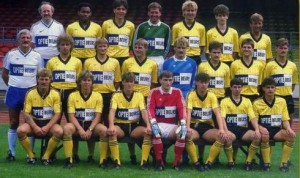
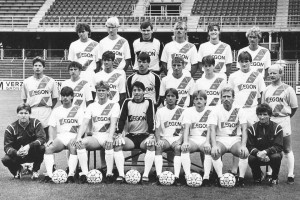
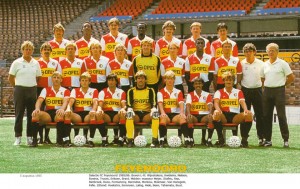
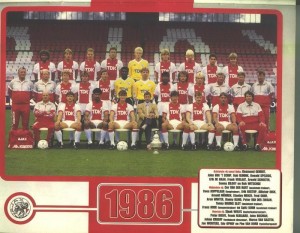
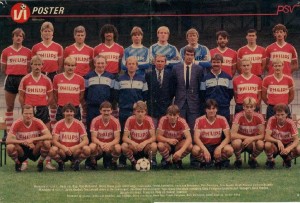
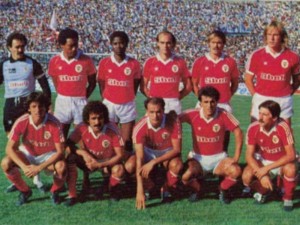
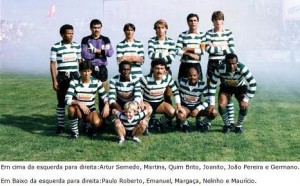
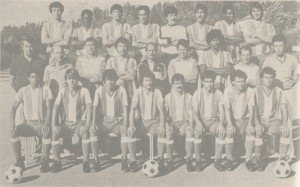
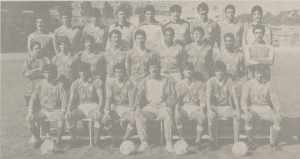
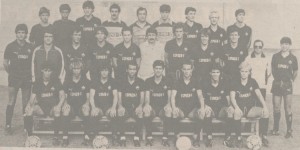
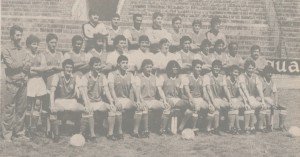
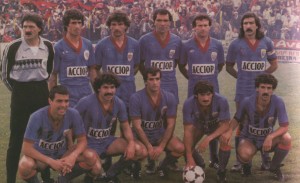
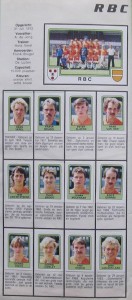
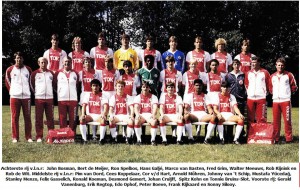
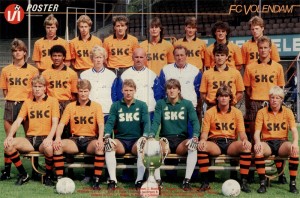
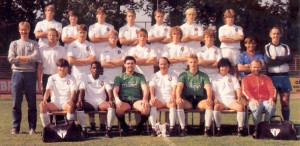
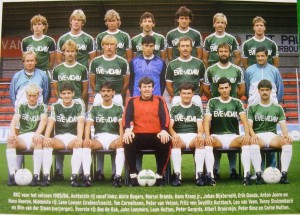
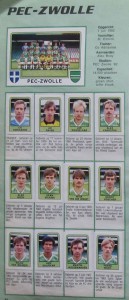
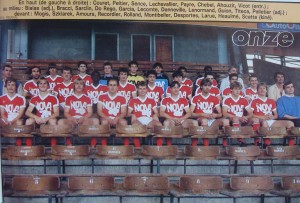
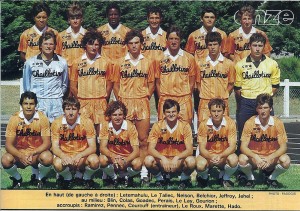
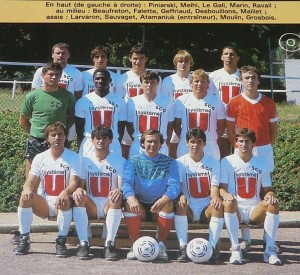
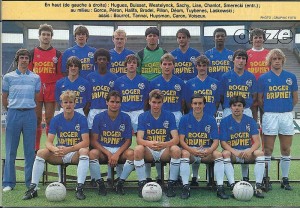
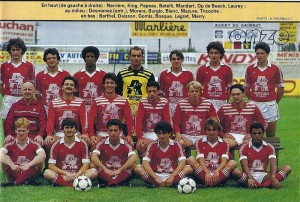
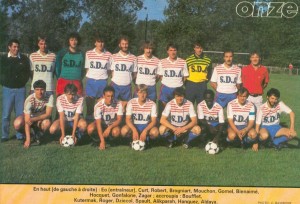
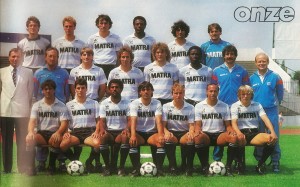
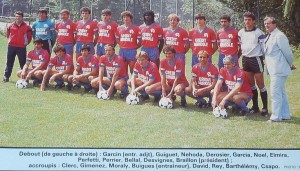
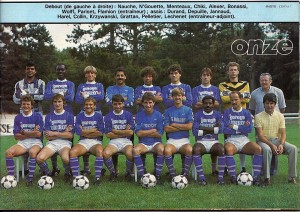
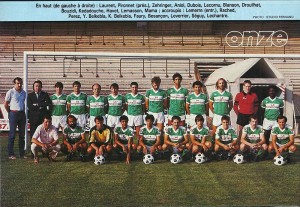
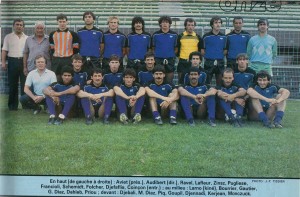
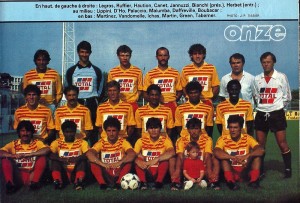
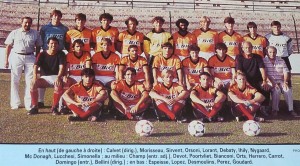
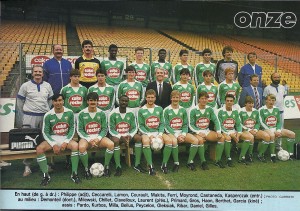
Cerro Porteno (Asuncion) – 3rd with 7 points (7+0). Standing from left: Figueredo, Nunes, Jacquet, Zabala, Zinnavoda, Fernandez. First row: Perez, Mercado, Morel, Olmedo, Gamarra. Olimpia (Asuncion) – 2nd with 8 points (7+1). To the surprise of their foes and to the delight of their supporters, Sol de America finished on top with 9 points. Their final campaign was not all that strong – 2 wins, 2 ties, and 1 loss – but they scored most goals. Of course, the winners benefited from their bonus points – indeed, the bonus points placed them on top of the final table, but it was well deserved, for Sol de America had splendid season – their lowest place in the earlier stages was 7th in the second stage, but they ended 2nd in the first stage and won the third stage. They were 1st in the aggregate table with 13 wins, 8 ties, and 6 losses and no matter what happened at the final stage, the usual leaders – Olimpia and Cerro Porteno – had weak season, coming to life only at the very end: in the aggregate table Cerro Porteno was 4th and Olimpia – 6th. It was wonderful victory of the underdog, of course – Sol de America, founded 1909 in Barrio Obrero, Asuncion, never won anything in its already long history. They had to satisfied with success in other sports, but who would care for that when there was no football triumph. The club was always in the shadow of not only Olimpia and Cerro Porteno, but also Libertad, Guarani, and even Nacional. The win for the first time was just fantastic. Such a victory deserves one more photo of the winning team – no stars here, only striker Faustino Alonso and goalkeeper Jorge Battaglia went to the 1986 World Cup in Mexico and they were not starters in the national team. Perhaps the big clubs used the World Cup as a kind of excuse for their failure, but there was nothing to diminish the success of Sol de America – they had so solid record this season.
Chile I Division

First Division. Three relegated teams this year, but there were 2 obvious outsiders. Still, the battle for survival involved 7 teams. It was dramatic on top as well – two teams raced together to the very end goal-difference decided the winner.

Magallanes – terrible this year: 18th with 18 points.

Audax Italiano, just as bad, ended 17th with 19 points.

The third relegated team lost long lasting battle for survival on worse goal-difference: Union San Felipe took the dreaded 16th place with 29 points.

Rangers survived: 15th with 29 points. Everton was lucky as well – 14th with 29 points.

Union Espanola – 13th with 30 points.

Fernandez Vial – 12th with 30 points.

Deportes Iquique – 11th with 31 points.

San Luis – 10th with 31 points. With them, the group concerned only with avoiding relegation ended.

Deportes Concepcion was 9th, but 35 points – a much stronger team than those behind.

Universidad de Chile – 8th with 35 points. Not very good season, may be better next year.

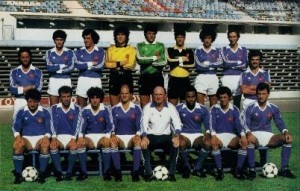
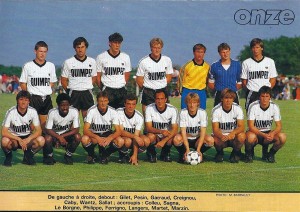
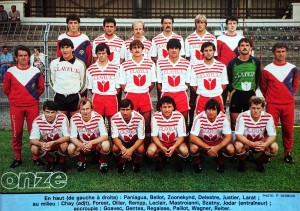
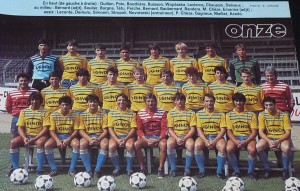
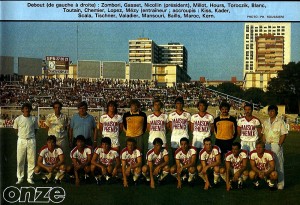
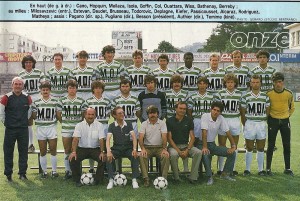
Naval – 7th with 38 points. Standing from left: Jorge Rodríguez, Marcos Pacheco, Luis Valenzuela, Jaime Gaete, Nelson Figueroa, Edógimo Venegas. Crouching: Oscar Herrera, Juan Soto, Rubén Sánchez, Sergio Marchant, Cristian Yagman. Universidad Catolica – 6th with 38 points.

Huachipato – 5th with 40 points.

Cobresal – 4th with 40 points. Rapidly establishing itself among the best.

Cobreloa – 3rd with 44 points.

The battle for the title was decided either on goal-difference or on more wins – either way, Colo-Colo had the edge.

Palestino was strong and ambitious to the end, but lost the championship by a tiny fraction – they finished with 48 points, scored the most goal in the league – 63 – and lost only 4 games. But they won 1 match less than Colo-Colo and had dreadful defense – 42 goals. At the end, that put them second.

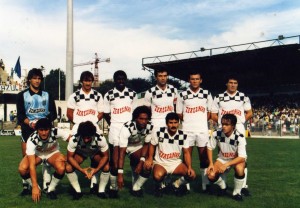
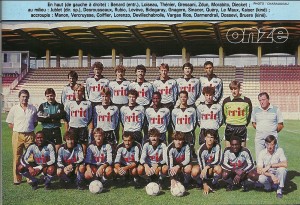
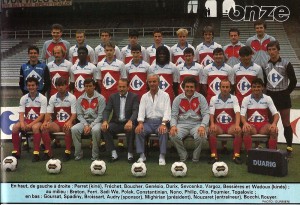
Minimal and lucky victory, but victory – Colo-Colo clinched the title: they had 19 wins and Palestino – 18, their goal-difference was +26 to Palestino’s +21. Barely enough, but enough. Second row from left: Jaime Pizarro, Luis Hormazábal, Emilio Fuentes, Fernando Astengo, Oscar Rojas, Roberto Rojas. Crouching: Hugo Rubio, Juan Gutiérrez, Osvaldo Gómez, Arturo Jáuregui, Raúl Ormeño. May be not the greatest squad the club had, but winners anyway and for Colo-Colo that is enough. If anything, Colo-Colo was very stable – never having longish unsuccessful run, always aiming at the title – and collected one more. Too bad Palestino did not win, but not so for Colo-Colo’s fans.

Chile II Division

Chile. The First Division was going to be reduced to 16 teams and the Second Division enlarged to 28 teams in the next year, so 3 teams were relegated from the top league, none relegated from Second Division and one team promoted from it to the upper level. The championship was divided into two stages – at first Second Division was split into 2 zones – Norte and Sur, 12 teams each. The top 4 from Zona Norte and the top 2 from Zona Sur moved to the final round-robin stage, the winner of which was promoted.

Zona Norte, apparently considered the stronger group.

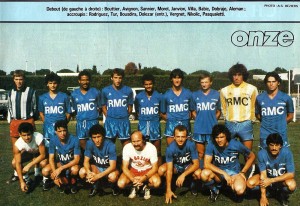
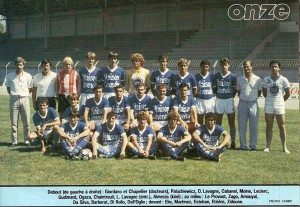
Union La Calera – last with 13 points. Standing from left: Chahuán, Ortega, Irrázaval, Miranda, Fernández,Giadallach. Front: Vásquez, Muñoz, Lasnivat, Leiva,Rojas.

Soinca Bata – 11th with 13 points, Deportes Ovalle – 10th with 15 points, Deportes La Serena – 9th with 16 points, Quintero Unido – 8th with 18 points,

Deportes Antofagasta – 7th with 23 points,

Santiago Wanderers – 6th with 24 points,

Regional Atacama – 5th with 28 points. Unlucky, for they lost a chance to run for promotion on worse goal-difference.

Coquimbo Unido – 4th with 28, Deportes Arica – 3rd with 28, Cobreandino – 2nd with 31 points, and O’Higgins – 1st with 31 points qualified to the final stage.

Zona Sur.

Nublense – last with 16 points, Deportes Puerto Montt – 11th with 17,

Provincial Osorno – 10th with 18 points,

Union Santa Cruz – 9th with 18, Iberia Biobio – 8th with 19, Deportes Linares – 7th with 19,

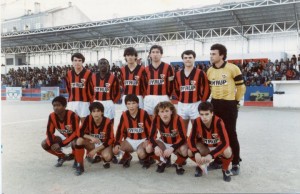
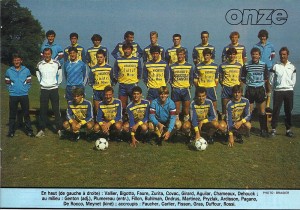
Deportes Laja – 6th with 22 points. Standing from left: Ricardo Zepeda, Miguel Gutiérrez, Oscar Núñez, Iván Peña, Misael Toledo, Miguel Frías. First row: Daniel Paz, Jaime Ramírez, Rubens Nicola, Richard Zambrano, Héctor Pineda.

Deportes Temuco – 5th with 24 points.

Deportes Valdivia – 4th with 24 points. This may be or not a photo from the season.

Curico Unido – 3rd with 27 points,

Malleco Unido – 2nd with 29 points and Lota Schwager – 1st with 32 points.

The final tournament: every team played twice against the rest and after 10 rounds, the final standing was:

Malleco Unido – 6th with 5 points.

Deportes Arica – 5th with 9 points.

Cobreandino – 4th with 10 points,

O’Higgins – 3rd with 11 points,

Coquimbo Unido – 2nd with 11 points, and

Lota Schwager – 1st with 14 points. Really strong at the final stage: 5 wins, 4 ties, only one lost match, 14-11 goal-difference. Not great scorers for sure – Cobreandino scored 24 at this stage – but solid and determined. Rightfully going up.

Colombia

Colombia. The criteria for promotion and relegation – unclear, but one team went down and one team up.

Little known, but old Sporting (Barranquilla) somehow earned promotion for the 1987 season. For some reasons the success does not register today, just as almost anything the club achieved before 1988. Even their foundation is murky: given alternatively 1923 and 1927. Well, they managed promotion and good luck.

Similarly mysterious was the relegation of Independiente (Santa Fe) – their results in 1986 did not suggest anything dangerous: mid-table position in every stage of the championship. Yet, they did not play top league football the next year. So much for ups and downs.

The championship followed its usual formula – Apertura and Clausura, top teams getting bonus points from each stage and the best 8 playing a final tournament to decide the champion. Apart from strange and quite meaningless ‘extra series’, played after the Apertura between 4 teams, nothing complicated. The first stage – Torneo ‘Jose Eduardo Gnecco’, or Apertura – had the 14-team league divided in two groups, where teams played twice against each other. The top 4 teams went to the strange ‘extra series’, but played only 2 games and not at all against all qualified, but twice against the team ending the same position in the opposite group. The so-called final table reflected that as well and still makes no sense, because everybody finished with 2 points and third place was the only team with positive goal-difference. This small tournament seemingly had one importance: distribution of bonus points. May be. Apart from the mysterious ending, DIM – Independiente Medellin – won Group A with 18 points and Atletico Junior Group B with 19 points. Deportes Tolima was awfully weak at this stage, ending with 2 points from 2 ties in Group B. They scored only 7 goals in 14 games.

The Clausura – Torneo ‘Edmer Tamayo Marin’ – was played in classic league format, all teams played twice against everybody else. The top 4 teams got bonus points. Millonarios won the Clausura with 34 points, followed by America with 33 points. DIM ended 3rd with 32 points and Deportivo Cali – 4th with 31 points.

After the initial two tournaments the bonus table was made:

Team “José Gnecco” “Edmer Tamayo” Total

1. Millonarios 0.50 1.00 1.50

2. Indep. Medellín 0.75 0.50 1.25

3. América de Cali 0.25 0.75 1.00

3. Atlético Junior 1.00 0 1.00

5. Deportivo Cali 0 0.25 0.25

And after that the best 8 teams played the Octagonal Final – twice against each other. The best included the top two of each group in the Apertura and the rest according to the final table of the Clausura. That included the top 7 in the Clausura, for Atletico Junior qualified from the Apertura and no matter how they played in the Clausura they already qualified to the final stage (they ended lowly 10th in the Clausura, confirming once again that in championships with complicated structures one does not have to play strong season, but can take it easy in at least one early stage).Those unable to go ahead were:

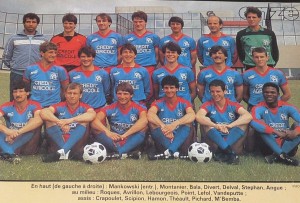
Deportivo Pereira – last in the Clausura (winning only one match of 26). Standing from left: Paez, Munuti, Penagos, Suarez, Chaparro. Crouching: Carabali, Cadavid, La Rosa, Cueto, Bernal, Rodriguez. The two Peruvians – Cueto and La Rosa – did not help at all.

Cucuta Deportivo – 13th with 13 points.

Deportes Tolima – 12th with 19 points.

Atletico Bucaramanga – 11th with 25 points.

Union Magdalena – 9th with 26 points, and Independiente (Santa Fe) – 8th with 27 points. It was particularly this finish which makes their eventual relegation weird – unless it was financial troubles. The Octagonal Final only confirmed the pattern set in the previous years: one club was too strong, bonus points or not.

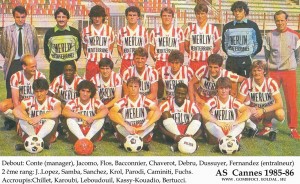
Once Caldas finished last with 9 points. Standing from left: Jose James Mina Camacho, Jose Ricardo ‘Chicho’ Perez Morales, Janio Cabezas Valois, Wilman Francisco Conde Gordillo, Victor Manuel ‘Curramba’ Palacios Alvarez, Manuel Rincon Valencia, Orlando Charry – kinesiologist. Front row: Carlos Arturo Pelaez, Ruben Dario ‘Rubencio’ Hernandez Ariza, Alonso ‘Pocillo’ Lopez, Alexis Enrique ‘Maestro’ Garcia Vega, Jaime de Jesus ‘Jimmy’ Arango Estrada. Francisco Maturana coached them but he was in the early stage of his great career and could not elevate the team higher.

Deportes Quindio – ended 7th with 10 points. Standing from left: Eugenio Muriel, Augusto Vargas Cortés, Federico Valencia, Adolfo Téllez, Jorge Taverna, Darío Campagna, Carlos Torres (U). Front row: Abel Augusto Lobatón, José “Chepe” Torres, Javier Quintero, Víctor Lugo, Heberth Ríos.

Atletico Nacional – 6th with 10 points.

DIM – Deportivo Independiente Medellin – was 5th with 12.25 points. Lost power at the most important stage. Standing from left: Gildardo Gomez, Jorge Olaechea (Peru), Eduardo Malasquez (Peru), Luis Carlos Perea, Leonel Alvarez, Octavio Gomez. Crouching: Carlos Alvarez, William Knight, Hector Ramon Sosa, Gustavo Perez, Alfredo Mendoza.

Atletico Junior – 4th with 16 points.

Millonarios – 3rd with 17.5 points. Back row from left: Oscar Juarez, Carlos Jose Karabin, Antonio Palacios, Jose Hernandez, Silvano Spindola, Luis Francisco Perez, German Gutierrez, Cerveleon Cuesta. Middle row: Milton Bernal, Manuel Cordoba, Gabriel J. Gomez, Ruben Cuevas, Eduardo Esteban Basigalup, Fabio Calle, Luis N. Gil, Iguaran, Peluffo. Front: Juan Pablo Lopera, German Portela, Gabriel Quimbaya, Fernando Caicedo, Jhonny Rivera, Nestor Bautista, Pedro Paredes, Yesid Mosquera. Deportivo Cali – 2nd with 20.25 points. They scored most goals at the final – 25 – and won most games – 10 – but it was all or nothing with them, so they lost 4 matches and the approach more or less lost the title.

America (Cali) won with strong final run the title. Top row from left: Ruben Dario Bedoya, Enrique Simon Esterilla, Ricardo Gareca, Henry Viafara, Jairo Ampudia, Juan ‘El Martillo’ Pehagos, Roberto Cabanas. Third row: Jorge Porras, Gozalo Soto, Reynel Ruiz, J. C. Falcioni, Pedro Zape, Hugo ‘Pitillo’ Valencia, Pedro Sarmiento. Second row: J. M. Battaglia, Victor Espinosa, H. D. Herrera, Jose ‘Pepe’ Romeiro Hurtado, Alex Escobar. Front row: Willington Ortiz, Gerardo Gonzalez Aquino, Anthony De Avila, John Edison Castano. Familiar winner, but this was special victory in special period in the history of the club: 5th title in a row! They bested the record of Millonarios – 4 consecutive titles, having fantastic run – the best in their own history and in the Colombian history as well. Arguably, America’s best period of all time. It was not a squad easily dismissed: they had two major stars – the Paraguayan great Roberto Cabanas and the Argentinian Ricardo Gareca. Local stars like Willington Ortiz were similarly good and ambitious. Experienced and confident squad, which also timed its season precisely: they finished 2nd in both early stages of the championship, scoring most goals in each stage, and played their best at the final – won 9 games, tied 3, and lost only 2. Their defense was best, allowing only 12 goals in 14 games; their attack – second-best, scoring only a goal less than Deportivo Cali – 24. With such a run, they even did not need bonus points: if those were not counted, America was still on top with 21 points. ‘Diablos Rojos’ rulled!

Peru

The Peruvian top level was hardly a league – 30 teams played in it, divided into 4 regional groups, the Metropolitan group twice bigger than the provincial groups. In the first phase the bottom 9 teams finished – the last 3 in the Metropolitan group and the last 2 in every regional groups. What happened next to these teams? Hard to tell… if not all, at least most of them played again top level football in the next season. But they were out early in 1986. After the first phase the championship split in two streams – the Regional Tournament and the Descentralised Tournament. The teams involved were pretty much the same in both tournaments, though – only the formulas were slightly different and the the champions of each played a final between themselves for the Peruvian title.

Let start with the early eliminated clubs:

The last in the Metropolitan group were:

Juventud La Joya (Chancay) – 10th with 15 points,

Guardia Republicana (Lima) – 11th with 15 points, and

CNI – Colegio Nacional (Iquitos) – 12th with 12 points.

From the Northern group eliminated were:

Carlos Manucci (Trujillo) – 5th with 12 points and Atletico Torino (Talara) – 6th with 9 points.

Out from the Central group were: Leon (Huanuco) – 5th with 10 points and

Deportivo Junin (Huancayo) – 6th with 9 points.

The last in the Southern group were:

Mariscal Nieto (Ilo) – 5th with 10 points and Atletico Huracan (Moquegua) – 6th with 8 points.

The rest had different fate, depending on the group final tables: the top 4 from Metropolitan group and the top 2 in the other three groups qualified to the next stage of both the Regional and the Descentralised tournaments. The next 2 in the Metroplitan group and the 3rd-placed in the other groups qualified to the next stage of the Descentralised tournament. The 7th and the 8th in the Metropolitan group and the 4th-placed in the other groups went to qualification play-offs and the winners qualified to the next stage of the Descentralised tournament. Meantime there was preliminary round for the Regional tournament and three teams were eliminated in it. The winners plus 5 lucky ones went to quarterfinals and so on until the final.

In the preliminary round Hungaruitos Agustinos eliminated Asociacion Deportiva (Tarma) 2-0 and Deportivo Municipal – Cienciano (Cusco) 4-0. The third match was dramatic and eventually decisive for the whole season. At first Coronel Bolognesi (Tacna) won over San Agustin 1-0, but the losers complained to the Federation, the result was tripped, the match replayed and now San Agustin prevailed 1-0.

Rightly or wrongly, Coronel Bolognesi was out.

In the quarterfinals only one match ended with goals and decisive results:

Deportivo Pucallpa lost 0-3 to the same problematic San Agustin.

All other games ended 0-0 and were decided by penalty shoot-outs. Alianza prevailed over Hungaritos Agustinos 4-2, Deportivo Municipal over Melgar FBC 4-3, and Univeridad Tecnica over Sporting Cristal 3-2.

It was a bit strange to see Sporting Cristal out so early, but nobody is strong forever. Standing from left: Roberto Arrelucea, Ruben Diaz, Cesar Rios, Pedro Chinchay, Roberto Rojas, Humberto Valdettaro. First row: David Zuloaga, Juan Jose Ore, Angel Barrios, Julio Cesar Anton, Genaro Neyra.

No goals were scored in the semifinals at all and both matches ended with penalty shoot-outs.

Universidad Tecnica (Cajamarca) lost to Alianza 3-4 and Deportivo Municipal (Lima) to San Agustin 3-4.

Thus, the final was played between Alianza (Lima) and San Agustin (Lima). The match ended 1-1 and San Agustin won the penalty shoot-out 3-1.

The winners of Regional tournament – standing from left: Jaime Duarte, Martin Yupanqui, Carlos Castro, Segundo Barreda, ?, Victor Alcazar. First row: Raul Mejia, Roberto Martinez, Jose Pajuelo, Coronado, Rigoberto Montoya. San Agustin qualified to the championship final.

Descentralised tournament. The teams failing to qualify to it continued the season in so-called Intermediary Division with Second Division teams for next season promotion. That meant 12 teams, technically for 11 spots, for the winner of Copa Peru was promoted as well. The 18 which qualified were divided into 3 groups of 6 teams each and the top 2 of every group went to the final stage of the tournament.

Group A.

Coronel Bolognesi (Tacna) – 6th. Standing from left: Freddy Berlanga, Mario Cisterna, ‘Cacique’ Bustamante, Carlos ‘Tito’ Reyna, Santos Bojorquez, Juan Ayala. First row: Martinez, Pedro Barrionuovo, Juan Jose Ore, Javier Ugaz, Marco Echegaray.

Asociacion Deportiva (Tarma) – 5th,

Juventud La Palma (Huacho) – 4th,

Universitario de Deportes (Lima) – 3rd,

Universidad Tecnica – 2nd, and Alianza – 1st.

Group B:

Defensor ANDA (Ayacuchu) – 6th, Hungaritos Agustinos (Iquitos) – 5th,

Union Minas (Cerro de Pasco) – 4th,

Melgar FBC (Arequipa) – 3rd, San Agustin – 2nd, and Deportivo Municipal – 1st.

Group C:

Deportivo Pucallpa (Pucallpa) – 6th, Cienciano (Cusco) – 5th,

Octavio Espinosa (Ica) – 4th. Standing from left: N.AGUIRRE,CESAR ORE,W.VASQUEZ,JUAN VIDALES,FELIX RUBIANES,A.CORNEJO. First row:JULIO JIMENEZ,EDILBERTO FUENTES,OCTAVIO VIDALES,ROBERTO ASSERETO,DOMINGO FARFAN.

Atletico Grau (Piura) – 3rd, Sport Boys – 2nd, and Sporting Cristal – 1st.

The final group of 6: each team played once against the rest.

Universidad Tecnica (Cajamarca) finished last with 1 point.

Sporting Cristal (Lima) – 5th with 4 points.

Sport Boys (Callao) – 4th with 5 points.

Deportivo Municipal (Lima) – 3rd with 5 points. Standing from left: Jorge Ramírez, José Aguayo, Oscar Bravo, Simic, Lizandro Navarro, Luis Advíncula. Crouching: Morán, Luis Flores, Alberto Eugenio, Alberto Castillo, Víctor Gutiérrez.

San Agustin – 2nd with 6 points,

and Alianza on top with 9 points. Alianza won the Descentralised tournament and reached the final for the season.

Which was one more replay between Alianza (Lima) and San Agustin (Lima), but San Agustin prevailed 1-0 in the regular time.

Alianza (Lima) lost and naturally was not happy, but they had many trophies anyway. Standing from left: Cesar Espino, Gino Pena, Daniel Reyes, Tomas Farfan, Jose Gonzales Ganoza, Wilmar Valencia. Crouching: Eugenio La Rosa, Johnny Watson, Juan Illescas, Jose Casanova, Luis Escobar.

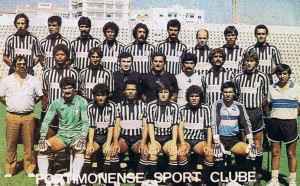
Fantastic season for San Agustin (Lima) – they won the Peruvian championship for the first time! Strong the whole year too, so it was well deserved success. Standing from left: Jaime Duarte, Martin Yupanqui, Segundo Barreda, Rigoberto Montoya, Carlos Castro, Victor Alcazar. First row: Raul Mejia, Jose Ziani, Jose Pajuelo, Roberto Martinez, Montesinos.

The triumph of San Agustin was surprising, for it was young club with unsettled past – it was formed in 1970 with the name Club San Francisco, later changed to Huracan San Isidro, and finally to San Agustin. The last change came because of sponsorship – Colegio San Agustin took over the club and renamed it after itself. Of course, they never won anything so far and the changes suggest struggling with both identity and financial security, but at last everything was fine. For the moment, anyway. The decline of Peruvian football at the time, affecting the big clubs, also helped, but such a triumph cannot be dismissed just as taking advantage of the weakness of traditional powers. It was ambitious and enthusiastic season, but San Agustin was not a big club and had no chance of becoming one in Lima. Repeated success was unlikely, so it was pretty much one-time affair, yet, a wonderful victory of the underdog.

Peru Second Level – Copa Peru

Peru. By 1986 the Peruvian championship reached the Byzantine complexity of Brazil – tournamnets meandering from stage to stage. It was even difficult to tell what was the second level – there was something like Second Division, with a winner, but not promotion came of it. Was it part of the complicated second level Copa Peru or not is probably immaterial. Regional tournaments eventually produced 7 winners, playing once against each other in the final group. The winner of the final group got Copa Peru and promotion to top level football. So... that was the final: 
1

Deportivo Cañaña

5 4 1 0 12 2 +10 9
2

Félix Donayre

5 3 1 1 4 2 +2 7
3

Deportivo Camaná

5 2 2 1 4 3 +1 6
4

Chanchamayo

5 1 3 1 8 5 +3 5
5

Deportivo Tintaya

5 1 0 4 3 13 −10 2
6

7 de Agosto

5 0 1 4 3 10 −7 1

Deportivo Canana won Copa Peru and was going to play at top level next season. For a small humble club, it was great success. As for playing with the best… looks like there were other ways to go up, not involving Copa Peru, but it is hard to say.

Ecuador I Division

The top league was divided into two groups from start – the top three qualified to the third stage and got bonus points, the last in each group was ‘penalized’ – that is, they were going to the relegation pool after the second stage with minus record: -0.5 point. The last were America (Quito) from Group 1 and 9 de Octubre (Milagro) from Group 2. On top and getting corresponding bonus points were: Deportivo Quito (+1.5), Emelec (+1), and Barcelona (+0.5) from Group 1. From Group 2: El Nacional (+1.5), Filanbnaco (+1), and LDU (Quito) (+0.5). The second stage was the same as the first one: 2 groups of 8 teams each, playing against each other. The last ‘penalized’ and going to the relegation stage and the top three – getting bonus points for the next stage. Universidad Catolica finished last in Group 1 and LDU Portoviejo in Group 2, both getting -0.5 point. On top in Group 1: Filanbanco (+1.5), Deportivo Quito (+1), and Barcelona (+0.5). In Group B: Tecnico Universitario (+1.5), El Nacional (+1), and Audaz Octubrino (+0.5).

So far so good, but it was not so simple… The third stage practically split the league in two: the relegation group of 4 teams and everybody else. Thus, the two opening stages had little importance – a double winner could have a maximum of 3 bonus points, which is negligible advantage… a team just avoiding last place and saving its strength in the earlier stages could easily overcome previous stage winners and go ahead… as it happened. The 12 remaining teams were again divided into 2 groups. The top 2 proceeded to the final stage. There were teams just happy avoiding relegation danger, which seemingly did not offer much at this stage:

Deportivo Quevedo finished last in Group 1 with 5 points. They did not win a single match…

LDU (Quito) was also disinterested – 5th with 9.5 points.

Emelec (Guayaquil) was 4th with 10 points. They seemingly exhausted themselves in the first stage and it was downhill after that.

Deportivo Quito was another casualty of early success: they finished 3rd with 13.5 points. And if not for their 2.5 bonus points, they would have been even more obviously out of the game by now.

Tecnico Universitario finished 2nd with 14.5 points and qualified to the final.

Deportivo Cuenca – surprise, surprise! – won the group with 15 points. A team with no bonus points, which best place so far was 4th place in the second stage – in the first stage they were 6th of 8! The championship formula made such surprises possible and a wise team could do just that: save itself for the third stage and reach the final without playing much in more than half of the season.

No surprises in Group2. Esmeraldas Petrolero (Milagro) ended last with 5 points.

Audaz Octubrino (Machala) – 5th with 5.5 points.

Macara (Ambato) – 4th with 8 points.

Filanbanco (Guayaquil) – 3rd with 14.5 points. Like Deportivo Quito, they seemingly fell victims of their earlier strong performance. True, they fought and the competition was very tough, but it was not enough – they lost only once at this stage, but tied more than half of their games: 6 out of 10.

Barcelona ended 2nd with 16 points and El Nacional – 1st with 17.5 points.

The group winners carried 1 bonus point to the final.

The relegation tournament took place around that time. The final table is confusing, because seemingly the rules stipulated -0.5 point penalty for finishing last in a group earlier. But… only Universidad Catolica and 9 de Octubre have such record in the final table. LDU Portoviejo is listed with -1.5 and America with -2.5! Which does not compute with their final record: they won 3 games, tied 1, and lost 2 – that is 7 points. In the final table they have 6.5. Well, 7 minus 2.5 makes 4.5… LDU’s record is also wrong, so very likely there is some typing mistakes in the final standings and actually everybody had -0.5 point deduced, as it should. Anyhow, Universidad Catolica (Quito) won the relegation group with 7.5 points.

LDU Portoviejo (Quevedo) was 2nd also with 7.5 points.

America (Quito) also survived – 3rd with 6.5 points.

9 de Octubre (Milagro) was entirely out of the fight – they managed to tie only one match and lost all the others, finishing at the end with the fantastic record of 0.5 point. Relegated.

The championship final – another round-robin stage between 4 teams. Here class triumphed.

Deportivo Cuenca surprised everybody in the third stage, but that was all – now they were last with 3 points, 1 of them carried over bonus. They won one match and lost all others.

Tecnico Universitario (Quito) was also unable to keep up with the best – they had even final of 2 wins, 2 ties, and 2 losses, which was good for 3rd place, but was not a run for the title.

Barcelona (Guayaquil) ended 2nd with 7 points – 3 wins, 1 tie, 2 losses, but they were not quit at the level of the winners. Unfortunately for them, especially because they had rather impressive squad: two Brazilians – Toninho Vieira and Severino Vasconcelos, one Uruguayan – Alfredo de los Santos, and the Chilean great star Carlos Caczely. Caczely was old, but this was the Ecuadorian league…

At the end El Nacional (Quito) triumphed. 4 wins 1 tie, and only one lost match made even their bonus point unnecessary. This was the most deserving team anyway – their worst performance was in the second stage, when they finished 2nd the their group. Apart from that, they won every other stage and consistency made then more than convincing champion. This was their 9th title, having particularly strong run at that time – champions in 1982, 1983, 1984, and 1986.

Ecuador II Division

Ecuador. The usual complicated formula of 4 stages with bonus points carried over to the next stage, but the next season the top league was going to be enlarged to 18 teams, so only one was relegated and 3 teams promoted from the second level. This three were a mixed bag:

Aucas was returning to top flight.

River Plate (Riobamba) and

Deportivo Cotopaxi, practically unheard of club outside Ecuador, which never played top league football so far.

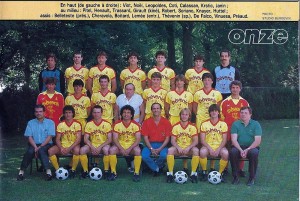
Standing from left: coach HÉCTOR SINCHIGUANO, JULIO REINA, CIRO GARCIA, JOSE VELEZ, LEONEL PEREZ ( Uuruguayan), JHON CAGUA, MANUEL CRIBAN, CANARIO MARTÍNEZ (Uruguayan), EDUARDO MAYA – president.
First row: cineciologist CESAR HARO, RAUL CAÑIZARES, MARIO MONTAÑO, DAVID TAPIA, VEGA.
One can imagine the euphoria in the club and it’s fans, but how good they actually were would become clear in the next season. Of the three winners of the second level only Aucas was big enough club to be expected to play well in the First Division.

Bolivia

Bolivia. The usual South American 2-staged championship, ending in 1987, but counted as 1986. The 15-team top league was divided into two groups in both stages, but what followed was different. The opening round, played in the fall of 1986 – that is spring in South America – ended with the top 2 teams of each groups playing semifinals and final. The second round was more elaborate: The top 4 of each group proceeded to the next challenge: divided into new 2 groups of 4 teams each and the top 2 of each group going to the semifinals, followed by the final. And after that was the championship final opposing the winners of the two rounds. Two teams were relegated this season – both in the second round, but the criteria was murky: Chaco Petrolero (La Paz) was last in its group with the miserable record of 3 points, so theirs going down is understandable. But Bamin Potosi was relegated from the other group and they were not last, but 7th with Aurora (Cochabamba) behind them, and had 11 points. Even if total points from both parts of the championship decided relegation, the numbers did not tally. Anyhow, they were relegated. Meantime only one team was going to be promoted and that happened to be Always Ready – a happy occasion for them, returning to top flight.

As for the more important championship race, it was a matter of good calculations and endurance, as the formula pretty much requires: Blooming (Santa Cruz) won Zone A with 26 points, followed by The Strongest (La Paz) with 21 points. Oriente Petrolero (Santa Cruz) won Zone B with 21 points, followed by Litoral (La Paz) with 19 points. Two of the traditionally best – Bolivar and Jorge Wilstermann – were quite down at this phase: Bolivar was 5th with 15 points and Jorge Wilstermann – 4th with 16 points, both in Zone B.

Destroyers (Santa Cruz) were perhaps a bit unlucky, finishing 3rd in Zone A. And the same misfortune happened to them the second round – eliminated by 1 point twice this season. In the semifinals Blooming eliminated Litoral 3-0 and 0-3 – either the winner was decided by a shoot-out or the higher-placed team in the group tournament had advantage.

In the other semifinal – no mystery: The Strongest eliminated Oriente Petrolero 1-2 and 3-0. So far – so good, but the final produced another mystery: The Strongest won the first leg 2-1 and then lost the second 0-1. A third match was staged and it ended 1-1. If away goals goals were allowed, Blooming should have been the winner, without a third match. But it was The Strongest, although the last result was still 1-1… shoot-out followed? If not, on what base The Strongest was proclaimed winner? Half job done, so to say – The Strongest qualified to the championship final. Standing from left: Martinez, Galarza, Montano, Villegas, Fontana, Iriondo. Crouching: Castillo, Jesus Reynaldo, Messa, Ayaviri.

Second round, first phase. The top 4 in Zone A were: Litoral (23 points), The Strongest (20 points), Blooming (18 points) and Petrolero Cochabamba (16 points). In Zone B: Bolivar (21 points), Jorge Wilstermann (18 points), Real Santa Cruz (17 points) and Oriente Petrolero (17 points).

In the second phase Blooming won Group A with 7 points, followed by Oriente Petrolero with 6 points.

Litoral (La Paz) was most unlucky: they had wonderful season, perhaps one of their very best, but ended 3rd in this phase on worse goal-difference and were out of teh game. And as often was the case with solid performance of smaller clubs in South America, plenty of foreigners made them strong. Standing from left: Hugo A. Zitta (Argentina), Reynaldo Zambrana, Edgar Bautista, Nestor Orellana (Argentina), Carlos Urizar, Ricardo Almeyda (Argentina). First row: Oscar H. Sanz (Argentina), Teodoro Coronel (Paraguay), Cesar Enriquez, Oscar E. Figueroa, Ramiro Vargas.

Jorge Wilstermann (Cochabamba) finished last in the group with 5 points, apparently unable to recover from initially weak or careless start of the season.

Group B was won by Bolivar with 10 points, followed by The Strongest with 9. Real Santa Cruz, 3rd with 5 points, and Petrolero Cochabamba, 4th with 0 points.

In the semifinals mystery continues: Blooming (Santa Cruz) was eliminated by The Strongest 1-0 and 0-1. What made Blooming winners? Nevermind… The other semifinal was crystal clear, but exciting.

Bolivar (La Paz) won the first leg 3-0 and looked like they were already finalists. But Oriente Petrolero was not going to give up – they came back in the second leg and destroyed Bolivar 5-0!

The final between Blooming (Santa Cruz) and Oriente Petrolero was not a big contest – Oriente Petrolero won the first leg 3-0 and then tied the second leg 1-1.

Oriente Petrolero (Santa Cruz) won the second round of the championship and reached the grand final. In it they lost the opening leg in La Paz 0-3, but recovered with 3-1 victory at home and third match had to be played, on neutral ground in Cochabamba. This time Oriente Petrolero was clearly on the receiving end, losing 0-3.

Thus The Strongest won in late March or April 1987 the 1986 championship of Bolivia. Count it as you want… it was their 2nd Liga de Futbol Profesional Boliviano title or 5th Primera Division title. They had to wait almost 10 years for this one – last winning in 1977.

Full credit to their coach Juan Farias for the victory: the progress of the champions suggests careful measured work, aimed to be at top form at the right moment. The Strongest did not win any group phase, but finished 2nd every time. Then played better in the direct elimination semi-finals and the finals, of course. After winning the first round, they did not bother to go all the way in the second round , for they already qualified to the championship final. And there came on top – true, after third match, but they won it with a big margin. It was a team well prepared for a marathon, saving strength here and there for the very end.

Venezuela

Venezuela. The last championship held in one year – the next season will be 1986-87.

Universidad de Los Andes (Merida) and

Deportivo Galicia (Caracas) were the best in Second Division, but that did not mean promotion. As it was in the previous years, both teams stayed in the lower league and the top tier remained unchanged.

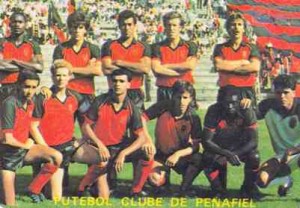
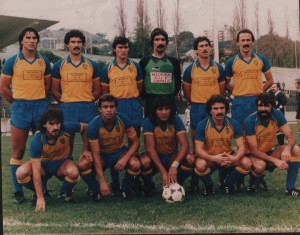
Connected or not to the strange requirements for really going up, some clubs were seemingly doomed to stay in anonymity – at least ULA and Galicia had been members of the top league. But others, like the pictured Pepeganda Margarita remained in the shadows and what happened to them is perhaps only a matter of local interest and memory.

The top league was still of 11 teams and played 2-part championship: in the opening stage the league was divided into 2 groups and the top 3 of each went to the final stage. Grupo Oriental was won comfortably by Deportivo Italia with 16 points, followed by CS Maritimo with 12 points and Caracas FC with 11 points.

Mineros de Gayana was unlucky 4th with 10 points and that was the end of the season for them. The other two early exits were Atletico Anzoategui, 5th with 9 points, and UCV FC, which had terrible season – they were last with 2 points.

Deportivo Tachira won Grupo Occidental with 11 points.

Estudiantes Merida took 2nd place with 9 points, followed by Portuguesa FC with 8 points, which qualified to the next stage only on better goal-difference. Atletico Zamora was 4th and out, also with 8 points, and last was Union Espanola de Lara with 4 points.

The final stage – a round-robin tournament of the best 6 showed stronger teams from the Occidental group. Caracas FC finished last with 4 points. Portuguesa FC was 5th with 7 points. Deportivo Italia, so confident in the opening stage, was now down – 4th with 9 points. CS Maritimo was the best team from Grupo Oriental, but not a title contender – 3rd with 11 points. Just like in the group stage, Estudiantes Merida tried to win, but finished 2nd with 14 points.

Deportivo Tachira was strong from start to finish and won its 4th title – they finished on top with 15 points from 6 wins, 3 draws, and lost 1 match, 18-7 goal-difference. All together, they won 11 games, tied 4, and lost 3, scoring 31 goals and receiving 14. May be not very impressive numbers, but this was small league without room for large numbers. The squad was largely anonymous to foreign eye, but the boys played together for sometime and were well adjusted to each other. Three Uruguayans helped – Francovig, Maldonado, and Bachini.