Peru had more comprehensible championship than most South American countries, yet, still two-phased affair. At the first stage, it was standard league format – 16 clubs playing 30 rounds. After that the top 8 entered the second stage as championship group, playing 14 rounds and the bottom 8 formed relegation group, also playing 14 rounds. One team was relegated. Such structures never satisfy no matter the rules: if teams carry their points from the first stage, then a whole bunch of clubs have nothing to play for in the second and only go through the motions. If everything begins anew, then the first stage is meaningless for the top clubs. No matter which way is chosen, such championships are open for various schemes and corruption – and often the best schemer benefits at the end. Peru chose a variety of the starting anew – no points were carried over from the first stage, except for bonus points awarded to top three – depending on their place, 3,2, and 1 point. At the bottom, penalty points wee taken away from the last three teams, also depending on position – the last had 3 points deducted in the second phase and the 14th – 1. So, the first league really played largely to form the two final groups and only the leaders had some minimal advantage. The losers in the first phase entered with slight disadvantage the relegation group, yet,what mattered most was still how the teams played in the final stage.
Peru had no second division – instead, the winners of the regional championships played promotional tournament, also called Copa Peru. Like most South American countries, Peru had no parallel national cup tournament and Copa Peru had little significance in itself – the importance of winning it was the promotion to first league. Copa Peru went through many stages with teams from the 24 country’s departments, until the final 6 moved to the final round-robin, played in Lima. This year only one participant had familiar name – Defensor (Lima). At least on paper, it looked like they would win promotion. In reality it was different. The final table will provide the home cities and departments. 1. Asociación Deportiva (Tarma, Junin) 8 – 5 – 3 – 2 – 0 – 5 – 1
2. Aguas Verdes (Zarumilla, Tumbes) 7 – 5 – 3 – 1 – 1 – 9 – 2
3. Defensor Lima (Lima, Lima) 5 – 5 – 2 – 1 – 2 – 8 – 6
4. Garcilaso (Cuzco, Cuzco) 5 – 5 – 2 – 1 – 2 – 8 – 6
5. Universidad Técnica (Cajamarca, Cajamarca) 5 – 5 – 2 – 1 – 2 – 3 – 3
6. Centenario (Ayacucho, Ayacucho) 0 – 5 – 0 – 0 – 5 – 1 – 16
Centenario was out of their depth, obviously – they lost every match they played. Defensor Lima failed to impress.
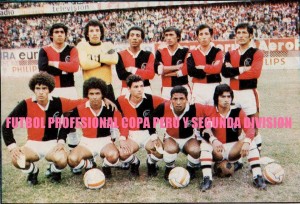 Deportivo Centenario (Ayacucho) – perhaps just happy to be at the finals and nothing else.
Garcilaso (Cuzco) – neither good, nor bad, right in the middle. Standing from left: Rolando Echegaray, Fernando Valencia, José Elguera, “Arbolito” Gonzáles, Robinson Astete, Wilfredo Valencia.
First row: Marco Echegaray, Percy Huamán, Miguel Arapa, Javier Ugaz,el “Cóndor” Sergio Hinojosa.
The battle for promotion was really between unknowns:
Aguas Verdes, hailing from a city often flooded by the very river waters giving the club’s name, missed promotion by a point. They scored most goals in the tournament and ended with the best goal-difference. Small consolation.
The winners did not lose even a match and that was the secret of success, for they were not great scorers. One point more than Aguas Verdes and ADT won the tournament, Copa Peru and the single promotion.
Going to first league: standing, from left: Nicolás Miranda, Alberto Marticorena, Rowland Chumpitaz, Alejandro Mujica, Gonzalo Ginocchio, José Chacaltana.
First row: Luis Camacho, Juan Zapata, Carlos Gutiérrez, Angel Fuentes, Carlos Gavidia.
Asociacion Deportiva – more often just abbreviated to ADT (Asociacion Deportiva de Tarma) – were founded in 1929, but little known. They never played first division before. As for the squad – no familiar names here, as expected. This was their biggest success at the time – winners of Copa Peru for the first time and promoted to the top league.
That was then – Copa Peru still exists, but now it equals third division championship. So far ADT never won it again.
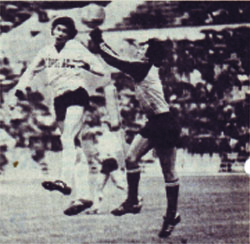
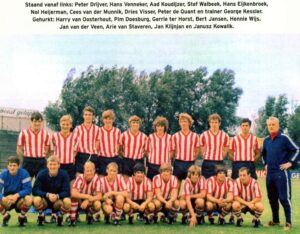 Sparta (Rotterdam) tried hard and lost only in the replay by a single goal – considering the strenght of Ajax, it was admirable effort.
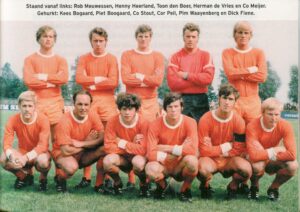
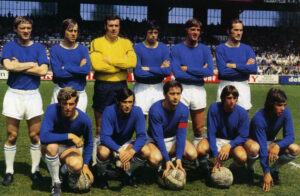 Ajax prevailed with great difficulties. Standing from left: Sondergard, Rijnders, Stuy, Suurbier, Krol, Suurendonk. Front row: Keizer, Swart, Vasovic, Cruijff, van Dijk
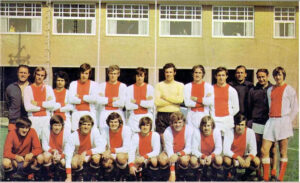 Ajax won their 6th Cup in 1971 and second consecutive one,but it was difficult victory, trailing twice in the first match, and opening the scores with quastionable penalty in the replay. Rinus Mischels was leaving, a few regulars were leaving, but the great squad was already at hand and going to win… everything. No need even to name the players – almost all of them are well known to young and old.
 1 Volewijckers 32 20- 7- 5 47 65- 31 11- 4- 1 26 38-12 9- 3- 4 21 27-19
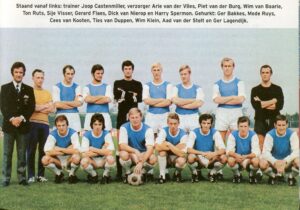 4 Hermes D.V.S. 32 17- 6- 9 40 51- 29 12- 2- 2 26 36-10 5- 4- 7 14 15-19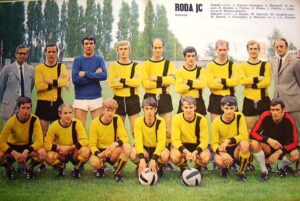
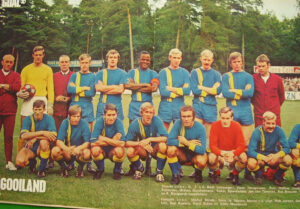
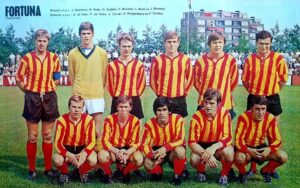 7 Fortuna Vlrd. 32 13- 7-12 33 39- 42 9- 4- 3 22 24-14 4- 3- 9 11 15-28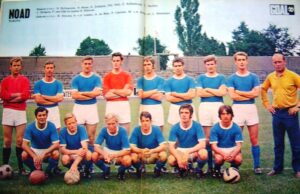
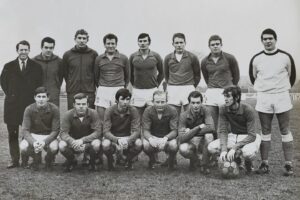 9 A.G.O.V.V. 32 12- 8-12 32 35- 41 5- 6- 5 16 17-15 7- 2- 7 16 18-26
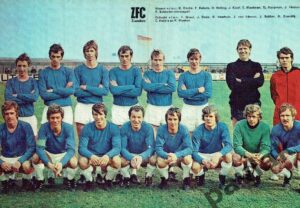 10 Z.F.C. 32 9-12-11 30 42- 42 6- 6- 4 18 24-18 3- 6- 7 12 18-24
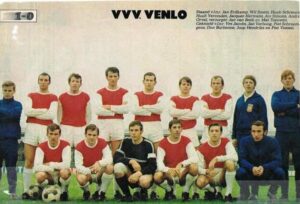 11 V.V.V. 32 11- 8-13 30 42- 46 5- 6- 5 16 18-18 6- 2- 8 14 24-28
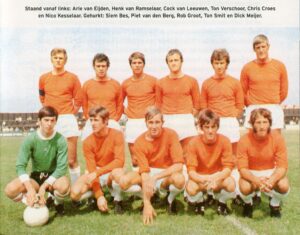 12 R.C.H. 32 8-13-11 29 42- 40 6- 6- 4 18 29-20 2- 7- 7 11 13-20
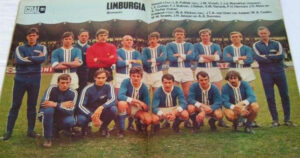 13 Limburgia 32 7-14-11 28 31- 39 7- 6- 3 20 24-16 0- 8- 8 8 7-23
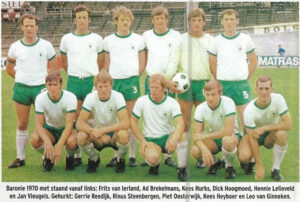 14 Baronie 32 7-10-15 24 38- 56 5- 8- 3 18 21-18 2- 2-12 6 17-38
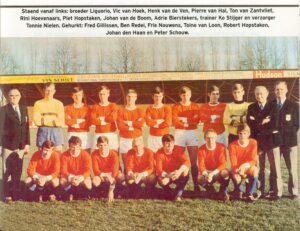 15 R.B.C. 32 5-13-14 23 32- 57 5- 7- 4 17 24-21 0- 6-10 6 8-36
 17 Spcl. Drente 32 3- 9-20 15 26- 55 3- 4- 9 10 14-25 0- 5-11 5 12-30
 1 FC Den Bosch 30 18-10- 2 46 50- 18 9- 6- 0 24 29- 7 9- 4- 2 22 21-11
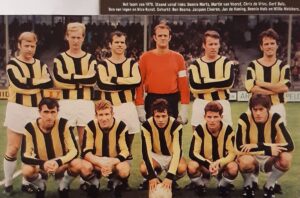 3 Vitesse 30 16- 6- 8 38 54- 31 12- 2- 1 26 36- 5 4- 4- 7 12 18-26
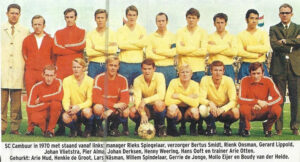 4 Spcl. Cambuur 30 13-10- 7 36 43- 34 10- 3- 2 23 25-12 3- 7- 5 13 18-22
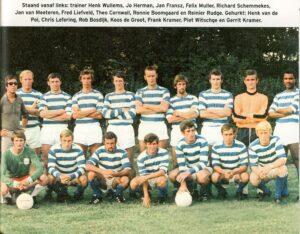 5 Blauw Wit 30 12- 7-11 31 44- 39 9- 2- 4 20 29-15 3- 5- 7 11 15-24
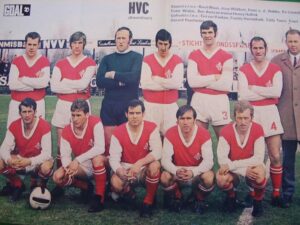 7 H.V.C. 30 10-10-10 30 31- 39 8- 4- 3 20 22-17 2- 6- 7 10 9-22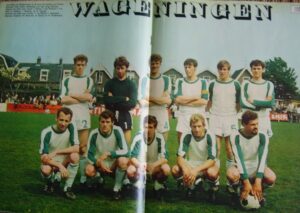
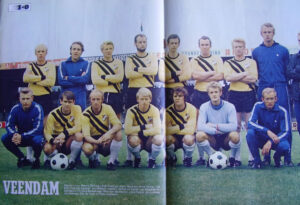
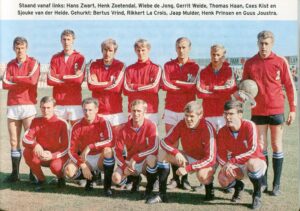 9 Heerenveen 30 7-14- 9 28 36- 37 5- 7- 3 17 24-17 2- 7- 6 11 12-20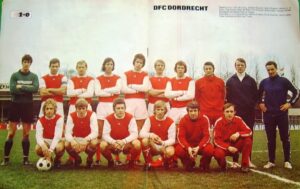
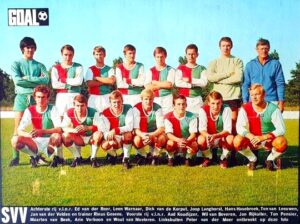 15 S.V.V. 30 5-13-12 23 34- 46 5- 7- 3 17 21-13 0- 6- 9 6 13-33
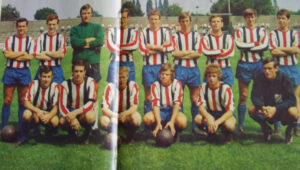
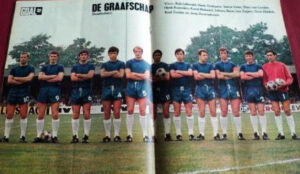 16 De Graafschap 30 7- 8-15 22 28- 42 5- 5- 5 15 21-20 2- 3-10 7 7-22
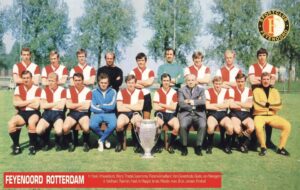 1 Feijenoord 34 26- 5- 3 57 82- 25 14- 3- 0 31 48-10 12- 2- 3 26 34-15
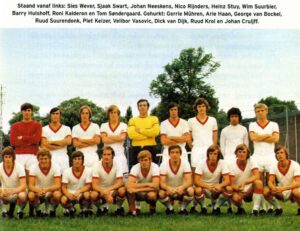 2 Ajax 34 24- 5- 5 53 90- 20 15- 1- 1 31 63-11 9- 4- 4 22 27- 9
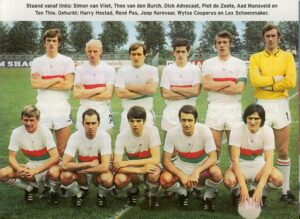 3 A.D.O. 34 21- 8- 5 50 62- 27 13- 4- 0 30 40- 5 8- 4- 5 20 22-22
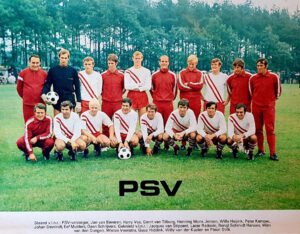 4 P.S.V. 34 21- 7- 6 49 73- 25 12- 3- 2 27 41-12 9- 4- 4 22 32-13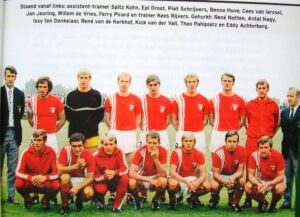
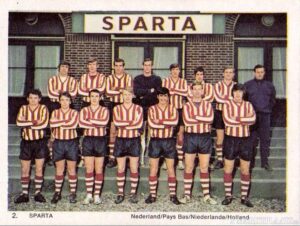 6 Sparta 34 16-13- 5 45 54- 34 11- 5- 1 27 31-12 5- 8- 4 18 23-22
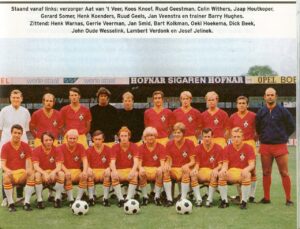 7 Go Ahead 34 15- 8-11 38 49- 43 10- 5- 2 25 34-14 5- 3- 9 13 15-29
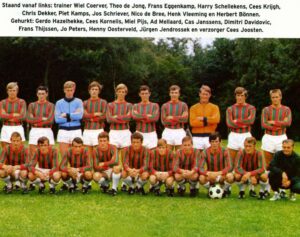 8 N.E.C. 34 12-10-12 34 43- 36 11- 5- 1 27 31- 6 1- 5-11 7 12-30
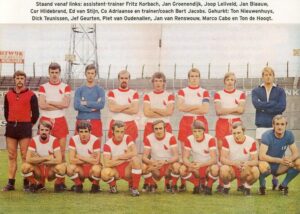 9 FC Utrecht 34 13- 7-14 33 46- 64 9- 4- 4 22 27-18 4- 3-10 11 19-46
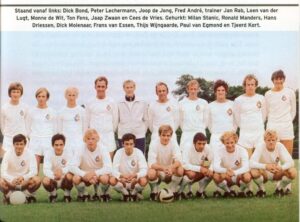
 10 Volendam 34 9-10-15 28 34- 48 8- 3- 6 19 22-19 1- 7- 9 9 12-29
 11 Telstar 34 9- 9-16 27 32- 46 6- 5- 6 17 21-17 3- 4-10 10 11-29
 13 M.V.V. 34 8-10-16 26 28- 42 6- 6- 5 18 21-15 2- 4-11 8 7-27
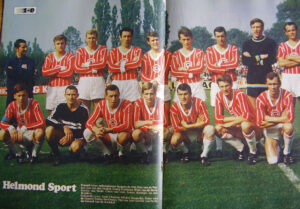
 15 Holland Sport 34 5-14-15 24 34- 60 3- 8- 6 14 19-28 2- 6- 9 10 15-32
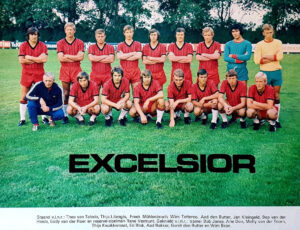 16 Excelsior 34 5-10-19 20 22- 66 4- 6- 7 14 15-23 1- 4-12 6 7-43
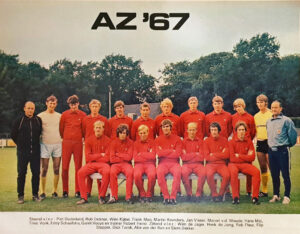 17 A.Z. ’67 34 3- 9-22 15 24- 76 2- 7- 8 11 15-26 1- 2-14 4 9-50
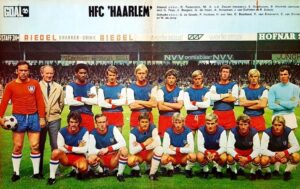 18 Haarlem 34 1-12-21 14 22- 64 1- 8- 8 10 15-29 0- 4-13 4 7-35
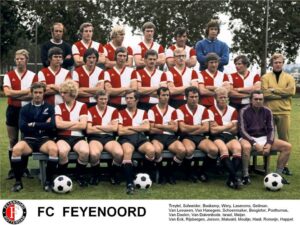 Feyenoord won 10th title.
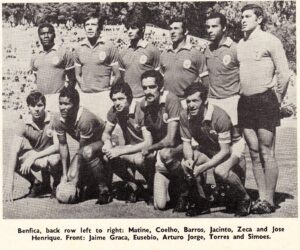 Benfica was unable to win a double and was actually destroyed at the Cup final. It was aging team on a downhill.
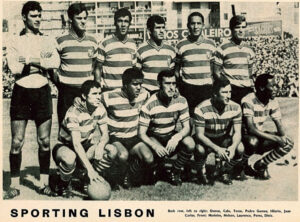 Sporting won the final against the archenemy and with inferior, compared to star-studded Benfica, squad.
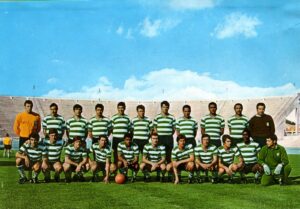 Well done and 7th Cup.
 1 SL Benfica 26 18 5 3 62- 17 41 12 1 0 43- 5 6 4 3 19-12
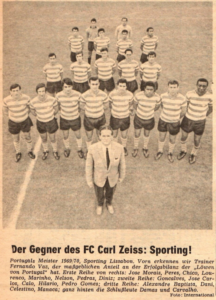 2 Sporting CP 26 16 6 4 45- 14 38 11 1 1 33- 5 5 5 3 12- 9
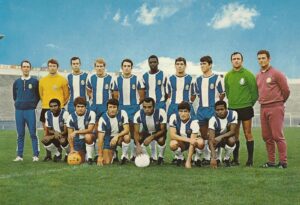 3 FC Porto 26 16 5 5 44- 21 37 10 3 0 28- 7 6 2 5 16-14
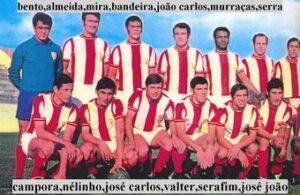
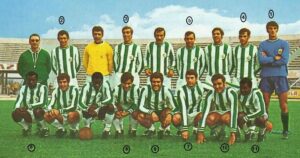 Second row from left: Pedroto(treinador),Rebelo,Vaz,Cardoso,Pedro,Carriço,Correia,José Mendes,Joaquim Torres
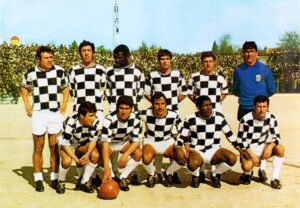 6 Boavista FC 26 9 4 13 18- 38 22 6 3 4 11-10 3 1 9 7-28
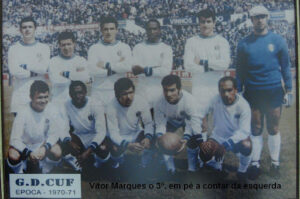 8 GD CUF 26 8 5 13 28- 37 21 7 2 4 18-11 1 3 9 10-26
 11 SC Farense 26 7 6 13 15- 33 20 6 6 1 12- 6 1 0 12 3-27
 12 VSC Guimarães 26 4 11 11 15- 27 19 3 6 4 9- 9 1 5 7 6-18
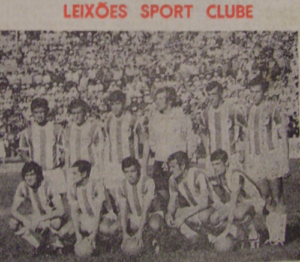 13 Leixões SC 26 7 5 14 22- 44 19 7 2 4 16- 8 0 3 10 6-36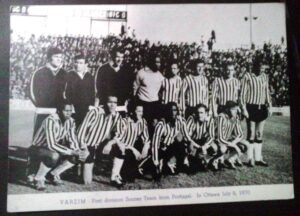
 Beira Mar
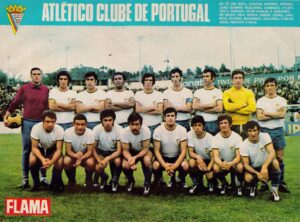 Atletico (Lisbon)
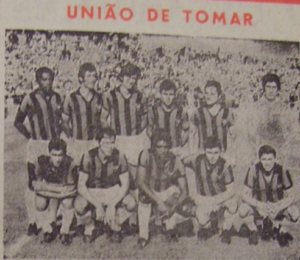 Uniao Tomar – 2ndin the championship and winning promotion play-off.
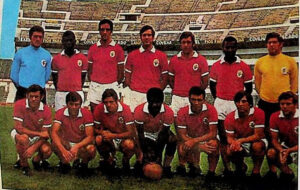
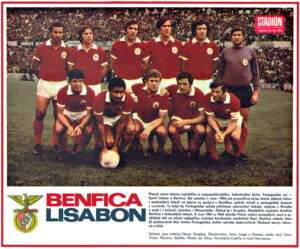 Benfica – champion of Portugal once again.
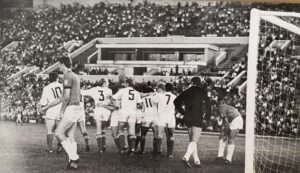
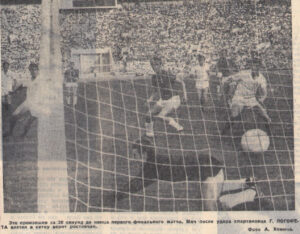 SPARTAK Moskva 1-0 SKA Rostov-na-Donu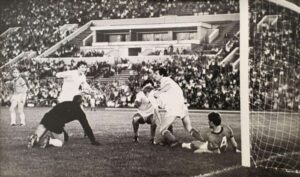
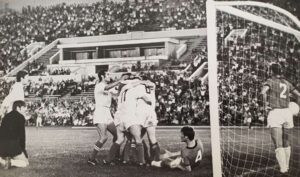
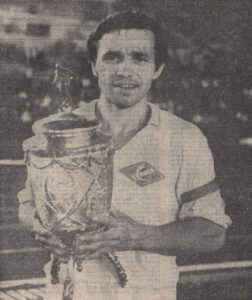 Spartak’s captain Galimzyan Husainov lifted the Cup.
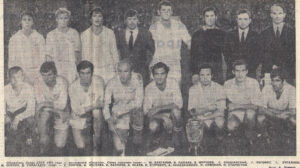 After nerve-breaking final Spartak (Moskva) won their 9th Cup.
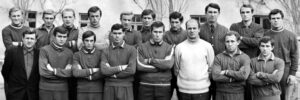 Sudostroitel (Nikolaev) – 2nd in Zone I
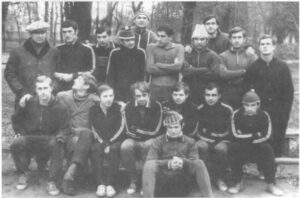 Lokomotiv (Vinnitza) – 7th in Zone I
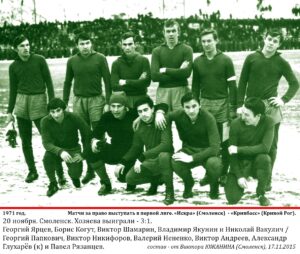 Iskra (Smolensk) – winner of Zone II
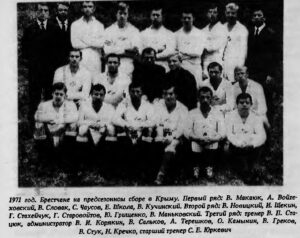 Spartak (Brest) – 9th in Zone II
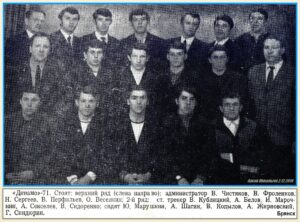 Dinamo (Bryansk) – 13th in Zone II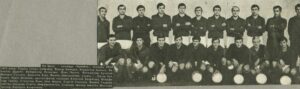
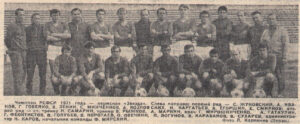 Zvezda (Perm)
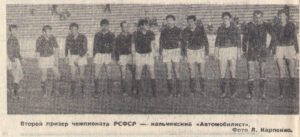 Avtomobilist (Nalchik)
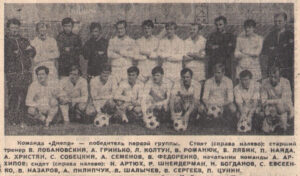 1.Dnepr Dnepropetrovsk 42 27 9 6 83-30 63 Promoted [UKR]
 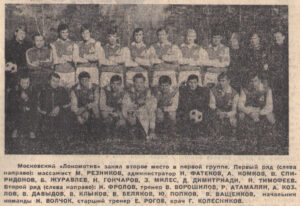 2.Lokomotiv Moskva 42 25 12 5 81-33 62 Promoted [RUS]
 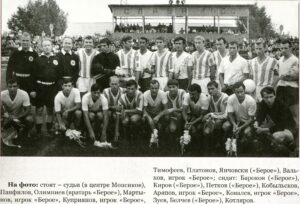 6.Krylya Sovetov Kuibyshev 42 17 9 16 54-41 43 [RUS]
 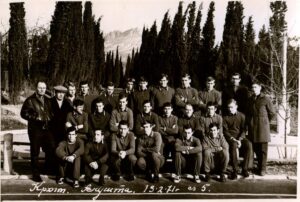 1-й ближний ряд: Б.Рыбин, В.Коротков, В.Санин, ? , В.Волков, В.Панков
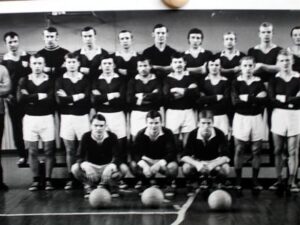 20.Žalgiris Vilnius 42 9 17 16 30-45 35 Relegated [LTU]
  21.Volgar Astrakhan 42 8 18 16 34-58 34 Relegated [RUS]
 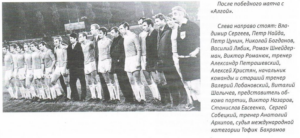 Historic season for Dnepr (Dnepropetrovsk) – coached by young Valery Lobanovsky, they won promotion to the top league for the first time.