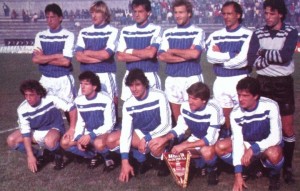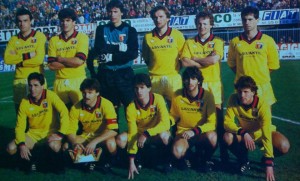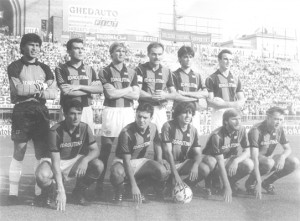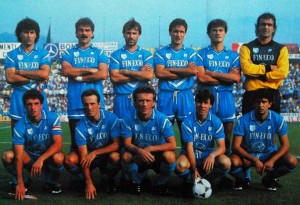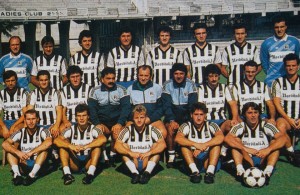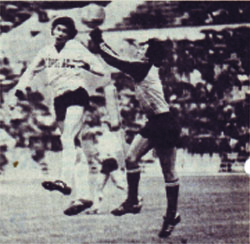
Final

Final
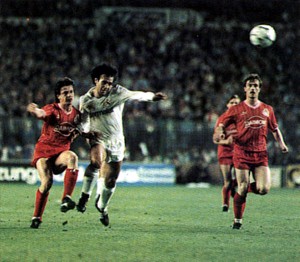
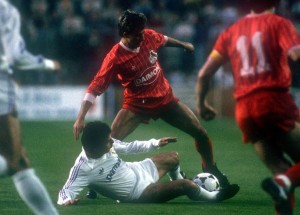
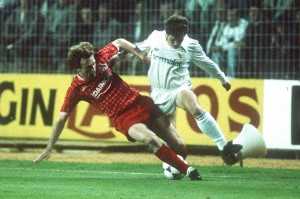
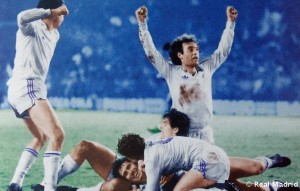
29.06.86 (12.00) Mexico City, Estadio Azteca

ARG - GER 3:2 (1:0)

(~114000) Arppi Filho BRA, Fredriksson SWE, Ulloa COS

ARG: Pumpido - Brown, Cuciuffo, Ruggeri, Olarticoechea – Giusti, Batista, Maradona (c), Enrique - Burruchaga (89 Trobbiani), Valdano
GER: Schumacher - Jakobs, Berthold, K.-H.Förster, Briegel – Matthäus, Brehme, Magath (63 D.Hoeness), Eder, K.H.Rummenigge (c), K.K.Allofs (46 Völler)

1:0 Brown 23 h, 2:0 Valdano 56, 2:1 Rummenige 74, 2:2 Völler 82 h, 3:2
Burruchaga 88

booked: Maradona, Enrique, Pumpido, Olarticoechea / Matthäus, Briegel

For those not German and not Argentine, Argentina was slightly preferable – they played some football after the group phase, unlike West Germany. Nobody was fool, though – a ‘manly’ match was expected. And that was what the world got. From the distance of time, though, the ‘manly’ match is largely supported by the number of yellow cards – they were many, but Maradona, Enrique, and Pumpido were booked not for some vicious kicks, but for arguing and obstruction. The referee was strict and never lost authority, but one had the feeling that a lot of rough play was left unpunished. Yet, it was lively and interesting match – later considered the last interesting final played. It was and not just because of the five goals scored and the drama lasting to the end, because of the late German equalization.

Argentina cleverly exploited their seemingly simplistic tactic: fight everywhere, slow the tempo, but never forget the German net and construct speedy attacks in every possible moment. Curiously, for defensive-monded team, Argentina attacked a lot. The Germans were entirely creatively hopeless, but attacking was also a second nature for them, so the match was basically a clash of attackers. The Argentines, however, got the upper hand by the 20th minute and to the end of the match were the better team. And their superiority materialized – true, after a terrible and rare misjudgment by Schumacher. The first half ended 1-0 and soon after the beginning of the second half Argentina scored a second goal – looked like that was the end. The Germans did not look capable of anything, Argentina controlled the game, using every dirty trick in the book to waste time, but nothing obvious – they still preferred to attack whenever had a chance and did not lapse into monotonous passing from defender to goalkeeper and back again and again.

It is well known that 2-0 is perhaps the most dangerous lead. It is also well known that one is sure of beating a German team only when the referee blows the last whistle. Beckenbauer did what he could – the same he did in previous games: increased the number of strikers with fresh substitutes and rushed his team ahead. The utter lack of creativity, of any ideas, made the German rush easily deflected and no big dangers to Pumpido emerged. Argentina had little problem defending, so it looked like the whole thing will be just thrills for the fans, but Germans are Germans… In five minutes they scored twice. Out of the blue. And practically identical goals – from left-side corner kicks. Nothing dangerous really… but both times a German was left alone in empty space between late to cover defenders and Pumpido. And suddenly it was 2-2, and it was the 83rd minute already, and Argentina still looked the more dangerous team. And it looked like overtime was coming and in it the tireless Germans could prevail or at least drag the game to penalty shoot-out. Fun or not, suddenly the possibility of West German victory was looming. So many teams were crashed by Germans this way – with late goals, with excellent physical condition and iron will. But Argentina did not break under pressure and reacted with new attacks.

Wonderfully executed couterattack ended with Buruchaga scoring third goal for Argentina.

And immediately after that Maradona almost scored again. Spectacular flight, but it was clean tackle – no penalty. And time was running out, and Bilardo played his last trick dragging seconds in procrastination in making tactical substitution – it was clear that the whole idea was to kill time and eventually break the German tempo. Finally Trobbiani replaced Burruchaga, it was over the 90th minute already, but no matter – in the remaining seconds Trobbiani got a chance to score! Finally the end came.

Argentina was the new world champion! Maradona was joyous with the cup in his hands and joyous was the crowd in front of his house in Buenos Aires, on vigil there, as in a shrine. The god delivered.

West Germany lost the final and it was fair – Beckenbauer had no pretenses and complaints. He said that if the match has to be played again, he will use the same approach, will change nothing. He only wished there were no German mistakes in defense. The coach recognized the higher quality of Argentina over his team and he was right – West Germany had no argument on the field and it was obvious from the start of the championship. No secrets here: Briegel and Schumacher were the only outstanding players in this team. There were no key players even remotely close to Beckenbauer, Netzer, Overath, Breitner. The best playmaker at hand was Matthaus and there was no comparison between him and the already mentioned names. There was no room for improvement. In fact, West Germany did much more than anybody expected thanks to sheer will power. Yet, it was a team difficult to criticize, for before the World Cup at least in Germany it was expected that this squad will not go beyond the group phase of the finals – they went to the final instead, so they were above any blame. With so impoverished team, with so many scandals before and during the tournament, with so much bad press, with so poor way of playing, it was a miracle they went that far, a truly heroic performance. Not likable performance, though. Beckenbauer was the big hero, for he made it possible – enduring harsh criticism, internal fights in the team, backstabbing from some of the players, he had to use not just his football skills and instincts, but to be more than anything involved with diplomatic work on large scale. May be his diplomacy was more important than his actual coaching – hard to tell, for there was virtually nothing one can do with so dull team. Which comes right to the last minutes of the lost final: Beckenbauer somewhat blamed the players for the loss, for making defensive mistakes. But he never blasted against them knowing very well that he tried everything: just like in the previous games, he reinforced his lame attack with fresh substitutes and rushed the team ahead. Having more strikers on the field – the only hope for some positive result – immediately unbalanced the back line. Argentina was not down and out after the result was equalized, it looked for striking back in every possible opening and did not fear at all German pressure. The Germans had no real answer to that, it was impossible for them to change tactics, to go back into defense and drag the match to overtime. Knowing only to run and press, that was what they did – to their own peril. If it was Italian team, the third Argentine goal most likely would not come. West Germany did not deserve victory and even they knew it, recognized it. Yet, they did much more than anybody expected from them and that was achieved almost entirely on will power and determination.

Argentina was the right winner and triumphed with second world title. It was not a team with friends for a long time – Bilardo was under heavy criticism not just at home for his tactics and selection. Argentina was not impressive in the group phase of the finals, but after that was playing better and better every next match. At the final, they were the better option and proved it on the field. Bilardo made few changes and adjustments until he got the right combination and chemistry, but he had the players for that, unlike Beckenbauer. For a team rightly criticized for using outdated defensive tactics, Argentina displayed plenty of attacking football and was attractive team to watch on occasion. Maradona was in the center of everything, it was said Argentina was one-man show, but it was not entirely true – Bilardo had no excuses on the matter, he repeatedly said that he is realistic and if one has Maradona better use him profitably, made the team play for him. Maradona was supreme – and selfless too – but the structure of the team was right and also he was not alone. Batista and Enrique played incredibly strong and useful football. Burruchaga added secondary edge to the team – not only with creative midfield work, but ready to take the initiative in any moment when the opposition concentrated too much on Maradona and there was another opening to be explored. Defensively Argentina was very disciplined and strong, hardly giving any chance to the other team – frankly, Pumpido had little to do in the whole tournament. The big advantage of Argentina was intelligence, though – it was a squad very well reading the flow of the game and able to quickly change its approach according to specific needs. Argentina controlled and changed the tempo of the game, something very dangerous for European teams used to high speed play – Argentina easily slowed down the tempo to make their opponents kind of lost, but immediately accelerated in the next second in attack. Skillful players, the Argentines had no problem finding open space to explore. Physically strong and fearless, they were not beatable by tough and enduring European teams, matching them completely, but adding the special South American viciousness – merciless tackles, arguing, wasting time, simulating, fighting, hunting particular players, every dirty trick in the book they employed. Beckenbauer said that his team made defensive mistakes in the last minutes of the final and thus lost – the opponent was down physically and psychologically, he said, and his team did not use that by pressing further, but stepped back. Did not look so and maybe the German players sensed it better than their coach – the Argentines were not down at all after the second German goal. They were ready to run, fight, attack, as long as it takes. They did not lose their minds for a second, minded defense just as well and scored from a counter-attack, their specialty. And could score at least one more goal after that, when there was no time left. They read the Germans perfectly, that was all – they knew that the Germans would not go back to keep their lucky result and drag the match into overtime, so used the wild shapeless rush of the Germans to their own advantage. And it was not just that, but also pressed the Germans back, took the initiative into their own hands and when it was a matter of seconds… well, then it was full display of dirty tricks. The endless procrastination of taking a touch in their own half, which evolved into substitution of Burruchaga, dragging time with the full knowledge that the referee is going to give extra minutes for that, but also playing with German nerves. Can you blame them? Hardly… for Trobbiani, fielded just for wasting time in the ‘process’ of substitution almost scored a forth goal. Argentina was fair champion.

Third place

Third place match
28.06.86 (12.00) Puebla, Estadio Cuauhtemoc

FRA - BEL 4:2 (2:1, 2:2, 3:2)

(~21000) Courtney ENG, Silva CHI, Al-Sharif SYR

FRA: Rust - Le Roux (56 Bossis), Battiston (c), Bibard, Amoros - Tigana (84 Tusseau), Genghini, Vercruysse, Ferreri - Bellone, Papin
BEL: Pfaff - Gerets, Grun, Demol, Renquin (64 F.van der Elst) – Vervoort, Scifo (46 L.van der Elst), Mommens - Ceulemans (c), Claesen, Veyt

0:1 Ceulemans 11, 1:1 Ferreri 27, 2:1 Papin 43, 2:2 Claesen 73, 3:2
Genghini 103, 4:2 Amoros 109 p

booked: Pfaff
The match for third place was already meaningless and therefore anticlimactic. Just like in 1982, France put its reserves in it, Platini not playing at all. Belgium fielded the regulars, but the spark was not there. Some commentators said that the teams were exhausted from too much football, but the predominant opinion was more on target: in the 1980s 3rd place interested nobody. Only first place counted. 
Largely because of the many changes in the French team, Belgium took the initiative. 
And scored the first goal, Ceulemans as if taking revenge. Revenge for his scared performance against Argentina. But the French had enough class even without Platini and finished the first half leading 2-1. 
Still in the second half Belgium managed to stay on track and equalized. The regular time ended 2—2. 

In overtime the French were fresher, if anything. 

Two more goals made it 4-2 France and the 3rd place was theirs. Overall, it was not so bad at all – 6 goals, 120 minutes play, the feast lasted to the end, even if the teams were not very interested and only 21 000 fans showed up. 
Belgium finished 4th, their best ever place at World Cup finals. There is wrong name on the picture – instead of Scifo is written Vercauteren (misspelled for good measure). No reason the Red Devils and their fans to be unhappy – hardly anybody counted on them to go that far, but they did. Contributed to the memorable part of the finals. A pleasant surprise, considering their shaky beginning, but once again Belgium showed great spirit. Belgium played three games ending with overtime, so they had one of the most grueling and taxing tasks, but were not bothered – a clear case not only of determination, but good training and adaptation to the difficult hot conditions of Mexico. Guy Thys reaffirmed his big reputation, but he did not have the team he once had: back in 1980 Belgium was newer, younger team. For a country with limited pool of players, maintaining a strong team is very difficult – players age and drop out, but similar replacement were difficult to find. Yet, Thys managed to keep his team strong. Unfortunately, that was quite obviously the swan song of this team – Thys himself was getting too old and so were the key players: Broos and Vandereicken were not up to task anymore, Broos had to be replaced after the first games, Vandereicken did not play at all. At 32 Pfaff perhaps could stay a few more years, for goalkeepers last longer, but Gerets, Renquin, Vercauteren, Ceulemans, and very likely De Wolf, Veyt, and maybe Vanderbergh played their last World Cup. The next generation was seemingly of a lesser quality: perhaps Franky van der Elst, if healthy and in good form would stay. Scifo was certainly the new star and only 20. Add Claesen, Vervoort, Demol, and Grun... Not enough to take over. No problems with goalkeepers – there were two goalies ready to replace Pfaff. Belgium most likely was heading to some decline and for that it was too bad they lost the match for the 3rd place – would have been a nice tribute to the team which did so much with so little in the last 6 years. 
France finished better than 4 years earlier, but there was a bit of disappointment. France started more solid than inspired, a certain change in their play was noticeable – harder and tougher play, instead of the elegant and creative style with which they dazzled fans all around the world. France was unable to take revenge against West Germany, which was entirely beatable team – but 1982 repeated itself, almost fully. France could be blamed for putting the last nail in the coffin of the third-place match: twice in a row they showed to all to see that this match did not matter at all by fielding reserves. France can be also blamed for not evolving tactically – for instance, the innovation introduced in 1984 – 3-5-2 – was not followed and 4-4-2 was used now. On the other hand, France contributed to arguably the most beautiful match at the 1986 finals – the quarterfinal with Brazil. This match made many, many people hoping to see France World champion or at least to play at the final, the beautiful football to triumph again. And the team was not up to the task of beating the German machine... and with that one of the most exciting generations was going to step down without world success. France was facing the same problem as Belgium: Platini, Giresse, Tigana, Bossis, Rocheteau, and very likely Battiston played their last World Cup. After them... it was not very promising: Amoros, Le Roux, Fernandez, Bellone, maybe Papin. Not the same class and the absence of creative midfielders was absolutely clear. Just for that France deserved more than third place, but the chance was denied by the Germans and for that the French had to blame themselves at least a bit.

1/2 finals

 Semifinals
25.06.86 (12.00) Guadalajara, Estadio Jalisco

GER - FRA 2:0 (1:0)

(~47500) Agnolin ITA, Nemeth HUN, Petrović JUG

GER: Schumacher - Brehme, K.H.Förster, Jakobs, Briegel - Eder, Matthäus - Magath, Rolff, K.Allofs, Rummenigge (c - 58 Völler)
FRA: Bats - Ayache, Battiston, Bossis, Amoros - Tigana, Giresse (72Vercruysse), Platini (c), Fernandez - Stopyra, Bellone (66 Xuereb)

1:0 Brehme 9, 2:0 Völler 90

booked: Magath / Fernandez

The massacre started the moment the referee opened the game – the ball was not even moved away from the center when Stopyra was hacked by Brehme and needed medical help. And to the end of the game it was mostly that, Agnolin stopping the game twice in a minute. It was thoroughly European brutality – cold, cynical, casual – in which both teams were equal. Platini committed two vicious fouls before the 5th minute started. The murder never stopped, the fans were displeased and almost from the middle of the first half to the end they booued both teams and the referee. The referee for letting all that unpunished – it may have been an order from FIFA to go easy on the cards, but so much was unpunished and so frequently fouls were comitted that Agnolin eventually chose not even to stop the game if the offended team still possessed the ball. Practically in the lats minute Fernandez was booked, but for what offense? Most likely for swearing at Agnolin. 
Bats made terrible mistake in the 9th minute and Brehme scored after a free kick – it was strong kick, the wall strangely did not move at all, but it was a ball going straight in the hands of Bands. And from his hands... into the net. Little change after that – it was obvious that West Germany will soldier one more match and France will get the initiative, which they did. But it was somewhat wrong tactics... 
 As the match progressed, the French approach became clear and with that – the wrongness of it. France , possessing the ball more often, did not control the tempo – for some reason they chose to play fast, a wrong approach to playing against tireless runners. In the same time the French strikers did not press the Germans when they got the ball in their own half, but moved far back near the central line. Thus, the Germans had the luxury to build speed without harassment – Briegel in particular became the most dangerous German because of that, ruling the whole left side of the field. The French midfield also went back when Germans started building their pathetic attacks in their own half – behind the central line, but leaving a gap between themselves and the defence. All that was very convenient for the German team, as clumsy as it was. This gaps and the need to stop German attacks confused the French attacking efforts as well – they were somewhat chaotic, further complicated by the eternal problems of their strikers – Stopyra and Bellone were the same as every combination before them: always making a fatal extra step which killed the scoring opportunity. The long crosses from the wings had no adressee, for France had no center forward. The whole idea to use Platini as a striker was wrong – he was not the typical center forward to wait in the penalty area for high balls and fight for it in the air. So, he was late, he was not even there, the crosses was meaningless. And France lost its dominance in midfield also... it would have been much better if Platini played the playmaker, control and change the tempo, organize attacks. 
Yes, France was the better team, but they missed everything to be missed and more. Schumacher was also at top form and prevented a lot, but it was false dominance and even false bad luck – France practically lost the game early, when they did not slow the tempo – playing at German speed, they practically let the Germans dictate the match even when the French had more possession and looked like the much better team. Nerves served them badly as the end was getting near and the result was still 0-1: they went entirely into frantic attacks, the whole team, and made mistake after mistake at finishing. Thus in the last minute the Germans scored the second goal... after a simple counterattack,which left two Germans against single defender and Bats far ahead from his net. Foller got the ball, went by Bats and scored at leisure in the empty net. And Agnolin ended the match. And for some reason the French swarmed him to argue and protest who knows what... they lost the game by their own doings. Of course, it was no fun to see the ugly and clueless Germans win, but the French allowed them. Too bad for football, but wrong tactics resulted in German victory. For a second consecutive World Cup West Germany eliminated France at the semifinals. Both times playing bland football, only running and kicking. Unlucky French, twice unlucky, many said and say to this very day – but watch this game again! There was no way to beat the Germans playing the way they want it, that was the simple truth. 
25.06.86 (16.00) Mexico City, Estadio Azteca

(+110000) Márquez MEX, Valente POR, Méndez GUA

ARG: Pumpido - Cuciuffo, Ruggeri, Brown, Olarticoechea - Giusti, Enrique, Batista, Burruchaga (86 Bochini) - Maradona (c), Valdano
BEL: Pfaff - Gerets, Grun, Demol, Renquin (54 Desmet) - Vervoort, Scifo,Vercauteren, Ceulemans (c) - Claesen, Veyt

1:0 Maradona 52, 2:0 Maradona 63

booked: Valdano / Veyt
Later – and cemented as fact eventually – it was said that this match was one-man show, that Maradona destroyed Belgium. It was not precisely that – he was great, but if we go for this simplistic opinion, an interesting tactical battle would be entirely omitted. Argentina – Belgium was a meeting of teams with similar approach: defensive minded teams, looking for counter-attacks. So... what they could do? One option was both teams to stay passively in their own halves, waiting the others to dare move ahead. Such move never comes, 120 minutes of boredom and the lottery of penalty shoot-out. The other option was rather unexpected: Belgium predictably moved back, leaving the initiative to the Argentines. They did not mind – they played slowly, possessed the ball, and attacked without forgetting their defense. They simply moved the proper defensive line to the central line, saturated the Belgian half with players and started their defensive efforts right there, near the Belgian penalty area. Which killed possibilities for speedy counterattacks in empty space. In the same time the Argentines used their vast technical superiority to the best, making clever passes in vulnerable areas and suddenly accelerating the speed. Alternating the speed was the key for success, Argentina dominated for good 20 minutes before Belgium found some way to go ahead – which was exactly that: changing into fully attacking approach to which Argentina had quick answer: they simply moved back in pack. But they already managed to remove the edge from the Belgians – brutality started right with the beginning of the game and the Argentines hunted down Ceulemans. It looked like the big striker got scared, for he started to shoot at every moment the ball reached his legs – shooting not that match to score, but just to get rid of the ball before Argentine defenders came near and kicked him to death. No use of such shots, nothing dangerous for Pumpido. And when the Argentines were murdering Belgians, they were more Belgian than them – masters of the offside trap, the very Belgian invention. There was a moment when 3 Belgians were left in offside! Three players knowing how to play against offside traps best... 
Meantime Argentina looked very comfortable – now there were opportunities for counterattacks, in which Maradona excelled and the only dangerous moments were still in front of Pfaff. The goal was getting near... Belgium was distracted and may be even confused by the problems they were facing: staying in defense – very dangerous; going into attack – very dangerous. Belgium was not comfortable switching from one approach to another and back, but the Argentines had no problem with that at all. It was even like they were not changing anything – only moving their defensive wall from one place to another. At about the 40th minute it was all clear – Argentina took full control, dominated and only miracle could upset their victory.T
The second half was entirely Argentinian and Maradona scored 2 goals. 
Later the match was described as Maradona show, but he was not alone. True, when Belgium was tamed, Maradona was brilliant, but that was in the second half and also obscures the intelligence the team employed. Belgium had a chance here and there, but Pumpido was inspired and saved everything. Once Argentina ensured victory, the team somewhat slowed down, saving energy – the job was already done, but even when relaxing the Argentines did not drop their guard, becoming careless. 

1/4 finals

 Quarterfinals

21.06.86 (12.00) Guadalajara, Estadio Jalisco

FRA - BRA 1:1 (1:1, 1:1, 1:1) p 4-3

(+65000) Igna ROM, Christov CZE, Nemeth HUN

FRA: Bats - Battiston, Amoros, Bossis, Tusseau - Giresse (84 Ferreri), Tigana,
Platini (c), Fernandez - Stopyra, Rocheteau (101 Bellone)
BRA: Carlos - Josimar, Julio Cesar, Edinho (c), Branco - Alemão, Socrates,
Junior (91 Silas), Elzo - Müller (72 Zico), Careca

0:1 Careca 18, 1:1 Platini 42 (75 Bats saved a penalty by Zico)

Penalties: (0:0) Socrates (save Bats), 1:0 Stopyra, 1:1 Alemão, 2:1 Amoros,
2:2 Zico, 3:2 Bellone, 3:3 Branco, (3:3) Platini (out), (3:3) Julio Cesar
(out), 4:3 Fernandez

booked: Edinho (during pen shoot-out)
A lot was expected from this match and the teams not only did not disappoint, but elevated the duel into incredible show and to one of the all-time best World Cup matches. Too bad this game was not the final – 120 minutes followed by penalty kicks; wonderful football and fantastic misses of not one, but three superstars. What can you say... one team had to be eliminated. Brazil already came to its great form, France was also improving, the 1/8 finals whetted everybody's appetite for more beautiful football. Brazil was slightly stronger in the first half and scored relatively early goal, but France was not going to give up and although a bit illogically, Platini equalized shortly before the break. So, the second half started again from equal positions and France was seemingly getting the upper hand this time, now Brazil was showing its own great ambition and determination and had this ' illogical' chance France got in the first half: a penalty. 
Zico, already established as the 'supersub' of the Brazilian team, stepped in. And missed! It was not the best penalty of the grand-master, but such things happen. The debate about why Zico may go fruitlessly to the end of time... the result stayed 1-1 and no team managed to change it to the end of regular time. In the extra-time one may slightly blame the referee for not giving a penalty to the French, but the fact remains: the game was not even stopped. Which may have been even a gesture to the excited fans: let give them drama to the fullest. However, Igna soon made a second mistake. Was it a mistake? The penalty shoot out started and started with a big bang: Socrates shot the first penalty – and missed! Zico, however, did not miss this time, but Brazil was trailing France now. Then Bellone stepped in, the ball bounced back from the post, hit Carlos, and bounced from his head into the net. Igna allowed the score. Was he right? Brazil protested a long time and Edinho was booked, but whoever changed a referee's decision? But was it a rightful goal? The rules are a bit murky about that... no big deal if the ball comes in after slight deflection from either the goalkeeper or from the a goalpost. But after two deflections? What if the ball deflects from the side post up and then from the top post into the net? It was similar case – from post to goalkeeper's head and into the net. The player was the problem, although passive at this point. But if that, why not the opposite – say, the ball deflects from the post back to the striker and just bounces from him into the net? Really, it was splitting hairs – Igna allowed the score. 'Justice' was restored quickly – Platini stepped in and kissed the ball before making his super-important shot. The ball went high and out... What a thrill – three of the greatest players in the world, all of them supreme penalty shooters missed. What a fate, what a drama. And immediately after him Julio Cesar was unlucky, the ball hit the side post and went out. Fernandez did not miss and France won. Brazil was send home. 
Standing from left: 'Socrates' Brasileiro Sampaio de Souza Vieira de Oliveira, 'Elzo' Aloisio Coelho, 'Julio Cesar' da Silva, Edino Nazareth Filho 'Edinho', Claudio Ibrahim Vaz Leal 'Branco', 'Carlos' Roberto Gallo. Crouching: 'Josimar' Higinio Pereira, Luis Antonio Correa da Costa 'Muller', Leovegildo Lins Gama 'Junior', Antonio de Oliveira Filho 'Careca', Ricardo Rogerio de Brito 'Alemao'. 
So unfair... Brazil, the most exciting team and, for many, the strongest one in two consecutive world finals was eliminated early again. A whole wonderful generation was going out without climbing the highest football peak. From Brazilian perspective, it was already 3rd World Cup in a row in which the team played great and lost. A national tragedy. From outside point of view... the mediocre football Brazil played in their early games was quickly erased from memory – now the great Brazilians were lamented. They were stronger than in 1982, they deserved at least to reach the final, what a bad luck not just for them, but for everyone. It was true that Brazil was superior team than the one in 1982, for now they had a good goalkeeper and paid more attention to defense. But it was also true that Brazil struggled greatly until Santana found the right combination of players as the finals progressed. It was not the joyous wonderfully playing squad the world saw 4 years earlier – the current Brazil shaped into that only in the last group match. One problem was not solved, though, and it is very difficult to figure out why – the strikers were not very effective. Same was noticed in 1982 and continued into 1986, no matter what combinations Santana tried. But it was impossible to find out why was that – the boys played strongly, had even flashes of greatness, there was nothing to really blame them... they just did not score goals. And little something was costly in the long run. Brazil had no reason to be ashamed of its performance, but going home proudly... Brazil was not Northern Ireland, good play did not count. No matter how many fans and observers thought them the best team in 1986, they were eliminated. 
21.06.86 (16.00) Monterrey, Estadio Universitario

GER - MEX 0:0 (0:0, 0:0. 0:0) p 4-1

(+44000) Diaz COL, Bambridge AUS, Snoddy NIR

GER: Schumacher - Berthold, K.H.Förster, Jakobs, Briegel - Brehme, Eder
(115 Littbarski), Matthäus, Magath - K.Allofs, Rummenigge (c - 59 D.Hoeness)
MEX: Larios - Servin, F.Cruz, Quirarte, Amador (70 J.Cruz) - Munoz, Aguirre,
Negrete, Espana - Boy (c - 32 de los Cobos), Sánchez

Penalties: 1:0 K.Allofs, 1:1 Negrete, 2:1 Brehme, (2:1) Quirarte (save
Schumacher), 3:1 Matthäus, (3:1) Servin (save Schumacher), 4:1 Littbarski

booked: K.Allofs, Förster, Matthäus / Aguirre, Quirarte, de los Cobos, Servin,
Sánchez
sent off: Berthold (84) / Aguirre (100)
Great football was not expected from this match and there was none. It was long battle better forgotten quickly, which was decided by penalty shoot-out. Mexico was slightly better 110 minutes and West Germany – the last 10 minutes of the overtime, but there were few shots. Only one in the overtime, for instance. Mexico played as much as they could and were permitted; West Germany soldiered. This game was mostly blamed on the referee. 
The Colombian Diaz was accused of over-zellous refereeing – 7 yellow cards and 2 red ones! What was that? Diaz did not let the guys play... after all, it was the match establishing Schumacher as gentleman player. As if a wolf could become a lamb... Both teams were hacking each other from the first second and did not stop to the end. The Mexicans were systematically hunting down Matthaus and Briegel. The Germans... well, can you blame a machine with all kinds of dangerous parts for cutting off the hand of one careless enough to come close? Can you blame a rifle for spitting out bullets? That what rifles do... and so Germans. Matthaus and Briegel were kicked any each way 120 minutes and finished the game unharmed. Tomas Boy was out injured in the 32nd minute,though... which pretty much killed the creative force of the Mexican team and practically left Hugo Sanchez without supply of useful balls. There was hardly a full minute of play in this match, yet, now the wave was reversing: so far there was outcry of brutal football and referees not punishing the culprits, but now... Now it was a referee showing too many cards and preventing the boys from playing with his whistle. Diaz lost the game early – of this he was guilty. It was clear that the Mexicans were after Matthaus and Briegel by the 5th minute and nobody was punished. By the 10th minute Rummenigge tried a karate kick, worth of Bruce Lee, at the head of Mexican player and the game was not even stopped! And immediately after that Schumacher rather casually attempted to decapitate another Mexican – again, no reaction from the referee. By the 15th minute it was crystal clear who has the upper hand, when the German wall ignored Diaz entirely – the wall was no more 6 meters from the ball and reacted to all gestures and orders of Diaz with adding one and then a second player to itself. It was like asking a boulder to move... no reaction, no movement, nothing... until Diaz gave up. After that... yes, he made more mistakes – wrong calls, no calls, too early for some things, too late for other. Not a single card was undeserved, but... in the eyes it was too many cards for nothing. True, it was very difficult to punish Germans – how can you find a machine doing something deliberately: it was it job to run and mow, so it did without emotions, mechanically, orderly... And how many cards one can show anyway? To every player? Diaz had no authority on the pitch, that was sure, and for the opponents – well, that was their best anyway. The goalkeepers had very little to do in this match. Was it the ugliest game? Hardly, but it was a typical example of 1980s football. Run and chop. Better speak of something else... German victory was quite expected. Lucky team... having the weakest possible opponent in the 1/8 finals and weakest in the ¼ finals. Why so lucky, was a question better put to the Danish coach Piontek... if he was really clever, he would try to lose against the Germans in the group match: the second-placed in the group knew who they will meet all the way to semi-finals, for the group was finishing after the others. It was Morocco and then the winner of Mexico-Bulgaria. The Germans chose to take the second place... and Denmark went into the mouth of Spain. West Germany suffered terribly against both Morocco and Mexico, but still reached the semi-finals. It was not the first time... one could easily recall the lost group match in 1974 against DDR. It was not like West Germany did not play – for pretty much the same reasons as in the match against Denmark: the team was struggling so far and it was under heavy criticism. Plus, it was a political clash. But West Germany lost back then and appeared in the easier semi-final group. Now – against 2 easier opponents, thanks to the lost game. Twice West Germany benefited by losing a game, thus winning in the long run. And in 1982 the Germans proved they win in the long run by not playing at all – the shameless theater with Austria. There was a big lesson in that. 

Mexico was eliminated – it was expected. Deep in their hearts, the Mexican fans knew it as well – only a miracle could move them further than the ¼ finals. They did not have a team equal to the leading football nations. In fact, it was rather limited team – Hugo Sanchez and Tomas Boy were the really classy players. Add Negrete, Aguirre, Quirarte and that was all. Severe goalkeeping problems – the half-Japanese Pablo Larios was much respected in the dressing room, but it was not for goalkeeping. Yes, he did what he could – perhaps even more than what he could – but he was spectacular liability: the fans loved his flying acrobatics, but it was just a show - he was not strong goalie. Not his fault – Mexico did not have solid goalies. Did not have solid players at many positions. Bora Milutinovic did wonderful job with the limited resources at hand – first of all, he managed to keep his team both motivated and relaxed. His personality greatly helped – all smiles and jokes, he managed to keep journalists on his side. The players respected him and listened to him – and tried as best as they can to follow his requirements. It helped Mexico knew him well – he played there, he started coaching there, Tomas Boy played against him on the pitch, Hugo Sanchez played a bit along with him and then was coached by him. If there was anything to criticize Milutinovic for, may be it was the choice to run and battle the Germans – Mexican players were slower, slower even than the slow Magath and Matthaus. And physically weaker – the Germans could easily run for hours, this was not a secret. Trying to outrun them only served the Germans. The tactic Morocco used was much more effective, but may be Milutinovic just did not have technical enough players for similar approach. And when the Germans injured Boy there was nobody to control the tempo. Overall, Mexico did well – they went as far as they could, they did not lose to West Germany on the pitch. 

22.06.86 (12.00) Mexico City, Estadio Azteca

ARG - ENG 2:1 (0:0)

(~115000) Ben Naceur TUN, Dochev BUL, Ulloa COS

ARG: Pumpido - Cuciuffo, Brown, Ruggeri, Olarticoechea - Batista, Giusti, Burruchaga (76 Tapia), Enrique - Valdano, Maradona (c)
ENG: Shilton (c) - G.M.Stevens, Butcher, Fenwick, Sansom - Hoddle, Steven (76 Barnes), Reid (66 Waddle), Hodge - Lineker, Beardsley

1:0 Maradona 51 h?, 2:0 Maradona 56, 2:1 Lineker 81 h

booked: Batista / Fenwick, Butcher

Well, this match remains in memory and is still talked about, it is so well known. For two reasons, pretty much defining the football of the 1980s: the ugly and the wonderful went hand in hand, entangled and inseparable. Cannot cancel the one without canceling the other. Hero or villain, no clear cut, no distinction. The shameless and shameful 'Hand of God' followed by the incredible beauty of the second goal scored by Maradona, which is at its last phase above. 
Lineker scored his 6th goal, but England lost. They tried, but Argentina had enough teeth.
Fair, unfair... the English bookies refused to accept 'the hand of God' and did return lost bets, but even this patriotic act did not change reality – England went home. For many and not just British, it was unjust and perhaps in the name of justice the actual performance of England was elevated higher. True, England left somewhat better memories than in the 10 years, but still struggled and anybody who thought that they unfairly lost possible title should be directed to watch again the games against Portugal and Morocco. No doubt, Bobby Robson did good job, but a combination of traditional attitudes, bad luck, and may be late decisions crippled England. First of all, for all the praise Robson got, he did not bring England up to date – nobody was playing defense in line in the world, but England. By 1986, this was terribly outdated... it was outdated concept 10 years earlier, now it was simply some 'prehistoric' and the main result of it was rather easy penetration of English defense by modern strikers, playing on the edge of offside – they just run away in empty space with only Shilton in front of them. Midfield finally appeared to be more creative, but it was plagued by injuries – particularly Bryan Robson. Things improved only when the middle line was practically replaced with different combination, but it is doubtful B. Robson would have made such drastic change if Bryan Robson was relatively healthy and Wilkins was not red carded. The old inclination to have typical center-forward kept Hateley for awhile and Lineker became instantly ineffective. The much better combination Lineker-Beardsley was finally found, but more out of desperation than anything. One can blame Robson for late substitute in the match against Argentina – Barnes invigorated the team, but came on the field when there was no enough time - but that's academic. England was and still a moral winner, but only if the second goal of Maradona is ignored. England needed huge rework – the whole defense had to be replaced (with whom?), the midfield re-invented (no matter how good Bryan Robson, his frequent injuries made him liability) – and all that needed a coach with some modern thinking, for radical vision was a must. As it was since 1972... It was a verdict pronounced by English TV commentator in the early minutes of the match with Argentina: Maradona was the only star of the gauchos, and England also had only one... Peter Shilton. A man who can only keep a game scoreless. 
22.06.86 (16.00) Puebla, Estadio Cuauhtemoc

BEL - ESP 1:1 (1:0, 1:1, 1:1) p 5-4

(~45000) Kirschen GER, Brummeier AUT, Codesal MEX

BEL: Pfaff - Gerets, Renquin, Demol, Grun - Vercauteren (106 L.van der Elst), Scifo, Vervoort - Ceulemans (c), Claesen, Veyt (83 Broos)
ESP: Zubizarreta - Tomás (46 Señor), Gallego, Chendo, Camacho (c) - Julio Alberto, Victor, Michel, Calderé - Butragueno, Julio Salinas (63 Eloy)

1:0 Ceulemans 34, 1:1 Señor 85

Penalties: 0:1 Señor, 1:1 Claesen, (1:1) Eloy (save Pfaff), 2:1 Scifo,
2:2 Chendo, 3:2 Broos, 3:3 Butragueno, 4:3 Vervoort, 4:4 Victor, 5:4 L.van
der Elst

booked: Demol, Grun - Tomás, Calderé
If there was anything to say before the match, it was a bit of complaining – Belgium had 3 days more to rest, recover, and plot. It was sure they would be fresher. Was it fair? Well, there is no ideal way to make a schedule. Tactically, both teams were expected to play what they played so far – looking for counterattacks. This slightly favoured Belgium – they were masters of this kind of game, they played it since the 1960s, created and perfected the offside trap and were able to slice the opponent with speedy counterattack, not bypassing the midfield, but using their side backs as constructors. Spain won over Denmark in similar fashion, but it was team used to play with the ball, so they were likely to be lured into attacking efforts, which suited the Red Devils best. And so the match went... Spain seemed to be somewhat prevailing and in control, but incapable of really penetrating the Belgian defense in part because they had to keep and eye on their back too and did not dare to put defenders massively ahead. Gerets, in particular, kept the Spanish defenders back with his deadly long passes in open space. The slight superiority of Spain did not materialize with anything dangerous – both goalkeepers had little to do and when they had to act, acted superbly. Still, Belgium got what they wanted in the 34th minute. After that Spain had no choice but to push froward, to try and try, and try. Going ahead in mass, they left their own back quite open and the Belgians made good use of this, but little dangerous came from their efforts too. Call it sheer luck, call it the genius of Butragueno... 5 minutes before the end Butragueno most likely improvised a corner kick, passing the ball quite back and from great distance Senor managed to kick a lightning bolt right on target. 1-1 and the the overtime produced nothing more, except the Spaniards looking more and more tired. But the crawled to penalty shootout, the sheer lottery, in which somewhat curiously two great goalkeepers were unable to save a single ball. It was the lousy kick of Eloy which decided the winner: Pfaff was practically required to take the ball, it would have been bigger effort and even skill to let it in the net. Belgium reached the semifinals.
Spain went as far as they could. How to describe them... solid. The great promise of 1984 did not materialize, Spain'86 was a step back from Spain'84. But it was not the ugly and quickly burnt-out Spain'82. The team somewhat lacked depth – Eloy and Caldere were clearly inferior to the regulars; Victor and Salinas apparently reached the limits of their potentials two years ago and those who thought they will go further up were wrong; Zubizarreta was also a step back compared to Arconada. Too bad Camacho was getting too old, it was more or less the end of him as a national team player. On the positive side was rather compact and well balanced squad, playing competent football and less inclined to make a corrida out of football match. And Butragueno. He already was a star, but his debut on world stage was excellent. A deadly player. Top scorer. His teammates used him well – they knew what to do to get the best of him, to pressure defense in the penalty area, to pass balls in tiny free space, where he can rush and score, or cross balls from the wings and he can pop up suddenly and head it in the net. Spain had future, but needed more endurance and also a few classy players. 

1/8 finals

1/8 finals
15.06.86 (12.00) Mexico City, Estadio Azteca

MEX - BUL 2:0 (1:0)

(+114000) Arppi FIlho BRA, Igna ROM, Méndez GUA

MEX: Larios - Amador, Quirarte, F.Cruz, Servin - Munoz, Negrete, Espana, Boy (c- 80 de los Cobos) - Aguirre, Sanchez
BUL: Mikhailov - Zdravkov, Arabov, Petrov, Dimitrov (c) - Sadkov, Yordanov, Kostadinov, Gospodinov - Pashev (80 Iskrenov), Getov (71 Sirakov)

1:0 Negrete 35, 2:0 Sarvin 61 h

booked: Arabov

For each team the opponent was the best possible choice, but Mexico was the favourite – not only they played at home, but the Bulgarians were shapeless squad, plagued with problems, which never won a game at World Cup finals. Voutzov was paying heavy price for his own selection of players: his regulars were disappointing, he tried to change the squad and quickly run out of options. Zdravkov was moved back to play in defense, presumably, as right full-back. But that was a return to the start of the championship, the match against Italy, and the coach came back to that not because such idea worked, but because there was nobody else to try. The veteran midfielders Zhelyazkov and Plamen Markov were out, so what was left of the option played. The left winger Pashev was put in attack, combined with his club teammate Kostadinov at the other wing. Presumably, Plamen Getov was to be center-forward. It was idiotic team... the natural inclination of Bulgarian coaches for so many years was to saturate the defense, but looking at the squad it was hard to imagine how: not a team for 3-5-2 (although just by the typical positions of the players that was the concept on paper), not 4-4-2, for there were 3 strikers... not 4-3-3, not 3-4-3... what exactly was Bulgaria fielding was probably a huge mystery to the very coach making the team: there were no less than 3 attacking midfielders, playing on the left side, and quite useless anywhere else. No defensive midfielder at all, unless Zdravkov was to man this position – leaving the right flank of defense unmanned, of course. Two wingers, both restricted to his won side and unable to play at the other, but no center-forward. To some observers, it looked like that Kostadinov was moved back to midfield – 4-4-2 formation – which, if it was the grand idea, was more than stupid: the winger never played midfield in his life. The fantastic formation was entirely clueless and shapeless on the pitch – reaching new low. Mexico had no problems with its starters and was quick to explore the many weaknesses of Bulgaria, the biggest one obvious from the beginning of the game: the Bulgarian squad not only had no idea what to do on the field, but seemingly had no desire even to move. No wonder Mexico immediately occupied the Bulgarian half and not only stayed there, but created plenty of scoring opportunities. Mikhaylov, however, was rock solid and made some fantastic saves. But the goalkeeper could not resist Mexico alone and the moment when he was powerless came – incredibly beautiful shot by Negrete ended in the net. The second half started pretty much as the first half and Mexico scored a second goal – the job was more or less done, for Bulgaria clearly was powerless. The second Mexican goal curiously spurred some life in the Bulgarians and they went into attacks, but they were chaotic, just a desperate running ahead by everybody. Mexico faced some troubles, but Larios was solid between the goalposts, the Bulgarian storm was neutralized and as the game was coming near the end, the original disposition was restored – Mexico dominating, the ball in the Bulgarian half, and at least one opportunity to score a third goal. Voutzov, true to his lack of meaningful ideas made changes – what he wanted to achieve perhaps he never knew: the substitutes came too late to make any difference, they were both strikers, but they replaced strikers – if the coach wanted to put more attackers in hope of launching relentless attacks to the end, that was not the right move – he did not increase the number of attackers, it looked like making substitutions just because one can make substitutions. No miracle happened, of course, and Mexico won confidently, playing their best match so far. 
Bulgaria was eliminated, all too late really. Their performance had peculiar quality: they made no impression whatsoever, left no memories at all. They were going from bad to worse, every next match sinking lower. The only thing to distinguish Bulgaria was an anti-record: this was their 5th World Cup and they never won a match! The only player who played well and with heart was the goalkeeper Borislav Mikhaylov, but even his performance was not really noticed, buried in the general blank the team left after itself. Good or bad, Mikhaylov alone could not do much... Back in Bulgaria criticism was quick to come, but the venom was also misplaced: coach and players were blamed for everything and as long as they accepted that and did not talk back, everything was fine – and ready to be repeated again, for there was little real analysis and meaningful propositions for changes. It is even pointless to go into critical details of what was wrong with the selection and the tactics (if there were any, but with selection like this – what tactics?) It is pointless to ask why Christo Kolev did not play at all – perhaps the most creative midfield conductor in the squad. Actually, such stupid question surfaced at the time and it was answered that Kolev was too young and inexperienced... so, why he was hauled to Mexico than? Questions like that, leading nowhere, for they had to be asked before the World Cup. Now... Bozhidar Iskrenov practically summed the general idiocy in late in night radio interview right after the match with Mexico, which, fortunately, not many heard in 3 a.m.: 'Well, the Mexican crowd was too noisy and confused us, we are not used to play in such conditions.' Iskrenov blamed the Mexican fans... a professional player found it wrong, even malicious, to play in front of full stadium. And to confirm that no lessons were learned, that nothing will change, Georgy Dimitrov immediately after the World Cup joined the French St.Etienne in violation of the transfer rules: he was not 28 years old yet to be permitted to play abroad, but the very Federation, which made the age rule and conducted all foreign transfers simply went for the money, rule or no rule. How anything would change in such environment? The criticism was just a white noise and the general public took it exactly as that. How to take seriously criticism, when it meant nothing – Georgy Dimitrov, for instance, was chosen as one of the guiltiest, one of the prime culprits, and the piles of blame lead only to quick lucrative foreign transfer. As if he was rewarded for accepting the blame, right or wrong, going through the motions of some absurd theater. 
15.06.86 (16.00) Leon, Estadio Sergio Leon

BEL - ZSR 4:3 (0:1, 2:2, 3:2)

(+32000) Fredriksson SWE, Socha USA, Sánchez ESP

BEL: Pfaff - Grun (112 Clijsters), Gerets (101 L.van der Elst), Renquin, Vervoort - Scifo, Demol, Ceulemans (c), Vercauteren - Claesen, Veyt
ZSR: Dassajev - Bessonov, Demianenko (c), Kuznetsov, Bal - Zavarov (73 Rodionov), Aleinikov, Yakovenko (80 Yevtushenko), Yaremchuk - Belanov, Rats

0:1 Belanov 28, 1:1 Scifo 56, 1:2 Belanov 70, 2:2 Ceulemans 78, 3:2 Demol
102 h, 4:2 Claesen 109, 4:3 Belanov 111 p

booked: Renquin

Perhaps this picture summarizes the clash between Belgium and USSR best: Dassaev desperately trying to get the ball from Claessen and meantime Kuzhetzov looks like impartial observer. One of the most memorable games in this World Cup, a long epic, which ended only after overtime, 7 goals scored, a mega-surprise – this match had everything what football fans want and cherish. This is also a bit of a controversial game: the referee was criticized and particularly in the former USSR he was and is blamed for the surprising loss – it is practically established as fact, that 2 Belgians goals were scored from offside. But careful watching of the match on cool head does not support the 'fact' and outside USSR not everybody saw referee's mistakes or at least not as the prime and only reasons for the Soviet loss. What everybody saw, however, was one huge upset of expectations: USSR was major favourite before the game, many were already certain that this team will go all the way to the final and may be even win the championship. USSR was perhaps the only team entirely praised during the group stage. Belgium, on the other hand, has been not impressive at all – sturdy and surely going to fight, but not the same team so loved in 1980. The Soviets were flying and Belgium had little to offer against such brilliant team – that was the universal opinion before the game. Perhaps the only person who was not blinded by the dazzling Soviet football was Guy Thys: he saw the weaknesses in defense and had players who were more than capable of following his instructions: it became obvious as soon as the match started. The duo in the center of the line was unstable and often left gaps, both full backs were improvised – if universal Bessonov had no problem playing right full back and did it often in the past, Bal was playing new and foreign position for him at the other side. Belgium effectively explored that. USSR also had problems in attack, where only Belanov was really dangerous striker – Zavarov was rathre attacking midfielder than pure striker, but there was practically nobody else of high class at hand. Blokhin was 34... not the player he was 10 years ago and tending to go back in midfield now. What USSR had in abundance was midfielders and Lobanovksy tried to use them to fill the gaps. But it was not major worry – it was expected that USSR will attack and Belgium will be preoccupied with defense. The Belgian approach was well known – strong defense and counterattacks, which were expected to be killed by speedy and numerous Soviet midfield. And the game started as expected – the Soviets were the stronger and more dangerous team. Only Belgium was exactly just fighting back, but organized dangerous and perhaps better tailored attacks of their own – twice they were close to scoring, the ball bouncing off the goalposts. Yet, the inevitable happened – the Soviets scored first, they were seemingly the stronger team and the first half finished 1-0. Now it looked like that the match was certainly entertaining, but USSR was still the sure winner, perhaps scoring a goal or two in the second half. Which they did, but the Belgians scored first, equalizing in the 56th minute. The Soviets did not look upset – if it was an offside, their reaction was strange: no protests. By now the weaknesses of the Soviet defensive line were already seen, but there was still no doubt they were the stronger team and going again into attack, they got the lead again in the 70th minute. And again Belgium equalized, using the gaps in the Soviet defense – and again the goal was considered unmarked offside, but the Soviet players did not protest. Regular time ended 2-2. Still USSR was favoured, this 2-2 looked somewhat strange and very likely the last Belgium could do. The extra-time was different – both teams were tired, but had no time for clever patient play, they rushed into attacks, which were also full of mistakes, providing opportunities for both teams. In the extra time team USSR started losing coherence – the simpler Belgian approach was perhaps easier to maintain, they were getting more dangerous as a result. And now they started scoring, making the result 4-2. The 4th goal was a clear evidence of the problems of the Soviet defense – it was atrocious collective mistake, nobody was in place, nobody paid attention, nobody covered the opposite players. The Soviets almost came back right away – they got a rather suspect penalty and made the result 4-3. When the referee ended the match, perhaps everybody was speechless – so much thrills and entirely unexpected winner. USSR was out... Belgium played great. 
Instead of winning the title, USSR went home early – a sensational shock. Back at home, the failure was blamed first on the referee, and, second, on Lobanovsky. His decision to use substitutes against Canada was considered wrong and fatal – the flow of the team was broken. This argument is hard to judge: Lobanovsky broke long Soviet tradition to use regulars no matter what opponent, but there were plenty of examples when second teams were used in meaningless games to give a break to the regulars. The Mexican conditions – the heat and many complains about difficult surface of the stadiums – support Lobanovsky's decision. Lack of spirit was not the problem against Belgium, nor was sudden drop of form – the problems of Soviet defense had nothing to do with that, they were quite objective and old. Lobanovsky had to improvise defensive line every match: the best Soviet central defenders were injured and not in the team at all. There was problem with right full backs: no good ones in the country. The defense was shaky and beatable, especially by clever team like Belgium, tactically well versed and able to use weaknesses. Finally, the attack suffered from the same problem – few really good players, limited options. Belgium suffered from similar problems, but coped much better because of different tradition and approach: it was a team traditionally oriented towards defensive play and building counterattacks from its defensive line – so, all Belgian defenders were skilled in using the offside trap and and starting counterattacks. It worked perfectly against attack-oriented team, which built its game in midfield. May be the big mistake of Lobanovsky was leaving Protassov on the bench, but it is academic argument: Protassov was new and inexperienced player yet. The usual arguments against Lobanovsky – ignoring Spartak (Moscow) players in favour of his own Dinamo (Kiev) players does not hold water this time: apart from Dassaev, Spartak had nothing else to offer, as far as the weak positions are concerned. The elimination of USSR was seen as a big upset only because big expectations were built on very weak foundation: the group phase of the World Cup was bland and USSR suddenly was the bright light with its huge win over Hungary. After that the Soviets were not so 'great' and the tougher the opponent, the more difficult was for them – until they met a team determined to play to the last minute and sophisticated enough to see and use the obvious weaknesses of USSR. A team, which could not be outrun, a team very skillful in defense and having inconvenient tactics. USSR did not fail from grace – it played to the best of its ability and was outplayed just a little. 
16.06.86 (12.00) Guadalajara, Estadio Jalisco

BRA - POL 4:0 (1:0)

(~45000) Roth GER, Márquez MEX, Snoddy NIR

BRA: Carlos - Josimar, Julio Cesar, Edinho (c), Branco - Elzo, Alemão, Socrates (70 Zico), Junior, Careca, Müller (74 Silas)
POL: Młynarczyk - Przybyś (60 Furtok), Ostrowski, Tarasiewicz, Karaś - Wójcicki, Majewski, Urban (84 Żmuda), Boniek - Dziekanowski, Smolarek

1:0 Socrates 30 p, 2:0 Josimar 54, 3:0 Edinho 78, 4:0 Careca 82 p

booked: Careca, Edinho / Boniek, Smolarek, Dziekanowski
Well, another picture which tells it all. After the match many observed that both teams played as if continuing their previous games: Brazil was flying and Poland losing ground by the minute and with that, losing even desire to play, reaching eventually a state of indifference. Brazil was going up and up, now it looked like they were coming back to the excellent form they had in Spain'82, playing with joy and inspiration. The teams also looked finally shaped, everything was fine. As for Poland, the low expectations of them were entirely fulfilled: they were not a great team. Frankly, the only plausible thing to say about the Polish performance in Mexico was the gentlemanly decision to make Zmuda real 4-time World Cup player: it was not enough to be in the squad for that, one had to play a bit and he was fielded late in the clearly lost match against Brazil to make this crucial appearance. A honorable decision, but that was everything to say about Poland – it was clueless team from start to finish and in this match it became clear in the first minutes that Brazil will win. It was only a matter of time and the only question was how many goal the Brazilians will score. They scored 3 and the rise of Josimar continued, for not only he had a great day again, but scored again a goal – his second match for the national team and he scored 2 goals. That a right full back! The Brazilian magic was found again, may be even better magic than 4 years ago: good goalkeeper, solid defense, bright midfield, good attack. The problem of age also was seemingly solved: start with Socrates, then replace him when he gets tired with Zico. There was very little to say against this team and against Santana now, even in Brazil: the team won every game it played, received 0 goals, scored 6 in its last two games. They were playing beautifully again, started to score a lot, and were very strong in defense as well. New stars were rapidly rising too – all Brazil was loved for was in place, this was prime candidate for the title. 
Poland said good bye to Mexico too late for some. 1978 was repeated, just as some observers warned before the finals – after the great jump up, big fall down. It was not a great squad and there was nothing to be done about it: it was objective problem of not having enough talent at the moment. Basically, the team depended on the due Boniek-Smolarek, who were getting long in the tooth both individually and as a combination. It was useful to recall that this was the 3rd World Cup for Boniek – he was neither young, nor a surprise anymore. His inevitable decline was already noticed. But if Boniek was the young broom, the only bright player of tired and quite shapeless team in 1978, now there was no new emerging talent. Objectively, Poland had to be satisfied with reaching the World Cup and nothing more. The only thing to blame them was the lack of desire to play – they were quite indifferent. Not that much easily discouraged, but indifferent. No motivation at all. For such a team and for such an attitude, they progressed too far in the championship. 
16.06.86 (16.00) Puebla, Estadio Cuauhtemoc

ARG - URU 1:0 (0:0)

(~26000) Agnolin ITA, Valente POR, Courtney ENG

ARG: Pumpido - Cuciuffo, Ruggeri, Brown, Garré - Giusti, Batista (87 Olarticoechea), Burruchaga, Pasculli - Maradona (c), Valdano
URU: Alvez - Gutierrez, Acevedo (61 Paz), Rivero, Santin - Ramos, Bossio,Barrios (c), Pereyra - Cabrera (46 da Silva), Francescoli 

1:0 Pasculli 42

booked: Garré, Brown, Pumpido / Francescoli, Acevedo, da Silva, Santin

NOTE: The Uruguayan coach banned from taking place on the bench.
The 400th game of the World Cup

And one more photo capturing best the match. The monstrous clash of Argentina and Uruguay is a match put in the dark corner. The terrible reputation of Uruguay is the prime reason – it is enough to see the stats: 7 yellow cards! It is enough to remember the old rivalry between the two countries, which suggests lot of fights and little football – the result supports that. It is enough to recall that two teams with defensive tactics met, to 'be sure' that this game was very likely slow and riven by petty tricks. And then watch the game. Most of the expected was there, but it was fast, attack-oriented match with tons of football and thrilling moments. Neither team waited the other to make mistake, but tried its best to create scoring opportunities and score. It was clash of giants, equally vicious, but almost equally creative and determined to prevail. It is a miracle only one goal was scored and Argentina was lucky to win the game – the match easily would have ended any possible way. The TV camera often went to the stands, showing an old man calmly sipping mate – ah, can't miss the arch-devil Borras! He was a 'news'... let see what he is doing – some wild gestures, may be some voodoo ritual, fresh blood of just killed virgins? The devil just watched the game, not even reacting to some suspect calls on the pitch. Meantime his boys fought the neighbours with everything they had – and met equally tough, but creative opponents. That was the biggest surprise of this match – neither team barricaded itself in its own half, baiting the enemy to come forward and use an odd chance to counterattack. Argentina was slightly stronger and more dangerous, but Uruguay was not really weaker and there was no a moment of relaxation. Of course, the enemies kicked each other and then some more. Of course, they argued with the referee beyond the high limit of tolerance in the 80s – that was how Pumpido got booked. But despite the brutality, both teams played some fantastic football. Unlike many games of the championship, this one deserves a second watching. And it was too bad Uruguay lost, they did not deserve it really, although everybody was happy to see them out, because by now everybody was biased against them. As for Argentina – for the first time the team showed they can actually play football. After this match Argentina started to shape into title contender in the minds of observers and fans. 
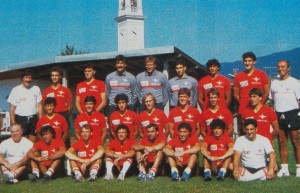
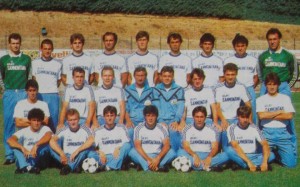
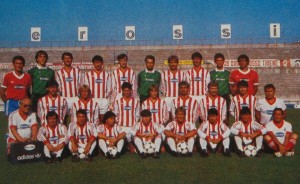
Uruguay built such ugly reputation, everybody wanted them out and it was a relief to see them gone. The reaction in Uruguay was different – opinion changed from almost hatred for Borras and his hopeless team before the World Cup started to rallying in support of coach and team wronged by the world. There was an element of which-hunting and scapegoating by now – Uruguay was labeled arch-villains, so it was easy to blame them even before they moved. Was Uruguay the most brutal team at the 1986 finals? Hardly. They were more open about it, though, and they also argued a lot with the referees, so they were easy target for collective hating. The real problems of Uruguay were different, though: the defensive tactic, professed by Borras, by itself was not wrong: Argentina used the same approach. But in the Uruguayan case, it affected the play of Francescoli – 'the Prince' was not very effective most of the time. Since Uruguay had small pool of players, it was wrong to leave some of the best out of the team – that especially true for strikers. That were the prime reasons for the early exit of Uruguay, even for the lucky reaching of the second stage of the championship. Were they capable of more? Depends... they played their best football against Argentina, so it looked like that they were more comfortable playing with South American teams. Any other opponent somehow lead Uruguay to recoil into their defensive brutality, destroying any attempts at playing football – so, it was deserved end of the line. There was no pleasure in watching butchers on one hand and on the other – Denmark annihilated the butchers entirely. One thing was sure and remains: everybody was just happy to get rid of Uruguay. 
17.06.86 (12.00) Mexico City, Estadio Olimpico '68

FRA - ITA 2:0 (1:0)

(~70000) Esposito ARG, Diaz COL, Martinez URU

FRA: Bats - Ayache, Battiston, Bossis, Amoros - Giresse, Tigana, Fernandez (75 Tusseau), Platini (c - 86 Ferreri) - Rocheteau, Stopyra
ITA: Galli - Bergomi, Vierchowod, Scirea (c), Cabrini - G.Baresi (46di Gennaro), de Napoli, Bagni - Conti, Altobelli, Galderisi (58 Vialli)

1:0 Platini 16, 2:0 Stopyra 56

booked: Ayache / de Napoli, di Gennaro

The noise around this match was great – expectations, speculations, predictions, interviews, until the start of the match. The reigning World champions against the reigning European champions, what a thrill! Neither team played well so far... but Italy started slow and only improved when really mattered, culminating at the semi-finals and the final in 1982. France started badly, but seemingly was going up every next game they played. This was the moment for some terrific display of football, then – it was all or nothing. There was lots of 'nothing' on the field, though... Italy did not improve, very likely could not improve. France was, if anything, very experienced team and managed to kill the only danger Italian attack possessed: Altobelli. The French superiority in midfield decided the match: Altobelli was cut of from supply, the Italian defense was perhaps lured a bit closer to the center of the field, because the main actions was going on in midfield and if you want to get the ball from Platini and company, you have to go near them, thus leaving gaps and empty spaces near your own net. France cleverly capitalized on that – their strikers, as ever, were not the greatest danger, but they kept defenders' attention on themselves and speedy midfielders popped up dangerously from behind. Since France was not just Platini, keeping an eye on him was more confusing than anything else – when Italians paid him attention, the action simply moved to some other place, unwatched at the moment. Largely, Italy lost the midfield and with that – the match. It was fair result. 
Italy deserved to lose and go home. The hopes that Italy will get stronger with time did not materialized, the team struggled with some uninspired and boring football from start to elimination. And it was clear why they went home early: not enough good players. The heroes of 1982 were no longer around or they aged and were pale shadows of their former selves: Rossi did not appear at all. As a general impression, this squad was composition of leftovers from 1982, mostly players, who were reserves back then, and various second stringers, who would not make the squad 4 years earlier. There was new talent, but at the moment too young to put in central position: thus, Conti (31 years old and not really great anymore) and Altobelli (30 years old) were the key attackers. Vialli (21) and Galderisi (23) were substitutes. Italy was shaky team caught between generations – the old guard was going out, the young talent was still not fully bloomed. Frankly, Italy deserved to go home and if not for the weak group they were in the opening stage, most likely they would have gone home earlier. 

17.06.86 (16.00) Monterrey, Estadio Universitario

GER - MAR 1:0 (0:0)

(-19000) Petrović JUG, Brunmeier AUT, Nemeth HUN

GER: Schumacher - Berthold, K.-H.Förster, Jakobs, Briegel – Eder, Matthäus, Magath, Rummenigge (c) - K.Allofs, Völler (46 Littbarski)
MAR: Zaki (c) - Khalifa, Bouyahyaoui, Oudani, Lemriss - Dolmy, El Haddaoui, Bouderbala, Timoumi - Khairi, Krimau

1:0 Matthäus 89 f

booked: Lemriss, Khalifi
If we take this moment... wow, what a match! Deceiving photo. Of course, West Germany was the big favourite here – yes, the Germans played terribly so far, but they made it by sheer will and determination, and Morocco was the easiest possible opponent. Yes, it was clear that the Germans will not play some interesting football, but it was expected that Morocco exhausted its strength in the group stage and will be easy target for physically superior team with iron will. What happened on the field was both expected and unexpected. The weather was very hot and the match proceeded in slow tempo – however, it looked deliberate. Later, many had the impression that Morocco did not play to win, it was disinterested team. But a close look at game suggests different view: looks like Faria tried to find tactic giving his boys a chance. Hot or cold, West Germany preferred high speeds, constant running, constant pressing, constant battle, so its physical superiority to win the game. Morocco, more skillful team, played slow and mostly in the middle zone. Thus, its technical superiority gave them control of the ball and thus of the tempo. The West Germans were never comfortable when the tempo was sluggish, they could not get the ball and were also lulled by the slow ball moving somewhere near the central line. As soon as the Moroccans saw the opposition going to sleep, there was lightning long pass deep in the German half, most often in some relatively empty space, giving a good chance for a speedy striker to go alone right to Schumacher. With difficulty, the German defenders managed to kill all such dangers, using offside trap, but the Moroccans patiently tried again. This was clever tactic, the best possible against West Germany, it taxed German defense pretty much to the maximum. Too bad Morocco did not score – for West Germany had no answer really. The Germans were especially hopeless in attack, could not built anything even barely meaningful, and lost the midfield entirely as well. But they did not allow a Moroccan goal, and that was the decisive factor. Just before the final whistle, when it was damn sure the match was going into extra-time, the Germans scored. Out of nothing... from a free kick. It was sheer luck – true, Matthaus kicked a good ball, but Moroccan defenders and goalie made collective mistake when building the wall. German luck, which of course, was not just luck – the Germans, good, bad, or ugly, were very sophisticated players with nerves of steel. Playing to the last second, trying any opportunity, no matter how hopeless. Never giving up, never losing their cool, just like machines. In a long run, machines win. No pleasure in watching machines, though... 
Morocco was eliminated, but they went home satisfied. Went farther than any African team before. Played quite well. Won their group. Above expectations, even their own. Jose Faria did splendid job with his selection, especially in the tactical aspects. Tactics were always the weak side of African teams , but this time the problem was seemingly solved: Faria taught his players not only what he wanted from them to do, but actually to do it on the field. The playmaking abilities of Mohamed Timoumi were put to great use and effect. Losing to West Germany was no shame – Morocco practically outplayed the opposition. Unfortunately, to break the Germans was not easy, so Morocco was unable to score. As for the goal which decided the match – well, Germans... they prevailed against bigger, stronger, scarier teams than Morocco just the same way. One moment was enough to lose a game against West Germany. Too bad Morocco was eliminated, though – they were much better fun than the iron toys. Yet, it was great for the whole African football Morocco went that far and left very good impressions. 
18.06.86 (12.00) Mexico City, Estadio Azteca

ENG - PAR 3:0 (1:0)

(-99000) Al-Sharif SYR, Al-Shanar ARS, Ponnet BEL

ENG: Shilton (c) - G.M.Stevens, Martin, Butcher, Sansom - Steven, Reid (58 G.A.Stevens), Hoddle, Hodge - Lineker, Beardsley (82 Hateley)
PAR: Fernandez - Torales (85 Guasch), Schettina, Delgado (c), Zabala – Canete, Romero, Nunez, Ferreira - Cabañas, Mendoza

1:0 Lineker 32, 2:0 Beardsley 56, 3:0 Lineker 72

booked: Martin, Hodges / Romero, Nunez

NOTE: The Paraguayan coach banned from taking place on the bench

Before the game Bobby Robson said his England will win 3-0. His arguments were met with strong skepticism – England did not play well so far and its defense was dangerously outdated, playing in line. However, it was pretty much clear how the opponents will play: Paraguay depending on solid defense and the speed of Romero and Cabanas in counterattacks. England – attacking relentlessly and trying to prevent long passes to the deadly Paragayan duo in front. Neither team had anything else to offer... What was somewhat left unvoiced – because Uruguay was the greatest villain, taking all attention and blame on itself – was that most likely this match will be tough and brutal. Paraguay had long tradition of playing dirty; England never shied away from bruising tackles either. Depends on how one views the game of football, though... British commentators preferred to describe team Paraguay as 'very physical'. Anyhow, the game proved Robson right, those expecting 'manly football' right, those pointing out weaknesses before the match were also right. It was not the Uruguayan coach watching from the stands – the Paraguayan one was also suspended. 4 yellow cards were shown during the game, equally, 2 yellows each team. English defense was vulnerable and too slow for speedy Romero and Cabanas. Luckily, the ball rarely reached them. Paraguayan defense played also just as expected, however, it was tricked. Robson said – and nobody believed him – that he made some changes to surprise Paraguay. The change was long waited for: it was clear that the only lively thing in English attack was Lineker and something had to be readjusted in order of utilizing his abilities. That was to make him the pinnacle of the attack, the game to be shaped around him. A technical, speedy, mobile striker with no fixed position in front. He was more of a problem for his teammates, though – as the match progressed, it was clear that Robson asked his players to create opportunities for Lineker, to watch him and what available space he has, to use surprise openings, but hundred years old habits were difficult to break and the English often made high crosses to the front of the Paraguayan net – a tall center-forward must be there, to battle for the ball in the air and strike it in the net. But there was no tall center-forward, there was nobody now and the cross was wasted. Paraguayan defense was also more confident with air battles for balls coming from the wings, but the absence of enemy striker was nothing to complain about. Stopping Lineker was another matter – the Paraguayan apparently did not expect his kind of play and found no answer. Robson's idea were for using Lineker required a second player – Beardsley, who was similarly unfixed in one place striker. That was perhaps the best way to force English midfield out of old habits – to make them see there was nobody hulking in front of the Paraguayan goalkeeper and thus to restrain the natural desire to make a cross. And that decided the outcome of the match, fairly early too – Lineker scored and England was leading 1-0 at half time. Then early in the second time a second goal was scored and finally Lineker made it 3-0. Meantime Paraguay failed to score – opportunities were missed, but Shilton also played very solidly and more. More or less, Paraguay, with its limited resources, had no other option: no great midfielder to control ball and tempo, and to create opportunities. It was a team of soldiers, they did their best, but when it came to attacking, it was just long ball in empty space to Romero and Cabanas. English defense had no real answer to the duo – too slow – so they were to be tackled illegally as soon as possible, before they were near the net in scoring position. Luckily, England possesed the ball most of the time and gave relatively few opportunities for counterattacks, just as hoped. England did not look particularly stronger than Paraguay, but won 3-0 and more importantly showed some life and creativity. And because of that suddenly popped up as a potential title contender in the eyes of many. 
Let face it: nobody expected much of Paraguay. Rather anonymous squad, most likely to be just happy playing at the finals after enormously long absence, and go home after the group stage. May be some memorable effort, but no more. Romero and Cabanas were stars, no doubt about it, but having only two strikers was hardly enough even for occasional heroics. Paraguay was expected to tough to beat team, though – expected to be organized, brutal, alert, fit. Physically strong. Given all that, Paraguay did better than expected. Yet, it was obvious they could go further only if having some tremendous luck. A brave team, yet nothing special. May be the referee failed to give them a penalty against England, but even if he did... the result was already 2-0 England. Well, modest ending, but generally not bad performance. It is also good to points out that thanks to monstrous brutality on display in so many games, the Paraguayan contributions in this department paled, were 'also run' at best, practically unnoticed. One can be sorry for Romero and Cabanas, though – wonderful players, who most likely would not appear at another World Cup. 
18.06.86 (16.00) Queretaro, Estadio La Corregidora

ESP - DAN 5:1 (1:1)

(~38500) Keizer HOL, Dochev BUL, Ben Naceur TUN

ESP: Zubizarreta - Tomás, Gallego, Goicoechea, Camacho (c) - Julio Alberto, Victor, Michel (84 Francisco), Caldere - Butragueno, Julio Salinas (46 Eloy)
DEN: Høgh - Busk, M.Olsen (c), I.Nielsen, Andersen (60 Eriksen) – Berggren, J.Olsen (71 Mølby), Bertelsen, Lerby - Laudrup, Elkjær-Larsen

0:1 J.Olsen 33 p, 1:1 Butragueno 43, 2:1 Butragueno 56 h, 3:1 Goicoechea 69 p,
4:1 Butragueno 80, 5:1 Butragueno 90 p

booked: Goichoecea, Camacho / Andersen
What makes football great? Games likes this one. Big surprise, which nobody likes, save the winners. At the group stage Denmark was the only team which not only played wonderful football, but was getting stronger in every next game. Spain... not so. The impression was that they spent more that they have in the effort to reach the 1/8 finals. Tough, difficult, but beatable – especially by flying team like Denmark. What was rubbing some observers the wrong way was the arrogant confidence of Piontek, practically boasting that his boys were not even showing all they can and thus every opponent was going to lose. No doubt about it. Looked like Piontek was losing reality, especially when the relaxed atmosphere of the Danish camp was observed closely: it was enough to see Elkjaer-Larsen sitting next to the swimming pool with cigarette in one hand and cold beer in the other. Other teams trained, the Danes lounged... And paid the price for that. And what price they paid! Spain utterly destroyed them. Yet, it did not happened right away – about 60 minutes Denmark was not only superior, but proved Piontek right – the commanded the match, the ball was mostly in the Spanish half, the victory was crystal clear... Denmark scored first and now it was just a matter of how many more goals they will put in the Spanish net. But in the 56th minute, despite the great dominance of the Danes, the result was 1-2. Terrible mistake of Morten Olsen presented Spain with equalizer just before the first half. And then a corner kick provided the second goal – the Danish defense was too slow and too heavy in the air. Meantime Denmark missed a number of great opportunities ans who does not score... the Danes went frantically ahead after the second goal and lost balance, lost any thought of defense, and that was their undoing – Spain scored 3 more goals. Yes, it was explosion, but this time the dynamite exploded in the hands of its own creators. It was unbelievable. And even more so to those, who saw the match – Denmark did not look worse, on the contrary – whoever heard the result first and watched the match later had the impression that the news got the result wrong... but it was not and it was Elkjaer-Larsen with 4 goals, but 'the Vulture'. 
Many were shocked and lamented the elimination of USSR, but more so after the elimination of Denmark. After all, this was the team playing more exciting football every next game and certainly the most entertaining football so far. And they were the better team against team for the most of the time, far better... Their failure was blamed on arrogance, but there was more of course: the problems of Danish defense were noted well in advance. Old, slow, and heavy was the verdict, vulnerable line. It was true to the point – Morten Olsen was 36 years old, Busk – 33. There was objective problem – deficit of good defenders, Denmark had only 6 in the squad, and the regulars were practically irreplaceable. Mexican conditions did not help the oldest players – it was the opposite. Add to it the chronic deficit of top class goalkeepers. But all that was well known in advance, best to Piontek. The real problem was something else: Denmark was compared to the great Ajax of the early 1970s, they were called the new Ajax. Sounded great and real bright spot for many fans and specialists in the dull football of the 1980s – so great and optimistic ray of light, that something very important was obscured. Denmark was not Ajax at all – yes, Ajax was arrogant, carefree, loud-mouth, over-relaxed team, but it was also an incredibly intelligent team, capable to read very quickly particular game and opponent and adapt approach permitting them to win. They were capable effortlessly to change tactics during ongoing match and, if that was needed, to become ruthless, ugly, defensive soldiers. No sentiments on the pitch – the hippies transformed into professionals, they were always proffesionals on the pitch. If legs needed to be broken in order of winning, then break legs. If closing the game was needed to neutralize some dangerous foe, then forget the artistry and close the game in some dull kicking the ball around the central line. Ajax had the players for such changes, though. Denmark did not – it was team knowing only how to play in attack, always trying to outplay the opponent and score. And if the opposition scored... well, we have to outscore them, simple and clear. It did not work against teams like Spain, teams asking for different approach, change of tactics. Ajax would never permit tricky Spaniard to get advantage of deadly Butragueno – most likely they would had kicked him to death. Most likely after scoring one goal, Ajax would had try to confuse the Spaniards with alternation of the tempo, would try to bait the known Spanish brutes into receiving yellow and red cards, so the get numerical advantage. Ajax would not try just to outplay Spain. Denmark was not able of anything else, but attack and attack – opening itself more and more for lethal counterattacks, exposing the vulnerability of its defense. Wonderful as it was, team Denmark was simplistic team and thus beatable not just by clever opponents, but almost by anybody, if their strikers were unlucky to score goals. Unlucky to make it 2-0, Denmark lost 1-5. And that looking the stronger team to the end of the match. As for old, slow, and heavy defense... there was not much to do about it. The only option was improvisation – Holland improvised in 1974 and 1978, but Piontek was either scared of taking a risk, or feared that improvisation would destroy his midfield, his greatest line on which everything depended. Well, Piontek did not have so many options at hand – Michels could risk in 1974, moving Haan back, for he still had other midfielders, but if Piontek moved back Lerby... the midfield was crippled right away. It was not that the coach did not try to change things in defense – Sivebaeck (yes, heavy and slow) was out – but that was the maximum. Unpleasant as it was, Denmark deserved to be eliminated, if one digs deeper with more objective mind. Still, too bad for football. 

Third-place table

It was clear by now, but just to stay methodical: 4 out of the 6 third-placed teams qualified according to their own table. 

1. BEL^ 3 5-5
2. POL^ 3 1-3
3. BUL^ 2 2-4
4. URU^ 2 2-7
5. HUN 2 2-9
6. NIR 1 2-6
Northern Ireland knew they were going home – 1 point had no chance. But they were going home proudly: with severely limited resources, they played pretty equal to any other team. May be skills were lacking, but they had big hearts, nobody blame them. Perhaps the only team deserving to stay longer – when you look at the lucky ones. Too bad it ended like this for Pat Jennings, at the end of his long career, and Sammy McIlroy, who was also getting too old. Without knowing yet, too bad for Norman Whiteside, for his career was cut short by injuries and this happened to be his last World Cup too. One cannot be too sorry for the spirited Irish for another reason: they did not play great football and no matter how big their hearts, the quality of their game was not great and there was no way to change that. 
Hungary... apart from fellow Hungarians, nobody could be sorry for them. It was weak team, no doubt about it. Improvement was not possible at all – Hungary was on its way downhill, hardly had any promising players, and even did not have the spirit the Irish had. Frankly, better have the Uruguayans, who at least enraged everybody with their murderous kind of football: they stirred some emotional response, the Hungarians stirred nothing. One of the teams fully deserving to go home as soon as possible. 

Group F

Group F. 
02.06.86 (16.00) Monterrey, Estadio Universitario

MAR - POL 0:0

(~19000) Martinez URU, Quiniou FRA, Traore MLI

MAR: Zaki (c) - Khalifa, El Biaz, Bouyahyaoui, Lemriss - Dolmy, El Haddaoui (69 Souleymani), Timoumi (90 Khairi) - M.Merry, Krimau
POL: Młynarczyk - Kubicki (46 Przybyś), Wójcicki, Majewski, Ostrowski - Matysik, Buncol, Komornicki, Boniek (c) - Smolarek, Dziekanowski (56 Urban)

booked: Timoumi

It all depends... for many, Morocco was a surprise; for others – Poland was not much at the moment and the result was expected. The Africans was the better team, especially when their opponents appeared to be sluggish and clueless on the field. Poland came to life only in the second half, only to discover that desire is not enough and Morocco has well organized defence. Largely, Poland was lucky to escape a loss. Piechniczek only wondered after the game how it was possible to play at the World Cup finals without any mood to win, but he also sounded resigned. Faria was all smiles, pointing out to the journalists that his Morocco only follows in the steps of Tunisia'78 and Algeria'82 – African football was no joke and there was no gap between African teams and the leading football nations now. 
03.06.86 (16.00) Monterrey, Estadio Tecnologico

POR - ENG 1:0 (0:0)

(~23000) Roth GER, Dochev BUL, Al-Sharif SYR

POR: Bento (c) - Alvaro, Frederico, Oliveira, Inacio - Diamantino
(83 José Antonio), Jaime Pacheco, André, Sousa - Carlos Manuel, Gomes (73Futre)
ENG: Shilton - G.M.Stevens, Fenwick, Butcher, Sansom - Hoddle, Robson (c - 60 Hodge), Wilkins, Waddle (80 Beardsley) - Hateley, Lineker

1:0 Carlos Manuel 75

booked: Jaime Pacheco / Fenwick, Butcher

It was expected to be interesting clash, but England was also expected to win – there was plenty of praise of Bobby Robson's team before the finals. A major favourite. Portugal was greatly promising team in 1984, but that was 2 years ago and meantime did not look like the Portuguese moved up. And the beginning of the match was true to expectations... England went into relentless attacks, Portugal hardly stepped in the English half of the field. With time, also became clear that England was not new, but old: speedy, hungry, dedicated to attack, but the same predictable straight-forward football they played for ages, lacking imagination, improvisation and surprise. England looked dangerous, but Portugal had no big difficulty defending, patiently waiting for their own chance. Bento was the hero, saving fantastic balls, England had no luck – and no luck, for there was no enough skill, and the minutes passed one after another. Then Portugal dropped the bomb – Futre replaced Gomes, somewhat late in the game, but what a surprise to the English players the youngster was... unpleasant surprise. Suddenly Portugal was incredibly dangerous, the English was too slow for Futre, and as soon as their efforts were concentrated on stopping him, other dangers loomed, ending with a goal in the net Shilton. And there was no answer to it, although there was still plenty of time. Surprise, surprise, England lost. Robson blamed the loss on rotten luck: one mistake and the opponents scored... dominating performance, so many scoring opportunities and nothing... rotten luck. Torres recalled the past – in 1966 the team he played in lost to England and now he was happy to take revenge. He had worries, though, still unvoiced – the 37-years old Bento, who played fantastic match, injured himself in a clash with Lineker. Most likely to be out for the rest of the championship... which was too bad, for not only the captain was in wonderful form, but he also inspired by example. 

06.06.86 (16.00) Monterrey, Estadio Tecnologico

ENG - MAR 0:0

(+20000) González PAR, Kirschen DDR, Espsito ARG

ENG: Shilton - G.M.Stevens, Fenwick, Butcher, Sansom - Hoddle, Robson (c - 42 Hodge), Wilkins - Waddle, Hateley (76 G.A.Stevens), Lineker
MAR: Zaki (c) - Khalifi, El Biaz, Bouyahyaoui, Lemriss (74 Ouadani) – Dolmy, Timoumi, Khairi, M.Merry (88 Souleymani) - Bouderbala, Krimau

booked: Wilkins, Hateley / Khalifi, Khairi
sent off: Wilkins (42)

England had to win this match, no other way. Robson apparently tried to change the approach – expecting defensive play from the Moroccans, the ball was kept in midfield, controlled by the English in hope that the Moroccans will be lured to move a bit forward and thus open some space. But Faria's boys did not not... they were disciplined squad, knowing what to do. England was confronted by tied, well organized defensive team, which had skillful players able to organize deadly fast counterattacks. Because of the sheep brutality displayed in Group E, little attention was paid to what was going on the pitch in other groups – chopping and hacking was plentiful here too, the 'fair' English already collected 2 yellow cards in the first match, now, perhaps bitter that once again they could not prevail, nerves showed again, culminating with the expulsion of Ray Wilkins in the 42nd minute. The second half Morocco had one man advantage and life was easier for them: they attacked rarely and Shilton had nothing to do practically the whole game, but look at the other side: England attacked constantly and Zaki, the Moroccon goalkeeper, had nothing to do as well – English strikers were blocked early, there was dominance, but no opportunities for kicking the ball toward Zaki's net. Hollow dominance and 0-0 at the final whistle. Robson confessed that he did not expect such organized play from Morocco. If he really did not study Morocco... how was one of the hottest coaches in the world at the moment? Most likely Robson chose to take the blame on himself, hiding much bitterer truth: he had no other options, especially in midfield, and could not change anything – Bryan Robson, Hoddle, Waddle were good, but hardly on the same level with the world class midfielders. And they had problems with injuries on top of it. Ray Wilkins perhaps was a mistake as an idea – moved back as defensive midfielder, the veteran was a player of the old British school, dragging unwittingly his teammates into the kind of football which did not work for years. Hateley was similar – a classic English center-forward – so the game quickly deteriorated into the old ineffective kick and run approach with crosses aimed at the center-forward. Lineker's mobility and surprise was lost in such football, so well known and predicatble by now, that Morocco had no trouble blocking all English efforts. Faria even did not have to say much after the game, not even boast. 

07.06.86 (16.00) Monterrey, Estadio Universitario

POL - POR 1:0 (0:0)

(-20000)

POL: Młynarczyk - Pawlak, Wójcicki, Majewski, Ostrowski – Matysik, Komornicki (57 Karaś), Boniek (c) - Smolarek (75 Zgutczyński), Dziekanowski, Urban
POR: Damas - Alvaro, Frederico, Oliveira, Inacio - Diamantino, Jaime Pacheco, André (73 J.Magalhaes), Sousa - Carlos Manuel, Gomes (c - 46 Futre)

1:0 Smolarek 64

booked: Wójcicki, Dziekanowski

Third match – third surprise! Portugal was seen as the favourite here, but Bento broke his leg in training – very likely the bruises collected against England helped – and that required some changes. Since Portugal needed only a point to reach the next round, the change was relative – increasing the defensive approach, taking special care to kill attacks early, for Damas, 38-years old, had enourmous experience, but played little for the national team and he was no Bento. And worries about Damas were well justified... once he made mistake and the game was to lost. Poland played nothing again, the combination Boniek-Smolarek did not work as it used to, although skill and experience helped when mattered: Smolarek did not miss the chance and scored the only goal in the match. There was nothing good to say about the quality of football played, but the Polish win elevated this group as the most intriguing one: before the last round no team qualified yet, everyone had a chance to go ahead – or to be eliminated. This situation also brought hopes that now, when it was all or nothing, the teams will play some interesting football at last. 

11.06.86 (16.00) Monterrey, Estadio Universitario

ENG - POL 3:0 (3:0)

(-23000) Daina SUI, Christov CZE, Brummeier AUT

ENG: Shilton (c) - G.M.Stevens, Fenwick, Butcher, Sansom - Hoddle, Steven, Hodge, Reid - Beardsley (76 Waddle), Lineker (86 Dixon)
POL: Młynarczyk - Pawlak, Wójcicki, Majewski, Ostrowski - Matysik (46 Buncol), Komornicki (24 Karaś), Boniek, Smolarek - Dziekanowski, Urban

1:0 Lineker 8, 2:0 Lineker 14, 3:0 Lineker 36

booked: Fenwick

What to do? Piechniczek did nothing. Boniek-Smolarek. There was nobody else anyway, certainly nobody promising at the moment. Robson, however, changed four players, a radical rework of the midfield – Wilkins was suspended, Robson and Hateley so far disappointed. The changes worked, though – England was immediately different, Lineker got better feed and support and suddenly he became exactly what he should have been from start: the prime striker. Poland had no answer – the most coach and team could do was having a big 'manly' discussion after the match with Portugal. Since Poland could not change anything else, all came to familiar pep-talk 'to show character'. It worked somewhat – Poland came to life and with that, to peril. Lineker scored 3 goals in the first half and character or no character, the campaign was over. Poland tried to score, but Shilton prevented all efforts to change the result. Robson was relieved at the end, Piechniczek... just as well, for there was radio and the other group match ended at the same time: Poland was not going home yet. 
11.06.86 (16.00) Monterrey, Estadio Tecnologico

MAR - POR 3:1 (2:0)

(-24000) Snoddy NIR, Roth GER, Butenko ZSR

MAR: Zaki (c) - Khalifi, El Biaz, Bouyahyaoui, Lemriss (69 Amanallah) – Dolmy, El Haddaoui (71 Souleymani), Timoumi, Khairi - Bouderbala, Krimau
POR: Damas - Alvaro (55 Rui Aguas), Frederico, Oliveira, Inacio – Pacheco, J.Magalhaes, Sousa (69 Diamantino), Carlos Manuel - Gomes (c), Futre

1:0 Khairi 19, 2:0 Khairi 28, 3:0 Krimau 62, 3:1 Diamantino 90

booked: Gomes

All or nothing for both teams, but it was expected that Portugal will prevail – Morocco may crumble under pressure, so was the wisdom. A tie would have been a nightmare, though – both teams would be not only with the same points, but with exactly the same goal-difference. It would have been even worse if England-Poland also ended in a tie. Calculations slightly favoured Portugal if the match was tied. Morocco's calculations were different: Polish loss was bad for them, a tie was not going to work in their favour. May be. It was so complicated, that the development of this match required constant listening to what was going on in the other group match and re-adjustments during the game, a very difficult task, if possible at all. Thus, Morocco seemingly placed their bets on Portuguese cautious defensive approach and chose to attack. It worked and they scored. England scored as well, so now it was different game – Portugal needed to attack, Morocco was prepared to use fully the moment and soon managed to score a second goal – good shots both times, but Damas was no Bento for sure: no heroics from him. The second half was a matter of maturity: Portugal was unable to convert its play into more dangerous attacking approach and Morocco defended itself well, helped by its own lead and the known result in the other game. Only after scoring their third goal the Africans lowered their guard and Portugal managed to scored one goal. After the match Faria was pleased to recall how the same journalists sarcastically laughed at his words in the previous press-conferences: well, they laughed, but he was right! Who was going to laugh now? Everything happened exactly as he said it will before the games started: the European teams would fight each other to no clear success of any and Morocco had a good chance to go ahead when nobody was looking. Look at the final table, if you please. As for the future – Faria would not dare speculate, he was happy that his team achieved undeniable success already. 
1. MAR^ 3 1 2 0 4 3-1
2. ENG^ 3 1 1 1 3 3-1
3. POL^ 3 1 1 1 3 1-3
4. POR 3 1 0 2 2 2-4

Portugal was going home. Perhaps rightly so, although it was chancy elimination in this group. There were few things working against this team: one, Portugal did not developed further after 1984 – rather, stepped down a bit. Second, the team lost two very important players – first Chalana, quite a long time before the World Cup and Bento after the first group game. Both were practically irreplaceable and their absence affected negatively the team's play. And Gomes was getting old by now and perhaps not the same deadly striker anymore, especially when there were limited opportunities. Third, Paulo Futre was still very young, a promising, but not yet a key player with central role. Without Chalana and with Futre not yet at his prime, Portugal had no real creative playmaker to make difference on the pitch. Forth, too much calculating – Portugal seemingly played with caution, aiming at securing a point and if some chance came up – only then may be a win. But such approach made it very difficult to switch into openly attacking football when the result was negative. Too much caution made them lose at the end and not only that, but Portugal hardly left memorable moments of its performance. 

Group E

Group E.

04.06.86 (12.00) Queretaro, Estadio La Corregidora


GER – URU 1:1 (0:1)


(+30000) Christov CZE, Silva CHI, Valente POR


GER: Schumacher (c) – Berthold, K.H.Förster, Eder, Briegel – Matthäus (70 Rummenigge), Magath, Brehme (46 Littbarski), Augenthaler – Völler, K.Allofs

URU: Alvez – Diogo, Acevedo, Gutierrez, Batista – Bossio, Barrios (c – 56 Saralegui), Santin, Francescoli – Alzamendi (82 Ramos), da Silva


0:1 Alzamendi 4, 1:1 K.Allofs 85


booked: Diego, Saralegui

Later it was considered that this match was not ugly only because it was the first match for each team was still somewhat restricted in its attitude, but mostly because the Uruguayans scored early and were concerned with preserving their fragile lead. When the Germans finally equalized, there was simply no enough time for earnest brutality. Yet, the only meaningful reason for such considerations is that this match pales compared to what followed – every new game was more monstrous. As for kicking and hacking, there was plenty of both, delivered by both teams and from start to finish. It was still ‘normal’ – Germans were disciplined butchers: they did it as the course of the game dictated, as a matter of fact, as something needed, something ‘professional’ – it was they who gave the name characterizing the 1980s football: ‘tactical foul’. No malice, just business, you know. The Uruguayans – well, South Americans were known for ages as brutes, who kick and kill in order to get what they need, adding long lasting protests and arguing with referees. Hardly anyone was surprised that this match was ‘masculine’, especially after knowing that West Germany did not have a great team and so far German teams reduced football to cold merciless battle on so many occasions. Uruguay, however, scored very early goal after tremendous mistake made by Matthaus. After that Uruguay was just killing the time, careful not to give chances to their deadly opponents. It was known they have defensive concept, so no surprise in what they were doing, but in this match all deficiencies of West Germany were displayed: lack of imagination, inability to do anything creative in order of penetrating tough defence, shaky defence in the same time, so vulnerable to speedy counter-attacks. Tireless running, physical strength, ambition – what was the benefit of all that when skills were lacking. Beckenbauer did what one could possibly do – increased the number of strikers, fielding Rummenigge and Littbarski in the second half, so he had now 4 strikers, but it looked like desperate move, the last resort. It did not really work, but by hook and crook, after not even an attack, but rather chaotic kicking of the ball ahead, Allofs managed to equalize. 1-1. Beckenbauer had little so say – facing a wall of journalists clearly not on his side, especially the German ones, he only tried not to look defeatist. Yet, the result was only acceptable, fair, after such a match. Borras perhaps was satisfied with the draw, but he also had many enemies in the press, so tried lame phylosophy: ‘The result is not contrary to what we saw – it is only logical that if one team is mainly attacking, then the other team would be mainly defending. We excelled in defending.’ Not what the Uruguayan journalists wanted to hear – Borras was disliked presizely for his defensive concept. But nothing fatal – nobody lost a game here.

04.06.86 (16.00) Nezahualcoyotl, Estadio Neza ’86


DAN – SCO 1:0 (0:0)


(~18000) Nemeth HUN, Al-Shanar ARS, Kirschen DDR


DAN: Rasmussen – Busk, M.Olsen, I.Nielsen, Lerby (c) – J.Olsen (80 Mølby), Berggreen, Bertelsen, Arnesen (76 Sivebæk) – Laudrup, Elkjær-Larsen

SCO: Leighton – Gough, Malpas, McLeish, Miller – Souness (c), Aitken, Nicol, Nicholas – Strachan (75 Bannon), Sturrock (63 McAvennie)


1:0 Eljkær-Larsen 58


booked: Berggreen

Vastly different teams, but both ready to give their best – the difference was in what consisted ‘best’. The ‘Danish dynamite’ was in the mouth of everybody, a team compared to great Ajax of the 1970s. Attacking minded, creative, enjoyable squad, which played with artistry without forgetting that opponents have to be blocked, pressed, and made uncomfortable. Their approach was to outplay the opponent and some deficiencies, real or imagined, in defence were brushed aside. The Scots were difficult team to outplay, they were fearless, also attacking minded, and not giving up ever. Their squad was not as mighty as it used to be, but Alex Ferguson was great motivator and knew what to do – the lack of class was easily compensated with spirit and collective work. The trouble was they played predictable and easy to read British football without any clever moves. Which decided the outcome – the Danes were able to get the ball well before their penalty area and launch a new attack, which in turn the Scots tried to destroy one way or the other. Legs suffered, or course, but still it was in the realm of ‘manly’ football, not nakedly ugly. At the end the Danes scored a goal and were the better team. Pointek was more than optimistic, saying that his is just the beginning and the best will come later. Ferguson was a bit worried, but just a bit.


08.06.86 (12.00) Queretaro, Estadio La Corregidora


GER – SCO 2:1 (1:1)


(~30000) Igna ROM, Dochev BUL, Snoddy NIR


GER: Schumacher (c) – Berthold, K.H.Förster, Eder, Briegel (64 Jakobs) – Matthäus, Magath, Littbarski (76 Rummenigge), Augenthaler – Völler, K.Allofs

SCO: Leighton – Gough, Malpas, Narey, Miller – Souness (c), Aitken, Nicol (61 McAvennie), Strachan – Bannon (75 Cooper), Archibald


0:1 Strachan 18, 1:1 Völler 22, 2:1 K.Allofs 50


booked: Archibald, Bannon, Malpas

Again, a tough match. Again, a ‘manly’ match – such were the opponents. Scotland was a bit better than the Germans to the eye, but not prevailing. The Germans were still in shambles, but since they were always fighting team, there was no way to outrun and outplay them. Like in the opening match, they first received a goal and had to come back somehow. A Scottish mistake helped them to equalize. Then managed to score a second goal in the second half. The straight-forward football prevented Scotland to do more in a match in which they were the slightly better team: they hardly made any surprise move, thus there was little trouble for the German defence. After the match Beckenbauer said that Scotland was the better team and he was worried to the last second. Ferguson perhaps had nothing really to say – once again, Scotland played bravely and no more. It looks the Scots were going home after the first round, as they did in 1974, 78, and 82.


08.06.86 (16.00) Nezahualcoyotl, Estadio Neza ’86


DAN – URU 6:1 (2:1)


(+26000) Márquez MEX, Arppi Filho BRA, Keizer HOL


DAN: Rasmussen – Busk, M.Olsen, I.Nielsen, Lerby (c), Andersen – Berggren, Bertelsen (57 Mølby), Arnesen – Laudrup (81 J.Olsen), Elkjær-Larsen

URU: Alvez – Diogo, Acevedo (c), Gutierrez, Batista – Bossio, Saralegui, Santin (57 Salazar), Francescoli – Alzamendi (57 Ramos), da Silva


1:0 Elkjær-Larsen 11, 2:0 Lerby 41, 2:1 Francescoli 45+ p, 3:1 Laudrup

52, 4:1 Elkjær-Larsen 69, 5:1 Elkjær-Larsen 79, 6:1 J.Olsen 88


booked: I.Nielsen / Bossio, da Silva

sent off: Bossio (20)

The Danish dynamite exploded in this game and utterly destroyed Uruguay. Once again Ajax was recalled – they played fascinating football, but if they had to kick opponents, and provoke them – they did it just as well. Looked like Piontek’s Denmark was exactly form the same school: the Danes not only matched Uruguayan roughness, but cleverly provoked it with deliberate vicious tackles of their own. Nielsen started the butchery early in the game and was booked, but his job was done – the Uruguayans were seeing red. Soon it was 1-0 Denmark, which completely enraged Uruguay and Bossio was sent off in the 20th minute. This more or less finished the game – Denmark was not intimidated and had 70 minutes to play against 10 men. Denmark was flying, especially in the second half, when Uruguay, already heavily losing suddenly decided to go into some massive attacks, leaving their own gate practically defenseless. It was a lesson of great creative football given by the Danes, one of the most important parts of it was that if you can play creative football brutality cannot do anything. Stiff, calculated physical football had its opposite and there was no question which way the game should go: miserable 1-0 victory, extracted more by luck than by skill was beyond compare with joyous creative attacking football, scoring 6 goals. Borras just waved his hands helplessly: ‘It was obvious at mid-break that we had to change tactics. But change with what? We have nothing else.’ Piontek was proud and boastful: ‘This was real football. Football should be always a great spectacle, not drudging work.’ He was right, fans and journalists wanted precisely that, but may be his enthusiasm blinded him in the long run.

13.06.86 (12.00) Queretaro, Estadio La Corregidora


DAN – GER 2:0 (1:0)


(~36000) Ponnet BEL, Fredriksson SWE, Bambridge AUS


DAN: Høgh – Busk, M.Olsen, Sivebæk, Lerby (c), Andersen – Mølby, Arnesen – Laudrup, J.Olsen (71 Simonsen), Elkjær-Larsen (46 Eriksen)

GER: Schumacher (c) – Berthold, K.H.Förster (71 Rummenigge), Eder, Herget – Jakobs, Matthäus, Rolff (46 Littbarski), Brehme – Völler, K.Allofs


1:0 J.Olsen 44 p, 2:0 Eriksen 83


booked: Arnesen / Eder, Jakobs

sent off: Arnesen (89)

Let’s face it – this was match without intrigue and importance. Both teams already qualified, they really could have taking it easy. Especially because this group played last, all other results were known and the future was calculable. The group winner was going to face Spain, the 2nd- placed – Morocco. Well, it was better to finish second… Piontek seemingly did not care. Beckenbauer was in worse situation, for his team was not playing well, was constantly and rightly criticized, and he himself was unhappy with his team’s delivery. On one hand, second place was the rational thing to do… on the other hand, this team had to find some chemistry, some way to play football. At the end, the match proved to be the tough and tense, and brutal. Kicking was natural thing to do, both teams did not shy, the Germans under pressure started looking like the Uruguayans, except they were crafty butchers, always on the border line, always hacking when looking like they go for the ball, it was very difficult to book them, they were the grand masters of the cold, ‘professional’ butchery in the 1980s – they invented it after all. So, at the end of the game, Denmark paid heavy price – they won the useless game, but, more naive than the Germans, lost a key player: Arnesen was redcarded in the last minute. They lost their playmaker for the next match… The better team won, that was fine and right, at least the disgrace of 1982 was not repeated, but perhaps this match was crucial for Piontek: his team getting stronger after each game and beating mighty West Germany seemingly made Piontek overconfident. No tricks, just pure football… not bad, but here was the result: hyped-up team, believing nothing ever could go wrong, already looking to the final, which had to meat tough Spain and without their prime creative force, without the motor of the team, the constructor. Meantime Beckenbauer pointed out that his team,which in Germany was expected to come home in disgrace after the first round, qualified to the second.

13.06.86 (12.00) Nezahualcoyotl, Estadio Neza ’86


SCO – URU 0:0


(~20000) Quiniou FRA, Ben Naceur TUN, Diaz COL


SCO: Leighton – Gough, Albiston, Narey, Miller (c) – McStay, Aitken, Nicol (70 Cooper), Strachan – Sharp, Sturrock (70 Nicholas)

URU: Alvez – Diogo, Acevedo, Gutierrez, Batista – Pereya, Barrios (c), Santin, Francescoli (84 Alzamendi) – Ramos (71 Saralegui), Cabrera


booked: Narey, Nicol / Cabrera, Diogo, Acevedo

sent off: Batista (53 sec!)


NOTE: The Uruguayan coach banned from taking place on the bench for

one match

Crucial match for both teams – Uruguay needed a tie, for playing after everybody else finished, they were going to the second round with 2 points. Scotland needed a victory, nothing else could do. It was noy going to be an easy game and certainly not a pleasant one. True to expectations, murder was in the minds and Batista made a record: he was expelled in the 53th second of the match! Scotland got enormous advantage: a whole match to play against 10 men. The Uruguayans were more than unhappy and saw themselves as victims: looked like officials were trying to eliminate them artificially. But this was more after the game – during the match, in which both teams relentlessly kicked each other, and cards were shown left and right, Scotland was unable to establish some superiority and no goals were scored. Uruguay was primarily defending, but Scottish attacks were predictable, so it was not all that difficult. Of course, they used every trick known to football: slowing the game, wasting time, simulating, arguing with the referee, passing to the goalkeeper, again and again, but truly unimaginative Scotland was heavily tasked: the Scots had to find some way to beat solid defensive team, which was not familiar with sweeping balls in front of the net, but had tall and good in the air central defenders. And a special novelty was added to the bag of tricks: the whole match the Uruguayan reserve bench shouted at the referees, they were almost all the time at the line, swarming the linesman, showering him with obscenities. After the match Borras directly accused FIFA and was followed by the Uruguayan government and press – it was deliberate conspiracy against Uruguay, coming from the highest quarters and the referees were given the job to murder Uruguay. The scandal led to one match supsencion of Borras and issued threat by FIFA to the tune that Uruguay will be expelled from the finals if… well, somehow FIFA missed to say what. The Uruguayan Federation was fined 25 000 Swiss franks as well. All of that only convinced the whole of Uruguay that FIFA really scheme against them and victimize them. But they were still alive, despite all that efforts and going to the next round. Scotland was going home… again.

1. DAN^ 3 3 0 0 6 9-1

2. GER^ 3 1 1 1 3 3-4

3. URU^ 3 0 2 1 2 2-7

4. SCO 3 0 1 2 1 1-3

Cursed Scotland… 4 times in a row they were unable to reach the second stage of the finals. Always leaving good impressions and never succeeding. True, they were in the ‘group of death’, no luck there. True, Scotland was recently depleted of talent, having very little good coming up. More than ever they had to depend on spirit, but it was also their own fault – or rather the fault of British football, which so far failed to adapt to the changes of the game, to introduce modern approach. Thus, Scotland, even coached by bright Alex Ferguson, could not become anything more than tough opponent. They played predictable football, easy to read and defend against. It was easy to block their efforts, to win the midfield and control the match against them. Even entirely defensive team was able to cancel Scottish efforts – the Scots could not find a way of breaking solid, dull defense, leaving no empty spaces and more then able to sweep the ball away. Apart from spirit, Scotland left almost no memories this time – it was bland and ineffective team, unlike the squads from the 3 earlier World Cups. Spirit alone made them preferable than Uruguay and West Germany, but Scotland was unable to beat either team, earned only 1 point and that against 10 men. At least they were not disgrace, but… they were not Northern Ireland either to be still proud of holding their ground even when losing. Scotland needed to win – and it did not.


Group D

Group D.

01.06.86 (12.00) Guadalajara, Estadio Jalisco


BRA – ESP 1:0 (0:0)


(~65000) Bambridge AUS, Socha USA, Kelzer HOL


BRA: Carlos – Branco, Edinho (c), Julio Cesar, Edson – Junior (79 Falcão),

Socrates, Alemão, Elzo – Casagrande (66 Müller), Careca

ESP: Zubizarreta – Tomás, Maceda, Goicoechea, Camacho (c) – Victor, Michel,

Francisco (83 Señor), Julio Alberto – Butragueño, Julio Salinas


1:0 Socrates 63 h


booked: Branco / Julio Alberto

The favourites opened the group, which was both good and bad – on one hand, both teams had a chance to clear a bit their future goals after the end of the duel; on the other – such games tend to be cautious and boring. And tough. The first half was exactly that, including rough play from both teams. The second half was better and there was more football, and long lasting intrigue and bitterness. A Spanish goal was disallowed – well, a goal, according the Spaniards. It looked like the ball went in the brazilian net, but bounced out. It was difficult moment and if the referee was wrong, it was not deliberate. And it was not at all certain the ball actually crossed the line – it dropped somewhere there, on the line, before the line, behind the line, nobody could really tell. Spain, however, had no grief about Brazilian goal disallowed a little later: a hand ball. Difficult to spot, but the referee spot it. Still, Brazil scored and not a bad goal, but it was also more fuel for Spanish complaints: looked like Socrates was a bit offside. It was again difficult the judge occasion – was he, wasn’t he… millimeters. But that was the only goal of the match and it was hardly a great match. Both teams did not look terrific. Tele Santana was philosophically satisfied with the earned points, but also looked a bit troubled – he said he had to talk to his players to get livelier and play somewhat fearlessly. The Spanish coach was all blame: Spain was robbed! It was not just disallowed goal, but also a missed penalty in Spanish favour. There was also laughable complain that Brazil very well studied Spanish play and did not permit the team to display itself in attack. About Spanish roughness Munoz was understandably mute, but his cry that Spain did not deserve to lose only added fuel to simmering accusations of official helping Brazil. Socrates himself added fuel to that, but later.

03.06.86 (12.00) Guadalajara, Estadio Trez de Marzo


ALG – NIR 1:1 (0:1)


(~22000) Butenko ZSR, Petrović JUG, Daina SUI


ALG: Larbi – Medjadi, Kourichi, Guendouz (c), Mansouri – Kaci-Said, Ben

Mabrouk, Maroc, Madjer (33 Harkouk) – Zidane (71 Belloumi), Assad

NIR: Jennings – J.Nicholl, O’Neill, McDonald, Donaghy – Penney (89 Stewart),

McIlroy (c), McCreery, Worthington – Hamilton, Whiteside (62 Clarke)


0:1 Whiteside 6 f, 1:1 Zidane 59


booked: Mansouri / Whiteside, Worthington, McIlroy

One more tough, but uneventful match. It went more or less as expected – Northern Ireland traditionally had difficulties scoring goals and was better overcoming strong opponents than equals. Algeria was expected to be ‘matured’ by now, therefore, to play ‘smart’ football – tactical, physical, boring, not taking risks. And that was what happened on the pitch, both goals scored from free kicks and nothing else, except that both teams chopped opponents mercilessly.

06.06.86 (12.00) Guadalajara, Estadio Jalisco


BRA – ALG 1:0 (1:0)


(~48000) Méndez GUA, Quiniou FRA, Martinez URU


BRA: Carlos – Branco, Edinho (c), Julio Cesar, Edson (11 Falcãao) – Junior, Socrates,

Alemão, Elzo – Casagrande (60 Müller), Careca

ALG: Drid – Medjadi, Megharia, Guendouz (c), Mansouri – Kaci-Said, Ben Mabrouk,

Madjer, Menad – Belloumi (79 Zidane), Assad (68 Bensaoula)


1:0 Careca 67

The heat was fantastic this day – too much even for teams used to play in hot weather. That was the big reason for sluggish tempo and practically nothing happening on the pitch, but let face it: fans and specialists never care for the weather – players are expected to play, to do something, to dazzle. Brazil at least tried a few lame kicks towards the Algerian net, but nobody was fooled by that and Brazilian journalists were particularly furious. Algeria proved to be not so mature yet – a terrible double mistake of the two central defenders provided opporunity for Careca to score and only after that the players of both teams came to life. The Algerians had to equalize, so they started running to the great displeasure of their Brazilian opponents, who favoured walking. Thanks to Edinho, Algeria was unable to equalize. Brazil was already in the next stage with perfect record, but nobody liked the way the team played and Santana had to endure particularly vicious questioning after the match – he blew up, saying that journalists have no idea not only what is to play in such heat, but what African football is all about. It was not at all a punching bag and Algeria had fantastic goalkeeper on top of it. Gone were the days of easy wins, lectured Santana in vain. He had bigger problem, though: Edson was already injured and Alemao was tried on his position – right full-back – against Algeria. But it was temporary and not very well working improvisation… Santana had to think of some other solution, which bordered with the fantastic – there was only Josimar, who never played for the national team before and in any case looked like only making the numbers. Presently, Josimar was not even an option yet… presently, Santana had to find an option.

07.06.86 (12.00) Guadalajara, Estadio Trez de Marzo


ESP – NIR 2:1 (2:0)


(~28000) Brummeier AUT, Nemeth HUN, Agnolin ITA


ESP: Zubizarreta – Tomás, Gallego, Goicoechea, Camacho (c) – Victor, Michel,

Francisco, Gordillo (54 Caldere) – Butragueno, Julio Salinas (78 Señor)

NIR: Jennings – J.Nicholl, O’Neill, McDonald, Donaghy – Penney (54 Stewart),

McIlroy (c), McCreery, Worthington (71 Hamilton) – Whiteside, Clarke


1:0 Butragueño 2 (63 sec), 2:0 Julio Salinas 18, 2:1 Clarke 48 h


booked: Victor / Hamilton

From North Irish point of view, Spain was uncomfortable opponent. But the same could be said in reversed order: Northern Ireland played best against strong teams. Spain had to win, though… and already had two missing starters, Maceda and Julio Alberto. The Irish had intact team and was ready to battle. But they were terribly surprised – Butragueno scored quick goal and before the Irish recovered Salinas made it 2-0. To the end of the first half the Spanish side had only one thing on mind: to kill Irish attacks as early as possible. It worked… after all Northern Ireland did not have many strikers to feed. But the second half in the humid heat was more difficult for Spain, especially after Gallego and Zubizarreta made double mistake and Clarke scored out of nothing in the 48th minute. The second half was dominated by the Irish, but scoring was always their weak point and they missed great chances. At the end it was 2-1 Spain and both coaches were a bit out of touch – Munoz complained that he is getting close to using second team, because of injuries (Gallego was added to Maceda and Julio Alberto) and said little about not very inspired football his team played. Billy Bingham found 90 minutes too short… if there was some more time, his team was surely going to equalize, may be even win. There was no denying Northern Ireland looked better on the pitch, as usually attacking team looks better than defending one, but they missed good scoring opportunities and the result was 1-2. Five more minutes would have been enough, lamented Bingham… well, 90 minutes were not enough, but 5 surely would have been… losing coaches often talk nonsense, but Northern Ireland played a brave game, one can be sorry for them.

12.06.86 (12.00) Guadalajara, Estadio Jalisco


BRA – NIR 3:0 (2:0)


(~51000) Kirschen DDR, Courtney ENG, Traore MLI


BRA: Carlos – Branco, Edinho (c), Julio Cesar, Josimar – Junior, Socrates

(68 Zico), Alemão – Elzo, Müller (28 Casagrande), Careca

NIR: Jennings – J.Nicholl, O’Neill, McDonald, Donaghy – Stewart, McIlroy (c),

McCreery, Campbell (71 Armstrong) – Whiteside (68 Hamilton), Clarke


1:0 Careca 18, 2:0 Josimar 42, 3:0 Careca 88


booked: Donaghy

This game deserves longer note. Brazil had nothing to play for now, but the criticism was so big, the team was not exactly in position to take it easy – to many, they have been taking it easy too long already. The whole team was blamed, but there were newly discovered reasons to pile up more: Socrates spent his time in Mexico drinking and smoking, no wonder nothing good happened on the field since the great star did not care a bit. And Zico was practically on vacation… it was well known that not only he was not fully recovered, but that he will never fully recover. Why bringing the useless tourist? Especially when it was clear the team was not playing good and a single new injury created a huge problem – who was going to play on the right side of defence? See what happens when alienating Leandro? Meantime Billy Bingham was thinking clever way of beating Brazil – at least that was what British journalists thought, getting optimistic from Bingham’s words that Brazil has beatable defensive line. However, mathematically the suitable for both teams result was a draw. Very likely one more sluggish match with nothing memorable. All preliminary talks were discarded right after the match started. Both teams, despite the heat, were in fine mood, keen on winning. The ‘clever scheme’ of Bingham proved to be the same as ever – 10 men defending, one solitary striker, hoping for a long ball coming from the trenches. Santana placed Josimar on the right of his defence – a debutante! On paper, extreme risk, but Brazil suddenly was playing lovely attacking football and the unknown defender excelled. Brazil was creative, showed exceptional skills and Northern Ireland was defending all the time, which suited them best. Of course, the Irish played hard, but there was welcome lack of vicious tackles – the spirit of both teams was not mean, they came out to play. The technically poor Irish tried their best, trying to counter-attack whenever possible, but the match was generally one-sided and Carlos had almost nothing to do. At last Brazil came back to life, the magic was back. Jennings, on the other had, had plenty to do and was the usual pillar – he made some tremendous saves, but could not stop all. At the end of the first half it was 2-0 Brazil and the second goal was scored by Josimar – and what a goal it was! A great curved long kick, which was unstoppable – it took courage first of all, for a defender and debutante to try something like that and the result was a beauty. In the second half Brazil was still wonderful, but the Irish contributed too – they had to come back somehow, so they moved ahead and attacked as often as Brazilians would permit them. But spirit alone cannot compensate for skills against superior team in playing mood itself. To the credit of Brazil, they did not decided to kill the game in the second half, but continued to attack as well. And there was a crowd-pleasing moment: in the 68th minute, when it was more or less clear, that Brazil was going to win, Santana replaced Socrates with Zico. It may have been even a tribute, may be the last chance for Zico to play a few minutes at this championship, but the fans cheered him greatly and, more importantly, Zico was determined to play and fitted in perfectly. In terms of tributes, this may have been the original plan, for Junior, in perfect position to score, chose to pass to Zico, to give him the chance to end his national team career with a goal. Jennings, however, saved – by passing instead of shooting, Junior gave him a second to try to cover, and greatness for greatness, Jennings managed. But Brazil was too strong and flying, so Careca scored a third goal just before the game end. Nobody was sorry after – it was wonderful match to watch, Brazil came back and sparkled, new star was born – Josimar played great football, Zico was seemingly ready for more than sitting on the bench, Northern Ireland played with great spirit and there was no blame in losing and even in ending its campaign now. There was nothing nasty on the pitch, a nice change for already becoming very ugly championship. The only bitter thing was that this ending came on the 41st birthday of Pat Jennings. It would have been great to get a point and have a chance for the next round, it would have been fantastic if the match ended 0-0, as a birthday present to the man who just played his 119th match with the national team jersey in 22 years of soldiering… but it did not happened. The consolation was less festive, but still – Jennings played a wonderful game, he saved a lot, showed great class. If not for him, the result could easily have been 6 or 7 nil (or may be 7-1 – but Carlos saved two extremely difficult situations). Well, that was that… Brazil was going ahead with perfect record of 3 wins and 0 goals received; Northern Ireland was going home, but proudly.

12.06.86 (12.00) Monterrey, Estadio Tecnologico


ESP – ALG 3:0 (1:0)


(~20000) Takada JAP, Esposito ARG, Picon-Ackong MRS


ESP: Zubizarreta – Tomás, Gallego, Goicoechea, Camacho, Victor – Michel

(84 Señor), Francisco, Caldere – Butragueno (46 Eloy), Julio Salinas

ALG: Drid (20 El Hadi) – Kourichi, Megharia, Guendouz (c), Mansouri – Kaci-Said,

Zidane (59 Menad), Madjer, Harkouk – Maroc, Belloumi


1:0 Calderé 17, 2:0 Calderé 68, 3:0 Eloy 71


booked: Goicoechea / Madjer


NOTE: Calderé failed anti-dope testing. However the Spanish officials

explained that the drug taken was actually a necessary medicine for asthma.

Therefore no personal sanctions were applied against the player, but the

Spanish federation was obliged to pay a 25000 SFR worth of fine.

Well… both teams needed victory, the Algerians more so, for that was their only chance to go ahead. Ambition is one thing, realization quite another – the match quickly deteriorated into brutality, initiated by Algeria, but joined by the Spaniards, for it was their traditional instinct. After the game the Japanese was heavily and rightly criticized: he lost control of the game and even did not bother to shower the players of both teams with yellow cards. With some red cards for good measure. But it was not easy to keep order in such explosive match – Algeria unhappy with game not going their way just unleashed violence and the Spaniards not only never shied away from murdering opponents, but it was almost a second nature to them and they did not need much push in this direction. But Spain scored goals, unlike Algeria – curiously, second stringers, on the pitch only because the regulars could not play, scored all three goals. Perhaps Munoz did not have much reason to wail that he is reduced to using his reserves after all. Spain secured place among the 1/8-finalists and everything was kind of fine. Kind of fine, for Munoz spoke little about the anti-football his team was too happy to play, reserving his observations for criticism of the brutal players – mostly Algerian beasts, of course – and the incompetent referee. The Algerian coach had little of worth to say, as is the typical case of losing coaches: he chose to put the blame on the injury of his regular goalkeeper. The back-up, what can you do, was not up to the task… conveniently forgetting that the goalkeeper was not guilty of any goal and it was not him serving victory to Brazil in the previous match. Strange as it was, but Spain was not really punished for using dope-positive player. Which of course begs the question of favoritism, back-room deals, the tendency to help teams with clout at the expense of those from the Third World.

1. BRA^ 3 3 0 0 6 5-0

2. ESP^ 3 2 0 1 4 5-2

3. NIR 3 0 1 2 1 2-6

4. ALG 3 0 1 2 1 1-5

Algeria was going home leaving few memories, mostly unpleasant ones. If they were wronged in 1982, this time they could only blame themselves. If anything, few questions were raised: if at least some representatives of African football developed really close to the leading European football, the Algerian example was of bitter kind: tough to beat, but brutal team. ‘Maturity’ seemed to be ability to hack, kick, and chop. Maturity seemed to be killing the game, lack of artistry, lack of imagination – just dull force, caring little for creativity. So… may be African football was not mature yet: Algeria deteriorated between 1982 and 1986. It took the worst elements of modern football and applied only them, discarding entirely constructive play. One would much prefer unsofisticated naive play with some joy, even ridden by mistakes. As it was, most people were relieved to see Algeria eliminated. The magic of 1982 was not repeated this time.

Group C

Group C.

01.06.86 (16.00) Leon, Estadio Sergio Leon


FRA – CAN 1:0 (0:0)


(-36000) Silva CHI, Ulloa COS, Méndez GUA


FRA: Bats – Amoros, Battiston, Bossis, Tusseau – Fernandez, Tigana, Platini (c), Giresse – Papin, Rocheteau (69 Stopyra)

CAN: Dolan – Lenarduzzi, Samuel, Bridge, Wilson (c) – Ragan, James (82 Segota), Norman, Sweeney (54 Lowery) – Valentine, Vrablic


1:0 Papin 79 h

No reason even to watch the match, it was that clear – the European champions against team made of unknown players, who did not play for any clubs. The only question was how many goals the French will score – perhaps 10? It was very different on the pitch – the French perhaps thought to take a leisurely walk, the Canadians decided to try to play. And succeeded – at the end of the first half it looked like major sensation was brewing: Canada was the better team and had a good chance to win the game. Nothing much changed in the second half, but experience won the game – Canadian misjudgment helped France to score a goal. There were 10 minutes left and in them the jaded European champions managed to preserve the fragile lead. Henry Michel said that 2 points is 2 points, but the quality of football his team played was low. The Canadian coach was modest – Canadian football had some abilities to fight back against the strongest in the world.

02.06.86 (12.00) Irapuato, Estadio Revolución


ZSR – HUN 6:0 (3:0)


(-17000) Agnolin ITA, Courtney ENG,


ZSR: Dassajev – Larionov, Bessonov, Kuznetsov, Demianenko (c) – Yaremchuk,

Aleinikov, Yakovenko (72 Yevtushenko), Rats – Belanov (70 Rodionov), Zavarov

HUN: P.Disztl – Sallai, Garaba, Péter (63 Dajka), Kardos – Bognar, Nagy (c),

Détári, Roth (13 Burcsa) – Kiprich, Esterházy


1:0 Yakovienko 2, 2:0 Aleinikov 4, 3:0 Belanov 25 p, 4:0 Yaremchuk 65, 5:0

Yaremuchuk 73, 6:0 Rodionov 80 (77 Yevtushenko missed penalty)


booked: Larionov

This match was expected to go for USSR, but with some caution – the Soviets changed their coach not long before the finals and their was some skepticism about the replacement. There were missing players (Chivadze and Baltacha, both injured, and Cherenkov, left out), Lobanovsky was both ruthlessly pragmatic and leaning heavily towards his own club players. And many of them had no experience with such high level championship. The Soviets often looked formidable, but in reality were not much and their qualification campaign was far from great. Hungary may not have been great either, but not long ago they dismantled Brazil. Whatever the speculations, the game destroyed them all – from the first minute USSR went into dazzling attacks and scored 2 goals before the 5th minute. And never looked back, just adding goal after goal. Hungary was plain nothing, but a big part of excitement came from the fact that this was the first interesting to watch match – fans and observers were already grumbling and getting tired from dull and ugly football. The Soviet superiority was great and more importantly the team looked perfectly balanced and eager to play. Six goals were joyfully scored, a lot of other opportunities were missed, even a penalty was missed, and suddenly USSR grew to a new status: now it was not just the team to watch, but a candidate for the title. Perhaps too much praise… it was almost forgotten that USSR destroyed toothless squad. The Canadian coach Tony Waiters said after the game that Canada could beat Hungary – so bad they were. There was no denying USSR was bright and strong, but they played only one match so far. There was something overlooked in the big excitement: the Soviets had improvised defence which was not tested yet.


05.06.86 (12.00) Leon, Estadio Sergio Leon


FRA – ZSR 1:1 (0:0)


(+36000) Arppi FIlho BRA, Takada JAP, Sánchez ESP


FRA: Bats – Amoros, Battiston, Bossis, Ayache – Fernandez, Tigana,

Platini (c), Giresse (83 Vercruysse) – Papin (77 Bellone), Stopyra

ZSR: Dassajev – Larionov, Bessonov, Kuznetsov, Demianenko (c) – Yaremchuk,

Aleinikov, Yakovenko (70 Rodionov), Rats – Belanov, Zavarov (80 Blokhin)


0:1 Rats 54, 1:1 Fernandez 62


booked: Fernandez, Amoros / Rats, Belanov

This was the principle duel in the group and France was not Hungary. Very quickly the French managed to move the game into the midfield and although there were sparkling moments and both opponents tried to create something dangerous, the goalkeepers had almost nothing to do. In the second half the Soviets managed to score, but France equalized rather quickly. The problem in the center of the Soviet defence was noticed… and used by Giresse. It was also a matter of maturity – the Soviets missed opportunities, which were not to be missed. The French were sturdy and as a whole the match was equal. Which satisfied both coaches and if one wants to look for wrongness, perhaps Lobanovsky made crucial mistake here: he was satisfied by the performance of his team, but France was beatable – a missed opportunity perhaps very important for building true fighting spirit.

06.06.86 (12.00) Irapuato, Estadio Revolución


HUN – CAN 2:0 (1:0)


(-14000) Al-Sharif SYR, Bambridge AUS, Petrović JUG


HUN: Szendrei – Sallai, Garaba, Varga, Kardos – Bognár, Nagy (c – 63 Dajka),

Détári, Burcsa (29 Róth) – Kiprich, Esterházy

CAN: Lettieri – Lenarduzzi, Samuel, Bridge, Wilson (c – 41 Sweeney) – Ragan,

James (56 Segota), Norman, Valentine – Gray, Vrablic


1:0 Esterházy 2, 2:0 Détári 76


booked: Sweeney, Lenarduzzi

sent off: Sweeney (86)

Canadian hopes were not fulfilled – Hungary was pretty bad, but Canadian lack of experience was decisive. It was most evident after Hungary got s lead and Canada went into attacks, trying to equalize, but forgetting to take care of defence. Both Hungarian goals were scored after Canadian mistakes. And those mistakes suddenly brought Hungary back in the game, making the last two group games important – theoretically, Hungary had a chance even of winning the group.


09.06.86 (12.00) Leon, Estadio Sergio Leon


FRA – HUN 3:0 (1:0)


(+31000) Valente POR, Daina SUI, Ponnet BEL


FRA: Bats – Amoros, Battiston, Bossis, Ayache – Fernandez, Tigana,

Platini (c), Giresse – Papin (62 Rocheteau), Stopyra (71 Ferreri)

HUN: P.Disztl – Sallai, Garaba (c), Varga, Kardos – Róth, Détári, Hannich

(46 Nagy), Dajka – Kovacs (66 Bognár), Esterházy


1:0 Stopyra 30 h, 2:0 Tigana 64, 3:0 Rocheteau 85


booked: Ayache, Rocheteau

Say what you like, but Hungary had no chance – yes, France did not look good, and yes, Hungary was better on the pitch for almost one hour, but it was chaotic play. Desire was not enough – France chose sound defensive approach, but with an eye on counterattacks, which were more dangerous than the Hungarian efforts. The French used their opportunities well and won 3-0.

09.06.86 (12.00) Irapuato, Estadio Revolución


ZSR – CAN 2:0 (0:0)


(+14000) Traoré MLI, González PAR, Al-Shanar ARS


ZSR: Chanov – Morozov, Bubnov, Kuznetsov, Bal – Aleinikov, Litovchenko,

Rodionov, Yevtushenko – Protasov (57 Belanov), Blokhin (c – 61 Zavarov)

CAN: Lettieri – Lenarduzzi, Samuel, Bridge, Wilson (c) – Ragan, James

(65 Segota), Norman, Valentine – Gray (69 Pakos), Mitchell


1:0 Blokhin 59, 2:0 Zavarov 75

Later, after the end the World Cup, this match was singled out by Soviet specialists as the key reason for the team’s failure in the long run. Lobanosky, certain that his team already qualified to the next stage, chose to field reserves. Later this was seen negatively: the team’s rhythm was broken. The reserve players had difficulties against Canada, that’s true, but as a whole motivation was low – Canada was too weak and the Soviets were already going to the next stage, so even the regulars most likely were not going to play in full force. If Canada permitted them to play in full force, for Canada once again was determined to give its best. Thus, they played pretty much equal to the Soviets and the match was not going well for Lobanovsky. Especially when the Canadians had scoring opportunities. USSR won, but not before Lobanovsky put on the pitch two regulars in the second half – Zavarov and Belanov. Was the coach wrong to field reserve team? Well, he complaiend after the match with France that his players were tired – Mexican summer was not easy for most teams, Dynamo Kiev players had long and busy season… but still why the Soviets were tired after playing one match? For Lobanovsky was speaking of tired team after the match with Hungary. In any case, giving a break to the regulars made sense: USSR did not need points, the opponent was not real trouble, but waiving tiredness aside, a match is always risky – one may get injured, especially against a team with British attitudes. Keep the best fresh and healthy for the next important game, it was sound idea. It was not a wrong decision. The wrong decision was perhaps made earlier: when Lobanovsky excused his team for not prvailing over France with the argument that the boys were tired. No big deal, then… we tied France tired. France! Tired! It was better to think why France had good scoring opportunities when looking quite out of form. The moment for building character was most likely lost in that match, not against Canada.


1. ZSR^ 3 2 1 0 5 9-1

2. FRA^ 3 2 1 0 5 5-1

3. HUN 3 1 0 2 2 2-9

4. CAN 3 0 0 3 0 0-5

Canada, as expected, was out, but left good impression. It was a team going home without shame – true, their aim was minimal and not accomplished (scoring a goal at the finals), but the boys did well. They played almost as equals to any opponent. Lack of experience was well known, so no drama in losing bravely. Lovely underdogs they were, especially when compared to mighty teams playing dull and out of shape football. The real trouble of Canada was not their performance at the World Cup, but the future – there was little hope for developing new players in a country where football was still an exotic sport. There was little hope even to keep this squad, for the players had to play regularly and many had no clubs. Playing indoor soccer was not the same. A national team program was limited in time. Some players were already getting old. Canada was nice at the finals, but also looked like one-time affair. Well, enjoy the moment.