England II Division

Second Division. Two leaders, no outsiders, real battle only for third place and avoiding relegation, and yet another Cinderella story. Second Division was perhaps the place the drama of English football really unfolded – here struggled the remains of the 1970s leaders, some sinking further down, and here better adjusted to the realities of the 1980s teams pushed up.

Woolverhampton Wanderers finished last with 33 points. This was one of the terrible examples – a crisis so big, the club had only one direction: down.

Cardiff City – 21st with 35 points. Relegated, of course.
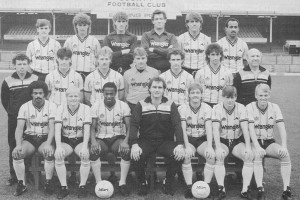
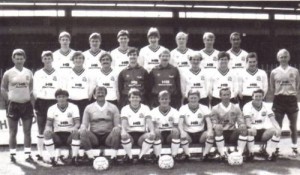
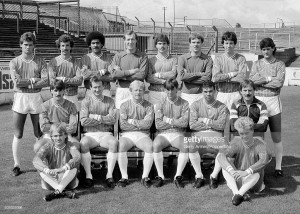
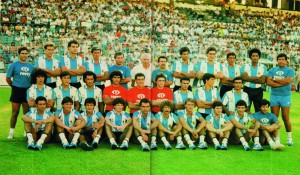
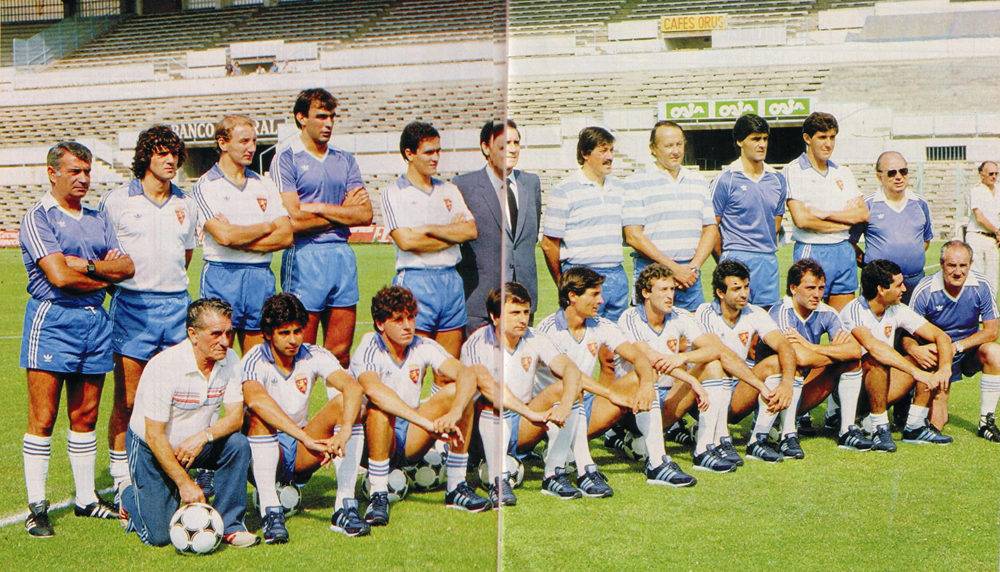
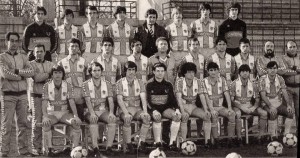
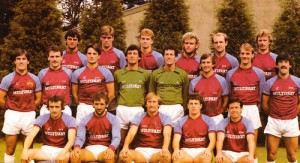
Notts County – 20th with 37 points. They played top league football just the previous season and now were going to third level. Back row: Beaver, Clarke, Dalton, McDonagh, Hunt, Richards

Middle row: Walker(Youth), Jones, Lahtinen, Leonard, O’Neill, Harkouk, Short(Physio)

Front row: Benjamin, Downing, Fashanu, Lloyd(Manager), Hodson, McParland, Goodwin.

Middlesbrough – 19th with 40 points. A bright team in the 1970s, now struggling just to keep place in the Second Division.
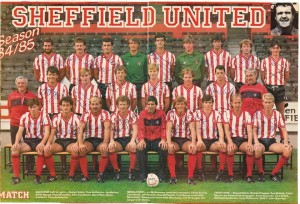
Sheffield United – 18th with 44 points.
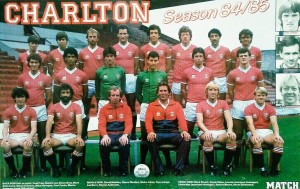
Charlton Athletic – 17th with 45 points.
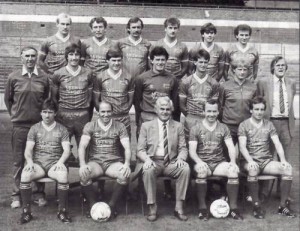
Carlisle United – 16th with 47 points.
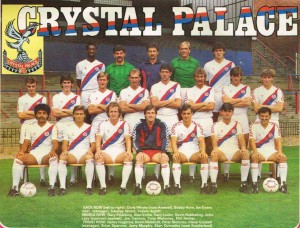
Crystal Palace – 15th with 48 points.

Oldham Athletic – 14th with 53 points.
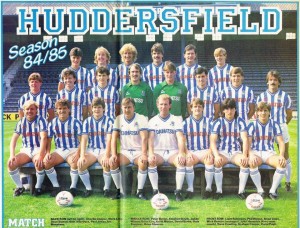
Huddersfield Town – 13th with 55 points. Sam Allardyce this and Sam Alardyce that today? That is the coach. Before the coach was the player and he played here.
Wimbledon – 12th with 58 points. Unlike other stellar teams, they moved at slower pace. Just promoted, but nothing special – only getting familiar with this division, it may be said.
Barnsley – 11th with 58 points.
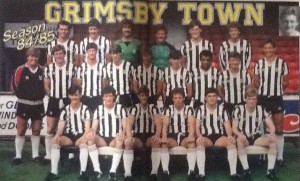
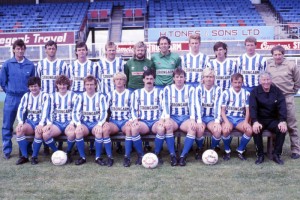
Grimsby Town – 10th with 62 points. Bravely holding their ground, may be surprisingly so.
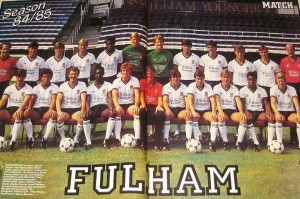
Fulham – 9th with 65 points.

Shrewsbury Town – 8th with 65 points. May be their best period.
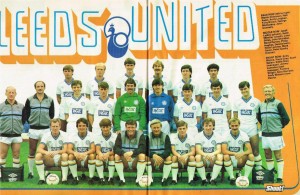
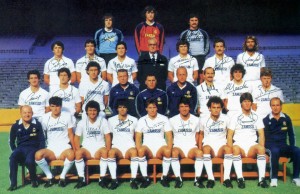
Leeds United – 7th with 69 points. No recovery in sight… David Harvey and Frank Gray used to play European and World Cup finals, now – Shrewsbury. What a fate and what a disaster. Dennis Irwin is also here, but still very young – his fame will come with another club.

Leeds was close to the group fighting for third place this year, but slightly weaker and a credible contender.

The battle for 3rd place, giving promotion, was fierce, involving 4 teams. 2 points was the whole difference at the end.
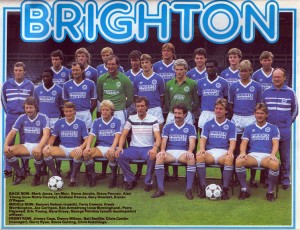
Brighton & Hove Albion got the short stick at the end – 6th with 72 points – and one may wonder was it because they depended on aged stars. Frank Worthington, Joe Corrigan, Jimmy Case, the Dutch import Hans Kraay – a formidable bunch, but too old already.
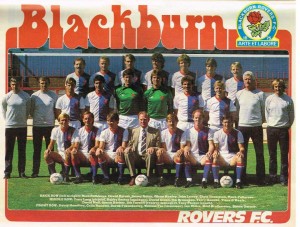
Blackburn Rovers – 5th with 73 points. They haven’t been in the spotlights for a long, long time, so their sudden climb to the top was a bit suspect: was it a recovery at last, or just an occasional good season? They had to stay in Second Division.
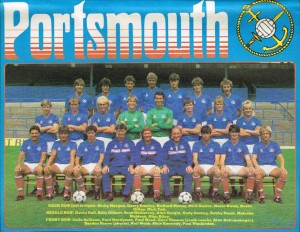
Portsmouth – 4th. Unlucky, for sure – they lost promotion only on goal-difference, finishing with 74 points. Alan Ball did a great job, but the squad was not great and it was unlikely small club like Portsmouth to be able to recruit classier additions. One can be sorry for them just for that – a brave, unassuming team with limited resources really deserved promotion.
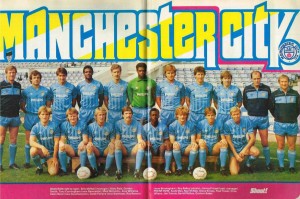
Manchester City clinched 3rd place with 74 points and slightly better goal-difference than Portsmouth – nobody thought that Manchester City will accept live in Second Division, but the squad was rather poor. It was not a big comeback at all, only a struggle to get promoted somehow. Nothing impressive, but at least the club looked like changing its old wrong ways, which led it to relegation: no more big names on their last legs. Unfortunately, no bright young talent either…
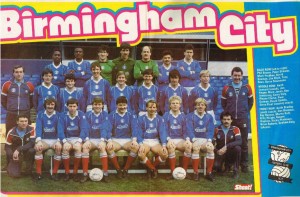
Birmingham City – 2nd with 82 points. Confident squad, trying to win the championship and losing it by 2 points, but promotion was never in doubt. Birmingham, though, was perhaps the only English team coming close to the continental ‘unsettled’ clubs – too strong for second level, too weak for the first, constantly moving up and down. Just relegated, Birmingham bounced back right away – obviously, not a squad for this league, but were they good enough for first division? Looked like they needed more than what they had. David Seaman was not yet a famous name.
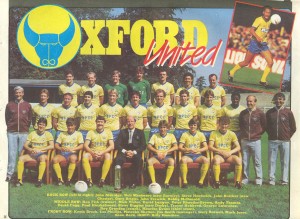
Oxford United won the championship: 25 wins, 9 ties, 8 losses, 84-36, 84 points. It was fantastic success, the team worked hard and eventually prevailed over seasoned Birmingham. And it was one more Cinderella story in the age of the underdog – in the wake of Watford, Swansea, Notts County, Brighton & Hove, and Bolton Wanderers came Oxford United, just promoted to Second Division. Champions of Third Division in 1983-84, champions of Second Division in 1984-85, what a climb! And there was more – unlike the underdogs above, Oxford did not have long professional history: they debuted in the 4th Division in 1962-63, taking the place of Accrington Stanley, which resigned during the previous season. So far, nothing commended Oxford – yes, they eventually climbed to Second Division, but spent 10 years in the Third before winning the 1983-84 championship. Never played top league football – a real debutantes, which was extremely rare in English football. Would they be able to survive first division football remained to be seen, but promotion itself was fantastic achievement. And in grand style – not just promotion, but after winning the tough Second Division championship.
England III Division

Third Division. Nothing much, but more intriguing than the lowest level – a few familiar names appear here, Tony Cascarino (Gillingham) and John Hendrie (Bradford City). Players well known to us retrospectively, who are at the early stages of their careers and at actual time known only to observant scouts. There was spectacular failure of one so exciting a few years ago team – Swansea Town was dropping down as rapidly as they climbed from obscurity to the top league. Apart from that, the season offered little drama – one team was hopeless outsider and three teams stand above the league. Since three teams were promoted, the question about it was decided early and firmly. And there was a record made, but it was not a positive record.

Cambridge United was hopeless – last with 21 points. Only one team in the four professional leagues had worse record – with less points and fewer victories. And Cambridge won only 4 games.

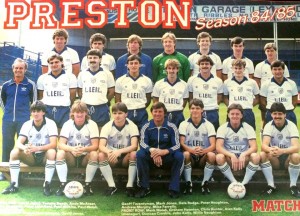
Preston North End – 23rd with 46 points. If only they managed to extract 2 more points… but they did not. However, Preston distinguish itself with the leakiest defense in all leagues: they received 100 goals!

Orient – 22nd with 46 points.

Burnley – 21st with 46 points. Their seemingly endless decline inevitably lead them to the very bottom – next year 4th Division, along with Orient, Preston, and Cambridge.

Swansea City barely escaped relegation – 20th with 47 points. What a fascinating story – they started a rapid climb from 4th Division in 1977-78 and in 1981-82 were in First Division, where they finished 6th. And right then they started going down just as quickly – relegated from the top league in 1982-83, relegated from Second Division immediately in 1983-84, and now barely survived relegation in Third Division. It was not a stop of downhill drive, though.

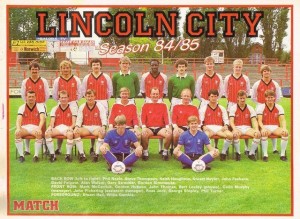
Lincoln City – 19th with 51 points.

Newport County – 18th with 52 points.

Bolton Wanderers – 17th with 54 points. They too played first division football not long ago – lastly, in 1979-80 – but now struggled in third level.

Wigan Athletic – 16th with 59 points.

Plymouth Argyle – 15th with 59 points.

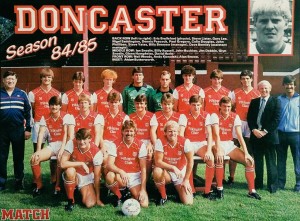
Doncaster Rovers – 14th with 59 points.

Brentford – 13th with 62 points.

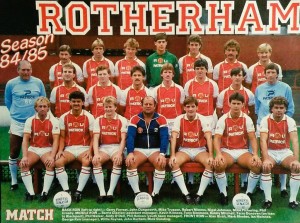
Rotherham United – 12th with 65 points.

Walsall – 11th with 67 points.

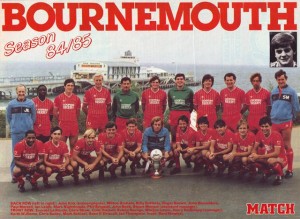
Bournemouth – 10th with 68 points.

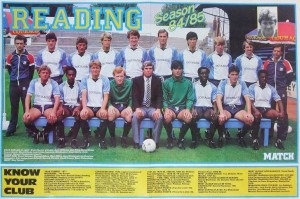
Reading – 9th with 69 points.

York City – 8th with 69 points.

Derby County, now suffering in Third Division – 7th with 70 points.

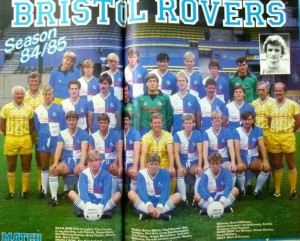
Bristol Rovers – 6th with 75 points.

Bristol City – 5th with 81 points, perhaps very happy to be ahead of their city rivals.

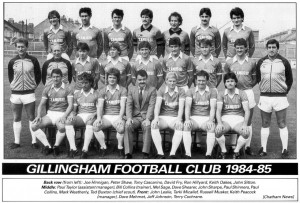
Gillingham – 4th with 83 points. A good period for the club, but there was little something missing to enable them to win promotion.

Hull City did well – 3rd with 87 points. Promotion was all important and achieved.

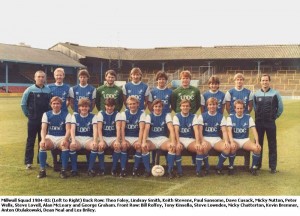
Millwall – 2nd with 90 points. Well done.

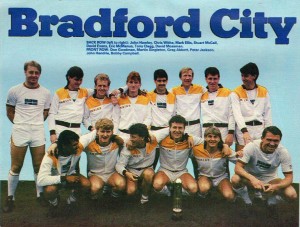
Bradford City won the championship with 94 points – the most points earned in all divisions. 28 wins, 10 ties, 8 losses, 77-45 goal-difference. Happy champions, if only third division champions. Moving up along with Hull City and Millwall, but with a trophy.

England IV Division

England. A weird discrepancy described those years: British football was stubbornly out of touch with modern development of the game, yet, it was most dominant on club level in Europe. But the national team was rapidly losing ground and even respect. Hooliganism plagued the game, spilling out the island and infecting the continent. This year was tragic for English football, because after the European Champions Cup final English teams were banned from the European club tournaments – many cried that was unfair, but others cheered the ban. The effects were debatable, but it could be said that English football lost its competitive edge, retreating into its comfortable and blind believe of practicing the best football in the world. After the few years of rapid import of foreign players, the practice stalled somewhat, to the delight of traditionalists, firmly believing that only the British can play the game rightly. This added to the European ban perhaps put English football further behind the times, but it was still the most entertaining championship. In this circumstances emerged a new exciting team, which looked like a worthy challenger of Liverpool for the foreseeable future – the positive sign was cut off by the ban or, at least, the club believes so to this very day. As the championship went… perhaps it left mixed feelings: new champion was healthy change, but there was no exciting race for the title. Financial problems were persistent and seemingly there was no solution – by now, the strength of the teams depended largely on what money they had and the division between rich and poor was only growing. The leaders were the same, they had money, there was not going to be any change. The only innovation – seemingly, working fine – was that in England 3 points were given for a win and 1 for a tie.
Fourth Division. Hardly any club with relatively big name played here this season. With the unfamiliar outside England rule for winning, some teams appear to be cut apart from the rest – either too weak or too strong – but it was hard to judge: Torquay United was last (for a second consecutive year) 6 points behind the the 23rd placed, but in the traditional point system they would have been only 1 point behind. At the top the difference was not so great: Bury finished 7 points ahead of Hereford United – in the old system they would have been 5 points ahead. Anyhow, 4 teams were going up as ever and no direct relegation – if any – as ever.

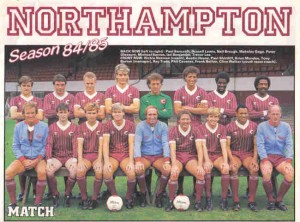
Northampton Town ended 23rd with 47 points, but had nothing to fear. Hope to get better the next season, that was all.

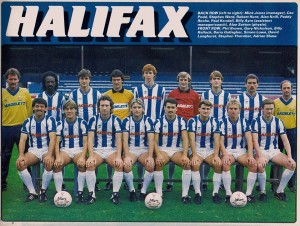
Halifax Town – 21st with 50 points.

Hartlepool United – 19th with 52 points.

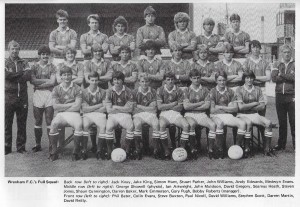
Wrexham – 15th with 54 points.

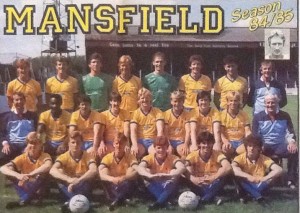
Mansfield Town – 14th with 57 points.

Port Vale – 12th with 60 points.

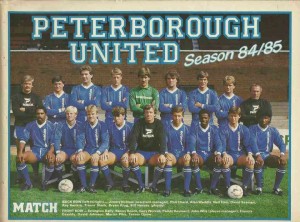
Peterborough United – 11th with 62 points.

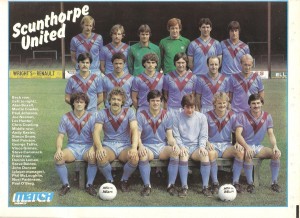
Scunthorpe United – 9th with 71 points.

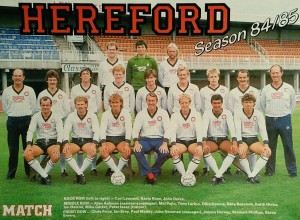
Hereford United was at the top of the bulk – 5th with 77 points – but no matter which point system, they were not really good enough for promotional race. The 4 teams above were pretty much on their own.

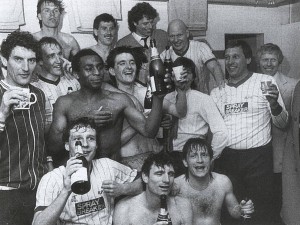
Bury were happy 4th with 84 points – promoted, so enjoying the bubbly. Feeling like champions, but they can be excused – leaving 4th Division was happy occasion. They did not play 3rd Division since 1979-80.

Darlington – 3rd with 85 points and also promoted. Perhaps even happier than Bury, for they were relegated from 3rd Division in 1966-67 and spent many unhappy years mostly near the bottom of the lowest professional league.

Blackpool was 2nd with 86 points. Arguably, the club with the worthiest history in the league, so it was not that much happy occasion of climbing up, but more of an end of irritation. They sunk that low in 1980-81.

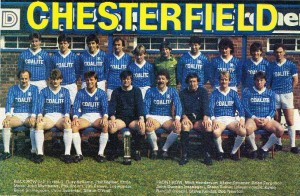
Chesterfield were the strongest team this season and confidently won the championship with 91 points from 26 wins, 13 ties, and 7 losses. 64-35 was not the best scoring record, but who cares – they were eager to return to 3rd Division, which they left in 1982-83. Did not take them long to climb back and in perfect style too – champion of 4th Division may sound as a joke to many a club, but not so to a modest club like Chesterfield.

Spain the Cup

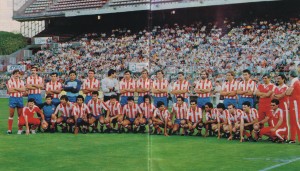
Copa del Rey. The final opposed the second best in Spanish football, both teams eager to win a trophy.

Atletico Madrid vs

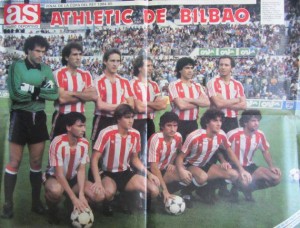
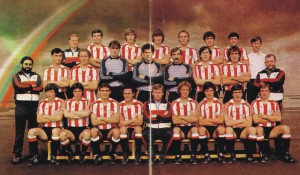
Athletic Bilbao.

The final was played on Santiago Bernabeu, so Atletico had slight advantage, playing in front of home crowd and invigorated by having a chance to win on the turf of the enemy. An enemy, which had miserable season and could only watch in envy. However, this was not big advantage – Atheltic was equally ambitious, experienced, and traditionally loved to sting Madrid. But it was not their day – Atletico prevailed 2-1.

Retrospectively, one can say that Athletic Bilbao was just a bit over their peak – nothing dangerous in itself, but combined with the other small disadvantages may have tipped the scales against them. Losing by a goal is not a sign of weakness, yet, losing is losing no matter the circumstances.

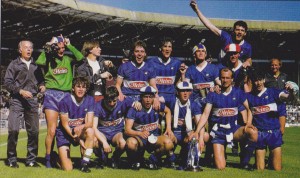
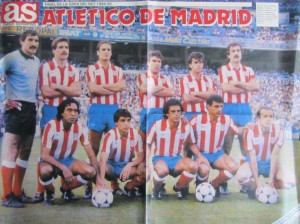
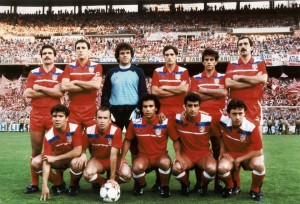
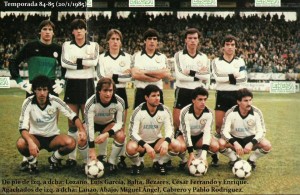
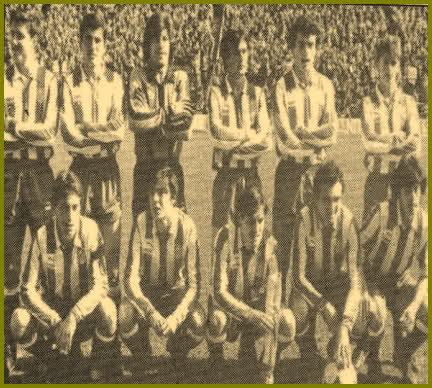
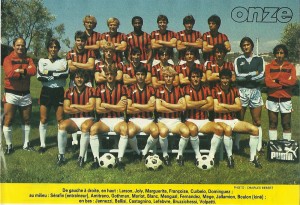
The winners were in good shape for sure. Standing from left: Votava, Ruiz, Mejias, Clemente, Landaburu, Arteche.

First row: Julio Prieto, Marina, Hugo Sánchez, Quique Ramos, Rubio.

Good, but not great. Mirko Votava was not a prime West German star and so it went for the Spanish players. Except Hugo Sanchez, Atletico had no other top class star. But the team was well shaped and ascending, unlike Athletic Bilbao. Home support helped. Desire to rub the noses of Real Madrid by winning on their stadium helped. Small things, but at the end victory was theirs – Atletico won its 6th Cup. Almost 10 years after winning the 5th – like Barcelona, they had to wait a decade for new victory. Sweet success by all measures, unfortunately coming with heavy price – Hugo Sanchez was moving to hated Real Madrid.

Spain I Division

Primera Division. One team show. Fierce race for second place. Two teams weaker than the general level, which was pretty much equal, so many teams were in danger or relegation.

Real Murcia – last with 22 points.

Elche CF – 17th with 26 points. The lowest scorers of the championship – only 18 goals.

CD Malaga – 16th with 29 points. The the third relegated team.

Hercules CF (Alicante) – 15th with 30 points. Barely survived and glad for it. Looked like the end of the Matador – Mario Kempes, rapidly fading. Now in the company of a player which nobody would have thought equal to the hero of 1978 – Petursson from Iceland.

Real Betis (Sevilla) – 14th with 30 points. Fluctuating up and down team, now down.

Real Valladolid – 13th with 30 points.

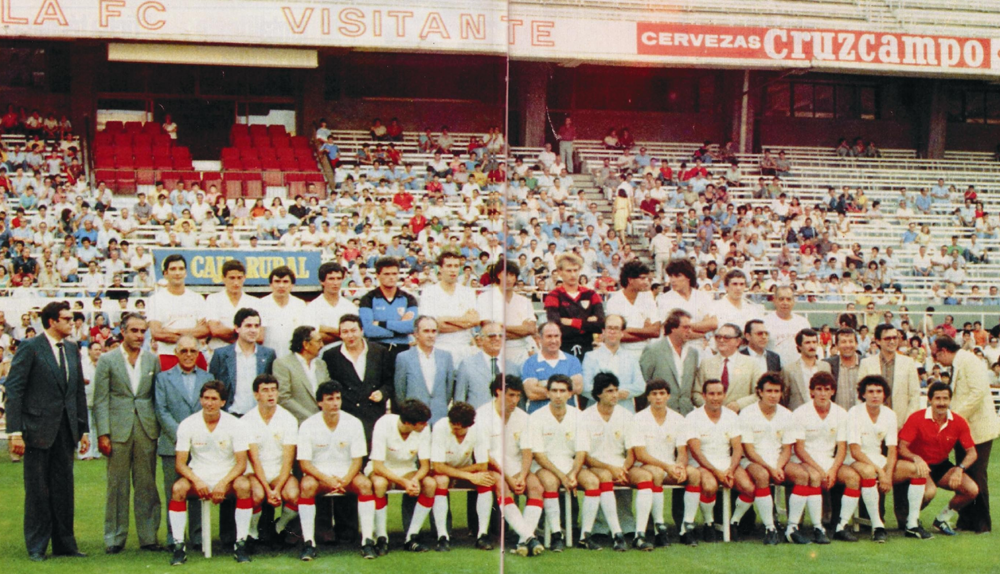
Sevilla FC – 12th with 31 points.

Racing (Santander) – 11th with 32 points.

Real Zaragoza – 10th with 33 points.

Valenica CF – 9th with 33 points. The good years obviously over.

RCD Espanol (Barcelona) – 8th with 34 points.

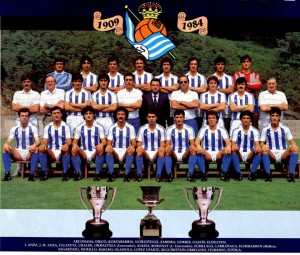
Real Sociedad (San Sebastian) – 7th with 34 points. Seemingly, their great period finished.

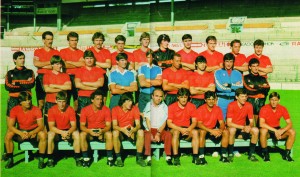
Atletico Osasuna (Pamplona) – 7th with 34 points. Enjoyable season for them.

Real Madrid – 5th with 36 points. Disappointing season – only 7 points ahead of the relegated 16th, but 17 points behind the champions. Measures had to be taken immediately, hence, this was the last season for Uli Stielike. Valdano, however, stayed.

Three teams were in great form and above the rest of the league, jockeying for top place, but neither was a title contender.

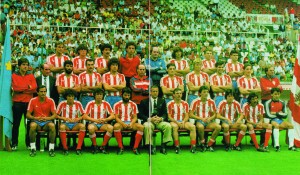
Sporting (Gijon) – lost the battle, but nothing to be ashamed of: 4th with 41 points.

Athletic (Bilbao) – clinched 3rd place on better goal-difference, for they finished also with 41 points.

Atletico Madird – 2nd with 43 points. Bested Bilbao and Gijon, but the title was out of their scope. Last season for Hugo Sanchez with them.

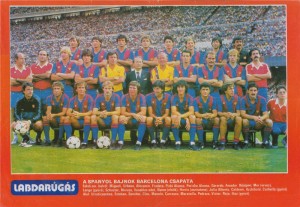
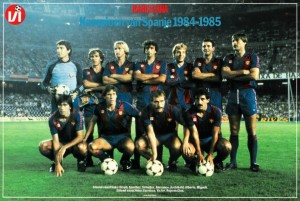
Barcelona reigned supreme, leaving no doubt whatsoever who was best. 21 wins, 11 ties, only 2 lost games, 69-25 goal-difference and 53 points. 10 points ahead of the next placed Atletico Madrid – that was supremacy fans enjoyed, especially after waiting and suffering for more than 10 years. It was almost ironic that the 10th title came without number one world player – no such as Cruijff and Maradona. Instead, the victory came from unlikely source for the time: British. Venables was the coach leading them to victory and Archibald was in attack. Great as they were, they were not hailed as the best in the world. Venables was top coach, but did not have the clout of such as Michels or Menotti. Schuster was the biggest star of the team and even he was not at the top of world’s scale. Yet, these coach and players won when bigger names failed. Not only that, but they won in such a manner wetting appetites and suggesting bigger and greater things to come. The last victory of Barce was so long ago, only Migueli was the link between the team led by Michels and Cruijff and the current one. One could easily imagine the happy relieve of Migueli after so many years under pressure and disappointment.

And this is the regular line of team winning the 10th title – at close scrutiny, optimism would fade at least a bit. Strong team indeed, but a great one? May be not. Aged Migueli, no longer improving Schuster, Archibald a bit of a liability, for British players rarely fair well in foreign lands, Urruti a second choice for Spain at best, the usual group of sturdy fighters, and in need of two additional players, for Rojo and Clos were hardly top class. Great victory, but it was clear that Real Madrid will reinforce itself and the future could not be taken for granted. It was a delicate moment, though – such supremacy makes a club reluctant to continue building. Anyhow, the moment was not for doubts, especially when success finally arrives after long drought.

Spain II Division

Second Division or Segunda Division. 20 teams, the top three promoted and the last 4 relegated. No outsider this season and no big battle at the top – three teams dominated the championship.
CF Lorca Deportiva – last with 29 points.

CD Calvo Sotelo – 19th with 30 points.

Granada CF – 18th with 33 points.

UD Salamanca – 17th with 33 points. Relegated with positive goal-difference.

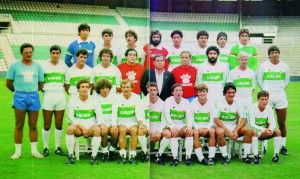
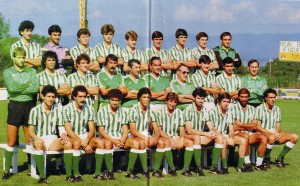
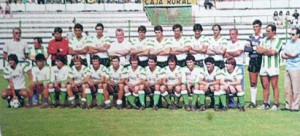
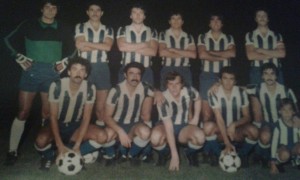
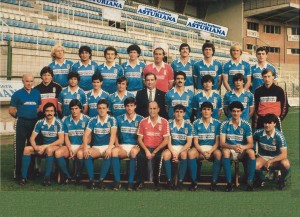
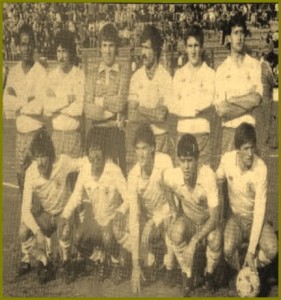
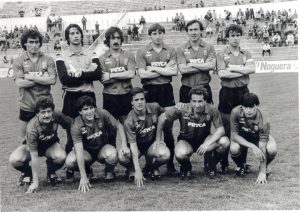
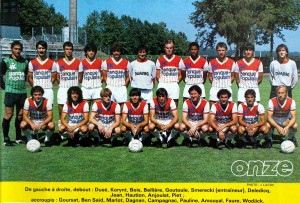
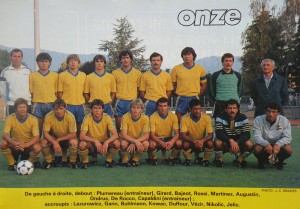
Real Oviedo barely survived – 16th with 34 points. They tied most games this championship – 16. Sitting from left: Lope Acosta, Santi, Vili, Del Riego, Romero (entrenador), Braojos, Merayo, Camaño, Hevia.

Middle row: Viti, Blanco, Berto, Arias, Juanito, Juan Luis, Segundo, Heres, Prados,Salamanca.

Third row: Iñaki Marigil, Garcia Barrero, Kike Marigil (2º entrenador), Velázquez, Cárdeno, Herrero, Muñoz.

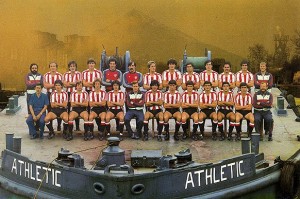
Bilbao Athletic – 15th with 34 points. That was the second team of Athletic Bilbao.

Atletico Madrileno – 14th with 35 points. The second team of Atletico Madrid.

Deportivo La Coruna – 13th with 36 points.

CD Castellon – 12th with 36 points.

CD Tenerife – 11th with 36 points.

Recreativo de Huelva – 10th with 36 points.

Barcelona Atletico – or some times Barcelona Athletic – 9th with 37 points. The second team of Barcelona.

Cartagena FC – 8th with 37 points.

RCD Mallorca – 7th with 40 points.

CD Logrones – 6th with 40 points.

Castilla CF – 5th with 40 points. The second team of Real Madrid.

CE Sabadell CF – 4th with 42 points. The best so far, but having nothing to do with promotional race.

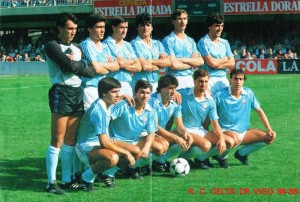
RC Celta (Vigo) – 3rd with 48 points. Confident, but not strong enough for top position. However, promotion was achieved relatively easy and that was most important.

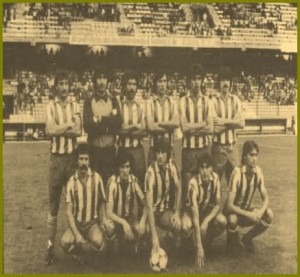
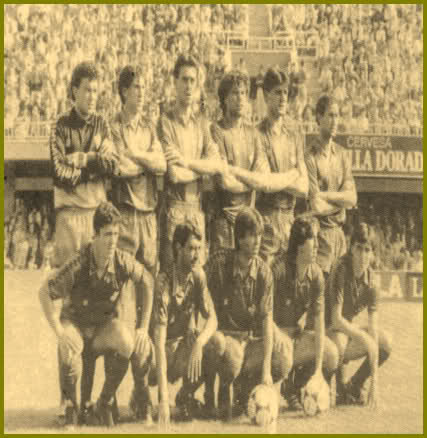
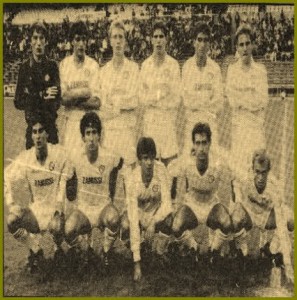
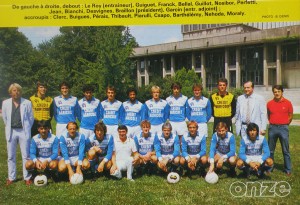
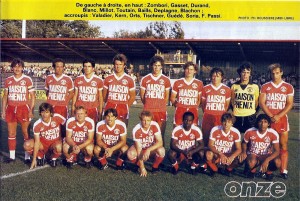
Cadiz CF – clinched 2nd place with 49 points. Promoted. Standing from left: Vojinovic, Amarillo, Manolito, Vilches, Padilla, Dieguito.

First row: Pepe Mejias; Benito, Francis, Mágico González.

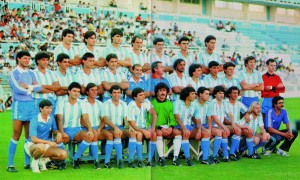
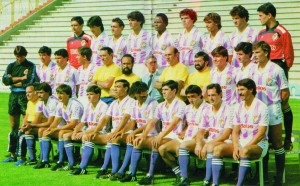
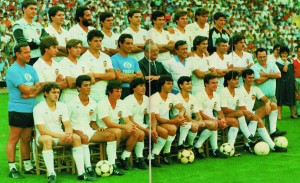
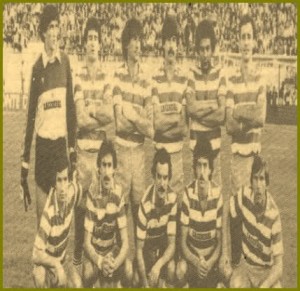
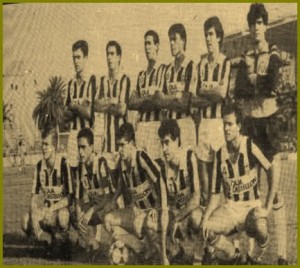
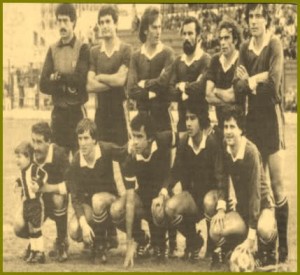
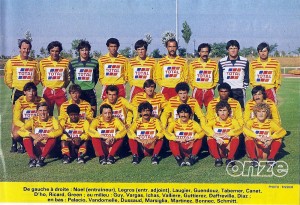
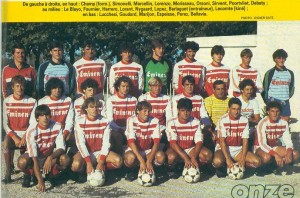
UD Las Palmas – champions of Second Division. 22 wins, 11 ties, 5 losses, 56-37 goal-difference and 55 points. They had no rivals at all, although the next two teams outscored them, Cadiz had far better defensive record and superior goal-difference (+31). Sitting from left: Tito Angulo, Julio Durá,, Felipe, Manolo, Pérez, Mayé, Almeida, Saavedra.

Middle row: Carmelo Tujillo, Sito, Sergio Marrero, Félix, Pepe Juan, Farías, Santís, Jorge Valencia, Javi, Luis.

Top row: Narciso, Javier, Roberto, Alexis, Salvador, Román, Contreras, Benito, Miguel Ángel.

Well deserved victory and return to top flight.

Spain III Division

Spain. That was the end of long and disappointing waiting. Done formidably and yet much was to be still desired. In short, Barcelona dominated this championship.
Third Division – Segunda B in Spanish terms. 40 teams divided into 2 leagues, the top two teams of each promoted. The last three relegated to Tercera Division – 4th level. Only a handful familiar names here.

Perhaps Xerez were best known and that may be for the wine. They finished 6th in Group II.

Well, right to the winners then.

Group I.

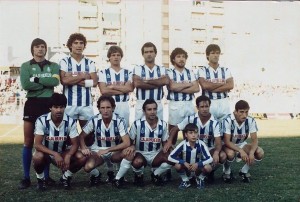
Deportivo Alaves, hardly heard of outside Spain back then, ended 3rd with 50 points. Close, but not a firm contender.

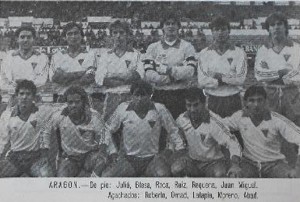
Deportivo Aragon finished 2nd with 54 points. Lost the league title by a point, but was heapily promoted.

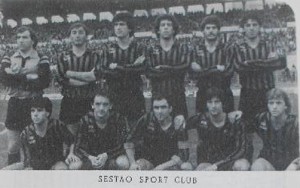
Sestao SC won the league with 55 points. A trophy is a trophy, this club does not win every day anything, so it was fine to be champion even of Third Division. Promoted, naturally.

Group II. Much more dramatic championship – 6 teams competed for promotional spots. Xerex eventually dropped out, but the second promotional spot was decided on either goal-difference or head-to-head results: Balompie Linense, Algeciras CF, and Albacete Balompie finished with 47 points each. Albacete had the best goal-difference, so it looks right they finished 2nd, but Linense had better goal-difference than Algeciras and was placed behind them, 4th. So, most possibly places were decided by head-to-head results.

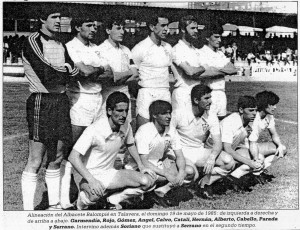
Albacete Balompie – lucky 2nd and promoted.

Rayo Vallecano prevailed and won the championship with 50 points. Not an easy victory, but Rayo managed to climb back to their familiar second level quickly.


France the Cup

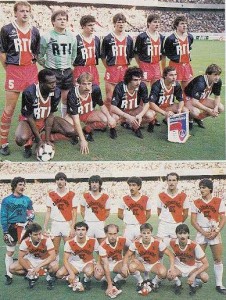
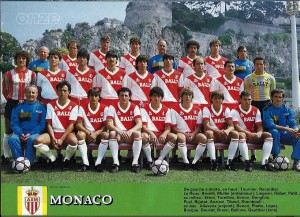
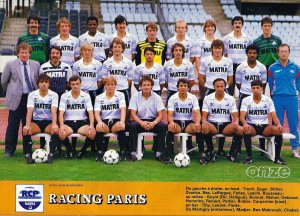
Monaco and Paris Saint Germain reached the Cup final. Given the squads, Paris SG had a good chance to fulfill at least some of the great ambition driving the club since formation. Monaco had ambition too, so it was going to be close match without favourite.

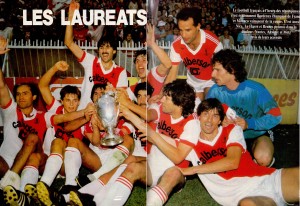
The opponents clashed and Monaco prevailed 1-0.

Cannot blame then for being boisterous with the Cup in their hands.

Well, Paris SG failed again. This was the third Cup final they played – they won the first two, but not this one. Yes, they had a chance – old, experienced squad is always dangerous in a single ‘the winner takes it all’ match. The veterans, old as they were, knew how to win and they pushed hard. Yet, they lost.

Monaco even at its best always looks somewhat unfinished, not really a great team, having a weak post or two. Perhaps the reason they never dominate, but win sporadically. The title was out of their reach this year, but they were better in the one-on-one Cup format and, since Monaco enjoyed strong period, were good enough to prevail over ambitious, but oldish, Paris SG. Well done, yet, it was still not a great squad… Bravo, Genghini, Ettori, Bellone, Le Roux… nothing like Bordeaux and needing additional players to fill the gaps. Characteristic for Monaco, so they were winning sporadically – it was their 4th Cup, but the previous 3 were won in 1960, 1963, and 1980. Meantime they lost 2 finals – in 1984 to Metz. True, they lost only in overtime, but still lost to weaker squad. This time they won over a squad with similar limitations and it was unlikely that Monaco will made a truly balanced squad, building on this success – they did not make it before in similar circumstances. Just because that club philosophy, guided by budget restrains, Monaco’s victories were perhaps more valuable than those of most successful clubs. And that was why Monaco deserved more to win than Paris SG – after all, the old Parisian stars won quite a lot in their prime time, but for the mentioned above players of Monaco winning was a rare achievement. Good for them to have the Cup.

France I Division

First division. Two teams above the rest, dominating and entangled in battle for the title. No hopeless outsider. French football was hot, no doubt, but it was not just a talented generation of players – perhaps the new crop of coaches was more important: Roux (Auxerre), Jacquet (Bordeaux), Le Milinaire (Laval), Houiller (Lens), Wenger (Nancy), Suaudeau (Nantes).

Racing (Paris) finished last with 26 points. Just came back from obscurity and dropped right away to second level. The ambitious project was not yet blooming.

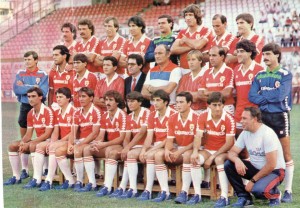
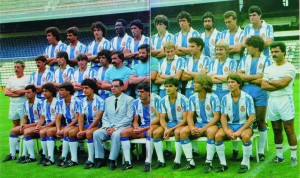
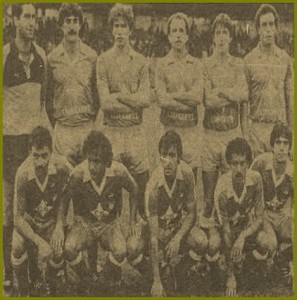
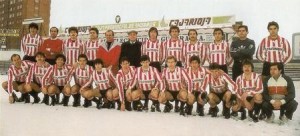
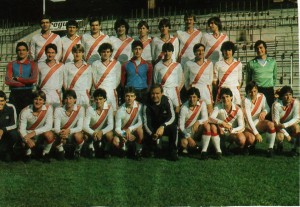
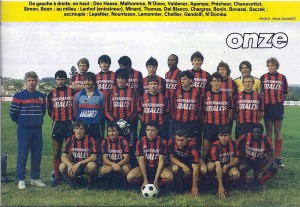
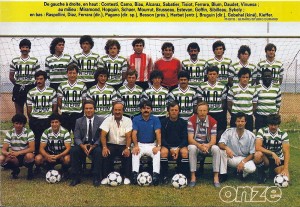
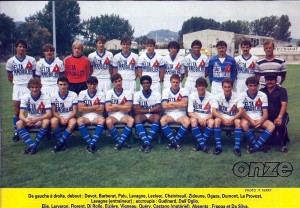
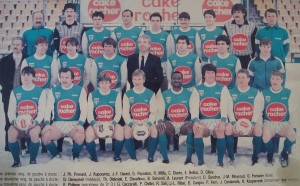
Tours – 19th with 29 points and out. Front row from left: Fonseca, Kaiser , Diecket, Furlan, Loiseau, Zdun, Krimau, Polaniok.

Middle row: Besnard, Jublot, Desrousseaux, Gressani, Varady, Morabito, Thénier, Dobraje, Briet, coach, masseur.

Top row: Levève, De Zerbi, Lorenzo, Devillechabrolle, Coiffier, Colleu, ?.

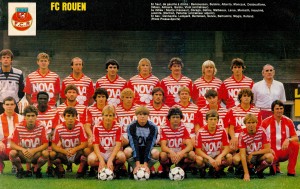
Rouen – 18th with 29 points and relegated.

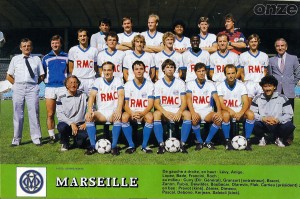
Marseille – 17th with 31 points. Barely escaped relegation, which was pretty much the goal for the moment. Reemerging after a crisis is never easy.

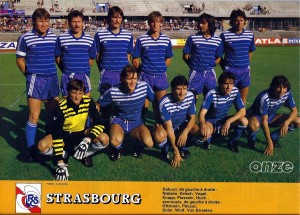
Starsbourg – 16th with 31 points. Like Marseille, trying only to stay afloat. Hard to believe they were champions not so long ago.

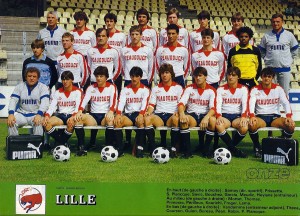
OSC Lille – 15th with 31 points.

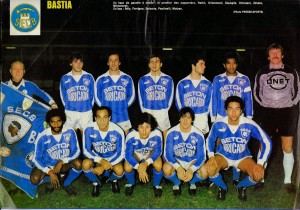
Bastia – 14th with 32 points.

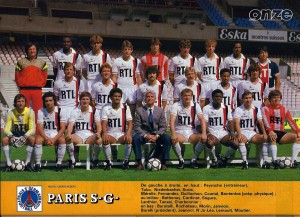
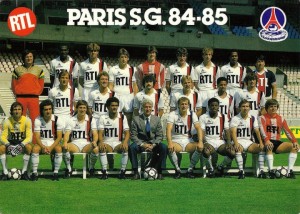
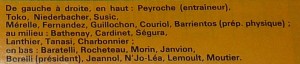
Paris Saint Germain – 13th with 33 points. Perhaps Paris SG was seen as eternal losers by now, but a team made of Baratelli, Rocheteau, Janvion, Bathenay, Susic, Jeannol, Couriol, and Toko should not have been performing so bad. On the other hand… may be that was why Paris SG was so low: the great names were getting too old, their peak was almost 10 years ago.

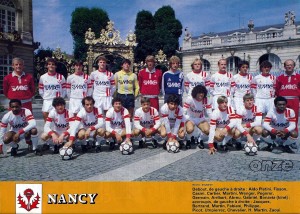
Nancy – 12th with 34 points. Modest team as ever, but playing as best as they could and not giving up.

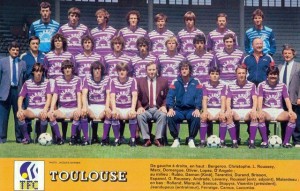
Toulouse – 11th with 35 points. Like Nancy, historically speaking, but with bigger ambitions presently – Bergeroo, Domergue, Stopyra looked like a good cluster and the addition of the Argentine World champion Tarantini suggested continuous development, but it was still building process in an early stage.

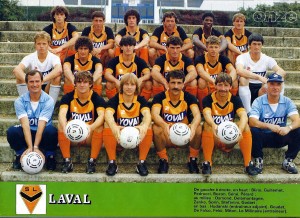
Laval – 10th with 36 points. Not bad for a squad without single recognizable name in it.

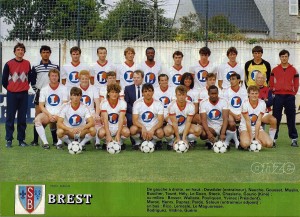
Brest – 9th with 36 points. Le Guen was at the beginning of his career, practically unknown – like many small clubs, Brest had to do without stars. But they managed.

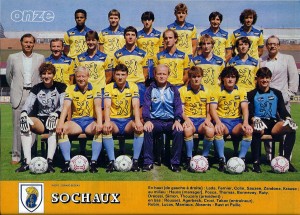
Sochaux – 8th with 38 points. Their strong years were seemingly over – back to midtable.

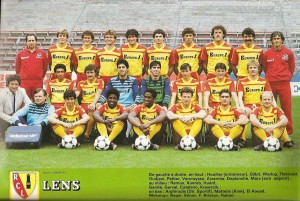
Lens – 7th with 40 points.

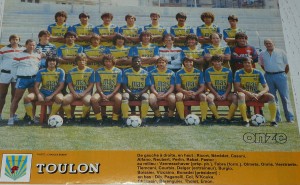
Toulon – 6th with 44 points. Strong season, but unlikely to be repeated. The great Argentine scoring machine Delio Onnis still delivered.

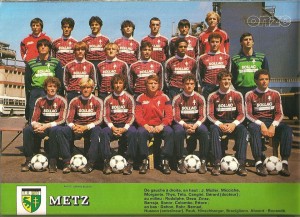
Metz – 5th with 45 points. Unassuming club, hardly ever attracting attention, but performing well.

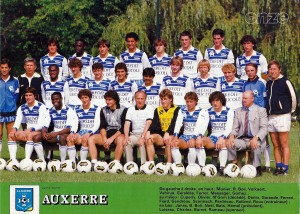
Auxerre – 4th with 47 points. By now it was clear that Auxerre was accidental one-time wonder – rapidly they joined the leading teams and seemingly were going to do only better. Loyal to its “Polish connection”, characteristic of their rise from obscurity to glory – Szarmach and Janas, currently. Bats and Ferreri in the French national team, Vahirua not far behind, B. Boli only a promising youngster at the moment, Cantona in the junior team, not old enough yet for the first squad. Home made boys and Polish imports – that was the secret.

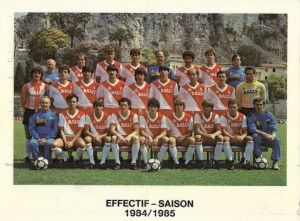
Monaco – 3rd with 48 points. Strong period, leading club, but not a title contender this season. Not to be dismissed, though – if not the championship, then there was something else.

Nantes and Bordeaux dominated the championship, fighting for the title. It was just right – those were the leading clubs at the time. Nantes, however, was in a leading position for a third decade already – the most consistently strong French club. Bordeaux climbed to true leading position only recently, but it was hotter team. Eventually, they prevailed.
Consistently strong does not automatically mean consistently great. The squad captained by Henri Michel in the 70s was perhaps better than the current one, but it was overshadowed by St. Etienne. This vintage was overshadowed by Bordeaux. Second best… and they finished 2nd this season with 56 points.

Bordaux not only prevailed, but even built 3-point cushion by the end of the season. 25 wins, 9 ties, 4 losses, 70-27 goal-difference, 59 points and the title was theirs. Rightly so, given the squad they had: Lacombe, Giresse, Tigana, Battiston were the great stars at the moment – not just in France, but in the world. Add the Poruguese midfielder Chalana. Girard and Tusseau were not far behind, already members of the French national team. Dropsy and the former West German star Dieter Muller may be were yesterday news, but not to be dismissed yet. Rohr and Specht were hardly anonymous players too. Coached by Aime Jacquet. Compared to the squad of 10 years ago… well, back then the team had a few stars, but only Giresse remained from the old days and 10 years ago he was unknown. The club moved a long way up since 1976 and won its 3rd title. Second in a row too, for this team won it in the previous season. Wonderful success.

France Second Division Group B

Second Division Group B. As far as names go, Group B looked the stronger and tougher championship than Group A – St. Etienne, Lyon, and Nice were here – but the season actually mirrored Group A: two leaders competing between themselves on top, one outsider at the very bottom, and the bulk of the league quite equal and thus more concerned with avoiding relegation than anything else. At the end, only one team was promoted from this groups, but two came to it, relegated from First Division and that made in turn the last three relegated to Third Division.

FC Valence was out of the game from start and settled in the last place with 11 points.

AEPB La Roche-sur-Yon ended 17th with 29 point and went down.

CS Cuiseaux-Louhans – 16th with 29 points and the third relegated team.

AS Beziers – 15th with 30 points. Managed to survive.

CO Le Puy – 14th with 31 points.

FC Limoges – 13th with 31 points and the only team to stay in this group for the next season.

FC Martigues – 12th with 31 points.

FC Grenoble – 11th with 32 points.

FC Sete – 10th with 32 points.

FC Gueugnon – 9th with 33 points.

AS Cannes – 8th with 34 points.

Olympique Lyon – 7th with 35 points. Food for thought: Schumacher was on the peak of his world fame in 1985. Ten years earlier he was considered rather hopeless and Topalovic was the first goalkeeper of 1. FC Koln. Later the roles reversed, Topalovic became non-entity and did not last long even in Lyon’s second division squad.

Olympique Ales – 6th with 35 points.

CS Thonon – 5th with 38 points.

La Paillade Montpellier – 4th with 41 points.

Olympique Nimes – 3rd with 42 points. Good or bad, Nimes was on top of the bulk of the league, but not able to challenge the leaders.

St. Etienne – 2nd with 48 points. Stronger than the general level of the league, but lost the race for the first place. And eventually lost its second chance to return to first division to Rennes. Strange to see one of the most exciting clubs of the 1970s in second division, but that was the reality.

OGC Nice prevailed in the battle for promotion and won the championship. 20 wins, 10 ties, 4 losses, 73-29 goal-difference and 50 points. Like St. Etienne, Nice declined sharply and it was not sure at all they could climb back to leading place in French football, but second division was a bitter pill to swallow and they did their best to return to top flight. And succeeded.