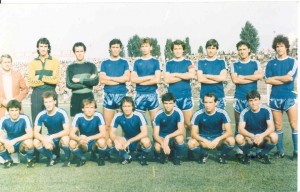
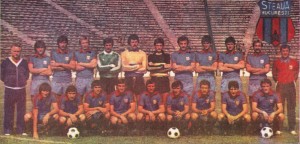
Scotland I Division

First Division. Most amusing championship, but in any positive way – a 10-team league sharply divided into 4 groups. And further division at the very top.

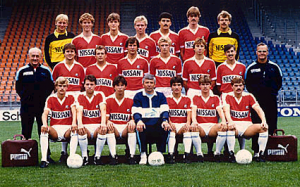
Greenock Morton, just promoted, finished last with pathetic 12 points. They really distinguished themselves – received exactly 100 goals this season.

Dumbarton, the second newcomer, was 9th with 19 points. Better than Greenock Morton, but still a hopeless outsider. Thus, both newcomers were relegated and, frankly, did not deserve to play top-league football.

The next 2 teams were quite weak, but still head and shoulders above the outsiders and never in danger of relegation.

Hibernian – 8th with 27 points.

Heart of Midlothian – 7th with 31 points.

The next 3 teams battled between themselves, but entirely apart from both those bellow and above them.

Dundee – 6th with 37 points.

St. Mirren – 5th with 38 points. Not bad – for them.

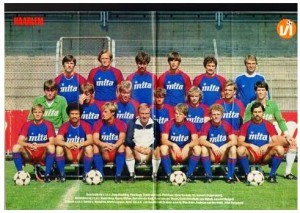
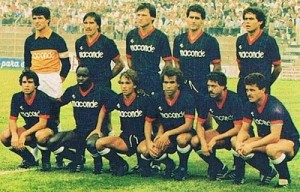
Glasgow Rangers – 4th with 38 points. Well… that was that: famous Rangers was now a midtable team, prevailing over St. Mirren on goal-difference. A statement in itself.

The top 3 – unquestionably stronger than the rest of the league, but not equal between themselves either. Everyone held its own separate position.

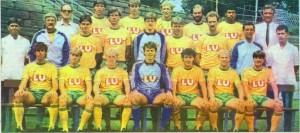
Dundee United – 3rd with 47 points. 9 points ahead of Glasgow Rangers – impressive. 5 points behind Celtic – impressive? Strong, but so far away from the title.

Celic – 2nd with 52 points. Perhaps it was best to compare them only to the archrival: Rangers was pathetic, Celtic was strong. Much stronger than Dundee United too. And stop here… better not compare them to the champions: Celtic was 7 points behind.

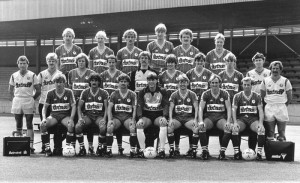
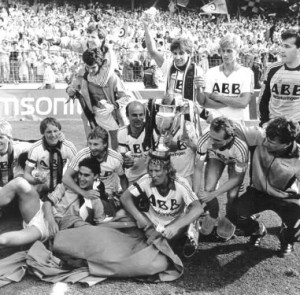
Aberdeen was flying – champions in 1983-84, now again. In the both championships they did not allow any team to come close – 7 points difference the previous season, 7 points difference now. 27 wins, 5 ties, 4 losses, 89-26, 59 points. A bit better record than the previous season.

Sky was the limit for this wonderful squad? Reality was the limit, unfortunately – the mastermind waiving in the middle of the champagne drinkers was going away and to new glory. Inevitable… no matter how good a Scottish club could be, an English one will always be the better option. And if this English club is Manchester United, there was no argument whatsoever. Gordon Strachan already joined Manchester United, now Alex Ferguson. Aberdeen was not going to be really strong anymore, that was clear. So, let party now as heavy as possible, for there will be no opportunity any time soon.

Scotland

Scotland. Fragmentation. Perhaps this is the most one could say: no chance of lower level club to rise and extremely divided top league. The bleak future of Scottish football was written on the wall.

Third Division. Clearly cut into two halves – 7 teams way stronger than the other 7. But no matter, only winners count here.

Alloa Athletic clinched 2nd place with 50 points.

Montrose won the championship with 53 points. Both teams earned promotions to Second Division.

Second Division – the most equal championship this season, except for the outsider – St. Johnstone. Meadowbank Thistle had 7 points more than the outsider, but still were next to lat and out along with poor St. Johnstone.

Clydebank took 2nd place with 48 points and was promoted.

Motherwell won the championship with 50 points. Relegated the previous season, but evidently not for second level football either. Up right away, hopefully for longer than a single season.

Austria the Cup

The Austrian Cup opposed the usual suspects, which provided yet another derby. And it was also a clear picture of the state of Austrian football – two clubs were so far above all others, that would be almost a crime there was even one different Cup finalist. FK Austria vs Rapid – the face of Austrian football, the big rivalry. Motivation in itself. Nobody gives up, no mater form or anything else. The arch-rivals clashed heavily and entertained the crowd – the match ended 3-3 and went to the drama of penalty shoot-out. There Rapid prevailed 6-5.

This was 3rd consecutive Cup victory for Rapid,which perhaps irritated Austria greatly. As far as Rapid was concerned, the season was saved – they got a trophy. As far as photos… the problem is the same as with Aistria. According the the club’s website, this is the team of 1984-85. However, the kit does not match the ones used this year – it seems to be the kit for 1983-84. Then again… the squad, as Austria’s, was practically unchanged. Aged Panenka was no longer a regular, but was he in the team at all? Hard to tell. Well, this Austrian season left few pictorial memories, so let take it at that – tentatively.

Austria I Division

First Division. Not much of a dramatic championship, really. 13 teams were largely concerned with avoiding the last 5 places in the league and the last three were unequal as well, so there was one-team dominance this year. The title was decided early and that was that. As for the battle on the bottom, it was also not much of a fight – some teams were clearly weaker than the rest and the others were seemingly satisfied only to accumulate enough points and secure their place in the new league.

The relegated were: First Vienna FC, last with 17 points.

Austria (Salzburg) – 15th with 18 points.

Favoritner AC – 14th with 21 points,

SV Spittal/Drau – 13th with 24 points (the eternal problem with Austrian names – sponsor names are incorporated, so… it could be SV Spittal/Drau, but it could be SV Gabor Spittal at the same time), and Wiener Sport-Club – 12th with 25 points. Tough luck.

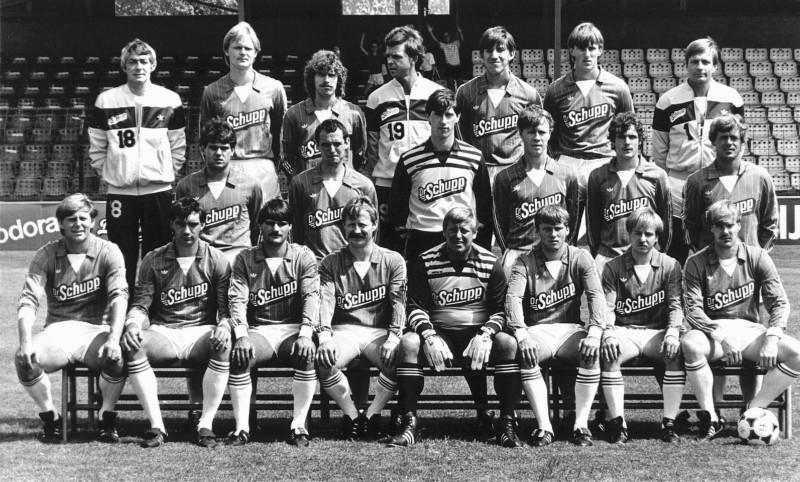
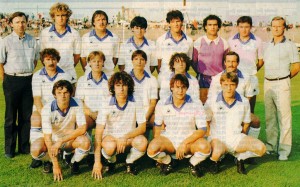
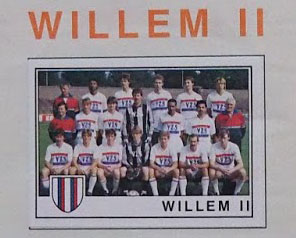
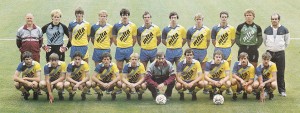
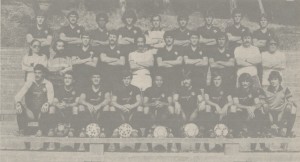
Good luck for DSV Alpine (Donawitz) – or Donawitzer SV Alpine – take it as you like, but they clinched safe 11th place with 27 points. Top row from left: Rauch, Janjanin, Ivsic, Haberl, Koiner, Hofer, Lederhaas, Klug.

Middle row: Dr. Wilthold, Auffinger, Ettl, Harrer, Haberl J., Crnjak, Haider, Sobl, Jursitzky, Windisch.

Crouching: Stocker, Schicker, Angerer, Gruber, Oliveira. Perhaps the Yugoslav Janjanin was the only recognizable name, however faintly.

Grazer AK was 10th with 28 points,

VOEST (Linz) – 9th with 28 points, SC Eisenstadt – 8th with 28 points, Austria (Klagenfurt) – 7th with 31 points,

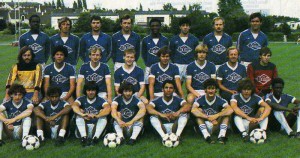
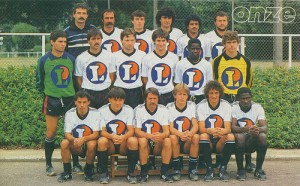
SK Sturm (Graz) – this is only a possible photo of the team – 6th with 32 points, FC Admira/Wacker (Wien) – 5th with 32 points, Wacker (Innsbruck) – 4th with 32 points. That was the bulk, which managed to secure participation in the reformed First Division.

LASK (Linz) – Linzer ASK – was another matter. They finished comfortably 3rd with 38 points. One of their strongest seasons, but it was strong season only in their own terms: they had no squad to challenge the usual leaders and third place was the most they can do. Better than the rest of the league, that was their measurement, not Rapid and Austria. Nothing to do with the title.

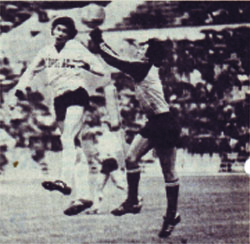
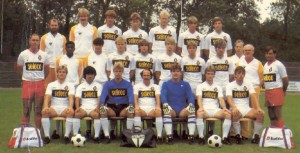
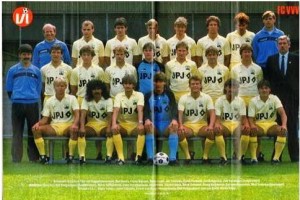
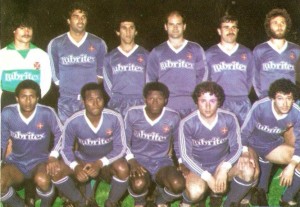
Rapid (pictured here in a friendly with Yugoslav Mladost (Litica) had nothing to do with the title, but for different reasons than those of LASK: seemingly, they gave up on the championship and concentrated on international football this season. Otherwise it is difficult to explain why they finished 9 points behind arch-rivals Austria – their squad was as good as Austria and European performance denies the idea they were out of form. But with 45 points, they were very distant 2nd. Still vastly superior to LASK, though – 7 points ahead, no rivalry at all.
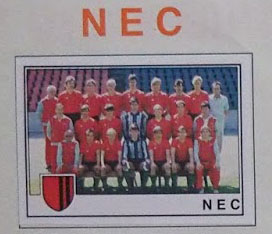
Sitting from left: Alfred Drabits, Hans Dihanich, Franz Zore, Friedl Koncilia, Franz Wohlfahrt, Andreas Ogris, Dzemal Mustedanagic, Istvan Magyar (moved to SC Eisenstadt shortly after this picture was taken).

Middle row: Thomas Paritz – coach, Schreitl – masseur, Herbert Prohaska, Erich Obermayer,Toni Polster, Tibor Nyilasi, Karl Daxbacher, Ernst Baumeister, Holdhaus (?) – condition coach.

Top row: Janotka (?) – assistant coach, R. Sara, Josef Degeorgi, Fritz Drazan, Josef Heiling, Ewald Turmer, Gerhard Steinkogler, Pelzmann – masseur.

There was no contest at all – Austria (Wien) won 25 games, tied 4 and lost just 1. 85-17 goal-difference and 54 points. They were champions long before the end of the season, very likely all was finished at the end of the fall half of the season and this casual superiority left no particular memories: even the club’s website does not signify this victory with team photo. Thus, the squad is a bit of enigma: it is practically the same of the year before. The biggest change was the new coach – the former Austrian international Thomas Paritz.

Austria II Division

Austria. From the distance of time, this season gives the impression it was somewhat neglected and the real focus was on the previous and the next season, plus the interest in the international success of Rapid. The big domestic thing was the reform of the the two top leagues – the next season the whole format of the championship was going to be different, including large reduction of the teams – from the current 16 in first and second divisions to 12 in each. That meant 8 teams less and naturally relegation was on the mind of most clubs – 5 teams were to be relegated from the First Division and 11 from the Second. As promotions, only the winner of Second Division was going up after the end of the season and 2 teams – as usual – were to be promoted from third level to the new Second Division. May be that was the central issue and concern this year – there was no competing for the title, for instance, and in both current leagues just 6 teams were securely above the rest and too strong to be in danger of going down.

Because of the circumstances should be enough only to state those winning promotion from third level and those surviving to play another season in the second level. Schwechater SC won the Ost league of Third Division and Bregenz/Dornbirn won the West league. Bregenz/Dornbirn was a curious and problematic team – it was the second team not of one, but of two clubs: Schwartz-Weiss (Bregenz) and FC Dornbirn. Seemingly, the clubs merged and left over players made the second team. The first played in the Second Division, finished 8th and was relegated, thanks to the reduction. So, the first team was going down and the second was going up – a bit of a problem.

Only 4 teams were going to remain in the Second Division after this season – those between 2nd and 6th place in the final table. Flavia Solva Wagna aimed higher, but lost to win the championship by a point – 2nd, Kremser FC – also unlucky to win promotion and 3rd, SV Sankt Veit – concerned with avoiding relegation only and 4th at the end and the similarly lucky guys of Vorwaerts Steyr, 5th. Vorwaerts was really lucky, for one match was not played because of players strike. Again, the outcome was curious: the players of Simmeringer SC were on strike, but their opponents SV Thorl did not get points either. Only theoretically SV Thorl had a chance to finish ahead of Vorwaerts, but there was a chance: if the match against Simmeringer SC was played and SV Thorl won by 5 goals. Anyhow, the above mentioned remained in the new Second Division.

The first two of them were entangled in hot pursuit of first place and eventually lost it to Salzburger AK.

SAK – full name Salzburger Athletiksport-Klub 1914 – was founded in the distant 1914 in Salzburg, but had very little to be proud of: so far, they appeared only twice in the top league – in 1953 and 1962 – and both times they went right back to second level. This was their third attempt, which also proved to be not only short-lived as before, bur their last time to go play first division football. It was great at the moment, though – dramatic victory with 43 points, one more than Flavia and 2 more than Kremser. 17 wins, 9 ties, 4 losses, 57-18 goal-difference. Something to celebrate, although how many people celebrated is difficult to measure: Salzburg supported its Austria, in general, and the left-overs were divided between SAK, USV (also playing in the Second Division this season, but they were 11th and relegated), and may be some more small clubs. Thus, it was wonderful to go up, but money was a big problem.
Czechoslovakia the Cup

The Czechoslovak Cup. As it had been established long ago, it was a clash between the winners of the Czech Cup and the Slovak Cup. Dukla (Prague) vs Lokomotiva (Kosice). Given the difference between the squads and the general decline of Slovak football, the final should not have been predestined. But such games hardly ever follow the obvious expectations – Dukla eventually won, but it was not a walk in the park. Lokomotiva fought back and lost minimally – 2-3.

Clearly the underdog in the final and for that reason would have been nice to see them prevail, but reality cannot be avoided: Lokomotiva had quite a weak squad presently and the best they could do was to play a brave final.

Dukla (Prague) won its 7th Cup, which was fine, but also it was a consolation prize: this team should have been a title contender, but was not. The season was quite disappointing and in view of the rise of Sparta, looked like that Dukla would be second-best in the future, at best. Thus, the Cup was still more than consolation prize. Then again, Dukla had few friends… most people preferred the symbol of Communist power losing. Politics aside, Dukla collected one more trophy.

Czechoslovakia I Division

First Division. Two teams competing for the title, two teams competing for 3rd place, much weaker, but fairly equal rest of the league, the general decline of the Slovak clubs remained, one unusual outsider. Perhaps not really an outsider – just a team which gave up at some point of the championship.

TJ Slovan CHZJD (Bratislava) – last with 19 points and relegated. The club was in decline for some years, but relegation seemed unthinkable. Yet, it happened and the most successful internationally club went down.

TJ ZTS (Petrzalka) – it was ironic to see the small club, practically from Bratislava, ahead of their famous neighbours, but that was what happened. 15th with 21 points. Relegated as well, but it was expected – their company was unexpected. Yet, both teams were similarly weak – Petrzalka had the former star of Slovan Marian Masny was their sole aged star. Slovan’s mosr recognizable player at the moment was also a veteran – the goalkeeper Pavol Michalik.

TJ ZVL (Zilina) – 14th with 23 points. Traditionally, Zilina always fought only for survival and managing to escape relegation meant good season for them. Well, they survived this time.

TJ Inter Slovnaft (Bratislava) – 13th with 23 points. Also in decline, but better than their famous neighbours. At least , Inter stayed in the league – Slovan was relegated.

TJ Tatran (Presov) – like Zilina, Tatran meandered between 1st and 2nd division and just avoiding relegation was great for them. Thus, it was fine season – 12th with 24 points – but in general, it was not not: the last 5 teams in this championship were Slovak and the remaining 3 were not much better.

TJ Vitkovice (Vitkovice) – 11th with 26 points. The lowest-placed Czech club, but it was fine for the boys – Vitkovice had no big presence in the top league historically.

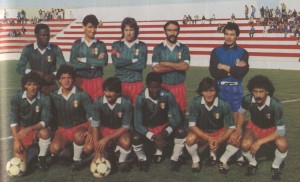
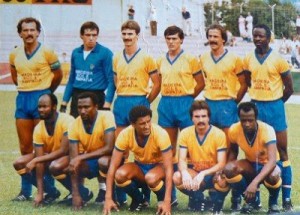
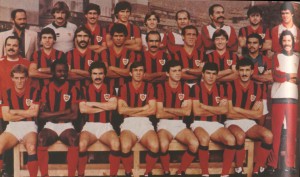
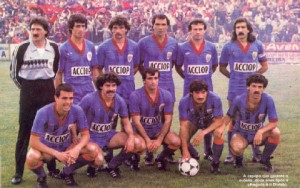
TJ Lokomotiva (Kosice) – 10th with 27 points. Another Slovak club with weak season, but Lokomotiva was able to put itself together when it mattered most on one hand and on the other – their city rivals were already in Second Division and not doing well even their. From such angles, Lokomotiva was satisfying.

TJ Spartak TAZ (Trnava) – in decline for years and not showing signs for revival, but in terms of Slovak football only – doing better than most. 9th with 29 points.

TJ Ruda hvezda Cheb SVS MV (Cheb) – 8th with 30 points. Never a strong team, Ruda hvezda just enjoyed mid-table position, mostly thanks to the weaknesses of others.

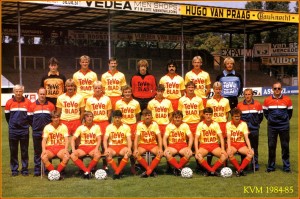
ASVS Dukla (Banska Bystrica) – the best performing Slovak club at the moment, but even that was not much: 7th with 31 points. May be the fact they were Army club helped.

TJ Sigma ZTS (Olomouc) – a club with short first division history, but seemingly on ascent and one of the few bright news in the league. 6th with 31 points.

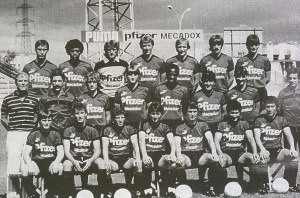
ASVS Dukla (Prague) – 5th with 32 points. Just a few years back it looked like Dukla was going to restore its domination in Czechoslovakian football, but there was no more believe there will be another golden period like those between 1950 and 1965. Good teams – yes; great ones – no. This seasons Dukla was far, far away not only from the title, but form the battle for bronze medals as well.
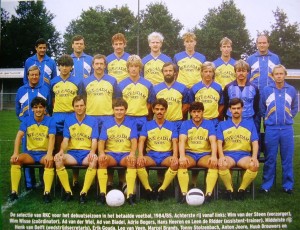
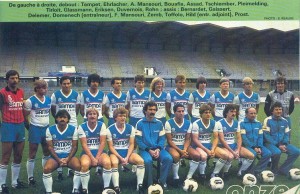
TJ Banik Ostrava OKD (Ostrava) – looked like they were slowly fading away. No new great talent after Werner Licka, who was not old at all, but the other well-known stars of the team were. Nothing terrible yet, but Banik only maintained a place among the top teams of the country – not a title contender and losing even 3rd place: 4th with 39 points. 7 points ahead of Dukla, but lost bronze medals on goal-difference to a team, which suffered for many years.

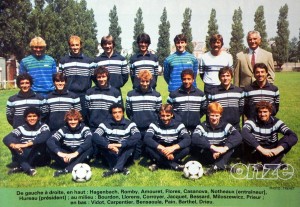
SK Slavia Praha IPS (Prague) – 3rd with 39 points and better goal-difference than Banik’s. Looked like Slavia was reemerging after long decline. Yet, such hopes were entertained before without fulfillment. This time Slavia had first-rate talent – Kubik, Knoflicek – and solid established players – Rott, Jarolim, Nemec. Were they to be champions was a question for the future – presently, they were not ready for more than competing for 3rd position.

TJ Bohemians CKD (Prague) – still enjoying their best period and almost winning a second title. At least, they fought hard for it and lost unfortunately: on goal-difference. 2nd with 43 points. Good squad, strong performance, the only problem was Bohemians was always the smallest of the big 4 clubs in the city and thus without a chance to recruit and keep stars.

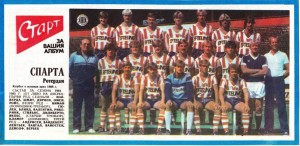
TJ Sparta CKD (Prague) – clinched the title on better goal-difference after 19 wins, 5 ties, and 6 losses. 43 points – the same as rivals Bohemians – but 64-24 was better than 58-26 and Sparta got second consecutive title. It was their 15th in total, but most certainly there were more to come – Sparta had the best team in Czechoslovakia, most of the players defining Czechoslovakian football in the 1980s. Having the best of the current generation meant Sparta was going to dominate – and they did dominate for more than a decade: this was still early stage of their long leadership. For that reason only it would have been nicer if Bohemians won this championship, but they did not.

Czechoslovakia II Division Czechia

Second Division, Czech people’s league. A whole bunch of former top division members here, but the championship was dominated by one team,which at the end did not get promotion.

Spartak PS (Usti nad Labem) finished last with 21 points and was relegated.

Lucky boys, LIAZ (Jablonec) – back in the 70s they played top league football, but now they were at the bottom of Second Division. 15th with 22 points. But there was Czech team relegated from First Division this year, so LIAZ survived.

VOKD (Poruba) – 14th with 22 points.

VP (Frydek-Mistek) – or TJ Valcovny plechu – 13th with 23 points. Played briefly in the First Division, but this was solid second-division club. Which had a weak season for some reason, but managed to escape relegation.

Vagonka (Ceska Lipa) – 12th with 26 points. Many Czechoslovak clubs were attached to industrial plants and this one had distinctive railway sound: railways-cars making factory, most likely. ‘Vagon’ – wagon – railway-car.

VTZ (Chomutov) – 11th with 27 points.

Auto Skoda – or AS (Mlada Boleslav). Belonging to automotive-making giant Skoda, but it was not the ‘flagship’ club – just the team belonging to Mlada Boleslav’s plant. 10th with 28 points.

TZ Trinec (Trinec) – 9th with 28 points. They played in the first division once upon a time, then gradually declined to mid-table second division team.

TJ Gottwaldov (Gottwaldov) – like TZ Trinec, their memories of top-level football were fading away and the mid-table of Second Division was the norm. 8th with 31 points.

DP Xaverov (Prague) – 7th with 31 points. The only club from Prague in the Second Division, but nothing more than that: a modest club,without ability to climb up. What the name means and represents needs a Czech to tell: it is TJ Drubezarsky Prumysl. Xaverov, as they were better known, seems to be the city district they hailed from. A club from the capital, though… and thus perhaps the only team with some familiar names in it, for veteran players could join the small club for their last playing days. Better than going to the provincials… Dusan Herda was a regular for Slavia (Prague) for years, now he was kicking the ball for Xaverov.
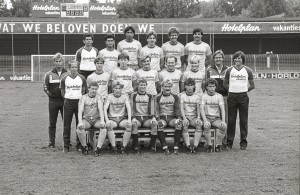
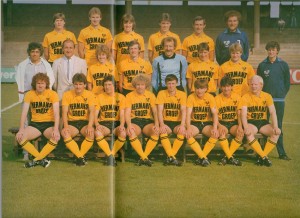
Spartak Hradec Kralove ZVU (Hradec Kralove) – another former first division member. 6th with 32 points.

Skoda (Plzen) – 5th with 33 points. One may expect more – much more – from the team belonging to the headquarters of giant manufacturer. They played regularly in the first division during the 1970s, but now – down and out.

Relativity… modest VTJ (Tabor) was ahead of Skoda. 4th with 34 points. Promotion was out of their wildest dreams, of course, but they were solid second division member and under their own circumstances, had an enjoyable good season.

Sklo Union (Teplice) – 3rd with 34 points. Up and down, then up and down again. Quite a disappointing season, for they constantly aimed to return to top flight. Ambition is one thing, reality – another.

Dynamo JCE (Ceske Budejovice) – another club quite familiar with first-division football. However, they were not exactly up to the task – much better than the rest of the league, but too weak to really push up: Dynamo finished 6 points behind the league winners. But there was happy ending for them.

Zbrojovka (Brno) was unquestionable leader and winner of the league – 21 wins, 5 ties, 4 losses, 45-20 goal-difference, 47 points. 6 points ahead of Dynamo, the only team looking like a challenger. The best team by far and it was even a bit strange why Zbrojovka was in Second Division – as names go, they had more formidable squad than may be half of the first division teams. Kroupa, Rygel, Vaclavicek, Jarusek… getting old, though. So far, so good – Zbrojovka was going back to their familiar top league. But it was not to be – they was caught attempting to fix a match and were disqualified for promotion.

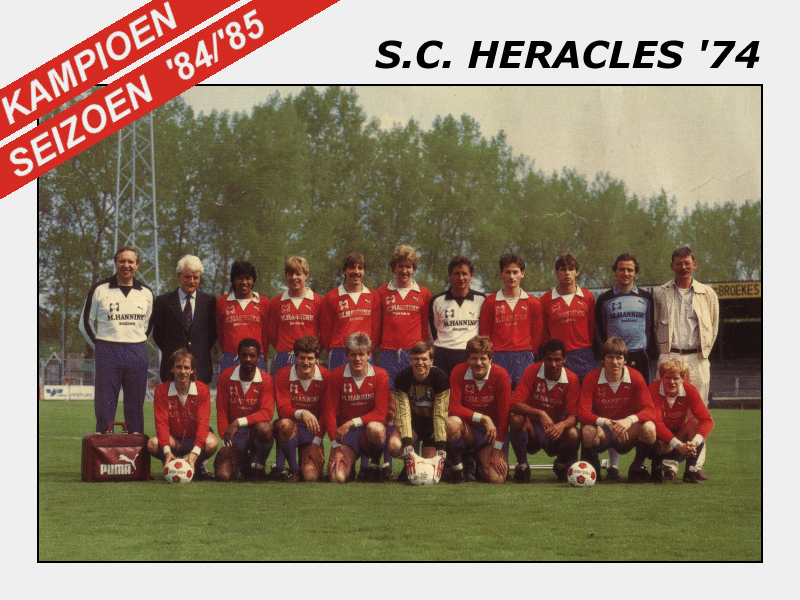
Dynamo (Ceske Budejovice) was awarded promotion in the place of Zbrojovka. No wonder, triumphant team celebrated in the streets of Brno, cheered by happy fans.

Czechoslovakia II Division-Slovakia

Czechoslovakia. Business as usual, generally. A rare look at Third Division teams:

Agro (Hurbanovo) and

Tesla (Stropkov) won in Slovakia and were promoted to the Second Division.

Second Division, Slovak people’s league. A big number of the teams playing there became better known after the post-Communist split of Czechoslovakia, when the moved up to complete the Slovakian top division. Presently, only 2 teams had played in the First Division, but one of them was in very bad shape. The other one – Plastika (Nitra) – was somewhat curiously not up to task of winning the championship. The newcomers from third level played as exact opposites:

LB Spisska Nova Ves was the outsider – last with 16 points – was relegated right after having been promoted.

The other newcomer, ZVL Povazska Bystrica, had very strong year – they ended 3rd with 38 points. Not a candidate for promotion, but with just a little luck, they could have been 2nd.

The last three teams in the championship were relegated – this, because both relegated from First Division teams happened to be from Slovakia. Along with LB Spisska Nova Ves, down went TTS Trencin, 15th, and Vagonka Poprad, 14th. Nothing much to say about most of the league and even not sting competition for the top lace: Plastika (Nitra) only managed to clinch 2nd place, beating ZVL (Povazska Bystrica) by a point, but trailed the winners by 5 points. They scored most goals in the season, but who would care about that.

This was the biggest season of unheard of club, which to the mid-1970s was mostly familiar with the third level of the Czechoslovak football. DAC (Dunajska Streda) won the championship and was going up to First Division for the first time in their history.

It was fantastic achievement of the modest club, hailing from Hungarian-speaking corner of Slovakia. At the moment, it did not matter at all how they will play in the top league – this moment was just the moment of pure joy. And it was well deserved – DAC dominated the championship, finishing 5 points ahead of Plastika. 19 wins, 6 ties, 5 losses, 60-21 goal-difference, and 44 points.

Switzerland the Cup

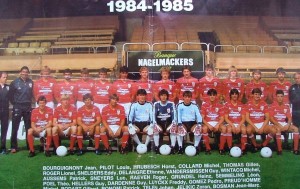
The Cup. Switzerland was going to have a new Cup winner this year, no matter the result of the final – Xamax was going to make its second attempt to win the Cup (they lost in 1974) and FC Aarau never reached the final before. Both teams had strong season, but Aarau was perhaps a bit better and prevailed 1-0.

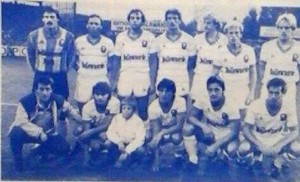
Neuchatel Xamax FC lost a second cup final – to bad, but may be in future they will succeed.

The moment of glory – FC Aarau receives the Cup.

FC Aarau enjoyed its best ever season – they never won any trophy before, never reached the cup final before, never finished 2nd in the championship before. It was wonderful time for a pretty much anonymous squad. A pure victory of the underdog, unlikely to be repeated, thus, much sweeter. FC Aarau won a trophy at last. Perhaps their coach deserves all the credit for their fantastic season – Ottmar Hitzfeld. He was not famous coach yet, but bright and promising one. He was not going to last, though – Aarau was too small.

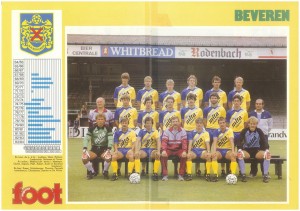
First row from left: Roberto Bockli, Peter Marti, Armando Granzotto, Thomas Tschuppert, Roberto Fregno, Karl Kung, Walter Iselin, Thomas Zwahlen, Fritschi (?) – superintendant.

Standing: Schibli (?) – assistant coach, Patrick Taudien, Agapios Kaltaveridis, Traier (?) – chairman, Ruedi Zahner, Walter Seiler, Ottmar Hirzfeld – coach, Erwin Meyer, Albert Herberth, Rolf Osterwalder, Max Richner, Hansruedi Schar.

Sweet success.