Albania

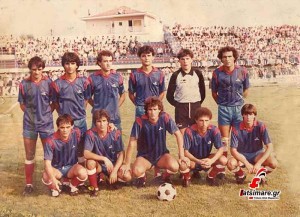
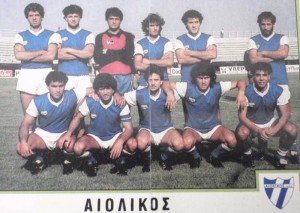
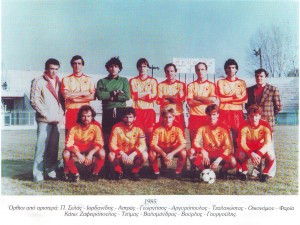
Albania. Isolated and insular, as it was, the country was a mystery, but still some speculations about its general life can be suggested. During the 1980s things were not going so good. After 1980 a trend was detected – clubs folding during or after a season. Granted, they were low level clubs, but still this was new – in the Communist countries clubs practically belonged to the state: they were attached to industrial firms, a guarantee they were always funded. Clubs folding for economic reasons meant money were getting short in general. This went along with increasing violence, which suggested wider dissatisfaction of the population, making tiny cracks in the iron state control. This season 4 teams folded during the season because of financial difficulties and one right after the end of the season. Granted, all were Third Division clubs, but no such things were happening in the previous decades. Yet, the shaky state of clubs went along with improved football – a new talented generation came in, perhaps the most talented one in the history of Albanian football. Those players were still too young, not in full bloom, but their presence was noticed. However, the country is small, the establishment strong, so no massive change happened or even possible: the top league was pretty much the same as ever, no new club came from the lower levels to challenge the status quo.

Apollonia (Fier) won the Second Division with 38 points, and

Shkendia (Tirana) finished 2nd with 32 points. Both teams were relegated together in 1979-80 and now were returning together to the top league.

First Division had a dominant leader and hopeless outsider, so at least at the very top and bottom things were settled early in the championship. Skenderbeu (Korce) was last with 15 points. Six teams, the champion of the previous season, Labinoti (Elbasan) among them, struggled to avoid the the second relegation spot. Besa (Kavaje) at the end was relegated, finishing with 22 points and thus 13th. Just as a novelty, the only city apart of Tirana, represented by 2 teams in the top league, managed to keep its distinction: there was a strong possibility Lushnje to be not on the top league map at all, but Traktori and Beselidhja survived and shoulder to shoulder too – both teams finished at the top of the endangered group of teams with 24 points each – Traktori 8th and Beselidhja 9th.

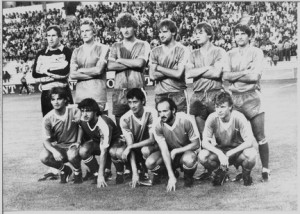
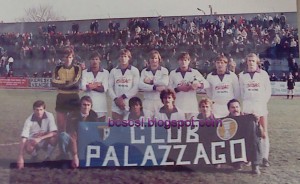
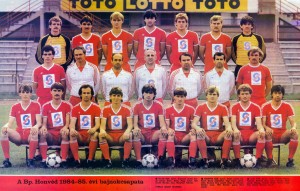
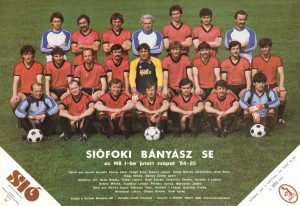
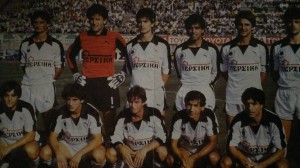
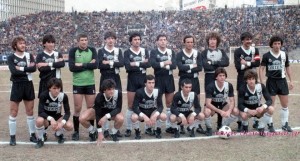
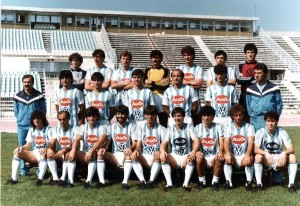
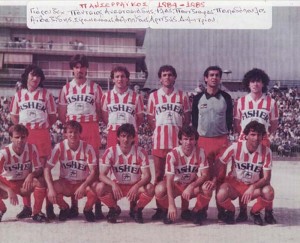
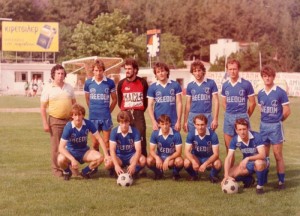
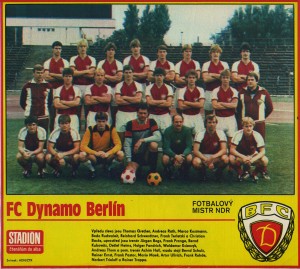
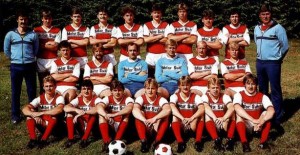
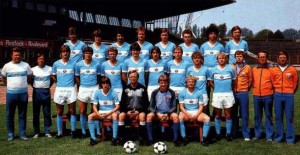
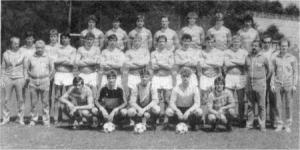
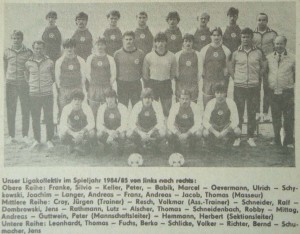
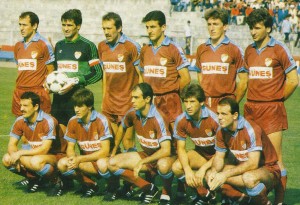
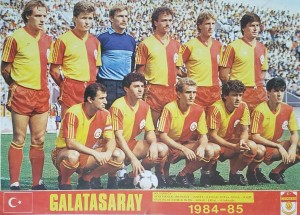
Information about Albania football is scarce and not very reliable even now, but if not from this season, at least this photo of Partizani (Tirana) is from the period 1984-86. Not a great moment of Partizani’s history – they were not a title contenders, fighting for 3rd place and finishing 4th at the end with 29 points. Vllaznia (Shkoder) bested them with better goal-difference and took the bronze medals.

Dinamo (Tirana) was securely 2nd with 33 points.

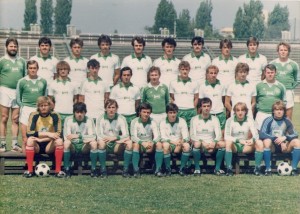
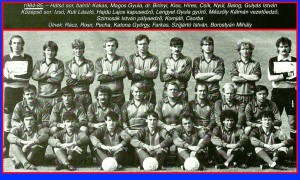
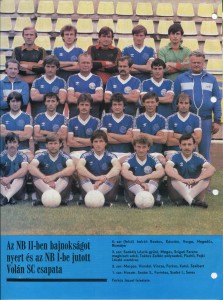
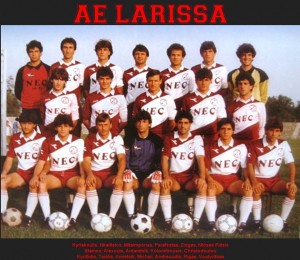
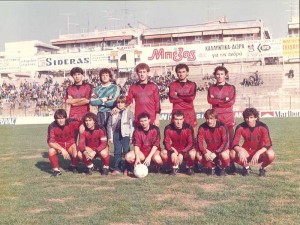
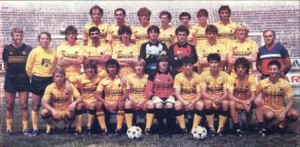
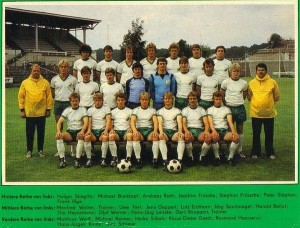
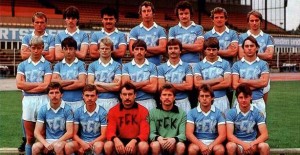
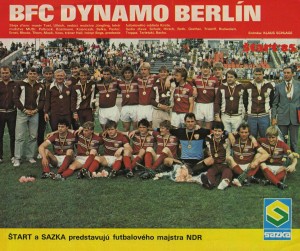
17 Nentori (Tirana) comfortably dominated the championship – they lost just 2 games, tied 9, and won 15, which provided the 39 points. As with Partizani, one cannot be sure the team picture is from this season – at least is from the same time period.

The Cup final opposed teams of same strength – Partizani (4th) and Flamurtari (Vlore) (5th in the championship). Of course, the bets were on Partizani, but it was to be difficult final and it was. Favoured Partizani lost 1-2.

Flamurtari was one of the most stable clubs in Albania, a constant member of First Division, but so far without any success. So it was more than grand local achievement – not only Flamurtari won its first trophy, but also became the third provincial club to win the Cup (Vllaznia and Labinoti did it before them). If championships are added, Flamurtari were the 4th provincial club winning anything in the whole history of Albanian football. The total dominance of Tirana was no longer so absolute after 1977 – Vllaznia and Labinoti won the championships in 1977-78, 1982-83, and 1983-84; Vllaznia won the Cup in 1978-79 and 1980-81, now Flamurtari. The provincial challenge was not going to disappear even if a total change of guard was unlikely.

Yet, this challenge was facing strong opposition, supported heavily by the political system: the case of Labinoti brings speculative questioning and doubts. Labinoti barely escaped relegation right after they won the championship. Practically, they popped up from nowhere the previous season and immediately sunk back to obscurity. Historically, Labinoti was insignificant club, dwelling in the lower half of the league. Their sudden climb to success, followed by immediate slump to the usual performance appears suspect: surprise winners usually maintain a momentum for a few years. They were not able to repeat their success, of course, but at least stay near the top for awhile. Take Zarya (Voroshilovgrad), the USSR champions of 1972, for example – came out of the blue, did not have a team able to keep them on top again, but their way down took almost a ten years. Immediately after 1972 they were mainly competitive enough to stay among the top 5, slowly getting down. Flamurtari came out of the blue and immediately went down. So… it could have been the typical case of small club – the big sharks immediately swallowing its good players, leaving an empty carcass. In a Communist country, such approach was typical, much more drastic than among professional clubs in the West. But it could have been a case of opportunistic games under the table when no one was watching. That was what Zarya did in 1972, fixing games with lowly teams – nobody expected that, the eyes were fixed on the big clubs, and lowly Zarya got away with murder. At the end, it came to a question of rather different import: suspicion came too late in the season, there was no longer way to overcome Zarya and to investigate and punish would mean big wound on shiny pride of the system, which claimed it was the best, the most fare and honest in the world. So, Zarya was kept champions and the truth was disclosed to the public only after 1990. Something similar may have been the case of Labinoti’s victory – the big clubs a bit shaky, and may be because of that more involved with scheming between themselves, nobody paying attention to historically insignificant provincials, who saw the opportunity, bought a game here, a game there, from clubs of the same ilk, and when they were finally seen as a danger, it was too late. After the season may be Party functionaries warned the local schemers not to do such antics again, or there will be harsh punishment, some people were shuffled around, may be even demoted, good players taken away, and everything went back to normal. All done behind closed doors, nothing ever made public, no official penalties directly related to football. May be some rumors, but no hard evidence. Then years go by and even if some late investigation is done, there is not a single club in the world to confess they became champions by illegal means some 10 or 15 years ago. Football Federations are also very reluctant to distribute penalties for so distant deeds and change old final tables – if not for any other reasons, at least because the old season cannot be replayed. No more than a single team can be punished retroactively, but in bribery scandals the number of involved is never a single one. What can be done retroactively is very limited – a trophy can be taken away and no more. But the guilty club counts it, keeps it in the club history, adding a complain to it and in the minds of supporters it becomes only victimization. Labinoti’s case is suspect, but no more than that – it could have been a honest win, it could have been illegal scheming, it could have been a quick robbery of the best players, which the small club was unable to replace and thus to keep position in the next season, it could have been Tirana clubs entangled in their own scheming against each other, which helped unintentionally Labinoti. It could have been even a different scheme – Labinoti, the rogue champion, to be prevented from winning again. A surprise winner usually is not very strong team, but once bringing attention to itself, everybody play harder against it the next year. Add referees instructed to bring them down and the slump is guaranteed. There are traditional problems with surprise winners: they have short and tied teams, driven more by enthusiasm than ability; have limited tactical approach, which is quickly learned by others and relatively easy to oppose; they have little money, so are unable to add talent to their original squad. Take away a player or two from the regular team and the whole thing collapses. Nothing new about it, happened so many times. Yet, so sudden rise and drop is suspect. Compared to Labinoti, Flamurtari is completely different story – they stayed strong after winning the Cup.
Iceland

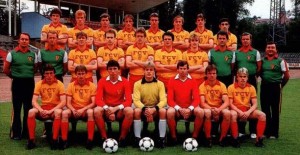
Iceland. May be insignificant, but the football marched on.

IBV won the Second Division championship with 39 points and returned to the top league.

Breidablik, 2nd with 37 points was also promoted. Good luck to both teams next year.

Two Reykjavik clubs ended at the bottom of First Division and relegated – Vikingur was last with 7 points and Trottur – 9th with 13 points. Up the table, there was clear divide in three groups – Vigur (Gardur), 8th with 16 points, FH Hafnarfjördur , 7th with 17 points, were well bellow the upper 6 teams, but still had quite a safe season. Then a group of 2 teams, much stronger than the last four, yet, much weaker than the top four: KR Reykjavík, 6th, and ÍB Keflavík, 5th, ended with 29 points each and goal-difference decided their final positions.

The top 4 teams were fairly equal, but small differences mattered. Fram (Reykjavík) – 4th with 34 points. Weak defense did them. Thor (Akureyri) – 3rd with 35 points. ÍA Akranes – 2nd with 36 points.

Valur (Reykjavik) won its 18th title with 38 points from 11 wins, 8 ties, and 2 lost games. 28-12 scoring record. Note, that Iceland introduced 3-points-for-a-win system. As it happened, it did not make any difference at the very top at the table – under the old system, Valur would have been champion with 2-point lead, just as it was now.

The Cup final was a contest between Fram Reykjavík and ÍB Keflavík. Fram won 3-1.

This was the 5th Cup won by Fram.

Finland

Finland. Still the same complicated formula of the top-level championship.

MP Mikkeli dominated the Second Division and won it with 6 points cushion. They lost only 2 games this year and got the only direct promotion.
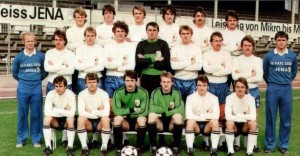
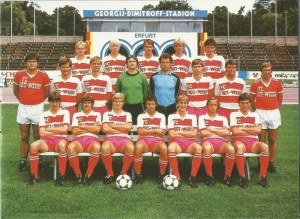
Reipas Lahti finished 2nd, thanks to better goal-difference (LauTP Lappeenranta lost the battle, both teams ending with 30 points), and went to promotion/relegation play-off against Koparit (Kuopio), 11th in First Division. Reipas failed to return to top flight – they lost the first leg at home 0-1 and the 2-2 tie in Kuopio favoured the hosts.
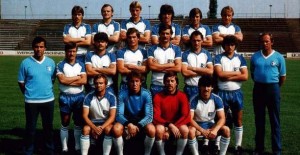
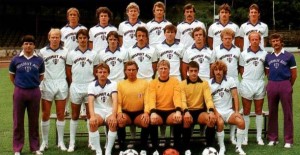
Once again the regular season mattered largely for those at the bottom of the league.

KPV (Kokkola) was not up to the task and ended last with 12 points. Directly relegated, of course.

A bit above them, a drama unfolded: OTP (Oulu) and Koperit (Kuopio) finished with14 points each and had to clash in a play-off to determine which team will be safe and which one will face Reipas (Lahti) in the promotion/relegation play-off. OTP prevailed 3-1 and did not repeat the previous season, when they had to play the dreaded play-off. Back then they survived. This year they survived again, only a bit earlier.

Thus, Koparit took 11th place and went to face Reipas (Lahti), hoping to keep their place in First Division. As it is mentioned above, they succeeded.

OTP (Oulu) was 10th and PPT (Pori) – 9th, but the there were 5 points difference between them and PPT was never in danger of relegation. Disappointing season for Haka (Valkeakoski) – 8th with 19 points, above PPT only on better goal-difference. RoPS (Rovaniemi) – 7th with 22 points

KuPS (Kuopio) – 6th with 25 points.

Unlucky Kuusysi (Lahti) – they and Ilves (Tampere) finished with 27 points each and went to play-off to see which one will go ahead. After overtime, the result was 3-3 and Ilves was luckier in the penalty shoot-out: 6-5. Kuusysi missed the real final of the season, so may be they were not to be imagined super-power of the country.

The top 4 teams went ahead to the semi-finals, but let finish with the first-stage table: Ilves (Tampere) was 4th with 27 points, KePS (Kemi) – surprisingly, 3rd with 28 points. HJK (Helsinki) – 2nd with 28 points, and TPS (Turku) – 1st with 29 points. As the table shows, practically 5 teams were equal and after Kuusysi was weeded out, it looked like any team could win.

TPS (Turku) may be spent more than they should in the first phase, for they started badly the semi-finals and did not recovered: they lost 1-3 to Ilves in Tampere and were kept at bay in the second leg too – 1-1. In the other semi-final no miracle happened, although the underdog tried hard – KePS won at home 3-2, but lost the second leg in Helsinki 0-1 and HJK qualified on the away-goal rule.

Still, KePS ended the season well – after exchanging 1-0 victories with TPS, they prevailed in the penalty shoot-out 5-4 and grabbed the bronze medals. Wonderful season for this obscure club and its fans. The first leg of the final was played in Tampere and Ilves won 1-0. But that was that… in Helsinki HJK won 4-1.

Dramatic season for Ilves – they barely got a spot in the final stage, but probably boosted by that, went to the final, having a chance to win the title. However, it looked like they were not strong enough, may be running more on enthusiasm than skill, and seasoned fighter like HJK destroyed them.

HJK (Helsinki) added one more title to their record – not an easy victory, but they got their timing right and evidently were in excellent condition at the end of the season, when it was all or nothing. The squad was: Terry Lee, Reijo Linna, Erkki Valla, Markku Palmroos, Mika Muhonen, Petteri Schutschkoff, Markku Kanerva, Erik Holmgren, Jari Rantanen, Juha Dahllund, Jyrki Nieminen. The rule of the 1980s: foreigners more or less determined the fate of a club – whoever had them, played better.
HJK aimed for a double, but it was not to be. In the Cup final they met Haka (Valkeakoski) and there was no winner – 2-2 after extra time. The penalty shoot-out was perhaps too nervous affair for both teams, for penalties were missed and eventually Haka won 2-1.

Good year for HJK (Helsinki), no doubt, but they unable to win a double.

Haka (Valkeakoski) managed to win the Cup and thus to save otherwise weak season. Old fighters, they proved again the power of tradition in football: Haka was one of historically successful clubs and even when not in good shape, they still were able to rise to the occasion. Well done.

Malta

Malta. An interesting season, which stays in memory for two reasons – the more important one is that there was surprise change of guard. The other is controversy: it was truncated season. Round 6 was not played because of players’ strike. But there were two games which later were seen as crucial for the final table: Rabat Ajax vs Hamrun Spartans concerned the title; Hibernians vs Floriana concerned relegation. Was it really that important? The losers at the end of the season claim it was. On the other hand, even in a tiny league the 6th round would hardly be most important. The final losers, which happened to be visitors at these games, simply should have been getting more points in their other games.

Mqabba, a rather young club by Maltese standards, was more interesting newcomer – they were to be practically debutantes. Thus, also hopeless and expected to last just a single season.

Anyhow, right to the end: Birkirkara and Mqabba were on top of Second Division, earning promotions. Strike or no strike, Marsa was hopeless and helpless – they got only 1 point, thus last and out of First Division. Floriana, with 13 points, was next to last – that is 7th – and relegated. Oh, well… if the 6th round was played, they would have been out of trouble. Of course, they were to prevail against Hibernians. Wishful thinking, that. Three teams finished with 14 points at the end, but even the ‘victimized’ Floriana did not imagine finishing ahead of Valletta (having surprisingly weak weak season) and Zurrieq. Sliema Wanderers ended 3rd with 15 points. If the 6th round was played, they still had no chance to win the title – remember, at the time a win brought only 2 points. No matter how Rabat Ajax vs Hamrun Spartans would have ended, there was to be at least one team with more points than Sliema. ‘Victims’ Hamrun Spartans finished 2nd with 16 points. They lost just 1 game and had the best defensive record (8 goals), so, according to them, they would have been sure winners in Rabat. Easy to claim victory of unplayed match. Back in Rabat the mood was entirely different and there was no reason even to argue against the funny claim of the Spartans: the Magpies were champions!

With 5 wins, 7 ties, and single loss, Rabat Ajax had 17 points and number 1 in the final table. It was historic victory – the club was found in 1930 as Rabat Rovers, eventually evolving into Rabat Ajax. So far, their history was checkered – plying quite often in the Second Division and almost never serious candidate for top place. This was their 1st title. Actually, it was their 1st trophy ever, so no matter what anybody else said, they were going to celebrate.

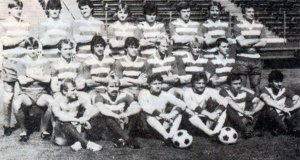
Standing from left: R. Scerri, M. Scicluna, Y. Filipov, A. McGonigle, E. Cortis.

First row: M. Zahra, E. Azzopardi, C. Busuttil, E. Caruana, C. Scerri, J. Borg.

The lowly state of Maltese football hardly makes even historic squad noticeable abroad, but here a footnote is in order. Like everywhere else, in the 1980s Maltese clubs were fortifying themselves with foreigners – McGonigle and Filipov, in the case of Rabat Ajax. Apparently, the imports helped and it is the Bulgarian goalkeeper Yordan Filipov, who deserves a footnote. A long time goalkeeper of CSKA (Sofia) and the Bulgarian national team, he practically disappeared after 1980 – no big surprise, though. The guy was both controversial and old. He disappeared before, largely because of disciplinary problems. Drinking was half-mouthed to be the cause and his club at least once suspended him for a long period. Eventually he was released by CSKA around 1980 and after that he popped up here and there, including second division. Now he was 38 old, so his absence was assumed to be because of retirement. His transfer to Rabat Ajax was never announced, but here he was, helping the Magpies to win their first title. And that was not the end of Filipov either – he was still to play for many years. For the moment, he just added a Maltese title to his collection of Bulgarian trophies.

The Cup final produced the second surprise: Valletta and Zurieq met and although both teams were fairly equal this year, Valletta was expected to win. Historically, the strongest Maltese club, Valletta was expected to mend the weak season. Zurrieq… everything spoke against them: more often than not, they played in the Second Division and when playing top league, they were only concerned with avoiding relegation. But this rare opportunity was not to be missed and the underdog managed to end the final scoreless, after overtime. In the replay, they dropped bigger bomb, winning 2-1.

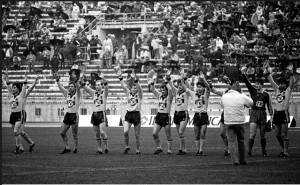
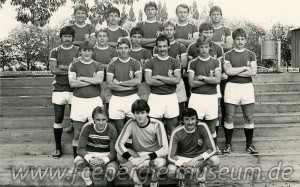
Here are the winners – another historic squad of 1984-85. Like Rabat Ajax, Zurrieq never won anything.

And at last they triumphed and surely it was great moment. And perhaps growing larger with time, for Zurrieq so far did not add another trophy.

Luxembourg

Luxembourg. Nothing to brag about, as usual. Cold facts:

CS Grevenmacher won the Second Division. They lost just 1 match in the 1984-85 season and finished 6 points ahead of the nearest pursuer.

Swift Hesperange finished 2nd. Promoted along with CS Grevenmacher.

The Second Division winners were going to replace the last in the top league – US Rumelange, last, and FC Wiltz 71, 11th. At the top of the table there was no battle at all.

Jeuness (Esch/Alzette) dominated the championship, winning it with 5-point cushion. This was their 19th title.

Jeunesse aimed for a double, but was unsuccessful – they lost the Cup final 0-1 to Red Boys.

Red Boys (Differdange) was 2nd in the championship and got the Cup – a true second-best. However, in purely Cup matters, they were number 1: this was their 15th Cup. From their perspective, everything was going on just fine – no way imagining anything else. But it was going to be very, very different – this was the last year Red Boys won anything, their last trophy ever. And not a hypothetical ‘ever’ either, but concrete ever – the club eventually seized to exist.

1985

1985

This year stays in memory marked by one thing: the Heysel Stadium Disaster. Tons of pages are written on it, so there is little need of recounting.

When, why, who is to blame – debates continue to this very day. Football as a culture showed its ugliest on May 29, 1985, when the fight between opposing fans and Belgian Police too started a good hour before the European Champions Cup final between Liverpool and Juventus started.

One thing was sure: football gradually evolved into war. Belonging to a club became identity and border line, it was us and them clearly marked by colours. Winning a game was a war on the pitch, already stated by Breitner. Winning at the terraces was the war between the fans. A city was battle field, no hostages, no mercy – a game of football was really invasion of armies, pillaging, destroying, and leaving after the battles wasteland. Football was dead – now it was something else, no longer a game and entertainment. There were no more fans either – now they were ‘ultras’, their ringleaders actually not even looking at the pitch and what was going on there, but turning their backs to the game to organize and command their increasingly murderous armies. It was nothing new, coming out of the blue, but slowly developing since the early 1970s – yet, nobody took any measures to address the increasing problems.

Thus, the simmering problems finally culminated in Heysel, at the biggest day of European football of the year.

A war, casualties, wasteland, but the show must go on – the show, the money, the pretense, a vicious circle, which nobody can break. The decision the game to be played in the midst of disaster was taken on high – on the highest! – political level. For the Belgians – the Prime Minister, the Brussels Mayor, and Chief of Police – it was largely concern for the city itself. If the game was cancelled, then the hordes of English and Italian fans will simply move the war to the city itself.

The match was played. 39 were dead, 600 injured. English clubs were banned from playing in the European club tournaments for 5 years. Investigation, charges and trials went on for years – at the end 14 fans, some officials and one Police captain were convicted of manslaughter. Football died and curiously nobody felt real guilt – with time, almost everybody accused everybody else and felt wronged by others. It was easy to feel innocent… so many thing were wrong, from crumbling old stadiums to unprepared Police, to increasing greed of clubs and governing bodies, which required exactly this new type of fans to gather and wave their flags. The ultras never feel guilt, just like soldiers in war – it was simple: us here and the enemy there. We are right, they are wrong. Attack. It was war on the pitch, it was war on the stands – ugly, bloody war. No more beautiful game. But there was no way to stop it either – after all, the Heysel Disaster was just an extraordinary moment. The same people self-righteously accusing left, right, and center, everything and everyone, for the unspeakable event would be ready in the next breath to points out that football was not juts the ugliness – just look around! Look at the whole picture, not just at one detail. And here it is, the whole picture.

Debut

Players stepping down do not finish the sport – others come up, so let wrap 1984 with debutante.

One Eric Cantona, barely 18-years old, debuted in 1983-84 for AJ Auxerre. The club was already hot news, the new talent was noticed, but let face it: at the time the French national team focused all attention to itself, a mere newcomer was hardly a big bang. It is easy now – we all know who Cantona was and what he did. Back then… ambitious as he was, perhaps he was further encouraged by watching the great French team, Platini, Tigana, Giresse, and the rest conquer Europe. But he was yet too young and only promising talent, nothing more than that. Perhaps in another club he was not to play at all – credits to Guy Roux are in order.

Retirement

Retirement. It was a sad story – Rainer Bonhof had to quit the game prematurely. He did it 1983, but since the season is 1983-84, his retirement belongs here – he started the season for Hertha (West Berlin) and after 6 games and 1 goal had to gave up because of ankle-joint injury. Unfortunately, injuries plagued him and there was no way out. He was 32 at the time.

Thus, after 371 games and 67 goals on club level and 53 games and 9 goals for the West German national team, Bonhof stepped down without fanfare. But what a career, even with the injuries!

Bonhof started with Borussia (Moenchengladbach) quickly becoming a key player of the great team in the 1970s. 4 German titles and 1 Cup. Also 1 UEFA Cup.

Moving to Spanish Valencia paired him with Mario Kempes and new victories – 1 Spanish Cup and 1 Cup Winners Cup.

Then he captained 1.FC Koln and won one more German Cup. But injuries…

And he moved to Hertha in the summer of 1983.

Here was the unfortunate end after 6 games.

Of course, his great talent was noticed quickly and he was invited in the German national team in 1972 and played for it until 1981.

Considering the competition at the time, Bonhof really impressed – of course, his finest moment was the 1974 World Cup, won by West Germany with his great help, but it was not all: he played at 2 World Cup finals and 3 European Championship finals. He became twice European champion (1972 and 1980) and silver medalist in 1976. More than impressive career, peppered by intriguing details. To this day, he is one of the most successful players in the history of the European championships, but… his titles came without him playing even a minute at the finals: he was reserve in both 1972 and 1980. His silver medal, though, was a result of playing in 1976. In 1974 he became the youngest German player to win World Championship and remain so for long, long years. He had one of the hardest kicks in the game at the time, so his long shots and free kicks were more than deadly – Ray Clemence, the great 1970s goalkeeper of Liverpool and England openly feared Bonhof. He was also great passer and tough, but not dirty, defensive midfielder – truly versatile player, a great example of what a total-football player should be. And it was because of him and Stielike the West German Federation lifted its ban for inviting foreign-based players to the national team – both were indispensable. Unfortunately, injuries piled up after 1978 and eventually killed his career.

The Golden Shoe

The Golden Shoe. This season provided a bit of surprise: top European leagues rarely gave a top Continental scorer, because they were tough and scorers had fewer chances. But Ian Rush of Liverpool came with the highest number this time.

The Welshman scored 32 goals for Liverpool – that he scored a plenty was not new and Liverpool had yet another very strong season, but even domineering English football normally did not help much scorers. So, it was fantastic.

Marco van Basten (Holland and Ajax) was second with 28 goals and Nico Claesen (Belgium and Seraing) – third with 27 goals. It was refreshing to see striker from one of the best European leagues scoring the most goals in the whole continent after years of Cypriots and Romanians scoring most goals just because they played in weak championships.

European Player Of The Year

European Player of the Year. Michel Platini was voted number 1, just like in 1983, but his second consecutive award perhaps reflected his finest season.

No point to praise the midfield genius in detail. 1983-84 was wonderful season – was it his personal best is debatable, but he achieved a lot exactly at that time.

Everything clicked just right at Juventus and the team was at its peak. With France, Platini won the European Championship. Of course, it was largely the European finals tipping the scales in his favour, but unlike his rivals Platini had it all together – wonderful and successful on both club and national team level. So, 24 of the 26 voting participants put him number 1 and the remaining two placed him second. Those two thought gave the top place to Jean Tigana and Ian Rush, but neither was able to come even remotely close to Platini – it was almost full and universal agreement that the 29-years old French star was supreme. Jean Tigana (France and Bordeaux) came 2nd and Preben Elkjaer-Larsen (Denmark and Hellas Verona) – 3rd. Which was also telling: both players were voted high largely because of their strong performance at the European finals. On the other hand, Ian Rush (Wales and Liverpool), 4th, was great at club level, but playing for weak national team prevented him for going higher – the European finals were the main factor for the journalists. Platini, solely, had it both – success on both levels and captaining the new European champions certainly helped a lot, yet, it was not just that. Well deserved award, perhaps one of the most convincing choices of best player of the year ever. And now Michel Platini was European Player of the Year twice, and he was 3rd in 1977 and 1980.