III Division
Group I
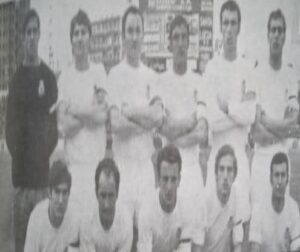
1 Cultural Leonesa 38 28 5 5 90 31 +59 61
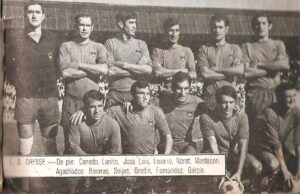 2 Ourense 38 28 4 6 59 20 +39 60
3 Sestao 38 26 4 8 78 32 +46 56
4 Barakaldo 38 23 9 6 59 22 +37 55
5 Bilbao Athletic 38 21 10 7 78 30 +48 52
6 Baskonia 38 16 10 12 60 46 +14 42
7 Real Avilés 38 17 8 13 45 36 +9 42
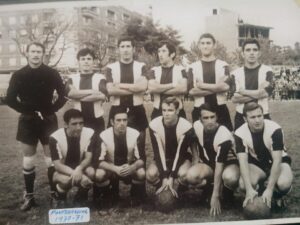 8 Ponferradina 38 16 9 13 63 45 +18 41
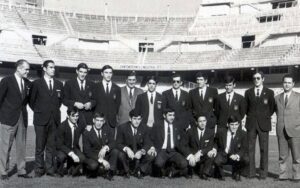 9 Ensidesa 38 13 14 11 59 52 +7 40
10 Lugo 38 15 8 15 43 38 +5 38
11 Caudal 38 13 12 13 41 42 −1 38
12 Gimnástica de Torrelavega 38 11 11 16 34 41 −7 33
13 Candás 38 10 12 16 38 51 −13 32
14 San Martín 38 12 6 20 44 72 −28 30
15 Siero 38 9 9 20 45 78 −33 27
16 Lemos 38 8 7 23 40 77 −37 23
17 Barreda 38 6 11 21 34 80 −46 23
18 Toluca 38 9 5 24 32 89 −57 23
19 Vetusta 38 6 9 23 34 66 −32 21
20 La Bañeza 38 6 7 25 32 81 −49 19
Group II
1 Tenerife 38 23 7 8 62 20 +42 53
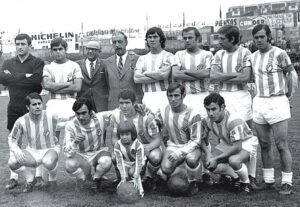 2 Valladolid 38 21 10 7 76 35 +41 52
 3 Palencia 38 21 8 9 57 37 +20 50
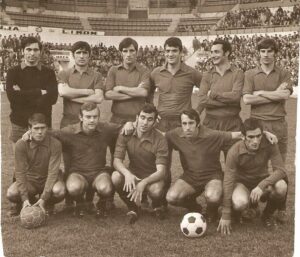 4 Osasuna 38 22 6 10 67 44 +23 50
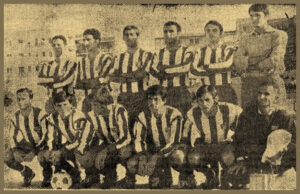 5 Atlético Madrileño 38 19 10 9 70 45 +25 48
6 Talavera 38 16 11 11 55 49 +6 43
7 Eibar 38 16 10 12 48 40 +8 42
8 San Sebastián 38 15 10 13 56 49 +7 40
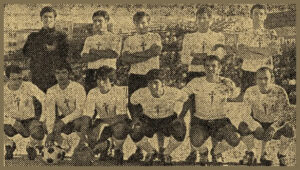
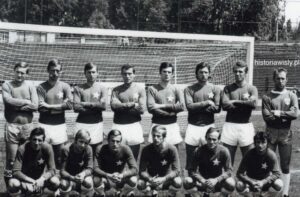
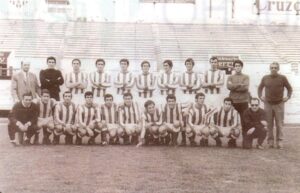
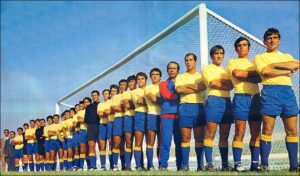
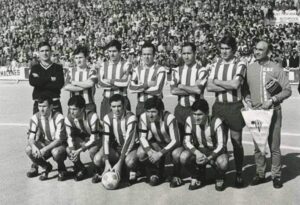
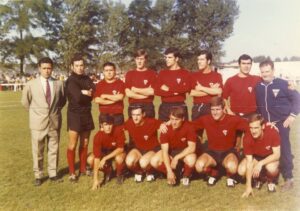 Standing from left: Esparza (entrenador), Aramayo, Eguaras, Lopetegui, Arroyabe, Nano, Kaito y Adolfo (masajista)
Crocuhing: Piñuela, Mendívil, Pérez Navares, Mena y Euba.
9 Mirandés 38 12 15 11 38 34 +4 39
 10 Salamanca 38 13 12 13 53 40 +13 38
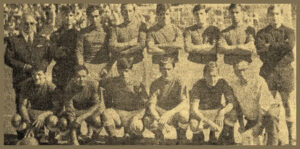 11 Plus Ultra 38 16 6 16 50 58 −8 38
12 Getafe 38 15 7 16 57 50 +7 37
13 Huesca 38 12 11 15 46 51 −5 35
14 Real Unión 38 12 11 15 38 49 −11 35
15 Calvo Sotelo Andorra 38 15 5 18 40 56 −16 35
16 Tudelano 38 12 10 16 33 44 −11 34
17 Chantrea 38 13 7 18 47 70 −23 33
18 Michelín 38 9 7 22 46 67 −21 25
 19 Carabanchel 38 8 4 26 32 70 −38 20
20 Ejea 38 4 5 29 24 87 −63 13
Group III
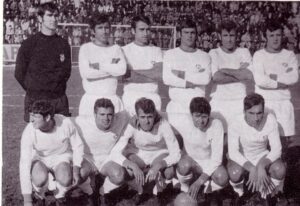
1 Mestalla 38 25 5 8 54 21 +33 55
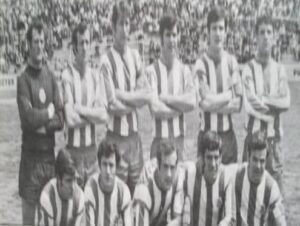 2 Girona 38 21 10 7 53 26 +27 52
3 Terrassa 38 21 7 10 67 42 +25 49
4 FC Barcelona Atlético 38 20 9 9 67 37 +30 49
5 Europa 38 19 6 13 62 46 +16 44
6 Alcoyano 38 19 5 14 45 42 +3 43
7 Calella 38 16 10 12 50 44 +6 42
8 Gandía 38 17 7 14 50 43 +7 41
9 Algemesí 38 15 9 14 50 50 0 39
10 Poblense 38 12 13 13 39 53 −14 37
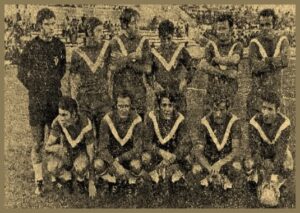 11 Badalona 38 14 8 16 43 45 −2 36
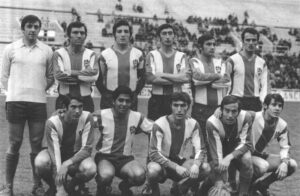 12 Levante 38 13 9 16 58 51 +7 35
13 Gimnàstic de Tarragona 38 12 11 15 44 52 −8 35
14 Tortosa 38 15 4 19 43 56 −13 34
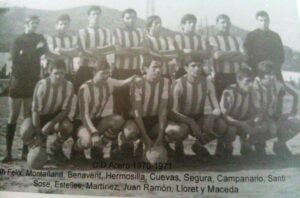 15 Acero 38 13 8 17 53 57 −4 34
16 Ibiza 38 14 6 18 42 49 −7 34
17 Atlético Baleares 38 11 9 18 38 48 −10 31
18 Júpiter 38 11 5 22 37 63 −26 27
19 Paiporta 38 7 9 22 38 79 −41 23
20 Mataró 38 5 10 23 27 56 −29 20
Group IV

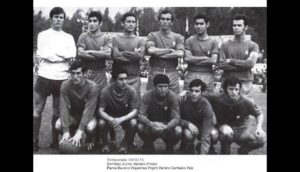
Standing from left: Cristobal (masajista), Caraballo, Julito, Zarate, Rafita Verdu, Parra, Lara, Ravelo, Bailaro, Vera Palmer, Pelito, Velasco.
Sitting: Serrano, Fali, Viqueiras, Vinuesa, Becerra, Prieto, Valera (entrenador), Del Pozo, Pepín, M. Benítez, Mendoza, Goñi, Rodri
1 Xerez 38 22 11 5 50 24 +26 55
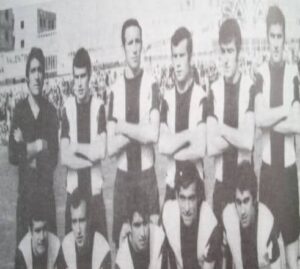 2 Cartagena 38 23 8 7 66 21 +45 54
3 Recreativo de Huelva 38 21 10 7 58 32 +26 52
4 Portuense 38 17 10 11 41 37 +4 44
5 Sevilla Atlético 38 17 10 11 54 48 +6 44
6 Ceuta 38 19 5 14 55 41 +14 43
7 Triana 38 16 9 13 43 41 +2 41
8 Real Jaén 38 15 10 13 46 34 +12 40
9 Real Murcia 38 15 9 14 47 39 +8 39
10 Valdepeñas 38 14 10 14 48 36 +12 38
11 Melilla 38 12 13 13 43 35 +8 37
12 Badajoz 38 14 9 15 47 49 −2 37
13 Atlético Malagueño 38 12 12 14 40 44 −4 36
14 Español de San Vicente 38 15 5 18 47 46 +1 35
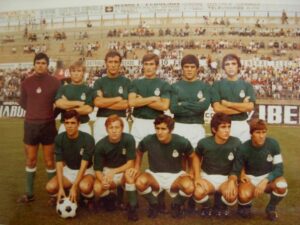 15 Ilicitano 38 13 7 18 37 58 −21 33
16 Balompédica Linense 38 13 7 18 31 47 −16 33
17 Mérida Industrial 38 10 11 17 43 54 −11 31
18 Imperial 38 7 12 19 31 50 −19 26
19 Recreativo de Granada 38 8 8 22 33 66 −33 24
20 Llerenense 38 6 6 26 28 85 −57 18
Promotion playoff
Team 1 Agg.
Tooltip Aggregate score Team 2 1st leg 2nd leg
Logroñés3–2 Cartagena 3–0 0–2
Girona 1–4 Villarreal1–2 0–2
Real Oviedo4–1 Palencia 2–0 2–1
Ourense 2–4 Langreo1–1 1–3
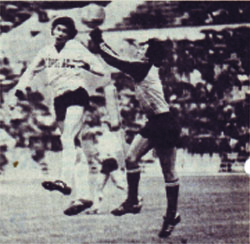
pl pts w d l gf ga p 1 ODRA OPOLE 30 43 18 7 5 40 16 p 2 ŁKS ŁÓDŹ 30 43 16 11 3 40 17 3 Hutnik Kraków 30 40 17 6 7 46 25
4 MZKS Arka Gdynia 30 33 11 11 8 36 27 5 Urania Ruda Śląska 30 32 10 12 8 30 24
6 Motor Lublin 30 32 13 6 11 27 23 7 Zawisza Bydgoszcz 30 32 13 6 11 23 20 8 Piast Gliwice 30 31 13 5 12 36 38 9 Garbarnia Kraków 30 31 13 5 12 36 40
10 Śląsk Wrocław 30 30 11 8 11 30 31 11 Star Starachowice 30 29 9 11 10 25 23 12 Start Łódź 30 29 10 9 11 31 34 r 13 Unia Racibórz 30 28 9 10 11 22 27 r 14 Olimpia Poznań 30 19 5 9 16 22 34 r 15 Warta Poznań 30 17 3 11 16 16 38 r 16 Cracovia Kraków 30 11 3 5 22 17 60
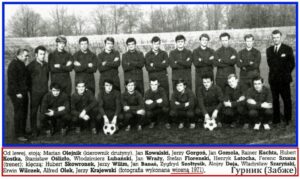 c 1 GÓRNIK ZABRZE 26 39 17 5 4 43 21
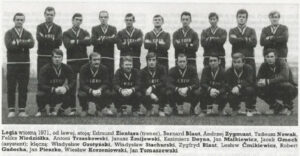 u 2 Legia Warszawa 26 34 14 6 6 39 20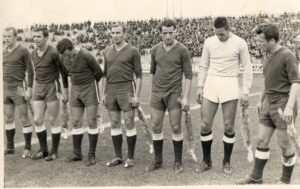
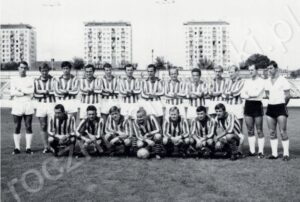
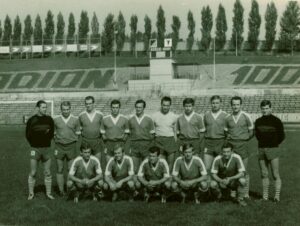 Standing from left:Kobiałko, Stachuła, Nowak, Adamski, Dworniczek, Szeja, Kwiatkowski, Galas, Kasprzyk, Masiel. Crouching: Pawlik, Pietraszewski, Cieszowic, Szłykowicz, Kampa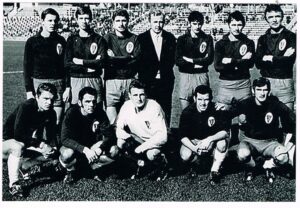
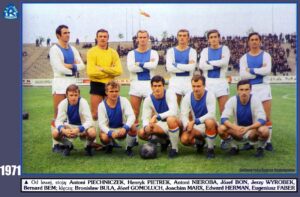 5 Ruch Chorzów 26 25 8 9 9 43 32
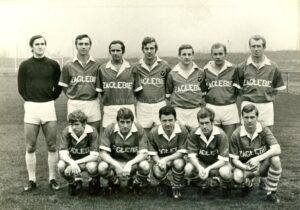 7 Zagłębie Sosnowiec 26 25 8 9 9 32 37
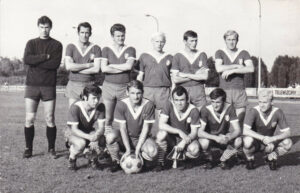
 Standing from left: Gonet, Lendzion, Kmiecik, Wójcik, Polak, Płonka, Kotlarczyk, Stroniarz; Front: Musiał, Michaliszyn? Sarnat, Studnicki, Skupinik, Sputo.
 9 Stal Rzeszów 26 24 6 12 8 34 26
 11 Gwardia Warszawa 26 23 8 7 11 24 28
 Polonia on the left vs Ruch Chorzow
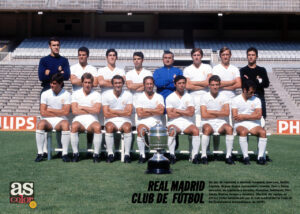
 Velencia lost the final for second year in a row and was unable to earn a double.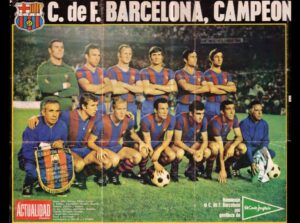
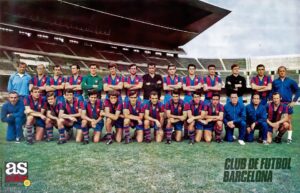
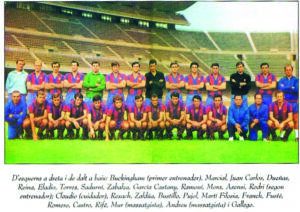 Barcelona won dramatic final and ended the season with a trophy.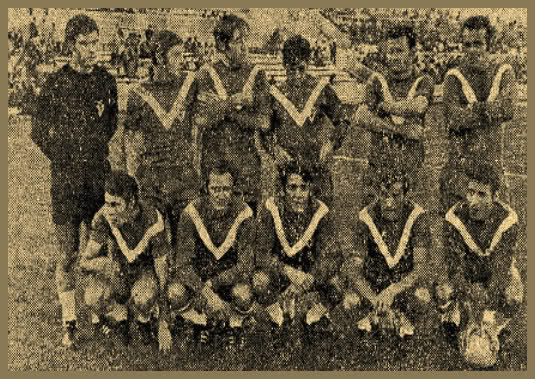
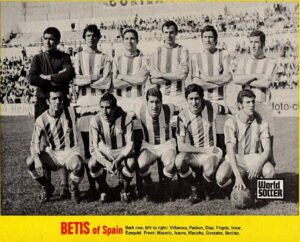
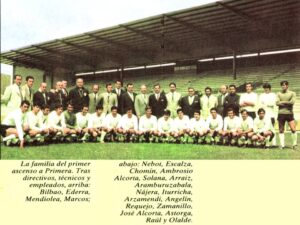 2 Burgos (P) 38 19 7 12 46 30 +16 45[a]
 3 Deportivo La Coruña (P) 38 18 9 11 44 32 +12 45[a]
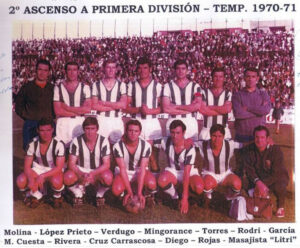 4 Córdoba (P) 38 17 11 10 50 30 +20 45[a]
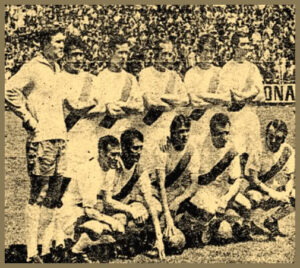 5 Rayo Vallecano 38 18 9 11 51 29 +22 45[a]
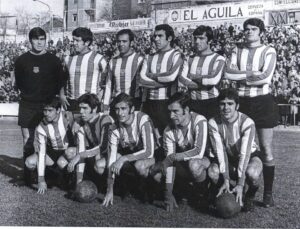 Standing from left: Galán, Domenech, Mur, Sabaté, Riera, Figuerola,
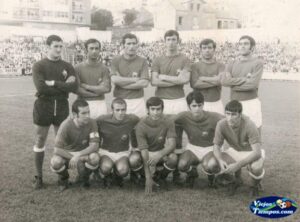 8 Ferrol 38 16 8 14 39 43 −4 40[b]
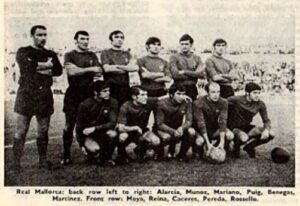 9 Mallorca 38 12 16 10 43 35 +8 40[b]
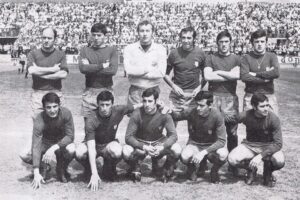 Standing from left: Irulegui,Albino,Illumbe,López,Amavisca,Clemente,
 11 Hércules 38 13 11 14 39 48 −9 37[c]
 12 Cádiz 38 11 15 12 32 40 −8 37[c]
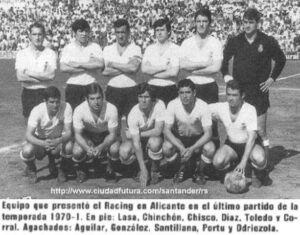 13 Real Santander 38 15 6 17 48 50 −2 36
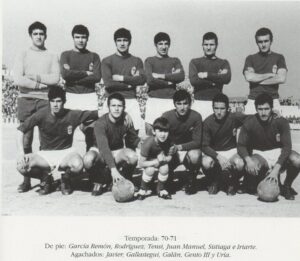 14 Oviedo (O) 38 12 10 16 41 37 +4 34 Qualification for the relegation playoffs
 18 Onteniente (R) 38 8 15 15 30 47 −17 31 Relegation to Tercera División
 20 Moscardó (R) 38 6 11 21 22 51 −29 23
 Pd W D L GF GA Pts
 2.FC Barcelona 30 19 5 6 50-22 43
 3.Atlético de Madrid 30 17 8 5 51-20 42
 4.Real Madrid 30 17 7 6 46-24 41
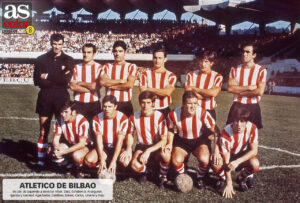 5.Athletic de Bilbao 30 14 7 9 40-31 35
 6.RC Celta 30 15 5 10 37-32 35
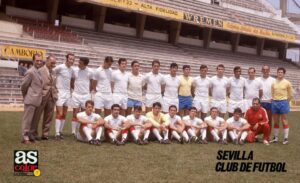 7.Sevilla FC 30 13 6 11 34-42 32
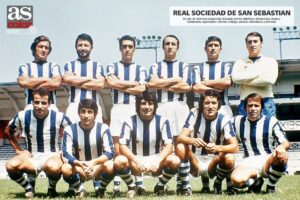 8.Real Sociedad 30 10 9 11 23-27 29
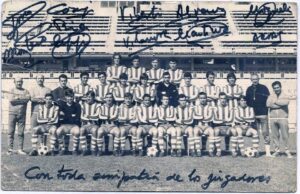 Top row from left: Viberti, Martínez, Álvarez, Monreal. Middle row: Espejo, Beigveder, Cabral, Irles, Pons, Deusto, Roldán, Arias, Vilanova, Kalmar (entrenador). Sitting: Montero, Goicoechea, Mori, Migueli, Varela, Conejo, Benítez, Bua, Chuzo, Macias, Aragón.
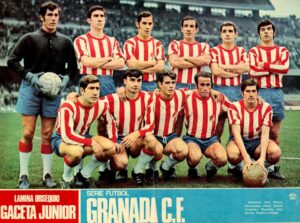 10.Granada CF 30 10 8 12 33-34 28
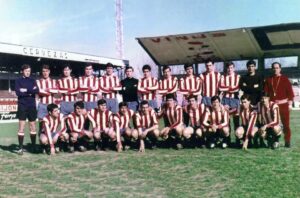 12.Sporting de Gijón 30 10 5 15 35-44 25
 13.CD Sabadell 30 8 5 17 28-49 21
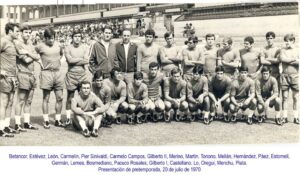 14.UD Las Palmas 30 5 10 15 33-42 20
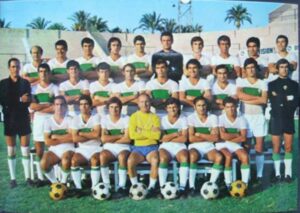 15.Elche CF 30 4 10 16 25-46 18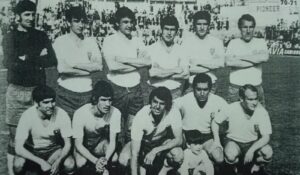
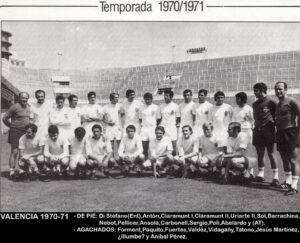
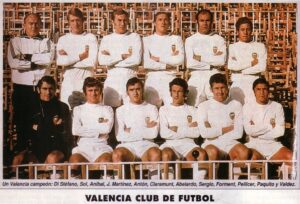
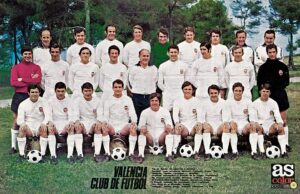 Valenica won their 4th title, coached by Alfredo di Stefano. It was a long wait – since 1947 – but finally a triumph. If goal-difference counted, Valencia would have been second… so, lucky to a point, having better record (a win and a tie) against Barcelona.
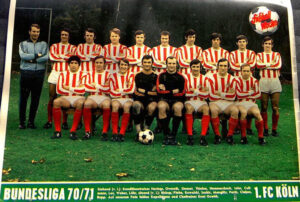 1.FC Koln failed to win the trophy second year in a row. Twice unlucky, this time lost in extra time.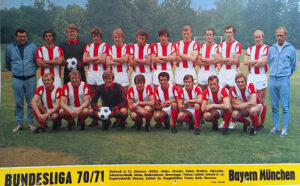
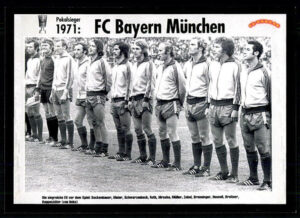 Bayern won their 5th Cup.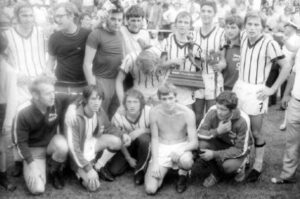
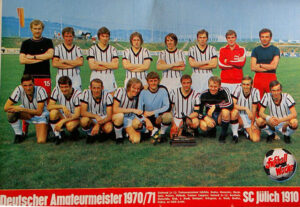 SC Julich 1910 won their third consecutive amateur title in front of 6000 fans. The gates declined significantly – in 1968-69 the final was attended by 12 000.
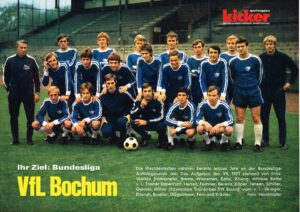 1. VfL Bochum 8 7 0 1 23:11 +12 14:2
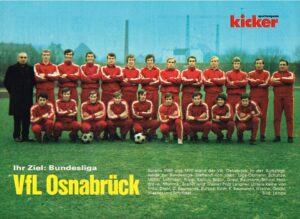 2. VfL Osnabrück 8 3 1 4 11:13 −2 7:9
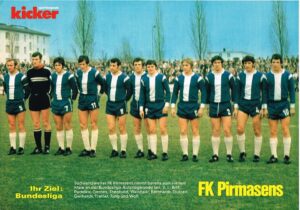 3. FK Pirmasens 8 3 1 4 11:14 −3 7:9
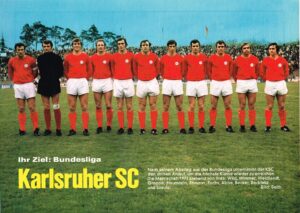 4. Karlsruher SC 8 3 1 4 9:12 −3 7:9
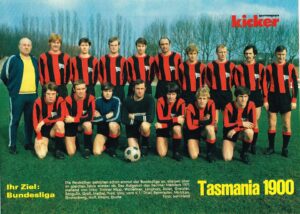 5. SC Tasmania 1900 Berlin 8 2 1 5 13:17 −4 5:11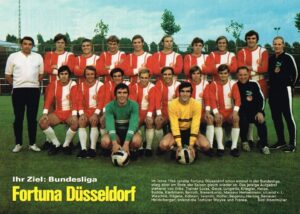
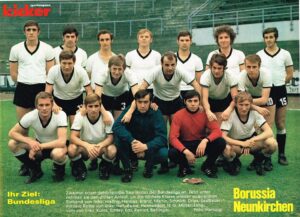 2. Borussia Neunkirchen 8 4 1 3 11:9 +2 9:7
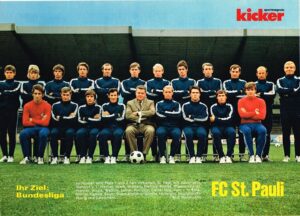 3. FC St. Pauli 8 3 2 3 10:14 −4 8:8
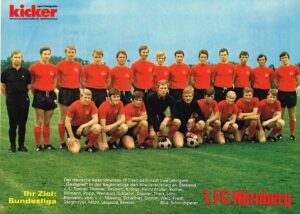 4. 1. FC Nürnberg 8 3 1 4 14:10 +4 7:9
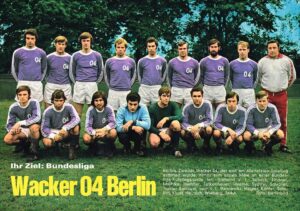 5. Wacker 04 Berlin 8 1 0 7 6:20 −14 2:14
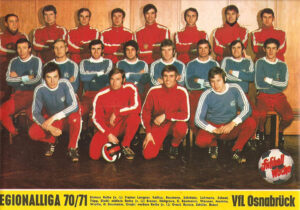 VfL Osnabruck – 1st.
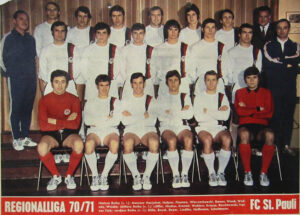 FC St. Pauli – 2nd
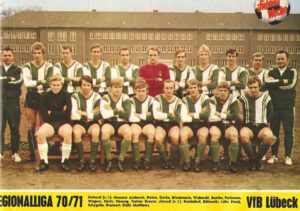 VfB Lubeck – 3rd
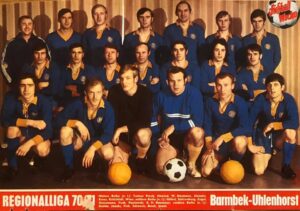 HSV Barmbek-Uhlenhorst – 5th
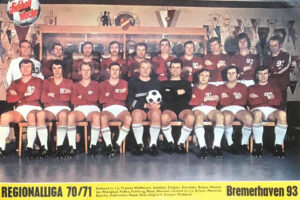 Bremerhaven 93 – 8th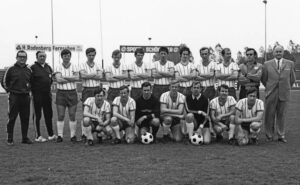
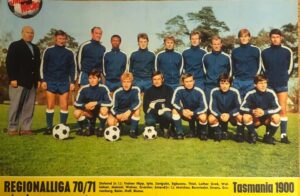 Tasmania 1900 – 1st
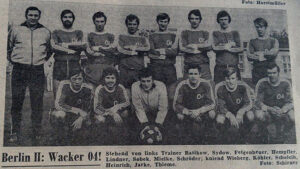 Wacker 04 – 2nd
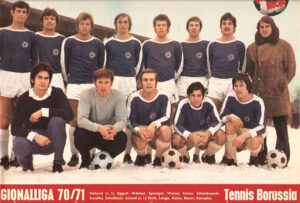 Tennis Borussia – 4th
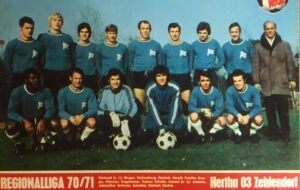 Hertha 03 Zehlendorf – 5th
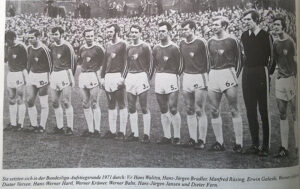 VfL Bochum – 1st
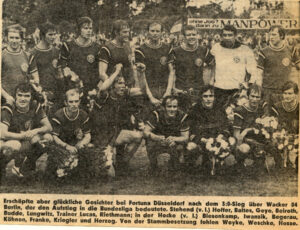 Fortuna Dusseldorf (the foto is from the promotional tournament) – 2nd
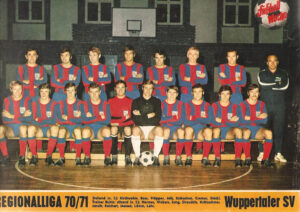 Wuppertaler SV – 3rd
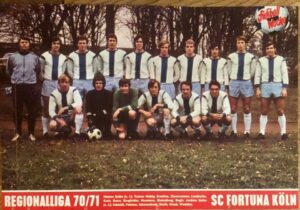 SC Fortuna Koln – 4th
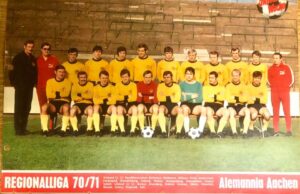 Alemannia Aachen – 6th
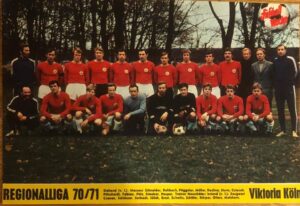 SC Viktoria Koln – 10th
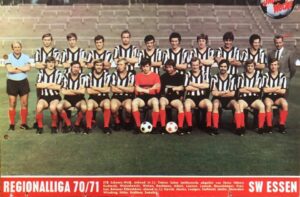 Schwarz-Weiss Essen – 11th
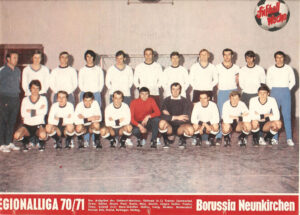 Borussia Neunkirchen – 1st
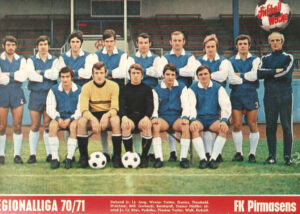 FK Pirmasens – 2nd
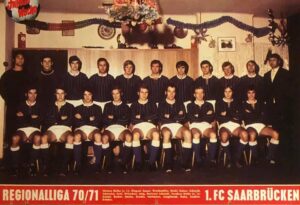 1.FC Saarbrucken – 4th
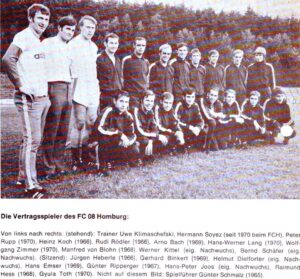 FC 08 Homburg – 8th
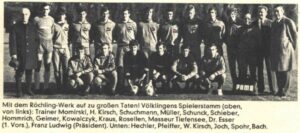 SV Rochling Volklingen – 10th
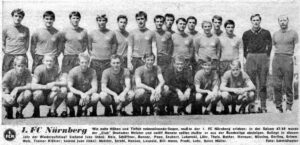 1.FC Nurnberg – 1st
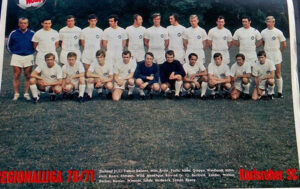 Karlsruher SC – 2nd
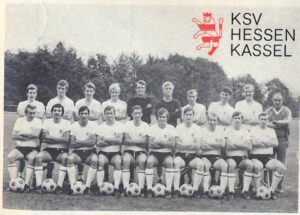 KSV Hessen Kassel – 3rd
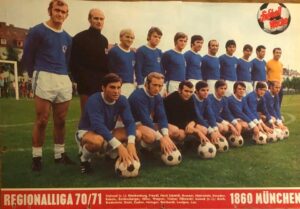 TSV 1860 Munchen – 4th
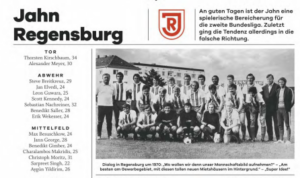 Jahn Regensburg – 5th
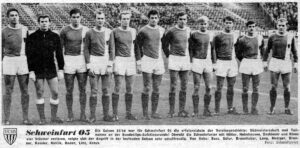 FC Schweinfurt 05 – 6th
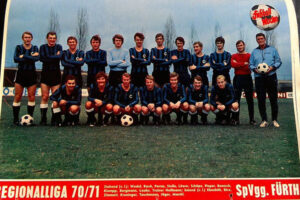 SpVgg. Furth – 7th
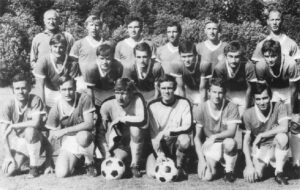 Stuttgarter Kickers – 10th
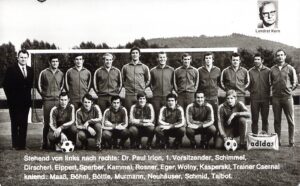 SSV Reutlingen – 15th
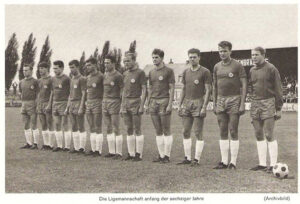 VfR Mannheim – 16th.