Czechoslovakia – ranked 13th. Apart from Sparta (Prague) dominance, the excitement came from the great success of very old, but practically unknown outside Czechoslovakia club, which only recently climbed to first level football.
Second Division. Divided into Czech and Slovak leagues and mostly dominated by few former top league members.
Czech National League. Two teams were way above the other 14 participants and those two fought for top position giving promotion. TJ JZD Slusovice had strong season, good for 3rd place at the end, but the modest club was not close to the leaders with 36 points.
Zbrojovka (Brno) and Spartak (Hradec Kralove) fought between themselves and Zbrojovka lost – second with 41 points.
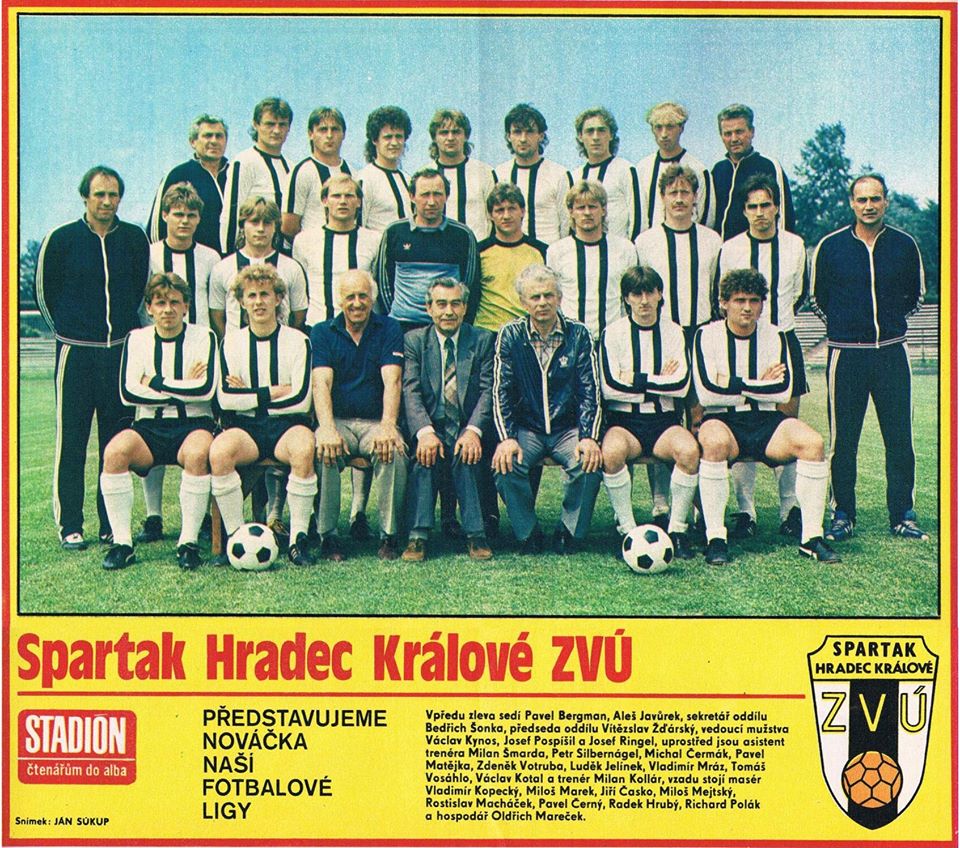 Spartak ZVU (Hradec Kralove) prevailed and the championship with 43 points from 16 wins, 11 ties, 3 losses, 51-20 goal-difference. Going back to first level football after quite a long exile – they were relegated in 1980-81.
The Slovak National Football League was more intriguing by some teams playing there if not because of class – four of the strongest teams during the 1970s and one of them traditionally one of the strongest teams in Czechoslovakia. Local derbies too: Slovan and Inter from Bratislava and Lokomotiva and ZTS from Kosice. ZTS sounded unfamiliar to some, but this was a club often changing names – in their strong period they called mostly VSS. Anyway, the Kosice clubs were too weak now and occupied mid-table – Lokomotiva finished 7th and ZTS – 8th. The Bratislava clubs battled not only between themselves, but also against raising ZVL Povazska Bystrica. Nobody else was able to come even close – ZVL Povazska Bystrica finished 10 points ahead of 4th place SH Senica. But they lost the battle for the top, finishing with 43 points. The Bratislava clubs ended with 45 points each and goal-difference decided the winner. Which was not Slovan – they had +43 and that was not enough. Won most games this championship, though – 20.
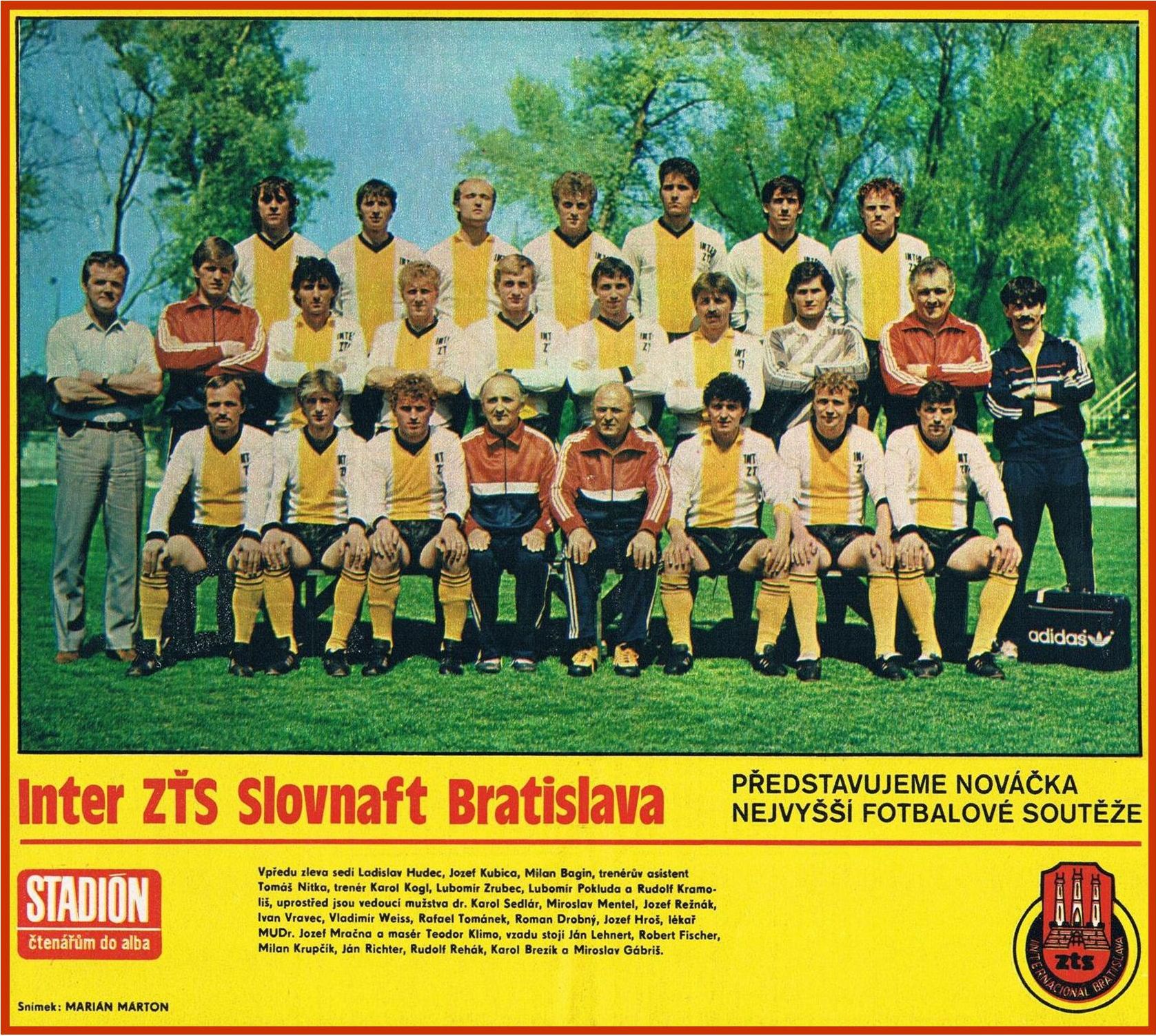 Internacional ZTS Slovnaft – or just Inter – clinched victory and promotion. 19 wins, 7 ties, and 4 losses gave them 45 points, just like city rivals Slovan. But their goal-difference was 68-23. Plus 45, which was their whole advantage: 2 goals. Small advantage, but crucial and it was ever so sweet to beat their famous neighbours. Inter was just relegated and immediately climbed back to First Division – and Slovan, the only Czechoslovak club winning European cup, continued its exile in second level.
So, familiar names won the Second Division leagues and got promoted, but both came ahead of traditionally more successful clubs, which was interesting.
DDR the Cup
The Cup. The established for years counter-point to Police power… Dynamo (Berlin), for all its domination, was still unable to win the Cup. They did not even reach the final very often and this year were out before the semi-finals. A minor sensation was caused by Hansa (Rostock) – they reached the final. Thus, for a sixth time in the history of East German football second-division team reached the final. Three times a second-division won the trophy so far. Hansa played a final as second-division team already – in 1955, under the name SC Empor. They played one more final, but no Cup. This was their third chance to win, but they faced formidable opponent: Lokomotive (Leipzig). Cup specialists in top form. Hansa had no chance – Lokomotive destroyed them 4-1.
 Heroic effort, but reality was against Hansa – no matter how good a second-division team was, it was always far weaker than average top-league team, not to mention the best. Still, reaching the Cup final was significant – the last time second-division club played the final was in 1963 and with the big reorganization in 1965, when the top clubs were made somewhat professional (it was quite weird change – the players officially were called ‘profis’, but still listed as students, mechanics, and so on. Professional amateurs would be more proper to call them, as ironic as such name could be), it became unthinkable for second-division team to reach the Cup final.
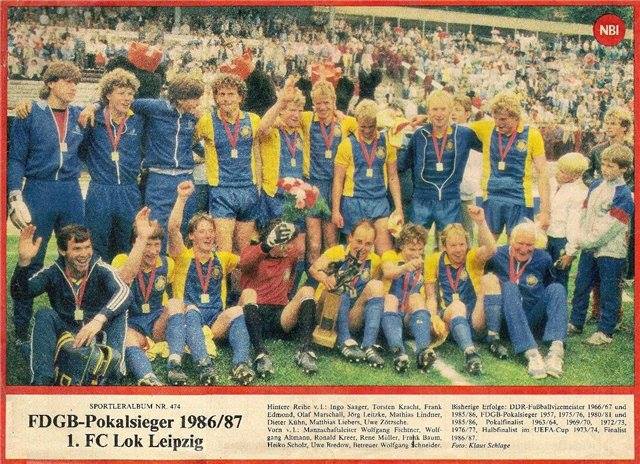 1. FC Lokomotive (Leipzig) won the Cup for a second year in a row. It was their 5th altogether and the victory cannot be shrugged off because the opponent was too weak for real challenge – Lokomotive was arguably at its all-time peak, playing their most successful season. They had wonderful team – given the East German reality – with 8 national team players. Olaf Marschal was just coming up, but if Lokomotive’s players were not as well known as Dynamo Berlin’s, the reason is that they were slightly older and unable to become stars in unified Germany.
DDR I Division
First Division. Nothing new… the usual winner, the usual outsiders, the usual division in three groups inside the league.
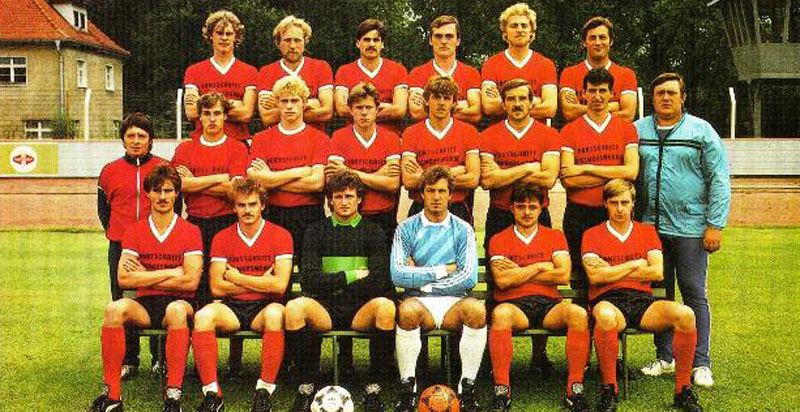 BSG Fortschrift (Bischofswerda), newly promoted, finished last with 17 points and went down.
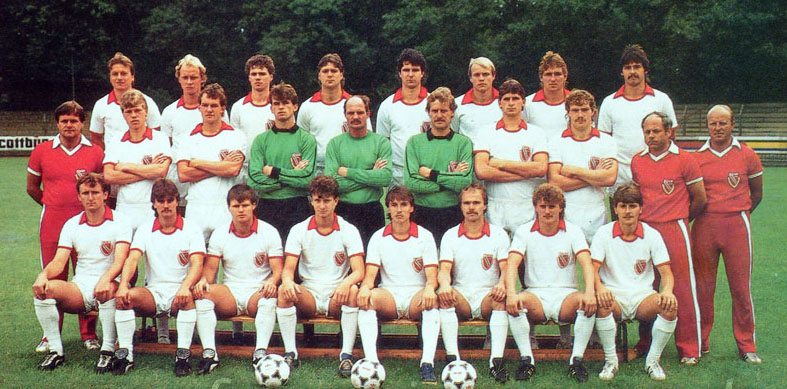 BSG Energie (Cottbus), promoted by default in the previous season (the second team of Dynamo Berlin won then, but they were ineligible for promotion) ended 13th with 18 points and was relegated. Top row from left: Udo Stimpel, Robert Reiß, Holger Fandrich, Dietmar Drabow, Dieter Paulo, Frank Lehmann, Frank Lindemann, Ralf Lempke.
Middle row: Fritz Bohla (Cheftrainer), Michael Wawrok, Frank Vogel, Holger Hünsche, Rainer Schwerdtner, Rolf-Dieter Kahnt, Detlef Irrgang, Jens Melzig, Manfred Duchrow (Co-Trainer), Lothar Lehmann (Betreuer).
Sitting: Andreas Wolf, Ralf Hansch, Andreas Rath, Thomas Hoßmang, Maik Pohland, Jörg Jenter, Hagen Wellschmidt, Henry Brotzmann.
The painful reality for a long, long time – second level was not competitive enough. Newly promoted teams went back to Second Division right away.
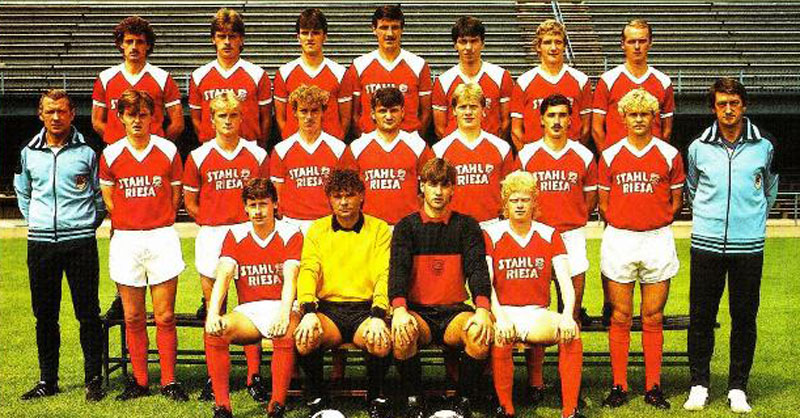 BSG Stahl (Riesa) – 12th. Lucky – finished with 18 points too and escaped relegation only because of better goal-difference. In a way, they had good spell – promoted in 1983, so far they evaded going back to the lower level, although their best final place was 11th in 1983-84.
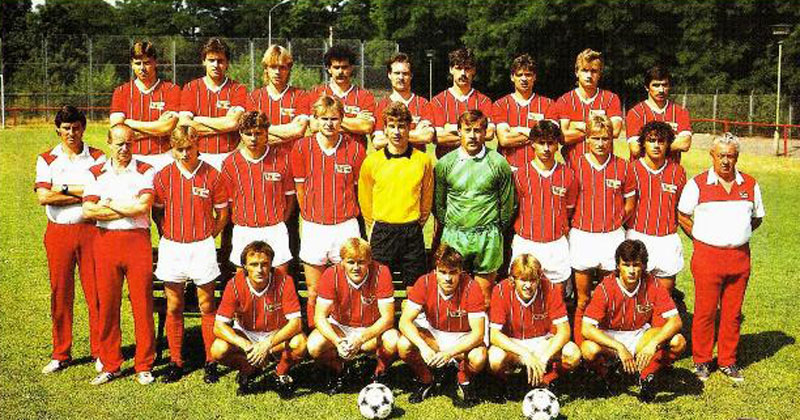 1. FC Union (Berlin) also barely survived – 11th with 19 points. Keeping a place in the top league was difficult to them,which was even a bit strange for there were 3 national team players.
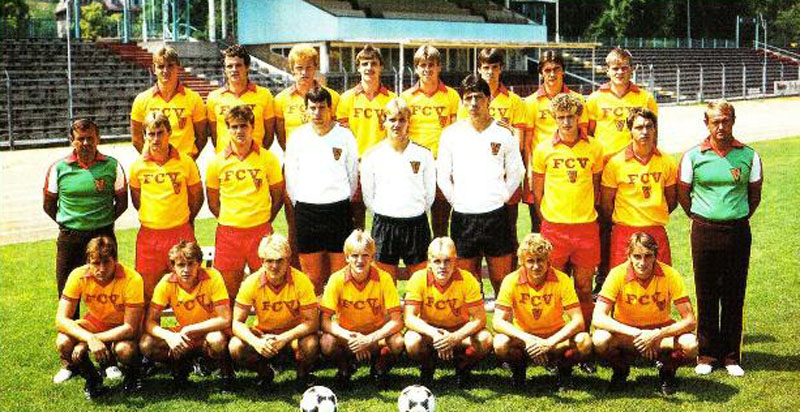 FC Vorwaerts (Frankfurt/Oder) was slipping down as well – 10th with 21 points.
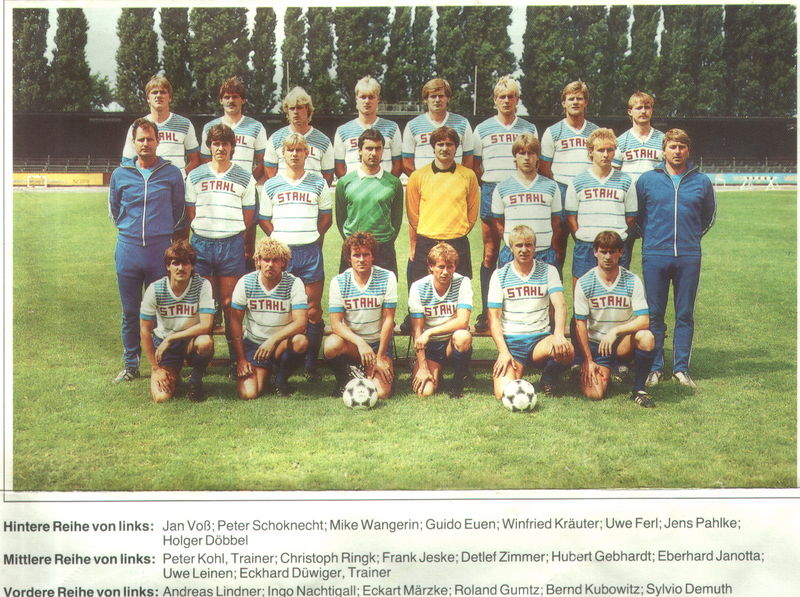 BSG Stahl (Brandenburg) – 9th with 23 points. Promoted in 1984 and so far succeeding to stay in the league rather well.
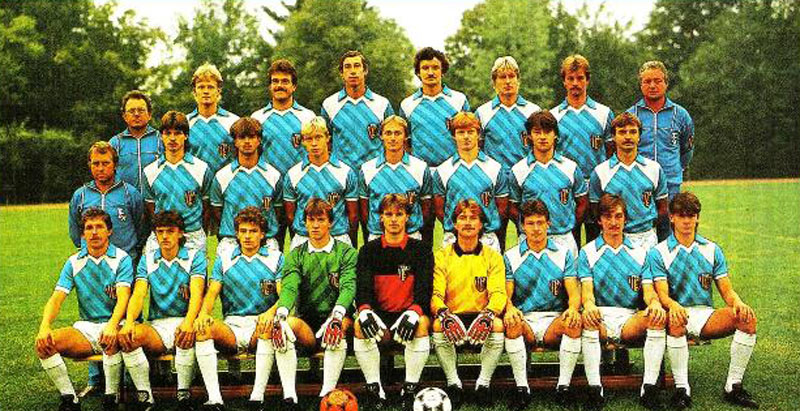 FC Karl-Marx-Stadt (Karl-Marx-Stadt) – 8th with 24 points. Nothing special as usual. Dirk Schuster made his debut.
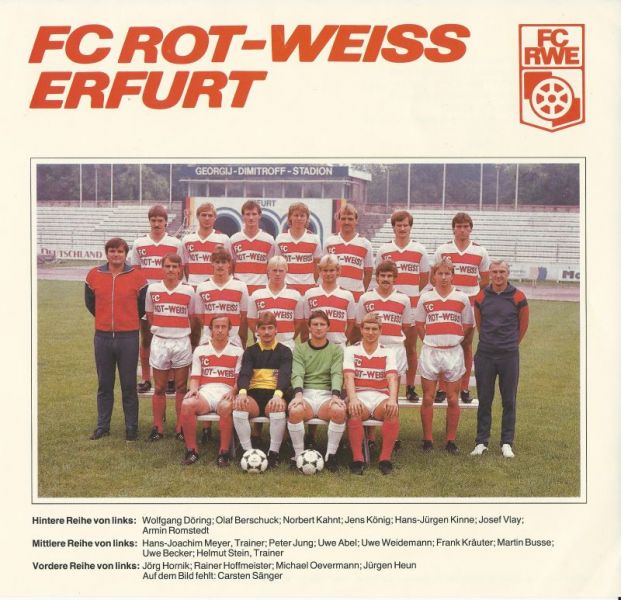 FC Rot-Weiss (Erfurt) – 7th with 24 points. The usual…
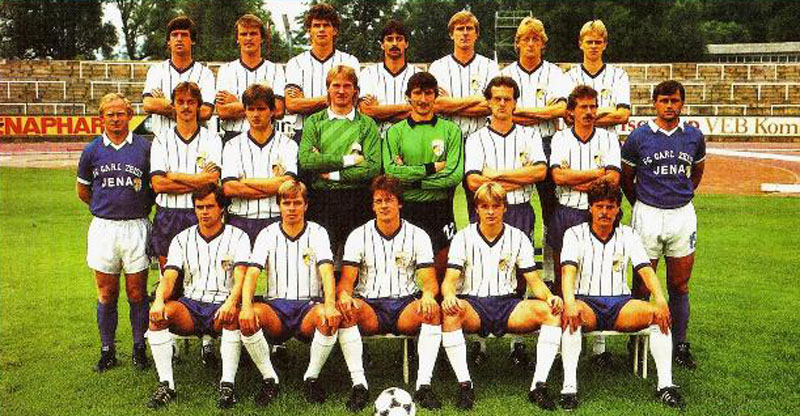 FC Carl Zeiss (Jena) – relatively weaker, compared to the previous decade, but still way stronger than the smaller clubs behind them. 6th with 28 points. Top row from left: Jürgen Raab – Thomas Ludwig – Heiko Peschke – Jörg Burow – Andreas Bielau – Jens-Uwe Penzel – Mario Röser
Middle row: Robby Zimmermann – Thomas Schmiecher – Perry Bräutigam – Karsten Härtel – Jürgen Köberlein – Andreas Krause
Middle row: Robby Zimmermann – Thomas Schmiecher – Perry Bräutigam – Karsten Härtel – Jürgen Köberlein – Andreas Krause
Front row: Wolfgang Schilling – Mathias Pittelkow – Henry Lesser – Stefan Böger – Gert Brauer
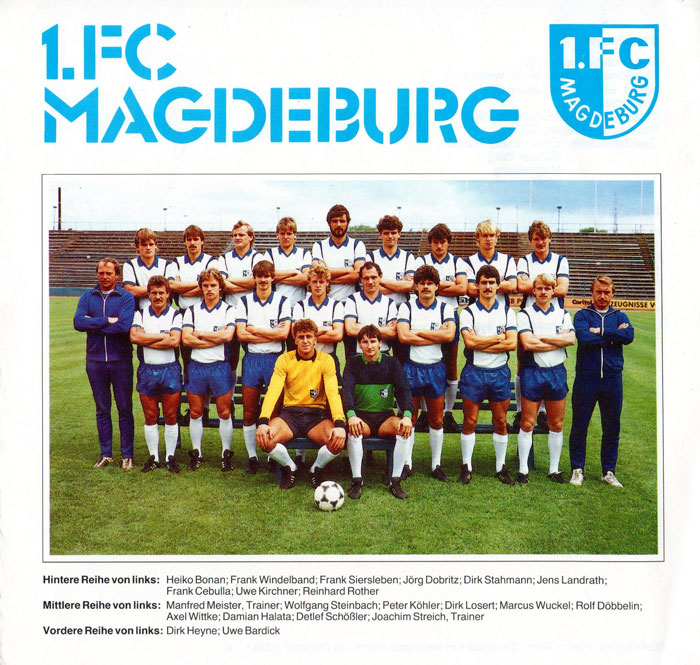 1. FC Magdeburg (Magdeburg) – 5th with 28 points. Like Carl Zeiss, weaker than before, but still much stronger than most of the league.
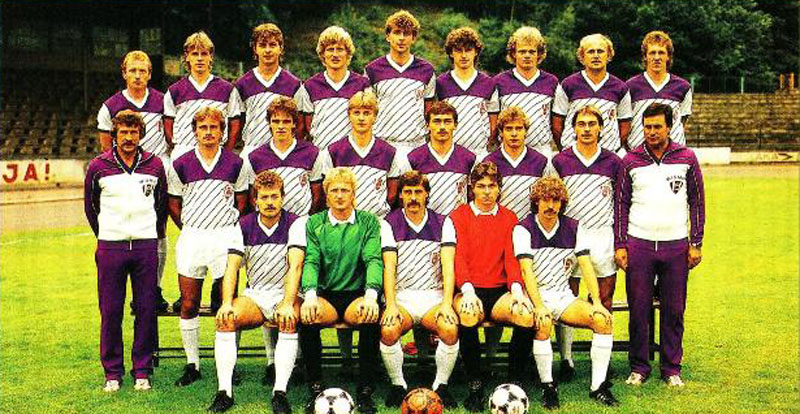 BSG Wismut (Aue) – 4th with 32 points. A huge improvement from the previous season, when they 11th and in danger of relegation. Interestingly, they never went down since promoted in First Division in 1950-51 (then named Zentra Wismut), although never reaching again the success achieved in the second half of the 1950s, when they played and represented the city of Karl-Marx-Stadt.
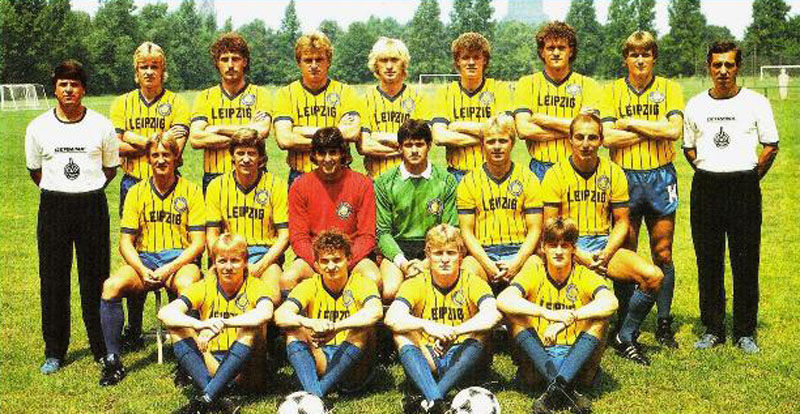 1. FC Lokomotive (Leipzig) – 3rd with 34 points. Consistently strong and consistently unable to win a championship, but this very exciting season – arguably, their best ever.
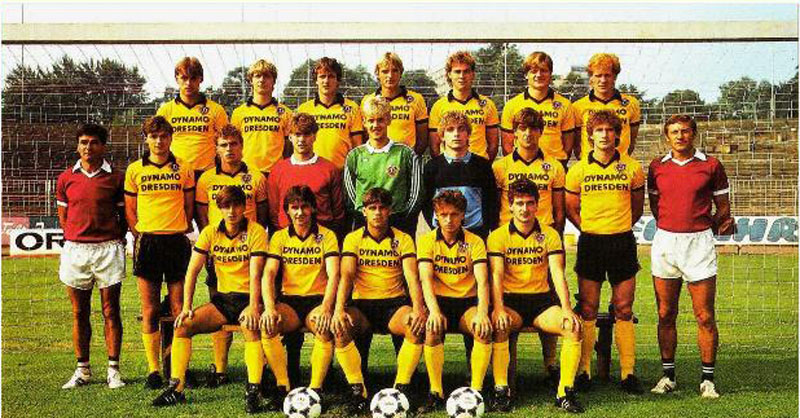 SG Dynamo (Dresden) – 2nd with 36 points. Really, fighting only for second place. Ralf Minge was the big figure, but Ulf Kirsten already was a national team player and on the road of becoming huge star – he was still 22-years old.
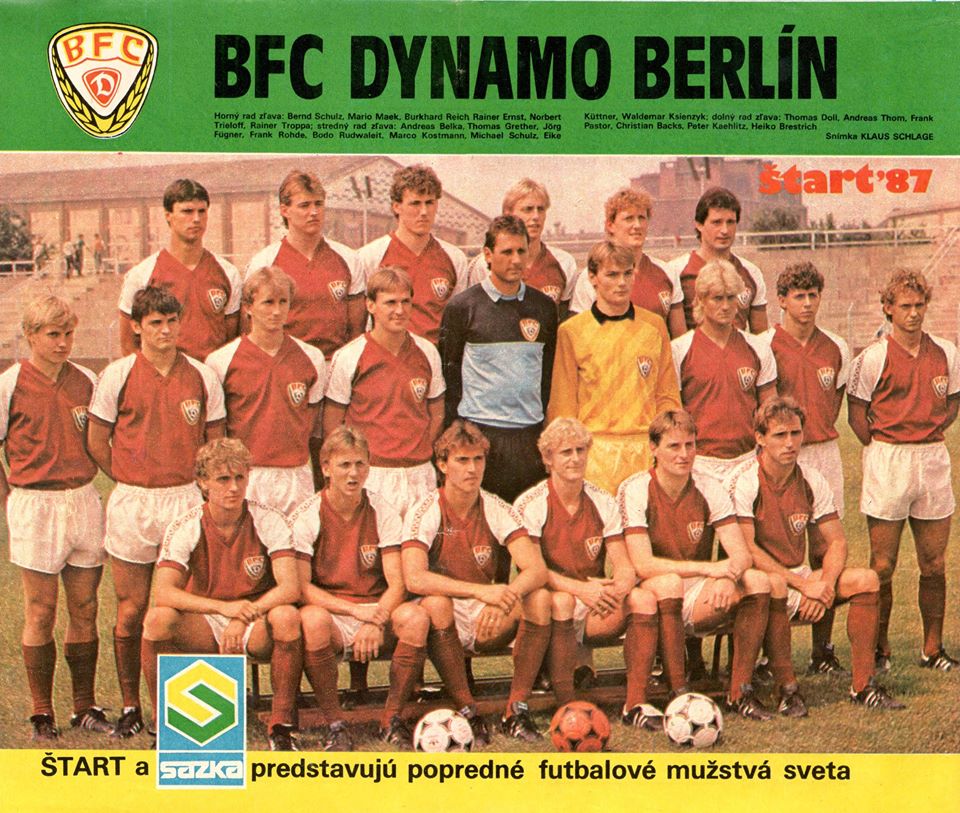 BFC Dynamo (Berlin) – champions for 9 years in a row. 19 wins, 4 ties, 3 losses, 59-20 goal-difference, 42 points. Unquestionably dominant and no wonder, since they had the best East German players for a long time. 10 national team players in this squad. Frank Terletzki, their idol for more than a decade, retired, but 21-years old Thomas Doll joined them from Hansa (Rostock). Andreas Thom was already in the team, so the future was guaranteed – just consider their strikers: Rainer Ernst (27 years old), Frank Pastor – the best scorer this championship (30), Thomas Doll (21), and Andreas Thom (22). However, it is difficult to praise a team so heavily and ominously helped by state’s oppressive apparatus. Who could say ‘no’ to the Stassi?
DDR II Division
DDR – ranked 14th. The same old, same old division of teams remained, although new strong generation was more or less in place – the one which would play professionally in the unified Germany, but not knowing it yet.
The second teams of top league clubs were not eligible for promotion from Second Division as before, and as before there was little to say about the second level: the few former top league clubs were the only candidates for going up. There was next to nothing challenge.
 Chemie (Leipzig) entirely lost its edge by now – 10th in Group A of Second Division.
 Hansa (Rostock), just relegated from First Division was way too strong and had no rival whatsoever – they won the Group A with 58 points from 26 wins, 6 ties, 2 lost games and 89-25 goal-difference. Too strong for Second Division – the second-place finisher, Dynamo (Furstenwalde), was 17 points behind. Not only Hansa was quick to go back to top flight, but they made a minor sensation this year.
In Group B Sachsenring (Zwickau), freshly relegated, and Chemie (Halle) competed for top position, but Sachsenring was weaker and lost steam on the way, finishing 2nd and 5 points behind the winners.
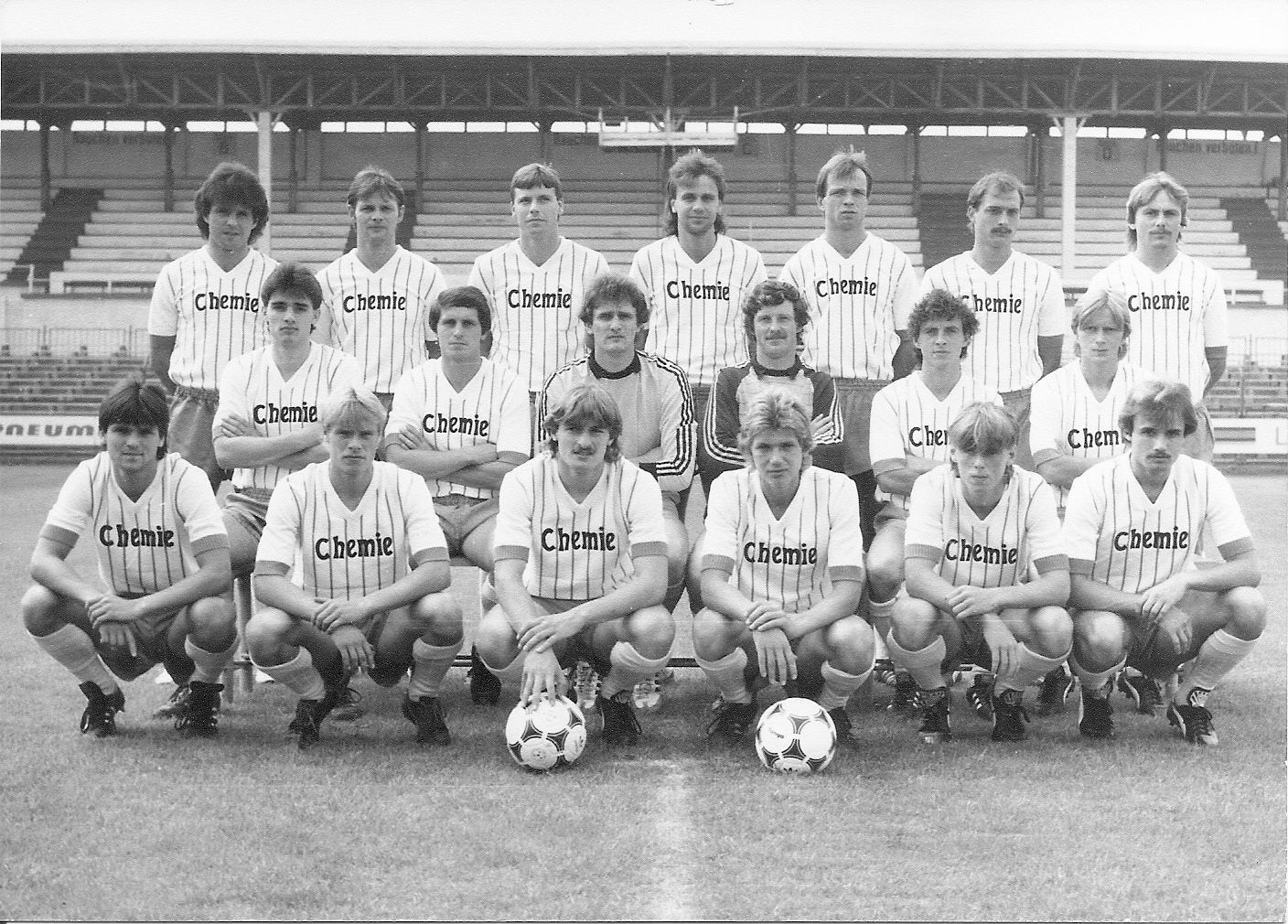 Chemie (Halle) won Group B with 53 points from 21 wins, 11 ties, 2 losses and 63-28 goal-difference. Chemie was relegated from First Division in 1983-84 and now were coming back.
Both promoted teams were familiar names with long top-league history, but the real question was not getting promoted – it was staying in the First Division.
France the Cup
The Cup. The final, played on June 10th, 1987, clashed again the prime movers of the season – Bordeax vs Marseille. And again Bordeaux won, scoring one goal in the first half and one in the second. Fargeon opened the result in the 14th minute and in the 88th Zlatko Vujovic scored – 2-0 and Bordeaux won the trophy.
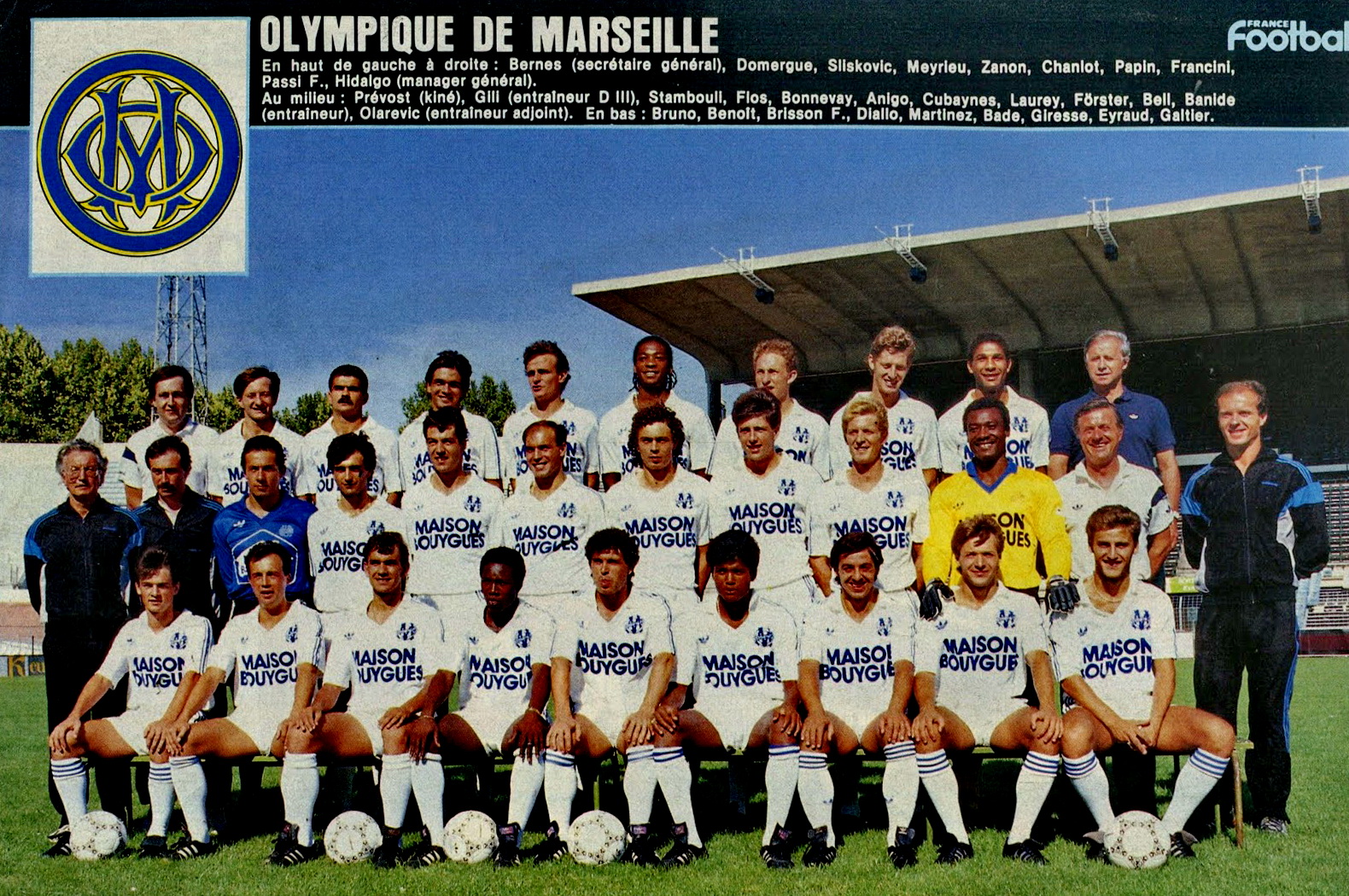
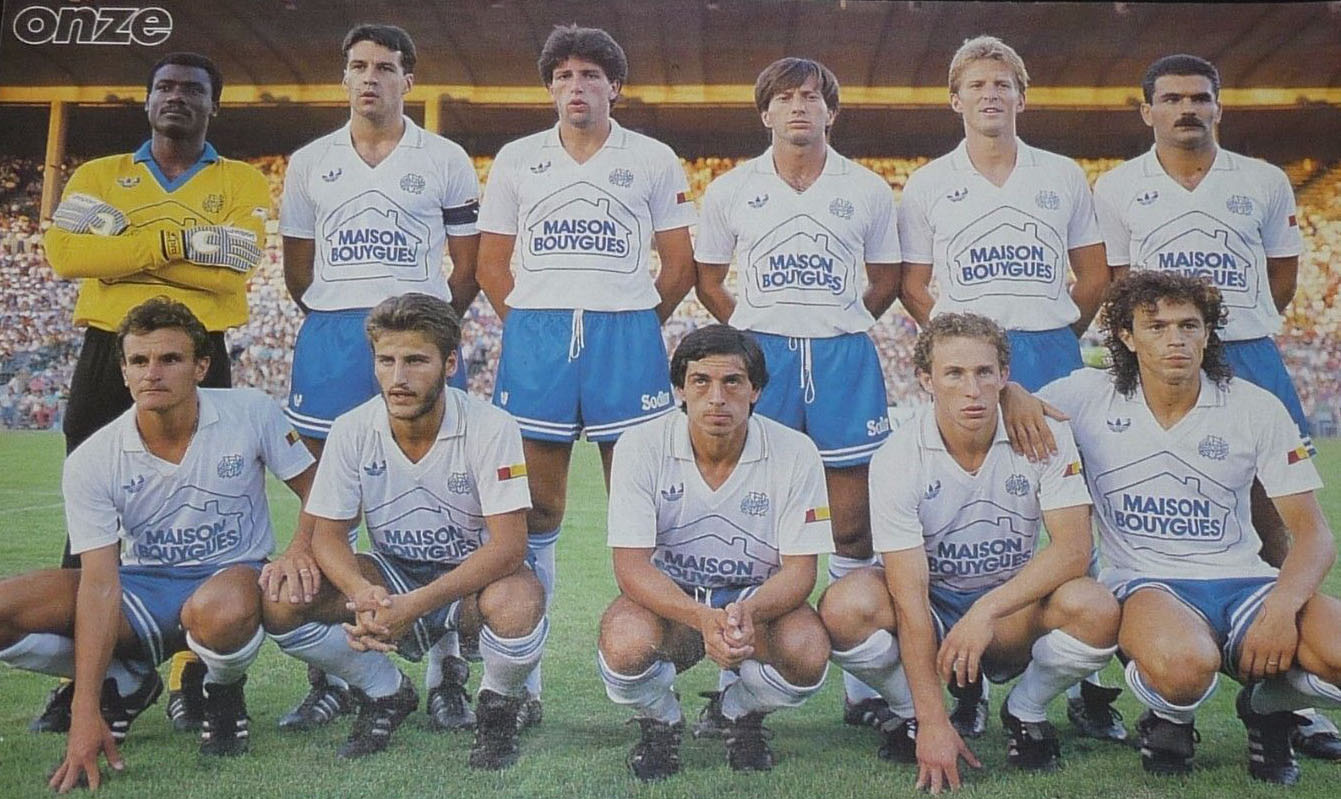 Olympique Marseille ended the season empty-handed, as if confirming that they were not ready yet for success. But definitely coming back to prominence. Standing from left: Joseph-Antoine Bell, Jacky Bonnevay, Thierry Laurey, Jean-François Domergue, Karlheinz Förster, Blaz Sliskovic
Front row: Jean-Louis Zanon, Christophe Galtier, Alain Giresse, Jean-Pierre Papin, Patrick Cubaynes.
This is not the squad of the final, but still the regular starters and perhaps showing why Marseille was not yet a winner – good core of players, but still in need of additional reinforcement.
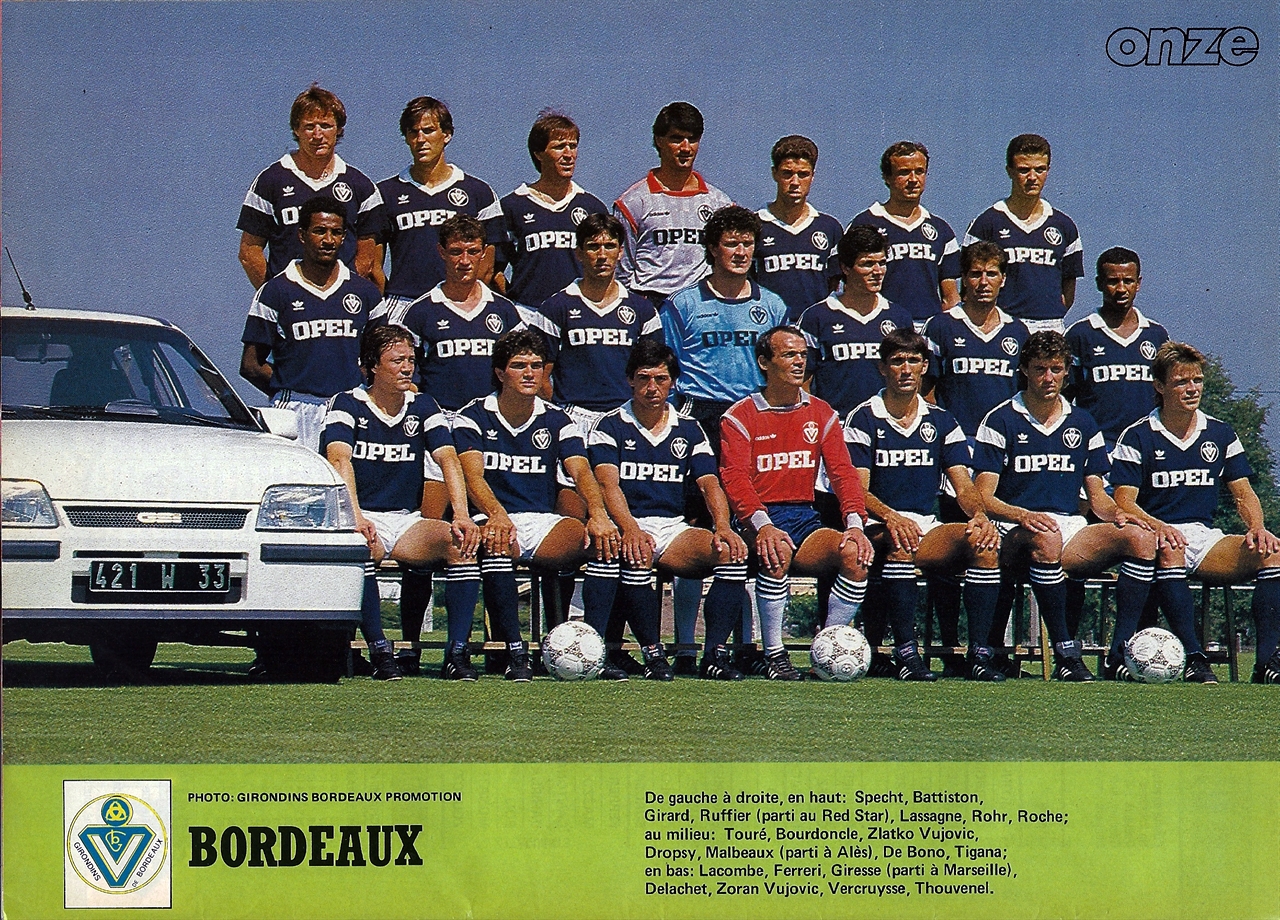 Girondens de Bordeaux won the Cup and thus a double. That was their 3rd Cup, but their first and so far only double. The best season Bordeaux ever had and it was fine peak of a strong team. A team so good, it had no trouble losing their long-time staple Alain Giresse to arch-rival Marseille just before the beginning of the season (as the photo of the previous summer shows). Battiston, Girard, Specht, Toure, Dropsy, Tigana, Lacombe, Ferreri, Vercruyse, Thouvenel, Rohr and the Yugoslav twins Zlatko and Zoran Vujovic – formidable team with depth and plenty of experience, but a bit on the aging side already, which was a problem for the future. Looked like the problem was recognized on time and the process of changing key players had began with Giresse, but it was still a question of how successful and smooth a transition could be, so let wait for the near future. Presently, Bordeaux enjoyed its finest moments.
France I Division
First Division. Paris SG was unable to sustain its triumph in 1986 – the champions dropped down. Sochaux ended its strong period with a failure. St. Etienne was nothing like the team they were in the 1970s, FC Nantes was also in decline. Marseille was coming back, Monaco was quite fine, Toulouse was enjoying rather unusually good spell, Auxerre kept strong and Bordeaux had its best season ever.
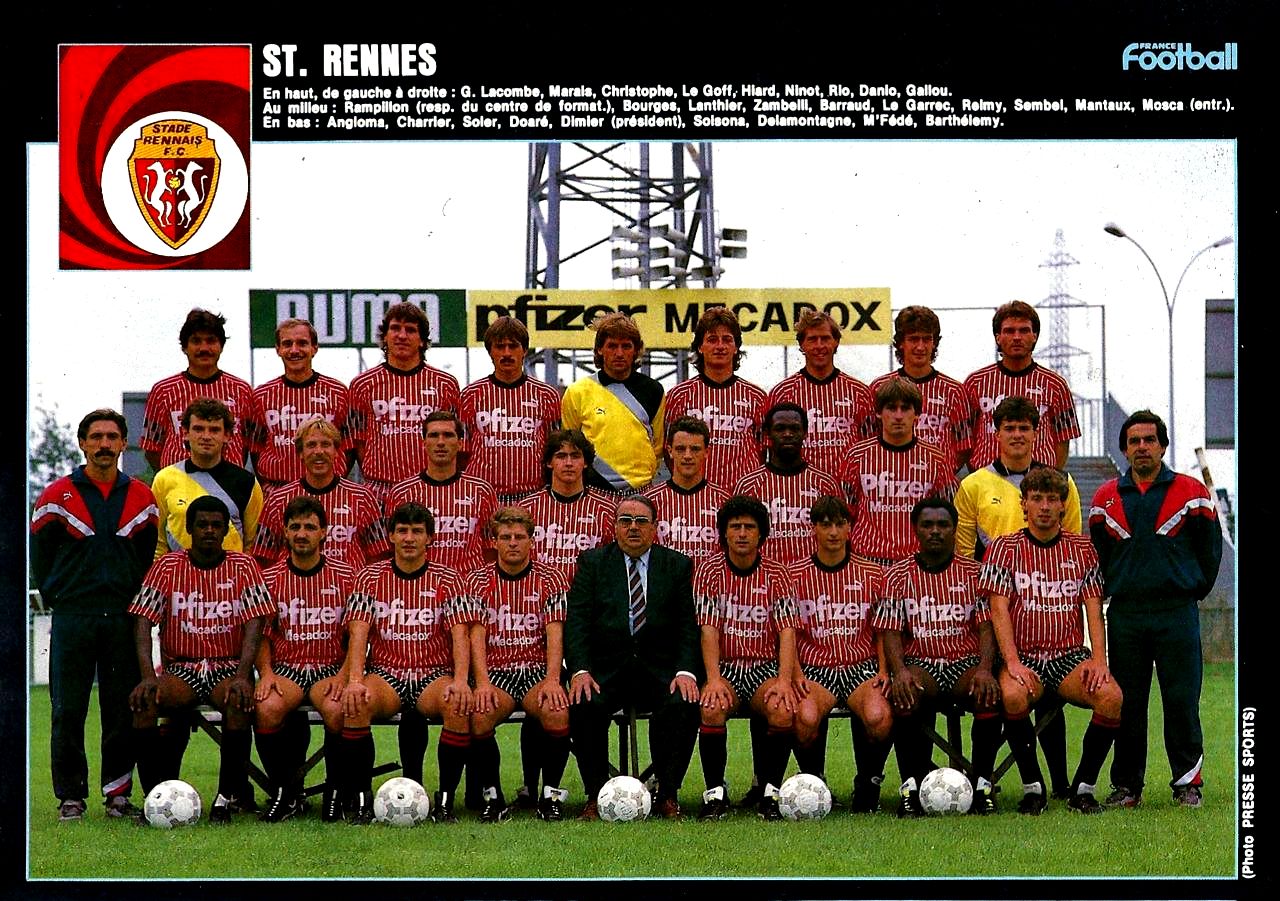 Rennes – down again, as it happened many times before. Last and relegated with measly 17 points. Absolute outsider despite some good players in the squad. Angloma was learning tough lesson.
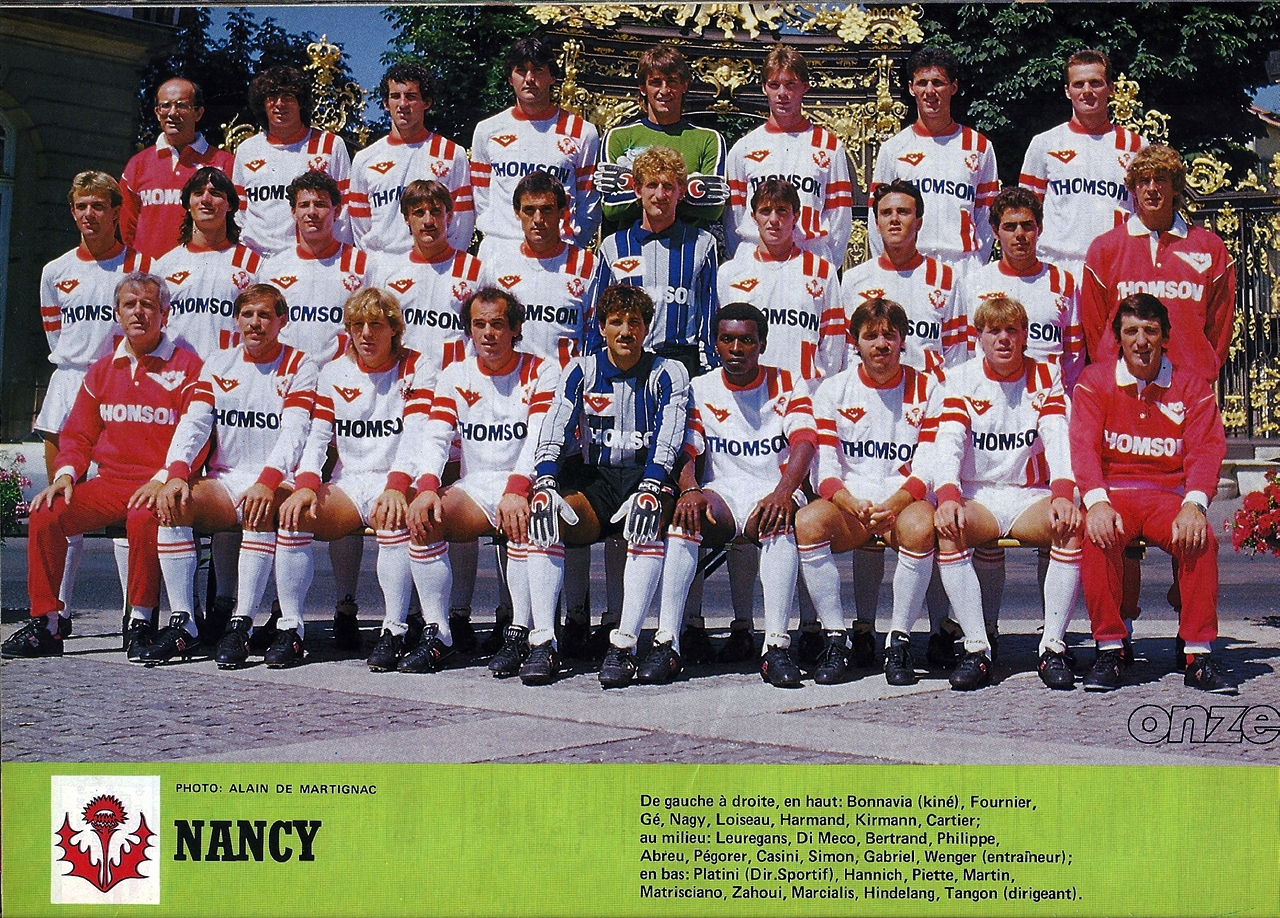 Nancy – 19th with 29 points. Relegated, but in a way it was expected to happen for quite sometime. Arsene Wenger going to second level… or may be not? Well, he was not yet the mighty famous coach.
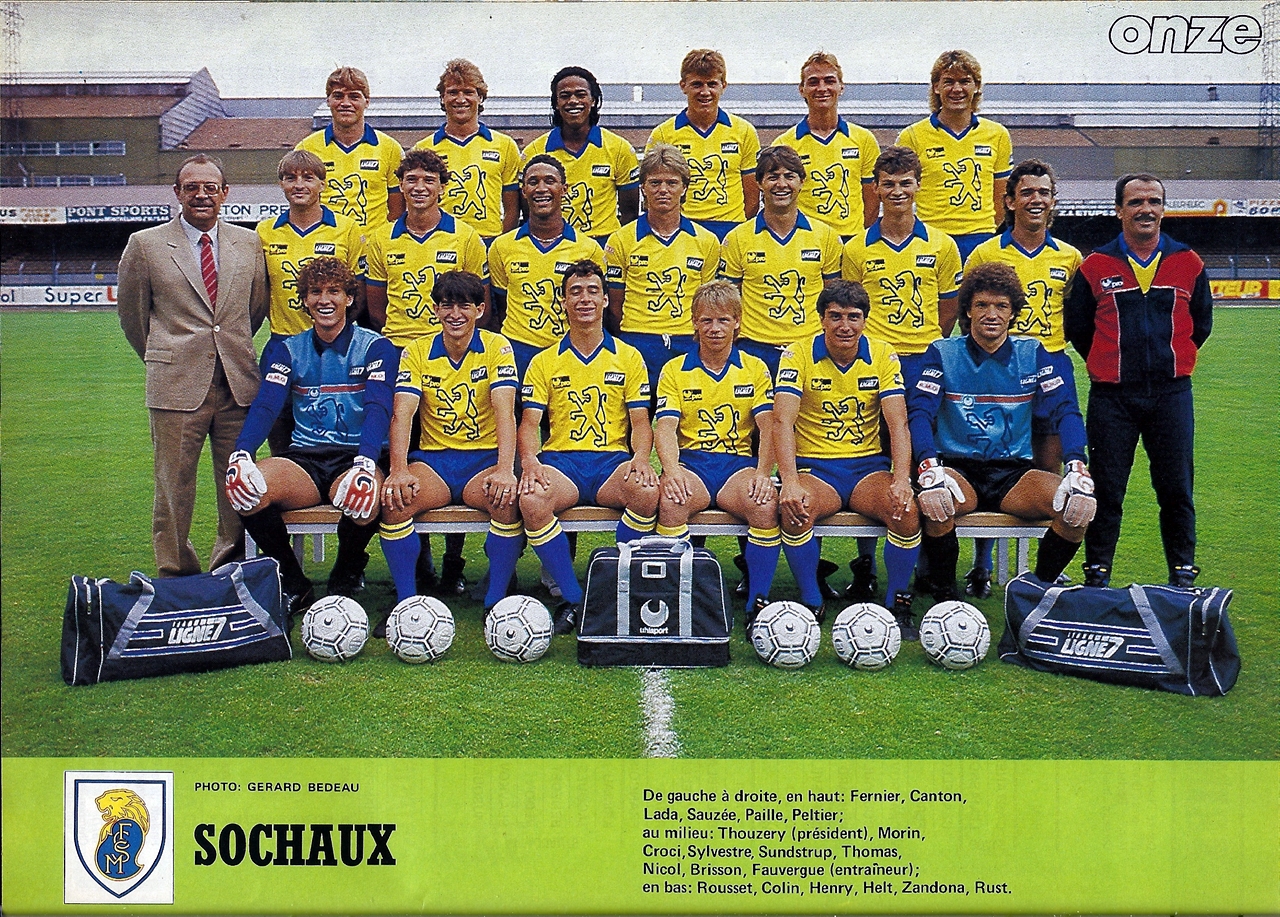 Sochaux – 18th with 31 points. The end of good spell is inevitable for any club, but relegation? The squad was, by names, significantly stronger, than Cannes’, only 3rd in Second Division. Yet, Sochaux lost the promotion/relegation play-off and went down.
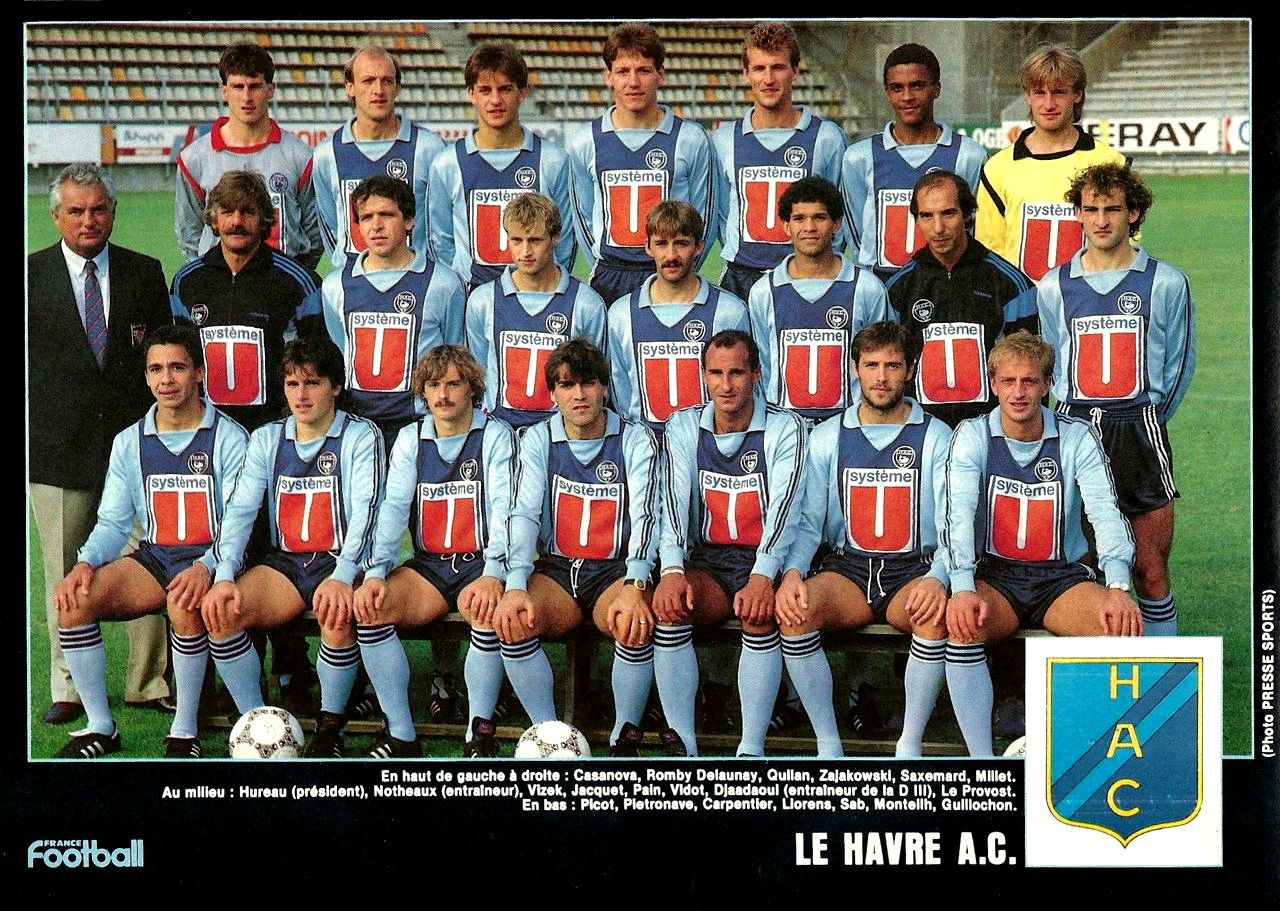 Le Havre barely survived – but survived! 17th with 32 points. By names alone, they should have been relegated – only the goalkeeper Casanova and aging Czechoslovakian striker Vizek seemingly were not enough to keep them in the top league. Quite heroic season, there fore.
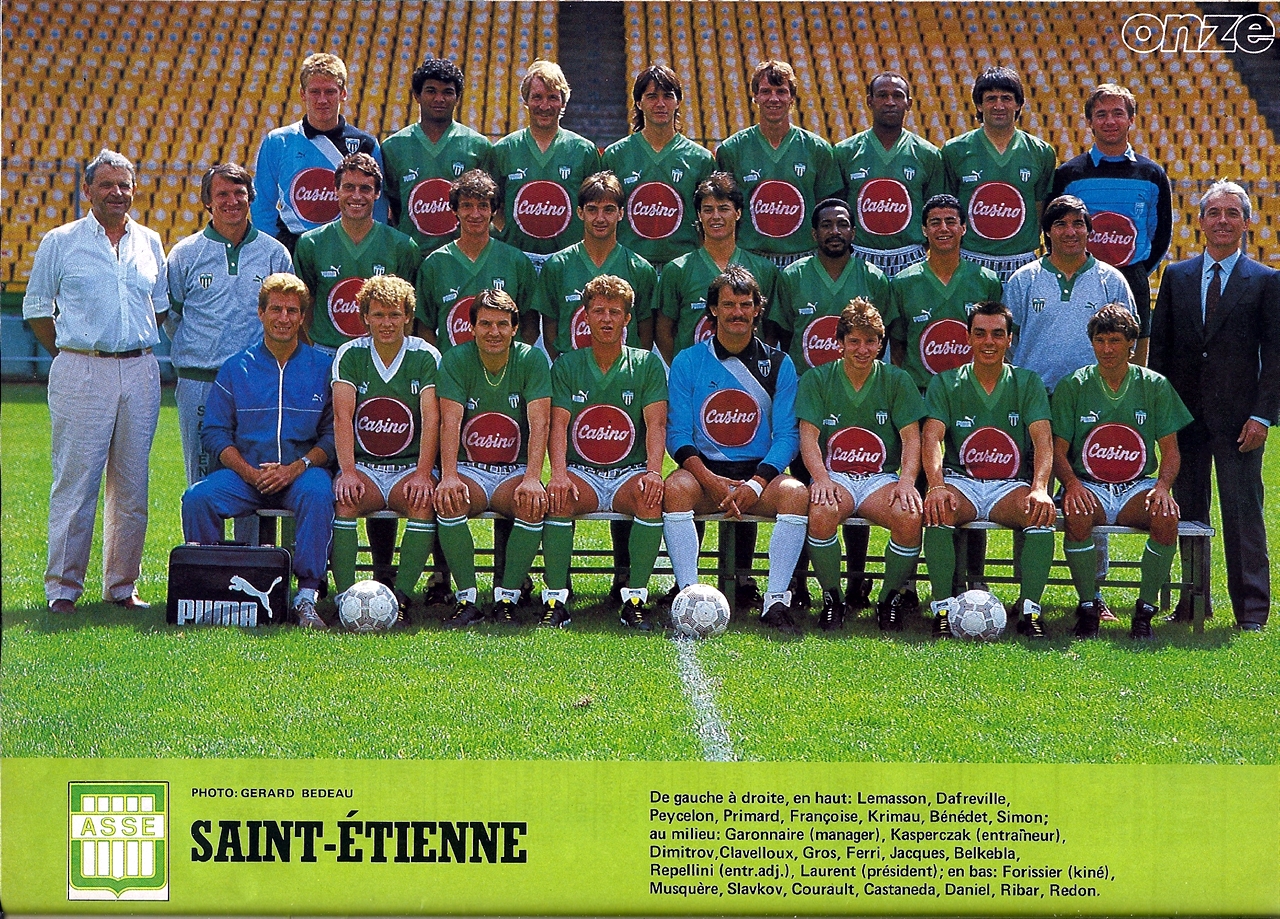 Struggling St. Etienne – 16th with 33 points. The great Polish midfielder Kasperczak was coaching them now, but the squad was weak – the two Bulgarians, goalscorer Slavkov and the national team captain, central defender Dimitrov, and the Yugoslav Ribar were not classy enough, if compared with the stars of the previous decade. Georgi Dimitrov was special case… he was not happy in France and preferred to return home, which probably affected negatively his play. Krimau and Castaneda were pretty much the only good French players, but second-string stars both… St. Etienne somehow missed the moment for rebuilding and there was no end of suffering.
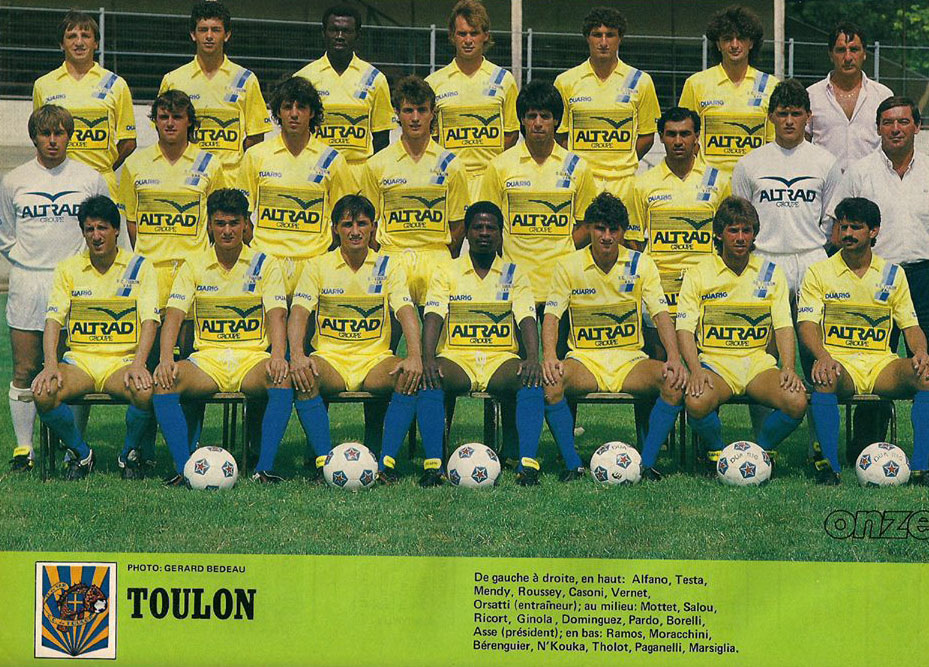 Toulon – modest club with modest team, so ending 15th with 34 points was not bad at all. Ginola was still only young hopeful.
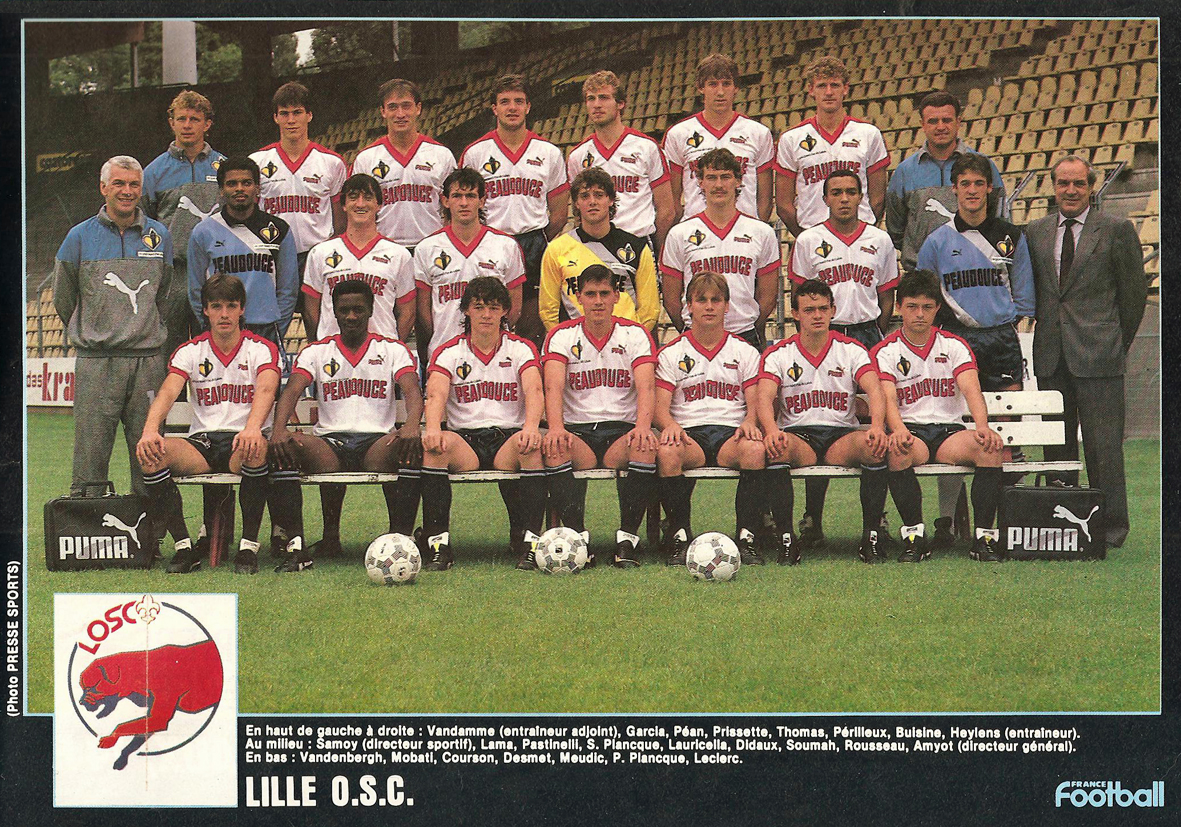 Lille – 14th with 34 points. Pretty much as usual, Belgians kept them afloat – the coach Heylens and aging Vanderbergh.
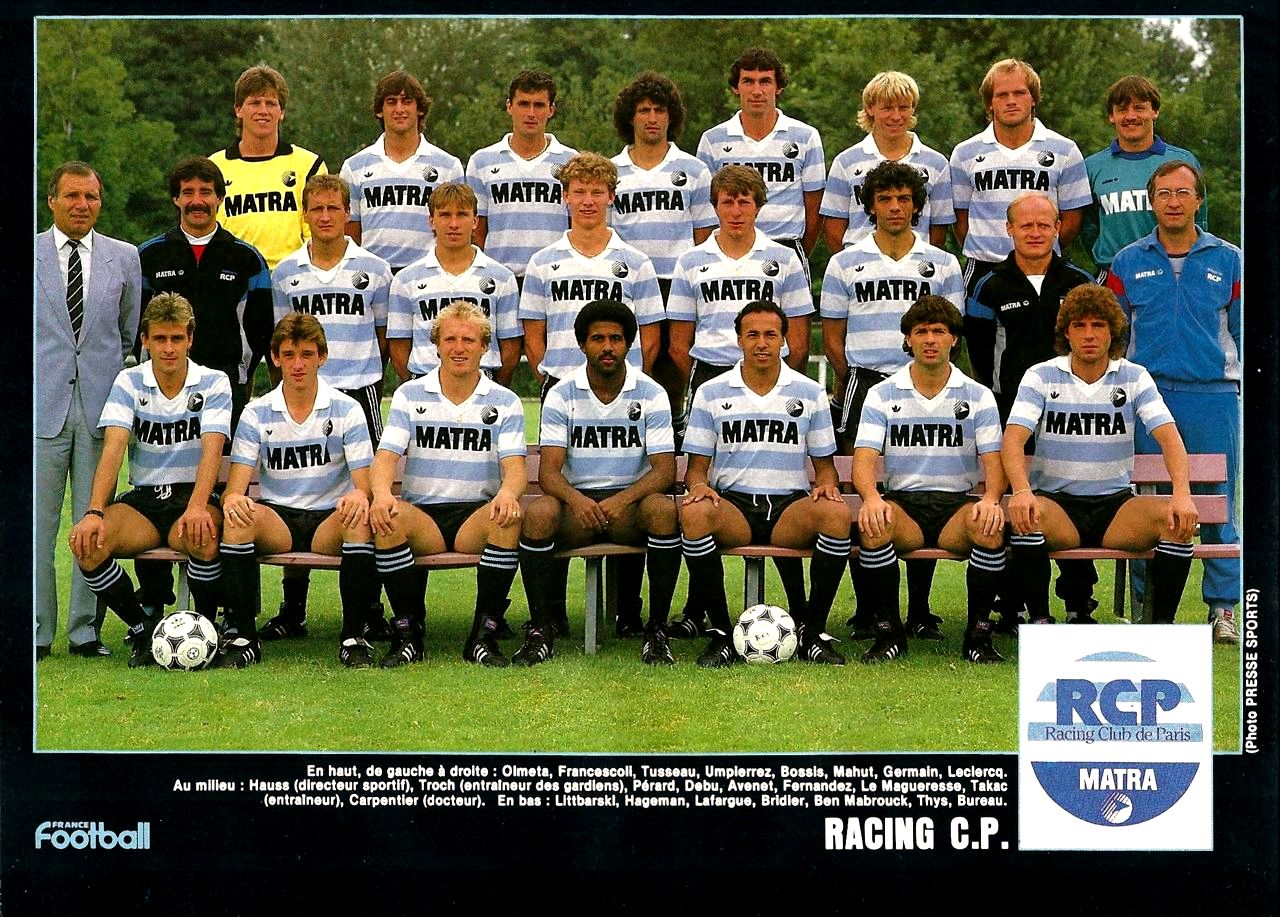 Racing (Paris) – 13th with 36 points. One may think that a team led by ‘the Prince’ Francescoli and great Bossis would do better, but in reality Racing was coming back from a long decline and the current goal was to reestablish itself in the top division. The Yugoslav Silvester Takac was coaching them, but frankly he was better player back in the 1960s than coach in the 1980s.
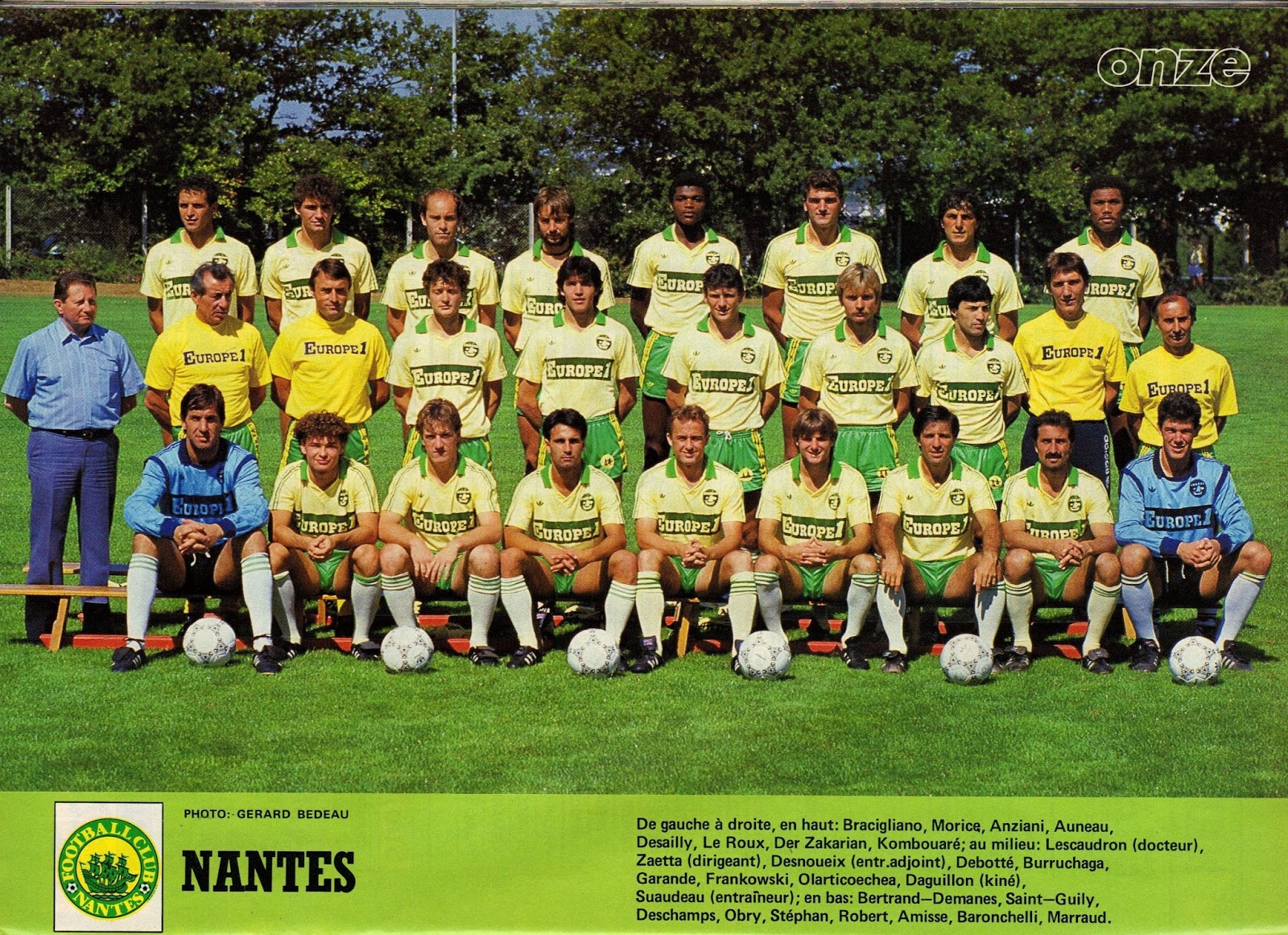 Nantes – 12th with 36 points. In decline, hopefully a temporary one – it was a matter of rebuilding and for the moment it was shaky, despite having two fresh World champions – Burruchaga and Olarticoechea (who unfortunately suffered heavy injury). There was promising young talent – Desailly and Deschamps – but the team was still dependent on remnants of the 1970s squad – Bertrand-Demanes, Amisse, Anziani. Le Roux was the present, the 1980s, and Suaudeau was good coach, but it was transitional time.
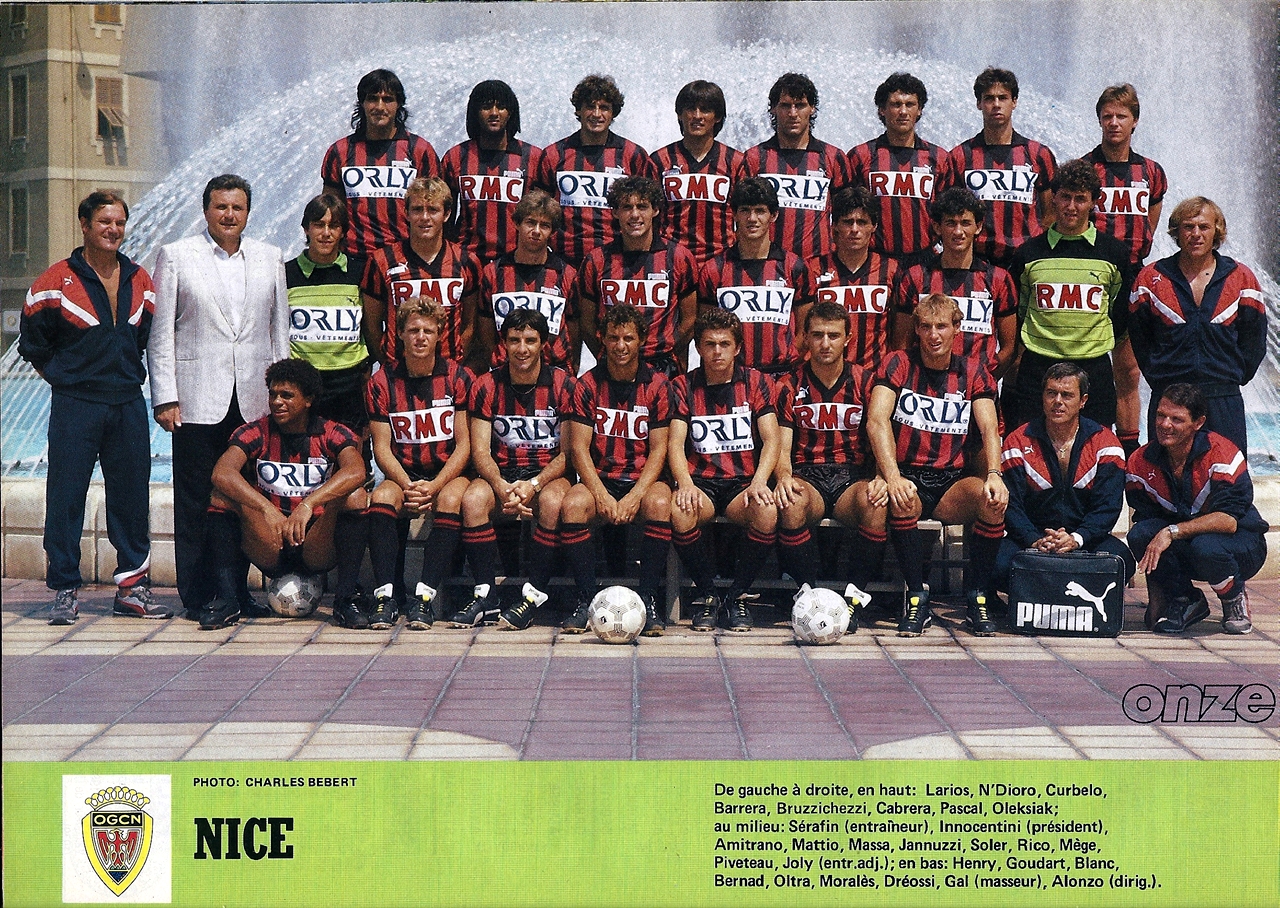 Nice – 11th with 37 points. Lost its leading position a decade ago and settled for mid-table. A squad with potential, but hardly a great potential for Larios, Curbelo, Soler, Piveteau, Oleksiak were somewhat second-string stars.
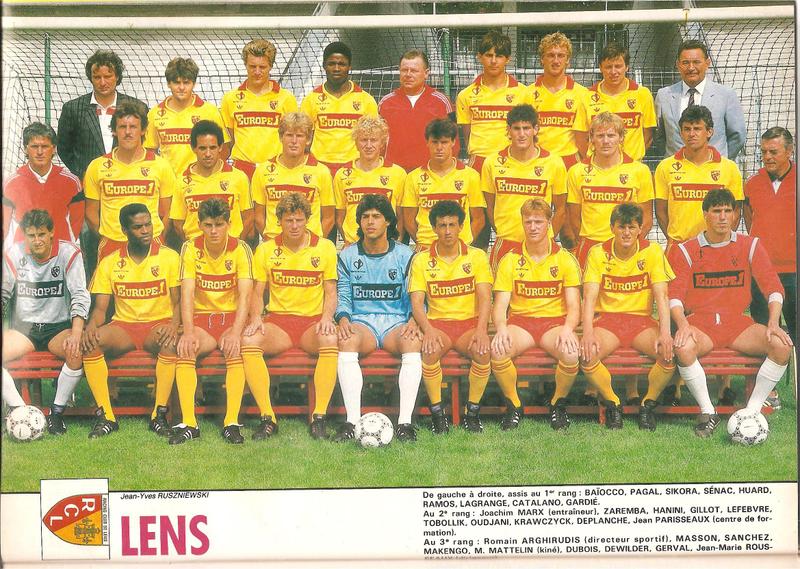 Lens – 10th with 37 points. Not bad, but with squad like that – nothing more could be done. The former Polish star Joachim Marx was coaching and it was interesting to see how emblematic players of the 1970s transition into coaches – Marx, Kasperczak, Hugo Bargas, Carlos Bianchi, the list was quite long – the bunch of young coaches in the French first and second divisions, who played great football not long ago.
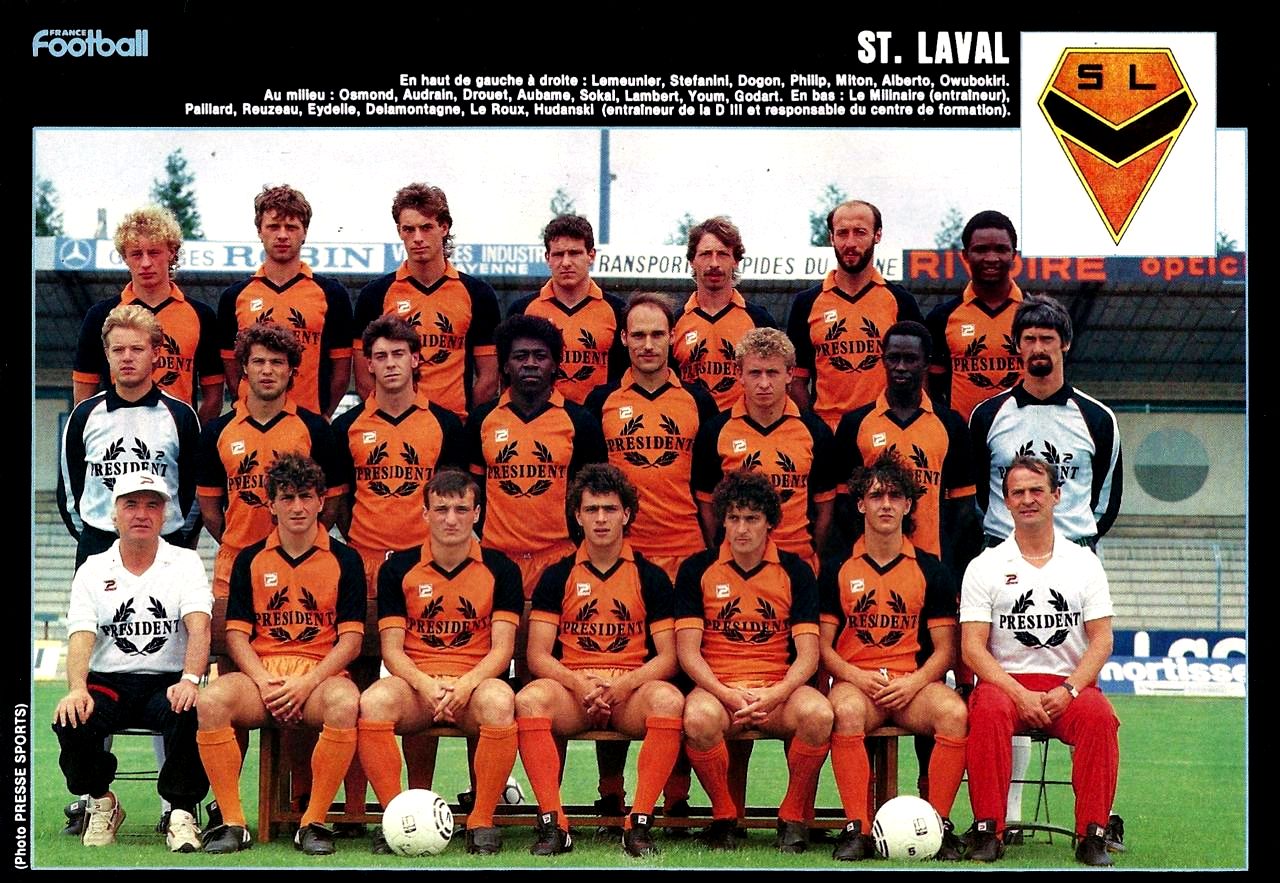 Laval – 9th with 38 points. May be overachieving a bit, for the squad modest, but nobody can blame a team for playing with big hearts and determination.
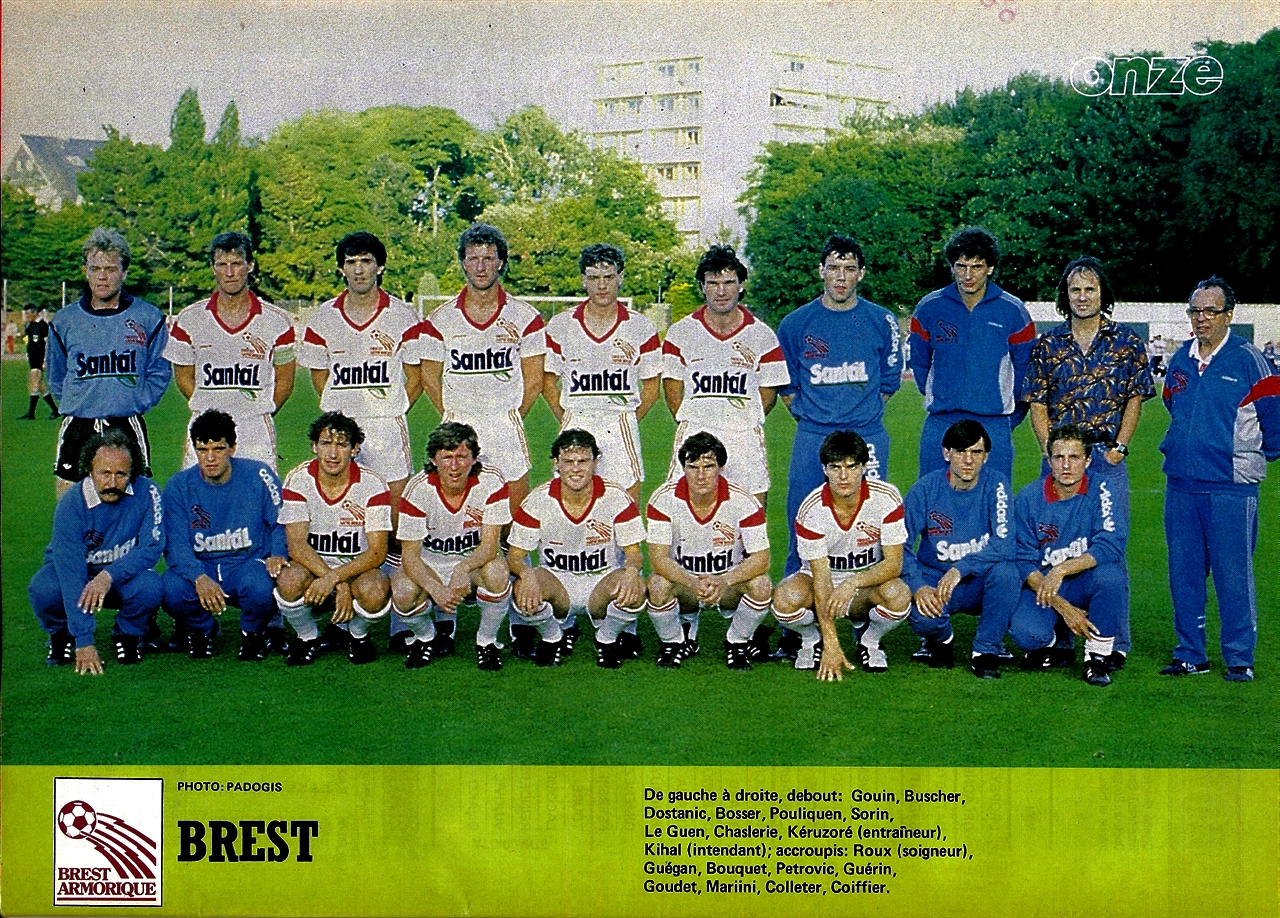 Brest -another brave team. 8th with 40 points. Nothing much – the Yugoslavs Dostanic and Petrovic were only solid professionals and Le Guen was in the early years of his career – but modesty has its charm: humble, but hearty team. Keruzore was just one more of the well known players from recent past, who was trying his hands at coaching.
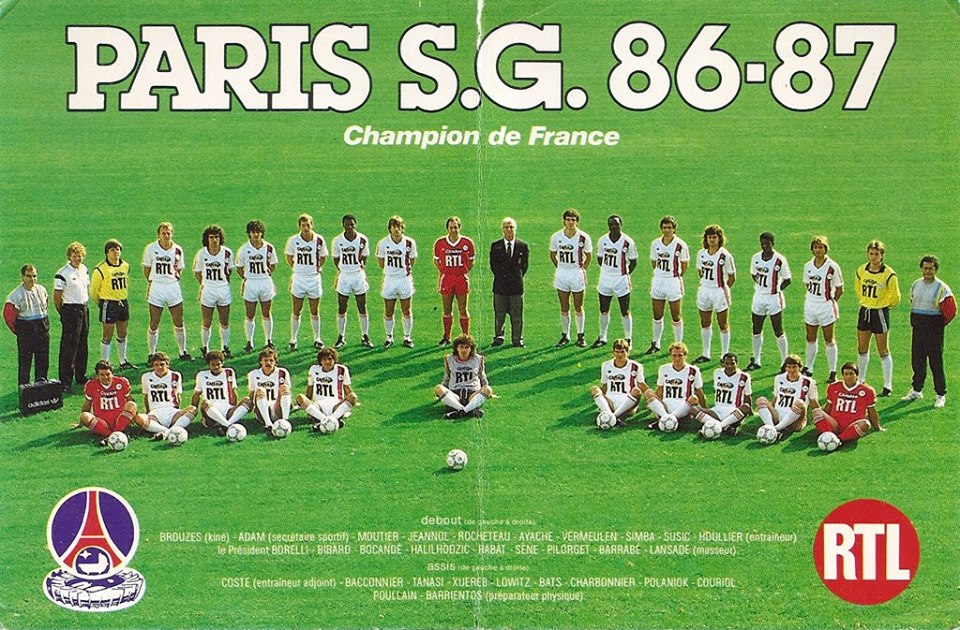 There is no logic or meaningful way of explaining, but Paris SG was not cut for greatness… the champions of 1985-86 dropped to 7th position with 41 points now. As if the title in the previous season entirely exhausted them… and that a squad featuring the Yugoslav stars Susic and Halilhodzic, and plethora of French best, still national team members: Rocheteau, Bats, Ayache, Bibard, Couriol, Xuereb, Jeannol, Pilorget… and coached by Houllier. Go figure…
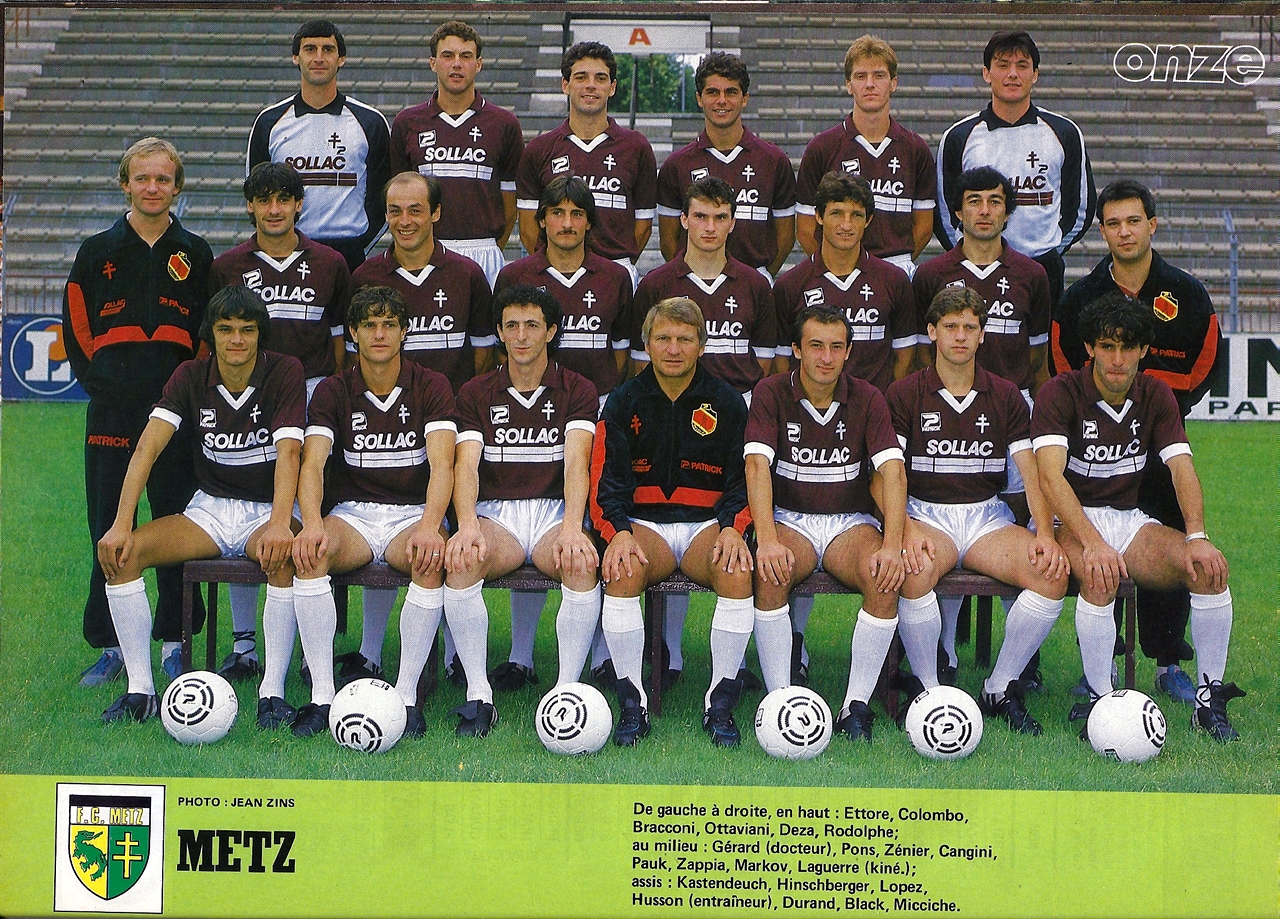 Metz – 6th with 43 points. Another modest squad doing well. Modesty has its strong points, though – perhaps it is the unassuming atmosphere; perhaps it is the relatively equal level of players, so there is no big pressure… maybe the Bulgarian midfielder Plamen Markov is the prime example: he was never number one star in Bulgaria and his former teammates in CSKA (Sofia) – Dimitrov and Slavkov – were much more famous. But the stars underperformed in St. Etienne and failed to adjust and lead the team into rebuilding. Unlike them, Markov quickly established himself in Metz, played well and usefully.
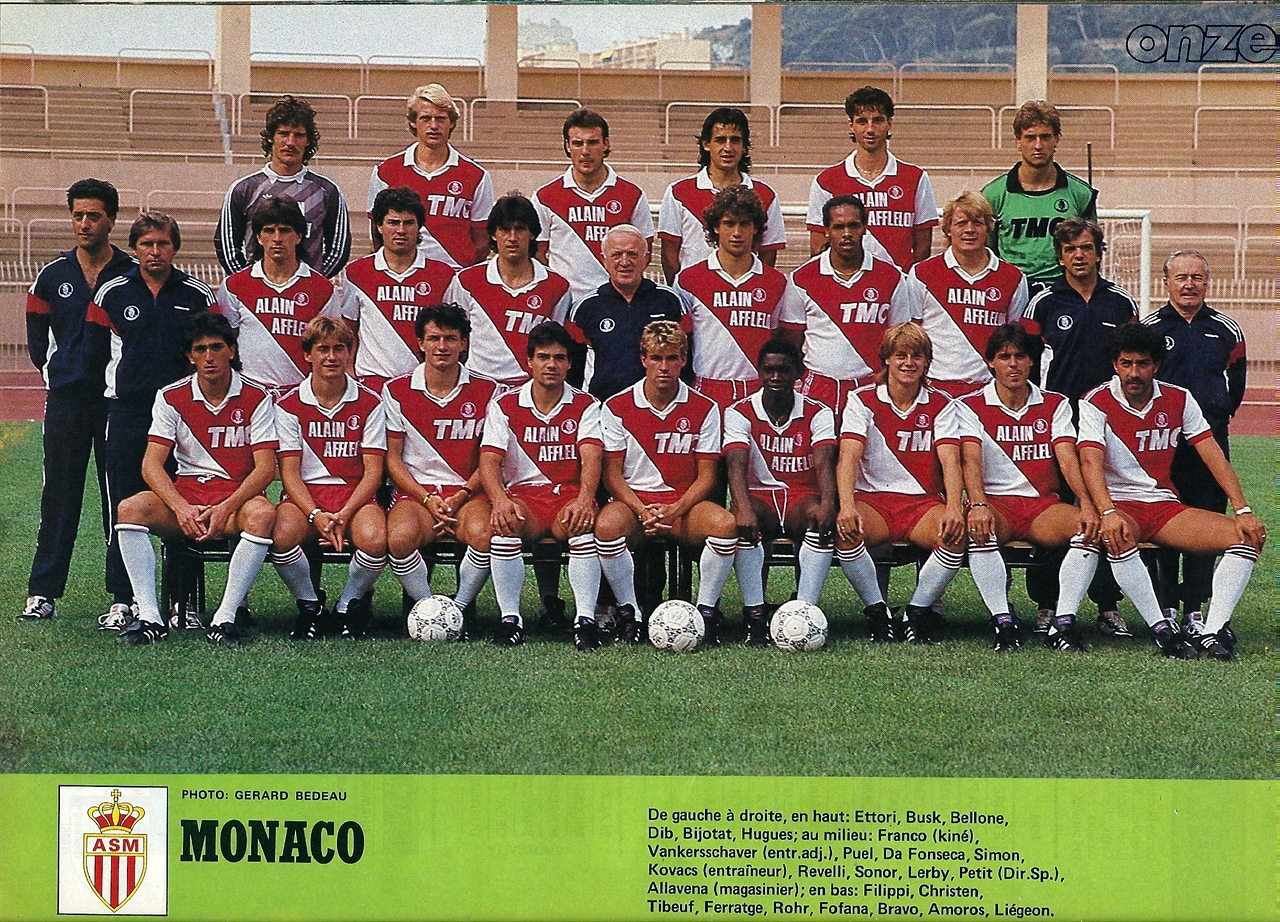 Monaco – 5th with 45 points. Typical Monaco, traditionally given to sudden ups and downs – coached by famous, but not quite at his Ajax’ level Stefan Kovacs and full with French national team players and foreign stars – Danes Lerby and Busk – Monaco should have been a title contender. Yet, it was Monaco and finished 5th.
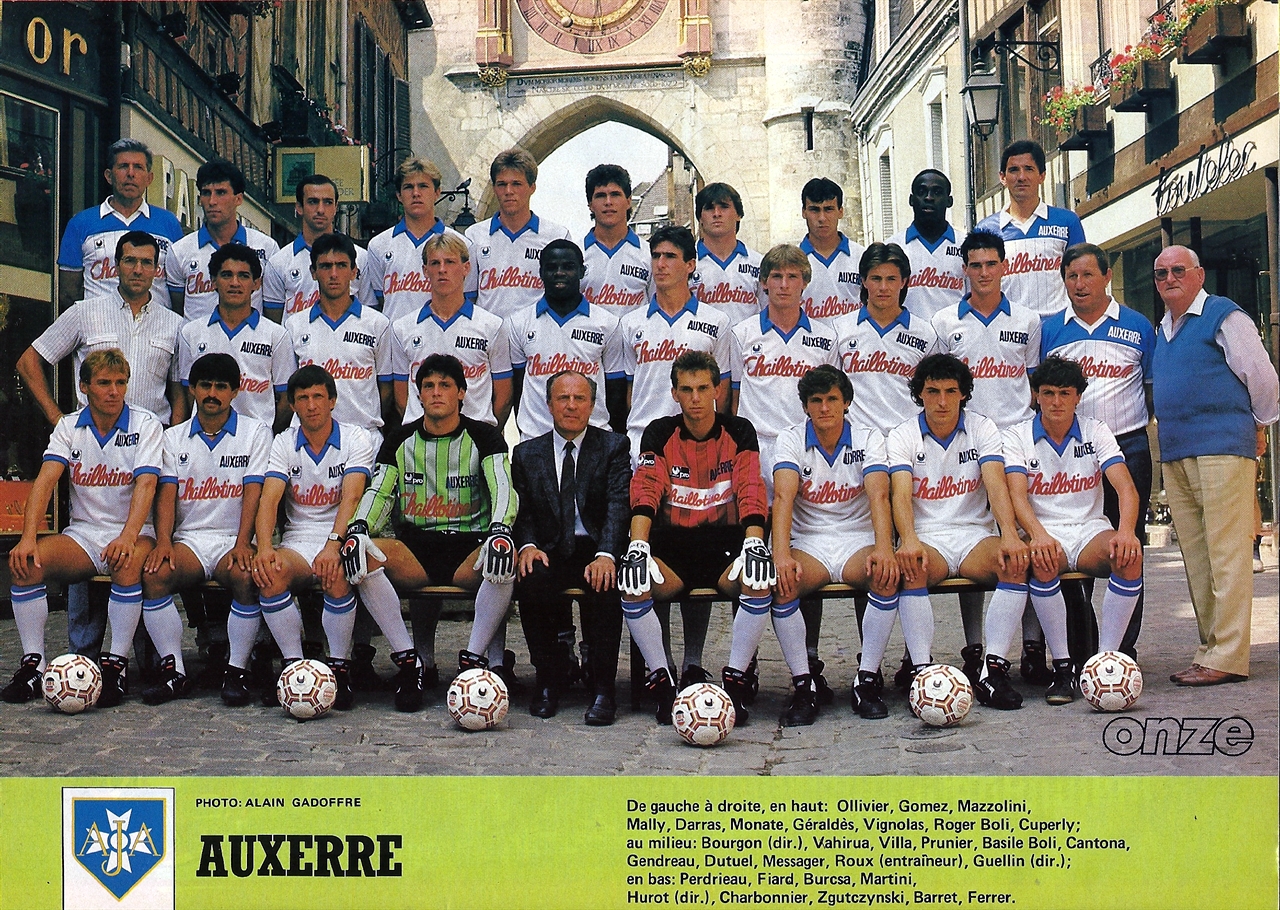 Auxerre – 4th with 47 points. Already the club almost unknown before 1980 established itself as leading French team. Well, the genius of Guy Roux… the Polish connection remained (Zgutczynski now), quick and solid replacement of departing stars (Martini and Charbonnier instead of Bats between the goalposts), plenty of home-grown talent: Cantona and Basile Boli followed by Vignola.
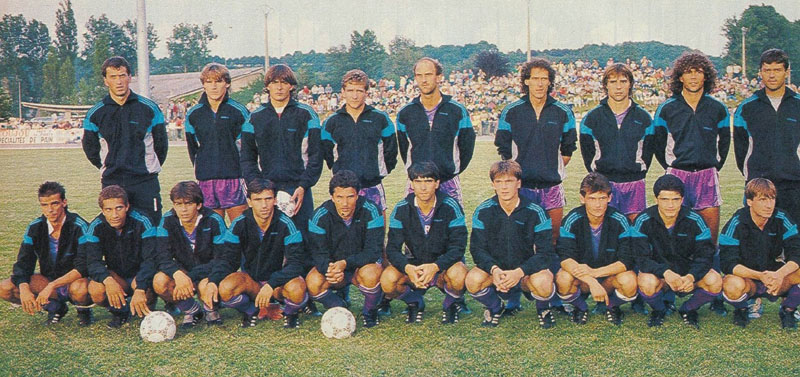 Fantastic season for traditionally unheralded Toulouse – 3rd with 48 points. Standing from left: Bergeroo, Despeyroux, Hue, Bellus, Ruty, Marx, Oliver, Tarantini, Santini (coach).
First row: Delpech, Passi, Pavon, Tihy, Marcico, Castagnino, Stopyra, Assadourian, Garcia, Lestage.
One more testimony of the new crop of coaches, who were stars in the 1970s – Santini, formerly of the great St. Etienne team and the national team of France. Not a bad selection either – carefully made and in which the Argentines Tarantini (the 1978 World champion) and Marcico played key roles. The only question was how long will be the good spell.
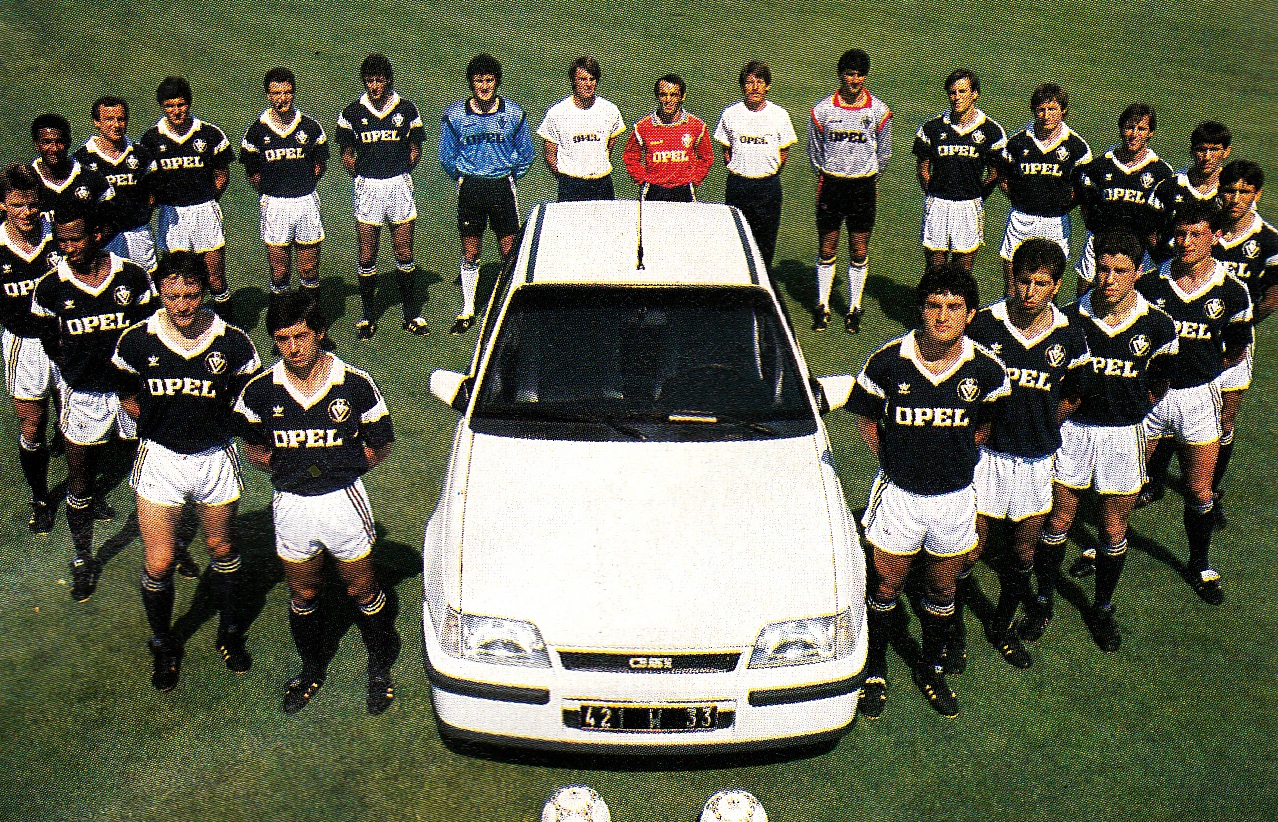 Girondens de Bordeuax – plainly, Bordeaux – won its 4th title with 53 points from 20 wins, 13 ties, and 5 losses. 57-27 goal-difference. 4 points ahead of Marseille – confident dominance. Since this was not all, more a bit later.
France II Division Group B
Group B. Two notes: Olympique Lyon was very likely under some kind of suspension, because they finished 2nd, but did not play promotion/relegation play-off. Limoges finished finished 7th, but was relegated – very likely for financial problems. All together 4 teams were relegated from this group – as opposed to only 2 from Group A.
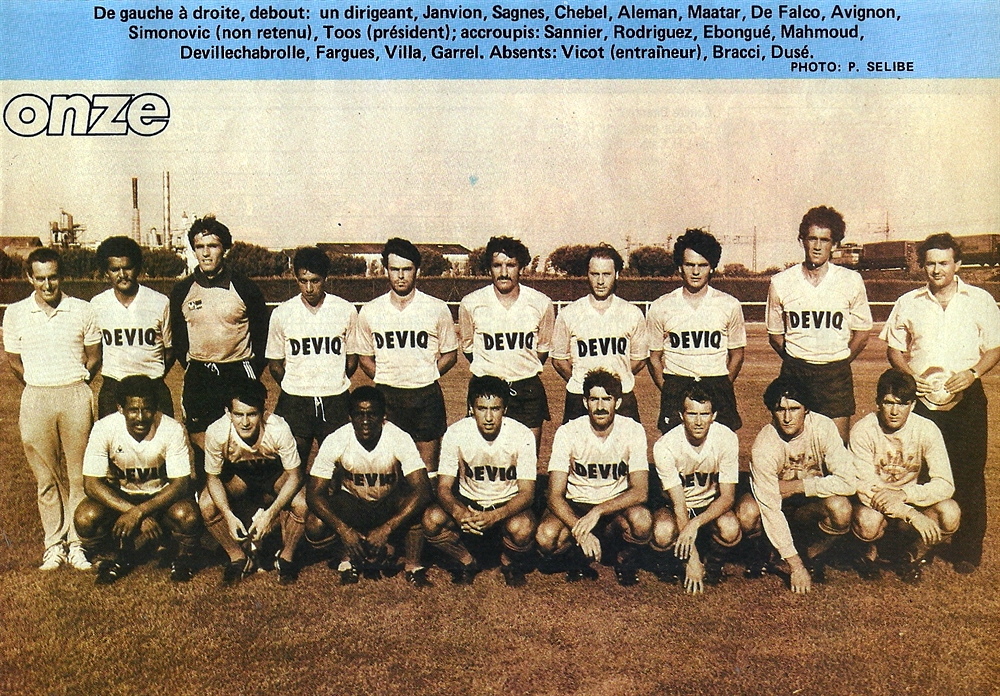 Beziers – last with 12 points and relegated.
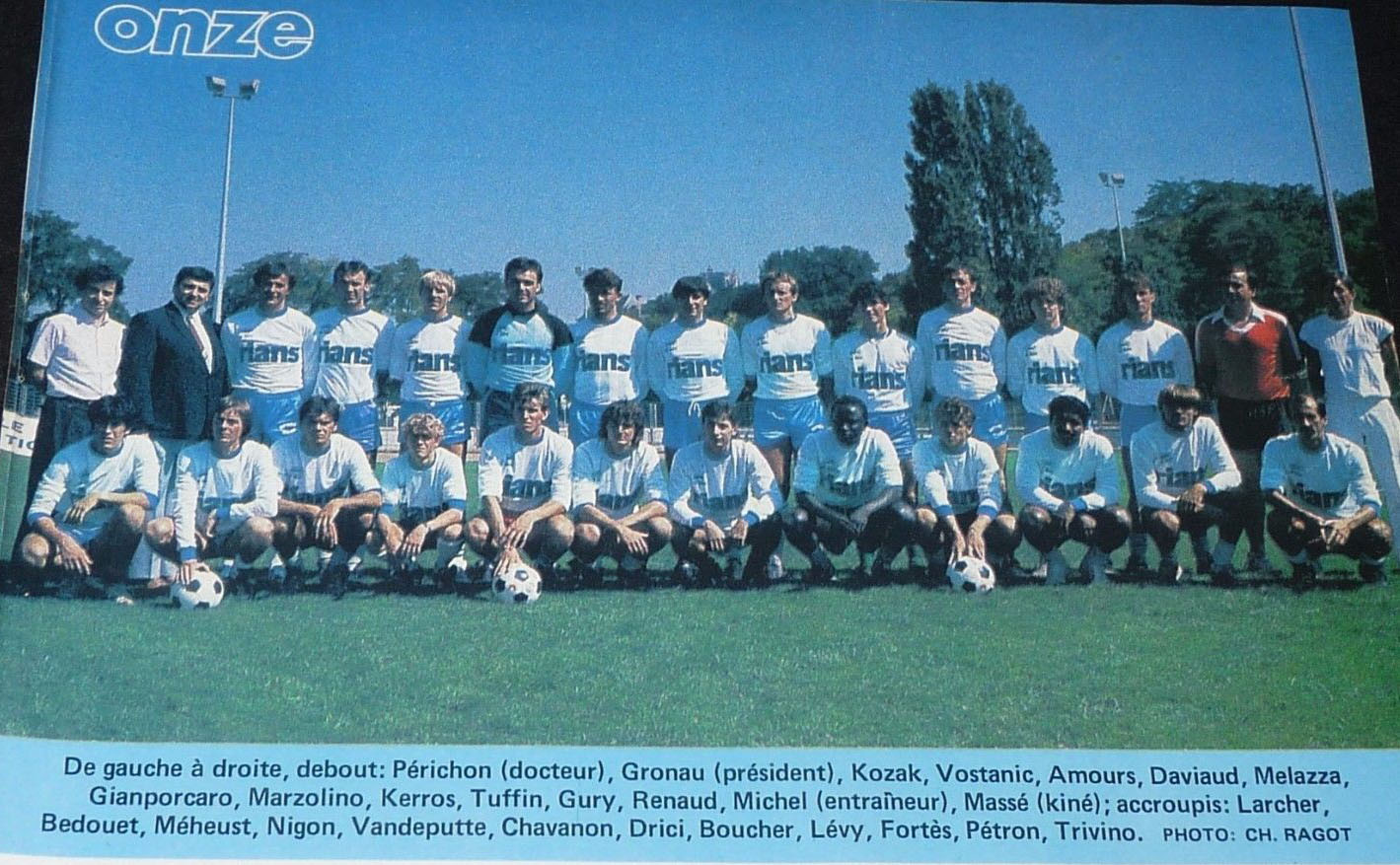 Bourget – 17th with 22 points. Relegated.
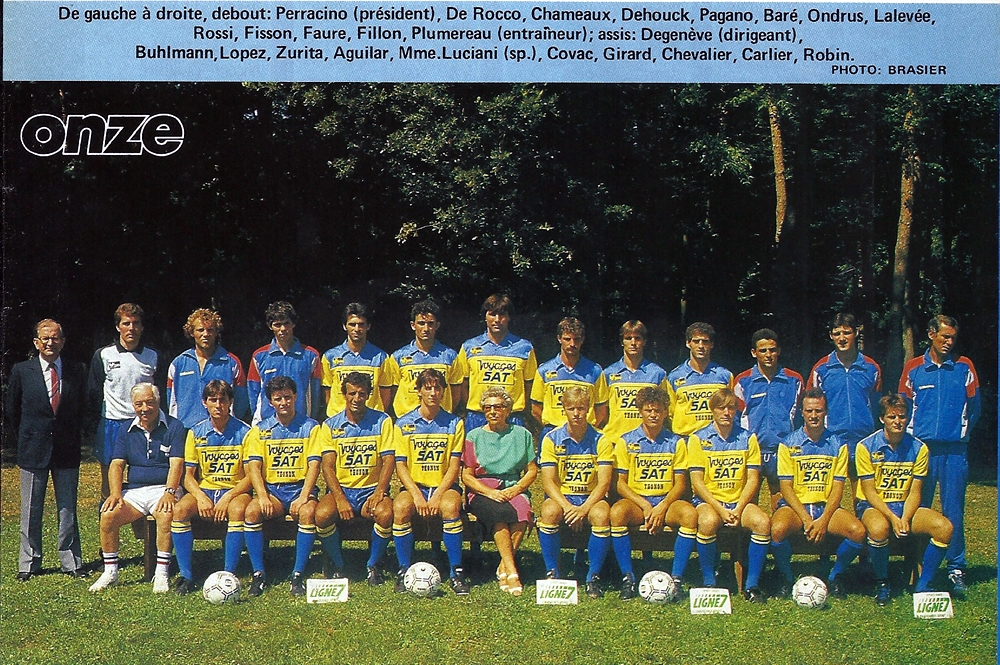 Thonon – 16th with 24 points. Relegated.
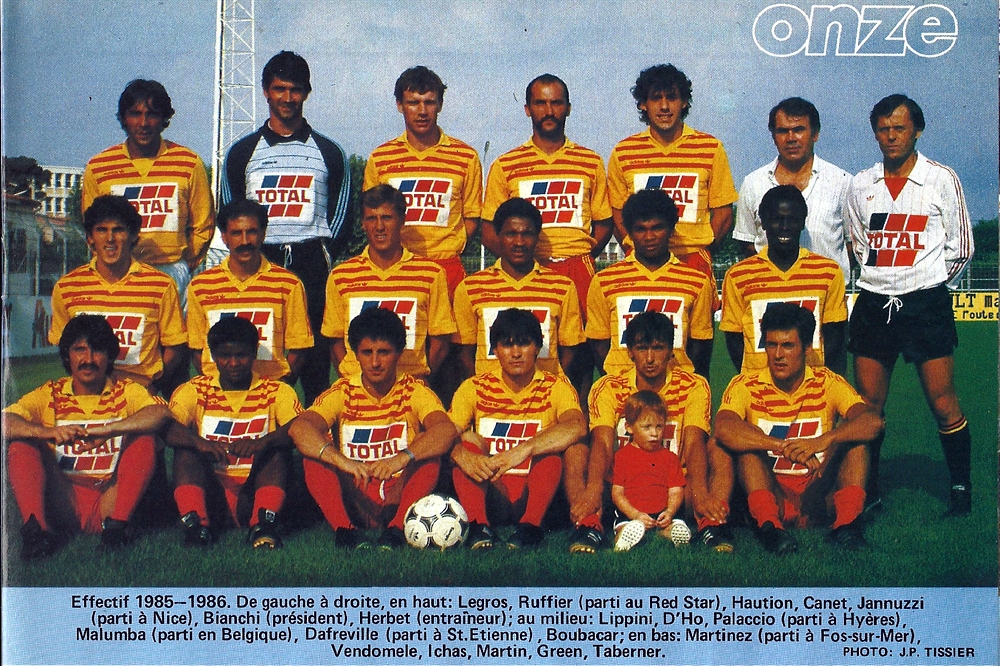 Martigues – 15th with 27 points.
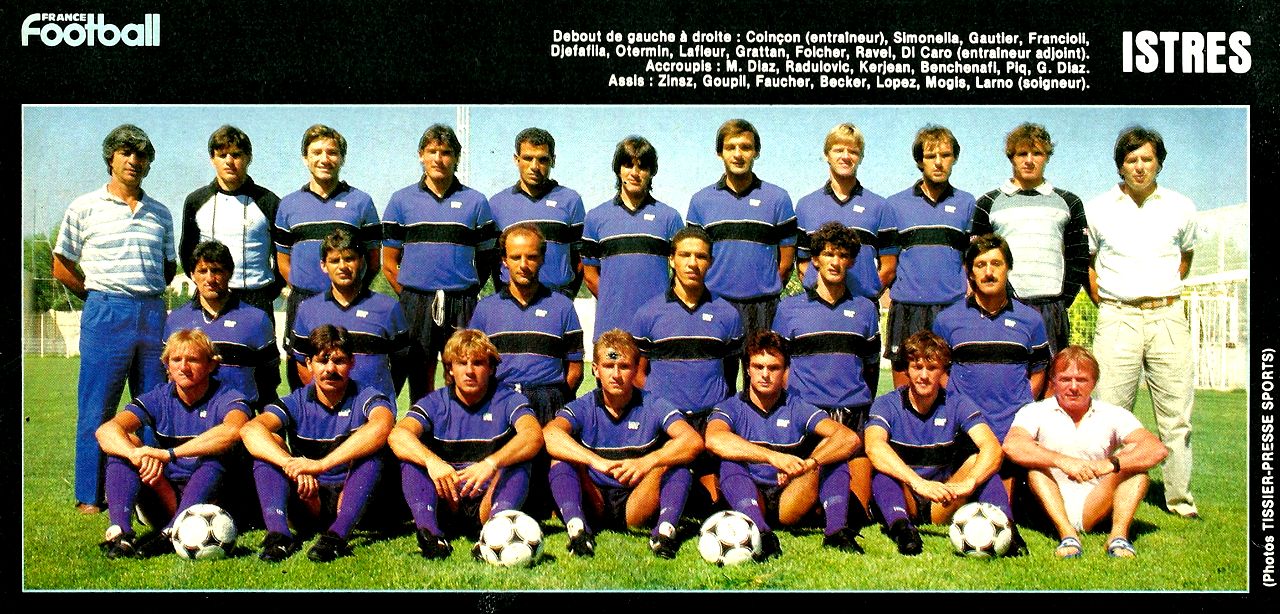 Istres – 14th with 29 points.
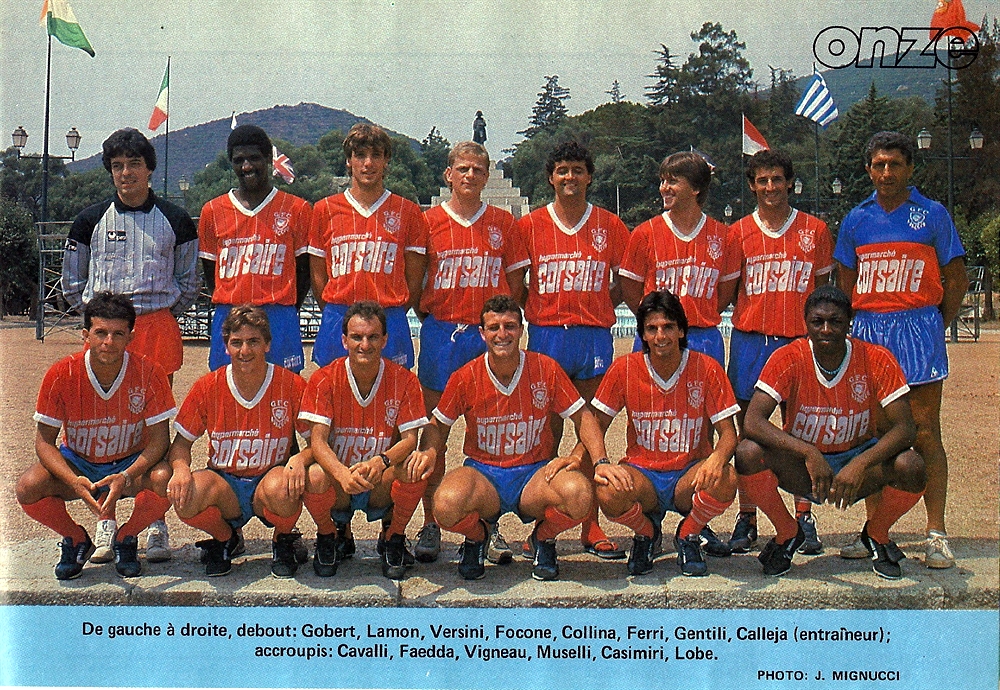 Gazelec Ajaccio – 13th with 29 points.
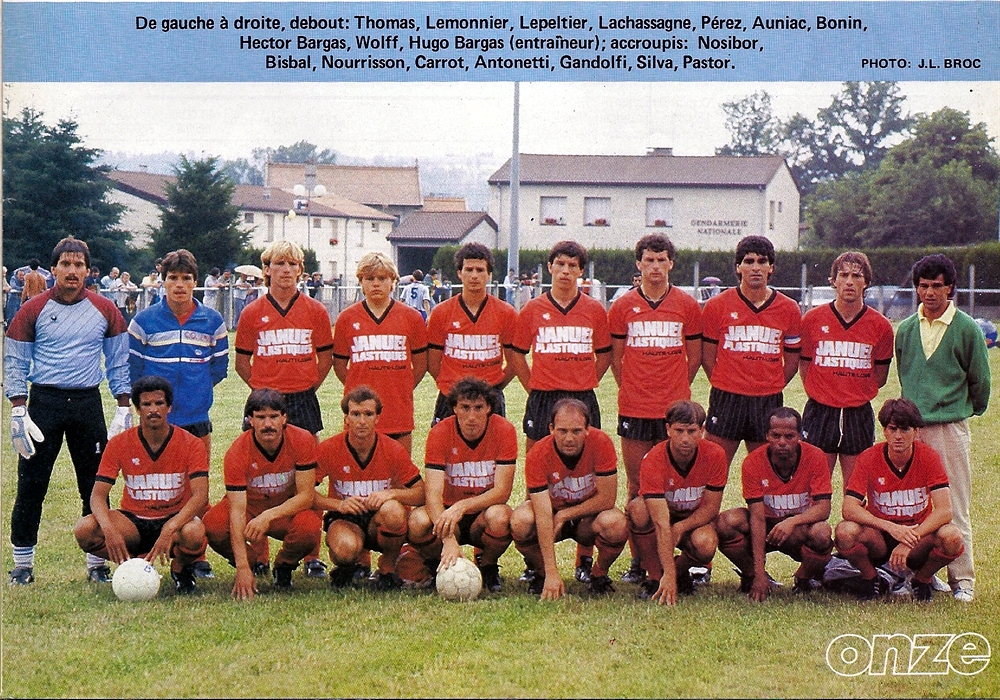 Le Puy – 12th with 30 points. Hugo Bargas now a coach, after long playing career.
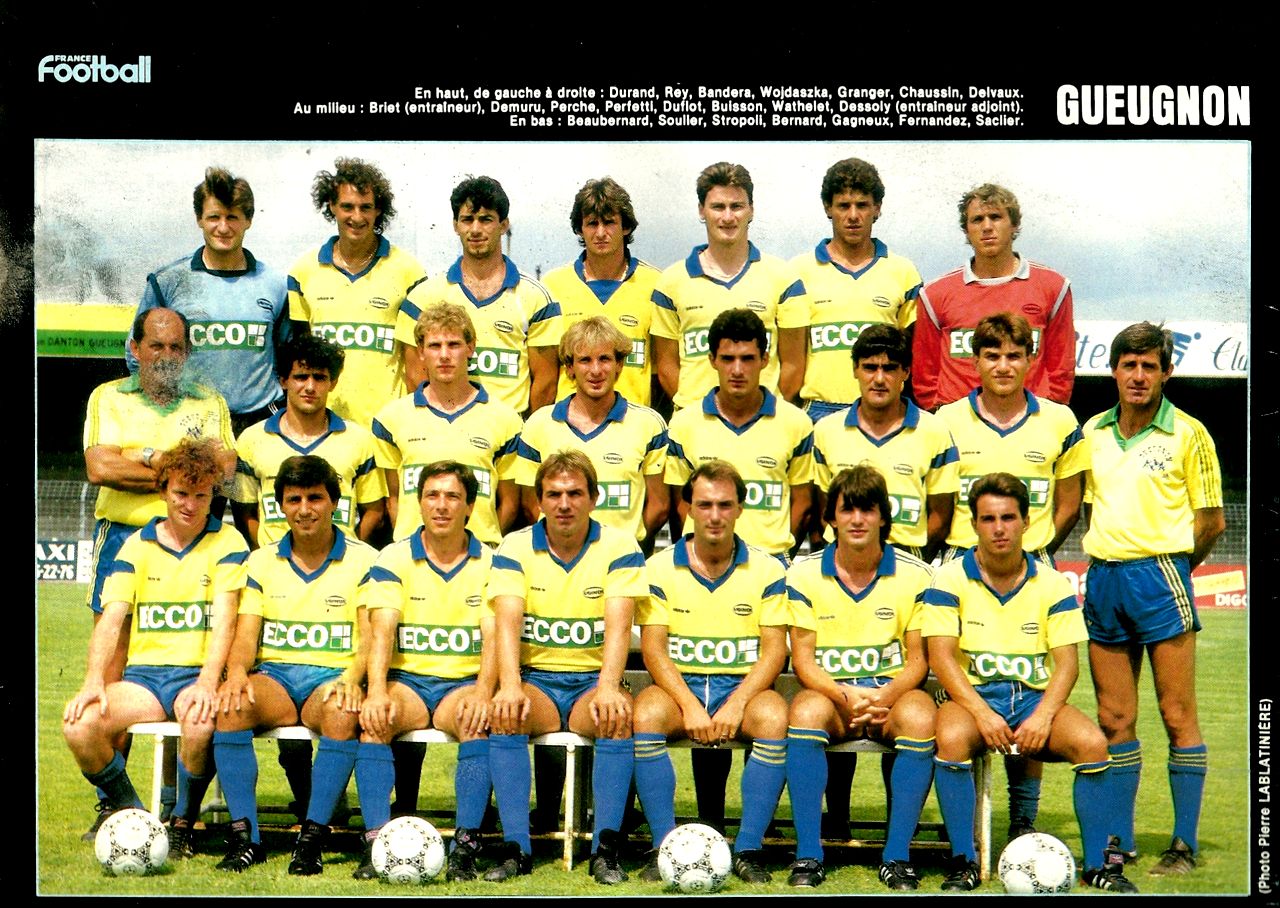 Gueugnon – 11th with 33 points.
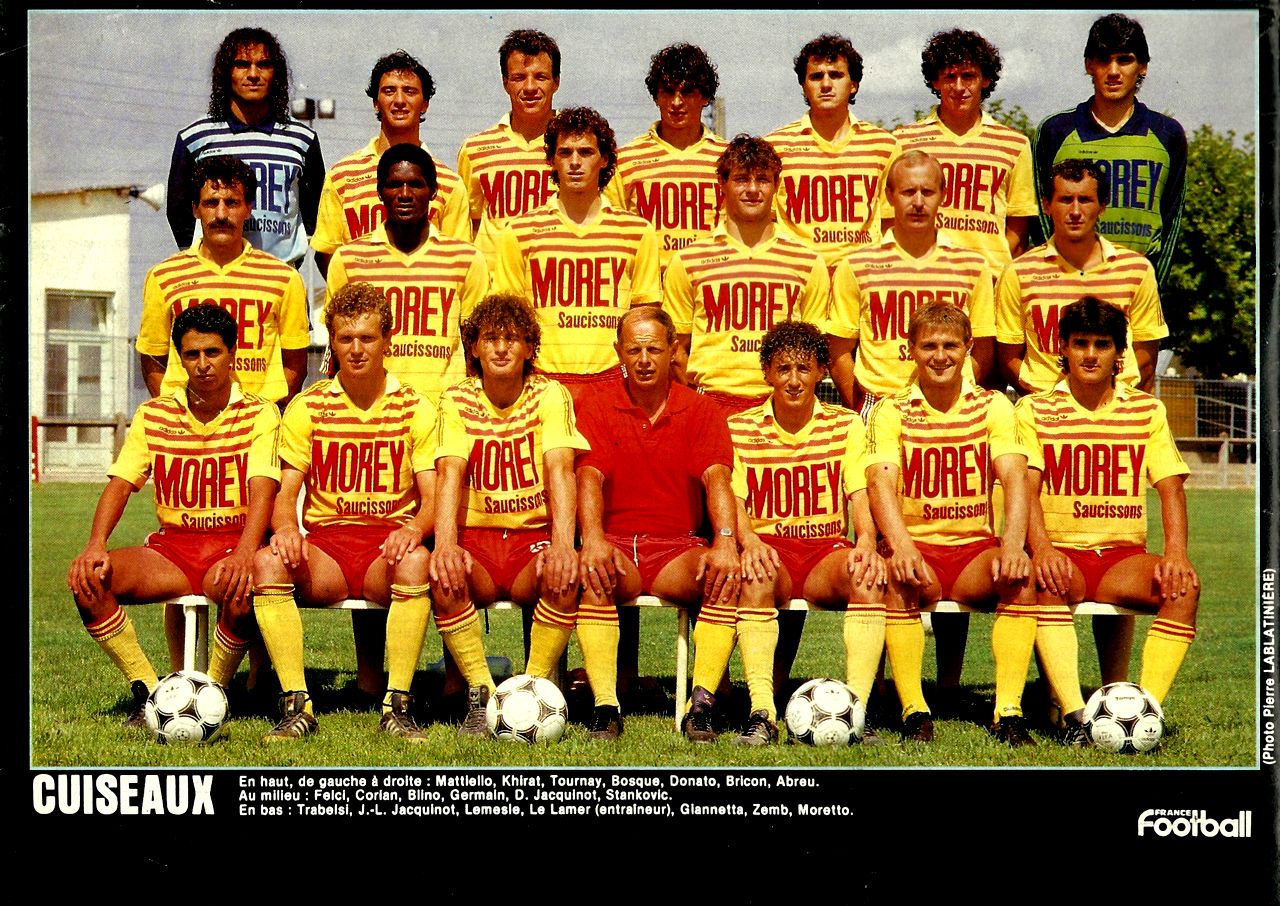 Cieseaux Louhans – 10th with 34 points.
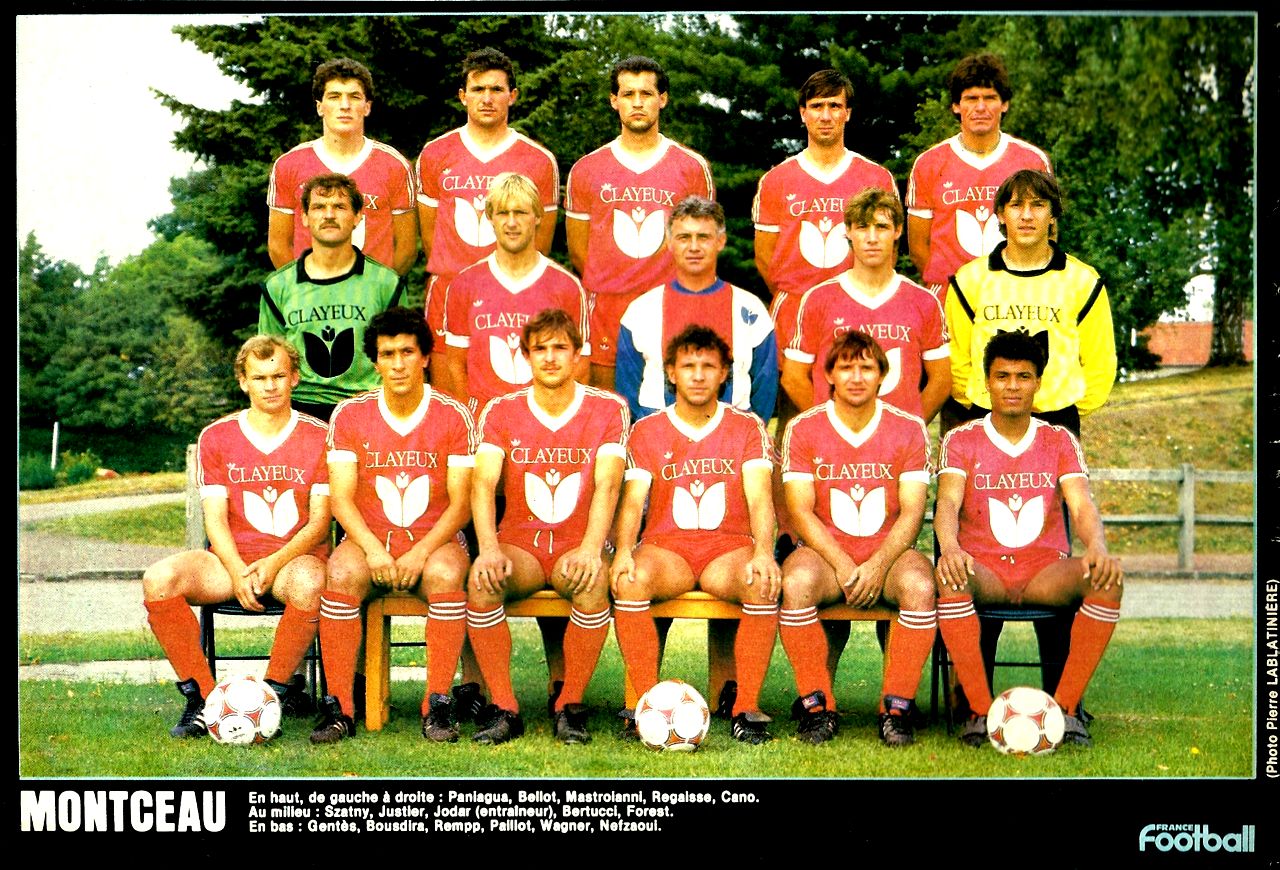 Montceau – 9th with 34 points.
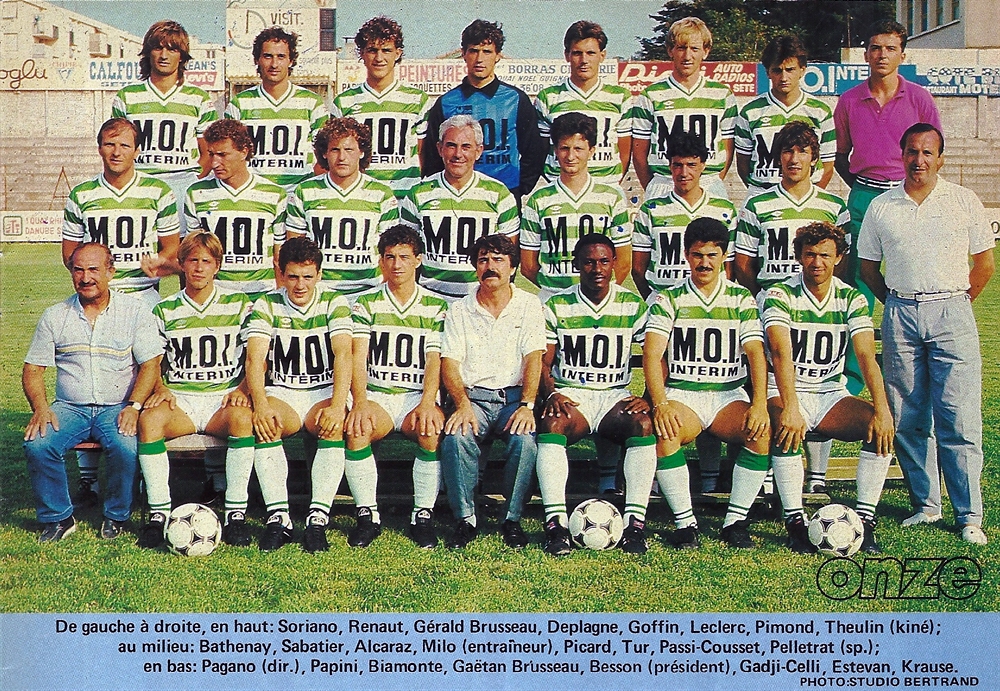 Sete – 8th with 35 points. Bathenay playing here now.
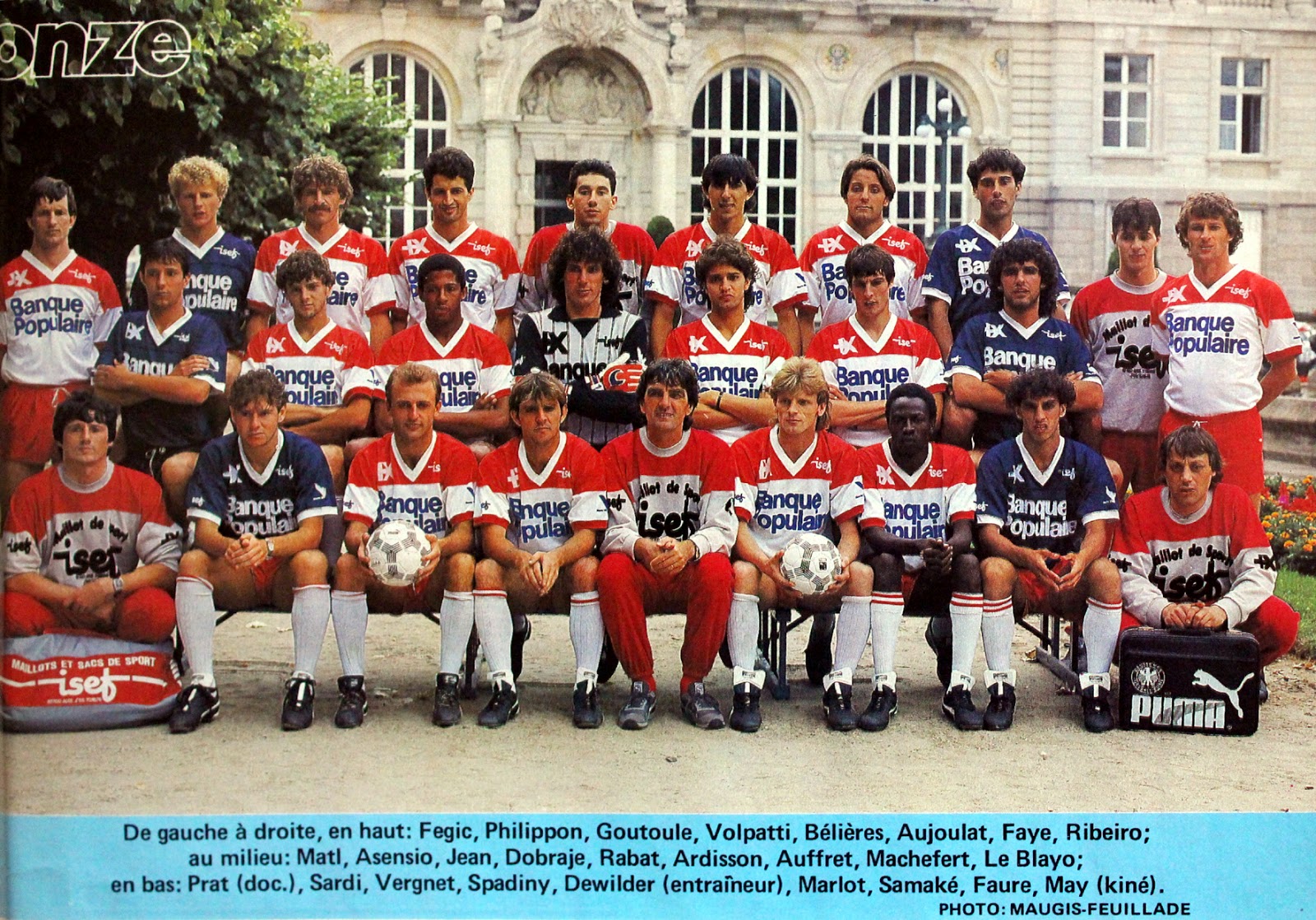 Limoges – 7th with 36 points, but relegated to Third Division.
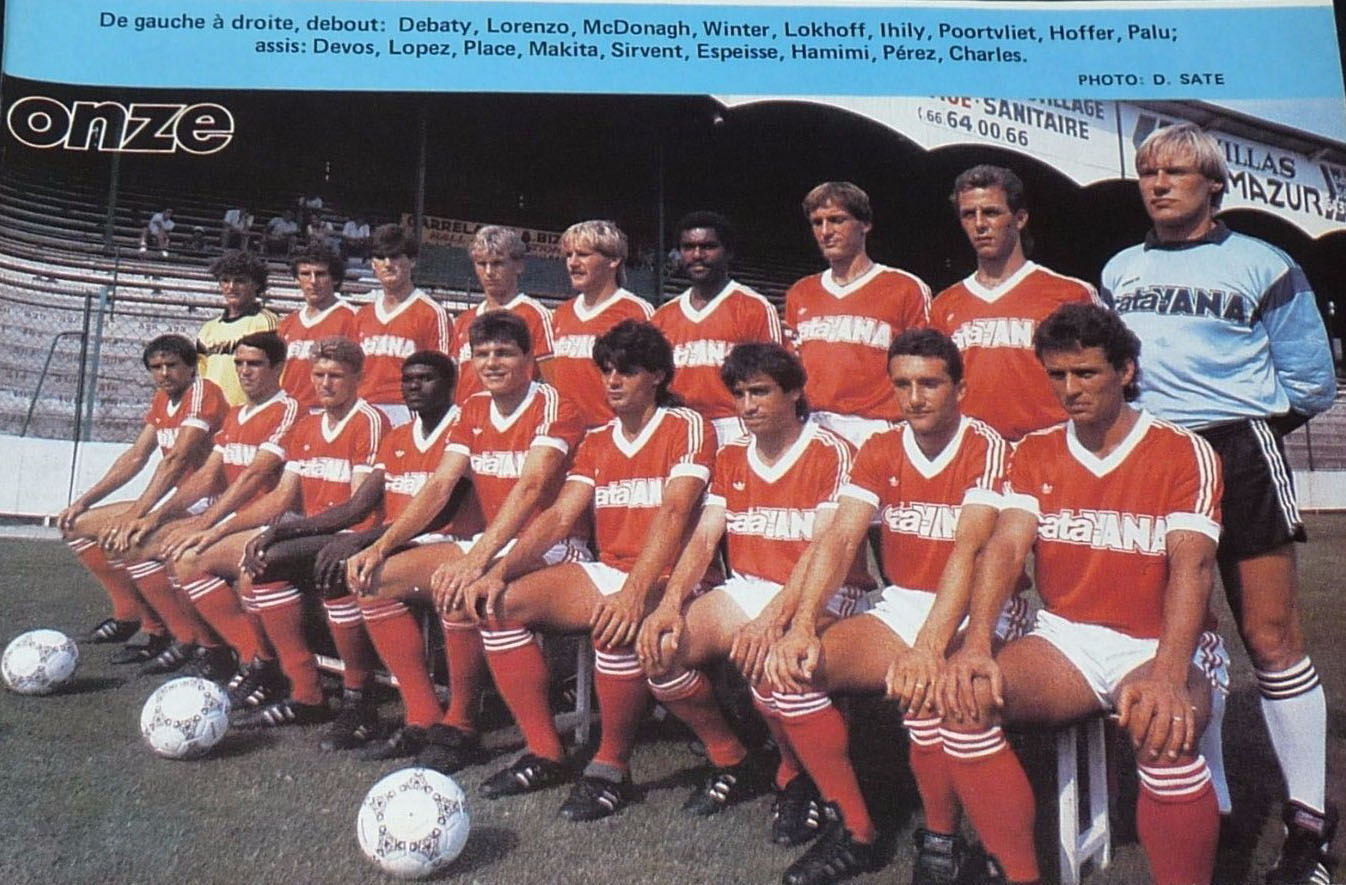 Nimes Olympique – with Dutch former national team player Poortvliet and coached by AZ’67 star of five years ago Nygaard, but 6th with 38 points.
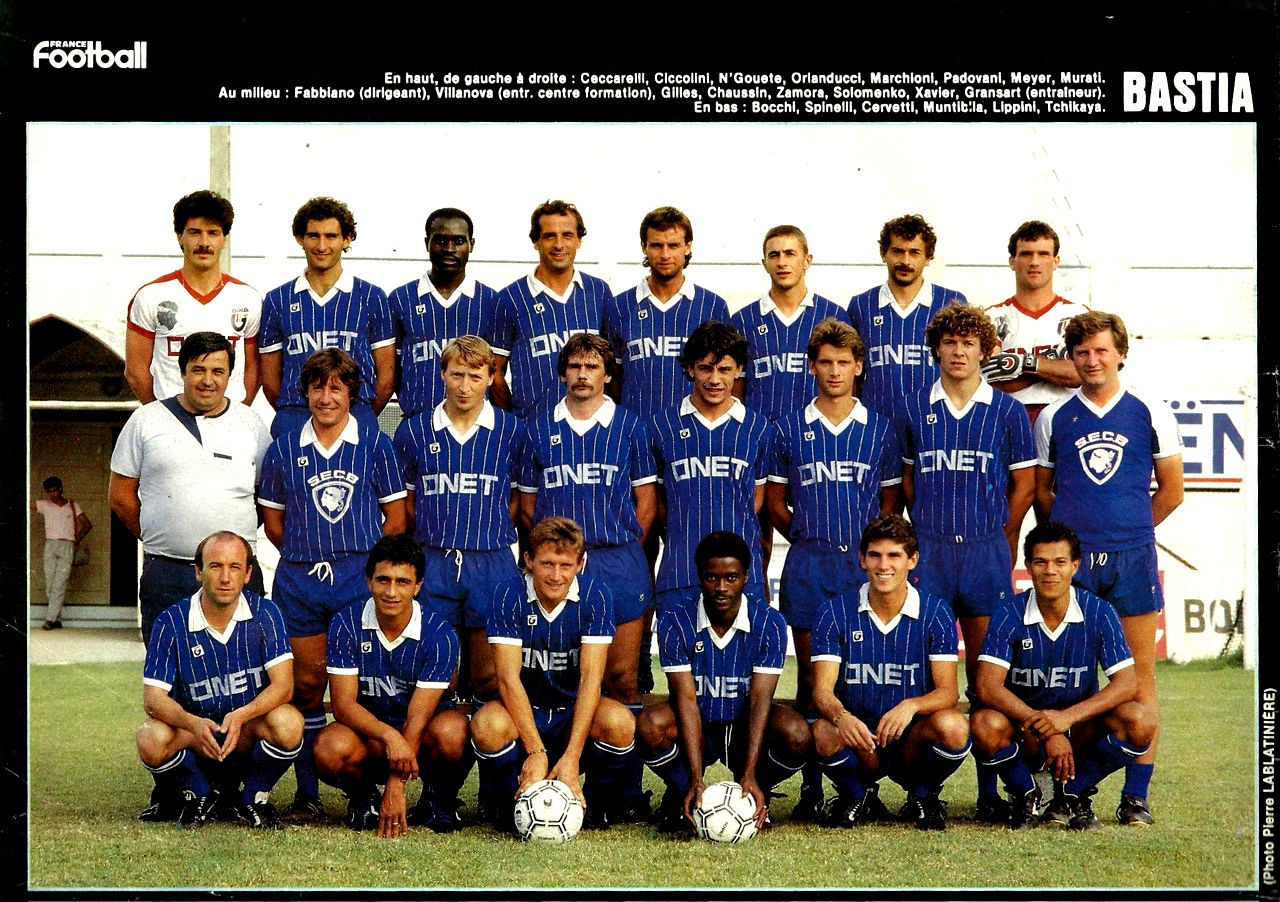 Bastia – 5th with 41 points.
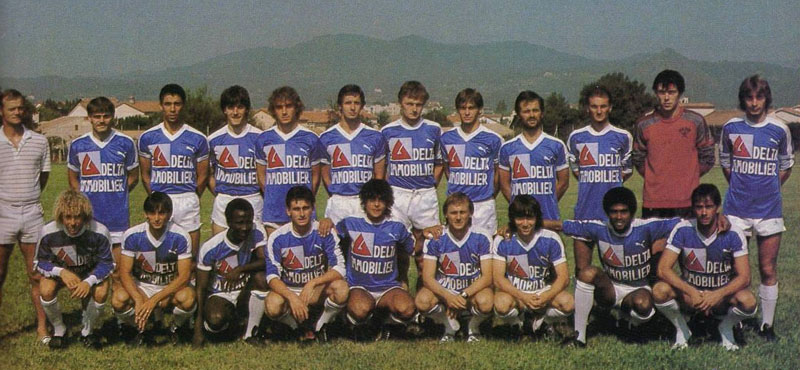 Olympique Ales – 4th with 43 points. Standing from left: Lavagne (coach), Barberat, Ravail, Julian, Gudimard, Vacle, Alphon-Leyre, Andrieu, Valadier, Vigneau, Dussuyer, Jouanne.
Crouching: Carpeggianni, Elie, Gaba, Dall’Oglio, Jouglard, Dubourdeaux, Boissier, Florent, Devot.
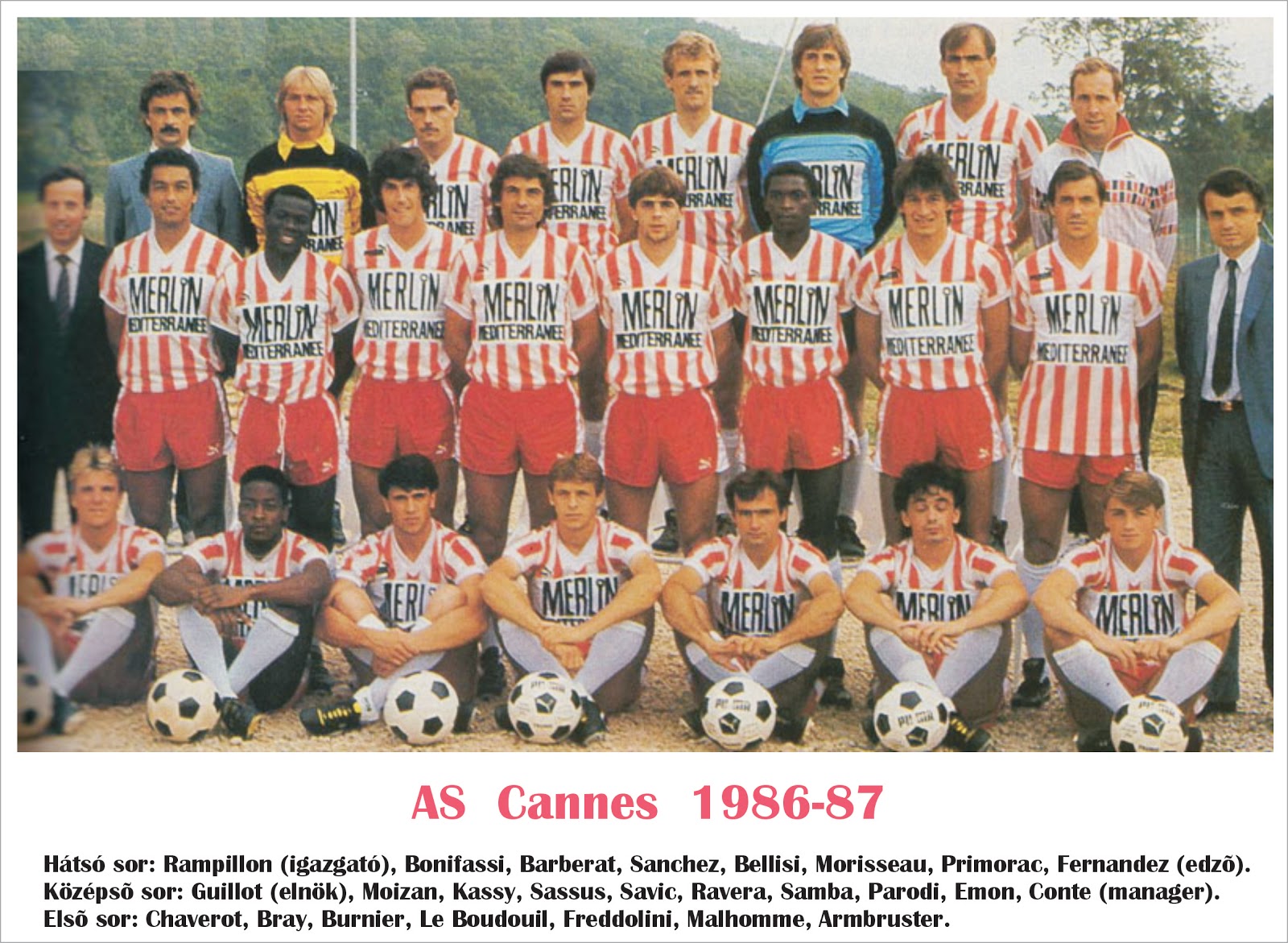 Cannes – 3rd with 45 points. Call them lucky… they were not supposed to be in the promotion race, but Olympique Lyon was ineligible. Why the second-placed team in Group A was not allowed is unclear – may be Cannes eliminated them, who knows? Anyhow, Cannes went to the relegation/promotion play-off against Sochaux, beat the First Division team and earned promotion. Not a bad squad, after all: the ancient (now) French star Emon and two aging, but still strong Yugoslavs – Primorac and Savic.
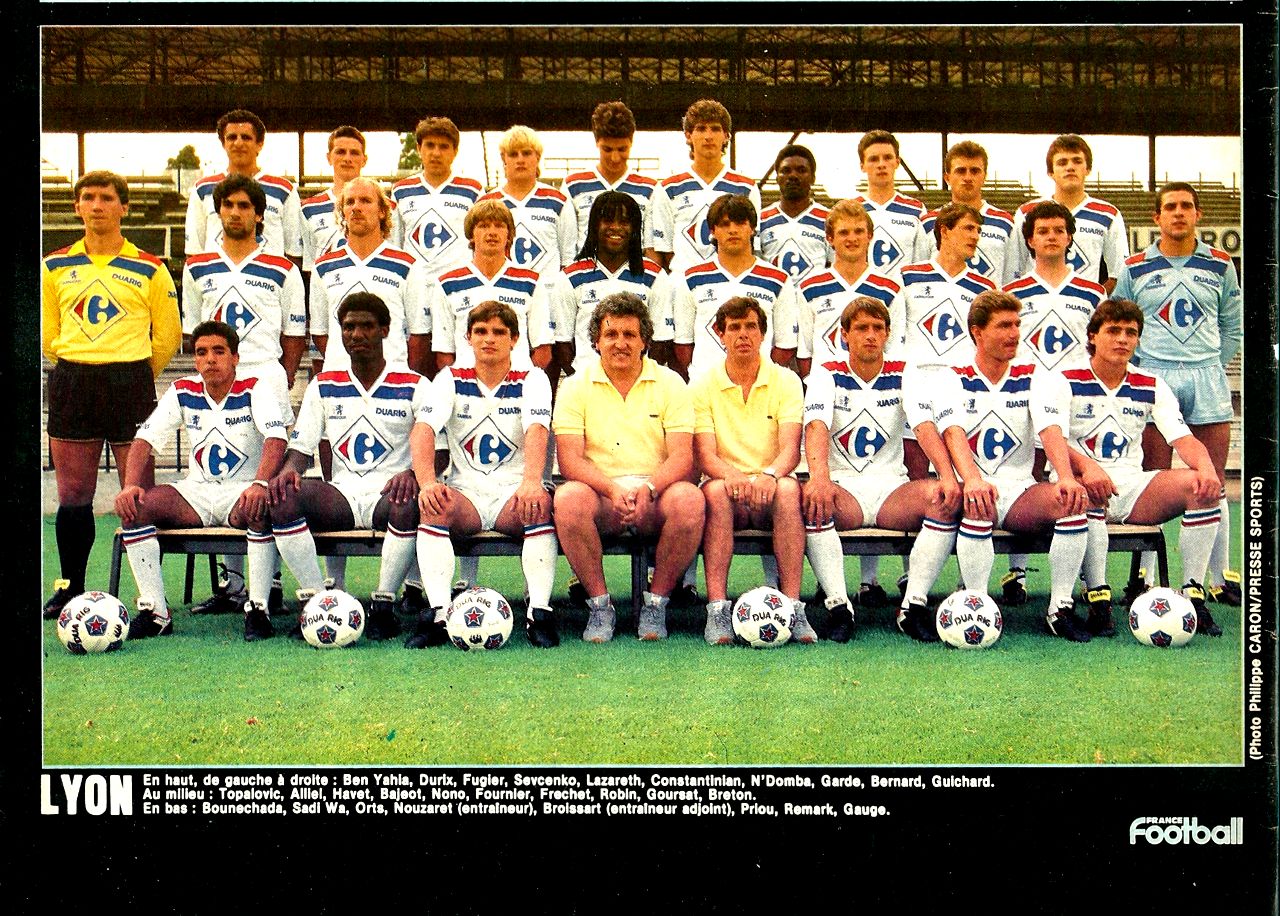 Olympique Lyon – 2nd with 48 points. Top position apparently was not up to this rather insignificant squad, but their strength – or lack of it – hardly mattered, since they were ineligible for promotion. More or less, the current state of affairs is summed up by the presence of Topalovic – once upon a time a rival of Schumacher in 1.FC Koln, but gradually slipping out of site and mind.
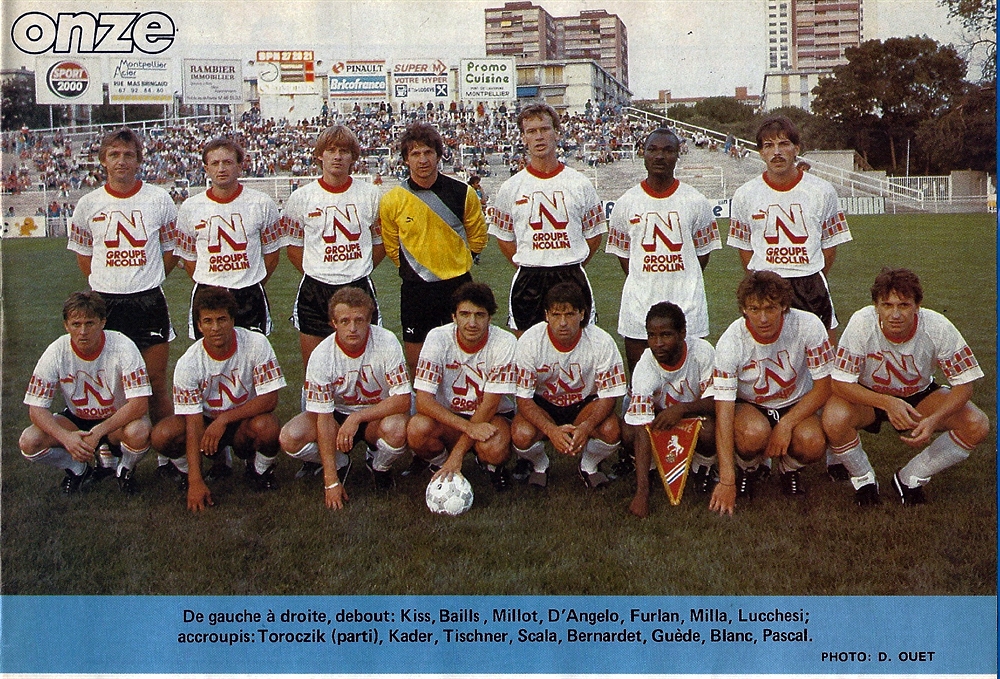 Montpellier won the championship with 52 points. 22 wins, 8 ties, 4 lost games, 73-25 goal-difference. Confident victory, achieved by not bad for Second Division squad – of the two Hungarians, Torocsik departed quickly, but Laszlo Kiss,the Yugoslav Nenad Stojkovic, Cameroonian Roger Milla, and young talent Laurent Blanc provided enough class. Thus, Montpellier returned to top flight.
Good luck to newly promoted Montpellier, Chamois Niort, and Cannes!
France II Division Group A
Second Division. The usual two groups, reshuffled almost entirely. The winners directly promoted, one team going to promotion/relegation play-offs against the 18th in the top league. The last 3 – going down, unless there were more teams going from First Division to one Second Division group.
Group A
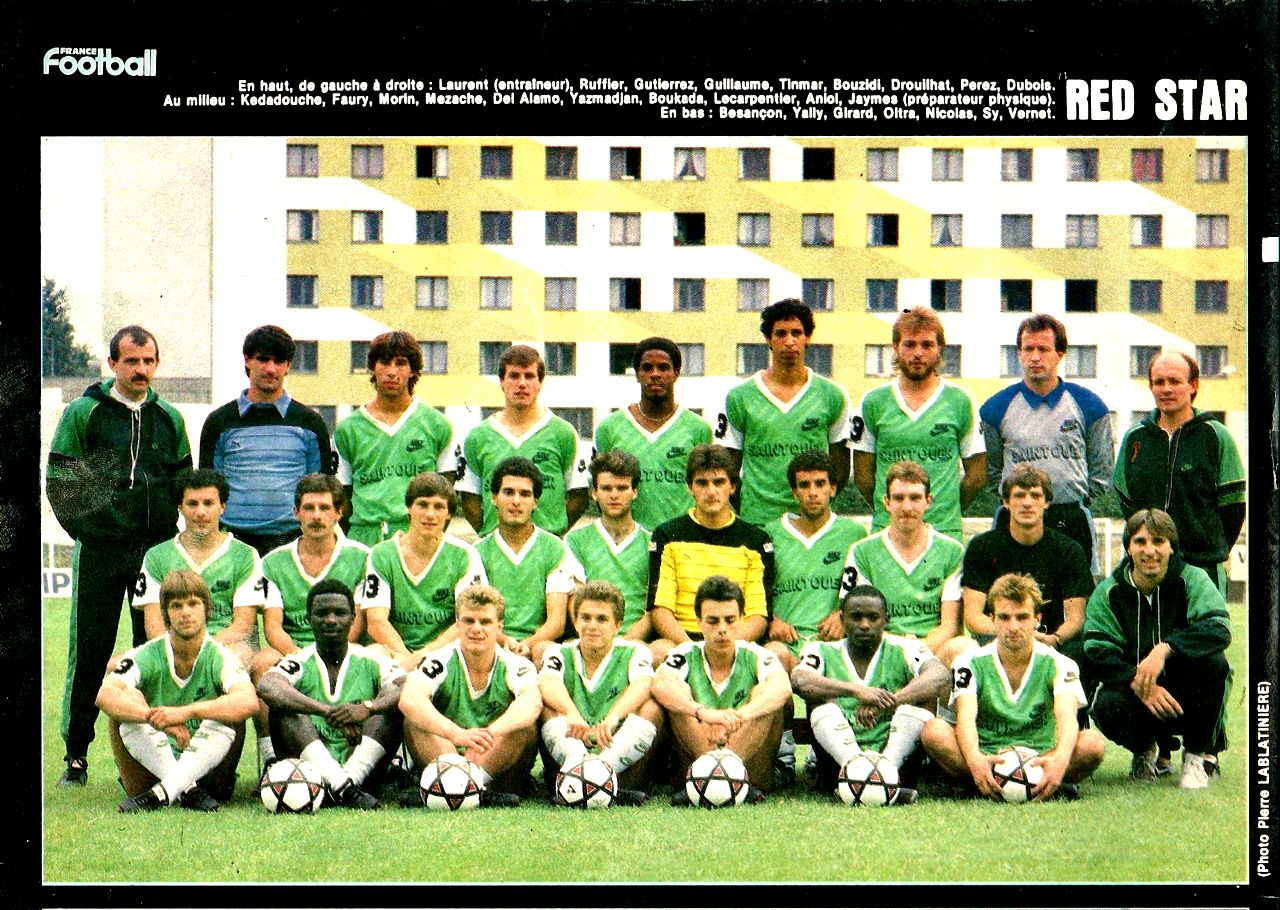 Red Star (Paris) – last and relegated with 12 points.
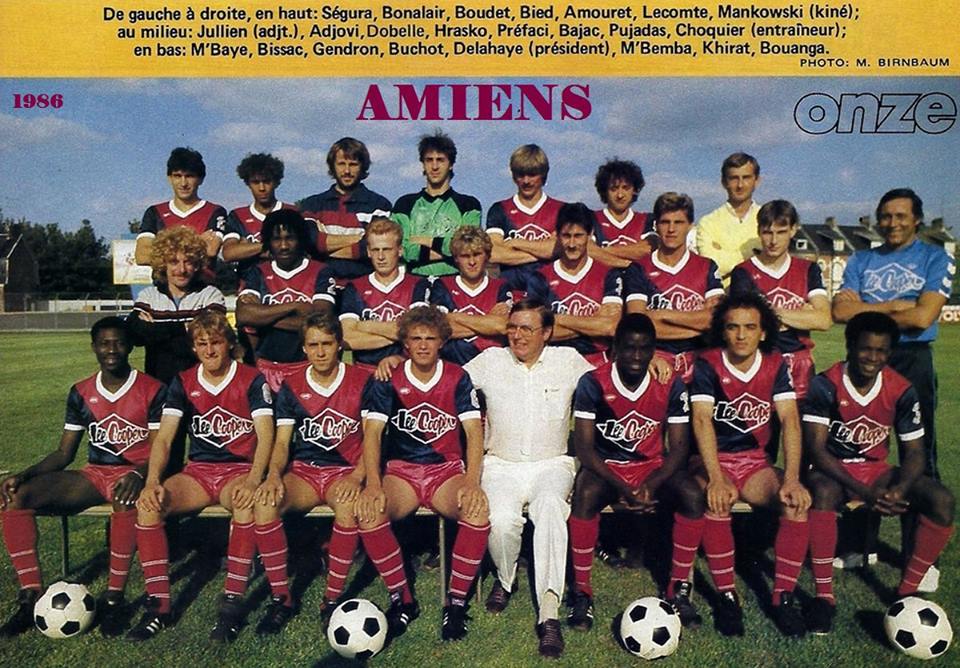 Amiens – 17th with 23 points and relegated.
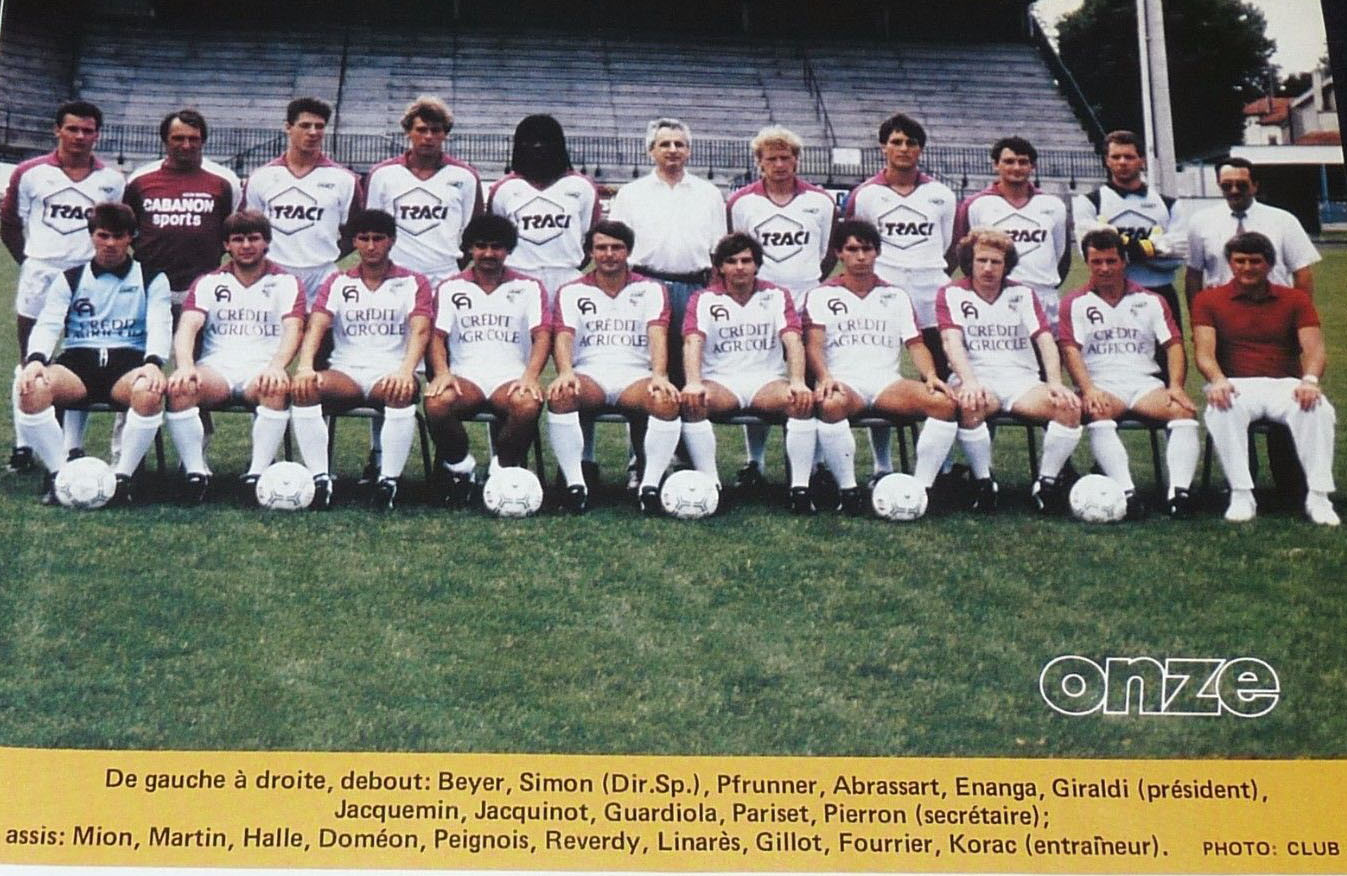 Saint Dizier – 16th with 24 points, but they survived. Hard to tell why, but they did.
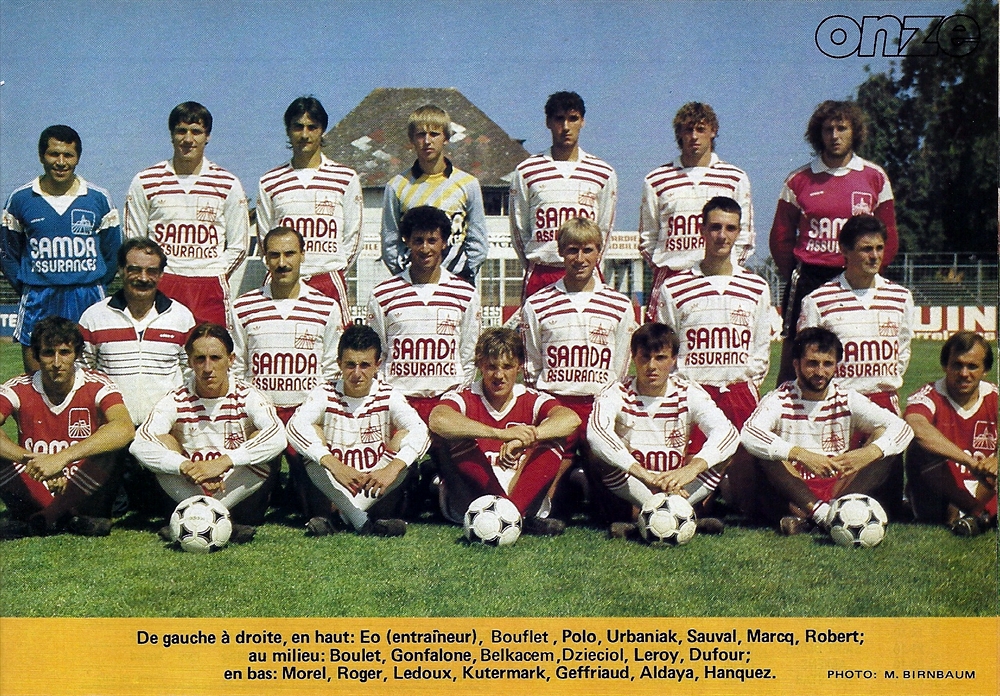 Abbeville – 15th with 26 points.
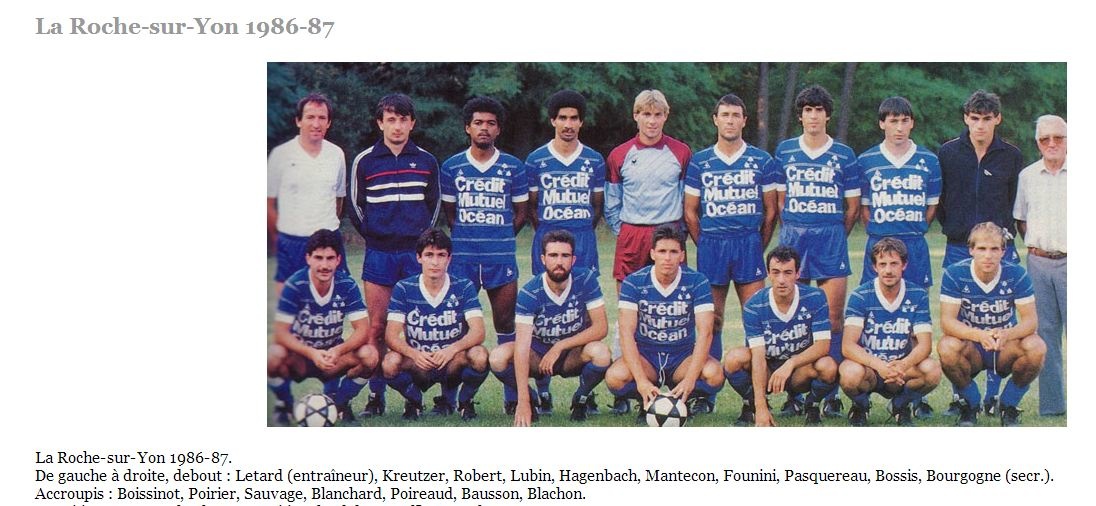 La Roche-sur-Yon – 14th with 29 points.
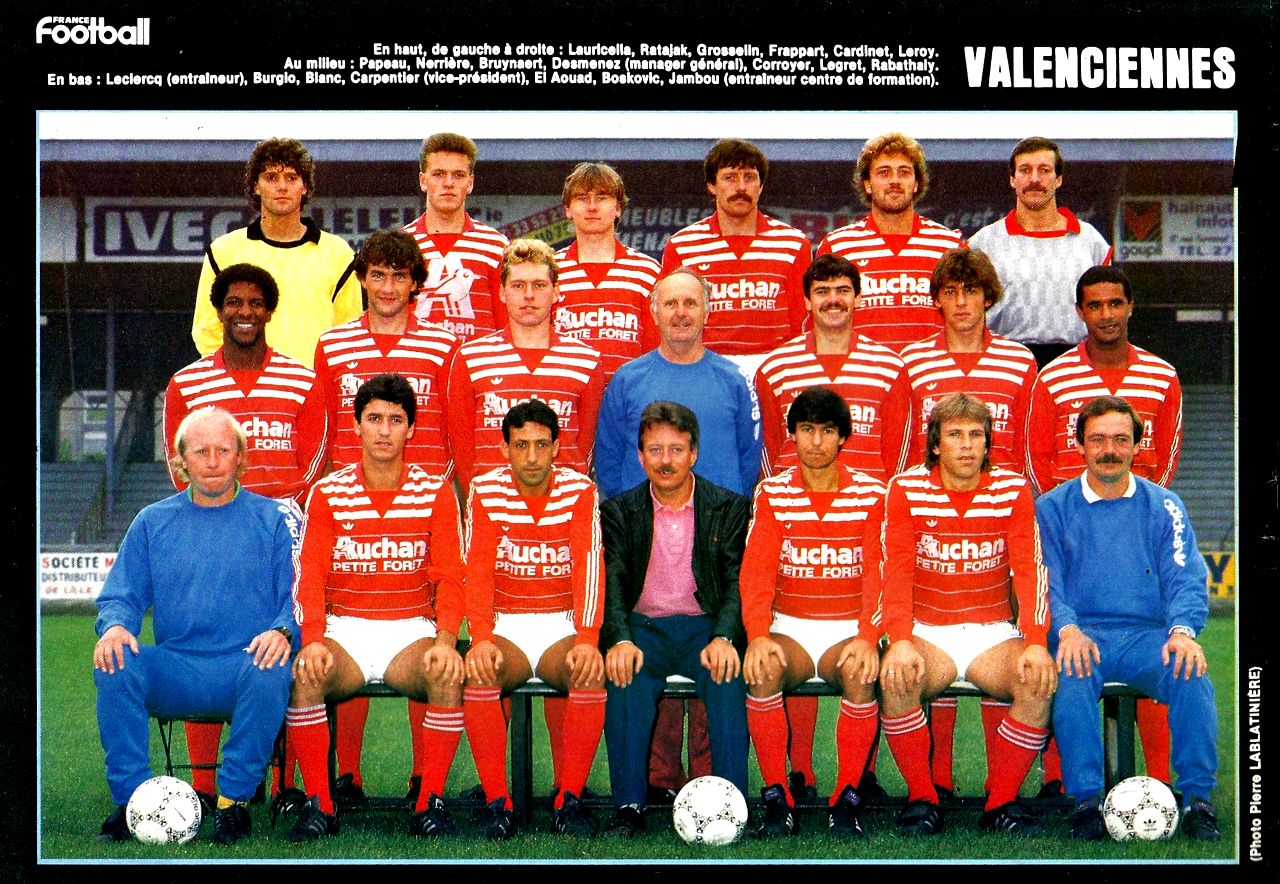 Valenciennes – 13th with 31 points.
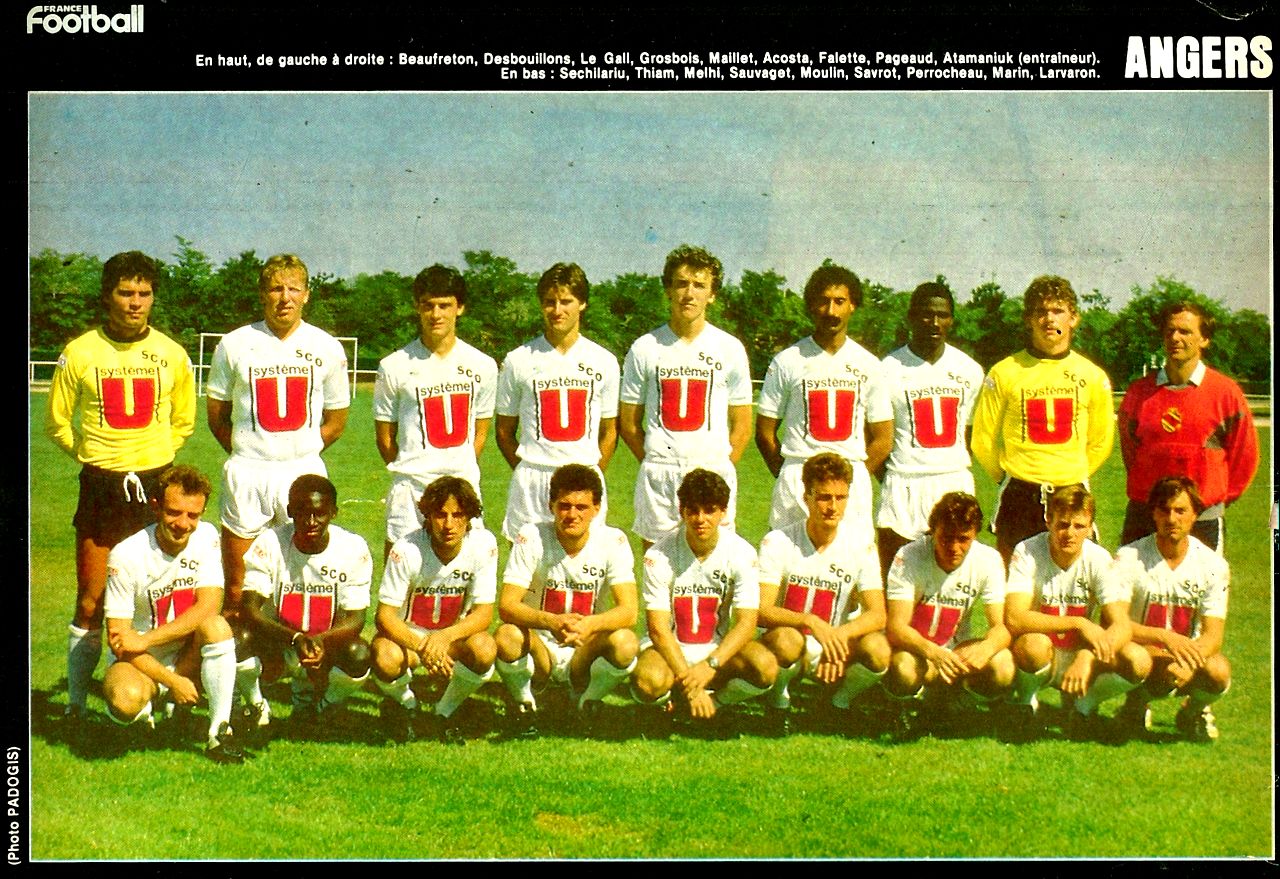 Angers – 12th with 32 points.
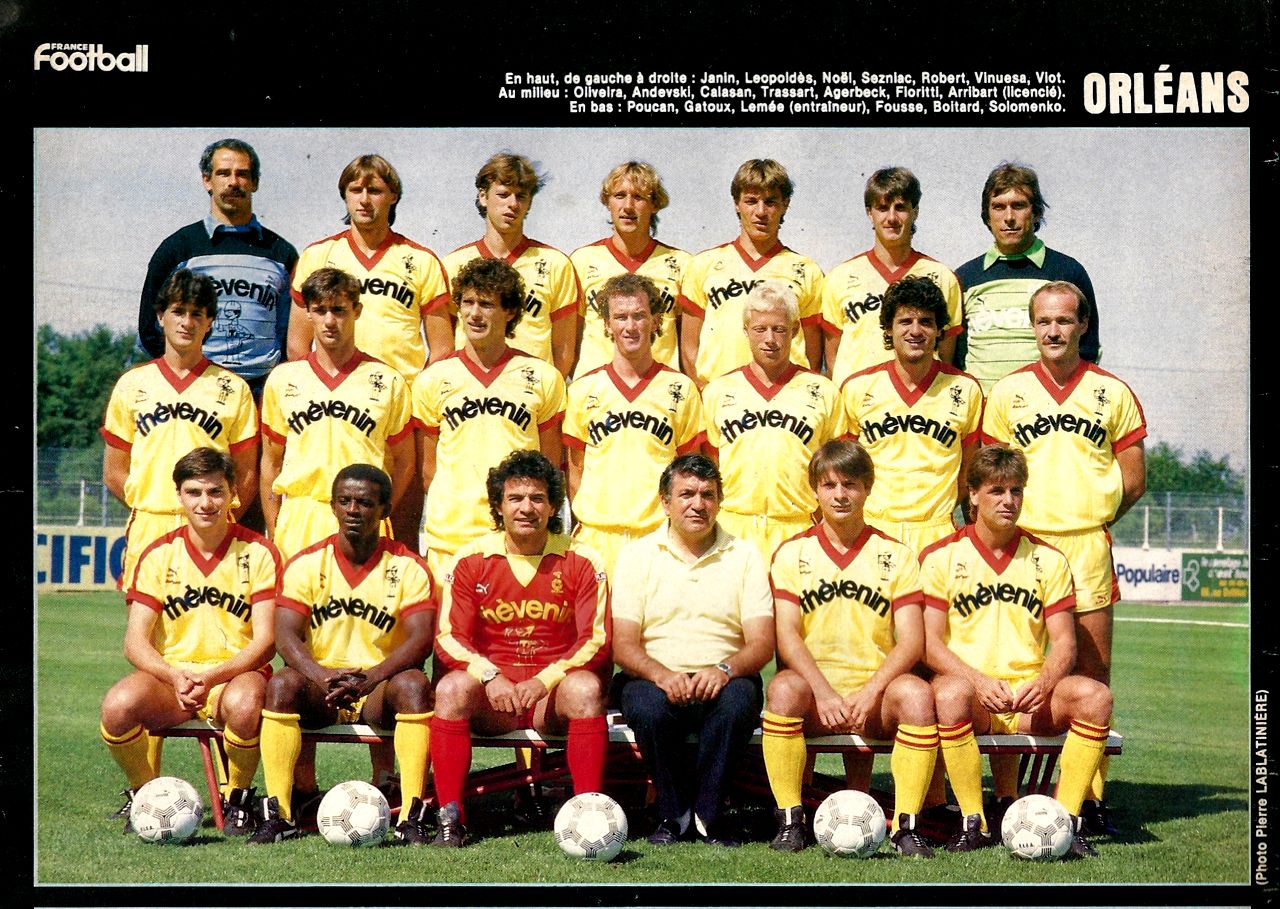 Orleans – 11th with 32 points.
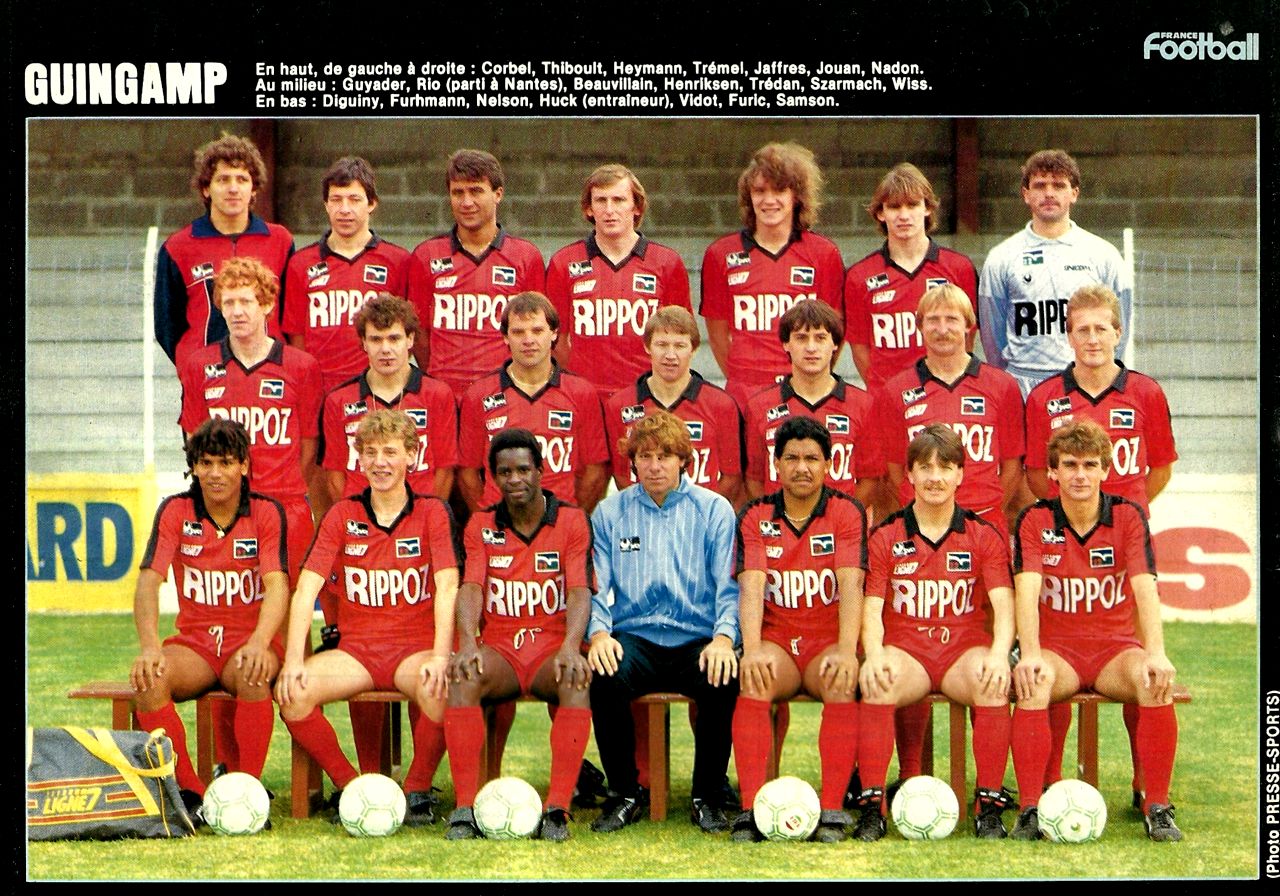 En Avant Guingamp – 10th with 32 points. Szarmach still playing.
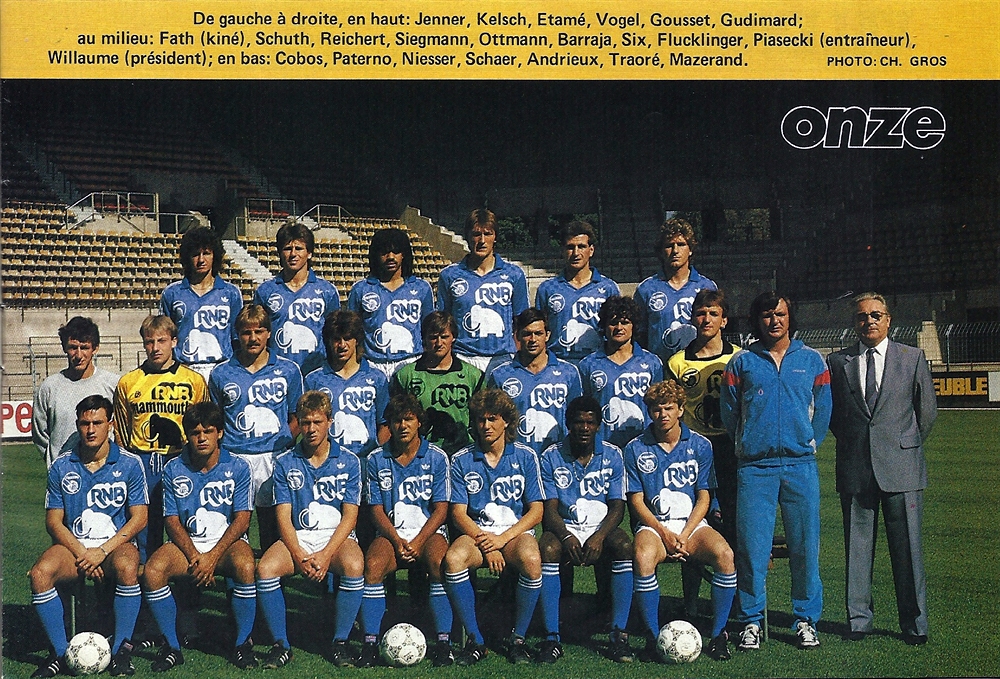 RC Strasbourg – 9th with 32 points. Didier Six here, but apparently he moved away.
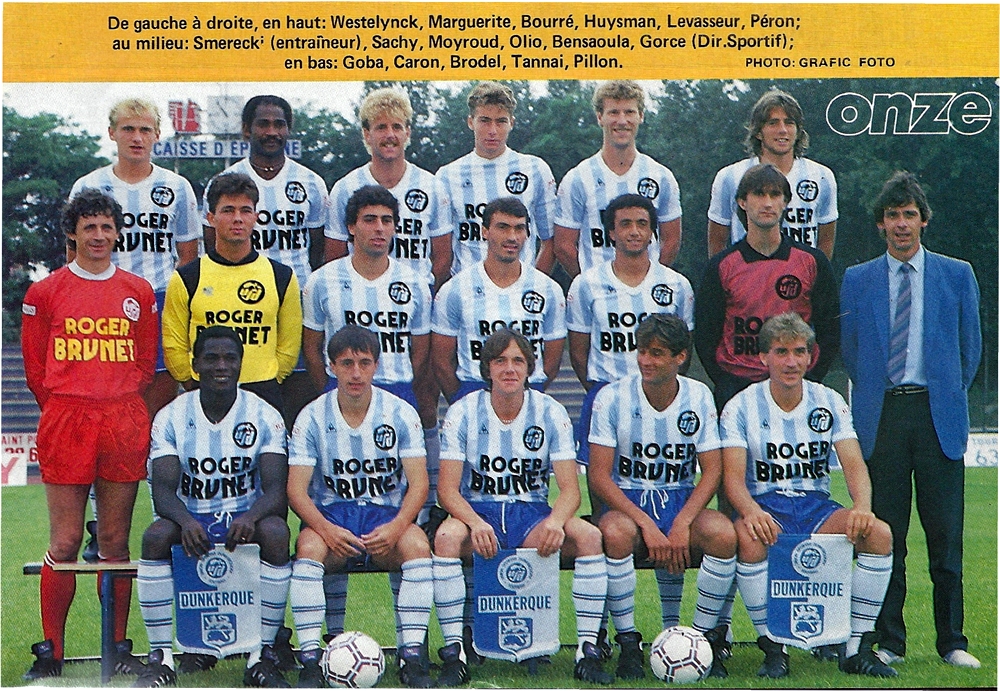 Dunkerque – 8th with 33 points.
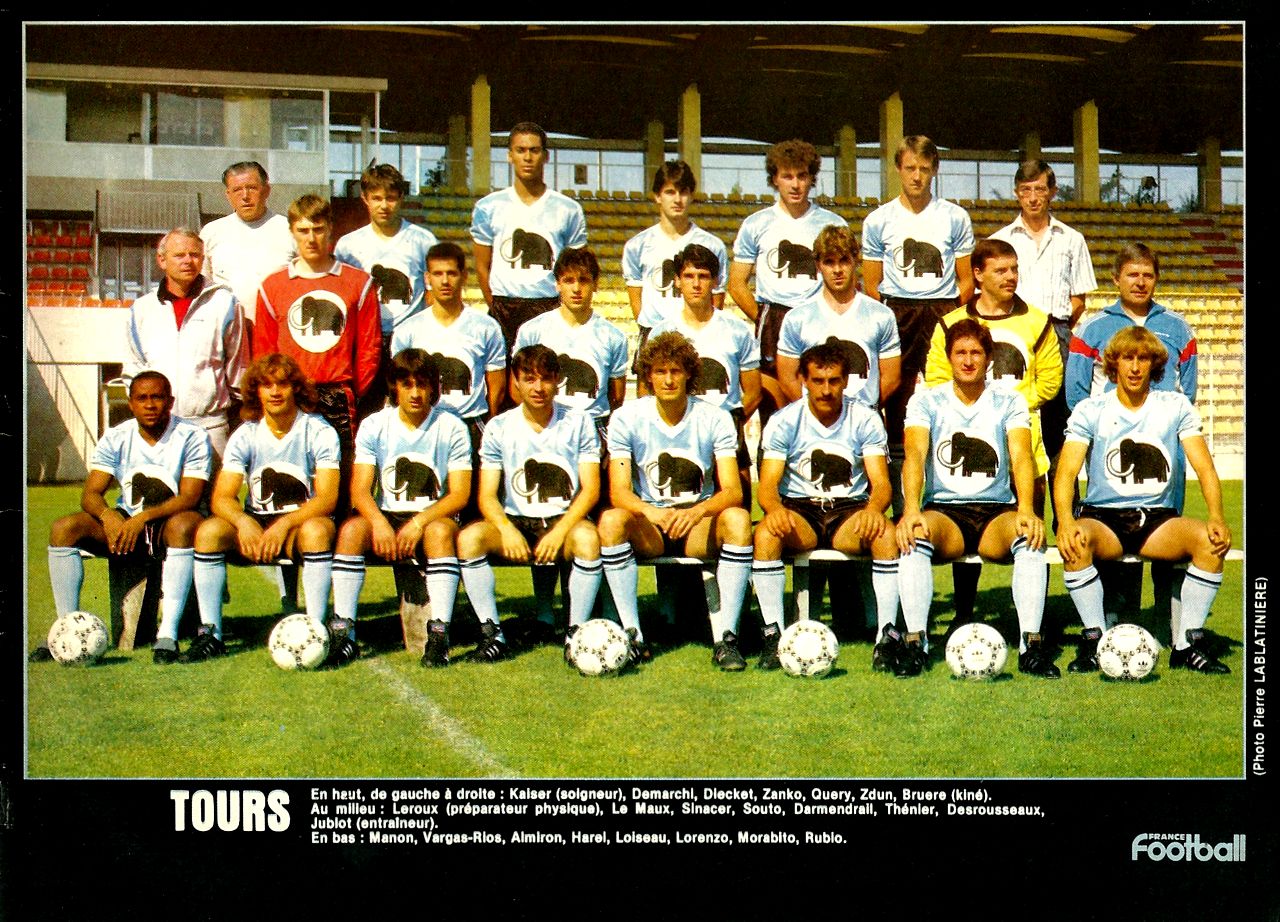 Tours – 7th with 35 points.
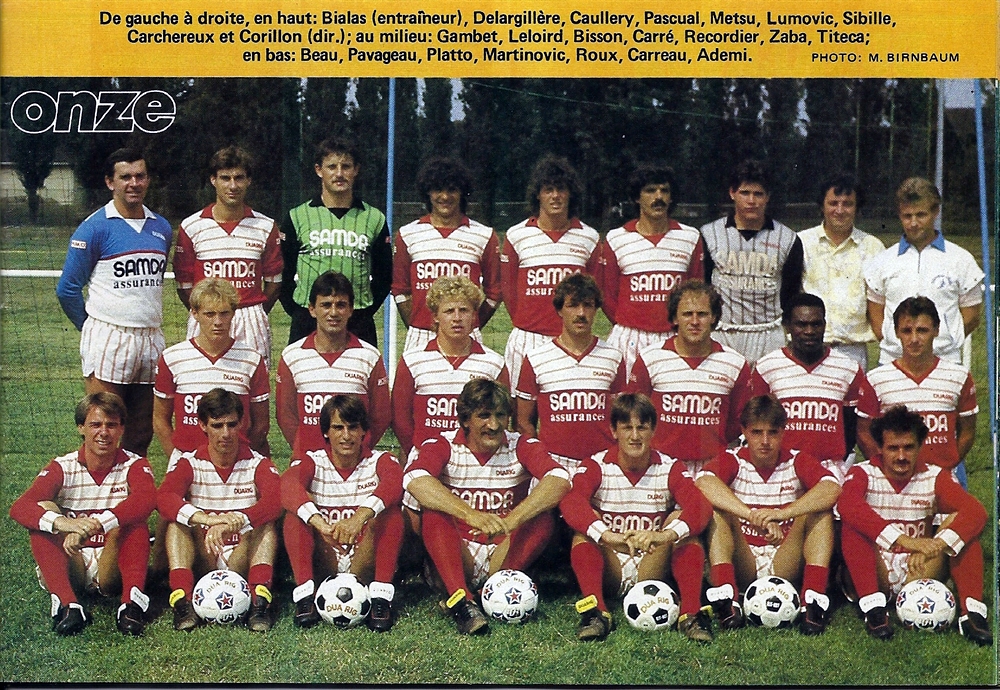 Beauvais – 6th with 38 points.
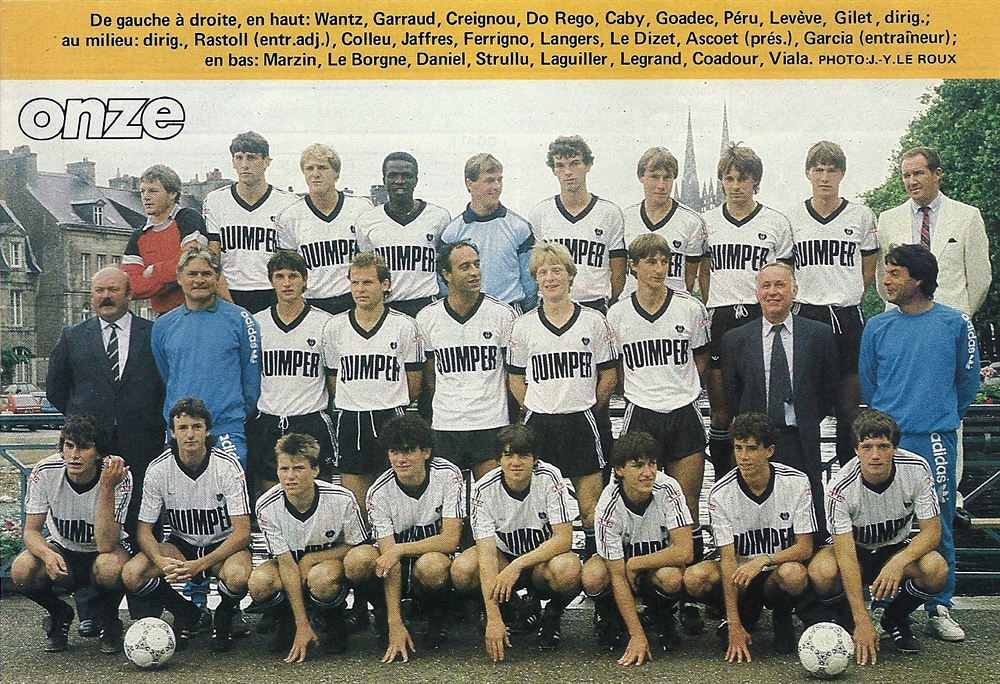 Stade Quimperois – 5th with 41 points.
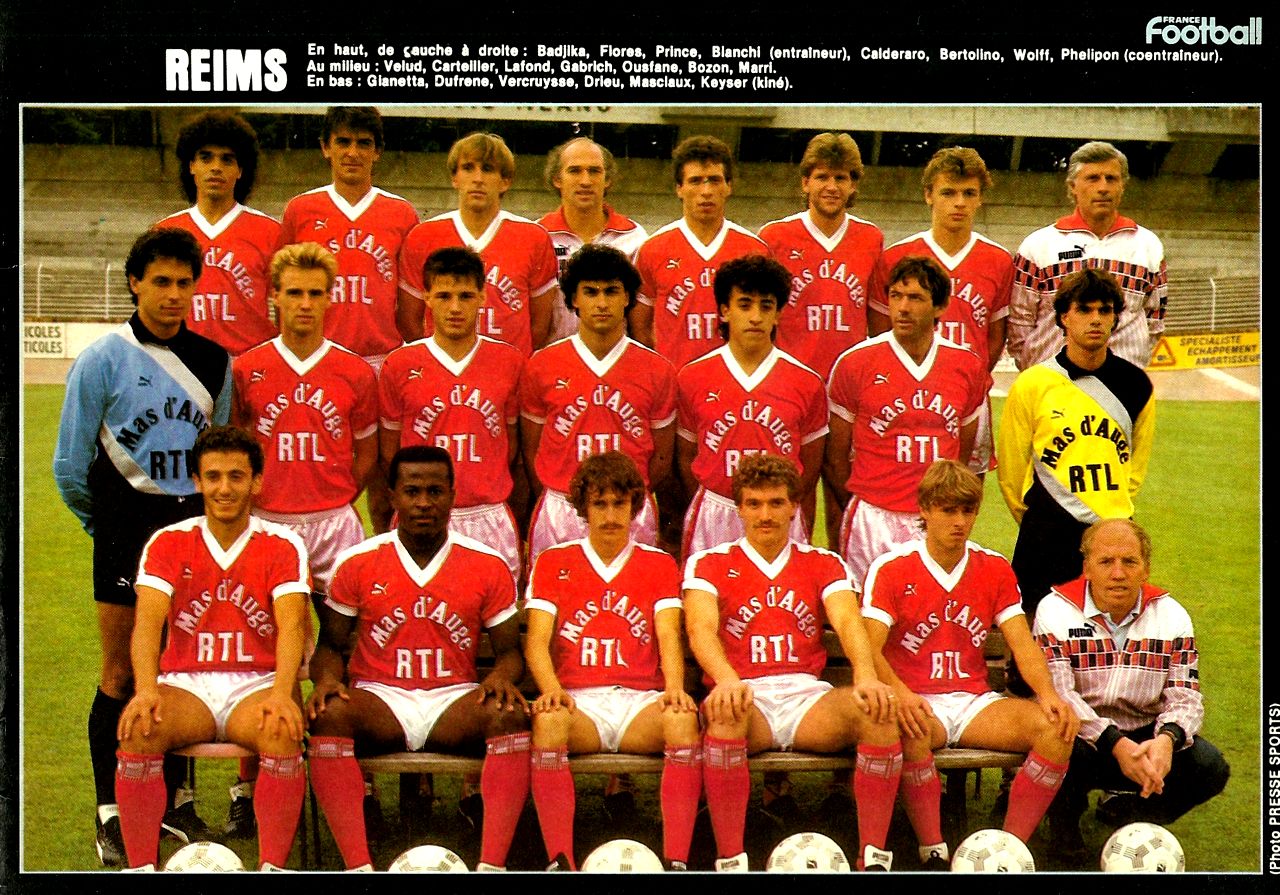 Stade Reims – with Vercruisse in the team and Carlos Bianchi coaching them, but only 4th with 43 points.
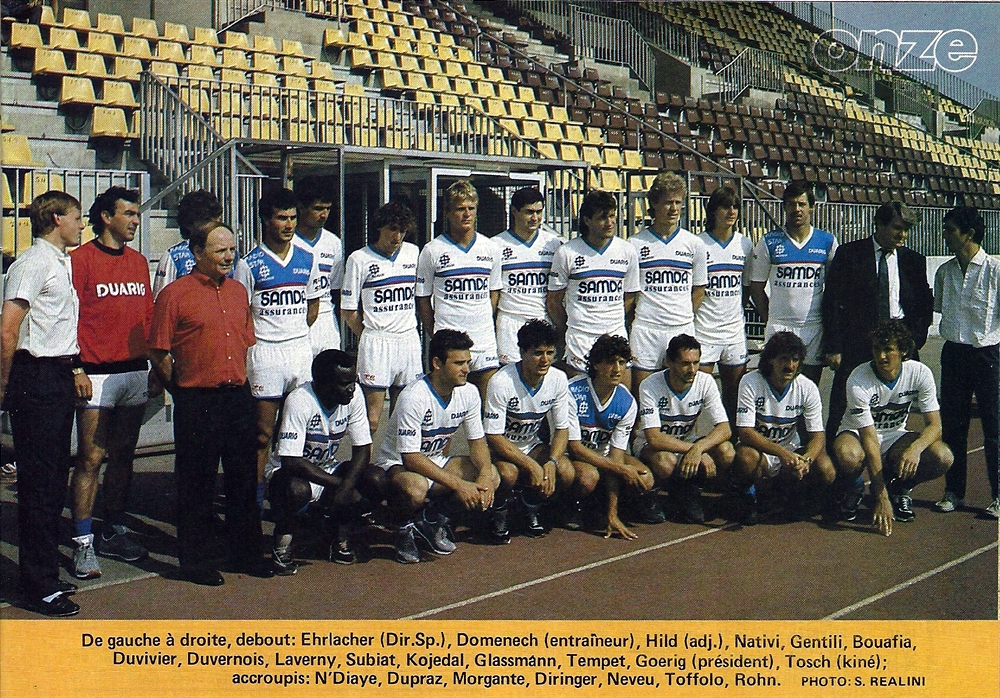 Mulhouse – 3rd with 46 points.
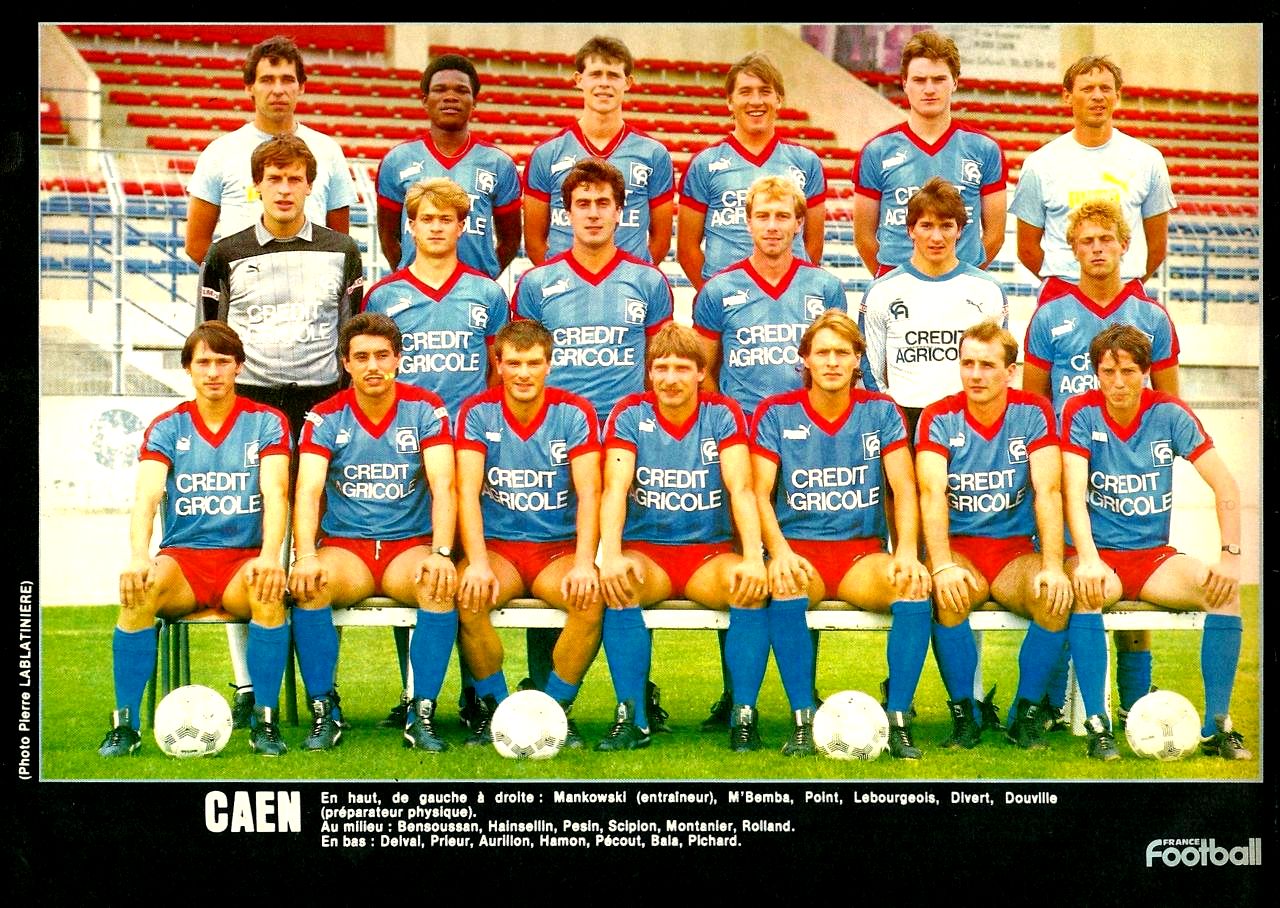 Caen – 2nd with 48 points. Unable to really challenge the leader, but why they did not go to promotion/relegation play-off is unclear.
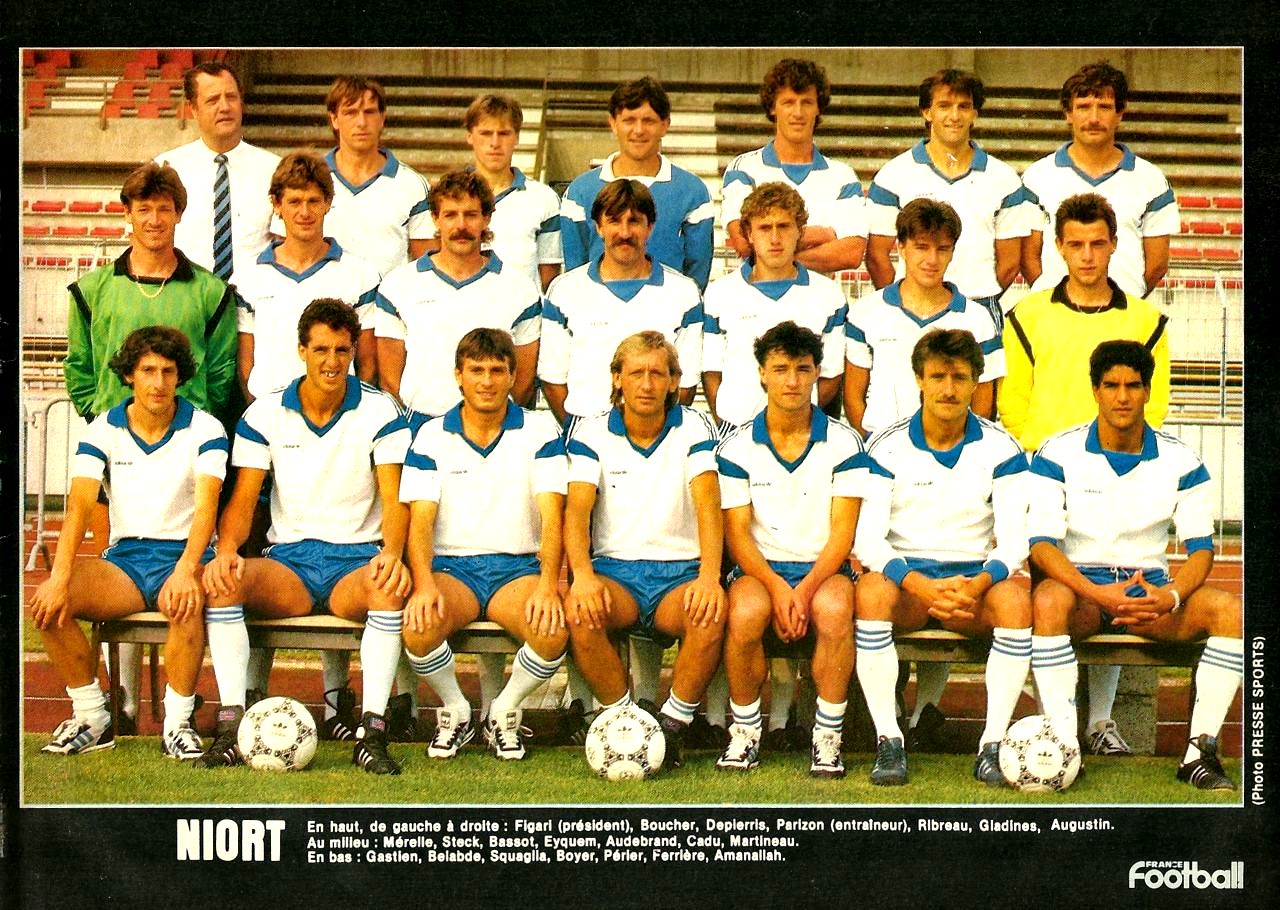 Chamois Niort – confident winners with 55 points from 24 wins, 7 ties, and 3 lost games, 48-15 goal-difference. Rather surprising to see them and not some of the better known former top league members win, but they were simply the best. Happily promoted.
France
France – ranked 15th. Strange to see such low ranking – unlike Dutch football, the French were not in decline in the first half of the 1980s, but were going up and had fantastic players. Yet, in the same time certain decline of their club football was noticed – St. Etienne most strongly, but to a point Nantes was weakening. Funny, in a way – the French were almost as good, or bad, as the Swiss. And that at time when France was one of the most exciting and formidable national teams in the world – and the Swiss were in trouble and reorganizing as a result. Anyhow… Arguably, the best season ever for Bordeaux, inability of Paris SG to keep pace, strong recovery of Marseille.
Beyond the two professional leagues – some former full professional clubs of different degrees of familiarity:
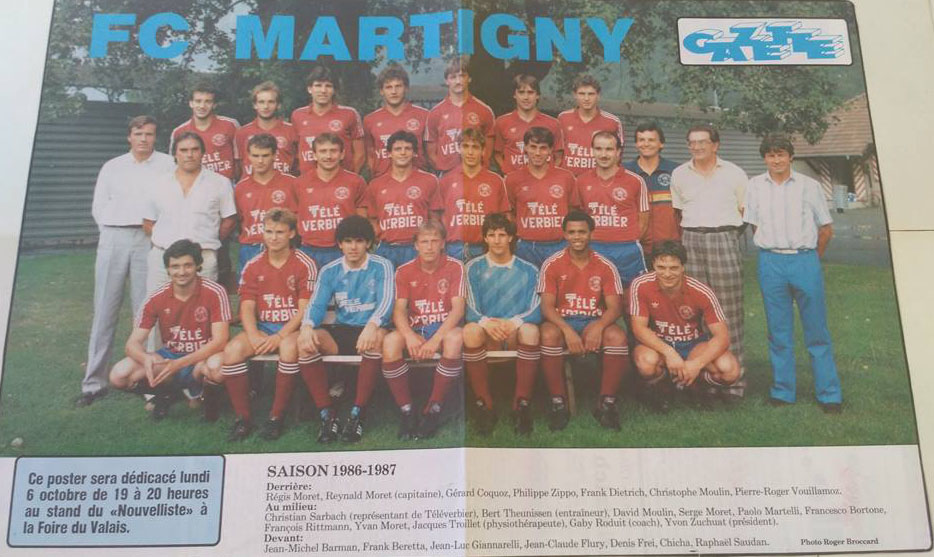 FC Martigny
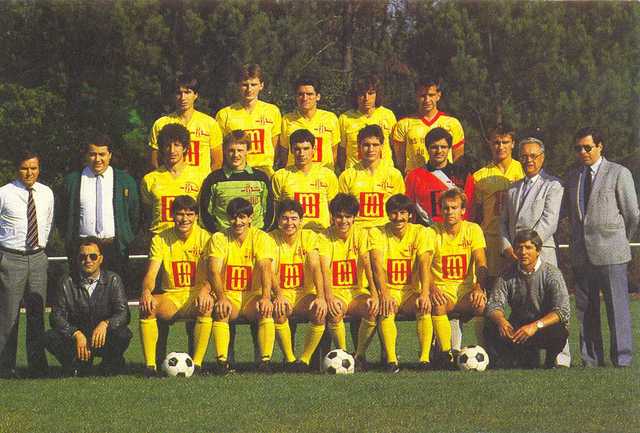 Le Mans
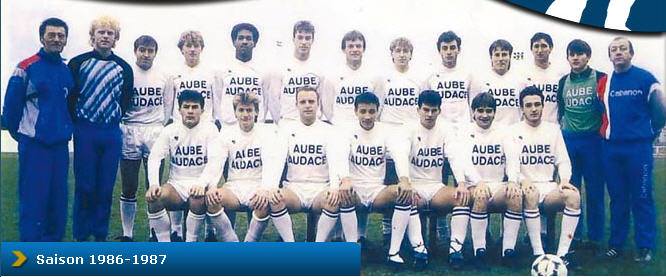 Troyes.
6 teams, however, realized their dreams of going up – or rather returning – to professional level:
 Dijon
Dijon
 Melun
Melun
 FC Lorient
 Chatellerault
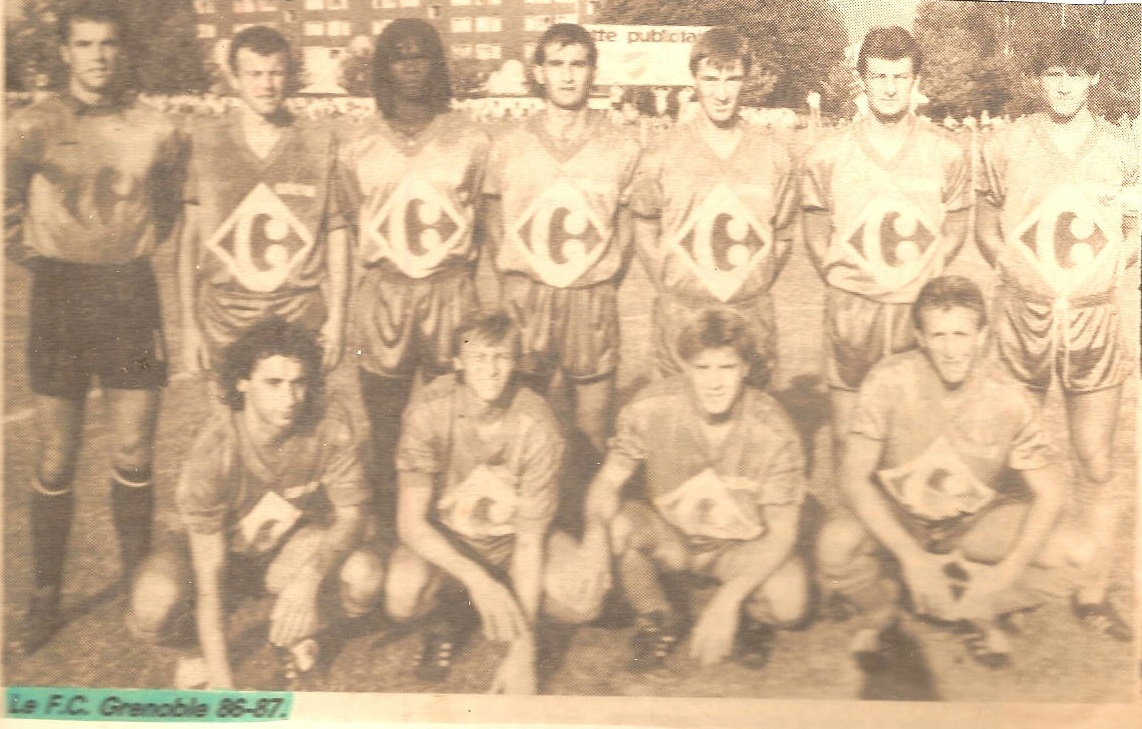 FC Grenoble and
 FC Rouen.
Switzerland the Cup
The Cup. Young Boys and Servette met at the final and the clash ended 2-2. Young Boys prevailed in the extra-time, scoring 2 unanswered goals and triumphed 4-2.
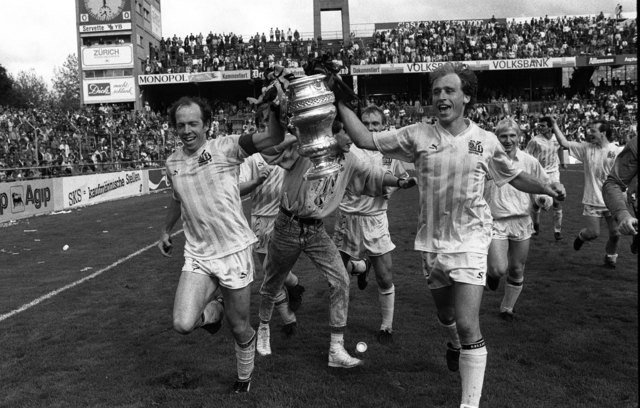
The happy winners, all smiles and fit for more running after 120 minutes of playing. The trophy in their hands gave them wings.
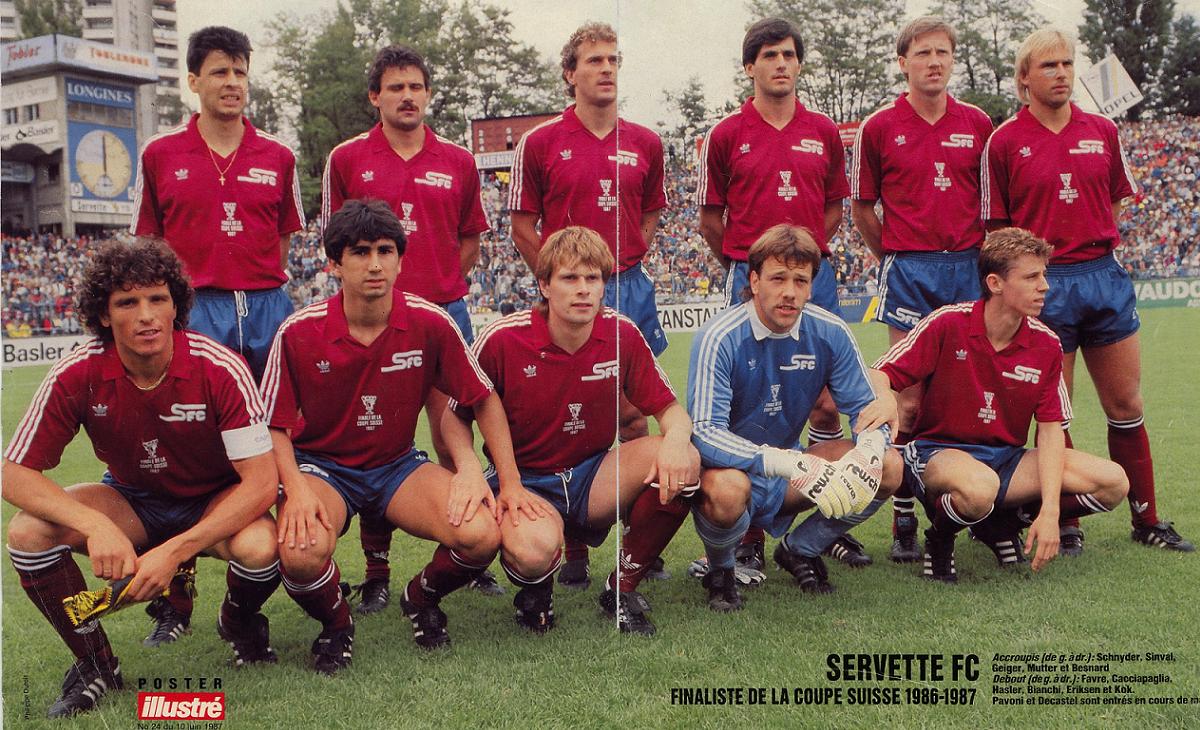 Servette lost and finished the season empty-handed. Missing a little was enough to miss much: unable to come even close to bronze medals, losing the Cup in overtime, but by 2 goals.
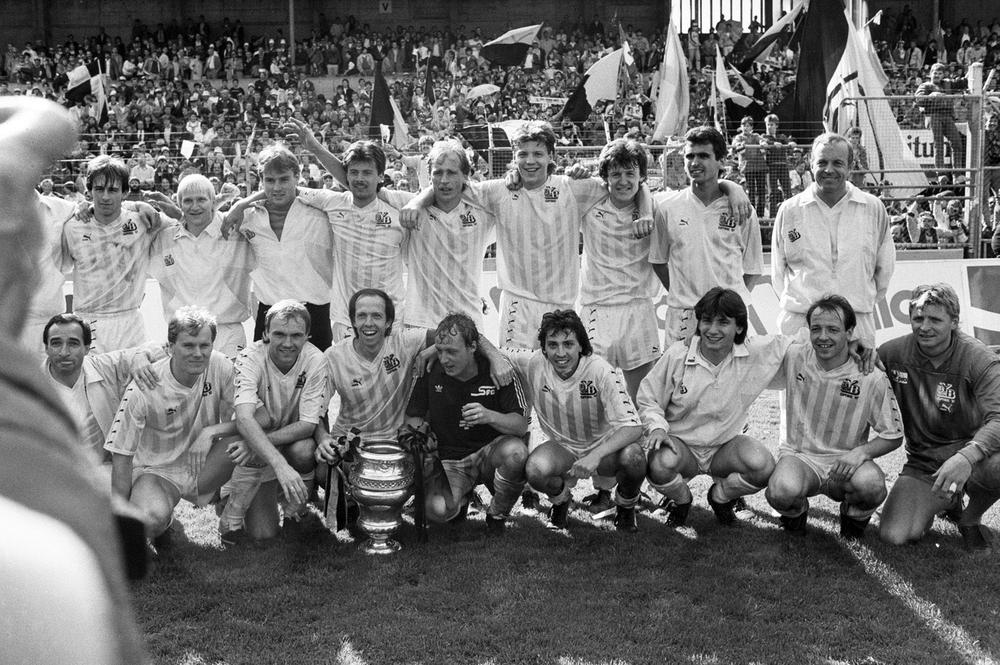 Young Boys had big success – this was their 6th Cup, but the previous one was won 10 years ago.
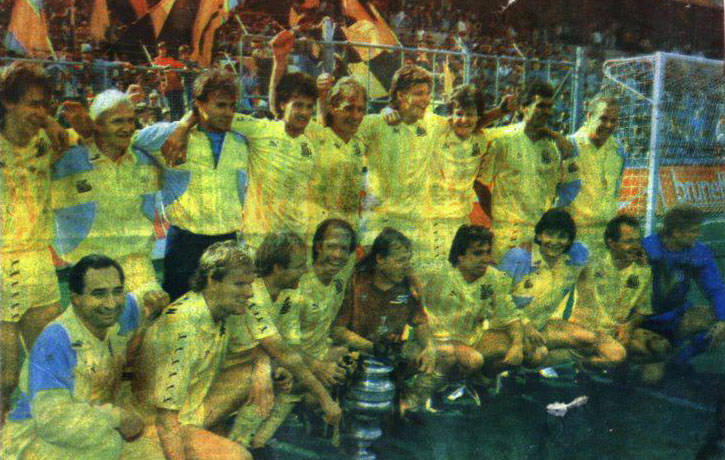 Crouching from left: Aleksander Mandziara -coach, Bjorn Nilsson, Joachim Siwek, Jean-Marie Conz, Robert Prytz, Martin Jeitzinger, Adam Mandziara, Jurg Wittwer, Urs Zurbuchen.
Standing: Dario Zuffi, Erich Hanzi, Stefan Knutti, Rene Sutter, Martin Weber, Reto Gertschen, Alain Baumann, Urs Bamert, Henner (?) – superintendent.
Well, a typically unassuming Swiss team, depending largely on few strong players, usually foreigners. The big names here were Swedish stars – Nilsson and especially Prytz. There was another foreigner, although he was not really an imported player – the son the coach, Adam Mandziara, is often listed as Polish, as his father. But he never played in Poland, unlike Joachim Siwek, a real Polish import. Well, Prytz, Nilsson, Siwek, and Swiss strong players Weber and Sutter… quite enough to win a trophy. However, there was young talent here, something for the future: Adam Mandziara could be considered such promise, if only for the moment, but more so Rene Sutter and his younger brother Alain Sutter. But no matter how promising the team was, Young Boys will not win 7th Cup to this very day.