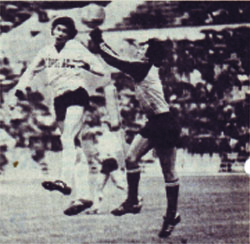
Switzerland – ranked 16th. There was new formula coming next season: the top league was going to be smaller, 12 teams instead of 16. Because of that, there was no direct promotion from Second Division, but promotion/relegation play-offs involving 8 teams – the top 4 in the Second Division and those taking 11-14th places in the top league. The last 2 teams were directly relegated.
 FC Grenchen won the Second Division with 47 points, followed by FC Lugano with 42 points, FC Bulle – 3rd with 42 points, and ES Malley – 4th with 37 points.
Relatively unknown clubs on top, but as a whole the second level was made of similar clubs.
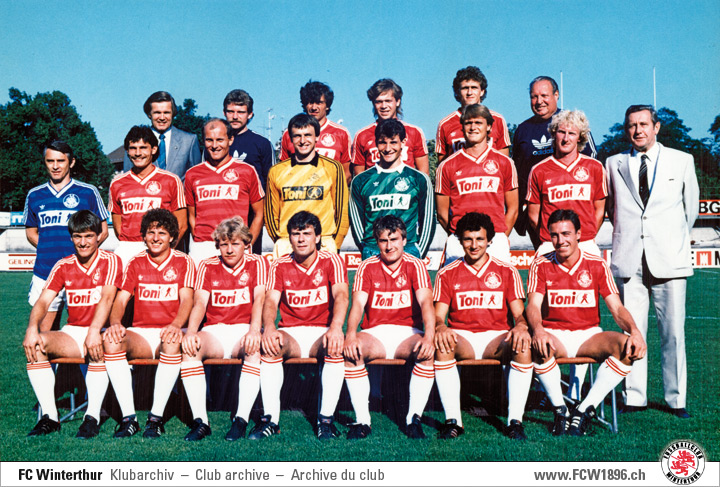 FC Winterthur was pretty much the best known club playing in the Second Division now and they were doing poorly: 10th with 25 points. Top row from left: Viktor Frank (President), Siegfried Thus, Rolf Müller, Vladimir Jakovljev, Ulrich Tschanz, Ernst Rief (Masseur).
Middle row: Hans Kodric (Coach), Roland Klein, Bruno Graf, Ota Danek, Marcel Rapp, Sepp Roth, Norbert Schneider, Dr. Bruno Peter (Arzt).
Sitting: Markus Schneider, Urs Egli, Wolfgang Vöge, André von Niederhäusern, Armin Bischofberger, Daniel Bernauer, Thomas Unseld.
Pretty much the reasons for reorganization of the championship was shown this way: smallish clubs in the second level and and not enough competitive teams in the top league. Anyhow, the top 4 went to the promotion/relegation play-offs, where they played against FC Wettingen, 14th with 19 points, FC Vevey-sports – 13th with 20 points, FC Basel – 12th with 24 points, and FC Aarau – 11th with 26 points.
The last two in the First Division went directly down: FC La Chaux-de-Fonds – 16th with 6 points and FC Locarno – 15th with 19 points. FC La Chaux-de-Fonds was another example of the need for change: they won only 1 match this season.
The 8 teams in the play-offs were combined by their final positions in the leagues in 2-legged direct eliminations. Only one of the second level teams went ahead in the first round – FC Lugano eliminated FC Vevey-sports 1-1 and 1-0. FC Bulle was pretty close to making a big sensation, but at the end FC Basel prevailed in penalty shoot-out – both legs ended 2-2. FC Aarau had no problem against ES Malley – 3-1 and 6-0, and FC Wettingen was without problems as well against FC Grenchen – 4-0 and 0-0. But the great supremacy of the top league clubs was mots evident in the final round: FC Basel destroyed FC Wettingen 7-0 and 1-2, and FC Aarau did the same to FC Lugano – 5-0 and 0-1.
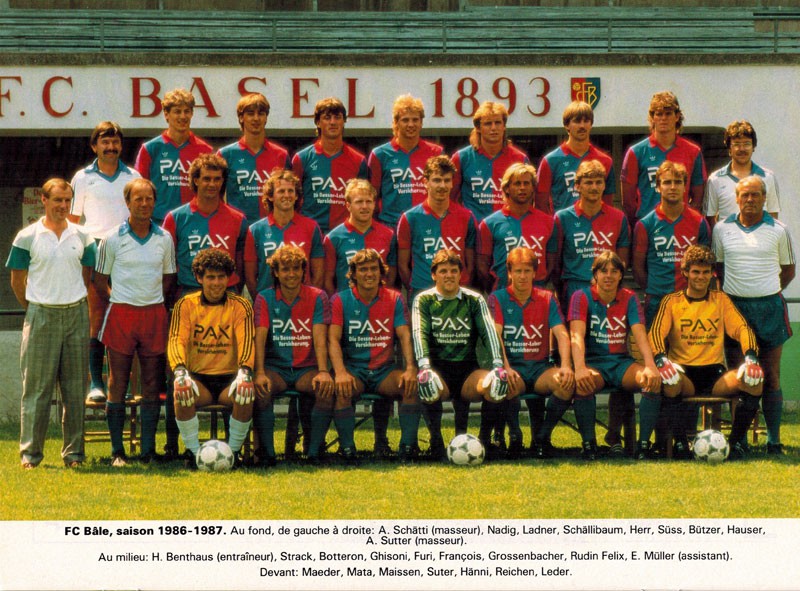 Very poor season for FC Basel – 12th in the championship and almost eliminated in the first round of the promotion/relegation play-offs, but at the end – relief.
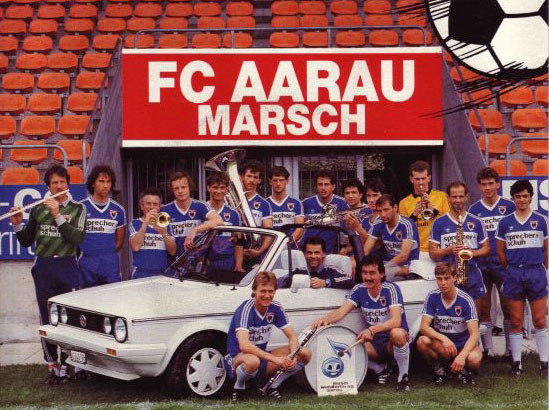 FC Aarau was slightly better than Basel in the regular season – 11th – but had no troubles in the promotion/relegation stage.
So, the best-placed top league clubs secured positions in the new reduced league of 1987-88.
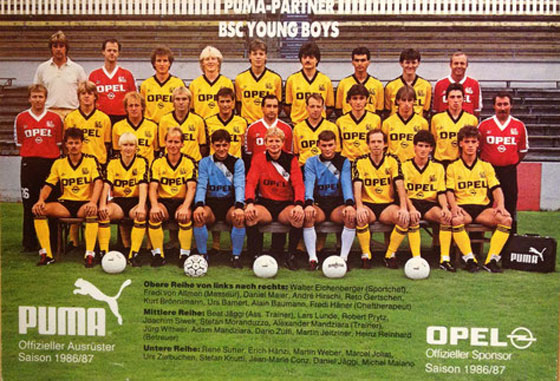 BSC Young Boys (Bern) avoided the risk of relegation – 10th with 28 points.
AC Bellinzona – 9th with 31 points.
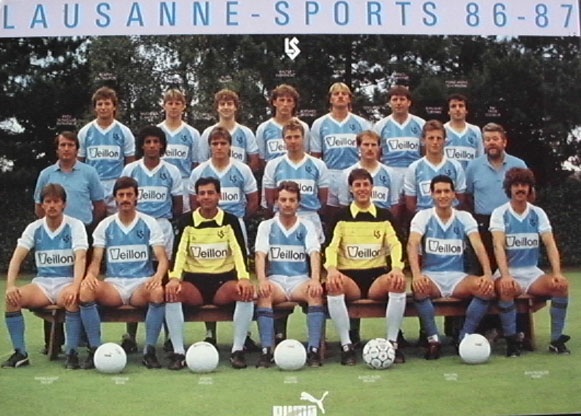
Lausanne Sports – 8th with 32 points.
FC St. Gallen – 7th with 34 points.
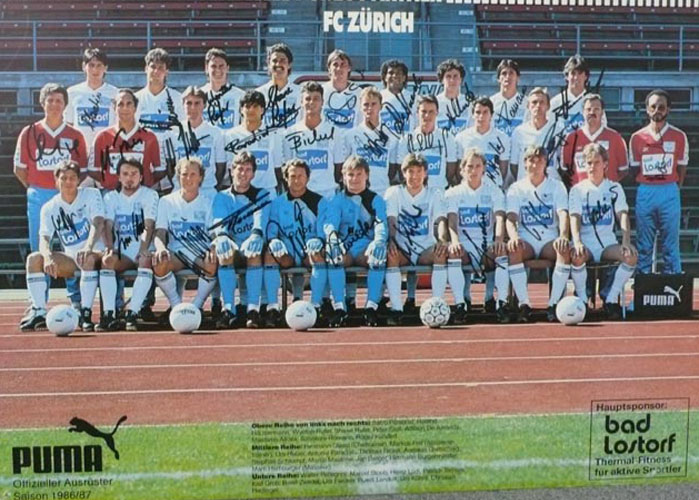 FC Zurich – 6th with 36 points.
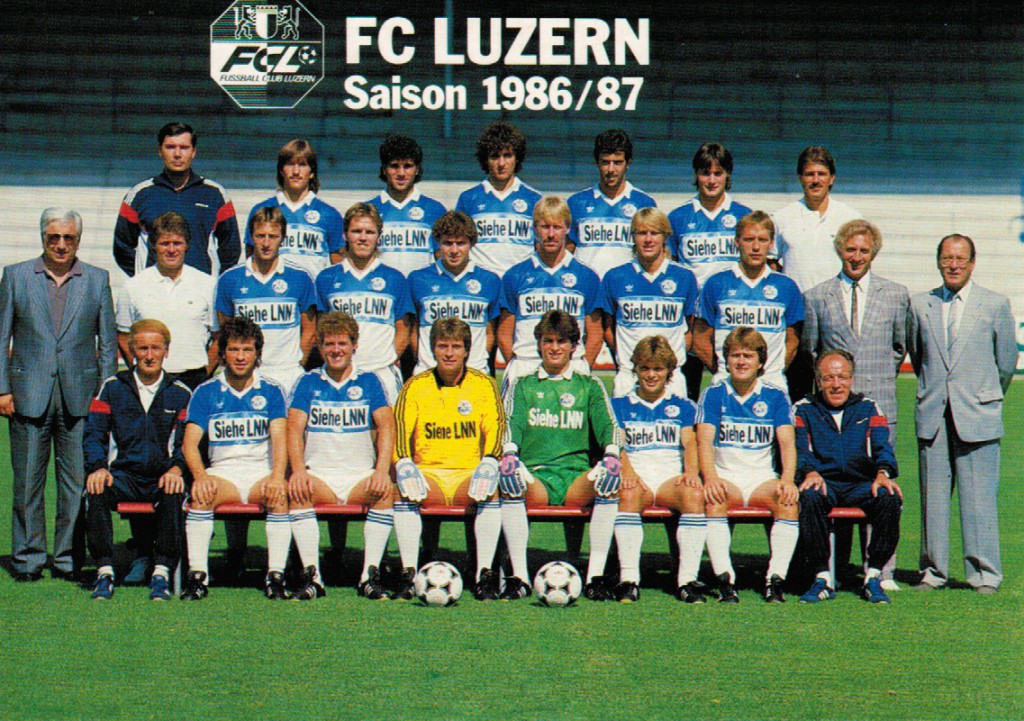 FC Luzern – 5th with 36 points.
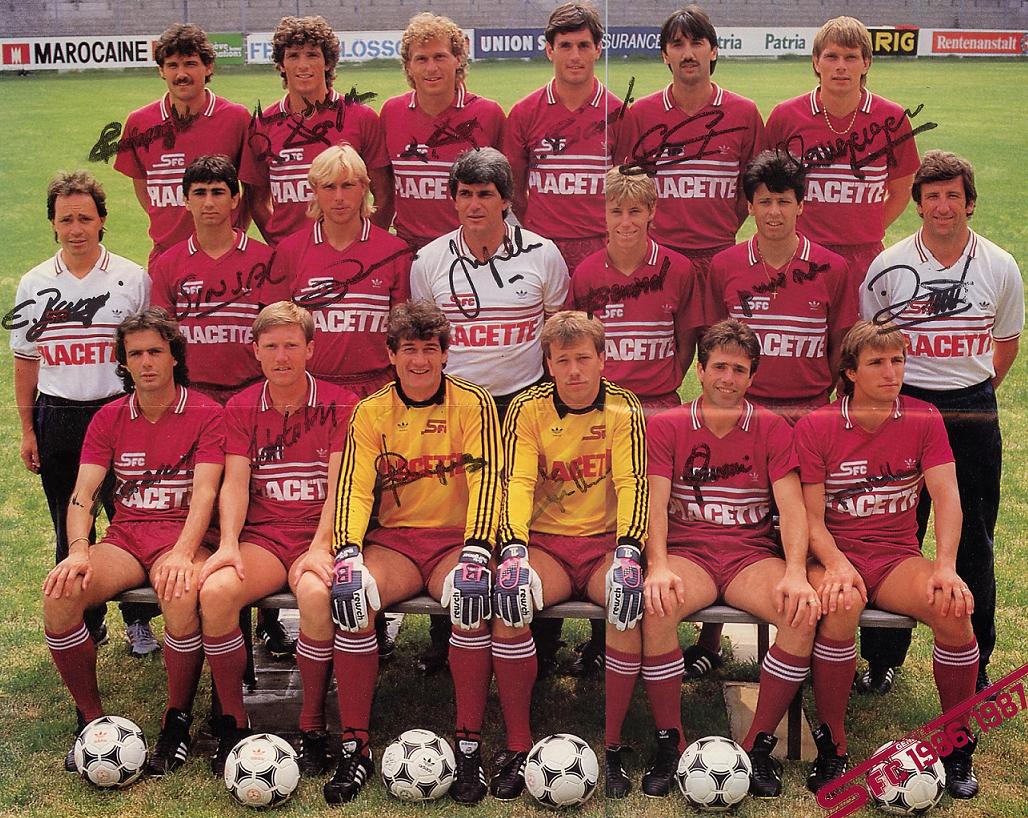 Servette (Geneve) – 4th with 36 points. Top row from left: Cacciapalia, Schnyder, Hasler, Bianchi, Genghini, Geiger
Middle row: Buri, Sinval, Kok, Guillou, Besnard, Favre, Trinchero
Sitting: Decastel, Erikson, Burgener, Mutter, Pavoni, Castella.
Not a bad squad on the surface. Yet, also an illustration of the need for reorganization – if one aging star (Genghini) is enough to keep a team at the top of the league, then the general level is quite low…
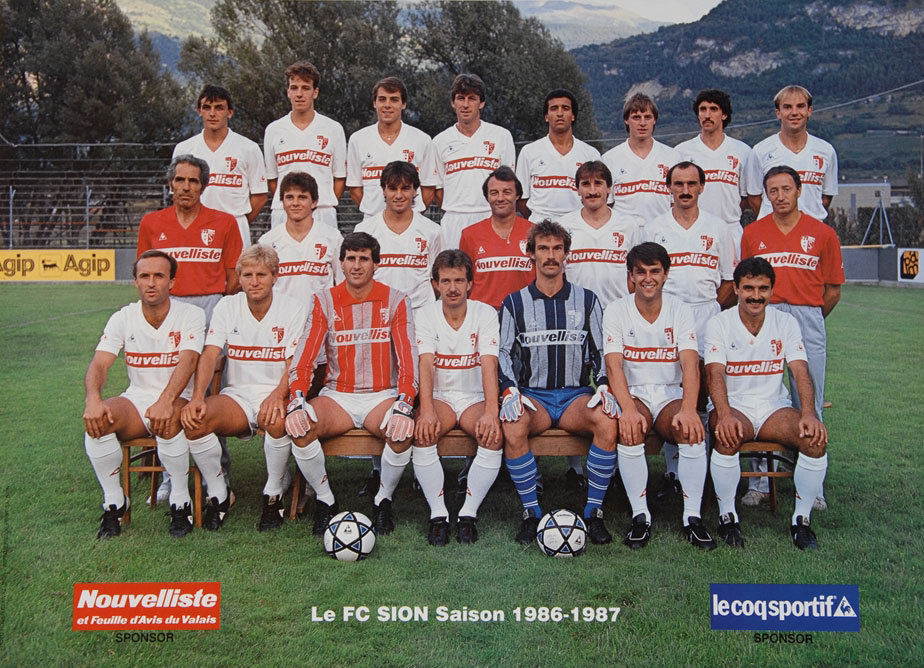 FC Sion – 3rd with 42 points. Great season for this club, usually well behind the best known clubs of the country.
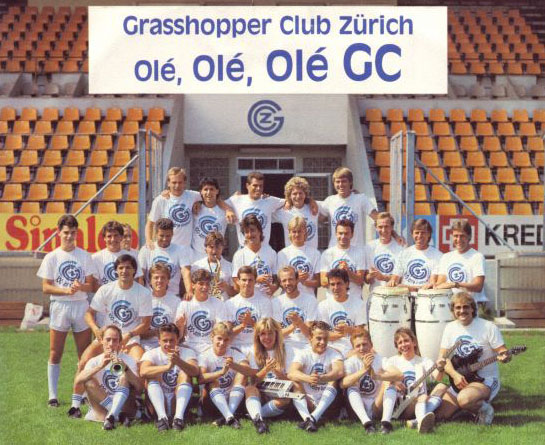 Grasshopper (Zurich) – 2nd with 43 points. They managed to get ahead of FC Sion, but were not real runners for the title.
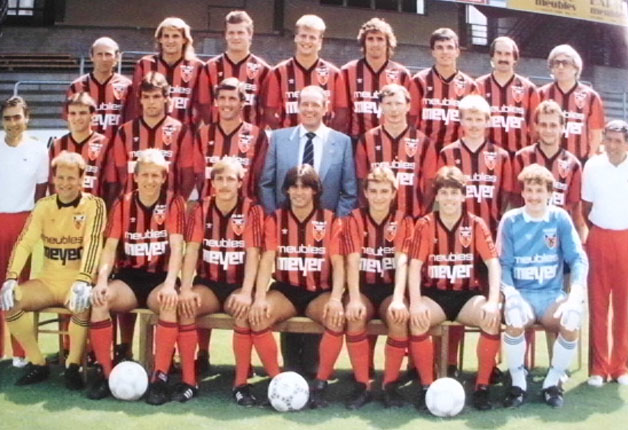
Thus, new and somewhat surprise winner – Xamax (Neuchatel). They won 21 games, tied 6, lost just 3. Scored 75 goals, allowed 27. 48 points at the end – 5 more than Grasshopper’s. The strong and confident season was not coming out of the blue – Xamax were having good period – but such a domination was surprising mostly in terms of the weakness of traditional leaders of Swiss football – Grasshopper, Zurich, Basel, Servette. Nevertheless, it was historic victory – the first title for Xamax. It was a testimony of the wonderful work done by their French coach Gilbert Gress. Two great names contributed on the field: the Irish striker Don Givens, whose peak was in the mid-1970s. Now he was 38 years old, but perhaps hos influence inspired his teammates to reach the top – he joined Xamax in 1981. And in 1985 arrived Uli Stielike directly from Real Madrid. Aging too and no longer the great world-class star, but at 33 he was still the top player of the Swiss team and his influence was strongly felt. Xamax was nice team, may be not very strong, but playing with great spirit and no one-time;wonder.
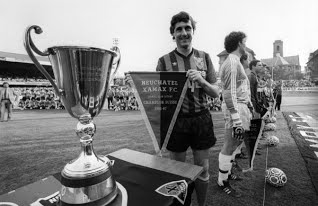 Well deserved first title,
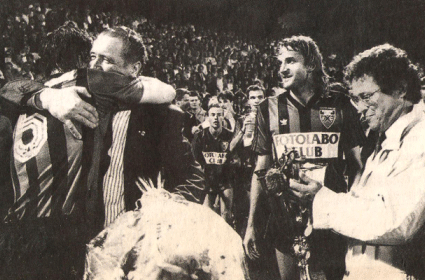 Great triumph and joy.
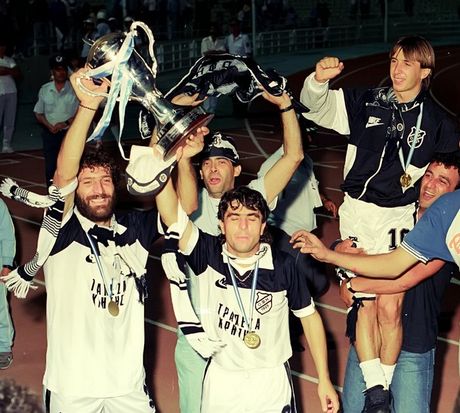 OFI triumphed with the Cup!
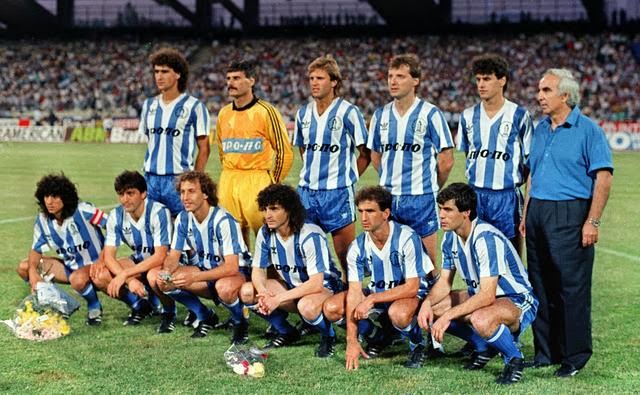 Iraklis was unable to win a second trophy and it was too bad, because this was pretty much the last chance of the great and quite unlucky Vassilis Hadzipanagis to win: he was already 33-years old and age was showing: he was unable to finish the final and its extra-time, substituted in the 98th minute.
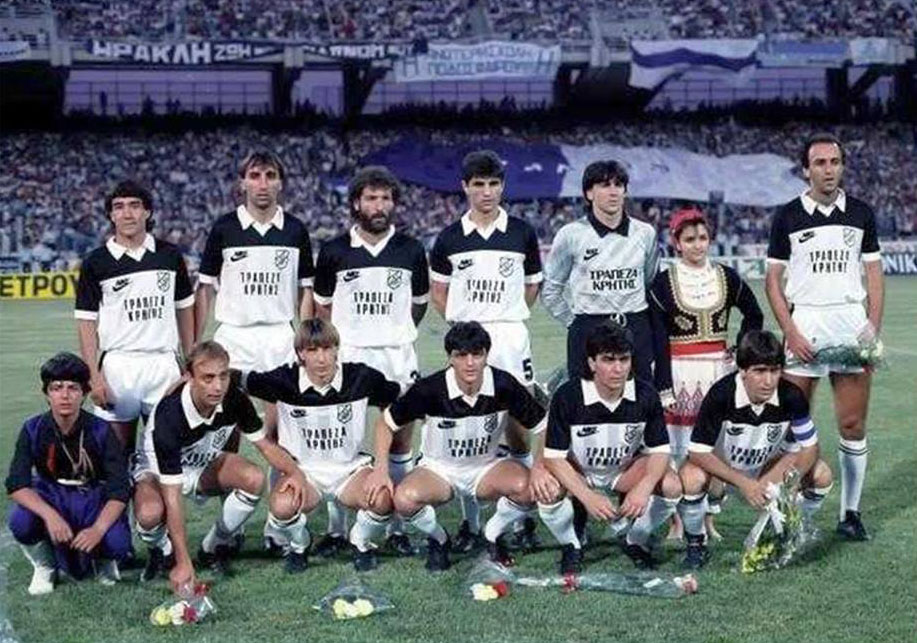 Very likely the whole island of Crete danced the night – OFI won its first trophy ever and they were the club of the island. Difficult and may be chancy victory, but well deserved too – OFI was steadily going up in the last 5-6 years, they managed to build solid squad and their Dutch coach Eugene (Gene) Gerards knew his job. One has to appreciate this team: OFI had no chance to get or keep big talent. They had to use somewhat secondary players – players which were not going to attract the attention and the appetite of the big clubs from Athens, Piraeus, and Thessaloniki. And that applied to imports too – so they got little known Chilean midfielder and that was all. Even the coach was not famous… The risks were real anyway – Gerards was snatched by bigger club right after the Cup victory. But it was fantastic moment, the best ever season of OFI.
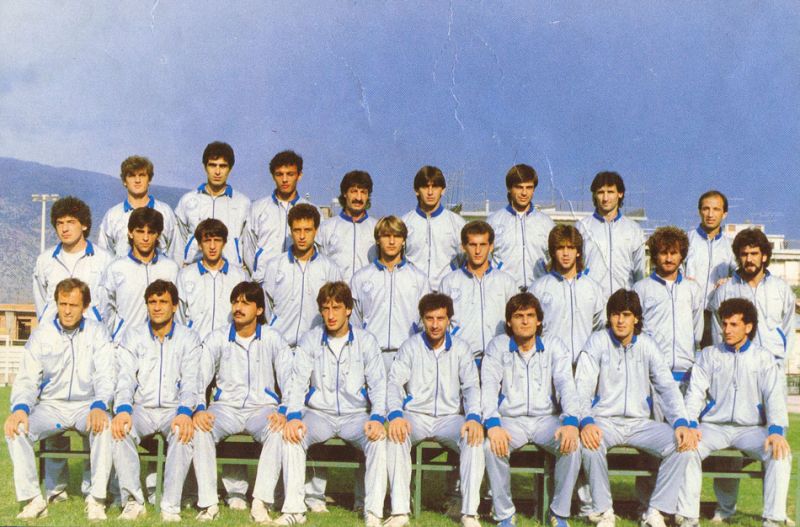 PAS Giannina was last with 11 points and relegated.
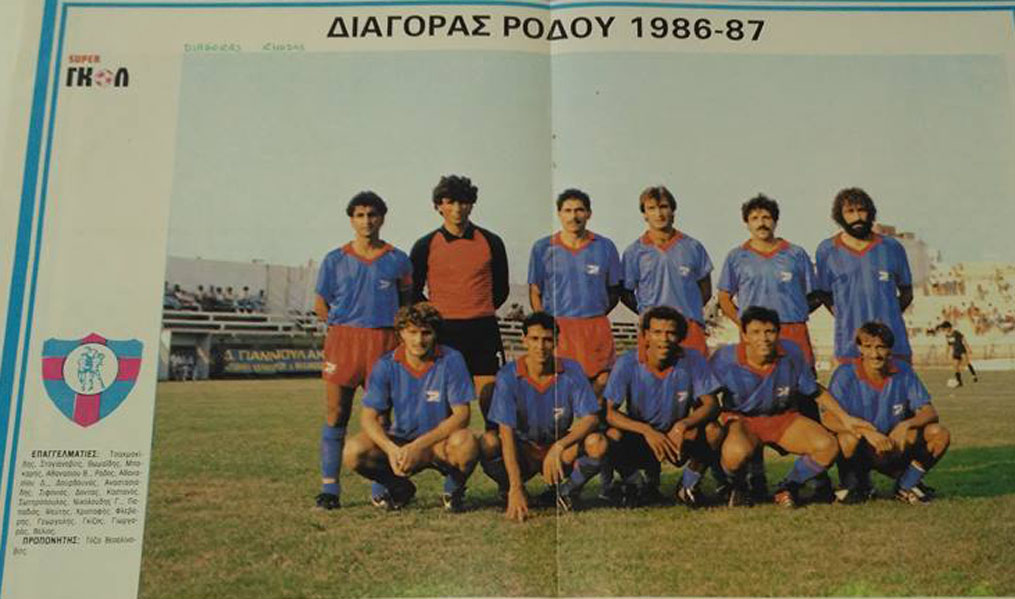 Diagoras (Rodos) survived – 13th with 16 points.
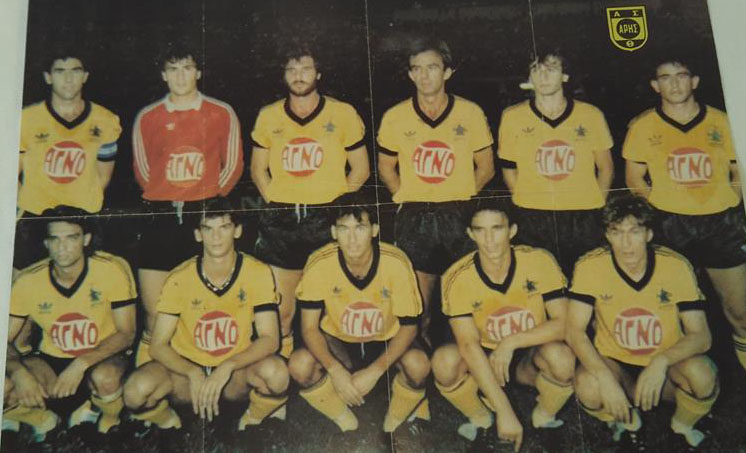 Aris (Thessaloniki) – 11th with 18 points.
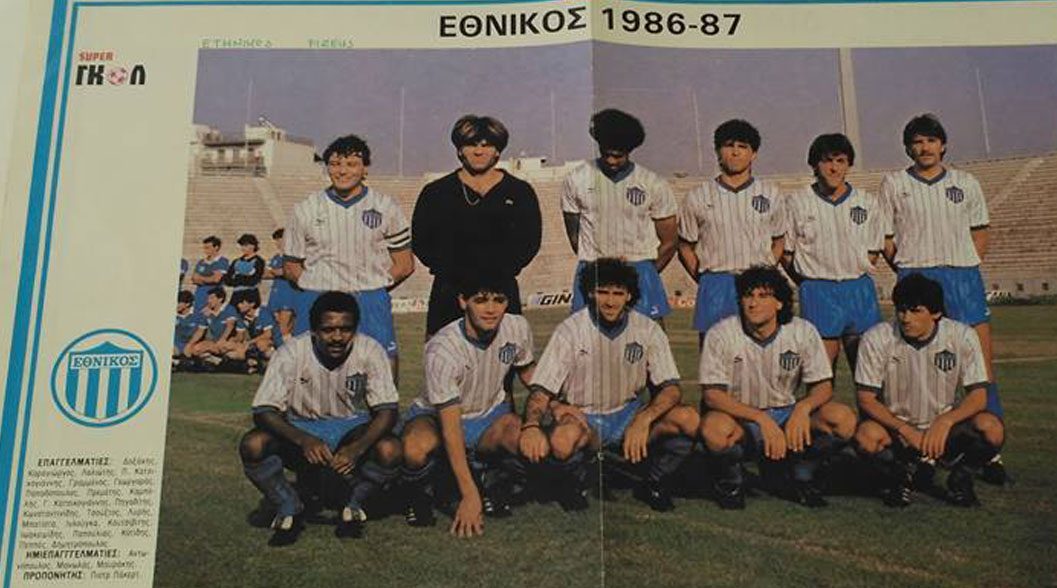 Ethnikos (Piraeus) – 10th with 18 points.
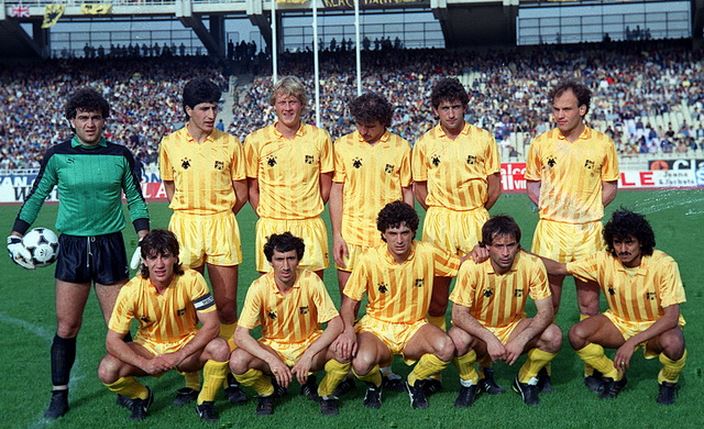 AEK (Athens) – 7th with 19 points.
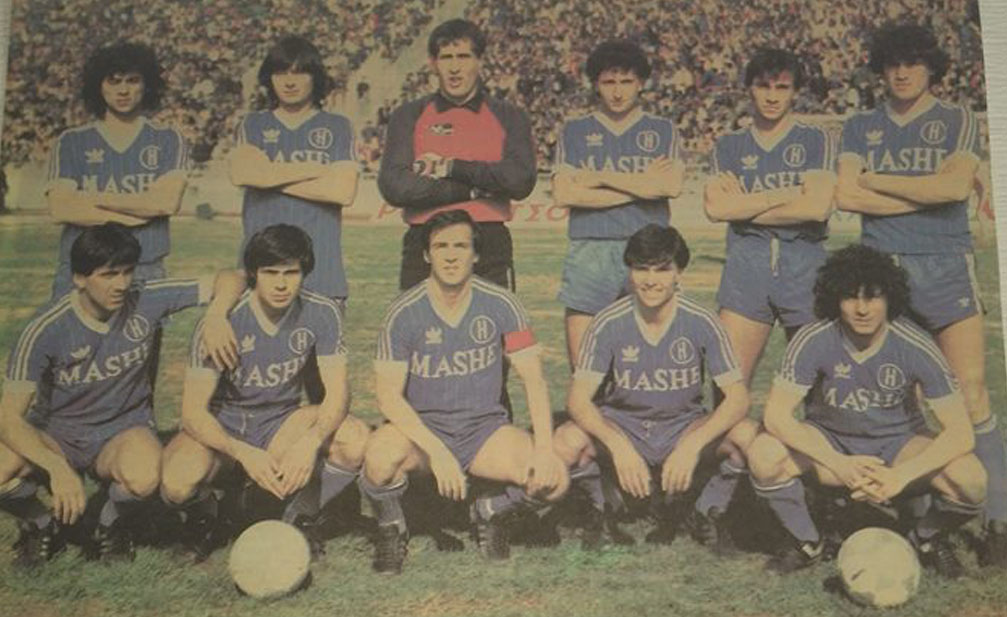 Iraklis (Thessaloniki) – 6th with 25 points. The picture may be from this season – just may be.
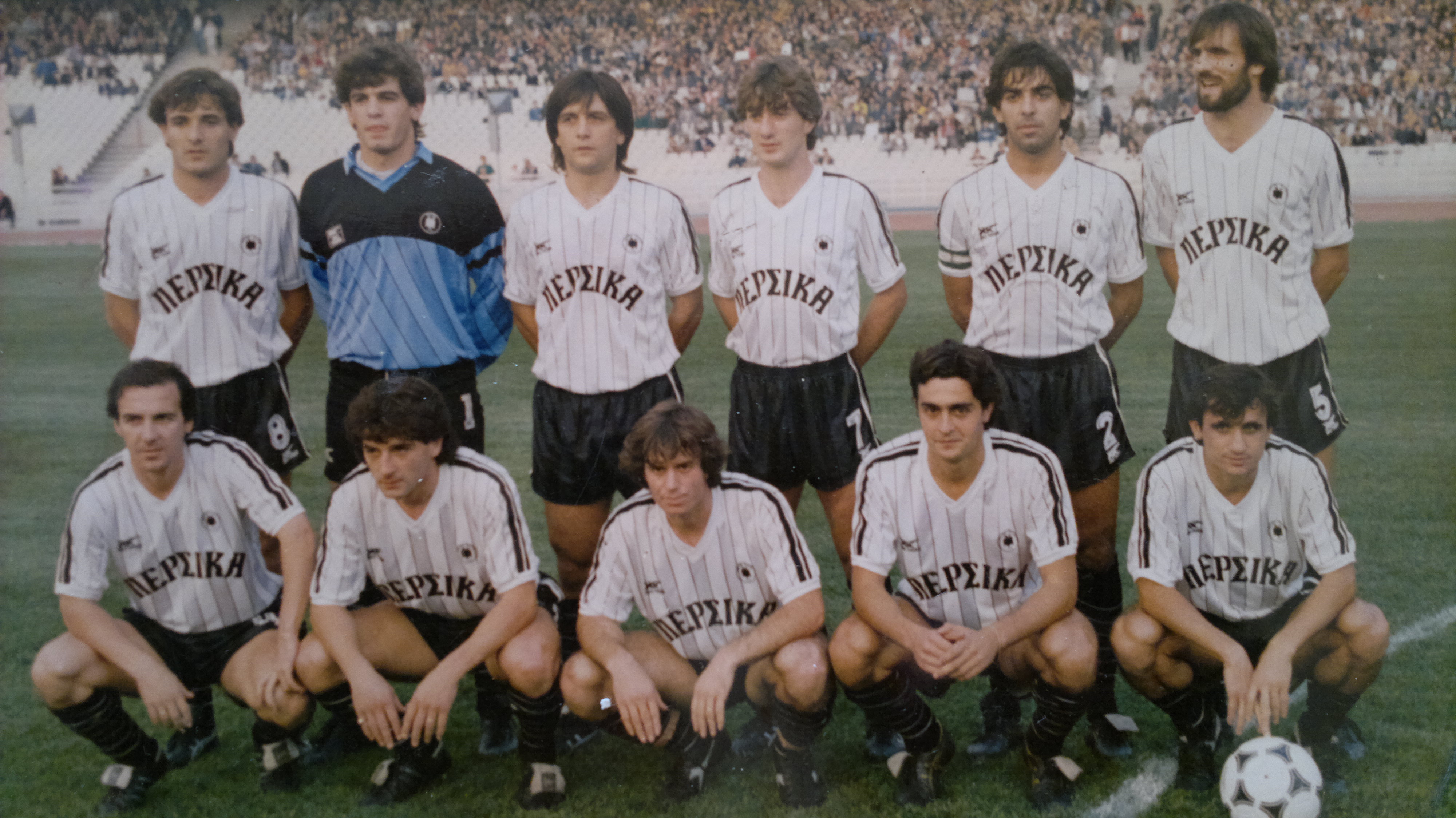 PAOK (Thessaloniki) – 5th with 29 points.
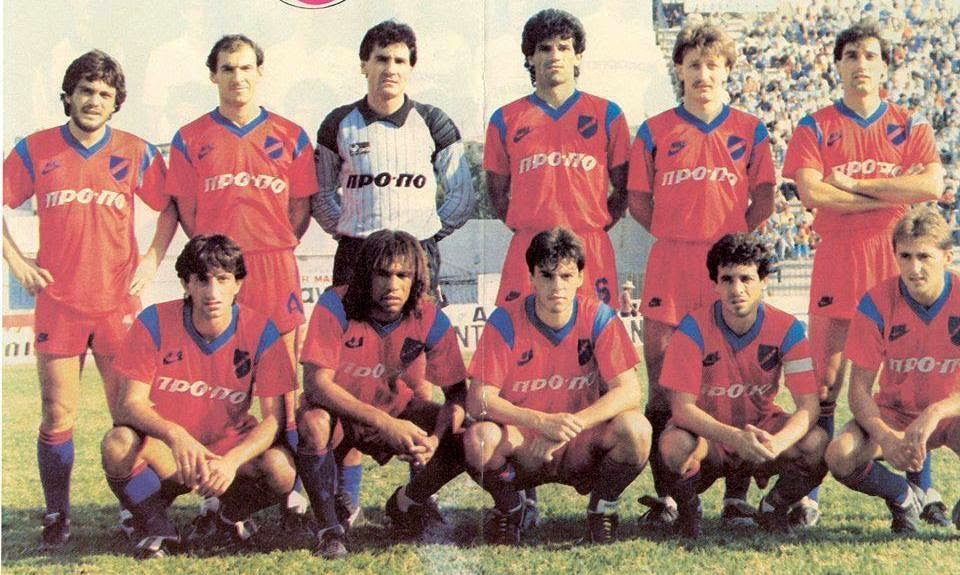 Panionios (Athens) – 4th with 33 points. Decided not to go on strike and thus secure UEFA Cup spot – which was unlikely, if there was no strike. If Panionios joined the strike – no such spot either, for after point-deduction they would have been behind PAOK. Call it greed? Well, sportsmanship is not the word…
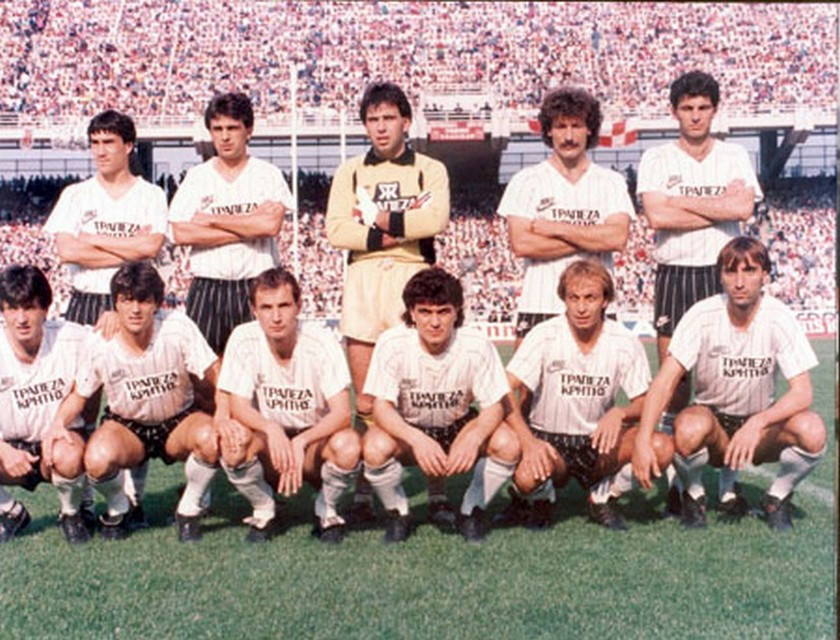 OFI (Crete) – 3rd with 38 points. Their best season ever. Did not go on strike and thus maintained bronze medal position – since Panionios refused to go on strike, if OFI did, they would have ended behind Panionios and without medals.
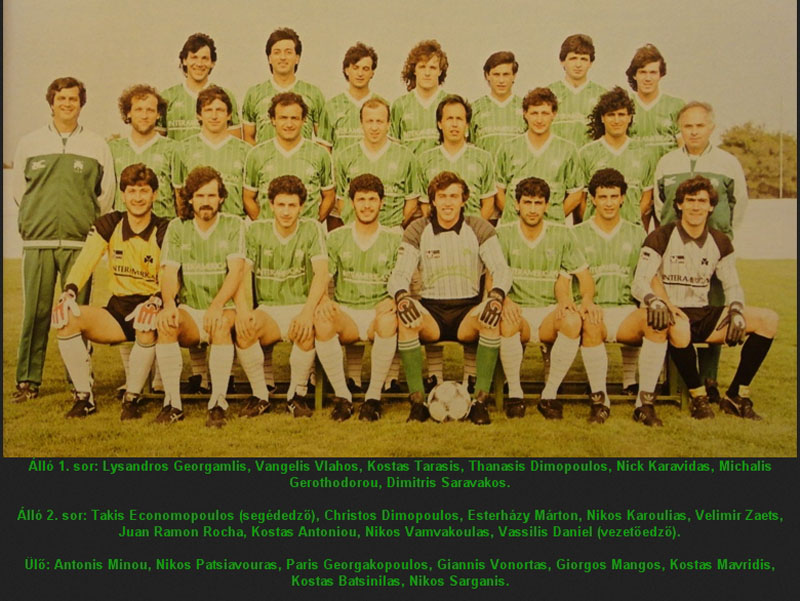 Panathinaikos – 2nd with 39 points. Not going on strike was decided perhaps in order to keep second position, but in any case this season was disappointment: they were far, far behind the arch-rivals.
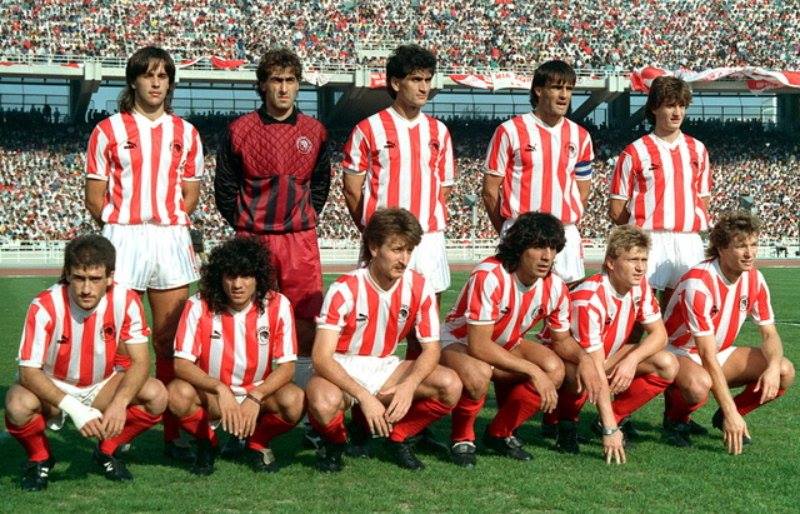 Olympiakos (Piraeus) dominated the championship and won it with massive 10-point lead. They won 22 games, tied 5, lost 3, amassing 49 points. Scored 54 goals, allowed 24. True, three wins were just awarded, for the opponents were on strike, but the champions had no real rival this season. They too did not join the strike, but in the case it was not a matter of keeping position – perhaps they felt above such things like strikes.
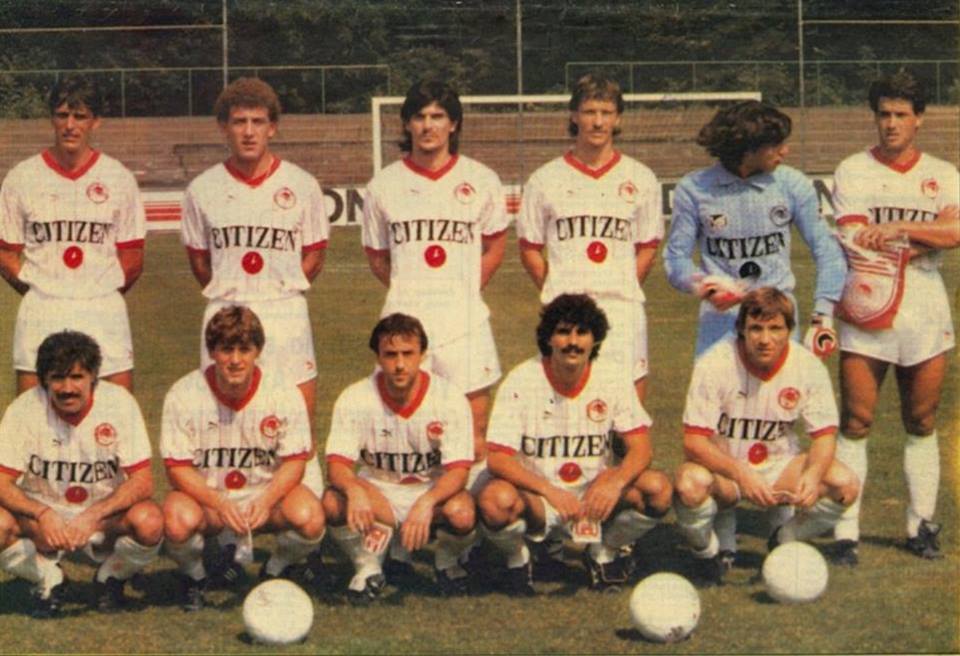 Just for the sake of variety, a picture of the familiar champions dressed in their reserve kit. Good work of arguably the best known Greek coach in the 1970s and 1980s – Alketas Panagoulias. The squad was of course made of Greek national team players, although less famous than some other squads of Olympiakos. Naturally, imports played major role – the 31-years old Yugoslavian striker Milos Sestic, the 26-years old Uruguayan midfielder Jorge Barrios, and just in case somebody was injured – the 22-years old Canadian striker Igor Vrablic, fresh from the 1986 World Cup finals. Compared to the foreigners Panathinaikos had (Velimir Zajec, Marton Esterhazy, and Juan Rocha), Olympiakos’ stars were somewhat less famous, but younger.
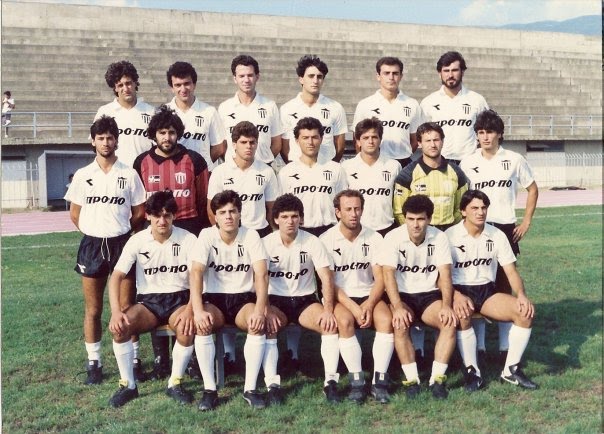 Kalamata and
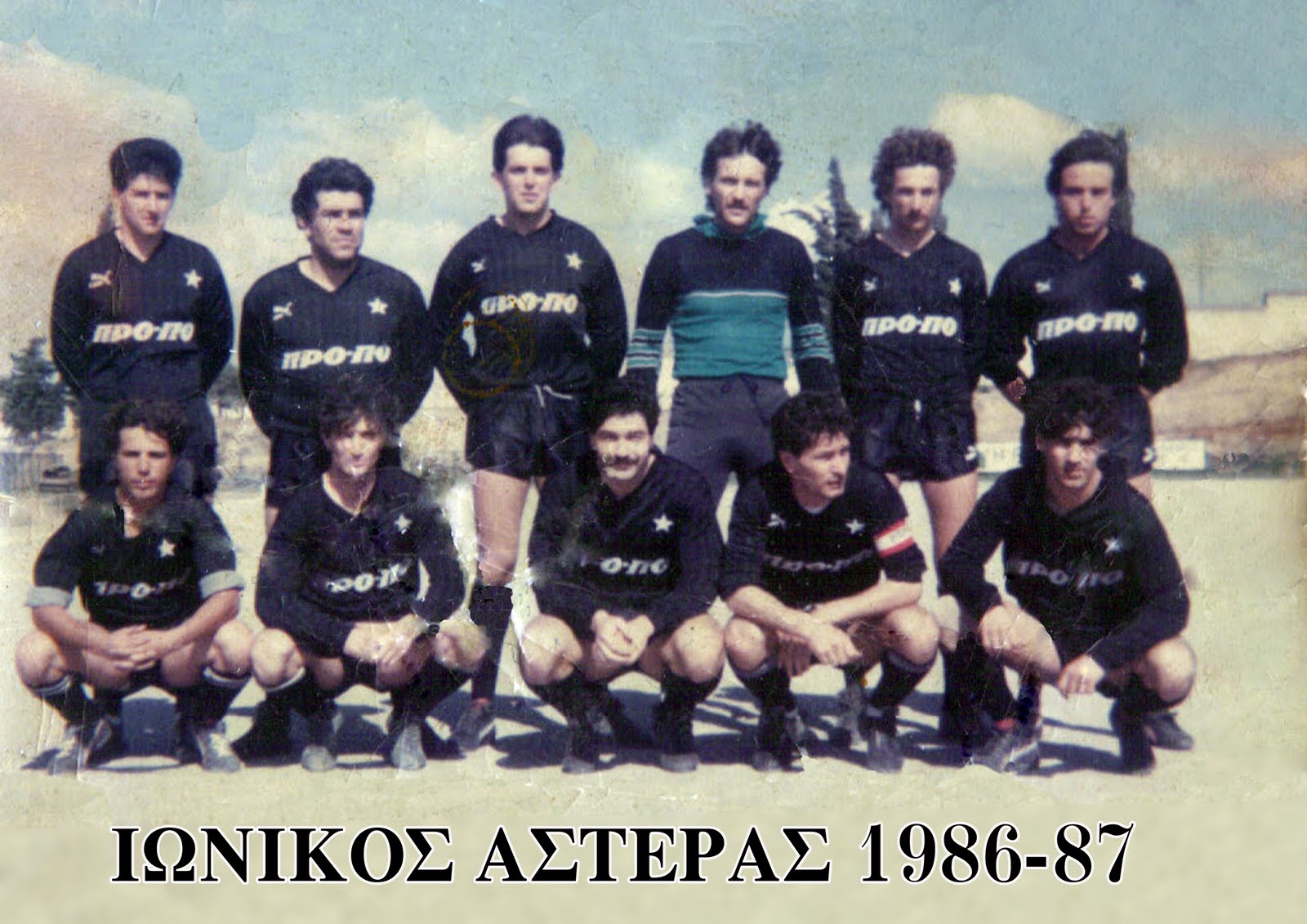 Ionikos Asteras played, out of sight and out of mind.
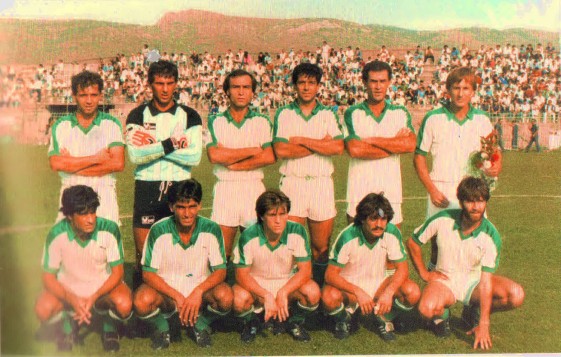 Makedonikos N. Efkarpia (Thessaloniki) ended 16th and relegated.
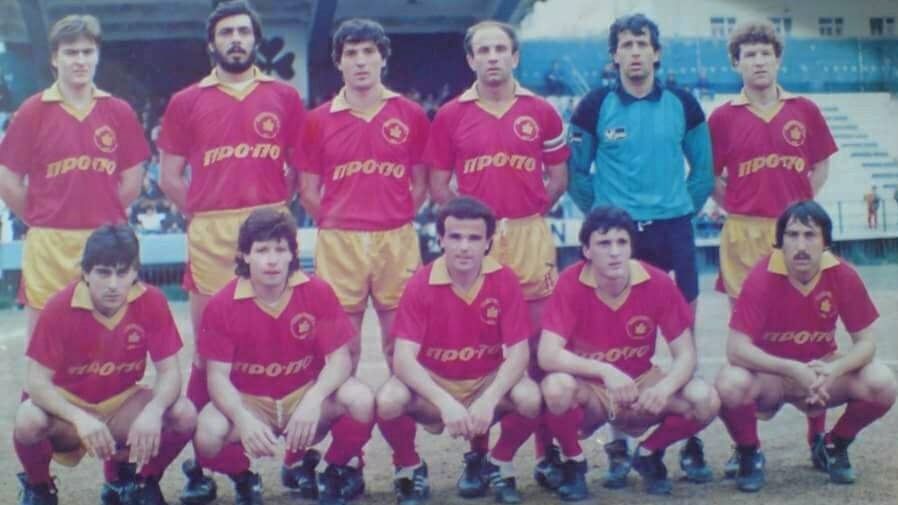 Athinaikos Vironas (Athens) finished 12th – 2 points better than relegation zone. Athens lost 2 teams – Egaleo (20th) and Atromitos (18th) – but the other 2 teams from the capital survived: Athinaikos, Acharnaikos (13th) and Charavgiagos (10th). None, however, was strong enough.
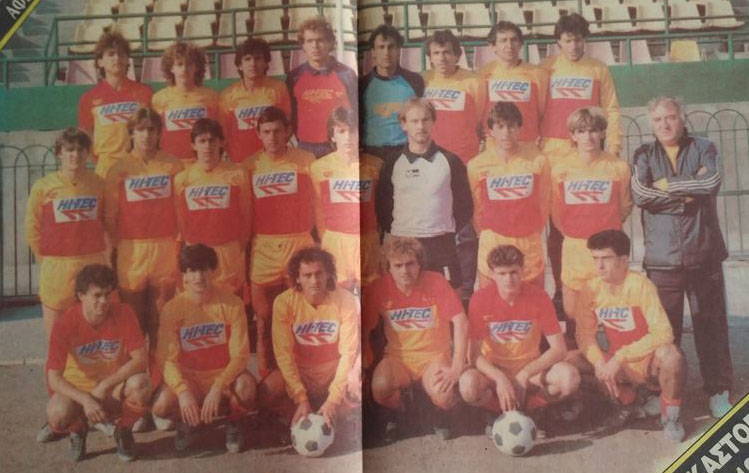 And Kastoria, which had their best time not long ago, was lowly now – 5th, but hardly trying to get promoted. They were not the only former top league member now playing second level football and the season’s leaders were such clubs:
 Levadiakos (Levadia) finsihed 3rd with 46 points.
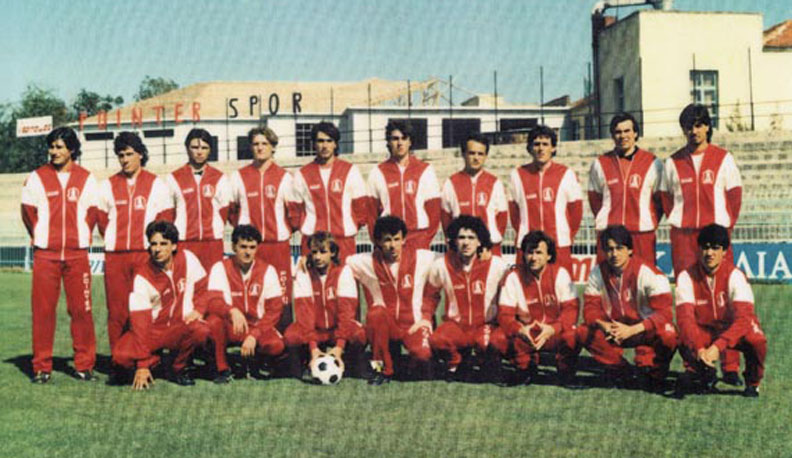 Panserraikos (Serres) was 2nd – they came ahead of Levadiakos on better goal-difference.
 Panachaiki (Patras) won the championship with 22 wins, 5 ties, 11 losses, 71-39 goal-difference and 49 points – 3 points ahead of Panserraikos and Levadiakos. Champions of Second Division was not bad at all, but promotion back to First Division was most important and the top three teams achieved that. All of them returning to top flight and naturally hoping to stay there.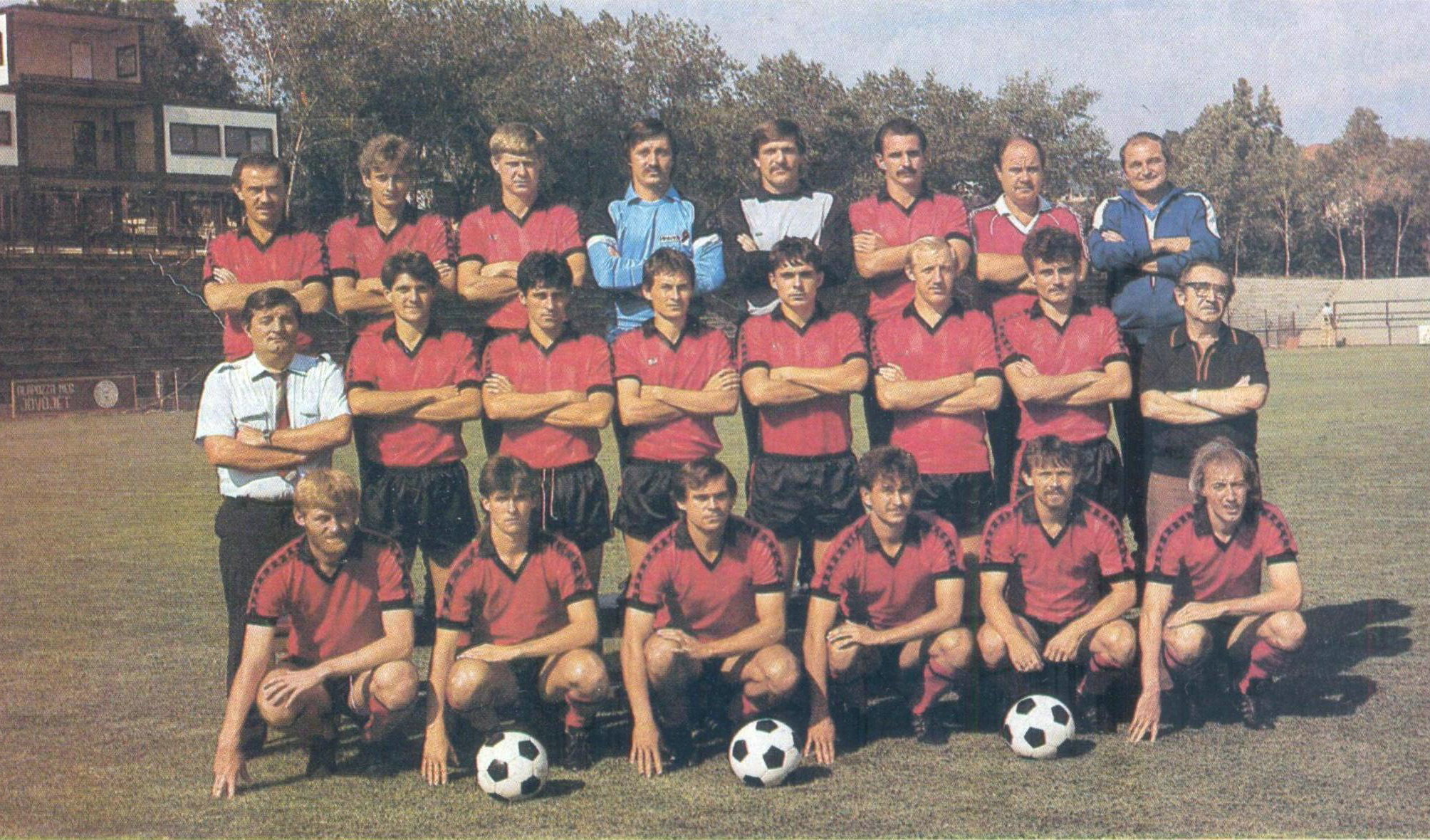
 One may be sorry for the underdog for they came very close to winning the Cup, but… nothing for Pecsi MSC – or Pecs.
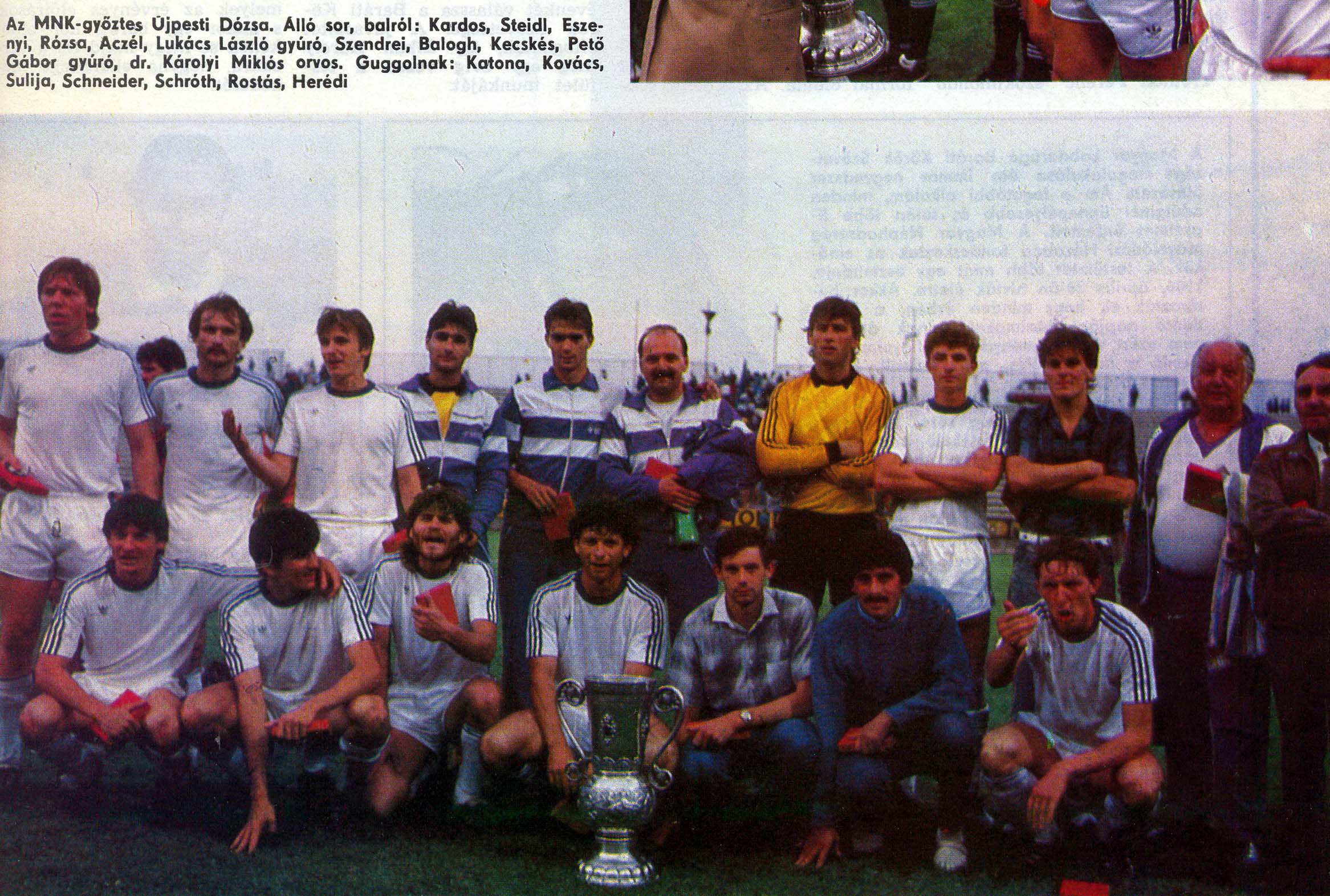 Ujpesti Dosza won its 6th Cup and the season was wrapped finely, but the revival was somewhat relative – this squad was inferior to the team of the first half of the 1970s by far.
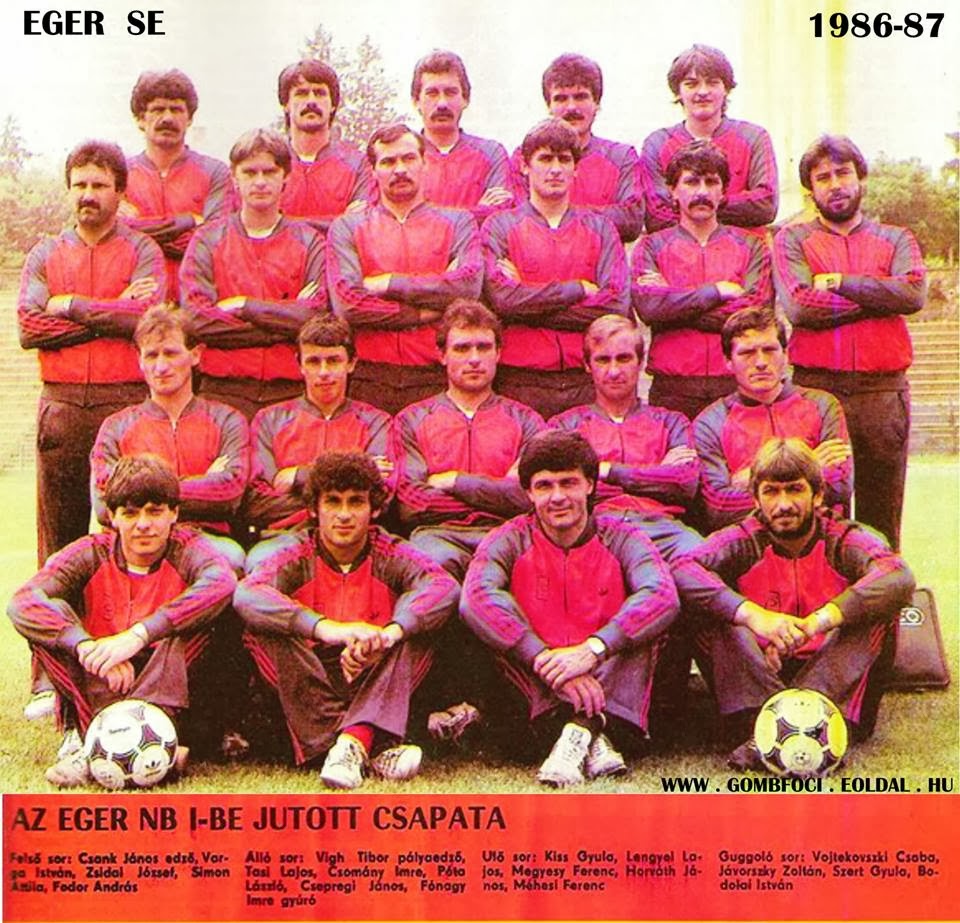 Eger SE finished last with 17 points. True, they were last only on worse goal-difference, but even if they had better record, they were still going down.
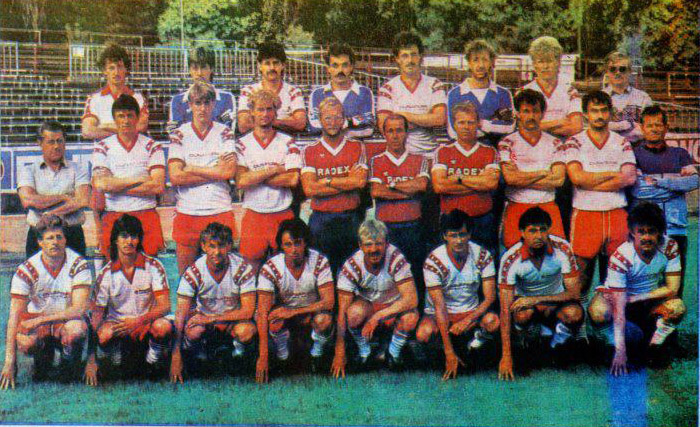 Dunaujvaros FC bested Eger, but they were also hopeless outsiders and relegated – 15th with 17 points.
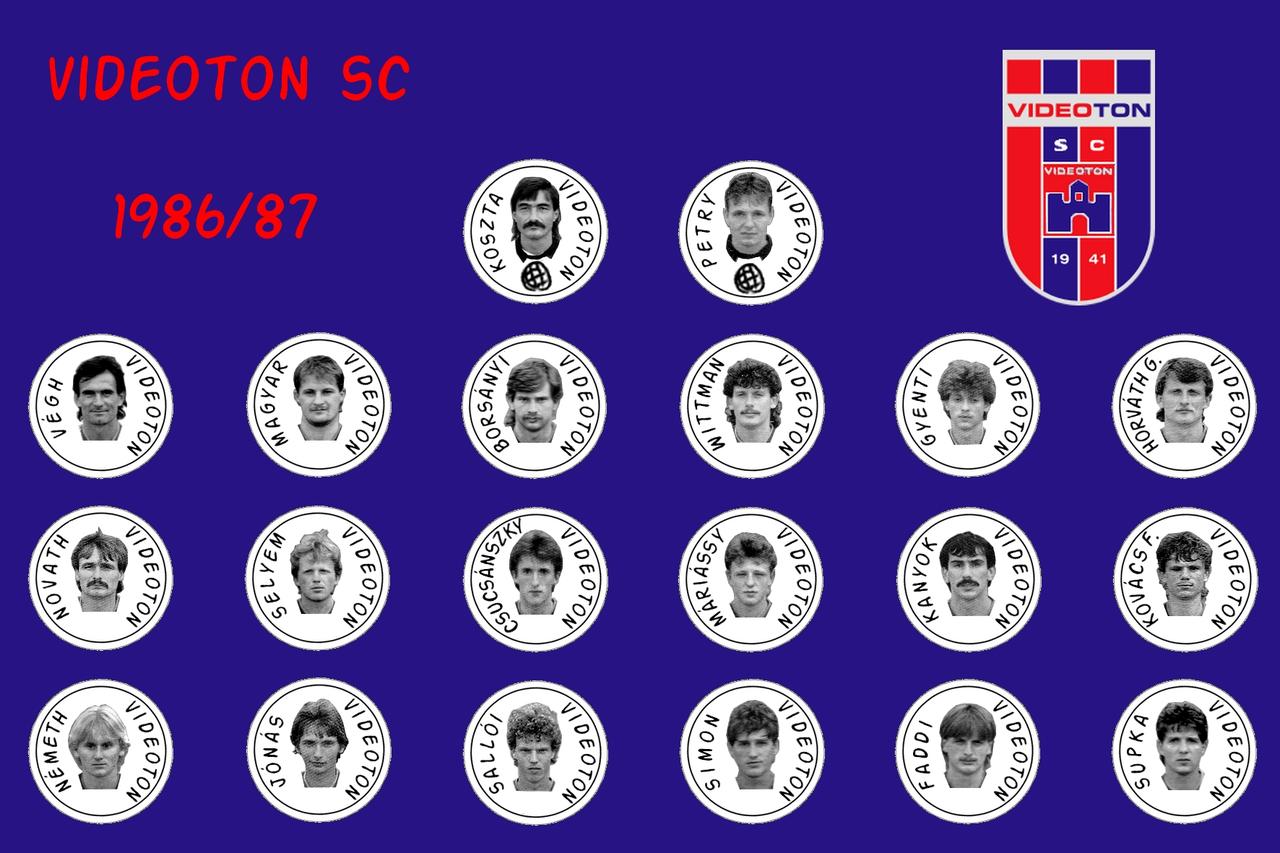 Videoton SC – 14th with 23 points. Not in danger of relegation, but what a slump… it was ‘only yesterday’ when they played European final. Terrible decline.
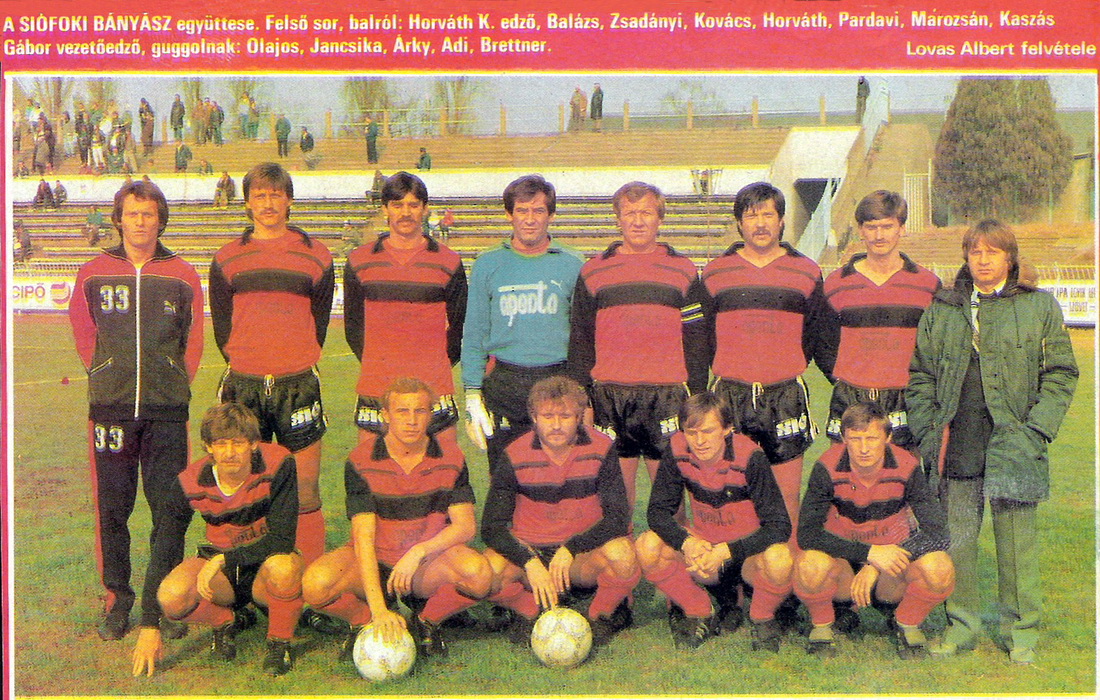 Siofoki Banyasz SE – 13th with 27 points. Staying in the league was their usual aim, so the season ended well enough.
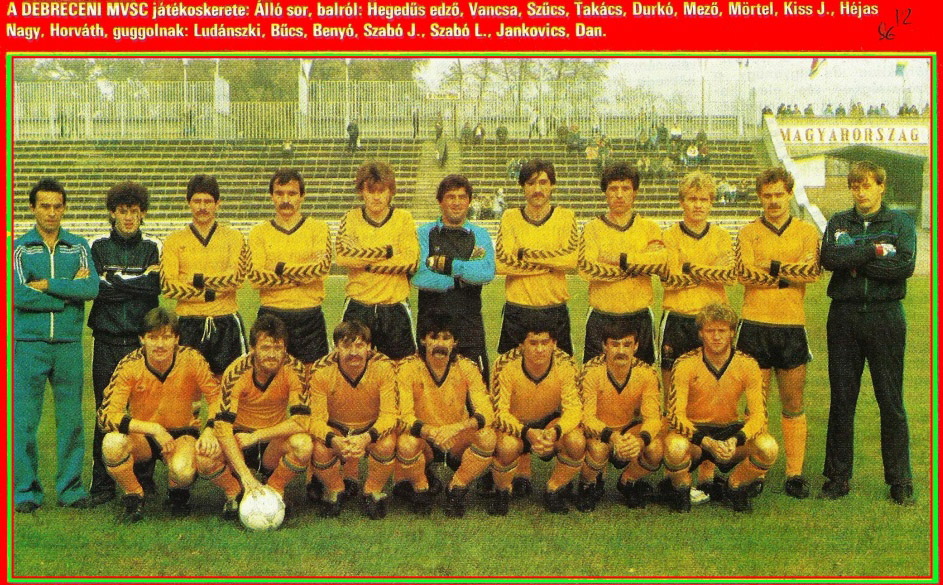 Debreceni MVSC – 12th with 28 points.
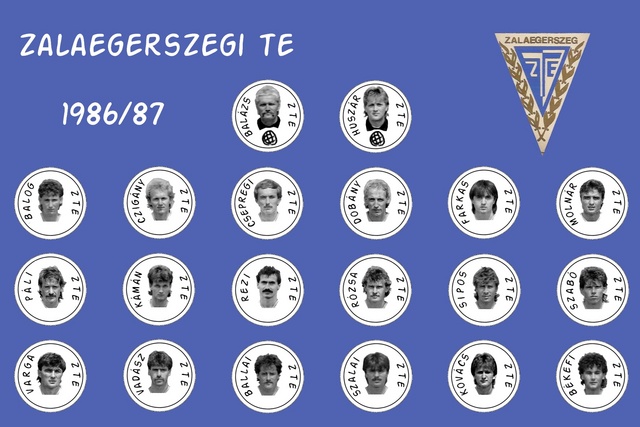 Zalaegerszegi TE – 11th with 29 points.
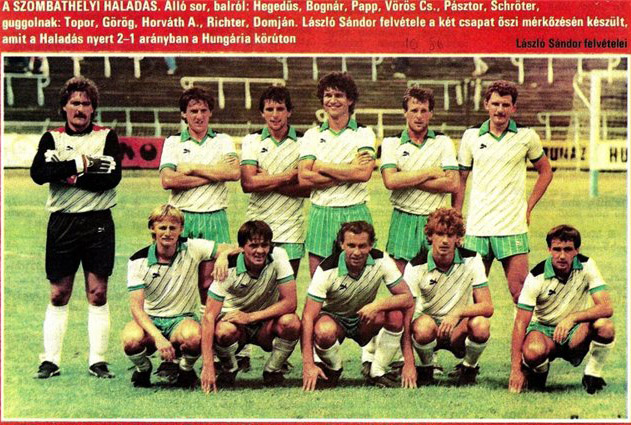 Szombathelyi Haladas – 9th with 30 points. The usual.
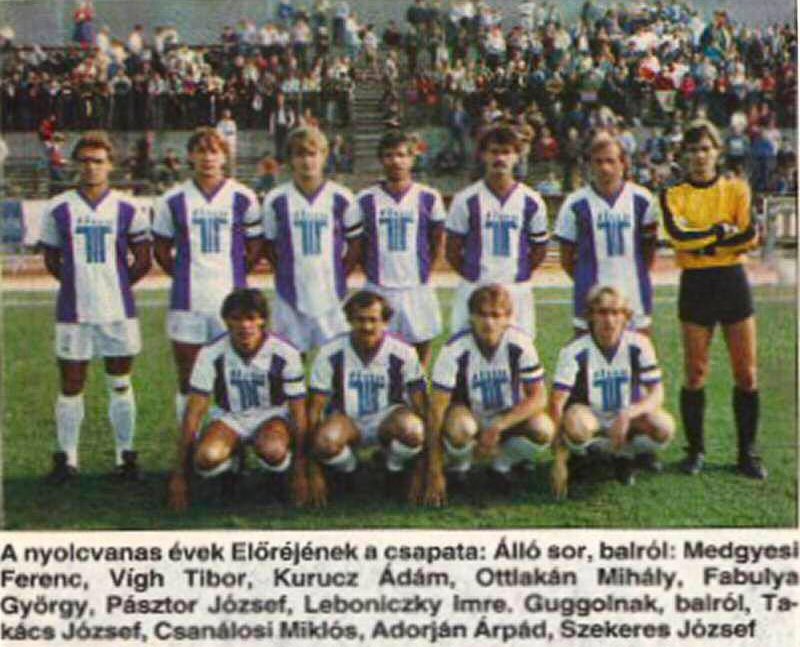 Bekescsabai Elore Spartacus – 8th with 31 points.
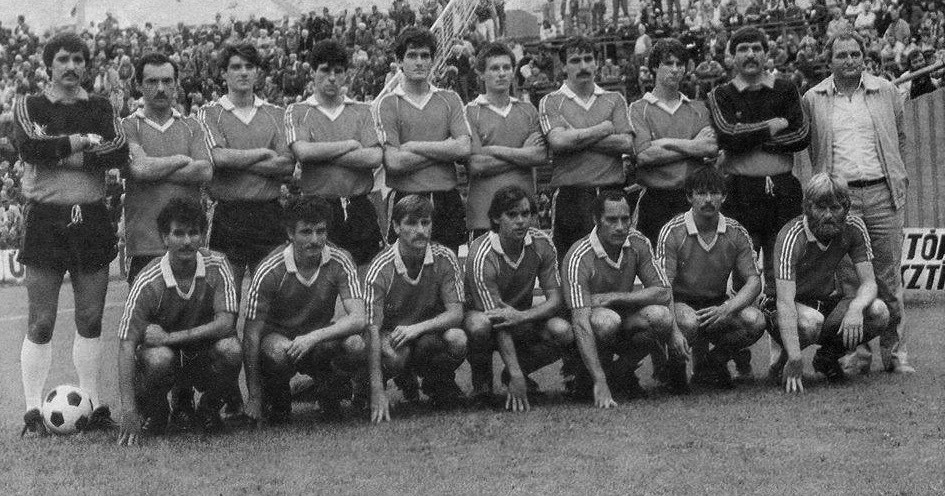 Pecsi MSC – 7th with 31 points.
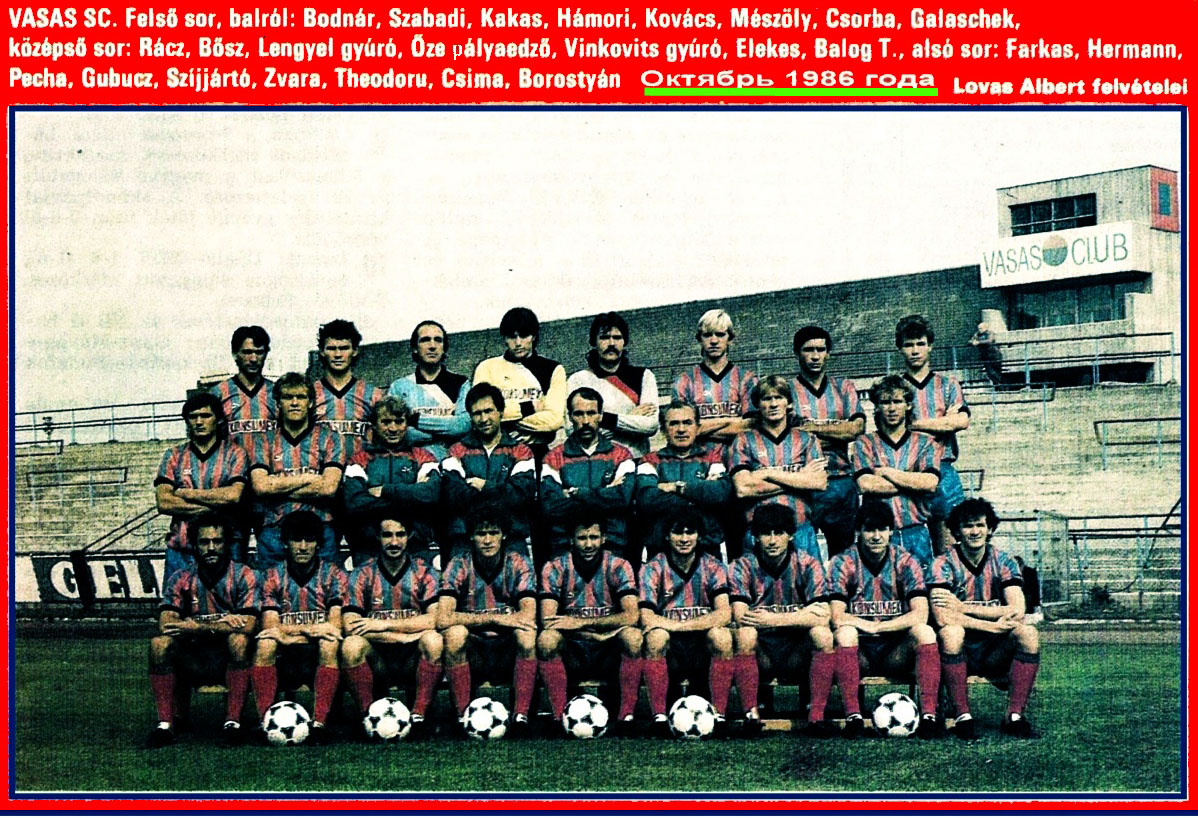 Vasas SC (Budapest) – 6th with 32 points.
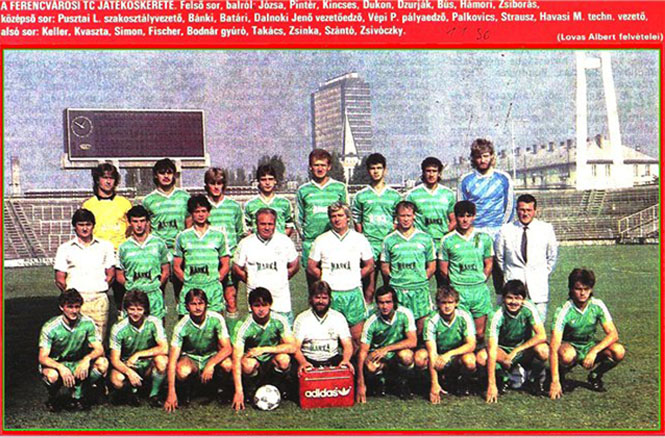 Ferencvaros – or Ferencvarosi TC (Budapest) – 5th with 33 points. Weak season, but not surprisingly so.
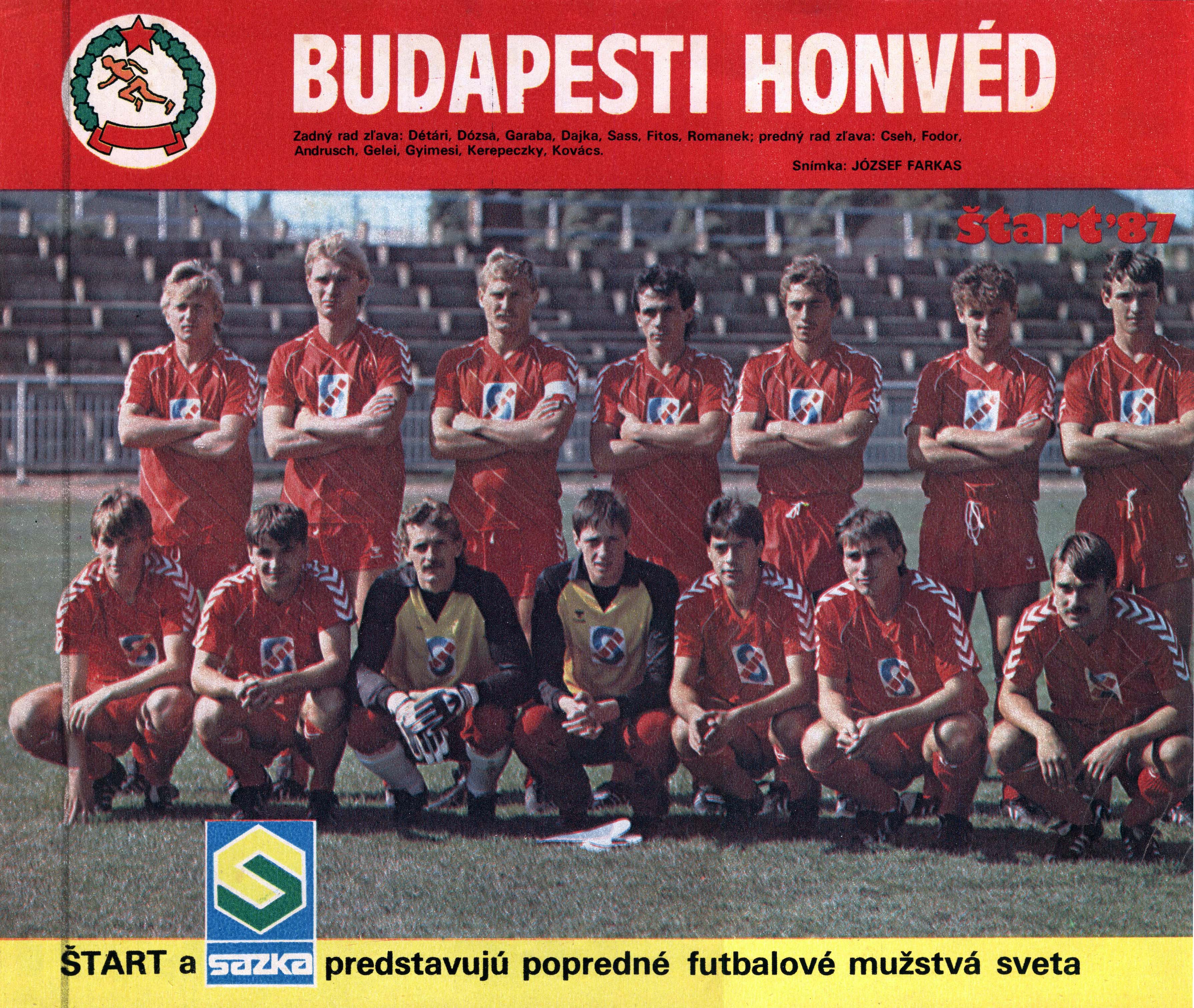 Honved – or Budapest Honved FC – was only 4th with 35 points. They lost bronze medals on worse goal-difference, but really it was a decline: they looked so firmly established as leaders just a year or two ago and now were entirely outside the race for the title.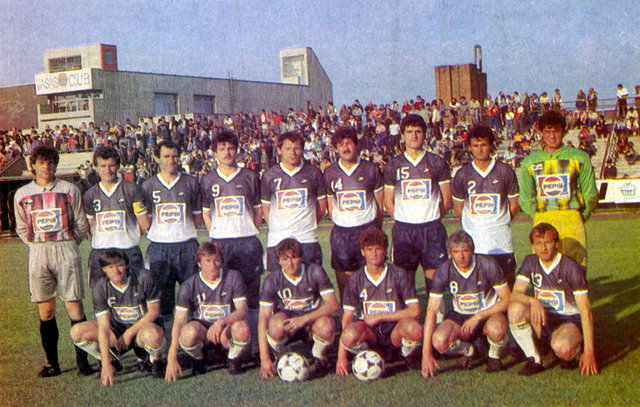
 Tatabanyai Banasz SC – 3rd with 35 points, beating Honved on goal-difference. Strong period for Tatabanya, which was mostly due to their ability to keep their few stars, particularly Kiprich – not an easy task for a provincial club and may be even more difficult at this time, when the big clubs did not have enough class and in the same time were busily selling players abroad. Of course, Tatabanya was not strong enough to run for the title.
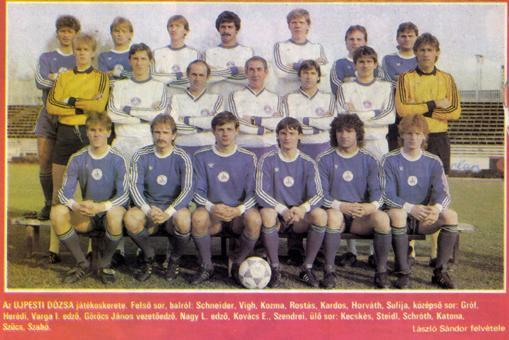 Eventually Ujpesti Dosza lost the race and finished 2nd with 40 points.
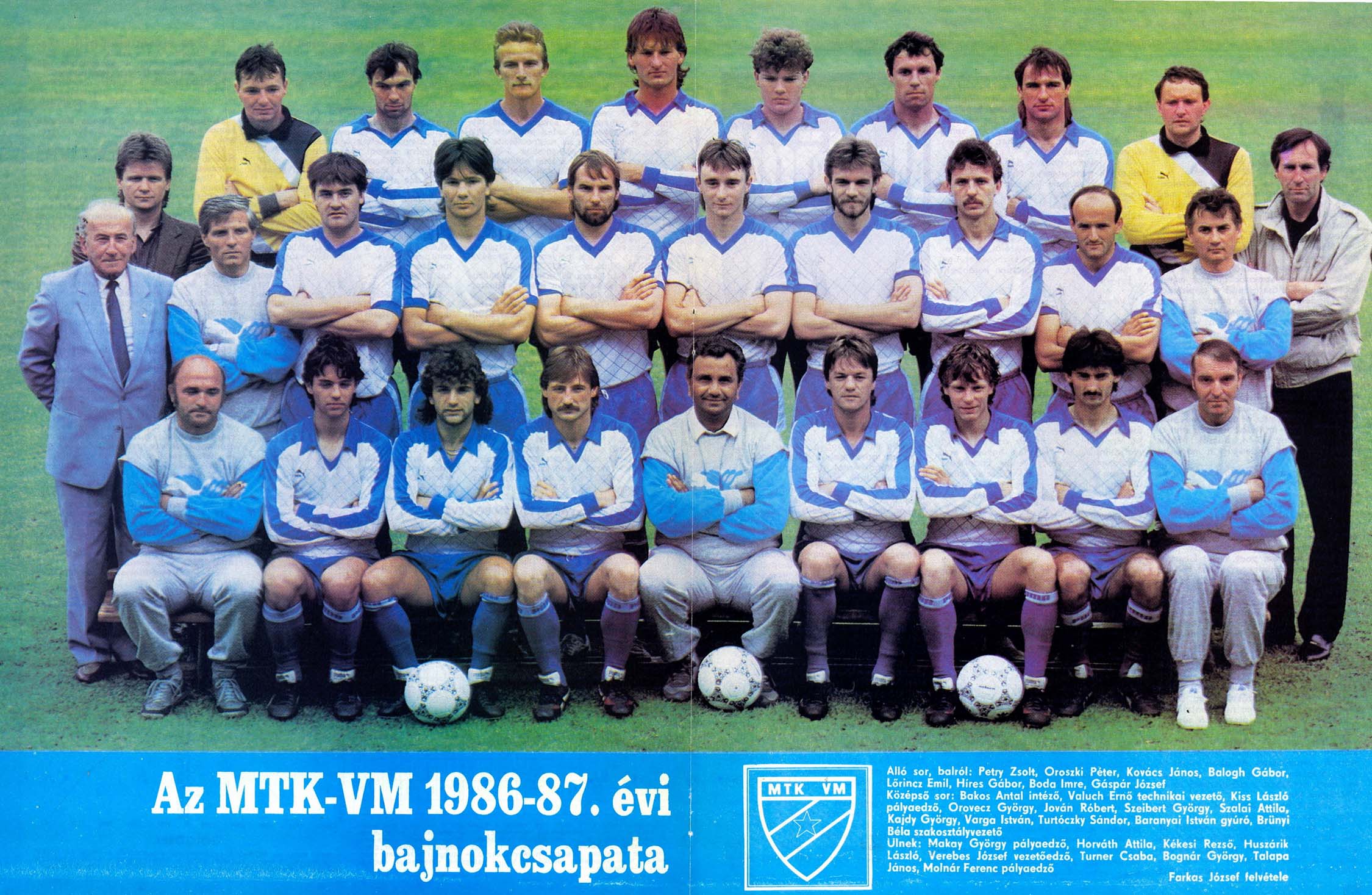 MTK Hungaria FC – or MTK-VM, or plainly MTK – the oldest Hungarian club won the championship with 43 points: 17 wins, 9 ties, 4 lost games. 52-24 goal-difference – the best scorers in the league. What a joy for the fans – this was the 19th title of their beloved club, but the title came after almost 30 years waiting – the last time MTK was champion in 1958! However, the victory seemed accidental – the team, solid as it was, was not great. The weakness of the other teams – Ujpesti Dosza included – helped MTK considerably. The new champions did not look like a team going to stay on top, but rather like one-time-wonder. And they were… had to wait another 10 years for the next title. But it was sweet, no matter the objective reality, to see the old club winning again.
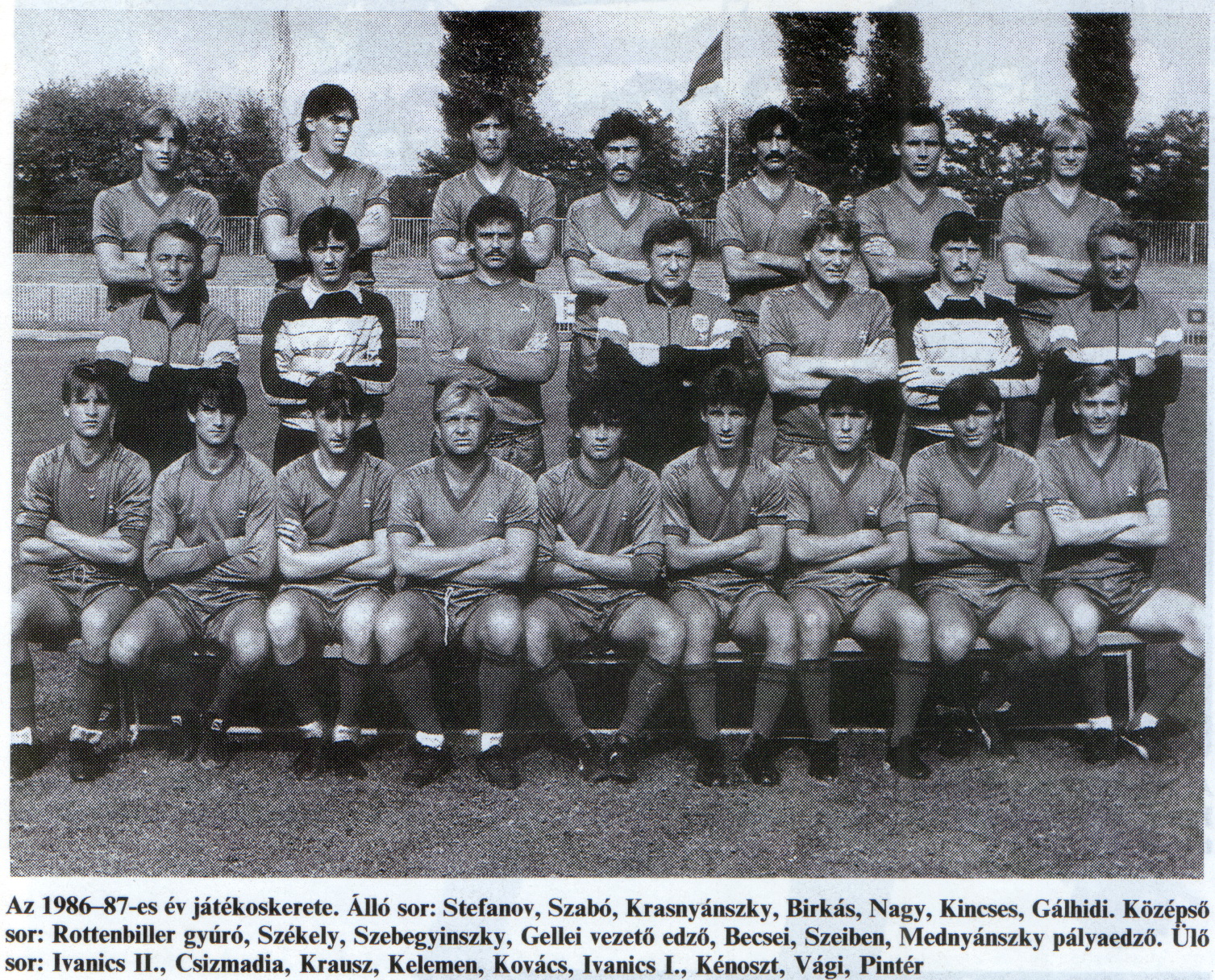 Csepel FC (Budapest) ended 4th with 46 points, but this was hardly a strong season. They lost 3rd place on goal-difference to even smaller neighbour – Volan SC (Budapest) – yet the battle for 3rd place was their best.
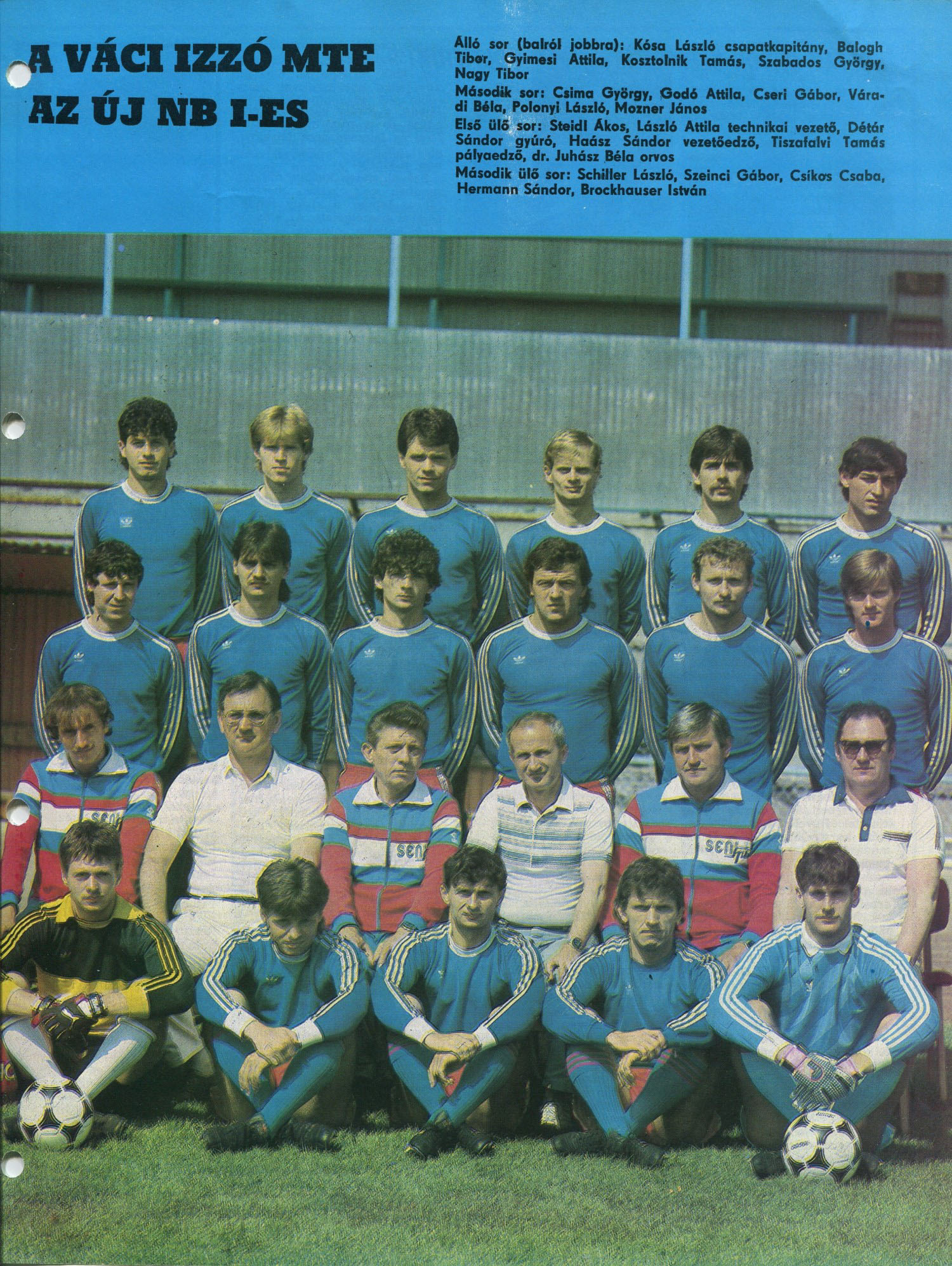 Vaci Izzo MTE from the small city of Vac, 20 km from Budapest, was comfortably ahead of the big city clubs – they fought for first place and lost it by a point, finishing with 51 points. But such a loss was not big deal – the team won promotion anyway and that mattered most.
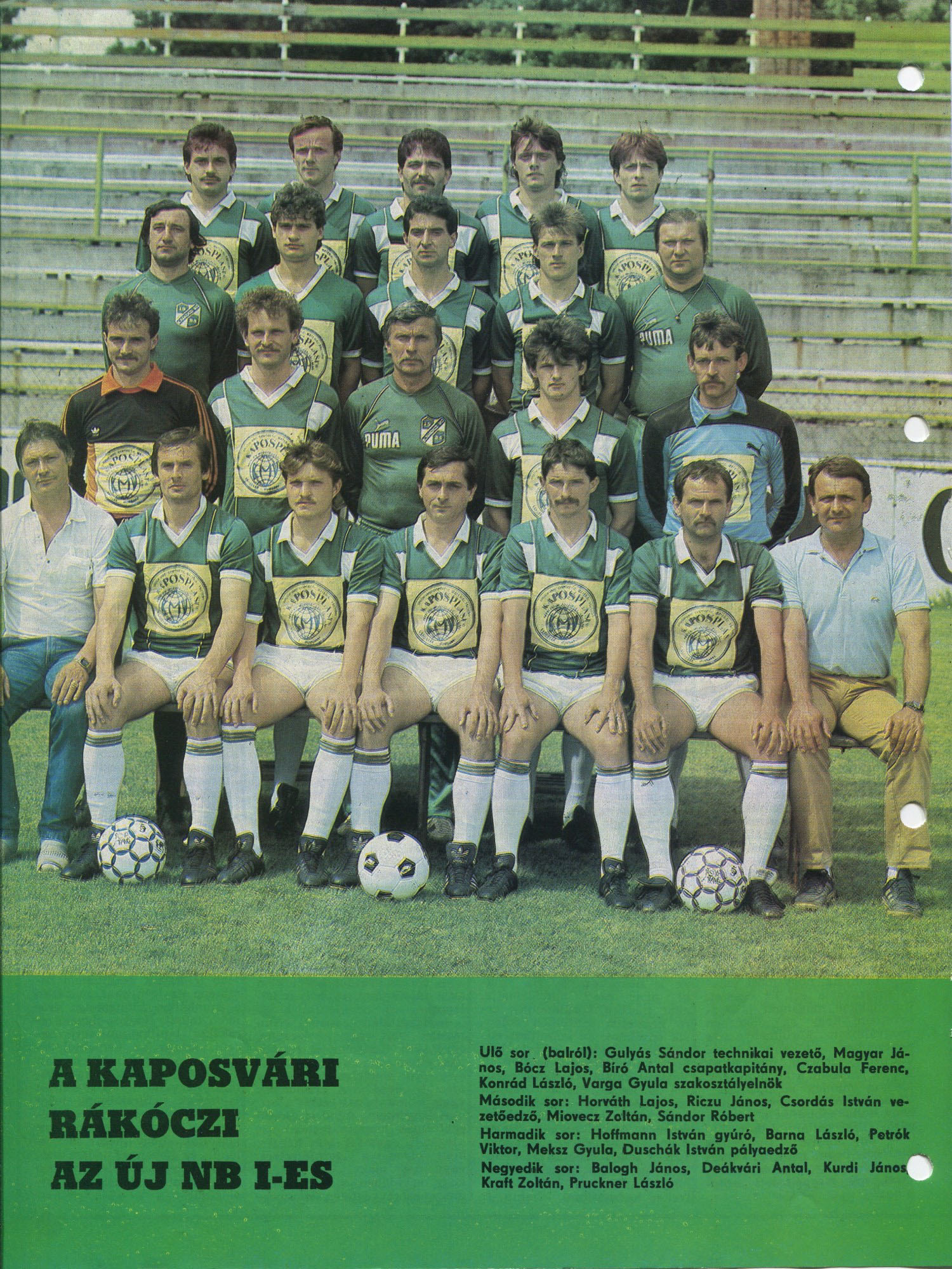 Kaposvari Rakoszi SC won the championship with 52 points from 21 wins, 10 ties, 7 losses. 52-35 goal-difference – neither the best scorers, nor the best defenders, but who would care? They were going to play top league football again.
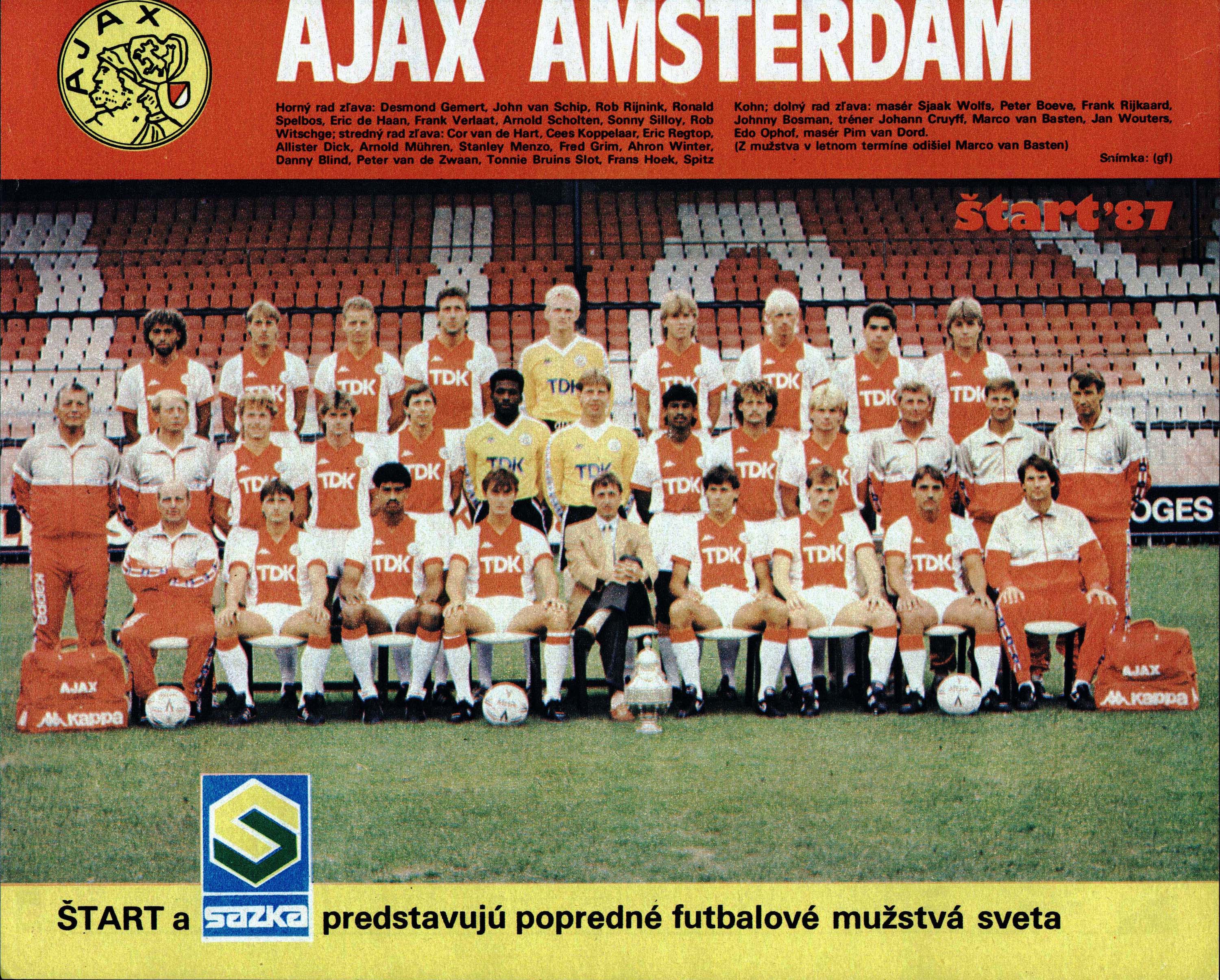 Ajax won the Cup, so they still had trophy at hand – although losing the championship is not something club and fans enjoy. Marco van Basten is missing in this picture, but no matter – the second great Ajax team was already made, played exciting football and winning. And Cruijff was still forcing his way – Spitz Cohn was officially the coach, but it was Cruijff coaching in reality. No coaching diploma, no problem… by now, everybody swallowed the sham, protesting did not work and he was accepted however grudgingly. As long as he was making magic, no problem. Cruijff’s squad was in a way deeper than PSV Eindhoven’s: two veterans – Arnold Muhren and Ronald Spelbos provided cool wisdom to their generally young teammates and there were also youngsters who guaranteed the future, for they were going to be the backbone of Ajax in the 1990s – Danny Blind, for example. Retirements and transfers were not going to affect greatly this team – Cruijff’s vision guaranteed smooth transitions and long term success (Arnold Muhren was the direct link with the great Ajax of the 1970s here and Rijkard and Blind were the link between this squad and the next great Ajax in 1995 – three great generations met and influenced each other during Cruijff’s reign at the helm).
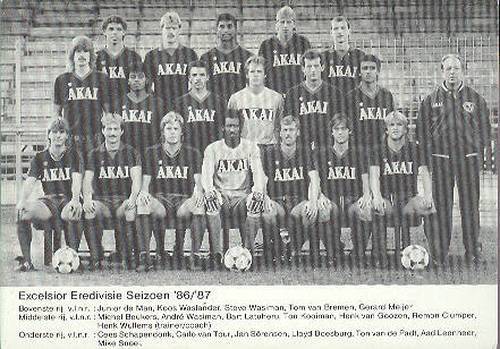 Excelsior (Rotterdam) was the outsider this season – last and out with 19 points.
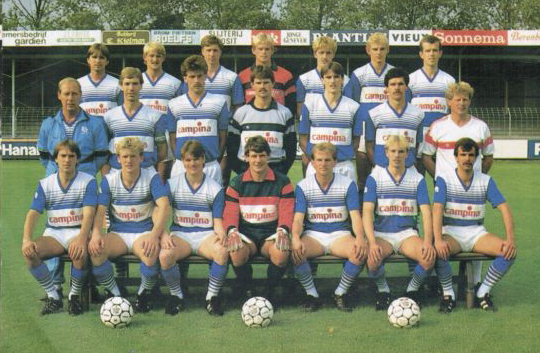 SC Veendam, quite predictably, was unable to stay in the top league longer: 18th with 23 points.
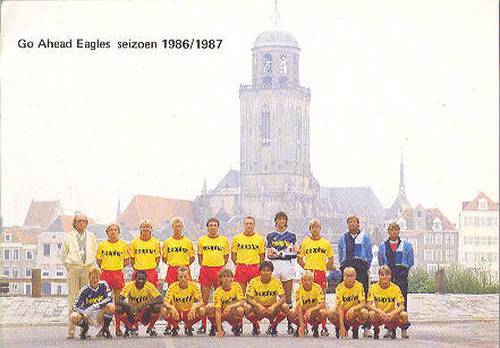 Go Ahead Eagles was the third unfortunate: 16th with 23 points.
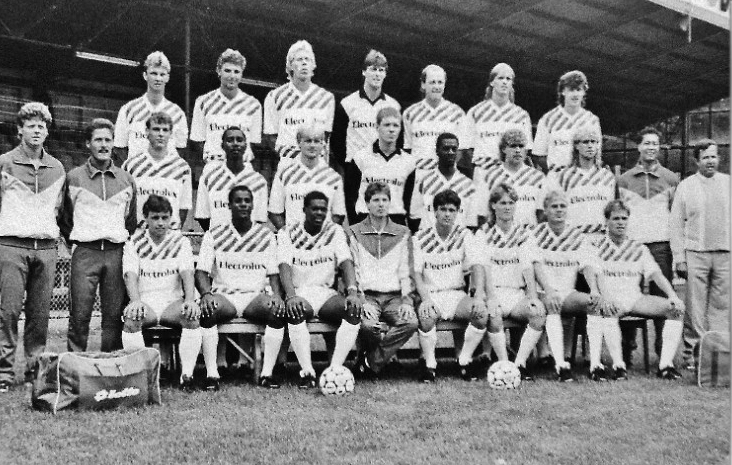 AZ’67 (Alkmaar) sunk to insignificance – 15th with 27 points. No wonder why: nothing was left of the great squad at the beginning of the 1980s. Louis van Gaal was the sole recognizable name – and that largely in retrospect, when the name signified the great coach and not the player.
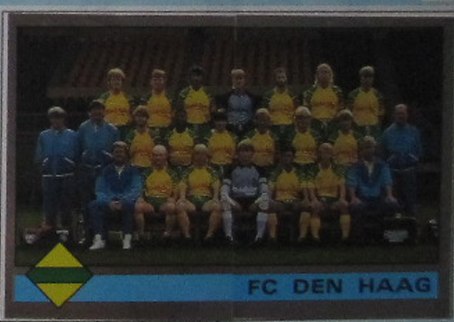 FC Den Haag – 14th with 28 points. Aging Martin Jol, back from his German and English adventures, and Tony Morley, also over 30, and familiar from the strong West Bromwich Albion team of some time back and recently returned from playing a bit in Hong Kong, were the stars of the team keeping it afloat.
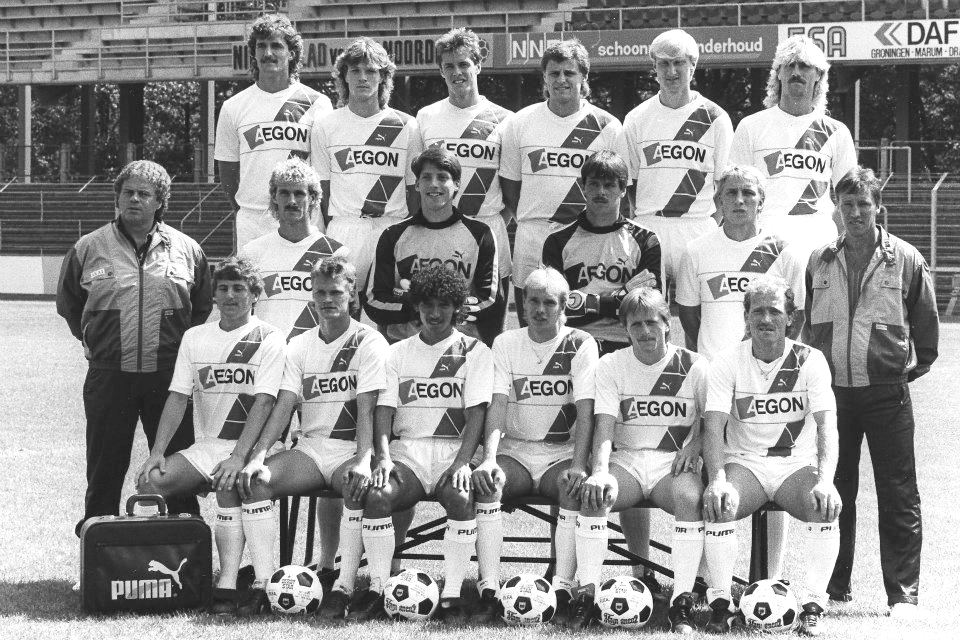 FC Groningen – 13th with 30 points. Top row from left: René Eijkelkamp – Mark Verkuyl – Johan de Kock – Peter Houtman – Ron van de Berg – John de Wolf
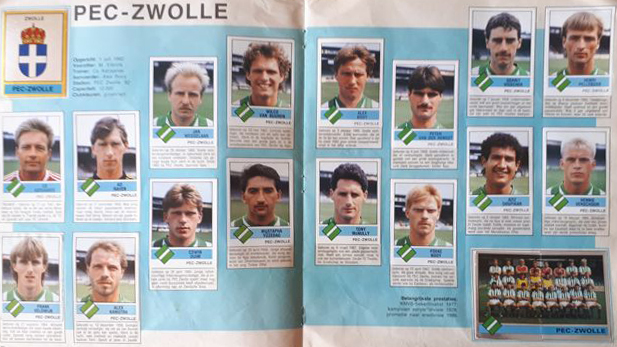 PEC Zwolle – 11th with 31 points.
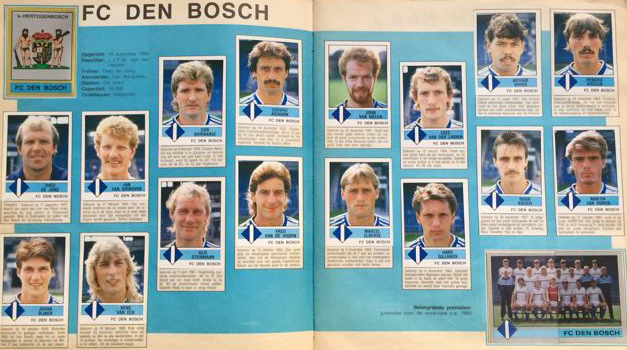 FC Den Bosch – 10th with 32 points.
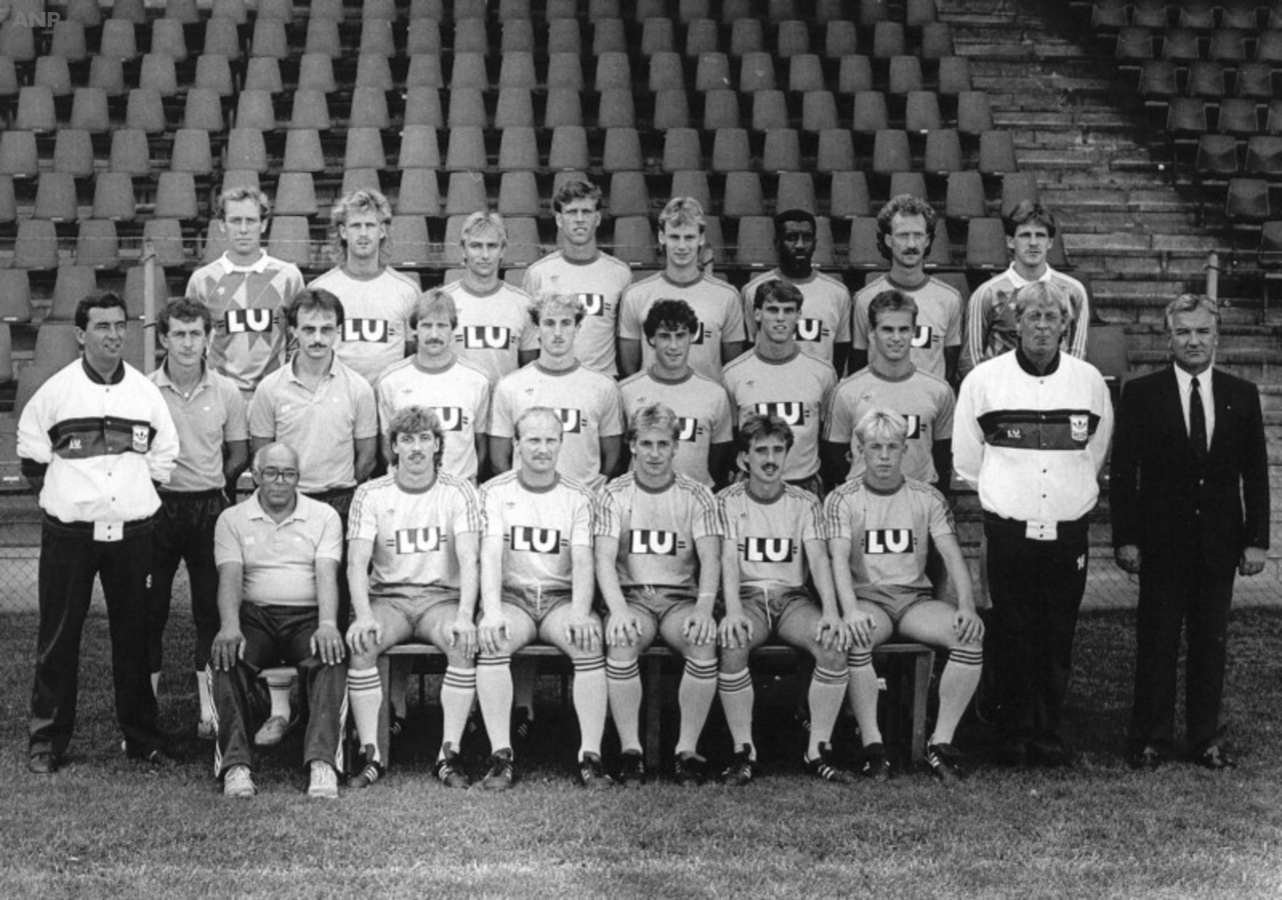 Fortuna (Sittard) – 9th with 32 points. Third row from left: Andre Van Gerven, John Linford, Bert van Harwijk, Wim Koevermans, Mario Eleveld, Sigi Lens, Anne Evers, Chris Kerver.
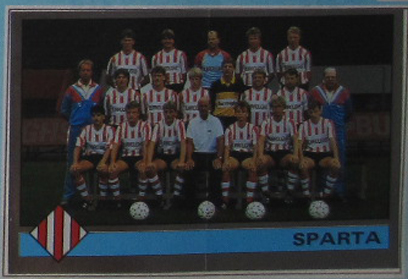 Sparta (Rotterdam) – 8th with 34 points. The British coach Barry Hughes was known from his work with West Bromwich Albion and the other known name – now, not then – was the 20-years old goalkeeper Ed de Goey.
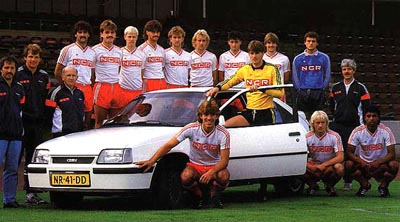 Twente (Enschede) – 7th with 36 points. Slowly reestablishing itself in the top league. Standing from left: Epi Drost(assistent-trainer), Theo Vonk(trainer/coach), Kees Rijvers(technisch Directeur), Fred Rutten, Eric Groeleken, Jan Pouls, A. Paus, Patrick Bosch, Martin Koopman, Ben Weber, Theo ten Caat, Marcel Fleer, Jan Steenbeeke(masseur).
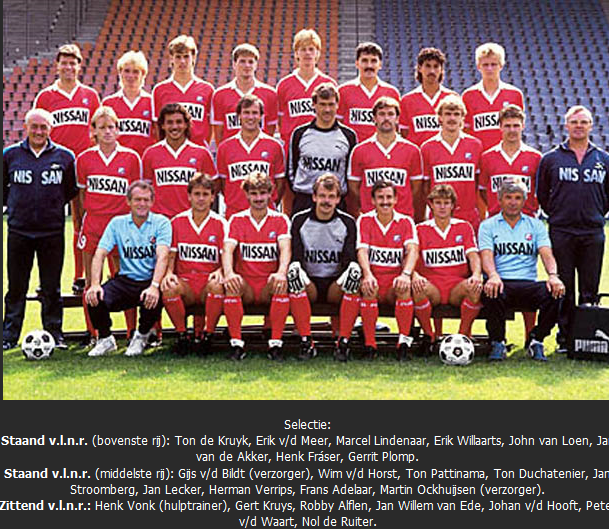 FC Utrecht – 6th with 36 points. Not bad.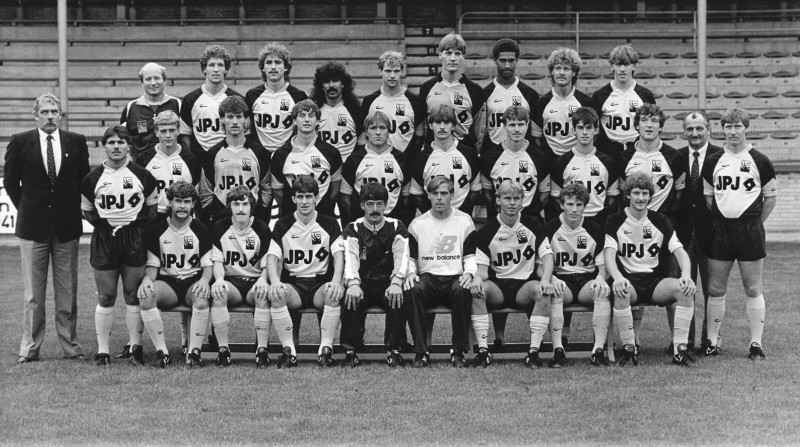
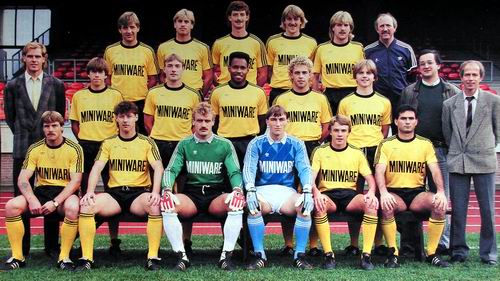
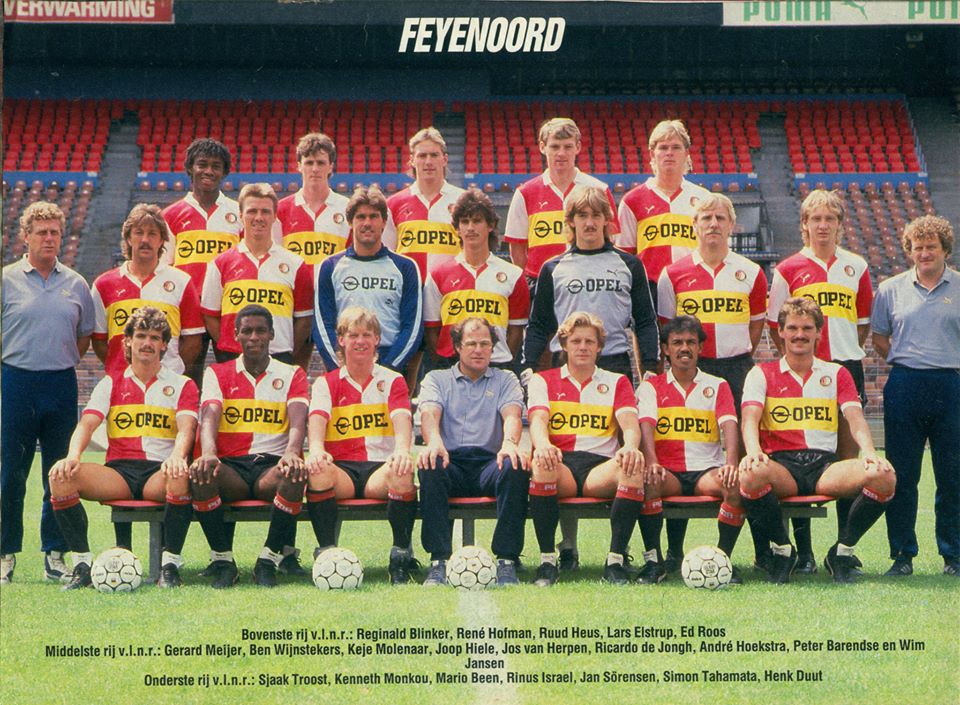 Feyennord – 3rd with 42 points. Struggling with rebuilding for quite some time and not a real factor. Rinus Israel was at the helm, but still there was dependency on oldish players,who made their names with arch-enemy Ajax: Tahamata, for instance.
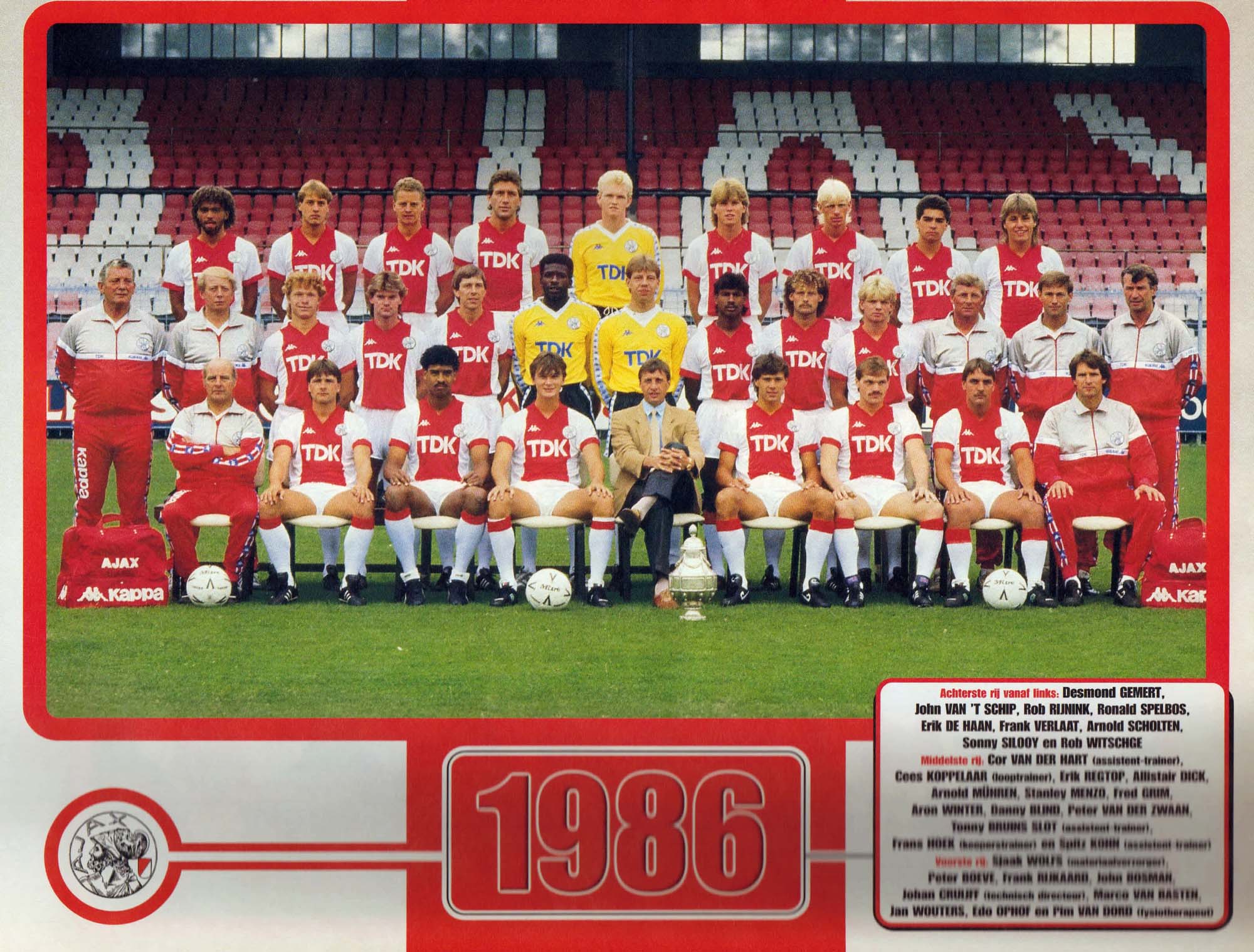 Ajax – 2nd with 53 points. Good and strong again, but this was not their year. Feyenoord was left far behind, but PSV Eindhoven was equally distant.
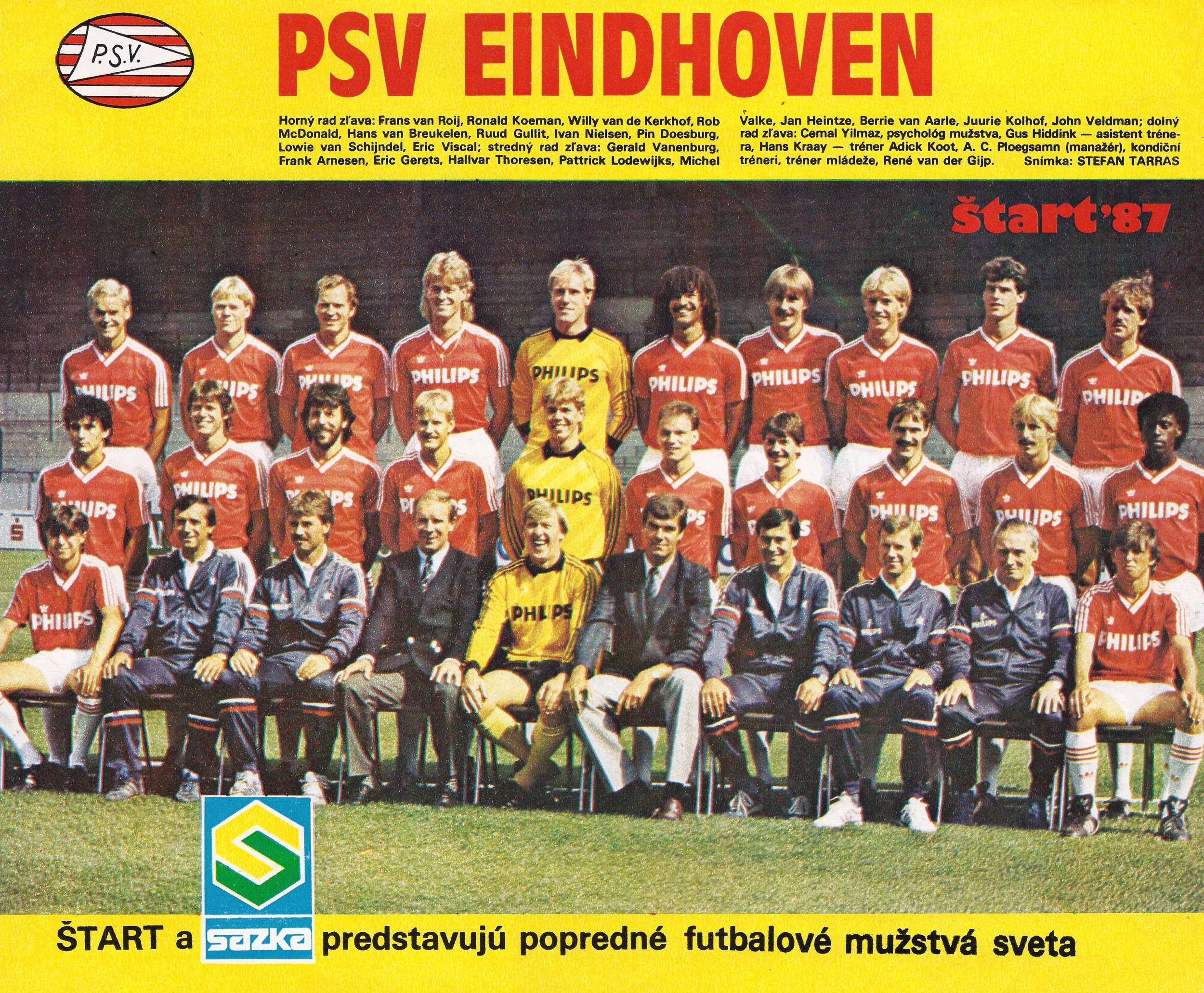 PSV Eindhoven dominated the championship – 27 wins, 5 ties, only 2 lost games, 99-21 goal-difference and 59 points. 6 points ahead of Ajax. Naming, however is in order, for the Slovakian publictaion made a little mess. Sitting from left: maz, Willy van der Kuijlen (assistent trainer), Guus Hiddink (trainer), Hans Kraaij (technisch manager), Pim Doesburg, Kees Ploegsma (commercieel manager), Huub Stevens (jeugdcoördinator), Ton van Schijndel (fysiotherapeut), Jac van de Ven (verzorger), Eric Viscaal.
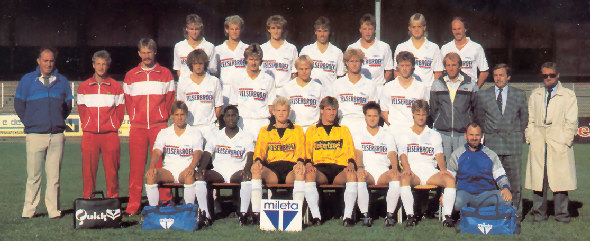 Telstar finished last and evidently the decline of this club was permament.
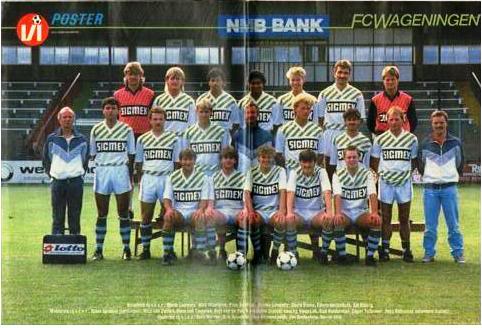 FC Wageningen finished 18th with 23 points, 2 points ahead of Telstar.
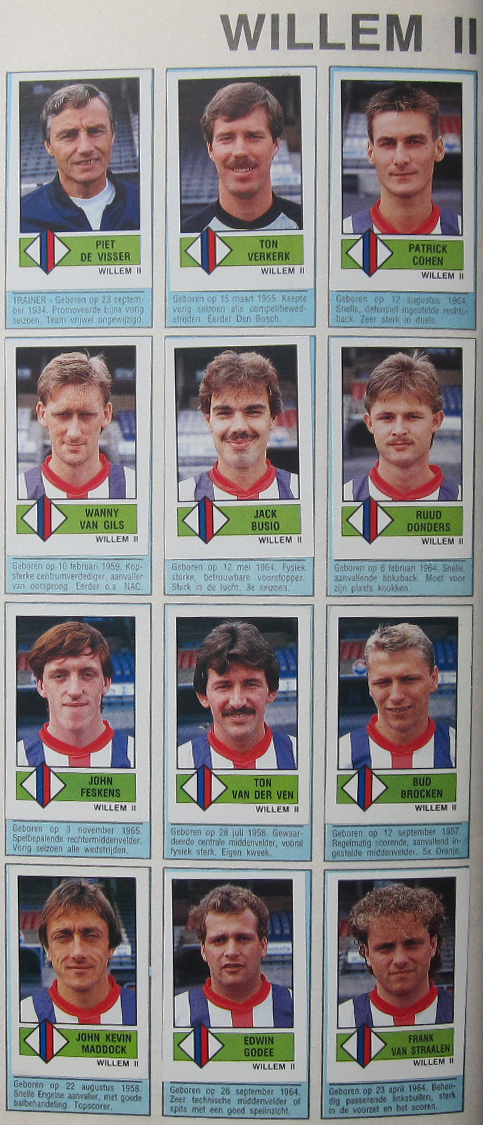 Willem II clinched 2nd place with 49 points and directly promoted.
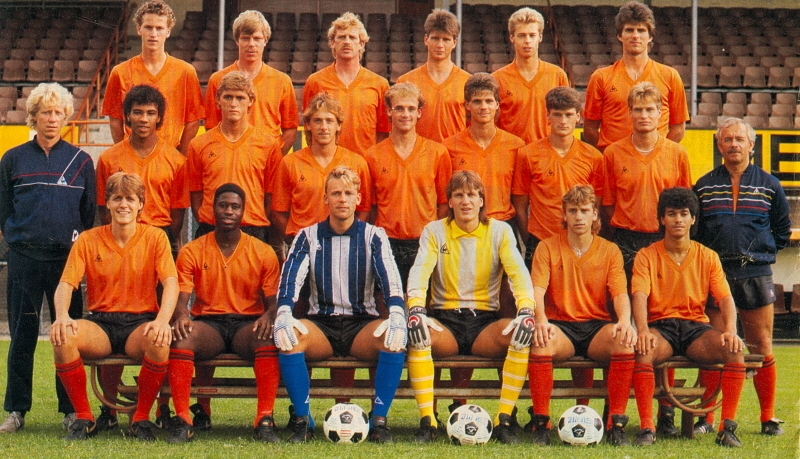 FC Volendam bested Willem II by a point and won the Second Division championship. 19 wins, 12 ties, 5 losses, 83-57 goal-difference and 50 points. Third row from left: Hans de Vries, Jan Schokker, Bert van der Poppe, Ab Plugboer, Jack Tol, Nico Zwarthoed.
 NEC Nijmegen was entirely out of the race – last with 3 points.
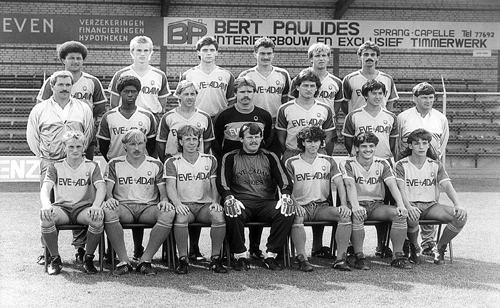 RKC Waalwijk ended 3rd with 6 points.
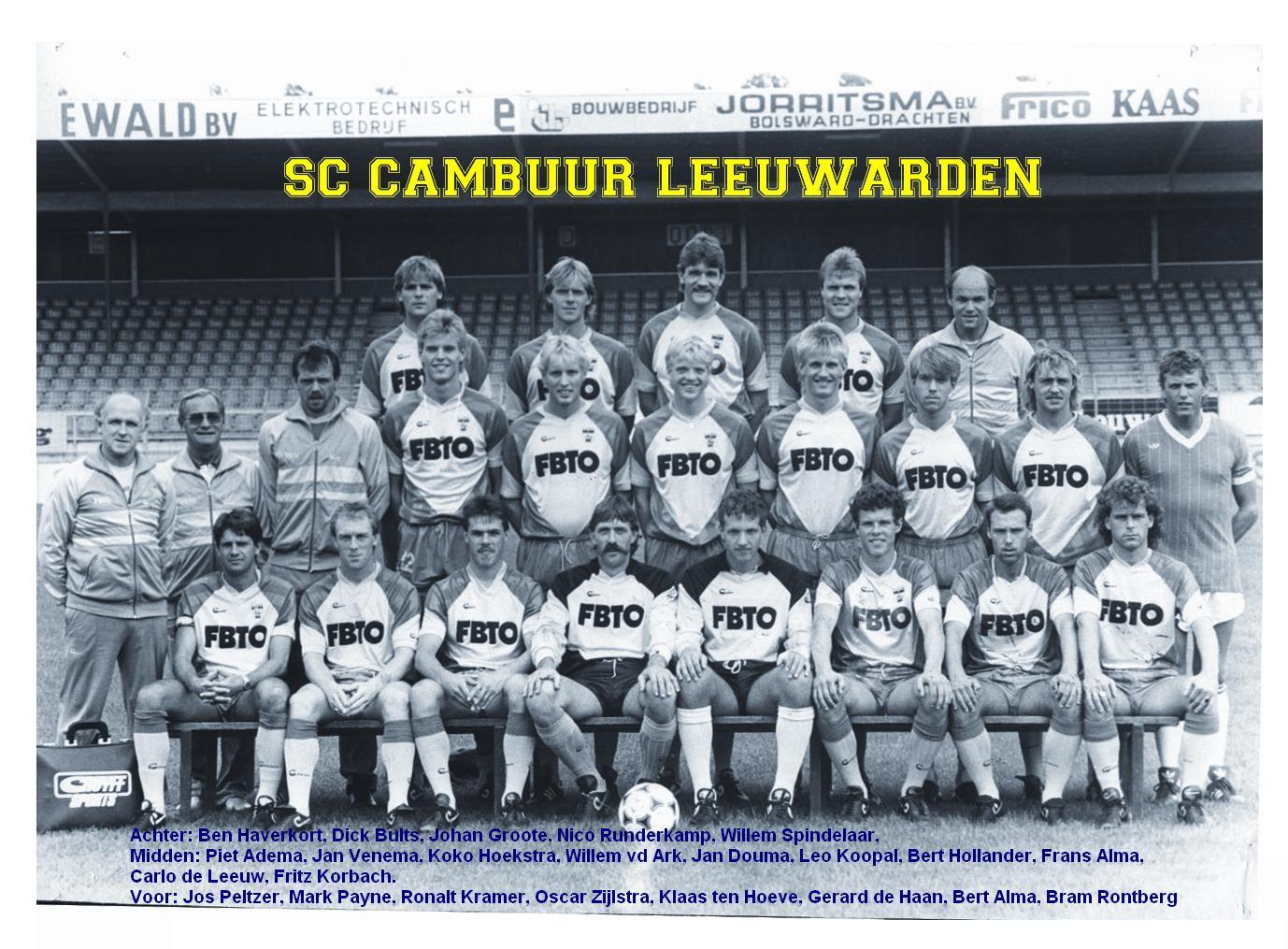 SC Cambuur – 2nd with 6 points.
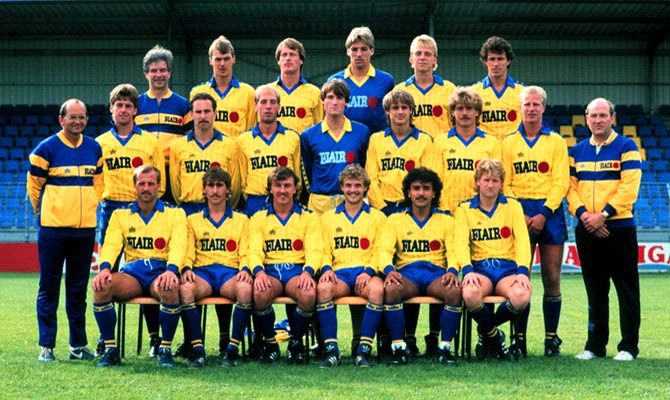 DS’79 had so-so season, but when it mattered most, they were perfect: 5 wins and 1 loss in the promotion play-offs. 12-5 goal-difference. Nobody came even close to them. Promotion was wonderful achievement this year, but the real test was yet to come in the new season.