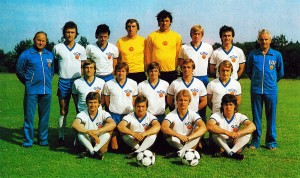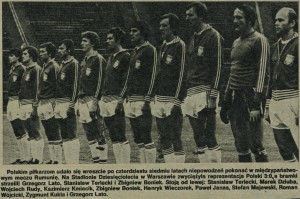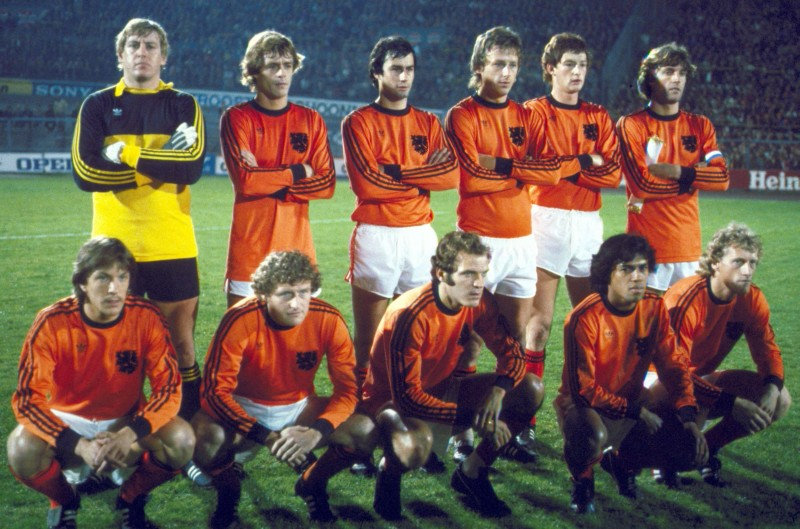
Group A. Greece

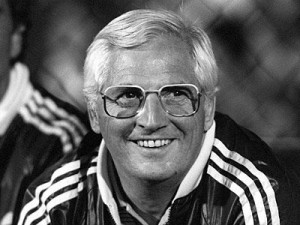
Greece was the outsider not only of the group, but at the finals as a whole. During the 1970s Greek football steadily improved and qualifying for the 1980 European finals was not only a testimony of that , but the highest success of the country to date. So far, it was Panathinaikos playing at the final of the European Champions Cup in 1971. The national team surpassed that at the end of the decade. The only direct link was the defender Anthimos Kapsis – a young player in 1971 and now one of the most experienced stars in Greece at 29. Yet, the improvement of Greek football did not make it close to the best of Europe – there was still huge gap and Greece really was way bellow the rest of the finalists. The opinion was unanimous around Europe. At home it was different: the euphoria was out of proportion and the country not only expected, but demanded from the team to win the championship. To escape the hype Alketas Panagoulias rushed his team to Italy earlier than the other teams. He wanted peace and quite, so to concentrate on preparation.
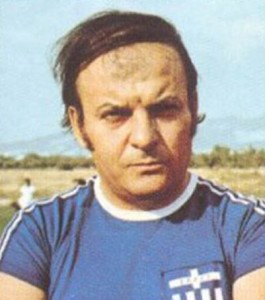
A colourful figure, involved with much more than football, Panagoulias was good coach, but, unfortunately, also given to bombast. His statements were not realistic at all. ‘I am directly linked to Alexander the Great and can’t stand to lose’ was stated before the championship. ‘We are the moral winners’ after the team was eliminated. The players had realistic approach. ‘If it was so good, as Panagoulias says, we would be champions’, said Maik Galakos. He knew all too well, because he grew up in West Germany and was a product of the German youth system. A big star in Greece, he failed twice in the Bundesliga – he played a total of 2 matches there, both for Fortuna (Dusseldorf). In his second attempt with lowly St. Pauli (Hambourg) he was never fielded. That was the reality. Greek football was getting better, but was still far behind the leading nations and reaching the finals was a bit lucky – Hungary and especially USSR were in bad shape. If Greece was in any qualification group, the finals would have been just a dream.


1

1GK

Vasilis Konstantinou

(1947-11-19)19 November 1947 (aged 32)


Panathinaikos

2

2DF

Ioannis Kyrastas

(1952-10-25)25 October 1952 (aged 27)


Olympiacos

3

2DF

Konstantinos Iosifidis

(1952-01-14)14 January 1952 (aged 28)


PAOK

4

2DF

Anthimos Kapsis

(1950-09-03)3 September 1950 (aged 29)


Panathinaikos

5

2DF

Giorgos Foiros

(1953-11-08)8 November 1953 (aged 26)


Aris

6

3MF

Spiros Livathinos

(1955-01-08)8 January 1955 (aged 25)


Panathinaikos

7

3MF

Christos Terzanidis

(1945-02-13)13 February 1945 (aged 35)


Panathinaikos

8

3MF

Takis Nikoloudis

(1951-08-26)26 August 1951 (aged 28)


Olympiacos

9

4FW

Christos Ardizoglou

(1953-05-25)25 May 1953 (aged 27)


AEK Athens

10

4FW

Maik Galakos

(1951-11-23)23 November 1951 (aged 28)


Olympiacos

11

3MF

Ioannis Damanakis

(1952-10-02)2 October 1952 (aged 27)


PAOK

12

2DF

Ioannis Gounaris

(1952-07-06)6 July 1952 (aged 27)


PAOK

13

4FW

Charalambos Xanthopoulos

(1956-08-29)29 August 1956 (aged 23)


Iraklis

14

3MF

Giorgos Koudas (c)

(1946-11-23)23 November 1946 (aged 33)


PAOK

15

4FW

Thomas Mavros

(1954-03-31)31 March 1954 (aged 26)


AEK Athens

16

3MF

Dinos Kouis

(1955-06-05)5 June 1955 (aged 25)


Aris

17

2DF

Petros Ravousis

(1954-10-01)1 October 1954 (aged 25)


AEK Athens

18

2DF

Lakis Nikolaou

(1949-07-17)17 July 1949 (aged 30)


AEK Athens

19

4FW

Giorgos Kostikos

(1958-04-26)26 April 1958 (aged 22)


PAOK

20

4FW

Nikos Anastopoulos

(1958-01-22)22 January 1958 (aged 22)


Panionios

21

1GK

Eleftherios Poupakis

(1946-12-28)28 December 1946 (aged 33)


OFI Crete

22

1GK

Stelios Papafloratos

(1954-01-27)27 January 1954 (aged 26)


Aris
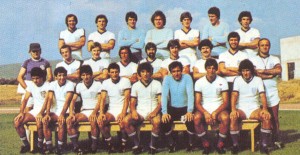
Few Greek players were known around Europe, but the squad reveals objective problem without solution: the pool of good players was very small. Not enough even for a full squad, so entirely anonymous players were selected as well. There was also something peculiar – the biggest Greek stars tended to be also very old. Terzanidis was 35 and most of the key players were pushing 30. Compared to the other teams, the Greeks were not expected even to be able to sustain physically a full game. The shortage of quality players made one wish Domazos, Antoniadis, Ikonomopoulos were born a few years later and were now fresh 35-years old and in the team. Yet, even if those instrumental for rise of Greek football were still playing the team would have been too weak compared to the other finalists.
Group A. Czechoslovakia

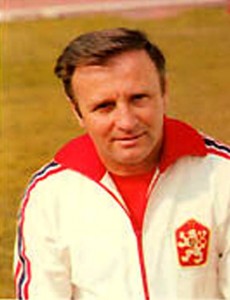
Czechoslovakia nobody counted. They were the reigning European champions, though – and because of that there was interest and inevitable evaluations of the current team compared to the one of 1976. Czechoslovakia followed curious path of highs and lows: after the 1970 World Cup there was sharp decline, then they soared and won the European championship in 1976, then missed the 1978 World Cup, and again moved up to the 1980 European finals. In a way, Czechoslovakia was in the same difficult situation West Germany was after winning the 1974 World Cup – the winners aged, and were replaced by players almost of their generation, who were already established at the time of triumph, but were inferior to the stars. Second-stringers, who never reached the class of the champions, but were the top players when the champions started their exit. West Germany was not great with the second-stringers and similarly Czechoslovakia was not. Both countries did not make radical coaching changes either – Derwall was uprgraded from assistant to head coach when Schon stepped down in 1978. In the same year Jozef Venglos replaced Vaclav Jezek, whose assistant he was since 1973.

Like Derwall, Venglos did not introduce radical changes, but fiddled with the same players Jezek used, continued the same tactics and training methods, and carefully called new players now and then. And like Derwall, Venglos moved to new options only when there was no choice because of retirement or heavy injury. The only difference between West Germany and Czechoslovakia was that the Germans faced the problem earlier – in 1980 was more or less West Germany of 1975-78. They had the most of the 1976 champions at hand, but it was not the same team and hardly made any news. Opinions were almost uniform: Czechoslovakia had no chance. Venglos himself said so. Czechoslovakian media too: ‘the same players, only 4 years older’ was the judgment. People like Ruud Krol, who considered Czechoslovakia strong and dangerous were tiny minority and were not taken seriously. Reality was speaking loudly: there were no new exciting talent in Czechoslovakia. The best players were still the 1976 European champions and those,who were not able to make the national team back then. Venglos tried the same approach used in 1976 – a long, secluded training camp and many friendly matches against various not so great opponents. Like before, results were not great, which, like before, assured most observers that Czechoslovakia is not strong indeed. That was costly mistake in 1976. And just like before, the rather big group of players was trimmed to the final list.


1

1GK

Jaroslav Netolička

(1954-03-03)3 March 1954 (aged 26)

11

Dukla Prague

2

2DF

Jozef Barmoš

(1954-08-28)28 August 1954 (aged 25)

28

Inter Bratislava

3

2DF

Ladislav Jurkemik

(1953-07-20)20 July 1953 (aged 26)

31

Inter Bratislava

4

2DF

Anton Ondruš (c)

(1950-03-27)27 March 1950 (aged 30)

54

Slovan Bratislava

5

2DF

Koloman Gögh

(1948-01-07)7 January 1948 (aged 32)

51

Slovan Bratislava

6

2DF

František Štambachr

(1953-02-13)13 February 1953 (aged 27)

15

Dukla Prague

7

3MF

Ján Kozák

(1954-04-17)17 April 1954 (aged 26)

34

Lokomotiva Košice

8

3MF

Antonín Panenka

(1948-12-02)2 December 1948 (aged 31)

43

Bohemians Praha

9

4FW

Miroslav Gajdůšek

(1951-09-20)20 September 1951 (aged 28)

45

Dukla Prague

10

4FW

Marián Masný

(1950-08-13)13 August 1950 (aged 29)

57

Slovan Bratislava

11

4FW

Zdeněk Nehoda

(1952-05-09)9 May 1952 (aged 28)

64

Dukla Prague

12

2DF

Rostislav Vojáček

(1949-02-23)23 February 1949 (aged 31)

24

Baník Ostrava

13

3MF

Werner Lička

(1954-02-15)15 February 1954 (aged 26)

2

Baník Ostrava

14

2DF

Jan Fiala

(1956-05-19)19 May 1956 (aged 24)

12

Dukla Prague

15

4FW

Ladislav Vízek

(1955-01-22)22 January 1955 (aged 25)

15

Dukla Prague

16

2DF

Oldřich Rott

(1951-05-26)26 May 1951 (aged 29)

3

Dukla Prague

17

3MF

Jaroslav Pollák

(1947-07-11)11 July 1947 (aged 32)

49

Sparta Prague

18

3MF

Jan Berger

(1955-11-27)27 November 1955 (aged 24)

1

Dukla Prague

19

2DF

Karol Dobiaš

(1947-12-18)18 December 1947 (aged 32)

67

Bohemians Prague

20

3MF

Petr Němec

(1957-06-07)7 June 1957 (aged 23)

0

Baník Ostrava

21

1GK

Stanislav Seman

(1952-08-08)8 August 1952 (aged 27)

1

Lokomotiva Košice

22

1GK

Dušan Kéketi

(1951-03-24)24 March 1951 (aged 29)

7

Spartak Trnava

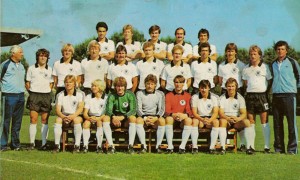
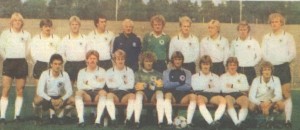
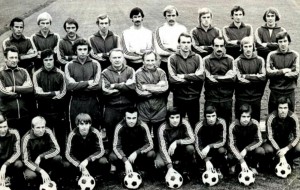
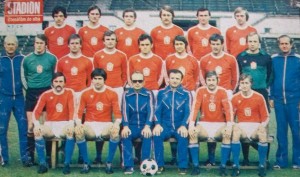
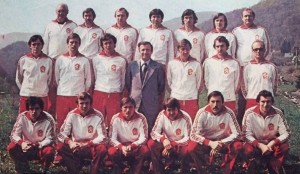
Top row, from left: Ruzicka – masseur, Nehoda, Netolicka, Ondrus, Seman, Janecka, Kundrat – team doctor.

Middle row: Masny, Jurkemik, ?, Venglos – coach, Gogh, Radimec, Brumovsky – assistant coach.

First row: Vizek, Vojacek, Fiala, Gajdusek, Panenka, Barmos.

This is partial version of the squad called to the training camp and there is a bit of lesson in it: Janecka and Radimec did not make the final team. Both will be key players of the national team in the first half of the 1980s. 10 players from the 1976 team were selected. Most of the rest were well known already in 1976, some with many caps, but they were the second stringers: those, who did not make the champion squad, who were not fully trusted back then. Four years later they were no better for sure – some were already old (Vojacek – 31, Gajdusek – 28, Rott – newcomer to the team at 29). Frantisek Stambachr, 27, was of the same ilk – he was part of the 1976 squad, but deep reserve not expected to play at all. By now he had only 15 caps. The team had huge problem, readily admitted by Venglos – goalkeeping. This was the last and may be the most telling similarity with West Germany after 1974: after Ivo Viktor, who retired, there was nobody. The same was in West Germany – Sepp Maier played ‘forever’ and his contemporaries were doomed (Nigbur, Cleff, Franke). When Maier stepped down, they were too old too – and there was nobody else. The back-up of Ivo Viktor shared the fate of the German keepers: he was of similar age and when Viktor retired Alexander Vencel was already at the end of his career, playing his last days for a small club. There was nobody else… Once upon a time promising players aged in the dark shadow of the great goalkeeper and never really developed their potential: back in 1971-72 Dusan Keketi was young, bright talent, expected to become really strong keeper with time. By 1980 he was 29 years old with 7 matches for the national team and still third choice. Other keepers were tried during and especially after Viktor and none satisfied. There was no firm starter. Venglos settled for Netolicka perhaps because he had many years ahead of him to play and was part of the strong at the time Dukla (Prague) team. But he was no better than his reserves, not even than those who also played for the national team, but were not selected this time – Michalik (Banik Ostrava) and Hruska (Bohemians Prague). Stanislav Seman, the 2nd goalie, had played for the national team only once so far… Venglos had no way of finding solution, honestly acknowledged the problem, and blamed his keeper eventually for costly mistake. And at the end the last similarity with West Germany, this one at the same time: Bonhof got injury too late to be replaced and the Germans went to Italy with 21 players. Czechoslovakia went with only 19. Dobias was unable to restore his form after injury and was left home. Nemec and Rott were also found out of shape too late and dropped. But the squads were already deposited and there was no way to make changes. Two champions of 1976 did not make the squad at all – Svehlik and Bicovsky. One may wonder what would have been the fate of West Germany, if Bonhof was fit and the team was shaped around him. The same wonder what if Dobias, Svehlik, and Bicovsky were at hand for Czechoslovakia. Very likely the results were not to be good, for with these players both teams would be firmly based on the old approach, which lead to failure. Failure was not in the books for the Czechoslovaks, though: they were considered too weak already by everybody, including their coach. Realistically, third in Group A. Happy to be at the finals, nothing more.


Group A. West Germany

West Germany was may be the second favourite. Of course, everybody lists the Germans as favourites ever, but there were serious doubts this time too. To a point, the actual strength of the team was a bit unknown, for West Germany had the easiest qualifying group and few paid close attention. The 1978 fiasco was well remembered, though – fueling doubts. It was not the exciting German team of the first half of the 1970s, decline was noticed since 1974, the great stars aged and retired, and there were no equal to them youngsters emerging. But Germans are never dismissed, for it is also well remembered that they always rise to the occasion. Well, except in 1978… well, they lost the European final in 1976 too… well, Beckenbauer warned about coming crisis right after the 1974 triumph. And the the team sunk at the 1978 World Cup… Schon was sacked. Or resigned. The press was very vocal about it – only to change its view after the fact.

The German Federation appointed Jupp Derwall and there were plenty of critics: he never coached seriously, he was too liberal with the players, he lacked the intellectual capacity of Schon, he was Schon’s assistant after all, so what kind of new thinking one cane expect? Now it was felt that Schon should have stayed for few more years. The national team was under close scrutiny – and merciless criticism. On the other hand Derwall was natural choice – thus, the right choice. So far, West Germany was coached by only two men: Sep Hepberger was replaced by his assistant Schon. Following the established tradition, it was natural he to be replaced by his own long-time assistant. Derwall knew the workings of the national team in and out, he had enormous experience. Smooth replacement worked wonderfully before – that was the way. Nothing dramatic happened with the change: Derwall continued using players Schon included in the national team. Changes were natural – retirements – and new players were gradually and carefully introduced. But the first steps were rocky – West Germany started badly in the qualification group, hitting rock bottom in Malta. As time moved on, the real problems became clearer: careful, step-by-step reshaping of the team was unsatisfactory – Derwall appeared gutless by depending on well known players, who did not make the great teams of Schon and failed miserably in Argentina. In the same time youngsters lacked more than experience: they were not as good as the previous generation. If Derwall risked entirely new team, criticism would have been murderous. No-win situation, in which the coach steered in strange, but admirable way – a mixture of continuing Schon’s legacy with slow introduction of young players. Non-confrontational way, it appeared to be: the reason of someone becoming a starter was the retirement of a great veteran. Nobody can really protest… circumstances. And it was circumstances helping Derwall at the end – injuries of key players, or at least players Derwall, fearing risk, considered essential. Yet, the team strong, there were plenty of candidates for a place in it, there were first-rate European stars of the time, there was new talent already impressing keen observers and specialists. West Germany was a favourite, many a specialist considered it playing the final, if not a winner. The German Federation lifted the stupid ban on foreign-based players, which handicapped the team at the 1978 World Cup. On the surface, it was laughable matter – back in 1978 it was only Stielike playing abroad. In 1980 there were 2 players – Stielike and Bonhof. The picture was revealing the real problem of West German football: there was no great play-maker. The absence of Stielike immediately reduced West Germany to toothless team. Bonhof was the other option, but he was not exactly a play-maker – he was similar to Neeskens: great player, but only when having someone greater than him. Not a leader in terms of conducting and shaping the game. Stielike was universal player – the dream of the original total football: a player equally at home at any position. It was Derwall who moved him back as a libero – it was a copy of the original: Schon moving Beckenbauer back in defense to give him bigger creative freedom. But it was not the same… for ahead of Beckenbauer were Overatt or Netzer. Now… Derwall lamented that he needs two Stielikes and there is only one. Bonhof was perhaps the closest approximation of much needed creative midfielder. So it looked like… Stielike was back and Bonhof was also at hand. Until he suffered injury and was out – it was so late in the season, the squad lists for the finals were already deposited and changes were impossible. West Germany arrived in Italy with 21 players. Two more injuries happened earlier – Norbert Nigbur and Klaus Fischer. Sep Mayer retired in 1979 and Nigbur was his replacement. Already 31 years old, he was in and out of the national team for years, playing very little, because. Nigbur was reserve in 1974. Fischer had similar fate – because of Gerd Muller in his case – but eventually became the regular center-forward of West Germany around 1978. These two were the very heart of the German problem: second-stringers during the days of the great generation. They replaced the stars not that much on merit, but because they retired. By now the former second-stringers were quite old… experience was on their side. They were also the current top players. But with them the team struggled – and now it was clear why they were not starters before, but Mayer, Muller, Beckenbauer, etc. Something was missing… a bit of leadership, a bit of skill, a bit of consistency, a bit of nerve… and as a result, the team was not winning, was not exciting, and looked without future. But it was also impossible to dismiss them, for they were the top current stars. Nigbur and Fischer were good example: they were key players of the team under normal circumstances – behind them were either known veterans, tried and dismissed for those two were slightly better, if nothing else. The other options were… dangerous. The three goalkeepers Derwall brought to Italy had a grand total of 3 matches for the national team, which belonged to Toni Schumacher. Only one of them was full match… No coach will deliberately play such players at finals. Derwall was not thinking either – it was just because Nigbur and Fischer were injured Schumacher and Hrubesch became starters. It was because Culmann was in shaky form and Bonhof out Bernd Schuster got a chance. It was not Derwall, but circumstances making the stars of 1980s – one can make support such a claim quite easily. That was why West Germany was not seen as a overwhelming favourite and considered weaker then Holland.


1

1GK

Harald Schumacher

(1954-03-06)6 March 1954 (aged 26)


Köln

2

2DF

Hans-Peter Briegel

(1955-10-11)11 October 1955 (aged 24)


Kaiserslautern

3

2DF

Bernhard Cullmann

(1949-11-01)1 November 1949 (aged 30)


Köln

4

2DF

Karlheinz Förster

(1958-07-25)25 July 1958 (aged 21)


Stuttgart

5

2DF

Bernard Dietz (c)

(1948-03-22)22 March 1948 (aged 32)


Duisburg

6

3MF

Bernd Schuster

(1959-12-22)22 December 1959 (aged 20)


Köln

7

2DF

Bernd Förster

(1956-05-03)3 May 1956 (aged 24)


Stuttgart

8

4FW

Karl-Heinz Rummenigge

(1955-09-25)25 September 1955 (aged 24)


Bayern Munich

9

4FW

Horst Hrubesch

(1951-04-17)17 April 1951 (aged 29)


Hamburg

10

3MF

Hansi Müller

(1957-07-27)27 July 1957 (aged 22)


Stuttgart

11

4FW

Klaus Allofs

(1956-12-05)5 December 1956 (aged 23)


Fortuna Düsseldorf

12

3MF

Caspar Memering

(1953-06-01)1 June 1953 (aged 27)


Hamburg

13

3MF

Rainer Bonhof

(1952-03-29)29 March 1952 (aged 28)


Valencia

14

3MF

Felix Magath

(1953-07-26)26 July 1953 (aged 26)


Hamburg

15

3MF

Uli Stielike

(1954-11-15)15 November 1954 (aged 25)


Real Madrid

16

2DF

Herbert Zimmermann

(1954-07-01)1 July 1954 (aged 25)


Köln

17

3MF

Karl Del’Haye

(1955-08-18)18 August 1955 (aged 24)


Borussia Mönchengladbach

18

3MF

Lothar Matthäus

(1961-03-21)21 March 1961 (aged 19)


Borussia Mönchengladbach

19

3MF

Miroslav Votava

(1956-04-24)24 April 1956 (aged 24)


Borussia Dortmund

20

2DF

Manfred Kaltz

(1953-01-06)6 January 1953 (aged 27)


Hamburg

21

1GK

Walter Junghans

(1958-10-26)26 October 1958 (aged 21)


Bayern Munich

22

1GK

Eike Immel

(1960-11-27)27 November 1960 (aged 19)


Borussia Dortmund

The squad made people skeptical and critical – this is one of youngest German selections, averaging a bit over 24 years. Two players were barely 19 years old. Most names were little known outside Germany. Some appeared even wild – Caspar Memmering for sure. Many had played only a handful matches for the national team. For those lamenting the lost purity of the German team nowadays: Miroslav (Mirko) Votava was born in Czechoslovakia and arrived in West Germany after some years in Australia – his parents left their native country in 1968, thanks to the Soviet-led invasion. At a glance, one may think Derwall was a radical, introducing entirely new team. But it was circumstance again – by now only two 1974 World Champions remained: Bonhof and Culmann. Nigbur was out because of injury. Eventually, Bonhof was also out. It was not Derwall’s wish… and he persevered and played Culmann. Retirement and injuries ‘revolutionized’ the squad. Before the finals it was very sucpicious squad… During the finals it was not a happy squad both on and off the field. It was not a squad without problem after the championship either. There was promise, but so far it was very difficult to see in these names the big stars of the 1980s. What was quite visible at first was dulness… Culmann again, the ever-present ultra-reliable dull player, usually a reserve, but year after year in the team. A prime example of the ugly change of free, creative total football into physical battle of the fittest, in which those who run the most win.


Group A. Holland

Group A was the easier, but more puzzling group. West Germany and Holland were the favourites, yet, the pros and cons were many. As arbitrary as it is, let’s start with Holland. Strong at the 1978 World Cup, but not good enough to win. Very experienced squad, but lacking the quality of Cruijff’s era. The key figures were dangerously aging and there were no replacements of similar class. The team’s play became more physical and lacking the flair of the original ‘flying Dutchmen’, but they were tough and concentrated when needed: they had problems in the qualification group, but when it mattered most delivered, beating DDR as visitors in the very last group match and thus winning the group. Ruud Krol, the team’s captain, was very critical of the team, saying to France Football that he does not see any chance for Holland. West Germany and Czechoslovakia he considered stronger and Holland lacked quality players. Many considered his opinion typically Dutch underapreciation of their own. Many considered Holland prime favourite. But still not overwhelming one: Jan Zwartkruis was good coach, but he was replaced for the World Cup finals and success came with temporary big name – Happel. The same tactic as in 1974, when Michels was brought for the finals. Curiously, the Dutch did not change the coach for 1976 European finals and repeated the same in 1980. In 1976 they failed… There was also the old problem with pigheaded players, who often refused to play for the national team – quarrels and refusals were old story, so Holland hardly ever had the best team at hand. This time the problem was relatively small, but still existed: Neeskens refused to come back from USA for the finals. Arie Haan, however, accepted to join the team in which he was not to be a key figure as he was in 1978. Zwartkruis included many little known players – as much as risky experiment as it was a testimony of the short pool of talent. But the squad had enough class, plenty of experience, and had strong collective approach which compensated for evident shortage of superstars in 1978. It was high time for Holland to win something – perhaps this was the time, considering that the group was weaker and West Germany had perhaps more problems than Holland. And Krol, somewhat contradicting himself, spoke that it is time for revenge.

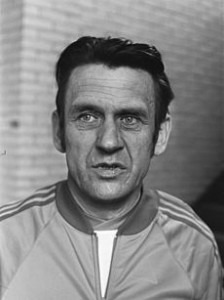
Jan Zwartkruis was at the helm of the team since 1976 – he shaped the team as he wanted. As he wanted to a point: he never got what he really wanted. Players whims plus the strong pressure from the leading clubs, which always argued against the needs of the national team, reduced his options for preparing the squad. Friendlies were particularly lacking and when they were scheduled, then key players were not available. But he adjusted to the circumstances and managed to qualify the team to two consecutive finals. This time he was not to be replaced for the real thing – a comfortable situation.


1

GK

Piet Schrijvers

(1946-12-15)15 December 1946 (aged 33)

32

Ajax

2

DF

Ben Wijnstekers

(1955-08-31) (aged 24)

4

Feyenoord

3

DF

Michel van de Korput

(1956-09-18) (aged 23)

3

Feyenoord

4

DF

Hugo Hovenkamp

(1950-10-05)(aged 29)

18

AZ

5

DF

Ruud Krol (c)

(1949-03-24)(aged 31)

72

Vancouver Whitecaps

6

DF

Jan Poortvliet

(1955-09-21) (aged 24)

15

PSV

7

FW

René van de Kerkhof

(1951-09-16) (aged 28)

36

PSV

8

FW

Willy van de Kerkhof

(1951-09-16) (aged 28)

36

PSV

9

FW

Kees Kist

(1952-08-07)(aged 27)

16

AZ

10

MF

Arie Haan

(1948-11-16) (aged 31)

32

Anderlecht

11

MF

Heini Otto

(1954-08-24)(aged 25)

1

Twente Enschede

12

FW

Johnny Rep

(1951-11-25) (aged 28)

35

Saint-Étienne

13

MF

Dick Nanninga

(1949-01-17)aged 31)

11

Roda Kerkrade

14

MF

Adrie Koster

(1954-11-18) (aged 25)

3

PSV

15

DF

Huub Stevens

(1953-11-29) (aged 26)

10

PSV

16

GK

Pim Doesburg

(1943-10-28)(aged 36)

3

Sparta Rotterdam

17

FW

Martien Vreijsen

(1955-11-15) (aged 24)

0

NAC Breda

18

MF

Frans Thijssen

(1952-01-23) (aged 28)

7

Ipswich Town

19

MF

Romeo Zondervan

(1959-03-03)(aged 21)

0

Twente Enschede

20

GK

Hans van Breukelen

(1956-10-04) (aged 23)

0

Utrecht

21

DF

Ernie Brandts

(1956-02-03)aged 24)

17

PSV

22

DF

John Metgod

(1958-02-27) (aged 22)

7

AZ


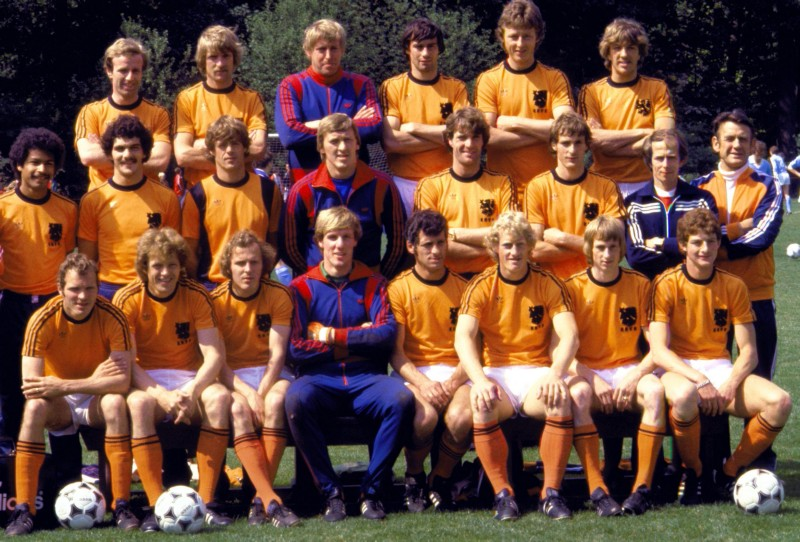
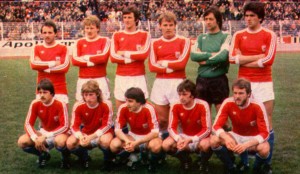
Third row: Vreijsen, Thijssen, Schrijvers, Stevens, Hovenkamp,Wijnstekers.

Middle row: Zondervan, van de Korput, Rep, Doesburg, Krol, Poortvliet, assistant coach Baan, coach Zwartkruis.

Sitting: Willie van de Kerkhof, Haan, Rene van de Kerkhof, Van Breukelen, Nanninga, Kist, Koster, Brandts.

A curious selection: on one hand, this was aging team, based on the stars of 1974 – 6 of the great team were here. But Schrijvers and van de Kerkhof twins were reserves back then. The other three were aging and by 1980 only Ruud Krol was world class. Rep was fading away and Haan was somewhat underapreciated. Even Krol was perhaps doubted by now: at 31, he just moved to play abroad and it was not one the big Spanish, German, or English clubs, but the Canadian Vancouver Whitecaps. Going to NASL was a sign of nearing the end. Zwartkruis also used players from 1978 – Nanninga and Brandts were heroes back than ,but the first was accidental hero and not a real star. He was 31 years old – hardly in his prime. Brandts unfortunately went downhill since the World Cup and it was already clear that he was not to be a great star. Hovenkamp, who left the team just before the finals in 1978 was back – this time a regular. Haan was to be a sustitute too, a sign his days were over – at least in the national team. The goalkeeping problem was painfully familiar – no classy keeper. Schrijvers was number one, and Doesburg – his back up. At 36, Doesburg had played only 3 matches for Holland… The third goalie was unheard of and was to remain so, for he was just making the numbers: Hans van Breukelen. Given his illustrious career and success later in the 1980s, one can guess that the talent was there already – but apparently Zwartkruis did not have the guts for taking a risk with youngster playing for lowly Utrecht. So far, van Breukelen had 0 matches for Holland – as well as Zondervan and Vreijsen. Seven players had less than 10 matches for the national team, some of them starters. And that in the most experienced and old team at the finals! It was not entirely clear what Zwartkruis wanted – the team was clearly based on Krol, which was fine since he was perhaps the best in the world at the moment and capable of much more than defending. But Haan – always reliable, Thijssen – in great form and key player of Ipswich Town at its best, Kist – the top European goalscorer, and van de Kerkhof twins – still the top Dutch midfielders, were not regulars. It looked like Zwartkruis wanted a physical, collective-minded team, spurred and influenced by Krol, and depending heavily on Rep to finish the attacks. Did not look great, but there was not much to say against such approach either – it was more than possible to reach the final and then whatever happens. Contrary to the photo above, there were no players using individual kits this time. As ever before, there were players not included who knows why – Tahamata (Ajax), for instance.

The 6th European Championship

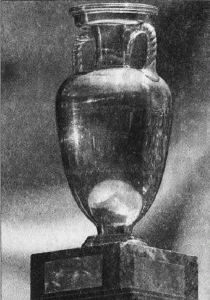
The 6th European Championship was entirely new – except for the trophy.

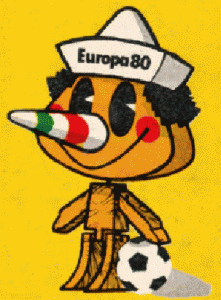
Like the World Cup, the finals had not only official logo, but a mascot, serving as a concurrent logo of the tournament.

The long nose of Pinocchio… endearing mascot, or a reminder of the long Italian tradition of cheating on and off the pitch? Totonero was just happening. Long noses all around. Nothing to do with the European finals, though. The tournament was played between 11th and 22th of June in Rome, Naples, Turin, and Milan. The draw placed West Germany, Holland, Czechoslovakia, and Greece in |Group A, and Italy, England, Belgium, and Spain in Group B. Winners were to play for the title, 2nd placed teams – for bronze medals. The new formula of the finals had no ½ finals. Like the World Cup finals, the host got a bye and did not have to qualify, but the reigning European champion had no such privilege – unlike the world champion. Another difference from the World Cup was that the final groups had no designated stadiums: games were scheduled in all hosting cities. But all is relative – Czechoslovakia played 2 games in Rome, one in Milan, and one in Naples, for example. Only Italy played on all 4 stadiums – and that was only because they did not reach the final. The ugly face of hooliganism appeared at the finals, just a sign of what was coming to characterize the 1980s, but compared to later years, nothing big happened. Group A was considered the easier group – West Germany and Holland were the favourites. Italy was also a favourite, but they had tougher competition – England. Spain and Belgium were very difficult to beat, so Group B was the ‘iron group’. The finals were supposed to draw big attendance – may be the only real disappointment of the finals. In football crazy Italy – and a country so close to all participants – only 4 games attracted more than 25 000 fans. Czechoslovakia – Greece was expected to be the lowest attended match, but 8000 was perhaps bellow the mark considered ‘low’ by the organizers. The hype over the new formula run counter to the reality of actual attending – the matter was hushed, of course. Television was partial reason for low attendance, yet, pointed proudly as a big success: after all, numbers are numbers. Stadiums were half-empty, but look at how many watched at home! But the low attendance was a verdict: finals of the club tournaments attracted much more fans than the European championship final.

1980

1980

The round year – the end of a decade and a beginning of new one. Ten years earlier optimism was in the air. It was justified optimism – the first half of the 1970s was great. Then the exciting advance of total football halted and the game started changing in not so great way. The end of the 70s was not optimistic at all, yet, it was nothing compared to what laid ahead: in the 1980s football was alarming and disappointing. Not only the game, but the whole culture surrounding the sport. One English journalist summed it with this verdict: ‘If this is football, let it die.’ And to death marched the game… quite literally. But not in 1980. 1980 was expected with excitement: the European championship with new formula was the bright sign. It was to be a mini-version of the world cup. More matches to be seen, more drama – the whole state of the tournament was suddenly elevated. So far, for the most part of the campaign interest was local. Only the final round – ½ finals and the final attracted vaster interest, largely via television. 1976 was perhaps the greatest success of the tournament – the great drama of overtime and shoot-outs to the end. 1980 was expected to beat that: now there were 8 finalists, divided into 2 round-robin groups. Many expected Euro finals to be stronger and better than the World Cup. And some feared that the new formula may kill the World Cup altogether by becoming the stronger and more interesting to watch championship. Hopes and predictions.

Campionato Europeo di Calcio was not the only big news this year – the other two also came from Italy. The one was the big Totonero scandal – players and clubs fixed matches to accommodate betting. Investigation found 7 clubs from Serie A and Serie B plus various players and managers guilty. Corruption was nothing new in Italian football, but this time there were stiff penalties even for the ‘untouchables’: Milan, the champions of 1978-79, were relegated along with Lazio to second division when the 1979-80 season ended. The new superstar Paolo Rossi was banned from the game for 3 years. Later his suspension was reduced to 2 years. As often is the case, only few players really suffered: the veteran goalkeeper Albertosi had to quit. He was suspended for 4 years – at his age, it was entirely unlikely he could come back well over 40 years of age and he just retired. The scandal itself was largely important because this time the Italians appeared determined to really investigate and punish. The third big news was the lifting of the ban on foreign players in Italy – it was in effect since 1964. The big clubs did not like the ban and lobbied against it for years. They even tried to curtail it, but the Federation stayed firm. In 1980 the market was open at last – one foreigner was permitted at first and unlike the Spanish, who always bought more foreigners than the number allowed to play, the Italian clubs stuck to the limit. Still it was exciting race for foreign stars and Italy quickly edged Spain – money were not a problem somewhat and in short time the bigger names were going to Italy, not Spain.

The last big event was not strictly football – the Olympic games were staged in Moscow and boycotted by USA and many other countries. A big news with its political overtones and noise. As for the football at the Olympics, it was hardly affected – the Olympics were still largely important for the Communist countries and dominated by them. The rest of the world cared little for Olympic football.

Group 7

Group 7 was no brainer : it was the easiest group. West Germany had a very lucky draw – Turkey, Wales, and Malta were no opponents at all. Just as well, for 1978 was terrible for the West Germans – the World Cup finals revealed that the team was in deep crisis and needs urgently not a mere patching, but new approach, radical rebuilding, complete change. The lucky draw made sure that even the team of 1978 will qualify effortlessly, but to a point, the qualification rounds were used for making a new team. Unlike almost every other country, the Germans did not change the coach – they believed in their own tradition : a new coach developes as assistant of the great man at the helm and when the great man retires the assistant steps into his shoes. Derwal was too young for retirement, so he stayed. The weak group and the visible absence of change cancelled close scrutiny of the German team : the group was boringly predictable, so nobody outside specialists paid attention. To a point, the building of new German team was missed by most observers. As expected, West Germany had no match in the group. Yes, they started as bad as they were in 1978 – away 0-0 tie with Malta, followed with another away scoreless tie with Turkey. The rest of their group matches they won easily, permitting just a single goal in their own net. Malta was simply bellow everybody else – they got only one point and this point could be entirely credited to the still weak Germans. Turkey and Wales were equals, exchanging home wins, which practically cancelled both teams. The point Turkey earned at home against West Germany placed them 2nd at the end.

Turkish football was improving during the 1970s, but still was quite weak. No famous players here, no big surprises, no really coming close to the best. Occasional tie against top opponent was the sign of improvement, but nothing more. Finishing second in the group was the measure of success – far behind the best teams, but matching the lower tier of the European middle level. Able to come ahead of Wales, that was the positive result.

West Grrmany, 1979 version, comfortably going to the European finals. Sitting from left : Hans Muller, Walter Kelsch, Caspar Memering, Norbert Nigbur, Dieter Burdenski, Manfred Kaltz, Klaus Fischer, Rainer Bonhof.

Second row : Bernd Schuster, Klaus Allofs, Karl-Heinz Forster, Bernd Cullmann, Jupp Derwall – coach, Sepp Maier, Karl-Heinz Rummenigge, Bernd Forster, Bernard Dietz, Hans-Peter Briegel.

There are radical changes and radical changes – the German version was and is never to start from scratch, but rather to change the emphasis. By now only 4 world champions of 1974 remained – Maier, Nigbur, and Cullmann. Two were reserves back then. Maier was clearly on his way out. Nigbur was seen as the number 1 goalkeeper, but he was already 31-years old and so far deep in the shadow of Maier. Cullmann was reliable, but nothing exceptional as a player – something as eternal back-up and certainly not a team leader. Bonhof was at his prime, but he was not exactly seen as a player leading the new Germany. However, the stupid decision not to include foreign based player was abolished and he was in. Perhaps not for long, though. The bulk was the next generation, already vastly experienced : Rummenigge, Dietz, Fischer, and Kaltz. The backbone of the new team, but the idea was changing the leadership – the key players were the next generation : Hans Muller, the Forster brothers, Schuster, Briegel, Allofs. Too young so far, but pushed ahead. Not the key players yet, just getting used to the national team. But they were the players to lead Germany in the future – and they did. The rest was hit and miss – experiments with new blood. Burdenski, Kelsch, Memering… there were others too, tested, discarded, tried again. So far, the team was raw, not fully developed, just getting shape, and depending on the middle-aged stars. So far, only the defence was ready – Kaltz, the Forster brothers, and Dietz. But there was time – the easy qualification group really served for experimenting, gradually replacing players, tuning, and searching for key figures in midfield and attack. As for expectations, such unfinished team perhaps was not going to impress at the European finals, but Germans are Germans – hard to beat even when weak.

1. West Germany 4 2 0 17-1 10

2. Turkey 3 1 2 5-5 7

3. Wales 3 0 3 11-8 6

4. Malta 0 1 5 2-21 1


And the rest is for the next year.

Group 6

Group 6 was a joke of fate : USSR, Hungary, and Greece competed with each other for a spot at 1978 World Cup finals. Now they were meeting again. Finland did not count. Tradition is powerful force and USSR was seen as favorite, just like in the previous campaign. But Hungary qualified for the World Cup and Greece was not a helpless outsider anymore. USSR itself experienced perhaps their worst decade. To a point, it was a group of equals – Hungary was pretty much at the Soviet level and Greece was on slow, but steady ascent in the 1970s. USSR was in particularly difficult situation : the strong Dinamo Kiev team of mid-70s aged and was in the difficult process of rebuilding. Spartak Moscow was emerging as the new leader of Soviet football, but the team was not fully formed and shaped. As usual, Soviet football politics did not help much – it was either team based on Moscow or on Kiev players, depending of the preferences of the current coach, whose not very objective view was supported by the old doctrine that the national team should be based on one or two club teams. Nikita Simonyan was the coach until September 1979 and he was Spartak man. He was replaced by Konstantin Beskov, who also coached Spartak at the same time. There were few Ukrainian players in the national team as a result. It was mainly Moscow team, based on Spartak. It was also shaky team – players were changed often, there was no stability, and some choices were more than questionable. The group matches went repeating the results from the previous World Cup qualification group : hosts won. USSR beat Greece 2-0 at Erevan and 20 days later lost with the same result in Budapest. Those the only matches USSR played in 1978 and they had no official match between October 1978 and May 1979. Then things went very wrong – Hungary managed 2-2 in Tbilisi, leading until the 75th minute. In June USSR travelled to Helsinki for a sure win. The match ended 1-1 – a big surprise, for even a weak Soviet team was expected to prevail. The contrast was shoking – USSR struggled for a tie with Finland, but Greece beat them 8-1. Simonyan was replaced with Beskov. Nothing was lost yet – USSR had to win their last two matches. Beskov called his chosen players and tried them in friendlies – here is the squad for the friendly with DDR, played on September 5, 1979. USSR was playing Greece a week later, so this was not an experimental team.

Crouching : Vl. Bukievsky, E. Gess, F. Cherenkov, R. Shengelia, V. Darasselia, G. Yartzev, E. Sidorov, A. Makhovikov.

Middle row : V. Shemelev – masseur, S. Yurchishin, Vik. Samokhin, K. Beskov – coach, F. Novikov – assistant coach, A. Bubnov, D. Kipiani, A. Novikov, A. Maksimenkov.

Top row : A. Mirzoyan, S. Shavlo, S. Nikulin, O. Romantzev, V. Pilguy, N. Gontar, S. Prigoda, Yu. Gavrilov, V. Khidiatulin.

Well – 11 Spartak players. 6 from Dinamo Moscow. Add Prigoda from Torpedo, and the total is 18 players from Moscow. Dinamo Tbilisi – 3 players. One may think Beskov included them very reluctantly – Tbilisi had exciting and successful team, so it was impossible to ignore Georgians. But they were few and for most positions Moscovites were prefferred, although they were not better than Georgians playing the same positions. Ukraine was represented by a single player – Yurchishin, who played in Second Division. The goalkeepers both played for Dinamo Moscow – a stange choice, although not without precedent : back in the 1960s Yashin and his back-up in Dinamo Moscow were both included in the national team. But neither played against Greece – Rinat Dassaev was the starter, rounding the players from Beskov’s own club, Spartak, to 12. A few years back Lobanovsky did the same, calling even his reserves to the national team – the result was a disaster. And it was no different now : USSR played without inspiration, just lost on the pitch, and Greece won 1-0 in Athens. Beskov evaluated the lost match curiously : he said he was surprised by the lack of commitment of his players, but mostly blamed the unfamiliar hard pitch. As if USSR did not play against this very same Greece on this very pitch less than 2 years ago. One may easily conclude that the Soviets simply failed to study the opponent, not even checking their own memories. USSR was out. But it was not even the end – the lowest point was reached in the last day of October, when in front of 1000 (!) spectators USSR hosted Finland in Moscow. The match ended 2-2. The terrible decade of Soviet football ended by hitting rock bottom. Beskov – and not only he – appeared unruffled : with European championship in the drains, the national team was free to concentrate on preparation for the 1980 Olympic games.

Hungary had her own troubles – the 70s were a decade of decline, slow, but steady. The country still had good players, but not as good and not so many as in the previous decades. There were great difficulties in making really strong team and no matter what, it was always shaky. On top of it Hungary started exporting players after the 1978 World Cup, which meant the foreign based players were no longer included in the national team. This was changed soon, but the old mentality was still in force during the European campaign. Without those who went abroad and with many mainly concerned with going to play abroad, Hungary had trouble making a very strong team. The opposition was similar, so Hungary had a chance to reach the European finals, but equal opponents also mean they are difficult to overcome. Hungary excelled against USSR – a win and a tie. Against Greece it was the other way around : a tie and a loss. And against Finland… a home win and away loss. Hungary was exactly 50%… the record shows exactly the state of Hungarian football : right in the middle, neither strong, nor too weak. They came near qualification, but did not deserve it.

Hungary – having a chance to qualify, or may be not having a chance.

Greece won. The only big surprize group winner. It was chance victory, but Greek football was improving during the whole decade and gradually became tougher and tougher opponent. They were not great team, although the generation was talented. In other other group the Greeks would not win, but they had lucky draw – both Hungary and USSR were not in good shape. They were also familiar from the previous campaign, when Greece played successfully against each. The Greek team was experienced and high spirited. They also took home advantage to the full. The key match for them proved to be the away game with Hungary – a bit earlier Greece detroyed Hungary 4-1 at home and this counted too. Away, Greece managed a scoreless tie. Then they beat USSR 1-0 at home and it was over – they had 7 points. Hungary had 4 points and one match to play. USSR had also a match to play and 4 points. Greece qualified and the remaining games did not matter.

Here are the heroes of Athens, beating USSR 1-0 : from left : Delikaris, Konstantinou, Galakos, Livatinos, Firos, Iosifidis, Ardizoglou, Nikoludis, Gounaris, Damanakis, Kapsis.

It was not even the best Greek selection – Mavros did not play, for instance, but apparently was a team specificly selected for the task at hand – a sturdy, physical team, able to fight the Soviets, expected to be physical and not greatly imaginative and technical. It worked. Greece achieved their biggest success in history : qualified for a major international finals for the first time.

1. Greece 3 1 2 13-7 7

2. Hungary 2 2 2 9-9 6

3. Finland 2 2 2 10-15 6

4. USSR 1 3 2 7-8 5


Group 5

Group 5 was without big favorite. Czechoslovakia were reigning European champions, but they failed to qualify for the 1978 World Cup. A generational change was seemingly going on, always a difficult period for any team, but the Czechoslovaks were not to be discarded. On one hand, they had curious cycle, going up, then down, then up again. On the other, they were coached again by Jozef Venglos, who had his ways of building a strong team. A good number of the 1976 European champions were still in the team. France was rising roughly since 1975 and made strong impression at the 1978 World Cup. The team still had few weaknesses, but there was sense that they should be reaching their peak and lead by Platini, already world-class star, they were perhaps a bit better than Czechoslovakia. And finally Sweden – the dark horse in the group. A decline and lack of influential players was detected especially at the 1978 World Cup, but Sweden was always a tough cooky. Their chances were considered small – most likely Sweden would play decisive role in the battle between France and Czechoslovakia. The outsider was obvious: Luxembourg.

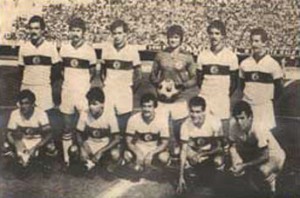
Luxembourg – one of the teams existing only to improve the goal-difference of others in the 1970s. Lowly teams left little pictorial material of themselves, so it is a rare moment of showing such a team. Not a single recognizable name – no wonder nobody cared for the likes of Luxembourg.

The matches proceeded as expected – Sweden was too weak to aim at anything, yet, proved the decisive factor at the end. France and Czechoslovakia battled for the first place. They exchanged home victories, so the final standing depended on their other results. Before the last group match France was first with 9 points. Czechoslovakia had 8, but they hosted the only remaining game – against Luxembourg. Practically, it was over. And it was because of Sweden – in the very first match played in the group, Sweden visited France and clinched a 2-2 tie. The lost point robbed France of any chance at the end of the campaign.

The French team for the friendly with Bayern (Munich) in 1979 – showing both the strength and the weaknesses. Standing, from left: Specht, Bathenay, Battiston, Bossis, Lopez, Dropsy.

Crouching: Rocheteau, Larios, Pécout, Platini, Six.

Plusses : Platini, of course, and the defence which will be strong for many years to come – Battiston, Bossis, Lopez. Minusses : goalkeeping – decent, but not exceptional. Search for good keeper will goon for years. Attack – Six and Rocheteau were exciting indeed, but scoring was a problem. Efficiency was not great – and the problem was never really solved. Six was more efficient than Rocheteau ; Rochetaeu was more difficult for the opponents. Specht and Pecout were no solutions and on their way out of the team. France continued to be unfinished team and perhaps that was the reason they failed to qualify.

Czechoslovakia was thought a bit over the hill and having difficulties replacing key players – younger talent was not so great. Depending on familiar names was a bit risky, for they were well known around Europe and none developed further after 1976 – they reached the top of their potential back then. But Venglos was crafty coach. His team lost only the away match against France and made no other mistake, The schedule was cleverly made too – Czechoslovakia played their last match at home against Luxembourg. Sure win and if goal-difference was needed by then – the best opportunity to score as many goals as needed was at hand. But there was no need to play for goals – just a win was needed. Since the match was no contest, it ended 4-0.

The squad for the first match with Luxembourg – Venglos took every match seriously. Eight 1976 European champions here. Plus other well known players. Very experienced squad, in which, hopefully, the younger players would gradually edge the veterans. They did – Vizek, Stambachr,Kozak, Rott defined the team of the early 1980s. For the moment, mission accomplished – Czechoslovakia qualified, so the 1980 finals had the the champions of 1976 as well.

1. Czechoslovakia 5 0 1 17-4 10

2. France 4 1 1 13-7 9

3. Sweden 1 2 3 9-13 4

4. Luxembourg 0 1 5 2-17 1


Group 4

Group 4 had a favorite – Holland. Poland was in decline and considered good for second, DDR and Switzerland were not seen as teams capable of major upsets, and Iceland existed only to improve the goal-difference of the others. And everything went as predicted in the first 8 matches played in the group. The 9th was between Poland and Holland in Poland. The clash between potential group winners, which Poland won 2-0. Nothing really upsetting – except that Holland did not look as strong as thought. But then again, Poland had a reputation since 1974 and a home win was hardly a surprise. After this match all went as expected again… until the last 2 group matches. DDR either played better than expected or at least took full advantage of their games against weaker opponents, for they suddenly had a chance – rather theoretical still – of winning the group. They had 11 points. Poland also had 11. Holland had 10 – but they played in both last games, hosting Poland first and then visiting DDR. Suddenly the lost match in Poland was costlier than thought earlier, but no worries: a home victory over Poland and a tie with DDR was almost sure outcome. Holland needed 3 points and by now calculation, not outplaying opponents was the strength of the Dutch. 3 points were not just desirable – it was a certainty. But… Poland, also having a chance to go to the finals, played strong game, which ended 1-1, Holland having hard time to just equalize,after Poland got the lead in the 38th minute. Poland finished their campaign with 12 points, still leading before the last group match, but heir fate was already known: no matter how the last match ended, Poland will be second in the group. The winner will be either Holland or DDR. The East Germans had home advantage. It was all or nothing for both teams, so playing for a tie was not an option. It was worthy end of the campaign: DDR got 2-0 lead in the first half. Holland managed to score a goal immediately after the start of the second half and the early goal gave them psychological advantage. They were also the classier team. In the 50th minute they equalized. 20 minutes later they scored another goal. The match ended 3-2 for Holland.

Surprisingly good campaign for DDR – they almost won the group stage. Almost… Third row from left: Werner Walter (assistant coach), Gerd Weber, Hartmut Schade, Hans-Ullrich Grapenthin, Bodo Rutwaleit, Hans-Jürgen Riediger, Reinhard Häfner, Georg Buschner (coach).

Middle row: Hans-Jürgen Dörner, Michael Noack, Martin Hoffmann, Lutz Lindemann, Joachim Streich.

Sitting in front: Konrad Weise, Wolfgang Steinbach, Dieter Kühn, Jürgen Pommerenke.

Poland finished 2nd, but fooled no one: the team was a pale shadow of the great squad of 1974. Aging played a role – by now, few of the 1974 heroes were still in the team and the younger talent was not at its prime yet. They were competitive, but no more.

Holland qualified and on the surface everything was fine: they were expected to win, they won. But…

This is the squad, which was almost beaten by Poland at home. Standing, from left: Piet Schrijvers, Johnny Rep, Huub Stevens, Hugo Hovenkamp, Ernie Brandts, Ruud Krol.

First row: Bennie Wijnstekers, Wim Jansen, Willy van de Kerkhof, Simon Tahamata, Kees Kist.

Impressive on a picture… familiar names, the hero of 1978 Ernie Brandts, the top European goalscorer Kist, bright young talent Tahamata, plenty of experience… It is save to say that by 1979 only Ruud Krol was a great star – the rest were either declining (Rep, Jansen, van de Kerkhof), or never really great (Schrijvers, Hovenkamp), or more or less empty promises (Brandts, Wijnstekers), or just promises (Stevens, Kist, Tahamata). A competent team, a bit too physical, not so technical and imaginative. A far cry from the exciting Dutch circa 1974. It was muscle and determination, not skill, qualifying them at the last minute.

1. Holland 6 1 1 20-6 13

2. Poland 5 2 1 13-4 12

3. DDR 5 1 2 18-11 11

4. Switzerland 2 0 6 7-18 4

5. Iceland 0 0 8 2-21 0