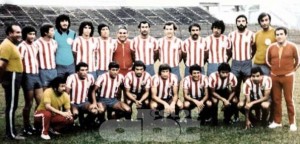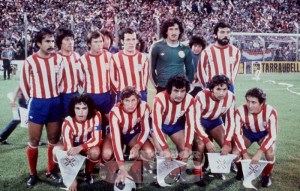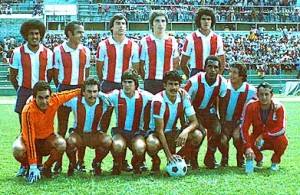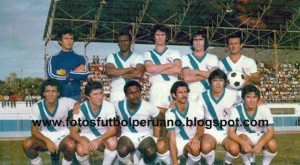
Paraguay

Ranking Paraguayan championship third is ambiguous, but this was a year of success – perhaps the best ever year of that country. Both on club and national team level Paraguayan teams conquered the world, there was exciting young star everybody was talking about. Curiously, it was also an year which practically left no information – even the final table is impossible to find.

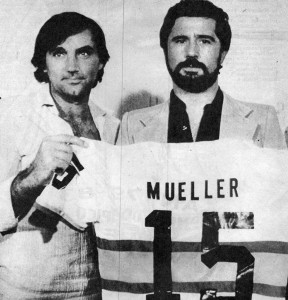
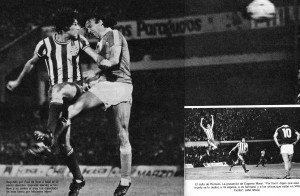
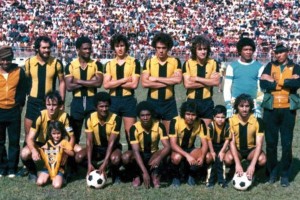
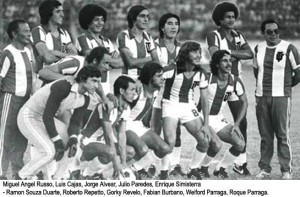
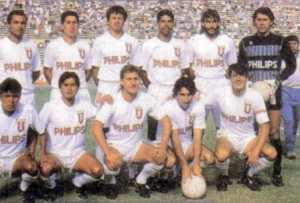
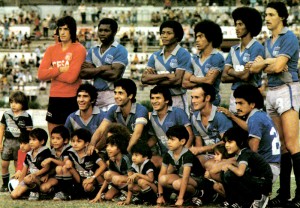
Julio Cesar Romero, 19 years old midfielder of Sportivo Luqueno was the huge name – this year he became huge international star, adoring fans already nicknamed him Romerito and he led Paraguay to victory at Copa America. He rivaled Maradona – for many was even better, which may have been justified assessment, for Maradona was still trying to get a place in the Argentina national team and Romero not only was regular player for Paraguay, but was winning too. He debuted in 1977 for Sportivo Luqueno in his native city of Luque, but – just like Maradona in his earliest years – did not win a title. 1979 was the last year he played in Paraguay – the same year he signed with Cosmos (New York) and returned to his native land and original club after more than 10 years. Stangely, it is very difficult to find a photo of his early years – the one above is from 1979, perhaps shortly before moving to USA.

The big young star was unable to make Sportivo Luqueno a winner – there was a team at its prime at the same time conquering the world – and Paraguay as well. Yet, very little can be said about this season…

Nacional won the Second Division and was promoted. To a point, it is even strange that they were playing second division football – hardly known outside Paraguay, Nacional is one of the oldest, biggest, and most successful clubs. May be after a spell of misfortune they were coming back – for the moment, only returning to first division football.

One expects the usual suspects playing big role in the championship:

Cerro Porteno, or, if they failed for some reason, perhaps

Guarani. Yet, neither was a factor this year, it seems. Still, Paraguay – like many countries all around the world – was dominated by the clubs from the capital. Sportivo Luqueno was – and is – practically the only provincial club challenging Asuncion’s monopoly. But it was not them fighting for the title – it was once again a club from the capital: Sol de America.

Apparently, good season for the club founded in 1909 in Barrio Obrero – runners up. Without a final table, it is impossible to guess did they really fought for the title or were they distant second, really overcoming only Cerro Porteno and the rest. So far, Sol de America never won the championship, so may be the big clubs were really weak this year – except one.

Champions were Olimpia – nothing strange and even entirely in line with their fantastic year in which they won Copa Libertadores and a few months later – the Intercontinental Cup. Olimpia was more or less presented earlier and little additional information is needed here. Olimpia won their 25th title – Cerro Porteno was distant second with 19 titles. Olimpia was also going through their most successful domestic period – this was still unknown, though. What was known was business as usual.

Familiar champions, sporting still rare in South America sponsor adds on their shirts.

Olimpia did not always use adds, it appears here, but more interesting is their tactical scheme – a variation of the dominant in the 1970s despite total football 4-3-3. Two full back staying deeply back, supported by defensive midfielder, and quite standard attacking line. Nothing innovative really – and the squad itself was standard, even conservative: Olimpia used 22 players, the usual number at the time, but in terms of South America, where transfer rules were lax and teams changed players often, thus listing at the end of the season large number of players used, Olimpia appeared at least stubborn.

And here is the full squad of the Paraguayan, South American, and world’s champions of 1979.


Brazil Championship

Yet, when all is said and done, the national championship stays as the pinnacle of the season – structurally and historically. To trace the tournament is confusing hell of a job – many stages, from which emerged winners going to the next round, but also teams which did not play, or ranked low, yet, going ahead. 14 clubs got direct byes from the beginning – the reason is beyond explanation: one can imagine favours to the big boys Botafogo, Flamengo, Vasco da Gama, and Fluminense, but in the same group are clubs like AA Francana, if you ever heard of such club. Most were of the same caliber, but the favoured clubs represented only two states – Rio de Janeiro and Sao Paulo. So, at the end, it was still the big boys favoured. Stage after stage, group after group, the championship crawled and meandered ahead – some times 8 out 10 participants in a group moved to the next level; sometimes only one… until the semi-finals were reached. Cortiba vs Vasco da Gama and Internacional vs Palmeiras. Up to this point Coritiba and Internacional played 19 matches each, Vasco da Gama – 10, and Palmeiras – only 3! Privileges are privileges, but… what kind of championship is one in which the champion would play less games than the team at the very bottom? If Palmeiras won, it would have been with a total of 7 games – Guara, 94th, the last in the ‘final table’ played 8.

Guara left no visual trace of itself, but the team just above them did – Chapecoense was 93rd in the unofficial final table.

Here they are, the weakest this year. It meant nothing, though – there was no relegation and the final table tells mostly the full list of participants. Chapecoense ended with 2 points, one more than Guara. Goytacaz also had 2 points (and played one match less than Chapecoense), but took 58th place – they started the competition in a later round than Chapecoense, which was taken into account.

Luck, relative form, priorities, neglect… all contributed to the final ranking. Lowest of the big names was Sport (Recife) – 92nd. Highest of the small fry – Operario: 5th.

Since there are many clubs named Operario, it must be added that this one hails from Campo Grande and also won the state championship of Mato Grosso do Sul for the first time. Not bad on national scale either – even when it counts for nothing.

But 90 participants did not matter even for mentioning at the time of the semi-finals. After all trials and tribulations, the last four were more than familiar – reestablishing what the world knew about Brazilian football: familiar names, therefore, big clubs were really stronger than the rest.

Vasco da Gama managed 1-1 tie in the first match, visiting Coritiba, and extracted 2-1 victory at home. Tough semi-final, but all good at the end.

Coritiba, the least famous of the semi-finalists, fought bravely, but no luck. One goal – the difference between life and death. If they scored equalizer in Rio de Janeiro, they should have been finalists. Unlucky.

Palmeiras had it worse – they lost their home match to Inter. 2-3 – not much, but home loss, putting them to disadvantage for the second leg. Falcao scored twice for the enemy. In the second leg Palmeiras tried as much as they could – or Inter was overcareful, preferring to keep their small advantage. A 1-1 tie eliminated Palmeiras – more or less, as expected after they lost the first match.

Standing, from left: Rosemiro, Gilmar, Beto Fuscão, Ivo, Polozzi, Soter.

Crouching: Amilton Rocha, Jorge Mendonça, Toninho, Pires, Nei.

One of the best Brazilian clubs of the 1970s, traditional powerhouse – to a point, Palmeiras still stayed very strong. Rosemiro, Gilmar, Beto Fuscao, Polozzi – all national team material. Jorge Mendonca – the big star of the team and one who made strong impression at the 1978 World Cup. Strong, good, but somehow not as strong as the squad of two-three years back. The stars were not exactly first class stars – unlike the champions of the previous team. Football is unfair and unpredictable, but judging by the team, Palmeiras was just good to reach the semi-finals and no more. Fair, it seems.

The final was also two-legged affair – opening on December 20, 1979 in Rio de Janeiro. It was the end… for the hosts. Chico Spina scored twice for Inter, the home team achieved nothing. It was hardly possible to imagine Vasco overcoming the odds… they did not. Inter won the second leg too – 2-1. Jair and Falcao scored for Inter; Wilsinho – the only goal Vasco managed. It was great to win the title in front of the home crowd .

Standing, from left: Orlando, Leao, Gaucho, Iva, Paulinho, Paulo Cesar.

First row: Catinha,Paulo Roberto,Roberto Dinamite,Zé Mário,Wilsinho.

Close close to winning the title and no more. With Roberto Dinamite and Leao, Vasco seemed strong enough and they did not lose a match before the final. Then again perhaps there squad was the reason for losing – two big stars and nothing much. Perhaps a prime example of making of Brazilian club at the time: players moved often. Instead of careful building of a strong team, most clubs preferred to sign a big star, hoping that a single man would produce a miracle. As a result, even the best players were scattered among many clubs – none really strong, for the rest of the squad was not great. Vasco da Gama had two great players – and difficult, moody Leao certainly was not going to last, as he did not in his previous clubs – and that was good enough to propel them to the final, yet, not winning it. Others did less – Flamengo with Zico finished 12th. Corinthians, having the new Brazilian magician Socrates, did not even play in the national championship.

As for the champions, life was sweet – unbeaten champions of Brazil. They played a total of 23 matches – more than any other participating club – of which they won 16 and tied 7. Scored 40 goals and allowed only 13 in their net. It was their third Brazilian title, which made them the most successful club on national level so far. Back in 1971, when the national championship was organized for the first time at least outside Brazil no one would imagine Inter so successful – Santos, Botafogo, Flamengo, Fluminense, Sao Paulo, Vasco da Gama were the grand names. May be Corinthians, may be Palmeiras, may be even Gremio … but not Inter. And so far Inter had more titles than the trully big names combined. And more recent success than their rival Palmeiras -they won their 2 titles in 1972 and 73. Inter – 1975, 76, and now 79. Their first two came under the coaching of Rubens Minelli – so far, the most successful coach on national level with three consecutive titles (1975,76, and 1977 coaching Sao Paulo) . Their third was won under the guidance of 61-years old Enio Andrade – hardly an innovator at that age, but strategic-minded coach. The team was impressive: Valdomiro, Batista, Mario Sergio, Mauro Galvao, Jair… they had valuable imported goalkeeper – the 27-years old Paraguayan Jose de la Cruz Benitez, who already was twice champion with Olimpia (Asuncion). But the greatest of all was younger player the world did not hear much about yet: Falcao. He was already great – and scored three goals in the semi-finals and the finals. Unlike the rest of the new generation of great Brazilian players like Socrates, Falcao was winning. The secret of Inter was collectivity – unlike almost any other Brazilian club, Inter was building a team to last and did not depend on fly-by-night superstars. It was noticed at the time, although not exactly as a positive example: Inter was found lacking fantasy and playing bland tactical and disciplined football – too European for Brazil’s taste. But it was successful brand of football and it was the cradle of Brazilian football – Rio de Janeiro, Sao Paulo, or Belo Horizonte – but the distant Southern city of Porto Alegre triumphing as the the most successful in the country crazy about the game. Internacional had excellent season by all accounts. Rio Grande do Sul ruled. And still does: to this very day Inter is the only club winning the title undefeated. Most likely an eternal record.


Brazil

So difficult to measure success and fame – of course, many Brazilian clubs were traditional powerhouses in their native states and also participated regularly in the national championship, alas, barely noticed. Yet, sometimes they performed stronger than famous clubs… but in the vast river of Brazilian football that meant almost nothing…

Colorado – strong in their state, but ranked 31st in the national championship this season.

Brasilia – hailing from weak part in terms of football, 73rd in the national championship, but compared to famous Santos, not even playing at national level?

Gama – champions of Distrito Federal. Coming straight from the capital of Brazil, yet a club which was internationally kind of heard of years later – in the 1990s. 48th in the 1979 national championship.

Ferroviario – once again champions of Ceara. 69th in the national championship.

It is impossible to measure what was more important – local success or national one. One thing was to win the championship of, say, Distrito Federal, but quite another to win the Paulista championship. Yet, they were championships on equal level. It could be said that famous clubs often put more effort in their state championship and neglected the national one. Or compensated weak national performance with local success – or the other way around.

Bahia – five consecutive titles at home. 50th in the national championship.

And what about Gremio?

Winners of the tough Gaucho championship, full of stars: Paulo Cesar Lima, Dirceu, Ancheta, Baltazar, Tarciso, Vantuir… Eder on his way to become a world famous star… ever present Manga adding one more title to his name… certainly a strong team, stronger than most. 22nd in the national championship… in any other country such place meant second division… in Brazil it meant Gremio was much weaker than Uberlandia, 9th, a club nobody heard of… or so it seems. The failure on national scale was pushed aside… the importance of winning Gaucho championship emphasized… and may be rightly.

Brazil non Copa Brazil

Like Amazon River, Brazilian football is humongous, difficult to navigate, overwhelming, defying understanding and description, easy to get lost, treacherous, dominant. The championship of Brazil was also called Copa Brazil – the 5th issue of the tournament. There was no league, the championship went throw meandering stages and teams played vastly different number of games – from 3 to 23 – but there was nevertheless a final table. In which points meant absolutely nothing. There was no promotion and relegation – clubs participated by invitation. But this was not the only championship and it is doubtful it was the most important too. There were the state leagues, inter-state rivalries, various other tournaments – domestic and international. Even players are difficult to trace, since most are nicknamed and often the same name appears again and again in the squads of many clubs. Politics, influence, and corruption played major roles – like piranhas and anacondas in the Amazon. The championship was getting larger every year – 94 clubs played in 1979. Even listing them is difficult, yet, those were hardly a large percentage of the total number of existing clubs. Countless more were outside and not only small fry. Santos did not participate in Copa Brasil – perhaps the most famous club out. Also Bangu. Nor Corinthians.

Corinthians with sensational Socrates did not play in the national championship. Too weak? Not invited? Not wanting? However, the question mark would be on the championship itself – surely a barely known club would be worse than this team here.

Lesser known – but known! – clubs were also out. Like Taubate.

Taubate still won a trophy this year – champions not playing on national scale.

Of course, most of the ‘missing’ clubs were never heard of outside of Brazil and even there their fame was local. Here is a glimpse of the unknown:

Capivariano – curiously blond-looking team: standing from left: Wilson, Ze Guilherme, Sergio, Milo, Alemao, ?

First row: Toninho, Brecho, Moises, Miro, Mauro.

Palmeiras Blumenau, Amazonas state. Standing, from left: Valmir, Nilson, Pedrão, Dito-Cola, Saulo, Valmir.

First row: Miltinho, Márcio, Braúlio, Kituta, Ednei.

Flamengo Varginha, Sao Paulo.

America Sao Jose Rio Preto, Sao Paulo – note the fans on the stands. Quite many for unheard-of club.

One more from Paulista championhsips – Palmeiras Sao Joao da Boa Vista. Champions of something.

Two former Botafogo players here.

Careful with those names… too often they are the same. This is Vitoria – but not the well known from Salvador, Bahia. This one is from Vitoria, Espirito Santo.

One more club not even known, yet with a trophy – international one this time: Vitoria won the 9th President Park Chung-Hee Cup in South Korea. Today the tournament is known as Korea Cup, Vitoria is still unknown.


Argentina Nacional

Campeonato Nacional General Don José de San Martín – the second and differently organized Argentine championship – involved clubs of the whole country, playing preliminary tournaments which winners joined various top clubs in the later stage of 4 7-team each round-robin groups. A bit of mystery veils the structure: 7 teams, playing against each other twice makes for a total of 12 games – but every club played 14! Here small clubs, hardly heard of, had a chance of competing with the grand clubs of Argentine football – clubs like Kimberley (Mar del Plata).

Standing from left: Miguel Benítez, Basigalup, Lucarno, Jesús Martínez, Davino , Roberto Acosta. Crouching: Agonil Alfredo Veira, Corró, Eresuma, Valdez.

Kimberley finished 6th in Group B – small clubs had no chance against the big ones. Alianza Juventud Pringles and Atletico Ledesma were last in Group A. Independiente Rivadavia and Altos Hornos Zapla – last in Group C. Cipolletti – last in Group D. But that was the ‘exotica’. The top 2 clubs of each group qualified to the next stage. Once again Boca Juniors disappointed.

A version of the team playing in El Nacional – they fought and were among the 4 teams losing the least matches in the first phase – 2 – but finished a point short from qualification in Group D. There were some surprise winners, however. Velez Sarsfield and Colon (Santa Fe) topped Group A. Independiente was the big loser here – 5th. In Group B Newell’s Old Boys dropped to 4th place. River Plate clinched 2nd place, but the winners were Talleres (Cordoba) – a second division club. Another brave, but unsuccessful tournament for Diego Maradona – Argentinos Juniors finished 3rd in Group C. Racing Club won the group on goal-difference, but behind them a club not playing neither in Primera A, nor in Primera B: Atletico Tucuman. The lowliest club to qualify, beating Argentinos Juniors by 2 points. Group D was perhaps the toughest and most unpredictable – Boca Juniors, Estudiantes (La Plata), San Lorenzo de Almagro, and Rosario Central. None of them won the group – Instituto (Cordoba), another club outside the first two divisions of Argentine football finished 1st thanks to better goal-difference. Rosario Central took the 2nd place.

The ¼ finals did not favour the big clubs: two pairs were big clashes: Rosario Central vs Racing Club and River Plate vs Velez Sarsfield. Racing Club was the only team losing both legs at the ¼ finals.

Standing, from left: Issa, Cejas, Ricardo Alonso, Carlos López, Cárdenas.

First row: Barú, Zavagno, Fernando Rodríguez, Oscar A. García, Roberto O. Díaz , Olarticoechea.

Faded glory… the squad was not bad, but… Rosario Central easily beat them twice.

Goal-difference decided the winners in the other three pairs, where each opponent won a match and lost the second: Atletico Tucuman eliminated Instituto by 5-3. Union clinched a difficult victory over Talleres 3-2. Talleres lost, yet gained…

Standing, from left: Binello, Guibaudo, Oviedo, Arrieta, Galván, Ocaño.

First row: Bocanelli, Cabrera, Reinaldi, Valencia, Ludueña.

With Reinaldi, Galvan, and Valencia Talleres looked stronger squad than many, but they were not members of the first two Argentine divisions. However, their performance in the El Nacional promoted them to Primera A. It was in accord with the Argentine Football Association resolution, although it is still confusing: apparently, the best performing provincial club in El Nacional not playing in Primera A was promoted. But it was Talleres… it was Atletico Tucuman. Most likely more than El Nacional play was taken into account – Talleres ranked higher in general and perhaps even this very year had stronger combined (local and national) performance than Atletico. Whatever… Talleres was promoted.

River Plate and Velez Sarsfield made the big drama – after winning 1-0 each, the opponents went into overtime. Still no winner. Eventually, River Plate prevailed at the shoot-out: 4-3.

Still no luck for big boys in the ½ finals – Union played against Atletico Tucuman, so River Plate met Rosario Central. No difficulties for River Plate this time – they won both legs.

Not a bad year for Rosario Central, but no trophies.

Union had no difficulties against Atletico Tucuman either – they also won both legs, not permitting the opponent to score at all.

Atletico Tucuman lost, but had great season anyway – they were the best performing team not a member of the the Argentine top 2 divisions. Reaching the semi-finals of El Nacional was fantastic for a little known club.

And the final at last. Union (Santa Fe) vs River Plate. As names and reputations go – hardly a contest. Union did not particularly well in Metropolitano – they played in Group A and finished 6th. River Plate won the same group – and the championship after that. However, the games against Union did not end good: River Plate lost 0-2 in Santa Fe and managed only a scoreless tie at home. It was not to be an easy final.

And it was not… there was no winner. On December 19 the finalists met in Santa Fe – 1-1. The result favoured River Plate, but four days later Union managed a 0-0 tie. Looks like away-goal rule was used, benefiting River Plate – they won without no more fuss.

Unbeaten losers, standing from left: Regenhard, Hugo Lopez, Cardenas, Pumpido, Telch, Mazzoni

Crouching: Ribeca, Alberto, Paz, Pitarch, Ali.

Brave little team – only the legendary Roberto Telch is familiar name here. Telch was already 36 years old – he moved from San Lorenzo, the club he is really a legend, to Union in 1976. Apparently, too old for big clubs… but good enough to lead Union to the final in 1979. Too bad these team did not won the championship – they were not beaten. In fact, the direct record with River Plate this year was in their favour – 1 win and 3 ties. Good work by their coach Reynaldo Pedro Volken. One member of the team eventually raised to great glory – Nery Alberto Pumpido – but the goalkeeper had to wait quite a long time for that.

A double for River Plate – and 18th title. Great season, although their second victory was a bit suspect. It counts,though.

Standing, from left: Passarella, Merlo, Saporiti, Lonardi, Hector Lopez, Fillol.

First row: Ramon Diaz, Juan Jose Lopez, Luque, Alonso, Commisso.

Reigning world champions Fillol, Passarella, Luque, and Alonso and a good number of solid Argentine stars – Commisso, Hector and Juan Jose Lopez, Diaz, Pavoni. May be not extraordinary team, but with stronger squad than any other Argentine opponent. A great coaching success for one of the biggest all-time Argentine players – Angel Amadeo Labruna. Winner on the pitch and winner as a coach.

There was one more thing to be decided before the folding of the season: the second team Argentine represent in the 1980 Libertadores Cup. The runner-ups of the championships played a two-leg play-off at 27th and 30th of December. In Santa Fe the opening match between Union and Velez Sarsfield ended 0-0. At home in Buenos Aires Velez Sarsfield won 3-0 and qualified.

Argentina Metropolitano

Campeonato Metropolitano – the first championship of Argentina – proceeded in the somewhat standard league format. Primera A consisted of its usual 20 teams, but the number had to be reduced in the next season to 19. The top division was subdivided into two groups of ten clubs each. The last two teams were to play relegation tournament and the top two – to compete for the title. Boca Juniors was perhaps viewed as favourite – not only because of tradition, but because they were the best South American team in the last two years. But they were not the outstanding leaders – the championship was competitive and the only clear thing were the outsiders. In Group A River Plate clinched victory with 24 points. The second place went to Maradona-lead Argentinos Juniors, but this did not mean they proceeded to the semi-finals: they were second only thanks to their larger number of scored goals. Apart from that, the record of Argentinos Juniors and Velez Sarsfield was exactly the same, including goal-difference. Play-off was played to decide who goes to the ½ finals – Velez Sarsfield destroyed Argentinos Juniors 4-0. The battle for the top places was tough: 5 clubs ended with almost equal points – the difference between 1st and 5th place was 2 points. It was different at the bottom: the last two clubs combined record did not even match 8th placed Huracan’s 16 points. Gimnasia y Esgrima (La Plata) was 9th with 8 points and Platense was last with 6 points. Both teams went to the relegation tournament.

Group B was not so tough, although the race was also close. At the end of table were two hopeless outsiders. Chacarita Juniors took the last place with 9 points. Atlanta was 9th, also with 9 points, but better goal-difference. Atlanta distinguished themselves as the only club not winning even a match in the championship: the lost 9 games and tied also 9. They also had the worst scoring record – 10 goals. The outsiders did not troubled anybody in the subgroup – the 8th placed team finished with 15 points.

All Boys (Buenos Aires) – 8th in Group B of Primera A. Perhaps other clubs would have been disappointed, but the modest club this position meant safety: they kept a place among the best.

It was not so for other teams: San Lorenzo, one of the ‘Big 5’ of Argentine football, finished 7th.

San Lorenzo finished behind a club, which was at least supposed to finish lower:

Ferro Carril Oeste finished 6th – nothing much in the grand scheme, but not bad after all, for the club did not have many famous players: Oscar Garre was the one star Rodrigues Neto, Brazilian national team defender, was the other. To a point, it was curious to see him playing for a smallish Argentine club – after all, he was part of the Brazilian 1978 World Cup squad. Garre and Rodrigues Neto were enough for finishing above San Lorenzo, but nothing else.

Boca Juniors failed too – they finished 4th with 20 points. Estudiantes were 3rd with 22 points. Well, only two clubs going ahead… tough competition. Independiente finished 2nd with 24 points and Rosario Central topped Group B with 26.

Independiente rebuilding and remaining strong: Goyen, Olguin, Clausen, Trossero, Zimerman, Killer and crouching Alzamendi, Guisti, Brailowsky, Bochini, Percudani.

Ambitious Rosario Central – winners of Group B.

The second phase of Campeonato Metropolitano involved 8 teams. The relegation tournament was vital for survival – only the winner was avoiding relegation. But even the weakest teams in the preliminary groups were not equally weak… Atlanta won just a single match in the round-robin mini-league and finished last. Chacarita Juniors won 2 matches and lost 4 – they ended 3rd with 4 points. Much better was Gimnasia y Esgrima – 3 wins, 1 tie, and 2 losses. However, they were unable to beat Platense and finished second with 7 points.

Standing, from left: Varise, Papandrea, Guyón, Rego, Grimoldi, Gianetti.

First row: Morelli, Picerni, Pesoa, Gilé, Miguel Ángel Juárez.

Not a famous squad surely, but still head and shoulders above the the other three participants of Torneo Reducido del Metropolitano. 5 wins and 1 tie – Platense finished 4 points ahead of Gimnasia y Esgrima and escaped relegation. The rest went down.
Meantime the ½ finals of the championship went ahead: River Plate won both legs against Independiente.

The new Independiente still had a long way to go – so far, they were only able to reach ½ finals.

The other pair was produced more dramatic clash: a single goal decided the winner. Velez Sarsfield managed a goalless tie in Rosario and won 1-0 at home. Unfortunate result for Rosario Central.

Thus, Buenos Aires clubs clashed for the title: River Plate vs Velez Sarsfield. The final was like the semi-finals – two legs. River Plate won both.

Standing, from left: José Jorge González, Omar Jorge, Falcioni, Orlando Ruiz, Malaquín, Quinteros. First row: José Castro, Roldán, Ischia, Julio César Jiménez, Larraquy.

The squad perhaps reveals why Velez lost – not a single 1978 World champion here. Only Roldan was a star – decent team, but nothing exceptional. Even their curious number of coaches – three: Antonio Cielinski, Juan Carlos Montaño, Alfredo Bermúdez – did not make a difference. Reaching the final was their maximum – in the final matches Velez scored only goal. And received 7! River Plate was supreme.

Metropolitano champions standing from left: Passarella, Merlo, Saporiti, Pavoni, Héctor López, Fillol. Crouching: Pedro González, Juan J. López, Luque, Alonso, Commisso.
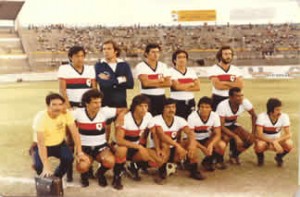
More than familiar names here, hardly in need of introduction. The 17th title was won with confidence: River Plate lost only 3 matches during the campaign, but all in first phase. They won every match of the ½ – finals and the final. And this was not all.
 

Argentina II Division


Argentina had her strange double championship, as ever making it difficult to figure out the real strength of the clubs. Changes confused the matter further – the first division was to be reduced for the next season, so only one club from Primera B got promotion. But the promoted teams were two… the second one came from the second championship, differently organized from the standard divisional one . The second promotion seemingly was to be given to the best club not already a member of first division. The clear part belonged to the structure of Campeonato Metropolitano. Primera C – or 3rd Division – was won by Deportivo Espanol, hailing from Flores, Buenos Aires.

Standing, from left:Leandro Pérez, José L. Pérez, Bernárdez, Angeletti, Barral, Catalano.

First row: Estigarribia, Rivero, Balbuena, Luis Moreno, Arbelo.

Little can be said about the third-level winners – the most important news was they were going up to Primera B.

The 18-team Primera B belonged to this structure and there were no tricks: all teams played against each other twice, the standard European formula. The last was relegated – Flandria was 18th this year. Although many of the 2nd division members played among the best, most faded away long time ago and sounded exotic outside Argentina – clubs like Temperlay.

They finished right in the middle of the league – 9th. Banfield was perhaps the name readily considered as a favourite, but they were not – they finished 3rd, thanks to better goal-difference, but were not in the promotional race at all. Only two clubs competed for promotion – Deportivo Italiano and Tigre. Deportivo Italiano scored much more goals than Tigre, but finished with a point less.

To many outsiders Tigre sounded like new, suddenly rising club, but they were not new at all – the club was founded in 1902 under original name Juventud del Tigre, representing the city of Tigre. By the end of the 1970s the club’s name was what left of original geography – the city was Victoria for years, itself part of Greater Buenos Aires. Tigre’s stadium itself was perhaps bigger than it should have been, if one thinks the original setting: Victoria had about 40 000 population – the stadium had place for over 25 000. It makes sense only when one sees the club in terms of Buenos Aires – supporters were perhaps everywhere and visiting teams brought their own crowds. All in one city. Apart form that, Tigre had nothing to brag about: they played a few times in first division. Usually Tigre did not last long among the best – their most recent inglorious appearance was in 1968. Ten years later they were to try again.

Standing, from left: Eduardo Sánchez, Lemme, Pellegata, Giustozzi, Pistone, Ros.

Crouching: Aimetta, Roberto R. Carrizo, Pasini, Bello Meza, Ianuzzi.

Naturally, a second division team had no stars, but the boys fought bravely this year. They lost only 2 matches. Won 18, tied 14, scored 49 goals, but allowed the least goals in the league – 26. They did not lose a match at home – the only other club without a home loss was Villa Dalmine (5th). At the end, Tigre finished with 50 points – one more than Deprotivo Italiano. They clinched the championship and got the single promotion. Well done.


Copa Libertadores

Of course, Olimpia won Copa Libertadores before winning the Intercintinental Cup. The formula of Copa Libertadores was part of the problems of the Intercontinental Cup – the tournament kicked in March and ended in July. There was no other way, however, considering the South American championships. Boca Juniors – reigning holder of the Cup – got a bye and proceeded directly to the semi-final stage. All others played the preliminary groups – 5 of them, 4 teams of two countries in each. Some easier than others: Group 4 was perhaps the easiest, for there Venezuelan teams played against Chilean representatives. The toughest was Group 3, opposing Peruvian to Brazilian teams. Only the winners went to the semi-final stage. Independiente (Avellaneda) won Group 1. The other Argentine representative – Quilmes, also from Avellaneda, ended last. Something expected… Quilmes were just happy to play in the tournament, the Colombian teams – Deportivo Cali and Millonarios – were not at the general Argentine level. In Group 2 Paraguayan teams were favourites – Bolivia did not count much. But the difference was no all that big and a single point was the difference between losers and winners – Bolivar (La Paz) ended with great scoring record, but with 9 points. Olimpia (Asuncion) won 5 of their 6 matches and lost one – to this very Bolivar in La Paz. Yet, 10 points were better than 9 and Olimpia went ahead. Group 3 was the most interesting group and also most surprising: Brazilian teams were naturally favoured over the Peruvians, and Palmeiras was the big name here. Alianza (Lima) was the likelier stronger Peruvian club… historically. Alianza was unable to get even a point, losing all their games and scoring only 5 goals. Palmeiras finished 3rd… The battle was between Universitario (Lima) and Guarani (Campinas) – the Brazilian team prevailed. No contest in |Group 3 – the Venezuelan teams did not win a single match. It was Chilean battle of sorts – O’Higgins (Rancagua) was not really at the level of Palestino (Santiago), which won the group without losing a match and receiving only 2 goals in their net. In the Group 5, the Uruguayan teams were considered stronger and they were – the two Ecuadorian clubs achieved a combined record of 7 points: the same as Nacional (Montevideo). Which finished 2nd , 3 points behind their arch-rivals Penarol. Like Palestino, Penarol did not lose any match and received only 2 goals.

The winners of the five groups, plus Boca Juniors, went to the semi-finals – two round-robin groups of three teams each. Group 1 looked tougher – as far as names go. Boca Juniors, Independiente, Penarol… Uruguayan football was not great in the 1970s, so Penarol was out of the race. Since goal-difference did not count in South America, there was no group winner – the Argentine teams finished with 5 points each. A play-off was staged in Buenos Aires – regular time ended scoreless amd only in the extra time Boca won, thanks to their star Mastrangelo.

In the other semi-final group no such drama happened – Olimpia (Asuncion) was way above the rest. Guarani (Campinal) and Universitario (Lima) did not won a single match. In contrast, Olimpia did not lose any – they finished with 3 wins and 1 tie. Four points ahead of Guarani and the battle was actually finished before the last match between the two clubs in Campinas: by the time, Olimpia had 6 points and Guarani – 2. The last match did not matter at all – Guarani blew their chances four days earlier, when they were unable to beat Universitario at home.

Thus, Boca Juniors and Olimpia reached the final. It was seemingly easy to predict final: Boca Juniors won the last two Copa Libertadores tournaments, Argentina was the reigning football world champion, and since 1966 Argentine clubs did not win Copa Libertadores only twice – in 1971 and 1976. For Boca Juniors it was 4th consecutive final and it looked like they were building a dynasty, following in the steps of Independiente (Avellaneda). Olimpia was the underdog by far… once they played at the final, and lost it. It happened in ancient time… in the very first Copa Libertadores, in 1960. Paraguayan football did not make much news anyway, but although the newest football sensation was Paraguayan, he was not playing for Olimpia. Still, a final is a final… anything was possible, especially in South America. Olimpia hosted the first leg of the final and won 2-0 – both goals were scored early in the match.

Aquino surprised Boca in the 2nd minute – 1-0.

2-0 in the 27th minute – Piazza doubled the lead. Perhaps Boca did not take the opposition too seriously… but if that was the case, they paid dearly. Paraguayan players were never famous, but they were historically very tough. The result stayed unchanged.


1st leg. Defensores del Chaco, Asunción, 22- 7-1979


Olimpia – Boca Juniors 2-0

2′ Aquino 1-0

27′ Piazza 2-0


Olimpia: Almeida, Paredes, Jiménez, Solalinde, Kiese, Piazza, Isasi, L. Torres,

Villalba, Talavera, Aquino.

Boca Juniors: Gatti, Pernía, Capurro, Mouzo, Bordón, J.J. Benítez (Palacios),

Suñé, Salinas, Mastrángelo, Salguero, J.R. Rocha.


Referee: Castro (Chile)

Attendance: 50,000

Five days later Boca hosted the second leg. They tried to win, they failed…

The match ended 0-0 and Olimpia triumphed at legendary La Bombonera.

2nd leg. Estadio La Bombonera, Buenos Aires, 27- 7-1979


Boca Juniors – Olimpia 0-0


Boca Juniors: Gatti, Pernía, Sá, Capurro, Bordón, J.J. Benítez, Suñé,

Zanabria (Salguero), Mastrángelo, Salinas, J.R. Rocha (Palacios).

Olimpia: Almeida, Solalinde, Paredes, Jiménez, Piazza, L. Torres (Guasch), Kiese,

Talavera, Isasi, Villalba, Aquino (Delgado).


Referee: Cardellino (Uruguay)

Attendance: 65,000

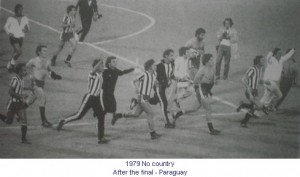
Fans rushed on the pitch to celebrate with their heroes – Piazza in the middle.

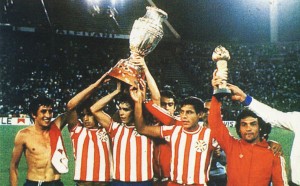
Then the Cup was presented to the new winners.

Hugo Talavera proudly shows it the crowd – it was great moment. Not only Olimpia won for the first time and on hostile stadium; not only they were the first Paraguayan winners – they were the first club outside the big trio of Argentina, Brazil, and Uruguay to win Libertadores Cup. It was the first international trophy for Paraguayan football since 1953. Fantastic moment.

Boca Juniors played their third consecutive final and lost it.

Standing from left: Mouzo, Sune, Zanabria, Pernia, Santos, Bordon.

Crouching: Mastrangelo, Salguero, Benitez, Perotti, Suarez.

This is not the team which lost to Olimpia – it is rather an illustration of the small shortcomings of Boca. Strong team, to be sure, but hardly one to build a dynasty. Strong players, long squad – Gatti, Squeo, Sa, Capurro, Palacios, Salinas , Rocha, the list was long. Experienced stars, but.. hardly top rate. There was something missing – a bit more class, a bit more talent, a bit more will. Boca Juniors won twice, but failed at the third attempt. Yet, they stayed as leading Argentine team and one of the strongest in South America at the time. Only they were not extraordinary.

Fantastic year for Olimpia – their first, but not last international success. Starting as underdog,

the Paraguayans conquered Copa Libertadores in style: they lost only one match during the whole campaign: the away match against Bolivar (Bolivia) in the first round. It was small loss – 1-2. At the final Olimpia did not even allow Boca to score a goal, keeping a clean sheet. It was historic victory in every aspect, even the small one of using sponsor’s add on their shirts – they were first in that.

Crouching, from left: Isasi, L. Torres, Villalba, Talavera, Aquino.

Standing: Solalinde, Paredes, Kiese, Gimenez, Almeyad, Piazza.

Anonymous team… no wonder nobody paid attention to them. But it was not a team of lucky nobodies – it was well made team, combining experience with young talent. Paraguayan players were never famous, but one has to keep in mind that most players of this team were members of the national team – and they were yet to add another victory this year. It was more than just promising bunch – some of this team would play and define the national team of Paraguay for years. Plenty of talent, which Luis Cubilla utilized in great way. Carlos Kiese (b. 1957), Osvaldo Aquino (b. 1952), Rogelio Delgado (b. 1959), Evaristo Isasi (b. 1955), Alicio Solalinde (b. 1952), Roberto Paredes, Luis Torres, Ruben ‘Toto’ Gimenez, and the missing on the photo Jorge Guasch (b. 1961) – young and bright, most of them already members of the national team, and they all played for it long. Hugo Talavera (b. 1949), the veteran, providing class and authority, also was a national team regular. One and a half foreigners completed the team with their solid experience: both were Uruguyan born. The defender Miguel Angel Piazza (b. 1952) was not famous, but was well respected player, who already had played for serious clubs (Penarol and the Argentine San Lorenzo and Newell’s Old Boys). The goalkeeper Ever Hugo Almeyda (b. 1948) was a different story – he started his career in Uruguay back in the 1960s, but joined Olimpia in 1973 and played for the club until 1991! In 1975 he took Paraguayan citizenship and was included in the national team – he played 22 games for Paraguay. Already old, experienced, solid keeper. And he was not the only player loyal to Olimpia – most of this team played long years for the club. They became instant legends and remained so for the club, but most of them had big role in Paraguayan football of the 1970s and 1980s too. A great team. And Cubilla – also remarkably loyal to Olimpia – saw their potential, trusted them, and shaped them into internationally successful squad. Young coach and young squad – what could be better: thanks to this year Olimpia joined the ranks of the best South American clubs – and stayed there.

Intercontinental Cup

Nottingham Forest was the best in Europe, but not the best in the world. It did not matter… the Intercontinental Cup was dying for a long time. Too many problems piled up – back in the 1960s the European interest was higher, but back then Latin football dominated Europe. Spanish and Italian clubs were motivated to meet South American teams: there was cultural similarity and familiarity, there was a chance of discovering and eventually getting top South American players, may be even money to be made. But South Americans took the challenge too seriously and compromised the game, making a war instead of sport. They played increasingly dirty football, using any means of intimidation on and off the pitch. Southern Europeans coped with that, in part because they were not above such tricks, but by the end of the decade Northern European teams topped Southern Europeans and they did not like the mean spirit of the contest. Other things changed too – money were more important than pride. Northern Europe as a whole was not very familiar with South American football and did not care much. With smaller crowds attending, the financial side of it loomed as a big problem. Travel was difficult and expensive. There was no profit, only costs. The atmosphere surrounding the games in South America was vile, escalating to death threats. The risk of losing key players was too great. And the Intercontinental Cup was never all that important to the Europeans. Objective problems with scheduling the games existed from the birth of the cup, getting with time huge – climate itself worked against the challenge meant to be the pinnacle of football: the European summer was practically out of question. In Europe, it was either vacation or early days of preparing new teams for the next season. Not ready to play yet, not even shaped. Fans were on vacation as well and the interest was next to nothing. In South America it was winter – the time of a break as well. Only once in the whole existence of the tournament a match was played in August – the first leg in 1970. European winter was not an option either: it was almost impossible for the South Americans to adjust to the harsh European winter. European fans were reluctant to brave the weather too. Going to scorching South American summer was a problem for the European teams as well – coming from snow and temperatures bellow zero. Spring and fall were the best time for both sides, but at that time domestic and continental championships were in full force and it was very difficult to find suitable time, especially for the European clubs – rescheduling of regular games to play intercontinental match faced many objections. It was a problem similar to scheduling the European Supercup – moving the challenge to some free date increasingly made it so distant from the time the participants actually won the trophies giving them the right to compete, that it looked rather irrelevant – the teams were no longer the same, not they were in their original form. The importance was lost – at the time of the meeting there were current worries much bigger than a game seemingly belonging to the past. And since nobody could force clubs to participate, the Europeans chose to decline participation. Beginning with Aiax in 1971. During the 1970s only twice European Champions Cup holders played for the Intercontinental Cup – Ajax in 1972 and Bayern in 1976. Losing finalists played in 1971, 1972, 1974, and 1977, which further eroded the challenge – it was not between the best clubs of the continents. In 1975 and 1978 there was no contest at all. Nottingham Forest declined to play in 1979 too… Malmo FF accepted, but it was especially poor contest: not only the European representative was a small club, but the South American champion was almost unknown in Europe. Olimpia (Asuncion) vs Malmo FF triggered no interest in Europe whatsoever. The schedule did not help either… the opening leg in Sweden was played November 1979. The second leg – in March 1980. No wonder this issue of the Intercontinental Cup left almost no trace and today brief records are riddled with mistakes. Hardly anything can be said about the challenge – only dry records.

1st. leg:

Malmö.

November 18, 1979.


Malmö (Sweden) 0-1 Olimpia (Paraguay)


Goal: Isasi.


Malmö FF: Moeller – R. Andersson, Johnsson, Erlandsson, Prytz, Hansson,

Ljungberg, Malmberg, Arvidsson, Sjöberg, Kinvall.


Olimpia: Almeida – Paredes, Piazza, Souza, Solalinde, Kiese, Delgado, Torres,

Ortiz, Céspedes, Isasi.

Speedy winger Evaristo Isasi scored the only goal in the 41st minute. The Paraguayans won and perhaps were more confident for the second leg. Hard to be sure, though – there were still months until the second match was to be played. And in these months there were changes… the Swedish championship ended, there was a winter break between seasons and transfer period. Players left, new ones arrived – two foreigners in particular: a curious Danish veteran – John Hansen, born in 1949 – who played in South Africa, Australia, and Helsingborg (Sweden) before joining MalmoFF, and very young English defender – Tim Parkin, b. 1957 – who arrived from Blackburn Rovers, where he was deep reserve with almost no playing experience. The newcomers were virtually unknown and, judging by their careers so far, hardly great additions, but they were certain mystery for the Paraguayans – perhaps scary mystery. As for form, it was impossible to judge, but almost certainly Malmo FF was not at their best – the Swedish championship was just about to begin.

But Olimpia was equally a mystery to the Swedes: were they to be the same team which played in November? Stronger, weaker, who knew? More or less, the second leg was a meeting between equals… Isasi broke away in wonderful counter-attack and Swedish defender had no option, but to foul him in the penalty area. Alicio Solalinde scored from the penalty – 1-0 in the 40th minute. Almost mirroring the opening match in Malmo… but Erlandsson eqaulized three minutes from the start of the second half. Eventually, Michelagnoli scored a second goal for Olimpia in the 71st minute – and that was the final result: 2-1.

Asunción. Field: Defensores del Chaco.

March 2, 1980.


Olimpia (Paraguay) 2-1 Malmö FF (Sweden)


Goals: Solalinde, Michelagnoli / Erlandsson.


Olimpia: Almeida – Solalinde, Paredes, Sosa, Di Bartolomeo, Torres, Kiese,

Talavera (Michelagnoli), Isasi, Valik, Aquino.

Coach: Luis Cubilla.


Malmö FF: Moeller – R. Andersson, Parkins, Johnsson, Vidsson, M. Andersson,

Olsson (Hansen), Prytz, Erlandsson, Sjöberg (Malmberg), T. Andersson.

Olimpia won both matches and the Intercontinental Cup was theirs.

The Intercontinental final left almost no evidence of itself – the photo above is more or less everything one can find today. Is it the moment of triumph after the last whistle of the referee or was it the moment after Solalinde scored the opening goal? It is him with number 2, but who is his teammate? Paredes and Aquino were both bearded… This is not the only mystery of the finals: the records above are the existing ones in the site of the international football statisticians – reputable source. Yet, there are mistaken names – Souza in the first match and Sosa in the second must be the same player… or not? Vidsson and Parkins listed in the Malmo FF’s second leg team… Parkin is misspelled. There was no Vidsson in the Swedish squad of that time – most likely Arvidsson’s name is misspelled. And there is huge doubt about Olimpia’s player listed as Valik. Yaluk may be? Who can tell for sure… the current site of Olimpia pays no attention to their great triumph in 1979-80. Even the players of the squad do not exist. The official site of Malmo FF is equally blank. This final is certainly the most obscure one.

Alicio Solalinde remains as a hero – most likely because of his goal in the second leg, but he was one of the best players of Olimpia anyway. Existing information is next to nothing, but one thing remains:

Olimpia conquered the world. Luis Torres lost his shirt, but got the Intercontinental Cup firmly in his hands.

Obscurity is one thing, but something else cannot be denied: for both clubs it was the highest achievement ever.

Third row, from left: Robert Prytz, Claes Malmberg, Tommy Hansson, Ingemar Erlandsson, Tore Cervin, Thomas Sjöberg, Aage Hansen, Magnus Andersson

Middle row: Björn Nilsson, Mats Arvidsson, Kent Jönsson, Tim Parkin, Sanny Åslund, Anders Olsson, Jan-Olov Kinnvall

Sitting: John Hansen, Roland Andersson, Egon Jönsson (Lagledare), Bob Houghton (Manager), Keith Blunt (coach), Roy Andersson, Jan Möller.

Yes, this is the 1980 version of Malmo FF, but also the one playing the last match counting for 1979 – their best season ever. It was the crown achievement of Bob Houghton, who not only made this team, but kept if for years on top in Sweden, and making it competitive in Europe. For any bog club, losing two finals counts for nothing – but for a modest club it was incredible. European Champions Cup final, Intercontinental Cup final – few ever reached such heights. Yes, Malmo lost both finals, but by very small margin. They were equal opponents both times.

The Paraguayans were on top of the world – and the world, although without much interest, finally heard of them.

Of course, the biggest hype was at home – champions of the world! Counted for 1980 – the confusion with schedule rightly made them champions of the world for 1980, but still it counts for 1979. Which was their greatest year – winning Copa Libertadores for the first time, followed by winning the Intercontinental Cup. And it was not only club’s success – Paraguay won Copa America in 1979 as well and Olimpia was heavily represented in the national team. Clearly, these players were at their best form.

All the reasons to be proud are in their hands. It was the greatest season the club – they played at the final of the very first Copa Libertadores in 1962 and lost. They also the first club outside the big three South American football nations – Brazil, Argentina, and Uruguay – to win the trophy. They defended South America in the intercontinental clash, icreasing the supremacy of their continent over European clubs. And may be because of the victories in 1979-80 Olimpia became stronger club – may be even among the top in the continent, for they were yet to win Copa Libertadores again. And there was even more: their coach.

Luis Cubilla – pictured here with Copa Libertadores, but never mind: the Intercontinental Cup was coming into his hands too. The great star of the 1960 of not Uruguayan, but of the whole South American football immediately proved to be talented coach. A born winner – his trophies were not only too many and won in two continents, but he even managed to finish his playing career with a victory. He stepped down as champion of Uruguay in 1976. In 1978 he was hired to coach Olimpia – he was 38 and without previous coaching experience… and he propelled Olimpia to the top of the world in two years. There was some irony in it – it was Cubilla who prevented Olimpia from winning the 1962 Copa Libertadores: his Penarol won with difficulty the opening leg in Montevideo 1-0. In Asuncion Olimpia scored in the 28th minute – it was equal opportunity until he scored in the 83rd minute and gave the aggragate victory to Penarol. Now he was winning with the club he defeated once upon a time. Luis Cubilla somehow was never talked about as a coach – perhaps because he never coached in Europe. He is unfairly ignored, for he was very successful coach. Especially coaching Olimpia – he returned to the club three more times and… died as their coach in 2010, at 72 years of age. It could be said that Cubilla and Olimpia were made for each other. It could be said that he transformed the club for good. The facts are simple – Cubilla made Olimpia world class champions.

This was the last gasp of the Intercontinental Cup…


European Supercup

The European Supercup continued to be without fixed place in the calendar – the challenge depended on agreement between the participants and difficult to fit in their schedules. Thus, the 1979 issue was played in 1980. The first leg in Nottingham at January 30,1980 and the second leg – Ferbruary 5 in Barcelona. By that time the opponents were different teams than the ones winning the European Champions Cup and the Cup Winners Cup back in the spring of 1979. Barcelona was a ‘new team’, whatever that meant. In reality, there was one big change – Neeskens was gone and Allan Simonsen added. Forest was more similar to its previous team – in philosophy. Two new players were added – both of the kind preferred by Brian Clough: aging, faded, mercurial stars. Charlie George and Stan Bowles. Both yesterday’s news and not very desirable by now, thanks to their records of erratic, unpredictable performance and general conduct. Other managers stayed away from them, but not Clough. Nottingham was in good form, so was Barcelona – both teams in mid-season, at their seasonal peak. Which meant a duel of two not very attractive teams as far as playing style was concerned. A battle between two tactically minded teams was not to be a great show – and it was not. It is hardly remembered clash… little evidence remained from it. At home, Forest scored and early goal and won 1-0. Charlie George scored in the 9th minute – once again the suspect veterans of Clough delivered. In the second leg Barcelona scored from a penalty in the 25th minute – Roberto converted. In the 42nd minute Kenny Burns equalized – again, one of the Clough’s favourite ‘goners’ raised to the occasion. Nothing more happened to the end of the match. Nottingham won the Supercup.

1st Leg, City Ground, Nottingham, 30 Jan 1980


Nottingham Forest (1) 1 FC Barcelona (0) 0

9′ 1-0 N: George


2nd Leg, Nou Camp, Barcelona, 5 Feb 1980


FC Barcelona (1) 1 Nottingham Forest (1) 1

25′ 1-0 B: Roberto (pen)

42′ 1-1 N: Burns

Nottingham Forest won 2-1 on aggregate.

Barcelona’s ‘new look’… may be, but nothing new. Simonsen and Krankl were supposed to do more than just ‘looking new’ – the team continued to play as they did before: tough, unattractive football. Not a great team… wins were problematic, if coming at all.

Nottingham Forest on the other hand was building rapidly quite a trophy room. Barcelona was the latest victim of tough, winning at any cost football – but who cares? Certainly not the fans in Nottingham.

Back row, left to right: Ian Bowyer, David Needham, Trevor Francis, Kenny Burns, Martin O’Neill, Peter Shilton, Larry Lloyd, Charlie George, John O’Hare.

Front row: Frank Gray, John Robertson, Garry Birtles, Viv Anderson, Stan Bowles.

Impressive collection of names… who hardly won anything in their best days with another clubs. But under Clough they rapidly made up for the past: Shilton and Francis won nothing with their former clubs; Lloyd did, but the big international success of Liverpool happened without him; Charlie George and Stan Bowles – limited success in the past; O’Hare – one time English champion with Derby County and Clough. Now it was handful of trophies in just two years – and seemingly there was no end to that. 1-0 meant a new trophy, simple as that. These guys were masters of minimal victories and to hell with memory – nobody remembers their matches with Barcelona, but the Supercup was in their hands – and that stays in memory: the best in Europe.