First Division. 19 teams played in it, the last two relegated to make the increase to 20 teams next season (three promoted from Second Division). Only one outsider, so the battle for survival at the bottom end of the table kept many teams on tip-toes. Four teams dominated the championship, but eventually the race for the title was reduced to two teams.
 Diyarbakirspor was the weakest this championship – they got only 15 points, ended last and were relegated.
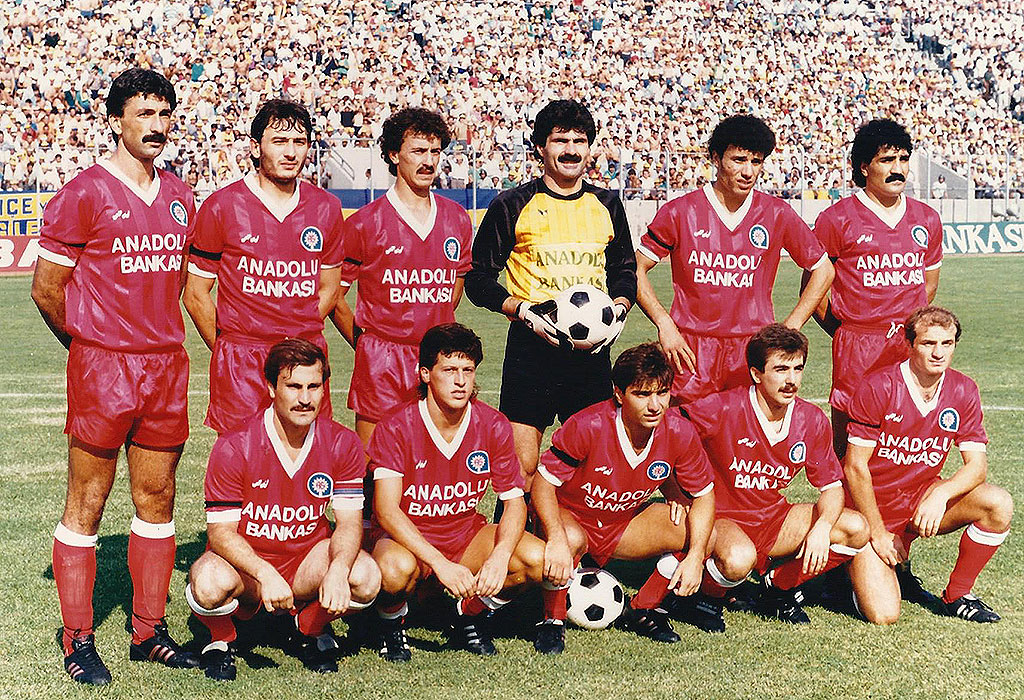 Antalyaspor did what they could, but eventually lost steam, finished 18th with 24 points and went down.
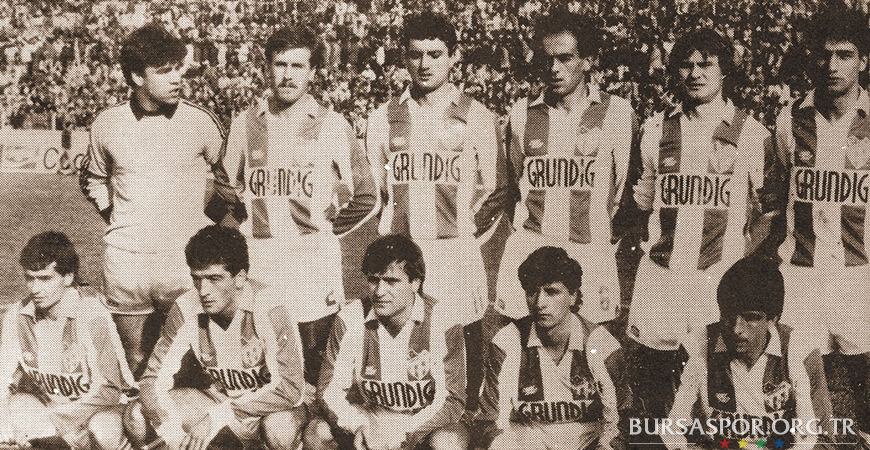 Bursaspor had a weak season – they were becoming something of unpredictable team, but escaped relegation. 17th with 28 points.
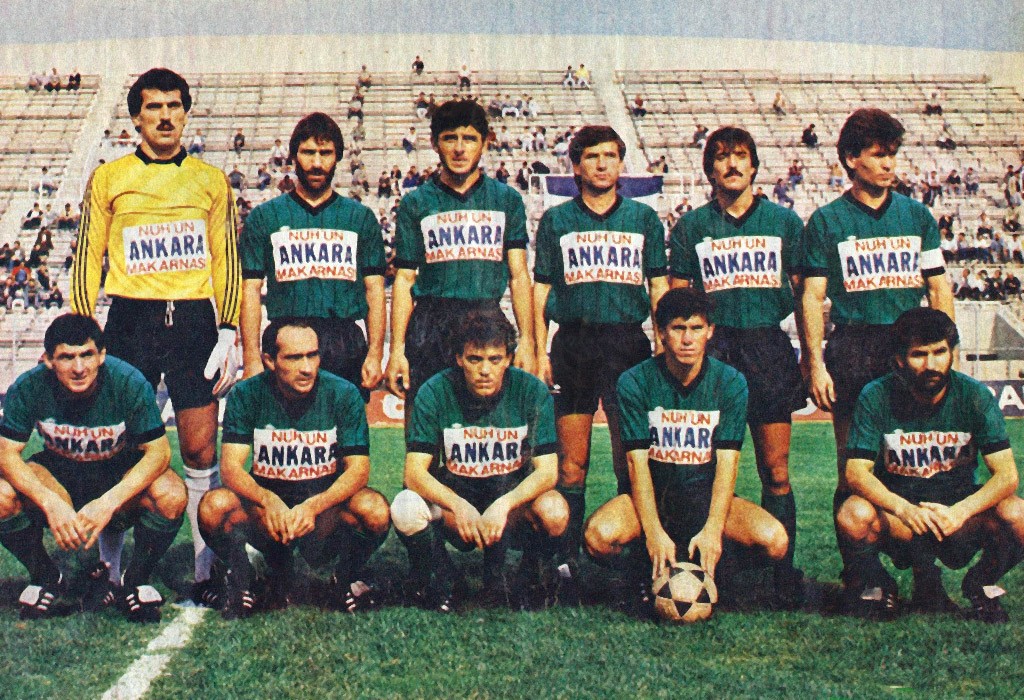 Kocaelispor bested only 3 teams, but in a way – not a bad season: they survived. 16th with 31 points.
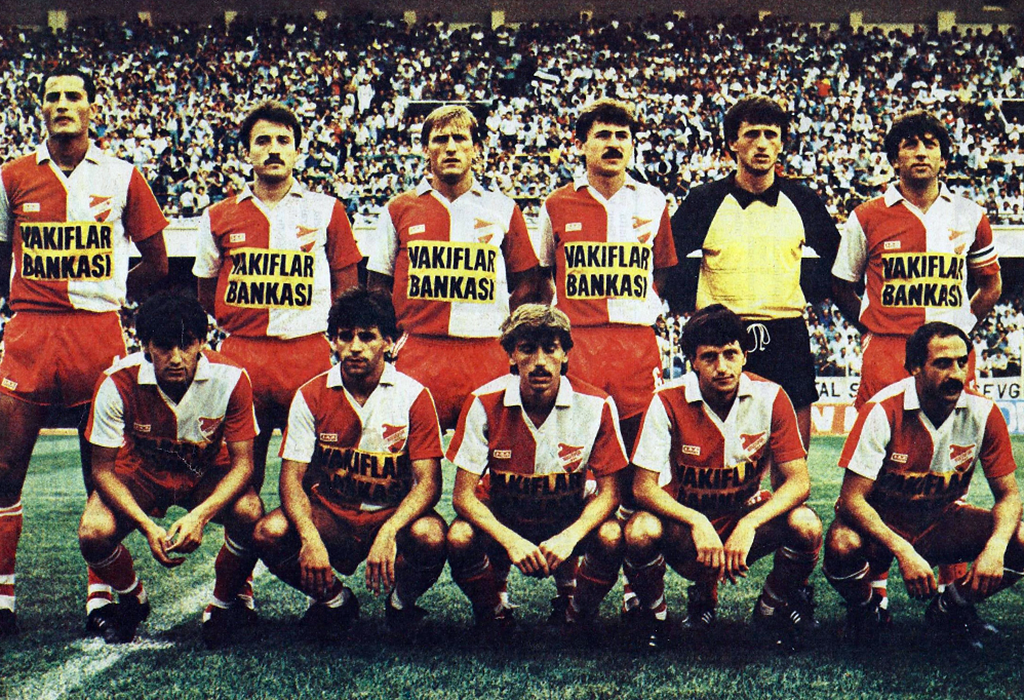 Boluspor – nothing special as usual. 15th with 32 points.
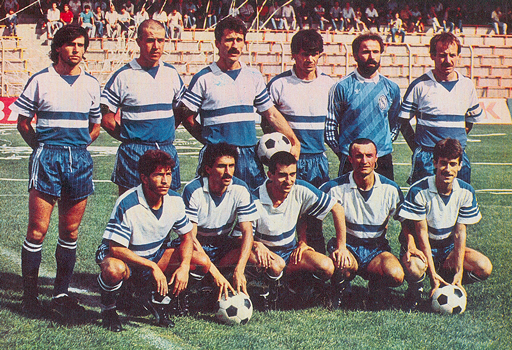 Saryer – also with 32 points, but better goal-difference placed then ahead of Boluspor: 14th. They actually finished with positive goal-difference, something rare for a team near the bottom of a league.
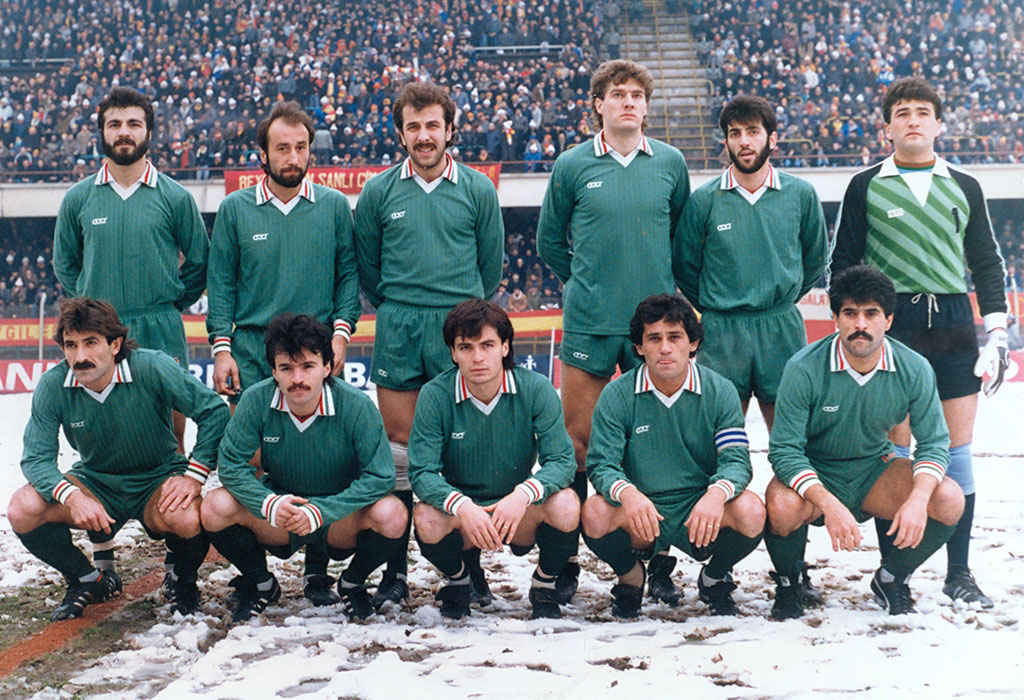
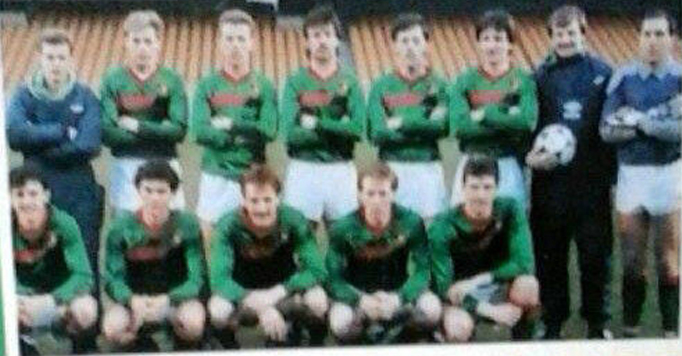
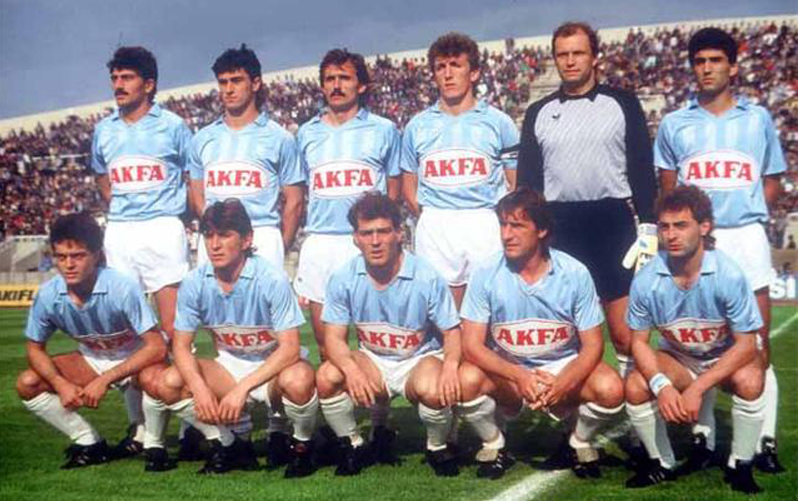 Caykur Rizespor – 13th with 33 points, but having the worst negative goal-difference – if the relegated teams are omitted. Minus 20. Standing from left: Mehmet Ali, Sinan, İsa, Hasan Vezir, Gurgen Phall, K.Turgut
First row : Hakan, Muharrem, Metin, Tupayiç, Harun İlik.
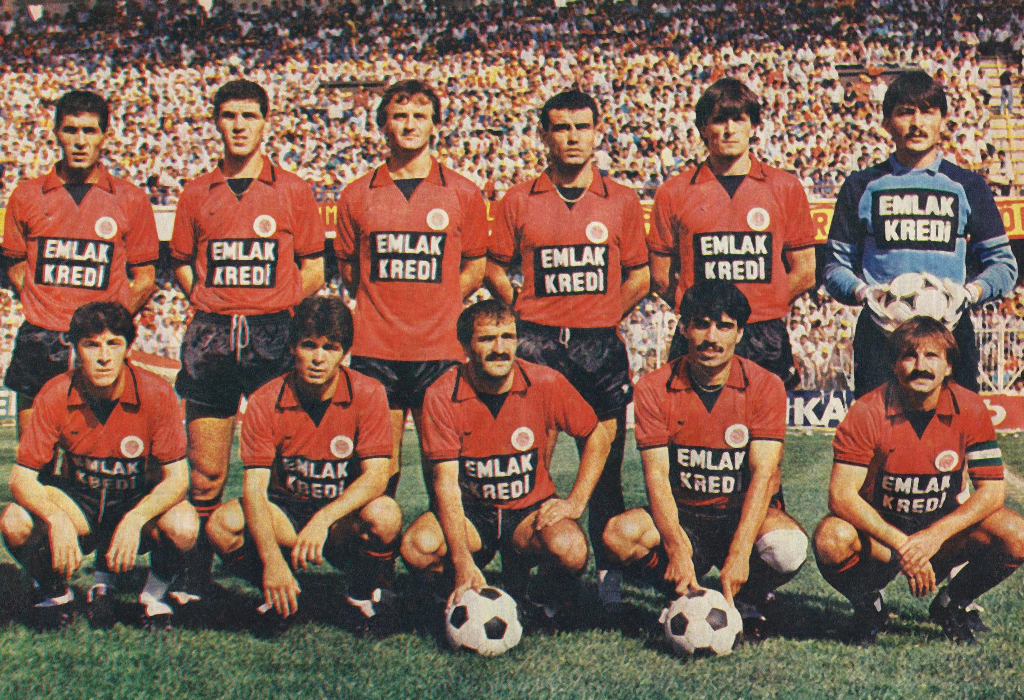 Genclerbirligi – 12th with 33 points, but this was their best year in history.
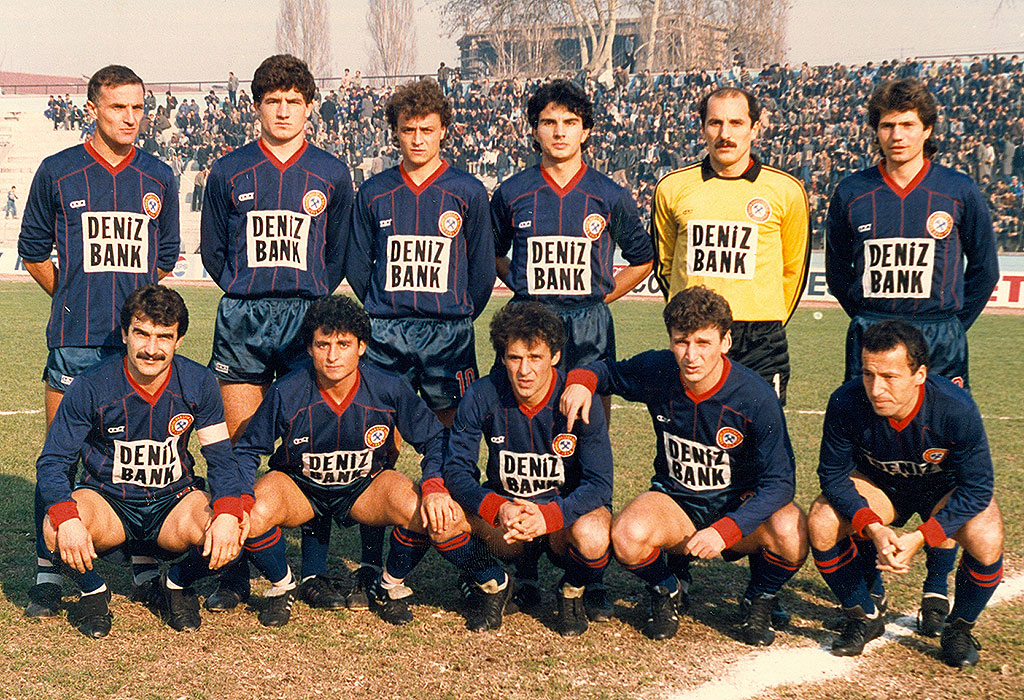 Zonguldakspor – 11th with 33 points. Better goal-difference placed them ahead of Caykur Rizespor and Genclerbirligi.
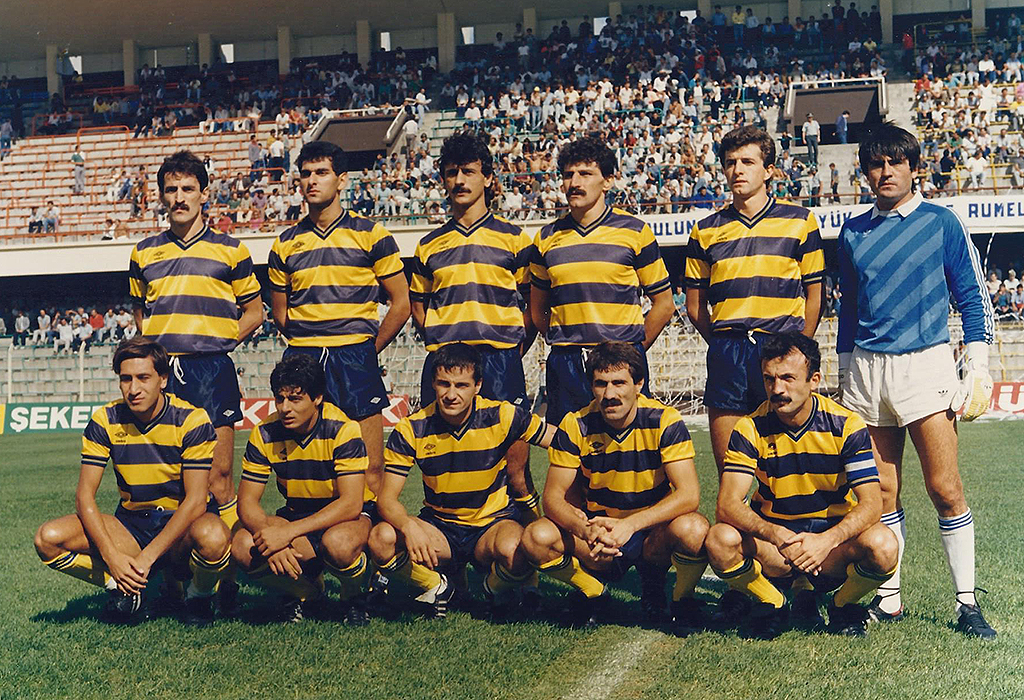 MKE Ankaragucu – 10th with 34 points.
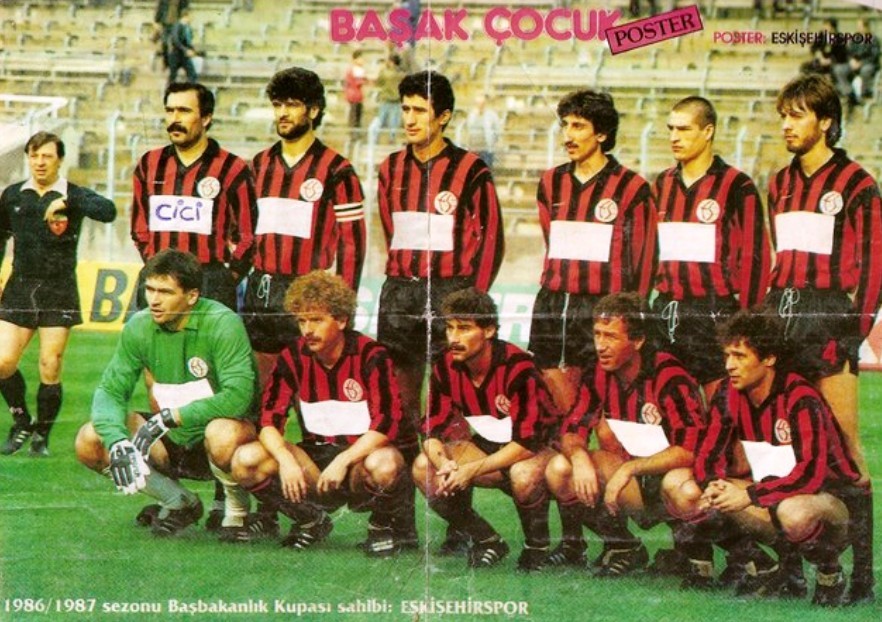 Eskisehirspor -9th with 34 points. Mid-table performance, but got one of 2 Turkish spots in the Balkans Cup as a Cup finalist.
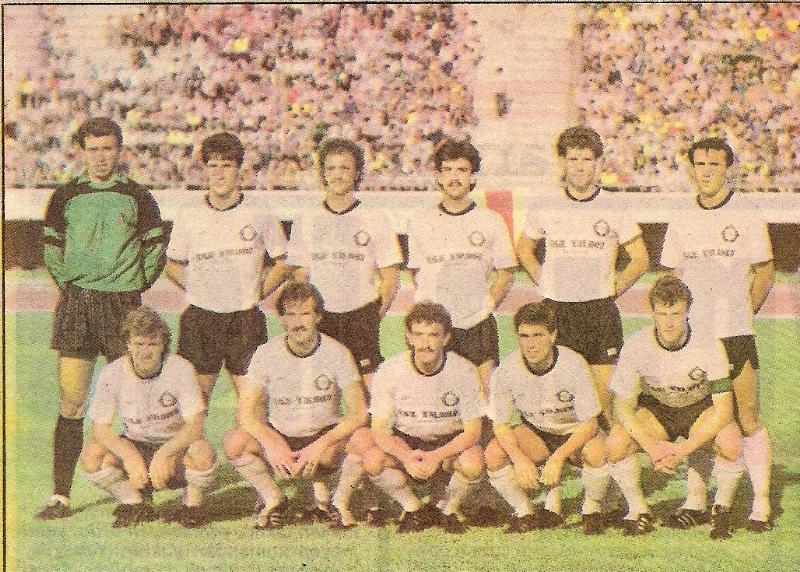 Altay – 8th with 36 points.
 Denizlispor – 7th with 36 points.
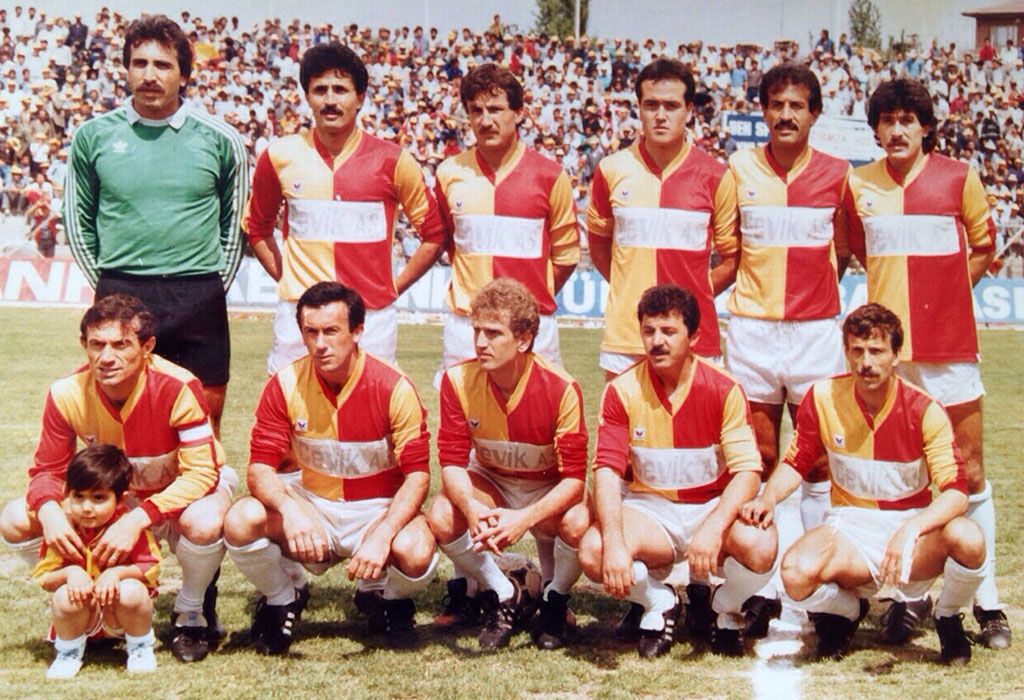 Malatyaspor – 6th with 39 points.
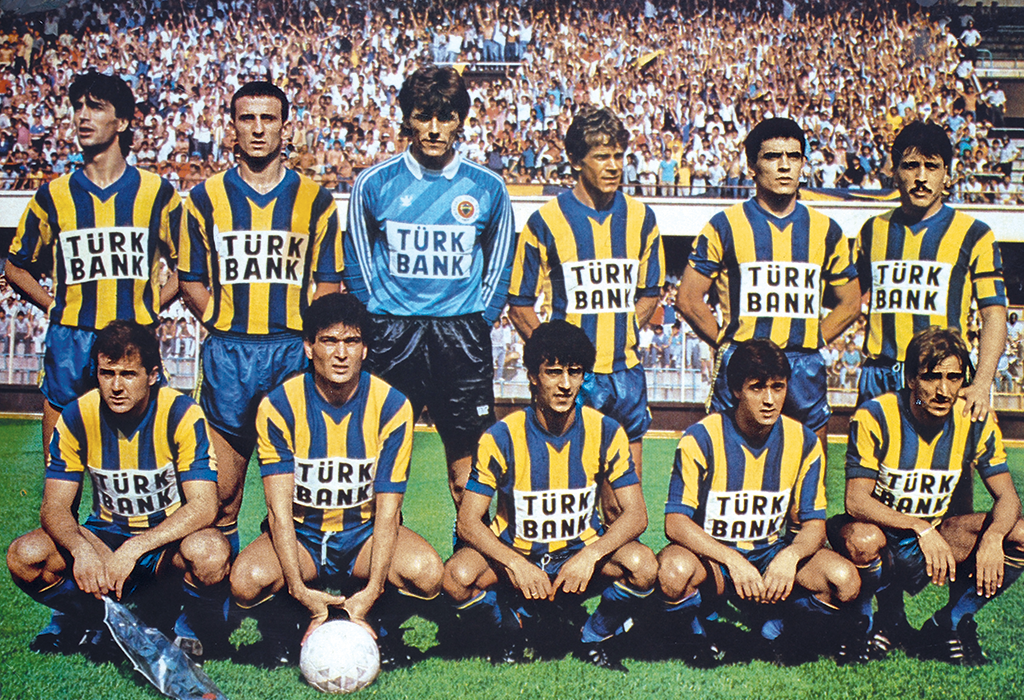 Fenerbahce – 5th with 39 points. Rather weak season – not even with a medal.
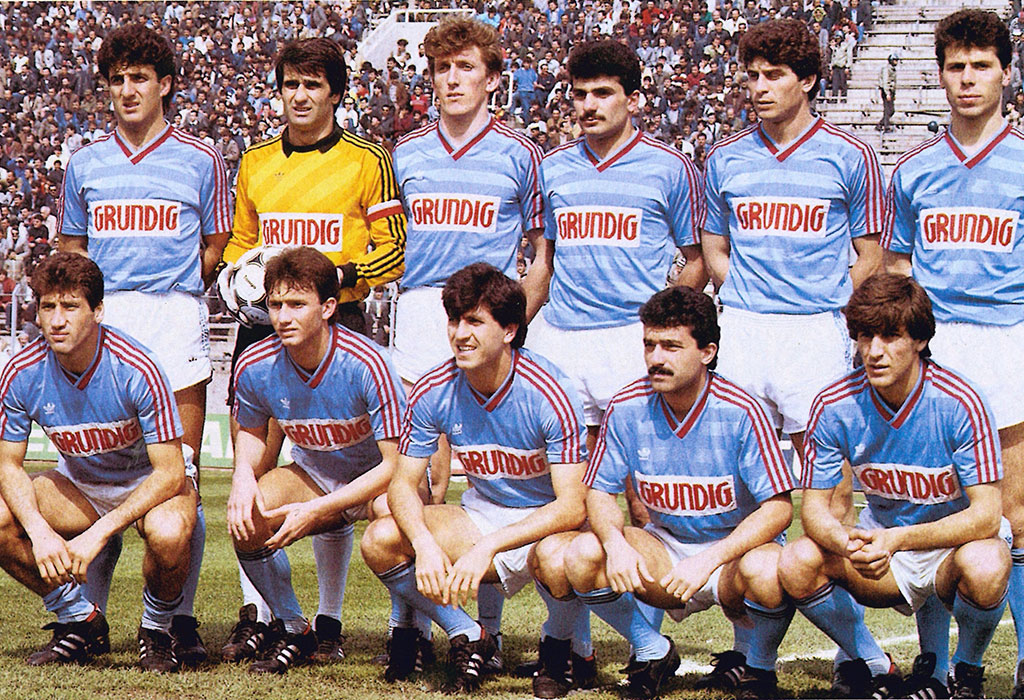 Trabzonspor – steady, not at all declining: 4th with 49 points – 10 points ahead of Fenerbahce! Standing from left: Şenol Ustaömer, Şenol Güneş, Hasan Vezir, İbrahim Yazıcı, Bahaddin Güneş Hamdi Zıvalıoğlu.
Crouching: Lemi Çelik, Hami Mandıralı, İskender Günen, Serdar Bali, Kemal Serdar.
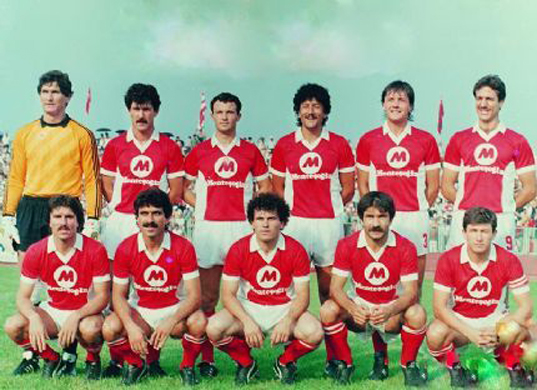 Excellent season for Samsunspor – they clinched bronze medals, beating Trabzonspor on goal-difference. In fact, they had better goal-difference than the champions: +34 was second-best this championship.
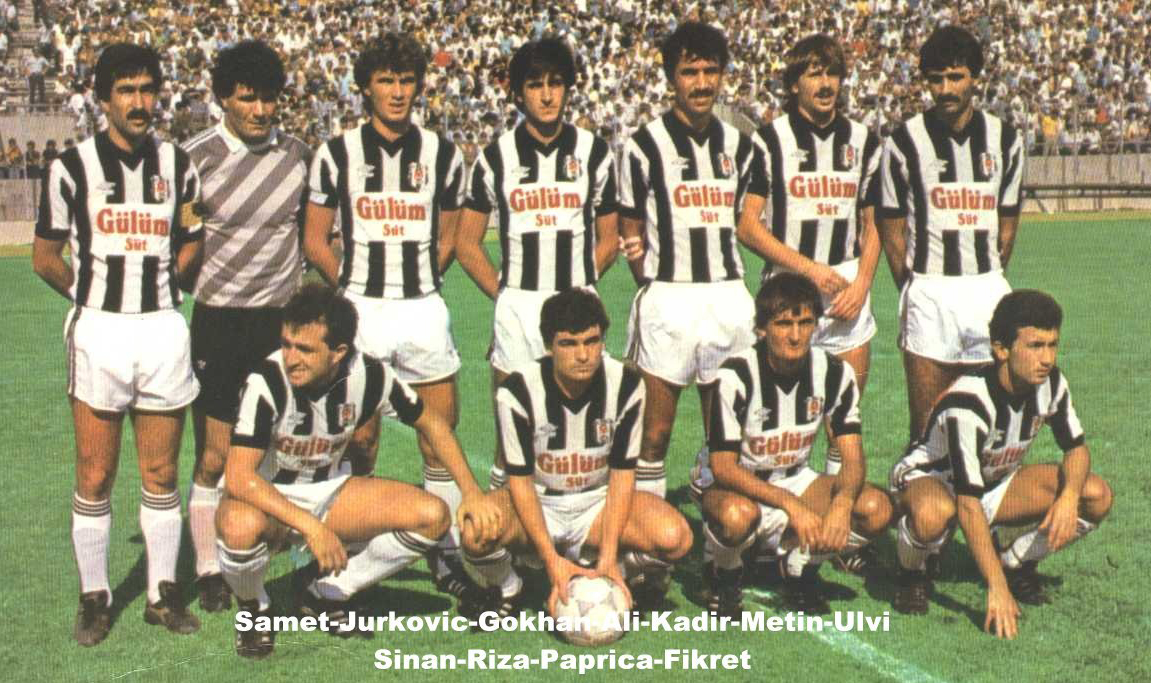 Besiktas fought for the title, but at the end lost it by a single point. 2nd with 53 points, but the best scorers by far with 67 goals and with best goal-difference +41.
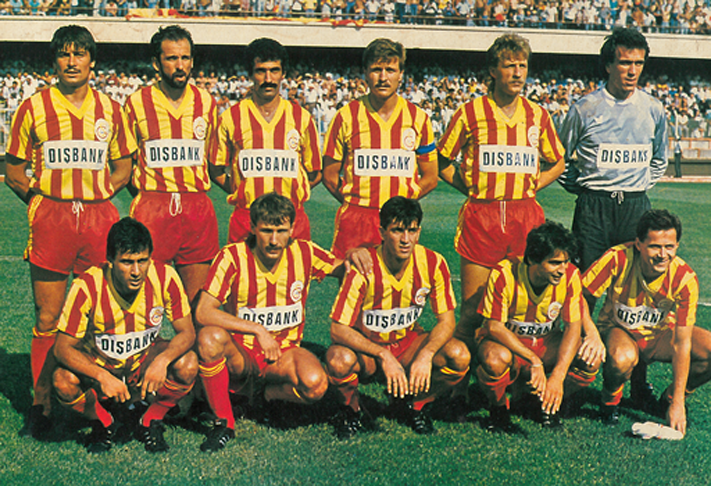
 Galatasaray prevailed and won the title: 23 wins, 8 ties, and 5 losses gave them 54 points – one more than Besiktas’. 55-24 was not the best record at all – Besiktas and Samsunspor had better goal-difference, they also outscored Galatasaray, and Samsunspor and Trabzonspor had better defensive records, but who cares? Who cares when Galatasaray won the title? It was not shining and overwhelming victory and perhaps cherished better for that: Galatasaray did not win a championship since 1972-73! A long and bitter wait ended with dramatic victory over bitter rival Besiktas. And arch-enemy Fenerbahce nowhere to be seen. Thus, Galatasaray finally won its 7th title. May be not a great team – if taken in historic perspective – but one thing was already firmly established: no strong Turkish team was possible without foreign players. Yugoslavs were mainly imported at this time and one can say that Galatasaray had the upper hand precisely because they had better Yugoslavs (Simovic and Prekazi) than their rivals Besiktas (Jurkovic and Kovacevic) and Fenerbahce (Lukovcan and Pesic). Anyhow, finally Galatasaray returned to the top. They still were quite behind dreaded Fenerbahce, which had 11 titles so far, but came ahead of Trabzonspor (6 titles).
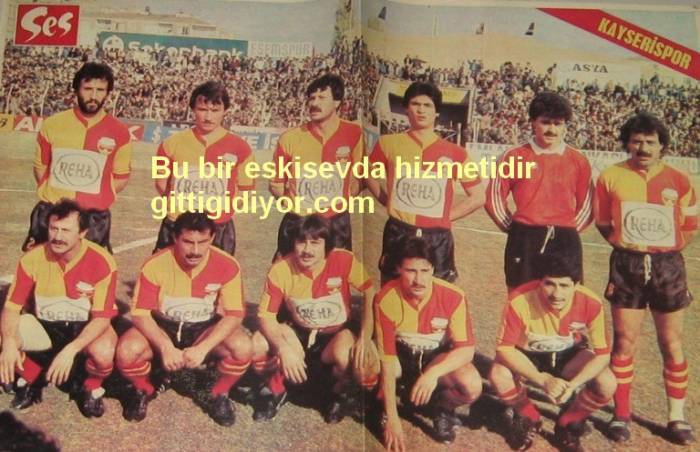 Kayserispor, freshly relegated, finished 3rd with 42 points – 7 points ahead of 4th-placed Gaziantepspor, but 11 points behind the winners.
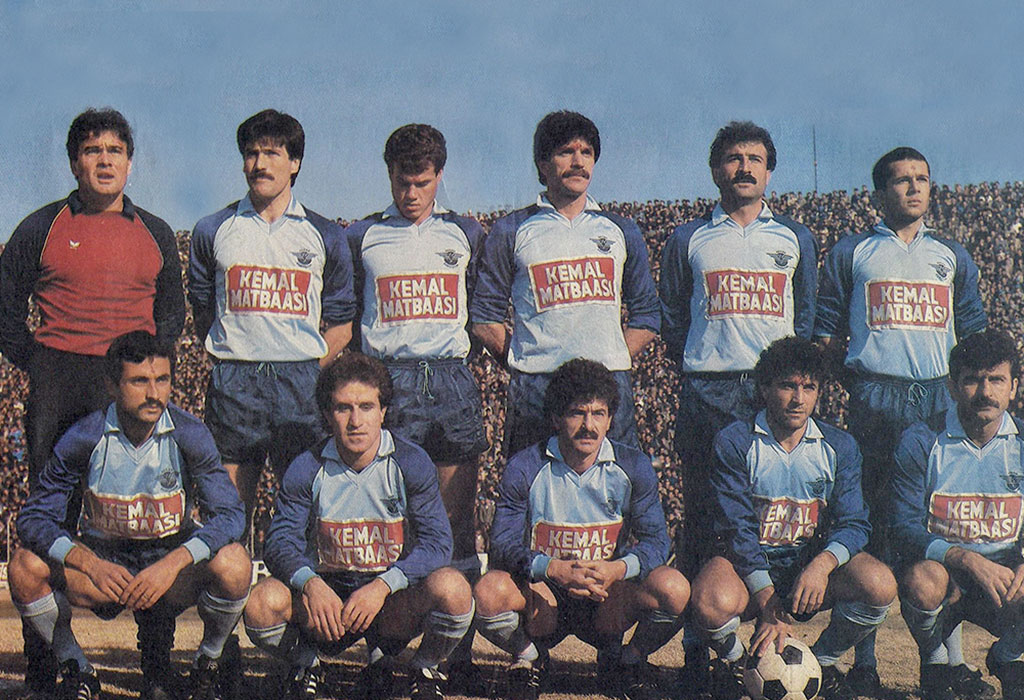 AdanaDemirspor (Adana) dominated the group, winning the championship with 53 points from 23 wins, 7 ties, 2 losses and 77-27 goal-difference. Promoted to First Division.
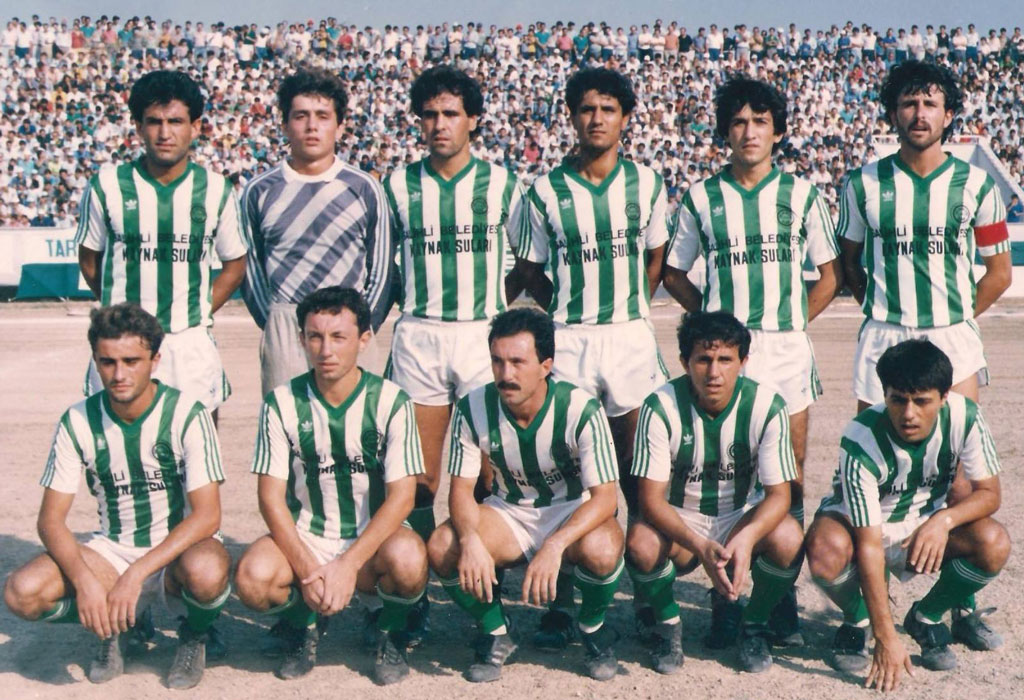 Yeni Salihlispor was one of those stronger teams – they finished 4th with 40 points.
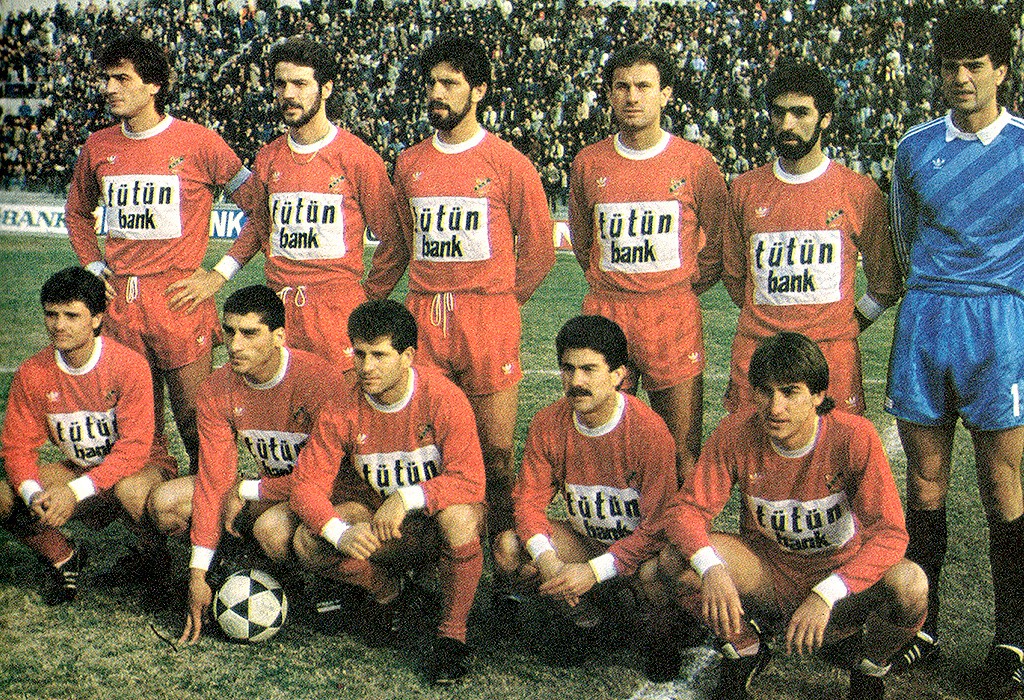 Karsiyaka SK won the group and was promoted – 22 wins,9 ties, 3 losses, 58-19 goal-difference and 53 points. The second finisher – Izmirspor – was 10 points behind.
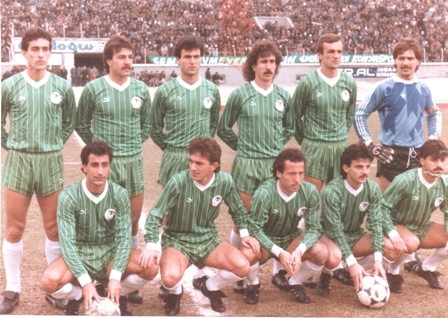 Konyaspor lost only 1 match. The rest: 23 wins and 10 ties. They scored 62 goals and received only 14. Great defensive record, wonderful goal-difference of +48, 56 points.
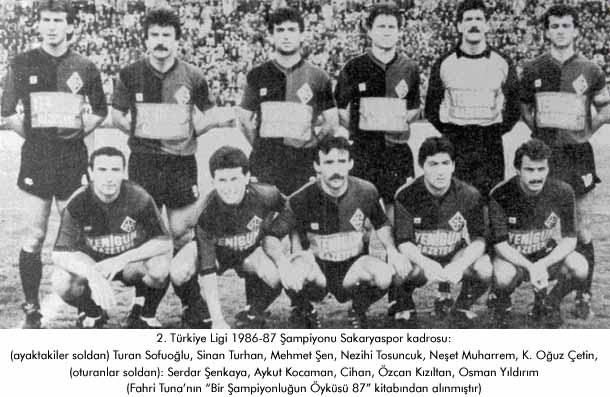 Sakaryaspor played top league football only a year ago and wanted very much to go back to top flight. They won 25 games, tied 6 and lost 3 – that gave them 56 points, the same as their bitter rivals Konyaspor. Goal-difference decided in Sakaryaspor’s favour: they finished 77-26, that is +51, 3 goals better record and first place was their. Most unfortunate for Konyaspor and big joy for Sakaryaspor.
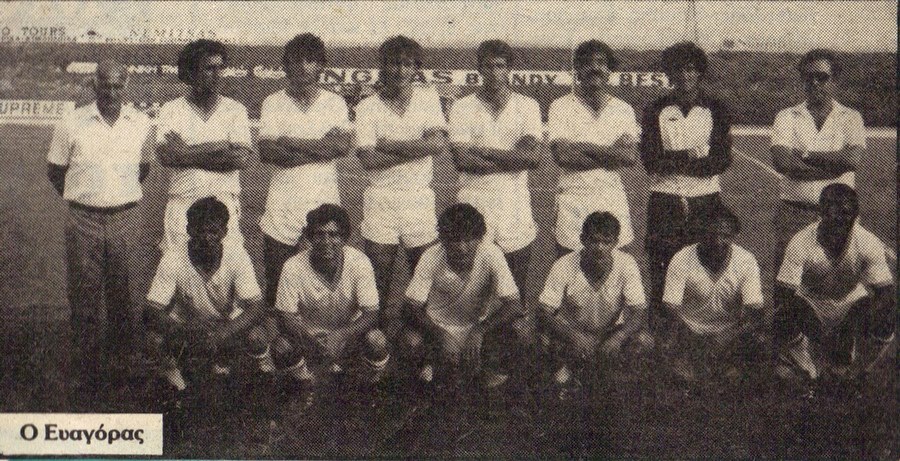 Teams like Evagoras (Paphos) played in Second Division, even less known. Evagoras finished 6th.
 Anagennisi (Deryneia) clinched second place with 41 points and was promoted.
 APEP won the championship with 43 points from 19 wins, 5 ties, 4 losses, and 53-25 goal-difference. One can imagine the joy – they were going to play for the first time in First Division. Quite an achievement too, for the club was formed only in 1979 – true, from a merger of older clubs. However wonderful it was in the home town, APEP was most likely to be relegated right away, but that was not to spoil happiness. Winners are winners.
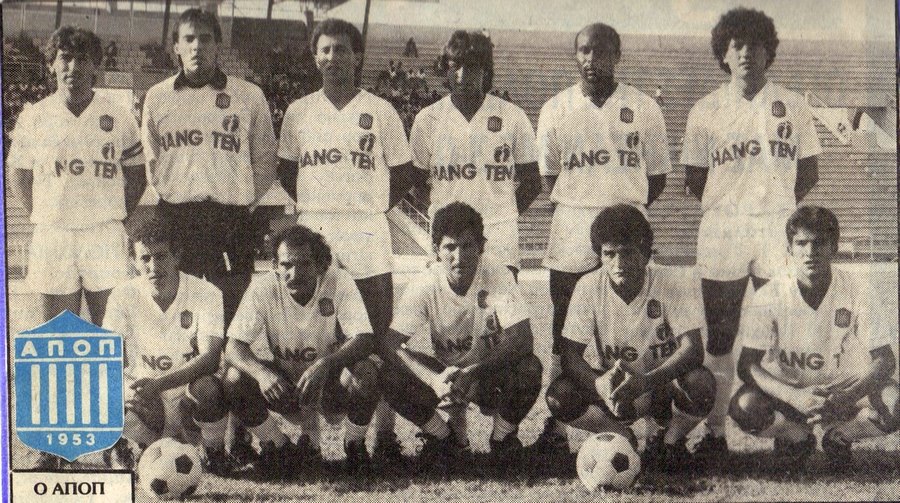 Such was the effect of the enlarged league: teams, which previously meandered between first and second division, never able to dream of more than temporary survival, now were quite relaxed and definitely safe among the best: APOP (Paphos) finished 9th with 27 points.
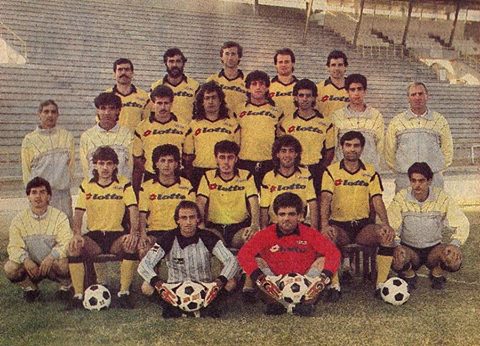 EPA (Larnaca) curely had strong season and they ended with bronze medals, but that was the maximum – even 2nd place was out of their reach, they finished 4 points behind APOEL. But luck was on their side – since APOEL was banished from UEFA, EPA was going to represent Cyprus in the UEFA Cup. Wonderful for them.
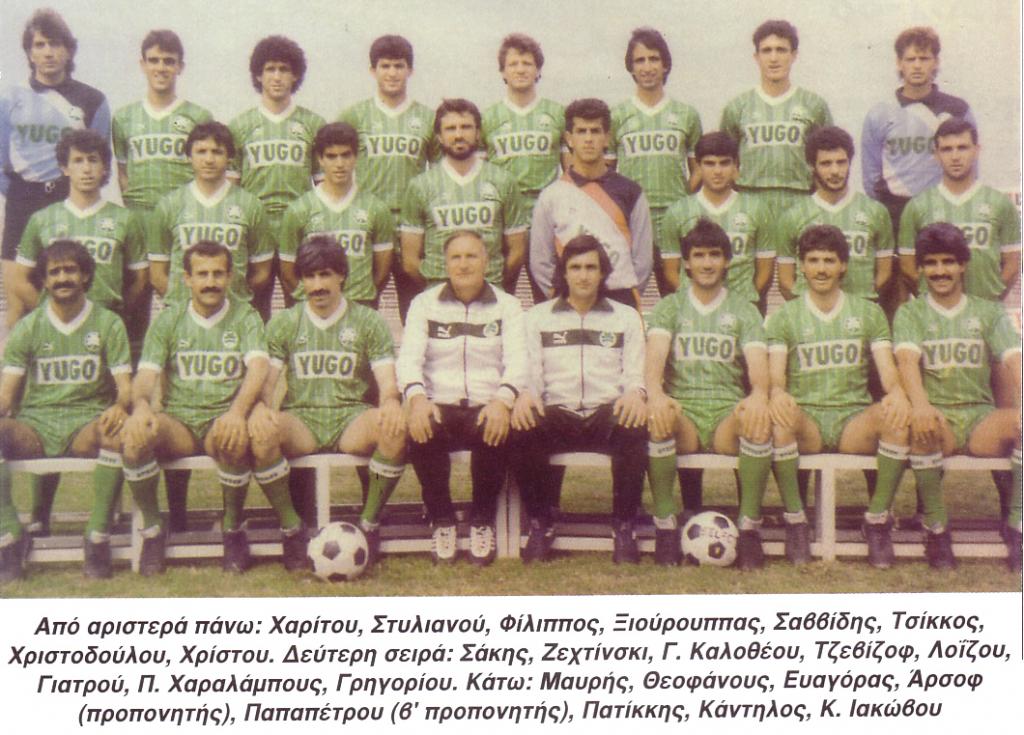 Omonia (Nicosia) easily won the championship with 52 points from 26 wins and 4 losses. Curiously, they did not tie even one match and it was pretty much their traditional approach: attacking football. It showed in their scoring record: 86-28. Constantly attacking and scoring as much as they could. The next best scorers scored 24 goals less! After the brief slip in the previous year, Omonia were back in their usual and long lasting dominant position. It was their 15th title and once again it was their traditional ‘Bulgarian connection’ keeping them superior – three Bulgarians drove them to success, just like almost all previous titles. The coach Yoncho Arssov (sitting 4th from left to right), the center-forward Spas Dzhevizov (4th from left, middle row), and imaginative playmaker Petar Zekhtinsky (2nd from left, middle row). The Bulgarians delivered once again.
 AEL (Limassol) won its 5th Cup, which was great and also the most a team could hope for, since the championship title was seemingly reserved for Omonia (Nicosia). AEL was nothing to brag about in the championship – they finished 4th, but 7 points behind 3rd-placed EPA. So, winning the Cup was truly fantastic.
 Sogndal won the Group A of Second Division with 45 points: 13 wins, 4 shoot-out wins, 2 shoot-out losses, and 3 regular losses, 43-21 goal-difference. They clinched first place by a single point.
 Strømmen won Group B with 46 points: 13 wins, 2 shoot-out wins, 3 shoot-out losses, and 4 regular losses. 44-32 goal-difference.
 Djerv 1919 (Haugesund) beat the competition and achieved the highest point in its history – promotion to First Division. Hamarkameratene was relegated and Lyn stayed where they were.
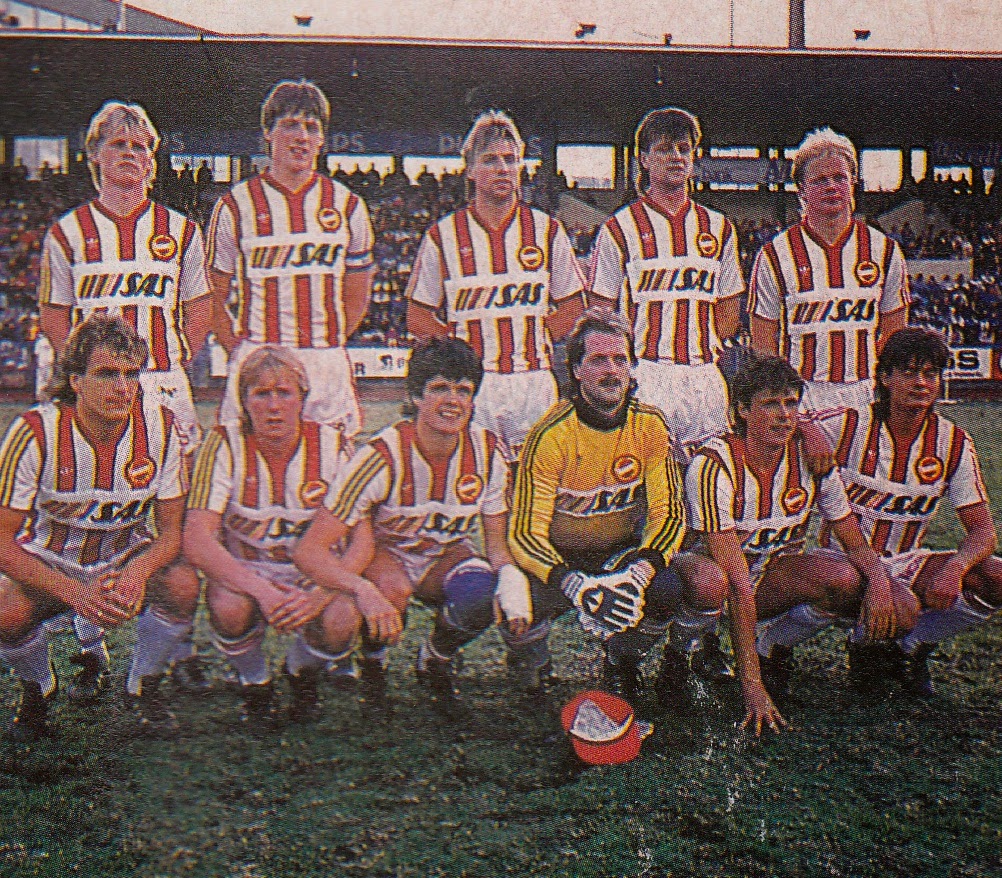 Tromsø was 6th with 31 points.
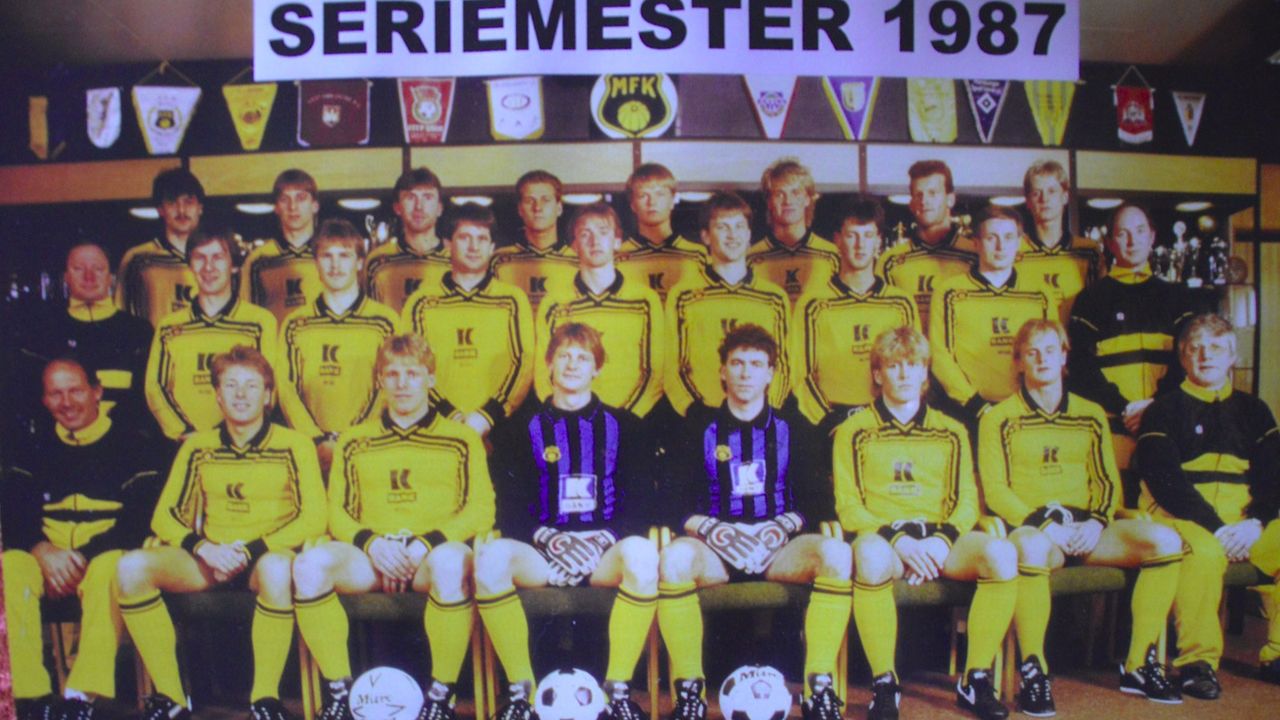 Moss won the championship with 44 points from 13 wins, 2 shoot-out wins, 1 shoot-out loss, and 6 regular losses. 44-30 was their goal-difference – high scorers, but defensively weak. May be not the most convincing champion, but they never won the championship before, so it was a big surprise, great joy, and food for thought. Were they one-time wonder or signified some major shift, triggered by the new rules? No matter at home – first title is always great historic moment.
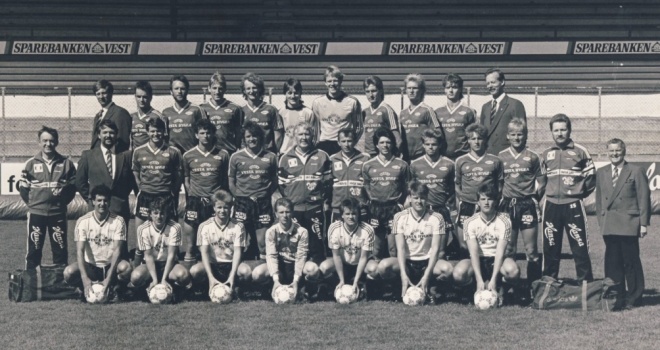 It was not Brann’s year – 8th in the championship and lost Cup final. Top row from left: Erling Mikkelsen (leder), Halvor Storskogen, Ingvar Dalhaug, Arne Møller, Fridtjof Wilborn, Dan Riisnes, Bjarni Sigurdsson, Per Hilmar Nybø, Lars Moldestad, Trond Nordeide, Casper Moldenhauer (leder).
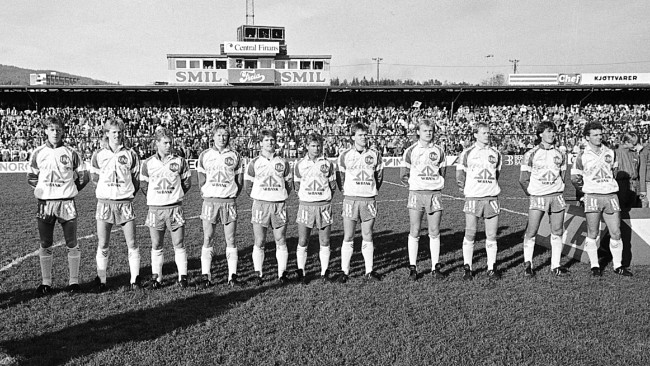 Bryne completed the list of surprise winners – they never won the Cup before and although it was difficult minimal victory, it was theirs. From left to right: Jan Madsen, Børre Meinseth, Paal Fjeldstad, Tor Fosse, Hugo Hansen, Roar Pedersen, Leif Rune Salte, Bjørn Gulden, Kolbjørn Ekker, Lars Gaute Bøe, Arne Larsen Økland.
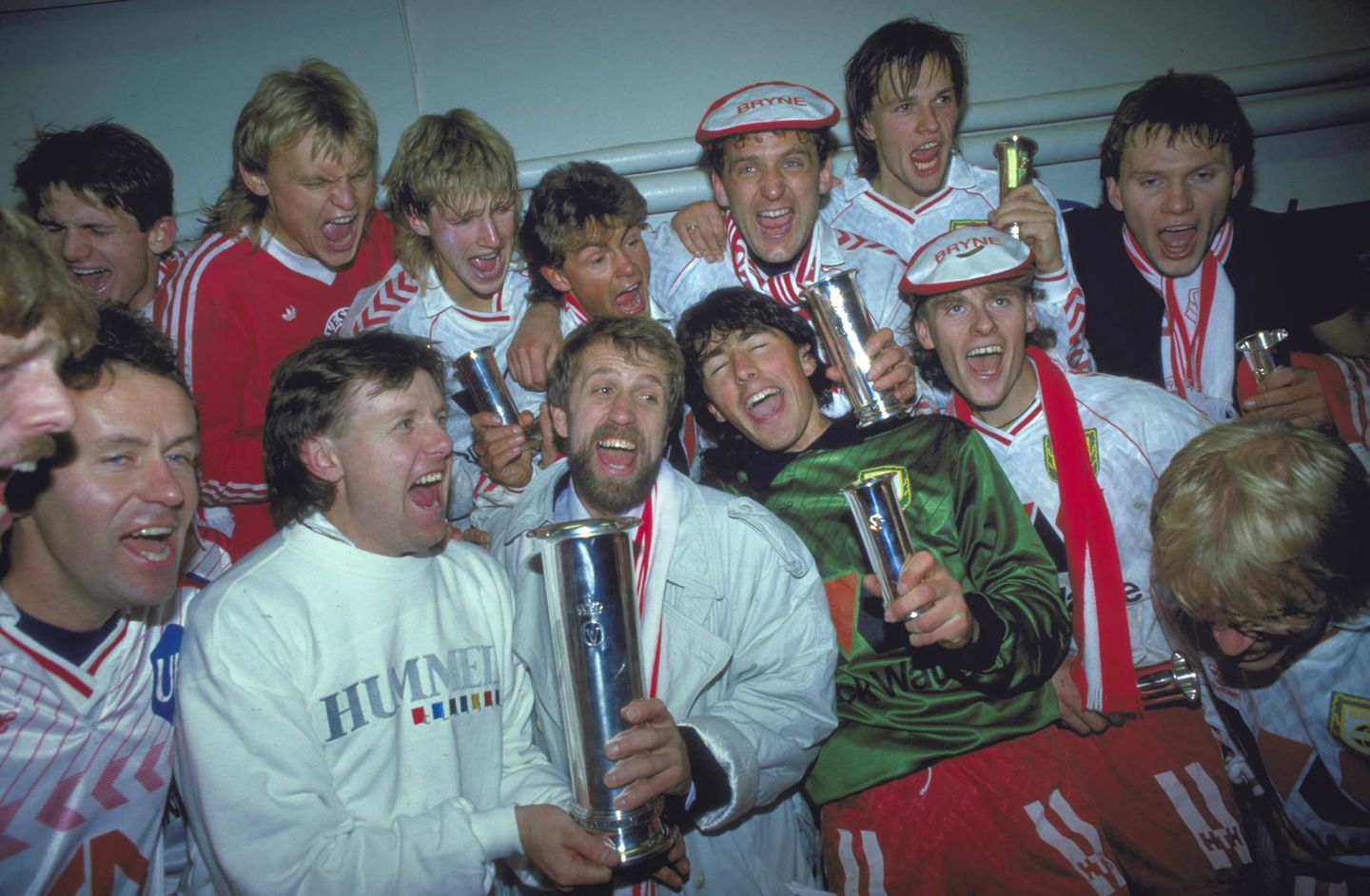 Happy winners in the dressing room and instant heroes.
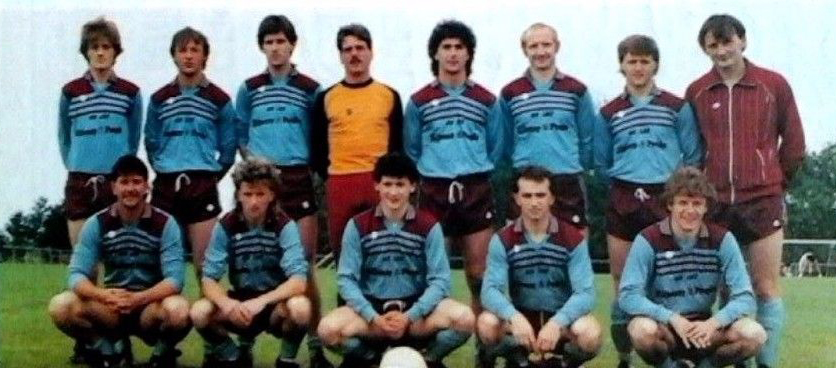 EMFA celebrated its 21st year of existence finishing 9th out of 10 teams – nothing to brag about unless one is Kilkenny native: the club was founded by schoolboys and still had the look. The fact they played in a professional league was more than success.
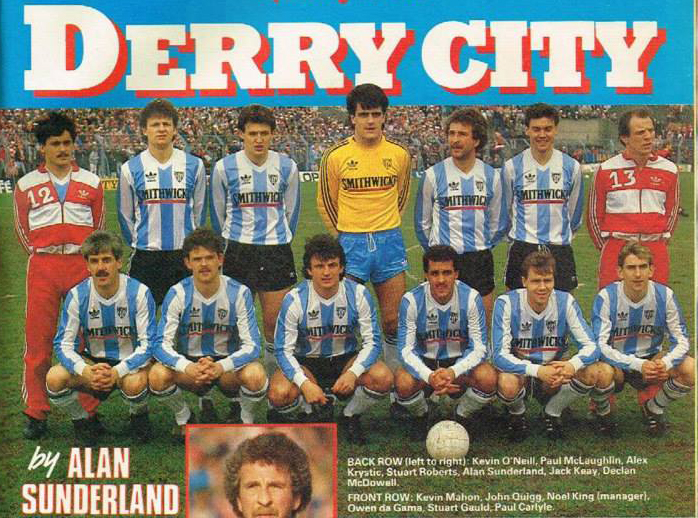 Derry City had no rival and they were the team to talk about: they easily won the championship with 33 points from 16 wins, 1 tie, and single lost match, 45-14 goal-difference. The Second Division champions were expected to go much higher soon and play in the European tournaments. It was unusual team in every aspect: First of all, they were not from the Republic of Ireland, but from Northern Ireland – technically, a foreign club. 15 years ago they were expelled from Northern Irish football because of fan troubles. After staying idle for a long time, they managed to join the Republic of Ireland league two years ago, but then the system was reorganized and they found themselves in the newly introduced Second Division. And suddenly they became ambitious in a very unusual way: they recruited players from abroad. Occasional English or Scottish player was nothing new in Ireland, but bona fide foreigners were practically unheard of. Derry City had 3 Scotsmen, 1 Welshman, 1 English and 2 ‘real’ foreigners – probably there was never before an Irish team with so many foreign players. And they were no joke: Alan Sunderland was the most recognizable name, playing for Arsenal (London) for many years. The South African striker Owen da Gama, who spent years in Belgian first division. And then there was a third striker, a French, who played for Orleans before and caught the interest of Manchester City and Dundee United, but joined Derry City – Alex Krystic was the true jewel of the team: he scored 18 goals in the 18 championship games. According to Sunderland, he was was also fun guy to have in the dressing room. Derry City suddenly had formidable team – by Irish standards – and clearly had big plans for the near future. They introduced new reality, the way of the 1980s, to Irish football – it was no longer possible to depend on local talent or rather to the leftovers of local talent. With local boys… well, no success was possible. With foreigners Derry City was at least was becoming equal to the traditional leading Irish clubs. They broke a big barrier: Irish clubs looked only in their backyards for talent and that was no longer going to be.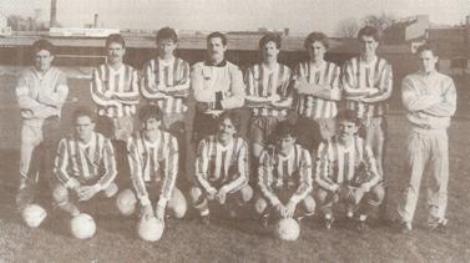
 Bray Wanderers was example of the so-so teams: they ended 8th with 17 points. Better goal-difference placed them ahead of Sligo Rovers and Limerick City.
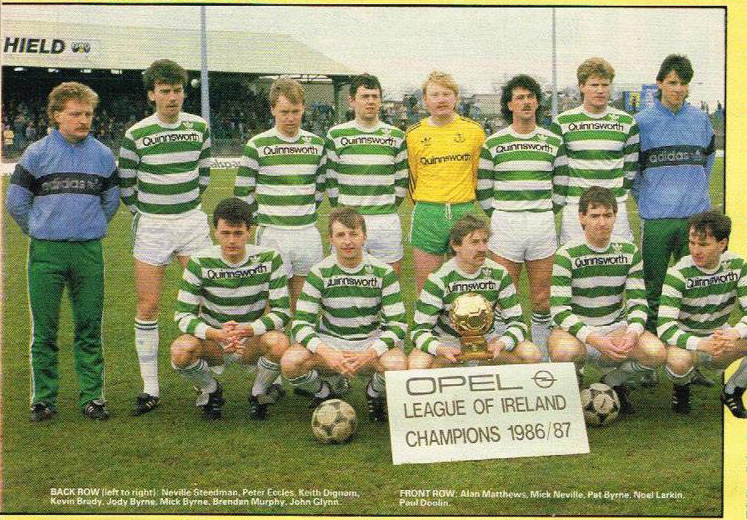 Shamrock Rovers was formidable – they lost only one match. Tied 3 and won the 18 remaining games. 51-16 goal-difference, 39 points. Dundalk finished with 9 points less. It was great supremacy and not only in the championship: in the Cup final they destroyed Dundalk 3-0.
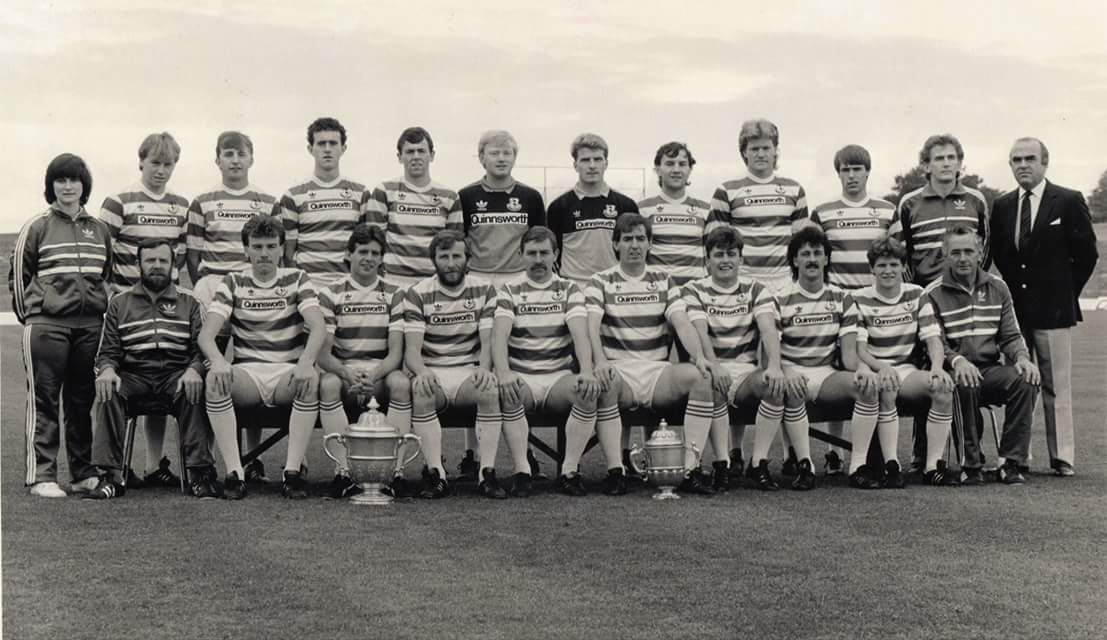 A double, 4th consecutive title – no team achieved such run before, 4th consecutive Cup as well. Altogether – 14th title and 24th Cup. Nobody expected this year’s to be the last Rovers won the Cup, of course, but the mood among the fans was far from festive: the owners of the club announced that they were leaving their old stadium and going to share another one with amateur club Home Park, at the other side of the city. The reason was declining attendance, making it financially impossible to use the bigger stadium. Fans feared the owners were going to sell the old stadium and rebelled, promising never to cross town to watch Rovers. A boycott at the peak of the most successful period of the club! That was the other side of football reality in the 1980s, unfortunately: declining audience and rising expenses. Ticket sales no longer were able to finance a club, even a winning one. Stadiums were getting too old and decrepit and there was no way out: either leave it to completely fall apart, becoming more and more dangerous, or invest in massive repairs. There was no money for such repairs and on top of it – repair for what? Audiences were shrinking anyway. Better sell the venue… and fans never liked selling their ‘home’. The end result: Shamrock Rovers was going to be boycotted by its own fans when they were at the very peak as a team.
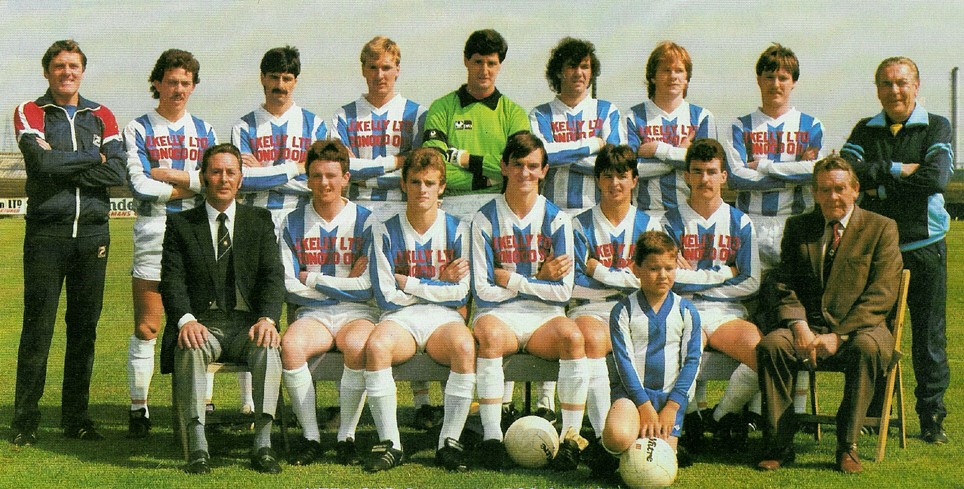 Coleraine was the only relatively close opponent of the seemingly eternal leaders. They excelled in scoring, though: 65 in 26 championship games. But that was all – 2nd with 53 points.
 Linfield comfortably won its 39th title after 18 wins, 3 ties, 5 losses, 50-15 goal-difference and 57 points. Golden period for the most successful club – 6th title in a row already.
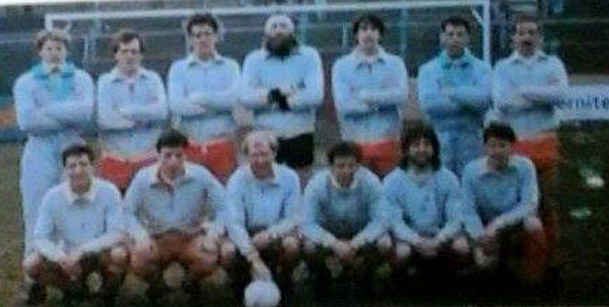 It would have been nice if the underdog won the Cup, but unfortunately FC Larne was unable to do so.
 Glentoran (Belfast) won its 13th Cup and it was 4th in a row – a curious record, for very rarely the same club wins national cup year after year in any country.
 Leiftur (Olafsfjördur) finished 2nd in the Second Division and earned promotion.
 Valur (Reykjavík) won 10 games, tied 7 and lost just one match. They scored 30 goals – two teams scored more – and received 10, the best defensive record by far. 37 points – Fram ended with 5 less. All and all, it was the 19th title for Valur.
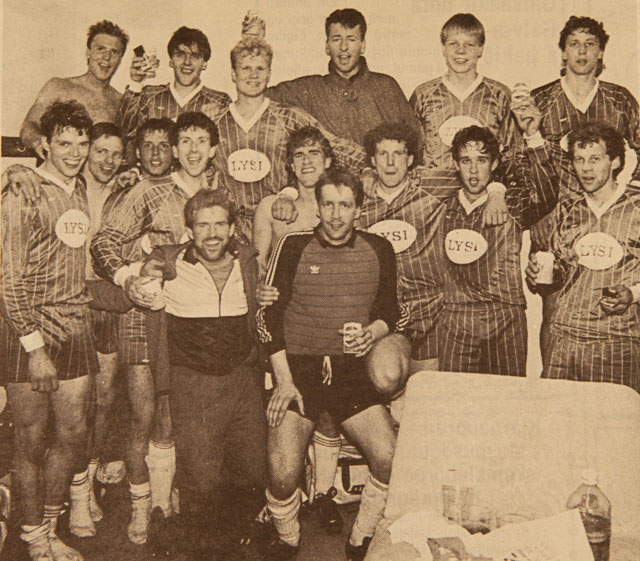 Viðir (Gardur) – one can feel sorry for them: trying hard, coming close, but… lost the Cup final and were relegated from First Division.
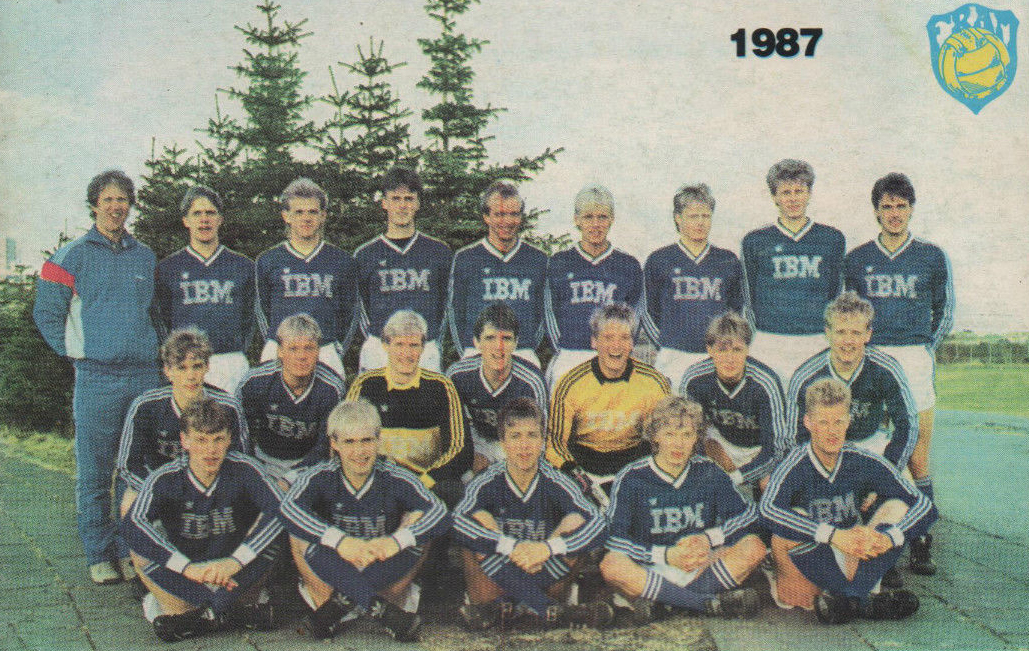 Fram (Reykjavík) had very satisfying season – the title was unreachable, but they were still 2nd and winning the Cup was great. It was their 6th.
 Naxxar Lions and
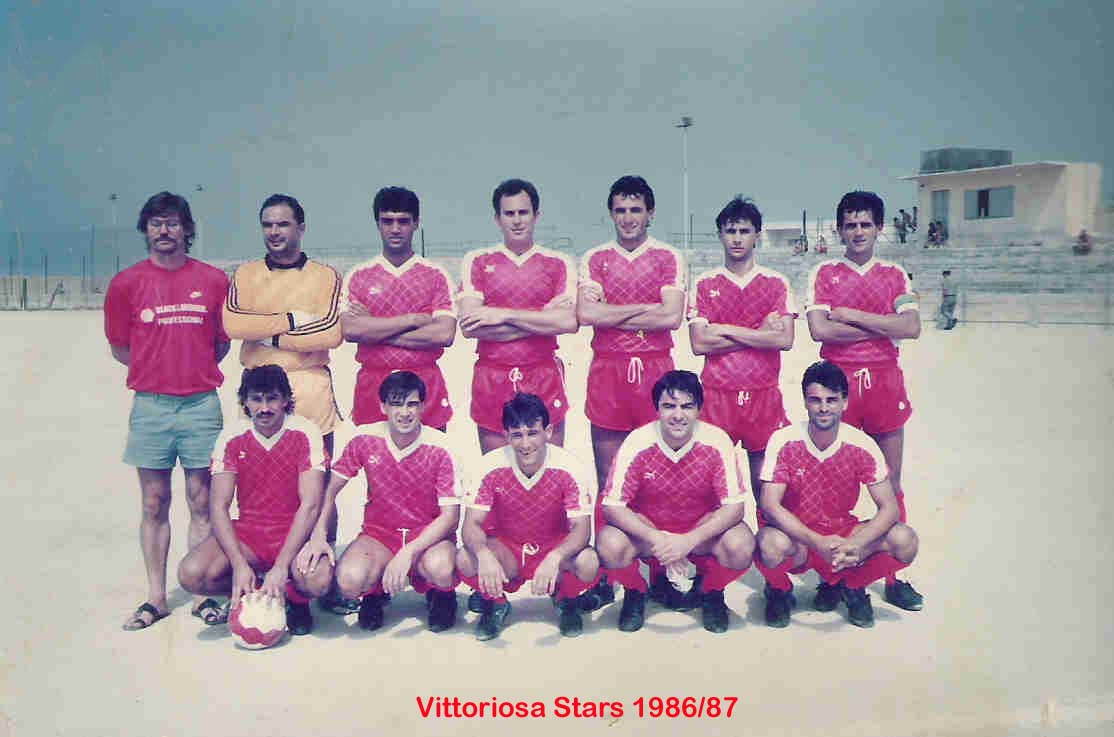 Vittoriosa Stars.
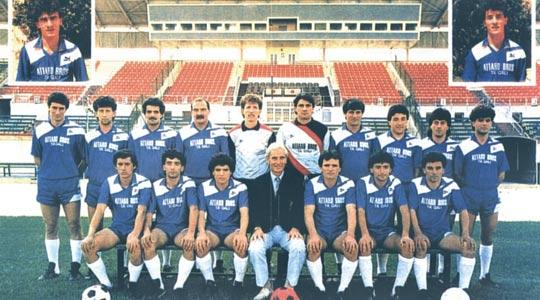 Mosta won the Second Division championship and was happily promoted. Back: S. Muscat, M. Chircop, S. Cuschieri, E. Tabone, J. Degiorgio, M. Ciantar, R. Borg, G. Muscat, P. Vella II, C. Schembri. Seated: L. Deguara, E. Buhagiar, P. Vella I, J. Attard (coach), A. Gatt, J. Busuttil, M. Muscat. Inset: I. Galea, F. Sant.
 Birkirkara ended 2nd in the Second Division and also earned promotion.
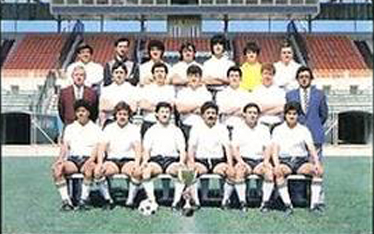 Hibernians escaped by a point – they ended 6th with 13 points.
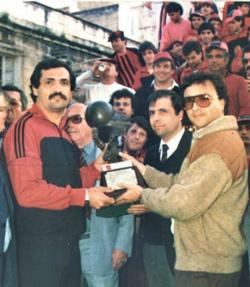 The champion was decided rather early – Hamrun Spartans were strong from start. To a point, it was surprising performance – Hamrun Spartans were not considered among the favourites before the opening of the season. It was fantastic run of the underdog: 11 wins, 3 ties, not a single loss, 25-6 goal-difference, 25 points. Overwhelming superiority and well deserved title, which was their 5th.
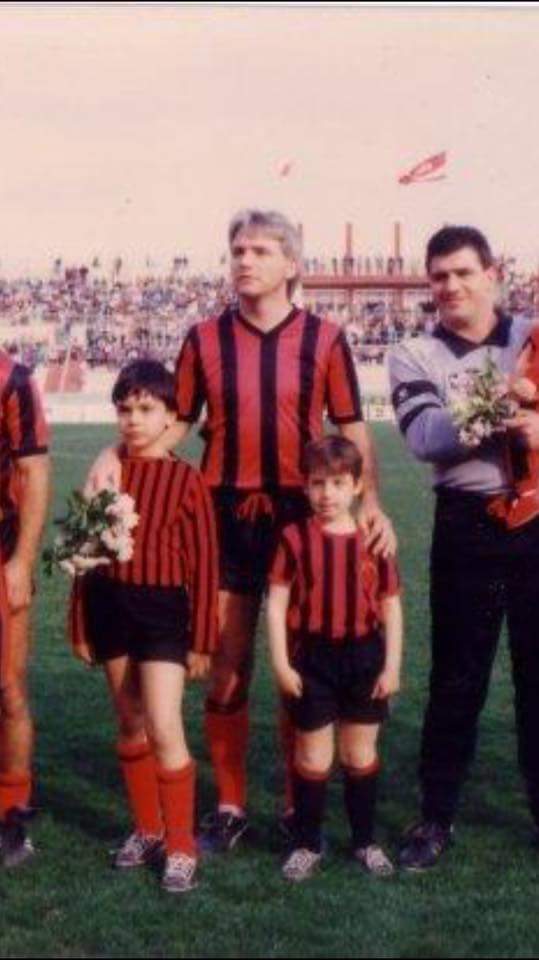 Perhaps it was lucky signing of imported player – the English striker Barry Galagher proved a formidable addition to the squad. He spent years in the lower English leagues, but was great for Maltese club.
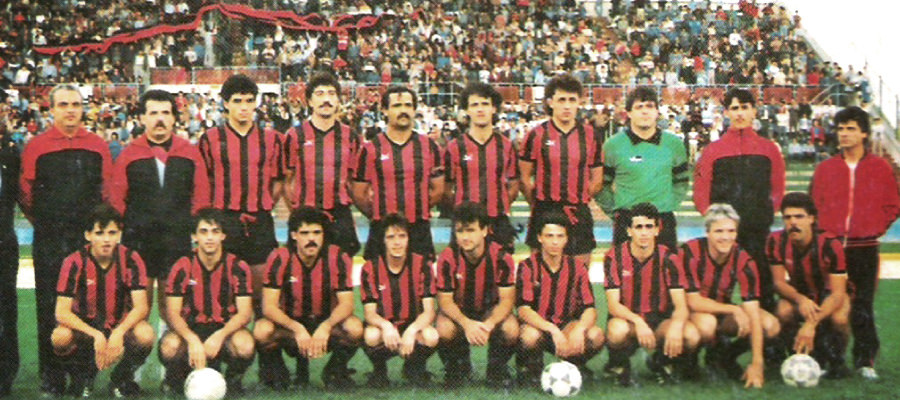 Not sure, but possibly that was the Hamrun Spartans squad which won a double, their first. Fantastic season indeed, in which they did not lose any games and were vastly superior to all opponents.
 US Rumelange finished 2nd in the Second Division and earned promotion. Rather dramatic – clinched the spot on 1 goal better goal-difference.
 Jeunesse d’Esch/Alzette finished first after 17 wins, 4 ties, and single loss. 64-14 goal-difference, 38 points and 20th title! Great achievement.
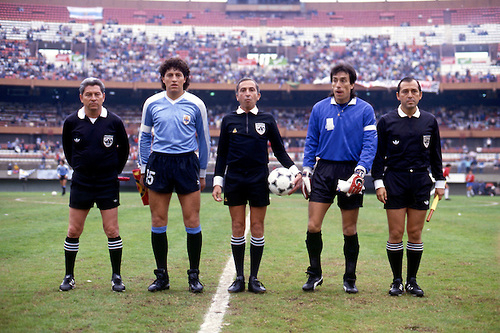 The peace ended right here – at the picture of captains and referees before the start. The great Brazilian Romualdo Arppi Filho officiated the final and he followed his motto “I always tell the players – you play, I judge’, and he was often criticized for that – this final was no exception.
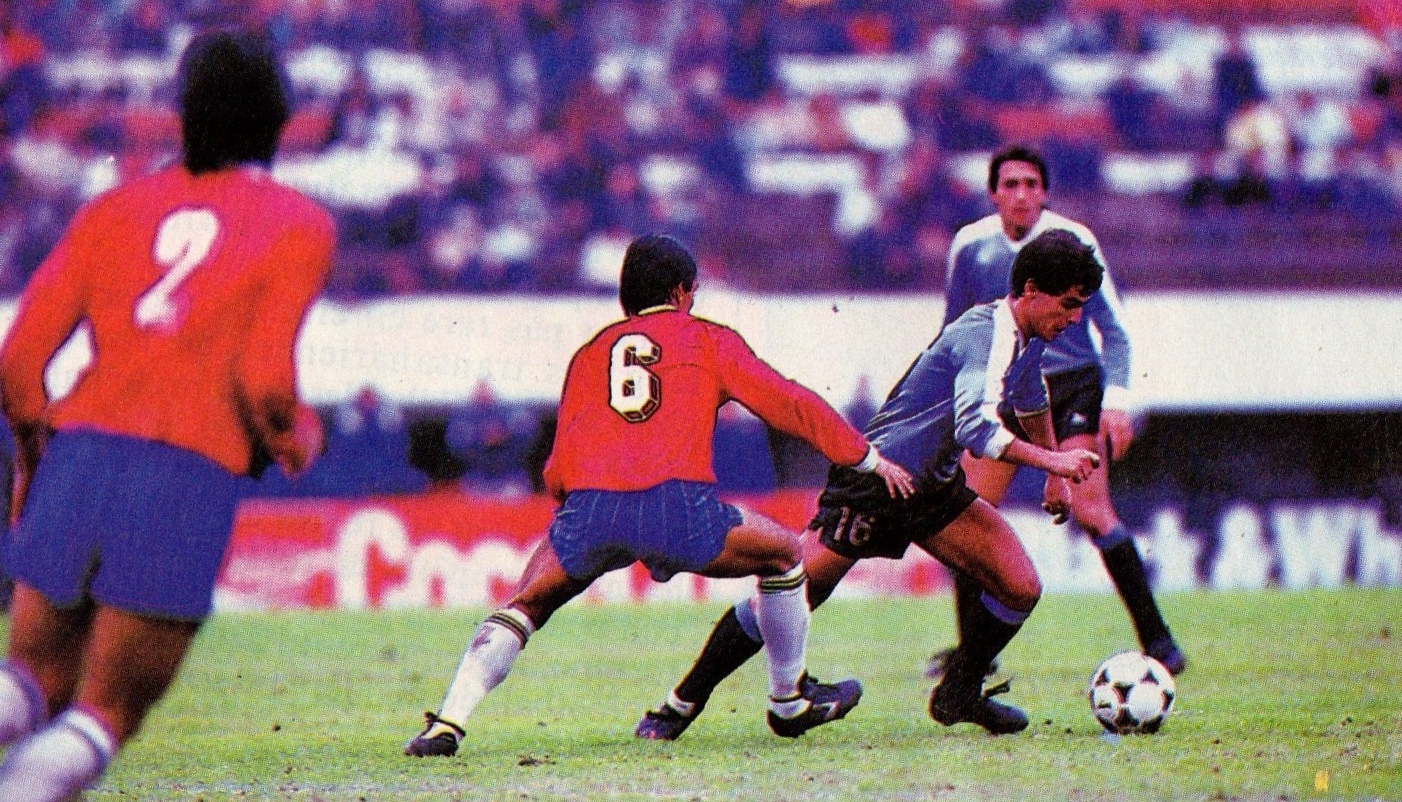 There was no football at all – the great finalists went into kicking each other from the start of the game and never stopped. The Chileans were livelier at first and looked more dangerous. But they also displayed some naivety – they kicked the Uruguayans quite openly.
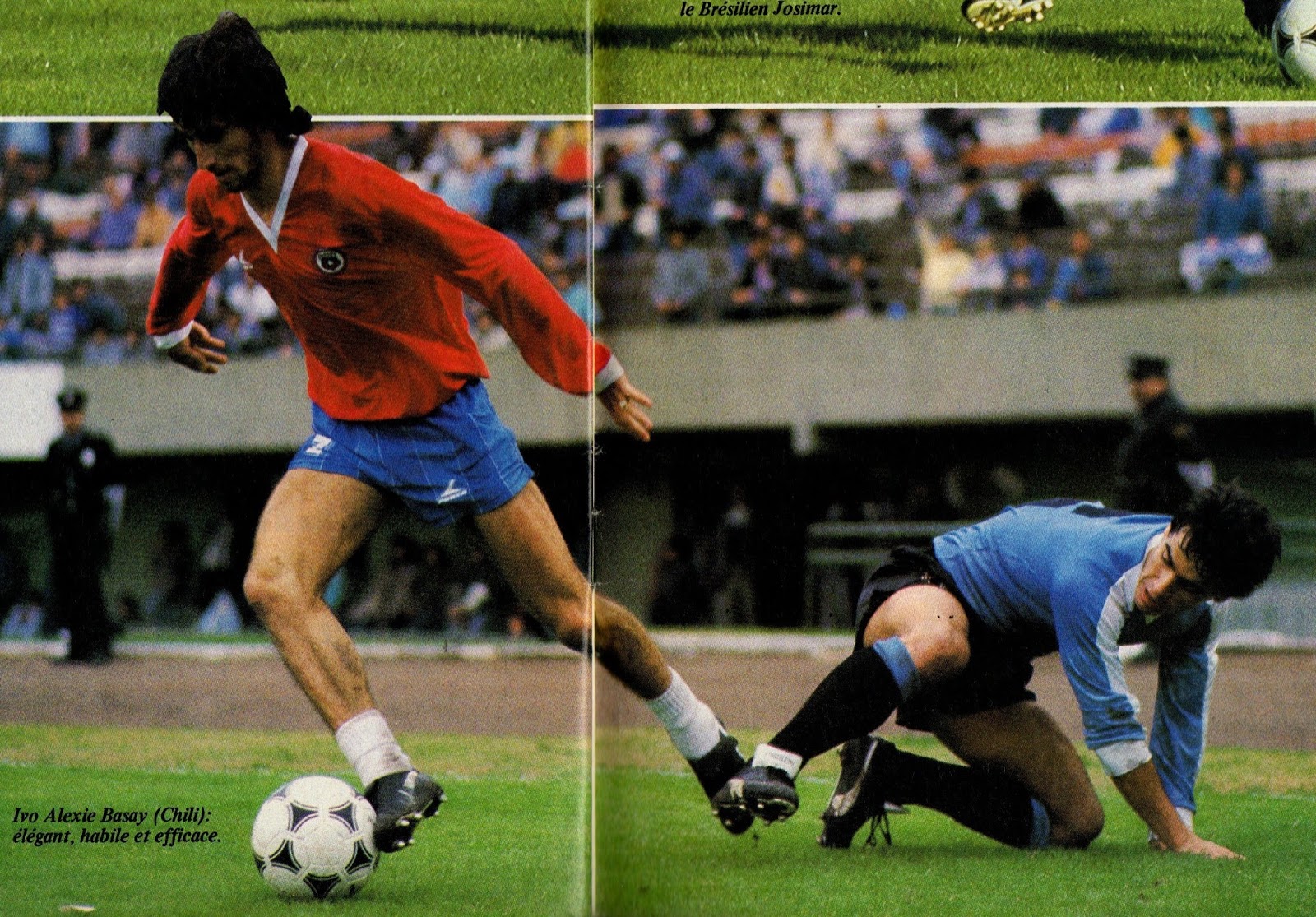 The Uruguayans were crafty – they perfected dirty play long time ago: it always looked a borderline, may be they really played for the ball, but missed it in the last moment and kicked Chilean shin instead. Nevertheless, Arppi Filho had to blow the whistle twice in a single minute.
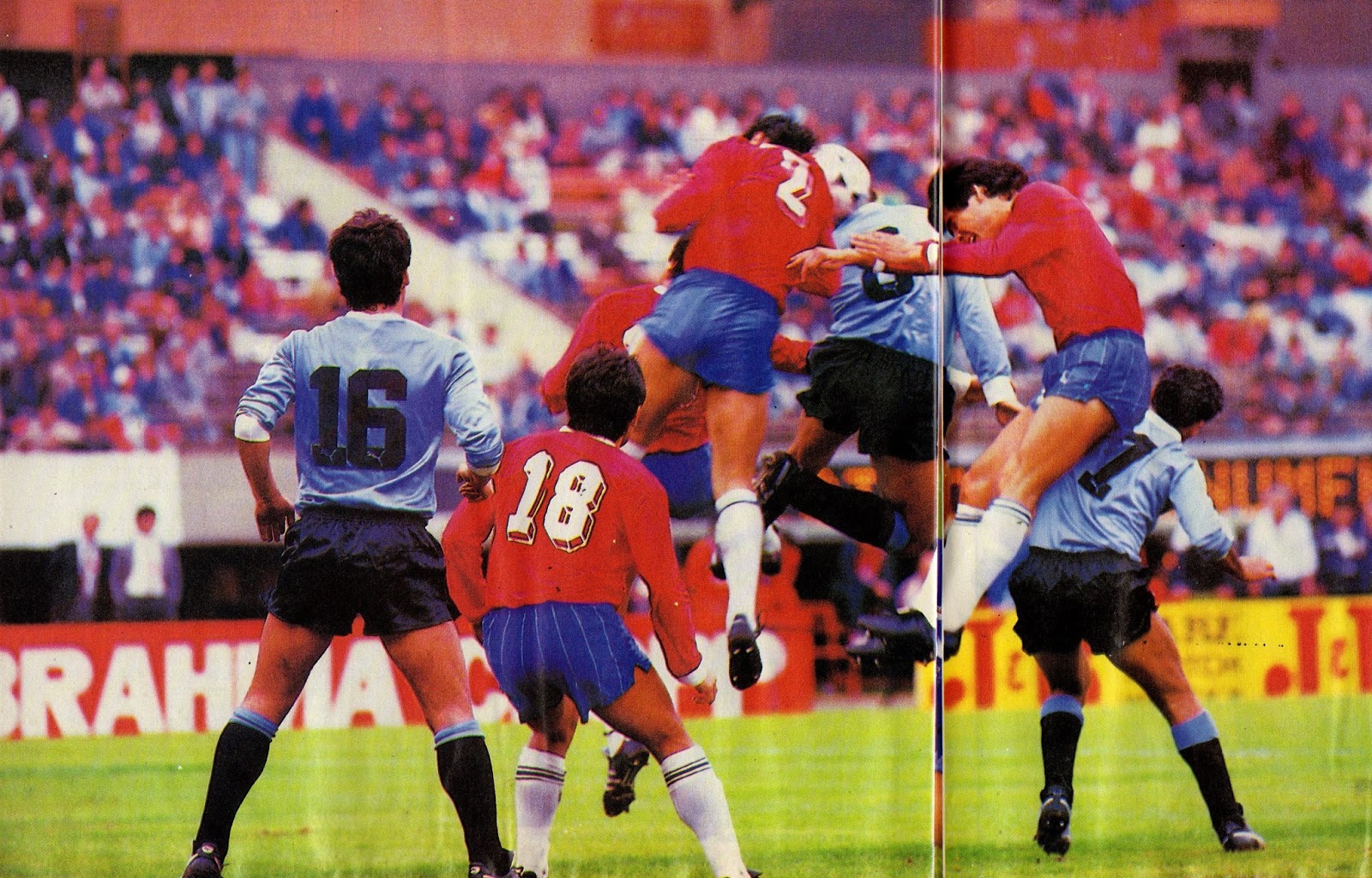 Football was hardly played at all – if a player was brought down already and managed to try some pass in front of the net, a whole bucket of players was there fighting for it by every possible mean. Eventually, the Chileans got some chances to score in the first half, but missed the net. But it was largely ugly kicking opponents – the Uruguayans just equally kicked every Chilean in sight, Chileans focused on Francescoli. It was so blatant and provocative, that even Arppi Filho run out of options to stay blind – he had no chance, but to red card Eduardo Gomez in the 14th minute. What else he can do? Francescoli was kicked about 4 times in succession in less than a minute.
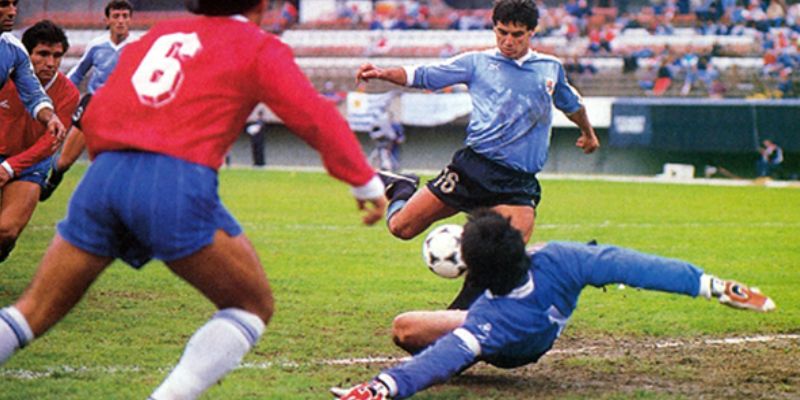 It was, however, familiar and may be even preferable set-up for Uruguay – and they did not miss their rare opportunity to score in the 56th minute. Bengoechea did not miss the chance. In the second half Uruguay looked a bit more dangerous than Chile.
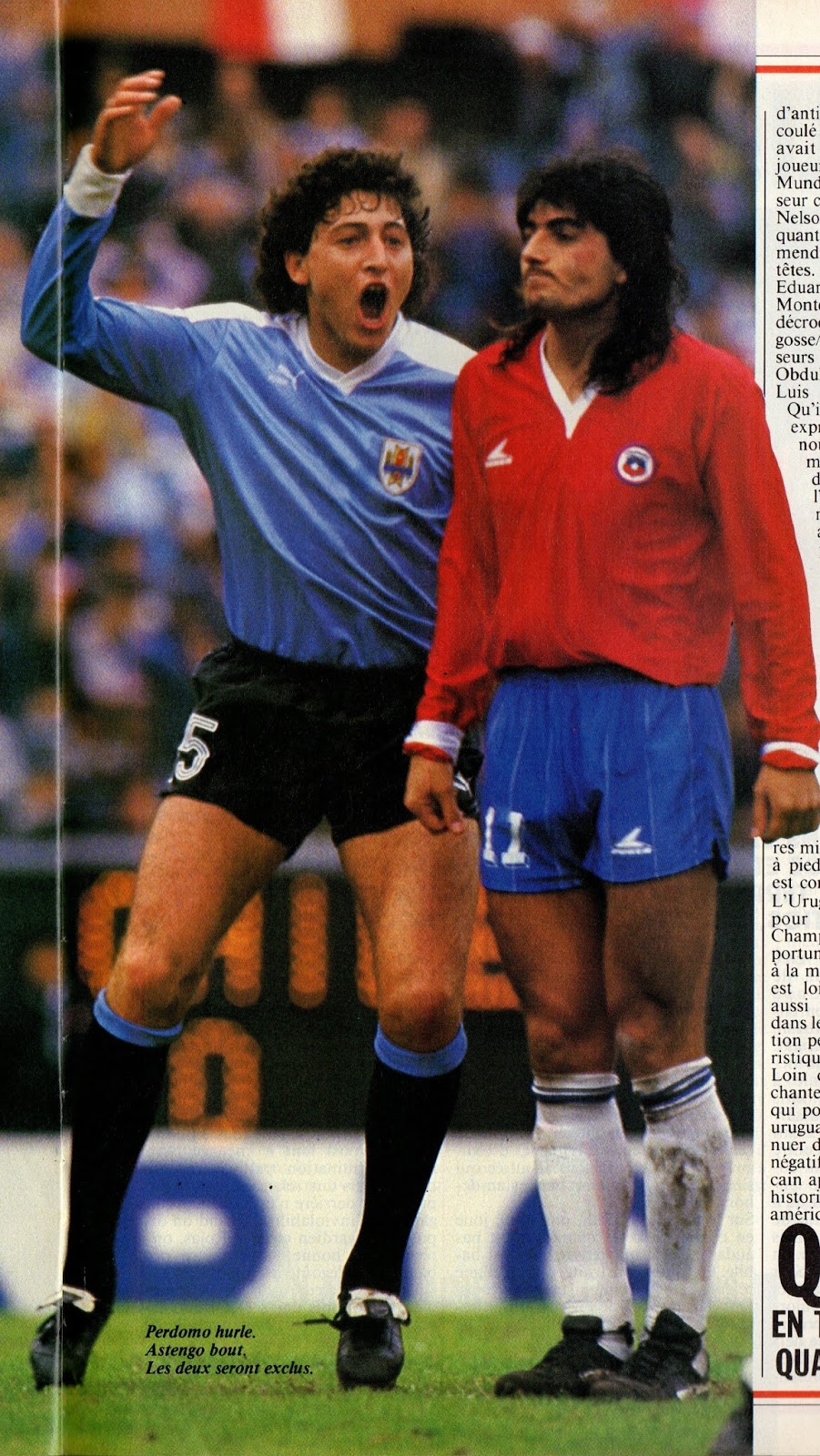 The war continued to the end – and in the 88th minute the Uruguayan captain Perdomo and the Chilean Fernando Astengo were red-carded. Perhaps the picture shows the only difference between the teams: Perdomo still claims innocence and Astengo is somewhat resigned – caught in middle of the crime, guilty as charged. Both teams ended with 9 men on the pitch, but frankly the game should have been abandoned may be around the 35th minute. Then again… stopping the game would have been impossible: no matter how violent, it was the final of a ‘new’ Copa America, promoting it’s ‘modern’ formula and image. It was… lose-lose situation. So, the terrible thing finished on time and Uruguay won.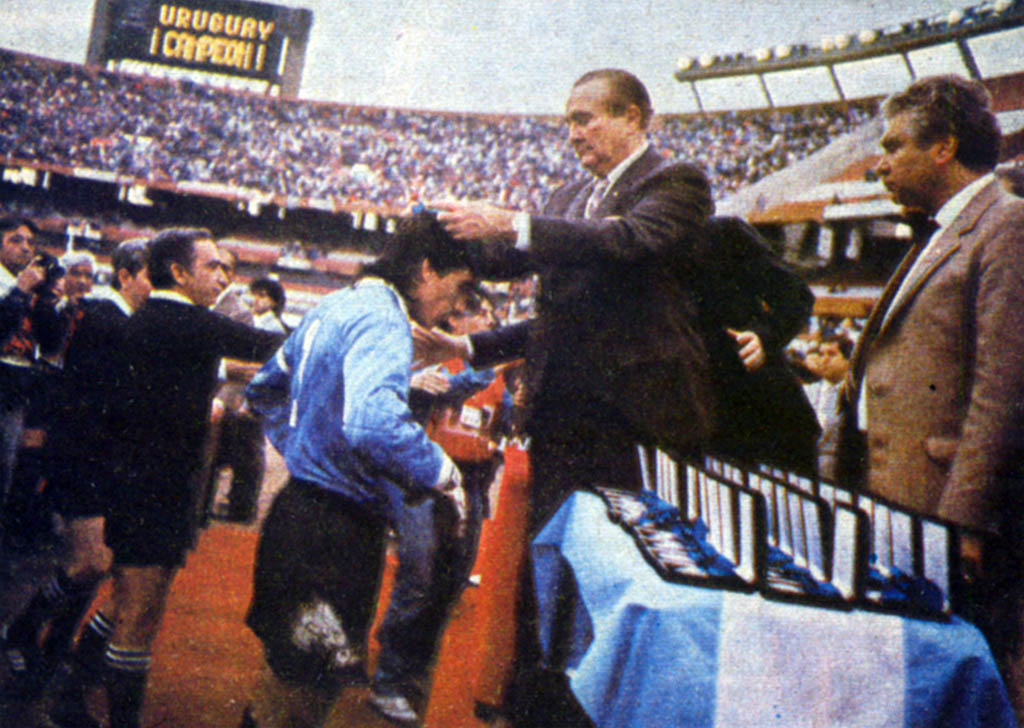
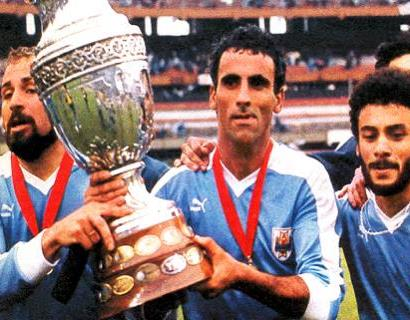 The warriors got the cup and the medals – Perdomo and Francescoli as well, no matter they have been red-carded.
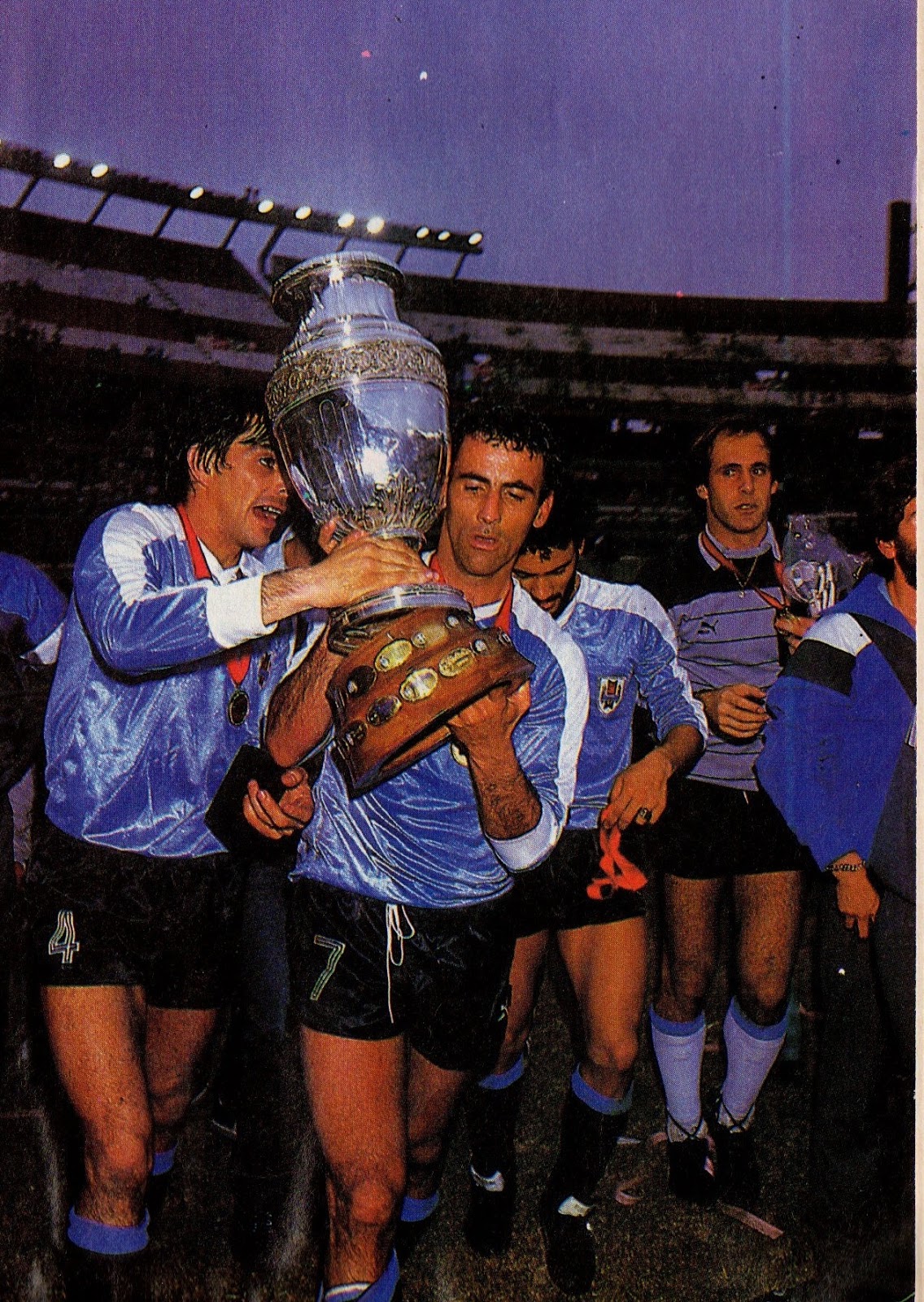 Team Uruguay did its round of triumph, looking not happy, but exhausted.
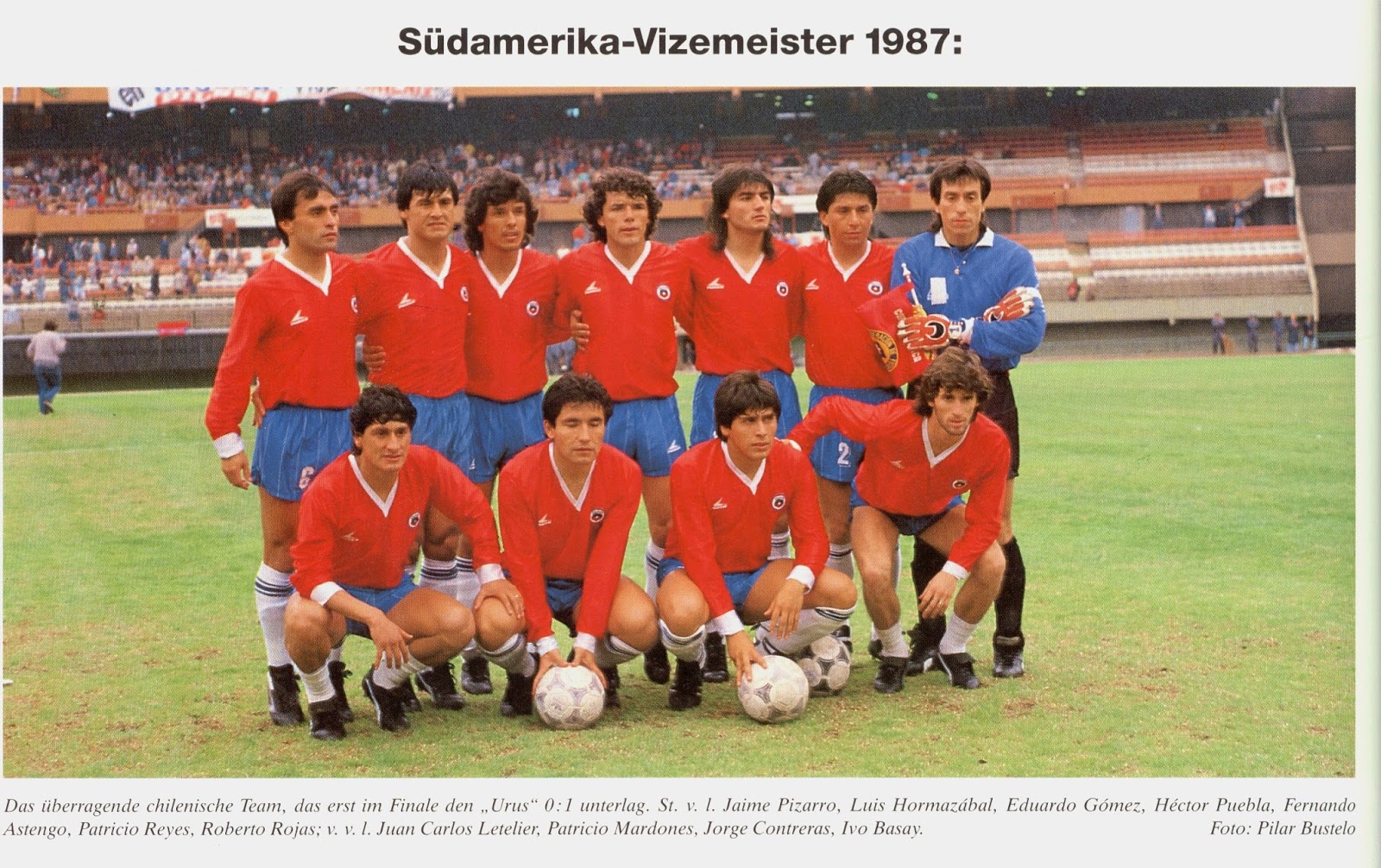 Chile finished second. Forth time second, but once again they were unable to win. Given the poor quality of the final, it is hard to tell how good this vintage was – certainly, there was talent and promise for the future (Ivan Zamorano), but it was not a great squad. Yet, they eliminated Brazil and if anything, at least they did not look weaker than the final winners.
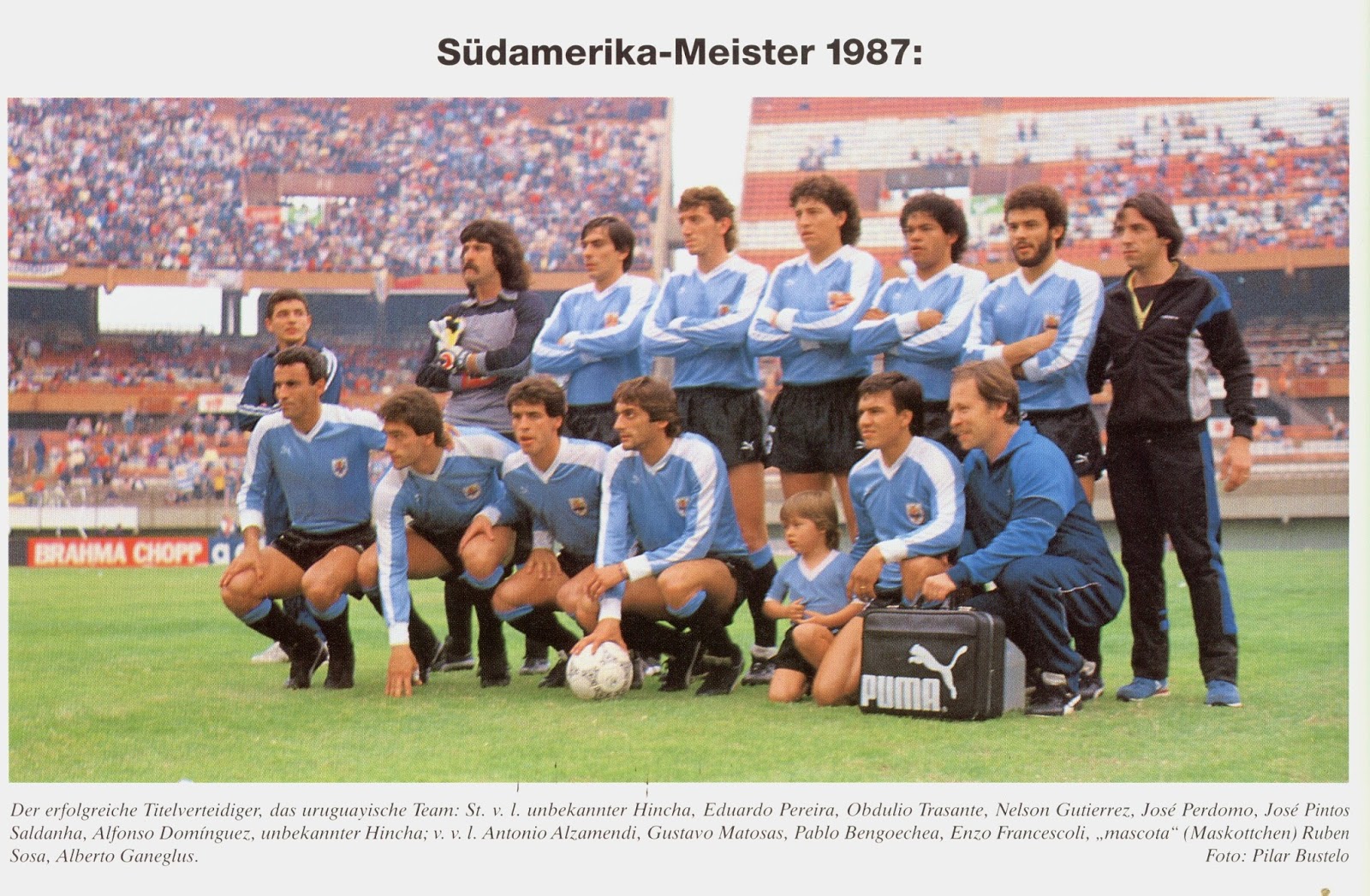 Champions! It depends how one looks at it – on one hand Uruguay defended its 1983 title and equalized Argentina at their own turf: now both countries were the most successful in South America with 9 titles each. Well, wait a minute… that was what some periodicals wrote in Europe at the time. In reality, Uruguay won its 13th title and no longer sharer the record with Argentina, which had won 12th times, lastly in 1959. Let stick to records as established now… Uruguay was number one team in South America and managed to eliminate 1986 World Champions on the way. It was also great to see much criticized and may be to a point improvised squad, led by temporary coach win. On the other hand… nothing so great. The whole championship was a disappointment. In terms of quality of the game, not only nothing new was showed, but it was particularly violent championship even by South American standards. Uruguay was no exception, ending the final with 9 men and red-carded were no others, but the prime stars of the team – ‘Prince’ Francescoli and captain Perdomo. Ugly was ‘old’ Uruguay at the 1986 World Cup and ugly was the new one in 1987. Yes, they were great fighters, very skilled in the art of killing opponents with borderline tackles, which were hard to really call deliberate. Yes, they possessed another great skill: to fight a war without losing their cool, preserving their tactical organization, but the plain fact was Uruguay fought a lot and played very little. It was so much in their blood, that young or old, experienced or not, the Uruguayans player were capable to prevail in such wars and use to their advantage whatever minimal opportunity availed. Thus, they scored and Chile did not – in the 1980s it was already clear that football became a matter of using single opportunity, scoring one goal by hook or crook, and victory was yours. Credit to coach Fleitas and the players for managing to be closely knit collective, to stay focused, to give their best to the very end, but the champions were not a great team. No exciting new name emerged and Franescoli did not shine as he did 4 years earlier. That is the more objective conclusion, but still it was great to see small country coming on top and at least at home it was a moment of triumph.