Poland. Nothing really new, except for rather high scoring average in the top league – 2.49 per game. Second Division. Group 1. Gwardia (Warszawa) decline was permanent by now – 11th with 29 points. One team dominated the league:
 Olimpia (Poznan) finished 6 points ahead of 2nd-placed Zawisza (Bydgoszcz). 16 wins, 8 ties, 6 losses, 33-20 goal-difference and 40 points. Champions and promoted – wonderful season.
Group 2. Tougher competition here, but Wisla (Krakow) lost the battle.
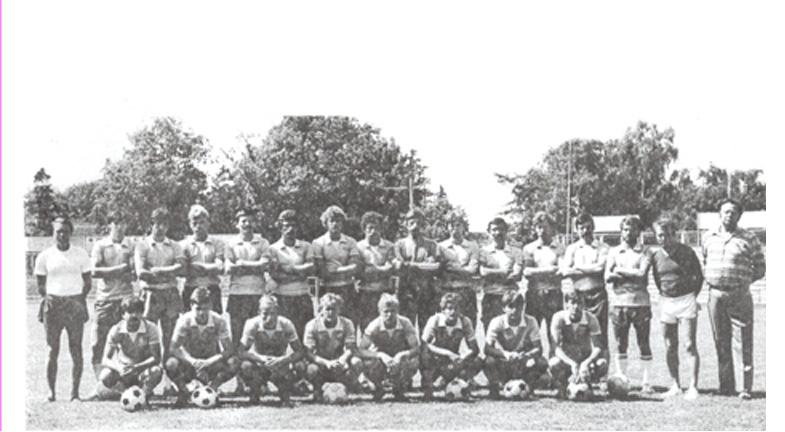 Olimpia (Elblag) barely escaped relegation – 12th with 29 points.
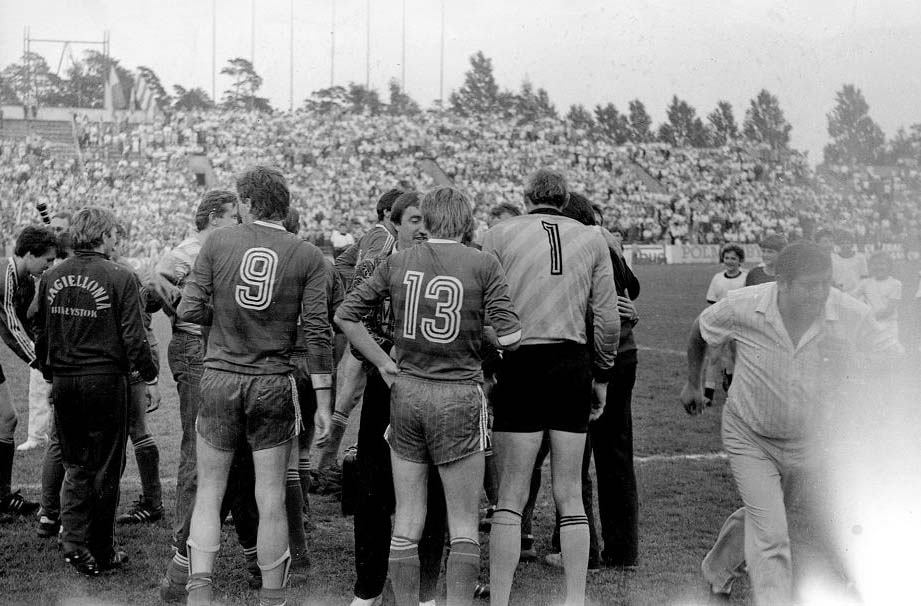 Jagiellonia (Białystok) ended 3rd with 35 points.
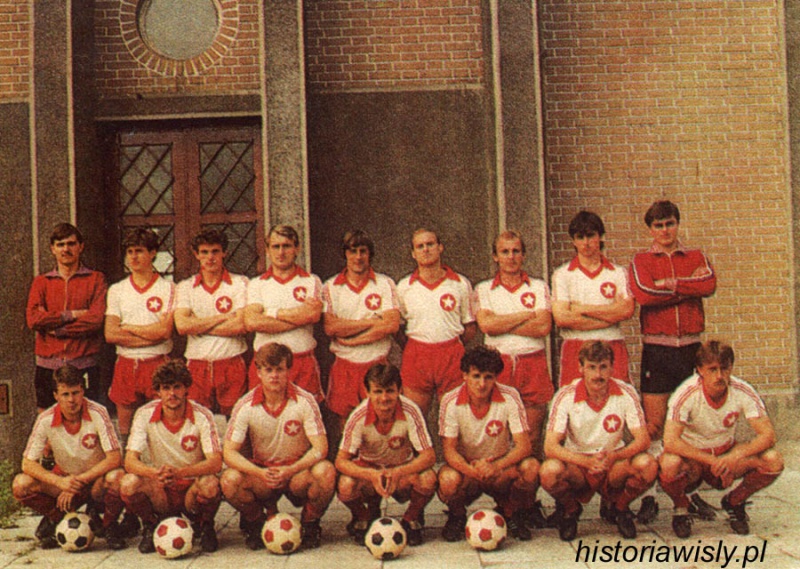 Wisla (Krakow) lost the battle for return to top flight – 2nd with 39 points. Standing from left:
Robert Gaszynski, Marek Świerczewski, Kazimierz Moskal, Marek Motyka, Janusz Krupiński, Michał Wróbel, Władysław Starościak, Zenon Małek, Jerzy Zajda
Crouching: Włodzimierz Siudek, Robert Markowski, Zbigniew Klaja, Jarosław Giszka, Jacek Mróz, Ireneusz Salamon, Marek Banaszkiewicz.
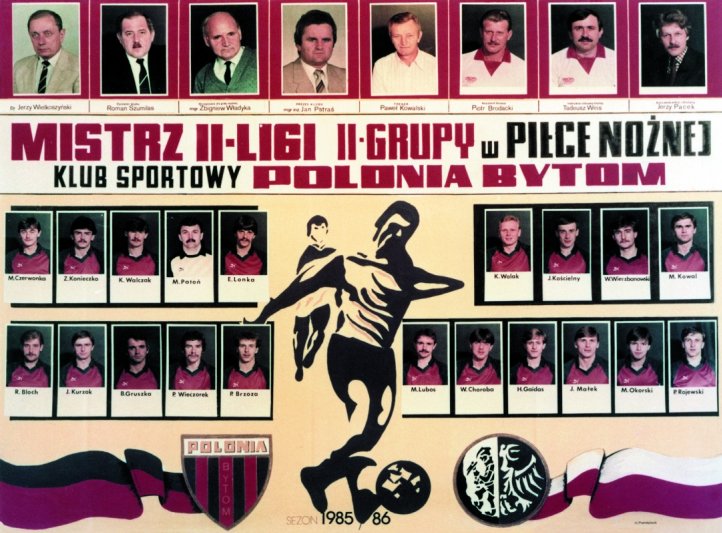 Polonia (Bytom) won the championship with 41 points. 17 wins, 7 ties, 6 losses, 46-26 goal-difference. Sweet return to first division football.
There was a rare anomaly this season – the rival teams of the city of Radom – Radomiak and Bron – did not play in the same group and there was no local derby.
Hungary the Cup
The Cup was Budapest derby – Vasas vs Ferencvaros. Although both teams were not in their best shape , a final is a final and a trophy much desired by each team. The match ended scoreless and went to penalty shoot-out. Lady Luck smiled to Vasas and they prevailed 5-4.
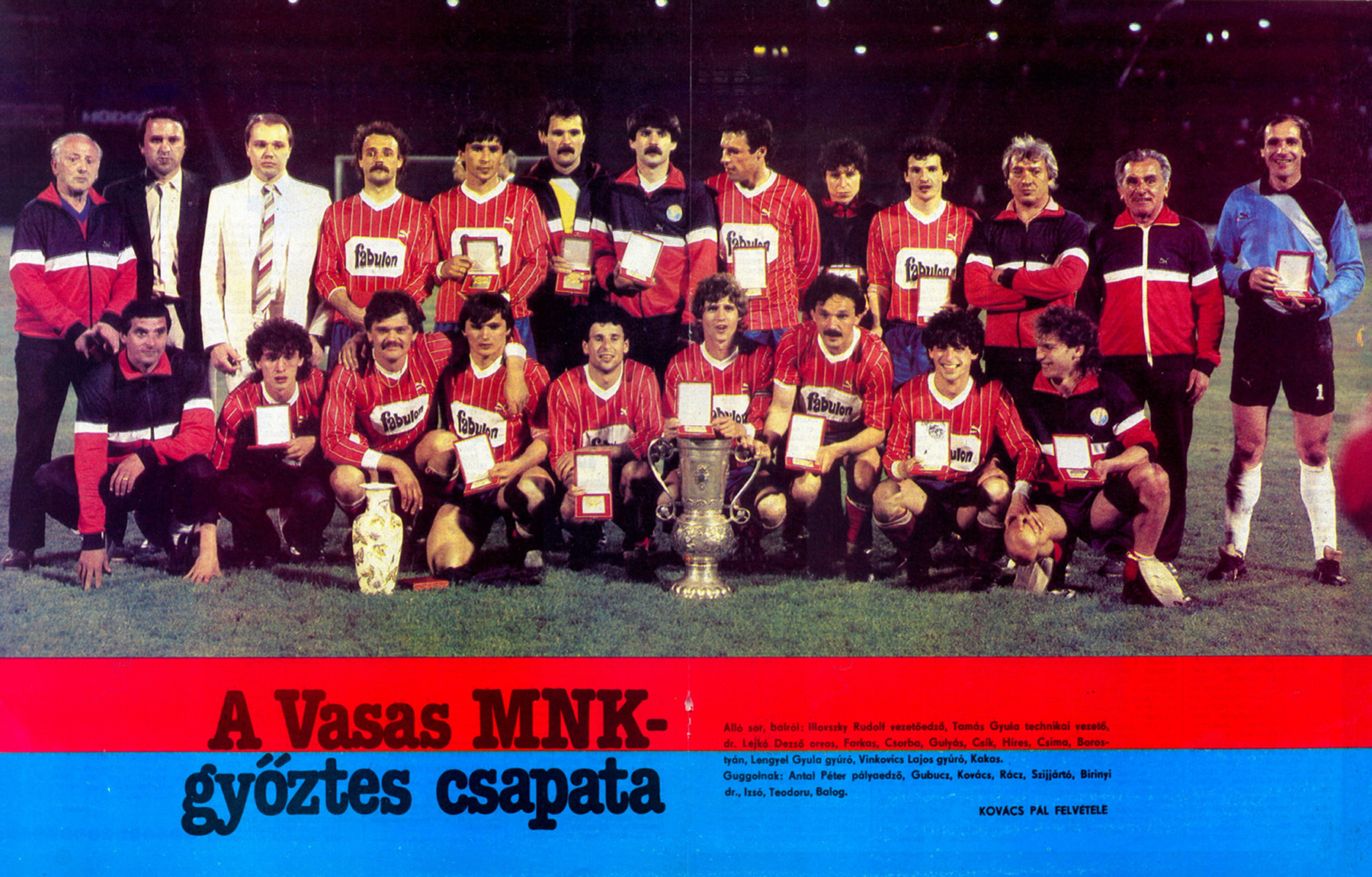 This was no longer the strong team the club had in the 1970s and the season was rather lean, but they won the Cup and it was great. Perhaps the venerated coach Rudolf Illovszky was the prime factor for their success – like the club, he was already over the hill, but experience could help in single combats. Times changed, by now it was more or less clear that Vasas lost its edge and would not be able to come back, so winning the Cup was something to cherish – winning trophies was becoming accidental event.
Hungary
Hungary. Top league dominated by one team, three competed for the two promotional spots in the Second Division.
Szegedi EOL Delep SE lost the battle and finished 3rd with 51 points.
 Eger SE – 2nd and promoted with 53 points.
 Dunaujvarosi Kohasz SE clinched 1sr place with 54 points and also returned to top flight.
First Division. Honved reigned supreme and the rest,,, well, nothing special. But still it was improtant season in some respects: shirt advertisement was going on, still selectively and carefully, and also the first foreign import played this season: an African player named Umoh played for Csepel (Budapest). Thus, Yugoslavia and Hungary were the pioneers of import in Eastern Europe, in the same year, but Hungary was the technically the first country at the other side of the Iron Curtain to do so. Once again, it was done the same careful way as introducing export – nothing much in the press, one player at a time, and in small clubs at first. But it started.
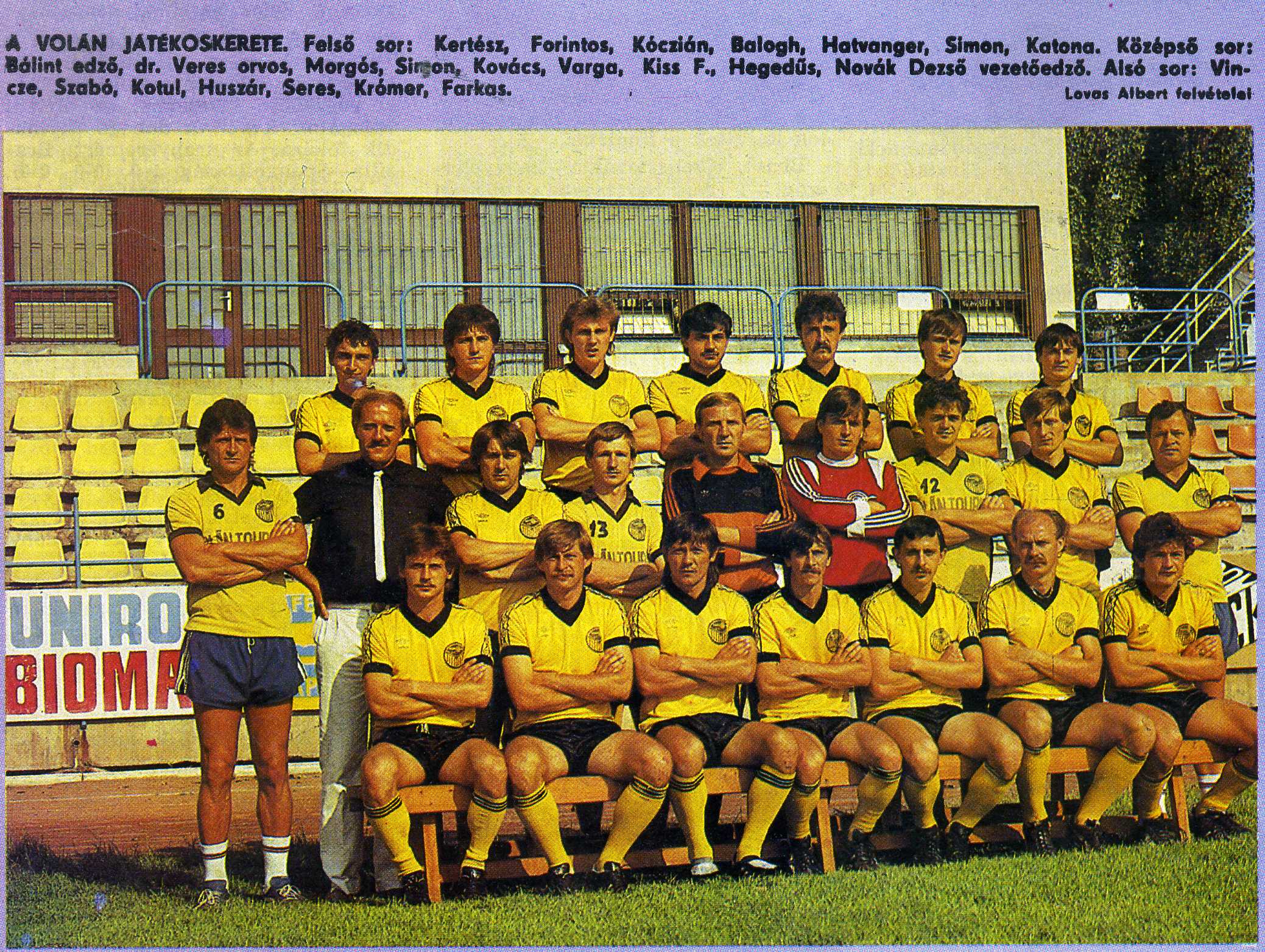 Volan (Budapest) finished last and relegated with 22 points.
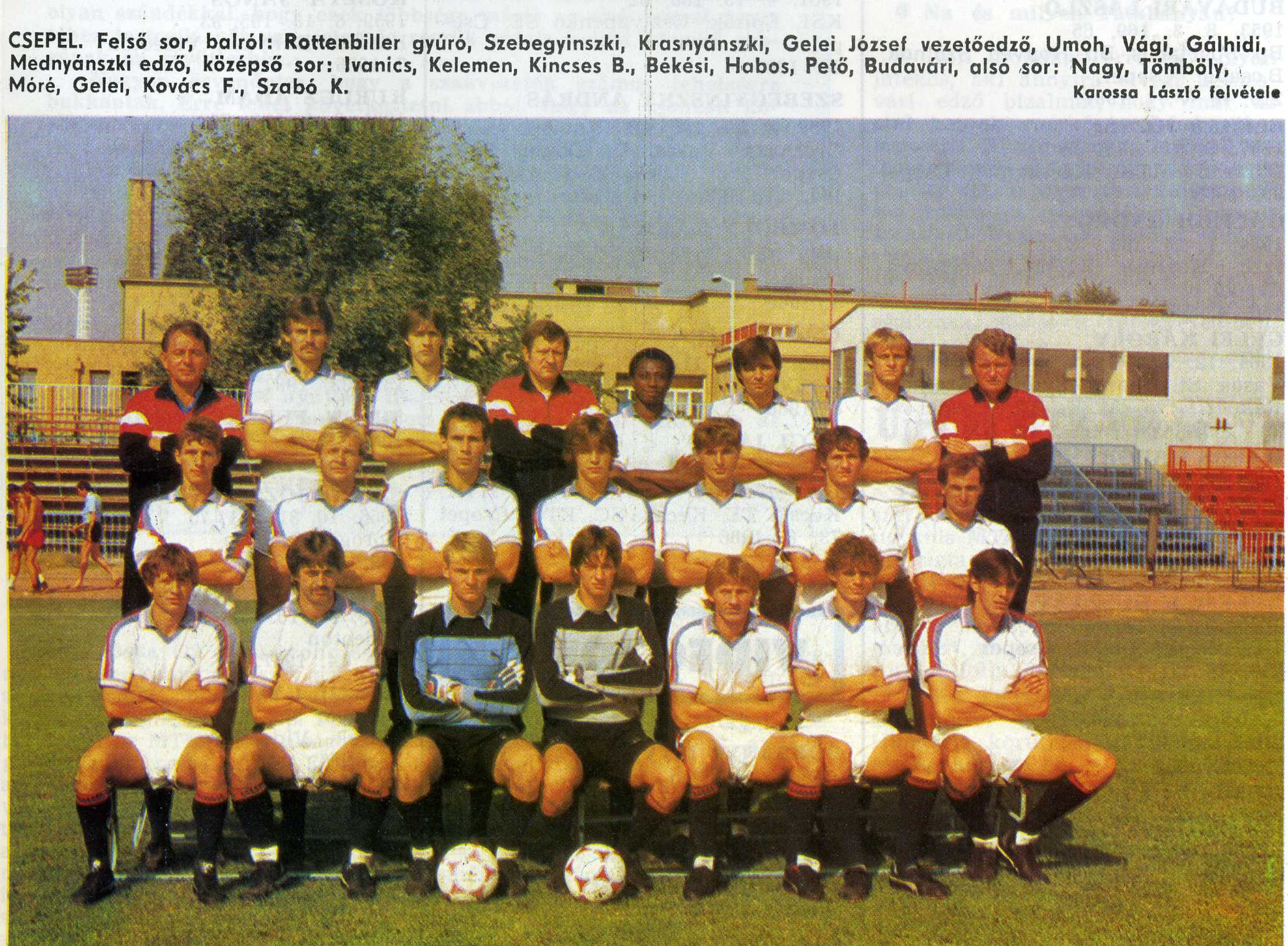 Csepel (Budapest) with its African import was still very weak – 15th with 22 points and relegated.
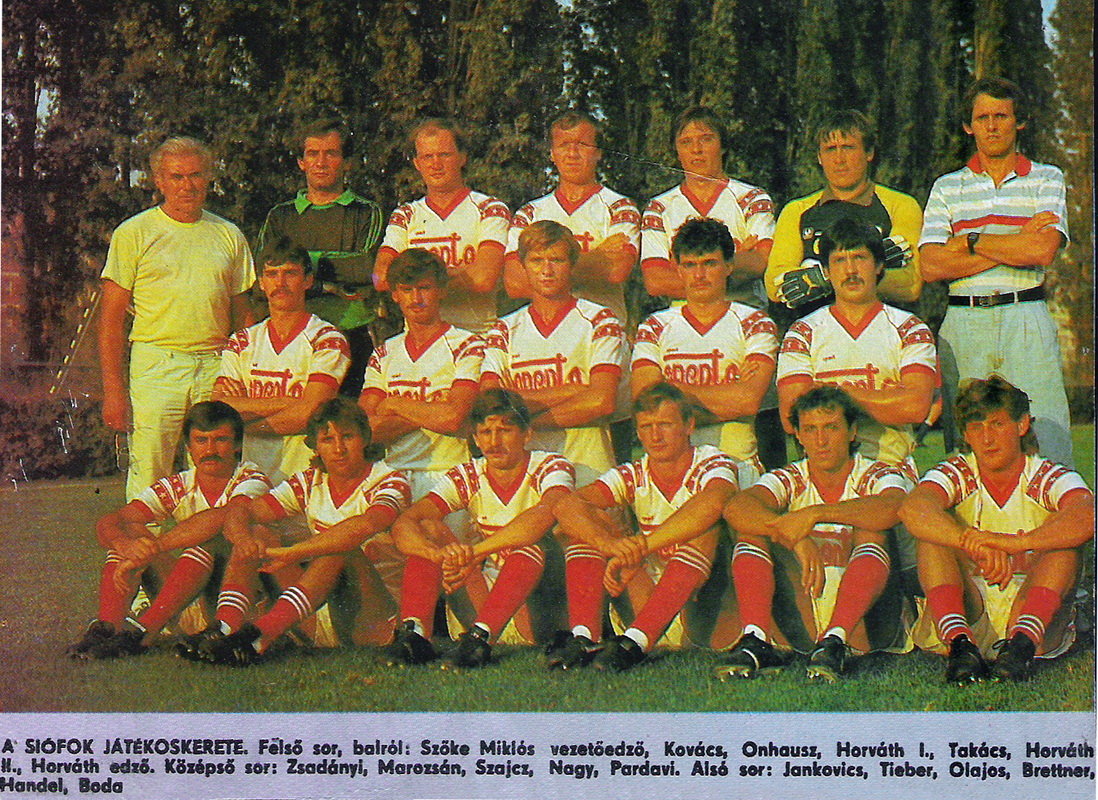 Siofok – managed to avoid relegation. 14th with 24 points.
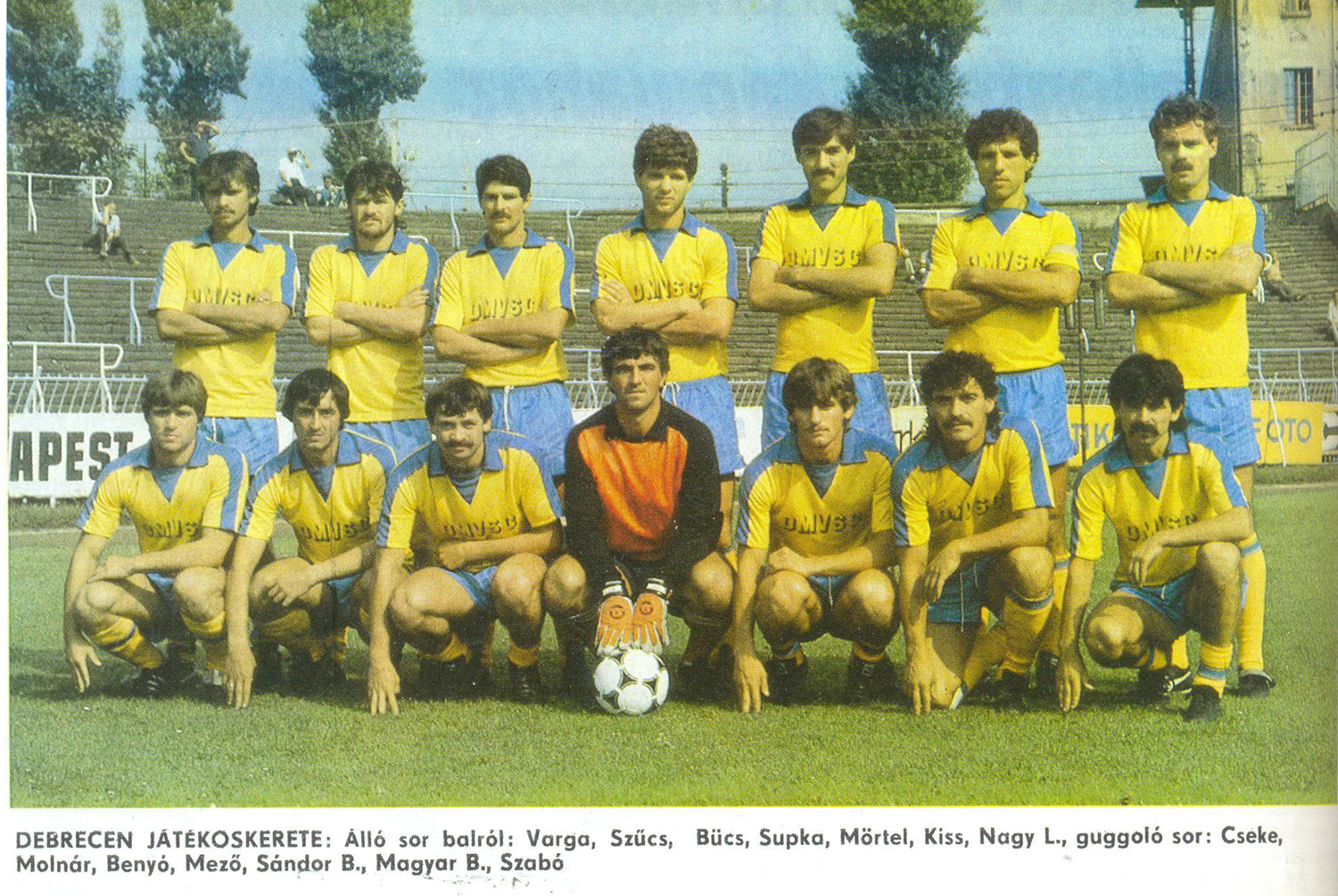 Debreceni MVSC – 13th with 25 points.
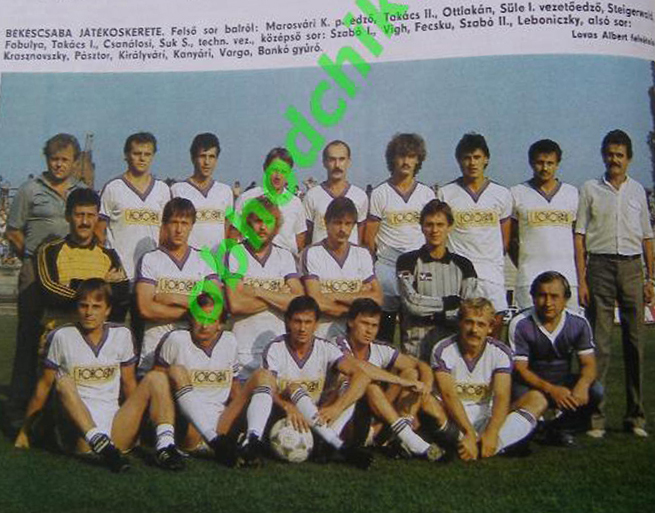 Bekescsaba – 12th with 25 points.
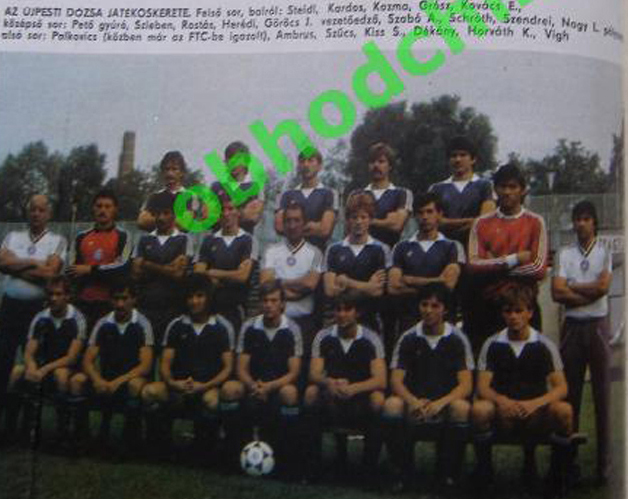 Ujpesti Dosza – arguably, their weakest season. Shamefully weak – barely escaped relegation, judging from the final table. 11th with 25 points.
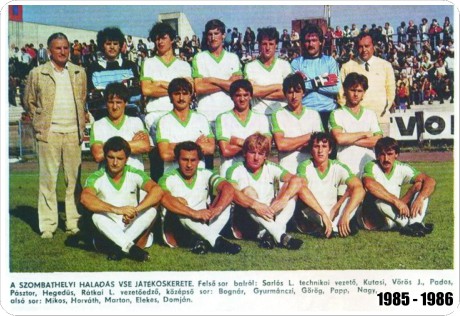 Haladas – 10th with 27 points.
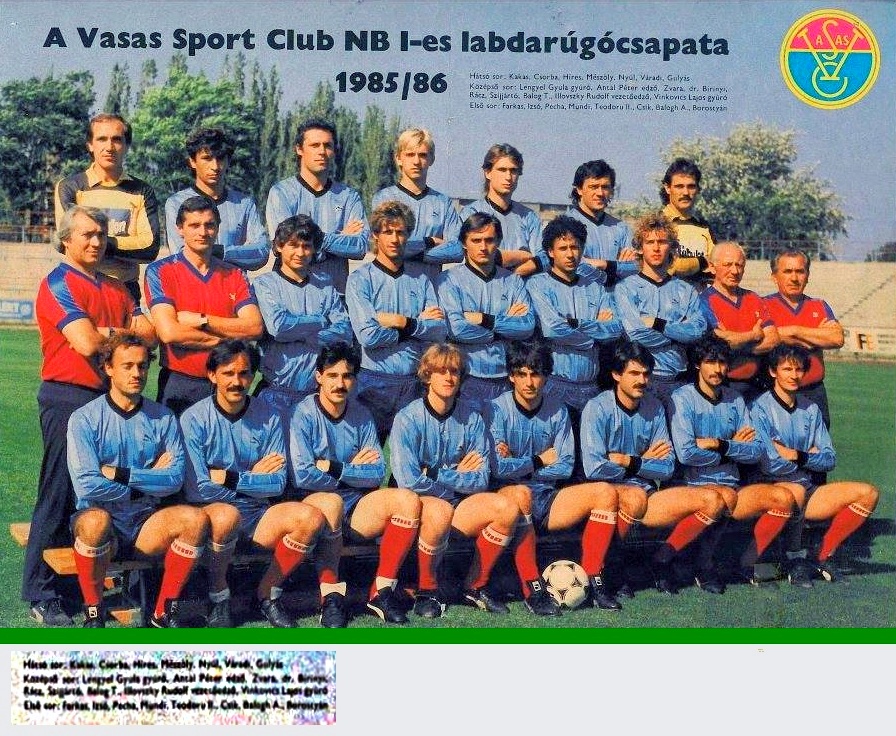 Vasas – 9th with 29 points.
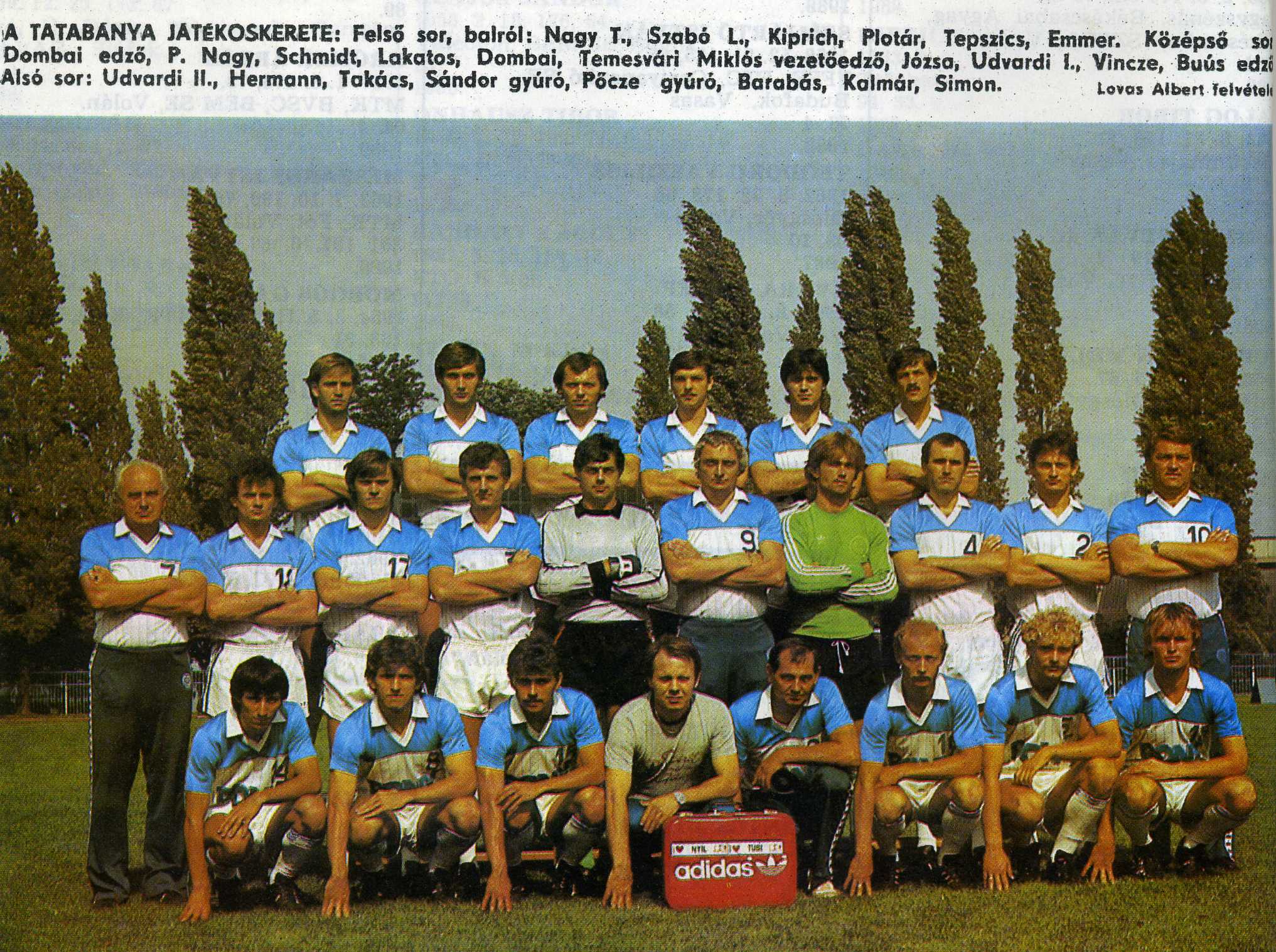 Tatabanya – 8th with 29 points.
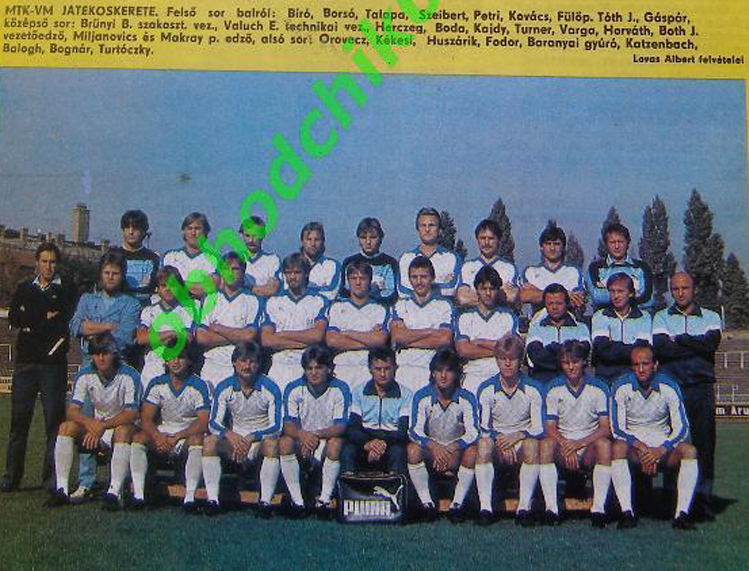 MTK-VM – 7th with 29 points.
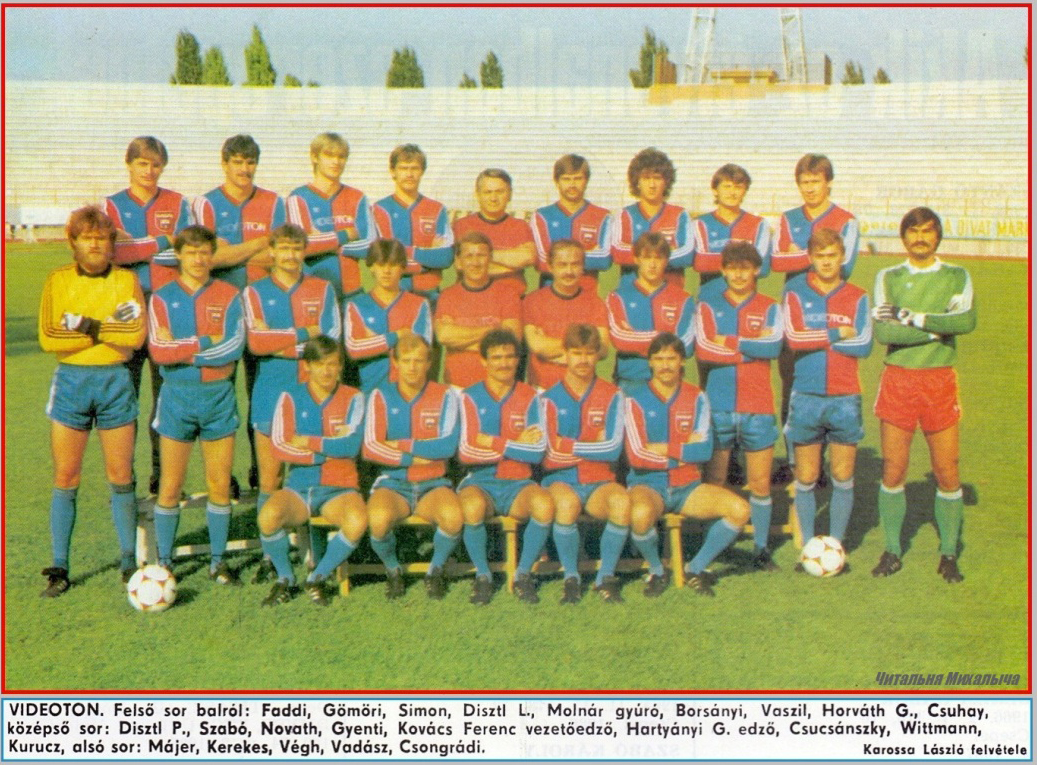 Videoton – 6th with 32 points. Curiously, for a leading team, they were terribly low scorers this season: 25 goals in 30 games. Only one team scored less.
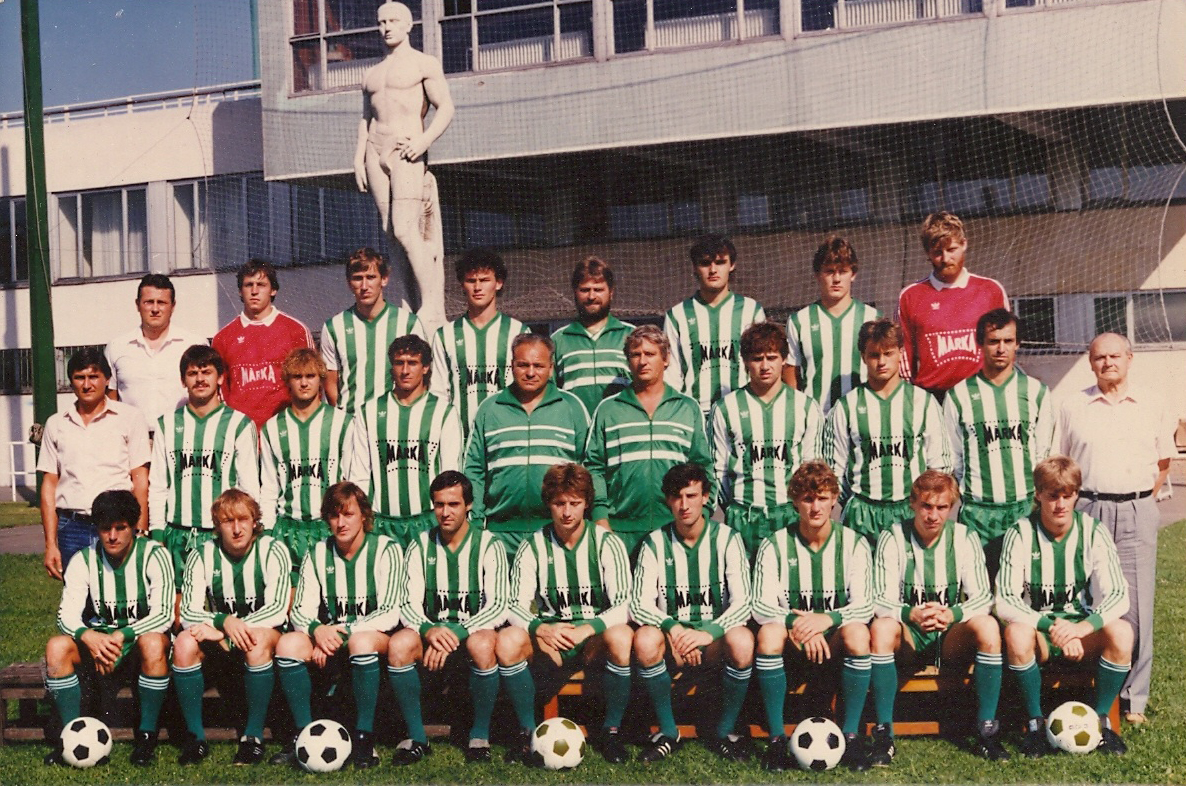 Ferencvaros – 5th with 34 points. Top row from left: Mihaly Havasi – technical director, Erdélyi, Pölöskei, Szabadi, Jozsef Bodnár – masseur, Pintér, Haaz, Zsiborás.
Middle row: Laszlo Pusztai – szakosztályvezető, Szántó, Zsinka, Hámori, Jenő Dalnoki – coach, Peter Vépi – assistant coach, Fischer, Zsivótzky, Rab, Karoly Monostori – doctor.
Front: Strausz, Deák, Ebedli, Takács, Kvaszta, Bánki, Keller, Jancsika, Kincses
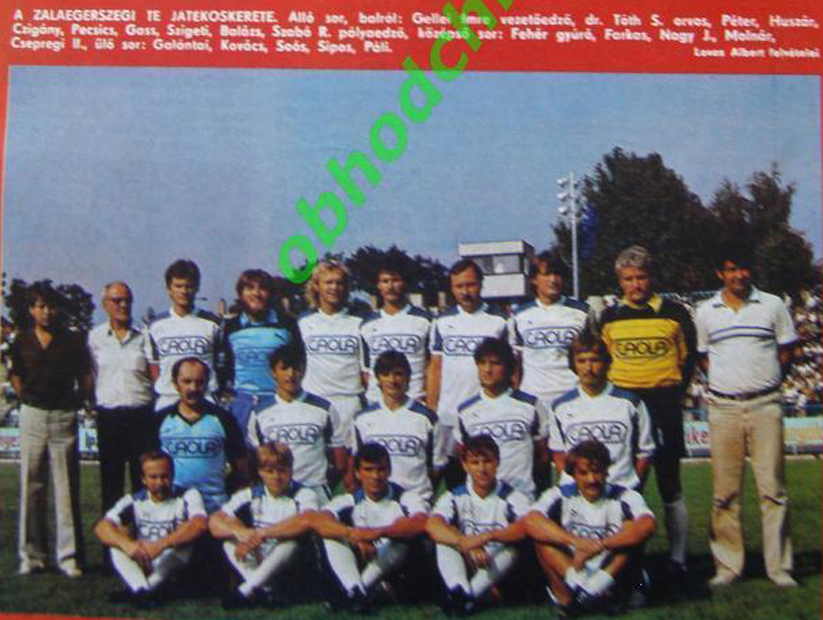 Zalaegerszegi TE – 4th with 36 points. Surprisingly strong season – or, the others were too weak…
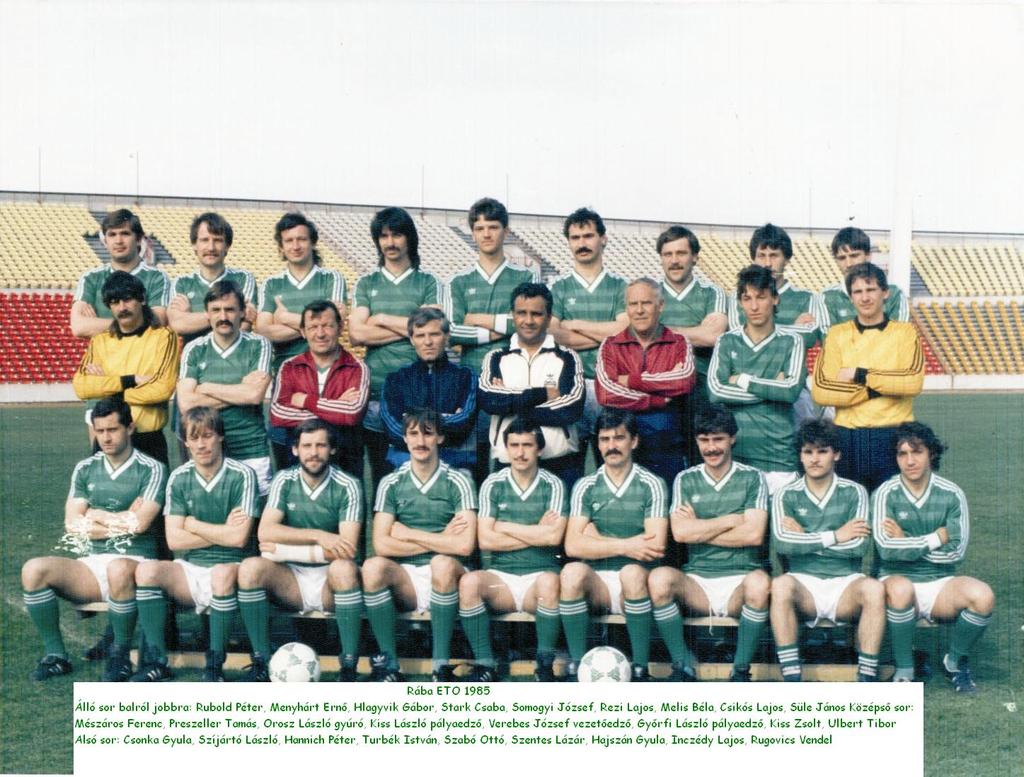 Raba ETO – maintaining consistency: 3rd with 37 points.
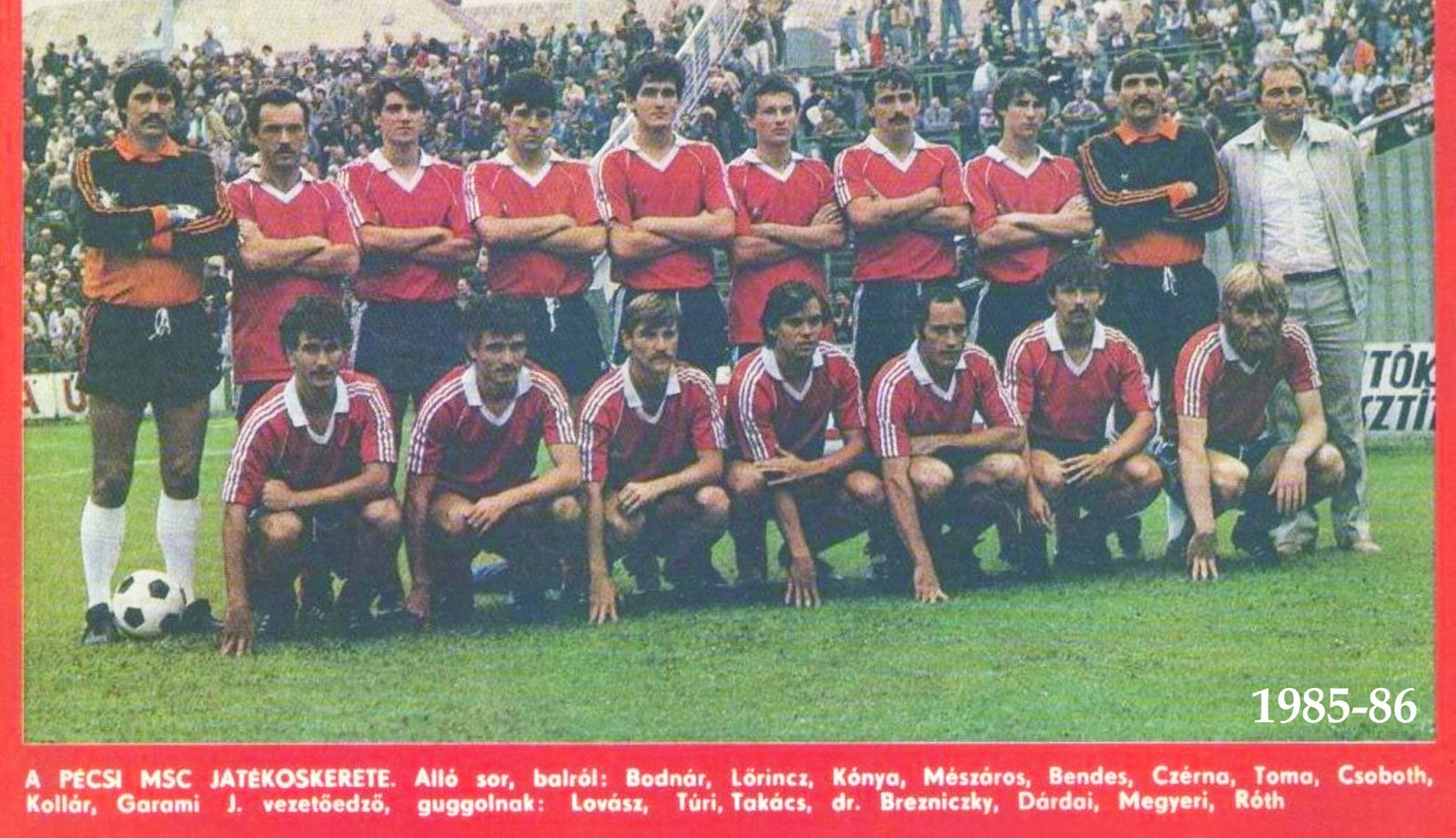 Pecsi MSC – 2nd with 39 points. Surprisingly high position, perhaps one of their best season, but that was also to maximum of their aim – title contender they were not. Even lost rather badly to the champions: 2-4.
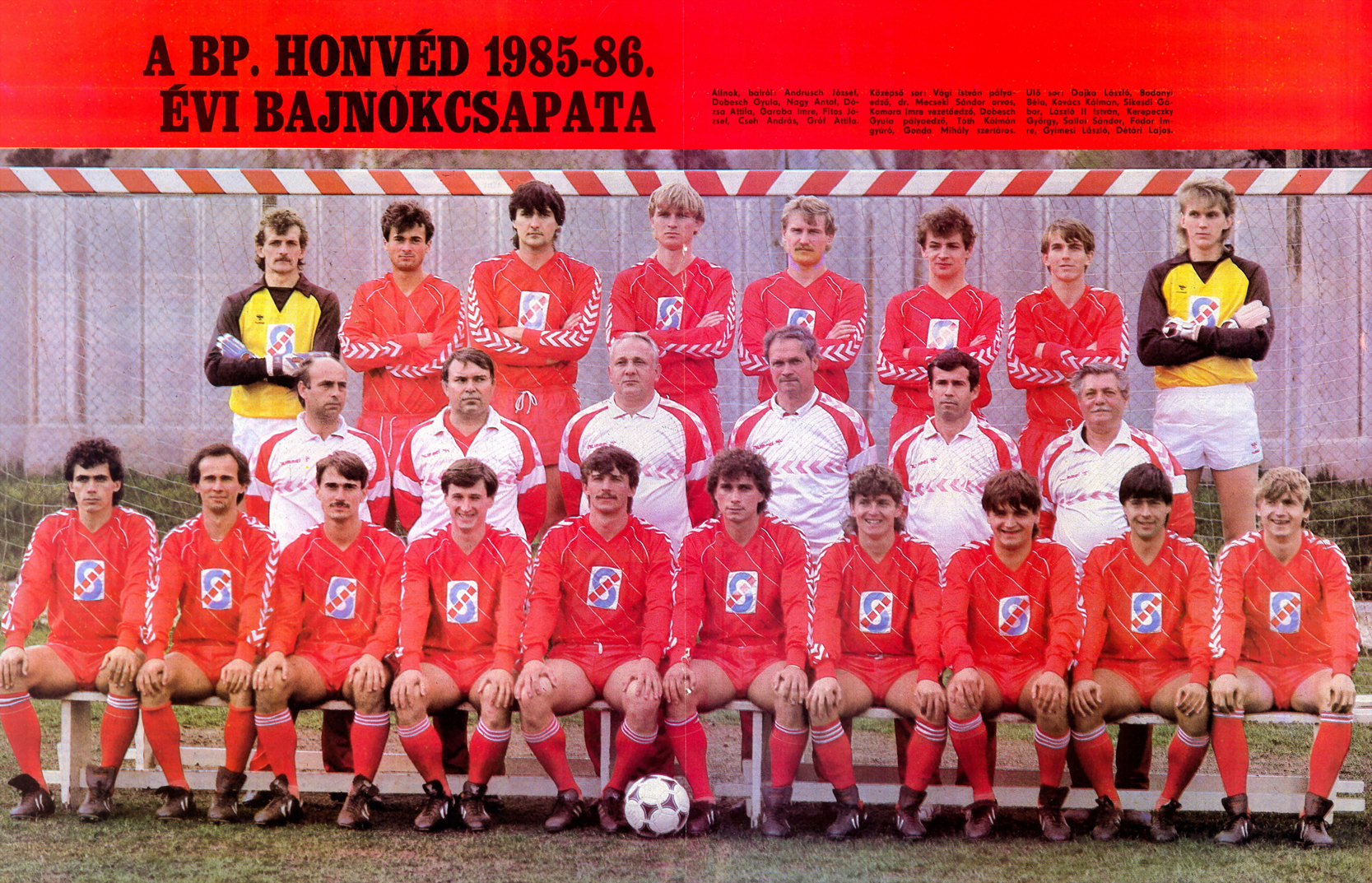 Honved – overwhelmingly stronger than the rest of the league. 17 wins, 11 ties, only 2 lost games, 63-29 goal-difference. They won over the next teams in the table, they topped all Budapest clubs – thrashing Ujpesti Dosza 6-0 was perhaps the sweetest victory. They also had the record victory of the season – 7-0 vs Debrecen, and the most unusual result – 5-5 tie with MTK. They had it all… including the greatest Hungarian player of the 1980s Lajos Detari. And one more title to their collection.
Wales
Wales. Ranked 19th by UEFA this year, but it did not matter – only the Cup tournament counted for anything and the final was the typical duel between Welsh professional club, playing in the Englsih leagues and English semi-professional club outside the league system. Wrexham vs Kidderminster Harriers. The final ended undecided – 1-1 after overtime – and had to be replayed. This time Wrexham prevailed 2-1.
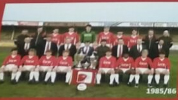 Kidderminster Harriers tried hard to win a trophy, but even if they did they were not going to play in the Cup Winners Cup. But they still had a good run and were equal to their professional opponents.
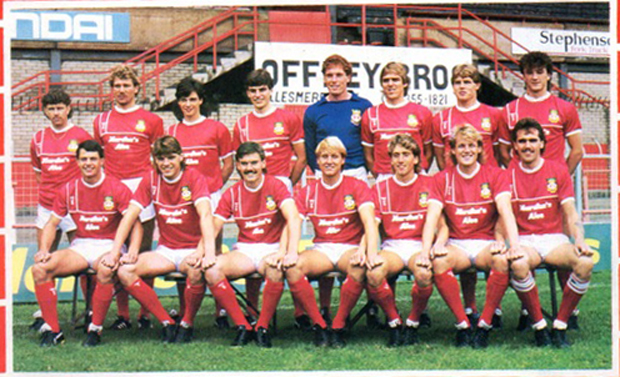 Wrexham prevailed, won the Cup and, with that, their chance to play some European football. Wonderful success for the Robins.
Sweden the Cup
The Cup final opposed the best teams in the country – Malmo FF vs IFK Goteborg. Exciting final for sure – both teams were determined to win and prove who was really the best in Sweden. Malmo FF clinched 2-1 victory.
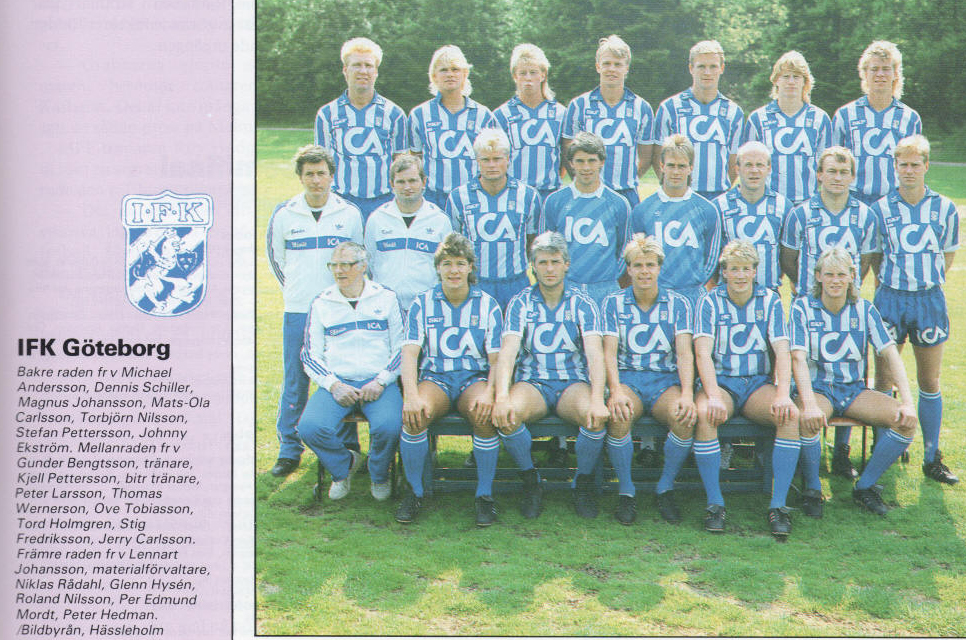 IFK Goteborg ended the year with nothing. Bad luck, but to a point – since the cup tournament had different schedule, played in 2 years – 1985-86 – vs single year championship, the final was played much earlier than the end of the championship. Thus, they lost the Cup almost in the middle of the championship and Malmo FF, already running strong got additional bust. Small difference, but in favour of IFK Goteborg – at the end, they did not reach the championship final. Tiny differencies, leading to unpleasant results.
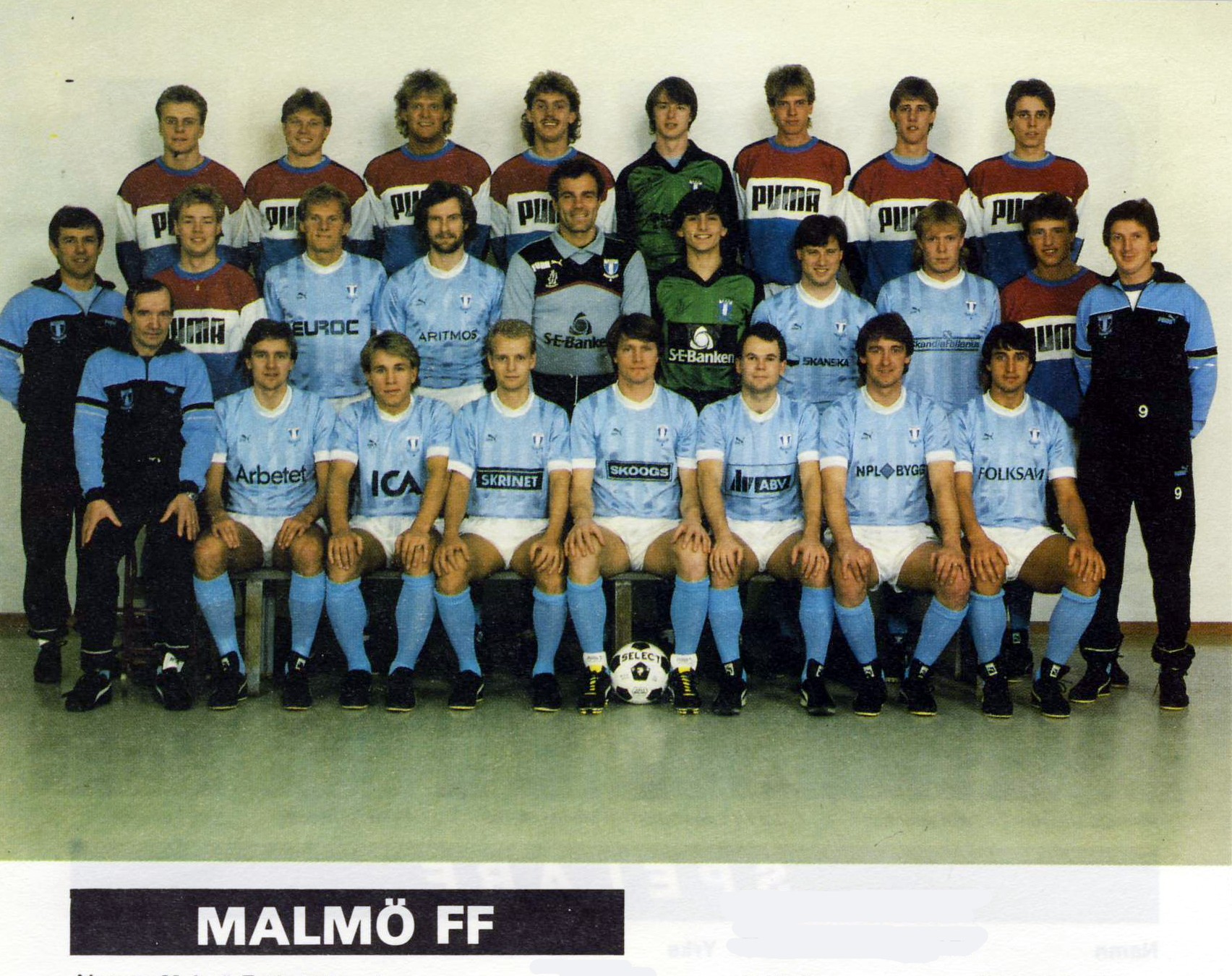 Malmo FF collected a double this year – does not happen often, so it was fantastic result of very strong season. May be not the greatest squad in the history of the club, but very successful and in excellent from. Motivation was not lacking either – credit must go to Roy Hogdson, who was quietly developing into fine coach.
Sweden I Division
First Division. Still the same formula used in the previous years: after the regular season the top 4 teams proceeded to play-offs and the winner in the final was the champion. Weakened IFK Goteborg, losing key players every year, was not quite up to the task and another club – perhaps the most consistently strong Swedish club – stepped in. Only 3 teams finished with positive goal-difference and one more managed to end with neutral goal-difference. Looked like a division between strong and weak club was emerging, quite atypical for Swedish football, but times were changing… may be.
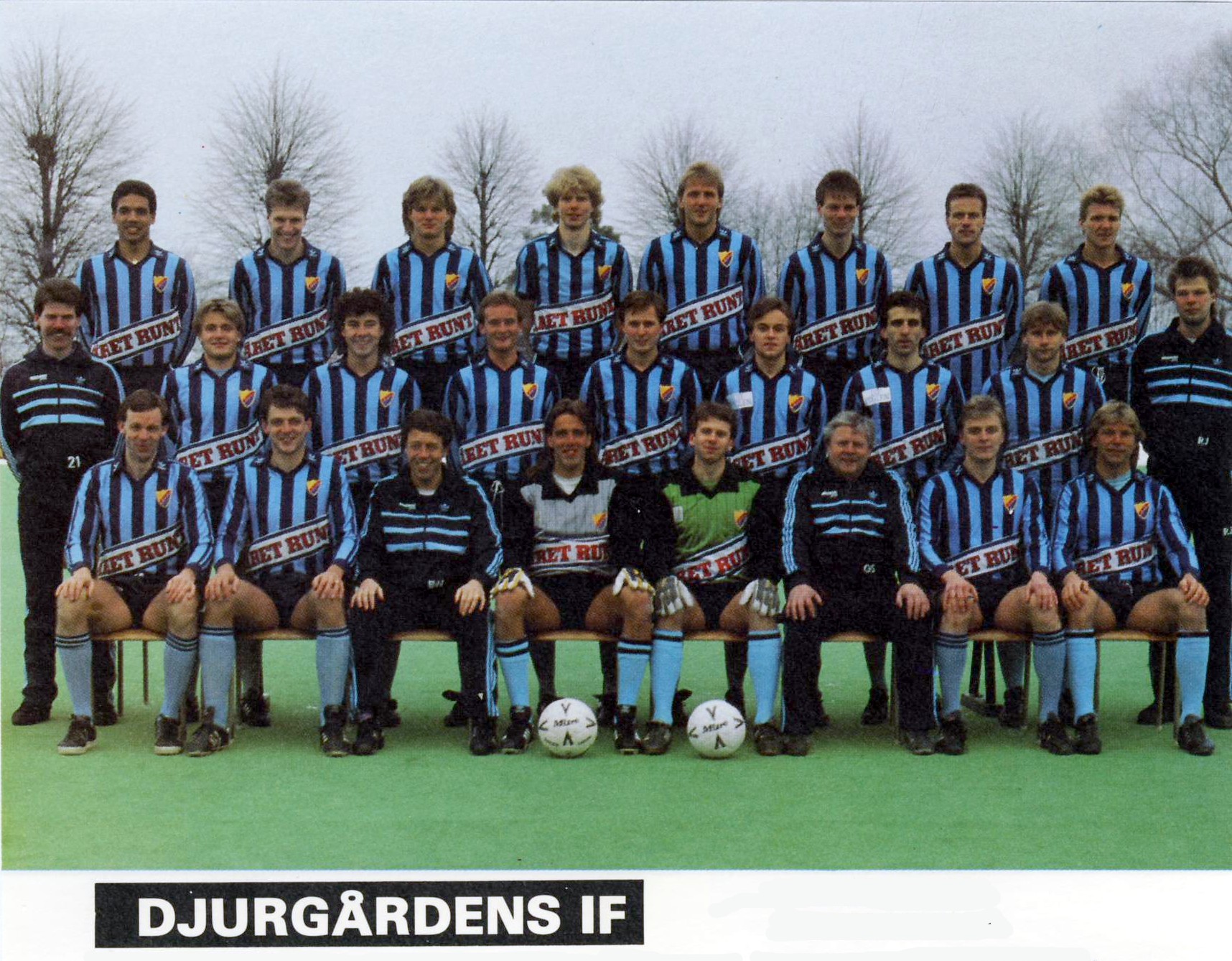 Djurgardens IF had miserable season, finishing last with 15 points. Down the Second Division.
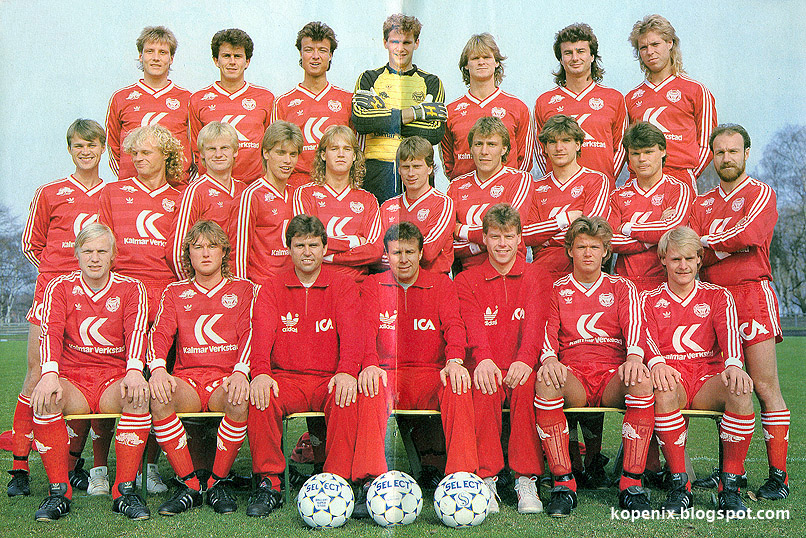 Kalmar FF was other relegated – 11th with 17 points. Top row from left: Ulf Nordenhem, Mikael Marko, Henrik Hasselgren, Anders Jonsson, Peter Karlsson, Billy Lansdowne, Niklas Karlstrom.
Middle row: Bjorn Wigstedt, Martin Holmberg, Magnus Arvidson, Jan Jansson, Bjorn Nilsson, Hakan Jagerbrink, Magnus Nilsson, Magnus Pettersson, Peter Nilsson, Johny Erlandsson.
Front row: Hakan Arvidsson, Niklas Friman, Allan Hebo Larsen – coach, Kjell Nyberg – manager, Johnny Wiksten – physical trainer, Peter Engstrom. Ulf Karlsson.
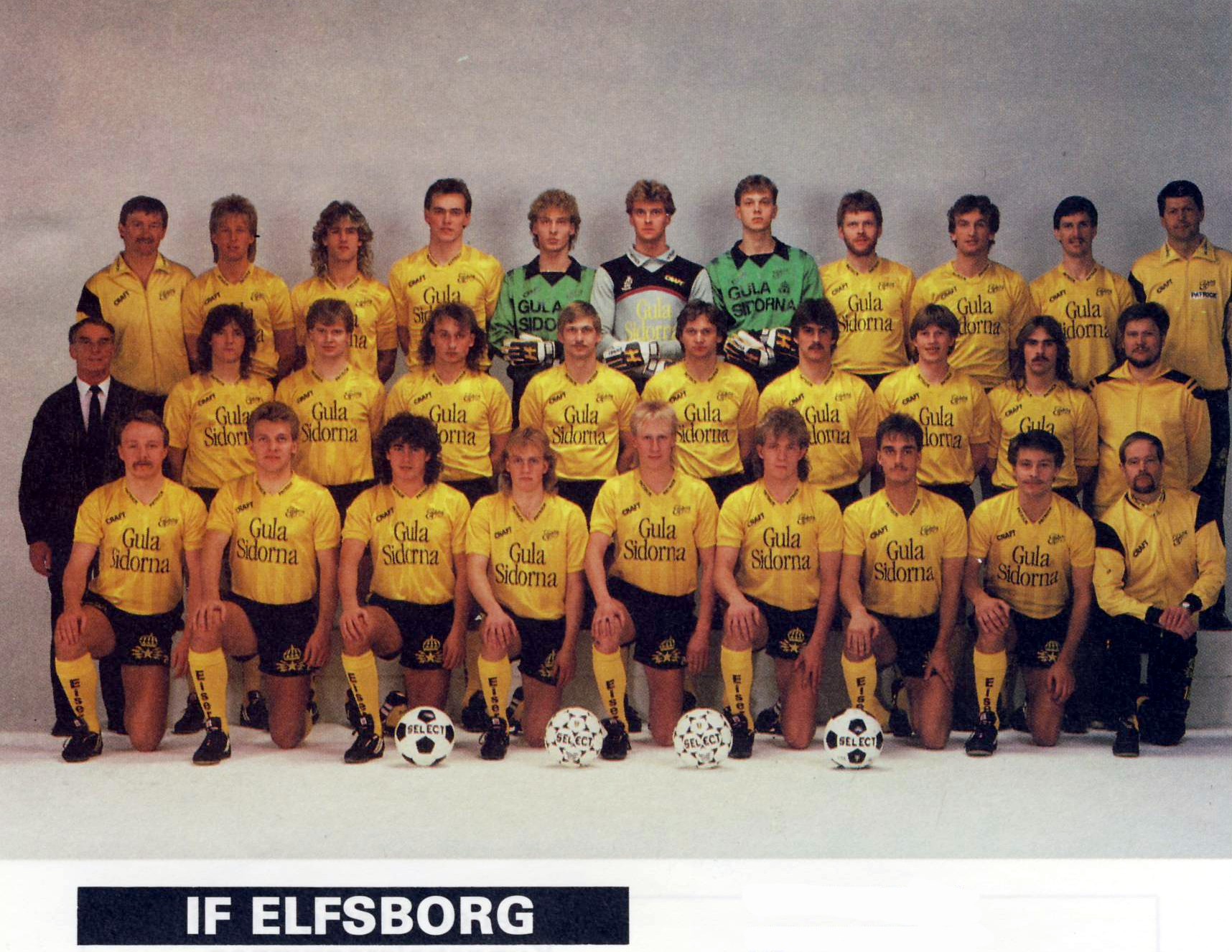 IF Elfsborg survived – 10th with 18 points.
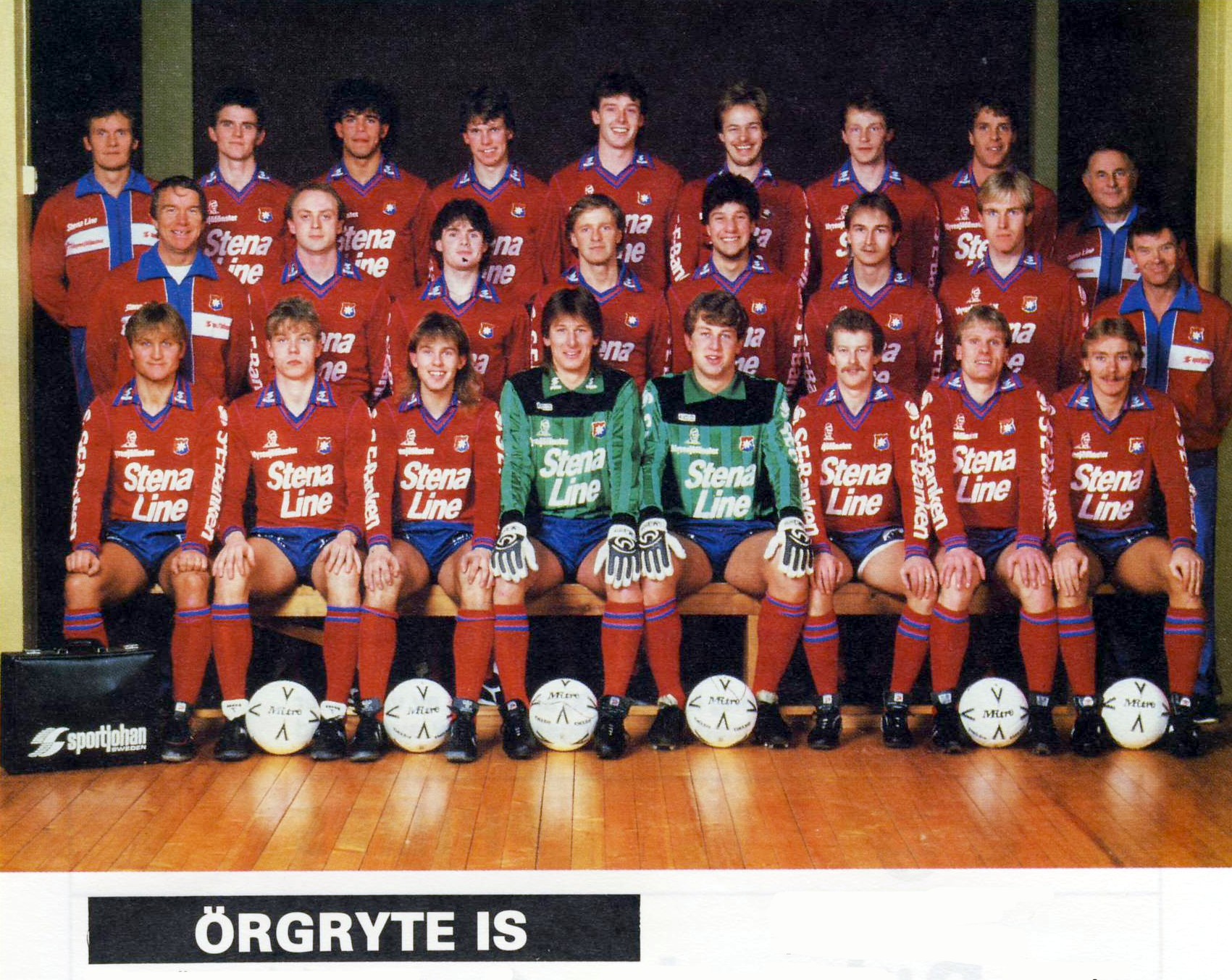 Orgryte IS – 9th with 19 points. Lucky.
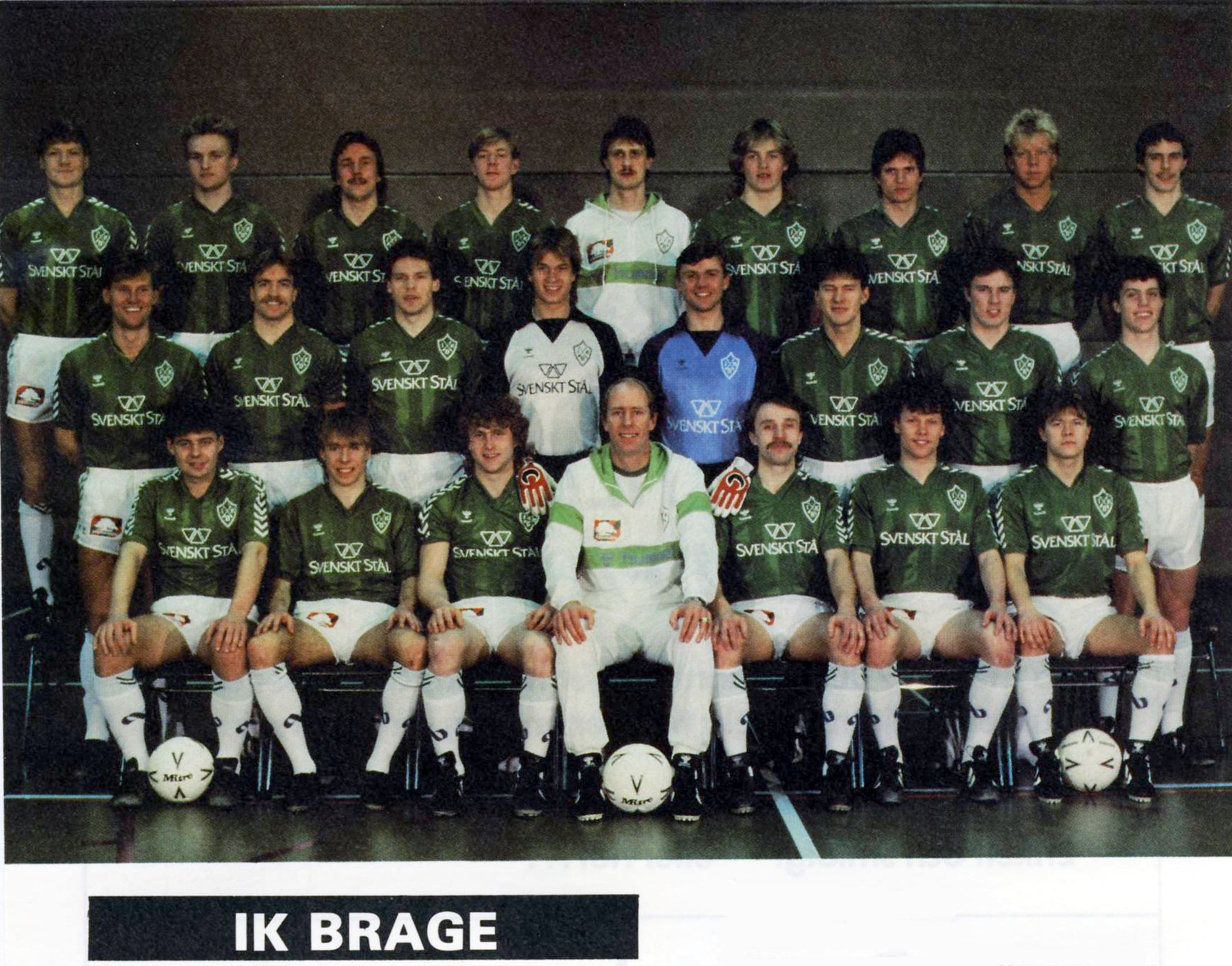 IK Brage – 8th with 20 points.
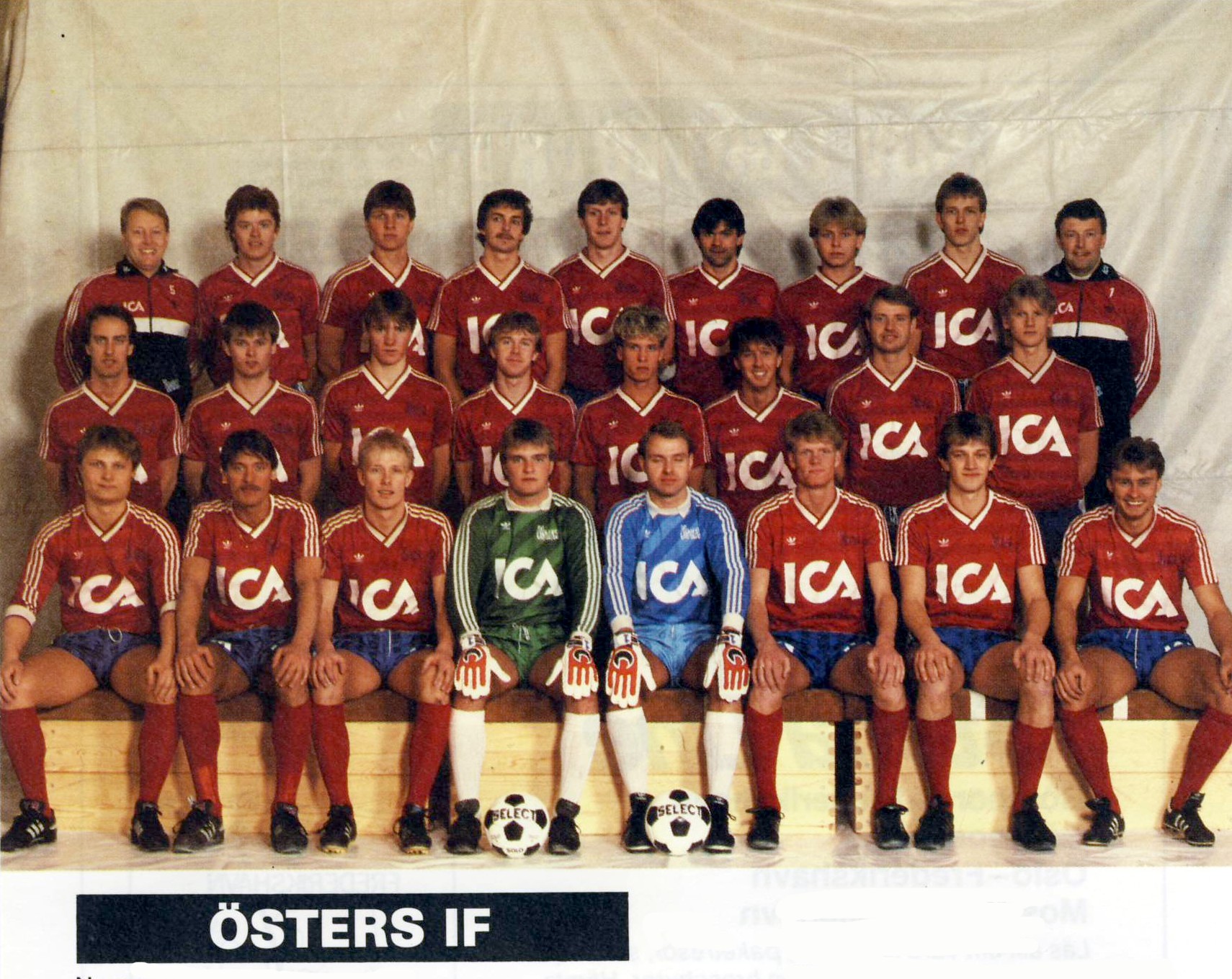 Osters IF – 7th with 20 points.
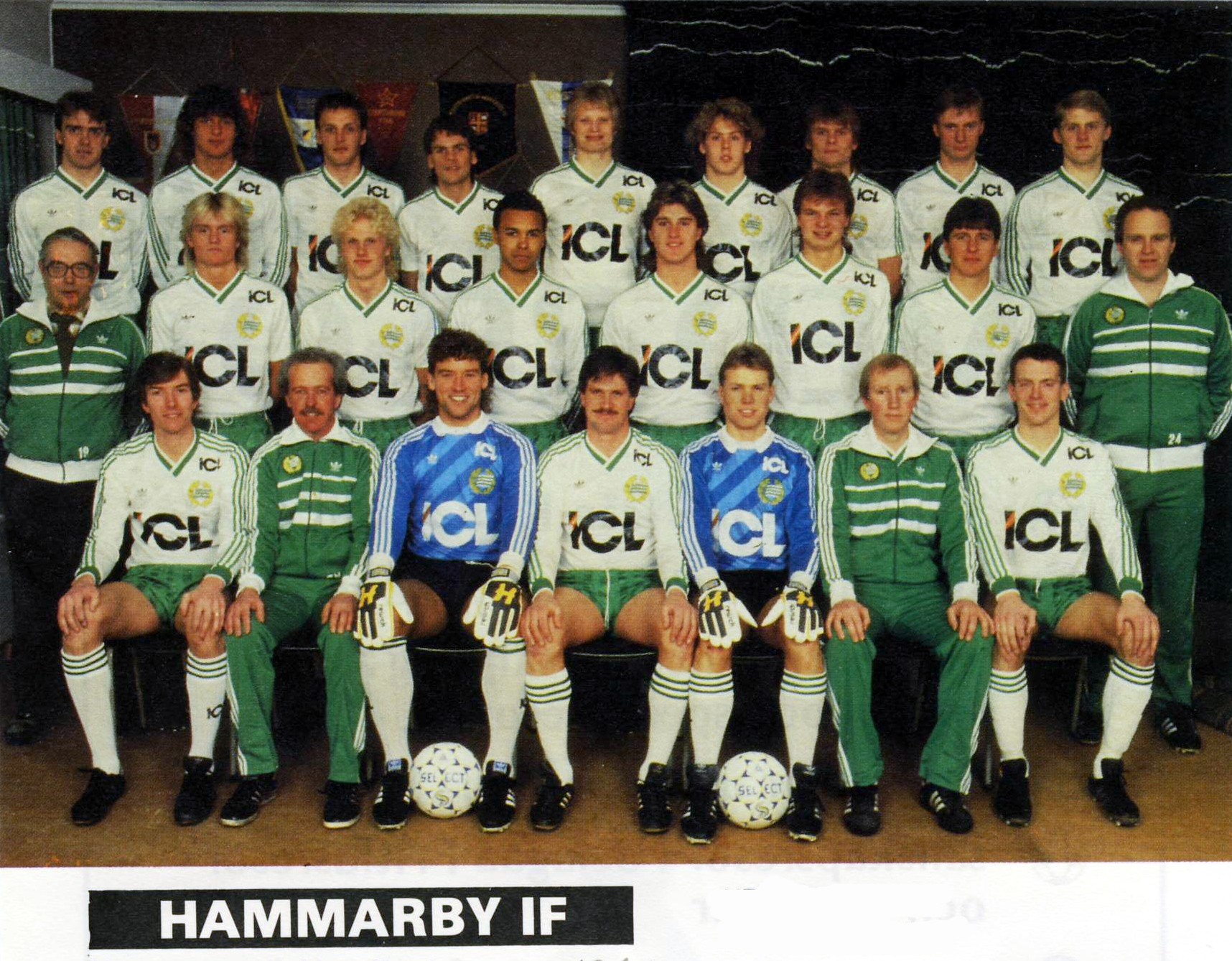 Hammarby IF – 6th with 20 points.
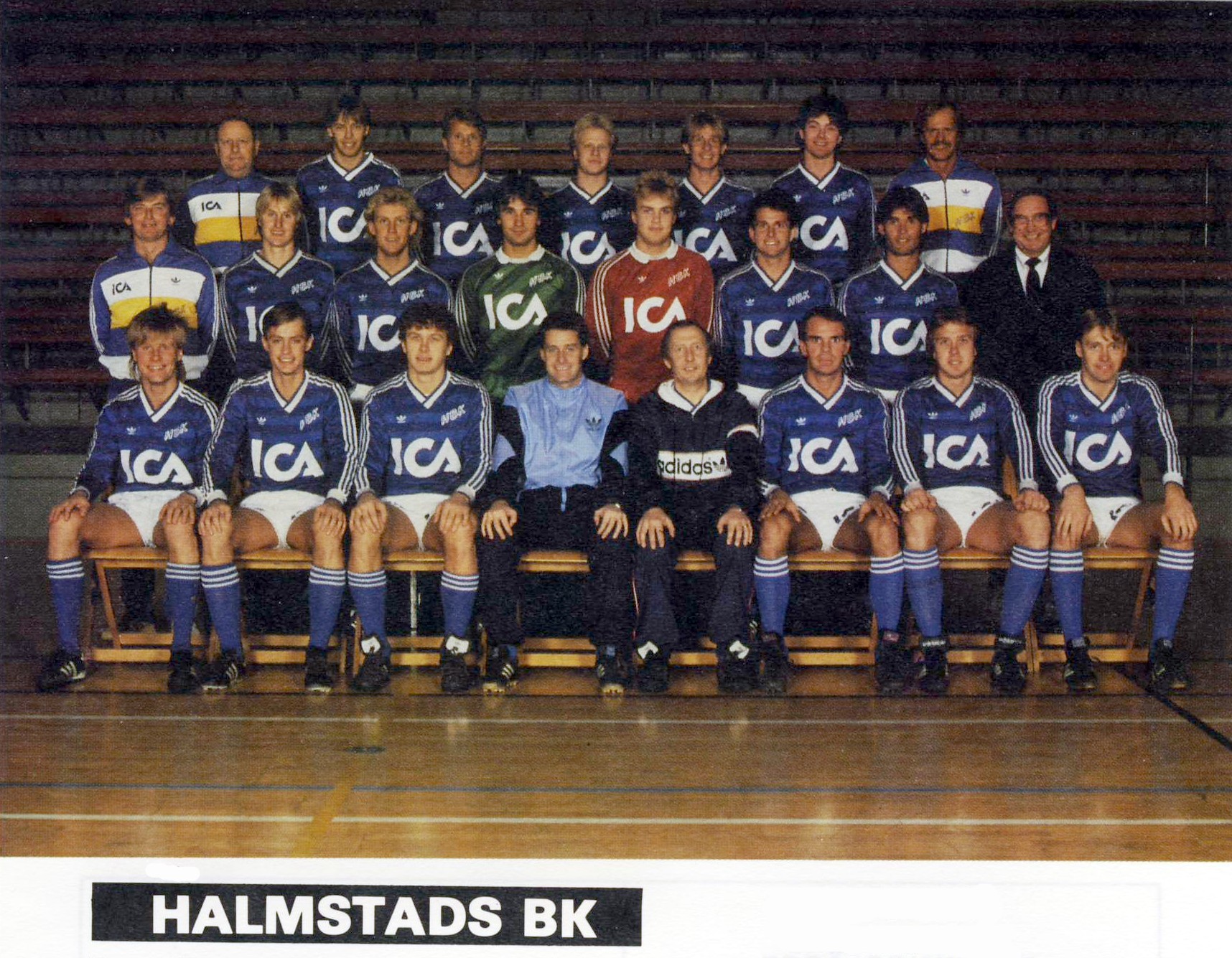 Halmstads BK – 5th with 21 points.
The top 4 qualified to the championship play-offs.
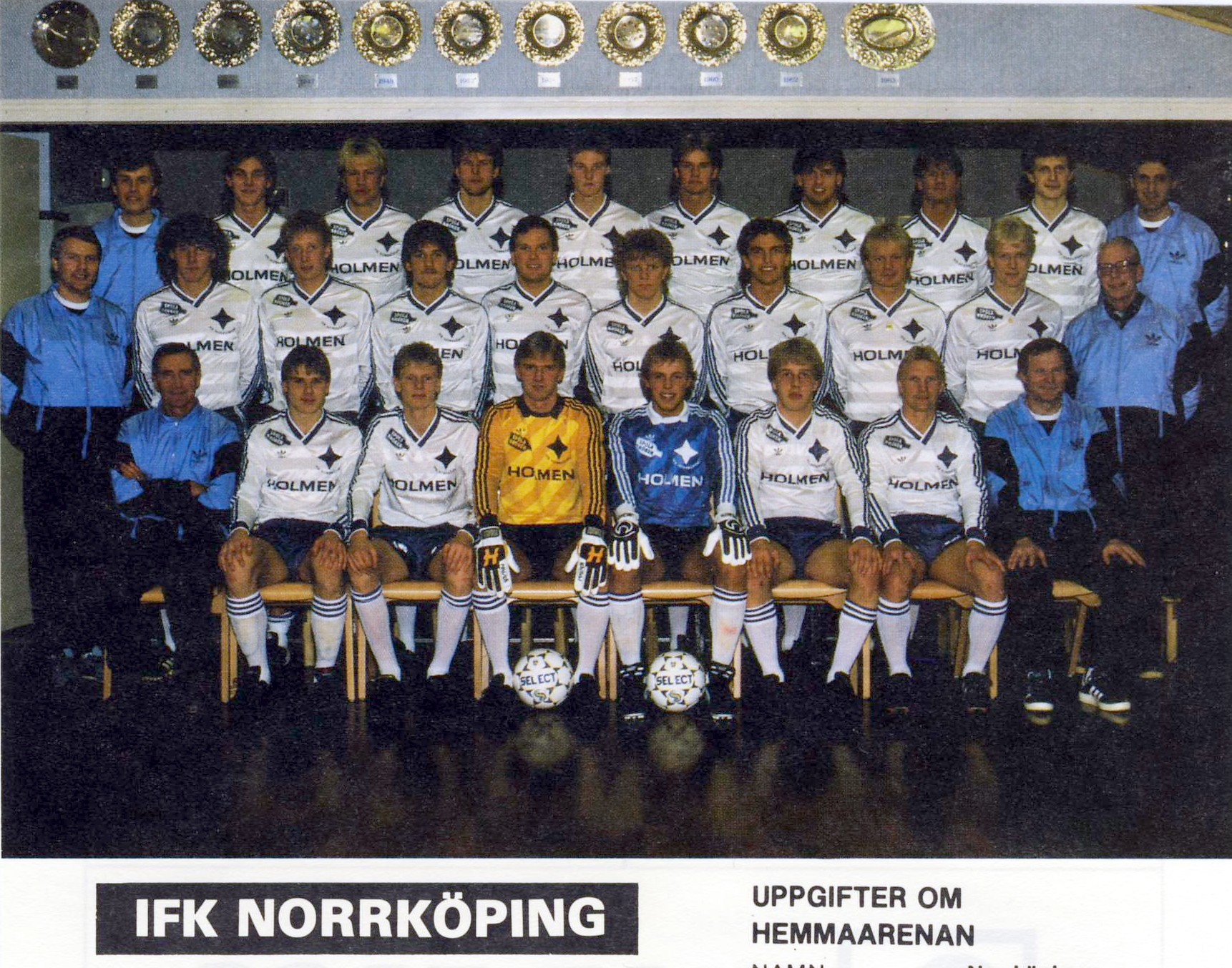 IFK Norrkoping – 4th with 21 points.
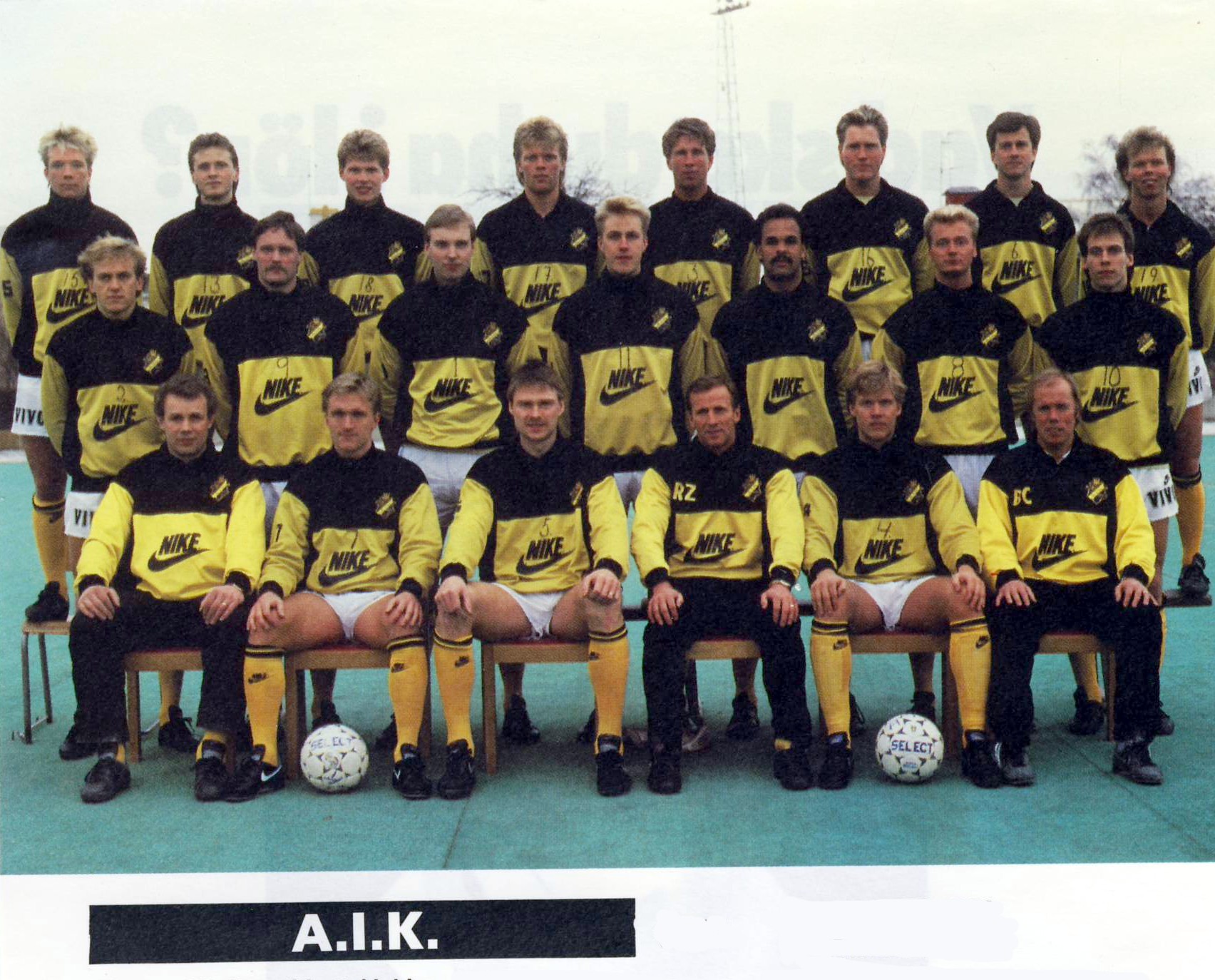 AIK – 3rd with 25 points.
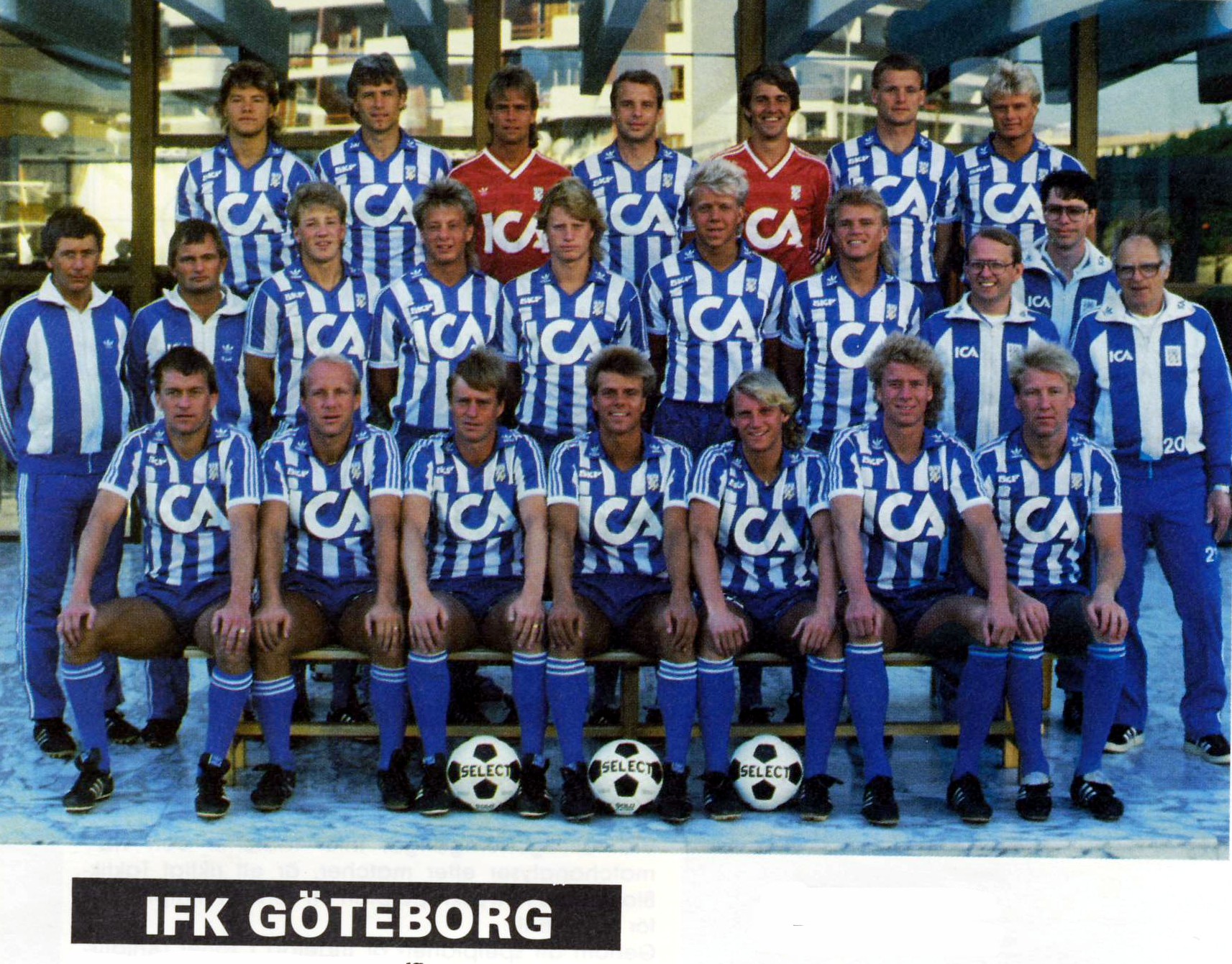 IFK Goteborg – 2nd with 31 points.
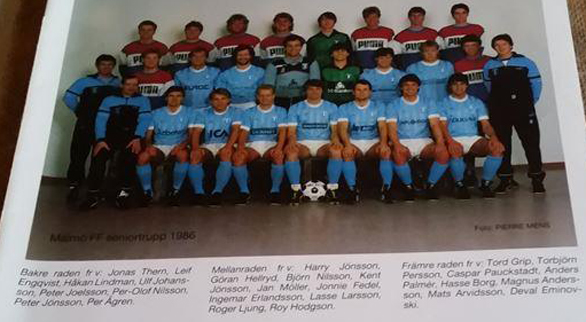 Malmo FF was superior by far in the regular season and topped the league with 37 points, losing just once, but nothing was done yet. The actual battle for the title followed…
And in the semi-finals Malmo FF was almost eliminated: they were tied twice by IFK Norrkoping – 2-2 and 0-0 – and qualified only on away goals.
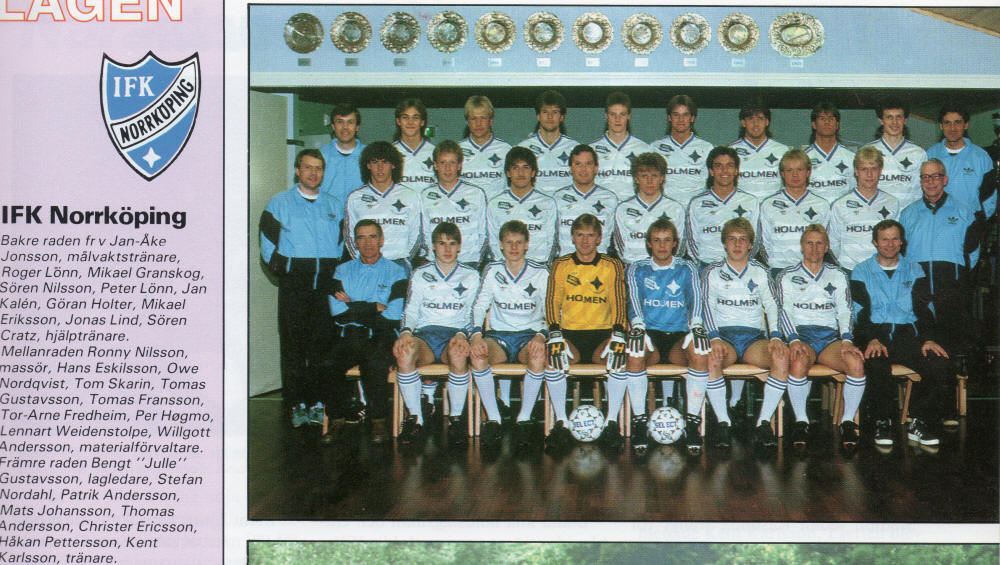 Really unfortunate IFK Norrkoping. What a bad luck.
There was no winner in the other semifinal too: IFK Goteborg and AIK ended 0-0 and 1-1. AIK, however, was lucky to score in Goteborg.
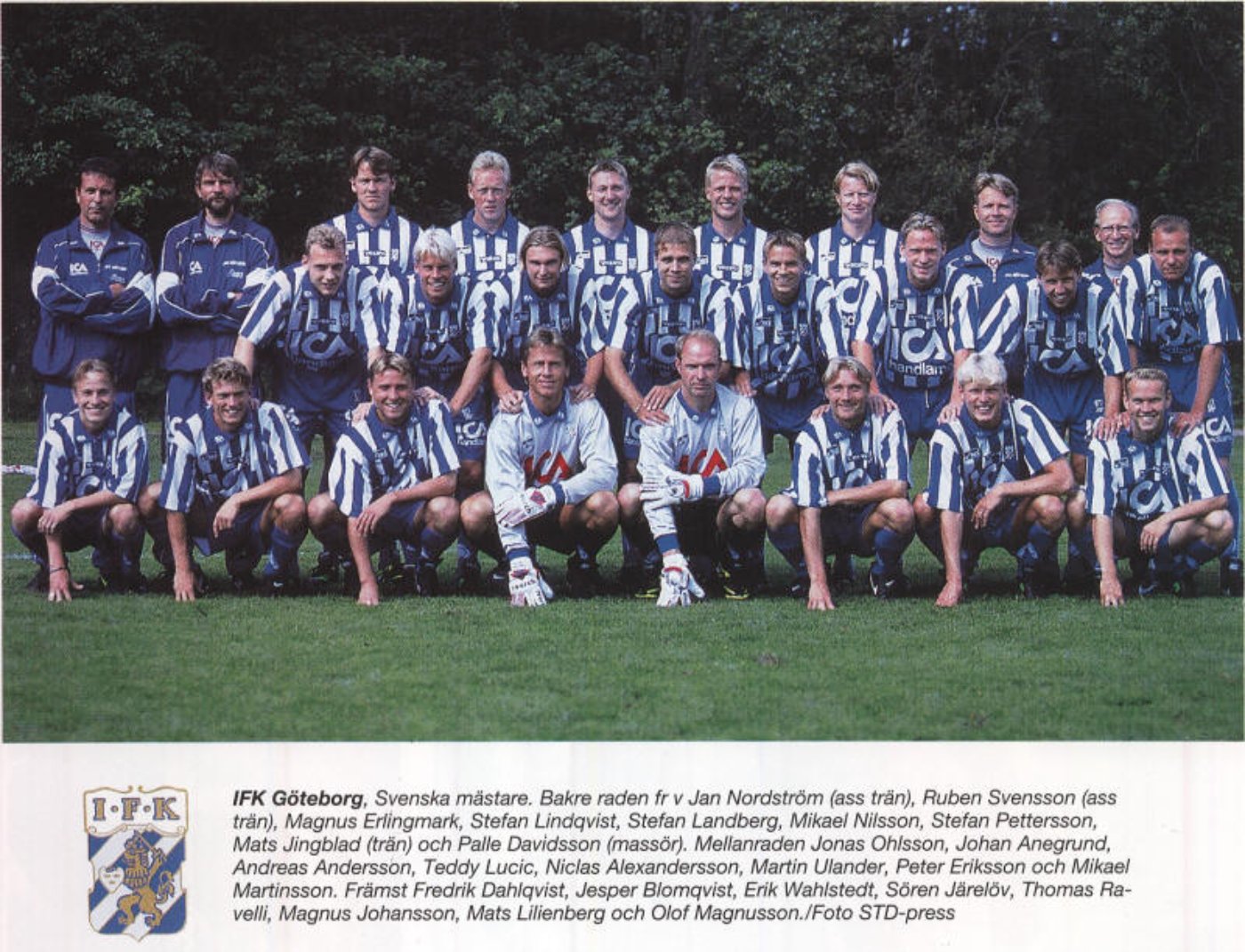 IFK Goteborg was out. Misfortune, but they were unable to beat AIK and had only themselves to blame.
AIK and Malmo FF met at the final, but it was not much of a clash, nothing like the semifinals. AIK won the first leg at home 1-0, but they were destroyed in Malmo 2-5. And that was that.
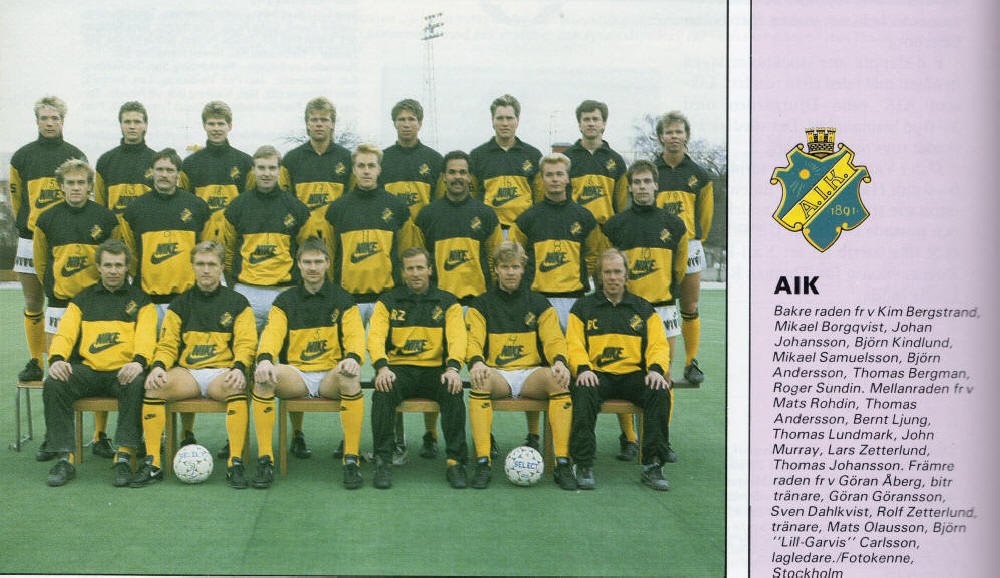 Strong season for AIK were clearly outclassed.
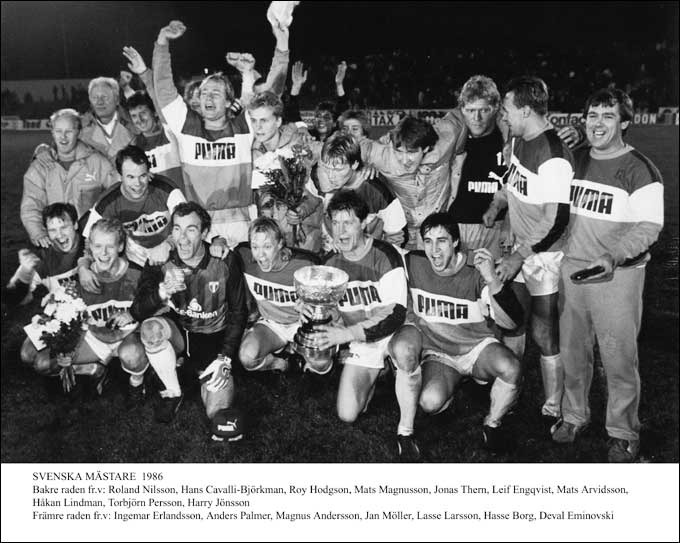 Malmo FF collected one more title, but it was not by chance: they had great season, better than anybody, and faced difficulty only in the semifinal against IFK Norrkoping. Still, they lost only 2 games this year – one in the regular stage of the championship and the second – at the final. There was no doubt they deserved the title. Roy Hodgson at the helm. Good players like Jonas Thern, tied squad, tradition – all was working fine.
Sweden II Division South
Second Division Södra – the Southern group. Here 3 teams were clearly stronger than the rest, but not quite equal – one was still better than the rivals, losing only twice this season.
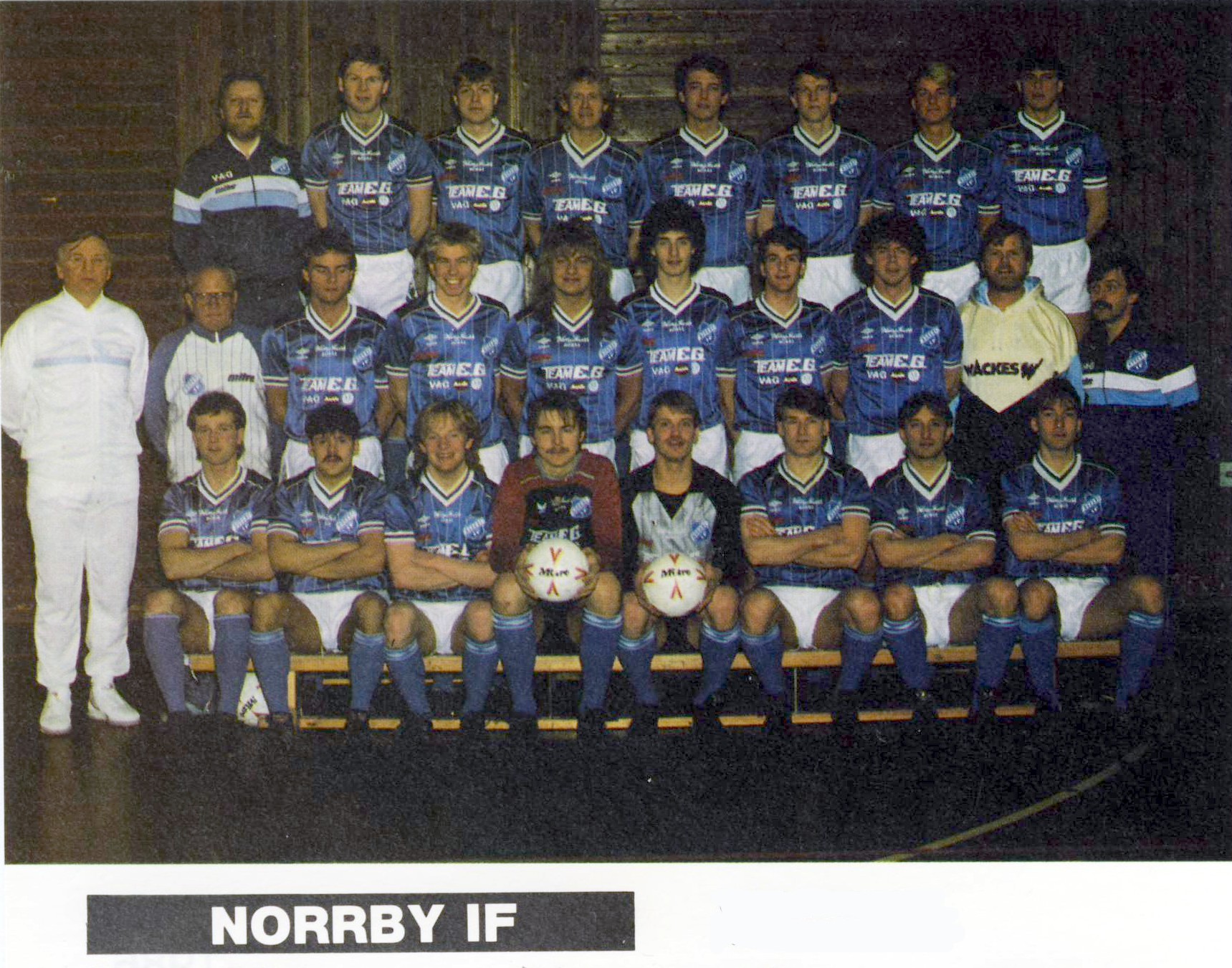 Norrby IF was the outsider – last and out with 11 points.
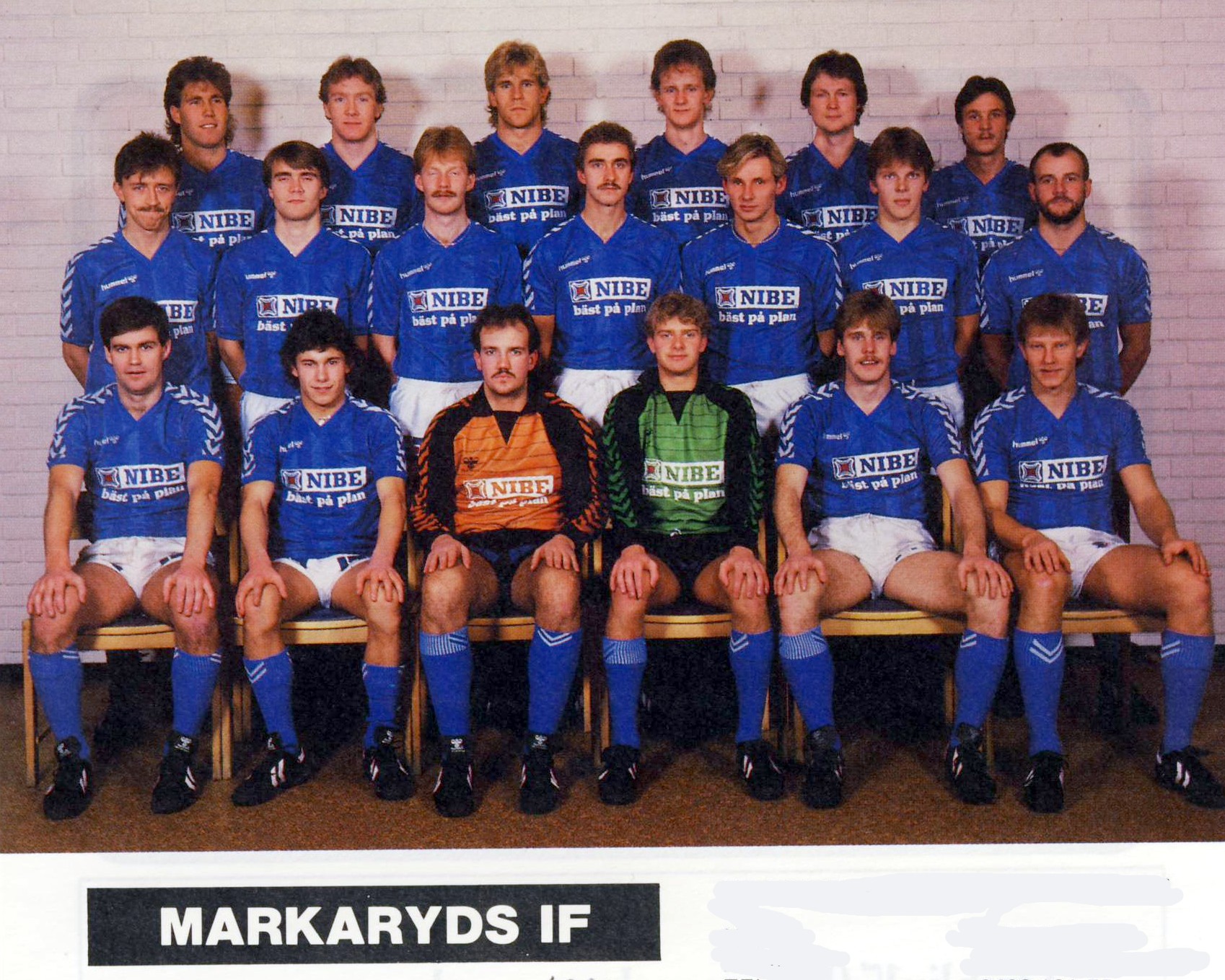 Markaryds IF was slightly better, yet, also an outsider: 13th with 15 points.
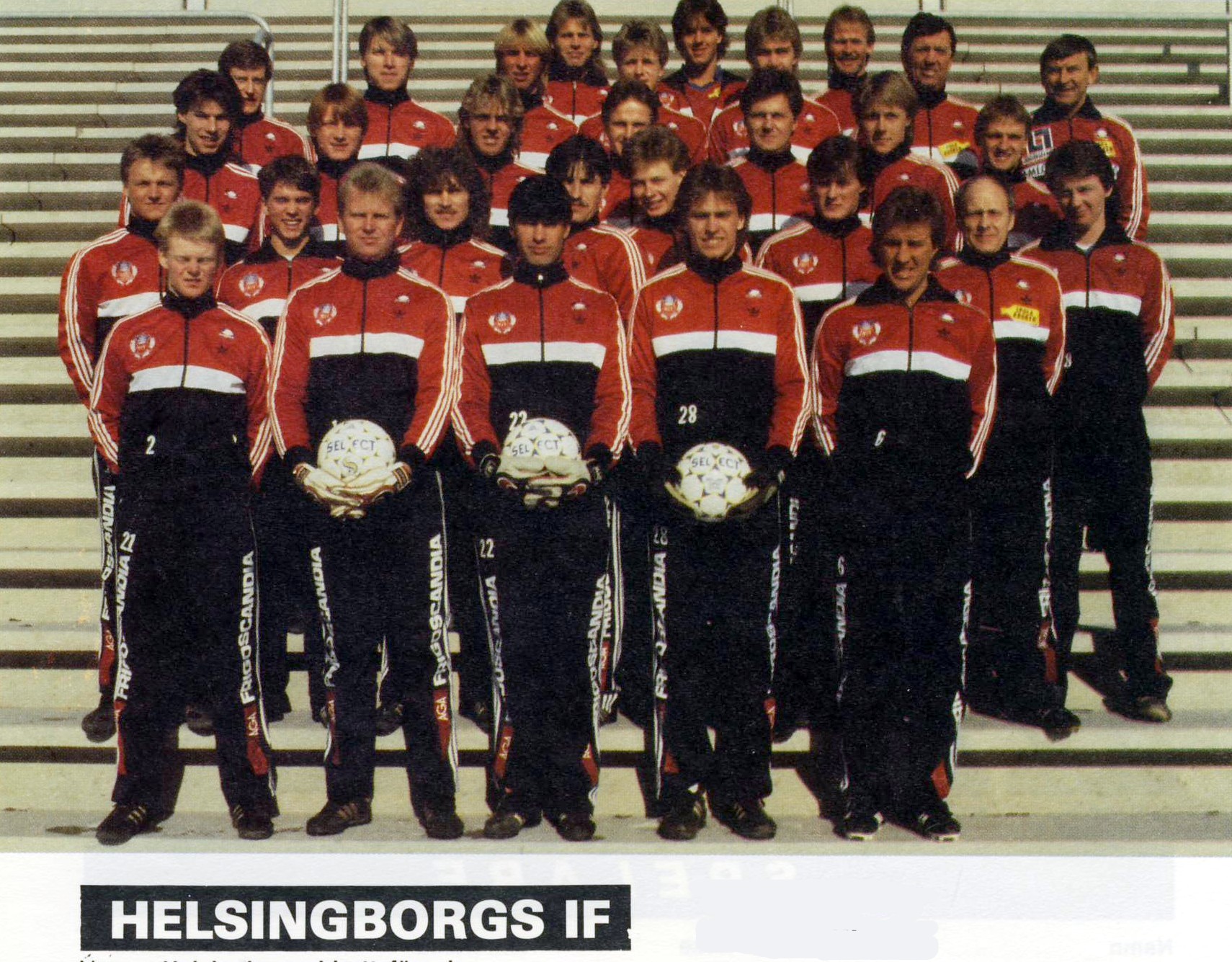 Helsingborgs IF was the third infortunate: 12th with 19 points and relegated.
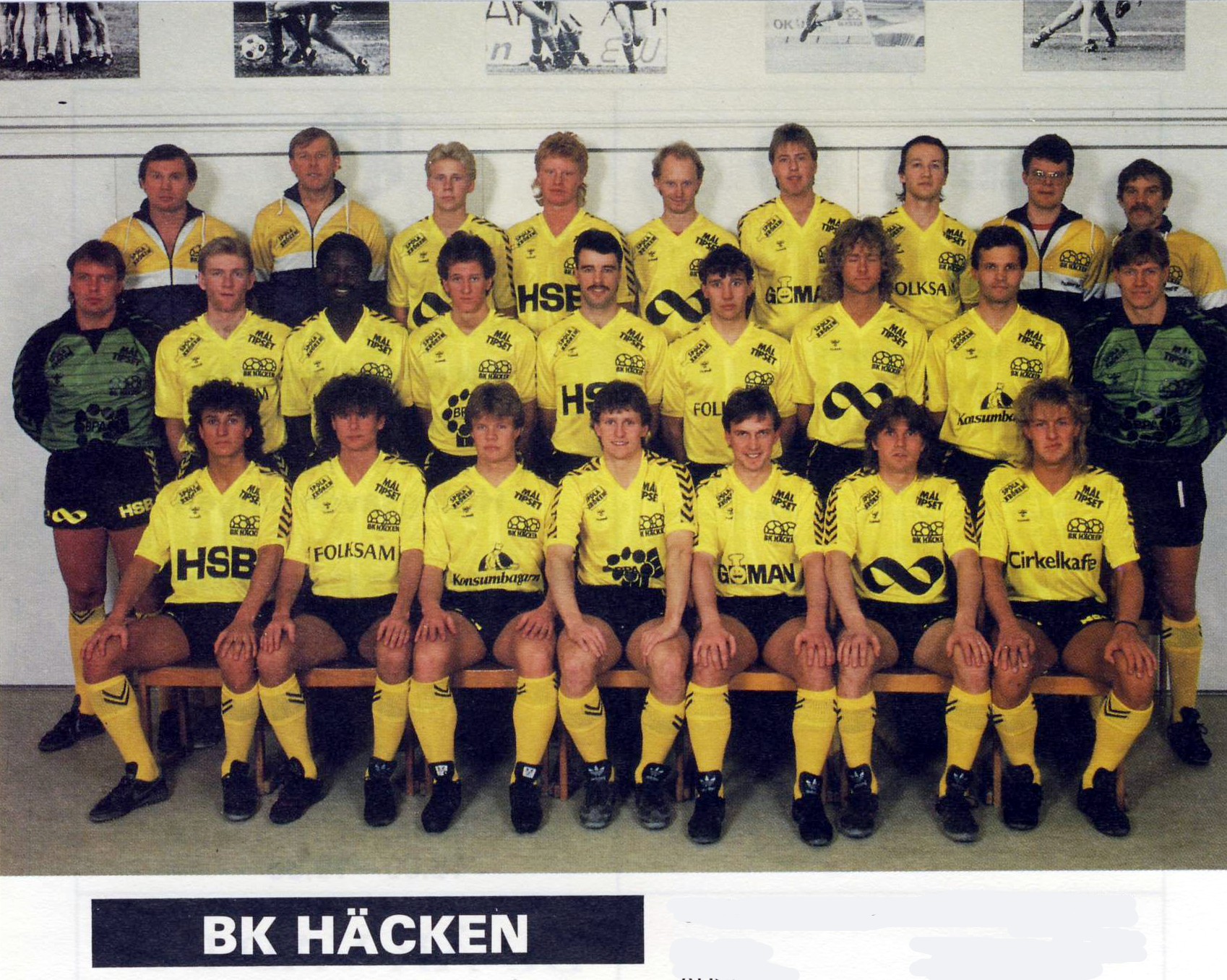 BK Hacken was weak, but not in real danger of relegation: 11th with 22 points.
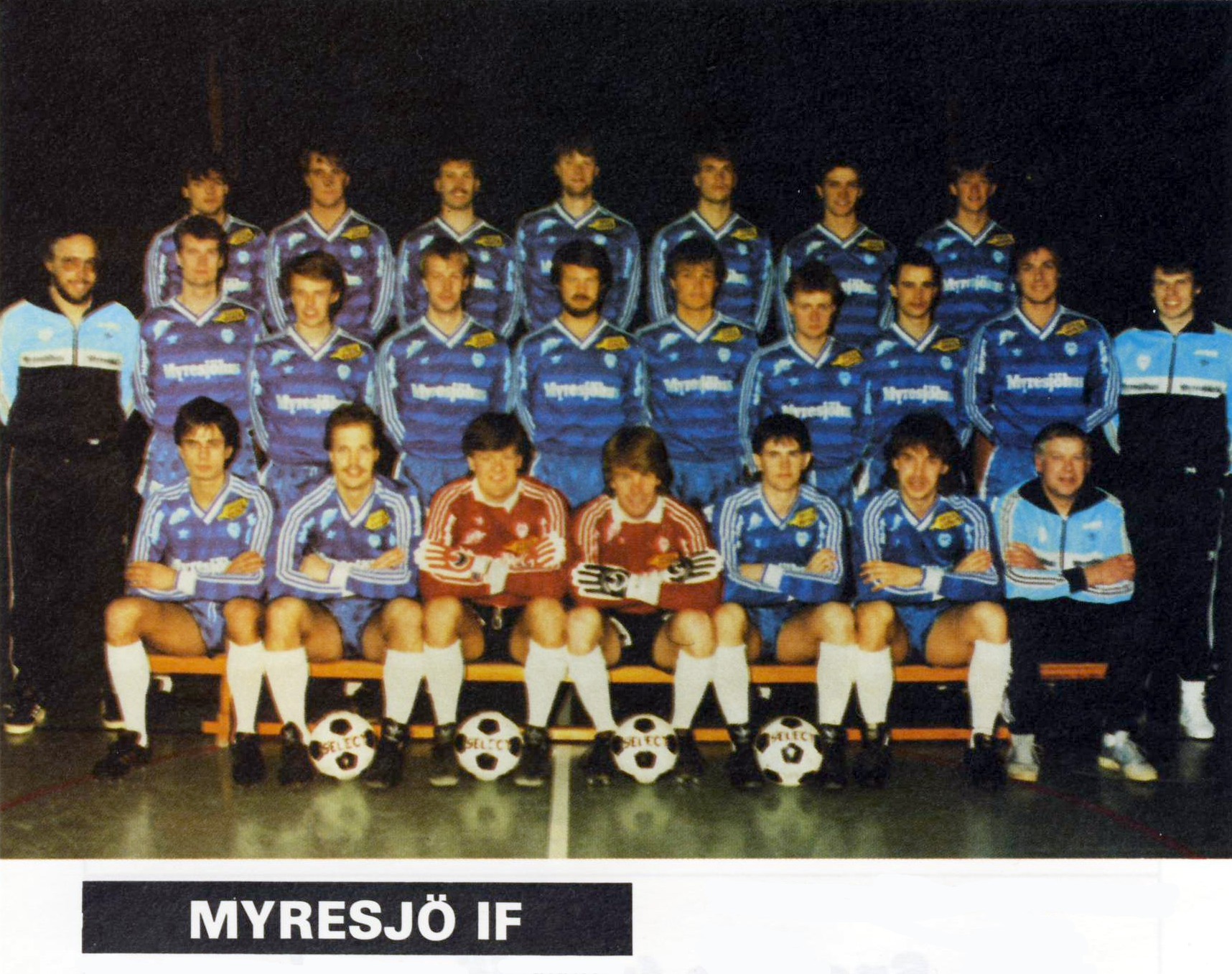 Myresjo IF – 10th with 23 points.
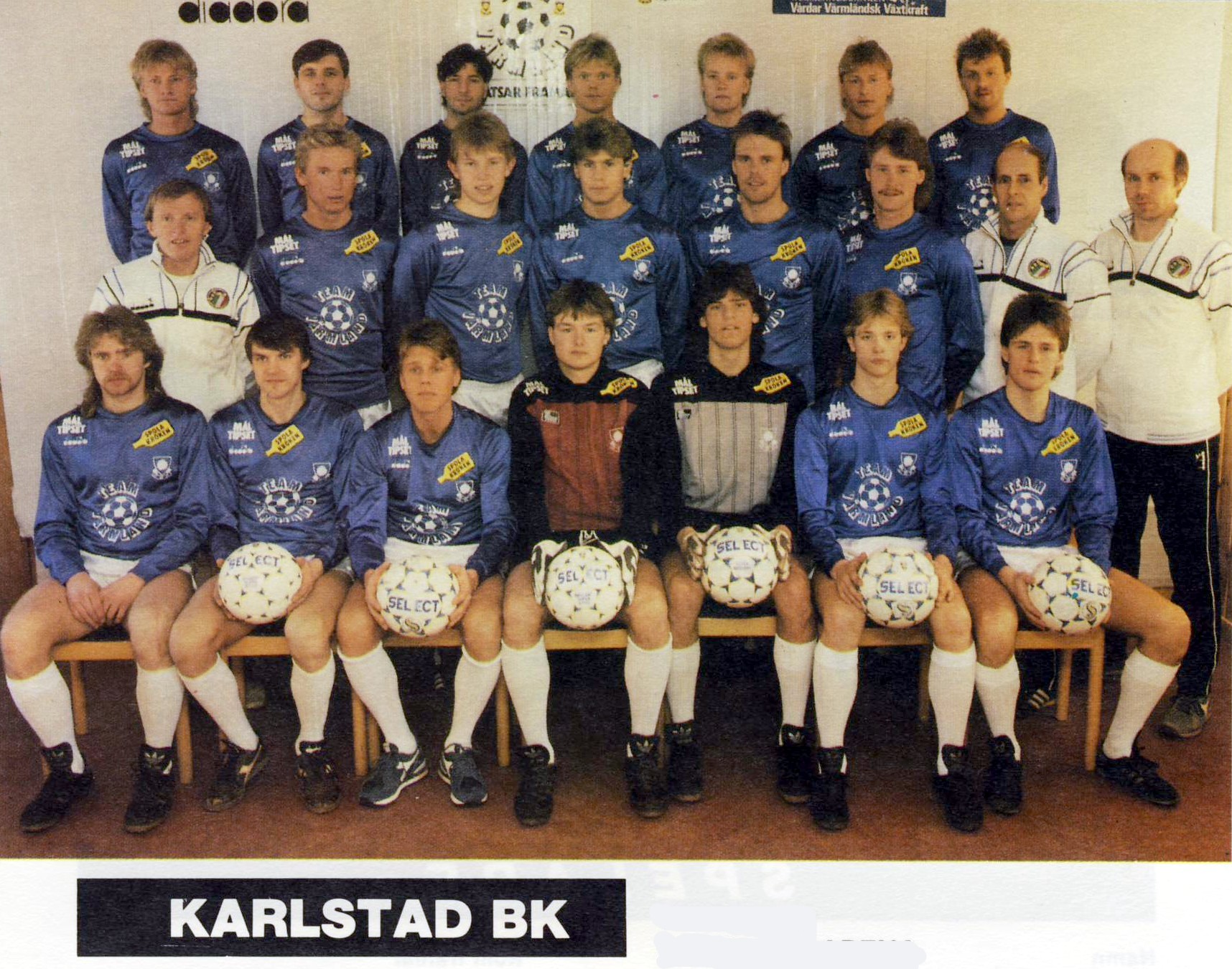 Karlstad BK ended 9th with 25 points, but looked like that had some troubles and their future in the league was uncertain. May be going down…
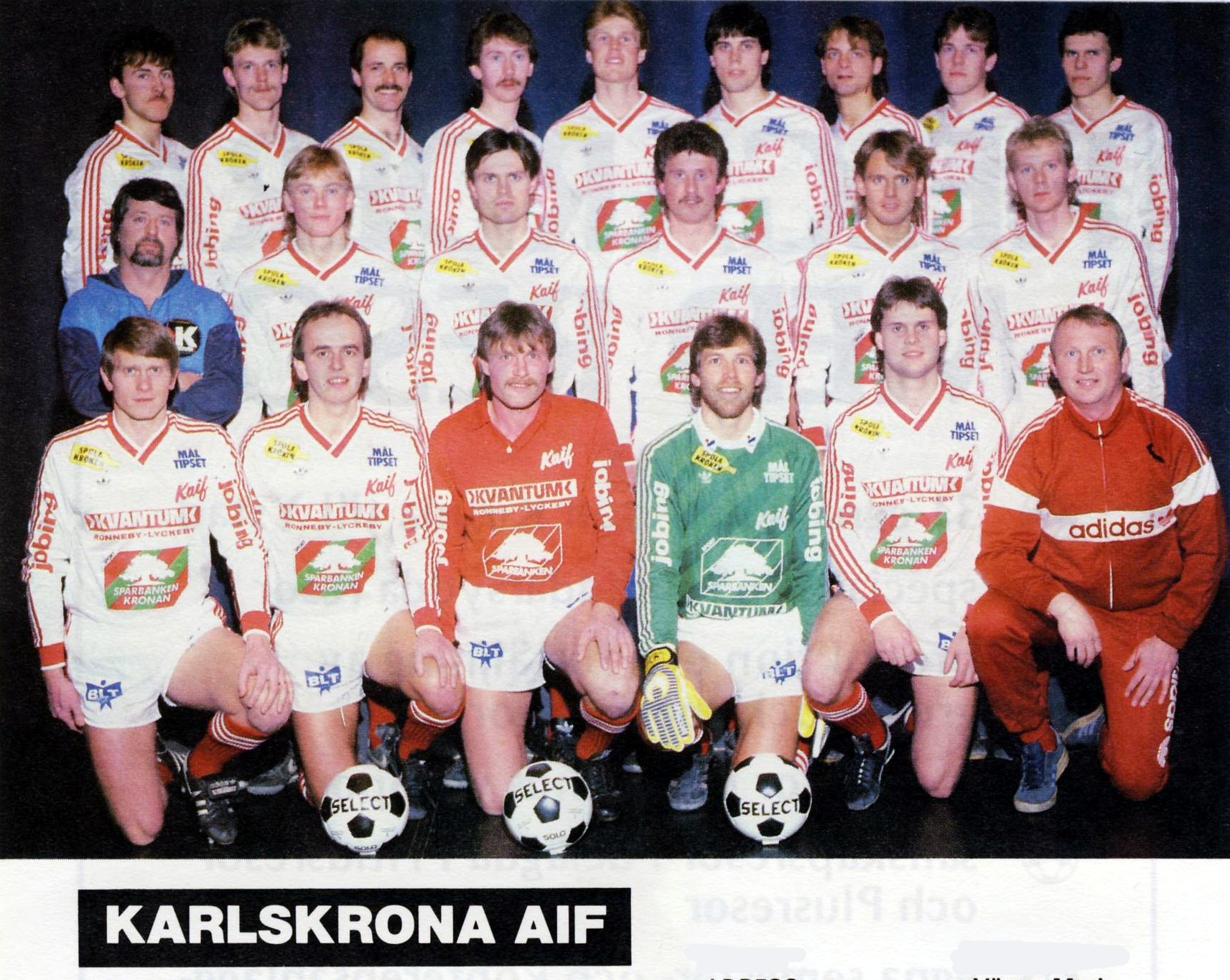 Karlskrona AIF – 8th with 25 points.
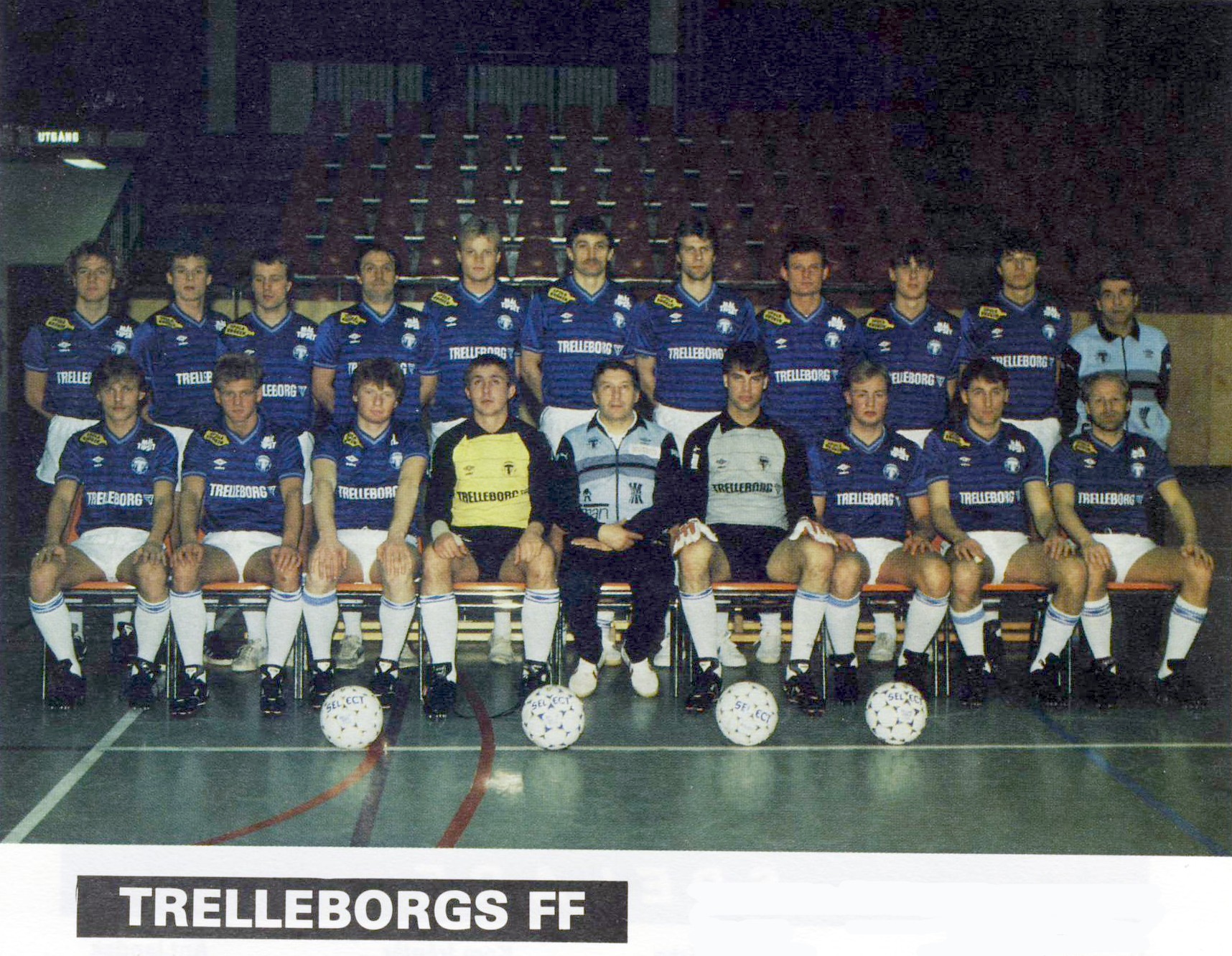 Trelleborgs FF – 7th with 25 points.
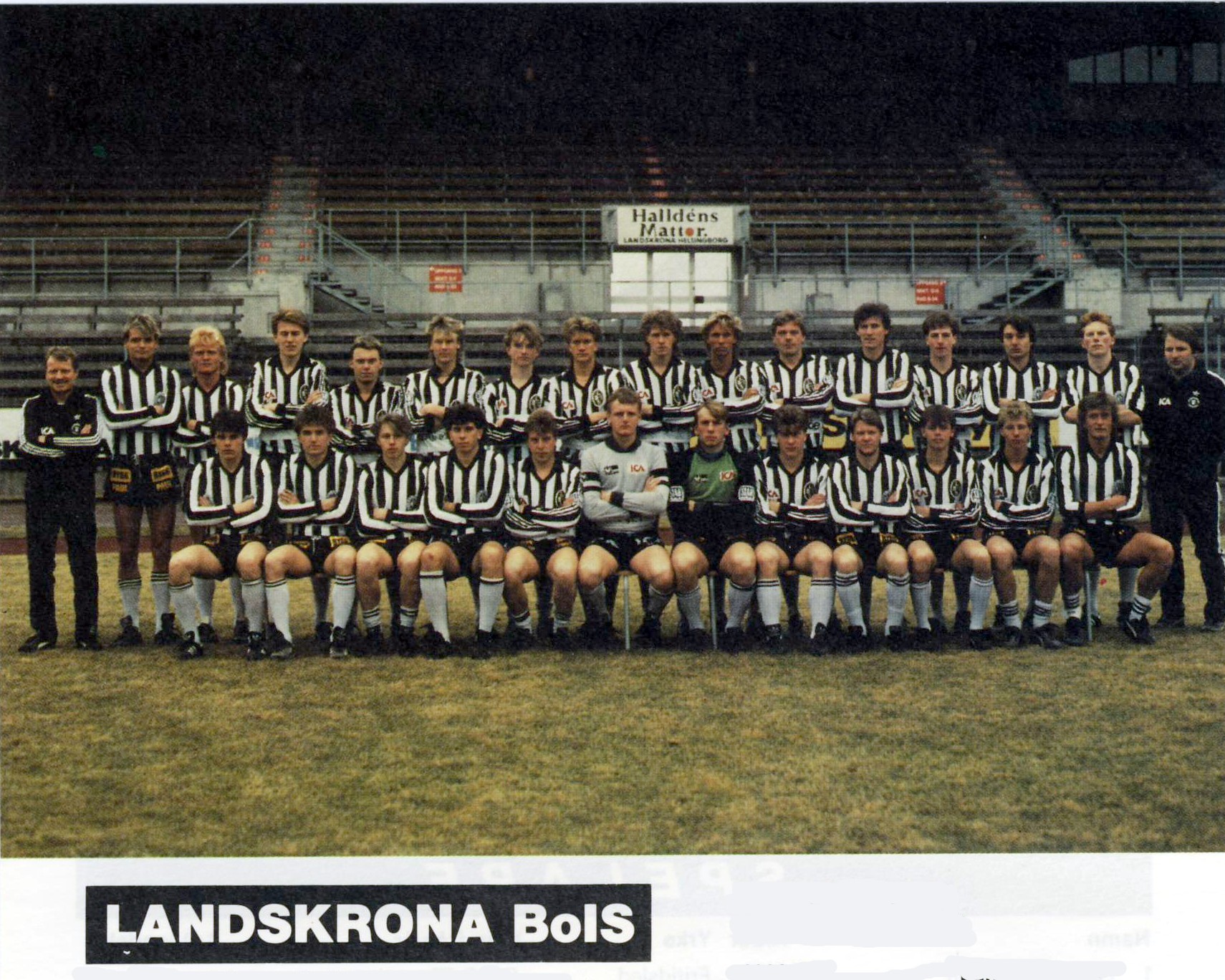 Landskrona BoIS – 6th with 25 points.
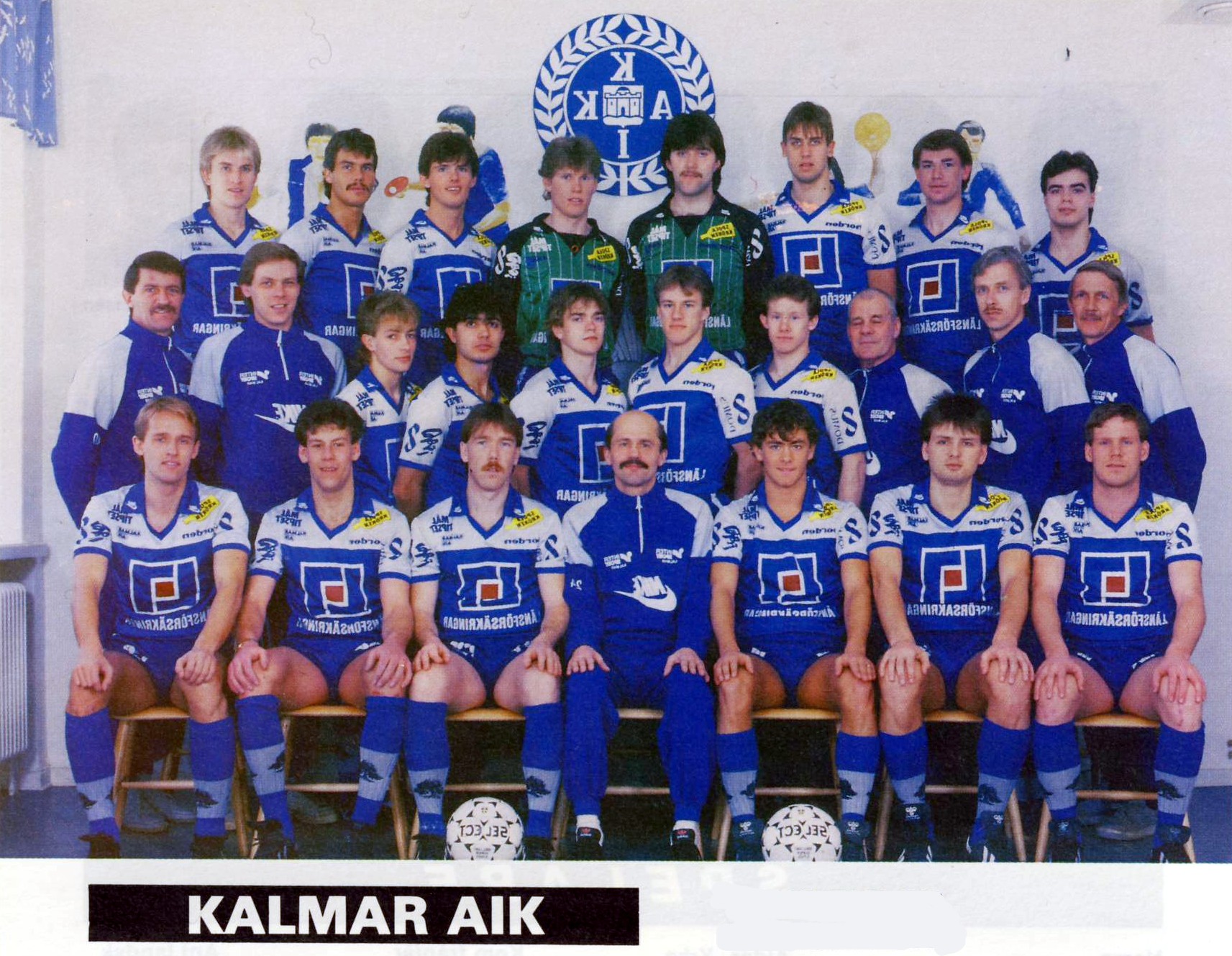 Kalmar AIK – 5th with 26 points.
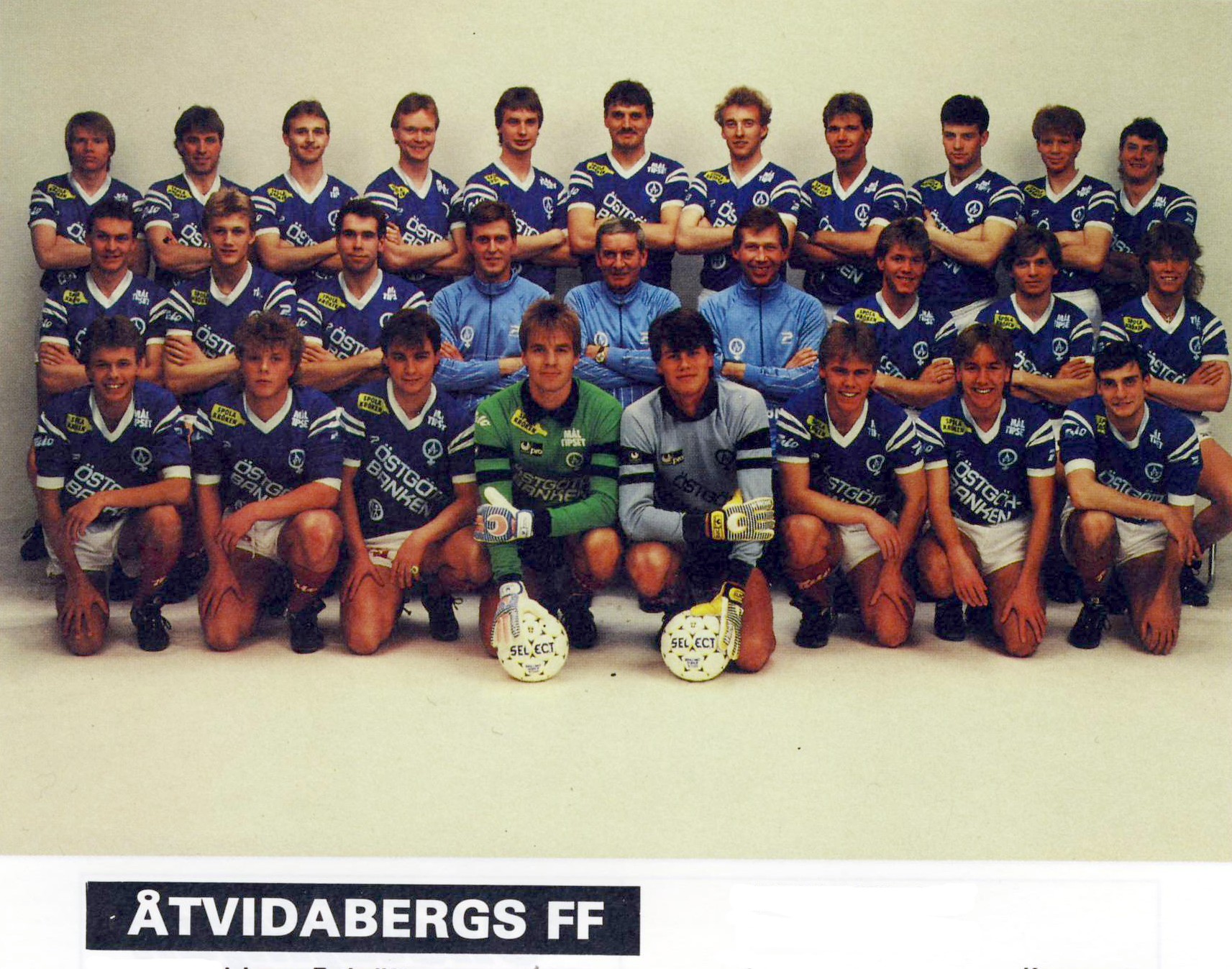 Atvidabergs FF – 4th with 29 points, but curiously with negative goal-difference: -2.
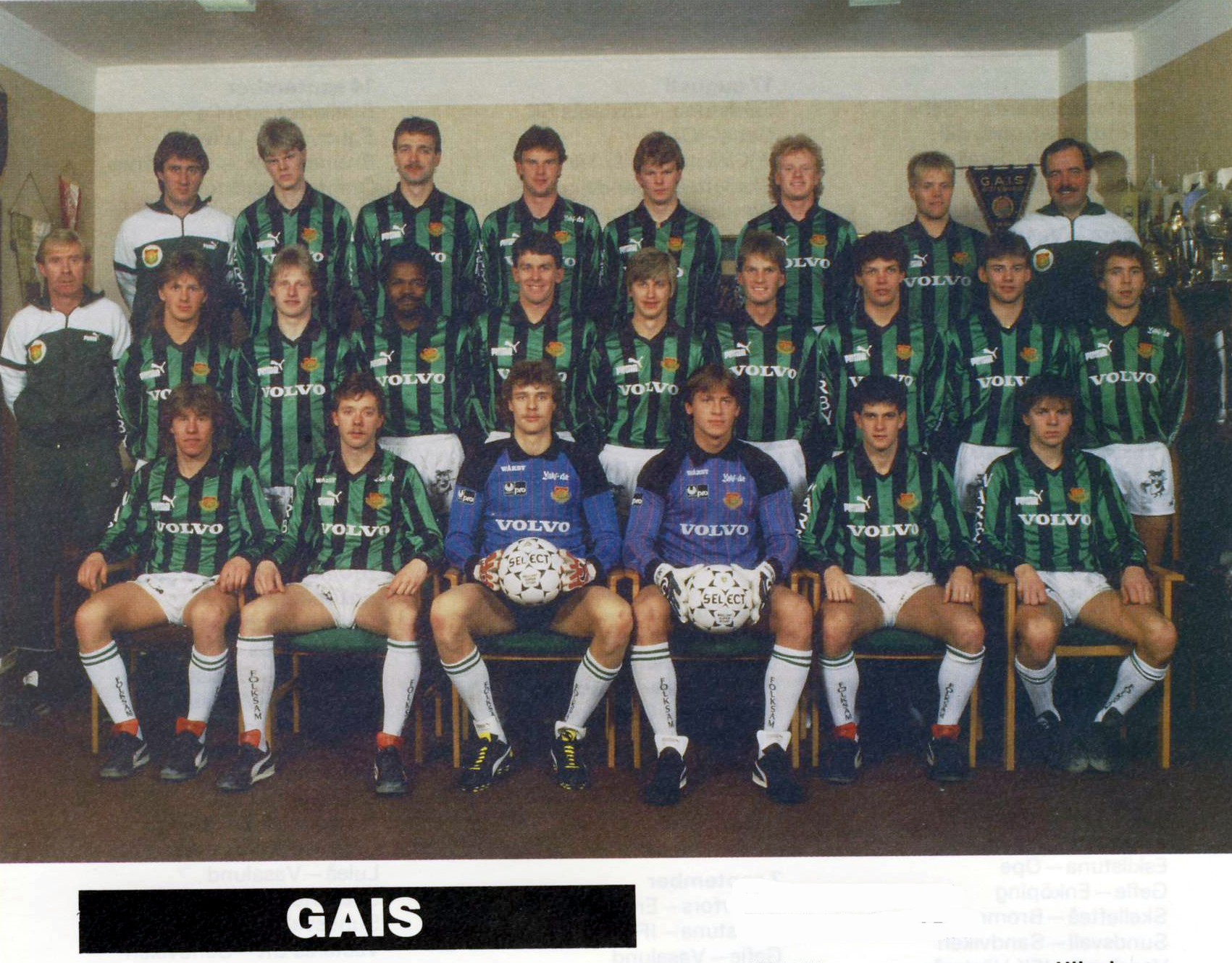 GAIS – 3rd with 38 points. Much stronger than the rest of the league, but somewhat not a title contender.
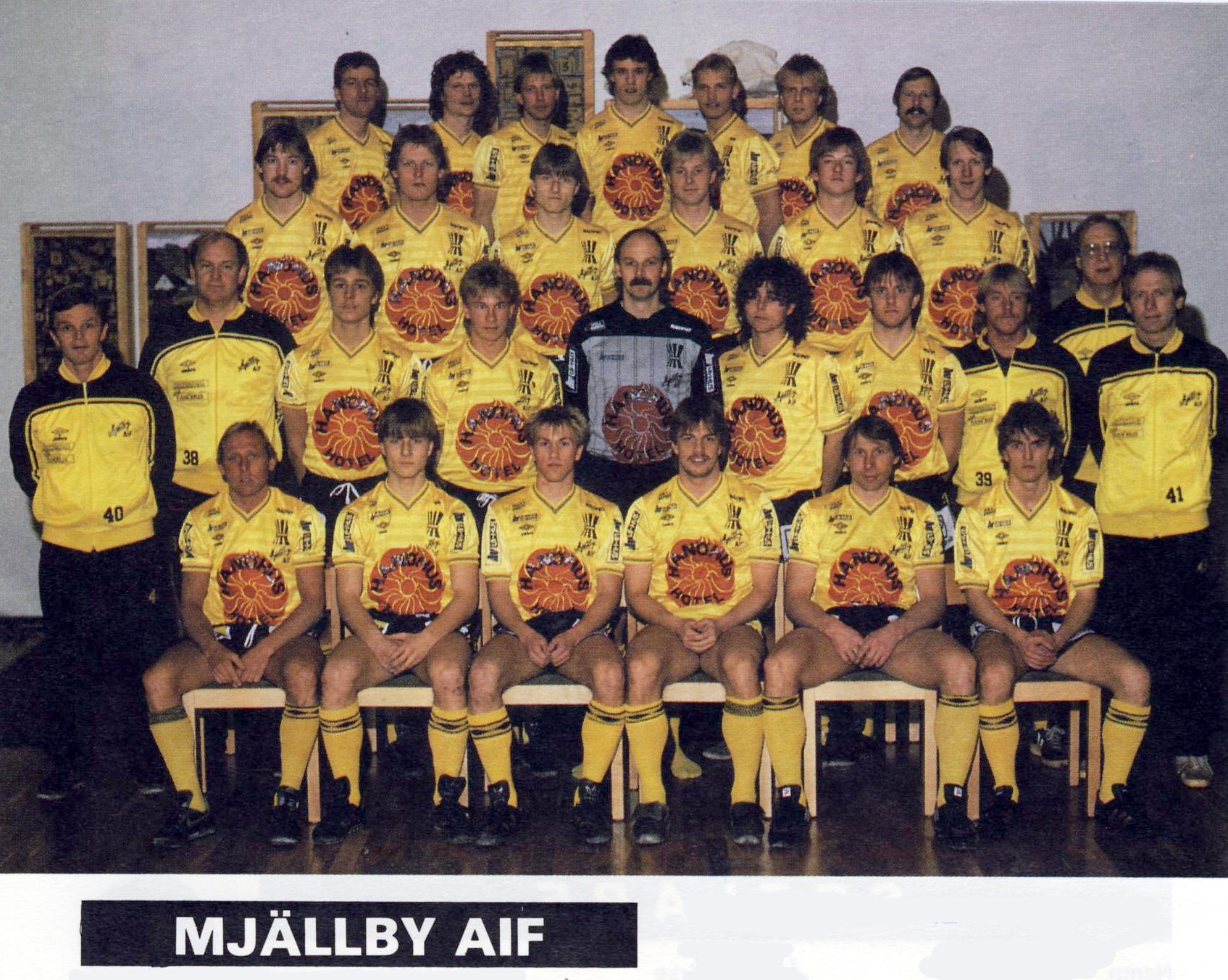 Mjallby AIF – 2nd with 39 points. The best scorers in both groups of Second Division – 72 goals in 26 games, and finishing with best goal-difference also in both groups: +48. But it was not their year…
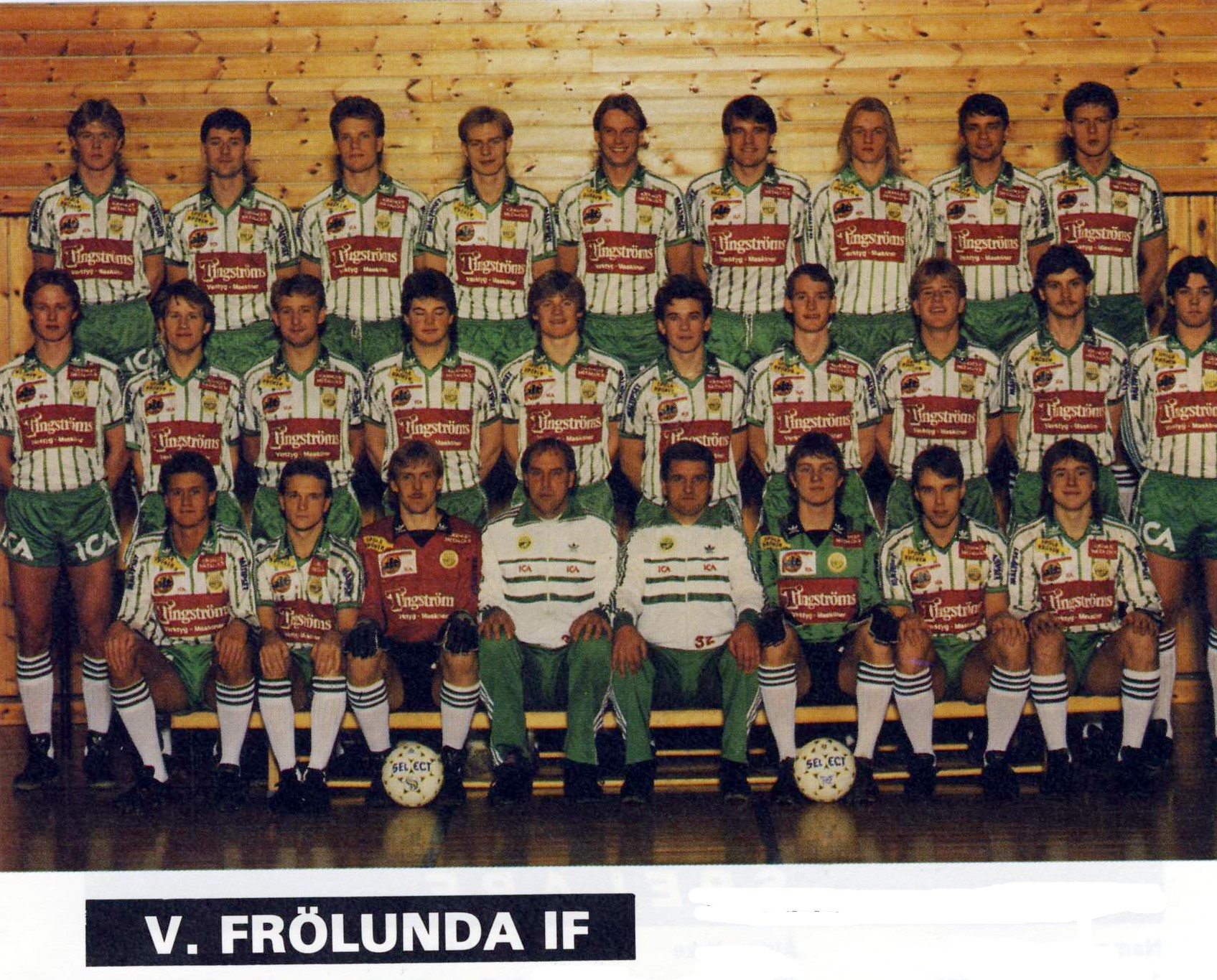 Vastra Frolunda lost only 2 games this season and eventually built a 3-points lead by the finish. 18 wins, 6 ties, 2 losses, 48-11 goal-difference, 42 points. Excellent defense, which probably gave them the edge over their opponents. In any case, they won promotion and returned to top flight.
Sweden II Division North
Sweden. Tied with Bulgaria at 17th place in the UEFA ranking. Unlike Bulgaria, no corruption, no scandals, no schemes and government involvement – Swedish problem was different: whether football was professional or amateur, there was no way to build and maintain strong club. Players inevitably went to play abroad. But Sweden was used to it and no big deal. IFK Goteborg was recently weakened a bit because of its international success and another club moved in. Lower levels were modest anyway. The winners of the two groups of the Second Division were promoted as always.
Second Division Norra – the northern group. Fairly equal season. Perhaps low scoring was main feature: only 6 of the 14 teams finished with positive goal-difference and the 2nd place team had only +1!
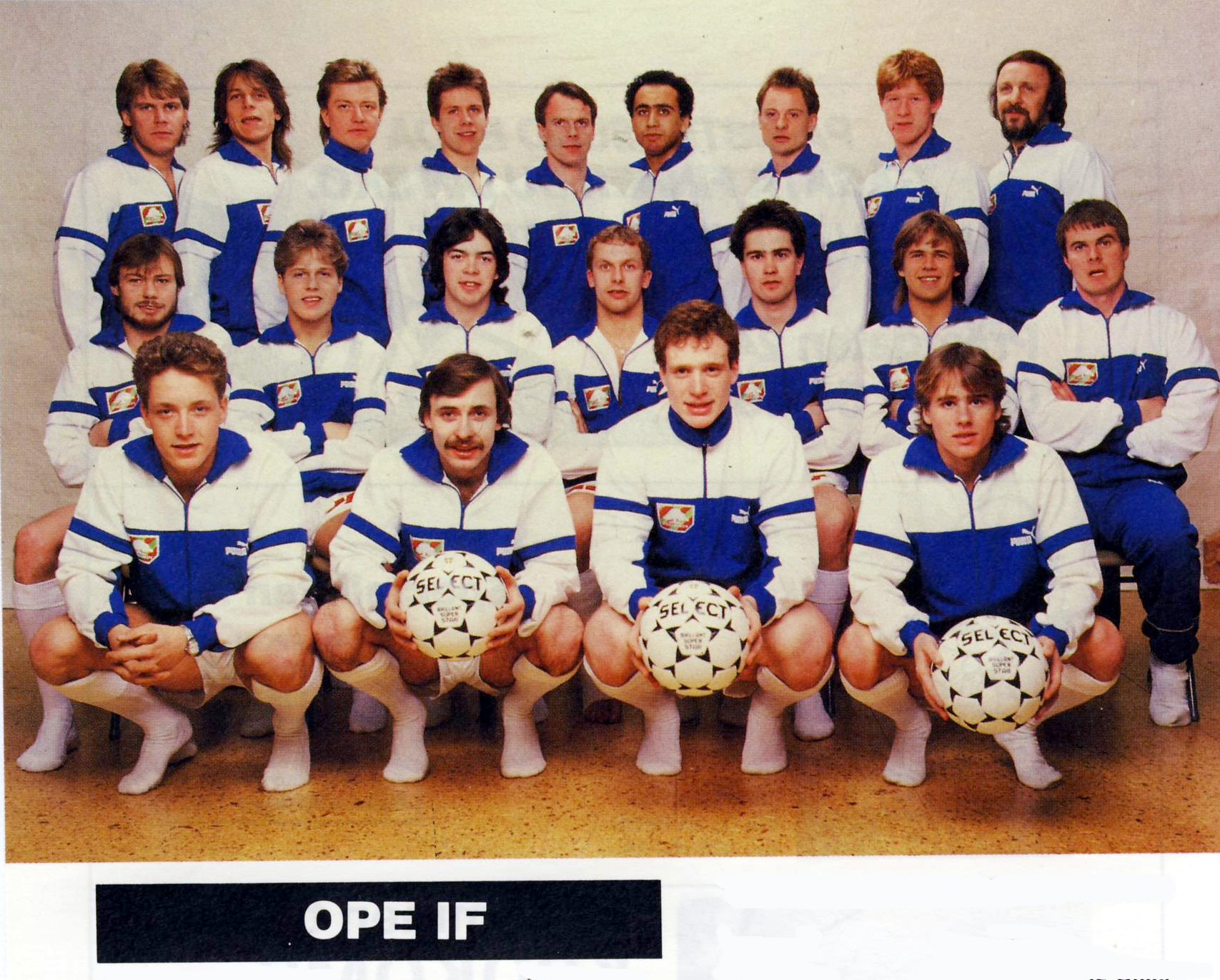 Ope IF – last with 16 points and relegated.
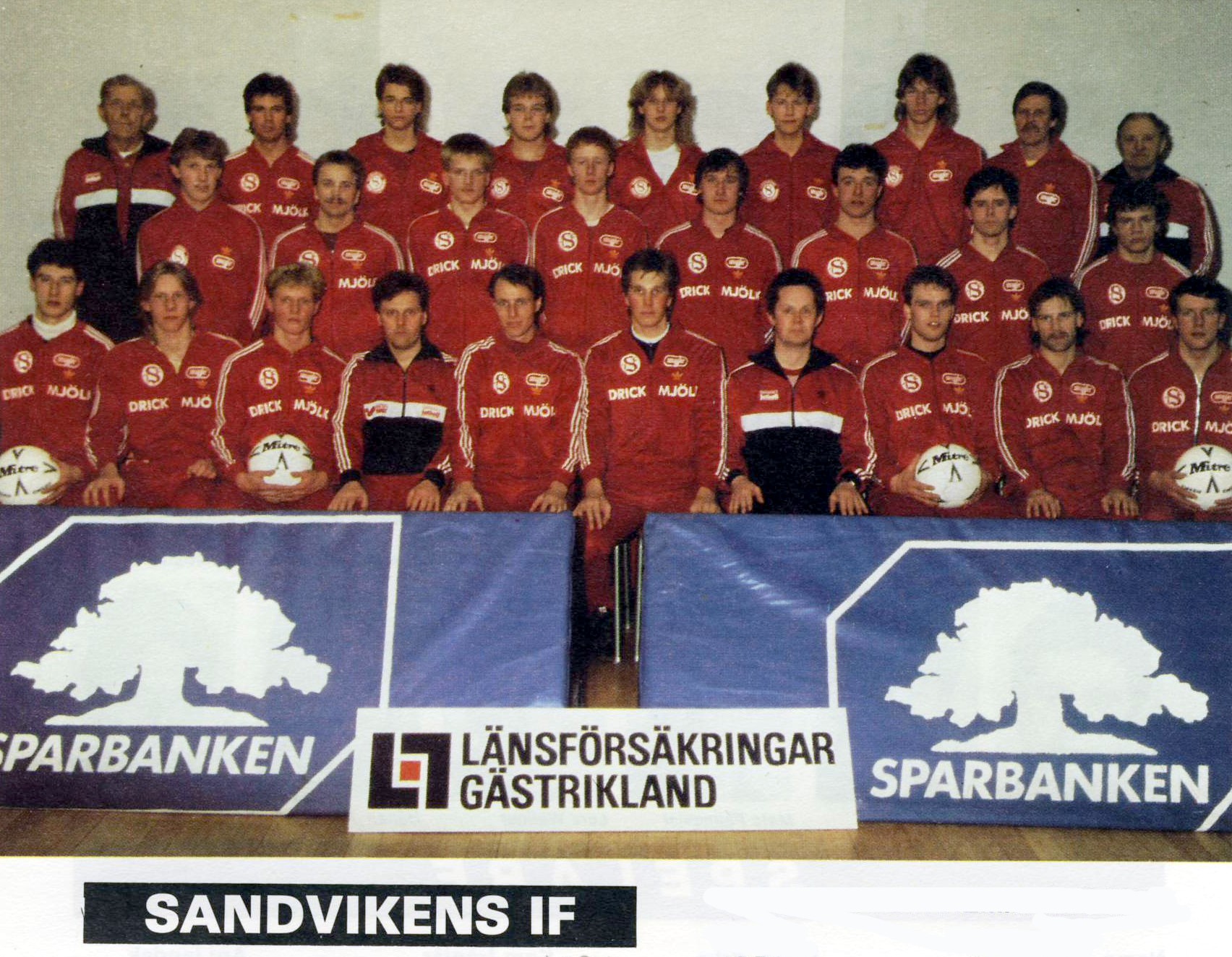 Sandvikens IF – 13th with 21 points and relegated.
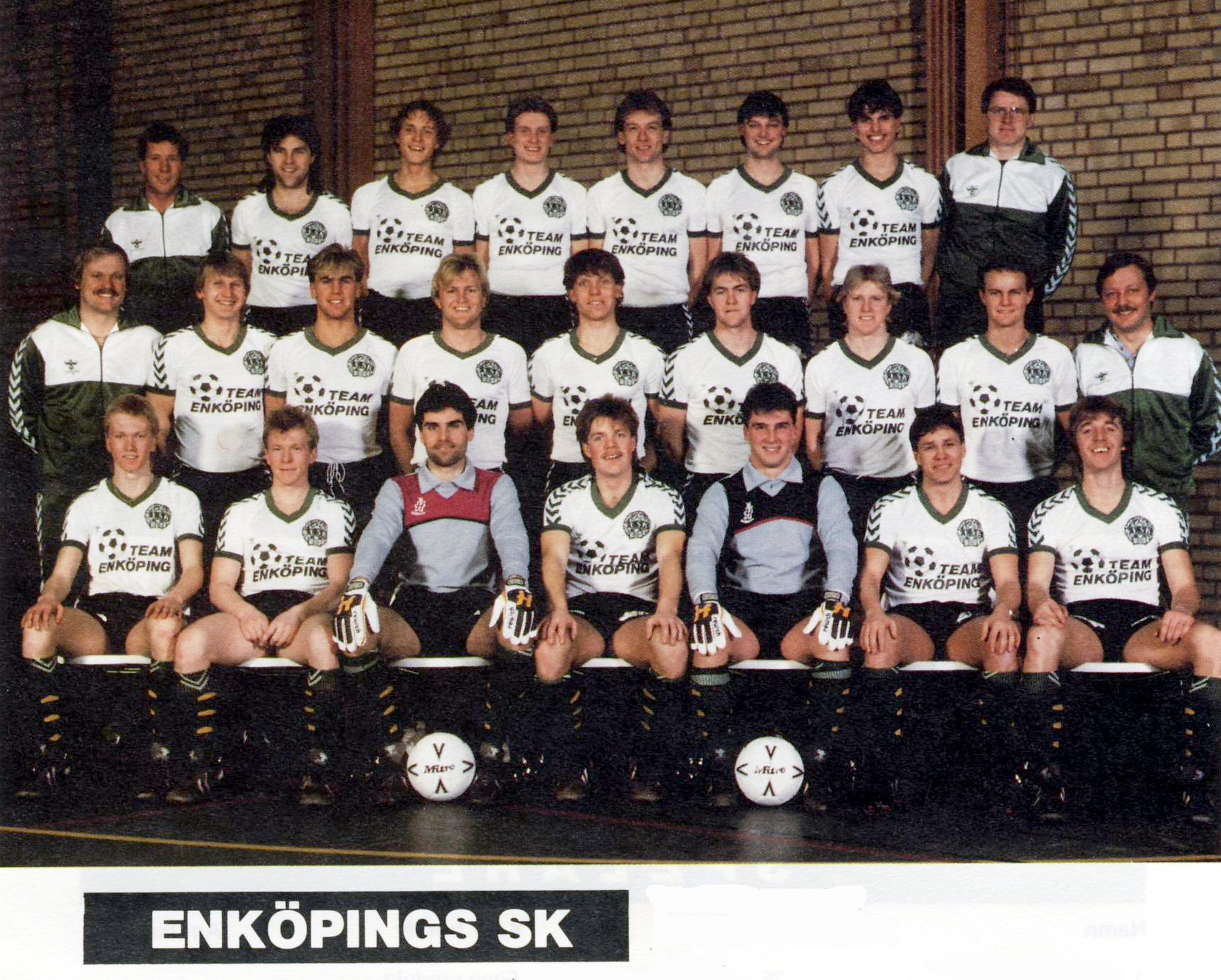 Enkopings SK – 12th with 21 points and relegated.
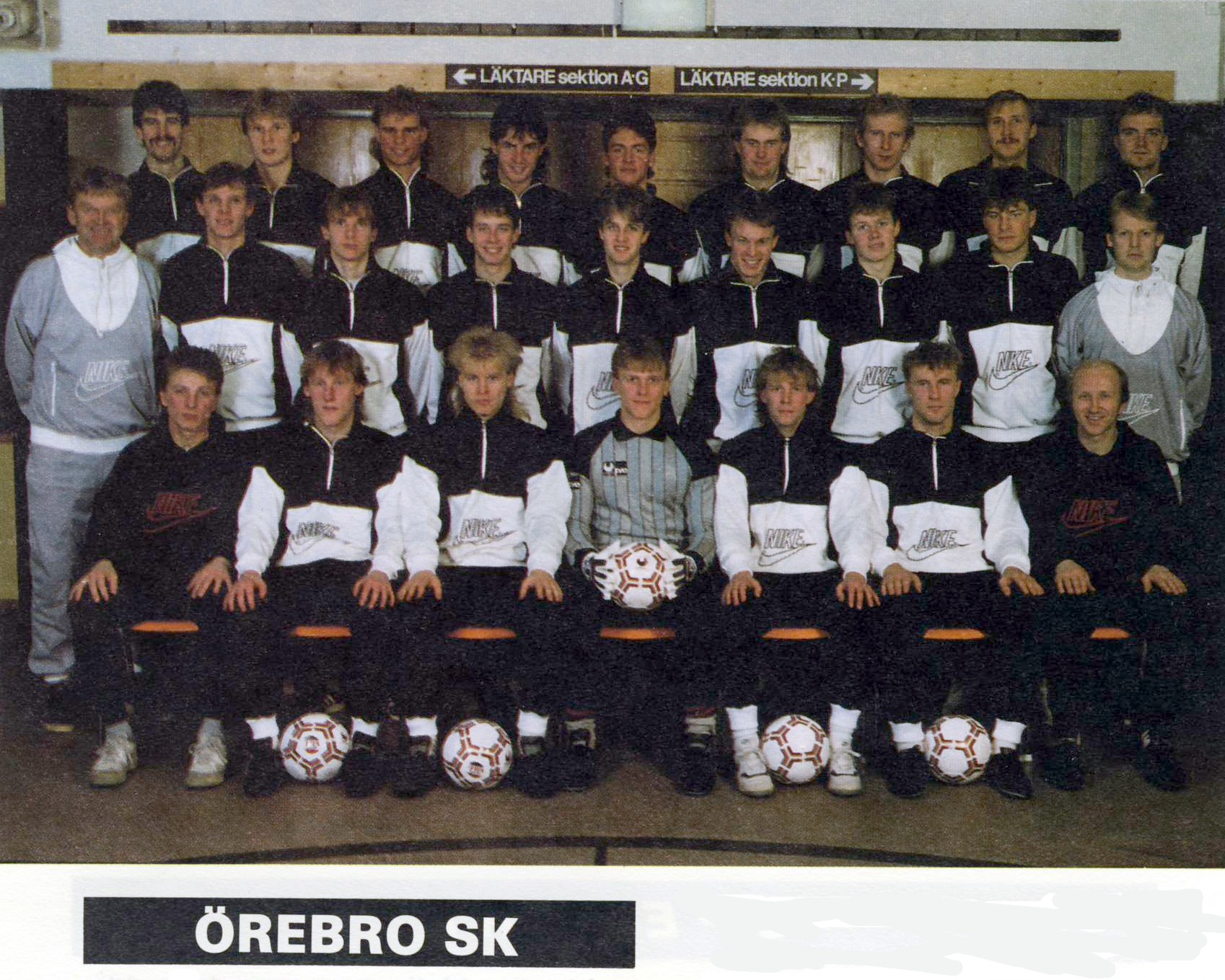 Orebro SK survived on better goal-difference for they also finished with 21 points. 11th.
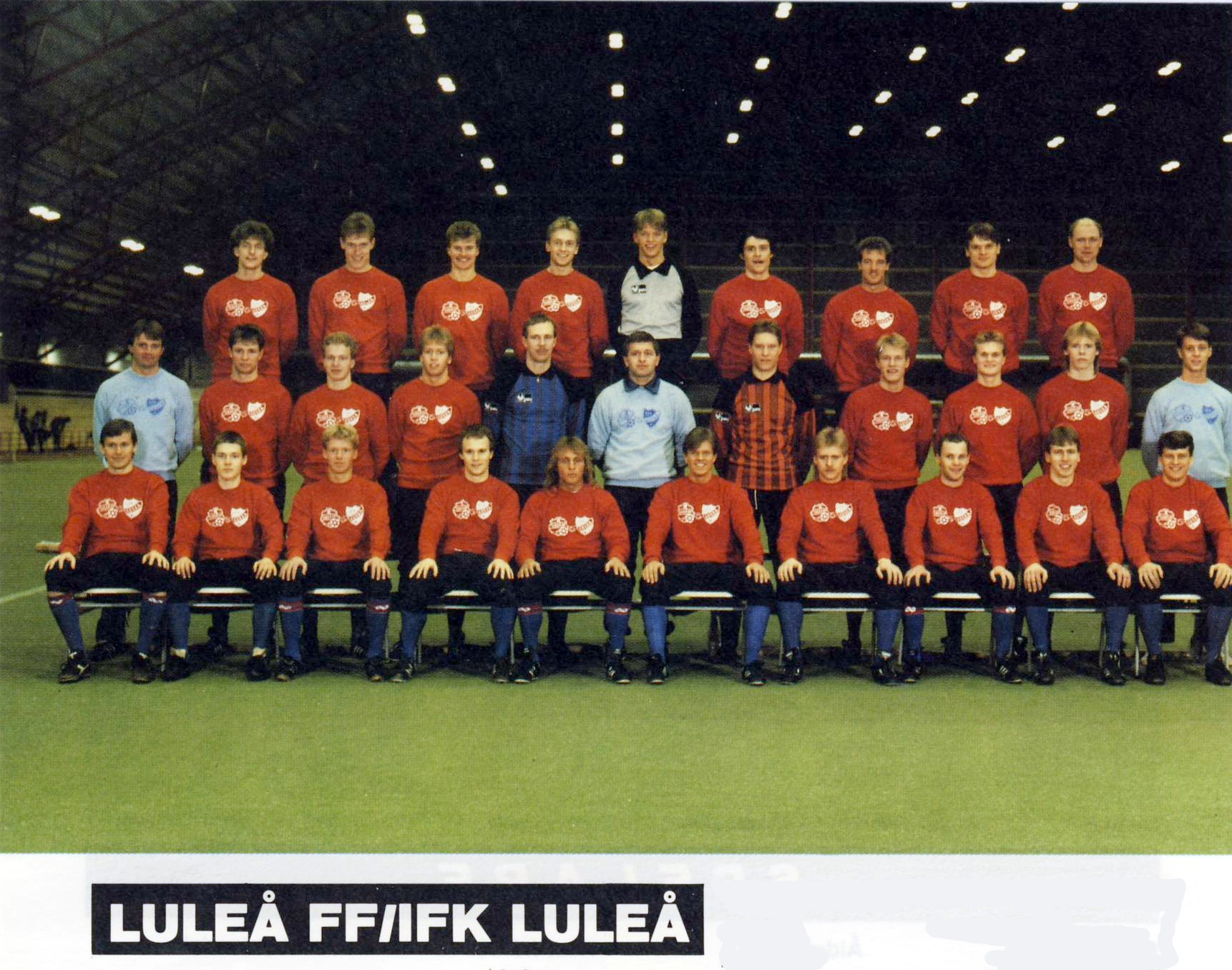 Lulea FF/IFK – 10th with 23 points.
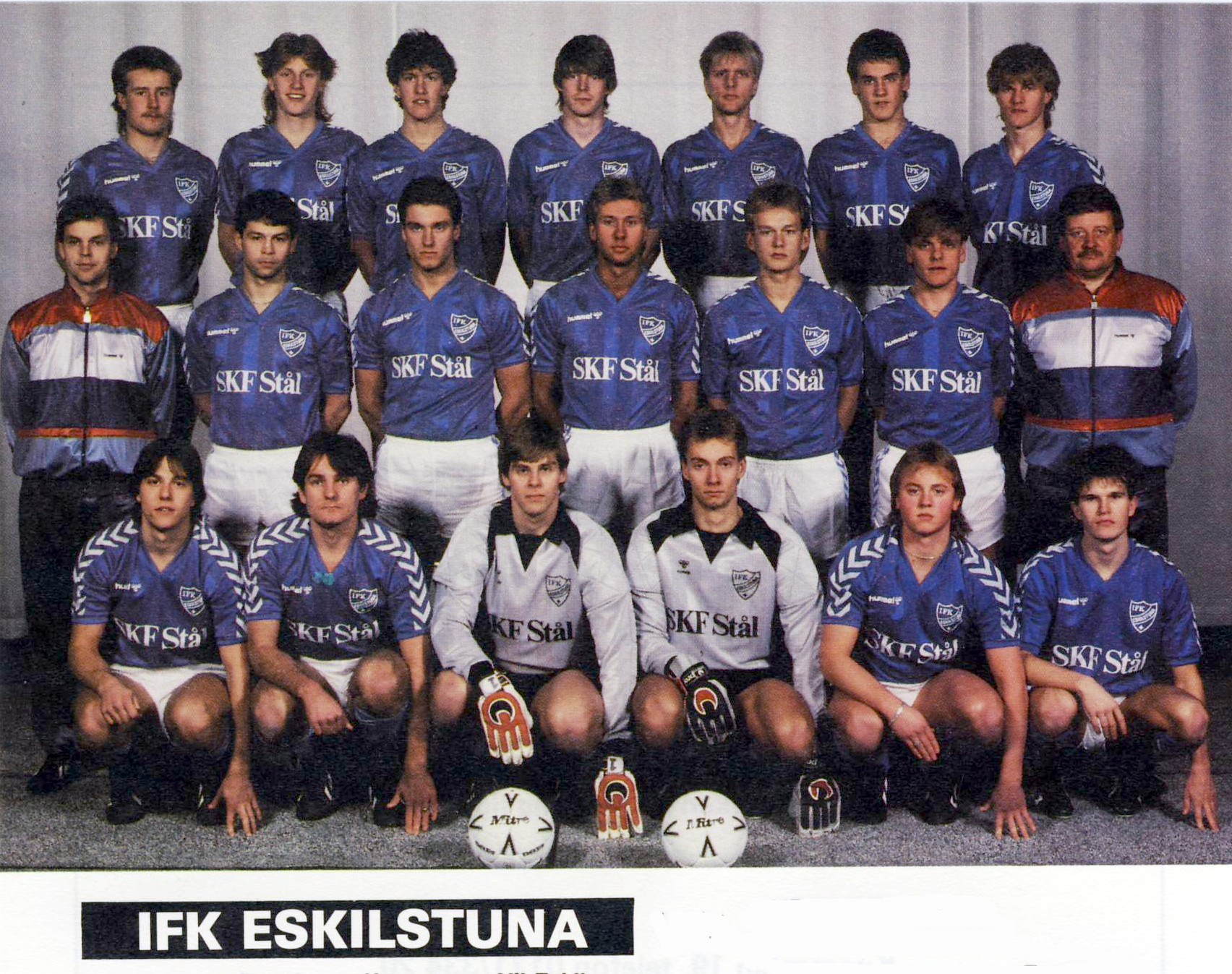 IFK Eskilstuna – 9th with 24 points.
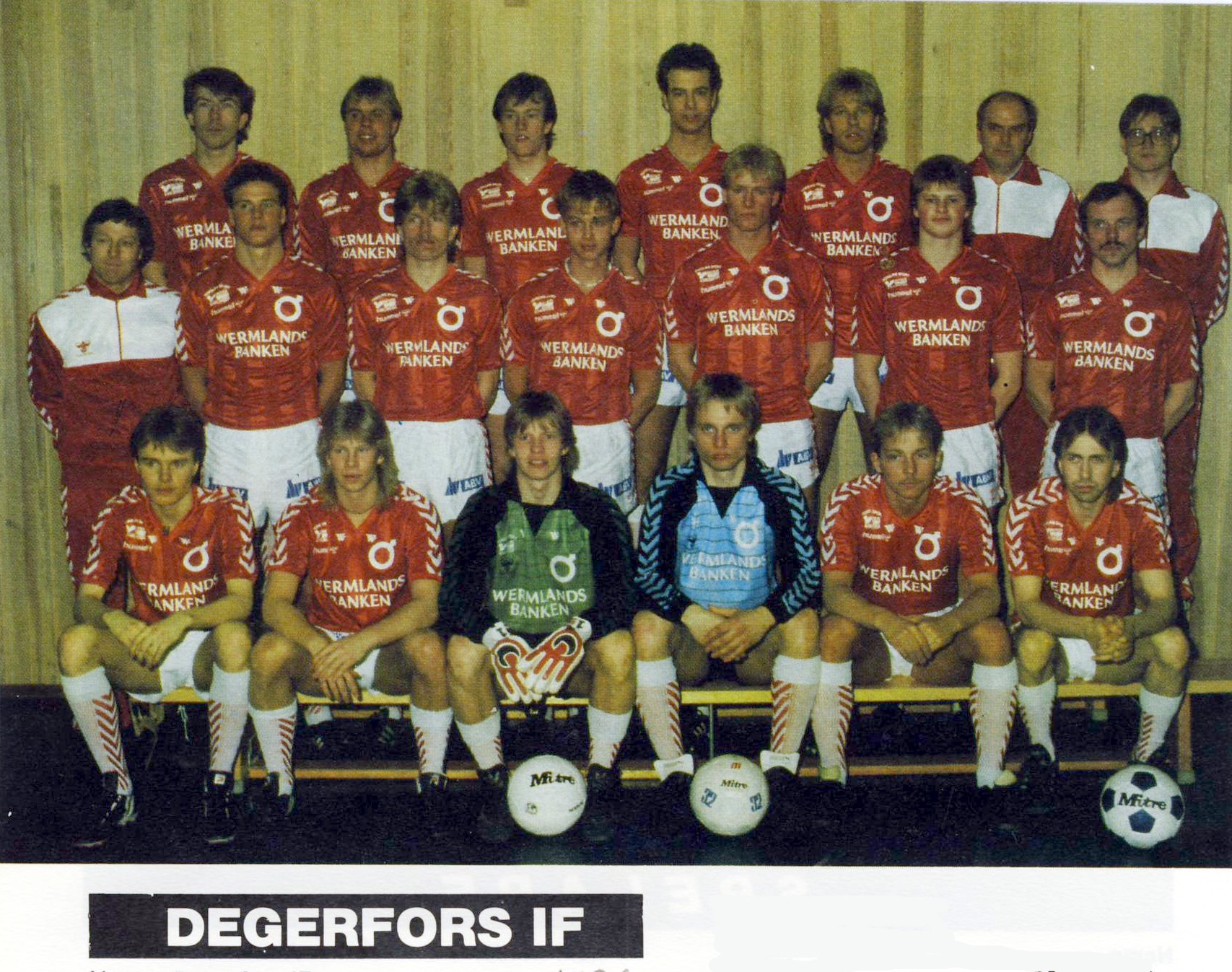 Degerfors IF – 8th with 24 points.
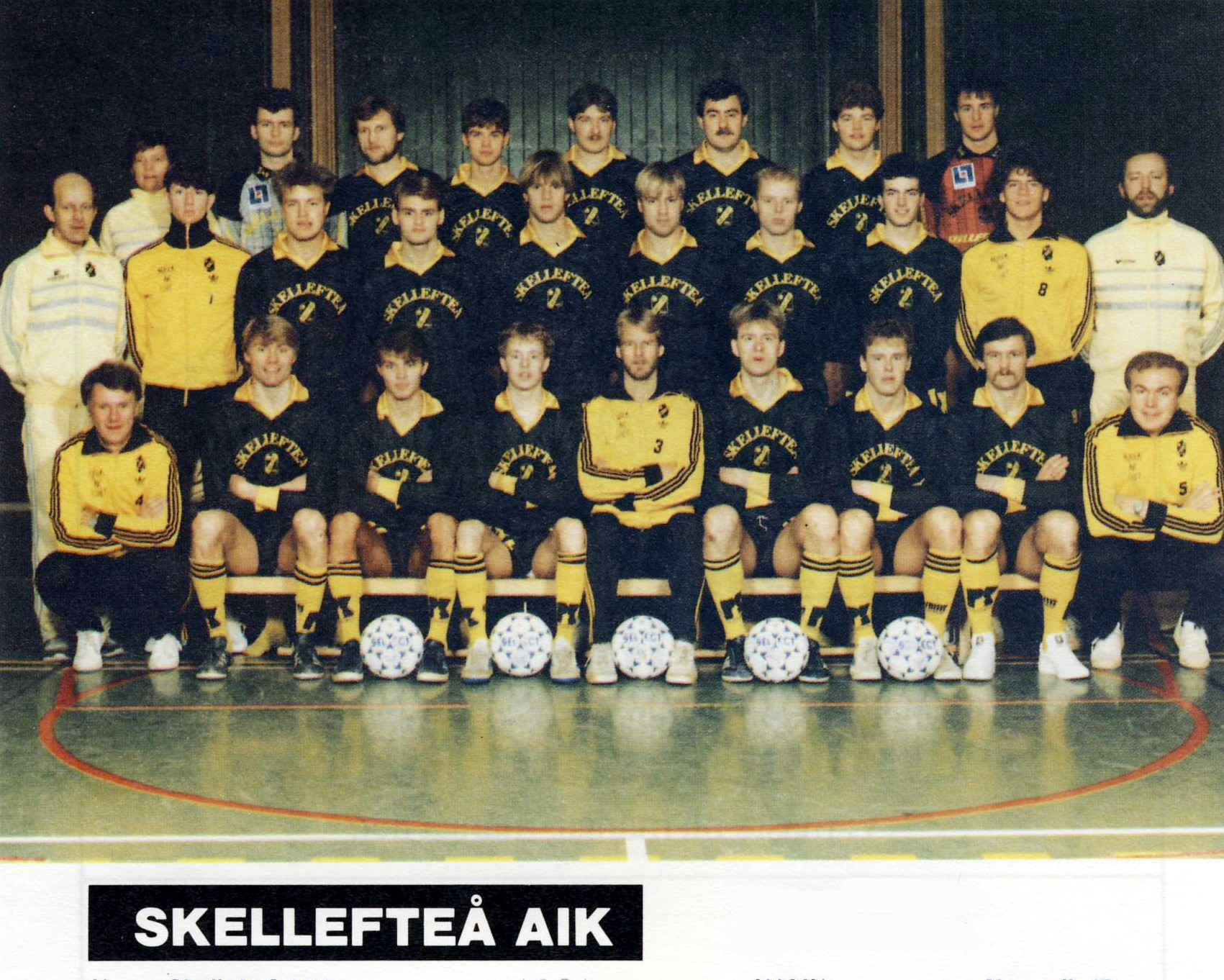 Skelleftea AIK – or IFK Skelleftea? – 7th with 28 points.
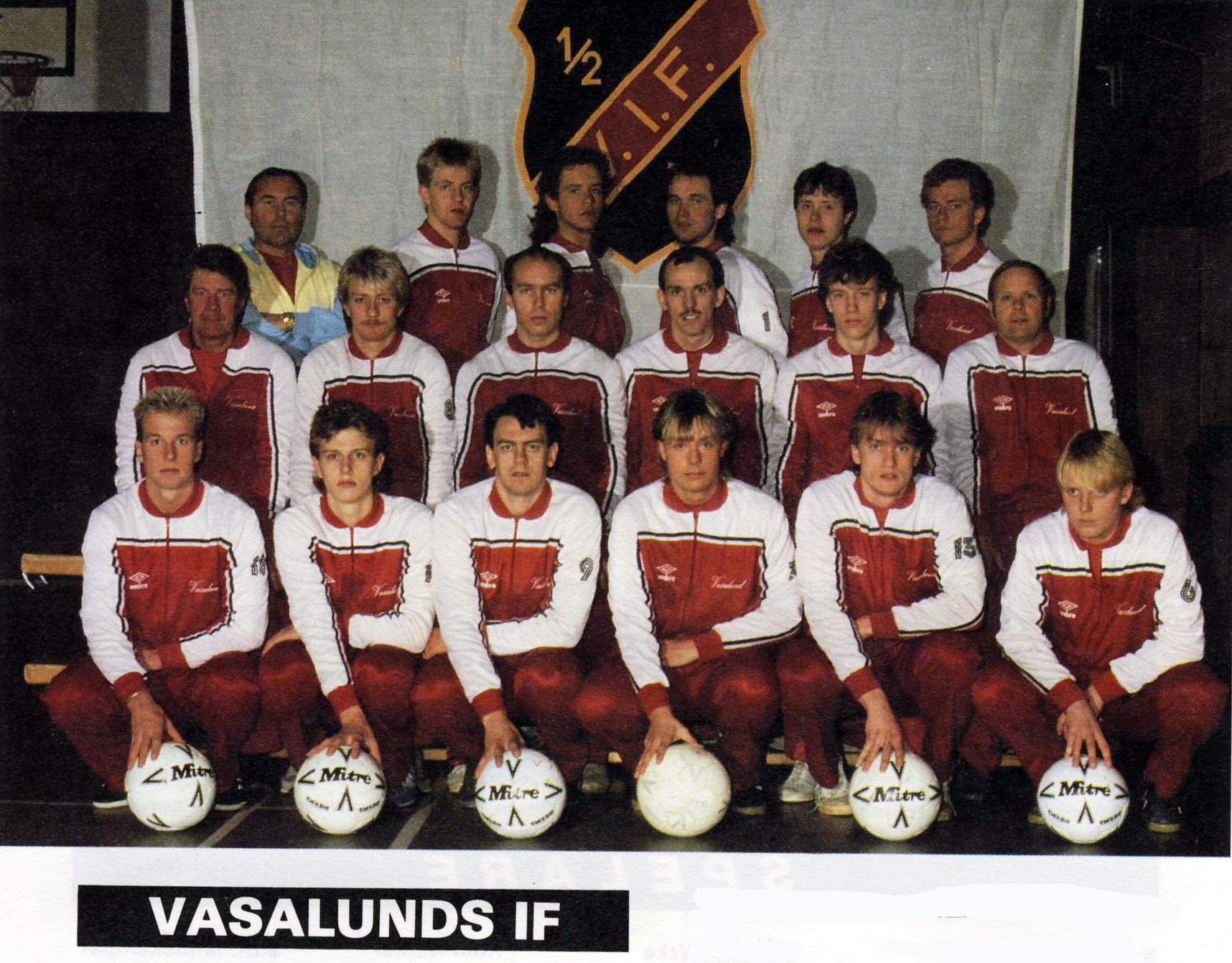 Vasalunds IF – 6th with 28 points.
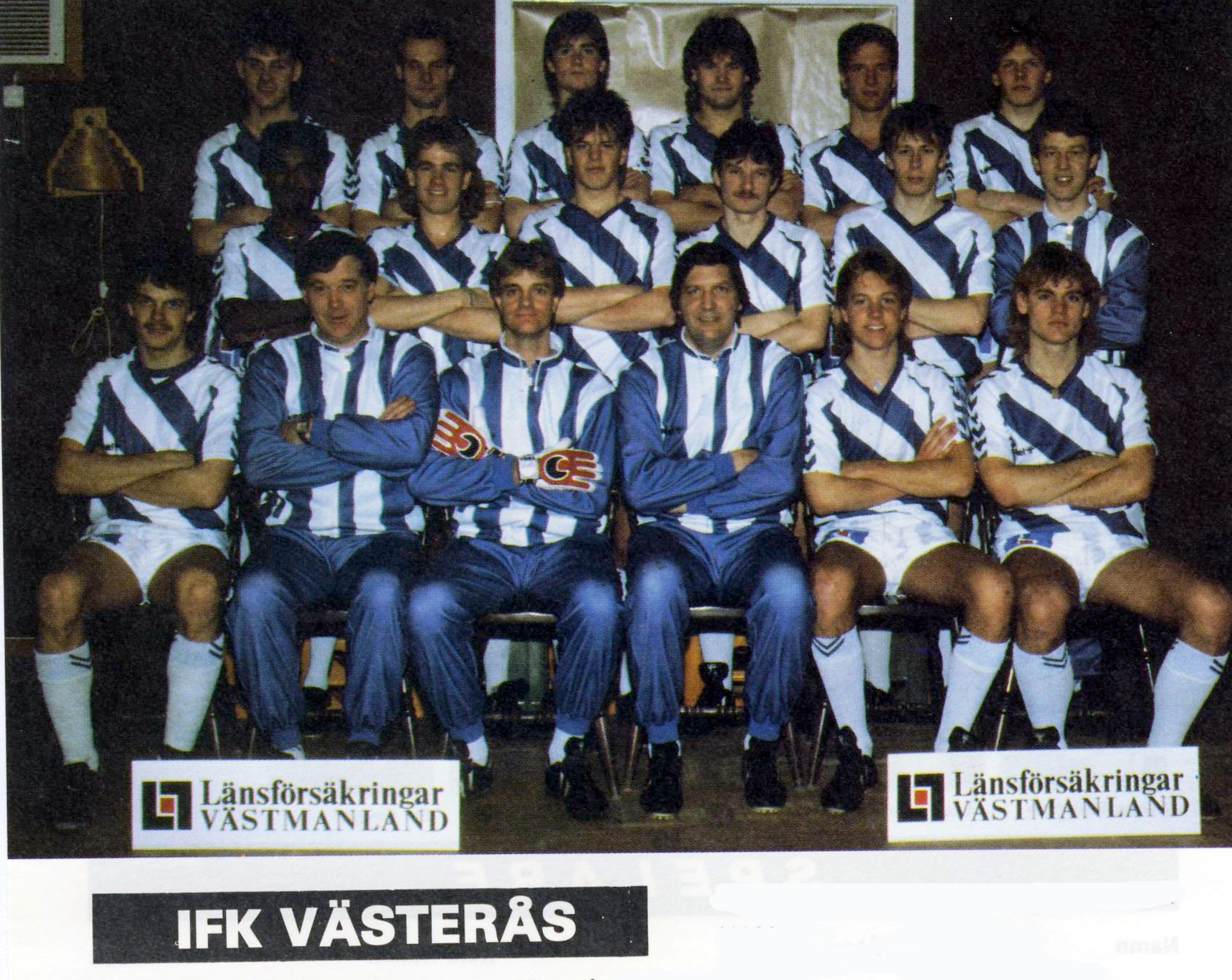 IFK Vasteras – 5th with 29 points.
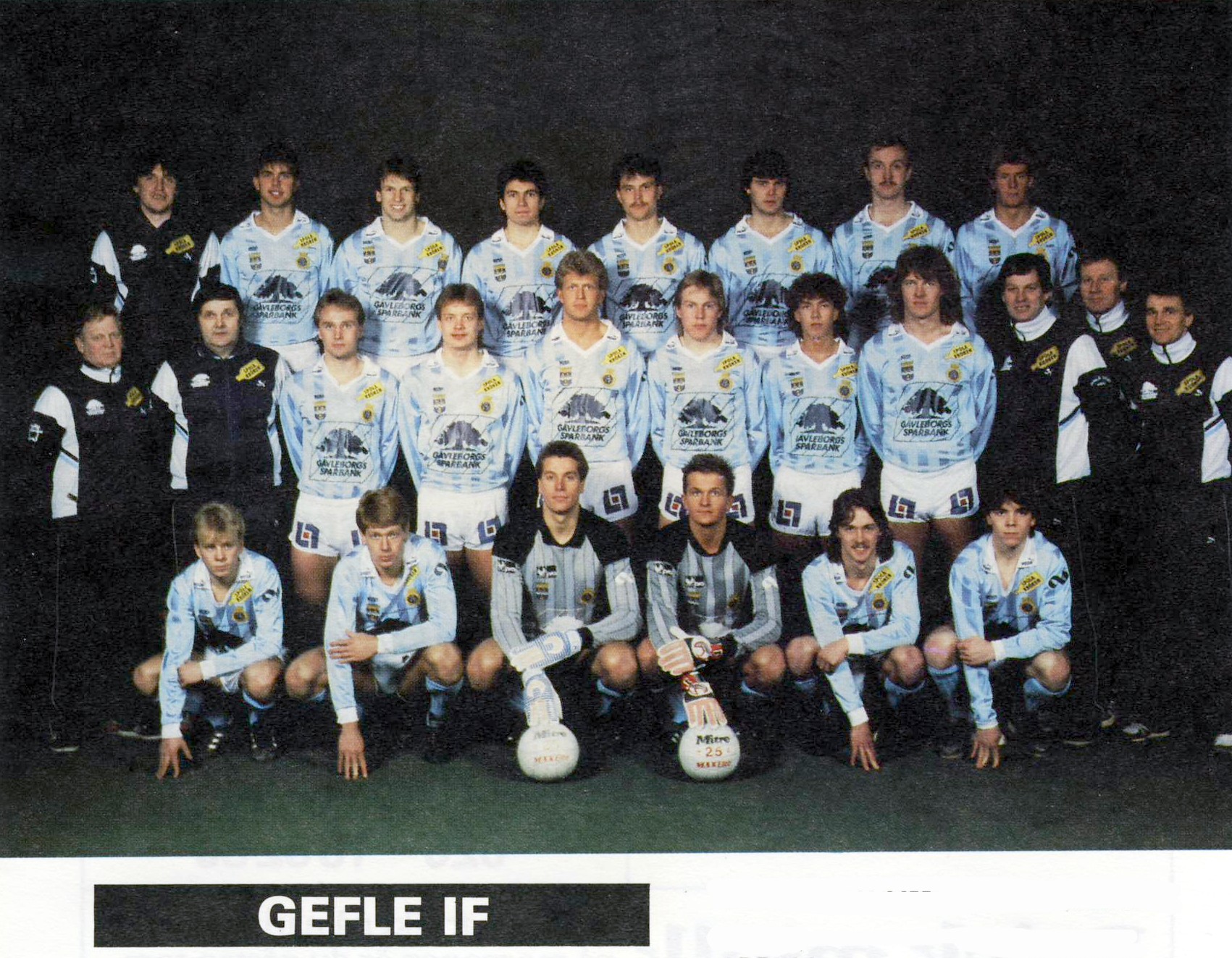 Gefle IF – 4th with 30 points.
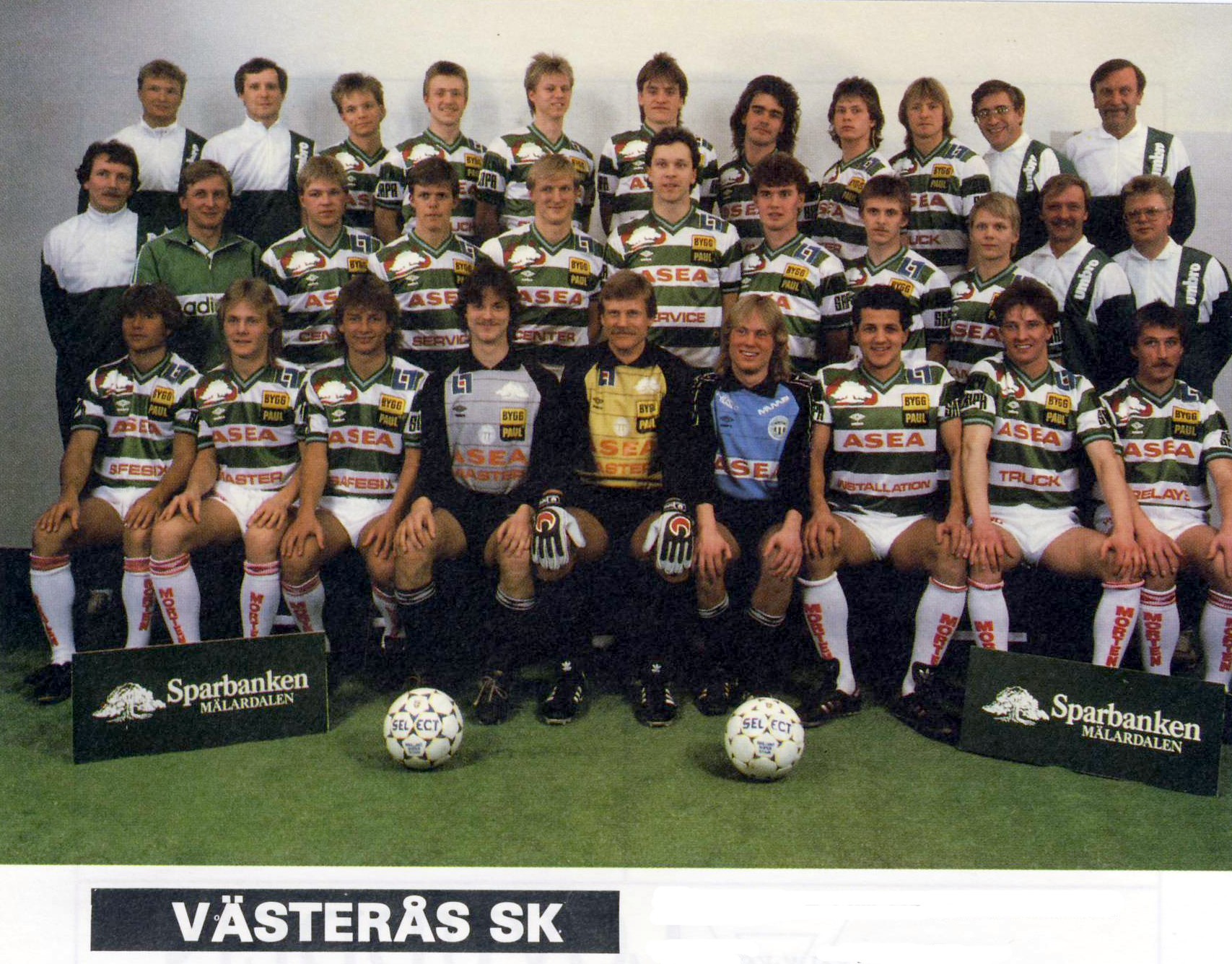 Vasteras SK – 3rd with 32 points.
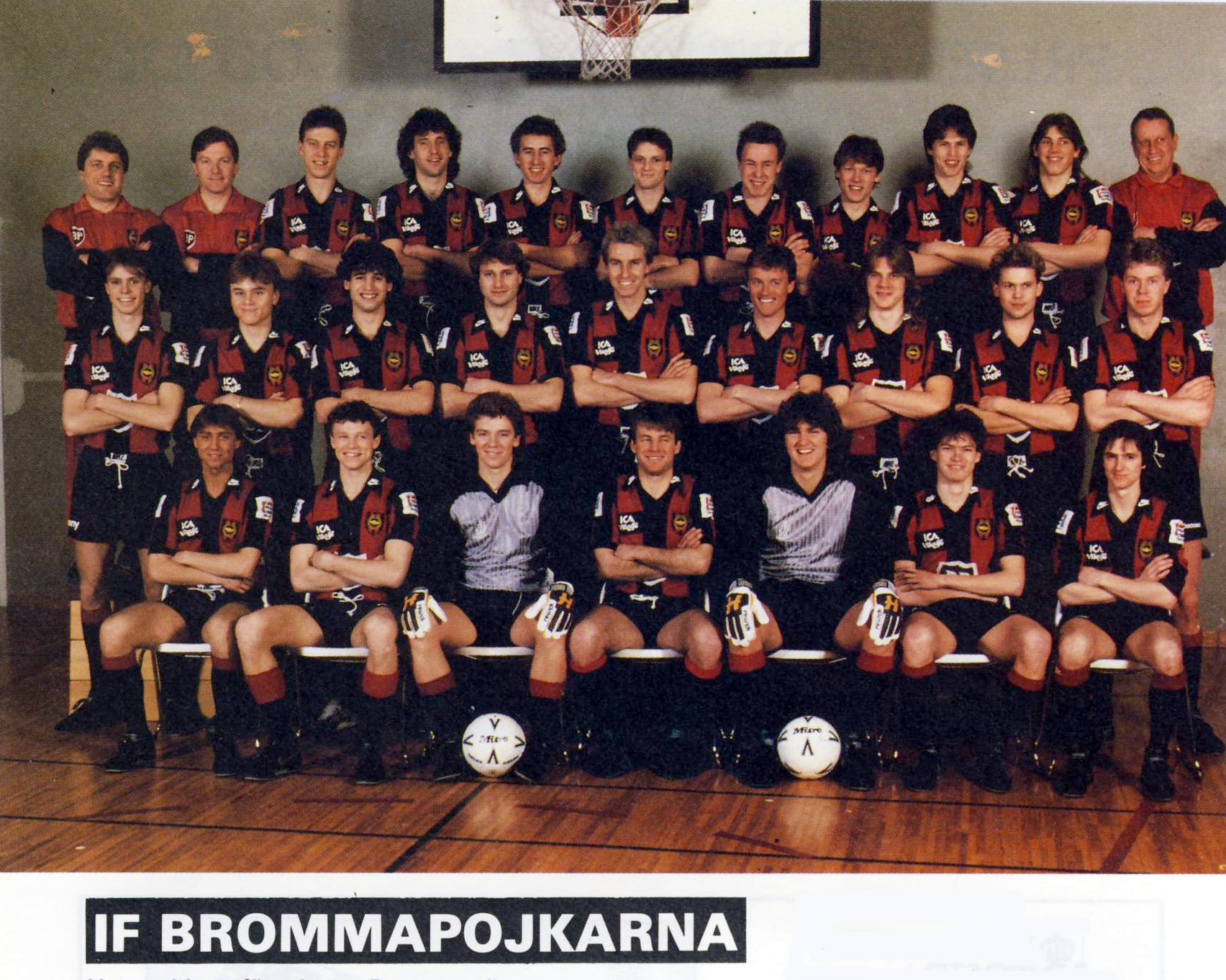 IF Brommapojkarna – 2nd with 33 points. Missed promotion by a point. Well, considering their pitiful goal-difference… by 2 points.
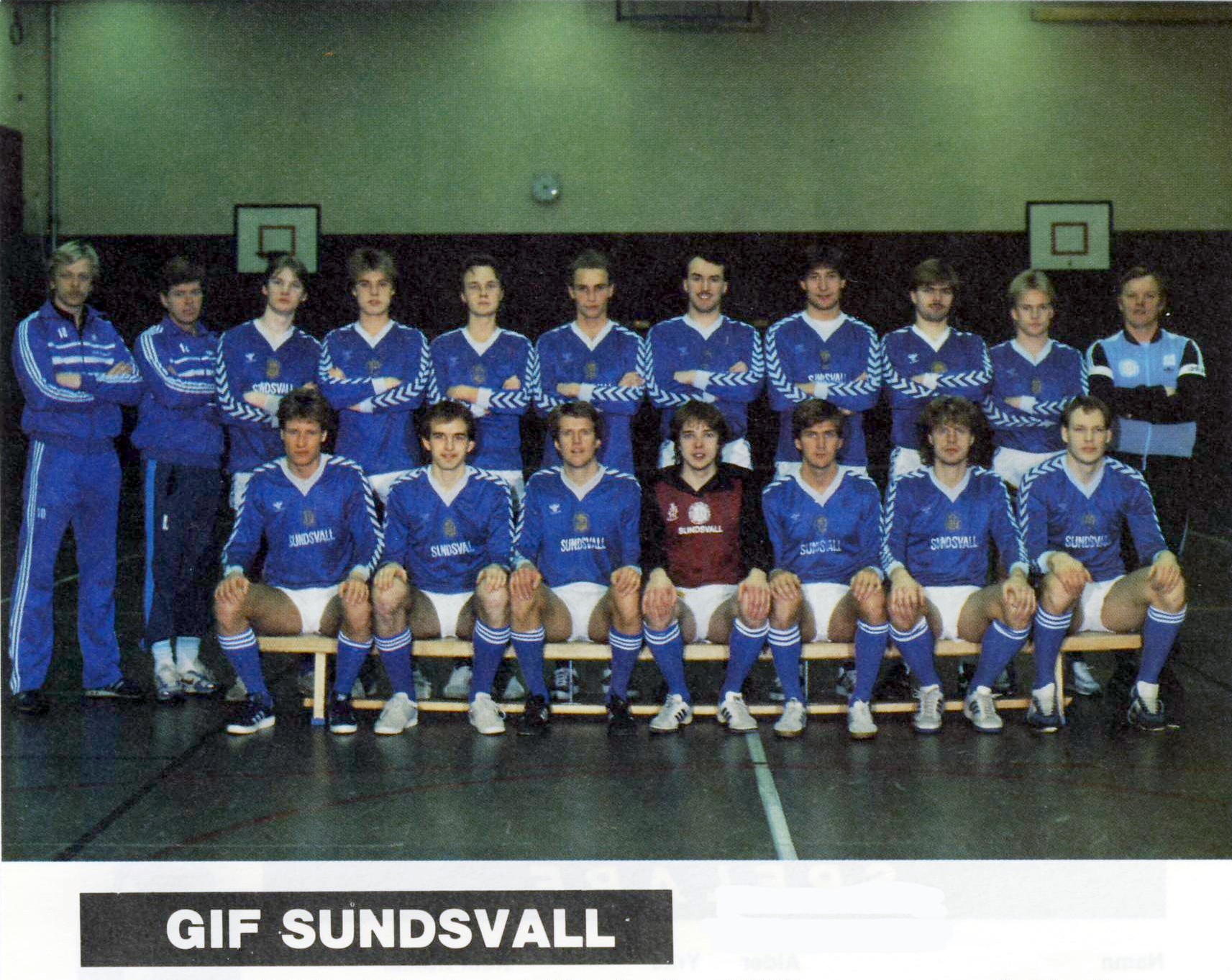 GIF Sundsvall won the championship with 34 points from 12 wins, 10 ties, and 4 losses. They managed to prevails over the competition, but their real strength was scoring: by points alone, they were hardly much better than the rest. Scoring was another matter: 51-26 goal-difference gave them +26. The nest best were Gefle IF with +18. Since one cannot count of goal-difference… the winners still clinched victory on points, but it was tough. But they were going up and good luck.
Bulgaria the Cups
Bulgarian cups – still two of them. The Soviet Army Cup still had to rank higher on paper, so the Soviet comrades not to feel offended – in reality, the tournament already lost its importance. But this year was perhaps different – Levski and CSKA were really down in the summer and early fall of 1985, by month after month they were coming back to their old powerful positions both on and off teh field. It was difficult to win the championship, for the opponents were already quite ahead, but winning a trophy was imperative, so the cups… Sredetz (CSKA) met Lokomotiv (Sofia) at the final of Soviet Army Cup. And won 2-0. Stoichkov and Lyuboslav Penev scored the goals.
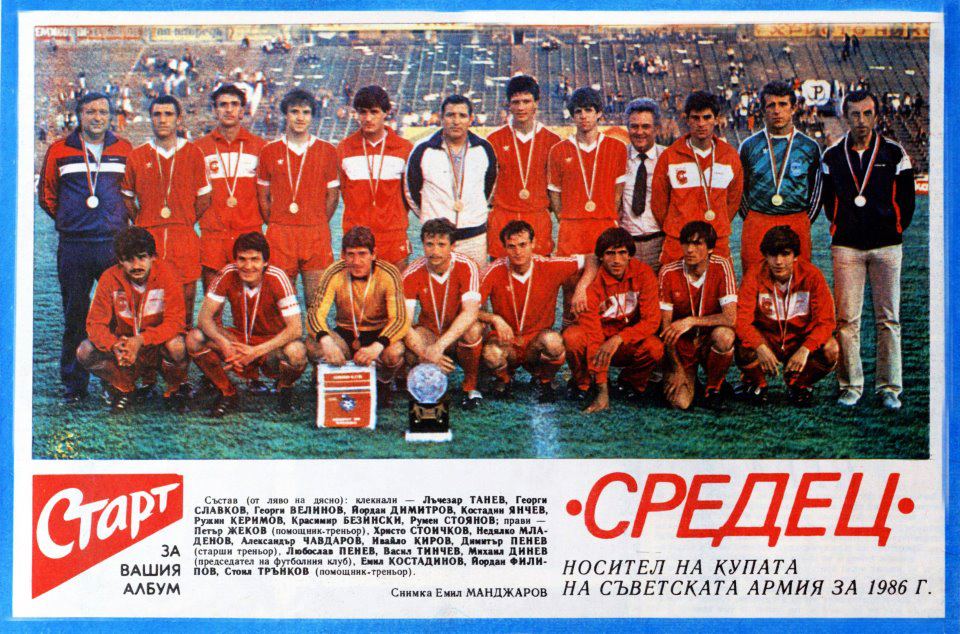 This was 12th Soviet Army Cup for CSKA – and 1st for Sredetz. Crouching from left: Lachezar Tanev, Georgi Velinov, Yordan Dimitrov, Kostadin Yanchev, Ruzhin (Ruzhdi) Kerimov, Krassimir Bezinski, Roumen Stoyanov.
Standing: Petar Zhekov – assistant coach, Christo Stoichkov, Nedyalko Mladenov, Aleksander Chavdarov, Ivaylo Kirov, Dimitar Penev – coach, Lyuboslav Penev, Vassil Tinchev, Mikhail Dinev – club’s chairman, Emil Kostadinov, Yordan Filipov, Stoil Trankov – assistant coach.
Note: the final was played on May 21, 1986. Apart from the name, everything was the same as before – Stoichkov, banned for life, was a regular, scored a goal. Perhaps money were still short, but the team was the same team CSKA had before. Dimitar Penev for years laments this period – so bad it was, no players, almost hopeless, but… the picture proves him wrong. It was shaky for awhile – supported by changing goalkeepers. It is a mystery why suddenly Thomas Lafchis, a regular for Panathinaikos just the previous season, was back in Bulgaria and joining CSKA instead of his beloved Levski, only to disappear again without even playing for Sredetz, but this mystery is not important here: the point is Sredetz had some problems with completing the squad and perhaps not much to offer. The veteran Yordan Filipov, back from playing in Malta, was second goalkeeper in May 1986. Even this could be seen as some desperate move – Filipov was a teammate once upon a time of the current coaching stuff Penev-Zhekov-Trankov. He did not play for CSKA at least 6 years and he was 40 years old! Dimitar Penev complains, as well as a chorus of CSKA fans and historians, but all the stars were at hand. The suspended players were back, including Stoichkov – the others had short suspencions, only his was for life, for he, young and unknown, was used as scapegoat mostly to show penalties were distribute ‘fairly’ – Levski’s players receaved heavier and more numerous bans, so let show there is no ‘bias’. But after the national team coach Vutzov pleaded amnesty so the have a decent team at the World Cup, everybody was back and playing. Dimitar Penev have more of a point if speaking of 1986-87 season, because a whole bunch of stars went to play abroad after the World Cup, but at that time he also had relatively restored power of the ‘new’ club plus the backbone of new great team – Stoichkov, Emil Kostadinov, Lyuboslav Penev. That was the blessing of the club’s destruction in the late spring of 1985, really: first Penev was appointed coach. His coaching abilities are suspect at best, but he has a great eye for young talent, maintains wonderful relations with players, and is not disciplinarian – all that created rather relaxed atmosphere in his teams and talent can show its capabilities without restrictions. Pig-headed players like Stoichkov can really flourish. Penev included the youngsters and made them regulars out of desperation, he claims – there was nobody eles. CSKA, however, never used its own juniors for starters – it became possible only in shaky and uncertain days after the club was penalized. And thanks to that world class stars came to be… it may had been entirely different, if the old stiff CSKA existed. In any case, the victory further confirmed that everything was coming back to what used to be.
The Bulgarian Cup final opposed Vitosha and Sredetz. Although statisticians had to place that as the first final the new clubs reached, it was the old derby Levski – CSKA and there was certain fear that tempers may get out of control again. The final was played on April 27, 1986 and by now everything was back to ‘normal’: all suspended players were back, the very players blamed for the big fight a year ago, leading to destruction of both clubs. However, priorities were different now and both clubs had to play without their national team players, who were preparing for the World Cup. That took away an edge, but ambition was still strong – both clubs wanted to win, to come on top of their enemy, to restore their former might. The final was not violent and Vitosha was the better team at least in the first half and took a 2-0 lead. Then, strangely, they slowed down and chose to play defensively, which allowed CSKA to score from a penalty, but that was all. 2-1 Vitosha.
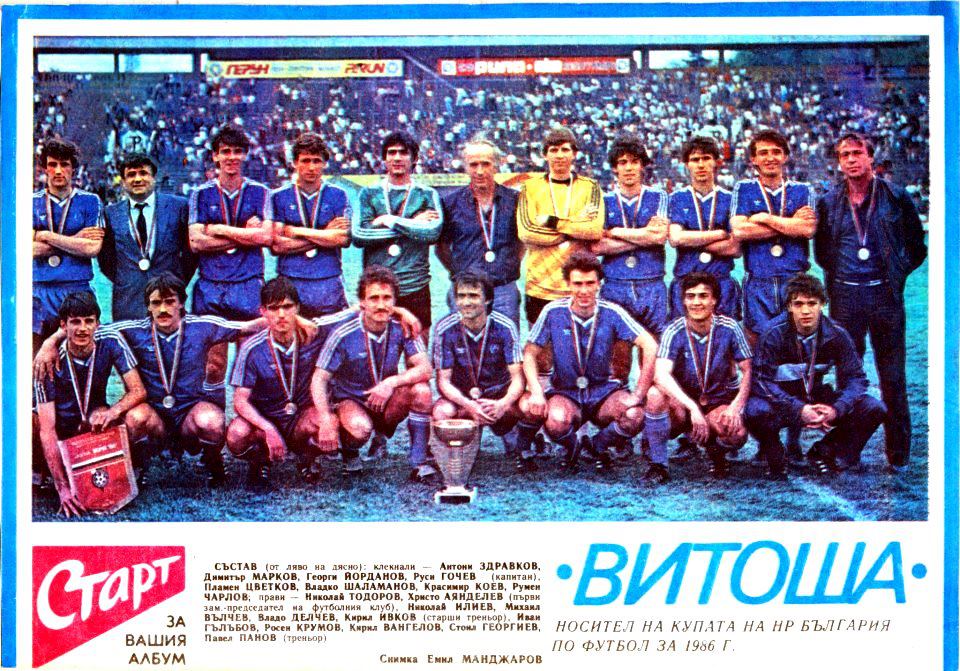 The winners, without their national team players. Crouching from left: Antoni Zdravkov, Dimitar Markov, Georgi Yordanov, Roussi Gochev, Plamen Tzvetkov, Vladko Shalamanov, Krassimir Koev, Roumen Charlov.
Second row: Nikolay Todorov, Christo Ayandelev – vice-chairman of the club, Nikolay Illiev, Mikhail Valchev, Vlado Delchev, Kiril Ivkov – coach, Ivan Galabov, Rossen Krumov, Kiril Vangelov, Stoil Georgiev, Pavel Panov – assistant coach.
Well… 1st Cup for Vitosha, 3rd Cup for Levski. Now Levski won more cups than CSKA, but since both clubs were still shaken and many fans did not consider the renamed teams their own, victory was considerably toned down. After the final Kiril Ivkov said the victory was important because it was the last chance for the team to play in European tournament. Not that much to win a trophy, but to qualify for international games, seemed to be the tenor. Yet, the team was restoring confidence, winning again, coming back to normal. There was a bit of difference in the feelings in the blue camp a year ago – if CSKA was mostly stunned by losing their unlimited power, Levski harboured old grievences and felt victimized by the political regime once again. The Communists tried to destroy the club at least twice before, but true blue came back – and may survive again, give it time. As ever, the blow was heavier – the reds were just slapped in the face, their players given symbolic short suspencion (unknown Stoichkov nobody counted in either red or blue camp), but Levski had half a team out for life, the biggest stars. The reduced ability to recruit freely from the whole country was not a big concern for the blues: even at their most powerful years, when the club belonged to the Police, the Army had much more power and even obstructed some blue transfers. The true might of Levski was in self-dependency, in the players coming from their own youth system, boys with real blue hearts – from this point of view, Vitosha was in better position than Sredetz: already most of the team was made of former juniors and there was more young talent coming. Such players were loyal to the club, so Vitosha was not in danger of losing players, like Sredetz. Nor it had to fret over recruits, who mat refuse to join the club, because there were no longer perks. Sredetz dipped into its own junior system out of desperation – for Vitosha it was normal, traditional. But all that was general and in perspective. For many getting out of the Police claws was greatly beneficial, for it never stayed well with blue fans. To a point, the blue camp felt simultaneously angrier than the reds and relaxed – no big hopes for the 1985-86 season, so the weak performance was excused. Then suspencions were revoked, the stars came back and winning the Cup – like in the red camp – was mostly needed for restoring the winning spirit, as a confirmation that everything was coming back to normal.
Amnesties of the guilty and cup victories of Sredetz and Vitosha suggested clearly that the old status quo was going to be restored fast – and that was perhaps most important for the provincials and the secondary clubs in Sofia: equality was coming to a quick end. It was just a brief moment of freedom, not lasting ever a full year. Whoever was able to grasp the importance of the moment and take advantage was truly wise. Beroe did it, Trakia did it, Slavia failed to use the moment. And it was over already. Now, for blue and red, the only concern was to restore their ties to their old powerful sponsors – perhaps that ties were never completely cut off, but the need was to made them stronger and more open and official. Sredetz and the Army, as usual, did it quicker and even arrogantly so: they started the 1986-86 season with new name – CFKA Sredetz: Central Football Club of the Army. Their old name was CSKA – Central Sport Club of the Army. ‘Demilitarized’ Sredetz existed just a single season. The bottom line of the whole circus was rather sad: the chance of some normal development of football was lost once again. Instead of relative equality between provincial clubs and the two powerful teams from the capital and sport free of ‘influence’ and ‘favours’, everything went back to the old familiar – two clubs dominating and doing whatever they want at everybody else’s expense. Once Police and Army popped up, a number of clubs had to serve either Sredetz or Vitosha and everybody had to resign again the fact that Sredetz or Vitosha, or both, would take whoever players they desired from any provincial club. And at this moment Trakia’s lament that Vitosha gave away a match to Beroe and robbed them from a title loomed large: Beroe, no matter what really happene, owed a favour to Vitosha. And Vitosha will demand repayment in convenient for themselves moment. And Trakia? Well, Trakia will have to give points to Sredetz whenever generals order coronels to do so. Just like used to be for years.
Bulgaria I Division
First Division. The new rule – no points for scoreless ties – affected 11 teams: 10 lost a point and Dunav (Rousse) – 2 points. The rule seemingly helped: this season there were very few ties and scoring was quite high all around the league. But the punishment of the Army and the Police teams was perhaps the real reason – now provincial clubs felt free and fearless, there was nobody to ‘influence’ them, a temporary equality. There was something signigying the end of the powerful in the new names – although they were ancient name of Sofia (Sredetz) and the nearby mountian (Vitosha), those names were also a cheap brand of cheese (Vitosha) and awful brand of cigarettes (Sredetz) and jokes never ended. Fans of the most popular clubs did not like any jokes, they felt betrayed. The game was also affected, for many top players were banned. The championship was unusual at the end because three clubs were quick to take advantage of the new situtaion, all of them harboring old grievances. Slavia (Sofia), the most suffering club during Communism, according to its own mythology – but it was true they were somewhat subservient to CSKA, belonging to special branch of the Army. Trakia (Botev) from Plovdiv not onle felt cheated by the big clubs from the capital, but also an Army club, so they had to somewhat follow orders in favour of CSKA. Beroe (Stara Zagora) would not forget how they expelled from First Division in the early 1970s after a home match against Levski – conveniently forgetting the stones and bottles hurled at the visiting team – and also way too often they saw their best players packing and moving to Sofia, chiefly to don CSKA shirts. The rest of the league was seemingly focused on its own troubles to take advantage of the new situation, which as the season was nearing completion was quite clearly only a brief release from old chains. The final whistle was not to everybody’s liking – the new champions were rightfully happy, but the silver medalists felt they robbed, the title should have been theirs, but it was given to weaker team by Vitosha. Getting rid of corruption? No way, it was just the same as before. Slavia was also ready to whine, but they played rather weak spring and had nobody to blame for their own lack of form.
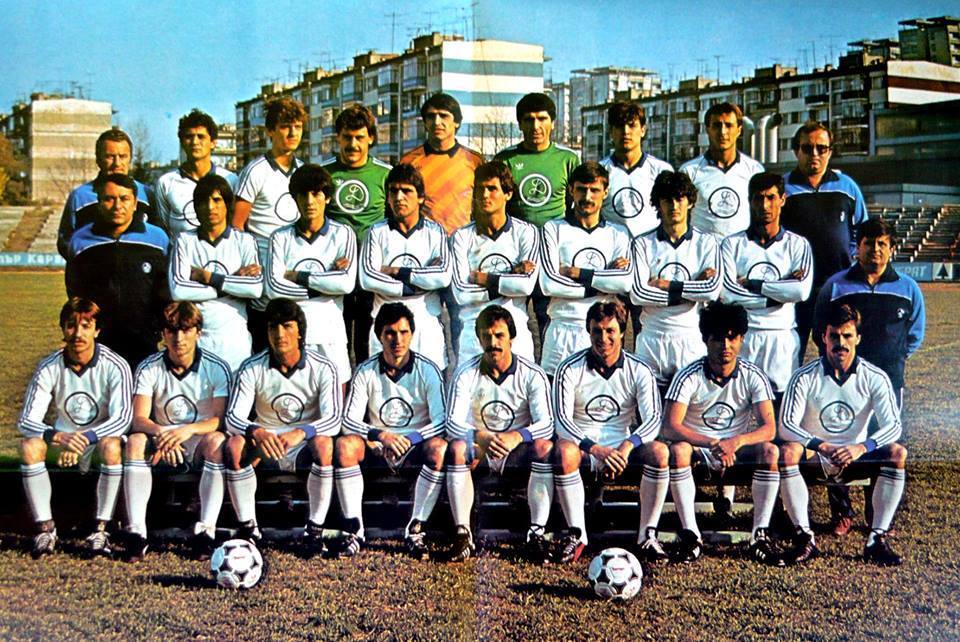 Dunav (Rousse) was the outsider this season and no surprise. During the 1980s Dunav was unable to build relatively strong team and although they managed to get promoted to the top league a few times, usually they were also immediately relegated.
Cherno more (Varna) lost a battle between 3 teams for survival on worse goal-difference. 15th with 20 points and relegated. Looked like Cherno more did not recover from the bribing scandal of few years back, when almost half of their team was suspended.
 Spartak (Pleven) barely escaped relegation – 14th with 21 points. They had arguably the best Bulgarian player at the time – Plamen Getov – but the rest of the team aged dangerously, without having good replacements.
Pirin (Blagoevgrad) also survived – 13th with 21 points.
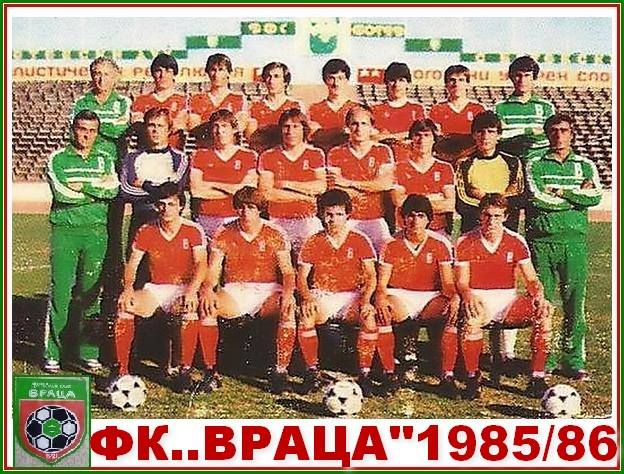 Vratza (Botev) ended 12th with 25 points. They were renamed, thanks to the rule banning clubs from using names of historic persons, which did not made them happy, but in sporting terms they were not very good in recent years.
Akademik (Svishtov) – 11th with 26 points. So far, their second promotion to top flight was going on well.
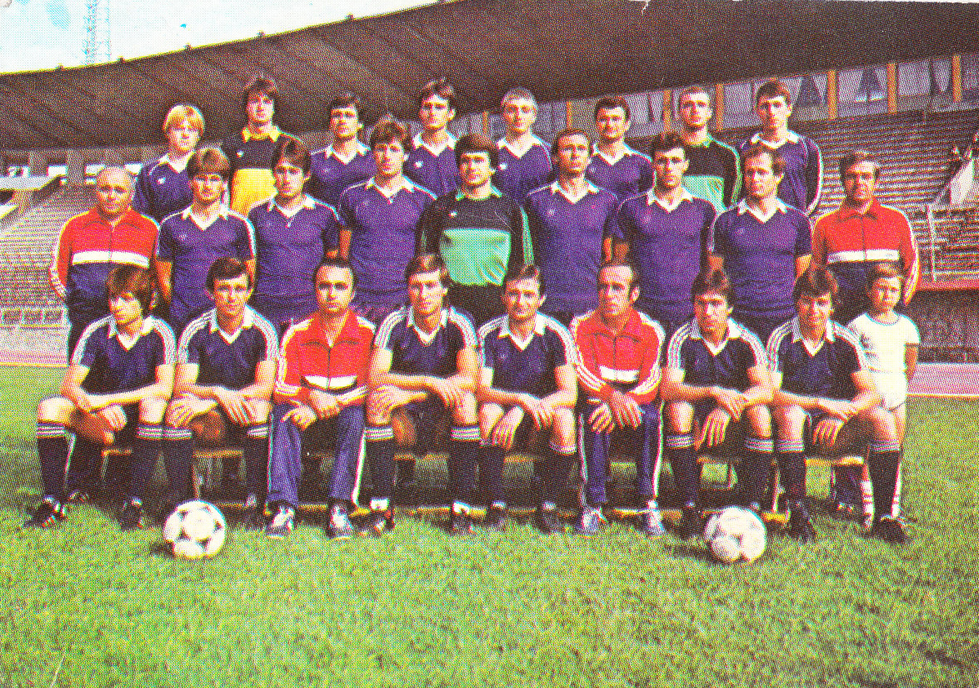 Etar (Veliko Tirnovo) – 10th with 29 points. Looked like they finally stabilized themselves after years of rag-tag teams and coresponding performance. May be going to climb up – at least judging by some young talent in the squad: Trifon Ivanov was already a regular.
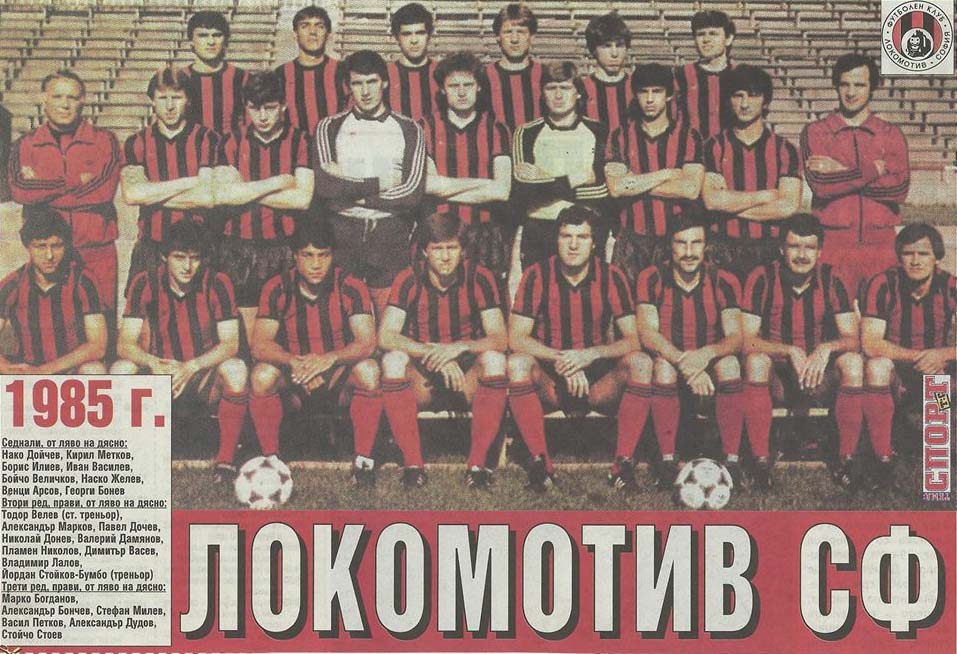 Lokomotiv (Sofia) – 9th with 29 points. They clearly missed the train, so to say: the squad was decent enough for more and the new freedom gave them a chance. On the other hand they were one of the clubs feeeling badly separation from traditional sponsor: the railways never provided them with lots of money, but at least there were ready money. Now… financing the team was a problem. Sitting from left: Nako Doychev, Kiril Metkov, Boris Illiev, Ivan Vassilev, Boycho Velichkov, Nasko Zhelev, Ventzilsav Arssov, Georgy Bonev.
Middle row: Todor Velev – coach, Aleksander Markov, Pavel Dochev, Nikolay Donev, Valery Damyanov, Plamen Nikolov, Dimitar Vassev, Vladimir Lalov.
Top row: Marko Bogdanov, Aleksander Bonchev, Stefan Milev, Vassil Petkov, Aleksander Dudov, Stoycho Stoev.
Frankly, a squad which should have performed way better.
Spartak (Varna) – 8th with 30 points. Mid-table was pretty much what they wanted to be. Now, with Cherno more no longer supported by the Navy, they had good chance to be the number 1 team of Varna. A dream, really.
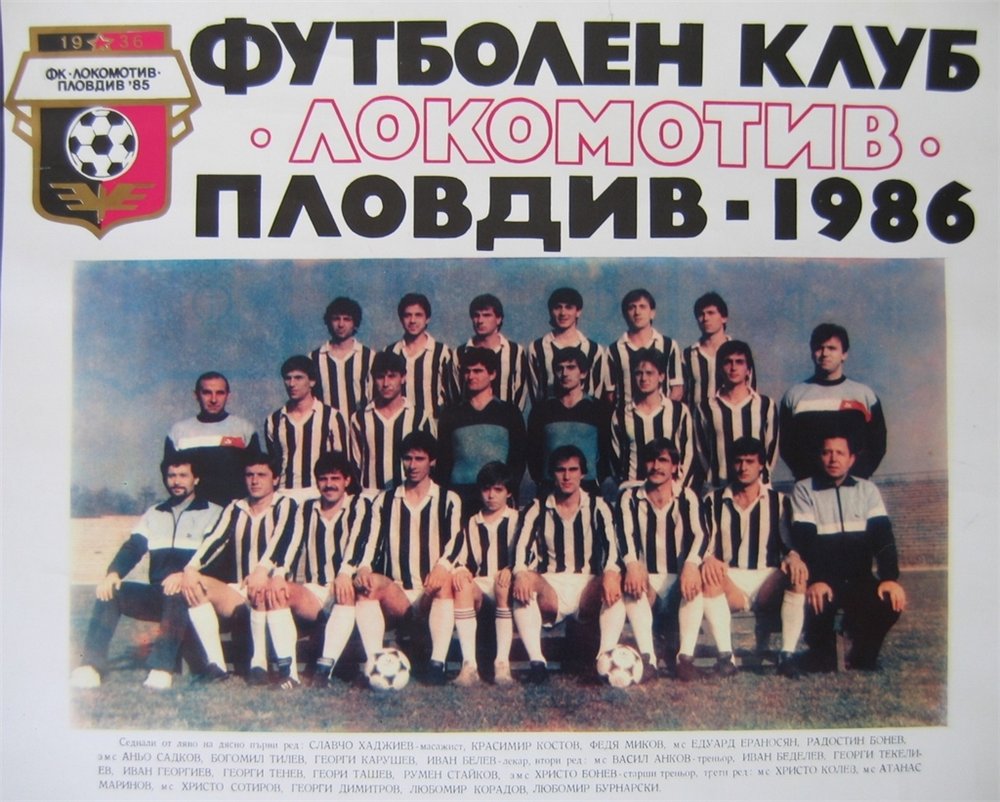 Lokomotiv (Plovdiv) – 7th with 31 points. Not bad after coming back from Second Division – this time it looked like they were finally on the road of real recovery.
Sliven (Sliven) – 6th with 31 points. Curiously, not affected by their separation from the Army. May be because the team was quite young and without former CSKA players. Yordan Lechkov was getting established in the team, still 19-years old.
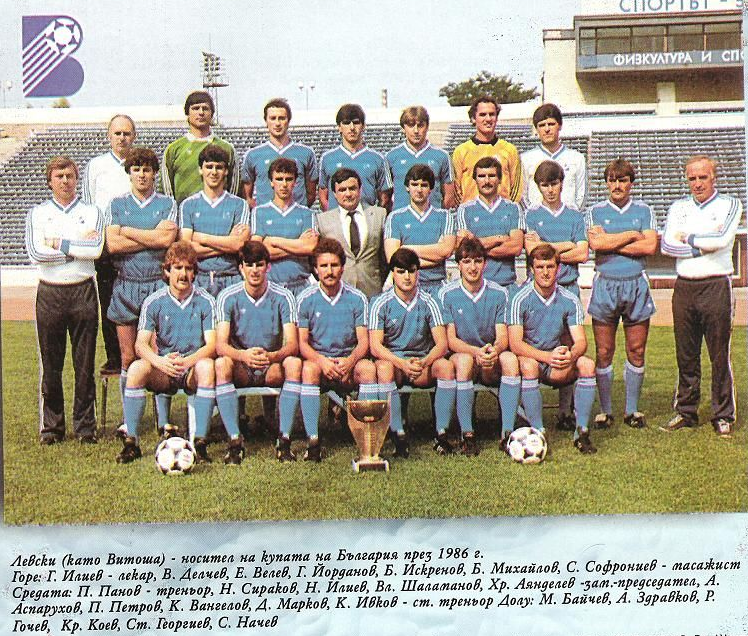 Vitosha (Levski) Sofia – 5th with 33 points. Rattled badly by the Cup final scandal and following punishment. This is really a photo from the end of the season – at the beginning, half of the key regulars were suspended, some for life. But eventually the national team coach Vutzov went to the state leader Todor Zhivkov and begged these suspencions to be voided, because the national team was weakened and the World Cup finals were coming. Pardon was granted – and Borislav Mikhailov came back. But so far the team played badly and that was beyond repair at short notice.
Top row from left: G. Illiev – doctor, V. Delchev, E. Velev, G. Yordanov, B. Iskrenov, B. Mikhailov, S. Sofroniev – masseur.
Middle row: P. Panov – assistant coach, N. Sirakov, N. Illiev, V. Shalamanov, Chr. Ayandelev – vice-chairman of the club, A. Asparoukhov, P. Petrov, K. Vangelov, D. Markov, K. Ivkov – coach.
Sitting: M. Baychev, A. Zdravkov, R. Gochev, Kr. Koev, St. Georgiev, S. Nachev.
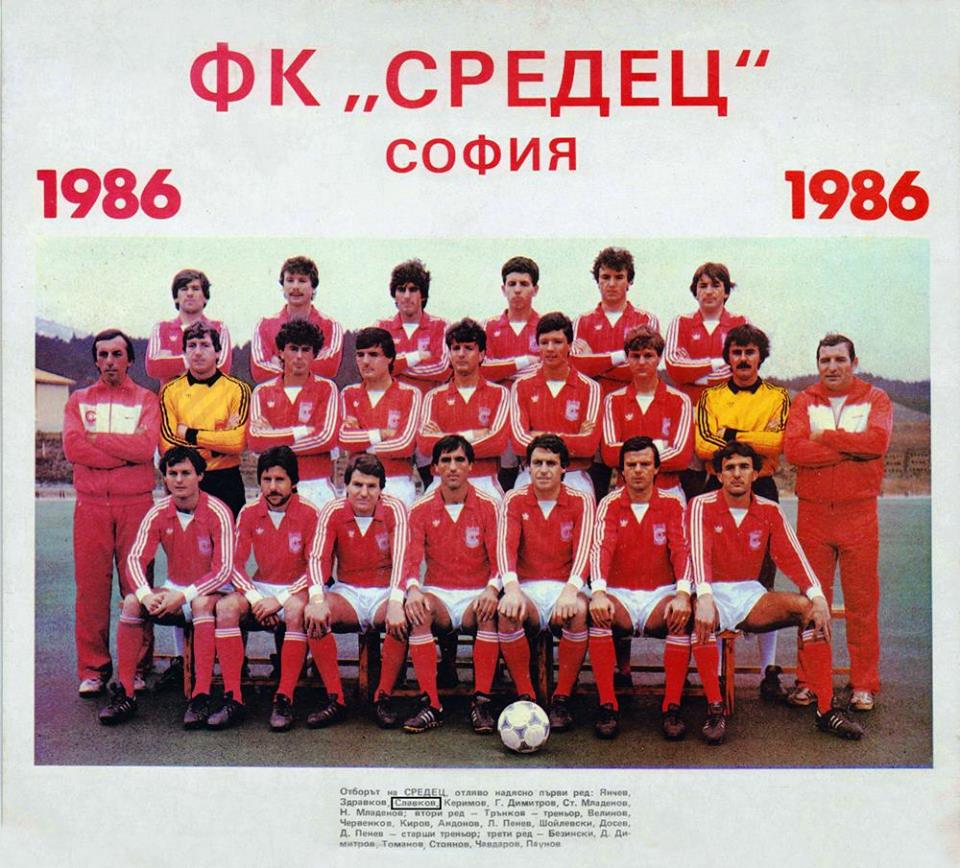 Sredetz (CSKA) – 4th with 34 points. Sitting from left: Yanchev, Zdravkov, Slavkov, Kerimov, G. Dimitrov, St. Mladenov, N. Mladenov.
Middle row: Trankov – assistant coach, Velinov, Chervenkov, Kirov, Andonov, L. Penev, Shoylevski, Dossev, D. Penev – coach.
Bezinski, D. Dimitrov, Tomanov, Stoyanov, Chavdarov, Paunov.
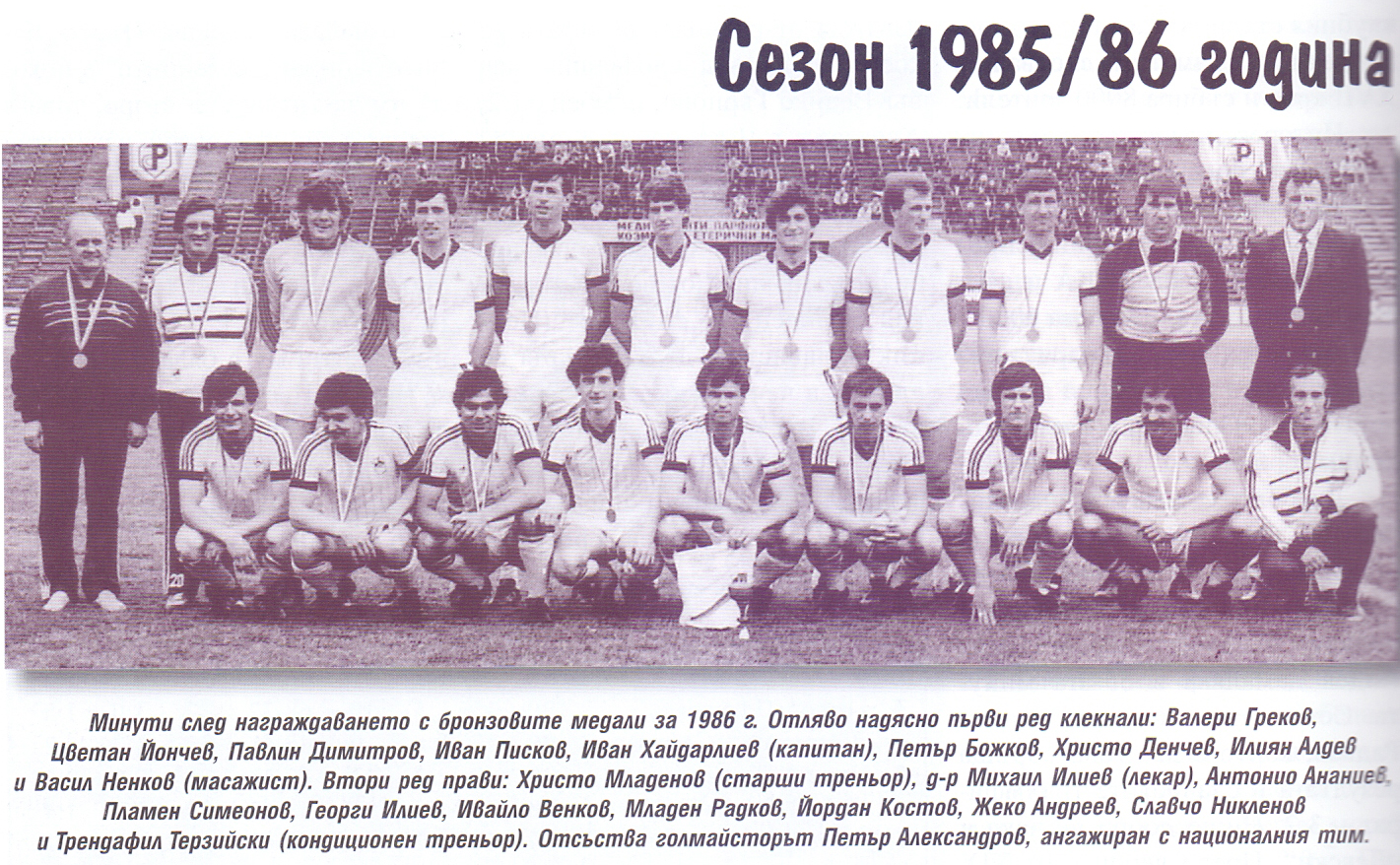 Slavia (Sofia) – 3rd with 36 points. Crouching from left: Valeri Grekov, Tzvetan Yonchev, Pavlin Dimitrov, Ivan Piskov, Ivan Khaydarliev, Petar Bozhkov, Christo Denchev, Illiyan Aldev (Ilyaz Alliev), Vassil Nenkov – masseur.
Standing: Christo Mladenov – coach, Mikhail Zhelev – doctor, Antonio Ananiev, Plamen Simeonov, Georgi Illiev, Ivaylo Venkov, Mladen Radkov, Yordan Kostov, Zheko Andreev, Slavcho Niklenov, Trendafil Terziyski – trainer.
The scoring machine Petar Aleksandrov is missing – he was with the national team, preparing for the 1986 World Cup finals. Slavia missed its great chance to fil the temporary vacuum and they had nobody to blame this time, but themselves. May be their team was not deep enough, but at least the regulars were good enough for attacking the title. As it turned out, they were not even in the race, trailing the leaders from a distance. At least the crisis of few years earlier was over.
 Trakia (Botev Plovdiv) – 2nd with 41 points. Although two national team players are missing here: Dimitar Vichev and Kostadin Kostadinov – this was very familiar squad, playing together for years. Officially, they were the 1984-85 champions, but the title was awarder to them only because Levski and CSKA were pnushed – Trakia finished 3rd then and did not enjoy the surprise and undeserved title. This season everything was different, they really were determined to win, seeing their great chance in the weakening of the big clubs. The end was bitter and a reason for laments to this very day: they felt robbed. The arguments are two: first, they were the strongest team. Why? Well, they destroyed the so-called champions 8-1. There is some truth to that – Trakia had stronger squad than the new champions. But one thing is to have big names, another to perform. And performance was equal to the that of the winners as far as points were concerned. Second point: Trakia focussed its accusations on the match near the end of the season Beroe – Vitosha, played in Stara Zagora. Beroe won by one goal and thus ensured the title. From Trakia’s point of view Vitosha deliberately let Beroe win only to rob Trakia from their righful title. And, of course, Beroe would have to repay the favour later, so there was mor for Trakia to suffer by those villains. Was the match fixed or not is impoosible to prove – Beroe had excellent season and Vitosha not so; Beroe played at home against a team not loved at all in Stara Zagora; the result was minimal and nothing obviously suspicious happened on the field. Yet, Vitosha (Levski) preffered Beroe to win than Trakia (Botev), a team more hated than Beroe. Vitosha had nothing to play for, no motivation anyway, and a giveaway match may put Beroe under some obligation to return the favour in the future. The problem with all that reasoning is that nothing can be ever proved, only a growing myth, increasingly based on great scoring power of Trakia (they scored 82 goals this season – 27 more than the champions) and few big losses Beroe suffered. True, looking at the results, but if Trakia was so superior, they would have been unquestionable leaders – as it happened, they could have been champions only on better goal-difference. Hardly a sign of superiority.
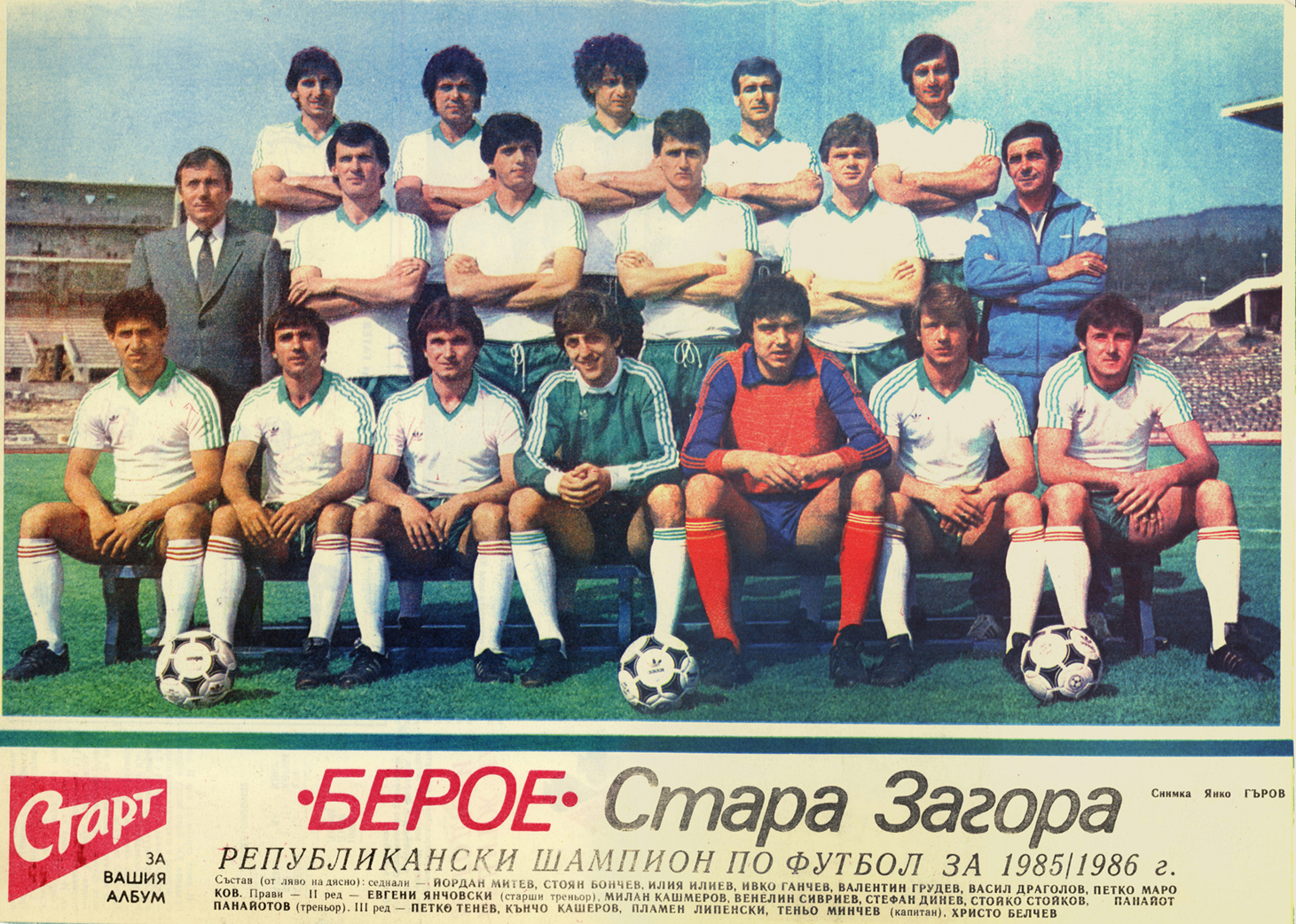 Beroe (Stara Zagora) – brand new champions with 43 points from 20 wins, 4 ties, 6 losses. 55-36 goal-difference. They lost a point on scoreless tie – against Sliven – but Trakia also lost a point, ending 0-0 with Pirin, so the lead was preserved. Here they are: Sitting from left: Yordan Mitev, Stoyan Bonchev, Illia Illiev, Ivko Ganchev, Valentin Grudev, Vassil Dragolov, Petko Marokov.
Middle row: Evgeni Yanchovski – coach, Milan Kashmerov (orginally Myumyun Kashmerov, today – Myumyun Kashmer) Venelin Sivriev, Stefan Dinev, Stoyko Stoykov, Panayot Panayotov – assistant coach.
Top row: Petko Tenev, Kancho Kasherov, Plamen Lipenski, Tenyo Minchev, Christo Belchev.
If Trakia had some ground for accusations, it was on the first place because of ‘suspect’ rise of Beroe – they were insignificant 6th (8th before Levski and CSKA were removed) in the previous season. But Beroe had long history of sudden ups and downs, nothing new or unusual about it. They playe well the whole season, really taking their chance, getting more and more ambitious to win and holding its ground to the end. However, they suffered few huge losses: 1-8 from Trakia, 2-5 from Slavia, 2-4 from Sredetz. Well, such things happen… those were away games against the strongets rivals. Beroe won the home matches against the same teams, though – the direct clashes ended undecided. The suspect, from Trakia’s point of view, match against Levski was not at all supsect from Beroe’s standpoint – they were motivated to win the title, hence played and won against a hated opponent, for in Beroe’s mythology Lesvki orchestrated their expulsuion from First Division at the turn of 1970s. Deals with such enemy? Impossible! Double impossible a bit later, when Vassil Dragolov went to play for Vitosha – see, they robbed as again! Apart from that, Beroe had wonderful season, overachieving a bit, for the team coached by their former great midfielder Evgeni Yanchovski, was weaker than the competition. It was talented squad, but not very deep – apart from Dragolov, no other player was considered for the national team, although their aging captain Tenyo Minchev was ocassional national team player before. Two young and talented goalkeepers, experienced defense – Kasherov, Minchev, and Belchev played together for years, the first two for so long already, they played along their coach at the beginning of their careers in the first half of the 1970s. Two more than decent midfielders in great form – Dinev and Bonchev, and powerful attack – Mitev, Kashmerov, and Dragolov. To a point, the arrival of the high scoring center-forward Kashmerov galvanized the team – Kashmerov was noticed when playing in Second Division, eventually joyning Levski (Sofia), but he did not make it there – in aprt, because of the strong competition. Going to Beroe benefited both him and the team – he fitted in right away, completing a lethal striking line. This season everything clicked right and Beroe, as a club, was sharp enough to use the opportunity created by the destruction of the traditional powers. Beroe deserved to win. It was unlikely they could repeat the success, even less to be able to establish dynasty, but they it was fantastic victory. Their first ever.
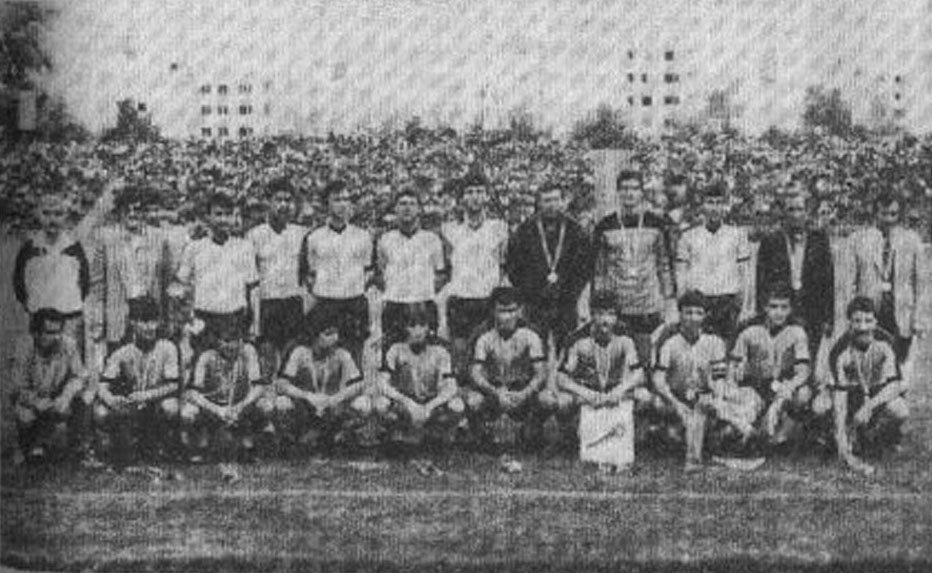
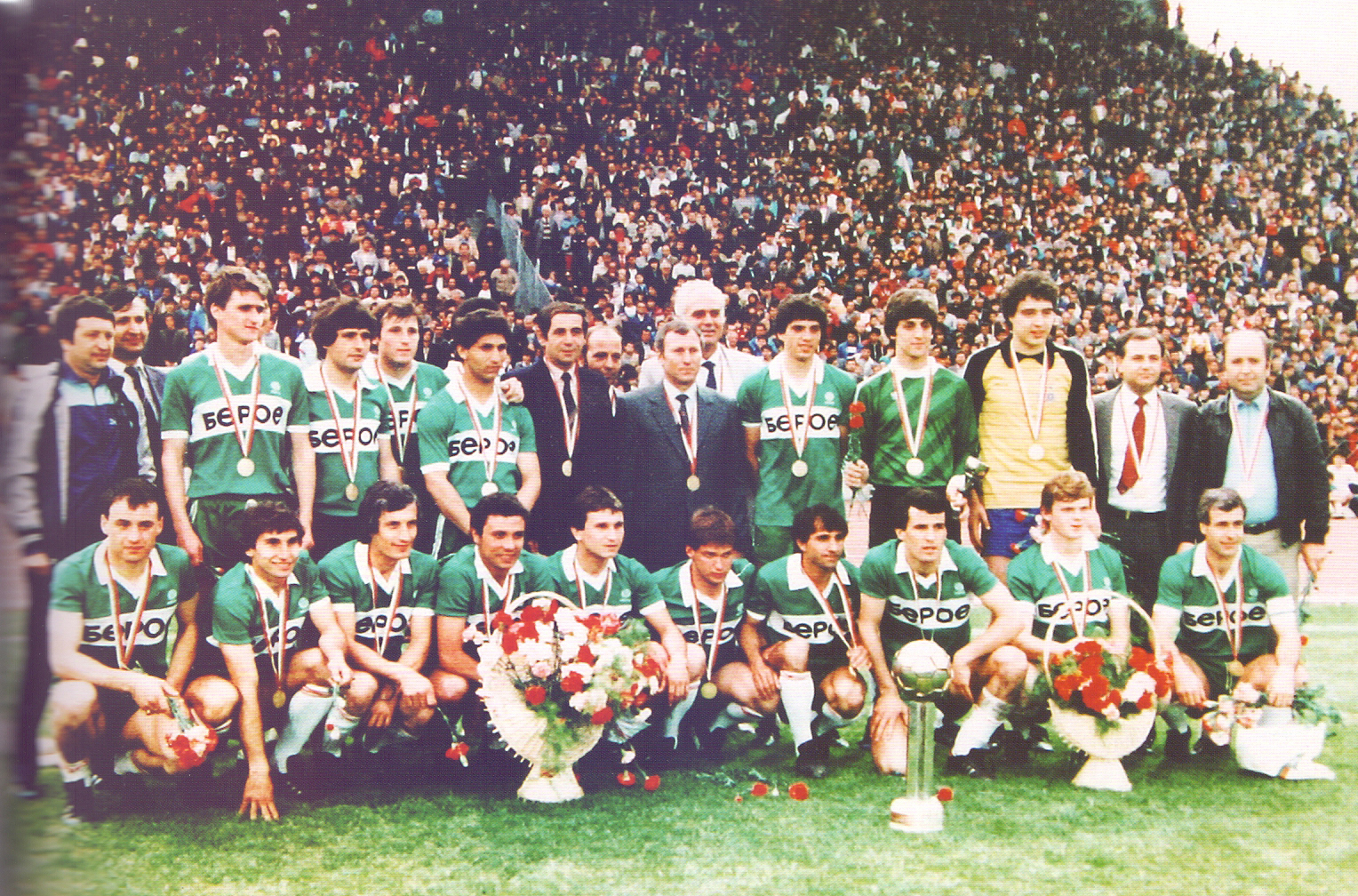 Brand new champions deserve a second look, this time from the ceremony of receiving the championship trophy on April 19, 1986. Crouching from left: Plamen Lipenski, Petko Tenev, Christo Belchev, Kancho Kasherov, Illia Illiev, Radko Kalaydzhiev, Stoyan Bonchev, Milan Kashmerov (Myumyun Kashmer), Stoyko Stoykov, Tenyo Minchev.
Standing: Kuzman Kuzmanov – superintendant, Stoyan Kurtev, Stefan Dinev, Bozhidar Dyakov, Tanko Tanev, Petko Marokov, Yordan Mitev, Kolyo Ganev, Panayot Panayotov – assistant coach, Dimo Todorov – team chief, Evgeni Yanchovski – coach, Vassil Karaivanov, Venelin Sivriev, Ivko Ganchev, Valentin Grudev, Zhelyo Pepelov – administrator, Christo Doychev – masseur.
First time champions, a team which did the impossible.